World

EU fails to agree gas price cap amid deep divisions

EU energy ministers failed Thursday to agree a cap on gas prices to mitigate the energy crunch in Europe amid deep divisions over an initial proposal slammed by many as a “joke”.

The ministers will now meet in the first half of December to try to bridge differences, said Czech Industry Minister Jozef Sikela, whose country holds the current presidency of the EU.

He added that the ministers did manage to adopt a couple of other “important measures”, including joint gas purchases to avoid intra-EU competition driving up prices, supply solidarity in times of need, and hastening authorisation of renewable energy sources.

Several ministers going into Thursday’s meeting complained that the gas price cap proposal on the table, unveiled by the European Commission just two days earlier, was clearly designed to never be used.

The Polish and Spanish energy ministers called the proposal a “joke”. 

Greek Energy Minister Kostas Skrekas said the cap “is not actually a ceiling” on gas prices, and “we are losing valuable time without results”.

The price cap plan — which the commission was never keen on — sets a maximum threshold of 275 euros per megawatt hour.

But it comes with so many conditions attached that it would not even have been activated back in August, when the gas price briefly soared above 300 euros, alarming Europe used to historic prices around 10 percent of that.

– Drop in Russian gas –

The cap proposal would only be triggered if the 275-euro limit was breached continuously for at least two weeks, and then only if the price for liquified natural gas (LNG) rose above 58 euros for 10 days within that same two-week period.

The price of wholesale gas in Europe on Thursday was around 124 euros, according to the main TTF benchmark.

The commission’s proposed price cap was seen as neutered under pressure from members including Germany and the Netherlands, which feared a cap could divert gas supplies to more lucrative markets, especially Asia.

Yet at least 15 EU countries — more than half the bloc — want some form of workable ceiling on wholesale gas prices to tackle a crunch in supply forced by Russia’s war in Ukraine.

While the European Union hasn’t banned Russian gas, the Kremlin has been turning off the taps in retaliation for sanctions imposed by Brussels in the wake of Moscow’s invasion. 

Before the war, Russian gas supplies accounted for more than 40 percent of all imported gas into the European Union, with export powerhouse Germany particularly needy.

That has now dropped to less than 10 percent. 

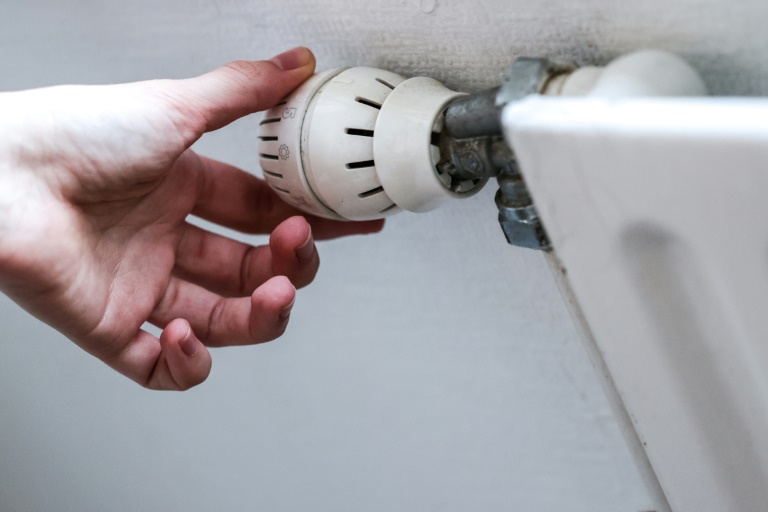
But alternative sources — such as LNG shipped from the United States and the Gulf — cannot make up the shortfall, and Europe faces a pricey heating bill for winter.

EU energy commissioner Kadri Simson acknowledged the divisions over the price cap as she went into the meeting.

She noted that the ministers have “a right to calibrate the different parameters” if they wished — something that may happen in time for their next meeting, likely to be called for December 13.

The price cap plan, if adopted, would start in January. It would run alongside a voluntary initiative for EU member states to cut natural gas use by 15 percent over the northern hemisphere winter.

rmb/dc/raz

EU fails to agree gas price cap amid deep divisions

EU energy ministers failed Thursday to agree a cap on gas prices to mitigate the energy crunch in Europe amid deep divisions over an initial proposal slammed by many as a “joke”.

The ministers will now meet in the first half of December to try to bridge differences, said Czech Industry Minister Jozef Sikela, whose country holds the current presidency of the EU.

He added that the ministers did manage to adopt a couple of other “important measures”, including joint gas purchases to avoid intra-EU competition driving up prices, supply solidarity in times of need, and hastening authorisation of renewable energy sources.

Several ministers going into Thursday’s meeting complained that the gas price cap proposal on the table, unveiled by the European Commission just two days earlier, was clearly designed to never be used.

The Polish and Spanish energy ministers called the proposal a “joke”. 

Greek Energy Minister Kostas Skrekas said the cap “is not actually a ceiling” on gas prices, and “we are losing valuable time without results”.

The price cap plan — which the commission was never keen on — sets a maximum threshold of 275 euros per megawatt hour.

But it comes with so many conditions attached that it would not even have been activated back in August, when the gas price briefly soared above 300 euros, alarming Europe used to historic prices around 10 percent of that.

– Drop in Russian gas –

The cap proposal would only be triggered if the 275-euro limit was breached continuously for at least two weeks, and then only if the price for liquified natural gas (LNG) rose above 58 euros for 10 days within that same two-week period.

The price of wholesale gas in Europe on Thursday was around 124 euros, according to the main TTF benchmark.

The commission’s proposed price cap was seen as neutered under pressure from members including Germany and the Netherlands, which feared a cap could divert gas supplies to more lucrative markets, especially Asia.

Yet at least 15 EU countries — more than half the bloc — want some form of workable ceiling on wholesale gas prices to tackle a crunch in supply forced by Russia’s war in Ukraine.

While the European Union hasn’t banned Russian gas, the Kremlin has been turning off the taps in retaliation for sanctions imposed by Brussels in the wake of Moscow’s invasion. 

Before the war, Russian gas supplies accounted for more than 40 percent of all imported gas into the European Union, with export powerhouse Germany particularly needy.

That has now dropped to less than 10 percent. 

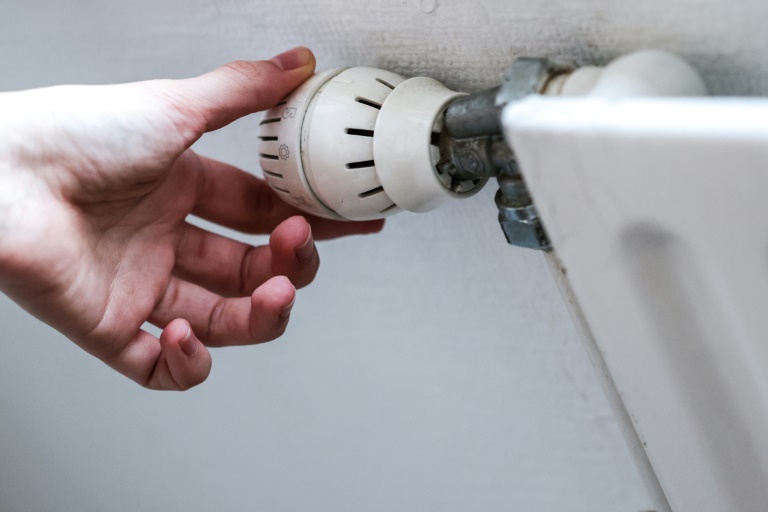
But alternative sources — such as LNG shipped from the United States and the Gulf — cannot make up the shortfall, and Europe faces a pricey heating bill for winter.

EU energy commissioner Kadri Simson acknowledged the divisions over the price cap as she went into the meeting.

She noted that the ministers have “a right to calibrate the different parameters” if they wished — something that may happen in time for their next meeting, likely to be called for December 13.

The price cap plan, if adopted, would start in January. It would run alongside a voluntary initiative for EU member states to cut natural gas use by 15 percent over the northern hemisphere winter.
rmb/dc/raz

For political activists, Twitter packs a vital punch

From the Arab Spring uprisings to the MeToo movement in which women spoke up about sexual assaults, Twitter has proven itself a formidable ally for political activists and opposition groups, one whose reach and impact would be difficult to replace.

Other social media platforms may have more users, but the network now owned by the billionaire Elon Musk dominates the global conversation — even as Twitter’s future is being called into doubt.

“Twitter is clearly very influential in getting the media and officials to pay attention. So it has a very special and unique place in that way,” said Mahsa Alimardani, a senior researcher at the human rights NGO Article 19.

During the anti-government protests that have rocked Iran in recent months, tweets are “helping Iranians bear witness to the pain and struggles of their fellow countrymen, helping the world bear witness to what’s happening,” she told AFP.

Especially in countries that have clamped down on independent journalism or foreign correspondents, Twitter provides a crucial lifeline to the outside world.

This week, posts from inside the Chinese iPhone factory operated by Foxconn showed workers rebelling against a total Covid lockdown, shattering the government’s attempts to portray a veneer of calm amid its draconian efforts to contain the virus.

“It’s very important to get information out to the international media but also to document human rights violations and atrocities,” said Marcus Michaelsen, a researcher specialised in digital activism under authoritarian regimes.

– ‘Protest identity’ –

Twitter had some 237 million daily users at end-June, well below the nearly two billion Facebook or one billion TikTok users.

But its pithy, at-a-glance format allows the network to punch far above its weight for opposition groups, since anyone can become a “citizen journalist” who instantly shares images that government authorities don’t want to be seen.

For  Nadia Idle, an Egyptian-British activist who took part in the Tahrir Square uprising in Egypt in 2011, tweets of anti-regime protests across the Middle East also encouraged people by showing that they were not alone.

“Its capacity to broadcast this event, and the amount of activists that were tweeting in English, made it a spectacle for people from the outside,” she said.

Faced with viral tweets provoking global outrage, outside governments can also feel domestic pressure to take action or at least condemn repressive governments.

And even in democratic countries, Twitter’s function as a digital town hall can provide activists with a megaphone that previously might have been out of reach.

Over the past decade, the BlackLivesMatter hashtag has become synonymous with the movement to highlight racism and police violence against African Americans, shining a light on discriminations that often went unseen.

“They use the features of Twitter, of social media, to create a protest identity, to create a common feeling within the movement,” Michaelsen said.

“They know that they can reach journalists and policymakers more, more directly than on Instagram, for instance.”

– ‘Would be a big loss’ –

Since the upheaval created by Musk’s takeover, Twitter has seen a wave of defections as people worry that posts will no longer be sufficiently curated to weed out disinformation and provocations.

Activists warn that if Twitter dies, the world will lose a crucial historical record of social movements that might not have gained traction without the digital documentation.

“Twitter has maintained an archive of so many different movements and so many different events… So losing that archive would be a big loss, it’s a historical record in some way,” Alimardani said.

Charles Lister, a political scientist at the Middle East Institute in Washington, said oppressive regimes or terror groups would be the only beneficiaries of losing a powerful check on their behaviour.

In his work on the Syria civil war, Lister says Twitter has been “vital” to documenting war crimes and providing aid.

Ukraine battles to restore power after latest Russian barrage

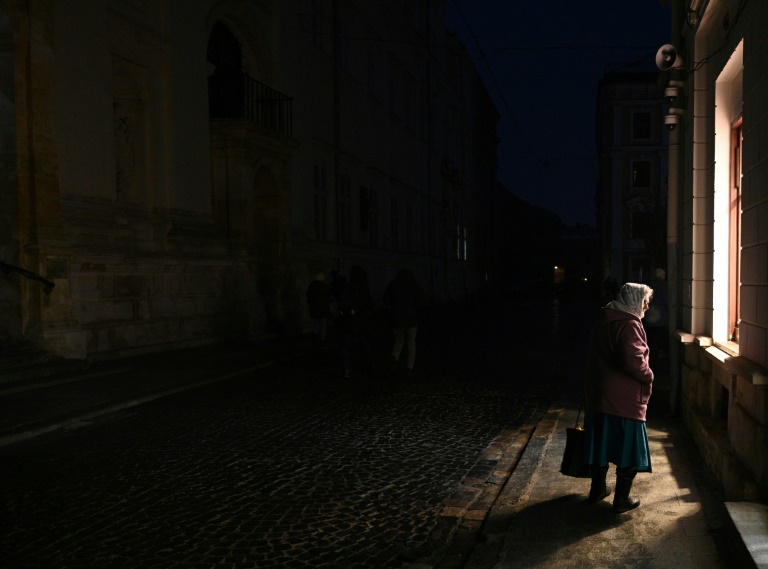
Ukraine struggled Thursday to repair its battered power and water services after Russia targeted the electricity grid with dozens of cruise missiles and temperatures plunged.

The Ukrainian energy system is on the brink of collapse and millions have been subjected to emergency blackouts for weeks due to systematic Russian bombardments of the grid.

The World Health Organisation has warned of “life-threatening” consequences and estimated that millions could leave their homes as a result.

Mayor Vitali Klitschko said more than two-thirds of the capital was still cut off on Thursday despite municipal workers in Kyiv restoring some water service overnight.

“Seventy percent of the capital remains without electricity,” Klitschko said. “Energy companies are making every effort to return it as soon as possible,” he added.

Ukraine’s military accused Russian forces of firing around 70 cruise missiles at targets across the country on Wednesday and of deploying attack drones.

Moscow’s targeting of Ukrainian power facilities is their latest strategy hoping to force capitulation after nine months of war that has seen Russian forces fail in most of their stated territorial objectives.

– ‘Scariest day’ –

Wednesday’s attacks left multiple people dead, disconnected three Ukrainian nuclear plants automatically from the national grid and even provoked blackouts in neighbouring Moldova, whose energy network is linked to Ukraine.

“So many victims, so many houses ruined,” 52-year-old Iryna Shyrokova told AFP in Vyshgorod on the outskirts of Kyiv after the Russian strikes.

“People have nowhere to live, nowhere to sleep. It’s cold. I can’t explain it. What for? We are also human beings,” she said, calling it “the scariest day”.

Ukraine’s energy ministry said that all three nuclear facilities had been reconnected by Thursday morning.

The governor of Kharkiv region — home to the country’s second largest city — said the eponymous city was suffering electricity supply issues and “emergency power shutdowns”.

The head of the central region of Poltava, Dmytro Lunin, said authorities were “working around the clock to restore power”.

“In the coming hours, we will start supplying energy to critical infrastructure and then to the majority of households,” Lunin said.

– ‘Shutdowns’ –

About 50 percent of central Dnipropetrovsk region had electricity, governor Valentyn Reznichenko said.

“The energy supply situation is complicated. So shutdowns will continue in the region to reduce the pressure on the grid as much as possible,” Reznichenko warned.

Repair work was ongoing elsewhere, including in the Rivne, Cherkasy, Kirovograd and Zhytomyr regions, officials said. 

Moscow announced separately it had issued tens of thousands of Russian passports to residents of four Ukrainian territories, which President Vladimir Putin claimed to have annexed in September.

“More than 80,000 people received passports as citizens of the Russian Federation,” Valentina Kazakova, a migration official with the interior ministry, said in remarks carried by Russian news agencies. 

In September, Russia held so called referendums in Donetsk, Lugansk, Zaporizhzhia and Kherson and claimed residents had voted in favour of becoming subjects of Russia.

Putin formally annexed the territories at a ceremony in the Kremlin later that month, even though his forces have never had full control over them.

Russian lawmakers approve bill banning LGBTQ 'propaganda'

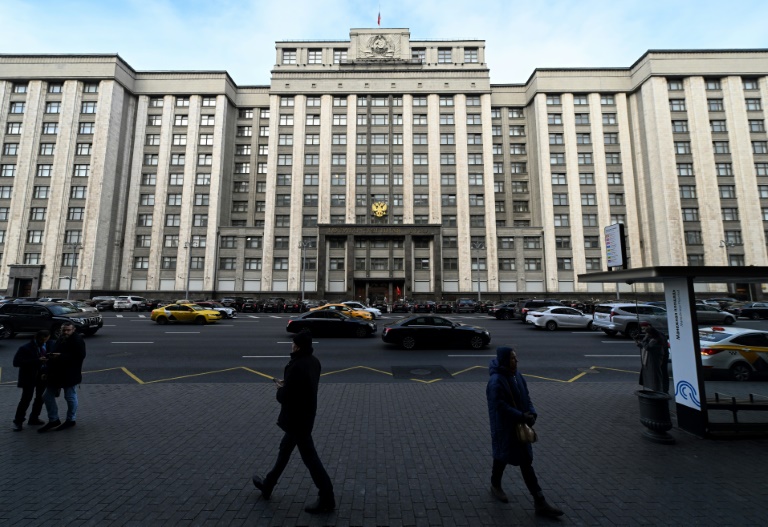
Russian lawmakers unanimously approved a bill banning all forms of LGBTQ “propaganda” in a final reading on Thursday, as Moscow presses ahead with its conservative drive at home while its troops fight in Ukraine.  

The legislation passed by the lower house of parliament, the Duma, bars all mention of what authorities deem “gay propaganda” in the media, cinema, books and advertisement. 

It also prohibits “the propaganda of paedophilia and sex change”.

If also approved by the upper house of parliament and signed into law by President Vladimir Putin, rights groups say it effectively bans all public promotion of LGBTQs in Russia. 

Moscow already has a law against “propaganda” directed at minors regarding LGBTQ relationships. The new bill would broaden that rule to adults.  

“Any propaganda of non-traditional relationships will have consequences,” the speaker of the Duma, Vyacheslav Volodin, said on social media. 

He said the bill “will protect our children and the future of our country from the darkness spread by the US and European states”.

Russia has sought to present LGBTQ relationships as a product of dangerous Western influence, toughening this rhetoric as its clash with the West intensifies over Ukraine. 

The head of LGBTQ rights group Sfera, Dilya Gafurova, said it was especially “disturbing that the state is saying LGBT+ people are a Western invention.”

She warned of the possible effects of the “demonisation of an entire group”.

The bill introduces hefty fines of up to 10 million rubles ($165,400) for people who ignore the new ban. 

Authorities will be able to block websites that contain prohibited information. 

According to the Duma website, it would also ban “the sale of goods (including foreign ones) containing prohibited information”. 

Putin has for years presented himself as the antithesis of Western liberal values. 

This rhetoric has only strengthened since he sent troops into Ukraine on February 24, isolating Moscow and leading to an unprecedented crackdown at home. 

– Cannot ‘take our voice away’ –  

Russian film production companies and book publishers have expressed concern over the bill, saying it could result in a ban of some Russian classics, such as Vladimir Nabokov’s “Lolita”.

The Duma said “films that promote such relationships will not receive a distribution certificate”.

Senior lawmakers had previously said the bill was needed in the context of Russia’s offensive in Ukraine.

Activist Dilya Gafurova urged the authorities not to use the LGBTQ community “as an instrument of ideological confrontation”. 

“We just are. There is nothing wrong with us and nothing that needs to be hushed up,” she said, adding that it was impossible “to take our voice away”. 

Putin, who turned 70 this year and has spent his rule promoting what he calls “traditional values”, in September railed against same-sex parents. 

“Do we really want here, in our country, in Russia, instead of ‘mum’ and ‘dad’, to have ‘parent number one’, ‘parent number two’ or ‘parent number three’?” he said in speech at the Kremlin in September.

“Have they gone completely insane?” he asked. 

Stocks rise, dollar slips as Fed signals softer rate hike pace

Stock markets mostly rose Thursday and the dollar largely weakened after minutes from the Federal Reserve’s latest policy meeting suggested it could slow the pace of its rate hikes.

The news provided traders with a cushion against concerns about surging Covid-19 cases in China that have fanned speculation authorities will revert to lockdowns and other economically debilitating measures to fight the outbreak.

Oil prices extended Wednesday’s sharp losses fuelled by worries about the impact on demand from China’s Covid outbreaks.

Wednesday’s much-anticipated minutes showed most US central bank chiefs felt smaller increases would “likely soon be appropriate” as the economy shows signs of weakness following almost a year of monetary tightening.

“Equities are revelling in the wake of the… minutes after the Fed telegraphed a downshift from jumbo to extra-large rate hikes,” said SPI Asset Management’s Stephen Innes.

“A commitment to moving toward restrictive monetary policy remains intact, but the (policy board) is ready to slow the path toward that destination.”

He added that a less aggressive Fed “should pave the runway for take-off in Asia, fuelled by expectations of China’s reopening by March next year”.

Bets were growing on officials announcing a 50-basis-point lift at their December gathering, down from four straight 75-point hikes.

The latest indicators showed the manufacturing and services sectors continued to contract last month, while jobless claims picked up.

The developments allowed Wall Street traders to head off to their Thanksgiving break with a spring in their step, the S&P 500 ending at a two-month high as they finally see a glimmer of light at the end of the tunnel after a painful year.

Asia and Europe mostly followed suit.

Kuala Lumpur surged more than three percent and the ringgit held gains after opposition leader Anwar Ibrahim was named prime minister, ending a days-long leadership impasse after inconclusive polls that had rattled Malaysia’s markets.

The more risk-on environment was also reflected in a further drop in the dollar against its peers, having surged for much of the year as traders bet on ever-higher US interest rates.

Investors were keeping a close watch also on China after it announced a record number of new Covid cases, as authorities worked to curb the spread with snap lockdowns, mass testing and travel restrictions.

While officials are trying more targeted measures to contain the disease, concerns remain that they will resort to the painful city-wide shutdowns seen in Shanghai earlier this year as part of the zero-Covid strategy, which hammered the economy.

However, that worry has been tempered somewhat after China signalled fresh support measures aimed at boosting growth, with the State Council saying tools would be used to ensure liquidity in markets.

The comments led to talk of another cut in the amount of cash that banks must keep in reserve, freeing them to lend more.

– Key figures around 1130 GMT –

London – FTSE 100: UP 0.1 percent at 7,475.73 points

Paris – CAC 40: UP 0.6 percent at 6,716.21

Frankfurt – DAX: UP 0.9 percent at 14,550.77

EURO STOXX 50: UP 0.5 percent at 3,967.92

Tokyo – Nikkei 225: UP 1.0 percent at 28,383.09 (close)

Hong Kong – Hang Seng Index: UP 0.8 percent at 17,660.90 (close)

Shanghai – Composite: DOWN 0.3 percent at 3,089.31 (close)

New York – Dow: UP 0.3 percent at 34,194.06 (close)

Euro/dollar: DOWN at $1.0391 from $1.0401 on Wednesday

Dollar/yen: DOWN at 138.28 yen from 139.52 yen

Pound/dollar: UP at $1.2099 from $1.2064

Euro/pound: DOWN at 85.91 pence from 86.18 pence

West Texas Intermediate: DOWN 0.6 percent at $77.44 per barrel

Brent North Sea crude: DOWN 0.9 percent at $84.63 per barrel

Spanish PM sets sights on international role

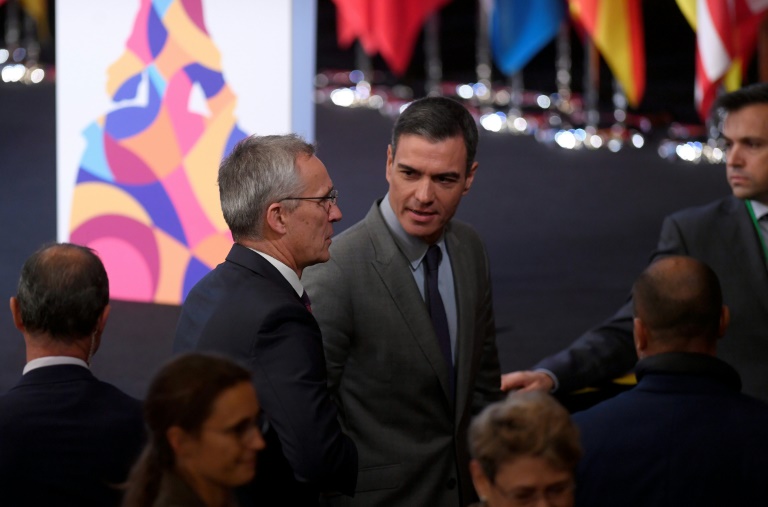
Spanish Prime Minister Pedro Sanchez will on Sunday become president of an international socialist grouping, a potential springboard to a major post on the world stage.

A year before a general election in Spain, which polls suggest he will struggle to win, Sanchez is the only candidate to head the Socialist International (SI) — an umbrella group of 132 centre-left parties from around the world.

The telegenic 50-year-old will take over the reins of the SI, which is gathering in Madrid this weekend, from former Greek prime minister George Papandreou.

“While symbolic… this post could be a way (for Sanchez) to regain credit among voters by presenting himself as influential on the world stage,” said Pablo Simon, political science professor at the Carlos III University

“But it also could be that he plans on capitalising on this network of international contacts” which the post offers to “play a prominent role later” in a top global body, he added.

Former Portuguese prime minister Antonio Guterres led the International Socialist before he went on to head the United Nations refugee agency in 2005 and then become UN secretary general in 2017.

“All prime ministers who love foreign affairs have a tendency to look for an international post to secure a post-governmental career,” said Teneo Intelligence analyst Antonio Barroso. 

– ‘More weight’ –

Sanchez has made international affairs a priority since he came to power in June 2018, in contrast to his conservative predecessor Mariano Rajoy, and has sought to boost Spain’s influence in the European Union.

Within days of taking office, Sanchez made international headlines by agreeing to take in migrants from the Aquarius rescue ship who were rejected by other European nations.

The first modern Spanish premier to speak English fluently, Sanchez served as chief of staff to the UN high representative to Bosnia during the Kosovo conflict.

He has fostered good relations with France and Germany, which has made Spain “one of the engines of European politics”, said Simon, citing as an example Madrid’s lead in talks over the energy crisis sparked by the war in Ukraine.

Sanchez successfully lobbied to have his foreign minister, Josep Borrell, appointed as European Union foreign policy chief in 2019.

“Spain has much more weight in the European Union debate than 10 years ago,” said Barroso, adding the premier had “boosted Spain’s credibility” with its “European partners”. 

Beyond the EU, Sanchez hosted a crucial NATO summit in Madrid in June, just four months after Russia’s invasion of Ukraine, and has “reconnected” with Latin America, which has shifted to the left in recent years, said Simon,

Sanchez visited four Latin American countries in August 2018, his first official trip outside Europe, in what was seen as an effort to underscore the region as a priority of his foreign policy.

– With Biden and Macron –

During the recent G20 summit in Indonesia, Sanchez posted a photo of himself meeting German Chancellor Olaf Scholz, French President Emmanuel Macron, British Prime Minister Rishi Sunak and US President Joe Biden.

Seen as an attempt to burnish his credentials on international affairs, the photo was much mocked on social media.

But Ignacio Molina, a senior analyst at the Elcano Royal Institute think tank, said he believes Sanchez’s priority is to remain Spanish prime minister after the general election, which is expected at the end of 2023.

The speculation about a possible senior role for Sanchez at a global body comes from Spain’s opposition parties, which have “spread the idea that he uses international meetings to prepare his future in case of an electoral defeat next year”, Molina said.

“I don’t think he’s deliberately developing an international network for personal reasons. It’s more because he’s at ease in European politics, where he faces less opposition.”

Indonesian rescuers race to find dozens missing after quake

Indonesian authorities deployed heavy machinery, helicopters and thousands of personnel Thursday in a desperate effort to locate dozens trapped in rubble by an earthquake that killed 272 people, as hopes of finding survivors faded.

Some have been pulled alive from the hulk of twisted metal and concrete in dramatic rescues in the town of Cianjur in West Java, including a six-year-old boy who spent two days under the wreckage without food or water.

Officials said 39 people were still missing and believed trapped, including a seven-year-old girl, as rescue efforts were delayed by hammering rains and aftershocks.

But the rescue of the young boy Azka alive, captured on video, gave relatives and rescuers some hope.

“Once we realised Azka was alive everybody broke into tears, including me,” 28-year-old local volunteer Jeksen Kolibu told AFP on Thursday.

“It was very moving, it felt like a miracle.”

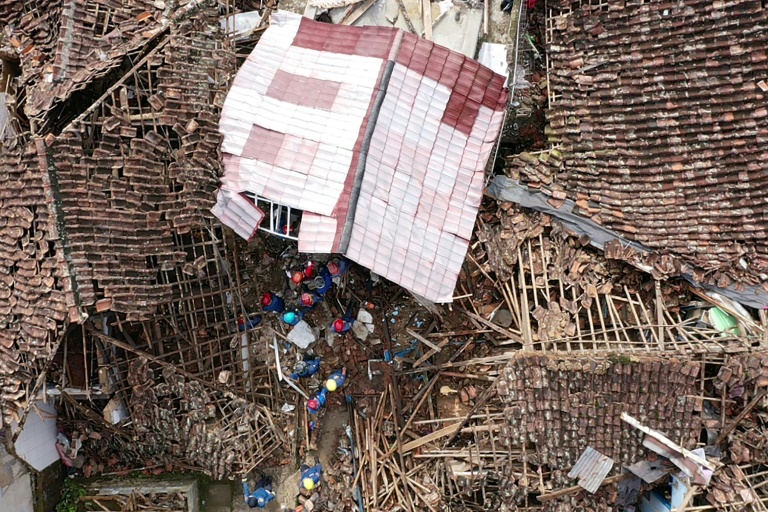
In the worst-hit district of Cugenang, scores of rescue workers drilled on Thursday through big slabs of concrete and removed roof tiles at a destroyed house where they believed a young girl was buried. Her distraught mother watched on as they worked.

Other rescuers used digging tools, hammers and their bare hands to clear the debris in the delicate mission to find seven-year-old Cika.

“She was playing outside, I was cooking in the kitchen, suddenly the earthquake happened, so fast, only two seconds, my house collapsed,” her mother Imas Masfahitah, 34, told AFP at the scene.

“My instinct tells me she is here because she liked playing here,” she said, referring to the house of the girl’s grandmother where the search is focused.

“Whatever happens I will try to accept it.”

Authorities later suspended the search for Cika for the evening, saying they would resume the rescue effort on Friday.

“We still hope that there are survivors. The proof is that Azka survived yesterday,” Suharyanto, the head of the national disaster mitigation agency (BNPB), who like many Indonesians goes by one name, told a news conference Thursday.

– ‘Pray for us’ –

The death toll from Monday’s earthquake was expected to rise further with around 2,000 people wounded, some of them critically, and at least two villages still cut off.

It rose by one on Thursday after the body of a 64-year-old was found, Suharyanto said.

Thousands of emergency workers were using excavators to break through blocked roads to get to the villages and deploying helicopters to drop vital aid to people still trapped there.

But the BNPB chief said it was too dangerous to use heavy machinery digging for victims because of fears of collapsing structures or more landslides.

The rescue operation is expected to continue beyond the 72-hour window viewed as the best period to find victims alive.

“Hopefully, in one or two days, after the weather is good, (we can) deploy heavy equipment (and) more victims are found,” Suharyanto said.

Indonesian President Joko Widodo visited Cianjur again on Thursday, and said 39 people were believed missing in the district of Cugenang alone.

“This afternoon, we will concentrate on this spot,” he told reporters. Widodo said only 24 patients remained at the town’s Sayang hospital, down from 741.

Residents of the district said they had never experienced anything like it before.

“I don’t know why the impact in Cugenang is especially bad. It’s probably fate, God has decided,” Adek, 52, told AFP.

– Many homeless –

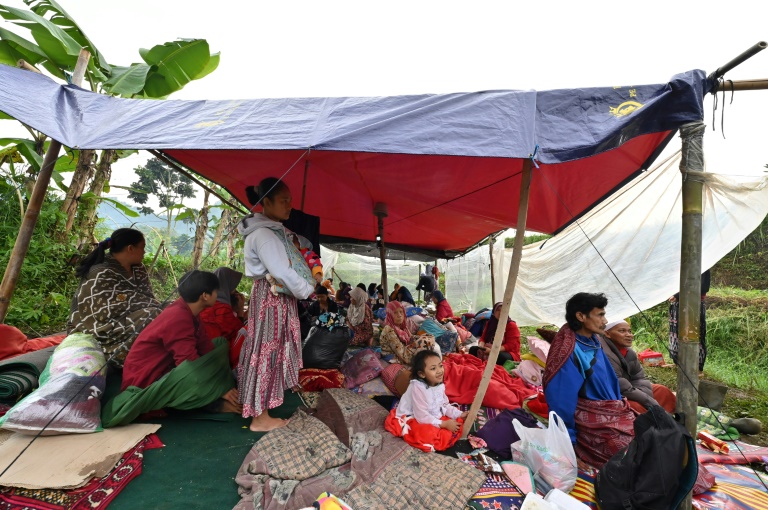
More than 56,000 houses were damaged and more than 62,000 people were forced to evacuate to shelters, leaving many homeless in the town without adequate supplies.

Some have put up signs asking for help, while others held cardboard boxes to beg for donations after losing everything.

Widodo said the hilly terrain made it challenging to get aid to those most in need.

Indonesia experiences frequent seismic and volcanic activity due to its position on the Pacific “Ring of Fire”, where tectonic plates collide.

Monday’s tremor was the deadliest in the archipelago nation since a 2018 quake and resulting tsunami killed more than 4,000 people on the island of Sulawesi.

But for a few women there was joy on the sidelines of the disaster.

At least three babies were born in the same evacuation tent a day after the disaster, according to West Java governor Ridwan Kamil.

He posted a video Wednesday of his visit to the tent where he named one of the children Gempita, inspired by the Indonesian word for earthquake. 

As he uttered her new name, smiling friends and relatives of mother Dewi shouted in jubilation: “Thank God!”

French lawmakers to vote on bullfighting ban

French MPs are expected to vote for the first time Thursday on whether to ban bullfighting after a national debate that has pitched animal rights’ defenders against fans of the traditional blood sport.

Though public opinion is firmly in favour of outlawing the practice, the bill is expected to be rejected by a majority of lawmakers who are wary about stirring up the bullfighting heartlands in the south of the country. 

There is also a chance that the legislation, proposed by a vegan left-wing lawmaker, fails to be presented for a vote in the National Assembly at the last minute.

“We need to go towards a conciliation, an exchange,” President Emmanuel Macron said on Wednesday, adding that he did not expect the draft law to pass. “From where I am sitting, this is not a current priority.” 

His government has urged members of the ruling centrist coalition not to support the text from the opposition France Unbowed party, even though many members are known to personally favour it. 

During a first debate on the parliament’s law commission last week, a majority voted against the proposal by MP Aymeric Caron, who denounced the “barbarism” of a tradition that was imported from Spain in the 1850s.

“Caron has antagonised people instead of trying to smooth it over,” a lawmaker from Macron’s party told AFP on condition of anonymity.

The bill proposes modifying an existing law penalising animal cruelty to remove exemptions for bullfights that can be shown to be “uninterrupted local traditions”.

These are granted in towns such as Bayonne and Mont-de-Marsan in southwest France and along the Mediterranean coast including Arles, Beziers and Nimes. 

“The traditional character of an activity has never been a moral justification for it,” Caron told the BFM news channel on Thursday. 

“There are traditions that we’ve been able to stop when this activity is no longer in line with the ethics of our society, which evolve fortunately,” he added.

Around 1,000 bulls are killed each year in France, according to the National Observatory of Bull Cultures.

– ‘Tackling death’ –

Many so-called “bull towns” depend on the shows for tourism and see the culture of bull-breeding and the spectacle of the fight as part of their way of life — idolised by artists from Ernest Hemingway to Pablo Picasso.

They organised demonstrations last Saturday, while animal rights protesters gathered in Paris — highlighting the north-south and rural-versus-Paris divide at the heart of the debate. 

“Caron, in a very moralising tone, wants to explain to us, from Paris, what is good or bad in the south,” the mayor of Mont-de-Marsan, Charles Dayot, told AFP recently.

Other defenders of “la Corrida” in France view the focus on the sport as hypocritical when factory farms and industrial slaughter houses are overlooked.

“These animals die too and we don’t talk enough about it,” said Dalia Navarro, who formed the pro-bullfighting group Les Andalouses in southern Arles.

Modern society “has more and more difficulty in accepting seeing death. But la Corrida tackles death, which is often a taboo subject,” she told AFP.

Previous judicial attempts to outlaw bullfighting have repeatedly failed, with courts routinely rejecting lawsuits lodged by animal rights activists, most recently in July 2021 in Nimes.

The scheduled vote Thursday might not take place because of the tabling of more than 500 amendments from other MPs, some of which appear designed to waste parliamentary time.

One from far-right MP Yoann Gillet suggests changing the title of the bill to “Imposing the ideology of grain-eaters on the inhabitants of southern France.”

Even if the bill were approved in the lower house on Thursday, the draft legislation would face a struggle to pass in the conservative-dominated Senate. 

The debate in France about the ethics of killing animals for entertainment is echoed in other countries with bullfighting histories, including Spain and Portugal as well as Mexico, Colombia and Venezuela.

In June, a judge in Mexico City ordered an indefinite suspension of bullfighting in the capital’s historic bullring, the largest in the world.

The first bullfight took place in France in 1853 in Bayonne to honour Eugenie de Montijo, the Spanish wife of Napoleon III.

adc-cs-iw-adp/sjw/jmm

Grace follows tragedy with birth of babies after Indonesia quake

Death descended on Cianjur when an earthquake struck the central Indonesian town this week, but several new mothers also provided some joy for grief-stricken residents.

At least three babies were born in the same evacuation tent just a day after the magnitude 5.6 tremor killed 271 people, according to West Java’s governor Ridwan Kamil.

The provincial official gave one of the babies her name after she was born on Tuesday evening: Gempita Shalihah Kamil.

The name Gempita was inspired by the Indonesian word for earthquake, he said, before giving her his own last name.

“Behind this disaster, and the many who passed away, Allah also gave his grace with the birth of babies who would continue this journey of human civilisation,” the governor said Wednesday in an Instagram post liked nearly 300,000 times.

Indonesian media reported her birth widely because of Kamil’s intervention, calling it “a gift”.

A video of him holding the newborn baby, as her mother Dewi lay on the floor, accompanied Kamil’s post.

Dewi said she feared for the baby’s condition in her womb as she fell down when the tremor hit. 

She ran to the nearest community health centre for checks.

“It was difficult to find the heartbeat. Local midwives helped to stimulate (it),” Dewi said in an interview broadcast on Kompas TV Thursday as she held her fourth child in her arms.

She took only around 30 minutes to give birth to her new daughter. 

Nova Dwiyanto, a doctor from the Social Affairs Ministry, said he received reports that at least two babies were born in the tent, including one prematurely at eight months.

“Thank God … (they) were helped to safely gave birth,” Dwiyanto told Kompas TV. 

He said the two babies and their mothers were “in good health” after checkups. 

The quake could also affect infants, even though they were safely in their mothers’ wombs when it struck. A US study published in September showed that pre-natal babies during a natural disaster are at a higher risk of developing psychological and behavioural disorders.

But for these mothers whatever comes next mattered little as their births were a ray of light amid the darkness, at least for a moment. 

Dewi and Kamil were shown surrounded by friends and relatives, happy despite the carnage outside.

As the governor uttered the child’s name, they shouted in jubilation — “Praise be to God!”

Close Bitnami banner
Bitnami