World

Who will become history's first 'parastronaut'? 

The first astronaut — or astronauts — with a physical disability could be announced as soon as Wednesday, according to the European Space Agency.

People with physical disabilities have previously been excluded from one of the most exclusive and demanding jobs on Earth — and beyond — due to strict selection requirements.

Guillaume Weerts, the ESA’s head of space medicine, told AFP that the agency’s “parastronaut project” required “a complete change in philosophy” about the concept of medical aptitude, which originally came from the military and the selection of fighter pilots.

After carrying out a feasibility study, the ESA said potential candidates could include people who have deficiencies in their lower limbs, whether from amputation or congenital defects.

Shorter people of up to 1.3 metres (4.3 feet) tall or those with different leg lengths were also eligible to apply.

The educational and psychological requirements for the candidates remained the same as for any other astronaut. Applications closed in June 2021.

The ESA is expected to name between four to six new European astronauts — without disabilities — during its ministerial council in Paris on Wednesday.

While Weerts said the parastronaut project runs somewhat separately, “there is a real possibility that as part of the announcement one or more people with disabilities” will also be presented.

– ‘Disability is not a limitation’ – 

In the extremely precise world of space travel, even small alterations can become extremely complicated — and expensive.

For example, the existing systems are designed for people of a certain height, Weerts said.

“What does that mean for someone who is a shorter size? How can we make sure that person can just reach the buttons?”

The ESA plans to work with those who are selected to find the best way to overcome such potential challenges.

As a member of the selection panel, Weerts could not reveal details about particular candidates.

But he said “a really great group of people” had applied and worked their way through the selection process.

“We have encountered absolutely marvellous individuals,” he said.

The process was an excellent “demonstration that disability is not a limitation”, he added.

“It’s really something that we all believe in,” he said, adding that there was a high level of commitment to the project from ESA’s partners.

So when could the first astronauts with a disability blast off?

“Space is a not a business for people who are in a hurry,” Weerts said.

The timeline is difficult to predict because “it really depends on what we encounter”, he said, adding that plenty more work would be carried out once the ESA has selected its candidates.

But he did say that an astronaut with a disability could launch into space “potentially in the next 10 years”.

– ‘Incredibly exciting’ – 

Kamran Mallick, the chief executive of the charity Disability Rights UK, said the project was “incredibly exciting”.

“Disabled people are excluded (from) large aspects of everything that we do in the world,” he told AFP.

“If we are truly to explore the universe, we have to accept that we can’t just have it solely for a particular group of individuals.”

Mallick praised the ESA’s plan to work with the astronauts to figure exactly what they need. 

“I’m a wheelchair user, and it is far better that people ask me what works for me, what I would need, rather than making assumptions of what someone can or cannot do,” he said.

Mallick said that while watching a space shuttle launch as a teenager, he dreamt of becoming an astronaut.

“Of course, I was quickly told that was not going to happen. Don’t aspire to be an astronaut,” he said.

“I wish I’d pursued it now.”
Hunt for buried survivors after Indonesia quake kills 162

Rescuers searched for survivors buried under rubble on Tuesday after an earthquake on Indonesia’s main island of Java killed 162 people, injured hundreds and left more feared trapped in collapsed buildings.

As bodybags emerged from crumpled buildings in Indonesia’s most populous province, rescue efforts turned to any survivors still under debris in areas made hard to reach by the mass of obstacles thrown onto the roads by the quake.

The epicentre of the shallow 5.6-magnitude quake on Monday was near the town Cianjur in West Java where most of the victims were killed as buildings collapsed and landslides were triggered.

One of the dozens of rescuers, 34-year-old Dimas Reviansyah, said teams were using chainsaws and excavators to break through piles of felled trees and debris to reach areas where civilians were believed trapped.

“I haven’t slept at all since yesterday, but I must keep going because there are victims who have not been found,” he said.

Drone footage taken by AFP showed the extent of a quake-triggered landslide where a wall of brown earth is only punctuated by workers using heavy machinery to clear a road.

President Joko Widodo visited the area on Tuesday, offering compensation for victims and ordering disaster and rescue agencies to “mobilise their personnel” to prioritise the evacuation of victims.

“On behalf of myself, on behalf of the government, I would like to express my deepest condolences,” he said.

Indonesia’s national disaster mitigation agency, or BNPB, said at least 25 people were still buried under the rubble in Cianjur as darkness fell Monday. 

“There’s a possibility there are still more victims,” Rudy Saladin, a local military chief, told AFP.

The BNPB offered a lower death toll of 103 as of Tuesday morning and said 31 people remain missing.

Some of the dead were students at an Islamic boarding school while others were killed in their homes when roofs and walls caved in on them.

“The room collapsed and my legs were buried under the rubble. It all happened so fast,” 14-year-old student Aprizal Mulyadi told AFP.

– ‘State of shock’ –

The search operation on Tuesday was made more challenging because of severed road links and power outages in parts of the largely rural, mountainous region.

By Tuesday morning, 89 percent of power to Cianjur had been recovered by state-owned electricity company PLN, according to state news agency Antara.

Kamil said more than 300 people had been injured and over 13,000 taken to evacuation centres. 

Those who survived camped outside in near-total darkness surrounded by fallen debris, shattered glass and chunks of concrete.

Doctors treated patients outdoors at makeshift wards after the quake, which was felt as far away as the capital Jakarta.

Grieving relatives waited for authorities to release bodies from morgues to bury their loved ones in accordance with their Islamic faith.  

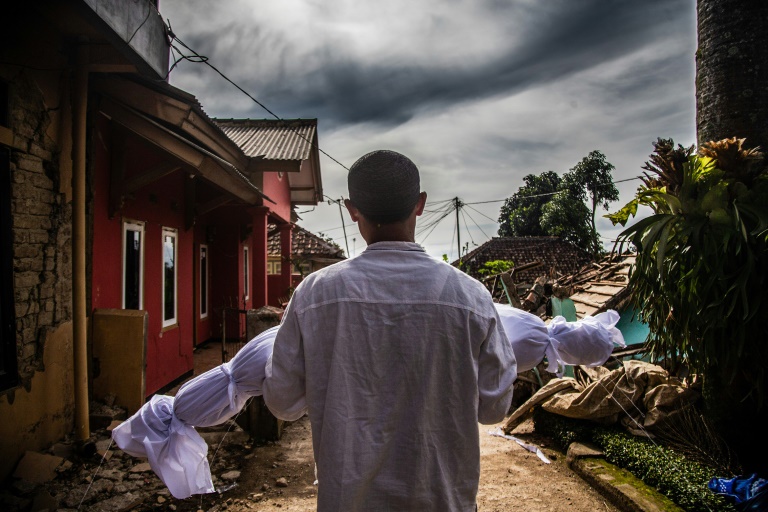
One father carried his dead son wrapped in white cloth through the streets of his village near Cianjur.

Others searched for their missing relatives in the chaos.

Rahmi Leonita’s father was riding a motorbike to Cianjur when the quake struck.

“His phone is not active. I am in a state of shock now. I am very worried but I am still hopeful,” said the 38-year-old, tears falling down her face as she spoke.

– ‘Nothing I could save’ –

At a shelter in Ciherang village near Cianjur, evacuees sat on tarpaulins stretched over the cold morning ground.

Babies and children slept while their exhausted mothers kept watch.

Nunung, a 37-year-old woman who like many Indonesians goes by one name, had pulled herself and her 12-year-old son out of the rubble of their collapsed home.

“I had to free ourselves by digging. Nothing is left, there is nothing I could save,” she told AFP from the shelter, her face covered in dried blood.

The devastation caused by the quake was made worse by a wave of 62 smaller aftershocks — with magnitudes ranging from 1.8 to 4 — that relentlessly shook Cianjur, a town of about 175,000 people.

Australian Prime Minister Anthony Albanese on Tuesday joined Canadian and French leaders Tuesday in offering their condolences.

Indonesia experiences frequent seismic and volcanic activity due to its position on the Pacific “Ring of Fire”, where tectonic plates collide.

A 6.2-magnitude quake that shook Sulawesi island in January 2021 killed more than 100 people and left thousands homeless.

38 killed in central China fire

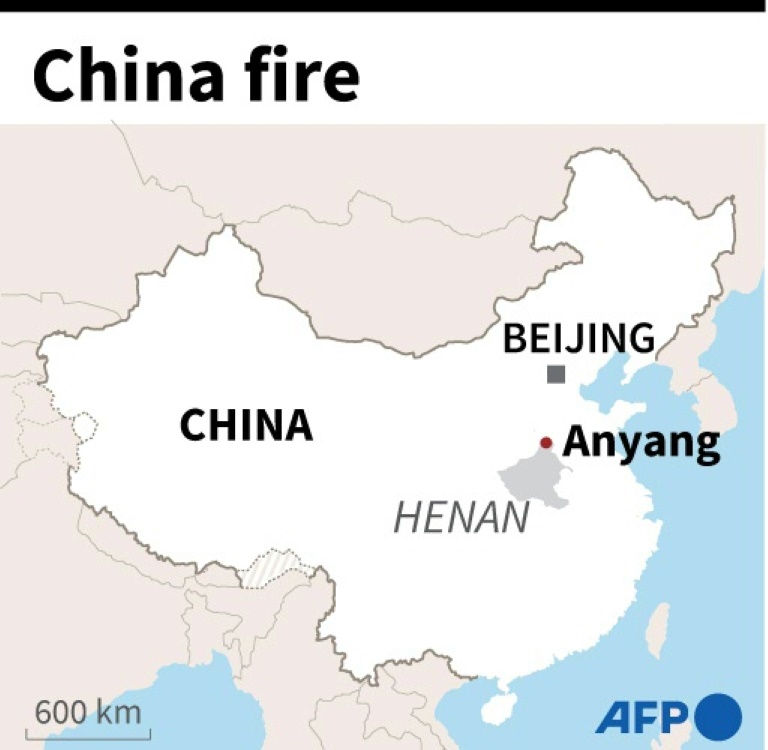
Thirty-eight people were killed and two were injured in a fire at a factory in central China, state media said Tuesday, with authorities blaming workers for illegal welding.

The fire broke out at a plant in Anyang City in Henan Province on Monday afternoon, news agency Xinhua reported.

Rescue services first received reports of a fire at 4:22 pm (0822 GMT) at Anyang Kaixinda Trading Co., Ltd, according to state media.

“After receiving the alarm, the municipal fire rescue detachment immediately dispatched forces to the scene,” state broadcaster CCTV said.

It added that the fire was extinguished by around 11 pm local time.

Footage from the scene shared by CCTV showed thick plumes of black smoke from the fire, with at least two trucks in position to battle the flames.

In addition to the dead, two were sent to hospital with injuries that were not life-threatening, the state-run People’s Daily said.

Authorities said “criminal suspects” had been taken into custody in connection with the fire.

CCTV then reported, citing local officials, that a preliminary investigation had found the fire was caused by “electric welding in which workers violated safety measures.”

According to data provider Tianyancha, Anyang Kaixinda Trading Co. is a wholesale trader dealing in machinery, building materials, non-hazardous chemicals, clothing and fire-fighting equipment.

– Weak safety standards –

Industrial accidents are common in China due to weak safety standards and corruption among officials tasked with enforcing them.

News of the Anyang City fire followed reports of an explosion at a chemical factory in nearby Taiyuan, the capital of Shanxi province, on Monday.

Videos posted on social media showed a fire at the industrial site spewing dense grey smoke into the sky.

Other images showed nearby buildings strewn with shards of glass and frightened locals fleeing the blast.

“Personnel were dispatched to the scene, the fire was extinguished, and the human toll is not yet known,” Dahebao — an official daily based out of neighbouring Henan — reported on the Twitter-like Weibo platform, citing authorities.

In June, one person was killed and another injured in an explosion at a chemical plant in Shanghai.

The fire at a Sinopec Shanghai Petrochemical Co. plant in the outlying Jinshan district sent thick clouds of smoke over a vast industrial zone as three fires blazed in separate locations, turning the sky black.

And last year, a gas blast killed 25 people and reduced several buildings to rubble in the central city of Shiyan.

In 2015, a giant explosion in northern Tianjin at a chemical warehouse killed 165 people, in one of China’s worst-ever industrial accidents.

Cuban singer Pablo Milanes dies in Madrid at 79

Acclaimed Cuban singer, songwriter and guitarist Pablo Milanes died early Tuesday in Spain, where he had been hospitalized in recent days, his agent said. He was 79.

“It is with great pain and sadness that we inform you that the maestro Pablo Milanes died this morning, November 22, in Madrid,” his agency said on the singer’s official Facebook page.

“May he rest in the love and peace he always transcended. He will remain forever in our memory.”

Cuba’s Prime Minister Manuel Marrero Cruz said on Twitter that “culture in Cuba is mourning the passing” of Milanes.

The writer of songs such as “Yolanda” and “Breve Espacio” had been hospitalized in Madrid, where he had lived since 2017 so that he could receive medical treatment.

On November 11, his office said he was “stable” and being treated for a series of recurrent infections that in recent months had been affecting his health.

The artist rose to prominence following the Cuban revolution of 1959, and gained renown both on and off the island as he became a leader of the Nueva Trova movement alongside fellow Cuban musicians Silvio Rodriguez and Noel Nicola.

He inspired and was influenced by artists from a variety of musical genres in Latin America as well as Spain, Portugal and Puerto Rico.

Nueva Trova, born in the years following the revolution, was smiled upon by Fidel Castro’s government for lyrics that gave voice to its stated political and social imperatives, including the battles against sexism, colonialism and racism.

Milanes had to cancel his final concerts planned for later this month in Spain and the Dominican Republic.

He at first embraced the Cuban revolution but later distanced himself, though he never broke the bond that united him with Cubans through his music. 

In June he made one last visit to Havana, after a three-year absence, where the performer known in Cuba as “Pablito” gave an emotional concert before about 10,000 fans.

After nearly three years without performing in his homeland, white with gray hair and with mobility issues, Milanes had not lost the light in his myopic eyes, his affable smile and the strength of his voice.

He was born on February 24, 1943 in Bayamo in Cuba’s east to soldier Angel Milanes and dressmaker Conchita Arias.

Conchita moved the family to Havana so her son could attend a prestigious music school. In the 1950s, considered the golden decade of Cuban music, the boy learned piano and collaborated with other creators.

He entered the Cuban music scene in the early 1960s with “Mis 22 anos”, and went on to win two Latin Grammys for best singer-songwriter album (2006) and musical excellence (2015).

Inflation swells Spain's 'hunger queues'

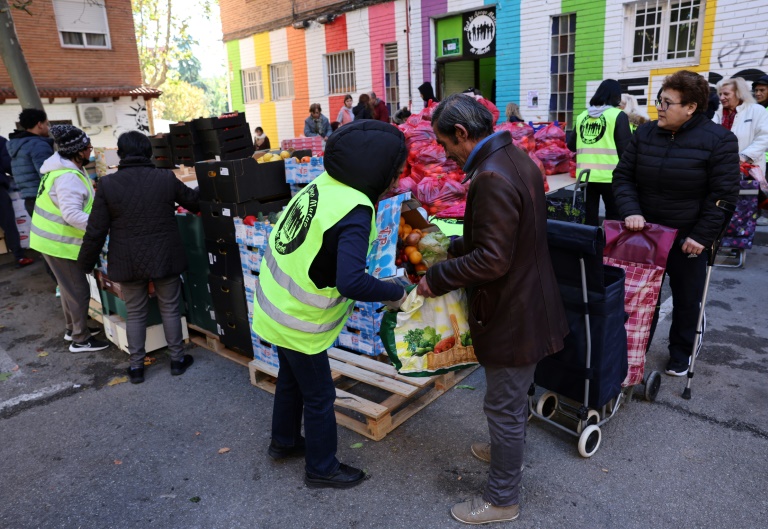
With a secure job as a bricklayer, Hugo Ramirez never thought he would need the help of charity to feed his family.

But with the cost of living soaring across Europe, the 44-year-old father of three is one of a growing number of people in Spain turning to food banks to make ends meet.

“We see prices increase every week, even for basic goods,” he told AFP as he stood before wooden crates of fruits and vegetables at the entrance of a residential building in Madrid.

Driven by the war in Ukraine, Spanish food prices jumped 15.4 percent in October from a year earlier, their biggest increase in nearly three decades, according to the National Statistics Institute.

Sugar was up 42.8 percent, fresh vegetables rose 25.7 percent and eggs 25.5 percent as staple items soared.

In a bid to ease the pressure on squeezed households, Socialist Prime Minister Pedro Sanchez’s government — which faces an election next year — has spent billions of euros on extra welfare spending.

Every Saturday Ramirez, who is from Venezuela, comes to this food bank set up by a neighbourhood association in the working-class district of Aluche during the pandemic to pick up food supplies.

He earns 1,200 euros a month while his wife makes 600 euros working part time as a domestic helper.

After paying their monthly rent of 800 euros and 300 euros for utilities “there is not much left,” he said.

The line of people seeking help stretched far down the street. Many of them are immigrants.

Similar lines, dubbed “hunger queues”, can be seen regularly outside of other food banks across the country.

– Insufficient salaries –

“Every week we see new families in need, especially since the start of the war in Ukraine” in February, said Raul Calzado, a volunteer with the Aluche neighbourhood association.

Some mothers have stopped buying feminine hygiene products to be able to feed their children, he added.

The association currently offers aid to 350 households, a number Calzado expects will rise to around 400 by the end of the year.

Behind him dozens of other volunteers are busy at work, surrounded by boxes of pasta, canned goods and baby diapers.

“Some beneficiaries have no revenues. But we also have more and more retirees with small pensions or people who work but whose salaries are insufficent,” said the association’s vice president, Elena Bermejo.

Among the measures Spain has introduced are subsidies for transport, a one-off payment of 200 euros for the unemployed and a 15 percent increase in pensions for the most vulnerable such as widows.

But charities that work with the poor say the measures are not enough.

“For some families, even buying a litre of olive oil or a kilo of lentils has become difficult,” said Bermejo.

– Donations down –

Food banks, which had started to see dome relief as people returned to work after pandemic shutdowns, are struggling to meet the growing demand.

“With inflation, we are seeing a decrease in donations” since people have less money, said the spokesman for the Spanish Federation of Food Banks, Luis Miguel Ruperez.

And higher prices also means food banks can afford to buy less food themselves, he added.

The federation collected 125,000 tonnes of food since January, compared to 131,000 tonnes during the same time last year.

Food banks provide help to over 186,000 people in the Madrid region, and 1.35 million in total in Spain — roughly the same population as Barcelona, the country’s second biggest city.

One household in seven in Spain suffers food insecurity, meaning inadequate or insecure access to food due to low income, according to a study published earlier this year by the University of Barcelona.

“I hope it will get better but I’m afraid that won’t be the case,” said Ramirez as he clutched a bag of groceries from the food bank. 

Confusion, fear cloud China's path out of zero-Covid

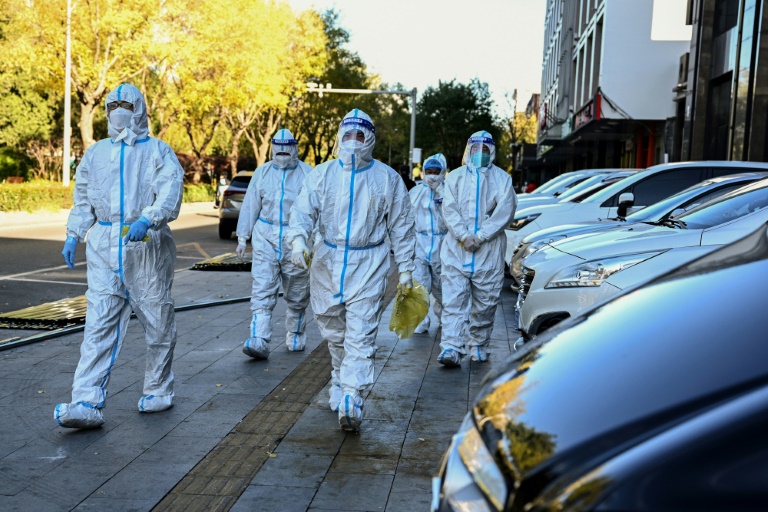
With megacities under lockdown, infection numbers climbing and sporadic protests, China’s Covid-19 policy has reached a stalemate as authorities persist with seeking to contain the virus while trying to keep the economy alive.

China is the only major economy still attempting to stamp out the domestic spread of the virus, shutting down entire cities and placing contacts of infected patients into strict quarantine.

A series of new rules announced by Beijing earlier this month appeared to signal a shift away from the strategy, easing quarantine requirements for entering the country and simplifying a system for designating high-risk areas.

Yet daily cases driven by the evasive Omicron variant have neared 30,000 — low compared to most other large countries but reaching peaks unseen since the chaotic days of Shanghai’s harsh lockdown in the spring.

That has caused whiplash among China’s urban residents, as officials first eased restrictions before reimposing curbs, all the while claiming to be finetuning the zero-Covid strategy personally championed by President Xi Jinping.

And the flip-flopping has rattled investors, causing global financial markets to wobble.

Yanzhong Huang, senior fellow for global health at the Council on Foreign Relations, told AFP it was too early to say if the new rules “signal that the central leadership is willing to give up zero-Covid anytime soon”.

“Local governments’ incentive structure has not been fundamentally changed by the new adjustments,” Huang said, noting that lower level officials were still being held accountable for outbreaks.

– Mixed signals –

Chinese officials have responded to growing infections this month with vague and seemingly contradictory messaging that has sparked public confusion.

Multiple cities cancelled mandatory regular Covid tests last week, with some backtracking within days.

One of the capital’s largest districts, Chaoyang, abruptly shuttered testing booths in its commercial areas early last week, with the faint explanation that it was in line with the central government’s new Covid rules.

The closures were reversed the next day after local media reported that office workers had been left trawling residential compounds for hours in search of an open testing booth as public spaces tightened testing requirements over a surge in cases.

Public anger over seemingly arbitrary restrictions and sudden disruptions has erupted in numerous protests in recent months, including in southern China’s Guangzhou this month when hundreds of residents took to the streets.

“Most officials in China know that the policy as it is no longer makes sense, but no one can fail to implement it as it is Xi’s policy and must be upheld,” Steve Tsang, director of the SOAS China Institute in London, told AFP.

“We are seeing some adjustments being made without sufficient clarity,” he said.

Alfred Wu, associate professor at Singapore’s Lee Kuan Yew School of Public Policy, said there was a growing tension between the goals of the central government and those of local officials.

“The anger actually comes from ordinary people and also local public officials,” whose resources and time are spent overwhelmingly on zero-Covid measures, Wu told AFP.

– Reopening risks –

Another year of zero-Covid could mean the “Chinese economy will be derailed and social tensions may reach a tipping level, which threatens regime stability and may even cause a legitimacy crisis”, Huang of the CFR said.

But opening up too suddenly could also threaten stability, as the country may “face a viral wave that results in mass die-off and quickly overwhelms its fragile healthcare system”, he told AFP.

China has not yet approved more effective mRNA vaccines for public use, and only 85 percent of adults over 60 had received two doses of domestic vaccines by mid-August, according to Chinese health authorities.

Nomura analysts said on Monday the road to reopening could be “slow and bumpy”.

“Reopening could be back and forth as policymakers may back down after observing rapid increases in cases and social disruptions,” they said in a report.

They predicted a negative impact on GDP growth when Covid cases surge after the zero-Covid policy is lifted, as “a large percentage of the Chinese population may still believe Omicron has a high mortality rate.”

Messaging on the virus will be a major challenge for Chinese authorities as they navigate a return to normality.

“The scary propaganda about the virus and how other countries have fared worse than China, ironically, is coming back to bite CCP leaders who may now indeed be eager to relax the very invasive and costly anti-Covid measures,” Fei-Ling Wang, international affairs professor at Georgia Tech, told AFP.

“A quick turnaround to open up would risk losing face for the leaders,” he said.

US, China defence chiefs meet in Cambodia

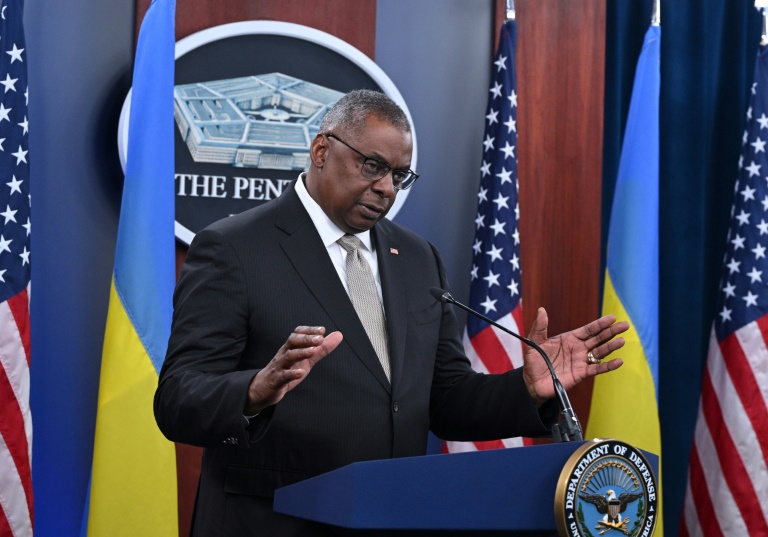
US Defense Secretary Lloyd Austin met his Chinese counterpart Wei Fenghe in Cambodia on Tuesday as the two sides move to keep tensions in check.

The meeting on the sidelines of a conference of defence ministers in Siem Reap — which lasted for an hour and a half — was the first between Austin and Wei since June, before a visit by US House Speaker Nancy Pelosi to Taiwan sparked fury in Beijing. 

But China and the United States have since sought to lower the temperature with meetings between top officials, and a senior US defence official characterised the talks between Austin and Wei as “productive” and “professional”.

“Both sides agreed that it’s important that our countries work together to ensure that competition does not veer into conflict”, but “competition remains the defining feature of the relationship”, the official told journalists.

Austin sought the “reopening of a number of military-to-military dialogues and mechanisms to help manage that competition responsibly”, the official said, referring to steps that were scrapped by Beijing following Pelosi’s visit.

The two sides “agreed on the importance of restarting a number of these specific mechanisms that they discussed, and we’ll look forward to seeing those implemented in the months ahead.”

The Austin-Wei talks came after Joe Biden and Xi Jinping met for three hours at a Group of 20 summit in Bali on November 14, the first in-person talks between the leaders of the world’s two largest economies since they each became president.

That was followed by a meeting between Xi and US Vice President Kamala Harris at an Asia-Pacific summit in Bangkok. 

In August, Taiwan announced plans for a record increase to its defence budget after China conducted huge military drills in response to Pelosi’s visit to Taipei.

Taiwan lives under constant threat of invasion by China, which claims the democratic island as part of its territory to be seized one day — by force if necessary. 

– ‘Lengthy exchange’ on Taiwan –

Beijing lashes out at any diplomatic action that might lend Taiwan legitimacy and has responded with growing anger to visits by Western officials and politicians. 

For a week after Pelosi’s visit, China sent warships, missiles and fighter jets into the waters and skies around Taiwan, its largest and most aggressive exercises since the mid-1990s.

Austin and Wei had a “lengthy exchange” on Taiwan, the senior US official said.

“The secretary reiterated the point that US policy toward Taiwan has not changed, that the United States continues to oppose unilateral changes to the status quo, and that the United States will continue to fulfill its commitments under the Taiwan Relations Act.”

The legislation, which was passed by Congress in 1979 when the United States switched recognition from Taipei to Beijing, requires Washington to provide weapons to Taiwan for its self-defence.

Beijing has increased military pressure on Taiwan in recent years, particularly with incursions into the island’s air defence identification zone. 

Last year, Taiwan recorded incursions by about 970 Chinese warplanes into its air defence zone, according to a database compiled by AFP, more than double the roughly 380 in 2020. 

Activities by Chinese military aircraft around Taiwan were raised by Austin in the talks with Wei, the US official said.

“Secretary Austin also voiced concern about a pattern of unsafe or risky PLA air intercepts as an area of particular concern, and they ran through a number of regional issues including” Russia and North Korea.

Large quake rattles Solomon Islands

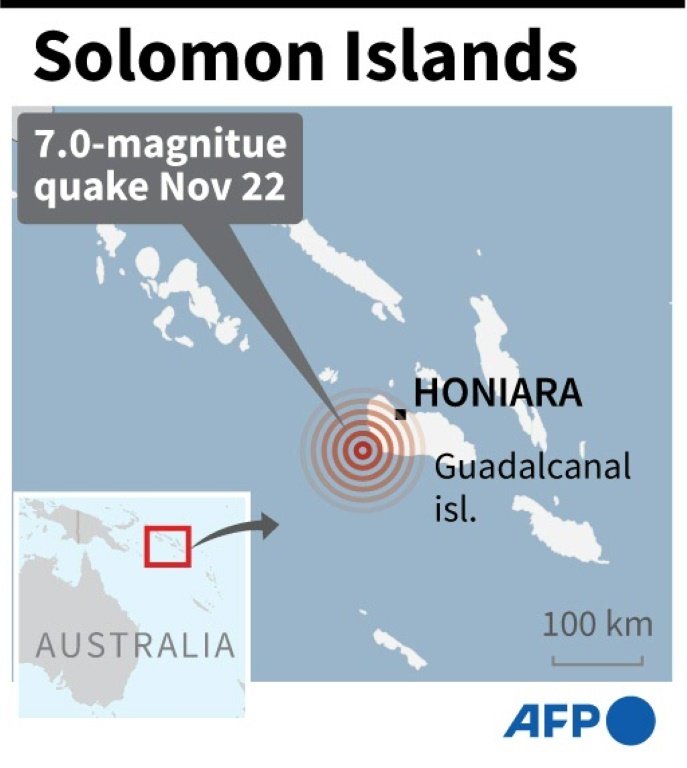
A 7.0-magnitude earthquake struck the Solomon Islands on Tuesday, swaying buildings, hurling items off shelves and briefly knocking out power in parts of the capital Honiara.

There were no reports of serious injuries or major structural damage.

“This was a big one,” Joy Nisha, a receptionist with the Heritage Park Hotel in the capital told AFP.

“Some of the things in the hotel fell. Everyone seems OK, but panicky.”

At one recently built mall, chunks of cladding were shaken loose, crushing the bonnet of a car and breaking the windshield.

The roof of an annexe at the Australian High Commission also collapsed, Prime Minister Anthony Albanese told parliament in Canberra, stating “there are no known injuries”.

An AFP reporter in Honiara said the shaking lasted for around 20 seconds.

Power was immediately knocked out in some areas of the capital and phone lines were also down.

Across the city, people fled their homes and workplaces for higher ground, fearing a tsunami.

“I was really scared because this is the first time I felt this kind of earthquake,” said a manager at the Pacific Casino Hotel, who asked not to be named.

“The building was really violently shaking,” she said. “It was really strong, it made you move side to side.”

Dozens of staff and guests fled the building to the relative safety of the car park, hoping not to be hit by debris on the way out.

The nation’s attorney general, John Muria, posted images on social media of office files that had spilled from several large metal filing cabinets. 

– Aftershocks –

The quake struck at a relatively shallow depth of 10 kilometres, just off the southwest coast of Guadalcanal island.

A tsunami warning had been issued for an area of the Solomons coast within 300 kilometres (185 miles) of the epicentre, but the UN-backed Pacific warning centre later said the threat had “largely” passed.

As nightfall approached, power was starting to return to Honiara, but local authorities urged caution.

“We expect aftershocks so people should stay alert around buildings and tall structures because of the size of the earthquake,” said David Hiba Hiriasia, director of the Solomon Islands Meteorological Service.

Staff at one hospital were readying to evacuate patients if needed.

According to UN data, about 20,000 people live within 50 kilometres of the epicentre.

The Solomons — a sprawling archipelago in the South Pacific — is home to about 800,000 people.

The quake hit exactly a year after anti-government riots that killed at least three people and caused tens of millions of dollars in damage. 

Large quake rattles Solomon Islands

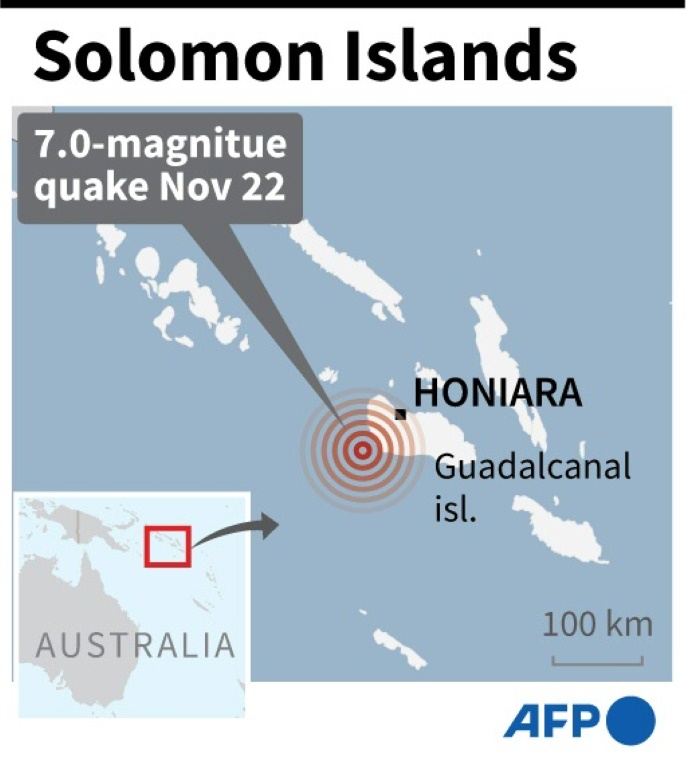
A 7.0-magnitude earthquake struck the Solomon Islands on Tuesday, swaying buildings, hurling items off shelves and briefly knocking out power in parts of the capital Honiara.

There were no reports of serious injuries or major structural damage.

“This was a big one,” Joy Nisha, a receptionist with the Heritage Park Hotel in the capital told AFP.

“Some of the things in the hotel fell. Everyone seems OK, but panicky.”

At one recently built mall, chunks of cladding were shaken loose, crushing the bonnet of a car and breaking the windshield.

The roof of an annexe at the Australian High Commission also collapsed, Prime Minister Anthony Albanese told parliament in Canberra, stating “there are no known injuries”.

An AFP reporter in Honiara said the shaking lasted for around 20 seconds.

Power was immediately knocked out in some areas of the capital and phone lines were also down.

Across the city, people fled their homes and workplaces for higher ground, fearing a tsunami.

“I was really scared because this is the first time I felt this kind of earthquake,” said a manager at the Pacific Casino Hotel, who asked not to be named.

“The building was really violently shaking,” she said. “It was really strong, it made you move side to side.”

Dozens of staff and guests fled the building to the relative safety of the car park, hoping not to be hit by debris on the way out.

The nation’s attorney general, John Muria, posted images on social media of office files that had spilled from several large metal filing cabinets. 

– Aftershocks –

The quake struck at a relatively shallow depth of 10 kilometres, just off the southwest coast of Guadalcanal island.

A tsunami warning had been issued for an area of the Solomons coast within 300 kilometres (185 miles) of the epicentre, but the UN-backed Pacific warning centre later said the threat had “largely” passed.

As nightfall approached, power was starting to return to Honiara, but local authorities urged caution.

“We expect aftershocks so people should stay alert around buildings and tall structures because of the size of the earthquake,” said David Hiba Hiriasia, director of the Solomon Islands Meteorological Service.

Staff at one hospital were readying to evacuate patients if needed.

According to UN data, about 20,000 people live within 50 kilometres of the epicentre.

The Solomons — a sprawling archipelago in the South Pacific — is home to about 800,000 people.

The quake hit exactly a year after anti-government riots that killed at least three people and caused tens of millions of dollars in damage. 

Cuban singer Pablo Milanes dies in Madrid at 79: agent

Acclaimed Cuban singer-songwriter and guitarist Pablo Milanes died early Tuesday in Spain, where he had been hospitalized in recent days, his agent said. He was 79.

“It is with great pain and sadness that we inform you that the maestro Pablo Milanes died this morning, November 22, in Madrid,” his agency said on the singer’s official Facebook page.

Cuba’s Prime Minister Manuel Marrero Cruz said on Twitter that “culture in Cuba is mourning the passing” of Milanes.

The writer of songs such as “Yolanda” and “Breve espacio” had been hospitalized in Madrid, where he had lived since 2017 so that he could receive medical treatment.

On November 11, his office said he was “stable” and being treated for a series of recurrent infections that in recent months had been affecting his health.

The artist rose to prominence following the Cuban revolution of 1959, and gained renown both on and off the island as he became a leader of the Nueva Trova musical movement.

He inspired and was influenced by artists from a variety of musical genres in Latin America as well as Spain, Portugal and Puerto Rico.

Milanes had to cancel his final concerts planned for later this month in Spain and the Dominican Republic.

But in June he made one last visit to Havana, after a three-year absence, where the performer known in Cuba as Pablito gave an emotional concert before some 10,000 fans.

Born on February 24, 1943 in Bayamo in Cuba’s east, Milanes at first embraced the Cuban revolution only to distance himself later, but never broke the bond that united him with Cubans through his music. 

Close Bitnami banner
Bitnami