World

Six staffers from Hong Kong's Apple Daily plead guilty to foreign collusion

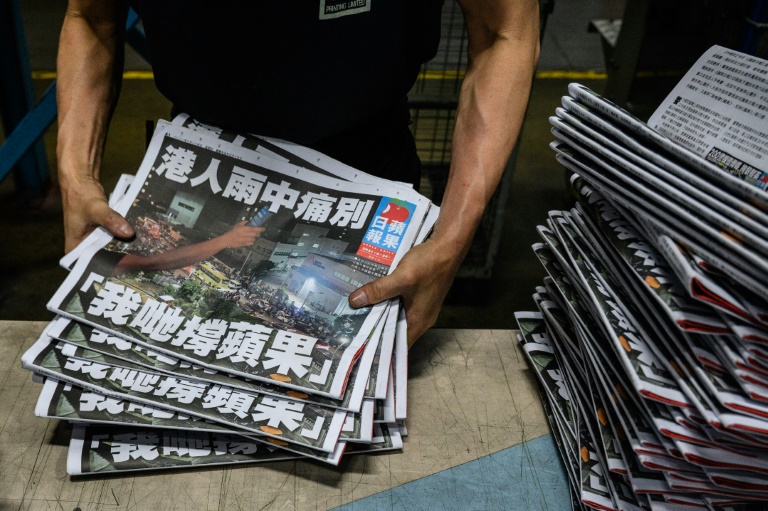
Six senior staffers from Hong Kong’s shuttered pro-democracy tabloid Apple Daily pleaded guilty to colluding with foreign forces on Tuesday, and could face a maximum sentence of life in prison.

Their convictions were part of a landmark case in which the city’s sweeping national security law, imposed by Beijing in 2020 to crush dissent, was used against a news organisation and its staff for the first time.

Apple Daily was scathing in its criticism of the Chinese government for years, and backed the pro-democracy protests that shook Hong Kong in 2019.

It collapsed last year after its funds were frozen and many senior staffers — including founder Jimmy Lai — were charged with national security violations.

Four former senior editors and two ex-executives pleaded guilty at the Hong Kong High Court on Tuesday to “conspiracy to collude with foreign forces to endanger national security”.

The former staffers included chief executive Cheung Kim-hung, associate publisher Chan Pui-man, chief editor Law Wai-kwong, executive editor Lam Man-chung, and senior writers Fung Wai-kong and Yeung Ching-kee.

The prosecution accused them of using Apple Daily to spread content that solicited foreign sanctions against China, presenting as evidence more than 160 articles it had published since April 2019.

The national security law that criminalised foreign collusion did not come into force until June 30, 2020.

Prosecutors shelved sedition charges, in exchange for the defendants pleading guilty to collusion, which carries a maximum punishment of life in prison.

The six have been in pre-trial custody for almost a year and a half, and will not be sentenced until the conclusion of the trial of Lai and three Apple Daily companies.

A lead prosecutor told the court that some of the six would give evidence in that trial.

Lai and the firms have pleaded not guilty. Their trial is due to begin in December.

Hong Kong steadily dropped in press freedom rankings after its 1997 handover to China, but that slide accelerated dramatically after Beijing launched its crackdown against dissent after the 2019 protests.

US VP Harris visits Philippine island near China-claimed waters

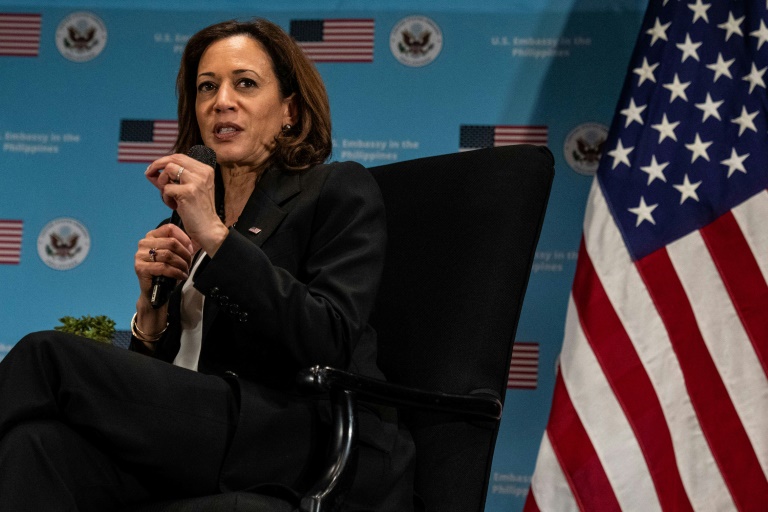
US Vice President Kamala Harris on Tuesday visited a Philippine island near waters claimed by China to show support for the longtime US ally and counter Beijing’s growing influence in the region.

Harris is the highest-ranking US official ever to visit the western island of Palawan, the closest Philippine landmass to the Spratly archipelago in the hotly contested South China Sea.

Beijing claims sovereignty over almost the entire sea and has ignored an international court ruling that its claims have no legal basis. 

The Philippines, Vietnam, Malaysia and Brunei have overlapping claims to parts of it.

Harris will meet with fisherfolk and members of the Philippine Coast Guard.

She will also deliver remarks that “underscore the importance of international law, unimpeded lawful commerce, and freedom of navigation”, a US official told reporters before the visit. 

Harris’s trip to Palawan comes a day after she held talks with Philippine President Ferdinand Marcos in Manila.

She reaffirmed the United States’ “unwavering” commitment to defending the Philippines if its vessels or aircraft were attacked in the South China Sea. 

Washington has a decades-old security alliance with the Philippines that includes a mutual defence treaty and a 2014 pact, known by the acronym EDCA, which allows for the US military to store defence equipment and supplies on five Philippine bases.

It also allows US troops to rotate through those military bases.

EDCA stalled under former president Rodrigo Duterte, but the United States and the Philippines have expressed support for accelerating its implementation as China becomes increasingly assertive.

– Rebuilding relations – 

As regional tensions rise, fuelled by China’s recent wargames around Taiwan, Washington is seeking to repair ties with Manila, whose cooperation would be critical in the event of a conflict.

Relations between the two countries fractured under the mercurial Duterte, who favoured China over his country’s former colonial master.

Marcos has sought to strike more of a balance between his superpower neighbours, insisting he will not let China trample on Manila’s maritime rights.

Harris’s visit conveyed a “stronger sense of commitment” to the Philippines’ position on maritime claims, but also underscored the need for EDCA’s continued implementation, said Jay Batongbacal, director of the University of the Philippines’s Institute for Maritime Affairs and Law of the Sea.

“The US cannot adequately carry out its obligations if it is forced to stay several thousand kilometres away in Japan or Guam,” he said.

Of all the claimants to the South China Sea, Beijing has in recent years pressed its stance most aggressively. 

Hundreds of Chinese coast guard and maritime militia vessels prowl the waters, swarming reefs, harassing and attacking fishing and other boats, and interfering in oil and gas exploration as well as scientific research.

Chinese state outlet Global Times on Tuesday accused Harris of “fanning the flames of the South China Sea issue”. 

“The Philippines has the right to receive any foreign visitor. What we want to emphasize is that any bilateral exchanges should not be at the expense of the interests of any third country as well as regional peace and stability,” it said in an editorial. 

On the eve of Harris’s visit to Palawan, a senior Philippine navy official accused the Chinese coastguard of “forcefully” seizing parts of a rocket that landed in the Spratlys.

Beijing — which has built militarised artificial islands in the archipelago — insisted the handover took place after “friendly consultation”. 

Tensions between Manila and Beijing flared last year after hundreds of Chinese vessels were detected at Whitsun Reef in the Spratlys.

Last November, Chinese coastguard ships fired water cannon at Philippine boats delivering supplies to marines at Second Thomas Shoal in the same archipelago. 

Australian tells of Myanmar jail squalor, torture fear

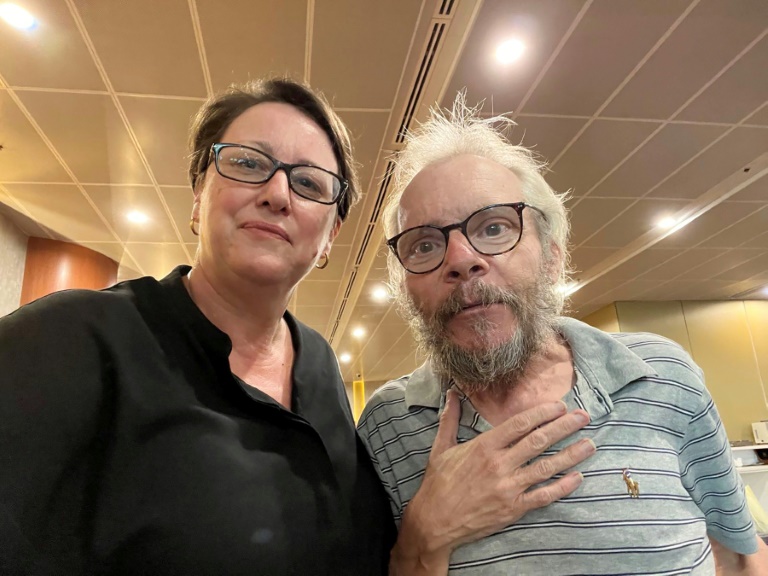
An Australian economist released last week after nearly two years in a Myanmar jail on Tuesday told of interrogations in leg irons, squalor and the sounds of screams from tortured cellmates.

Sean Turnell, who returned home to Sydney on Friday after being released as part of an amnesty of almost 6,000 prisoners, gave the first public details of his incarceration in an interview with The Australian newspaper.

The former adviser to deposed Myanmar leader Aung San Suu Kyi was detained by the military in February 2021 shortly after its forces seized control of the country. 

Turnell told the paper he was initially kept at Yangon’s Insein prison in a six metre by 2.5 metre concrete cell in which an iron chair with leg irons had been bolted to the floor.

He then endured two months of interrogations, the paper said, sometimes being taken from his bed to be locked in the irons.

Officials accused him of working for British intelligence and gun-running, and quizzed him about his work for Suu Kyi, the economist was quoted as saying.

He told the paper he was infected with Covid-19 five times and kept in solitary confinement for months.

In the early days of his confinement, Turnell said he could hear the sounds of people outside banging pots and pans at night in protest against the military coup.

“Then came the explosions and gunfire and people being tortured in rooms nearby. I thought, they’re not going to do that to me surely? Then after a while, I started thinking, maybe they will. I think they wanted me to hear it.”

– ‘Ate out of a bucket’ –

Turnell said he had expected to be treated “with kid gloves”.

“They didn’t stick electrodes to me, but I was thrown into filthy cells. The food they used to deliver to me (came) in a bucket. For 650 days, I ate out of a bucket.”

In the Naypyidaw detention centre, to which he was later transferred, “it wasn’t even a new bucket, they were paint buckets”, he said.

“They didn’t beat me, but they did push and shove me.”

In Naypyidaw, prisoners were locked away for 20 hours a day, Turnell said. 

“In the monsoon, the roof would leak and we would sit there all night sometimes with water just pouring down through the roof, clutching your clothes and blanket to try to keep them dry,” he said.

Turnell said his wife, Ha Vu, an economist at Australia’s Macquarie University, helped him survive with phone chats and by regularly sending books, cookies and cake through the Australian embassy. 

The economist was sentenced in September to three years’ imprisonment for breaching Myanmar’s Official Secrets Act — charges he denied — before being released in last week’s amnesty along with former British ambassador Vicky Bowman and Japanese journalist Toru Kubota.

US, China defence chiefs meet in Cambodia

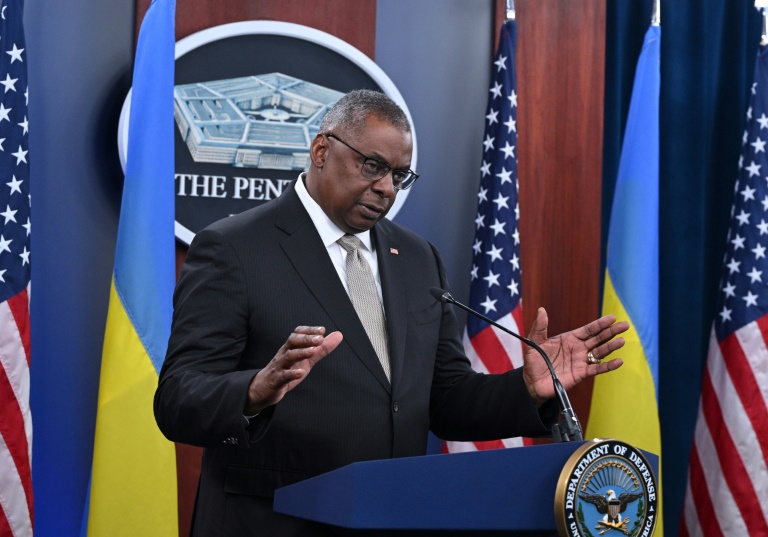
US Defense Secretary Lloyd Austin met his Chinese counterpart Wei Fenghe in Cambodia on Tuesday as the two sides move to keep tensions in check.

The meeting on the sidelines of a conference of defence ministers in Siem Reap is the first between Austin and Wei since June, before a visit by US House Speaker Nancy Pelosi to Taiwan sparked fury in Beijing. 

But China and the United States have since moved to lower the temperature with meetings between top officials. 

On November 14, Joe Biden and Xi Jinping met for three hours at a Group of 20 summit in Bali, the first in-person talks between the leaders of the world’s two largest economies since they each became president.

That was followed by a meeting between Xi and US Vice President Kamala Harris at an Asia-Pacific summit in Bangkok. 

Harris reinforced Biden’s message that “we must maintain open lines of communication to responsibly manage the competition between our countries”, a White House official said. 

Chinese state media quoted Xi as telling Harris that his meeting with Biden was “strategic and constructive, and has important guiding significance for China-US relations in the next stage”.

In August, Taiwan announced plans for a record increase to its defence budget after China conducted huge military drills in response to Pelosi’s visit to Taipei.

Taiwan lives under constant threat of invasion by China, which claims the democratic island as part of its territory to be seized one day — by force if necessary. 

Beijing lashes out at any diplomatic action that might lend Taiwan legitimacy and has responded with growing anger to visits by Western officials and politicians. 

For a week after Pelosi’s visit, China sent warships, missiles and fighter jets into the waters and skies around Taiwan, its largest and most aggressive exercises since the mid-1990s.

Beijing had increased military pressure on Taiwan in recent years, particularly with incursions into the island’s air defence identification zone. 

Last year, Taiwan recorded incursions by about 970 Chinese warplanes into its air defence zone, according to a database compiled by AFP, more than double the roughly 380 in 2020. 

Beijing sees record Covid cases as China outbreak spirals

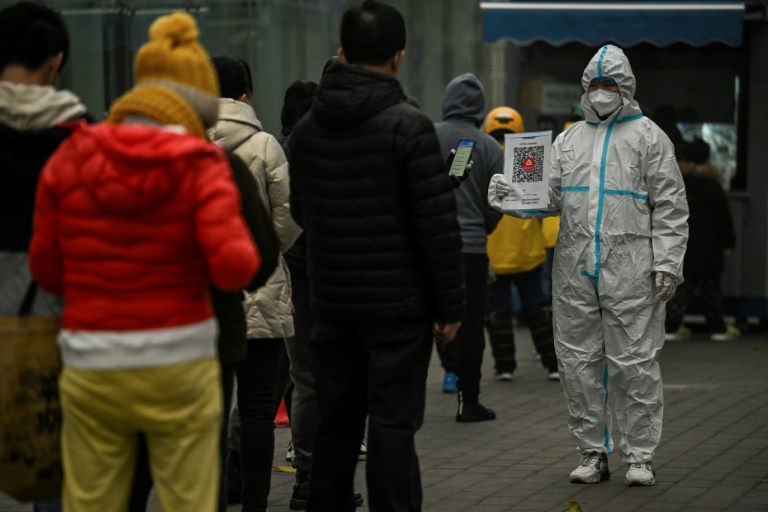
China’s capital Beijing posted a record number of new Covid cases on Tuesday, with the city hunkering down under a tightening chokehold of restrictions that have sent schools online, closed many restaurants and forced employees to work from home.

More than 28,000 new infections were reported nationwide — nearing the record high since the pandemic began — with Guangdong province and the city of Chongqing logging over 16,000 and 6,300 cases respectively, health authorities said.

New cases in Beijing have also jumped in recent days, more than doubling from 621 on Sunday to Tuesday’s 1,438 — a pandemic record for the city.

The last major economy still welded to a zero-tolerance Covid policy, China enforced snap lockdowns, mass testing and quarantines to control outbreaks to great success in the earlier stages of the pandemic. 

But the latest spiralling outbreak is testing the limits of that playbook, with officials keen to avoid citywide lockdowns like Shanghai’s two-month ordeal in April, which marred the finance hub’s economy and international image.

Three elderly Beijing residents with underlying diseases died from Covid over the weekend, authorities said, marking China’s first Covid deaths since May.

While the capital has so far avoided a blanket shutdown, there have been widely enforced snap lockdowns of individual buildings and long PCR testing queues due to the requirement for a 24-hour negative test for entry to most public spaces.

Over the weekend, authorities advised residents to stay and home and not travel between districts. And on Monday required travellers to the city to test more times after they arrive.

Many tourist attractions, gyms and parks have been closed, with large-scale events such as concerts cancelled. 

China declared its most significant easing of coronavirus measures to date on November 11, billed as an “optimisation” to limit the economic and social impact of zero-Covid measures.

Among the steps was a reduction of compulsory quarantine times for international arrivals.

Multiple Chinese cities cancelled mass Covid testing last week but some later reinstated them, underlining the difficulty of controlling the fast-spreading Omicron variant.

Shijiazhuang, which had previously cancelled mass testing, began a partial lockdown Monday after cases surged, while several districts of southern epicentre Guangzhou also locked down the same day.

The limited relaxation has not marked a reversal of zero-Covid, which has left China internationally isolated, wreaked havoc on the economy, and sparked protests in a country where dissent is routinely crushed.

US LGBTQ club attack suspect faces murder, possible hate crime charges

A Colorado man was facing murder and potential hate crime charges on Monday after a shooting rampage at an LGBTQ nightclub, as a US Army veteran recounted how he “went into combat mode” to quickly subdue the gunman.

Anderson Lee Aldrich, 22, was arrested following the Saturday night shooting at Club Q in Colorado Springs that left five people dead and at least 18 injured, officials said.

Currently held without bond in hospital after being overpowered by club patrons, the alleged gunman will make a first court appearance in the next few days, El Paso County District Attorney Michael Allen said.

Formal charges have not yet been filed but Aldrich is expected to face first-degree murder charges and “if the evidence supports bias-motivated crimes, we will charge that as well,” Allen said.

Colorado Springs Mayor John Suthers praised “two heroes” who helped pin down the gunman after he entered the club and opened fire.

“I think in the opinion of everyone involved, (they) saved a lot of lives,” Suthers said.

The mayor said he had spoken to one of the men — Richard Fierro, a 15-year veteran of the US Army, according to The New York Times.

“I have never encountered a person who had engaged in such heroic actions that was so humble about it,” Suthers said. “He simply said to me, ‘I was trying to protect my family.'”

In an interview with the Times, Fierro said he was at the club with his wife, daughter and friends watching a drag show when the gunfire began.

The 45-year-old Fierro, who was deployed to Iraq and Afghanistan during his military service, said he tackled the gunman by grabbing a handle on the back of his body armor, took his pistol and beat him with it.

“I don’t know exactly what I did, I just went into combat mode,” he said. “I just know I have to kill this guy before he kills us.

“I grabbed the gun out of his hand and just started hitting him in the head, over and over,” he told the newspaper.

– ‘Vile rhetoric’ –

The attack was the deadliest on the LGBTQ community in the United States since a 2016 mass shooting at a nightclub in Orlando, Florida that claimed 49 lives.

GLAAD, an LGBTQ advocacy organization, noted that it came on the eve of the Transgender Day of Remembrance, which honors victims of transphobic attacks, and amid an uptick in hostility against the LGBTQ community in the United States.

“You can draw a straight line from the false and vile rhetoric about LGBTQ people spread by extremists and amplified across social media, to the nearly 300 anti-LGBTQ bills introduced this year, to the dozens of attacks on our community like this one,” GLAAD president Sarah Kate Ellis said in a statement.

Colorado Representative Brianna Titone, an openly transgender state legislator, also singled out anti-LGBTQ rhetoric.

“When politicians and pundits keep perpetuating tropes, insults, and misinformation about the trans and LGBTQ+ community, this is a result,” Titone tweeted.

Transgender rights were a hot-button issue in the United States leading up to midterm elections earlier this month, with Republicans putting forward a slew of legislative proposals to restrict them.

Adrian Vasquez, the Colorado Springs police chief, said the shooting suspect was armed with an “AR-style” rifle and a handgun.

Vasquez condemned what he called an “evil act” and pledged to do everything he can to make the community feel safe again.

Gun violence is alarmingly common in the United States. This year there have been more than 600 mass shootings across the country, according to the Gun Violence Archive, which defines such incidents as shootings of four or more people, not including any gunman.

– ‘We’ll keep going’ –

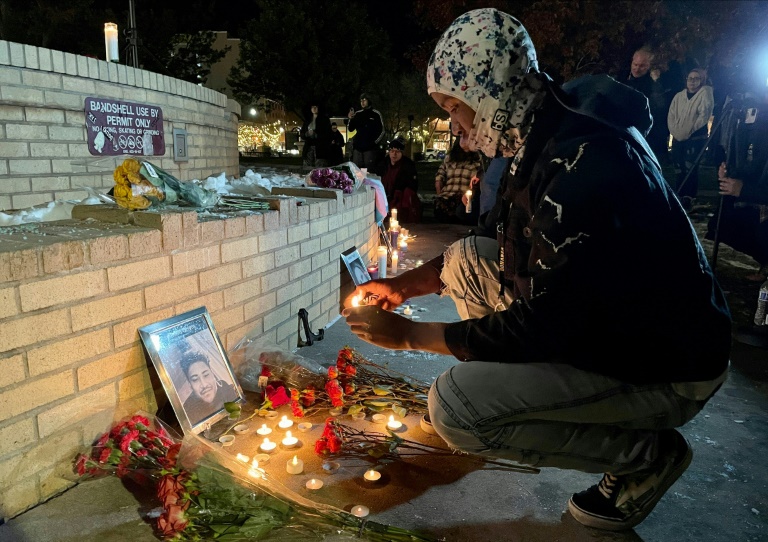
On Monday evening, hundreds of people gathered in a Colorado Springs park for an emotional candlelit vigil paying respect to those who were murdered.

Speakers praised the resilience of the LGBTQ community in the Rocky Mountain city, and insisted it would not be cowed by the horrific violence of Saturday night.

“I’m so glad that everybody was able to come together,” 25-year-old body piercer Bunnie Phantom told AFP.

“To see everybody here, to have the support and representation in the community… literally means the world to me.”

Allie Porter, who paid a tearful tribute from the stage to those killed, said she had felt the warm embrace of the local community for the 30 years she had lived in the city.

She vowed it would not be changed by the horrors of the weekend.

“We’ll keep going the same way as we always have. We’ve dealt with this for years, decades, and we’ve consistently rebuilt,” she said.

38 killed in central China fire

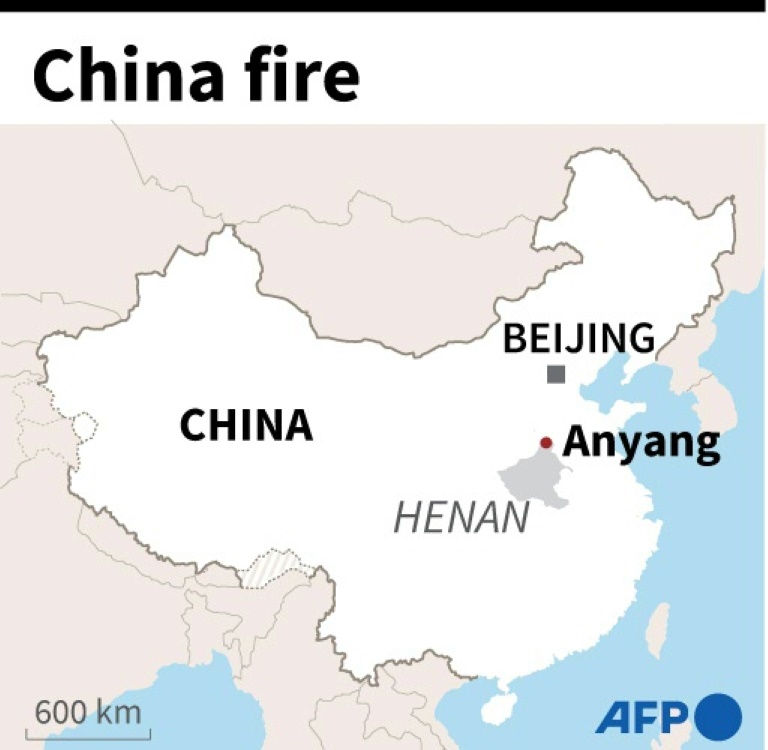
Thirty-eight people were killed and two were injured after a fire at a plant in central China, state media said Tuesday, citing local authorities.

The fire broke out at a plant in Anyang City in Henan Province on Monday afternoon, news agency Xinhua reported.

State media said rescue services first received reports of a fire at 4:22 pm (0822 GMT) at Kaixinda Trading Co., Ltd.

“After receiving the alarm, the municipal fire rescue detachment immediately dispatched forces to the scene,” CCTV reported.

“Public security, emergency response, municipal administration, and power supply units rushed to the scene at the same time to carry out emergency handling and rescue work,” it said, adding the fire was extinguished by around 11 pm local time.

Footage from the scene shared by state media showed thick plumes of black smoke from the fire, with at least two trucks in position to battle the flames.

Another video showed the charred hull of the building after the fire was extinguished.

In addition to the dead, two were sent to hospital with injuries that were not life-threatening, the state-run People’s Daily said.

Authorities said “criminal suspects” had been taken into custody in connection with the fire, but did not provide further details.

No reason has been given for the cause of the blaze.

– Weak safety standards –

Industrial accidents are common in China due to weak safety standards and corruption among officials tasked with enforcing them.

News of the Anyang City fire followed reports of an explosion at a chemical factory in nearby Taiyuan, the capital of Shanxi province, on Monday.

Videos posted on social media showed a fire at the industrial site spewing dense grey smoke into the sky.

Other images showed nearby buildings strewn with shards of glass and frightened locals fleeing the blast.

“Personnel were dispatched to the scene, the fire was extinguished, and the human toll is not yet known,” Dahebao — an official daily based out of neighbouring Henan — reported on the Twitter-like Weibo platform, citing authorities.

In June, one person was killed and another injured in an explosion at a chemical plant in Shanghai.

The fire at a Sinopec Shanghai Petrochemical Co. plant in the outlying Jinshan district sent thick clouds of smoke over a vast industrial zone as three fires blazed in separate locations, turning the sky black.

And last year, a gas blast killed 25 people and reduced several buildings to rubble in the central city of Shiyan.

In March 2019, an explosion at a chemical factory in Yancheng, located 260 kilometres (161 miles) from Shanghai, killed 78 people and devastated homes in a several-kilometre radius.

Four years prior, a giant explosion in northern Tianjin at a chemical warehouse killed 165 people, in one of China’s worst-ever industrial accidents.

Asian markets struggle as China Covid worries build

Growing fears about China’s latest Covid-19 outbreaks Tuesday rattled investors, who fear authorities will revert to highly restrictive containment measures that have already dealt a chilling blow to the world’s number two economy this year.

After starting November with a rally thanks to easing inflation concerns and signs China was edging towards a looser approach to the disease, the optimism has been given a massive jolt since the country announced its first virus deaths in six months.

They come as infections rise across the country, with residents in Beijing worried that leaders will introduce lockdown measures similar to those seen earlier in the year in Shanghai, which lasted for months.

The flare-ups come just a week after China said it would begin rolling back some of the strict Covid rules that have been in place since the pandemic started in 2020, even as the rest of the world has moved on.

Analysts said the latest developments highlight the long road ahead for China in emerging from the crisis as President Xi Jinping sticks solidly to a zero-Covid strategy that is widely blamed for the country’s economic troubles.

“Risk sentiment has been under pressure on questions around China reopening,” said SPI Asset Management’s Stephen Innes.

“Some investors are convinced that China’s reopening is a formality and will be catalysed by the (World Health Organization) downgrading Covid to an endemic.

“We know that China’s reopening will be laced with fits and starts as the two-step-forward-one-step-back routine becomes the norm.”

Hong Kong, which thundered more than 10 percent higher in a three-day surge earlier this month, fell for a fifth straight day, while Shanghai was also lower along with Seoul, Taipei and Wellington.

Still, there were gains in Tokyo, Sydney, Singapore, Manila and Jakarta. 

That came after a drop on Wall Street, where trading is lighter than usual owing to the Thanksgiving break at the end of the week.

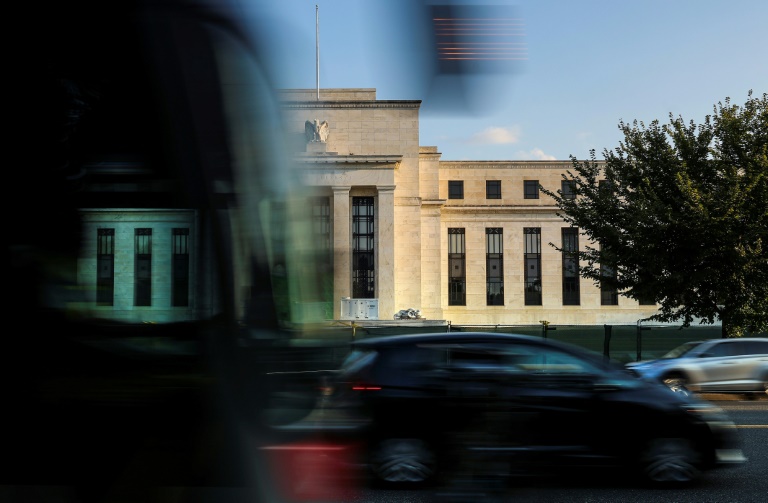
Wednesday sees the release of minutes from the Federal Reserve’s most recent policy meeting, which will be pored over for insight into officials’ thinking against the backdrop of four-decade-high inflation and signs of a slowing economy.

Hopes that the bank will begin to take its foot off the pedal were boosted earlier this month by figures showing inflation slowed more than expected, suggesting a series of hikes were beginning to bite.

Still, several members of the Fed’s top brass have warned against getting carried away and said more increases were needed to get on top of prices.

But JPMorgan Chase & Co’s Marko Kolanovic said markets would likely stumble into the new year and only pick up once the US central bank takes a more dovish stance on borrowing costs. JPMorgan saw risk assets to trade “rangebound with a more pronounced downside risk”.

– Key figures around 0230 GMT –

Tokyo – Nikkei 225: UP 0.7 percent at 28,150.50 (break)

Hong Kong – Hang Seng Index: DOWN 0.9 percent at 17,500.32

Shanghai – Composite: DOWN 0.1 percent at 3,083.51

Euro/dollar: UP at $1.0262 from $1.0245 on Monday

Dollar/yen: DOWN at 141.79 yen from 142.10 yen

Pound/dollar: UP at $1.1858 from $1.1823

Euro/pound: DOWN at 86.55 pence from 86.58 pence

West Texas Intermediate: UP 0.3 percent at $80.30 per barrel

Brent North Sea crude: UP 0.5 percent at $87.84 per barrel

New York – Dow: DOWN 0.1 percent at 33,700.28 (close)

London – FTSE 100: DOWN 0.1 percent at 7,376.85 (close)

— Bloomberg News contributed to this story —

Turtles and see-through frogs on agenda at wildlife summit

A global wildlife summit in Panama will decide whether to take measures to protect the translucent glass frog and 12 types of freshwater turtles in its final week, which kicked off Monday.

Conservation experts and delegates from more than 180 nations began the week with a decision to maintain a ban on the trade of white rhinoceros horn, despite a request from Eswatini that was backed by Japan and several other African countries.

The tiny nation, formerly known as Swaziland, had argued the money from the sale of rhino horn would aid in conserving the threatened species.

Delegates also authorized the export of Brazil’s broad-snouted caiman and the saltwater crocodile from the Philippines for animals raised in captivity, but a ban on cross-border trade in Siamese crocodiles raised by Thai farmers was left intact.

The meeting in Panama City began on November 14 to discuss 52 proposals to modify protection levels set by the Convention on International Trade in Endangered Species of Wild Fauna and Flora (CITES).

The fate of several unique amphibians will be up for debate before the meeting wraps up on Friday.

“Freshwater turtles are among the main groups that are trafficked in the countries, and there is high pressure for international trade,” said Yovana Murillo, who heads a program against wildlife trafficking in the Andes, Amazon and Orinoco region for the Wildlife Conservation Society.

Brazil, Colombia, Costa Rica, and Peru want to list two species of matamata turtles, which live in the Amazon and Orinoco basins, on CITES Appendix II, which requires the tracking and regulation of trade.

Doris Rodriguez of Peru’s forestry service told AFP that the striking matamata turtles, with their beetle-like appearance, have become sought-after pets and “face many threats.”

These include habitat destruction, pollution, illegal trade, and being hunted for their meat and eggs.

– Glass frog –

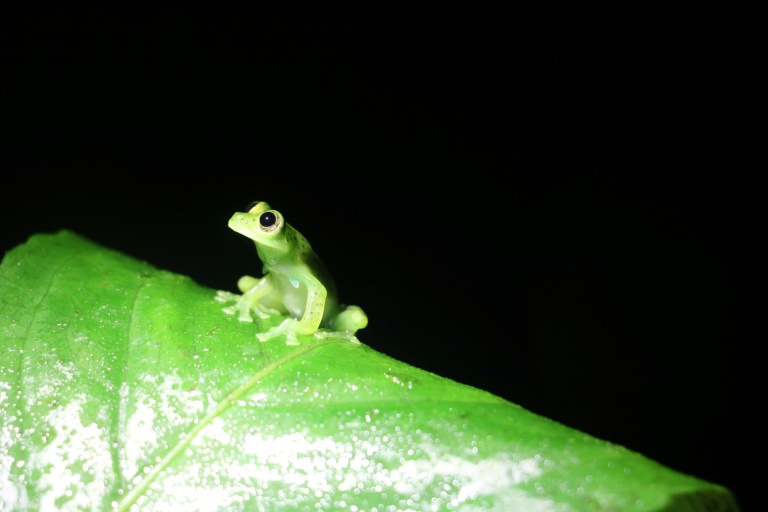
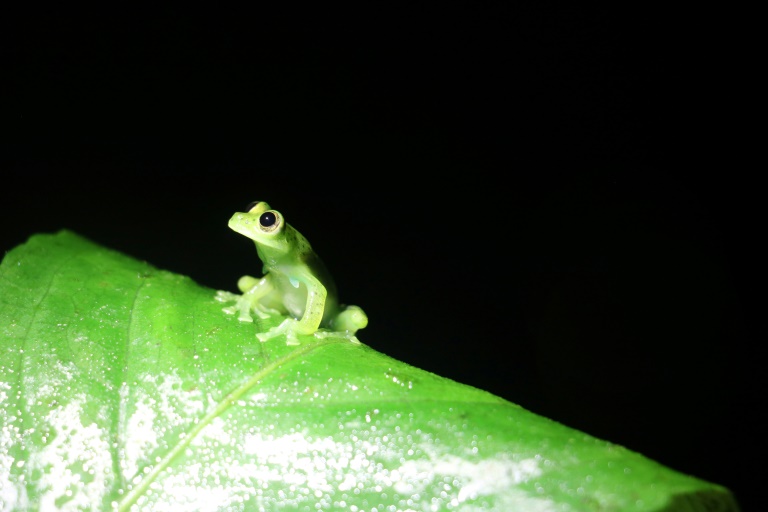
Delegates will also debate regulating the trade of the nocturnal glass frog, found in several rainforests in Central and South America.

The amphibian is an increasingly popular pet. Some are a lime green color, while others have translucent bellies and chests. 

“They are being collected for their beauty. They are being trafficked and some are in critical danger,” said Rodriguez.

CITES, in force since 1975, regulates trade in some 36,000 species of plants and animals and provides mechanisms to help crack down on illegal trade. It sanctions countries that break the rules.

The meeting of the parties to the convention takes place every two or three years.

On Friday, delegates rejected a request by Zimbabwe to allow the ivory trade to resume in some southern African countries, a decision lauded by conservation NGOs. 

Another hot issue up for debate is the possible addition of protections for two major shark families, which could upend Hong Kong’s controversial shark fin trade.

– Beleaguered porpoise –

The conference has seen fierce debate over the vaquita, a species of porpoise that lives in Mexico’s Gulf of California and is at risk of extinction.

On the eve of the summit, CITES issued an ultimatum to Mexico, to show progress in protecting the world’s most endangered marine animal by February 2023, or face sanctions against its fish exports.

Washington has argued that its neighbor is not doing enough to protect the vaquita, while Mexico countered it had boosted naval surveillance in the Gulf.

Good news also emerged from the summit: the Aleutian cackling goose was moved from the list of most threatened species to those no longer threatened with extinction, after its numbers increased.

“This is a positive story about the recovery of a species,” highlighted the president of the committee which approved the move, Britain’s Vincent Fleming.

Turtles and see-through frogs on agenda at wildlife summit

A global wildlife summit in Panama will decide whether to take measures to protect the translucent glass frog and 12 types of freshwater turtles in its final week, which kicked off Monday.

Conservation experts and delegates from more than 180 nations began the week with a decision to maintain a ban on the trade of white rhinoceros horn, despite a request from Eswatini that was backed by Japan and several other African countries.

The tiny nation, formerly known as Swaziland, had argued the money from the sale of rhino horn would aid in conserving the threatened species.

Delegates also authorized the export of Brazil’s broad-snouted caiman and the saltwater crocodile from the Philippines for animals raised in captivity, but a ban on cross-border trade in Siamese crocodiles raised by Thai farmers was left intact.

The meeting in Panama City began on November 14 to discuss 52 proposals to modify protection levels set by the Convention on International Trade in Endangered Species of Wild Fauna and Flora (CITES).

The fate of several unique amphibians will be up for debate before the meeting wraps up on Friday.

“Freshwater turtles are among the main groups that are trafficked in the countries, and there is high pressure for international trade,” said Yovana Murillo, who heads a program against wildlife trafficking in the Andes, Amazon and Orinoco region for the Wildlife Conservation Society.

Brazil, Colombia, Costa Rica, and Peru want to list two species of matamata turtles, which live in the Amazon and Orinoco basins, on CITES Appendix II, which requires the tracking and regulation of trade.

Doris Rodriguez of Peru’s forestry service told AFP that the striking matamata turtles, with their beetle-like appearance, have become sought-after pets and “face many threats.”

These include habitat destruction, pollution, illegal trade, and being hunted for their meat and eggs.

– Glass frog –

Delegates will also debate regulating the trade of the nocturnal glass frog, found in several rainforests in Central and South America.

The amphibian is an increasingly popular pet. Some are a lime green color, while others have translucent bellies and chests. 

“They are being collected for their beauty. They are being trafficked and some are in critical danger,” said Rodriguez.

CITES, in force since 1975, regulates trade in some 36,000 species of plants and animals and provides mechanisms to help crack down on illegal trade. It sanctions countries that break the rules.

The meeting of the parties to the convention takes place every two or three years.

On Friday, delegates rejected a request by Zimbabwe to allow the ivory trade to resume in some southern African countries, a decision lauded by conservation NGOs. 

Another hot issue up for debate is the possible addition of protections for two major shark families, which could upend Hong Kong’s controversial shark fin trade.

– Beleaguered porpoise –

The conference has seen fierce debate over the vaquita, a species of porpoise that lives in Mexico’s Gulf of California and is at risk of extinction.

On the eve of the summit, CITES issued an ultimatum to Mexico, to show progress in protecting the world’s most endangered marine animal by February 2023, or face sanctions against its fish exports.

Washington has argued that its neighbor is not doing enough to protect the vaquita, while Mexico countered it had boosted naval surveillance in the Gulf.

Good news also emerged from the summit: the Aleutian cackling goose was moved from the list of most threatened species to those no longer threatened with extinction, after its numbers increased.

“This is a positive story about the recovery of a species,” highlighted the president of the committee which approved the move, Britain’s Vincent Fleming.

Close Bitnami banner
Bitnami