World

Health or jobs: Peruvian mining town at a crossroads

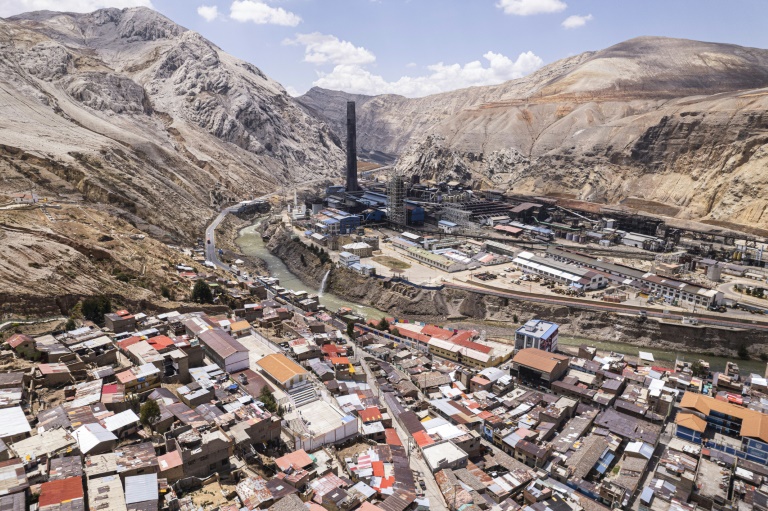
The Peruvian mining city of La Oroya, one of the most polluted places in the world, is seeking to reopen a heavy metal smelter that poisoned residents for almost a century.

The Andean city, situated in a high-altitude valley at 3,750 meters (12,300 feet), is a grey, desolate place. 

Small houses and shops — many abandoned — cluster around towering black chimneys, surrounded by ashen mountain slopes corroded by heavy metals and long devoid of vegetation.

In 2009, the gigantic smelter that was the economic heartbeat of La Oroya went bankrupt, forcing residents to leave in droves and bringing local commerce to its knees. 

Since 1922, the plant processed copper, zinc, lead, gold, selenium, and other minerals from nearby mines.

If the metallurgical complex reopens, as announced by its new owners in October, it could breathe life back into the economy.

“The large majority of the population is eager and has waited a long time for this to start up again, because it is the source of life, the economic source,” said 48-year-old taxi driver Hugo Enrique.

But at what cost?

– A lifetime of disease –

In 2011, La Oroya was listed as the second-most polluted city on Earth, falling into fifth place two years later, according to the Blacksmith Institute, an NGO which works on pollution issues.

It was in insalubrious company, rubbing shoulders with Ukraine’s nuclear-sullied Chernobyl and Russia’s Dzerzhinsk, the site of Cold War-era factories producing chemical weapons.

According to the International Federation for Human Rights, in 2013, 97 percent of La Oroya children between six months and six years of age, and 98 percent between age seven and 12, had elevated levels of lead in their blood.

Manuel Enrique Apolinario, 68, a teacher who lives opposite the foundry, told AFP his body has high levels of lead, arsenic, and cadmium.

Residents had “gotten used to the way of life, surrounded by smoke and toxic gases,” he said.

“Those of us who have lived here for a lifetime have been ill with flu and bronchitis, especially respiratory infections.”

– Another 100 years?-

The foundry was opened in 1922, nationalized in 1974, and later privatized in 1997 when US natural resources firm Doe Run took it over.

In June 2009, Doe Run halted work after failing to comply with an environmental protection program and declared itself insolvent.

Now, despite years of residents accusing Lima and Doe Run of turning a blind eye to the harmful effects, some 1,270 former employees want to reopen the smelter next March — with the vow not to pollute.

Luis Mantari, one of the new owners, who is in charge of logistics, said the plant would operate “with social and environmental responsibility.”

“We want this unique complex to last another 100 years,” added human resources boss Jose Aguilar.

The company has stockpiled 14 million tonnes of copper and lead slag waste waiting to be converted into zinc.

“Those of us who fought against pollution have never opposed to the company working. Let it reopen with an environmental plan,” said Pablo Fabian Martinez, 67, who also lives near the site.

For many, though, the decision comes down to pure pocketbook issues.

“I want it to reopen because, without the company, La Oroya lost its entire economy,” added Rosa Vilchez, a 30-year-old businesswoman. Her husband left to work in another city after the closure.

– Respect health –

In 2006, La Oroya residents sued the Peruvian government at the Inter-American Commission on Human Rights for allowing the company to pollute at will.

Hearings began in October with the court sitting in the Uruguayan capital Montevideo, and residents recounted how they struggled with burning throats and eyes, headaches, and difficulty breathing.

Others told of tumors, muscular problems, and infertility blamed on pollution from the smelters.

The commission found last year that the state had failed to regulate and oversee the behavior of the mining company and “compromised its obligation to guarantee human rights.”

“We are aware that the metallurgical complex is a source of employment. We don’t deny that,” said Yolanda Zurita, one of the litigants, who plants trees to counter the pollution.

“But it must respect the population’s health.” 
36 killed in central China factory fire: state media

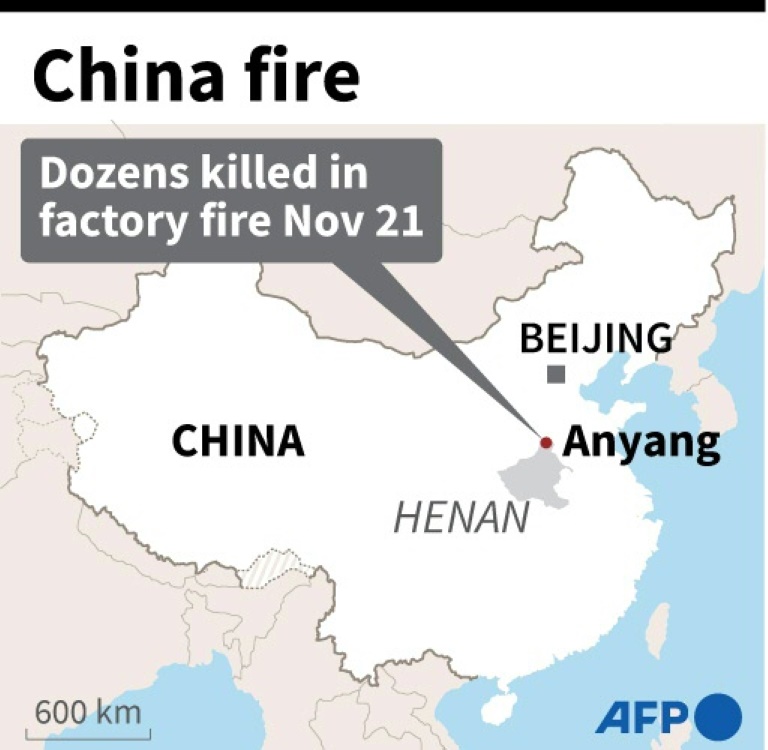
Thirty-six people were killed and two are missing after a fire at a plant in central China, state media said Tuesday, citing local authorities.

The fire took place “at a plant in Anyang City, central China’s Henan Province on Monday afternoon”, news agency Xinhua reported without sharing further details. 

State media said rescue services first received reports of a fire at 4:22 pm (0822 GMT) at Kaixinda Trading Co., Ltd.

“After receiving the alarm, the municipal fire rescue detachment immediately dispatched forces to the scene,” CCTV reported.

“Public security, emergency response, municipal administration, and power supply units rushed to the scene at the same time to carry out emergency handling and rescue work,” it said, adding the fire had been extinguished by around 11 pm local time.

In addition to the dead and missing, two are in hospital with non-life-threatening injuries, CCTV added.

Authorities said “criminal suspects” had been taken into custody in connection with the fire, but did not provide further details.

Industrial accidents are common in China due to weak safety standards and corruption among officials tasked with enforcing them.

In June, one person was killed and another injured in an explosion at a chemical plant in Shanghai. 

The fire at a Sinopec Shanghai Petrochemical Co. plant in the outlying Jinshan district sent thick clouds of smoke over a vast industrial zone as three fires blazed in separate locations, turning the sky black. 

And last year, a gas blast killed 25 people and reduced several buildings to rubble in the central city of Shiyan.

In March 2019, an explosion at a chemical factory in Yancheng, located 260 kilometres (161 miles) from Shanghai, killed 78 people and devastated homes in a several-kilometre radius.

Four years prior, a giant explosion in northern Tianjin at a chemical warehouse killed 165 people, one of China’s worst-ever industrial accidents. 

US VP Harris to visit Philippine island near China-claimed waters

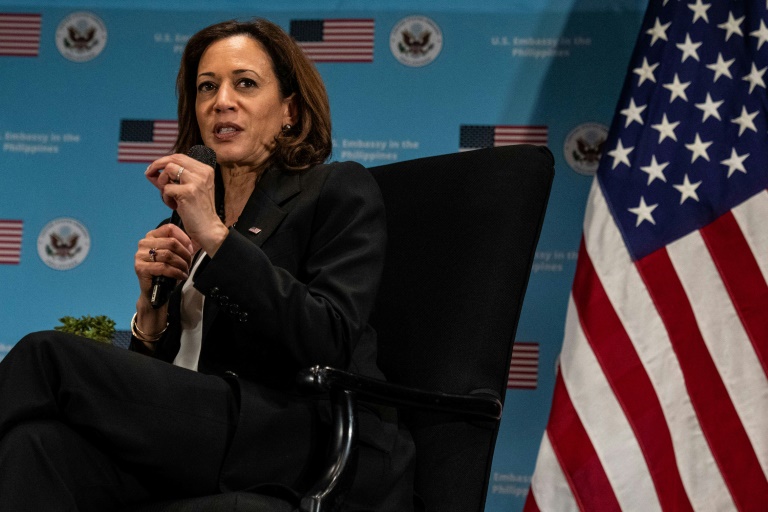
US Vice President Kamala Harris will travel Tuesday to a Philippine island near waters claimed by China to show support for the longtime US ally and counter Beijing’s growing influence in the region.

Harris will be the highest-ranking US official ever to visit the western island of Palawan, the closest Philippine landmass to the Spratly archipelago in the hotly contested South China Sea.

Beijing claims sovereignty over almost the entire sea and has ignored an international court ruling that its claims have no legal basis. 

The Philippines, Vietnam, Malaysia and Brunei have overlapping claims to parts of it.

Harris will meet with fisherfolk and members of the Philippine Coast Guard.

She will also deliver remarks that “underscore the importance of international law, unimpeded lawful commerce, and freedom of navigation”, a US official told reporters before the visit. 

Harris’s trip to Palawan comes a day after she held talks with Philippine President Ferdinand Marcos in Manila.

She reaffirmed the United States’ “unwavering” commitment to defending the Philippines if its vessels or aircraft were attacked in the South China Sea. 

Washington has a decades-old security alliance with the Philippines that includes a mutual defence treaty and a 2014 pact, known by the acronym EDCA, which allows for the US military to store defence equipment and supplies on five Philippine bases.

It also allows US troops to rotate through those military bases.

EDCA stalled under former president Rodrigo Duterte, but the United States and the Philippines have expressed support for accelerating its implementation as China becomes increasingly assertive.

– Rebuilding relations – 

As regional tensions rise, fuelled by China’s recent wargames around Taiwan, Washington is seeking to repair ties with Manila, whose cooperation would be critical in the event of a conflict.

Relations between the two countries fractured under the mercurial Duterte, who favoured China over his country’s former colonial master.

While Marcos has sought to strike more of a balance between his superpower neighbours, insisting he will not let China trample on Manila’s maritime rights.

Of all the claimants to the South China Sea, Beijing has in recent years pressed its stance most aggressively. 

Hundreds of Chinese coast guard and maritime militia vessels prowl the waters, swarming reefs, harassing and attacking fishing and other boats, and interfering in oil and gas exploration, and scientific research.

On the eve of Harris’s visit to Palawan, a senior Filipino navy official accused the Chinese coastguard of “forcefully” seizing parts of a rocket that landed in the Spratlys.

Beijing — which has built militarised artificial islands in the archipelago — insisted the handover took place after “friendly consultation”. 

Tensions between Manila and Beijing flared last year after hundreds of Chinese vessels were detected at Whitsun Reef in the Spratlys.

Last November, Chinese coastguard ships fired water cannon at Philippine boats delivering supplies to marines at Second Thomas Shoal in the same archipelago. 

IMF approves 530-mn-euro loan for North Macedonia

The International Monetary Fund on Monday announced it had approved a deal to give North Macedonia access to 530 million euros to help the country recover from the coronavirus pandemic and knock-on effects from the war in Ukraine.

Under the two-year arrangement, the Washington-based global lender will immediately disburse 110 million euros, to be followed by multiple follow-up disbursements provided Skopje adheres to the terms of the accord, the IMF said.

“North Macedonia has been hit by two consecutive global shocks. While recovering from the pandemic, the outlook deteriorated again following Russia’s invasion of Ukraine and sharply rising global commodity prices,” it said in a statement.

The IMF’s acting chair Bo Li hailed the country’s “sound policy framework” ahead of the pandemic, saying it had “fostered solid and broad-based growth, with moderate public debt and external current account deficits.”

“However, the macroeconomic situation deteriorated substantially due to the pandemic and the commodity price shock,” he added.

The IMF voiced confidence that North Macedonia would emerge from its so-called Precautionary Liquidity Line (PLL) program when the deal expires in 2024.

North Macedonia officially launched its membership negotiations with the European Union in July, 17 years after being named a candidate. 

Macedonia declared independence from Yugoslavia in 1991 and changed its name to North Macedonia in 2018 to overcome a bitter dispute with EU member state Greece.

Both that spat and a raft of complaints from Bulgaria about recognition of North Macedonia’s history, culture and language had blocked Skopje’s EU path.

Paramount says ending Simon&Schuster/Penguin deal after US antitrust ruling

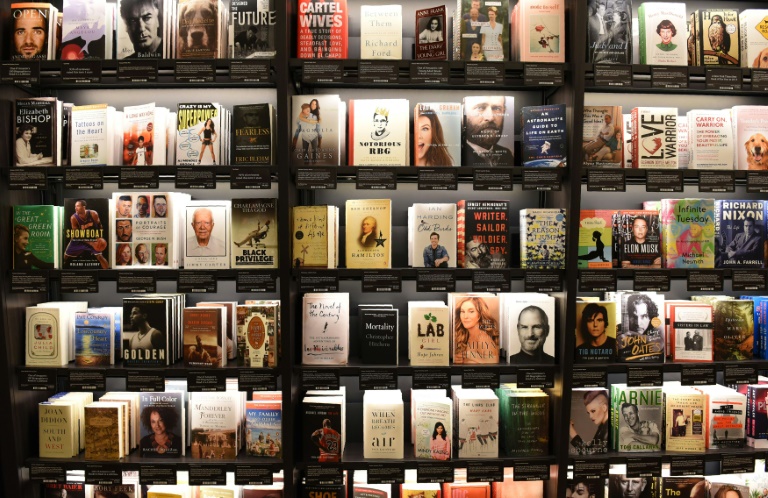
Paramount Global on Monday officially dropped a plan to sell its Simon & Schuster division to rival publisher Penguin Random House after a US judge blocked the $2.2 billion deal on antitrust grounds.

Paramount, formally known as ViacomCBS, said the transaction was “terminated” following the October 31 US judicial ruling against the deal. 

Penguin Random House, a subsidiary of the German Bertelsmann Group, must pay a $200 million termination fee, Paramount said.

The firm signaled it still intends to divest the unit, calling it “a non-core asset.”

“Simon & Schuster is a highly valuable business with a recent record of strong performance; however, it is not video-based and therefore does not fit strategically within Paramount’s broader portfolio,” the statement said.

In challenging the deal, the US Justice Department had argued that allowing Penguin Random House, the largest book publisher in the world, to buy a  major competitor would enable it to “exert outsized influence over which books are published in the United States and how much authors are paid for their work.”

Bertlesmann had argued that the argument was based on an “inaccurate” reading of the market and that the merger would have been good for competition.

US District Court Judge Florence Pan concluded the government had shown the merger would substantially lessen competition “in the market for the US publishing rights to anticipated top-selling books.”

German company confirmed in a statement Monday that it had reversed a previous plan to appeal the US district court ruling.

But the firm said it remained confident in growing its book publishing business.

“Penguin Random House is part of the Global Content Strategy, one of our five strategic priorities,” said Bertelsmann Chief Executive Thomas Rabe. “Bertelsmann plans to achieve annual growth of five to ten percent in this area -– organically, but also through acquisitions.”

Bacterial infections the 'second leading cause of death worldwide'

Bacterial infections are the second leading cause of death worldwide, accounting for one in eight of all deaths in 2019, the first global estimate of their lethality revealed on Tuesday.

The massive new study, published in the Lancet journal, looked at deaths from 33 common bacterial pathogens and 11 types of infection across 204 countries and territories.

The pathogens were associated with 7.7 million deaths — 13.6 percent of the global total — in 2019, the year before the Covid-19 pandemic took off.

That made them the second-leading cause of death after ischaemic heart disease, which includes heart attacks, the study said.

Just five of the 33 bacteria were responsible for half of those deaths: Staphylococcus aureus, Escherichia coli, Streptococcus pneumoniae, Klebsiella pneumoniae and Pseudomonas aeruginosa.

S. aureus is a bacterium common in human skin and nostrils but behind a range of illnesses, while E. coli commonly causes food poisoning. 

The study was conducted under the framework of the Global Burden of Disease, a vast research programme funded by the Bill and Melinda Gates Foundation involving thousands of researchers across the world. 

“These new data for the first time reveal the full extent of the global public health challenge posed by bacterial infections,” said study co-author Christopher Murray, the director of US-based Institute for Health Metrics and Evaluation.

“It is of utmost importance to put these results on the radar of global health initiatives so that a deeper dive into these deadly pathogens can be conducted and proper investments are made to slash the number of deaths and infections.”

The research points to stark differences between poor and wealthy regions. 

In Sub-Saharan Africa, there were 230 deaths per 100,000 population from the bacterial infections.

That number fell to 52 per 100,000 in what the study called the “high-income super-region” which included countries in Western Europe, North America and Australasia.

The authors called for increased funding, including for new vaccines, to lessen the number of deaths, also warning against “unwarranted antibiotic use”.

Hand washing is among the measures advised to prevent infection.

Bacterial infections the 'second leading cause of death worldwide'

Bacterial infections are the second leading cause of death worldwide, accounting for one in eight of all deaths in 2019, the first global estimate of their lethality revealed on Tuesday.

The massive new study, published in the Lancet journal, looked at deaths from 33 common bacterial pathogens and 11 types of infection across 204 countries and territories.

The pathogens were associated with 7.7 million deaths — 13.6 percent of the global total — in 2019, the year before the Covid-19 pandemic took off.

That made them the second-leading cause of death after ischaemic heart disease, which includes heart attacks, the study said.

Just five of the 33 bacteria were responsible for half of those deaths: Staphylococcus aureus, Escherichia coli, Streptococcus pneumoniae, Klebsiella pneumoniae and Pseudomonas aeruginosa.

S. aureus is a bacterium common in human skin and nostrils but behind a range of illnesses, while E. coli commonly causes food poisoning. 

The study was conducted under the framework of the Global Burden of Disease, a vast research programme funded by the Bill and Melinda Gates Foundation involving thousands of researchers across the world. 

“These new data for the first time reveal the full extent of the global public health challenge posed by bacterial infections,” said study co-author Christopher Murray, the director of US-based Institute for Health Metrics and Evaluation.

“It is of utmost importance to put these results on the radar of global health initiatives so that a deeper dive into these deadly pathogens can be conducted and proper investments are made to slash the number of deaths and infections.”

The research points to stark differences between poor and wealthy regions. 

In Sub-Saharan Africa, there were 230 deaths per 100,000 population from the bacterial infections.

That number fell to 52 per 100,000 in what the study called the “high-income super-region” which included countries in Western Europe, North America and Australasia.

The authors called for increased funding, including for new vaccines, to lessen the number of deaths, also warning against “unwarranted antibiotic use”.

Hand washing is among the measures advised to prevent infection.

Disney seeks old magic in return of ex-CEO

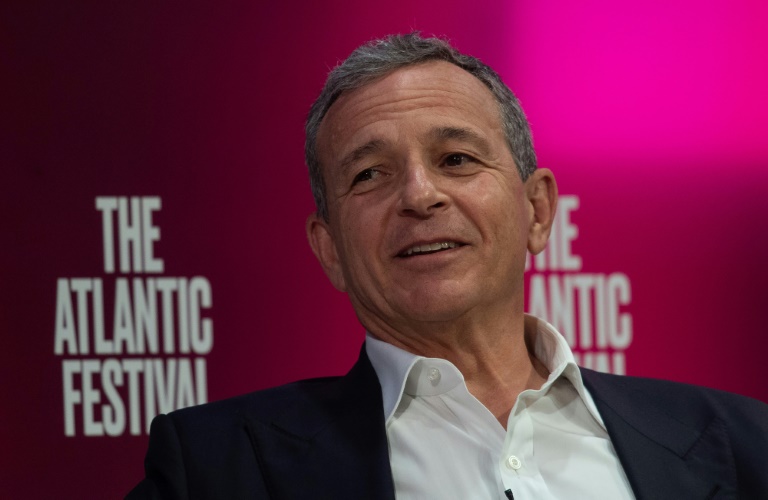
In a dramatic twist worthy of a “Star Wars” spin-off, Disney ditched CEO Bob Chapek and brought back Bob Iger, Hollywood’s most respected executive, who faces a huge challenge to revive the Magic Kingdom.

Iger’s return comes as Disney is trying to negotiate an uncertain era, where investors have lost faith in some of the most storied names in US media as companies bleed cash in the hunt for customers to streaming platforms.

Disney’s board of directors rehired Iger for a two-year contract that will add to the 15 years he ruled over the company until 2020, when he handed the reins to Chapek.

But Disney’s share price has slumped 40 percent this year and Chapek was unceremoniously fired after less than three years in the top job, much of it struggling to fill the big shoes left by Iger.

Iger’s leadership was extraordinary even by Hollywood’s standards.

The 71-year-old led Disney to new frontiers when he bought the Star Wars and Marvel franchises and launched the Disney+ streaming service to rival Netflix head-on.

He also bought 21 Century Fox from media baron Rupert Murdoch and held on to sports network ESPN despite calls to sell it, maintaining an empire that stretched from theme parks to local TV stations and cruise ships.

The return of Iger was cheered on by Wall Street, with Disney’s share price surging by six percent on Monday, and analysts recommending the stock for the first time since he exited the company.

– ‘Not guaranteed’ –

But some analysts were not so sure, warning that the world that Iger left in early 2020 — before Covid-19, before the streaming wars — had changed.

“The bold move might feel like the right one, however the business is at a different phase of growth,” said Paolo Pescatore, analyst at PP Foresight.

“It will take time and immediate success is not guaranteed.”

The core problem for Iger will be to turn a profit at Disney+ when, according to the latest figures in November, it burned through four billion dollars in just 12 months.

Launched in early 2020, Disney+ streams all that the Star Wars and Marvel franchises and Disney have to offer, releasing new content at a furious rate, but that weighs heavily on finances.

On the positive side, the Disney+ platform continues to gain subscribers and had 164 million customers at the end of September.

But the financial hole has put pressure on Disney’s other sectors: Theme parks and merchandising have succeeded for now to keep the Disney group in the green.

– ‘Expensive’ –

The pressure has grown worse as the economic outlook sours. 

Households are winnowing down entertainment subscriptions to just one or two, a cold reality that has seen the Netflix share price plummet by 50 percent in a year.

For Jonathan Kees of Daiwa Capital Markets America, Disney’s current troubles are also a result of choices made by Iger. 

“Iger pushed for the creation of Disney+, which has become an expensive business venture,” the analyst said. 

As for the 2019 purchase of 21st Century Fox, “that purchase alone loaded up the Disney balance sheet with an incredible amount of debt, which is not what investors are valuing in this current stock market.”

And even under the hugely respected Iger, Disney will face pressure from activist investors looking for quick results.

The Third Point fund, which increased its stake in Disney this summer, is among the most vocal on the matter. 

Dan Loeb, its founder and CEO, has previously demanded that Disney hive off the ESPN sports media business from the rest of the group before reversing his position.

And according to the Wall Street Journal, the return of Iger is decried by activist fund Trian, which acquired more than $800 million worth of Disney shares after the stock market tumbled after poor results.

“At the end of the day, it’s his legacy that’s at stake,” Pescatore said. 

War crimes allegations mount as winter threatens Ukrainians

Russians have murdered, tortured and kidnapped Ukrainians in a systematic pattern that could implicate top officials in war crimes, a senior US official said Monday as Kyiv said it had discovered four Russian torture sites in newly-liberated Kherson.

Moscow, in turn, accused Ukrainian forces of summarily killing a number or prisoners of war after a video of POW bodies surfaced.

Also Monday, the World Health Organization said Russia’s missile attacks on Ukraine’s power grid had left millions of lives at risk as the winter descended with frigid temperatures.

The damage is having “knock-out effects” on Ukraine’s health system, WHO regional director for Europe Hans Kluge told reporters.

“This winter will be about survival,” he warned, saying it would be “life-threatening for millions of people in Ukraine”.

Up to three million Ukrainians could leave their homes in search of warmth and safety, he said.

“They will face unique health challenges, including respiratory infections such as Covid-19, pneumonia, influenza, and the serious risk of diphtheria and measles in (an) under-vaccinated population,” he added.

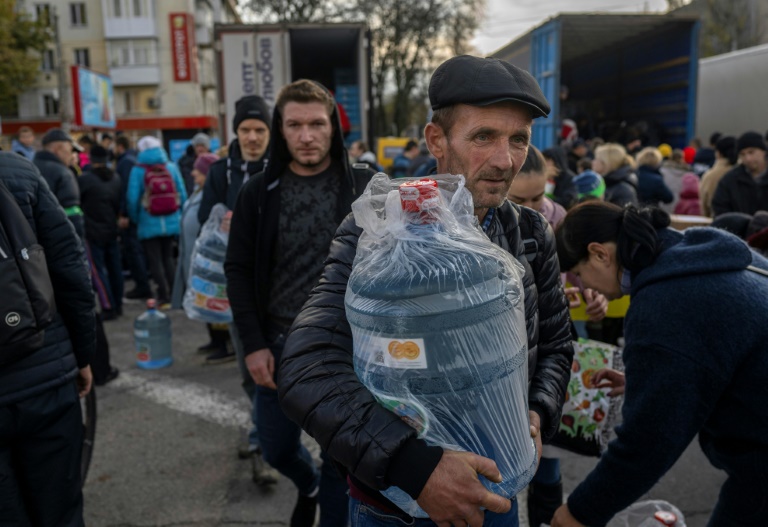
Residents of Kherson were told that they can evacuate to other regions given the city’s heavily damaged infrastructure and services.

Power company Yasno warned of extended blackouts.

“You should be prepared for different options, even the worst ones. Stock up on warm clothes, blankets, think about options that will help you wait out a long shutdown,” it said.

– Torture sites –

Ukraine said it had discovered four Russian torture sites in the southern city of Kherson. 

Kherson was one of the earliest of major cities that Russian forces captured when they invaded the country on February 24.

The city was retaken earlier this month after Russian forces retreated under threat from Ukraine troops.

“Together with police officers and experts, (prosecutors) conducted inspections of four premises where, during the capture of the city, the occupiers illegally detained people and brutally tortured them,” the Ukrainian prosecutor general’s office said in a statement.

Russian forces had also set up “pseudo-law enforcement agencies” at detention centres in Kherson as well as in a police station, it said.

The remains of rubber truncheons, a wooden bat and “a device with which the occupiers tortured civilians with electricity” were found, it added.

Russian authorities also left behind paperwork documenting the administration of the detention sites, the prosecutor’s office said.

Last week Ukrainian ombudsman Dmytro Lubinets said Russian forces were responsible for “horrific” torture in Kherson, saying dozens were abused in detention and more were killed.

One Kherson resident told AFP he spent weeks in detention where he was beaten and electrocuted by Russian and pro-Russian forces.

– Systematic abuse –

In Washington, the US Ambassador-at-Large for Global Criminal Justice Beth Van Schaack told reporters that there was strong evidence that Russian abuses in Ukraine were not random or ad hoc.

There is mounting evidence that Russia’s invasion of Ukraine “has been accompanied by systemic war crimes committed in every region where Russian forces have been deployed,” she said.

Evidence from liberated areas indicates “deliberate, indiscriminate and disproportionate” attacks against civilian populations, custodial abuses of civilians and POWs, forceful removal, or filtration, of Ukrainian citizens — including children — to Russia, and execution-like murders and sexual violence, she told reporters.

“When we’re seeing such systemic acts, including the creation of a vast filtration network, it’s very hard to imagine how these crimes could be committed without responsibility going all the way up the chain of command,” she said.

Van Schaack said that Russia’s nine-month-old assault on Ukraine has sparked an “unprecedented array of accountability initiatives,” involving numerous bodies along with the International Criminal Court in The Hague.

The bodies are coordinating to develop priorities and approaches “under all available jurisdictional bases,” she said.

She called it a “new Nuremberg moment,” a reference to the war crimes trials held in the German city at the end of World War II.

– POW video –

But the Kremlin has also came forward with allegations of Ukranian abuses, vowing to track down and punish those behind the “brutal” murder of nearly a dozen Russian servicemen who had apparently been taken prisoner.

Russia’s Human Rights Council said the alleged executions took place in Makiivka, a village in the eastern Lugansk region, which the Ukrainian army said it had recaptured last week.

“Without a doubt, Russia will itself search for those who committed this crime. They must be found and punished,” Kremlin spokesman Dmitry Peskov told reporters.

Lubinets, Ukraine’s ombudsman, claimed that the prisoners had opened fire on Ukrainian forces after surrendering, leading to their being killed by return fire. 

Global stocks mostly tumble on fears of fresh China Covid curbs

Global stocks mostly fell Monday as renewed concerns about harsh coronavirus curbs in China rattled investor sentiment, while oil prices gyrated as Saudi Arabia denied a report that exporters were weighing a production increase.

China’s first coronavirus deaths in six months sparked fears officials would reimpose strict, economically painful restrictions to fight outbreaks across the world’s second-biggest economy.

Some of Beijing’s largest shopping malls were closed Sunday, while others reduced opening hours or banned table service at restaurants as officials urged residents to avoid non-essential travel.

“No one can tell whether (Chinese President) Xi Jinping would pull back from the reopening plans, which would be another disaster for the Chinese stocks, and for the investor confidence,” said Ipek Ozkardeskaya, senior analyst at Swissquote Bank. 

Paris, London, Frankfurt and Milan all ended in the red on Monday while Wall Street also lost ground.

The fall in European and US stocks came after most Asian markets including Hong Kong’s Hang Seng Index and Shanghai ended lower, although Bangkok, Tokyo and Wellington were up.

“There is a bit of a risk off sentiment today,” said Angelo Kourkafas of Edward Jones.

“There’s no US data. But there are some headlines about the worsening Covid-19 trends in China, which is adding to global growth concerns,” he added.

US investors expect subdued trading during the week, which includes the Thanksgiving holiday on Thursday.

This is traditionally a “quiet” stretch for markets, Kourkafas said.

Oil prices plunged more than five percent early in the session following a Wall Street Journal report that said Saudi Arabia, which co-leads the OPEC+ cartel along with Russia, and other members were considering an “increase of up to 500,000 barrels a day.”

But the official Saudi Press Agency said on Monday night that energy minister Prince Abdulaziz bin Salman “categorically denies” the report. 

“It is well known, and no secret, that OPEC+ does not discuss any decisions ahead of its meetings,” SPA quoted Prince Abdulaziz as saying. 

The next OPEC+ meeting is scheduled for December 4. 

Among individual companies, Disney jumped 6.3 percent as it ousted Bob Chapek as chief executive and said it would bring back longtime former chief Bob Iger as it struggles to boost the financial performance of its streaming business.

– Key figures around 2210 GMT –

New York – Dow: DOWN 0.1 percent at 33,700.28 (close)

New York – S&P 500: DOWN 0.4 percent at 3,949.94 (close)

New York – Nasdaq: DOWN 1.1 percent at 11,024.51 (close)

London – FTSE 100: DOWN 0.1 percent at 7,376.85(close)

Paris – CAC 40: DOWN 0.2 percent at 6,634.45 (close)

Frankfurt – DAX: DOWN 0.4 percent at 14,379.93 (close)

EURO STOXX 50: DOWN 0.4 percent at 3,909.28 (close)

Tokyo – Nikkei 225: UP 0.2 percent at 27,944.79 (close)

Hong Kong – Hang Seng Index: DOWN 1.9 percent at 17,655.91 (close)

Shanghai – Composite: DOWN 0.4 percent at 3,085.04 (close)

Euro/dollar: DOWN at $1.0245 from $1.0325 on Friday

Dollar/yen: UP at 142.10 yen from 140.37 yen

Pound/dollar: DOWN at $1.1823 from $1.1890

Euro/pound: UP at 86.58 pence from 86.34 pence

West Texas Intermediate: DOWN 0.4 percent at $79.73 per barrel

Brent North Sea crude: DOWN 0.2 percent at $87.45 per barrel

Close Bitnami banner
Bitnami