World

Eight killed in Colombia plane crash

A small plane carrying eight people crashed into a residential area of Colombia’s second-largest city Medellin on Monday, killing all on board, airport authorities said.

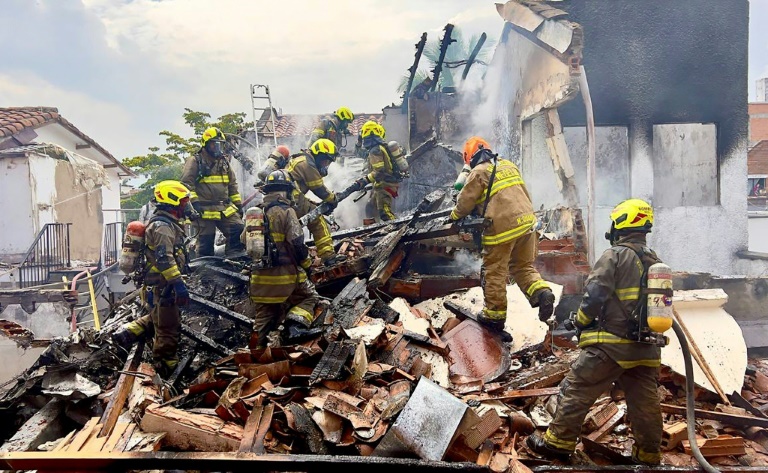
The aircraft took off from the Olaya Herrera airport in the morning and reported an engine failure before crashing into a house, sending thick plumes of black smoke into the air.

The airport’s Twitter account reported that the eight people in the plane — six passengers and two crew — had been reported as “fatalities.”

There was no indication if anyone had been injured or killed in the house.

“There has been a plane accident in the Belen Rosales sector. The full capacity of government has been activated to assist the victims,” Mayor Daniel Quintero wrote on Twitter earlier.

He said the plane was a twin-engine Piper heading from Medellin to the municipality of Pizarro in the neighboring department of Choco.

The plane “signaled engine failure on takeoff and did not manage to return to the Olaya Herrera airport,” one of two in Medellin.

The aircraft crashed into a house, destroying its upper floors, according to images shared by the emergency services. Firefighters were working to douse flames amid scattered tiles and collapsed brick walls.

Medellin lies in a narrow valley, surrounded by the Andes mountains.

In 2016, a plane carrying Brazil’s Chapecoense football team ran out of fuel and crashed in the mountains near the city, killing 71 of the 77 people on board, including 16 players.

Iran intensifies deadly crackdown in Kurdish regions: rights groups

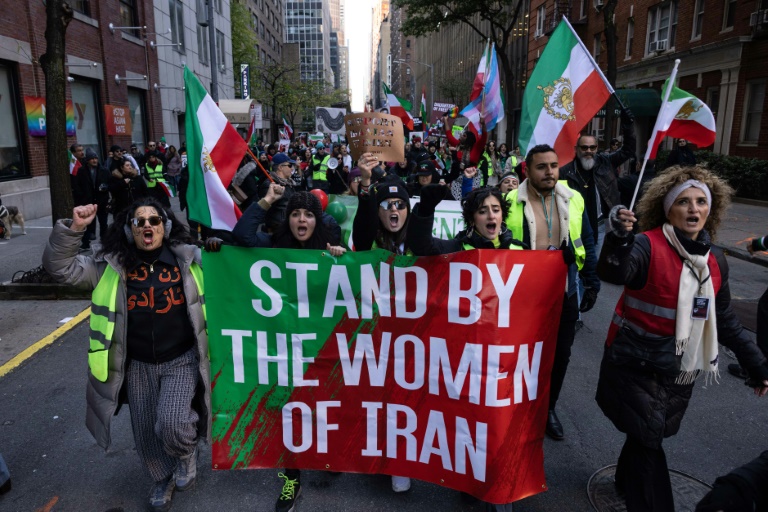
Iranian security forces on Monday intensified a crackdown in western Iran’s Kurdish-populated regions that killed a dozen people over 24 hours, directly shooting at protesters and using heavy weapons, rights groups said.

The Kurdish-populated provinces of western and northwestern Iran have been hubs of protest since the September death in custody of Kurdish woman Mahsa Amini, 22, after she was arrested by morality police in Tehran.

There have been particularly intense anti-regime demonstrations in several towns in the last few days, rights groups say, largely sparked by the funerals of people said to have been killed by the security forces in previous protests.

The Norway-based Hengaw rights group said Iranian forces shelled overnight Sunday to Monday the cities of Piranshahr, Marivan and Javanroud, posting videos with the sound of live gunfire and what appeared to be the thud of heavy weaponry.

In one harrowing video Hengaw said was from Javanroud, locals were seen struggling to remove a body from the street under a hail of gunfire.

It said 13 people had been killed in the region by the security forces over the previous 24 hours, including seven in Javanroud, four in Piranshahr and two more elsewhere.

Among six people killed by gunfire from the security forces on Sunday was 16-year-old Karwan Ghader Shokri, Hengaw said. Another man was killed when security forces fired on crowds as the teenager’s body was being brought to the mosque, it added.

AFP could not immediately verify the toll.

Internet monitor NetBlocks tweeted on Monday that there was “a major disruption” to online services during the new protests, with “mobile internet cut off for many users”.

The outage affected “multiple cities,” freedom of expression group Article 19 said, warning on Twitter: “The right to life is severely compromised under the darkness of a #internetshutdown.”

Hengaw said that with “intense confrontations” between protesters and security forces in Javanroud there was a shortage of blood for the wounded. 

The New York-based Center for Human Rights in Iran (CHRI) said a “massacre” was occurring in Javanroud, with “incessant gunshot streams, images of bloody people being carried to safety.”

Ramifications of the protests were felt in Qatar where Iran’s national team played its first World Cup group match, against England. Iranian players did not sing their national anthem, and instead stood stony-faced, in apparent support for the demonstrations back home. 

– ‘Intensifying violence’ –

The latest violence came alongside continued concern over the situation in Mahabad, where rights groups said security forces had sent reinforcements the day before.

“Greatly concerned that Iranian authorities are reportedly escalating violence against protesters, particularly in the city of Mahabad,” US Secretary of State Antony Blinken wrote Sunday on Twitter.

Hengaw posted footage it said was of heavily-armed security forces in vehicles headed from the city of Sanandaj towards Mahabad and the nearby town of Bukan.

The Norway-based Iran Human Rights (IHR) group also posted footage it said showed security forces using live fire against protesters in Piranshahr.

In other footage, the group showed the distraught mother of Shokri, the teen killed Sunday, prostrating herself on his corpse being taken for burial.

“Mother, don’t cry. We will take revenge,” the mourners chanted in Kurdish, the rights group said.

IHR’s director Mahmood Amiry-Moghaddam posted a video showing wounded protesters lying in the street in Javanroud, surrounded by the constant sound of gunfire.

“They are intensifying the violence against defenceless citizens,” he wrote on Twitter.

In Kermanshah, a Kurdish-populated provincial capital, people in the streets chanted “death to (supreme leader Ayatollah Ali) Khamenei”, another video posted by IHR said.

The demonstrations sparked by Amini’s death have become the most serious challenge to Iran’s clerical regime since the 1979 revolution, and the crackdown by security forces has killed at least 378 people, according to an IHR toll on Saturday.

Analysts have noted that violence by state forces has simply triggered more protests.   

Kurds make up one of Iran’s most important non-Persian ethnic minority groups and generally adhere to Sunni Islam rather than the country’s dominant Shiism.

In the southeastern province of Sistan-Baluchistan on Monday, a policeman was killed and another wounded by “criminals” firing from a car in a village of Zahedan, provincial police chief General Mohammad Ghanbari told Fars news agency.

Iran also renewed cross-border missile and drone strikes overnight into Monday in neighbouring Iraq against Kurdish opposition groups it accuses of stoking the protests.

The latest Iranian strikes came a day after Turkey carried out air raids against outlawed Kurdish militants in Iraqi Kurdistan and northern Syria.

Turtles and see-through frogs on agenda at wildlife summit

A global wildlife summit in Panama will decide whether to take measures to protect the translucent glass frog and 12 types of freshwater turtles in its final week, which kicked off Monday.

Conservation experts and delegates from more than 180 nations began the week with a decision to maintain a ban on the trade of white rhinoceros horn, despite a request from Eswatini that was backed by Japan and several other African countries.

The tiny nation, formerly known as Swaziland, had argued the money from the sale of rhino horn would aid in conserving the threatened species.

Delegates began meeting last Monday to discuss 52 proposals to modify protection levels set by the Convention on International Trade in Endangered Species of Wild Fauna and Flora (CITES).

In the coming days the fate of several unique amphibians will be up for debate.

“Freshwater turtles are among the main groups that are trafficked in the countries, and there is high pressure for international trade,” said Yovana Murillo, who heads a program against wildlife trafficking for the Wildlife Conservation Society (WCS).

Brazil, Colombia, Costa Rica, and Peru want to list two species of matamata turtles, which live in the Amazon and Orinoco basins, on CITES Appendix II, which requires the tracking and regulation of trade.

Doris Rodrigues of Peru’s forestry service told AFP that the striking matamata turtles, with their beetle-like appearance, have become sought-after pets and “face many threats.”

These include habitat destruction, pollution, illegal trade, and being hunted for their meat and eggs.

– Glass frog –

Delegates will also debate regulating the trade of the nocturnal glass frog, found in several rainforests in central and south America.

The amphibian is an increasingly popular pet. Some are a lime green color, while others have translucent bellies and chests. 

“They are being collected for their beauty. They are being trafficked and some are in critical danger,” said Rodriguez.

CITES, in force since 1975, regulates trade in some 36,000 species of plants and animals and provides mechanisms to help crack down on illegal trade. It sanctions countries that break the rules.

The meeting of the parties to the convention takes place every two or three years.

On Friday, delegates rejected a request by Zimbabwe to allow the ivory trade to resume in some southern African countries, a decision lauded by conservation NGOs. 

– Beleaguered porpoise –

The conference has seen fierce debate over the vaquita, a species of porpoise that lives in Mexico’s Gulf of California and is at risk of extinction.

On the eve of the summit, CITES issued an ultimatum to Mexico, to show progress in protecting the world’s most endangered marine animal by February 2023, or face sanctions against its fish exports.

Washington has argued that its neighbor is not doing enough to protect the world’s most endangered marine animal, while Mexico countered that it had boosted naval surveillance in the Gulf.

Good news also emerged from the summit: the Aleutian cackling goose was moved from the list of most threatened species to those no longer threatened with extinction, after its numbers increased.

“This is a positive story about the recovery of a species,” highlighted the president of the committee which approved the move, Britain’s Vincent Fleming.

Turtles and see-through frogs on agenda at wildlife summit

A global wildlife summit in Panama will decide whether to take measures to protect the translucent glass frog and 12 types of freshwater turtles in its final week, which kicked off Monday.

Conservation experts and delegates from more than 180 nations began the week with a decision to maintain a ban on the trade of white rhinoceros horn, despite a request from Eswatini that was backed by Japan and several other African countries.

The tiny nation, formerly known as Swaziland, had argued the money from the sale of rhino horn would aid in the conservation of the threatened species.

Delegates began meeting last week Monday to discuss 52 proposals to modify protection levels set by the Convention on International Trade in Endangered Species of Wild Fauna and Flora (CITES).

In the coming days the fate of several unique amphibians will be up for debate.

“Freshwater turtles are among the main groups that are trafficked in the countries and there is high pressure for international trade,” said Yovana Murillo, who heads a program against wildlife trafficking for the Wildlife Conservation Society (WCS).

Brazil, Colombia, Costa Rica, and Peru want to list two species of matamata turtles, which live in the Amazon and Orinoco basins, on CITES Appendix II, which requires the tracking and regulation of trade.

Doris Rodrigues of Peru’s forestry service, told AFP that the striking matamata turtles, with their beetle-like appearance, have become sought-after pets, and “face many threats.”

These include habitat destruction, pollution, illegal trade, and being hunted for their meat and eggs.

– Glass frog –

Delegates will also debate regulating the trade of the nocturnal glass frog, found in several rainforests in central and south America.

The amphibian is an increasingly popular pet. Some are a lime green color, while others have translucent bellies and chests. 

“They are being collected for their beauty. They are being trafficked and some are in critical danger,” said Rodriguez.

CITES, in force since 1975, regulates trade in some 36,000 species of plants and animals and provides mechanisms to help crack down on illegal trade. It sanctions countries that break the rules.

The meeting of the parties to the convention takes place every two or three years.

Turtles and see-through frogs on agenda at wildlife summit

A global wildlife summit in Panama will decide whether to take measures to protect the translucent glass frog and 12 types of freshwater turtles in its final week, which kicked off Monday.

Conservation experts and delegates from more than 180 nations began the week with a decision to maintain a ban on the trade of white rhinoceros horn, despite a request from Eswatini that was backed by Japan and several other African countries.

The tiny nation, formerly known as Swaziland, had argued the money from the sale of rhino horn would aid in the conservation of the threatened species.

Delegates began meeting last week Monday to discuss 52 proposals to modify protection levels set by the Convention on International Trade in Endangered Species of Wild Fauna and Flora (CITES).

In the coming days the fate of several unique amphibians will be up for debate.

“Freshwater turtles are among the main groups that are trafficked in the countries and there is high pressure for international trade,” said Yovana Murillo, who heads a program against wildlife trafficking for the Wildlife Conservation Society (WCS).

Brazil, Colombia, Costa Rica, and Peru want to list two species of matamata turtles, which live in the Amazon and Orinoco basins, on CITES Appendix II, which requires the tracking and regulation of trade.

Doris Rodrigues of Peru’s forestry service, told AFP that the striking matamata turtles, with their beetle-like appearance, have become sought-after pets, and “face many threats.”

These include habitat destruction, pollution, illegal trade, and being hunted for their meat and eggs.

– Glass frog –

Delegates will also debate regulating the trade of the nocturnal glass frog, found in several rainforests in central and south America.

The amphibian is an increasingly popular pet. Some are a lime green color, while others have translucent bellies and chests. 

“They are being collected for their beauty. They are being trafficked and some are in critical danger,” said Rodriguez.

CITES, in force since 1975, regulates trade in some 36,000 species of plants and animals and provides mechanisms to help crack down on illegal trade. It sanctions countries that break the rules.

The meeting of the parties to the convention takes place every two or three years.

Kosovo-Serbia: Key issues in dispute

The failure on Monday of EU-mediated talks between Serbia and Kosovo on resolving a car licence plates row threatens to trigger one of the worst regional crises in years.

Serbian President Aleksandar Vucic and Kosovo Prime Minister Albin Kurti met in Brussels where they were hosted by European Union foreign affairs chief Josep Borrell.

The main source of tensions between Serbia and its former Albanian-majority province is the latter’s declaration of independence in 2008.

Serbia still does not recognise the move and encourages Kosovo’s Serb minority to remain loyal to Belgrade.

Here is a brief rundown of the dispute linked to the devastating war between Serbian forces and ethnic Albanians in Kosovo in the late 1990s.

– Licence plates – 

The latest row revolves around licence plates. 

The government in Pristina declared in November that around 10,000 Kosovan Serbs with licence plates issued by Serbia must replace them by next April with plates from the Republic of Kosovo according to a gradual plan involving warnings, fines and eventually road bans. 

The move has not been well received by Serbs who have resigned en masse across northern Kosovo, including hundreds of police officers, judges, prosecutors and other bureaucrats in civil institutions, ratcheting up tensions many fear will lead to renewed unrest due to the security vacuum.

Belgrade has warned that they would not watch idly if Pristina sought to punish the Serbs in the north, while Kosovo authorities have insisted they “have the capacity” to keep the situation under control.  

Leaders from across Europe and the head of NATO have called for compromise on the issue as Western governments are heavily focused on the war in Ukraine and have little energy for managing another crisis in Europe. 

The licence plate debacle comes just months after a dispute over travel documents briefly triggered unrest in northern Kosovo, with Serbs erecting blockades and Kosovo police being fired at.

– Recognition battle –

The fight over the licence plates is actually about Kosovo’s sovereignty following the conflict that killed an estimated 13,000 people in the 1990s. 

Kosovo declared independence from Serbia in 2008 and has since been formally recognised by roughly 100 countries, most recently by Israel under a deal brokered by former US president Donald Trump.

For Kosovo prime minister Kurti, nothing can be discussed until the reality of independence of the territory of 1.8 million is accepted.

But Serbia insists the declaration is illegal and has watched with fury as Kosovo has been granted membership of the World Bank, IMF, Olympic Committee, FIFA and UEFA.

The refusal of Serbia’s key allies Russia and China to recognise the split has in effect blocked Kosovo’s path to UN membership.

Belgrade has enshrined in its constitution that Kosovo is an integral part of its territory, with many Serbs considering Kosovo to be the cradle of their national and religious heritage.

– Kosovo’s Serbs –

Ethnic Albanian-majority Kosovo is home to an estimated 120,000 Serbs, who are largely loyal to Belgrade.

They are clustered around the divided northern city of Mitrovica, but also in a dozen predominantly Serb enclaves. 

The strongest resistance to Pristina’s authority comes from the Serbs living in the north of the territory at the border with Serbia, which affords them considerable financial and political support.

In Serb areas, locals fly the Serbian flag, use its currency and refuse any loyalty to Pristina, which accuses Belgrade of overseeing a “parallel system” by funding public services such as education and healthcare.

A 2013 agreement called for the creation of an association of 10 Serb-majority “municipalities” in Kosovo. 

The arrangement has never been implemented as the two sides cannot agree on how it would work, while many ethnic Albanians fear the idea could lead to a parallel government controlled by Belgrade.  

– Fight for the future –

For ethnic Albanians, building a functioning Kosovo state with efficient institutions is vital — including the management of vehicles, borders.

But for many Serbs, allowing Kosovo to build up its own institutions is recognition that the territory is no longer under Belgrade’s control and will not return to the fold for the foreseeable future, if ever. 

So by protesting the introduction of licence plates, Serbs are effectively slowing the process of Kosovo becoming a functioning state outside of Belgrade’s orbit.   

In the meantime, a NATO-led force of nearly 4,000 members, assisted by about 130 members of EULEX, the European Union’s rule of law mission in Kosovo, are tasked with trying to prevent the situation from escalating.

Millions of lives at risk as winter bites in war-torn Ukraine

Millions of Ukrainian lives are at risk this winter as the country’s power grid struggles under a barrage of Russian attacks, the World health Organization warned on Monday. 

Moscow has been targeting energy infrastructure, launching missile strikes that have left homes across the country without electricity as temperatures plunge.

The damage is having “knock-out effects” on Ukraine’s health system, WHO regional director for Europe Hans Kluge told reporters.

“This winter will be about survival,” he warned, saying it would be “life-threatening for millions of people in Ukraine”.

Up to three million Ukrainians could leave their homes in search of warmth and safety, he said.

“They will face unique health challenges, including respiratory infections such as Covid-19, pneumonia, influenza, and the serious risk of diphtheria and measles in (an) under-vaccinated population,” he added.

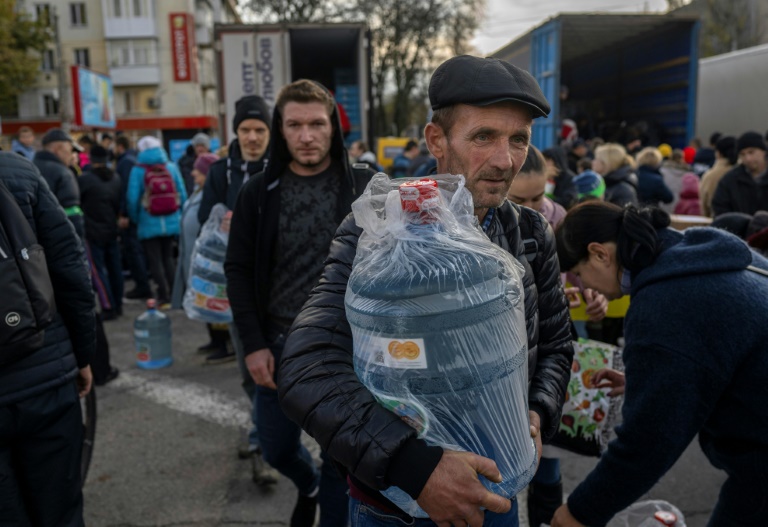
Meanwhile Ukraine said it had discovered four Russian torture sites in the southern city of Kherson, which Moscow’s forces pulled out of earlier this month leaving behind a trail of misery and destruction.

It was the only regional capital Moscow’s forces had won after nearly nine months of fighting in Ukraine.

Kyiv accused withdrawing forces of rendering key infrastructure useless, including water and electricity stations.

On Monday, Kyiv said Moscow had run a network of torture blacksites in the city, building on claims that Russian authorities had perpetrated abuses on a “horrific” scale there.

“Together with police officers and experts, (prosecutors) conducted inspections of four premises where, during the capture of the city, the occupiers illegally detained people and brutally tortured them,” the Ukrainian prosecutor general’s office said in a statement.

Russian forces had also set up “pseudo-law enforcement agencies” at detention centres in Kherson as well as in a police station, it said.

– ‘Horrific’ torture –

The remains of rubber truncheons, a wooden bat and “a device with which the occupiers tortured civilians with electricity” were found, it added.

Russian authorities also left behind paperwork documenting the administration of the detention sites, the prosecutor’s office said.

The allegations are just the latest from Kyiv against Russian troops, who have been accused of running similar abuse operations elsewhere.

Last week Ukrainian ombudsman Dmytro Lubinets said Russian forces were responsible for “horrific” torture in Kherson, saying dozens were abused in detention and more were killed.

AFP spoke last week to a Kherson resident who said he spent weeks in detention where he was beaten and electrocuted by Russian and pro-Russian forces.

But the Kremlin has also come forward with allegations of abuses perpetrated by Ukrainian troops, vowing to track down and punish those it said were responsible for the “brutal” murder of nearly a dozen Russian servicemen who were allegedly surrendering.

“Without a doubt, Russia will itself search for those who committed this crime. They must be found and punished,” Kremlin spokesman Dmitry Peskov told reporters.

– ‘Methodical murder’ –

Peskov was referring to video footage that began circulating on social media last week and which Moscow claims is compelling evidence that Kyiv’s troops murdered nearly a dozen Russian soldiers in east Ukraine.

The Russian defence ministry said last week that the videos showed the “deliberate and methodical” killing of over 10 servicemen.

Ukraine has denied that its forces killed prisoners of war, saying the soldiers were shot following a false surrender.

The UN said last week it had been made aware of the videos and was looking into them. A report it released earlier last week said there were credible allegations of abuses committed by both sides.

Russia’s Human Rights Council said the alleged executions took place in Makiivka, a village in the eastern Lugansk region, which the Ukrainian army said it had recaptured last week.

Spain's high-speed rail competition heats up with new entrant

Spain’s high-speed rail market is heating up with a new operator starting passenger services on Friday, making the country the first in Europe with three players in the sector.

The newcomers have pushed down prices and increased traffic on the high-speed network, which at around 4,000 kilometres (2,500 miles) is the world’s second longest after China’s.

Spain, a nation of around 47 million people, is the world’s second most popular tourist destination after France.

Private operator Iryo, which is 45 percent owned by Italy’s Trenitalia, made an inaugural trip on Monday from Madrid to Valencia on Spain’s Mediterranean coast.

It will begin passenger services on Friday with 16 daily return trips between Madrid and Barcelona, Spain’s two largest cities, 500 kilometres (300 miles) apart.

Iryo will compete with French railway company SNCF’s firm in the country, Ouigo, which has been operating since May 2021 and Spanish state-owned rail operator Renfe, which opened its first high-speed service in 1992.

The arrival of a third operator is a “historical step” and “novel” in Europe, said Carlos Lerida, a rail transport expert at the Autonomous University of Madrid.

“Until now no high-speed rail network has operated with three competitors. Spain could serve as a model,” he told AFP.

Iryo, which is kicking off its operations in Spain with 20 trains, will in mid-December expand its services to include a Madrid-Valencia route.

– ‘Democratise high-speed’ –

In March 2023 it will start running trains from Madrid to Seville and Malaga in the southwestern region of Andalusia.

Ouigo already operates trains along the Madrid-Barcelona and Madrid-Valencia routes and plans to start services to the Mediterranean port of Alicante as well as Andalusia next year.

Spain’s state rail infrastructure operator Adif in 2019 granted contracts allowing the firms to operate on these routes for 10 years.

Socialist Prime Minister Pedro Sanchez’s government is keen to lower ticket prices for bullet trains to make greater use of the high-speed rail network.

Transport Minister Raquel Sanchez said Monday that she wants to extend competition to other high-speed routes such as from Madrid to the northwestern region of Galicia as well as to the northern region of Asturias.

Last month she said greater competition will “democratise high-speed” rail travel and called Spain’s model for the sector “revolutionary”.

Renfe responded to the arrival of Ouigo in May 2021 with the launch of a low-cost bullet train service called Avlo.

The company has also renewed its fleet of trains and improved the service it offers passengers on their journeys.

Renfe has a seat sale offering the trip between Madrid and Barcelona for as little as seven euros.

– ‘Underused’ network –

“We see the arrival of competition as an opportunity not as a problem,” a Renfe spokesman said.

Average prices for tickets on high-speed trains between Madrid and Barcelona have dropped by 25 percent since Ouigo started operating last year, according to Spain’s competition watchdog CNMC.

Passenger traffic on the route has jumped by 47 percent and is up by 14 percent along Spain’s entire rail network since May 2021, according to Adif.

“The network was underused,” the director general of Ouigo’s Spanish branch, Helene Valenzuela, told AFP, adding this meant there was a “limited risk” in entering the market.

The company spent 630 million euros ($644 million) to launch its operations in Spain.

“Our main rivals are planes and cars, not other trains,” said Valenzuela.

“On a technical level, it is a challenge, because we have to organise the flow (of trains) in the stations. But on an economic level, it is an opportunity,” she added.

Competition in the high-speed rail sector has its limits.

It works on “very busy lines” but is “much more complicated” on other routes where it is harder for companies to cover their costs and make a profit,” said rail transport expert Lerida.

I. Coast, Ghana ease tug-of-war with buyers over cocoa prices

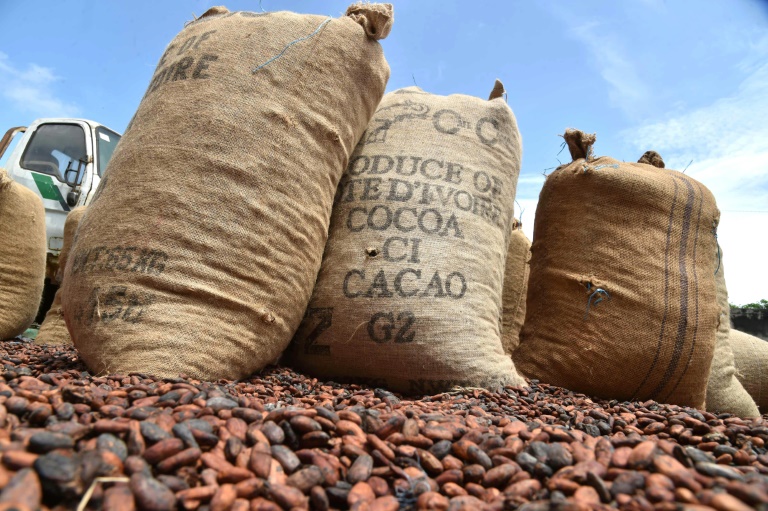
Ivory Coast and Ghana, the world’s two biggest cocoa producers, said Monday there had been progress towards resolving a tug-of-war with chocolate giants on prices.

The two countries had set a deadline of Sunday for manufacturers to pay higher prices to their growers.

But in a joint statement, industry bodies said the talks had yielded agreement to set up a working group to explore the problems, and report back early next year.

The producer countries also praised “the efforts made by certain companies” to find a solution for sustainable farming, the statement said.

The quarrel focuses on the Living Income Differential (LID) — a policy Ivory Coast and Ghana introduced in 2019 to fight poverty among cocoa farmers in the global $130-billion chocolate market.

Under it, Ivory Coast and Ghana vowed to charge a premium of $400 per tonne on all sales of cocoa beans, starting with the 2020/21 harvest.

But their trade boards say the scheme is being undercut by buyers who depress the price of another premium based on bean quality.

They have accused purchasers of clawing back the cost of the LID by exerting pressure on the “origin differential” premium, which has plunged below zero in recent years.

They set November 20 as a deadline for bringing buyers into line.

They threatened to punish corporations by barring them from visiting plantations to estimate harvests — a key factor in cocoa price forecasting.

And they also threatened to suspend sustainability programmes that chocolate giants use to enhance their image given the increasing ethical concerns of consumers.

– Progress –

Monday’s joint statement was signed by the Ivorian Coffee-Cocoa Council (CCC), the Ghana Cocoa Board (Cocobod) and the Ivory Coast-Ghana Cocoa Initiative (CIGCI).

The communique said producers had been in talks with chocolate manufacturers and other players in the industry.

The producers “noted the efforts made by certain companies and their desire to jointly find solutions for sustainable cocoa production that places farmers at the heart of this strategy”, the statement said.

“Under the auspices of the CIGCI, a working group of experts composed of representatives of member countries and cocoa sector stakeholders has been set up to study solutions to better resolve certain problems and to guarantee a sustainable price mechanism in the long term,” it added.

The panel is expected to report back in the first quarter 2023.

The two countries together account for 60 percent of the world’s cocoa but their farmers earn less than six percent of the industry’s global revenue.

– Value-added call –

Ivorian Prime Minister Patrick Achi told a press conference on Monday “the solution (to the row) is to process 100 percent of our cacao” in Ivory Coast.

His remarks touched on long-standing demands by producer countries, who say they lose out on jobs if they fail to get into the value-added parts of the chocolate business.

At present, only about a quarter of Ivorian production is processed into cocoa in the country itself.

Ivory Coast by itself accounts for 45 percent of world cocoa production.

The sector accounts for 14 percent of the national economy, but is also notorious for child labour, including cross-border trafficking of youngsters who toil in the plantations.

Recession-hit UK needs more migrant labour: business group

Britain needs more migrant labour to boost productivity as it faces a toxic mix of soaring inflation and shrinking growth, the country’s main business lobby group warned Monday.

The verdict from the Confederation of British Industry came at its annual gathering in Birmingham, Britain’s second biggest city.

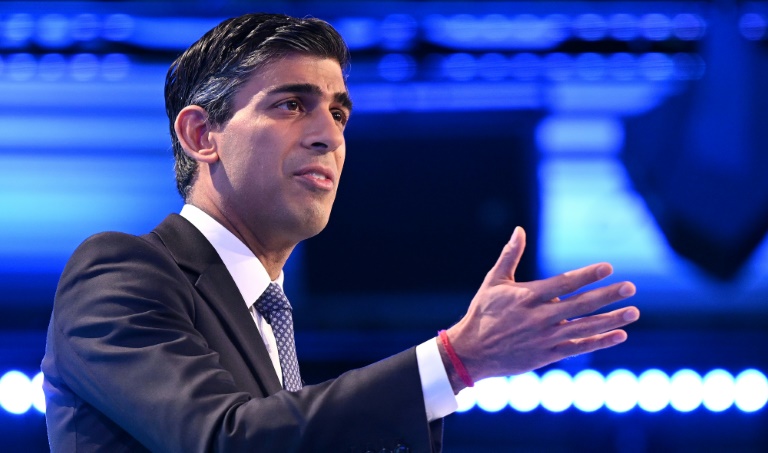
The CBI conference comes after the government of Prime Minister Rishi Sunak last week slashed spending and hiked taxes in a budget, despite admitting that the inflation-wracked economy had fallen into recession.

“We come together, once more in extraordinary times,” CBI director-general Tony Danker told delegates in Birmingham, central England.

“Britain is in the middle of stagflation — rocketing inflation and negative growth — for the first time that probably most of us can remember.

“We know how to fight inflation. We know how to fight recession. But we don’t really know how to fight them together.”

Sunak, who also addressed the CBI on Monday, took office one month ago after predecessor Liz Truss delivered an unfunded tax-slashing mini-budget that tanked the pound and sent UK borrowing costs soaring.

UK inflation sits at a 41-year peak of 11.1 percent on rocketing food and energy costs in the wake of the Ukraine war.

Consumer prices have raced higher also as demand rebounds following the lifting of pandemic lockdowns.

That has worsened a cost-of-living crisis for businesses and individuals, hit also by soaring interest rates as the Bank of England seeks to cool runaway inflation.

– Immigration focus –

The UK has forecast its economy to shrink 1.4 percent next year, hit additionally by fallout from Brexit which has resulted in foreign workers returning home.

“When you look at the (growth) data, the only thing holding it up, actually, is higher hours worked due to higher immigration,” Danker added Monday.

“People are arguing against immigration — but it’s the only thing that has increased our growth potential since March.

“Let’s be honest — we don’t have the people we need, nor do we have the productivity.”

Addressing the conference, Sunak ducked the CBI’s call for more legal migrant labour — and stressed that he was focussed on curbing illegal migration.

Anita Donohoe, a conference attendee representing Kinaxia Logistics, said that while “immigration is very important”, Sunak is right to “tackle illegal immigration”.

She told AFP: “Focus on the legal immigration,” adding that her company has suffered as a result of losing truck drivers.

Andrew Guy of Friisberg and Partners hit out over Britain’s departure from the European Union for contributing to a skills shortage and affecting businesses generally, including their exports.

“I’m anti-Brexit in every way. There is not one good thing that came out of it,” he insisted.

“Until the government acknowledges its mistakes we’ll continue to struggle.”

– Cost of inflation –

Sunak also told CBI delegates that the budget sought “to grip inflation and balance the books”.

“The best way to help people is by stopping mortgages, rents and food prices from spiralling out of control,” Sunak said.

“Re-establishing stability is the critical first step. But there is so much more we need to do,” he added, stressing he wants to see more business innovation to boost economic activity.

A study published Monday revealed that restaurant insolvencies increased almost 60 percent over the last year.

“As well as increasing food and energy costs, restaurants have been hit by shortages of labour, particularly for skilled roles such as chefs, which has pushed up staff costs,” according to accountancy firm Mazars, which carried out the survey.

Close Bitnami banner
Bitnami