World

UK's Compass, world's largest caterer, sees profits triple

Britain’s Compass, the world’s largest caterer, on Monday said annual profits had tripled as companies switched to outsourcing meals in the face of soaring inflation and energy costs.

Profit after tax jumped to £1.1 billion ($1.3 billion) last year also on easing pandemic curbs, Compass said in an earnings statement. That compared with a net profit of £357 million in 2021.

Revenues surged almost 43 percent to £25.5 billion, as more companies decided to outsource their catering needs for the first time.

“The group’s performance surpassed our expectations,” said chief executive Dominic Blakemore, citing “strong” growth in new business.

“Our clients are continuing to face operational complexities and inflationary pressures, which are driving increased outsourcing.”

Compass has emerged “as a stronger and more resilient business” in the wake of the Covid pandemic, he added.

With global inflation at the highest levels in decades on soaring energy and food bills, companies are attempting to save cash by outsourcing to contractors.

But Blakemore also cautioned over the “uncertain” economic outlook with the UK economy currently mired in a recession, according to the government.

Yet Compass forecast that underlying operating profit would grow by more than 20 percent next year.

Its share price sank by about three percent in morning deals on London’s falling stock market as many investors opted to take profits from recent gains.

China reports more Covid deaths as infections surge

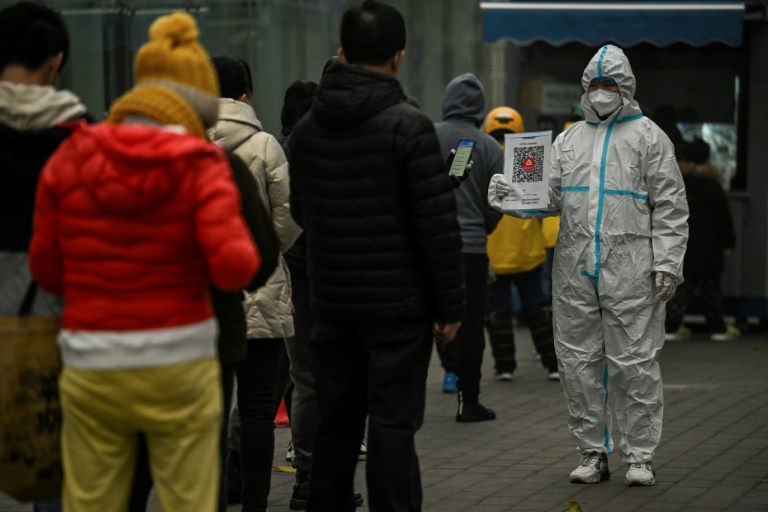
China reported two new deaths from Covid-19 on Monday, both elderly Beijing residents, as several major cities persisted with strict virus curbs despite a much-touted recent loosening.

The last major economy wedded to a zero-Covid policy, Chinese authorities have continued to impose snap lockdowns, mass testing and lengthy quarantines in response to emerging outbreaks.

Despite the central government this month announcing its most significant easing of the measures so far, authorities in many areas have stuck to hardline curbs as the number of new cases has spiked.

Monday’s deaths involved a 91-year-old woman with a history of stroke and Alzheimer’s disease, and an 88-year-old man with a history of cancer, bronchitis and stroke, local authorities said.

On Sunday, Beijing announced China’s first Covid fatality since May, an 87-year-old man whose mild case worsened after he contracted a bacterial infection.

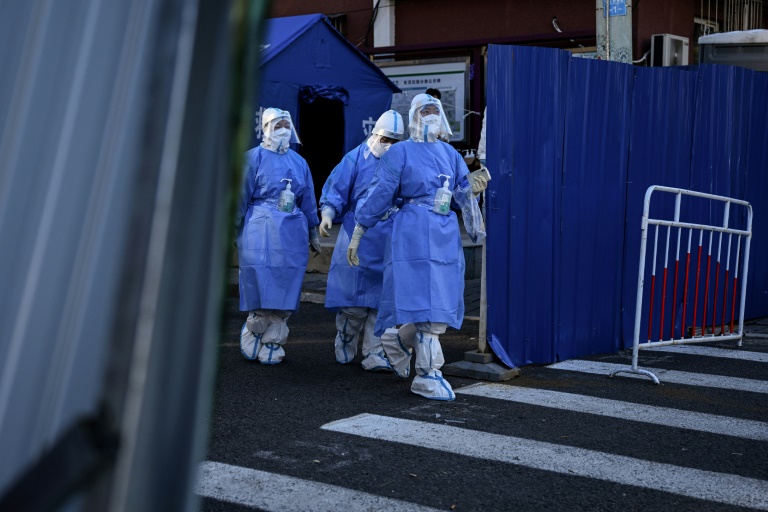
New cases in the capital jumped to 962 on Monday from 621 the day before, as authorities maintained a patchwork of restrictions in an effort to extinguish emerging flare-ups.

Nearly 600 areas of the city are currently “high-risk”, a designation that typically requires residents to isolate for several days in their housing units or move to state quarantine facilities.

In some neighbourhoods, schools have been ordered to move classes online and office employees told to work from home.

Hardline curbs were also in place in cities including the southern industrial hub of Guangzhou — where tens of thousands of new cases have emerged in the past week — and northern Shijiazhuang, where officials have ordered residents in six districts to undergo mass testing.

– Case spike –

China recorded around 27,000 new domestic cases on Monday, according to the National Health Commission — a tiny fraction of its vast population but a steep increase for a country accustomed to figures in the dozens or low hundreds.

While the zero-Covid policy has generally kept the number of new cases low, the approach has been tested in recent months by the emergence of virus variants that spread faster than officials can extinguish them.

The strategy has also stifled economic growth, isolated Beijing on the international stage and even sparked rare protests in a country where dissent is routinely crushed.

Earlier this month, the government issued 20 rules for “optimising” zero-Covid, reducing quarantine times for overseas arrivals and simplifying a system for assessing the risk of transmission, among other tweaks.

Multiple Chinese cities then cancelled routine mass Covid tests in a move that added to hopes of an eventual reopening.

But Asian markets fell Monday as Sunday’s Covid death sparked fears officials would reimpose strict, economically painful restrictions.

Hong Kong’s Hang Seng Index fell nearly two percent — extending a sell-off at the end of last week — while Shanghai was also down.

44 dead as Indonesia quake shakes Java island

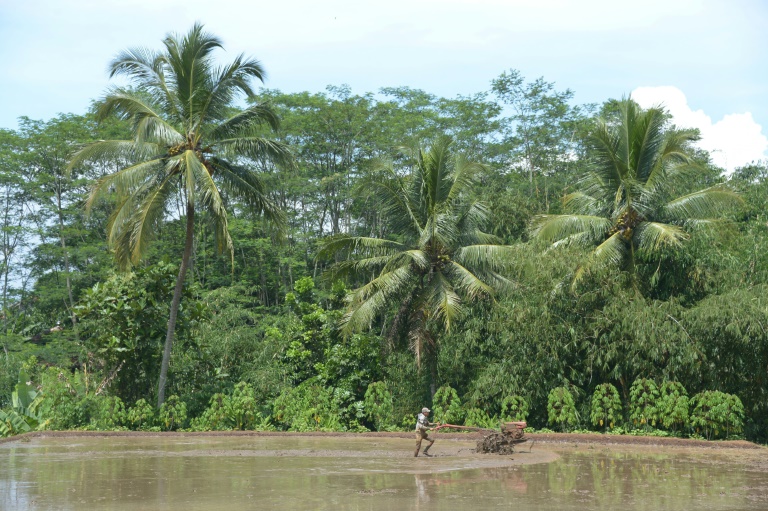
A shallow 5.6-magnitude earthquake shook Indonesia’s main island Java on Monday, killing at least 44 people and injuring hundreds, local officials said, with buildings damaged and a landslide triggered.

The quake was centred in the Cianjur region of West Java, according to the United States Geological Survey, and was felt as far away as the capital of Jakarta, where panicked residents ran into the streets.

“There have been dozens of people killed. So far, 44 people have died,” Adam, a spokesman for the local administration in Cianjur town, who like many Indonesians goes by one name, told AFP.

He said as many as thousands of houses could have been damaged in the quake.

The local administration chief in the town worst hit by the tremor said most of the deaths were counted in one hospital alone, without providing a specific figure, with many others in surrounding villages still to be evacuated.

“The information I got for now, in this hospital alone, nearly 20 died and at least 300 people are being treated,” Herman Suherman told broadcaster Metro TV.

“Most of them had fractures from being trapped by the ruins of buildings.”

Shops, a hospital and an Islamic boarding school in the town were severely damaged by the quake, according to local media.

Broadcasters showed several buildings in Cianjur with their roofs collapsed and debris lining the streets.

Suherman said relatives of victims had congregated at the town’s Sayang hospital and warned the death toll could rise as villagers outside of the town may still be trapped.

“We are currently handling people who are in an emergency state in this hospital. The ambulances keep on coming from the villages to the hospital,” he said.

“There are many families in villages that have not been evacuated.”

The country’s disaster chief Suharyanto, who also goes by one name, said at least 14 people had died in the Cianjur area but said information was “still developing”.

Cianjur police chief Doni Hermawan told Metro TV authorities had rescued a woman and a baby from a landslide but a third person they found had died of their injuries.

– Jakarta rattled –

The country’s meteorological agency warned residents near the quake to watch out for more tremors.

“We call on people to stay outside the buildings for now as there might be potential aftershocks,” the head of Indonesia’s meteorological agency, Dwikorita Karnawati, told reporters.

The USGS had earlier reported the quake’s magnitude as 5.4.

There were no reports of casualties or major damage in Jakarta.

Mayadita Waluyo, a 22-year-old lawyer, described how panicked workers ran for the exits of their building in Jakarta as the quake struck.

“I was working when the floor under me was shaking. I could feel the tremor clearly. I tried to do nothing to process what it was but it became even stronger and lasted for some time,” she said.

“I feel a bit dizzy now and my legs are also a bit cramped because I had to walk downstairs from the 14th floor.”

Hundreds of people were waiting outdoors after the quake, including some wearing hard hats to protect from falling debris, an AFP reporter there said.

Indonesia experiences frequent seismic and volcanic activity due to its position on the Pacific “Ring of Fire”, where tectonic plates collide.

A 6.2-magnitude quake that shook Sulawesi island in January last year killed more than 100 people and left thousands homeless.

Asia markets suffer losses on fresh China Covid fears

Asian markets fell Monday as China’s first Covid death in six months sparked fears officials would reimpose strict, economically painful restrictions to fight outbreaks across the country.

The news threw a spanner in the works for investors who had grown hopeful of a gradual reopening after China eased a number of virus-fighting measures this month.

The death of an 87-year-old man in Beijing on Sunday came as infections across the country spiked, testing authorities’ plans to loosen their grip by lowering quarantine times for foreigners and cancelling mass tests.

Beijing has in recent days moved to confine some residents to their homes and ordered others to quarantine centres.

“It feels like one step forward, two steps back,” said Willer Chen, at Forsyth Barr Asia.  

“It is super hard to reopen in the short term given winter is coming and cases are at a super high level and spreading across the whole country.”

The measures dealt a particular blow to Hong Kong’s Hang Seng Index, which fell nearly two percent, extending a sell-off at the end of last week and eating further into a recent massive rally. Shanghai was also down.

There were also losses in Sydney, Seoul, Singapore, Taipei, Mumbai, Jakarta and Manila.

Kuala Lumpur dropped with the ringgit after the Malaysian elections offered no clear winner, fuelling uncertainty.

Tokyo, Bangkok and Wellington bucked the trend.

European markets opened lower.

Investors brushed off a positive end to last week for US markets, while attention turns to the release later in the week of minutes from the Federal Reserve’s most recent policy meeting.

Global markets have enjoyed a broadly healthy November thanks to signs of China easing and indications of slowing US inflation that fanned optimism the Fed would start to slow its pace of interest rate hikes.

The well-below-forecast readings in the consumer and wholesale indexes suggested months of strict tightening measures were finally working through the economy and having results, allowing for a less hawkish Fed.

But several officials soon lined up to warn that more needed to be done to get inflation back down from four-decade highs to more bearable levels.

– Brighter outlook? –

The sharp rise in interest rates and elevated inflation has this year sent shudders through trading floors as investors fear they will send the US economy into recession.

In the latest comments, Atlanta Fed chief Raphael Bostic said he saw borrowing costs hitting five percent — from their current levels of around four percent — before they are held.

Boston Fed president Susan Collins remained open to options for the next hike — including a fifth straight 75 basis-point lift.

However, National Australia Bank’s Tapas Strickland said: “That comment by itself sounds hawkish, but Collins overall was more cautious and also expressed confidence that policymakers can tame inflation without doing too much damage to employment.

“Instead, it was likely that comment coming after a bevy of Fed Speakers during the week that added a hawkish hue to it.”

While the mood among traders remains less than bright, there appears to be a feeling that there is some light at the end of the tunnel.

“Whether it’s the time of year or recession uncertainty, few seem inclined to chase the risk rally,” said Stephen Innes at SPI Asset Management.

“Still, there is growing recognition that the consensus view of recession and earnings downgrades could face mitigation from declining inflation.

“A lower dollar, lower volatility and the acknowledgement of having to buy early could improve the risk outlook.”

And Bokeh Capital Partners’ Kim Forrest added that 10-year Treasury yields had tumbled since late October, showing “a softening inflationary environment”. 

“The bond market is a little bit smarter about what the Fed needs to do and what it’s going to do. It’s been telling us that the Fed probably won’t be able to get its rates up to five percent nor will it need to,” she told Bloomberg Television.

Demand concerns caused by China’s Covid woes further hit oil prices, with both main contracts in the red, having tumbled last week.

– Key figures around 0820 GMT –

Tokyo – Nikkei 225: UP 0.2 percent at 27,944.79 (close)

Hong Kong – Hang Seng Index: DOWN 1.9 percent at 17,655.91 (close)

Shanghai – Composite: DOWN 0.4 percent at 3,085.04 (close)

London – FTSE 100: DOWN 0.4 percent at 7,355.95

Pound/dollar: DOWN at $1.1832 from $1.1883 on Friday

Euro/dollar: DOWN at $1.0268 from $1.0321

Dollar/yen: UP at 140.95 yen from 140.40 yen

Euro/pound: DOWN at 86.78 from 86.83 pence

West Texas Intermediate: DOWN 0.3 percent at $79.91 per barrel

Brent North Sea crude: DOWN 0.3 percent at $87.34 per barrel

New York – Dow: UP 0.6 percent at 33,745.69 (close)

— Bloomberg News contributed to this story —

Colorado mass shooter stopped by 'heroic' people inside club: police

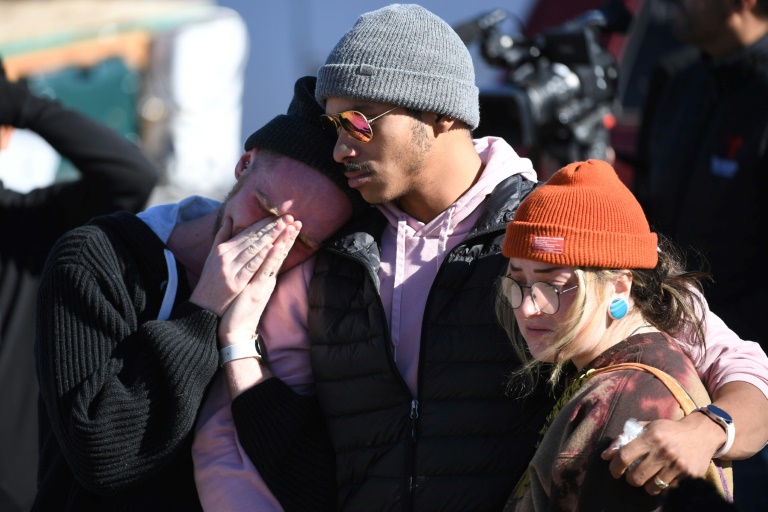
The gunman who killed at least five in a Colorado LGBTQ nightclub was stopped by two “heroic” people in the crowd, police said Sunday.

Officers identified the suspect as 22-year-old Anderson Lee Aldrich, and said he had used a rifle at the club, where partygoers were marking the Transgender Day of Remembrance, which honors people killed in transphobic attacks.

Twenty-five people were wounded in the shooting shortly before midnight on Saturday, according to city officials, with some in critical condition, police said.

The shooting was the latest in a long history of attacks on LGBTQ venues in the United States, the deadliest of which claimed 49 lives at a nightclub in Orlando, Florida, in 2016.

Police spokesperson Pamela Castro said Sunday that police arrived within four minutes of a call about an active shooting at Club Q, and that the suspect had been subdued just two minutes later.

The suspect entered the club and immediately began shooting, police chief Adrian Vasquez told a press conference.

“At least two heroic people inside the club confronted and fought with the suspect and were able to stop the suspect from continuing to kill and harm others,” he added.

Bartender Michael Anderson was cowering on the club’s patio when the gunman was overpowered.

“There were some very brave people beating him and kicking him, stopping him from causing more damage,” he said. “They saved my life last night.”

Joshua Thurman of Colorado Springs was also in the club that night.

“It was so scary,” he told reporters Sunday. “There were bodies on the floor. There was shattered glass, broken cups, people crying.

“It was supposed to be our safe space… Where are we supposed to go?”

Aeron Laney, 24, was at the club for the first time, having just moved to Colorado Springs.

She described a small club where everyone seemed to know each other, the kind of place she knew she would fit right in.

“Everyone was just having a good time and smiling and laughing,” she told AFP, tearfully looking at the bank of flowers growing outside the club.

“I just can’t wrap my head around somebody just walking in and seeing people that are so happy and so comfortable in their community and just wanting to end that.”

Laney and her friend Justin Godwin left minutes before the gunman stormed in.

“Maybe the guy was already there. Like was he in the parking lot… just planning it?” Godwin, 25, said. “It’s just terrifying.”

US President Joe Biden condemned the attack, slamming violence against the LGBTQ community, particularly transgender women of color.

“We must drive out the inequities that contribute to violence against LGBTQI+ people. We cannot and must not tolerate hate,” he said.

– Earlier bomb threat –

The authorities said the suspect was being treated at a local hospital and noted that officials including the FBI were investigating.

A man with the same name was arrested on June 18 last year, aged 21, after his mother said he had threatened to hurt her with a homemade bomb or “multiple weapons,” according to a news release at the time from the El Paso County Sheriff’s Office. 

Club Q said on Facebook that it was “devastated by the senseless attack on our community,” adding, “We thank the quick reactions of heroic customers that subdued the gunman and ended this hate attack.”

Authorities said the shooting had not yet been officially classified as a hate crime but that first-degree murder charges were certain to be filed.

Colorado’s Governor Jared Polis, who in 2018 became the first openly gay man elected as a US state governor, called the shooting “horrific, sickening and devastating.” 

– ‘Events we train for’ –

Authorities could not immediately say how many people were in the popular club at the time.

Dozens of police and firefighters rushed to the scene. 

“Unfortunately,” Colorado Springs Fire Department spokesperson Mike Smaldino said, “these are events we do train for.”

Transgender rights were a hot-button issue in the United States leading up to midterm elections earlier this month, with Republicans putting forward a slew of legislative proposals to restrict them.

Gun violence is a huge problem in the United States, where more than 600 mass shootings have occurred so far in 2022, according to the Gun Violence Archive website.

UK appeal hearing to rule on 'IS bride'

A woman who lost her British citizenship after joining the Islamic State group in Syria will on Monday have her case reviewed, with her lawyers arguing that she was a “victim of trafficking”.

Shamima Begum is one of hundreds of Europeans whose fate following the 2019 collapse of the so-called Islamic State caliphate has proved a thorny issue for governments.

Begum, then 15, left her home in east London in 2015 with two school friends to travel to Syria, where she married an IS fighter and had three children, none of whom survived.

She was later “found” by British journalists, heavily pregnant in a Syrian camp in February 2019 — and her apparent lack of remorse in initial interviews drew outrage.

Dubbed an “IS bride”, she was stripped by the UK of her British citizenship, leaving her stranded and stateless in Syria’s Kurdish-run Roj camp.

Monday’s hearing at the Special Immigration Appeals Commission (SIAC) follows a Supreme Court decision last year to refuse her permission to come the UK to fight her citizenship case against the Home Office.

– ‘Trafficked by Canadian spy’ –

Tasnime Akunjee, the Begum family lawyer, told AFP the hearing would be centred around whether she was “considered a victim of trafficking — notably whether the then home secretary (Sajid Javid) turned his mind to those issues when making the decision to strip her of citizenship”.

A book published earlier this year by journalist Richard Kerbaj alleged that Begum, now 23, and her friends were taken into Syria by a Syrian man who was leaking information to the Canadian security services.

Mohammed Al-Rashed is alleged to have been in charge of the Turkish side of an extensive IS people smuggling network.

“It is now fairly well settled that she and her friends were transported across borders… by a Canadian asset of the Canadian security forces,” Akunjee said.

“The very definition of trafficking is pretty well established by that,” he added.

Despite her initial comments, Begum has since expressed remorse for her actions and sympathy for IS victims.

In a documentary last year, she said that on arrival in Syria she quickly realised IS were “trapping people” to boost the caliphate’s numbers and “look good for the (propaganda) videos”.

Some 900 people are estimated to have travelled from Britain to Syria and Iraq to join the IS group. Of those, around 150 are believed to have been stripped of their citizenship.

Human rights group Reprieve told AFP there were currently 20-25 British families, including 36 children, still in camps in Kurdish-controlled northeast Syria, where suspected relatives of IS fighters have been held.

Other European nations have also been grappling with how to handle the return of their own nationals.

– Hostile public opinion –

Some countries, such as Germany and Belgium, have tried to carry out regular repatriation operations.

Last month, Berlin said it had settled “almost all known cases” of German families in jihadist prison camps in Syria, claiming to have repatriated 76 minors as well as 26 women.

According to Belgium’s federal prosecutor’s office, in mid-2022 there remained “a few women and a few children” in the Syrian camps.

Faced with hostile public opinion, however, France had been carrying out repatriations on a case-by-case basis.

But it picked up the pace in recent months after criticism from the European Court of Human Rights.

Since July, Paris has repatriated 31 women and 75 children in two operations.

Some 175 French children and 69 women are believed to still be in the camps.

Reprieve director Maya Foa told AFP that Begum had been “groomed online as a child and taken to Syria by a Canadian intelligence spy”.

“Most British women in northeast Syria were groomed, coerced or deceived by ISIS, which operated as a sophisticated trafficking gang.”

Many were young girls at the time and were “held against their will and subjected to sexual and other forms of exploitation”, she added.

Speaking on Monday ahead of the hearing, UK Immigration Minister Robert Jenrick told Sky News it was a “fundamental principle” that “where people do things which undermine the UK interest to such an extent that it is right for the Home Secretary to have the power to remove their passport.”

VP Harris vows 'unwavering' commitment to Philippines

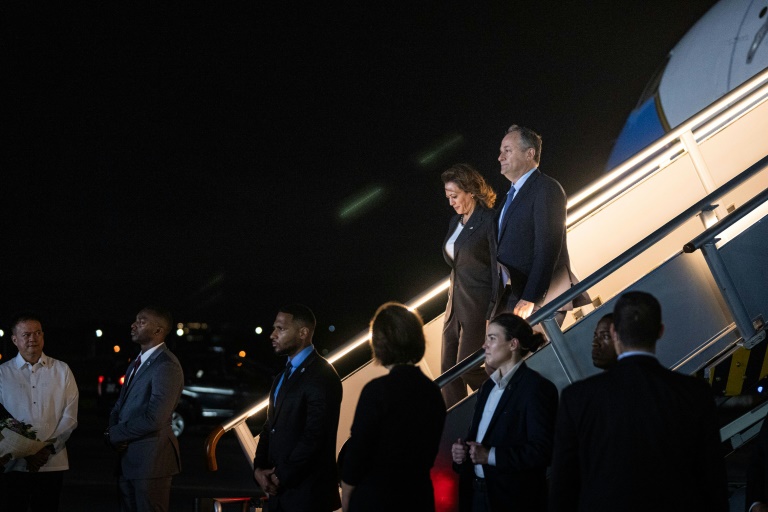
The United States has an “unwavering” commitment to the Philippines, US Vice President Kamala Harris told the country’s president Monday during a visit aimed at countering China and rebuilding ties that were fractured over human rights abuses in the Southeast Asian nation.

Harris is the highest-ranking US official to visit Manila since President Ferdinand Marcos took power in June, signalling a growing rapport between the longtime allies after years of frosty relations under his Beijing-friendly predecessor Rodrigo Duterte.

She also met with her Philippine counterpart Sara Duterte, the daughter of the former leader whose deadly drug war sparked an international investigation into alleged human rights abuses.

“We stand with you in defence of international rules and norms as it relates to the South China Sea,” Harris told Marcos at the start of talks in the presidential palace in Manila.

“An attack on the Philippine armed forces, public vessels or aircraft in the South China Sea would invoke the US mutual defence commitment… that is our unwavering commitment to the Philippines.”

Marcos said he did not “see a future for the Philippines that does not include the United States.”

The United States has a long and complex relationship with the Philippines — and the Marcos family. Marcos’s dictator father ruled the former US colony for two decades with the support of Washington, which saw him as a Cold War ally.

Relations between the two countries soured under the foul-mouthed Duterte. In 2016, Duterte called Barack Obama a “son of a whore” over warnings he would be questioned by the then US president over his controversial drug war.

Washington is now seeking to bolster its security alliance with Manila under the new president.

That includes a mutual defence treaty and a 2014 pact, known by the acronym EDCA, which allows for the US military to store defence equipment and supplies on five Philippine bases.

It also allows US troops to rotate through those military bases.

EDCA stalled under Duterte but the United States and the Philippines have expressed support for accelerating its implementation as China becomes increasingly assertive.

“We have identified new locations and have begun a process with the Philippines to finalise those,” a US official told reporters on condition of anonymity ahead of Harris’s meeting with Marcos.

On Tuesday, Harris will visit the Philippine island province of Palawan, which lies along hotly contested waters in the South China Sea.

China claims sovereignty over almost the entire sea, while the Philippines, Vietnam, Malaysia and Brunei have overlapping claims to parts of it.

Beijing has ignored a 2016 international tribunal ruling that its claims have no legal basis.

Harris will meet members of the Philippine Coast Guard on board one of the country’s two biggest coast guard vessels and deliver a speech.

– US commitment – 

Harris’s trip to the Philippines is part of US efforts to remove any doubt about its commitment to the Asia-Pacific as China aggressively expands its regional influence.

It comes after Harris and US President Joe Biden met separately with Chinese President Xi Jinping last week.

Harris reinforced Biden’s message that “we must maintain open lines of communication to responsibly manage the competition between our countries” while speaking to Xi on the sidelines of the Asia-Pacific Economic Cooperation forum in Bangkok, a White House official said.

While her trip to Palawan would likely annoy China, the United States had more to gain from sending a message of reassurance to the Philippines, said Greg Poling, director of the US-based Asia Maritime Transparency Initiative.

“The Philippines will be much more reassured than China will be irritated,” Poling said.

Among the initiatives to be launched during Harris’s trip are negotiations for a civilian nuclear pact between the United States and the Philippines.

That could lead to the future sales of US nuclear reactors to the Southeast Asian country.

Marcos is a strong supporter of renewable energy and has insisted on the need to reconsider building nuclear power plants in the disaster-prone country.

However, before the United States can sell nuclear equipment to the Philippines, the two countries must sign a civilian nuclear pact known as a “123 agreement”, which is designed to prevent the spread of nuclear weapons.

Christie's cancels controversial T-rex auction in Hong Kong

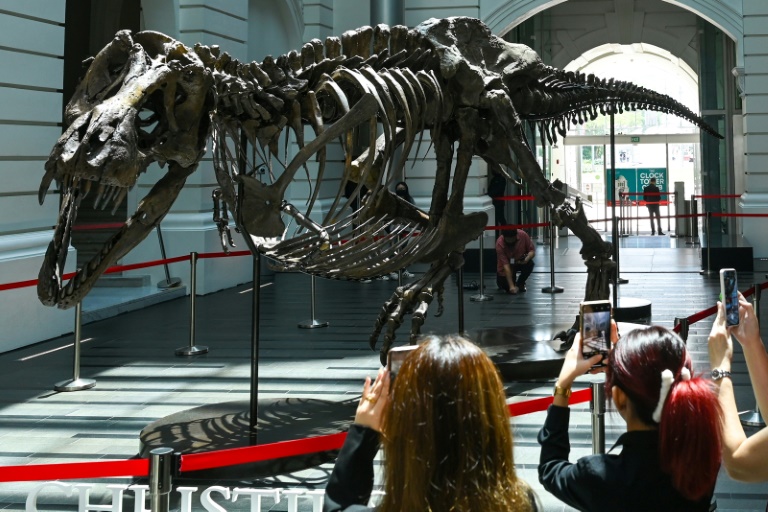
Christie’s has called off the auction of a Tyrannosaurus rex skeleton, the auction house told AFP on Monday, days before it was due to go under the hammer in Hong Kong.

The cancellation came after an American fossil company raised doubts about parts of the skeleton named “Shen”, The New York Times reported on Sunday.

Christie’s said in a statement to AFP that Shen — a 1,400-kilogramme (3,100-pound) skeleton — was withdrawn from its autumn auctions week that starts in Hong Kong on Friday.

“The consignor has now decided to loan the specimen to a museum for public display,” it said.

Excavated from the US state of Montana, Shen stands 4.6 metres (15 feet) tall and 12 metres long, and is thought to be an adult male that lived about 67 million years ago.

Its auction would have followed the sale of another T-rex skeleton named “Stan” by Christie’s for $31.8 million in 2020.

It is very rare for complete dinosaur skeletons to be found, according to The Field Museum in Chicago, one of the largest natural history museums in the world.

Most frames on display use casts of bones to complete the skeleton. The Field Museum estimates the number of bones in a T-rex at 380.

Christie’s original materials said about 80 of Shen’s bones were original.

The controversy was sparked when Peter Larson, president of the Black Hills Institute of Geological Research in the United States, told The New York Times that parts of Shen looked similar to Stan.

The Black Hills Institute holds the intellectual property rights to Stan, even after its sale in 2020, and it sells replicas of that skeleton

Larson told the newspaper that it seemed to him that Shen’s owner — not identified by Christie’s — used bones from a Stan replica to complete the skeleton.

Its spokesman Edward Lewine told the newspaper that Christie’s believes Shen “would benefit from further study”.

Sales of such skeletons have raked in tens of millions of dollars in recent years, but experts have described the trade as harmful to science as the auctions could put them in private hands and out of the reach of researchers.

Christie's cancels controversial T-rex auction in Hong Kong

Christie’s has called off the auction of a Tyrannosaurus rex skeleton, the auction house told AFP on Monday, days before it was due to go under the hammer in Hong Kong.

The cancellation came after an American fossil company raised doubts about parts of the skeleton named “Shen”, The New York Times reported on Sunday.

Christie’s said in a statement to AFP that Shen — a 1,400-kilogramme (3,100-pound) skeleton — was withdrawn from its autumn auctions week that starts in Hong Kong on Friday.

“The consignor has now decided to loan the specimen to a museum for public display,” it said.

Excavated from the US state of Montana, Shen stands 4.6 metres (15 feet) tall and 12 metres long, and is thought to be an adult male that lived about 67 million years ago.

Its auction would have followed the sale of another T-rex skeleton named “Stan” by Christie’s for $31.8 million in 2020.

It is very rare for complete dinosaur skeletons to be found, according to The Field Museum in Chicago, one of the largest natural history museums in the world.

Most frames on display use casts of bones to complete the skeleton. The Field Museum estimates the number of bones in a T-rex at 380.

Christie’s original materials said about 80 of Shen’s bones were original.

The controversy was sparked when Peter Larson, president of the Black Hills Institute of Geological Research in the United States, told The New York Times that parts of Shen looked similar to Stan.

The Black Hills Institute holds the intellectual property rights to Stan, even after its sale in 2020, and it sells replicas of that skeleton

Larson told the newspaper that it seemed to him that Shen’s owner — not identified by Christie’s — used bones from a Stan replica to complete the skeleton.

Its spokesman Edward Lewine told the newspaper that Christie’s believes Shen “would benefit from further study”.

Sales of such skeletons have raked in tens of millions of dollars in recent years, but experts have described the trade as harmful to science as the auctions could put them in private hands and out of the reach of researchers.

Sonic the Hedgehog co-creator arrested over insider trading

The co-creator of classic video game series Sonic the Hedgehog has been arrested for alleged insider trading, according to public prosecutors in Tokyo.

Yuji Naka, a 57-year-old programmer known for making Sonic and other major titles at Japanese game firm Sega, was arrested on Friday, a prosecution document obtained by AFP said.

His alleged misdeed took place nearly three years ago, when Naka was an employee at “Final Fantasy” creator Square Enix, the Tokyo District Prosecutors Office document said.

Naka is accused of buying shares in another game company, Aiming, when he knew they were going to release a new title jointly developed with Square Enix.

He purchased 10,000 shares in Aiming for 2.8 million yen ($20,000) in January 2020, according to the document, and the new game was announced the following month.

Prosecutors on Thursday arrested two other former Square Enix employees, also for alleged insider trading linked to Aiming.

Naka was not immediately reachable for comment, but his fans expressed surprise and disappointment on social media.

“Please tell me this isn’t true. He brought Sonic to life… I’m so sad,” one Twitter user wrote.

“He worked on many great games. So disappointing,” said another.

On the website of the game studio that Naka founded called Prope, the programmer said he wanted to create “games that surprise and entertain children around the world”.

Close Bitnami banner
Bitnami