World

'I knew we were next': Barman tells of Colorado club shooting horror

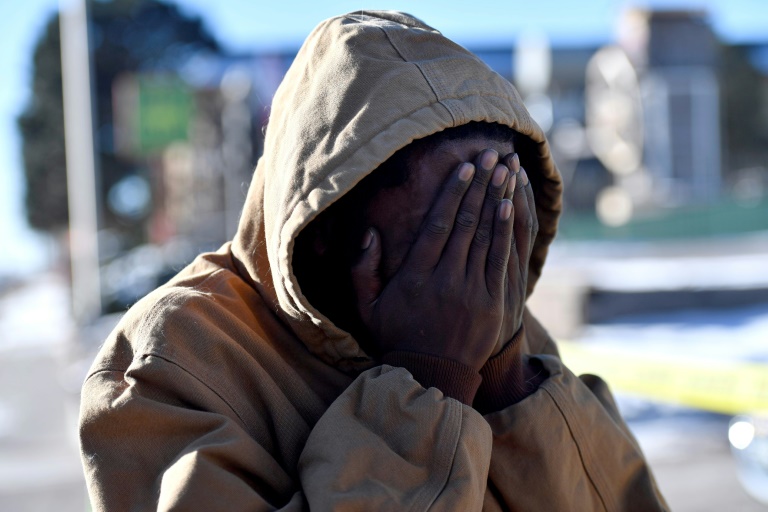
As barman Michael Anderson cowered on the patio of a nightclub, hiding from the gunman who was killing his friends and colleagues, he was convinced he was going to die too.

“I just felt alone, really alone and scared,” he said.

“I didn’t even have my phone with me. I was afraid I wouldn’t even get to say goodbye to my mother.” 

Moments earlier he had been pouring drinks at Club Q, a long-established LGBTQ venue in Colorado Springs in the foothills of the US Rocky Mountains.

Earlier there had been a drag show to mark the Transgender Day of Remembrance, and the music was pumping when he began hearing popping sounds.

“I looked up and saw a shadow of a tall person holding a rifle. I saw the gun plainly… and then the shots continued… round after round after round. It was absolutely terrifying,” he told AFP.

“I ducked down behind the bar. Glass was just flying everywhere around me, like there were just bullets breaking bottles and whatever else was back there.”

Penned in and scared he was going to be targeted, Anderson crawled out to a patio where he and a co-worker wedged themselves between a wall and a booth, seeking any protection they could find.

Inside, the gunman, later identified by police as 22-year-old Anderson Lee Aldrich, was shooting indiscriminately at clubbers in a rampage that would leave at least five dead at 18 wounded, some of them critically.

And he wasn’t done yet.

“I saw a gun come out from the patio door, the barrel of a gun sticking out,” Anderson said.

“And that was the moment I was most terrified. Because I knew we were next. 

“He was gonna find us.”

– ‘They saved my life’ –

What happened next has left Anderson eternally grateful to the people he describes as heroes.

Police say at least two individuals rushed at the shooter and overpowered him.

When Anderson next looked up, he saw the gunman pinned to the floor.

“There were some very brave people beating him and kicking him, stopping him from causing more damage,” he said.

“I don’t know who did that. But I really would like to know because I’m very grateful. They saved my life last night.”

The United States is no stranger to acts of horrific violence, but for Anderson and other members of the LGBTQ community in Colorado Springs, a city of around half a million people, the threat seemed somehow remote.

“The community here is tight-knit,” he said. “Everyone knows each other. We’re a family, you know where we come together.

“When I started at Club Q… my general manager told me: ‘you’re a part of our family. Now we’re here for you.’

“We always thought this could never happen here; never Colorado Springs, never Club Q. 

“But maybe that’s something we tell ourselves so we can go out and feel safe.”

Anderson said he hopes the gunman will spend the rest of his life in prison, living with the full horror of his actions.

And America, he said, needs to be kinder.

Less than two weeks after an election in which several candidates amped up their anti-gay, anti-trans rhetoric in the rush for votes, politicians need to rethink their strategy, he said.

“The people spewing that may think that it’s harmless, and it’s just part of their culture war, but their culture war has real consequences I’ve seen firsthand.”
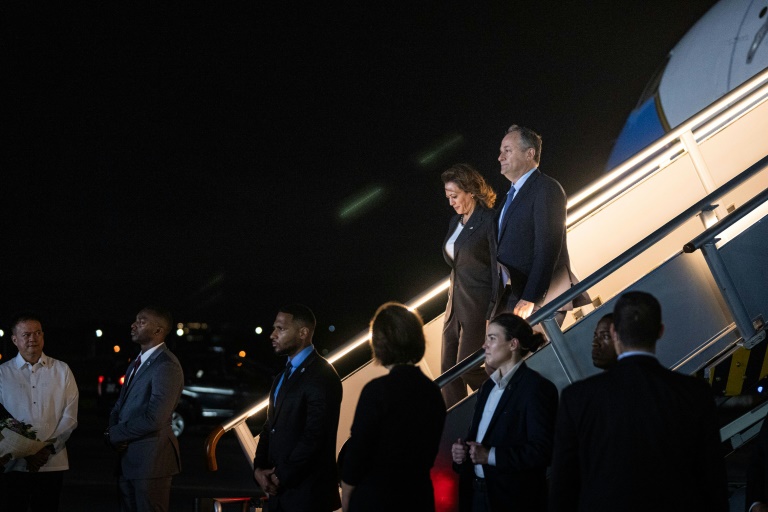
VP Harris vows 'unwavering' commitment to Philippines

The United States has an “unwavering” commitment to the Philippines, US Vice President Kamala Harris told the country’s president Monday during a visit aimed at countering China and rebuilding ties that were fractured over human rights abuses in the Southeast Asian nation.

Harris is the highest-ranking US official to visit Manila since President Ferdinand Marcos took power in June, signalling a growing rapport between the longtime allies after years of frosty relations under his Beijing-friendly predecessor Rodrigo Duterte.

She also met with her Philippine counterpart Sara Duterte, the daughter of the former leader whose deadly drug war sparked an international investigation into alleged human rights abuses.

“We stand with you in defence of international rules and norms as it relates to the South China Sea,” Harris told Marcos at the start of talks in the presidential palace in Manila.

“An attack on the Philippine armed forces, public vessels or aircraft in the South China Sea would invoke the US mutual defence commitment… that is our unwavering commitment to the Philippines.”

Marcos said he did not “see a future for the Philippines that does not include the United States.”

The United States has a long and complex relationship with the Philippines — and the Marcos family. Marcos’s dictator father ruled the former US colony for two decades with the support of Washington, which saw him as a Cold War ally.

Relations between the two countries soured under the foul-mouthed Duterte. In 2016, Duterte called Barack Obama a “son of a whore” over warnings he would be questioned by the then US president over his controversial drug war.

Washington is now seeking to bolster its security alliance with Manila under the new president.

That includes a mutual defence treaty and a 2014 pact, known by the acronym EDCA, which allows for the US military to store defence equipment and supplies on five Philippine bases.

It also allows US troops to rotate through those military bases.

EDCA stalled under Duterte but the United States and the Philippines have expressed support for accelerating its implementation as China becomes increasingly assertive.

“We have identified new locations and have begun a process with the Philippines to finalise those,” a US official told reporters on condition of anonymity ahead of Harris’s meeting with Marcos.

On Tuesday, Harris will visit the Philippine island province of Palawan, which lies along hotly contested waters in the South China Sea.

China claims sovereignty over almost the entire sea, while the Philippines, Vietnam, Malaysia and Brunei have overlapping claims to parts of it.

Beijing has ignored a 2016 international tribunal ruling that its claims have no legal basis.

Harris will meet members of the Philippine Coast Guard on board one of the country’s two biggest coast guard vessels and deliver a speech.

– US commitment – 

Harris’s trip to the Philippines is part of US efforts to remove any doubt about its commitment to the Asia-Pacific as China aggressively expands its regional influence.

It comes after Harris and US President Joe Biden met separately with Chinese President Xi Jinping last week.

Harris reinforced Biden’s message that “we must maintain open lines of communication to responsibly manage the competition between our countries” while speaking to Xi on the sidelines of the Asia-Pacific Economic Cooperation forum in Bangkok, a White House official said.

While her trip to Palawan would likely annoy China, the United States had more to gain from sending a message of reassurance to the Philippines, said Greg Poling, director of the US-based Asia Maritime Transparency Initiative.

“The Philippines will be much more reassured than China will be irritated,” Poling said.

Among the initiatives to be launched during Harris’s trip are negotiations for a civilian nuclear pact between the United States and the Philippines.

That could lead to the future sales of US nuclear reactors to the Southeast Asian country.

Marcos is a strong supporter of renewable energy and has insisted on the need to reconsider building nuclear power plants in the disaster-prone country.

However, before the United States can sell nuclear equipment to the Philippines, the two countries must sign a civilian nuclear pact known as a “123 agreement”, which is designed to prevent the spread of nuclear weapons.

'Like a shotgun': Tongan eruption is largest ever recorded

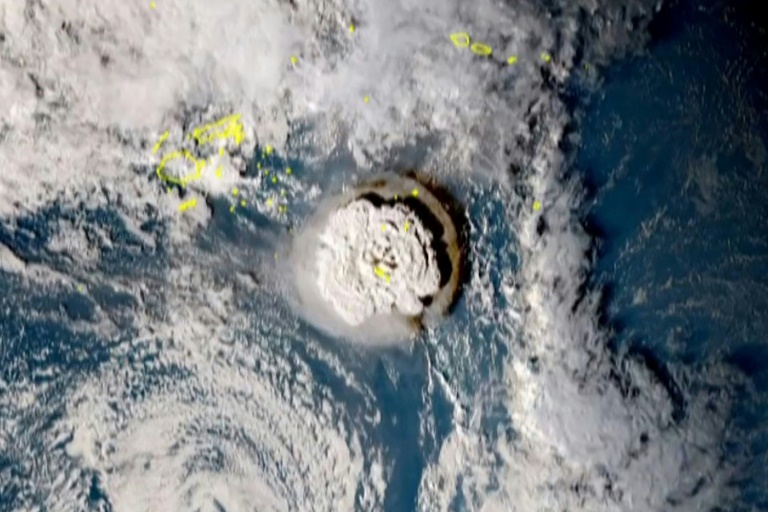
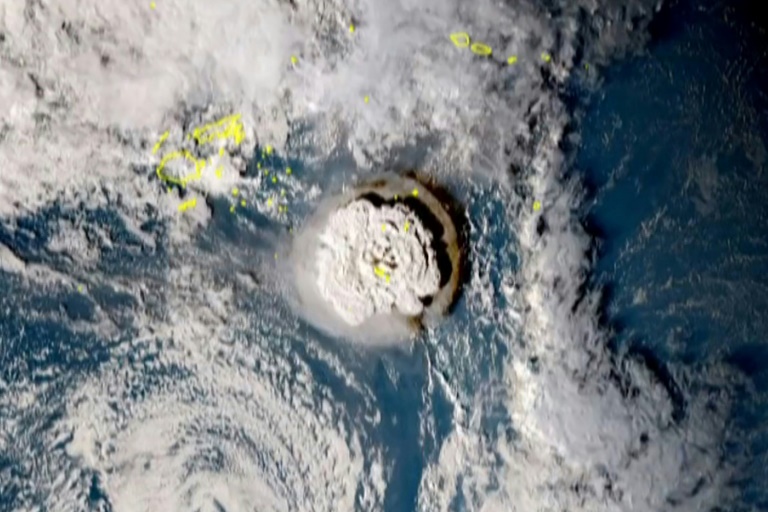
A deadly volcanic eruption near Tonga in January was the largest ever recorded with modern equipment, a New Zealand-led team of scientists revealed Monday.

The Hunga Tonga-Hunga Ha’apai volcano erupted underwater with a force equivalent to hundreds of atomic bombs, unleashing a 15-metre (50-foot) tsunami which demolished homes and killed at least three people on the Pacific island kingdom.

The natural disaster also damaged undersea communication cables, cutting Tonga off from the rest of the world for weeks and hampering efforts to help the victims.

A detailed study by New Zealand’s national institute for water and atmospheric research shows the eruption blasted out almost 10 cubic kilometres of material — equivalent to 2.6 million Olympic-sized swimming pools — and fired debris more than 40 kilometres (25 miles) into the mesosphere, the level above the Earth’s stratosphere.

“The eruption reached record heights, being the first we’ve ever seen to break through into the mesosphere,” said marine geologist Kevin Mackay.

“It was like a shotgun blast directly into the sky.”

The Hunga Tonga-Hunga Ha’apai eruption rivals the infamous Krakatoa disaster which killed tens of thousands in Indonesia in 1883 before the invention of modern measuring equipment.

“While this eruption was large — one of the biggest since Krakatoa — the difference here is that it’s an underwater volcano and it’s also part of the reason we got such big tsunami waves,” Mackay added.

The team of scientists have accounted for three-quarters of the material fired out by the Tongan eruption with the rest explained as debris scattered in the atmosphere.

Mackay said the plume is estimated to have contained nearly two cubic kilometres of particles which stayed in the atmosphere for “months, causing the stunning sunsets we saw” across the Pacific region as far away as New Zealand.

His team also discovered that the volcano’s crater is now 700 metres deeper than it was.

The eruption’s pyroclastic flows — deadly currents of lava, volcanic ash and gases which reach temperatures of 1,000 degrees Centigrade (1,800 degrees Fahrenheit) and speeds of 700 kilometres per hour — carried debris from the volcano along the sea floor at least 80 kilometres away.

“But the pyroclastic flows appear to extend beyond that, perhaps as far as 100 kilometres away,” said the team’s principal scientist Emily Lane.

“The sheer force of the flows is astonishing — we saw deposits in valleys beyond the volcano, meaning they had enough power to flow uphill over huge ridges and then back down again.”

'Like a shotgun': Tongan eruption is largest ever recorded

A deadly volcanic eruption near Tonga in January was the largest ever recorded with modern equipment, a New Zealand-led team of scientists revealed Monday.

The Hunga Tonga-Hunga Ha’apai volcano erupted underwater with a force equivalent to hundreds of atomic bombs, unleashing a 15-metre (50-foot) tsunami which demolished homes and killed at least three people on the Pacific island kingdom.

The natural disaster also damaged undersea communication cables, cutting Tonga off from the rest of the world for weeks and hampering efforts to help the victims.

A detailed study by New Zealand’s national institute for water and atmospheric research shows the eruption blasted out almost 10 cubic kilometres of material — equivalent to 2.6 million Olympic-sized swimming pools — and fired debris more than 40 kilometres (25 miles) into the mesosphere, the level above the Earth’s stratosphere.

“The eruption reached record heights, being the first we’ve ever seen to break through into the mesosphere,” said marine geologist Kevin Mackay.

“It was like a shotgun blast directly into the sky.”

The Hunga Tonga-Hunga Ha’apai eruption rivals the infamous Krakatoa disaster which killed tens of thousands in Indonesia in 1883 before the invention of modern measuring equipment.

“While this eruption was large — one of the biggest since Krakatoa — the difference here is that it’s an underwater volcano and it’s also part of the reason we got such big tsunami waves,” Mackay added.

The team of scientists have accounted for three-quarters of the material fired out by the Tongan eruption with the rest explained as debris scattered in the atmosphere.

Mackay said the plume is estimated to have contained nearly two cubic kilometres of particles which stayed in the atmosphere for “months, causing the stunning sunsets we saw” across the Pacific region as far away as New Zealand.

His team also discovered that the volcano’s crater is now 700 metres deeper than it was.

The eruption’s pyroclastic flows — deadly currents of lava, volcanic ash and gases which reach temperatures of 1,000 degrees Centigrade (1,800 degrees Fahrenheit) and speeds of 700 kilometres per hour — carried debris from the volcano along the sea floor at least 80 kilometres away.

“But the pyroclastic flows appear to extend beyond that, perhaps as far as 100 kilometres away,” said the team’s principal scientist Emily Lane.

“The sheer force of the flows is astonishing — we saw deposits in valleys beyond the volcano, meaning they had enough power to flow uphill over huge ridges and then back down again.”

Disney boots CEO, brings back Bob Iger to lead company

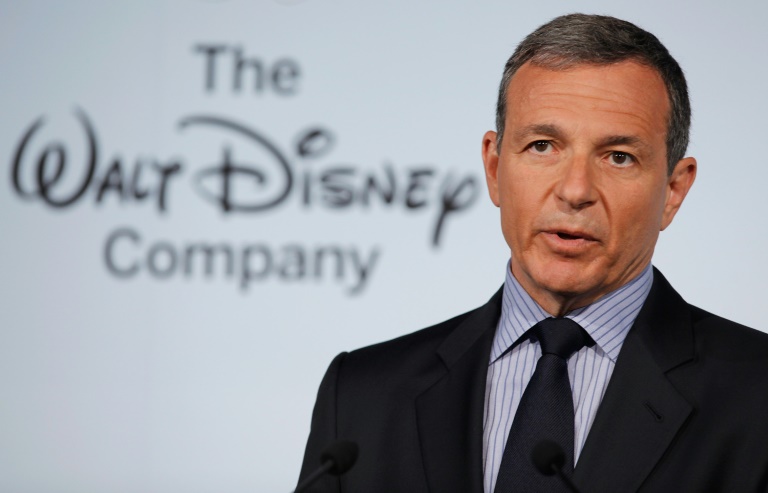
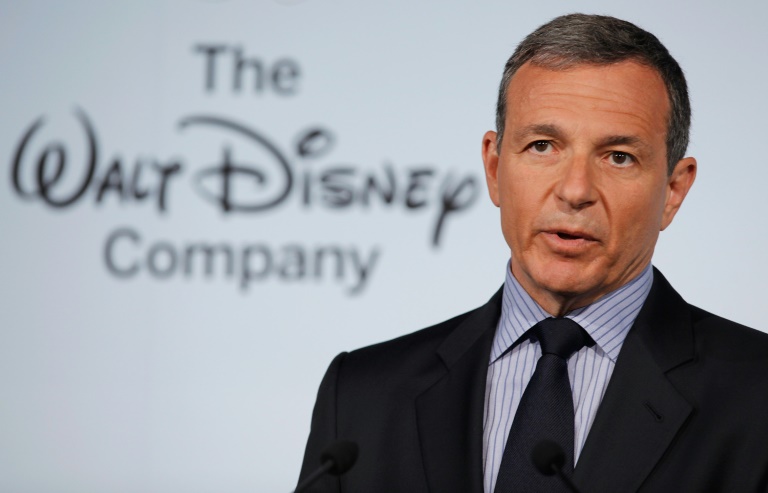
Disney ousted chief executive Bob Chapek on Sunday and announced that it had brought back former CEO Bob Iger to once again take the reins.

The change, a dramatic turn of events for one of the largest media conglomerates in the world, was effective immediately, Disney said in a statement.

“We thank Bob Chapek for his service to Disney over his long career,” Susan Arnold, chair of Disney’s board, said.

The board of directors decided that as the company “embarks on an increasingly complex period of industry transformation, Bob Iger is uniquely situated to lead.”

Chapek spent two years as CEO, a period that saw Wall Street concerned about rising expenses at the company. Disney’s stock has fallen 41 percent this year.

Iger, who previously served as Disney’s CEO for 15 years, increasing the company’s market capitalization five-fold during that period, has pledged to return as CEO for at least two years, the statement said.

Iger, now 71, had promoted Chapek as his replacement in 2020 but the relationship soured and by early this year the two rarely spoke.

“I am deeply honored to be asked to again lead this remarkable team… through unrivaled, bold storytelling,” Iger said.

Under Iger’s leadership, Disney acquired Pixar, Marvel, Lucasfilm and 21st Century Fox. It also opened its first theme park in China — the Shanghai Disney Resort — and launched the Disney+ and ESPN+ streaming services.

Chapek upset many of Disney’s 200,000 employees earlier this year with how he handled the “Don’t Say Gay” law in Florida, where a Disney theme park is located. The law bars public schools from teaching learners in kindergarten through third grade about sexual orientation or gender identity.

Chapek remained silent on the issue until pressure grew among Disney’s employees.

The scandal prompted Florida to end Disney’s self-governing status in its Orlando theme park, which comes into effect in June 2023.

As recently as June, Disney’s board had signaled that it still supported Chapek, offering him a contract extension of three more years.

Chapek oversaw a marked increase in Disney’s total revenue to $28.7 billion for the fiscal year, which ended October 1, 2022.

But costs were also rising sharply and Chapek last week announced company-wide cost-cutting measures and said layoffs were likely.

After dealing with major challenges caused by the Covid-19 pandemic at the company, Chapek hit speedbumps in ramping up Disney’s streaming services.

Earlier this month, he reported an increase of 12.1 million subscribers to Disney+ — bringing its global total to 164.2 million. Disney’s Hulu and ESPN+ also added one million and 1.5 million subscribers, respectively.

But that news was tempered by increasing operating losses for streaming services, which nearly doubled to $1.47 billion last quarter.

Those numbers gave some Wall Street analysts serious concerns, and the host of CNBC’s “Mad Money” show, Jim Cramer, called last week for Disney to sack Chapek and fix the company’s “balance sheet from hell.”

During Iger’s tenure, Disney produced a number of record-setting films including Marvel’s “Avengers: Endgame,” the highest-grossing film of all time. The company also produced “Frozen” and “Frozen 2” and Marvel’s “Black Panther.”   

Disney boots CEO, brings back Bob Iger to lead company

Disney ousted chief executive Bob Chapek on Sunday and announced that it had brought back former CEO Bob Iger to once again take the reins.

The change, a dramatic turn of events for one of the largest media conglomerates in the world, was effective immediately, Disney said in a statement.

“We thank Bob Chapek for his service to Disney over his long career,” Susan Arnold, chair of Disney’s board, said.

The board of directors decided that as the company “embarks on an increasingly complex period of industry transformation, Bob Iger is uniquely situated to lead.”

Chapek spent two years as CEO, a period that saw Wall Street concerned about rising expenses at the company. Disney’s stock has fallen 41 percent this year.

Iger, who previously served as Disney’s CEO for 15 years, increasing the company’s market capitalization five-fold during that period, has pledged to return as CEO for at least two years, the statement said.

Iger, now 71, had promoted Chapek as his replacement in 2020 but the relationship soured and by early this year the two rarely spoke.

“I am deeply honored to be asked to again lead this remarkable team… through unrivaled, bold storytelling,” Iger said.

Under Iger’s leadership, Disney acquired Pixar, Marvel, Lucasfilm and 21st Century Fox. It also opened its first theme park in China — the Shanghai Disney Resort — and launched the Disney+ and ESPN+ streaming services.

Chapek upset many of Disney’s 200,000 employees earlier this year with how he handled the “Don’t Say Gay” law in Florida, where a Disney theme park is located. The law bars public schools from teaching learners in kindergarten through third grade about sexual orientation or gender identity.

Chapek remained silent on the issue until pressure grew among Disney’s employees.

The scandal prompted Florida to end Disney’s self-governing status in its Orlando theme park, which comes into effect in June 2023.

As recently as June, Disney’s board had signaled that it still supported Chapek, offering him a contract extension of three more years.

Chapek oversaw a marked increase in Disney’s total revenue to $28.7 billion for the fiscal year, which ended October 1, 2022.

But costs were also rising sharply and Chapek last week announced company-wide cost-cutting measures and said layoffs were likely.

After dealing with major challenges caused by the Covid-19 pandemic at the company, Chapek hit speedbumps in ramping up Disney’s streaming services.

Earlier this month, he reported an increase of 12.1 million subscribers to Disney+ — bringing its global total to 164.2 million. Disney’s Hulu and ESPN+ also added one million and 1.5 million subscribers, respectively.

But that news was tempered by increasing operating losses for streaming services, which nearly doubled to $1.47 billion last quarter.

Those numbers gave some Wall Street analysts serious concerns, and the host of CNBC’s “Mad Money” show, Jim Cramer, called last week for Disney to sack Chapek and fix the company’s “balance sheet from hell.”

During Iger’s tenure, Disney produced a number of record-setting films including Marvel’s “Avengers: Endgame,” the highest-grossing film of all time. The company also produced “Frozen” and “Frozen 2” and Marvel’s “Black Panther.”   

Colorado mass shooter stopped by 'heroic' people inside club: police

The gunman who opened fire inside an LGBTQ Colorado nightclub, killing at least five, was stopped by two “heroic” people inside the club, police told a press conference Sunday.

They identified the suspect as 22-year-old Anderson Lee Aldrich, and said he had used a rifle at the club, where partygoers were apparently marking Transgender Day of Remembrance, which pays tribute to trans people targeted in violent attacks.

Eighteen people were wounded in the incident shortly before midnight, police said, adding that an unspecified number of the wounded remained in critical condition.

The shooting was the latest in a long history of attacks on LGBTQ venues in the United States, the deadliest of which claimed 49 lives at a nightclub in Orlando, Florida, in 2016.

The suspect in Colorado Springs entered Club Q and immediately began shooting at people inside, police chief Adrian Vasquez told a press conference. 

“At least two heroic people inside the club confronted and fought with the suspect and were able to stop the suspect from continuing to kill and harm others,” he added.

Joshua Thurman of Colorado Springs was in the club at the time.

“It was so scary,” he told reporters Sunday. “There were bodies on the floor. There was shattered glass, broken cups, people crying.

“It was supposed to be our safe space… Where are we supposed to go?”

Aeron Laney, 24, was at the club for the first time, having just moved to Colorado Springs.

She described a small club where everyone seemed to know each other, the kind of place she knew she would fit right in.

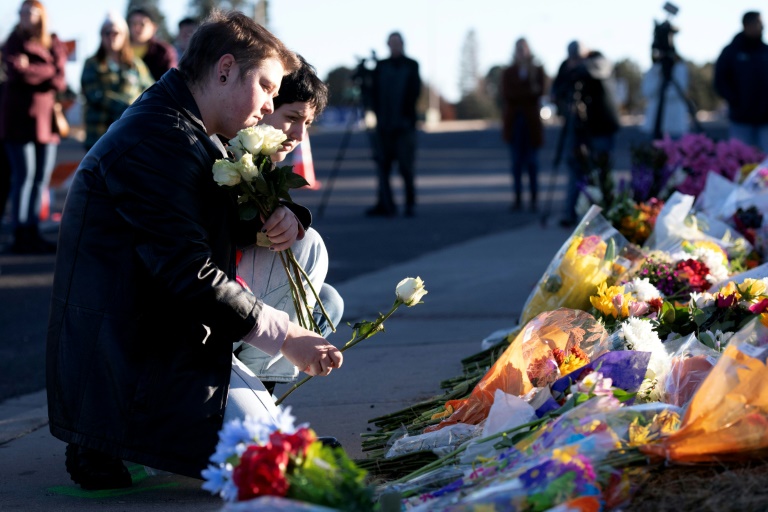
“Everyone was just having a good time and smiling and laughing,” she told AFP, tearfully looking at the bank of flowers growing outside the club.

“I just can’t wrap my hand around somebody just walking in and seeing people that are so happy and so comfortable in their community and just wanting to end that.”

Laney and her friend Justin Godwin left minutes before the gunman stormed in.

“Maybe the guy was already there. Like was he in the parking lot… just planning it?” Godwin, 25, said. “It’s just terrifying.”

US President Joe Biden released a statement condemning the attack, slamming violence against the LGBTQ community, particularly transgender women of color.

“We must drive out the inequities that contribute to violence against LGBTQI+ people. We cannot and must not tolerate hate,” he said.

– Earlier bomb threat –

The authorities said the suspect was being treated at a local hospital but they released no other information about him, noting that officials including the FBI are investigating.

A man with the same name was arrested on June 18, 2021, aged 21 after his mother said he had threatened to hurt her with a homemade bomb or “multiple weapons,” according to a news release at the time from the El Paso County Sheriff’s Office. 

Police spokeswoman Pamela Castro said Sunday that police received an initial call about an active shooting in the club at 11:56 pm. She said a first officer arrived within four minutes, and that the suspect had been subdued just two minutes later.

“Club Q is a safe haven for our LGBTQ citizens,” Chief Vasquez said. “I’m so terribly saddened and heartbroken.”

Club Q said on Facebook that it was “devastated by the senseless attack on our community,” adding, “We thank the quick reactions of heroic customers that subdued the gunman and ended this hate attack.”

Authorities said Sunday that the shooting had not yet been officially classified as a hate crime but that first-degree murder charges were certain to be filed.

Governor Jared Polis, who in 2018 became the first openly gay man elected as a US governor, called the shooting “horrific, sickening and devastating.” 

Messages of support poured in by the hundreds to the club’s Facebook page, some from as far away as Sweden, Britain, New Zealand, Germany and Australia.

– ‘Events we train for’ –

Authorities could not immediately say how many people were in the popular club at the time.

Dozens of police and firefighters rushed to the scene. 

Bartender Michael Anderson was working at the club.

“I always hoped that I would never be somewhere where this would happen,” he told CBS.

Transgender Day of Remembrance has been marked each year since 1999, when it began as a vigil to honor the memory of Rita Hester, who had been killed the year before.

Transgender rights were a hot-button issue in the United States leading up to midterm elections earlier this month, with Republicans putting forward a slew of legislative proposals to restrict them. 

Gun violence is a huge problem in the United States, where more than 600 mass shootings have occurred so far in 2022, according to the Gun Violence Archive website.

Race on to form coalition govt in Malaysia after election deadlock

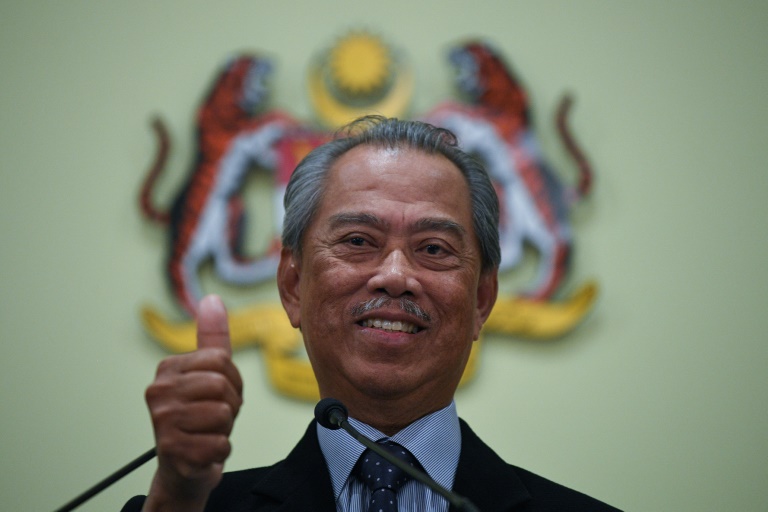
Rival Malaysian political blocs on Monday tried to woo smaller parties to form a coalition government after the weekend’s general election that saw major gains by a conservative Islamist party.

One of Southeast Asia’s biggest economies saw three governments change in as many years before this stalemate, and the next one faces major challenges including soaring inflation.

No party has emerged with a clear majority. Veteran opposition leader Anwar Ibrahim and former premier Muhyiddin Yassin both claim they have the numbers to control parliament.

To break the impasse, parties have been told to submit their preferred prime minister and coalition partners to the king’s palace by 2 pm (0600 GMT) on Monday.

The bloc led by the United Malays National Organisation (UMNO) — which once dominated Malaysian politics — trailed far behind the rest in Saturday’s election.

It was their worst election performance since Malaysia won independence in 1957.

While details of possible alliances are murky, Muhyiddin’s group includes the conservative Pan-Malaysian Islamic Party (PAS), which promotes a strict interpretation of Islamic law.

– Big gains for Islamists –

The latest election saw PAS become the largest party in Muhyiddin’s bloc, sparking worries among analysts about its influence on national policy.

The party forced the cancellation of an annual craft beer festival in the capital Kuala Lumpur in 2017.

And in 2018, two women convicted of having lesbian sex were caned in front of more than 100 spectators in a PAS-ruled state.

“If they (PAS) hold most of the cabinet and senior positions, this will inspire anxiety,” Bridget Welsh of the University of Nottingham Malaysia told AFP.

She said women’s rights could be “potentially impacted” too.

This would not be the first time in a governing coalition for PAS, but this time they have far greater numbers than before.

Asrul Hadi Abdullah Sani, deputy managing director at BowerGroupAsia, noted that PAS previously avoided pushing its agenda strongly.

“However, PAS may be tempted to stamp its identity in the new administration… especially after its overwhelming performance,” he said.

Critics have warned of Islamist conservatism creeping into Malaysian society and politics for years, saying hardliners are eroding the traditionally moderate brand of Islam in the country.

The majority of Malaysia’s 33 million people are Malay and Muslim, but the country is also home to substantial ethnic Chinese and Indian minorities.

Ethnic Malay parties have claimed that Malaysia’s majority ethnic group would lose its rights if non-Malays — such as Anwar’s multi-ethnic bloc — are elected.

Hong Kong leads Asia losses on fresh China Covid fears

Asian markets fell Monday as China’s first Covid death in six months sparked fears officials would reimpose strict, economically painful restrictions to fight outbreaks across the country.

The news threw a spanner in the works for investors who had grown hopeful of a gradual reopening after Beijing eased a number of virus-fighting measures earlier this month.

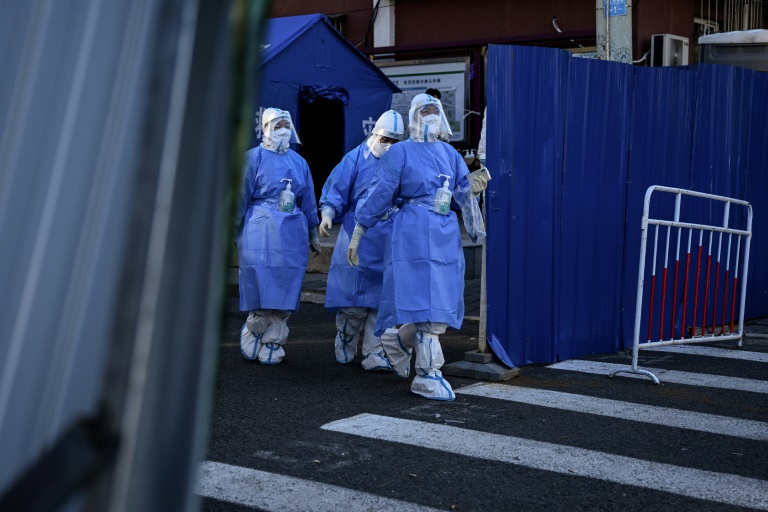
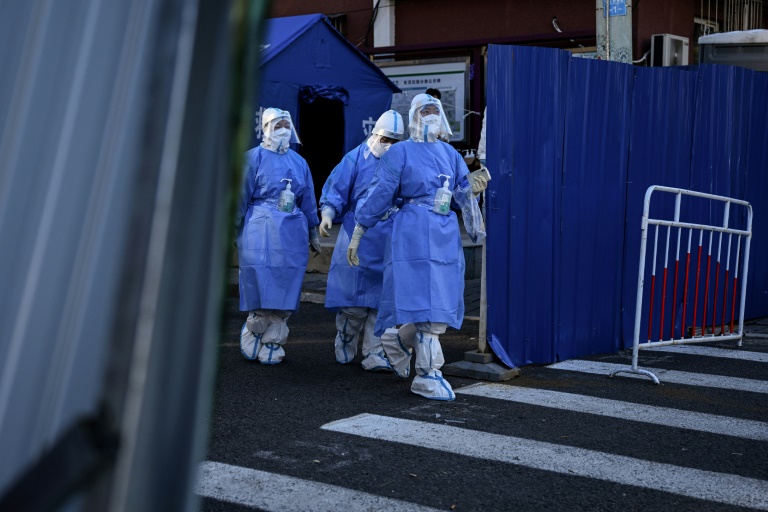
The death of an 87-year-old man in Beijing on Sunday came as infections across the country spiked, testing authorities’ plans to loosen their grip by lowering quarantine times for foreigners and cancelling mass tests.

Beijing has in recent days moved to confine some residents to their homes and ordered others to quarantine centres.

The measures dealt a particular blow to Hong Kong’s Hang Seng, which fell more than two percent, extending a sell-off at the end of last week and eating further into a recent massive rally. Shanghai was down.

“It feels like one step forward, two steps back,” Willer Chen, at Forsyth Barr Asia, said.  

“It is super hard to reopen in the short term given winter is coming and cases are at a super high level and spreading across the whole country.”

There were also losses in Tokyo, Sydney, Seoul, Singapore, Taipei and Manila. Kuala Lumpur dropped with the ringgit after Malaysian elections ended with no clear winner, fuelling uncertainty in the country.

Regional investors brushed off a positive end to last week for US and European markets, while attention turns to the release later in the week of minutes from the Federal Reserve’s most recent policy meeting.

Global markets have enjoyed a broadly healthy November thanks to signs of China easing and indications of slowing US inflation that fanned optimism the Fed would start to slow its pace of interest rate hikes.

The well-below-forecast readings in the consumer and wholesale indexes suggested months of strict tightening measures were finally working through the economy and having results, allowing for a less hawkish Fed.

But several officials soon lined up to warn that more needed to be done to get inflation back down from four-decade highs to more bearable levels.

The sharp rise in interest rates and elevated inflation has this year sent shudders through trading floors as investors fear they will send the US economy into recession.

In the latest comments, Atlanta Fed chief Raphael Bostic said he saw borrowing costs hitting five percent — from their current levels of around four percent — before they are held.

Boston Fed president Susan Collins remained open to options for the next hike — including a fifth straight 75-basis-point lift.

However, National Australia Bank’s Tapas Strickland said: “That comment by itself sounds hawkish, but Collins overall was more cautious and also expressed confidence that policymakers can tame inflation without doing too much damage to employment.

“Instead, it was likely that comment coming after a bevy of Fed Speakers during the week that added a hawkish hue to it.”

While the mood among traders remains less than bright, there appears to be a feeling that there is some light at the end of the tunnel.

“Whether it’s the time of year or recession uncertainty, few seem inclined to chase the risk rally,” said Stephen Innes at SPI Asset Management.

“Still, there is growing recognition that the consensus view of recession and earnings downgrades could face mitigation from declining inflation.

“A lower dollar, lower volatility and the acknowledgement of having to buy early could improve the risk outlook.”

And Bokeh Capital Partners’ Kim Forrest added that 10-year Treasury yields had tumbled since late October, showing “a softening inflationary environment”. 

“The bond market is a little bit smarter about what the Fed needs to do and what it’s going to do. It’s been telling us that the Fed probably won’t be able to get its rates up to five percent nor will it need to,” she told Bloomberg Television.

Demand concerns caused by China’s Covid woes further hit oil prices, with both main contracts in the red, having tumbled last week.

– Key figures around 0230 GMT –

Tokyo – Nikkei 225: DOWN 0.1 percent at 27,871.09 (break)

Hong Kong – Hang Seng Index: DOWN 2.8 percent at 17,492.08

Shanghai – Composite: DOWN 1.0 percent at 3,066.47

Pound/dollar: DOWN at $1.1843 from $1.1883 on Friday

Euro/dollar: DOWN at $1.0292 from $1.0321

Dollar/yen: UP at 140.42 yen from 140.40 yen

Euro/pound: UP at 86.91 from 86.83 pence

West Texas Intermediate: DOWN 0.7 percent at $79.55 per barrel

Brent North Sea crude: DOWN 0.8 percent at $86.92 per barrel

New York – Dow: UP 0.6 percent at 33,745.69 (close)

London – FTSE 100: UP 0.5 percent at 7,385.52 (close)

— Bloomberg News contributed to this story —

Hong Kong leads Asia losses on fresh China Covid fears

Asian markets fell Monday as China’s first Covid death in six months sparked fears officials would reimpose strict, economically painful restrictions to fight outbreaks across the country.

The news threw a spanner in the works for investors who had grown hopeful of a gradual reopening after Beijing eased a number of virus-fighting measures earlier this month.

The death of an 87-year-old man in Beijing on Sunday came as infections across the country spiked, testing authorities’ plans to loosen their grip by lowering quarantine times for foreigners and cancelling mass tests.

Beijing has in recent days moved to confine some residents to their homes and ordered others to quarantine centres.

The measures dealt a particular blow to Hong Kong’s Hang Seng, which fell more than two percent, extending a sell-off at the end of last week and eating further into a recent massive rally. Shanghai was down.

“It feels like one step forward, two steps back,” Willer Chen, at Forsyth Barr Asia, said.  

“It is super hard to reopen in the short term given winter is coming and cases are at a super high level and spreading across the whole country.”

There were also losses in Tokyo, Sydney, Seoul, Singapore, Taipei and Manila. Kuala Lumpur dropped with the ringgit after Malaysian elections ended with no clear winner, fuelling uncertainty in the country.

Regional investors brushed off a positive end to last week for US and European markets, while attention turns to the release later in the week of minutes from the Federal Reserve’s most recent policy meeting.

Global markets have enjoyed a broadly healthy November thanks to signs of China easing and indications of slowing US inflation that fanned optimism the Fed would start to slow its pace of interest rate hikes.

The well-below-forecast readings in the consumer and wholesale indexes suggested months of strict tightening measures were finally working through the economy and having results, allowing for a less hawkish Fed.

But several officials soon lined up to warn that more needed to be done to get inflation back down from four-decade highs to more bearable levels.

The sharp rise in interest rates and elevated inflation has this year sent shudders through trading floors as investors fear they will send the US economy into recession.

In the latest comments, Atlanta Fed chief Raphael Bostic said he saw borrowing costs hitting five percent — from their current levels of around four percent — before they are held.

Boston Fed president Susan Collins remained open to options for the next hike — including a fifth straight 75-basis-point lift.

However, National Australia Bank’s Tapas Strickland said: “That comment by itself sounds hawkish, but Collins overall was more cautious and also expressed confidence that policymakers can tame inflation without doing too much damage to employment.

“Instead, it was likely that comment coming after a bevy of Fed Speakers during the week that added a hawkish hue to it.”

While the mood among traders remains less than bright, there appears to be a feeling that there is some light at the end of the tunnel.

“Whether it’s the time of year or recession uncertainty, few seem inclined to chase the risk rally,” said Stephen Innes at SPI Asset Management.

“Still, there is growing recognition that the consensus view of recession and earnings downgrades could face mitigation from declining inflation.

“A lower dollar, lower volatility and the acknowledgement of having to buy early could improve the risk outlook.”

And Bokeh Capital Partners’ Kim Forrest added that 10-year Treasury yields had tumbled since late October, showing “a softening inflationary environment”. 

“The bond market is a little bit smarter about what the Fed needs to do and what it’s going to do. It’s been telling us that the Fed probably won’t be able to get its rates up to five percent nor will it need to,” she told Bloomberg Television.

Demand concerns caused by China’s Covid woes further hit oil prices, with both main contracts in the red, having tumbled last week.

– Key figures around 0230 GMT –

Tokyo – Nikkei 225: DOWN 0.1 percent at 27,871.09 (break)

Hong Kong – Hang Seng Index: DOWN 2.8 percent at 17,492.08

Shanghai – Composite: DOWN 1.0 percent at 3,066.47

Pound/dollar: DOWN at $1.1843 from $1.1883 on Friday

Euro/dollar: DOWN at $1.0292 from $1.0321

Dollar/yen: UP at 140.42 yen from 140.40 yen

Euro/pound: UP at 86.91 from 86.83 pence

West Texas Intermediate: DOWN 0.7 percent at $79.55 per barrel

Brent North Sea crude: DOWN 0.8 percent at $86.92 per barrel

New York – Dow: UP 0.6 percent at 33,745.69 (close)

London – FTSE 100: UP 0.5 percent at 7,385.52 (close)

— Bloomberg News contributed to this story —

Close Bitnami banner
Bitnami