World

UK appeal hearing to rule on 'IS bride'

A woman who lost her British citizenship after joining the Islamic State group in Syria will on Monday have her case reviewed, with her lawyers arguing that she was a “victim of trafficking”.

Shamima Begum is one of hundreds of Europeans whose fate following the 2019 collapse of the so-called Islamic State caliphate has proved a thorny issue for governments.

Begum, then 15, left her home in east London in 2015 with two school friends to travel to Syria, where she married an IS fighter and had three children, none of whom survived.

She was later “found” by British journalists, heavily pregnant in a Syrian camp in February 2019 — and her apparent lack of remorse in initial interviews drew outrage.

Dubbed an “IS bride”, she was stripped by the UK of her British citizenship, leaving her stranded and stateless in Syria’s Kurdish-run Roj camp.

Monday’s hearing at the Special Immigration Appeals Commission (SIAC) follows a Supreme Court decision last year to refuse her permission to come the UK to fight her citizenship case against the Home Office.

– ‘Trafficked by Canadian spy’ –

Tasnime Akunjee, the Begum family lawyer, told AFP the hearing would be centred around whether she was “considered a victim of trafficking — notably whether the then home secretary (Sajid Javid) turned his mind to those issues when making the decision to strip her of citizenship”.

A book published earlier this year by journalist Richard Kerbaj alleged that Begum and her friends were taken into Syria by a Syrian man who was leaking information to the Canadian security services.

Mohammed Al-Rashed is alleged to have been in charge of the Turkish side of an extensive IS people smuggling network.

“It is now fairly well settled that she and her friends were transported across borders… by a Canadian asset of the Canadian security forces,” Akunjee said.

“The very definition of trafficking is pretty well established by that,” he added.

Despite her initial comments, Begum has since expressed remorse for her actions and sympathy for IS victims.

In a documentary last year, she said that on arrival in Syria she quickly realised IS were “trapping people” to boost the caliphate’s numbers and “look good for the (propaganda) videos”.

Some 900 people are estimated to have travelled from Britain to Syria and Iraq to join the IS group. Of those, around 150 are believed to have been stripped of their citizenship.

Human rights group Reprieve told AFP there were currently 20-25 British families, including 36 children, still in camps in Kurdish-controlled northeast Syria, where suspected relatives of IS fighters have been held.

Other European nations have also been grappling with how to handle the return of their own nationals.

– Hostile public opinion –

Some countries, such as Germany and Belgium, have tried to carry out regular repatriation operations.

Last month, Berlin said it had settled “almost all known cases” of German families in jihadist prison camps in Syria, claiming to have repatriated 76 minors as well as 26 women.

According to Belgium’s federal prosecutor’s office, in mid-2022 there remained “a few women and a few children” in the Syrian camps.

Faced with hostile public opinion, however, France had been carrying out repatriations on a case-by-case basis.

But it picked up the pace in recent months after criticism from the European Court of Human Rights.

Since July, Paris has repatriated 31 women and 75 children in two operations.

Some 175 French children and 69 women are believed to still be in the camps.

Reprieve director Maya Foa told AFP that Begum had been “groomed online as a child and taken to Syria by a Canadian intelligence spy”.

“Most British women in northeast Syria were groomed, coerced or deceived by ISIS, which operated as a sophisticated trafficking gang.”

Many were young girls at the time and were “held against their will and subjected to sexual and other forms of exploitation”, she added.
VP Harris to meet Philippines President Marcos in effort to boost ties

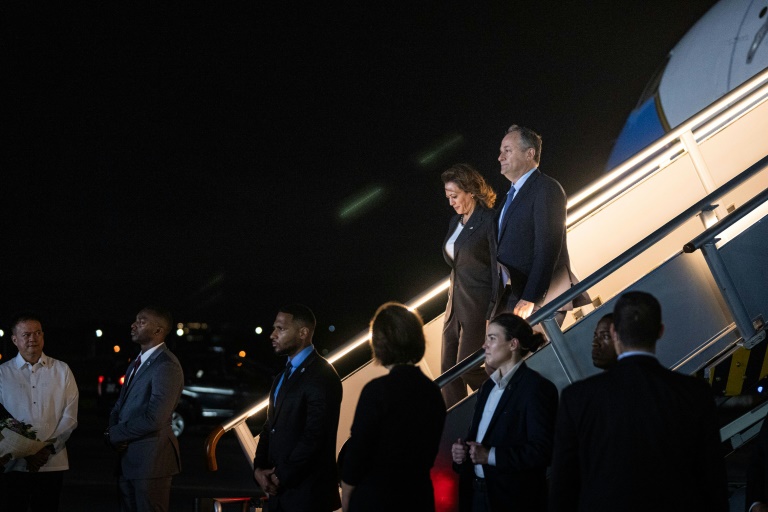
US Vice President Kamala Harris will meet Philippine President Ferdinand Marcos on Monday during a visit to the Southeast Asian nation aimed at boosting ties and countering China’s growing regional clout.

Harris is the highest-ranking US official to visit Manila since Marcos took power in June, signalling a growing rapport between the longtime allies after years of frosty relations under his Beijing-friendly predecessor Rodrigo Duterte.

She will also meet with her Philippine counterpart Sara Duterte, the daughter of the former leader whose deadly drug war sparked an international investigation into alleged human rights abuses.

The United States has a long and complex relationship with the Philippines — and the Marcos family. Marcos’s dictator father ruled the former US colony for two decades with the support of Washington, which saw him as a Cold War ally.

Washington is now seeking to bolster its security alliance with Manila under another Marcos presidency.

That includes a mutual defence treaty and a 2014 pact, known by the acronym EDCA, which allows for the US military to store defence equipment and supplies on five Philippine bases.

It also allows US troops to rotate through those military bases.

EDCA stalled under Duterte but the United States and the Philippines have expressed support for accelerating its implementation as China becomes increasingly assertive.

“We have identified new locations and have begun a process with the Philippines to finalise those,” a US official told reporters on condition of anonymity ahead of Harris’s meeting with Marcos.

“The United States has allocated over $82 million towards implementation (of the existing bases) and more is on the way.”

On Tuesday, Harris will visit the Philippine island province of Palawan, which lies along hotly contested waters in the South China Sea.

China claims sovereignty over almost the entire sea, while the Philippines, Vietnam, Malaysia and Brunei have overlapping claims to parts of it.

Beijing has ignored a 2016 international tribunal ruling that its claims have no legal basis.

Harris will meet members of the Philippine Coast Guard on board one of the country’s two biggest coast guard vessels and deliver a speech.

She will “reaffirm the strength of the alliance and our commitment to upholding the international rules-based order in the South China Sea and the broader Indo-Pacific,” the US official said, using the US term for the Asia-Pacific region.

– US commitment – 

Harris’s trip to the Philippines is part of US efforts to remove any doubt about its commitment to the Asia-Pacific as China aggressively expands its regional influence.

It comes after Harris and US President Joe Biden met separately with Chinese President Xi Jinping last week.

Harris reinforced Biden’s message that “we must maintain open lines of communication to responsibly manage the competition between our countries” while speaking to Xi on the sidelines of the Asia-Pacific Economic Cooperation forum in Bangkok, a White House official said.

While her trip to Palawan would likely annoy China, the United States had more to gain from sending a message of reassurance to the Philippines, said Greg Poling, director of the US-based Asia Maritime Transparency Initiative.

“The Philippines will be much more reassured than China will be irritated,” Poling said.

Among the initiatives to be launched during Harris’s trip are negotiations for a civilian nuclear pact between the United States and the Philippines.

That could lead to the future sales of US nuclear reactors to the Southeast Asian country.

Marcos is a strong supporter of renewable energy and has insisted on the need to reconsider building nuclear power plants in the disaster-prone country.

However, before the United States can sell nuclear equipment to the Philippines, the two countries must sign a civilian nuclear pact known as a “123 agreement”, which is designed to prevent the spread of nuclear weapons.

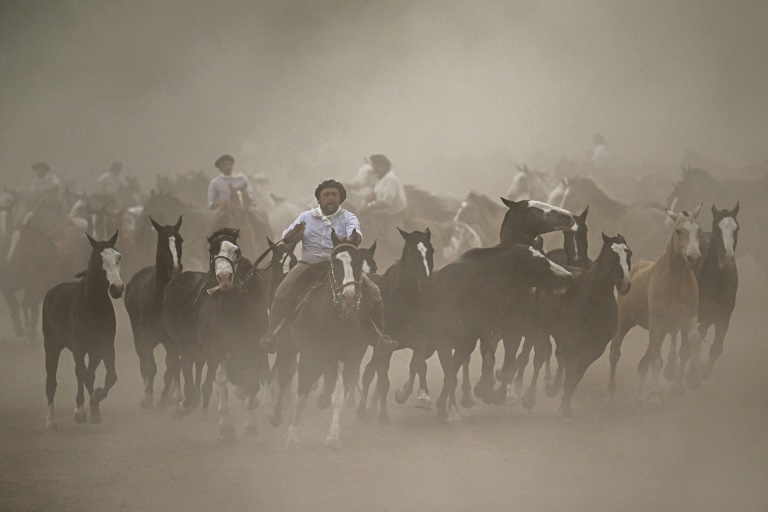
Horseman and hero: Who is Argentina's 21st century gaucho?

Riders in berets, espadrilles and traditional neck scarves stand out against a dust cloud enveloping a melee of hundreds of horses as they expertly herd the animals.

The riders are gauchos, deft horsemen who occupy a special place in the Argentine psyche, somewhere between legend and reality.

Every year, thousands of people from all over the country flock to San Antonio de Areco for the Festival of Tradition on December 6.

The city is just 120 kilometers (75 miles) from the capital Buenos Aires, but a different world altogether — a world of horses, pampas (grassland plains) and gauchos who wear daggers in their belts and play folk songs on guitars around campfires.

Every December 6, Argentina celebrates its national  day of the gaucho. 

And 2022 is special, marking 150 years since the publication of the poem “El Gaucho Martin Fierro” by Jose Hernandez — a 2,314-verse ode to Argentina’s version of the cowboy.

Translated into dozens of languages, the poem tells the melancholic story of a 19th century gaucho, including his life of nomadic freedom in the expansive pampas and the discrimination he suffered due to his mixed-race origins.

Rebelling against authority and the advance of the city and fences, the character is a cattle thief and brawler.

He is also courageous, loyal and generous, making the gaucho “a kind of rebel ‘avenger’ in the minds of the poor classes,” historian Ezequiel Adamovsky of Argentina’s CONICET research council told AFP.

The poem sparked a romanticized obsession with the Argentine horseman and a literary genre that saw dozens of gaucho-themed books “devoured” by rural and working-class readers in particular, he said.

– Political appropriation –

Years later, under a conservative government, Fierro received an extreme makeover, with the anti-establishment rebel becoming a patriotic figurehead of the military, no longer just a popular idol. 

In 1913, “El Gaucho Martin Fierro” was declared Argentina’s “national poem.”

Then, at the start of the 20th century, Fierro became white in the retelling of his tale rather than of mixed race.

It was a time that “the elites of the nation pushed the outlandish but enduring vision of a white, ‘European’ Argentina,” said Adamovsky, an expert on how the image of the gaucho has been massaged through history even as it was elevated to a national symbol.

In Adamovsky’s Spanish-language book, “The Indomitable Gaucho,” the subtitle calls the gaucho “the Impossible Emblem of a Torn Nation.”

Many sectors of Argentine society grasp the gaucho as a symbol. Anarchists rejecting state authority, communists fighting the class struggle, “Peronists” representing the demands of rural workers and nationalists have all since claimed the gaucho for their own.

In San Antonio de Areco, modern-day gauchos herd horses and break them in, showing off their skills to adoring crowds in a world far from folklore and fantasy.

Well-kept horses are mounted with ease by children and octogenarians alike.

“The gaucho, the man of the field, continues and will continue to exist,” said Victoria Sforzini, the city’s director of heritage.

“It is impossible to replace the work done on horseback,” she said, noting that with the territory’s diverse topography and vegetation, “there are places where cars cannot go.”

So who are the gauchos of 2022?

Are they the riders who perform for tourists on day-long excursions from Buenos Aires? Are they the rural workers who still ply their trade on horseback today? 

Or are they like gaucho-descendant Julio Casaretto — a suburban mason who makes sure to go riding with his little girl on weekends.

“Even if the fields recede, even if everything gets lost a little, it is in our blood,” he said.

Bloodshed, prosperity meet in Mexico's most violent state

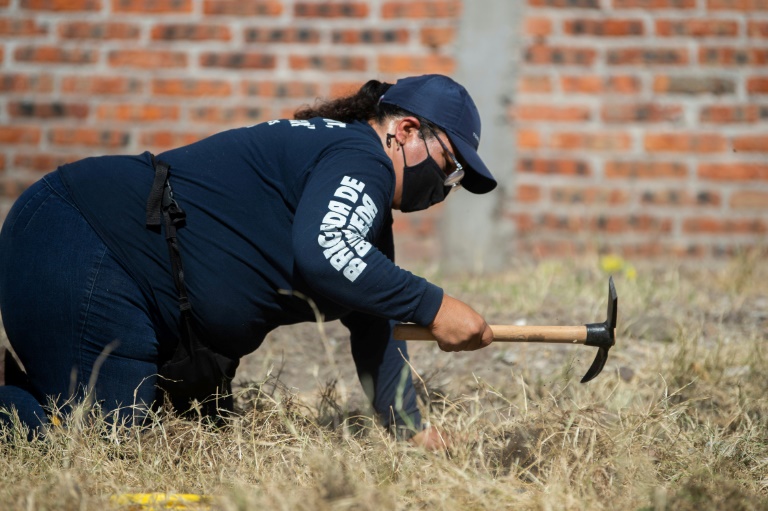
As applause rang out at a nearby international arts festival, Bibiana Mendoza unearthed human remains from a clandestine grave in a Mexican region where prosperity, culture and cartel violence converge.

The 32-year-old woman, who is looking for her missing brother, arrived at the site in the town of Irapuato in Guanajuato state after residents reported seeing a dog carrying a human hand in its mouth.

“While people from all over the world were celebrating the Cervantino festival, we were digging up bodies, and at the same time I thought it was useless because they were burying more people elsewhere,” said Mendoza, founder of a women’s collective searching for missing persons.

Since that day in late October, they and a group of forensic experts have exhumed 53 bags of remains that the authorities are trying to identify, Mendoza said.

Around 300 victims of gang violence have been found dead in similar circumstances in recent months in Guanajuato, an industrial hub home to factories of foreign auto giants.

Irapuato, located one hour from the Guanajuato state capital, ranks number two among Mexican municipalities where people feel the most unsafe, according to official data.

Cartel turf wars have given Guanajuato the unenviable title of Mexico’s most violent state, with more than 2,400 murders from January to September of this year — almost 10 percent of the national total.

Nearly 3,000 more people disappeared in the same period.

Despite the bloodshed, the once-peaceful state, home to 6.1 million people, is a major tourist destination.

Its colonial-style capital as well as the picturesque city of San Miguel de Allende attract thousands of foreigners each year.

The violence mostly happens out of sight of the tourist trail.

On November 9, nine people were massacred in a bar in Apaseo el Alto, just over an hour away from Irapuato. 

Apart from some blood stains on the sidewalk and discarded security tape, life in the municipality continued afterward as if nothing had happened.

Images in the local press showed bodies piled up in pools of blood, broken glass and bottles, and a message from a cartel claiming responsibility for the attack.

Five massacres in Guanajuato have left 50 dead in the past five months, shocking residents who are no strangers to violence.

“Seeing bodies lying in the streets with messages is something new for us,” Mendoza said.

– Industrial hub –

Mazda’s plant in Salamanca  — its largest outside of Japan — runs like clockwork producing around 815 vehicles a day, some for export.

Toyota, Honda and General Motors also have factories in the state.

Transport infrastructure, a supply network and skilled labor are some of the attractions of Guanajuato, which has the sixth-highest economic output of Mexico’s 32 states.

Industry figures say they have seen no impact from the violence on companies’ activities and expansion plans.

“We haven’t heard that any investment has been cancelled or cut due to insecurity,” said Hector Rodriguez, local head of the Coparmex employers’ association.

“Chickens don’t stop laying eggs because they’re afraid of coyotes,” he added.

Crime in the region is the product of a fierce turf war between the Jalisco New Generation and Santa Rosa de Lima cartels.

Guanajuato is an important corridor along drug smuggling routes between Pacific ports and the United States, according to security expert David Saucedo 

“It’s part of the fentanyl and cocaine routes,” he said.

The gangs finance their war with local drug sales and battle for control of nightlife venues, Saucedo added.

Nine out of 10 murders in the state are related to drug dealing, according to Guanajuato security official Sophia Huett.

Although the state authorities carry out arrests, it will not be enough if the cartels are not tackled at the national level, she said.

Exhausted by her fruitless search, Mendoza wants no more excuses.

“I hate hearing the (state) governor say that he is going to deliver a safer Guanajuato. I hate hearing the president (Andres Manuel Lopez Obrador) say that what is happening is not his fault,” she said.

England launch bid for World Cup glory after Qatar slump to defeat

European heavyweights England and the Netherlands launch their World Cup campaigns on Monday as the tournament in Qatar shifts into a higher gear after a dispiriting defeat for the hosts.

Asian champions Qatar became the first home nation to lose their opening World Cup match as Ecuador cruised to a 2-0 victory on Sunday, with veteran forward Enner Valencia scoring twice.

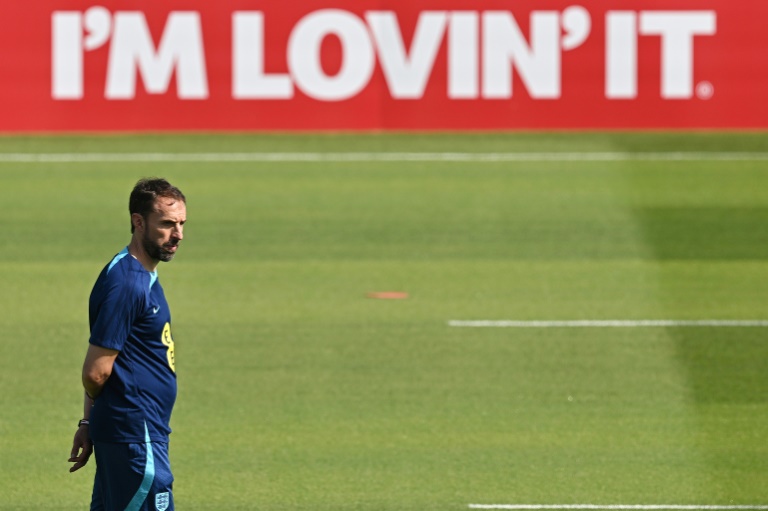
England, who meet Iran in Group B, will be desperate to start strongly as they target an end to their decades-long trophy drought after two near misses in recent years.

Gareth Southgate’s men made a surprise run to the 2018 World Cup semi-finals in Russia before reaching their first major final for 55 years at last year’s European Championship.

Despite his success as England boss, Southgate has faced criticism over his perceived negative tactics and pressure has mounted after a poor run of results.

“The first thing for a coach is to enable (the team) to win,” he said. “Then of course you want to play football that excites people, that players enjoy.

“Our challenge is to give supporters a tournament that is memorable. We have taken them on a fantastic ride in the last two tournaments.”

With tougher matches to come against the United States and Wales, England cannot afford a slow start against Iran at the Khalifa International Stadium.

England’s opener takes place against the background of deadly demonstrations in the Islamic republic.

Iran’s clerical leadership has been shaken by more than two months of women-led protests sparked by the death in custody of Mahsa Amini, a 22-year-old woman of Kurdish origin who had been arrested by the morality police in Tehran.

Defender Ehsan Hajsafi said: “They should know that we sympathise with them,” adding that “conditions at home are not good”.

– Bale leads Wales –

The other game in Group B pits the USA against Gareth Bale’s Wales, who are playing in their first World Cup since 1958.

Captain Bale said he hoped to inspire a new generation of Welsh footballers.

“Everyone’s dreamt of it for such a long time,” said the former Real Madrid forward. “We’ve had so many close calls. For us to be the team to get over the line was incredible.

“But more importantly the best thing (is) to grow football in our country, to inspire another generation. By doing that hopefully we’re going to have a stronger national team in the future.”

The Netherlands take on Senegal in Group A, with the African champions missing their injured talisman, Sadio Mane.

The Dutch failed to qualify for the World Cup in Russia in 2018 but the three-time runners-up are back in business under veteran manager Louis van Gaal, who led the team to the semi-finals in 2014.

“We have to believe in our qualities and ourselves and be confident,” said Liverpool defender Virgil van Dijk.

“We have a fantastic manager, an experienced manager. We have players who play at the highest level, the biggest clubs in the world.”

Senegal coach Aliou Cisse was bullish about his side’s chances despite the absence of Mane.

“Of course we won’t hide the importance of Sadio Mane for the Senegalese team — he’s very important, a coach builds his team around his best players.

“But there’s also a group here with experienced players, with young players ready to step up. We’ve had to play matches before without Sadio Mane.”

All eyes on Trump's Twitter account after Musk reinstates him

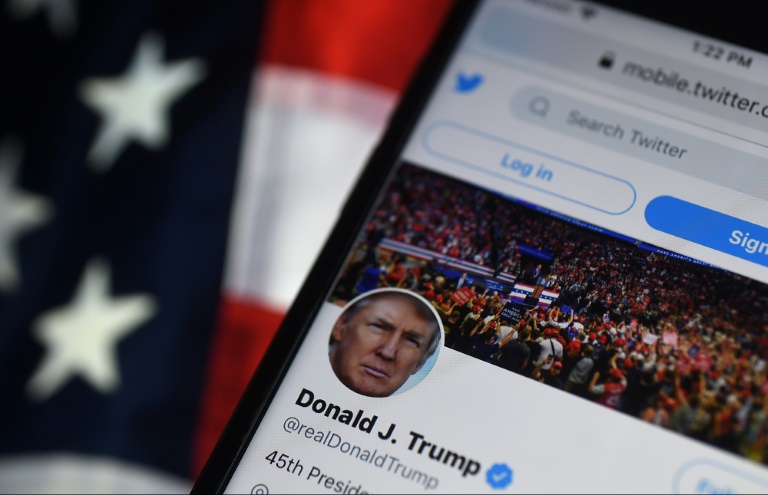
Donald Trump has seemingly rejected returning to Twitter, but as he embarks on a new presidential campaign, will he be able to resist? All eyes were on his account Sunday for any activity, after it was reinstated by the platform’s new owner Elon Musk.

Twitter had issued a “permanent” ban on Trump in the wake of the January 6, 2021 attack by his supporters on the US Capitol, as he sought to overturn his election loss to Democrat Joe Biden.

But Musk, who describes himself as a “free speech absolutist,” posted a Twitter poll Saturday that saw a majority support the former president’s reinstatement, and the platform’s new owner wasted no time in acting on it.

As of 11:30 am EST (1630 GMT) Sunday, the revived account of the “45th President of the United States of America,” with its blue “verified” checkmark, had not posted any new messages.

The last message dates from January 8, 2021, when the billionaire said he would not attend Biden’s inauguration ceremony.  

On the same day, Twitter banned the account, which was being followed by some 88.8 million people, citing the risk of further incitement to violence.

– Campaign links –

Trump’s followers numbered 86.6 million as of Sunday — though it was unclear how many of those were real and how many were bots — while the number of accounts followed by him went from zero to 49.  

The account also linked to a campaign website seeking donations for Trump’s 2024 presidential run.

It was not clear who linked the website to the account or what any changes in the number of followers means — mass layoffs in recent weeks under Musk have seen Twitter’s communications team decimated.

Trump reveled in using Twitter as a mouthpiece during his presidency, posting policy announcements, attacking political rivals and communicating with supporters.

More than 15 million votes were cast in Musk’s poll — Twitter has 237 million daily users — with 51.8 percent in favor of reinstating Trump’s controversial profile and 48.2 percent against.

Musk asked for a simple “yes” or “no” response to the statement, “Reinstate former President Trump.”

On Saturday, while the poll was still underway, Trump posted a link to it on Truth Social, the Twitter alternative he founded, urging his 4.6 million followers there to vote for him.

But he also wrote: “don’t worry, we aren’t going anywhere. Truth Social is special!” 

And, appearing via video at a gathering of the Republican Jewish Coalition in Las Vegas, Trump said he welcomed the poll and was a fan of Musk, but appeared to reject any return to the platform.

“I don’t see it, because I don’t see any reason for it,” he said.

– ‘Better choices’ –

Trump posts often on Truth Social, sometimes dozens of times a day, and in recent months has engaged more brazenly than ever with extremist content, including dozens of posts from promoters of the QAnon conspiracy theory.

Although his reach there is relatively small, experts say the misinformation he spreads reverberates across the internet.

His reinstatement to the much larger and more mainstream platform of Twitter comes as his announcement that he will run for president again in 2024 is not being met with the kind of enthusiasm that marked his earlier bids.

He announced his candidacy just after the midterm elections, in which he had endorsed hundreds of candidates.

But Democrats did unexpectedly well and a predicted Republican “red wave” did not materialize, prompting a backlash against Trump and extremism in the Republican Party.

Trump’s former vice president Mike Pence, himself a potential contender for the 2024 Republican nomination, told CBS on Sunday that there would be “better choices” than his old boss. 

All eyes on Trump's Twitter account after Musk reinstates him

Donald Trump has seemingly rejected returning to Twitter, but as he embarks on a new presidential campaign, will he be able to resist? All eyes were on his account Sunday for any activity, after it was reinstated by the platform’s new owner Elon Musk.

Twitter had issued a “permanent” ban on Trump in the wake of the January 6, 2021 attack by his supporters on the US Capitol, as he sought to overturn his election loss to Democrat Joe Biden.

But Musk, who describes himself as a “free speech absolutist,” posted a Twitter poll Saturday that saw a majority support the former president’s reinstatement, and the platform’s new owner wasted no time in acting on it.

As of 11:30 am EST (1630 GMT) Sunday, the revived account of the “45th President of the United States of America,” with its blue “verified” checkmark, had not posted any new messages.

The last message dates from January 8, 2021, when the billionaire said he would not attend Biden’s inauguration ceremony.  

On the same day, Twitter banned the account, which was being followed by some 88.8 million people, citing the risk of further incitement to violence.

– Campaign links –

Trump’s followers numbered 86.6 million as of Sunday — though it was unclear how many of those were real and how many were bots — while the number of accounts followed by him went from zero to 49.  

The account also linked to a campaign website seeking donations for Trump’s 2024 presidential run.

It was not clear who linked the website to the account or what any changes in the number of followers means — mass layoffs in recent weeks under Musk have seen Twitter’s communications team decimated.

Trump reveled in using Twitter as a mouthpiece during his presidency, posting policy announcements, attacking political rivals and communicating with supporters.

More than 15 million votes were cast in Musk’s poll — Twitter has 237 million daily users — with 51.8 percent in favor of reinstating Trump’s controversial profile and 48.2 percent against.

Musk asked for a simple “yes” or “no” response to the statement, “Reinstate former President Trump.”

On Saturday, while the poll was still underway, Trump posted a link to it on Truth Social, the Twitter alternative he founded, urging his 4.6 million followers there to vote for him.

But he also wrote: “don’t worry, we aren’t going anywhere. Truth Social is special!” 

And, appearing via video at a gathering of the Republican Jewish Coalition in Las Vegas, Trump said he welcomed the poll and was a fan of Musk, but appeared to reject any return to the platform.

“I don’t see it, because I don’t see any reason for it,” he said.

– ‘Better choices’ –

Trump posts often on Truth Social, sometimes dozens of times a day, and in recent months has engaged more brazenly than ever with extremist content, including dozens of posts from promoters of the QAnon conspiracy theory.

Although his reach there is relatively small, experts say the misinformation he spreads reverberates across the internet.

His reinstatement to the much larger and more mainstream platform of Twitter comes as his announcement that he will run for president again in 2024 is not being met with the kind of enthusiasm that marked his earlier bids.

He announced his candidacy just after the midterm elections, in which he had endorsed hundreds of candidates.

But Democrats did unexpectedly well and a predicted Republican “red wave” did not materialize, prompting a backlash against Trump and extremism in the Republican Party.

Trump’s former vice president Mike Pence, himself a potential contender for the 2024 Republican nomination, told CBS on Sunday that there would be “better choices” than his old boss. 

Empty seats tell story as Qatar World Cup party falls flat

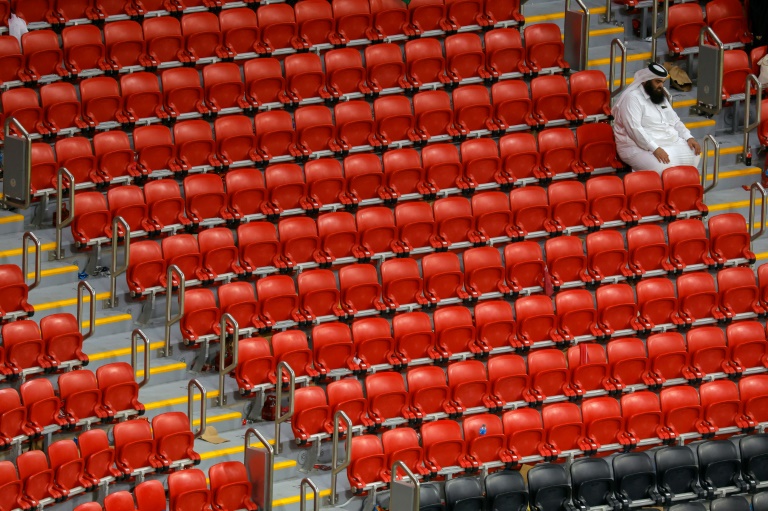
Thousands of empty seats told the sad story as Qatar’s long-awaited World Cup debut ended in a bad case of stage fright on Sunday.

Long before the final whistle at the spectacular Bedouin tent-inspired Al Bayt Stadium, the host nation’s fans among the 67,372 crowd had started heading for the exits.

The exodus began soon after Ecuador striker Enner Valencia headed his second goal shortly after the half-hour mark against the outclassed World Cup hosts.

As the second half wore on, swathes of unfilled seats could be seen throughout the arena as an evening that began with joyous celebrations and heady optimism ended with a whimper.

The downbeat finale was in stark contrast to the mood in the hours before kick-off at the stadium in Al Khor, 50 kilometres (31 miles) north of Qatar’s capital Doha.

Thousands of people arrived at the vast Lusail train station where the subway line built especially for this tournament at a cost of $36 billion ends and spectators boarded a fleet of buses for the final leg of their journey.

The security forces appeared tense, aware that the eyes of the world are on this Gulf state, which many critics say should never have been awarded the World Cup.

Once the spectators arrived at the spectacular venue, camels and horses lined the road to the turnstiles.

Carlos Alvear, an Ecuadoran who lives in Ecuador, said: “It’s really special to be here. It’s the first World Cup in the Middle East, it’s historic and Ecuador is here for the opening match.

“To be honest, it’s all a bit bizarre. It’s pretty quiet, even if there are more Ecuadorans than I thought there would be. But all these buildings look pretty empty.”

– ‘Trust in our team’ –

For a Qatari supporter who gave his name only as Abdallah, it was an exciting moment.

“We have been waiting for this moment for 12 years,” he said. “We have every confidence for this festival…. We trust in our team. We have ambition but are realistic.”

He was confident of victory against the South Americans and predicted his team would be runners-up in their group and go through to the next round — where England could await.

“Today we will win, but we will be second behind the Netherlands. Then against England, we will win,” he said with a smile.

Danny, a supporter from the English city of Norwich, said he planned to “jump on the bandwagon today” and support Qatar.

His friend who gave his name only as Abdul, from Sheffield in northern England, had brought a Qatari flag and was wearing a red top under his England shirt in case Qatar scored.

Danny was staying in the shipping container accommodation set up for visiting supporters for two weeks and said it “isn’t quite what he was expecting”. 

Away from the opening match, thousands of Mexican and Argentine fans thronged the Corniche seafront promenade in the centre of Doha.

Leopold Fes, a 65-year-old Belgian, said he was finding it difficult to accept the last-minute decision to ban the sale of alcohol at stadiums in the strict Islamic state.

“I don’t think it will be like other World Cups,” he said. “No alcohol makes it strange. Football and alcohol go together for a lot of people.”

UN nuclear chief denounces strikes on Ukraine power plant

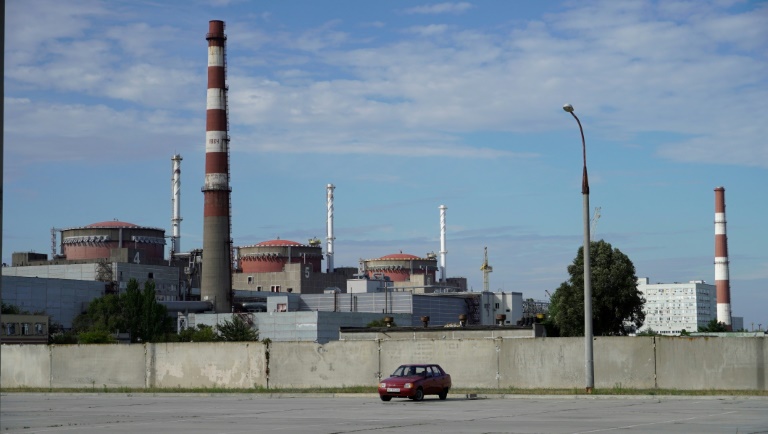
The UN’s atomic watchdog chief on Sunday denounced “targeted” strikes at Ukraine’s Russian-controlled Zaporizhzhia nuclear plant, calling for a “stop to this madness”, as Kyiv and Moscow traded blame.

Ukraine meanwhile dismissed Russian accusations that it had executed surrendering soldiers.

“The news from our team yesterday and this morning is extremely disturbing,” said a statement Sunday from Rafael Grossi, head of the International Atomic Energy Agency.

“Explosions occurred at the site of this major nuclear power plant, which is completely unacceptable.

“Whoever is behind this, it must stop immediately,” he added.

“As I have said many times before, you’re playing with fire!”

There were more than a dozen blasts overnight Saturday to Sunday, some of which a team of experts from the agency on site had themselves seen, the IAEA said in a statement.

Speaking to French broadcaster BFMTV later Sunday, Grossi was clear that the strikes on the plant were no accident.

“The people who are doing this know where they are hitting. It is absolutely deliberate, targeted.”

The IAEA is to send a team of experts to the plant — the biggest nuclear facility in Europe — and which is currently controlled by Russian troops.

– ‘Staged surrender’ –

Ukraine meanwhile dismissed Russian accusations that its soldiers had killed Russian troops as they were surrendering, in what Moscow has described as a “war crime”.

Extracts from the video footage in question showed that in fact, Russian forces had used a “staged surrender” to open fire on Ukrainian soldiers, Dmytro Lubinets, the parliament’s commissioner for human rights said Sunday.

“In this case, persons among the Russian servicemen cannot be considered prisoners of war, but are those who are fighting and committing treachery,” he added.

“Returning fire is not a war crime. On the contrary, those who want to use the protection of international law to kill must be punished.”

Video footage circulated on Russian social media last week purported to show the bodies of Russian servicemen killed after surrendering to Ukrainian troops.

AFP has not independently confirmed the videos.

A UN spokesperson told AFP on Friday it was “aware of the videos” and “looking into them”.

– Russian shelling –

In the southern city of Kherson, which Ukrainian troops recently recaptured, residents were facing a fresh challenge after eight months of occupation by Moscow’s troops — Russian artillery attacks.

After Russian shells pounded the industrial area next to their home, setting fire to an oil depot there, Yuri Mosolov and his wife decided it was time to leave.

“After yesterday’s shelling, my wife said: let’s not take too many risks and go,” Mosolov told AFP.

A carefully planned campaign by Kyiv targeting logistics networks, bridges and pontoon crossings battered Russian supply lines and forced their troops to abandon the city and retreat to the Dnipro’s eastern bank. 

Now the armies are increasingly engaging in heavy artillery exchanges across the river.

“Artillery duels are still going on. The combat continues,” said Dmytro Pletenchuk, the Ukrainian military’s spokesman in the area. “Kherson is now on the frontline.” 

Elsewhere near Kherson, Russian strikes hit near a humanitarian distribution area in the village of Bilozerka, sending residents fleeing on Saturday.

– Terms for peace –

Ukraine’s President Volodymyr Zelensky, in his daily address, said there had been nearly 400 Russian attacks in the east of the country alone on Sunday.

The toughest battles, he said, were in the eastern Donetsk region — one of those Russia now claims as its own. Fighting was also continuing in neighbouring Lugansk.

Teams were working around the clock to repair damage to the energy infrastructure wrought by Russia’s artillery bombardments — but “stabilisation blackouts” were nevertheless necessary in 15 regions, including Kyiv, he added.

And he once again set out Kyiv’s terms for peace, which include food and energy security, the release of all prisoners and deportees and the withdrawal of Russian troops from all Ukrainian territory.

Incumbent Tokayev clear winner in Kazakh presidential election

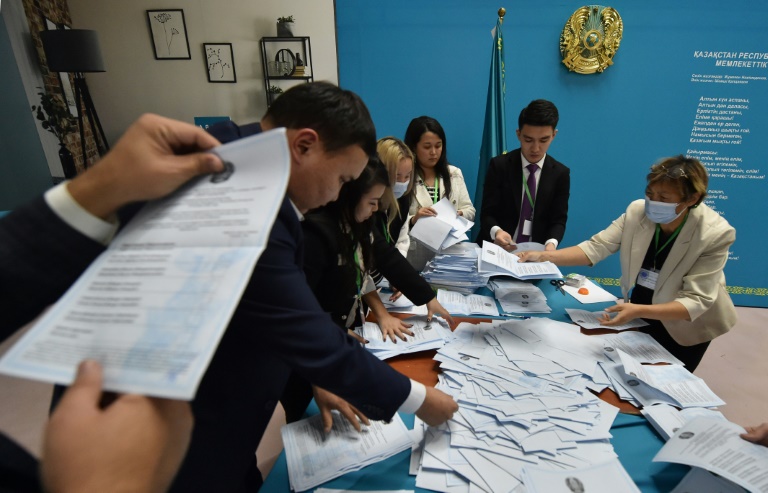
Kazakhstan’s outgoing leader Kassym-Jomart Tokayev emerged, as expected, as the clear winner of Sunday’s presidential election in Central Asia’s largest country, months after deadly unrest.

Three exit polls gave Tokayev between 82.2 percent and 85.5 percent of the popular vote, a widely expected result given there was no real opposition on the ballot.

Despite posters calling on voters to “make their choice” for the next seven years, Tokayev’s five opponents were little more than stooges.

The runner-up to Tokayev had managed just 5.2 percent of the vote, according to the exit polls.

The electoral commission gave an estimated turnout of 69 percent among the 12 million eligible voters.

“The people have clearly expressed their confidence in me and we have to justify it,” 69-year-old Tokayev said as the results emerged.

Rich in natural resources and located at the crossroads of important trade routes, Kazakhstan sank into chaos during protests over high living costs in January, which left 238 dead.

Tokayev — once a steady hand, if generally considered lacking charisma — showed a ruthless side earlier this year by violently suppressing protests.

While Kazakhstan has since stabilised, tensions persist, as shown by the arrest on Thursday of seven opposition supporters accused of an attempted coup.

Police on Sunday detained around 15 protesters demanding free and fair elections in the country’s largest city Almaty, AFP journalists witnessed.

An interior ministry spokesman confirmed the figure to AFP.

– No competition –

Sunday’s election was a chance for Tokayev to consolidate his grip on power.

Hoping to turn over a new leaf after a turbulent year, Tokayev had said he was seeking a “new mandate of trust from the people” in this election.

After voting early on Sunday in the capital Astana, he said “the main thing is that there is no monopoly of power”.

AFP journalists saw voters taking selfies in front of the polling stations in Astana and the economic hub of Almaty.

Many said they would be “required” to show such photos when they returned to work on Monday. 

Critics are still sidelined and all five of Tokayev’s competitors are virtually unknown.

This left 19-year-old student Alya Bokechova thinking that going to the polls “would be a waste of time”.

“We already know who will win and we don’t know the other candidates,” she told AFP.

Observers from the Organization for Security and Cooperation in Europe (OSCE) criticised Kazakhstan’s failure to meet electoral recommendations, including “conditions of eligibility and registration of candidates”.

– Hoping for a change –

But Tokayev’s promises of democratic and economic reforms resonated with some voters.

Police officer Nurlan N. said: “Since independence 30 years ago, almost nothing changed, I would like to see some significant changes.”

Casting her ballot in Almaty, 68-year-old pensioner Murzada Massalina said “Tokayev is the suitable candidate because he has a lot of experience.”

Tokayev came to power in 2019 after winning 70 percent of the vote in an election whose outcome was inevitable after he obtained the backing of former ruler Nursultan Nazarbayev.

For the following two-and-a-half years, he played a role of loyal protege.

That changed after protests erupted in January and Tokayev ordered law enforcement to “shoot to kill” demonstrators.

Tokayev distanced himself from his former mentor Nazarbayev, purged his clan from positions of authority and promised a “new and just Kazakhstan”.

He announced reforms, a constitutional referendum and introduced single presidential terms of seven years.

– Congratulations from Nazabayev –

Nazarbayev, who led Kazakhstan for three decades, was the first to congratulate Tokayev on his re-election. It was, he said, “unquestionable proof of the people’s unshakeable faith in (his) reforms”. 

Nazarbayev praised his attitude “at critical times” for the country, a reference to the events earlier this year.

Tokayev also stood up to Russian President Vladimir Putin, as Moscow’s invasion of Ukraine shocked former Soviet republics. 

The offensive reawakened Kazakh concerns that Moscow may have ambitions on the north of the country, home to three million ethnic Russians.

In response, Tokayev strengthened his country’s ties not only with China, but also with Europe.  

The leaders of Turkey and China visited Kazakhstan, as did high-ranking European officials and Pope Francis just this year.

Tokayev clashed with Putin on a visit to Saint Petersburg in June.

Moscow’s move to recognise Ukrainian separatist regions — that it has since claimed to annex — would “lead to chaos”, he said.

Close Bitnami banner
Bitnami