World

French-speaking bloc examines unrest in Africa

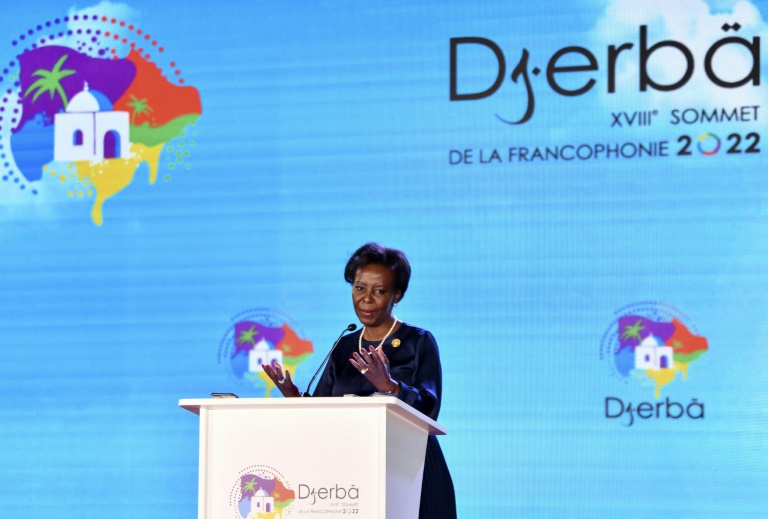
Facing calls to do more to resolve global crises, the world’s French-speaking leaders met in Tunisia Sunday to discuss growing instability and popular discontent in francophone Africa.

But tensions crept into the International Organisation of La Francophonie (IOF) conference itself when the Prime Minister of the Democratic Republic of Congo, Jean-Michel Sama Lukonde, refused to pose for a photo next to Paul Kagame, President of Rwanda.

The DRC accuses Rwanda of supporting M23 rebels who have seized swathes of territory in its eastern region, displacing tens of thousands of people and igniting regional tensions.

The head of the 88-member IOF bloc, Louise Mushikiwabo, said Sunday that “all the conflict zones were the subject of long debates”.

“The IOF is an organisation that can support and catalyse (efforts) to mediate between parties in conflict,” she said.

The organisation, whose annual budget is under 100 million euros, has been accused of being “powerless” in the face of fraudulent elections, power grabs and coups in many of its member states.

Ahead of the summit on the Tunisian island of Djerba, Mushikiwabo told AFP that “the defiance that we’re seeing among young people in francophone Africa comes from political disillusionment” and frustrations over daily life. 

The IOF, founded in 1970, aims to promote the French language, develop economic cooperation and help mediate international conflicts.

Many African leaders have expressed dismay at the West’s rapid response to the war in Ukraine, in contrast to conflicts in their own countries.

Still, French President Emmanuel Macron said “a declaration of all the members” had stated “a very clear position on the war launched by Russia in Ukraine”.

Macron also said Saturday that the IOF should reclaim its diplomatic role, and Paris later announced that it would seek to take on the organisation’s rotating presidency from 2024.

Senegal’s President Macky Sall and Canadian Prime Minister Justin Trudeau were also among the leaders attending the two-day gathering that ends on Sunday.

This year’s conference is a diplomatic boon for Tunisian President Kais Saied, whose government has faced international criticism since a sweeping power grab last year in the only democracy to have emerged from the Arab Spring uprisings.

Trudeau told journalists that Canada was “preoccupied by the current situation” in Tunisia, and said he hoped elections in December, for a largely powerless parliament, would lead to “a democracy in good health”.

Kazakhstan holds presidential elections after turbulent year

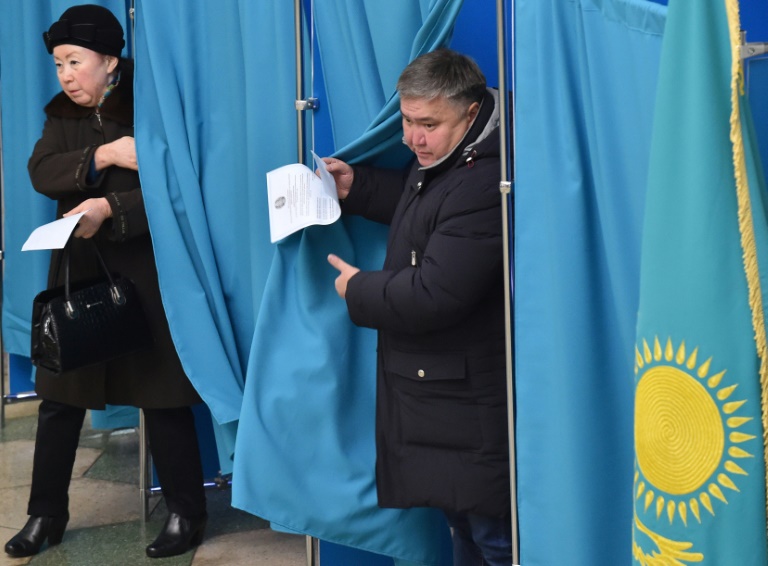
Kazakhs on Sunday voted in presidential elections expected to cement incumbent Kassym-Jomart Tokayev’s grip on power, months after deadly unrest spurred a historic shift in the Central Asian country.

The last polling stations in the former Soviet republic closed at 1500 GMT, and the first exit polls are expected around 1800 GMT. 

The victory of President Tokayev is all but a foregone conclusion as the 69-year-old faced no real opposition.

Last January, Kazakhstan sank into chaos during protests over high living costs which left 238 dead.

Tokayev — once a steady hand known for lacking charisma — showed a ruthless side earlier this year by violently suppressing protests. 

Kazakhstan has since then stabilised but tensions persist, as shown by the arrest on Thursday of seven opposition supporters accused of an attempted coup.

Authorities on Sunday detained around 15 protesters demanding free and fair elections in the country’s largest city Almaty, AFP journalists witnessed.

An interior ministry spokesman confirmed to AFP that 15 people were detained.

– No competition –

Hoping to turn over a new leaf after a turbulent year, Tokayev had said he was seeking a “new mandate of trust from the people” in this election.

After voting early on Sunday in the capital Astana, Tokayev said “the main thing is that there is no monopoly of power”.

But if Tokayev announced reforms, the promised “new Kazakhstan” feels like a deja-vu, with a deserted political landscape, hardly credible opposition and political pressures.

AFP journalists saw voters taking selfies in front of the polling stations in Astana and the economic hub of Almaty, but this was not a show of excitement.

Many said they would be “required” to show it when going back to work on Monday. 

Critics are still sidelined and all five of Tokayev’s competitors are virtually unknown.

This left 19-year-old student Alya Bokechova thinking that going to the polls “would be a loss of time”.

“We already know who will win and we don’t know the other candidates,” she told AFP.

Just days before the vote, seven people linked to exiled opponent Mukhtar Ablyazov were arrested over accusations they were planning a coup.

Tokayev also said glorifying those who took part in the January protests was “unacceptable”.

Observers from the Organisation for Security and Cooperation in Europe (OSCE) criticised Kazakhstan’s failure to meet electoral recommendations, including “conditions of eligibility and registration of candidates”.

– Hoping for a change –

But his promises of democratic and economic reforms resonate with some voters.

Voting for Tokayev, police officer Nurlan N. said: “Since independence 30 years ago, almost nothing changed, I would like to see some significant changes.”

Casting her ballot in Almaty, 68-year-old pensioner Murzada Massalina said “Tokayev is the suitable candidate because he has a lot of experience.”

Tokayev came to power in 2019 after winning 70 percent of the vote in an election whose outcome was inevitable after he obtained the backing of former ruler Nursultan Nazarbayev.

For the following two-and-a-half years, he played a role of loyal protege.

But that changed after protests erupted in January and Tokayev ordered law enforcement to “shoot to kill” demonstrators.

Tokayev then distanced himself from his former mentor Nazarbayev, purged his clan from positions of authority and promised a “new and just Kazakhstan”.

He announced reforms, a constitutional referendum and introduced single presidential terms of seven years.

The Kazakh leader also stood up to Russian President Vladimir Putin, as Moscow’s invasion of Ukraine shocked former Soviet republics. 

The offensive reawakened Kazakh concerns that Moscow may have ambitions on the north of the country, home to three million ethnic Russians.

In response, Tokayev strengthened his country’s ties not only with China, but also with Europe.  

The leaders of Turkey and China visited Kazakhstan, as well as many high-ranking European officials and Pope Francis just this year.

Tokayev also directly clashed with Putin on a visit to Saint Petersburg in June.

He said Moscow’s move to recognise Ukrainian separatist regions — that it has since claimed to annex — would “lead to chaos”.

Turkey launches air raids against Kurdish militants in Syria, Iraq

Turkey announced on Sunday it had carried out air strikes against the bases of outlawed Kurdish militants across northern Syria and Iraq, which it said were being used to launch “terrorist” attacks on Turkish soil.

The overnight raids in northern and northeastern Syria killed at least 31 people, said the British-based monitoring group the Syrian Observatory for Human Rights. They were mainly against positions held by Syrian Kurdish forces. 

The offensive, codenamed Operation Claw-Sword, comes a week after a blast in central Istanbul killed six people and wounded 81, an attack Turkey has blamed on the Kurdistan Workers’ Party (PKK).

The PKK has waged a bloody insurgency there for decades and is designated a terror group by Ankara and its Western allies. But it has denied involvement in the Istanbul explosion.

“Air Operation Claw-Sword was successfully carried out, within the scope of our strategy to eradicate terrorism at its source and eliminate terror attacks against our people and security forces from northern Iraq and Syria,” said a defence ministry statement.

The strikes targeted PKK bases in northern Iraq’s mountainous regions of Kandil, Asos and Hakurk, and bases of the Kurdish People’s Protection Units (YPG), in Ayn al-Arab (called Kobane in Kurdish), Tal Rifaat, Jazira and Derik regions in Syria, the ministry said.

Ankara considers the YPG to be a PKK-affiliated terror group.

In all, 89 targets including shelters, bunkers, caves, tunnels, ammunition depots, so-called headquarters and training camps belonging to the militants “were destroyed”, the ministry said, adding “many terrorists were neutralised”. 

“All our planes safely returned to their bases after the operation,” it added. 

Defence Minister Hulusi Akar was seen in a video image briefing President Recep Tayyip Erdogan, who gave the order for the latest operation.

Syria’s government meanwhile said the raids had killed a number of its soldiers.

Last Sunday’s Istanbul bombing was the deadliest in five years, reviving bitter memories of a wave of nationwide attacks between 2015 and 2017.

Those attacks were attributed mostly to Kurdish militants or Islamic State (IS) group jihadists — but no one has claimed responsibility for the Istanbul attack.

– Rocket attack –

A rocket fired by Kurdish forces in Syria’s Tal Rifaat region wounded eight security personnel on the Turkish border, the official Anadolu news agency reported.

Two Turkish soldiers and six police officers were hurt after the rocket fell on the Oncupinar crossing in southern Turkey near the Syrian border, said the agency.

After the Istanbul explosion, Turkish authorities arrested more than a dozen people, including chief suspect Alham Albashir — a Syrian woman said to have been working for Kurdish militants.  

Bulgaria has also detained five people accused of having helped one of the suspects. 

“The hour of reckoning has come,” the Turkish defence ministry tweeted early Sunday, with a photo of a plane taking off for a night operation.

Nearly 25 air strikes hit the provinces of Raqa, Hassakeh and Aleppo, killing 18 members of the Kurdish-led Syrian Democratic Forces (SDF), 12 members of Syria’s military and one journalist, according to the Syrian Observatory for Human Rights. 

Kurdish authorities in northeastern Syria gave a toll of 29 dead: 11 civilians, 15 fighters aligned with Syria’s military, two silo guards and one Kurdish fighter.

Turkey’s military has in the past denied claims its strikes target civilians.

In its first comment on the Turkish strikes, the Syrian defence ministry said “a number of soldiers” had been killed due to “Turkish aggressions in northern Aleppo and Hassakeh provinces at dawn”. 

– Complex ties with US –

Turkey’s latest military push could create problems for its complex relations with its Western allies — particularly the United States, which has relied mostly on Syrian Kurdish militia forces in its fight against IS jihadists.

Turkey has often accused Washington of supplying Kurdish forces with weapons.

Interior Minister Suleyman Soylu rejected the United States’ message of condolences after the Istanbul attack, even though Erdogan accepted them during a meeting on Tuesday with President Joe Biden on the margins of the G20 summit in Indonesia.  

Soylu has said Ankara believes the order for the Istanbul attack was given from Kobane, controlled by Syrian Kurdish militia forces, who have also denied any role. 

Kobane, a Kurdish-majority town near the Turkish border, was captured by IS in late 2014 before Syrian Kurdish forces drove them out early the following year.

The US-backed SDF said in a statement that the Turkish attacks would “not go unanswered”.

Turkey has launched waves of attacks on Syria since 2016 targeting Kurdish militias as well as IS jihadists, and Ankara and forces backed by it have seized territory along the Syrian border.

Since May, Erdogan has been threatening to launch a new operation in northern Syria.

burs-fo/jj

COP27 agrees to fund climate damages, no progress on emission cuts

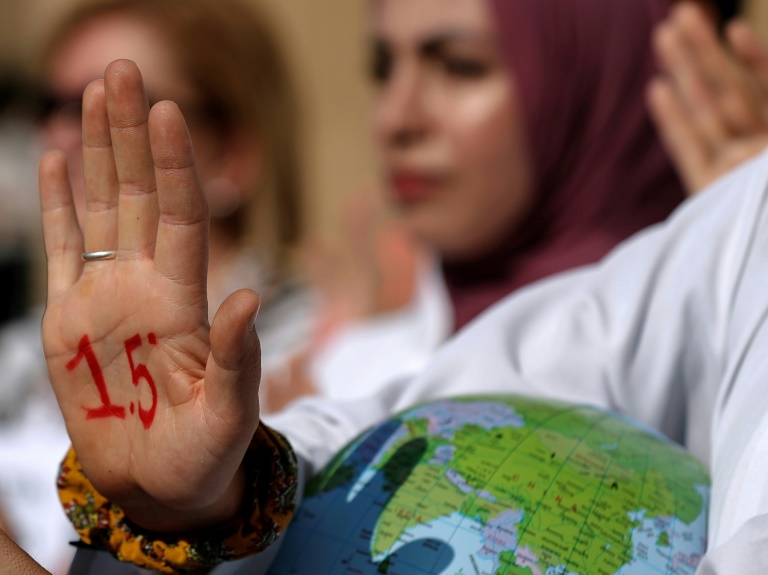
A fraught UN summit wrapped up Sunday with a landmark deal on funding to help vulnerable countries cope with devastating climate impacts — but also anger over a failure to be more ambitious on cutting emissions.

The two-week talks in Egypt’s Red Sea resort of Sharm el-Sheikh, which at times appeared to teeter on the brink of collapse, delivered a major breakthrough on a fund for climate “loss and damage”.

Pakistani climate minister Sherry Rehman said COP27 “responded to the voices of the vulnerable”.

“We have struggled for 30 years on this path, and today in Sharm el-Sheikh this journey has achieved its first positive milestone,” she told the summit.

Tired delegates applauded when the fund was adopted as the sun came up Sunday following almost two extra days of round-the-clock negotiations.

But jubilation over that achievement was countered by stern warnings.

UN chief Antonio Guterres said the talks had “taken an important step towards justice” with the loss and damage fund, but fell short in pushing for the urgent carbon-cutting needed to tackle global warming.

“Our planet is still in the emergency room,” Guterres said. “We need to drastically reduce emissions now and this is an issue this COP did not address.”

British Prime Minister Rishi Sunak also warned that “more must be done”, while French President Emmanuel Macron proposed another summit in Paris ahead of COP28 in Dubai to agree “a new financial pact” for vulnerable nations. 

– ‘Stonewalled by emitters’ –

A final COP27 statement covering the broad efforts to grapple with a warming planet held the line on the aspirational goal of limiting global warming to 1.5 degrees Celsius from pre-industrial levels.

It also included language on renewable energy for the first time, while reiterating previous calls to accelerate “efforts towards the phasedown of unabated coal power and phase-out of inefficient fossil fuel subsidies”.

But that failed to go much further than a similar decision from last year’s COP26 meeting in Glasgow on key issues around cutting planet-heating pollution.

European Commission Vice President Frans Timmermans said the EU was “disappointed”, adding that more than 80 nations had backed a stronger emissions pledge.

“What we have in front of us… doesn’t bring enough added efforts from major emitters to increase and accelerate their emission cuts,” said Timmermans, who 24 hours earlier threatened to walk out of the talks.

Britain’s Alok Sharma, who chaired COP26 in Glasgow, said a passage on energy had been “weakened, in the final minutes”.

German Foreign Minister Annalena Baerbock said she was frustrated that the emissions cuts and fossil fuel phase-out were “stonewalled by a number of large emitters and oil producers”.

Criticised by some delegations for a lack of transparency during negotiations, Egyptian Foreign Minister Sameh Shoukry, the COP27 chair, said any missteps were “certainly not intentional”, and that he worked to avoid any “backslide” by parties.

– ‘Loss and damage’ –

The deal on loss and damage gathered critical momentum during the talks.

Developing nations relentlessly pushed for the fund, finally succeeding in getting the backing of wealthy polluters long fearful of open-ended liability.

A statement from the Alliance of Small Island States, comprised of islands whose very existence is threatened by sea levels rising, said the loss and damage deal was “historic”.

“The agreements made at COP27 are a win for our entire world,” said Molwyn Joseph, of Antigua and Barbuda and chair of AOSIS.

“We have shown those who have felt neglected that we hear you, we see you, and we are giving you the respect and care you deserve.”

With around 1.2C of warming so far, the world has seen a cascade of climate-driven extremes, shining a spotlight on the plight of developing countries faced with escalating disasters, as well as an energy and food price crisis and ballooning debt.

The fund will be geared towards developing nations “that are particularly vulnerable to the adverse effects of climate change” — language that had been requested by the EU.

– ‘On the brink’ –

The Europeans had also wanted to broaden the funder base to cough up cash — code for China and other better-off emerging countries. 

The final loss and damage text left many of the thornier questions to be dealt with by a transitional committee, which will report to next year’s climate meeting in Dubai to get the funding operational.

The fund will focus on what can be done now to support loss and damage resources but the agreement does not provide for liability or compensation, said a US State Department spokesperson.

Scientists say limiting warming to 1.5C is a far safer guardrail against catastrophic climate impacts, with the world currently way off track and heading for around 2.5C under current commitments and plans.

“The historic outcome on loss and damage at COP27 shows international cooperation is possible,” said Mary Robinson, former president of Ireland and Chair of The Elders.

“Equally, the renewed commitment on the 1.5C global warming limit was a source of relief. However, none of this changes the fact that the world remains on the brink of climate catastrophe.”  

COP27 agrees to fund climate damages, no progress on emission cuts

A fraught UN summit wrapped up Sunday with a landmark deal on funding to help vulnerable countries cope with devastating climate impacts — but also anger over a failure to be more ambitious on cutting emissions.

The two-week talks in Egypt’s Red Sea resort of Sharm el-Sheikh, which at times appeared to teeter on the brink of collapse, delivered a major breakthrough on a fund for climate “loss and damage”.

Pakistani climate minister Sherry Rehman said COP27 “responded to the voices of the vulnerable”.

“We have struggled for 30 years on this path, and today in Sharm el-Sheikh this journey has achieved its first positive milestone,” she told the summit.

Tired delegates applauded when the fund was adopted as the sun came up Sunday following almost two extra days of round-the-clock negotiations.

But jubilation over that achievement was countered by stern warnings.

UN chief Antonio Guterres said the talks had “taken an important step towards justice” with the loss and damage fund, but fell short in pushing for the urgent carbon-cutting needed to tackle global warming.

“Our planet is still in the emergency room,” Guterres said. “We need to drastically reduce emissions now and this is an issue this COP did not address.”

British Prime Minister Rishi Sunak also warned that “more must be done”, while French President Emmanuel Macron proposed another summit in Paris ahead of COP28 in Dubai to agree “a new financial pact” for vulnerable nations. 

– ‘Stonewalled by emitters’ –

A final COP27 statement covering the broad efforts to grapple with a warming planet held the line on the aspirational goal of limiting global warming to 1.5 degrees Celsius from pre-industrial levels.

It also included language on renewable energy for the first time, while reiterating previous calls to accelerate “efforts towards the phasedown of unabated coal power and phase-out of inefficient fossil fuel subsidies”.

But that failed to go much further than a similar decision from last year’s COP26 meeting in Glasgow on key issues around cutting planet-heating pollution.

European Commission Vice President Frans Timmermans said the EU was “disappointed”, adding that more than 80 nations had backed a stronger emissions pledge.

“What we have in front of us… doesn’t bring enough added efforts from major emitters to increase and accelerate their emission cuts,” said Timmermans, who 24 hours earlier threatened to walk out of the talks.

Britain’s Alok Sharma, who chaired COP26 in Glasgow, said a passage on energy had been “weakened, in the final minutes”.

German Foreign Minister Annalena Baerbock said she was frustrated that the emissions cuts and fossil fuel phase-out were “stonewalled by a number of large emitters and oil producers”.

Criticised by some delegations for a lack of transparency during negotiations, Egyptian Foreign Minister Sameh Shoukry, the COP27 chair, said any missteps were “certainly not intentional”, and that he worked to avoid any “backslide” by parties.

– ‘Loss and damage’ –

The deal on loss and damage gathered critical momentum during the talks.

Developing nations relentlessly pushed for the fund, finally succeeding in getting the backing of wealthy polluters long fearful of open-ended liability.

A statement from the Alliance of Small Island States, comprised of islands whose very existence is threatened by sea levels rising, said the loss and damage deal was “historic”.

“The agreements made at COP27 are a win for our entire world,” said Molwyn Joseph, of Antigua and Barbuda and chair of AOSIS.

“We have shown those who have felt neglected that we hear you, we see you, and we are giving you the respect and care you deserve.”

With around 1.2C of warming so far, the world has seen a cascade of climate-driven extremes, shining a spotlight on the plight of developing countries faced with escalating disasters, as well as an energy and food price crisis and ballooning debt.

The fund will be geared towards developing nations “that are particularly vulnerable to the adverse effects of climate change” — language that had been requested by the EU.

– ‘On the brink’ –

The Europeans had also wanted to broaden the funder base to cough up cash — code for China and other better-off emerging countries. 

The final loss and damage text left many of the thornier questions to be dealt with by a transitional committee, which will report to next year’s climate meeting in Dubai to get the funding operational.

The fund will focus on what can be done now to support loss and damage resources but the agreement does not provide for liability or compensation, said a US State Department spokesperson.

Scientists say limiting warming to 1.5C is a far safer guardrail against catastrophic climate impacts, with the world currently way off track and heading for around 2.5C under current commitments and plans.

“The historic outcome on loss and damage at COP27 shows international cooperation is possible,” said Mary Robinson, former president of Ireland and Chair of The Elders.

“Equally, the renewed commitment on the 1.5C global warming limit was a source of relief. However, none of this changes the fact that the world remains on the brink of climate catastrophe.”  

Liberation then shelling, Kherson braces for war's next phase

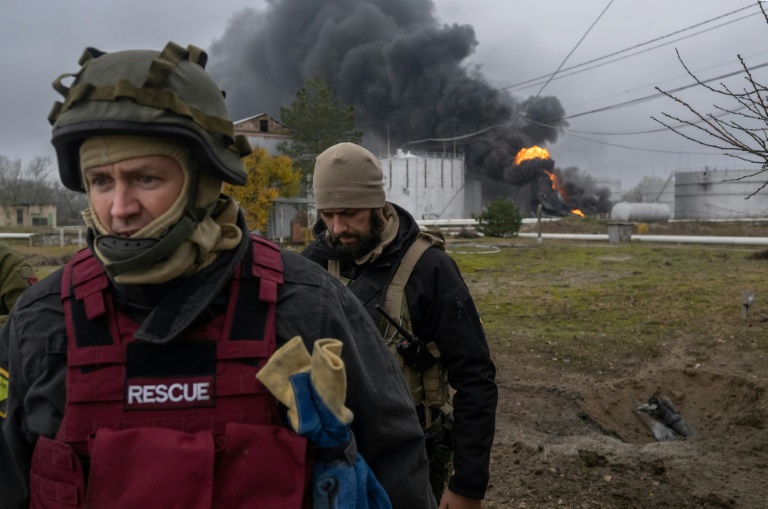
After Russian shells pounded the industrial area next to their home, setting fire to an oil depot in the southern Ukrainian city of Kherson, Yuri Mosolov and his wife decided it was time to leave.

With a smattering of bags in tow, the couple boarded their boat and headed down the Dnipro River to their summer cottage, where they hoped to be spared the destruction of increasing bouts of shelling striking Kherson. 

The decision comes after the couple endured eight months of occupation under Russian forces who seized Kherson just days after Moscow launched the war in February. 

But only a week after Ukrainian forces liberated Kherson, Mosolov sensed a new danger was enveloping the city. 

“We lived through the occupation so we will live through (Russia’s) shelling,” Mosolov told AFP on Sunday as he eyed the clouds of black smoke rising from the fires from the nearby industrial area. 

Even still, the targeting of the oil depot next to their home over the weekend left the couple rattled.

“After yesterday’s shelling, my wife said: let’s not take too many risks and go,” Mosolov explained. 

– A new frontline –

During the months of Russian occupation of the city, Kherson was largely spared the harsh ground fighting that has left large swaths of Ukraine in utter ruin.

A carefully planned campaign by Kyiv targeting logistics networks, bridges and pontoon crossings battered Russian supply lines and forced their troops to abandon the city and retreat to the Dnipro’s eastern bank. 

Now, the armies separated by the river are increasingly engaging in heavy artillery exchanges across the Dnipro. 

The concussion from the blasts echo through the city regularly. 

“Artillery duels are still going on. The combat continues,” said Dmytro Pletenchuk, the Ukrainian military’s spokesman in the area. “Kherson is now on the frontline.” 

Elsewhere near Kherson, Russian strikes hit near a humanitarian distribution area in the village of Bilozerka, sending residents fleeing on Saturday.

– ‘Everybody is scared’ –

A day later, the area near the strike which included a popular outdoor market was largely empty as residents stayed home, fearing further shelling.

“Now you see there’s no one because everybody is scared,” said Anna Kovalska, 38, who owns a nearby shop. 

Many residents fear the periodic shelling is a worrying sign of more fighting to come.

Ukrainian forces appear to be bringing heavier weapons closer to the city to engage nearby Russian positions. 

The increase in shelling comes as residents are already enduring power and water supply cuts while a harsh winter weather sets in, after Russian forces destroyed the city’s basic utilities infrastructure before leaving Kherson. 

“We are not afraid when there’s no water and no electricity but we are afraid when there’s explosions,” said Alyouna Yanyk, 43, who works at a corner shop near the industrial area hit over the weekend in Kherson. 

But for some, even if the Russians start unleashing their vast firepower on the city soon they will be forced to stay. 

“I’m worried… the shelling is happening almost every hour now,” said 61-year-old Sergey Gudym, the chief engineer at the oil depot hit over the weekend, as he surveyed the damage to the area.

“I’ll stay here. I have no place else to go.”

All eyes on Trump's Twitter account after Musk reinstates him

Donald Trump has seemingly rejected returning to Twitter, but as he embarks on a new presidential campaign, will he be able to resist? All eyes were on his account Sunday for any activity, after it was reinstated by the platform’s new owner Elon Musk.

Twitter had issued a “permanent” ban on Trump in the wake of the January 6, 2021 attack by his supporters on the US Capitol, as he sought to overturn his election loss to Democrat Joe Biden.

But Musk, who describes himself as a “free speech absolutist,” posted a Twitter poll Saturday that saw a majority support the former president’s reinstatement, and the platform’s new owner wasted no time in acting on it.

As of 11:30 am EST (1630 GMT) Sunday, the revived account of the “45th President of the United States of America,” with its blue “verified” checkmark, had not posted any new messages.

The last message dates from January 8, 2021, when the billionaire said he would not attend Biden’s inauguration ceremony.  

On the same day, Twitter banned the account, which was being followed by some 88.8 million people, citing the risk of further incitement to violence.

– Campaign links –

Trump’s followers numbered 86.6 million as of Sunday — though it was unclear how many of those were real and how many were bots — while the number of accounts followed by him went from zero to 49.  

The account also linked to a campaign website seeking donations for Trump’s 2024 presidential run.

It was not clear who linked the website to the account or what any changes in the number of followers means — mass layoffs in recent weeks under Musk have seen Twitter’s communications team decimated.

Trump reveled in using Twitter as a mouthpiece during his presidency, posting policy announcements, attacking political rivals and communicating with supporters.

More than 15 million votes were cast in Musk’s poll — Twitter has 237 million daily users — with 51.8 percent in favor of reinstating Trump’s controversial profile and 48.2 percent against.

Musk asked for a simple “yes” or “no” response to the statement, “Reinstate former President Trump.”

On Saturday, while the poll was still underway, Trump posted a link to it on Truth Social, the Twitter alternative he founded, urging his 4.6 million followers there to vote for him.

But he also wrote: “don’t worry, we aren’t going anywhere. Truth Social is special!” 

And, appearing via video at a gathering of the Republican Jewish Coalition in Las Vegas, Trump said he welcomed the poll and was a fan of Musk, but appeared to reject any return to the platform.

“I don’t see it, because I don’t see any reason for it,” he said.

– ‘Better choices’ –

Trump posts often on Truth Social, sometimes dozens of times a day, and in recent months has engaged more brazenly than ever with extremist content, including dozens of posts from promoters of the QAnon conspiracy theory.

Although his reach there is relatively small, experts say the misinformation he spreads reverberates across the internet.

His reinstatement to the much larger and more mainstream platform of Twitter comes as his announcement that he will run for president again in 2024 is not being met with the kind of enthusiasm that marked his earlier bids.

He announced his candidacy just after the midterm elections, in which he had endorsed hundreds of candidates.

But Democrats did unexpectedly well and a predicted Republican “red wave” did not materialize, prompting a backlash against Trump and extremism in the Republican Party.

Trump’s former vice president Mike Pence, himself a potential contender for the 2024 Republican nomination, told CBS on Sunday that there would be “better choices” than his old boss. 

Kazakhstan holds presidential elections after turbulent year

Kazakhs on Sunday voted in presidential elections expected to cement incumbent Kassym-Jomart Tokayev’s grip on power, months after deadly unrest spurred a historic shift in the Central Asian country.

The last polling stations in the former Soviet republic closed at 1500 GMT, and the first exit polls are expected around 1800 GMT. 

The victory of President Tokayev is all but a foregone conclusion as the 69-year-old faced no real opposition.

Last January, Kazakhstan sank into chaos during protests over high living costs which left 238 dead.

Tokayev — once a steady hand known for lacking charisma — showed a ruthless side earlier this year by violently suppressing protests. 

Kazakhstan has since then stabilised but tensions persist, as shown by the arrest on Thursday of seven opposition supporters accused of an attempted coup.

Authorities on Sunday detained around 15 protesters demanding free and fair elections in the country’s largest city Almaty, AFP journalists witnessed.

An interior ministry spokesman confirmed to AFP that 15 people were detained.

– No competition –

Hoping to turn over a new leaf after a turbulent year, Tokayev had said he was seeking a “new mandate of trust from the people” in this election.

After voting early on Sunday in the capital Astana, Tokayev said “the main thing is that there is no monopoly of power”.

But if Tokayev announced reforms, the promised “new Kazakhstan” feels like a deja-vu, with a deserted political landscape, hardly credible opposition and political pressures.

AFP journalists saw voters taking selfies in front of the polling stations in Astana and the economic hub of Almaty, but this was not a show of excitement.

Many said they would be “required” to show it when going back to work on Monday. 

Critics are still sidelined and all five of Tokayev’s competitors are virtually unknown.

This left 19-year-old student Alya Bokechova thinking that going to the polls “would be a loss of time”.

“We already know who will win and we don’t know the other candidates,” she told AFP.

Just days before the vote, seven people linked to exiled opponent Mukhtar Ablyazov were arrested over accusations they were planning a coup.

Tokayev also said glorifying those who took part in the January protests was “unacceptable”.

Observers from the Organisation for Security and Cooperation in Europe (OSCE) criticised Kazakhstan’s failure to meet electoral recommendations, including “conditions of eligibility and registration of candidates”.

– Hoping for a change –

But his promises of democratic and economic reforms resonate with some voters.

Voting for Tokayev, police officer Nurlan N. said: “Since independence 30 years ago, almost nothing changed, I would like to see some significant changes.”

Casting her ballot in Almaty, 68-year-old pensioner Murzada Massalina said “Tokayev is the suitable candidate because he has a lot of experience.”

Tokayev came to power in 2019 after winning 70 percent of the vote in an election whose outcome was inevitable after he obtained the backing of former ruler Nursultan Nazarbayev.

For the following two-and-a-half years, he played a role of loyal protege.

But that changed after protests erupted in January and Tokayev ordered law enforcement to “shoot to kill” demonstrators.

Tokayev then distanced himself from his former mentor Nazarbayev, purged his clan from positions of authority and promised a “new and just Kazakhstan”.

He announced reforms, a constitutional referendum and introduced single presidential terms of seven years.

The Kazakh leader also stood up to Russian President Vladimir Putin, as Moscow’s invasion of Ukraine shocked former Soviet republics. 

The offensive reawakened Kazakh concerns that Moscow may have ambitions on the north of the country, home to three million ethnic Russians.

In response, Tokayev strengthened his country’s ties not only with China, but also with Europe.  

The leaders of Turkey and China visited Kazakhstan, as well as many high-ranking European officials and Pope Francis just this year.

Tokayev also directly clashed with Putin on a visit to Saint Petersburg in June.

He said Moscow’s move to recognise Ukrainian separatist regions — that it has since claimed to annex — would “lead to chaos”.

US envoy urges Chinese cooperation on emissions cuts

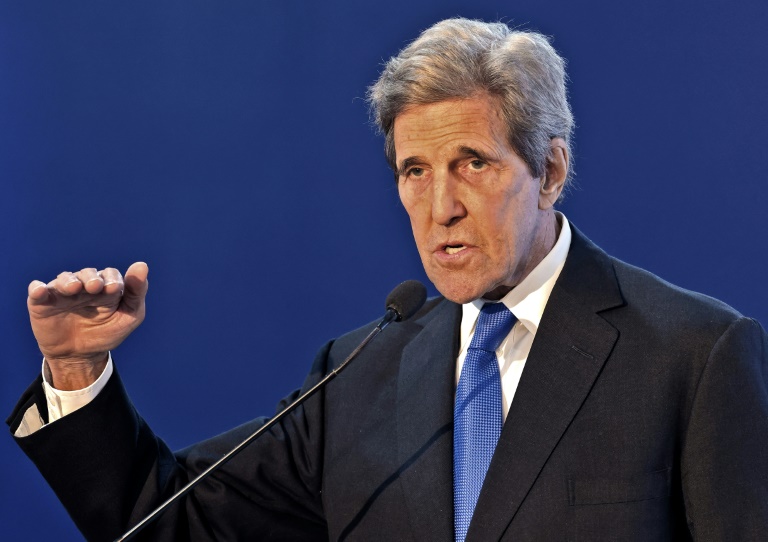
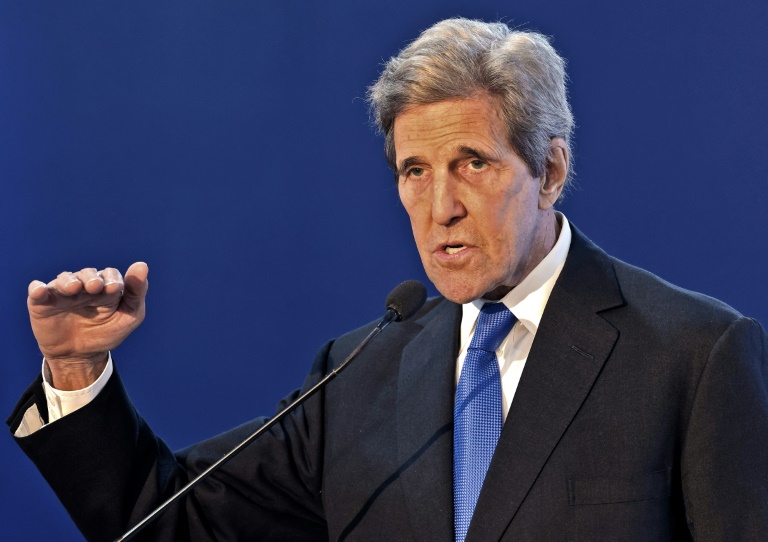
US climate envoy John Kerry called on Beijing Sunday to “accelerate progress together” on reducing greenhouse gas emissions, following a meeting with his Chinese counterpart at COP27 in Egypt.

Kerry and Xie Zhenhua met during the UN summit in the Red Sea resort of Sharm el-Sheikh after US President Joe Biden and Chinese leader Xi Jinping agreed at a G20 summit in Indonesia last week to resume collaboration on fighting climate change.

Beijing suspended the talks in August in anger at US House Speaker Nancy Pelosi’s visit to Taiwan.

Cooperation between the superpowers is key in the fight against global warming and has led to breakthroughs at past UN climate conferences, notably the landmark 2015 Paris Agreement.

“The climate crisis is fundamentally a global, not a bilateral, issue,” Kerry said in a statement.

“The United States and China should be able to accelerate progress together, not only for our sake, but for future generations,” Kerry added.

“All nations have a stake in the choices China makes in this critical decade… We are all hopeful that China will live up to its global responsibility.”

Xie described his talks with Kerry as “candid, friendly, positive” and “overall very constructive”.

“We have agreed that after this COP we will continue formal conversations, including face-to-face meetings,” he told reporters on Saturday.

But he also highlighted lingering differences with Western nations, rejecting the idea that China should no longer be considered a developing country, though it is now the world’s second-biggest economy.

That distinction in status is key: Under the terms of a bedrock 1992 UN climate treaty, developed countries are supposed to financially help developing nations in their energy transitions and efforts to build resilience against climate impacts.

– ‘Major outcome’ –

The issue was at the heart of a contentious debate at COP27 on establishing a “loss and damage” fund to compensate poorer countries already devastated by the fallout from global warming.

Kerry called the landmark deal on funding to help vulnerable countries cope with devastating impacts of global warming “one of the major outcomes” of the conference.

The US envoy had tested positive for Covid-19 during the summit and was self-isolating when negotiations wrapped up on Sunday.

A final COP27 statement covering the broad array of efforts to grapple with a warming planet held the line on the aspirational goal of limiting global warming to 1.5 degrees Celsius from pre-industrial levels.

According to Kerry, this goal can be achieved by “implementing real projects and deploying real dollars to accelerate the energy transition”.

“Investment in clean energy and infrastructure will help countries deliver stronger climate ambition anywhere by driving down the cost of clean technologies.”

He said Washington and other governments were “stepping up” funding to support the green transition, noting several initiatives launched ahead of and during COP27.

Mexican Foreign Minister Marcelo Ebrard announced last week in Sharm el-Sheikh a $48 billion renewable energy investment scheme with the United States to strengthen emissions-cutting efforts.

Also during the summit, Kerry launched a partnership with private funds aimed at supporting the transition to renewable energy in developing nations, based on a carbon credit system.

US envoy urges Chinese cooperation on emissions cuts

US climate envoy John Kerry called on Beijing Sunday to “accelerate progress together” on reducing greenhouse gas emissions, following a meeting with his Chinese counterpart at COP27 in Egypt.

Kerry and Xie Zhenhua met during the UN summit in the Red Sea resort of Sharm el-Sheikh after US President Joe Biden and Chinese leader Xi Jinping agreed at a G20 summit in Indonesia last week to resume collaboration on fighting climate change.

Beijing suspended the talks in August in anger at US House Speaker Nancy Pelosi’s visit to Taiwan.

Cooperation between the superpowers is key in the fight against global warming and has led to breakthroughs at past UN climate conferences, notably the landmark 2015 Paris Agreement.

“The climate crisis is fundamentally a global, not a bilateral, issue,” Kerry said in a statement.

“The United States and China should be able to accelerate progress together, not only for our sake, but for future generations,” Kerry added.

“All nations have a stake in the choices China makes in this critical decade… We are all hopeful that China will live up to its global responsibility.”

Xie described his talks with Kerry as “candid, friendly, positive” and “overall very constructive”.

“We have agreed that after this COP we will continue formal conversations, including face-to-face meetings,” he told reporters on Saturday.

But he also highlighted lingering differences with Western nations, rejecting the idea that China should no longer be considered a developing country, though it is now the world’s second-biggest economy.

That distinction in status is key: Under the terms of a bedrock 1992 UN climate treaty, developed countries are supposed to financially help developing nations in their energy transitions and efforts to build resilience against climate impacts.

– ‘Major outcome’ –

The issue was at the heart of a contentious debate at COP27 on establishing a “loss and damage” fund to compensate poorer countries already devastated by the fallout from global warming.

Kerry called the landmark deal on funding to help vulnerable countries cope with devastating impacts of global warming “one of the major outcomes” of the conference.

The US envoy had tested positive for Covid-19 during the summit and was self-isolating when negotiations wrapped up on Sunday.

A final COP27 statement covering the broad array of efforts to grapple with a warming planet held the line on the aspirational goal of limiting global warming to 1.5 degrees Celsius from pre-industrial levels.

According to Kerry, this goal can be achieved by “implementing real projects and deploying real dollars to accelerate the energy transition”.

“Investment in clean energy and infrastructure will help countries deliver stronger climate ambition anywhere by driving down the cost of clean technologies.”

He said Washington and other governments were “stepping up” funding to support the green transition, noting several initiatives launched ahead of and during COP27.

Mexican Foreign Minister Marcelo Ebrard announced last week in Sharm el-Sheikh a $48 billion renewable energy investment scheme with the United States to strengthen emissions-cutting efforts.

Also during the summit, Kerry launched a partnership with private funds aimed at supporting the transition to renewable energy in developing nations, based on a carbon credit system.

Close Bitnami banner
Bitnami