World

Nepal votes in poll coloured by downturn and discontent

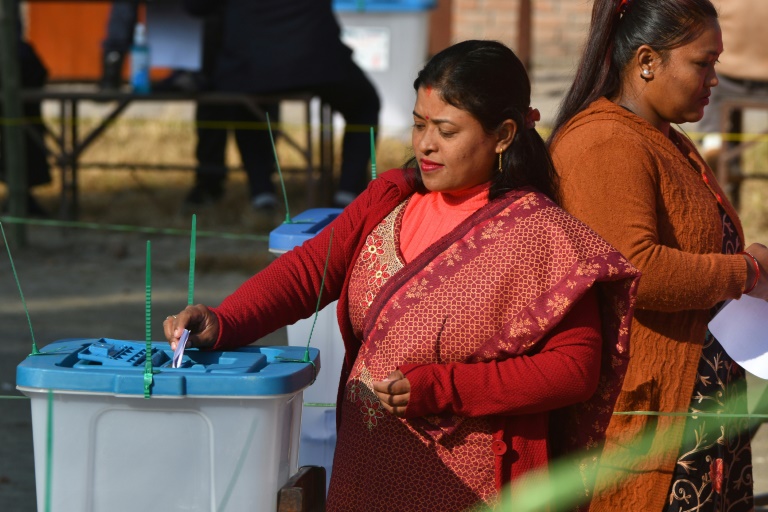
Nepali voters cast their ballots for a new parliament Sunday in a contest dominated by public frustrations over the Himalayan republic’s elderly political elite and anxiety over its teetering economy.

A revolving door of prime ministers — most serving less than a year — and a culture of horse-trading have fuelled perceptions the government is out of touch with Nepal’s pressing problems.

Several younger faces are contesting for the first time, up against established parties whose leaders have strode the corridors of power for decades.

Though analysts expect Nepal’s entrenched political veterans to again dominate the next assembly, many voters have lost faith in the status quo and a mood for change is palpable.

“Every party took turns in government over the past five years and they did nothing,” Chiranjibi Dawadi, a driver by trade, told AFP this week.

“My family has decided to vote for a new party this time. It’s OK even if they don’t look after us. Old parties didn’t either.”

Sunday’s elections are the second since a new constitution was promulgated in 2015, ushering in a new political order after the conclusion of Nepal’s traumatic Maoist insurgency.

The civil war ended in 2006, having claimed more than 17,000 lives and prompting the abolition of the country’s monarchy, while also bringing the former rebels into the government fold.

Since then the former guerrillas have alternated in power with another communist party and the established Congress in various coalitions.

But political instability has been a recurrent feature of Nepal’s parliament, and no prime minister has served a full term since the war ended.

A constant balancing act has left governments of different stripes struggling to navigate the traditional rivalry between Nepal’s two neighbours, China and India, at a time of rising Western concern with Chinese-funded mega-projects in the country.

– ‘Same power games’ –

Incumbent premier Sher Bahadur Deuba, 76, is serving in the role for the fifth time. The two other main party leaders are 70 and 67 and have both held office as prime minister twice.

Public disaffection with the trio has intensified with the economy still in the doldrums from the pandemic, which devastated the vital tourism industry and dried up remittances from the huge number of Nepalis working abroad.

Inflation is spiking and the government has banned imports of several goods, including foreign liquor and television sets, to shore up its dwindling foreign exchange reserves.

Several younger candidates have thrown their hats into the ring this year, foremost among them bombastic journalist Rabi Lamichhane.

The charismatic former television host, 48, made his name with a muckraking news programme where he shouted at officials and ran hidden camera stings on corrupt bureaucrats, tapping into public frustration over endemic graft.

“I had voted for old parties in the past, but I voted for new candidates this time,” Sushant Thapa, a 26-year-old student, told AFP at a polling station in Kathmandu. 

“I hope there will be a new team in parliament who will listen to the language of the public.”

But analysts say the nature of Nepal’s parliamentary system means that Sunday’s poll will likely result in a parliament dominated by prominent parties.

“It seems the public has stopped making expectations of big changes,” Guna Raj Luitel, editor of the Nagarik newspaper, told AFP.

“It’s unlikely that there will be a majority for any single party,” he said. “It’s again going to be the same power games and coalition governments.”

Nepal’s remote Himalayan communities make every national vote a logistical feat, and election commission officials have said it will take “four to five days” for the result to be known.
Presidential vote underway in Kazakhstan after turbulent year

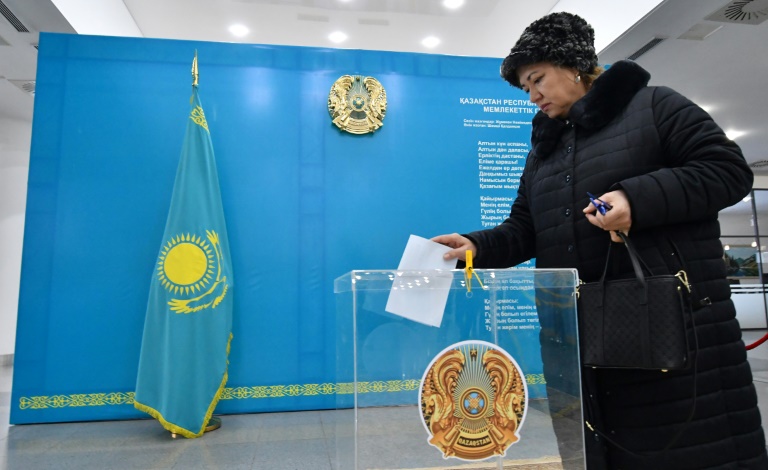
Kazakhstan on Sunday began voting in presidential elections expected to cement incumbent Kassym-Jomart Tokayev’s grip on power, months after deadly unrest spurred a historic power shift in the Central Asian country.

Polling stations opened at 0100 GMT and will close at 1500 GMT, with first exit polls expected around 1800 GMT.

The victory of President Tokayev, who voted early on Sunday in the capital Astana, is all but a foregone conclusion as the 69-year-old is facing no real opposition.

Last January, the vast former Soviet republic sank into chaos during protests over high living costs which left 238 dead.

Kazakhstan has since then stabilised but tensions persist, as shown by the arrest on Thursday of seven opposition supporters accused of an attempted coup.

Tokayev — once a steady hand known for lacking charisma — showed a ruthless side earlier this year by violently suppressing protests. 

Hoping to turn over a new leaf, Tokayev said he sought a “new mandate of trust from the people” in this election.

– No competition –

AFP journalists saw voters taking selfies in front of the polling stations in Astana and the economic hub of Almaty, but this was not a show of excitement.

Many said they would be “required” to show it when going back to work on Monday.

If Tokayev announced reforms, the promised “new Kazakhstan” feels like a deja-vu, with a deserted political landscape, hardly credible opposition and political pressures. 

Critics are still sidelined and all five of Tokayev’s competitors are virtually unknown.

This left 19-year-old student Alya Bokechova thinking that going to the polls “would be a loss of time”.

“We already know who will win and we don’t know the other candidates,” she told AFP.

But his promises of democratic and economic reforms resonate with some voters.

Voting for Tokayev, police officer Nurlan N. said that “since independence 30 years ago, almost nothing changed, I would like to see some significant changes.”

Casting her ballot in Almaty, 68-year-old pensioner Murzada Massalina said “Tokayev is the suitable candidate because he has a lot of experience.”

Just days before the vote, seven people linked to exiled opponent Mukhtar Ablyazov were arrested over accusations they were planning a coup.

Tokayev also said glorifying those who took part in the January protests was “unacceptable”.

Observers from the Organization for Security and Cooperation in Europe (OSCE) criticised Kazakhstan’s failure to meet electoral recommendations, including “conditions of eligibility and registration of candidates”.

– Hoping for a change –

Tokayev came to power in 2019 after winning 70 percent of the vote in an election whose outcome was inevitable after he obtained the backing of former ruler Nursultan Nazarbayev.

For the following two-and-a-half years, he played a role of loyal protege.

But that changed after protests erupted in January and Tokayev ordered law enforcement to “shoot to kill” demonstrators.

Tokayev then distanced himself from his former mentor Nazarbayev, purged his clan from positions of authority and promised a “new and just Kazakhstan”.

He announced reforms, a constitutional referendum and introduced single presidential terms of seven years.

The Kazakh leader also stood up to Russia’s Vladimir Putin, as Moscow’s invasion of Ukraine shocked former Soviet republics. 

The offensive reawakened Kazakh concerns that Moscow may have ambitions on the north of the country, home to three million ethnic Russians.

In response, Tokayev strengthened his country’s ties not only with China, but also with Europe.  

The leaders of Turkey and China visited Kazakhstan, as well as many high-ranking European officials and Pope Francis just this year.

Tokayev also directly clashed with Putin on a visit to Saint Petersburg in June.

He said Moscow’s move to recognise Ukrainian separatist regions — that it has since claimed to annex — would “lead to chaos”.

COP27 summit strikes historic deal to fund climate damages

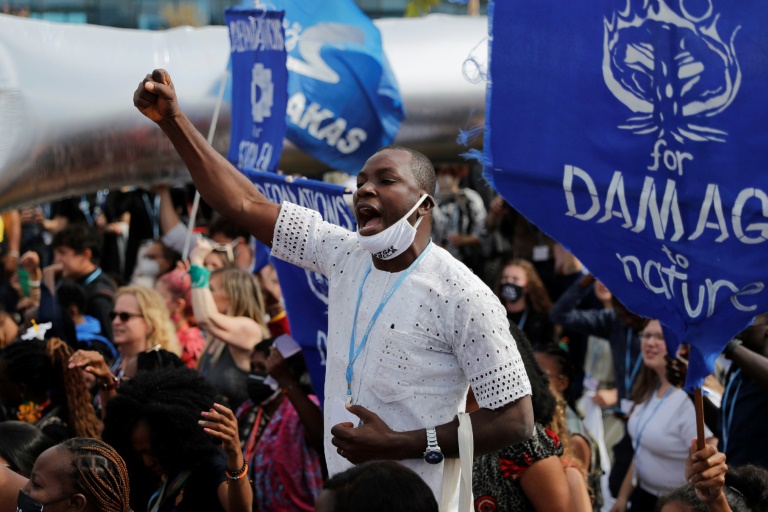
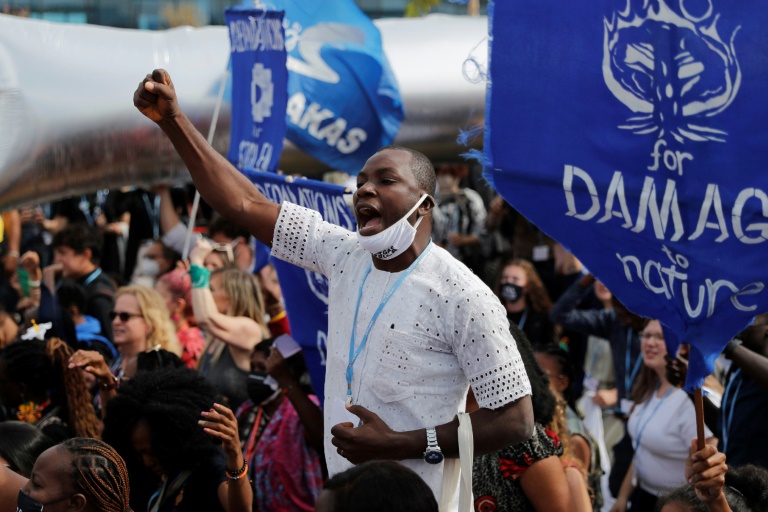
A fraught UN climate summit wrapped up Sunday with a landmark deal on funding to help vulnerable countries cope with devastating impacts of global warming — but also anger over a failure to push further ambition on cutting emissions.

The two-week talks in Egypt’s Red Sea resort of Sharm el-Sheikh, which at times appeared to teeter on the brink of collapse, delivered a major breakthrough on a fund for climate “loss and damage”.

Pakistani climate minister Sherry Rehman said COP27 “responded to the voices of the vulnerable, the damaged and the lost of the whole world”.

“We have struggled for 30 years on this path, and today in Sharm el-Sheikh this journey has achieved its first positive milestone,” she told the summit.

Tired delegates applauded when the loss and damage fund was adopted as the sun came up Sunday following almost two extra days of negotiations that went round-the-clock.

But jubilation over that achievement was countered by stern warnings.

UN chief Antonio Guterres said the UN climate talks had “taken an important step towards justice” with the loss and damage fund, but fell short in pushing for the urgent carbon-cutting needed to tackle global warming.

“Our planet is still in the emergency room,” Guterres said. “We need to drastically reduce emissions now and this is an issue this COP did not address.”

– ‘Stonewalled by emitters’ –

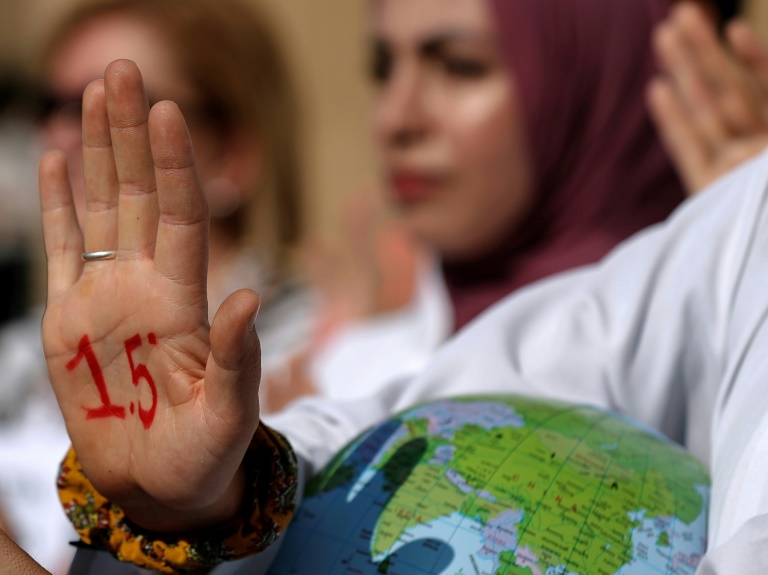
A final COP27 statement covering the broad array of the world’s efforts to grapple with a warming planet held the line on the aspirational goal of limiting global warming to 1.5 degrees Celsius from pre-industrial levels.

It also included language on renewable energy for the first time, while reiterating previous calls to accelerate “efforts towards the phasedown of unabated coal power and phase-out of inefficient fossil fuel subsidies”.

But that failed to go much further than a similar decision from last year’s COP26 meeting in Glasgow on key issues around cutting planet-heating pollution.

European Commission Vice President Frans Timmermans said the EU was “disappointed”, adding that more than 80 nations had backed a stronger emissions pledge.

“What we have in front of us is not enough of a step forward for people and planet,” he said.

“It doesn’t bring enough added efforts from major emitters to increase and accelerate their emission cuts,” said Timmermans, who 24 hours earlier had threatened to walk out of the talks rather than getting a “bad result”.

Britain’s Alok Sharma, who chaired COP26 in Glasgow, said a passage on energy had been “weakened, in the final minutes”.

Germany Foreign Minister Annalena Baerbock said she was frustrated that the emissions cut and fossil fuel phase-out were “stonewalled by a number of large emitters and oil producers”.

Criticised by some delegations for a lack of transparency during negotiations, Egyptian Foreign Minister Sameh Shoukry, the COP27 chair, said any missteps were “certainly not intentional”.

“I believe I succeeded in avoiding that any of the parties were to backslide,” he said.

– ‘Loss and damage’ –

The deal on loss and damage — which had only barely made it onto the negotiation agenda — gathered critical momentum during the talks.

Developing nations relentlessly pushed for the fund, finally succeeding in getting the backing of wealthy polluters long fearful of open-ended liability.

A statement from the Alliance of Small Island States, comprised of islands whose very existence is threatened by sea level rise, said the loss and damage deal was “historic”.

“The agreements made at COP27 are a win for our entire world,” said Molwyn Joseph, of Antigua and Barbuda and chair of AOSIS.

“We have shown those who have felt neglected that we hear you, we see you, and we are giving you the respect and care you deserve.”

With around 1.2C of warming so far, the world has seen a cascade of climate-driven extremes, shining a spotlight on the plight of developing countries faced with escalating disasters, as well as an energy and food price crisis and ballooning debt.

The World Bank estimated that devastating floods in Pakistan this year caused $30 billion in damage and economic loss.

The fund will be geared towards developing nations “that are particularly vulnerable to the adverse effects of climate change” — language that had been requested by the EU.

– ‘On the brink’ –

The Europeans had also wanted to broaden the funder base to cough up cash — code for China and other better-off emerging countries. 

The final loss and damage text left many of the thornier questions to be dealt with by a transitional committee, which will report to next year’s climate meeting in Dubai to get the funding operational.

Scientists say limiting warming to 1.5C is a far safer guardrail against catastrophic climate impacts, with the world currently way off track and heading for around 2.5C under current commitments and plans.

“The historic outcome on loss and damage at COP27 shows international cooperation is possible,” said Mary Robinson, former president of Ireland and Chair of The Elders.

“Equally, the renewed commitment on the 1.5C global warming limit was a source of relief. However, none of this changes the fact that the world remains on the brink of climate catastrophe.”  

Turkey launches air raids against Kurdish militants in Syria, Iraq

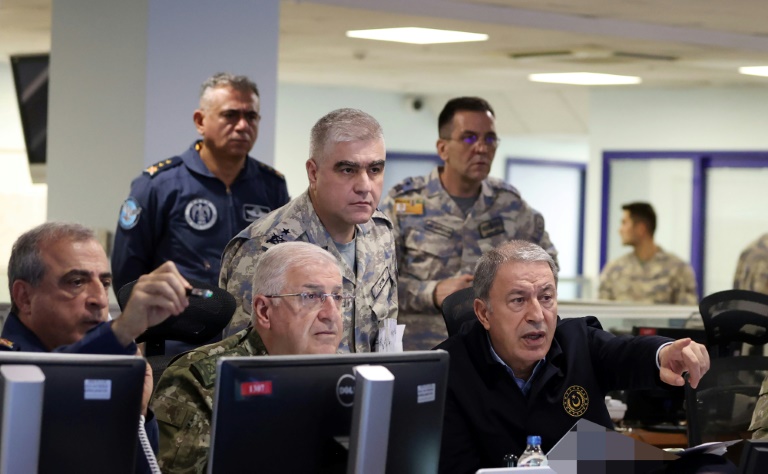
Turkey announced early Sunday it had carried out air strikes against outlawed Kurdish militant bases across northern Syria and Iraq which it said were being used to launch “terrorist” attacks on its soil.

The offensive codenamed Operation Claw-Sword comes after a deadly blast in central Istanbul last Sunday which killed six people and wounded 81, with Turkey blaming a banned Kurdish group.

“We are starting Operation Claw-Sword from now on,” Defence Minister Hulusi Akar said at the air force operations centre before the planes left their bases to hit the targets in northern Iraq and Syria.

Akar was also seen in a video image briefing President Recep Tayyip Erdogan who gave the order for the latest operation, which a monitor said had killed 12 people.

The raids targeted bases of the outlawed Kurdistan Workers’ Party (PKK) and the Kurdish People’s Protection Units (YPG), which Ankara considers an extension of the PKK, the defence ministry said. 

“In line with our self-defence rights arising from Article 51 of the United Nations Charter, air operation Claw-Sword was carried out in the regions in the north of Iraq and Syria which are used as bases for attacks on our country by terrorists,” it added. 

Turkey blamed the PKK for the Istanbul bombing, the deadliest in five years and which evoked bitter memories of a wave of nationwide bombings from 2015 to 2017 that were attributed mostly to Kurdish militants and Islamic State group jihadists.

The PKK, which has waged a bloody insurgency in Turkey for decades and which is designated as a terror group by Turkey and its Western allies, and the YPG have both denied any involvement in the attack.

No individual or group has claimed responsibility. 

– ‘Hour of reckoning’ –

Turkish police captured the chief suspect Alham Albashir — a Syrian woman who is said to have been working for Kurdish militants — in an Istanbul suburb.

“The hour of reckoning has come,” the Turkish defence ministry tweeted, along with a photo of a plane taking off for a night operation.

“The treacherous attacks of the scoundrels are being held to account,” it said.

“Terrorist hotbeds razed by precision strikes,” the ministry said in another post, which was accompanied by a video showing a target being selected from the air followed by an explosion.

Turkey carried out more than 20 strikes on sites in the Syrian provinces of Raqa, Aleppo and Hassakeh, said the Syrian Observatory for Human Rights, a Britain-based monitoring group that has an extensive network of contacts across Syria.

The raids killed at least six members of the Kurdish-led Syrian Democratic Forces (SDF) and six pro-regime soldiers, the monitor said.

A PKK spokesman said the strikes have caused no casualties so far. 

Turkey’s army regularly hits the PKK’s rear bases in Iraq — a thorn in Ankara’s relations with the government in Baghdad — and since April it has carried out Operation Claw-Lock in northern Iraq in the pursuit of militants. 

– ‘Bombing threatens whole region’ –

While Ankara did not give details of the operation, the US-backed SDF said the city of Kobane in northeast Syria was among the targets hit by Turkish raids.

“#Kobane, the city that defeated ISIS, is subjected to bombardment by the aircraft of the Turkish occupation,” tweeted Farhad Shami, a spokesman for the SDF.

The SDF provided crucial assistance to a US-led coalition against jihadists of the Islamic State (IS) group.

But Turkey considers the YPG as a terror group linked to the PKK. 

Turkish Interior Minister Suleyman Soylu has said Ankara believes the order for the Istanbul attack was given from Kobane, controlled by Syrian Kurdish militia forces.

“Turkish bombing of our safe areas threatens the whole region,” Mazloum Abdi, the chief commander of the US-allied SDF, tweeted.

“This bombing is not in favour of any party. We are making every effort to avoid a major catastrophe. If war erupts, all will be affected.”

Kobane, a Kurdish-majority town near the Turkish border, was captured by IS in late 2014 before Syrian Kurdish forces drove them out early the following year.

The US State Department had said on Friday it feared possible military action by Turkey, advising its nationals not to travel to northern Syria and Iraq.

Turkey has launched waves of attacks on Syria since 2016 targeting Kurdish militias as well as IS jihadists, and Ankara and forces backed by it have seized territory along the Syrian border.

Since May, Erdogan has threatened to launch a new operation in northern Syria.

burs-fo/imm

Negotiating with Moscow would be capitulation: Ukraine presidency

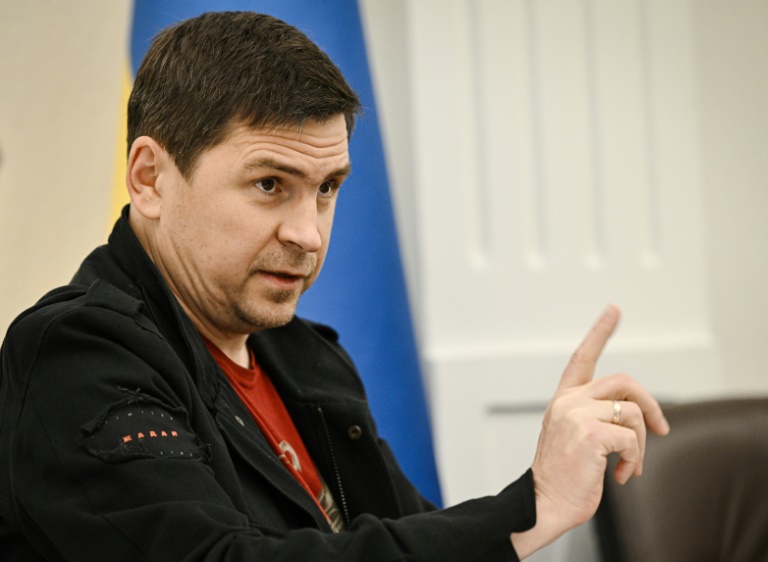
The West’s attempts to persuade Ukraine to negotiate with Moscow, after a series of major military victories by Kiev, are “bizarre” and amount to asking for its capitulation, a key adviser to the Ukrainian presidency told AFP.

“When you have the initiative on the battlefield, it’s slightly bizarre to receive proposals like: ‘you will not be able to do everything by military means anyway, you need to negotiate,” said Ukrainian President Volodymyr Zelensky’s adviser Mykhaylo Podolyak.

This would mean that the country “that recovers its territories, must capitulate to the country that is losing,” he added, during an interview with AFP at his office in the presidency building in Kyiv.

US media recently reported that some senior officials were beginning to encourage Ukraine to consider talks, which Zelensky has so far rejected without a prior withdrawal of Russian forces from all Ukrainian territory.

“There has to be a mutual recognition that military victory is probably in the true sense of the word maybe not achievable through military means,” top US General Mark Milley said earlier this month, estimating that there is “a window of opportunity for negotiation”.

According to Podolyak, Moscow has not made “any direct proposal” to Kiev for peace talks, preferring to transmit them through intermediaries and even raising the possibility of a ceasefire.

– Negotiating ‘makes no sense’ –

Kiev sees such talk as mere manoeuvring by the Kremlin to win some respite on the ground and prepare a new offensive.

“Russia doesn’t want negotiations. Russia is conducting a communication campaign called ‘negotiations’,” the Ukraine presidential adviser said.

“It will simply stall for time. In the meantime, it will train its mobilised forces, find additional weapons” and fortify its positions,” he warned.

Despite Russia’s heavy military defeats in recent weeks, including Ukraine retaking the key southern city of Kherson, President Vladimir Putin still thinks “he can destroy Ukraine, this is his obsession” and negotiating with him “makes no sense”, Podolyak argued. 

He denied the West was trying to pressure Ukraine into negotiating.

“Our partners still think that it is possible to return to the pre-war era when Russia is a reliable partner”. 

Following massive Russian withdrawals from the Kyiv region in March, then from the Kharkiv region in the northeast in September, the liberation of Kherson this month marked a “fundamental” turning point in the conflict, according to Podolyak.

Spurred on by its string of military victories, Ukraine can “afford no pause” in its counter-offensive, despite the arrival of winter cold and snow that make the situation on the ground more difficult. 

“Today, even a little pause just adds to the losses suffered by Ukraine,” said the official.

– Longer range missiles –

Moscow has been shelling the country’s energy infrastructure for weeks, plunging millions of homes into darkness. 

The regions of Zaporizhzhia in southern Ukraine and Lugansk in the east are now the “key directions” for the army, Podolyak said, while refusing to speculate on the possibility of a military operation to retake the Crimean peninsula, which Moscow annexed back in 2014. 

Ukrainian authorities are calling for an increase in Western arms deliveries, which is “very important” in winter, he added.

British Prime Minister Rishi Sunak used his first visit to Kyiv on Saturday to offer a major new air defence package, including 125 anti-aircraft guns.

“We still need 150 to 200 tanks, about 300 armoured vehicles,” a hundred artillery systems, 50-70 multiple rocket launcher systems, including the formidable American HIMARS, of which Ukraine already has several units, as well as “10 to 15 anti-aircraft defence systems to close the sky,” said Podolyak. 

He also cited US ATACMS missiles, which have a range of 300 kilometres (185 miles). The range of the weapons currently available to Ukraine barely exceeds 80 kilometres. 

For Podolyak, such missiles would “bring the end of the war closer” by allowing Ukraine to “destroy large Russian military depots” located deep in occupied areas which are currently inaccessible.

Kyiv “doesn’t need” to attack military targets inside Russia, the adviser said. 

“The war will end when we regain control of our borders and when Russia is afraid of Ukraine.” 

Rival blocs claim majority in Malaysian election stalemate

Rival blocs claimed on Sunday they had secured the support they needed to form a government after Malaysia’s hotly contested polls saw no party emerge with a clear majority of parliamentary seats.

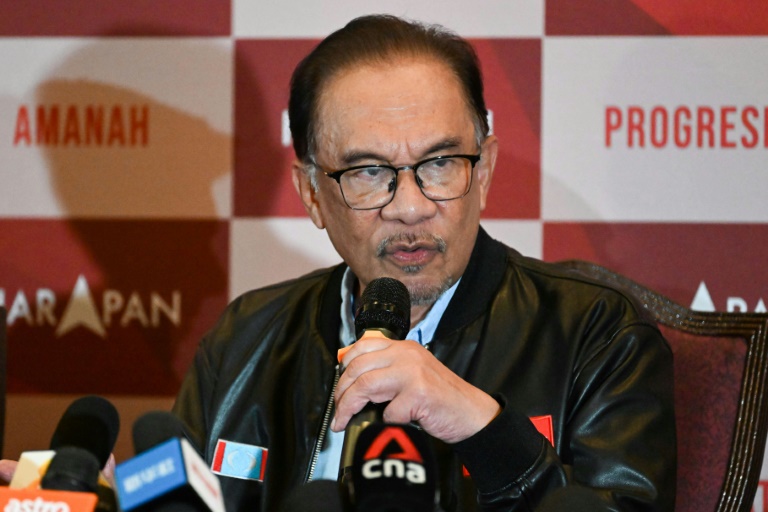
Veteran opposition leader Anwar Ibrahim said his coalition had enough seats to form the country’s next government, which would allow him to become prime minister.

Former premier Muhyiddin Yassin — who heads the rival Perikatan Nasional (National Alliance) grouping — also said he was in talks to form the next administration after Saturday’s election.

The stalemate comes in a country that has seen three governments in as many years.

In a bid to break the impasse, the palace on Sunday asked the leaders of political parties to submit their preferred choice of coalition partners and for prime minister by 2 pm (0600 GMT) Monday.

Home to 33 million people, Malaysia will need a ruling coalition with a strong mandate to tackle soaring food prices and an economy reeling from the Covid-19 pandemic.

While both leading political blocs claimed victory, neither offered details on the alliances they would make to form a government. 

“We have now the majority to form a government,” Anwar said at a dawn news conference after hours of frenzied horse-trading negotiations through the night.

When pressed about who would enter into an alliance with him, Anwar did not give names, but said commitments had been made in writing and would be submitted to the king for endorsement.

At the end of vote-counting, Anwar’s Pakatan Harapan (Alliance of Hope) coalition won 82 seats and Muhyiddin’s Perikatan Nasional grabbed 73, official results showed.

– Islamist party gains –

The once mighty Barisan Nasional — dominated by jailed ex-leader Najib Razak’s United Malays National Organisation (UMNO) party — trailed far behind the rest with only 30 seats, its worst performance since Malaysia won independence in 1957.

The graft-tainted bloc said it accepted the results and that it was a “big signal from the citizens towards us”.

The election also saw the rise of an Islamist party allied with Muhyiddin’s group. The Malaysian Islamic Party, or PAS, backs a hardline interpretation of Islamic law.

Ethnic Malay parties have campaigned on a platform that claims that members of Malaysia’s majority ethnicity would lose their rights if non-Malays — such as Anwar’s multi-ethnic bloc — are elected.

Oh Ei Sun of the Pacific Research Centre of Malaysia said if Muhyiddin gets to form the government, the country is “likely to see a conservative theocratic coalition that will focus on religious and racial supremacy at the expense of effective economic management”.

“Perikatan Nasional’s strong message of clean government was able to make inroads into UMNO’s vote bank and captured key UMNO seats,” added Asrul Hadi Abdullah Sani, deputy managing director at BowerGroupAsia.

One of the highest profile losses in the election was former prime minister Mahathir Mohamad, 97, who was roundly defeated in his constituency.

– Anwar’s last chance –

Anwar campaigned on a promise to fight corruption, after Najib’s ruling party was tainted by a spate of graft cases, including one that sent the former prime minister to jail for 12 years.

A perennial runner-up in Malaysian politics, Anwar has endured two prison terms and has been on the cusp of power several times in his political career.

Voter turnout in Sunday’s election was high — two hours before polling closed, it was already at 70 percent — and those who spoke to AFP said they hoped for political stability and economic improvement.

The results represented the latest electoral humiliation for UMNO, after it suffered a stunning defeat in the 2018 general election due to anger over the 1MDB corruption scandal.

Najib was at the centre of that storm and was jailed over his role in it.

Because of infighting in the two successive governments since 2018, UMNO crept back into power last year, despite lingering corruption allegations, and had sought a stronger mandate from this election.

Corruption was a key issue during the campaign, with opposition parties repeatedly warning that if UMNO won, Najib could walk free and graft charges against other party leaders could be dropped.

The 1MDB scandal — in which billions of dollars in state funds were diverted to Beverly Hills properties, a superyacht, a Hollywood film and Najib’s own bank account — sparked investigations in Singapore, Switzerland and the United States.

Joy, relief at 'historic' climate damages deal

Vulnerable nations least responsible for planet-heating emissions have been battling for three decades to get wealthy polluters to pay for climate damages.

Their final push took barely two weeks.

The “loss and damage” inflicted by climate-induced disasters was not even officially up for discussion when UN talks in Egypt began.

But a concerted effort among developing countries to make it the defining issue of the conference melted the resistance of wealthy polluters long fearful of open-ended liability, and gathered unstoppable momentum as the talks progressed.

In the end a decision to create a loss and damage fund was the first item confirmed on Sunday morning after fraught negotiations went overnight with nations clashing over a range of issues around curbing planet-heating emissions.

“At the beginning of these talks loss and damage was not even on the agenda and now we are making history,” said Mohamed Adow, executive director of Power Shift Africa.  

“It just shows that this UN process can achieve results, and that the world can recognise the plight of the vulnerable must not be treated as a political football.”

Loss and damage covers a broad sweep of climate impacts, from bridges and homes washed away in flash flooding, to the threatened disappearance of cultures and whole island nations to the creeping rise of sea levels.

Observers say that the failure of rich polluters both to curb emissions and to meet their promise of funding to help countries boost climate resilience means that losses and damages are inevitably growing as the planet warms.

Event attribution science now makes it possible to measure how much global warming increases the likelihood or intensity of an individual cyclone, heat wave, drought or heavy rain event.

This year, an onslaught of climate-induced disasters — from catastrophic floods in Pakistan to severe drought threatening famine in Somalia — battered countries already struggling with the economic effects of the Covid-19 pandemic and soaring food and energy costs. 

“The establishment of a fund is not about dispensing charity,” said Pakistani climate minister Sherry Rehman.

“It is clearly a down payment on the longer investment in our joint futures, in the down payment and an investment in climate justice.” 

– Who pays? –

The agreement was a balancing act, over seemingly unbridgeable differences. 

On the one hand the G77 and China bloc of 134 developing countries called for the immediate creation of a fund at COP27, with operational details to be agreed later.

Richer nations like the United States and European Union accepted that countries in the crosshairs of climate-driven disasters need money, but favoured a “mosaic” of funding arrangements.

They also wanted money to be focused on the most climate-vulnerable countries and for there to be a broader set of donors.

That is code for countries including China and Saudi Arabia that have become wealthier since they were listed as developing nations in 1992.

After last-minute tussles over wording, the final loss and damage document decided to create a fund, as part of a broad array of funding arrangements for developing countries “that are particularly vulnerable to the adverse effects of climate change”.

Other key points of contention were left ambiguous, or put into the remit of a new transitional committee that will be tasked with coming up with a plan for making the decisions a reality for the 2023 UN climate summit in Dubai. 

A reference to expanding sources of funding, “is vague enough to pass”, said Ines Benomar, researcher at think tank E3G.

But she said debates about whether China — the world’s biggest emitter — among others should maintain its status as “developing” was likely to reemerge next year. 

“The discussion is postponed, but now there is more attention to it,” she said. 

For his part, China’s envoy Xie Zhenhua told reporters on Saturday that the fund should be for all developing countries. 

However, he added: “I hope that it could be provided to the fragile countries first.”

– ‘Empty bucket’ –

Harjeet Singh, head of global political strategy at Climate Action Network International, said other innovative sources of finance — like levies on fossil fuel extraction or air passengers — could raise “hundreds of billions of dollars”. 

Pledges for loss and damage so far are miniscule in comparison to the scale of the damages. 

They include $50 million from Austria, $13 million from Denmark and $8 million from Scotland. 

About $200 million has also been pledged — mainly from Germany — to the “Global Shield” project launched by the G7 group of developed economies and climate vulnerable nations.   

The World Bank has estimated the Pakistan floods alone caused $30 billion in damages and economic loss.

Depending on how deeply the world slashes carbon pollution, loss and damage from climate change could cost developing countries $290 billion to $580 billion a year by 2030, reaching $1 trillion to $1.8 trillion in 2050, according to 2018 research.

Adow said that a loss and damage fund was just the first step.  

“What we have is an empty bucket,” he said. 

“Now we need to fill it so that support can flow to the most impacted people who are suffering right now at the hands of the climate crisis.”

Joy, relief at 'historic' climate damages deal

Vulnerable nations least responsible for planet-heating emissions have been battling for three decades to get wealthy polluters to pay for climate damages.

Their final push took barely two weeks.

The “loss and damage” inflicted by climate-induced disasters was not even officially up for discussion when UN talks in Egypt began.

But a concerted effort among developing countries to make it the defining issue of the conference melted the resistance of wealthy polluters long fearful of open-ended liability, and gathered unstoppable momentum as the talks progressed.

In the end a decision to create a loss and damage fund was the first item confirmed on Sunday morning after fraught negotiations went overnight with nations clashing over a range of issues around curbing planet-heating emissions.

“At the beginning of these talks loss and damage was not even on the agenda and now we are making history,” said Mohamed Adow, executive director of Power Shift Africa.  

“It just shows that this UN process can achieve results, and that the world can recognise the plight of the vulnerable must not be treated as a political football.”

Loss and damage covers a broad sweep of climate impacts, from bridges and homes washed away in flash flooding, to the threatened disappearance of cultures and whole island nations to the creeping rise of sea levels.

Observers say that the failure of rich polluters both to curb emissions and to meet their promise of funding to help countries boost climate resilience means that losses and damages are inevitably growing as the planet warms.

Event attribution science now makes it possible to measure how much global warming increases the likelihood or intensity of an individual cyclone, heat wave, drought or heavy rain event.

This year, an onslaught of climate-induced disasters — from catastrophic floods in Pakistan to severe drought threatening famine in Somalia — battered countries already struggling with the economic effects of the Covid-19 pandemic and soaring food and energy costs. 

“The establishment of a fund is not about dispensing charity,” said Pakistani climate minister Sherry Rehman.

“It is clearly a down payment on the longer investment in our joint futures, in the down payment and an investment in climate justice.” 

– Who pays? –

The agreement was a balancing act, over seemingly unbridgeable differences. 

On the one hand the G77 and China bloc of 134 developing countries called for the immediate creation of a fund at COP27, with operational details to be agreed later.

Richer nations like the United States and European Union accepted that countries in the crosshairs of climate-driven disasters need money, but favoured a “mosaic” of funding arrangements.

They also wanted money to be focused on the most climate-vulnerable countries and for there to be a broader set of donors.

That is code for countries including China and Saudi Arabia that have become wealthier since they were listed as developing nations in 1992.

After last-minute tussles over wording, the final loss and damage document decided to create a fund, as part of a broad array of funding arrangements for developing countries “that are particularly vulnerable to the adverse effects of climate change”.

Other key points of contention were left ambiguous, or put into the remit of a new transitional committee that will be tasked with coming up with a plan for making the decisions a reality for the 2023 UN climate summit in Dubai. 

A reference to expanding sources of funding, “is vague enough to pass”, said Ines Benomar, researcher at think tank E3G.

But she said debates about whether China — the world’s biggest emitter — among others should maintain its status as “developing” was likely to reemerge next year. 

“The discussion is postponed, but now there is more attention to it,” she said. 

For his part, China’s envoy Xie Zhenhua told reporters on Saturday that the fund should be for all developing countries. 

However, he added: “I hope that it could be provided to the fragile countries first.”

– ‘Empty bucket’ –

Harjeet Singh, head of global political strategy at Climate Action Network International, said other innovative sources of finance — like levies on fossil fuel extraction or air passengers — could raise “hundreds of billions of dollars”. 

Pledges for loss and damage so far are miniscule in comparison to the scale of the damages. 

They include $50 million from Austria, $13 million from Denmark and $8 million from Scotland. 

About $200 million has also been pledged — mainly from Germany — to the “Global Shield” project launched by the G7 group of developed economies and climate vulnerable nations.   

The World Bank has estimated the Pakistan floods alone caused $30 billion in damages and economic loss.

Depending on how deeply the world slashes carbon pollution, loss and damage from climate change could cost developing countries $290 billion to $580 billion a year by 2030, reaching $1 trillion to $1.8 trillion in 2050, according to 2018 research.

Adow said that a loss and damage fund was just the first step.  

“What we have is an empty bucket,” he said. 

“Now we need to fill it so that support can flow to the most impacted people who are suffering right now at the hands of the climate crisis.”

Migrant groups decry 'witch-hunt' as Greece tightens grip

When dozens of Syrian asylum seekers were stranded on the Greek-Turkish border in July, lawyer Evgenia Kouniaki never imagined taking on their case would lead to her quitting her NGO in protest at perceived government pressure.

But in a country determined to reduce migration from neighbouring Turkey, rights groups are facing increasing hostility with some campaigners stepping away from the struggle.

Kouniaki told AFP there was once up to ten people in Evros region helping victims of controversial “pushback” tactics allegedly used by Greek border forces to return migrants to Turkey. Athens denies their use.

“Now we are fewer and fewer,” she said complaining that she has received less legal work because of her involvement in the sensitive case of the Syrian migrants.

Some 50 humanitarian workers are currently facing prosecution in Greece, following a trend in Italy which has also criminalised the provision of aid to migrants.

“Greek authorities are engaging in a witch-hunt targeting refugees, but also their defenders,” sixteen rights groups said last month. 

The organisations, which included prominent NGOs Refugee Support Aegean, the Greek Council for Refugees and the Greek League for Human Rights, called on the country’s authorities to stop “undermining and demonising” migrant support groups.

Despite in-depth investigations by media and NGOs, alongside abundant testimony from alleged victims, Greek authorities have consistently denied pushbacks.

Greek officials have meanwhile kept up verbal attacks on asylum support groups.

“As a Greek… I will not work with NGOs that undermine the national interest,” deputy migration minister Sofia Voultepsi told state TV ERT in September.

Greece’s conservative government, elected in 2019, has vowed to make the country “less attractive” to migrants.

– Border wall –

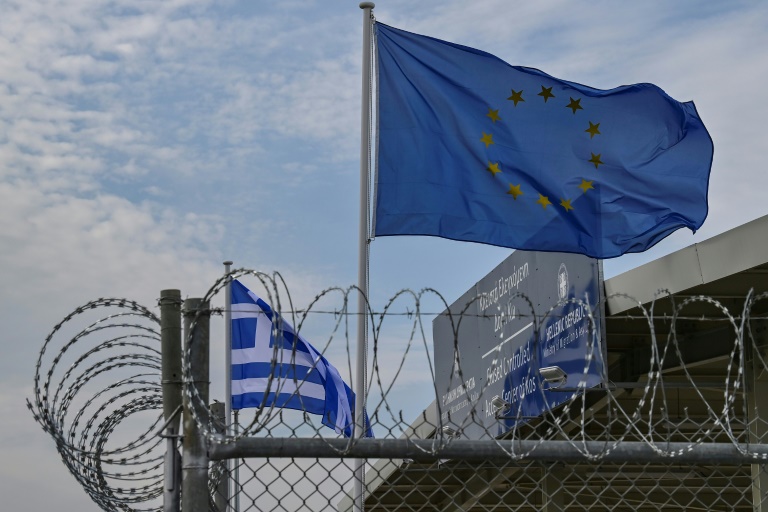
Part of that strategy involves extending an existing 40-kilometre (25-mile) wall on the Turkish border in the Evros region by 80 kilometres.

An additional 250 border guards are to be deployed in the area by the end of the year.

But at the Evros River itself, the natural border between Greece and Turkey, refugees continue to make their way to Europe. 

Humanitarians rarely have access to the militarised area, patrolled by police, Greek soldiers and European border control agency Frontex.

In July, two lawyers were accused of facilitating the illegal entry of migrants while trying to file asylum applications for two Iraqis and five Turks.

In August, the Vienna-based rights group Josoor said Athens was making “immense efforts” to link them to illegal smuggling, filing three cases against them that did not result in convictions. The group ceased operations in October.

“There are very few NGOs left in Greece,” Migration Minister Notis Mitarachi told Skai TV this week.

“Among those operating (at the height of the migration crisis) in 2015-2019, the great majority have left the country on their own accord,” he said.

Kouniaki’s then-group, HumanRights360, was embroiled in a row after assisting the 38 Syrian asylum seekers stranded on an Evros River islet for several days.

The asylum seekers claim that a five-year-old girl died from a scorpion sting during this time. 

But Athens has sought to disprove the claim, and has since tried to discredit the aid workers who came to help them.

HumanRights360’s manager did a U-turn after initially claiming the islet was Greek, which would have made the migrants Athens’ responsibility, eventually saying publicly it was Turkish.

Many of the NGO’s staff including Kouniaki quit in protest at the about-face, insisting HumanRights360’s hand had been forced by the government.

– ‘Toxic’ rhetoric –

“We have had to deal with dozens of similar situations… but this high-profile case embarrassed the government,” said Kouniaki, who was denied access to the northern Greek camp where the Syrians were later taken.

Athens has taken steps to control the work of migrant groups, arguing regulation is necessary because they encounter vulnerable people.

New registration requirements were imposed in February 2020. In September 2021, a new law criminalised charities undertaking sea rescues without the approval of the Greek coastguard.

Critics warned the new regulations would impair services to thousands of vulnerable people.

The Council of Europe Commissioner for Human Rights Dunja Mijatovic last year warned the law “would seriously hinder” the NGOs life-saving work and monitoring.

Anti-NGO rhetoric became “toxic” from February 2020 when Turkish President Recep Tayyip Erdogan said he would allow asylum seekers aiming for the EU to cross Turkey’s borders, said Lefteris Papagiannakis, director of the Greek Council for Refugees.

“Athens accuses Ankara of instrumentalising refugees and using them to destabilise Greece. As a result, the NGOs that defend them are described in public discourse as agents of Turkey,” said Papagiannakis. 

The UN’s Special Rapporteur on Human Rights Defenders Mary Lawlor said in June there was “increasing criminalisation of humanitarian assistance” in Greece.

She also criticised “hostile comments” towards human rights defenders who “are described as traitors, enemies of the state, Turkish agents, criminals and smugglers and traffickers” — sometimes by key government figures.

Syrian refugee swimmer hopes biopic helps others displaced

Syrian refugee swimmer Yusra Mardini, who almost drowned at sea fleeing her war-torn country before competing at two Olympics, hopes a new film about her life will help other displaced people.

Yusra, 24, believes “The Swimmers”, chronicling the perilous journey across Europe she and her elder sister Sarah undertook in 2015, has “an amazing message” that will give viewers “joy, hope, tears, sadness”.

The dramatisation, currently showing in some UK, US and German cinemas before its global release on Netflix next Wednesday, portrays the two leaving their parents and younger sister in Syria to seek refuge in Germany.

Once there, Yusra managed to restart swimming training and qualified for the 2016 Rio Olympics, then the Tokyo Games five years later as part of the refugee team.

“When we decided to make this movie… we wanted to see an impact,” she told the audience at a London screening of the film this week.

“It is very important that this movie is going to show what a real refugee is actually like. We want to be DJs. We want to be architects. We want to be doctors, engineers — and we are, even before coming to the Western world.”

The 134-minute film, set to a pulsing soundtrack featuring the likes of Australian singer Sia as well as Arabic music, recounts the sisters’ near-death experience crossing the Aegean Sea in a damaged rubber dinghy taking on water. 

On the treacherous voyage from Izmir in Turkey to the Greek island of Lesbos, the tiny vessel — carrying nearly 20 people rather than the half dozen it was designed for — threatens to capsize after its motor dies.

– ‘Safe place’ –

The sisters, who were among the few on board who could swim, jumped into the water for several hours to lessen the weight of the stricken inflatable until it could finally reach shore.

“It was really, really scary for us, even if we’re swimmers,” Yusra recalled, adding that she was most concerned about a child in the dinghy — despite only being aged 17 herself. 

“It’s sea. It’s not the pool and you don’t know what to do.”

During the dramatic journey, the film shows her telling a fellow refugee, “Swimming is home for me. It’s where I belong” and predicting she would one day compete in the Olympics. 

Eventually reaching Berlin, Yusra joined a swimming club, meeting the coach who helps her achieve that dream.

“The pool was my safe place, even in Germany,” she explained, noting it helped her “fit in”. 

“I met so many people and they kind of became a family to me. I’m still with the swimming club today.”

The Mardini siblings entrusted their remarkable story to British writer Jack Thorne and Welsh-Egyptian director Sally El Hosaini, with real-life French-Lebanese sisters Nathalie and Manal Issa playing them on screen.

Yusra described the actresses as like their “doppelgangers” but noted they also brought their own perspectives.

“They come from Lebanon. They understand what we went through. And I think that was very, very important. 

“They did an amazing job and they played the role as themselves and not as us, but they did honour us,” she said.

– ‘Strong voice’ –

The Mardini sisters were reunited with their parents and youngest sibling once settled in Germany, and the family now lives there.

However, Sarah and numerous other humanitarian activists face criminal charges in Greece — including espionage, forgery and assisting a criminal organisation — over accusations of helping migrants cross the Aegean. 

The 27-year-old, also previously a competitive swimmer, had returned to Lesbos as a volunteer and allegedly affiliated with the non-profit search-and-rescue group Emergency Response Centre International (ERCI), which operated there from 2016 to 2018.

“It has been so difficult for her,” Yusra said, adding her elder sister had recently been allowed to re-enter Greece as the case continues.

“Those charges were not fair and she faces up to 25 years in jail — not only her, but other people as well. And those people were just volunteers. 

“We’re just trying to help refugees and it’s just so sad.”

The Greek embassy in London did not respond to a request for comment. 

During her London appearance, Yusra — a UNHCR Goodwill Ambassador since 2017 — also revealed she had banished initial doubts about being on the refugees’ Olympics team.

“I realised it is not about me only any more… It’s about refugees. It’s about representing them. 

“I gained such a strong voice after that and I was like: ‘You know what? Why not use it?'”

Close Bitnami banner
Bitnami