World

Trump Twitter account reappears after Musk poll

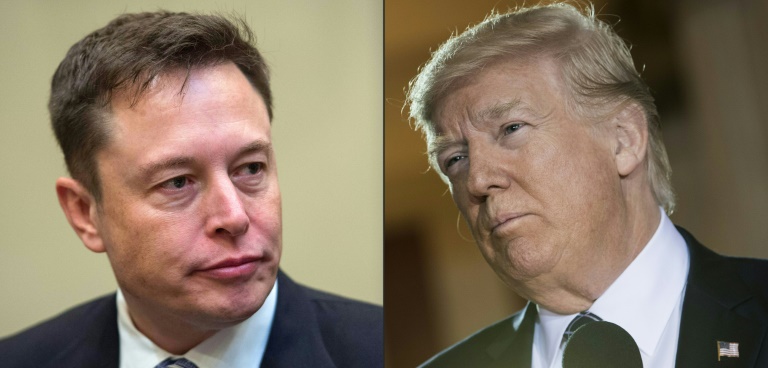
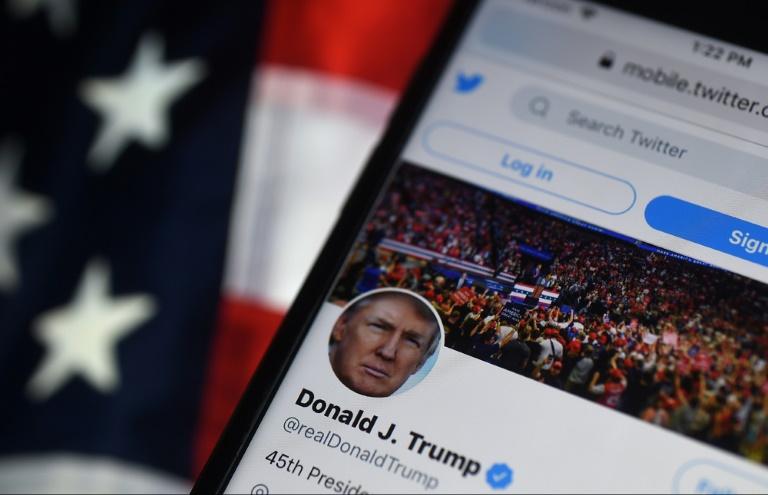
Donald Trump’s notorious Twitter account was reinstated Saturday after the platform’s new owner Elon Musk ran a poll in which a narrow majority of voters supported the move, days after the former US president announced another White House bid.

Trump’s account was banned from the platform early last year for his role in the January 6 attack on the US Capitol by a mob of his supporters seeking to overturn the results of the 2020 election.

“The people have spoken. Trump will be reinstated,” Musk tweeted, shortly after the 24-hour Twitter poll on his account ended.

“Vox Populi, Vox Dei,” he added, repeating a Latin adage he also posted Friday, meaning “The voice of the people is the voice of God.”

Ultimately, more than 15 million people — out of 237 million daily Twitter users — voted on whether to reinstate the controversial profile, with 51.8 percent in favor and 48.2 percent against.

Trump, who had more than 88 million users when his accounted was suspended, reveled in using Twitter as a mouthpiece during his presidency, posting policy announcements, attacking political rivals and communicating with supporters.

On Saturday, several of his political allies were highlighting his return.

“Welcome back, @realdonaldtrump!” tweeted House Republican Paul Gosar.

Musk’s poll asked for a simple “yes” or “no” response to the statement “Reinstate former President Trump,” which the billionaire Twitter boss posted Friday.

“Fascinating to watch Twitter Trump poll!” Musk mused Saturday morning in a blast of tweets from the controversial and hard-charging new owner of the one-to-many messaging platform.

He has posed similar polls in the past, asking followers last year if he should sell stock in his electric car company Tesla. Following that poll, he sold more than $1 billion in shares.

– Twitter chaos –

Trump has said he will not return to the popular platform but would instead remain on his own network, Truth Social, launched after he was banned from Twitter.

Appearing via video Saturday at a gathering of the Republican Jewish Coalition in Las Vegas, Trump said he welcomed Musk’s poll, and was a fan of the man himself, but appeared to reject any return.

“I do like him… you know, he’s a character and again, I like characters,” he said.

“He did put up a poll and it was very overwhelming… but I have something called… Truth Social.”

As to whether he would return to the platform, he said: “I don’t see it because I don’t see any reason for it.”

Musk, also the CEO of Tesla and SpaceX, has come under fire for radical changes at California-based Twitter, which he bought less than a month ago for $44 billion.

Since then, he fired half of Twitter’s 7,500 staff, scrapped a work-from-home policy and imposed long hours, all while his attempts to overhaul the company faced backlash and delays.

His stumbling attempts to revamp user verification with a controversial subscription service led to a slew of fake accounts and pranks, and prompted major advertisers to step away from the platform.

On Friday, Musk appeared to be pressing on with his plans and reinstated previously banned accounts, including that of comedian Kathy Griffin, which had been taken down after she impersonated him on the site.

The company’s offices were locked down Friday and hundreds of employees quit rather than yield to Musk’s demands that they resign themselves to working long, grueling days at the new Twitter.
What could a world without Twitter look like?

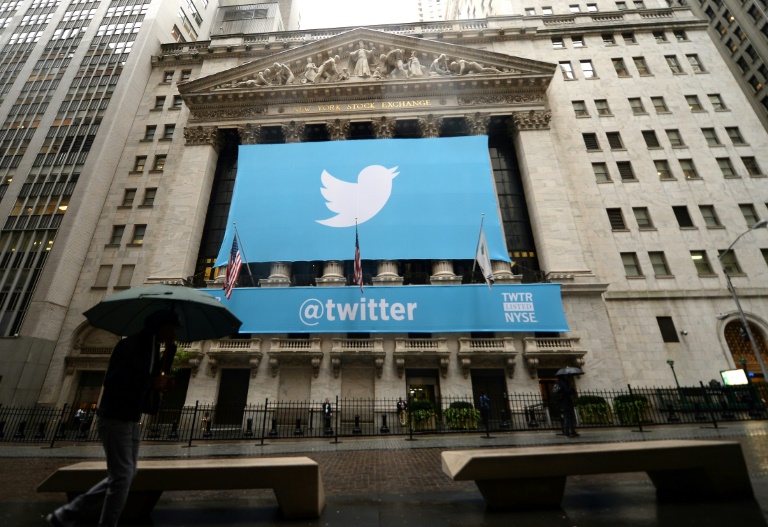
After another chaotic week of mass staff departures and policy reversals, Twitter’s future seems highly uncertain, with users — and everybody else — increasingly asking one question: What would a world without the so-called bird app even look like?

With about 237 million daily visitors at the last count in late June, Twitter’s user base is still smaller than Facebook’s nearly two billion, TikTok’s one billion plus and even Snapchat’s 363 million.

But in Twitter’s 15 years of existence, the platform has become the predominant communication channel for political and government leaders, businesses, brands celebrities and news media.

Some, like New York entrepreneur Steve Cohn, are convinced the Twitterverse is only an artificial microcosm of the real world, with limited actual importance.

Twitter is “not ‘essential’ in any way,” Cohn declared — from his own Twitter account. “The world works just fine without Twitter.”

Few people actually tweet, he went on. “Almost all tweets come from (the) 1%. Most normals never log into Twitter.”

But for others, including Karen North, a professor at the University of Southern California’s Annenberg School for Communication and Journalism, the site is indispensible for bringing light to little-known conversations.

“Most of the time, people without prominence are not heard,” she said. But on Twitter, “there’s the opportunity to announce things.”

In situations of conflict, social movements or crackdowns, “Twitter I think has become the central platform for being able to disseminate the truth and the ground reality,” Charles Lister, senior fellow at the Middle East Institute in Washington, told AFP.

Like most other social networks, Twitter is also used to spread propaganda and misinformation, and the company has developed moderation tools to try to limit the worst of it.

But their ability to keep up with the demands of such a task has been thrown into question after more than two-thirds of those teams have left since Elon Musk’s controversial takeover.

A 2018 study found that false information circulates faster than posts that have been fact-checked. 

“That’s an unrealistic expectation to imagine a platform where misinformation and disinformation is impossible,” Lister cautioned. 

But “to see information, good and bad, vanish,” with the potential disappearance of Twitter, “is by definition a bad thing,” Lister said. 

“Autocrats and anyone who doesn’t want information widely shared, would potentially benefit from Twitter being gone,” added Mark Hass, a professor at Arizona State University (ASU).

– ‘Public square’ –

A Twitter fail could have devastating effects on journalism, experts say. 

“Twitter… is really not a social network,” North explained. “It’s a network of news and information.”

“It’s the place, the core hub of where journalists go to get a heads up, or a story idea or a headline or a source or a quote,” she said. 

With the reduction of the workforces and budgets in newsrooms, the resources just aren’t there, even at the most well-funded news operations, “to go find sources out in the world,” North lamented. 

Twitter, she said, is where much of that work can be done.

Another knock-on effect of a potential collapse of the platform, according to North, is that without Twitter, the world’s rich and powerful stars and politicians will still be able to command the media’s attention, while those less in the spotlight will struggle for attention.

“With Twitter, anybody can announce a story,” she said.

The site functions as a way to share information in real time.

“Twitter has been a vital source of information, networking, guidance, real-time updates, community mutual aid, & more during hurricanes, wildfires, wars, outbreaks, terrorist attacks, mass shootings… etc,” tweeted University of Maryland researcher Caroline Orr.

“It’s not something that can be replaced by any existing platforms.”

For now, the solution for a potential Twitter alternative is not obvious. 

“Facebook is valuable, but I think it’s almost a bit old fashioned,” Lister said.

Smaller Twitter competitors are likely to syphon off users, including Mastodon, which has grown in popularity since Musk purchased Twitter. 

“But these will likely remain niche, with none of them becoming the public square that Twitter tries to create,” ASU’s Hass said. 

He and North both listed Reddit as a possible substitute, though North said the forum-based network is limited by its fragmented and cluttered design that cannot replicate Twitter’s ease of use.

Could a replacement emerge? “Of course,” Lister added, but he noted such ingenuity takes enormous resources and significant time.

“You can’t just do it overnight.”

Kazakhstan holds presidential elections after a turbulent year

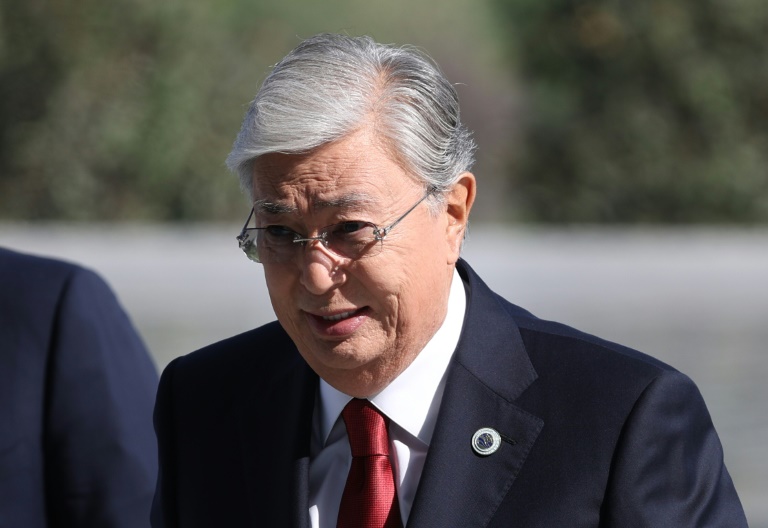
Kazakhstan holds a snap presidential vote Sunday expected to cement incumbent Kassym-Jomart Tokayev’s grip on power, months after deadly unrest spurred a historic power shift in the Central Asian country.

Last January, the vast former Soviet republic sank into chaos during protests over high cost of living which left 238 dead.

Kazakhstan has since then stabilised but tensions persist, as shown by the arrest on Thursday of seven opposition supporters accused of an attempted coup.

In this context, 12 million Kazakhs are called to the polling stations between 0100 GMT and 1500 GMT.

First exit polls are expected around 1800 GMT. 

Few expect surprises in the polls as Tokayev’s victory is all but a foregone conclusion.

Tokayev — once a steady hand known for lacking charisma — showed a ruthless side earlier this year by violently suppressing protests. 

Hoping to turn over a new leaf, Tokayev said he sought a “new mandate of trust from the people” in this election.

He promised to create a “new Kazakhstan” but economic difficulties remain, and so do authoritarian instincts.

Critics are still sidelined and the 69-year-old is facing no real opposition as all five of his competitors are virtually unknown.

– Shoot to kill –

Tokayev came to power in 2019 after winning 70 percent of the vote in an election whose outcome was inevitable after he obtained the backing of former ruler Nursultan Nazarbayev.

For the following two-and-a-half years, he played a role of loyal protege.

But that changed after protests erupted in January and Tokayev ordered law enforcement to “shoot to kill” demonstrators.

Tokayev then distanced himself from his former mentor Nazarbayev, purged his clan from positions of authority and promised a “new and just Kazakhstan”.

He announced reforms, a constitutional referendum and introduced single presidential terms of seven years.

The Kazakh leader also stood up to Russia’s Vladimir Putin, as the Russian invasion of Ukraine shocked former Soviet republics. 

The offensive reawakened Kazakh concerns that Moscow may have ambitions on the north of the country, home to three million ethnic Russians.

In response, Tokayev strengthened his country’s ties not only with China, but also with Europe.  

The leaders of Russia, Turkey, China visited Kazakstan, as well as many European high officials and Pope Francis just this year.

Tokayev also directly clashed with Putin on a visit to Saint Petersburg in June.

He said Moscow’s move to recognise Ukrainian separatist regions — that it has since claimed to annex — would “lead to chaos”.

– ‘No real choice’ –

His promises of democratic and economic reforms resonate with some voters.

In the country’s economic capital Almaty, entrepreneur Janiya Nakizbekova said she had “great hope in Tokayev”.

But the “new Kazakhstan” feels like a deja-vu, with a deserted political landscape, hardly credible opposition and political pressures. 

“There is no credible candidate. There is no real choice. I’ll be voting against all of them,” said Asset Terirgaliyev, a retired resident of Almaty. 

Architect Aidar Ergaly said the elections were “a farce”.

Just days away before the vote, seven people linked to exiled opponent Mukhtar Ablyazov were arrested.

They were accused of planning a coup.

Tokayev also said glorifying those who took part in the January protests was “unacceptable”.

Observers from the Organisation for Security and Cooperation in Europe (OSCE) criticised Kazakhstan’s failure to meet electoral recommendations, including “conditions of eligibility and registration of candidates”.

Coming soon, dueling probes in divided Washington

While Joe Biden’s administration has named a special counsel to oversee investigations of Donald Trump, Republicans due to take over the US House of Representatives have pledged their own flurry of probes of the president.

So from now until presidential and legislative voting in 2024, Americans could witness a long battle between two camps accusing each other of subverting the justice system for their own political ends.

Repeating a common Trump refrain, Republican Senator Ted Cruz of Texas, for instance, said Friday on Twitter that “Joe Biden has completely weaponized the Department of Justice to attack his political opponents.”

Cruz was reacting to Attorney General Merrick Garland naming a former war crimes prosecutor, Jack Smith, as special counsel to lead two probes of Trump that have been under way for months.

One is focused on the former president’s efforts to overturn the results of the 2020 election and on the January 6, 2021 attack on the US Capitol by his supporters.

The other is an investigation into a cache of classified government documents seized in an FBI raid on Trump’s Mar-a-Lago residence in Florida in August.

But as Trump and part of the right wing of his party denounce what they call a witch hunt, Democrats are gearing up to make the same criticism of the Republicans.

Republicans say they plan to use the power of being the controlling party in the House to launch a series of investigations, the first of them centering on the president’s son Hunter.

They suspect him of engaging in shady business deals in Ukraine in China, capitalizing on his last name and his father’s influence as vice president under Barack Obama from 2009 to 2017.

“There’s no plans to subpoena Joe Biden. There are plans to subpoena Hunter Biden,” Representative James Comer said Thursday on CNN, outlining his party’s strategy.

This Kentucky lawmaker has emerged as a chief investigator of sorts for the Republicans after the November 8 midterm elections in which they won control of the House, albeit by a slim majority, but failed to take the Senate.

Comer is apparently in line to head the House Oversight Committee, the congressional panel that among things watches over the behavior of the executive branch and, if need be, can investigate it.

But Comer made clear that not just Hunter Biden but his father will be investigated.

“This needs to be called the Biden investigation and not the Hunter Biden investigation,” he said.

– Origins of Covid 19 –

Comer also said the panel will probe the origins of the coronavirus pandemic and what role a laboratory in Wuhan, China may have had. The issue is a bone many Republicans have gnawed on for years.

Republicans have also said they plan to investigate the Biden administration’s handling of incoming migration across the US border with Mexico.

While Democrats deny Hunter Biden did anything wrong, Comer gave assurances that the probe will not be a political circus.

“This isn’t a dog-and-pony show. This isn’t a committee where everybody’s gonna scream and be outraged and try to make the witnesses look like fools,” Comer said in an interview on November 8 with Politico.

One of the most outspoken lawmakers on the far right, the election denier Marjorie Taylor Greene of Georgia, who has made remarks dismissed by critics as outlandish and racist, has said she wants a seat on the oversight committee.

Democrats are preparing a counteroffensive.

Politico reports that supporters of the party have created something called the Congressional Integrity Project, designed exclusively to respond to Republican congressional investigations.

The idea is to “investigate the investigators, expose their political motivations and the monied special interests supporting their work,” the founder of the project, Kyle Herrig, a lawyer and activist, told Politico.

The main goal of the Republicans, Herrig said, is not to seek the truth but rather “to smear Joe Biden and do the political bidding of Trump.”

Elon Musk gleeful as Twitter users vote on reinstating Trump

Elon Musk expressed excitement Saturday as he watched votes pour in on a Twitter poll he has posted on whether to readmit Donald Trump to the messaging platform.

“Reinstate former President Trump,” the billionaire Twitter owner posted Friday, with a chance to vote either yes or no.

As of 2200 GMT Saturday, 51.8 percent of the more than 14 million responses were in favor of a return of the former president, who was banned from Twitter for his role in last year’s attack on the US Capitol by a mob of his followers seeking to overturn the results of the 2020 election.

Musk said the poll was drawing one million answers per hour.

“Fascinating to watch Twitter Trump poll!” Musk said Saturday morning in a blast of tweets from the controversial and hard-charging new owner of the one-to-many messaging platform.

There was no indication that the mercurial boss of Space-X and Tesla would adhere to the results of the ad hoc poll.

But on Friday, Musk also posted a Latin adage suggesting that the decision would be up to Twitter users: “Vox Populi, Vox Dei” (“The voice of the people is the voice of God”).

He has done similar polls in the past, asking followers last year if he should sell stock in his electric car company Tesla. Following that poll, he sold more than $1 billion in shares.

Trump, who reveled in using Twitter as a mouthpiece, was followed by more than 88 million users. 

He has said he will not return to the popular platform but would instead remain on his own network, Truth Social, launched after he was banned from Twitter.

Appearing via video Saturday at a gathering of the Republican Jewish Coalition in Las Vegas, Trump said he welcomed Musk’s poll, and was a fan of the man himself, but appeared to reject any return.

“I do like him… you know, he’s a character and again, I like characters,” he said.

“He did put up a poll and it was very overwhelming… but I have something called… Truth Social.”

As to whether he would return to the platform, he said: “I don’t see it because I don’t see any reason for it.”

Musk, also the CEO of Tesla and SpaceX, has come under fire for radical changes at California-based Twitter, which he bought less than a month ago for $44 billion.

Since then, he fired half of Twitter’s 7,500 staff, scrapped a work-from-home policy and imposed long hours, all while his attempts to overhaul the company faced backlash and delays.

His stumbling attempts to revamp user verification with a controversial subscription service led to a slew of fake accounts and pranks, and prompted major advertisers to step away from the platform.

On Friday, Musk appeared to be pressing on with his plans and reinstated previously banned accounts, including that of comedian Kathy Griffin, which had been taken down after she impersonated him on the site.

The company’s offices were locked down Friday and hundreds of employees quit rather than yield to Musk’s demands that they resign themselves to working long, grueling days at the new Twitter.
Biden granddaughter weds in White House ceremony

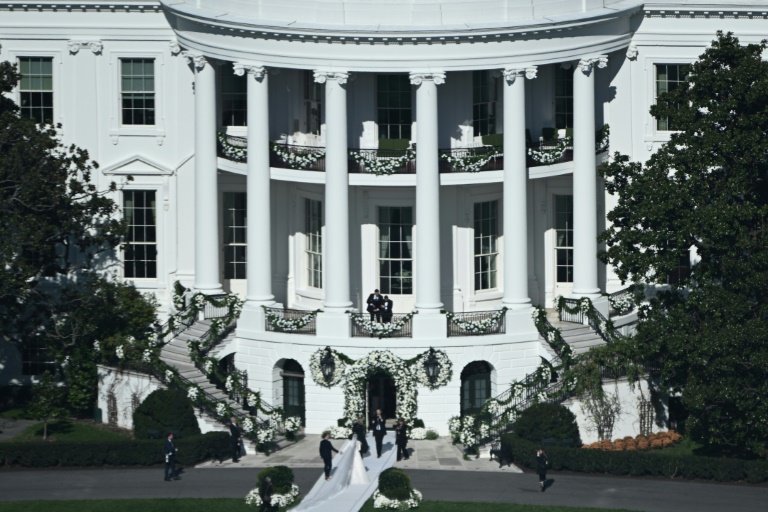
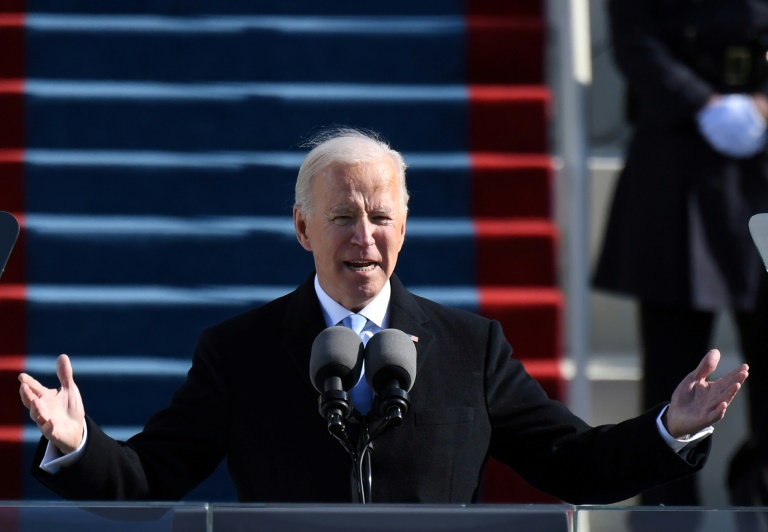
President Joe Biden welcomed guests to the White House Saturday for the wedding of his granddaughter Naomi — an unprecedented ceremony that was closed to the press.

The 28-year-old Washington-based lawyer married Peter Neal, 25, a law graduate, on the mansion’s South Lawn in an 11:00 am ceremony witnessed by about 250 guests, according to the White House.

The grounds were suitingly decorated with white flowers, as invitees in rows looked on, according to photos taken from far away by AFP.

Naomi Biden is the daughter of the president’s son Hunter.

“It has been a joy to watch Naomi grow, discover who she is, and carve out such an incredible life for herself,” the president and First Lady Jill Biden said in statement.

“Now, we are filled with pride to see her choose Peter as her husband and we’re honored to welcome him to our family,” they added. “We wish them days full of laughter and a love that grows deeper with every passing year.”

It is not unheard of for the presidential mansion with America’s most stately address — 1600 Pennsylvania Avenue — to be decked out for nuptials.

The White House Historical Association says 18 weddings have been performed at the mansion, including those of Richard Nixon’s daughter Tricia in 1971 and Barack Obama’s official photographer, Pete Souza, in 2013.

The association says four times the White House has also hosted receptions for weddings held elsewhere, for instance that of George W. Bush’s daughter Jenna in 2008.

But this is the first time a president’s granddaughter is getting hitched there.

– ‘Pop’ –

The White House in its brief statement said the Bidens hosted a wedding luncheon for family and the wedding party in the State Dining Room, and a reception with dancing was planned for later Saturday.

But otherwise the president’s office has given few details on this wedding, which is classified as strictly private and is closed to the press. 

This has raised some eyebrows.

“The White House press has covered weddings held there through history because the space belongs to the American people and a president’s participation is an event of national interest,” Kelly O’Donnell, an NBC reporter slated to become the next president of the White House Correspondents Association, said Thursday on Twitter.

Naomi Biden announced her wedding plans in September on her Instagram account, which features photos of vacations, the Biden clan and her day-to-day life.

Biden is very close to his grandchildren, who call him Pop and are often seen with him, even at some official events.

Naomi is named after the president’s first daughter, who died as a baby in a car crash in 1972 that also claimed the life of his first wife.

US press reports have said Naomi Biden plays an important role in the president’s inner circle and pressed him, for instance, to run for president in 2020.

Anwar running neck and neck with rival bloc in Malaysia polls

The coalition of Malaysia’s opposition leader Anwar Ibrahim was running neck and neck with a rival bloc led by a former prime minister in a tight election race, vote counts showed early Sunday.

Analysts have warned that the multi-racial country could face further political instability if no group emerges with a clear majority after Saturday’s polls and frenzied horse-trading talks ensue.

One of the biggest casualties so far is former prime minister Mahathir Mohamad, 97, who was roundly defeated in his constituency.

Anwar campaigned on a promise to fight corruption in Southeast Asia’s third-largest economy, where people are struggling with soaring food prices, and where the graft-tainted party of jailed ex-prime minister Najib Razak had been hoping to cement its grip on power.

But official results from the election commission so far showed Anwar’s Pakatan Harapan (Alliance of Hope) coalition in a tight race with Perikatan Nasional (National Alliance) of ex-premier Muhyiddin Yassin.

The ruling Barisan Nasional bloc dominated by Najib’s United Malays National Organisation (UNMO) was trailing behind.

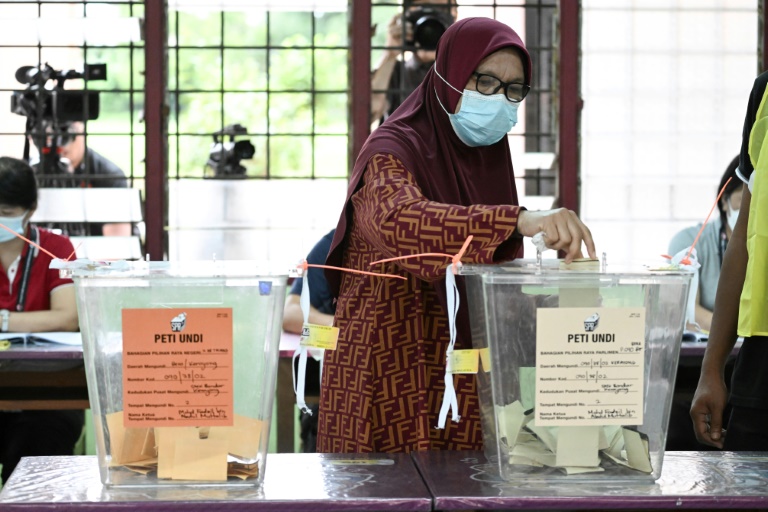
Voter turnout was high at 70 percent two hours before polling closed, and those who spoke to AFP said they hoped for political stability and economic improvement.

“I want a strong government and a stable economy so that there will be more job opportunities for the youth,” Nurul Hazwani Firdon, a 20-year-old tutor, said as she went to cast her ballot in the rural town of Bera in Pahang state.

Social media posts showed people lining up in knee-deep waters outside a voting centre in Sarawak state on Borneo island.

One video on Twitter showed an old woman being carried on someone’s back into a flooded polling place.

Najib’s UMNO usually dominates Malaysian politics, but it suffered a humiliating defeat in the 2018 general election after a massive corruption scandal at state fund 1MDB.

The former prime minister, who was at the centre of the 1MDB storm, is currently serving a 12-year jail term.

Because of infighting in the two successive governments since 2018, UMNO crept back into power last year despite lingering corruption allegations, and is seeking a stronger mandate from the election — called 10 months ahead of schedule.

– Anwar’s dream –

With age catching up, this may be Anwar’s last chance to fulfil his long-standing dream of leading Malaysia.

“A win today would certainly be gratifying after more than two decades of fighting to win the hearts and minds of the people,” Anwar, 75, told AFP before casting his vote in Penang state.

He added he was “cautiously confident” that his coalition could secure enough numbers to form the next government.

Caretaker Prime Minister Ismail Sabri Yaakob, from the ruling coalition, called for unity as he cast his vote in Bera.

“I hope the voters will choose a government that can guarantee security and stability,” he told reporters.

A record 945 candidates were vying for parliament seats across the largely Muslim nation.

– Corruption a key issue –

Corruption was a key issue during the campaign, with opposition parties repeatedly warning that if UMNO wins, Najib could walk free and graft charges against other party leaders could be dropped.

The 1MDB scandal — in which billions of dollars in state funds were diverted to Beverly Hills properties, a superyacht, a Hollywood film and Najib’s own bank account — sparked investigations in Singapore, Switzerland and the United States.

A survey by pollster Merdeka Centre on the eve of the elections showed Anwar’s coalition winning 82 seats of the total number of seats contested, and 33 percent favouring him as the next prime minister.

There were supposed to be 222 seats at stake, but two candidates died and voting in one district was suspended due to bad weather.

Merdeka analyst Ibrahim Suffian told AFP it was “still possible for Anwar to achieve a simple majority” given the large turnouts in the final days of his campaign.

Malaysia lowered its voting age from 21 to 18 last year, a move that added six million voters to the rolls for this election.

Nearly 1.4 million of total registered voters are aged 18-20.

Analysts have said young voters lean towards the opposition’s more progressive politics.

The majority of registered voters, however, live in Malaysia’s rural areas where the patronage politics dominated by UMNO still hold sway.

Climate fund breakthrough offers 'hope' at UN COP27 talks

COP27 host Egypt scrambled to salvage UN climate talks Saturday with the European Union and Pakistan signalling a breakthrough over the contentious issue of “loss and damage” funding for climate vulnerable nations.  

Nearly 200 countries’ representatives have gathered at the COP27 in Egypt for two weeks with the aim of driving forward action to fight climate change as the world faces a worsening onslaught of weather extremes.

But the talks stalled over the terms under which wealthy polluters provide “loss and damage” funding for countries wracked by climate disasters, as well as over ratcheting up ambition in tackling global warming.

After the European Union roundly rejected a document shown by Egypt overnight because of concerns it was weak on curbing emissions, a source from the bloc said at least the loss and damage issue was “agreed” as far as it was concerned. 

A European source confirmed “a deal has been reached on loss and damage which targets the fund to vulnerable countries”.

The agreement was still subject to confirmation at a closing meeting. 

Pakistan’s Climate Minister Sherry Rehman said she was “hopeful of a positive outcome” on loss and damage, with last details still being worked out to get the final agreement over the line.

She said a deal would be the culmination of a 30-year campaign by developing countries. 

“If that happens today, that will be a historic reminder to vulnerable people all over the world that they have a voice and that if they unite… we can actually start breaking down barriers that we thought were impossible,” she told AFP. 

Pakistan — struck by devastating heat waves and floods this year — chairs the G77 and China bloc of 134 developing nations, which has campaigned strongly for a fund for loss and damage to be agreed at COP27.

With around 1.2C of warming so far, the world has seen a cascade of climate-driven extremes in recent months, shining a spotlight on the plight of developing countries faced with escalating disasters, as well as an energy and food price crisis and ballooning debt. 

The World Bank has estimated the Pakistan floods alone caused $30 billion in damage and economic loss. 

– Temperature check –

But with countries continuing to raise concerns over ambitions on cutting emissions and tackling global warming, the outcome of the climate talks remained uncertain. 

An informal coalition of “high ambition” countries has called for strong language on cutting emissions, moving away from planet-heating fossil fuels and to reaffirm the aspirational goal of limiting global warming to 1.5 degrees Celsius from pre-industrial levels.

Scientists say this is a far safer guardrail against catastrophic climate impacts, with the world currently far off track and heading for around 2.5C of warming under current commitments and plans.

Colombian Environment Minister Susana Muhamad said to be “viable” the climate talks would need both a loss and damage fund and a commitment to 1.5C with clear signals that the world was not “going back”.  

Tom Evans of the think tank E3G said a draft document covering ambitions for curbing planet-heating emissions is “a copy-paste” of the agreement made at Glasgow, without building on the agreement made a year ago. 

Earlier, the EU indicated it was willing to walk out of the negotiations altogether over the issue.

European Commission Vice President Frans Timmermans warned that if not enough is done to slash emissions and keep 1.5C alive, “there is no amount of money on this planet that will be able to address the misery that will occur through natural disasters, etc. that we’re already seeing”.

– ‘Fragile’ first –

A draft decision document on creating a specific loss and damage fund was published by the Egyptian presidency on Saturday. 

It takes some language from three earlier proposals — from the EU, Britain and G77 — and appears to kick some of the thornier issues, particularly over the sources of funding, into next year. 

“The draft decision on loss and damage finance offers hope to the vulnerable people that they will get help to recover from climate disasters and rebuild their lives,” said Harjeet Singh, head of global political strategy at Climate Action Network International.

An agreement on loss and damage would mark a major shift for wealthier nations, which have long resisted the idea of loss and damage over fears of open-ended liability. 

The EU has called for the fund to prioritise the most climate-vulnerable countries as recipients.

They also said the money should come from a “broad funder base” — code for countries including China and Saudi Arabia that have become wealthier since they were listed as developing nations in 1992.

China’s envoy Xie Zhenhua told reporters Saturday that the fund should be for all developing countries. 

However, he added: “I hope that it could be provided to the fragile countries first.” 

In Russia's 'land of prison' where Brittney Griner is held

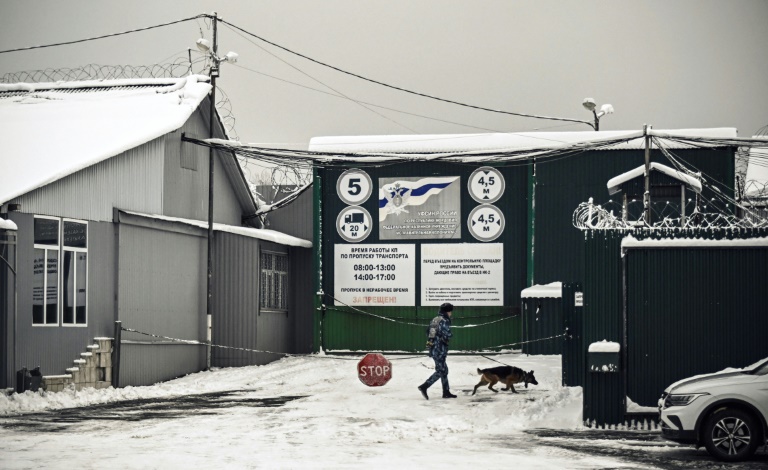
The news that American basketball player Brittney Griner had arrived in the IK-2 penal colony in Mordovia, also known as the Russian “land of prisons”, left locals rather unmoved.

The double Olympic gold medallist was handed nine years in prison in August for drug possession and trafficking over possessing vape cartridges with a small quantity of cannabis oil.

Griner maintains she was using it to relieve pain from injuries with her doctor’s permission, while her supporters say she is a geopolitical hostage. 

“We usually get detainees deemed ‘particularly dangerous’ here,” said ex-convict turned taxi driver Vitaly Doyne, 48.

Doyne, who spent six years in a penal colony in Mordovia, sais he was “surprised” that a famous athlete had been sent in “such a dump”.

There are around two dozen prisons in Mordovia, a land of snowy forests and swamps around 400 kilometres (250 miles) southeast of Moscow. 

Vitaly said all the prisons of the regions are — unofficially — classified as “red”, which means they are managed by the guards themselves and detainees acting as agents.

The village of Yavas in Mordovia was founded in 1921, as the soviet Gulag archipelago — a metaphor for the vast network of camps — was just emerging. 

Its economy still very much revolves around the prisons: most residents are either current or former penitentiary employees. 

– ‘She deserved it’ –

At Saturday’s local market, most residents refused to talk to the press or said they had heard nothing about Griner’s case.

However one woman stopped, intent on speaking to AFP.

“The law is the same for everyone, for big-wigs and for ordinary people,” said Svytlana, a fifty-year-old with dyed red hair.

She refused to give her family name, but continued: 

“If they sent her to prison, it means she deserved it. If she behaves properly, she’ll get out early and with a clean conscience.”

Fears remain over what treatment awaits Griner in the Mordovian penal colony. 

By local standards, Griner’s prison is “normal” said Olga Romanova, head of Rus Sidyashchaya (Russia Behind Bars) organisation that defends the rights of inmates in Russia.

Some detainees have reported beatings in IK-2 and labour conditions are “not far from slavery”, she said.

“But there are much worst prisons” in Russia, added Romanova, currently exiled in Germany.

She explained that, contrary to men’s prisons, there are “no systems of castes or hierarchies” among detainees in women’s colonies.

On the flip side, imprisoned women are often left to fend for themselves. 

– Black, lesbian and American –

But Brittney Griner is a special case: there is talk of a possible prisoner swap between the US and Russia, which could see her return home.

As long as negotiations are ongoing, the administration “will take care of her,” Romanova says.

“But if negotiations stop, then she will be in danger.”

Griner being “lesbian, American, and black,” are three more reasons for concern, according to Romanova. 

This makes her a prime target for harassment in Russian prison, where extremely violent homophobia and racism abound, and where the US is seen as “a mortal enemy” said Romanova.

“It’s a good thing she doesn’t speak Russian, she won’t be able to understand what people say to her,” she added.

“I think that could solve some of her problems.”

US pressures Ukraine to weigh talks with Russia

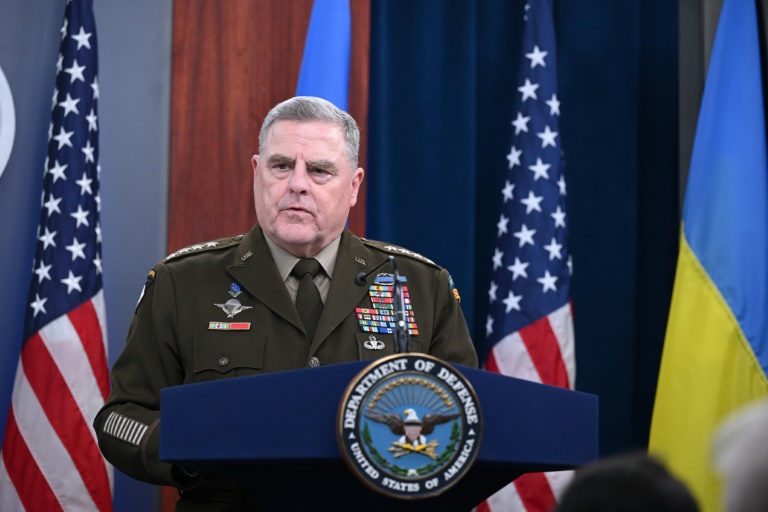
The US is pressuring Ukraine to be open to peace talks with Moscow, with a top Pentagon official saying Kyiv’s forces will find it hard to recover all the territory Russia has captured in the war.

US Joint Chiefs Chairman General Mark Milley said Wednesday that US and allied support has not diminished, but added that Kyiv’s success in countering Russia’s invasion puts it in better position to begin talks.

And last week Milley compared the current situation to World War I, when the two sides ground to a stalemate within months but kept fighting for three more years at the cost of millions of lives.

He said Wednesday that the Russians are now reinforcing their hold on about 20 percent of Ukraine territory, and that the front lines from Kharkiv down to Kherson are stabilizing.

“The probability of a Ukrainian military victory, defined as kicking the Russians out of all of Ukraine, to include … Crimea, the probability of that happening anytime soon is not high, militarily,” he said.

“There may be a political solution where, politically, the Russians withdraw, that’s possible,” Milley added.

“You want to negotiate from a position of strength. Russia right now is on its back,” he said.

– Spy chiefs meet – 

White House national security spokesman John Kirby insisted Friday that the United States is not trying to force Kyiv to hold talks or cede territory.

Only Ukrainian President Volodymyr Zelensky “gets to determine if and when he’s ready for negotiations and what those negotiations look like,” Kirby told reporters.

“Nobody from the United States is pushing, prodding or nudging him to the table.”

But earlier this month Zelensky dropped his precondition that Russian President Vladimir Putin had to be out of power before he agreed to talks — a shift, the Kyiv Post reported, that came after White House pressure.

And on Monday CIA Director William Burns held talks with Russian SVR intelligence chief Sergei Naryshkin in Ankara, the highest-level in-person meeting of US and Russian officials since the war began in February. 

The details of their meeting remain secret, but Burns flew to Kyiv to meet with Zelensky immediately afterward.

Burns “is not conducting negotiations of any kind . . . We firmly stick to our fundamental principle: nothing about Ukraine without Ukraine,” the White House insisted.

– World War I example –

US support for Ukraine remains strong. This week the White House asked Congress for another $38 billion to support Kyiv. 

But it has not contradicted Milley’s view, either. Milley said in New York last week that Ukraine has lost nearly 100,000 in dead and wounded on the battlefield — close to Russia’s estimated losses — and some 40,000 civilian casualties.

The number could multiply if Kyiv insisted on trying to fight all the way to its pre-2014 borders, he suggested.

One million people were killed over August-December 1914, the first months of World War I, after which the front lines were cemented into place. 

Yet neither side would negotiate, he said, and that “turned into 20 million killed by 1918.”

“So when there’s an opportunity to negotiate, when peace can be achieved, seize it,” he said.

– Diplomatic door –

Milley’s comments raised fears that the United States wanted to prune back Kyiv’s goal of recapturing all the land Russians occupy, including Crimea and the Donbas, which it lost control of in 2014.

“Any voiced ideas of our land’s concessions or of our sovereignty cannot be called peace. Immoral compromises will lead to new blood,” Zelensky told the Halifax International Security Forum on Friday.

Georgetown University Professor Charles Kupchan said the Biden administration is more likely just trying to make sure the door is open for talks, and that Milley is simply “a bit more forward-leaning.”

“I don’t think it’s premature. I think it’s prudent. The Russians and the Ukrainians need to have a perspective that there is a diplomatic route,” he said.

And it is also a signal to Zelensky, whose stridency is testing some allies’ patience. 

“Zelensky, understandably, gets a little heated, and says things that allies might not relish,” said Kupchan.

Kupchan added that the White House is seeking to get ahead of any pressure from European allies to end the war before Kyiv is ready.

“The Biden administration wants to move slowly, in order to make sure that the transatlantic consensus remains rock-solid.”

But defense strategy expert Frederick Kagan of the American Enterprise Institute said that Milley doesn’t reflect all of Washington.

Rather than pressuring Zelensky, the US should increase arms supplies to help Ukraine soundly defeat the Russian forces, he said.

“I am not persuaded that the Ukrainians can’t retake all or most of their territory,” he said.  

“We should help accelerate the Ukrainian victory in this war,” he added. “Slowing down now is not the right thing to do.”

Close Bitnami banner
Bitnami