World

China, Russia seek 'might makes right' world: US defense chief

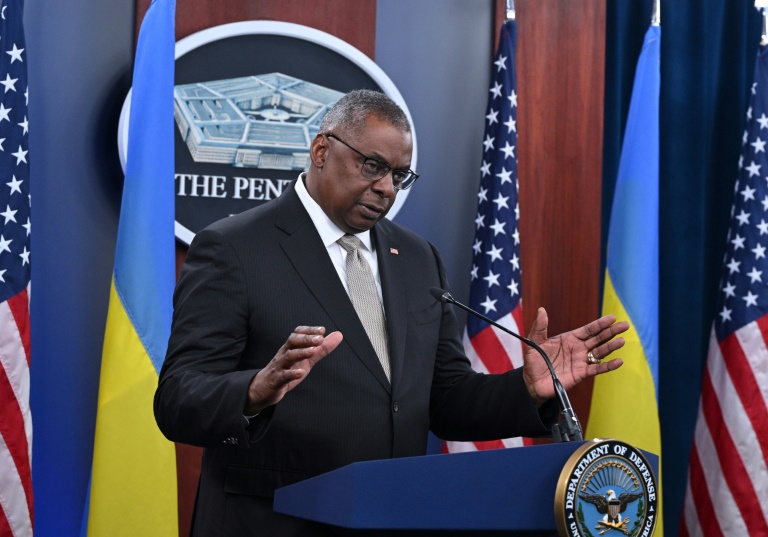
China and Russia seek a world where force is used to resolve disputes, US Defense Secretary Lloyd Austin warned Saturday, vowing that the United States will continue defending humanitarian principles and international law.

“Beijing, like Moscow, seeks a world where might makes right, where disputes are resolved by force, and where autocrats can stamp out the flame of freedom,” Austin told the Halifax International Security Forum in Canada.

Moscow’s war against Kyiv “has underscored the challenge that we face in the Indo-Pacific, where (China) is also pushing for something very far from our vision of a free and stable and open international system,” Austin said.

Chinese activities around Taiwan are growing “increasingly provocative,” he said, with Beijing’s aircraft flying close to the island on a near-daily basis and carrying out a number of dangerous intercepts of US and allied planes.

Washington has identified China and its efforts to refashion the Indo-Pacific region as the most consequential challenge faced by the United States.

The US National Defense Strategy, released last month, also said Russia’s invasion of Ukraine highlights the “acute threats” Moscow poses, which Washington is working to deter.

Austin linked the two challenges in his speech on Saturday, and said that if one country is able to get away with violations, others will follow.

“There are still rules in war. And if a big power can flaunt those rules, it encourages others to defy international law and international norms,” he said.

“We are determined to defend those rules — and especially the bedrock principle of noncombatant immunity.”

Austin also said Moscow’s efforts to gain support from countries such as Iran and North Korea create new security challenges for the United States and its allies.

“Russia has turned to Iran and North Korea to help its assault on Ukraine, including using Iranian drones to kill Ukrainian civilians,” he said.

Washington has said Iranian personnel were in Crimea helping Russia carry out drone attacks on Ukraine, which Tehran has denied.

Austin said that Ukraine is facing a tough winter ahead, and that Moscow may again turn to nuclear saber-rattling as it suffers losses on the battlefield, pledging that the US and its allies would meet those challenges.

“Russia’s invasion offers a preview of a possible world of tyranny and turmoil that none of us would want to live in,” he said.

White House hosts wedding as Biden granddaughter gets hitched

President Joe Biden welcomed guests to the White House Saturday for the wedding of his granddaughter Naomi — an unprecedented ceremony that was closed to the press.

Naomi Biden, a 28-year-old lawyer in Washington, is marrying Peter Neal, 25, also an attorney. Biden is the daughter of the president’s son Hunter.

It is not unheard of for the presidential mansion with America’s most stately address — 1600 Pennsylvania Avenue — to be decorated with white flowers for a wedding.

The White House Historical Association says 18 weddings have been performed at the mansion, including those of Richard Nixon’s daughter Tricia in 1971 and Barack Obama’s official photographer, Pete Souza, in 2013.

The association says four times the White House has also hosted receptions for weddings held elsewhere, for instance that of George W. Bush’s daughter Jenna in 2008.

But this is the first time a president’s granddaughter is getting hitched there.

– ‘Pop’ –

The White House has given few details on this wedding, which is classified as strictly private and is closed to the press. This has raised some eyebrows.

“The White House press has covered weddings held there through history because the space belongs to the American people and a president’s participation is an event of national interest,” Kelly O’Donnell, an NBC reporter slated to become the next president of the White House Correspondents Association, said Thursday on Twitter.

The New York Times has reported a few tidbits about the bride and groom and what it says the wedding will entail: Biden and Neal are actually living at the White House for the time being, and they will exchange vows before a luncheon, to be followed by a big gala dinner in the evening.

Naomi Biden announced her wedding plans in September on her Instagram account, which features photos of vacations, the Biden clan and her day to day life.

Biden is very close to his grandchildren, who call him Pop and are often seen with him, even at some official events.

Naomi is named after the president’s first daughter, who died as a baby in a car crash in 1972 that also claimed the life of his first wife.

US press reports have said Naomi Biden plays an important role in the president’s inner circle and pressed him, for instance, to run for president in 2020.

No official peace outreach from Russia: Ukraine official

Moscow has not officially contacted Kyiv about peace negotiations, but Russia would in any case need to completely withdraw its forces for talks to take place, a top Ukrainian official said Saturday.

“We have not any official application from the Russian side about… negotiations,” Andriy Yermak, the Ukrainian presidential chief of staff, said in English remarks made via video link at the Halifax International Security Forum.

Any talks not based on Ukrainian sovereignty and territorial integrity within the limits of its internationally recognized borders are “not acceptable,” he said.

“The first steps it’s necessary to do from the Russian side is to withdraw all Russian troops from Ukrainian territory,” Yermak added.

His remarks came a day after Ukrainian President Volodymyr Zelensky dismissed the idea of a “short truce” with Russia, saying it would only make things worse.

“Russia is now looking for a short truce, a respite to regain strength. Someone may call this the war’s end, but such a respite will only worsen the situation,” the Ukrainian leader said in remarks broadcast at the same security forum.

“A truly real, long-lasting and honest peace can only be the result of the complete demolition of Russian aggression,” Zelensky said.

The White House said Friday that only Zelensky can decide when to open peace talks with Russia, rejecting the notion that it was pressing Kyiv to negotiate an end to the nearly nine-month war sparked by Moscow’s February invasion.

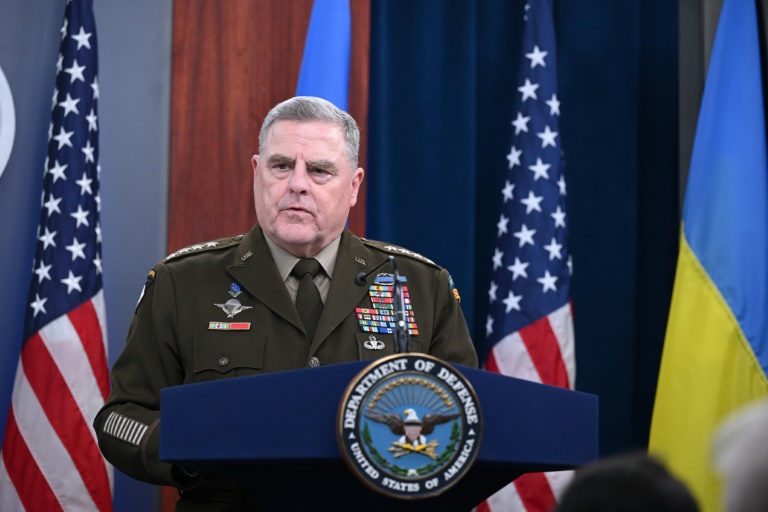
General Mark Milley, the top US military officer, has however suggested in recent weeks that Kyiv could take advantage of battlefield victories over Moscow’s forces and open talks toward ending the conflict.

Milley said Wednesday that while Ukraine has achieved key successes, Moscow still controls some 20 percent of the country, and that it is unlikely Kyiv’s troops will force the Russians to quit the country soon.

US pressures Ukraine to weigh talks with Russia

The US is pressuring Ukraine to be open to peace talks with Moscow, with a top Pentagon official saying Kyiv’s forces will find it hard to recover all the territory Russia has captured in the war.

US Joint Chiefs Chairman General Mark Milley said Wednesday that US and allied support has not diminished, but added that Kyiv’s success in countering Russia’s invasion puts it in better position to begin talks.

And last week Milley compared the current situation to World War I, when the two sides ground to a stalemate within months but kept fighting for three more years at the cost of millions of lives.

He said Wednesday that the Russians are now reinforcing their hold on about 20 percent of Ukraine territory, and that the front lines from Kharkiv down to Kherson are stabilizing.

“The probability of a Ukrainian military victory, defined as kicking the Russians out of all of Ukraine, to include … Crimea, the probability of that happening anytime soon is not high, militarily,” he said.

“There may be a political solution where, politically, the Russians withdraw, that’s possible,” Milley added.

“You want to negotiate from a position of strength. Russia right now is on its back,” he said.

– Spy chiefs meet – 

White House national security spokesman John Kirby insisted Thursday that the United States is not trying to force Kyiv to hold talks or cede territory.

Only Ukrainian President Volodymyr Zelensky “gets to determine if and when he’s ready for negotiations and what those negotiations look like,” Kirby told reporters.

“Nobody from the United States is pushing, prodding or nudging him to the table.”

But earlier this month Zelensky dropped his precondition that Russian President Vladimir Putin had to be out of power before he agreed to talks — a shift, the Kyiv Post reported, that came after White House pressure.

And on Monday CIA Director William Burns held talks with Russian SVR intelligence chief Sergei Naryshkin in Ankara, the highest-level in-person meeting of US and Russian officials since the war began in February. 

The details of their meeting remain secret, but Burns flew to Kyiv to meet with Zelensky immediately afterward.

Burns “is not conducting negotiations of any kind . . . We firmly stick to our fundamental principle: nothing about Ukraine without Ukraine,” the White House insisted.

– World War I example –

US support for Ukraine remains strong. This week the White House asked Congress for another $38 billion to support Kyiv. 

But it has not contradicted Milley’s view, either. Milley said in New York last week that Ukraine has lost nearly 100,000 in dead and wounded on the battlefield — close to Russia’s estimated losses — and some 40,000 civilian casualties.

The number could multiply if Kyiv insisted on trying to fight all the way to its pre-2014 borders, he suggested.

One million people were killed over August-December 1914, the first months of World War I, after which the front lines were cemented into place. 

Yet neither side would negotiate, he said, and that “turned into 20 million killed by 1918.”

“So when there’s an opportunity to negotiate, when peace can be achieved, seize it,” he said.

– Diplomatic door –

Milley’s comments raised fears that the United States wanted to prune back Kyiv’s goal of recapturing all the land Russians occupy, including Crimea and the Donbas, which it lost control of in 2014.

“Any voiced ideas of our land’s concessions or of our sovereignty cannot be called peace. Immoral compromises will lead to new blood,” Zelensky told the Halifax International Security Forum on Friday.

Georgetown University Professor Charles Kupchan said the Biden administration is more likely just trying to make sure the door is open for talks, and that Milley is simply “a bit more forward-leaning.”

“I don’t think it’s premature. I think it’s prudent. The Russians and the Ukrainians need to have a perspective that there is a diplomatic route,” he said.

And it is also a signal to Zelensky, whose stridency is testing some allies’ patience. 

“Zelensky, understandably, gets a little heated, and says things that allies might not relish,” said Kupchan.

Kupchan added that the White House is seeking to get ahead of any pressure from European allies to end the war before Kyiv is ready.

“The Biden administration wants to move slowly, in order to make sure that the transatlantic consensus remains rock-solid.”

But defense strategy expert Frederick Kagan of the American Enterprise Institute said that Milley doesn’t reflect all of Washington.

Rather than pressuring Zelensky, the US should increase arms supplies to help Ukraine soundly defeat the Russian forces, he said.

“I am not persuaded that the Ukrainians can’t retake all or most of their territory,” he said.  

“We should help accelerate the Ukrainian victory in this war,” he added. “Slowing down now is not the right thing to do.”

Elon Musk gleeful as Twitter users vote on reinstating Trump

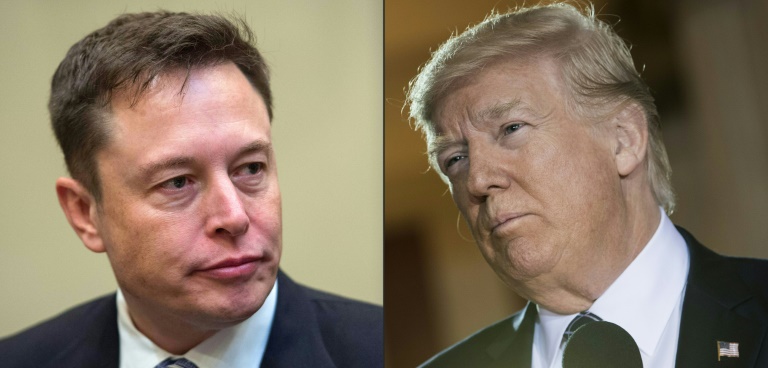
Elon Musk expressed excitement Saturday as he watched votes pour in on a Twitter poll he has posted on whether to readmit Donald Trump to the messaging platform.

“Reinstate former President Trump,” the billionaire Twitter owner posted Friday, with a chance to vote either yes or no.

As of about 1500 GMT Saturday, 52.3 percent of nearly 11 million responses were in favor of a return of the former president, who was banned from Twitter for his role in last year’s attack on the US Capitol by a mob of his followers seeking to overturn the results of the 2020 election.

Musk said the poll was drawing a million answers one way or another per hour.

“Fascinating to watch Twitter Trump poll!” Musk said Saturday morning in the latest blast of tweets from the hard-charging new owner of the one-to-many messaging platform.

There was no indication that the mercurial boss of Space-X and Tesla would adhere to the results of the ad hoc poll. 

But on Friday, Musk also posted a Latin adage suggesting that the decision would be up to Twitter users: “Vox Populi, Vox Dei” (“The voice of the people is the voice of God”).

He has done similar polls in the past, asking followers last year if he should sell stock in his electric car company Tesla. Following that poll, he sold more than $1 billion in shares.

Trump, who reveled in using Twitter as a mouthpiece, was followed by more than 88 million users. 

He has said he will not return to the popular platform but would instead remain on his own network, Truth Social, launched after he was banned from Twitter.

Musk, also the CEO of Tesla and SpaceX, has come under fire for radical changes at the California-based firm, which he bought less than a month ago for $44 billion.

Since then, he fired half of Twitter’s 7,500 staff, scrapped a work-from-home policy and imposed long hours, all while his attempts to overhaul the company faced backlash and delays.

His stumbling attempts to revamp user verification with a controversial subscription service led to a slew of fake accounts and pranks, and prompted major advertisers to step away from the platform.

On Friday, Musk appeared to be pressing on with his plans and reinstated previously banned accounts, including that of comedian Kathy Griffin, which had been taken down after she impersonated him on the site.

The company’s offices were locked down Friday and hundreds of employees quit rather than yield to Musk’s demands that they resign themselves to working long, grueling days at the new Twitter.

'We're free': Ukraine families reunite as Kherson train station reopens

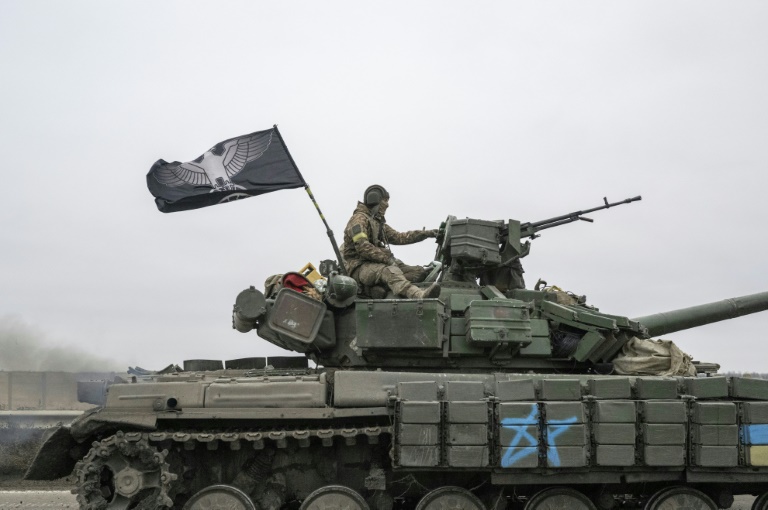
Tears, smiles and the occasional artillery explosion on Saturday greeted passengers as the first train in eight months pulled into the southern Ukrainian city of Kherson from Kyiv and families divided by war were reunited.

“I promised I would come back. It happened so I kept my promise,” said Anastasia Shevlyuga, 30, moments after stepping off the train and meeting her mother.

For others, the moment was more sombre.

Svytlana Dosenko fought back tears as she waited for her only son who she last saw before Russia invaded Ukraine on February 24. 

The wait has been excruciating.

“He’s the only one I have left,” she cried.

The past months have been wracked with grief, humiliation and fear since Russians forces fanned out from the Crimean peninsula and occupied large swathes of Ukraine’s Black Sea coast, including Kherson.

Two days after the war began in February, Dosenko’s husband died of Covid after power was cut to the hospital where he was on a respirator. 

In the months that followed, she lived under Russian occupying forces, who frequently searched apartments and set up checkpoints throughout the city. 

“It was very messy and very hard. My place was searched by Russian soldiers. They broke in, looking for weapons,” Dosenko explained.

She planned to board the train returning to Kyiv on Saturday evening with her son. 

“I just want to see him and tell him I love him,” she added. 

– Pride –

Just a few feet away on the platform, Lyudmila Romanyuk, 66, clutched a bouquet of flowers and grinned as she anxiously awaited the arrival of her granddaughter. 

“Her parents in Kherson don’t know that she’s coming… we planned it,” she told AFP with a laugh. 

“We’re free finally!” she exclaimed. 

“It’s a win-win. We got liberated and my favourite child is coming here.” 

Others showed up not to greet anyone but merely to enjoy the latest sign of Kherson’s return to Ukrainian control.

“I wanted to make sure it was coming,” said Lyudmyla Smeshkova, 60, her pet chihuahua Molly zipped up in her fur jacket.

For the region’s railway workers, the arrival of the train was a moment of immense pride. 

More than 100 labourers pulled 12 hour shifts in the freezing rain for the past week to clear and repair nearly 60 kilometres (37 miles) of track alongside demining teams. 

“It’s emotional. After hearing about the liberation of Kherson we got the orders to repair the 58 different damaged areas on the line,” said Denys Rustyk, 31, a rail worker from the nearby city of Odessa. 

– Vital lifeline –

Trains have long formed the industrial and economic backbone of Ukraine and since the onset of the war have provided a vital lifeline, moving millions fleeing conflict while also supplying fighters on the front line. 

The reopening of the line to Kherson will also provide another crucial supply artery to a city desperate for relief. 

As Russians retreated over a week ago, they destroyed critical infrastructure, leaving Kherson without power and water supplies as the harsh winter weather sets in. 

Since then, humanitarian aid has trickled in on trucks and cars travelling over the battered road connecting Kherson and the nearby city of Mykolaiv. 

“For Kherson, this is vitally important because they will get equipment and aid from the railways now,” said Yuri Karlyukin, 53, a 15-year veteran of the Ukrainian rail system.

“The sooner Kherson is connected, the sooner the city will come back to life.”

US to help Thailand develop small nuclear reactors

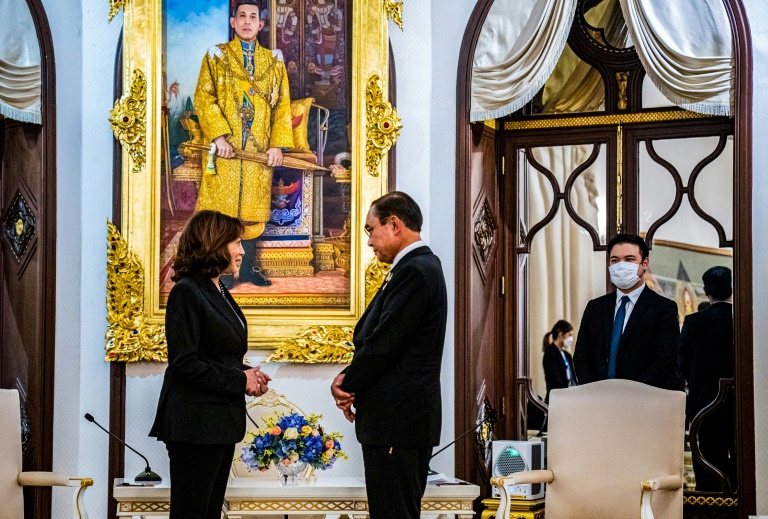
The United States will help Thailand develop nuclear power through a new class of small reactors, part of a programme aimed at fighting climate change, Vice President Kamala Harris announced on a visit Saturday.

The White House said the assistance was part of its Net Zero World Initiative, a project launched at last year’s Glasgow climate summit in which the United States partners with the private sector and philanthropists to promote clean energy.

Thailand does not have nuclear power, with the public mood on the issue souring after the 2011 Fukushima disaster in Japan.

The White House said it would offer technical assistance to the Southeast Asian country to deploy the developing technology of small modular reactors, which are factory-built and portable. Such reactors are generally considered safer as they do not need human intervention to shut down in emergencies.

A White House statement said that US experts would work with Thailand on deploying the reactors, which will have the “highest standards of safety, security and nonproliferation” and boast a smaller land footprint than traditional nuclear plants.

US rivals China and Russia, as well as Argentina, are also developing small modular reactors, the prototypes of which are in the design phase.

The White House did not give a timeline but said it would support Thailand, which is highly vulnerable to climate change, in its goal of going carbon neutral by 2065.

Harris is visiting the US ally for an Asia-Pacific Economic Cooperation summit and discussed climate efforts in a meeting with Thai Prime Minister Prayut Chan-O-Cha.

Harris also spoke to Prayut about developments in adjacent Myanmar, where the military toppled the elected government in February 2021.

Harris “condemned the ongoing atrocities and human rights abuses by Burma’s regime,” a White House statement on the meeting said, using Myanmar’s former name. 

“The vice president made clear that the United States stands with the people of Burma,” it said.

Myanmar’s junta on Thursday freed some 6,000 prisoners including foreigners. US Secretary of State Antony Blinken, who was in Bangkok at the time, welcomed the move but said there was no evidence the regime was making broader improvements.

During the visit by Harris, the White House also announced an initiative with Thailand to boost the safety of fifth-generation internet and a project to build a “world-class” cancer treatment centre in eastern Chonburi province.

Climate fund breakthrough offers 'hope' at UN COP27 talks

COP27 host Egypt scrambled to salvage UN climate talks Saturday with the European Union signalling a breakthrough over the contentious issue of “loss and damage” funding for climate vulnerable nations.  

Nearly 200 countries’ representatives have gathered at the COP27 in Egypt for two weeks with the aim of driving forward action to fight climate change as the world faces a worsening onslaught of weather extremes.

But the talks stalled over the terms under which wealthy polluters provide “loss and damage” funding for countries wracked by climate disasters, as well as over ratcheting up ambition in tackling global warming.

After the European Union roundly rejected a document shown by Egypt overnight, a source from the bloc said at least the loss and damage issue was “agreed” as far as it was concerned. 

A European source confirmed “a deal has been reached on loss and damage which targets the fund to vulnerable countries”. 

A draft document on creating a specific loss and damage fund was published by the Egyptian presidency on Saturday. 

It takes some language from three earlier proposals — from the EU, Britain and the G77 and China bloc of 134 developing nations — and appears to kick some of the thornier issues, particularly over the sources of funding, into next year. 

“The draft decision on loss and damage finance offers hope to the vulnerable people that they will get help to recover from climate disasters and rebuild their lives,” said Harjeet Singh, head of global political strategy at Climate Action Network International.

– Temperature check –

Earlier, European Commission Vice President Frans Timmermans said the EU would “rather have no result than a bad result” and was willing to walk out of the negotiations altogether.

The EU wants COP27 to have strong language on cutting emissions and to reaffirm the aspirational goal of limiting global warming to 1.5 degrees Celsius from pre-industrial levels.

Scientists say this is a far safer guardrail against catastrophic climate impacts, with the world currently far off track and heading for around 2.5C of warming under current commitments and plans.

“We are not here to produce papers, but to keep the 1.5C target alive,” said German Foreign Minister Annalena Baerbock. 

The Egyptian COP27 presidency also released a new draft final statement that states the need to accelerate “efforts towards the phasedown of unabated coal power and phase-out of inefficient fossil fuel subsidies”.

And another document was released specifically covering ambitions for curbing planet-heating emissions. 

On the need to be more ambitious in slowing the rise in global temperatures, Tom Evans of the think tank E3G said it is “a copy-paste” of the agreement made at Glasgow without building on the agreement made a year ago. 

– Make or break –

Many developing countries see the creation of a loss and damage fund at this meeting as a defining issue of the talks.  

The G77 and China bloc called for the immediate creation of such a fund at COP27, with operational details to be agreed later.

A counter proposal from the EU called to prioritise the most climate-vulnerable countries as recipients.

They also said the money should come from a “broad funder base” — code for countries including China and Saudi Arabia that have become wealthier since they were listed as developing nations in 1992.

Earlier, Timmermans warned that if not enough is done to slash emissions and keep 1.5C alive, “there is no amount of money on this planet that will be able to address the misery that will occur through natural disasters, etc, that we’re already seeing,” he said.

Under the 2015 Paris Agreement, countries agreed to limit global warming to “well below” 2C and preferably 1.5C. 

This more ambitious 1.5C target was embraced last year in Glasgow, with countries agreeing to annually review their carbon reduction goals.

With around 1.2C of warming so far, the world has seen a cascade of climate-driven extremes in recent months — from floods in Pakistan and Nigeria to heatwaves and droughts across the world.

That has shone a spotlight on the plight of developing countries faced with escalating disasters, as well as an energy and food price crisis and ballooning debt. 

The World Bank has estimated the Pakistan floods alone caused $30 billion in damages and economic loss. Millions of people were displaced and two million homes destroyed.

COP27 participants have criticised Egypt’s handling of the talks, which have gone far into overtime. 

NASA Moon mission 'exceeding' expectations

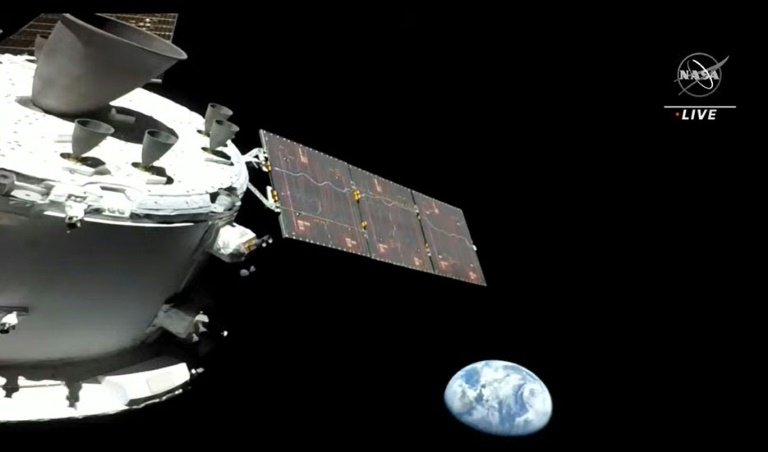
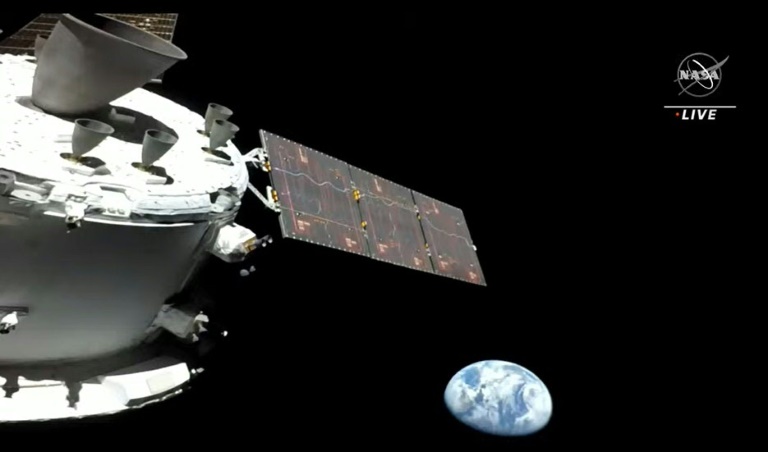
On the third day after lifting off from Florida bound for the Moon, the Orion spacecraft is “exceeding performance expectations,” NASA officials said on Friday. 

The spacecraft is to take astronauts to the Moon in the coming years — the first to set foot on its surface since the last Apollo mission in 1972. 

This first test flight, without a crew on board, aims to ensure that the vehicle is safe.

“Today we met to review the Orion spacecraft performance… it is exceeding performance expectations,” said Mike Sarafin, head of the Artemis 1 mission. 

The spacecraft’s four solar panels, about 13 feet (four meters) long, deployed correctly and are providing more energy than expected, said Jim Geffre, the Orion manager at the Johnson Space Center in Houston. 

It is from that control center in Texas that the spacecraft is being piloted. 

Orion is already some 200,000 miles (320,000 kilometers) from Earth and preparing to perform the first of four main thrusts scheduled during the mission using its engines. 

This maneuver, which will take place early Monday morning, will bring the spacecraft as close as 80 miles (130 kilometers) from the lunar surface, in order to take advantage of the Moon’s gravitational force. 

Since this will take place on the far side of the Moon, NASA is expected to lose contact with the spacecraft for approximately 35 minutes.

“We will be passing over some of the Apollo landing sites,” said  flight director Jeff Radigan, although they will be in darkness. Footage of the flyover will be released by NASA.

Four days later, a second thrust from the engines will place Orion in a distant orbit around the Moon. 

The ship will go up to 40,000 miles beyond the Moon, a record for a habitable capsule. 

It will then begin the journey back to Earth, with a landing in the Pacific Ocean scheduled for December 11, after just over 25 days of flight. 

The success of this mission will determine the future of the Artemis 2 mission, which will take astronauts around the Moon without landing, then Artemis 3, which will finally mark the return of humans to the lunar surface. 

Those missions are scheduled to take place in 2024 and 2025, respectively. 

Sarafin also said Friday that 10 scientific micro-satellites had been deployed when the rocket took off, but that half of them were experiencing technical or communication problems. 

Those experiments, carried out separately by independent teams, will have no impact on the main mission, however.

NASA Moon mission 'exceeding' expectations

On the third day after lifting off from Florida bound for the Moon, the Orion spacecraft is “exceeding performance expectations,” NASA officials said on Friday. 

The spacecraft is to take astronauts to the Moon in the coming years — the first to set foot on its surface since the last Apollo mission in 1972. 

This first test flight, without a crew on board, aims to ensure that the vehicle is safe.

“Today we met to review the Orion spacecraft performance… it is exceeding performance expectations,” said Mike Sarafin, head of the Artemis 1 mission. 

The spacecraft’s four solar panels, about 13 feet (four meters) long, deployed correctly and are providing more energy than expected, said Jim Geffre, the Orion manager at the Johnson Space Center in Houston. 

It is from that control center in Texas that the spacecraft is being piloted. 

Orion is already some 200,000 miles (320,000 kilometers) from Earth and preparing to perform the first of four main thrusts scheduled during the mission using its engines. 

This maneuver, which will take place early Monday morning, will bring the spacecraft as close as 80 miles (130 kilometers) from the lunar surface, in order to take advantage of the Moon’s gravitational force. 

Since this will take place on the far side of the Moon, NASA is expected to lose contact with the spacecraft for approximately 35 minutes.

“We will be passing over some of the Apollo landing sites,” said  flight director Jeff Radigan, although they will be in darkness. Footage of the flyover will be released by NASA.

Four days later, a second thrust from the engines will place Orion in a distant orbit around the Moon. 

The ship will go up to 40,000 miles beyond the Moon, a record for a habitable capsule. 

It will then begin the journey back to Earth, with a landing in the Pacific Ocean scheduled for December 11, after just over 25 days of flight. 

The success of this mission will determine the future of the Artemis 2 mission, which will take astronauts around the Moon without landing, then Artemis 3, which will finally mark the return of humans to the lunar surface. 

Those missions are scheduled to take place in 2024 and 2025, respectively. 

Sarafin also said Friday that 10 scientific micro-satellites had been deployed when the rocket took off, but that half of them were experiencing technical or communication problems. 

Those experiments, carried out separately by independent teams, will have no impact on the main mission, however.

Close Bitnami banner
Bitnami