World

Malaysia polls close with ruling party and Anwar in close race

Voting closed in Malaysia on Saturday with jailed ex-leader Najib Razak’s scandal-hit ruling party seeking to cement its power in a tight race with Anwar Ibrahim’s coalition.

The popular opposition leader campaigned on a promise to fight corruption in Southeast Asia’s third-largest economy where people are struggling with soaring food prices.

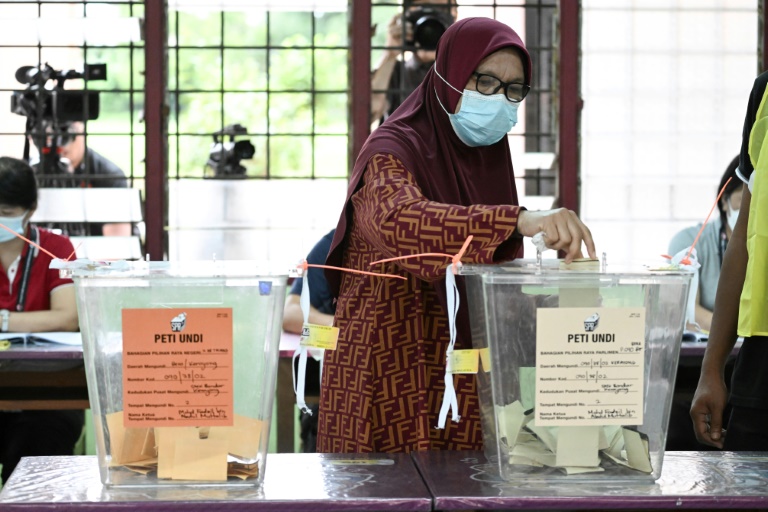
There were long lines at polling centres across the country despite concerns about monsoon rains, and the voters AFP spoke to said they hoped for political stability and economic improvement.

“I want a strong government and a stable economy so that there will be more job opportunities for the youth,” Nurul Hazwani Firdon, a 20-year-old tutor, said as she went to cast her ballot in the rural town of Bera in Pahang state.

Social media posts showed people lining up in knee-deep waters outside a voting centre in Sarawak state on Borneo island.

One video on Twitter showed an old woman being carried on someone’s back into a flooded polling place.

The Election Commission said turnout for the 21 million registered voters was at 70 percent as of 4 pm (0800GMT), two hours before the polls closed.

Najib’s United Malays National Organisation (UMNO) usually dominates Malaysian politics but it suffered a humiliating defeat in the 2018 general election after a massive corruption scandal at state fund 1MDB.

The former prime minister, who was at the centre of the 1MDB storm, is currently serving a 12-year jail term.

Because of infighting in the two successive governments since 2018, UMNO crept back into power last year despite lingering corruption allegations, and is seeking a stronger mandate in Saturday’s election — called 10 months ahead of schedule.

– Anwar’s dream –

The UMNO-dominated ruling Barisan Nasional bloc is up against Anwar and his allies.

With age catching up, this may be Anwar’s last chance to fulfil his long-standing dream of leading Malaysia.

“A win today would certainly be gratifying after more than two decades of fighting to win the hearts and minds of the people,” Anwar, 75, told AFP before casting his vote in Penang state.

He added he was “cautiously confident” that his Pakatan Harapan (Alliance of Hope) could secure a simple majority in the 222-member parliament.

Caretaker Prime Minister Ismail Sabri Yaakob, from the ruling coalition, cast his vote in Bera.

“I hope the voters will choose a government that can guarantee security and stability,” he told reporters.

A record 945 candidates are contesting for parliament seats across the largely Muslim nation.

Former prime ministers Mahathir Mohamad, 97, and 75-year-old Muhyiddin Yassin head two other coalitions.

– Corruption a key issue –

Corruption was a key issue during the campaign, with opposition parties repeatedly warning that if UMNO wins, Najib could walk free and graft charges against other party leaders could be dropped.

The 1MDB scandal, in which billions of dollars in state funds were diverted to Beverly Hills properties, a superyacht, a Hollywood film and Najib’s own bank account, sparked investigations in Singapore, Switzerland and the United States.

Analysts said there was no clear frontrunner among the four coalitions.

A survey by pollster Merdeka Centre on the eve of the elections showed Anwar’s coalition winning 82 seats of the total number of seats contested, and 33 percent favouring him as the prime minister.

There were supposed to be 222 seats at stake, but two candidates died and voting in one district was suspended due to bad weather.

Merdeka analyst Ibrahim Suffian told AFP it was “still possible for Anwar to achieve a simple majority” given the large turnouts in the final days of his campaign.

Malaysia lowered its voting age from 21 to 18 last year, a move that added six million voters to the rolls for this election.

Nearly 1.4 million of total registered voters are aged 18-20.

Analysts have said young voters lean towards the more progressive politics of the opposition.

The majority of registered voters, however, live in Malaysia’s rural areas where the patronage politics dominated by UMNO still holds sway.

Analysts said the multi-racial country would be in for further political instability if no coalition wins a clear majority.

Kim oversees North Korean ICBM launch with daughter in tow

North Korean leader Kim Jong Un oversaw a test of Pyongyang’s newest intercontinental ballistic missile with his daughter in tow for the first time, state media reported Saturday.

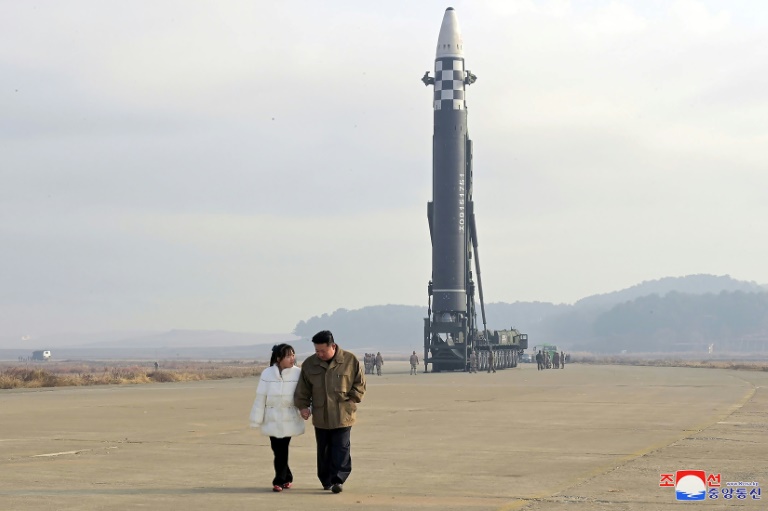
Declaring he would meet perceived US nuclear threats with nukes of his own, Kim supervised the launch on Friday of the black-and-white missile, which the official Korean Central News Agency (KCNA) said was the Hwasong-17 — dubbed the “monster missile” by analysts.

The launch of the “new major strategic weapon system” was successful, KCNA said.

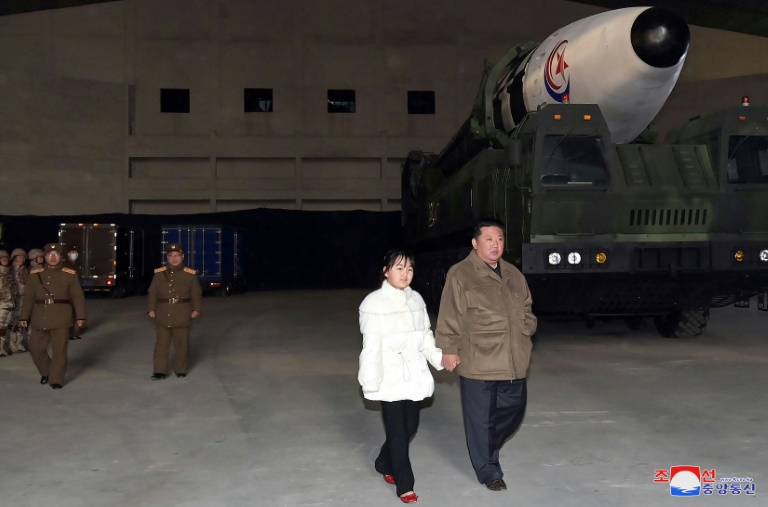
KCNA said Kim attended the launch “together with his beloved daughter and wife”, and state media images showed a beaming Kim accompanied by a young girl in a puffer jacket and red shoes as he walked in front of the missile.

North Korean state media has never mentioned Kim’s children, and this was the first official confirmation that he had a daughter, experts said.

KCNA’s report on Saturday did not name the daughter, however.

– ‘The fourth generation’ –

The most significant takeaway from Friday’s ICBM launch is “the permanence of the Kim regime’s weapons programme, because it is so integral to Kim’s own survival and the continuity of his family’s reign,” Soo Kim, a former CIA analyst now with the RAND Corporation, told AFP.

With the state media coverage, “we have seen with our own eyes the fourth generation of the Kim family”, she said.

Kim — the grandson of North Korea’s founding leader Kim Il Sung and the third generation of the Kim family to lead the country — married his wife Ri Sol Ju, in 2009, according to South Korea’s spy agency.

She gave birth to their first child the following year, with their second and third born in 2013 and 2017, the agency has said.

The only previous confirmation of the children’s existence had come from former NBA star Dennis Rodman, who claimed he met a baby daughter of Kim’s called Ju Ae during a 2013 visit to North Korea.

The daughter revealed in the photographs is presumed to be Ju Ae, who is likely Kim’s second child, Cheong Seong-chang of the Center for North Korea Studies at the Sejong Institute in South Korea told AFP.

– Kim’s warning –

KCNA said Saturday that Kim slammed “hysteric aggression war drills”, and said that if the United States continued to make threats, Pyongyang would “resolutely react to nukes with nuclear weapons and to total confrontation with all-out confrontation”.

North Korea has conducted a record-breaking blitz of launches in recent weeks.

Pyongyang — and Moscow — have repeatedly blamed them on Washington’s moves to boost the protection it offers to allies Seoul and Tokyo.

Fears have grown that the launches are building up to a nuclear test.

KCNA said the latest missile hit a maximum altitude of 6,040.9 kilometres (3,750 miles) and flew 999.2 kilometres, matching estimates by Seoul and Tokyo on Friday.

North Korea previously claimed to have launched a Hwasong-17 — its most powerful missile to date — on March 24, releasing a slick promotional video and photos of the event.

But Seoul later cast doubt on that claim.

This time, analysts said it seemed North Korea had succeeded.

“This launch is significant because it is thought to be the first successful full flight test of the Hwasong-17 ICBM,” Joseph Dempsey, a researcher at the International Institute for Strategic Studies (IISS), told AFP.

As with all North Korean ICBM tests, the missile was fired on a lofted trajectory — up not out, to avoid flying over Japan.

That means questions remain about its performance, “particularly in terms of surviving reentry into the atmosphere and… accuracy over greater ranges”, Dempsey said.

The “monster missile” also has disadvantages, he added.

“Its sheer size makes it less practical as a road-mobile system, and production would be likely a significantly greater strain on limited resources.”

Since Kim declared North Korea an “irreversible” nuclear state in September, the United States has ramped up regional security cooperation.

The South Korean military said it staged joint air drills with the United States on Saturday involving the US B-1B long-range heavy bomber.

This was the second B-1B deployment to the Korean peninsula this month — it also participated in “Vigilant Storm”, the largest-ever US-South Korea air exercise.

Crunch climate talks teeter on the edge

UN climate talks were thrown into disarray Saturday as the EU rejected a proposal by host country Egypt for lacking ambition on emissions cuts and warned it would rather leave with no deal than a bad one. 

Nearly 200 countries’ representatives have gathered at the COP27 in Egypt for two weeks with the aim of driving forward action on climate change as the world faces a worsening onslaught of weather extremes.

But the talks have deadlocked over calls that wealthy polluters provide “loss and damage” funding for countries wracked by climate disasters, as well as over ambition in tackling global warming.

After negotiations stretched through the night following the last official day Friday, the European Union roundly rejected a draft document from Egypt.

European Commission Vice President Frans Timmermans said the EU would “rather have no result than a bad result” and was willing to walk out of the negotiations altogether.

But he added that the 27-nation bloc was still hoping for a good outcome.

The EU wants COP27 to have strong language on cutting emissions and to reaffirm the aspirational goal of limiting global warming to 1.5 degrees Celsius from pre-industrial levels.

“We are not here to produce papers, but to keep the 1.5C target alive,” said German Foreign Minister Annalena Baerbock.

Egyptian Foreign Minister Sameh Shoukry, however, said he was still hopeful of a “breakthrough” and defended his proposal. 

“The vast majority of the parties indicated to me they considered the text as balanced and that they constitute a potential breakthrough that can lead to consensus,” he said.

– ‘Unacceptable’ for EU –

Many developing countries see the creation of a loss and damage fund at this meeting as a defining issue of the talks.  

The EU has put forward a proposal to create such a fund — but has called for a broader set of donors and prioritising the most climate-vulnerable countries as recipients. 

Timmermans said he was “worried” about the direction the negotiations took overnight.

He warned that if not enough is done to slash emissions and keep 1.5C alive, “there is no amount of money on this planet that will be able to address the misery that will occur through natural disasters, etc, that we’re already seeing,” he said.

With around 1.2C of warming so far, the world has seen a cascade of climate-driven extremes in recent months — from floods in Pakistan and Nigeria to heatwaves and droughts across the world.

An official from the French energy transition ministry told AFP that the proposal from the Egyptian presidency, which has not been published officially, sought to undermine gains in emission reductions made last year at the Glasgow climate talks.

“This is unacceptable for France and for European Union countries,” she said, adding that the proposed decision text would remove an obligation of countries to regularly strengthen their national targets in order to meet the 1.5C goal.

– Egypt criticised –

Under the 2015 Paris Agreement, countries agreed to limit global warming to “well below” two degrees Celsius compared to the late 19th century. 

They also signed on to an aspirational goal of capping the rise in temperature to 1.5C, which scientists subsequently confirmed was a far safer guardrail against catastrophic climate impacts.

This more ambitious 1.5C target was embraced last year in Glasgow, with countries agreeing to annually review their carbon reduction goals.

COP27 participants have criticised Egypt’s handling of the talks, which have gone far into overtime with little sign of consensus on a daunting list of areas under contention. 

The G77 and China bloc of 134 developing countries launched an opening gambit on loss and damage this week, with a proposal to create a fund at COP27, with operational details to be agreed later.

A compromise response from the EU, proposed late Thursday, suggested a fund specifically for the most vulnerable nations, saying the money should come from a “broad funder base” — code for countries including China and Saudi Arabia that have become wealthier since they were listed as developing nations in 1992.

Britain and several other countries have circulated a new draft proposal document, seen by AFP and confirmed by a source close to the negotiations, which suggested the fund could be part of a range of “funding arrangements”.

Rich countries are also under pressure to finally fulfil promises to provide $100 billion a year to help developing countries green their economies and adapt to future impacts.

French-speaking bloc starts Tunisia summit focused on economy

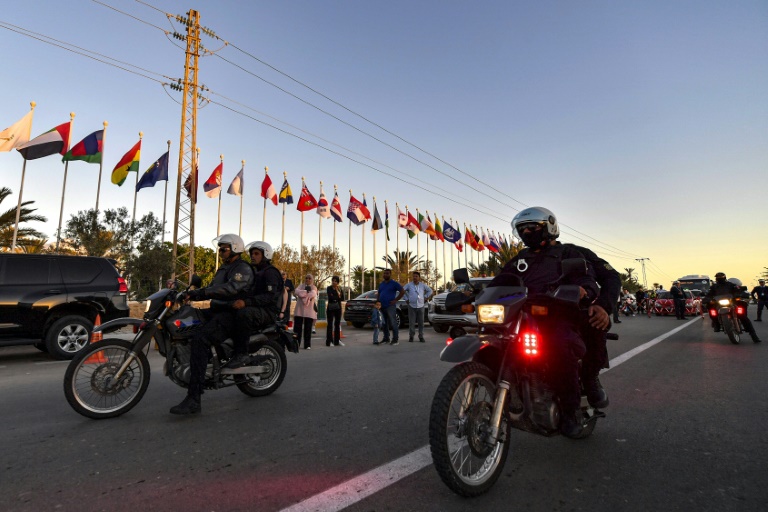
The world’s French-speaking countries gathered in Tunisia on Saturday for talks focused on economic cooperation, more than a year after President Kais Saied began an internationally criticised power grab.

While the two-day meeting and an associated economic forum will officially focus on technology and development, it is also an opportunity for Western and African leaders to discuss issues like Russia’s invasion of Ukraine.

French President Emmanuel Macron said the International Organisation of Francophonie (IOF) should be “a space of resistance and reconquest” and called for it to reclaim its role.

The bloc has been criticised for failing to use its clout to resolve crises.

Macron noted that in North Africa the use of French has declined over the past few decades.

“English is a new common language that people have accepted,” he said. But, he added, “(French) is the universal language of the African continent.”

Around 30 heads of state and government, also including Senegalese President Macky Sall and Canadian Prime Minister Justin Trudeau, are at the summit on the southern Tunisian resort island of Djerba.

Many African countries have decried what they see as a lack of international solidarity in the face of crises on their continent, in sharp contrast with European nations’ swift support for Kyiv.

The summit coincides with the final stage of UN climate talks in Egypt.

It also comes just days after leaders of the G20, which groups major developed and emerging economies, met in Indonesia for talks dominated by the war in Ukraine, which is an OIF observer state. 

Normally held every two years, the meeting was postponed in 2020 due to the Covid-19 pandemic. It was delayed again last year after Saied sacked the government and suspended parliament, later dissolving the legislature entirely.

French political researcher Vincent Geisser said hosting the summit is a success for Saied, who welcomed a string of leaders on a red carpet Saturday morning.

Geisser said the meeting would help Saied “leave his isolation — at least temporarily” after Canada, France and other developed nations last year called on Saied to restore “constitutional order”.

– Economic cooperation –

The summit will belatedly celebrate the 50th anniversary of the now 88-strong group whose members, such as Armenia and Serbia, are not all French-speaking.

The world’s French-speaking community is around 321 million-strong, and is expected to reach 750 million in 2050.

Secretary General Louise Mushikiwabo, of Rwanda, said the bloc is “more pertinent than ever” and able to bring added value to “most of the world’s problems”.

She told AFP she would ask member states to “redouble their efforts” in the face of a decline in the use of French in international organisations.

Mushikiwabo recalled that promoting “peace, democracy and human rights” is also part of the OIF’s mission.

Senegalese civil society figure Alioune Tine, however, said the group has shown itself to be “totally powerless in the face of fraudulent elections, third mandates (of African leaders) and military coups” in Mali, Guinea, Chad and Burkina Faso.

Summit coordinator Mohamed Trabelsi told AFP the meeting was “a recognition of the role of Tunisia in the Francophone space, and of its regional and international diplomacy”.

It is also an opportunity to “strengthen economic cooperation”, Trabelsi said.

But an official from OIF heavyweight Canada said Ottawa wanted to echo “concern” over “democratic participation” following Saied’s power grab in the only democracy to have emerged from the Arab Spring uprisings more than a decade ago.

Tunisia is confronted by a deep economic crisis which has pushed a growing number of its people to try to reach Europe.

Seeking to draw delegates’ attention to the issue, hundreds of protesters tried Friday to highlight the disappearance of 18 Tunisians aboard a boat that set out in September. 

Police prevented them from reaching Djerba.

Two firefighters killed in Peru as plane hits airport fire truck

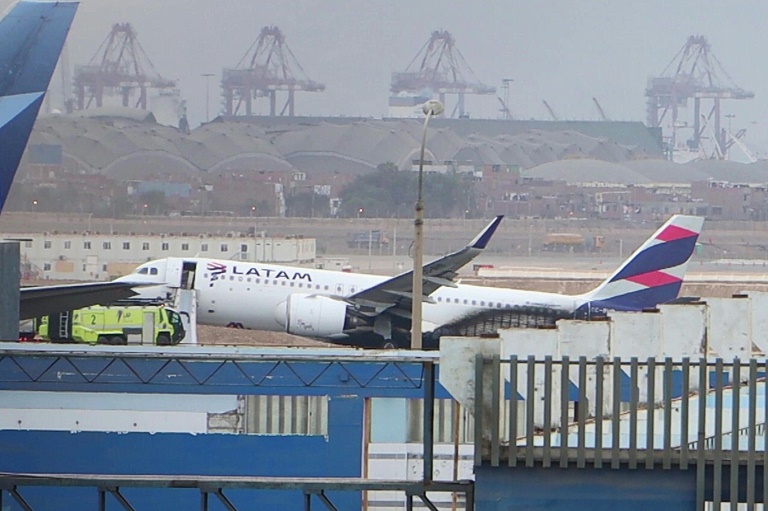
Two Peruvian firefighters were killed Friday when a passenger plane collided with their truck during takeoff and then crashed on the runway, airport operators said. 

The airline LATAM, which operated the domestic flight out of Lima, said 102 passengers were onboard at the time but “no passengers or crew members lost their lives”.

Footage taken by witnesses and broadcast by Peruvian television channels showed the plane — an Airbus A320, according to aircraft tracking websites — taking off at full speed and hitting the fire truck, also traveling at speed.

With its landing gear damaged, the plane continued its course with its right side dragging along the runway, sending up a trail of sparks. When it stopped, the aircraft emitted a cloud of smoke, with the rear of the plane badly burned. 

As well as killing the two firefighters, the incident injured a rescuer who was in the firefighting vehicle and is “in critical condition due to head trauma,” according to security official Aurelio Orellana.

Lima Airport Partners (LAP) which operates the Jorge Chavez airport, said it “deeply regrets the loss of life of two members of the LAP Aeronautical Fire Brigade in the accident that occurred between a fire engine and the aircraft operating flight LA2213 from Lima to Juliaca.”

LAP added that its “teams are providing the necessary care to all passengers, who are doing well.”

“We are also investigating to determine the cause of the incident.” 

The general manager of LATAM Peru, Manuel van Oordt, said he was surprised that firefighters were on the runway since the pilot of the plane had not reported any anomalies.

“No emergency was reported in the flight, it was a flight that was in optimal conditions to take off, he had permission to take off, and he found a truck on the runway and we do not know what this truck was doing there,” he said at a press conference.

The Lima fire department said it received an alert at 3:25 pm local time (2025 GMT) and four ambulances and rescue units were deployed.

The prosecutor’s office said it would launch an investigation into the “possible crimes of culpable homicide and culpable injuries.” 

Airport operations have been suspended “until further notice,” the management company said. 

Last month, a LATAM plane with 48 passengers onboard made an emergency landing in Asuncion, Paraguay after flying through a severe storm.

Kim oversees North Korean ICBM launch with daughter in tow

North Korean leader Kim Jong Un oversaw a test of Pyongyang’s newest intercontinental ballistic missile with his daughter in tow for the first time, state media reported Saturday.

Declaring he would meet perceived US nuclear threats with nukes of his own, Kim supervised the launch on Friday of the black-and-white missile, which the official Korean Central News Agency (KCNA) said was the Hwasong-17 — dubbed the “monster missile” by analysts.

The launch was successful, KCNA said, adding that the “test-fire clearly proved the reliability of the new major strategic weapon system”.

KCNA said Kim attended the launch “together with his beloved daughter and wife”, and state media images showed a beaming Kim accompanied by a young girl in a puffer jacket and red shoes as he walked in front of the missile.

North Korean state media has never mentioned Kim’s children, and this was the first official confirmation that he had a daughter, experts said.

The latest launch shows that “the nuclear forces of the DPRK have secured another reliable and maximum capacity to contain any nuclear threat”, KCNA said, using the country’s official name, the Democratic People’s Republic of Korea.

Since Kim declared North Korea an “irreversible” nuclear state in September, the United States has ramped up regional security cooperation.

The South Korean military said it staged joint air drills with the United States on Saturday involving the US B-1B long-range heavy bomber.

The B-1B was deployed to the Korean peninsula earlier this month too during “Vigilant Storm”, the largest-ever US-South Korean air exercise.

The UN Security Council on Saturday said it would discuss North Korea in a Monday meeting.

– Daughter’s debut –

Kim slammed what he called “hysteric aggression war drills” and said that if the United States continued to make threats, Pyongyang would “resolutely react to nukes with nuclear weapons and to total confrontation with all-out confrontation”, KCNA reported.

Nuclear-armed North Korea has conducted a record-breaking blitz of launches in recent weeks, which Pyongyang — and Moscow — have repeatedly blamed on Washington’s moves to boost the protection it offers to allies Seoul and Tokyo.

Fears have grown that the launches are building up to a nuclear test.

KCNA said the latest missile hit a maximum altitude of 6,040.9 kilometres (3,750 miles) and flew 999.2 kilometres, matching estimates by Seoul and Tokyo on Friday.

North Korea previously claimed to have launched a Hwasong-17 — its most powerful missile to date — on March 24, releasing a slick promotional video and photos of the event.

But Seoul later cast doubt on that claim, with local reports suggesting it had exploded over the skies of Pyongyang on March 17, and that North Korea had faked a successful launch using a smaller, older missile.

This time, analysts said it seemed North Korea had succeeded.

“This launch is significant because it is thought to be the first successful full flight test of the Hwasong-17 ICBM,” Joseph Dempsey, a researcher at the International Institute for Strategic Studies (IISS) told AFP. 

As with all North Korean ICBM tests, the missile was fired on a “lofted” trajectory — up not out, to avoid flying over Japan — which means key questions remain — “particularly in terms of surviving reentry into the atmosphere and testing the accuracy over greater ranges,” he said.

The “monster missile”, despite likely having greater payload capacity, also has disadvantages, Dempsey said.

“Its sheer size makes it less practical as a road-mobile system, and production would be likely a significantly greater strain on limited resources,” he said.

The most significant takeaway from Friday’s ICBM launch is “the permanence of the Kim regime’s weapons programme, because it is so integral to Kim’s own survival and the continuity of his family’s reign,” Soo Kim, a former CIA analyst now with the RAND Corporation, told AFP.

With the state media coverage, “we have seen with our own eyes the fourth generation of the Kim family,” she said.

“And his daughter — along with potential other siblings — will surely be groomed by her father.”

US to press for climate progress at 2023 APEC summit in San Francisco

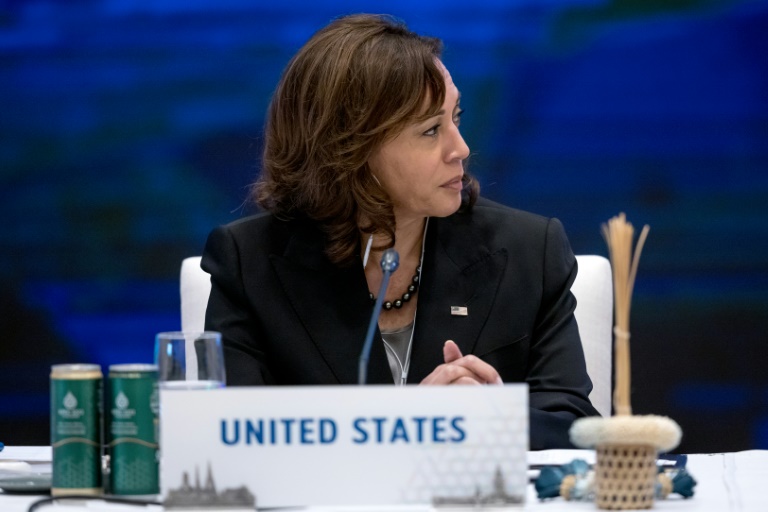
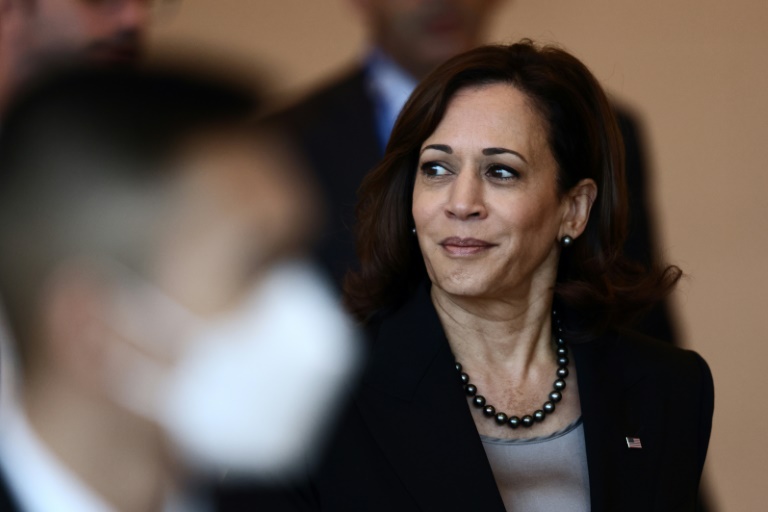
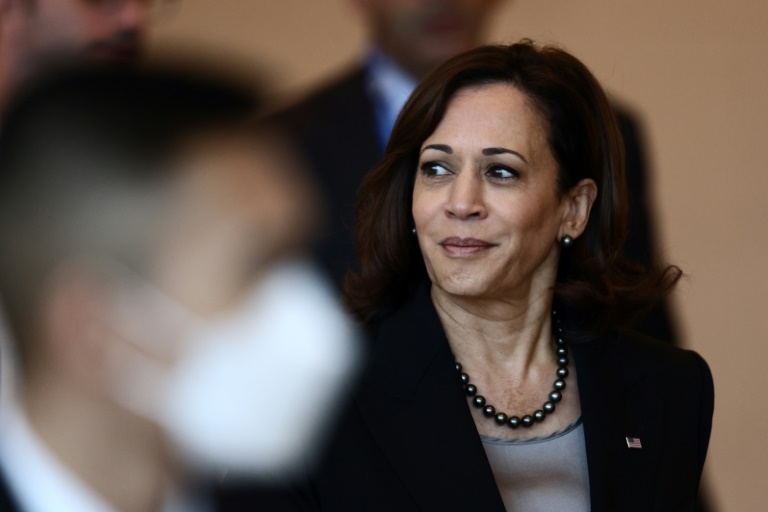
Asia-Pacific leaders will gather in November 2023 in San Francisco with climate high on the agenda, Vice President Kamala Harris announced Saturday, offering an opportunity for a rare US visit by Chinese President Xi Jinping.

Harris, who is originally from the San Francisco Bay Area, announced the week beginning November 12, 2023 for the Asia-Pacific Economic Cooperation (APEC) summit, as this year’s meeting wrapped up in Bangkok.

“There is no better place to host APEC 2023 than California, a state known for economic innovation,” Harris said.

She said that President Joe Biden’s administration would focus the summit on sustainability and moving economies away from carbon as part of the fight against climate change.

“We will promote economic growth and prosperity for the American people, and people throughout the Indo-Pacific region,” she said, using another term for the Asia-Pacific.

During the talks in Bangkok, Harris asked leaders to prepare new targets for reducing emissions from the power sector in time for next year’s summit, a US official said.

She also proposed an APEC-wide goal on slashing methane, one of the most powerful greenhouse gases, which is released from oil and gas production and agriculture.

The official said Harris asked for specific commitments as most APEC nations already have longer-range goals on zeroing out the emissions responsible for climate change.

APEC, born in the 1980s, is focused on trade rather than political questions and each year offers an occasion for leaders of the 21 members to meet on the sidelines.

The APEC forum this year took place immediately after a summit in Bali of G20 economies, where Xi met Biden in their first meeting as heads of state.

Harris also spoke to Xi at the APEC summit, part of a renewed effort by the world’s two largest economies to prevent tensions from spiralling out of control.

Xi last visited the United States in 2017, meeting then-president Donald Trump at his Florida estate, but relations between the two countries later sharply deteriorated over trade, Taiwan, human rights and the Covid-19 pandemic.

Russia is also an APEC member but, unlike with Xi, the United States has made clear that it will not deal as normal with its President Vladimir Putin after he ignored warnings and invaded Ukraine in February.

The United States earlier announced that APEC foreign ministers will meet next year in Seattle and that trade officials would gather in Detroit.

The United States last hosted APEC in 2011 when then-president Barack Obama invited leaders to his birth state of Hawaii.

US to press for climate progress at 2023 APEC summit in San Francisco

Asia-Pacific leaders will gather in November 2023 in San Francisco with climate high on the agenda, Vice President Kamala Harris announced Saturday, offering an opportunity for a rare US visit by Chinese President Xi Jinping.

Harris, who is originally from the San Francisco Bay Area, announced the week beginning November 12, 2023 for the Asia-Pacific Economic Cooperation (APEC) summit, as this year’s meeting wrapped up in Bangkok.

“There is no better place to host APEC 2023 than California, a state known for economic innovation,” Harris said.

She said that President Joe Biden’s administration would focus the summit on sustainability and moving economies away from carbon as part of the fight against climate change.

“We will promote economic growth and prosperity for the American people, and people throughout the Indo-Pacific region,” she said, using another term for the Asia-Pacific.

During the talks in Bangkok, Harris asked leaders to prepare new targets for reducing emissions from the power sector in time for next year’s summit, a US official said.

She also proposed an APEC-wide goal on slashing methane, one of the most powerful greenhouse gases, which is released from oil and gas production and agriculture.

The official said Harris asked for specific commitments as most APEC nations already have longer-range goals on zeroing out the emissions responsible for climate change.

APEC, born in the 1980s, is focused on trade rather than political questions and each year offers an occasion for leaders of the 21 members to meet on the sidelines.

The APEC forum this year took place immediately after a summit in Bali of G20 economies, where Xi met Biden in their first meeting as heads of state.

Harris also spoke to Xi at the APEC summit, part of a renewed effort by the world’s two largest economies to prevent tensions from spiralling out of control.

Xi last visited the United States in 2017, meeting then-president Donald Trump at his Florida estate, but relations between the two countries later sharply deteriorated over trade, Taiwan, human rights and the Covid-19 pandemic.

Russia is also an APEC member but, unlike with Xi, the United States has made clear that it will not deal as normal with its President Vladimir Putin after he ignored warnings and invaded Ukraine in February.

The United States earlier announced that APEC foreign ministers will meet next year in Seattle and that trade officials would gather in Detroit.

The United States last hosted APEC in 2011 when then-president Barack Obama invited leaders to his birth state of Hawaii.

Xi, Harris call for open channels in latest US-China meeting

Chinese President Xi Jinping and US Vice President Kamala Harris called for open communication during a brief meeting on Saturday, days after his extensive talks with President Joe Biden aimed at keeping tensions in check.

Harris and Xi met during an Asia-Pacific summit in Bangkok where another US rival, Russia, saw itself isolated, with no top leader attending and a statement issued showing wide condemnation of its war in Ukraine.

Speaking to Xi on the sidelines of the Asia-Pacific Economic Cooperation (APEC) forum, Harris reinforced Biden’s message that “we must maintain open lines of communication to responsibly manage the competition between our countries”, a White House official said.

On Monday, Biden and Xi met for three hours at a Group of 20 summit in Bali, the first in-person talks between the leaders of the world’s two largest economies since they each became president.

Chinese state media quoted Xi as telling Harris that his meeting with Biden was “strategic and constructive, and has important guiding significance for China-US relations in the next stage”.

“It is hoped that the two sides will further enhance mutual understanding, reduce misunderstanding and misjudgement, and jointly promote the return of China-US relations to a healthy and stable track,” added Xi, who is on only his second overseas trip since the pandemic.

US and Chinese officials have both put a positive spin on the renewal of diplomacy, while stopping short of predicting any substantive resolution of issues dividing them — notably Taiwan, the self-governing democracy claimed by Beijing.

Xi and Biden agreed that Secretary of State Antony Blinken will visit China early next year, the first visit by a top US diplomat since 2018.

Blinken told reporters in Bangkok that the contacts aimed at making sure that competition “does not veer into conflict” and examining areas of cooperation on global challenges such as climate change.

The United States said it was also looking for China to do more to rein in its ally North Korea, which on Friday test-fired a ballistic missile that US and Japanese officials said was likely capable of hitting the US mainland.

China should use its influence to persuade North Korea “not to go in this provocative direction, which only destabilises the region and the world”, said a US official travelling with Harris.

– Pressure on Russia –

If relations remain unchanged, Xi could see Biden in a year’s time when the United States hosts the APEC summit in San Francisco.

Xi last visited the United States in 2017, meeting then president Donald Trump at his Florida estate, but relations between the two countries later sharply deteriorated over trade, Taiwan, human rights and Covid-19.

APEC, which groups 21 economies, focuses on trade rather than political matters. But after US insistence, APEC followed the formula of this week’s G20 summit to take up the invasion of Ukraine by Russia, a member of both organisations.

“Most members strongly condemned the war in Ukraine and stressed it is causing immense human suffering and exacerbating existing fragilities in the global economy,” an APEC joint declaration said.

“There were other views and different assessments of the situation and sanctions.” 

The United States has been cautiously upbeat about China taking a distance from nominal ally Russia, including by rejecting requests to send military supplies.

While engaging Xi, the United States has vowed to shun Russian President Vladimir Putin who skipped this week’s Asian summits and is virtually certain not to receive an invitation to San Francisco.

Harris, who is originally from the San Francisco Bay Area, told leaders in Bangkok that the United States would focus next year’s summit on raising climate ambitions.

She asked leaders to prepare new targets in time for the 2023 summit on reducing emissions from the power sector, hoping to flesh out longer-term commitments by most APEC members on zeroing out carbon.

Xi, Harris call for open channels in latest US-China meeting

Chinese President Xi Jinping and US Vice President Kamala Harris called for open communication during a brief meeting on Saturday, days after his extensive talks with President Joe Biden aimed at keeping tensions in check.

Harris and Xi met during an Asia-Pacific summit in Bangkok where another US rival, Russia, saw itself isolated, with no top leader attending and a statement issued showing wide condemnation of its war in Ukraine.

Speaking to Xi on the sidelines of the Asia-Pacific Economic Cooperation (APEC) forum, Harris reinforced Biden’s message that “we must maintain open lines of communication to responsibly manage the competition between our countries”, a White House official said.

On Monday, Biden and Xi met for three hours at a Group of 20 summit in Bali, the first in-person talks between the leaders of the world’s two largest economies since they each became president.

Chinese state media quoted Xi as telling Harris that his meeting with Biden was “strategic and constructive, and has important guiding significance for China-US relations in the next stage”.

“It is hoped that the two sides will further enhance mutual understanding, reduce misunderstanding and misjudgement, and jointly promote the return of China-US relations to a healthy and stable track,” added Xi, who is on only his second overseas trip since the pandemic.

US and Chinese officials have both put a positive spin on the renewal of diplomacy, while stopping short of predicting any substantive resolution of issues dividing them — notably Taiwan, the self-governing democracy claimed by Beijing.

Xi and Biden agreed that Secretary of State Antony Blinken will visit China early next year, the first visit by a top US diplomat since 2018.

Blinken told reporters in Bangkok that the contacts aimed at making sure that competition “does not veer into conflict” and examining areas of cooperation on global challenges such as climate change.

The United States said it was also looking for China to do more to rein in its ally North Korea, which on Friday test-fired a ballistic missile that US and Japanese officials said was likely capable of hitting the US mainland.

China should use its influence to persuade North Korea “not to go in this provocative direction, which only destabilises the region and the world”, said a US official travelling with Harris.

– Pressure on Russia –

If relations remain unchanged, Xi could see Biden in a year’s time when the United States hosts the APEC summit in San Francisco.

Xi last visited the United States in 2017, meeting then president Donald Trump at his Florida estate, but relations between the two countries later sharply deteriorated over trade, Taiwan, human rights and Covid-19.

APEC, which groups 21 economies, focuses on trade rather than political matters. But after US insistence, APEC followed the formula of this week’s G20 summit to take up the invasion of Ukraine by Russia, a member of both organisations.

“Most members strongly condemned the war in Ukraine and stressed it is causing immense human suffering and exacerbating existing fragilities in the global economy,” an APEC joint declaration said.

“There were other views and different assessments of the situation and sanctions.” 

The United States has been cautiously upbeat about China taking a distance from nominal ally Russia, including by rejecting requests to send military supplies.

While engaging Xi, the United States has vowed to shun Russian President Vladimir Putin who skipped this week’s Asian summits and is virtually certain not to receive an invitation to San Francisco.

Harris, who is originally from the San Francisco Bay Area, told leaders in Bangkok that the United States would focus next year’s summit on raising climate ambitions.

She asked leaders to prepare new targets in time for the 2023 summit on reducing emissions from the power sector, hoping to flesh out longer-term commitments by most APEC members on zeroing out carbon.

Close Bitnami banner
Bitnami