World

Greek FM snubs Libya counterpart in spat over Turkey deal

Greek Foreign Minister Nikos Dendias snubbed his Libyan counterpart on Thursday, abandoning a planned visit to Tripoli to avoid being welcomed by the top diplomat of a government allied with arch rival Turkey.

Libyan Foreign Minister Najla al-Mangoush was left waiting on the tarmac at Tripoli airport when Dendias refused to disembark from his plane and instead flew on to second city Benghazi, where a rival administration holds sway.

Athens blamed the incident on Tripoli, where Dendias had been scheduled to meet the head of Libya’s Presidential Council, Mohamed el-Manfi, without meeting members of the executive, according to the Greek foreign ministry.

Dendias’s visit to the politically divided North African nation comes after Libya’s Tripoli-based government signed a memorandum of understanding with Ankara over exploration for Mediterranean oil and gas that is bitterly contested by Athens.

Mangoush had been waiting on the tarmac to welcome Dendias “in keeping with diplomatic norms”, a statement from her ministry said.

But “in a surprising and insulting move, the Greek minister refused to disembark from his plane and left without any clarifications,” it added.

Mangoush’s ministry said it would take “appropriate diplomatic measures” in response.

Shortly afterwards, it recalled its ambassador from Athens and summoned his Greek counterpart in Tripoli, government spokesman Mohamad Hamouda told Al-Ahrar, a satellite news channel. 

Built on a 2019 border deal between Tripoli and Ankara, the energy exploration agreement signed last month angered Greece, Egypt and Cyprus which argue that neither side has a right to drill in those areas. 

The rival administration which holds sway in Benghazi also condemned the deal, insisting the Tripoli-based government of Abdulhamid Dbeibah no longer has a mandate to rule or sign international agreements.

The Libyan ministry said Dendias had been invited in response to a request from Athens, “despite (him) taking offensive positions… and making unbalanced statements about Libya’s sovereignty and its right to establish relations that meet the hopes of its people”.

After the signing of the hydrocarbons memorandum in October, Dendias had said it “threatens stability and security” in the region.

“Ms Mangoush tried to impose on me by her presence at the airport to meet with her. As a result I interrupted the visit in Tripoli and we flew to Benghazi, where the schedule was followed,” the Greek minister said in the eastern city of Benghazi.

There, he delivered three small boxes of coronavirus vaccines and a 550,000-euro ($568,000)donation towards a World Food Programme reconstruction of the port.

He also met members of the eastern-based parliament, tweeting that he had thanked them for “their clear stance on condemning the Turkish-Libyan ‘memorandum’ in 2019 and the one signed in October”.

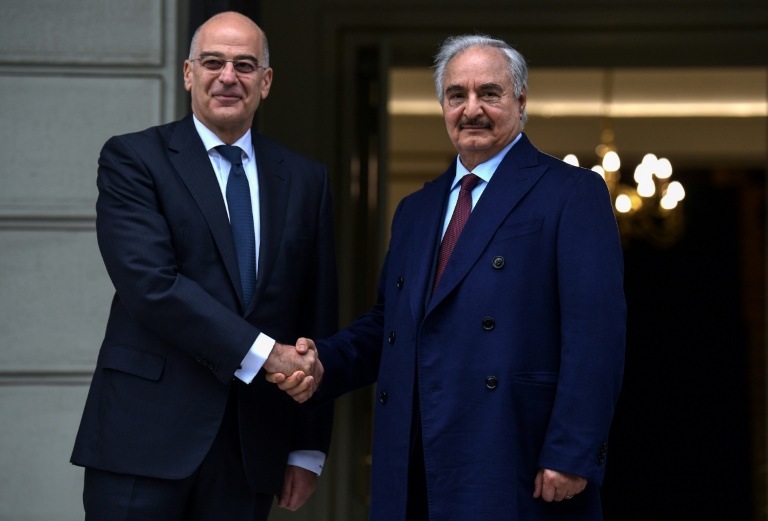
Later, Dendias met military strongman Khalifa Haftar, for talks he said focused “on the need for #Libya stabilisation & promoting peace and stability in the wider region”, according to his Twitter account.

Libya has been plagued by violence since the overthrow of Moamer Kadhafi’s regime in a 2011 NATO-backed uprising.

Dbeibah was appointed as part of a United Nations-guided peace process following the last major battle in Libya in 2020. Tripoli’s troops, backed by Turkey, pushed back Haftar’s forces — backed by Egypt and others — after their year-long attempt to capture the city.

The parliament and Haftar say Dbeibah’s mandate has expired, further complicating the country’s foreign relations as well as its domestic landscape.
Pelosi to reveal 'future plans' after Republicans take US House

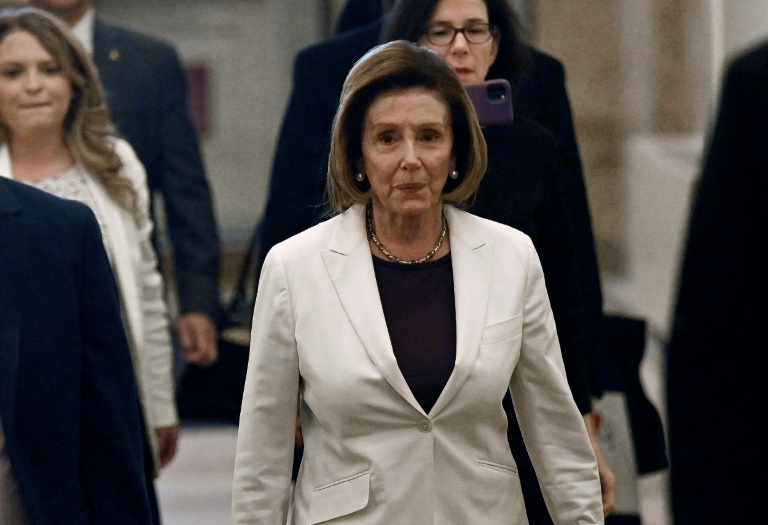
Nancy Pelosi, the veteran Washington powerbroker and longtime leader of the Democrats in Congress, was set to “address her future plans” Thursday, one day after Republicans secured a slim majority in the House of Representatives. 

With congressional control now split and Pelosi unseated as leader in the House, the 82-year-old Californian — known for keeping a tight grip on party ranks as the first woman speaker — faces a tough choice. 

Pelosi, who was elected to Congress in 1987, first became speaker in 2007 and presided over both impeachments of Donald Trump during her second stint in the role, has previously indicated her time as a lawmaker might be up. 

Currently second in the line of succession to President Joe Biden, Pelosi said last week her final decision — should Democrats lose the House — would be influenced by the brutal attack on her elderly husband in the runup to the November 8 midterms.

Paul Pelosi, who is also 82, was left hospitalized with serious injuries after an intruder — possibly looking for the speaker — broke into their San Francisco home and attacked him with a hammer.

“The Speaker plans to address her future plans tomorrow to her colleagues,” Pelosi spokesman Drew Hammill tweeted Wednesday night. “Stay tuned.”

Pelosi was seen arriving at the Capitol early Thursday and NBC reported she would be delivering an address on the House floor, whose timing remained unclear.

On Wednesday Pelosi praised Democrats’ better-than-expected performance in the midterm contest, saying the party “defied expectations.”

Republicans failed to take control of the Senate, and recaptured the House with a far smaller majority than they had been counting on, in a historically weak performance in the November 8 midterms.

“In the next Congress, House Democrats will continue to play a leading role in supporting President Biden’s agenda — with strong leverage over a scant Republican majority,” Pelosi said in a statement. 

In congratulating top House Republican Kevin McCarthy — who will now have the ability to block parts of Biden’s agenda — the president said he was “ready to work with House Republicans to deliver results for working families.”

McCarthy, who has his eye on the speaker’s gavel, said for his part that “Americans are ready for a new direction, and House Republicans are ready to deliver.”

And House Republicans immediately signaled they would wield their new power to make Biden’s life more difficult — convening a press conference to announce plans to investigate the “national security” implications of the president’s family business connections.

– Speaker vote looms –

With inflation surging and Biden’s popularity ratings cratering, Republicans had hoped to see a “red wave” wash over America, giving them control of both houses and hence an effective block over most of Biden’s legislative plans.

But instead, Democratic voters — galvanized by the Supreme Court’s overturning of abortion rights and wary of Trump-endorsed candidates who openly rejected the result of the 2020 presidential election — turned out in force. 

And Republicans lost ground with candidates rejected by moderate voters as too extreme.

Biden’s party secured an unassailable majority in the upper chamber with 50 seats plus Vice President Kamala Harris’ tie-breaking vote, and a Senate runoff in Georgia could yet see the Democrats improve their majority in the upper house.

The Senate oversees the confirmation of federal judges and cabinet members, and having the 100-seat body in his corner will be a major boon for Biden.

Meanwhile on Tuesday McCarthy won his party’s leadership vote by secret ballot, putting him in prime position to be the next speaker.

But potential far-right defections could yet complicate the 57-year-old’s path when the House of Representatives’ 435 newly elected members — Democrats and Republicans — choose their new speaker in January.

Thousands march as Greece commemorates anti-junta revolt

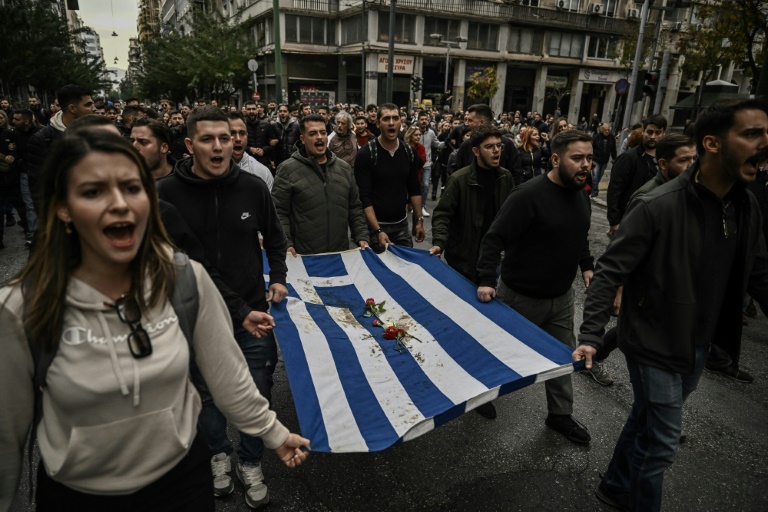
Thousands of people demonstrated in Athens on Thursday in a yearly protest marking the anniversary of a deadly crackdown on a 1973 student revolt against a US-backed junta. 

Some 5,500 people were marching in the capital, police said, in a demonstration closely watched by security forces, as violence often breaks out on the sidelines.

Police had earlier said 5,700 officers were deployed in Athens for the day, backed by drones, a helicopter and water cannon.

Much of the city centre was closed off to traffic and central Athens subway stations closed early.

The annual protests mark the day in 1973 when at least 24 people were killed at the Athens Polytechnic, when the junta sent troops and police against a pro-democracy student uprising. 

“Two (young boys) died in my hands,” Melpo Lekatsa, who was helping dress wounds at the Polytechnic on the night of November 17, 1973 as a 21-year-old student, told state TV ERT on Thursday.

The brutal crackdown shocked Europe, and is generally considered to have broken the dictatorship’s grip on power, leading to the restoration of democracy months later.

“It was a heroic act by people who moments earlier, hadn’t realised that they would be unafraid of bullets and who would place their bodies in front of tanks,” said 70-year-old Lekatsa, who was arrested and tortured by the junta.

The Polytechnic “made people realise the junta was more brutal than they had imagined,” she said.

Some 20,000 people took part in last year’s demonstration in Athens, with a further 14,000 in the second city Thessaloniki.

Most of the unrest occurs in the bohemian Athens district of Exarcheia that is a popular anarchist hideout.

This year, scores of police have been deployed in Exarcheia since August to guard regeneration projects including a controversial new metro station. 

Prime Minister Kyriakos Mitsotakis — whose government is embroiled in a wiretap scandal — on Thursday said the uprising “established the most complete democracy our country has ever known.”

The bloodstained Greek flag that flew that night over the Polytechnic’s iron gate, which was crushed by a tank, is carried at the head of the demonstration each year.

The demonstrations normally culminate at the US embassy to protest against Washington’s support for the Greek military dictatorship during the Cold War.

“Past demonstrations have turned violent and have involved destruction of property,” the US embassy in Greece said in a statement. 

“The embassy has advised its personnel to avoid the areas of the demonstrations and will close early,” it said.

UK austerity budget stings markets

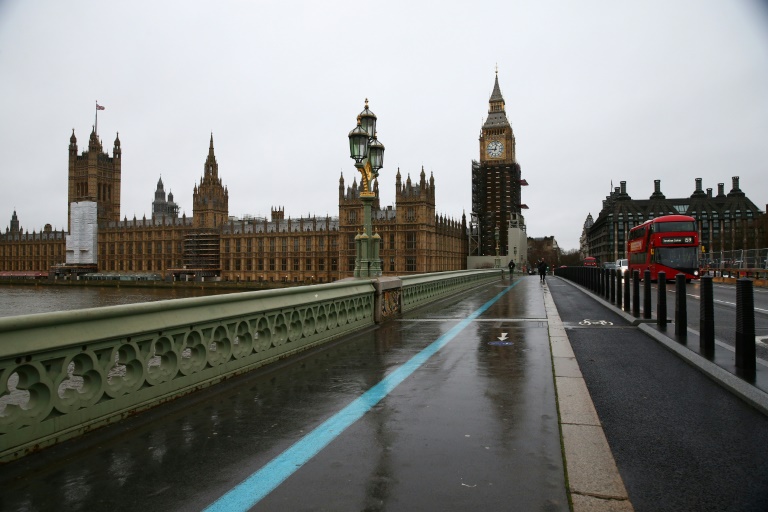
A British austerity budget hit the pound and gilts on Thursday, with stocks suffering worldwide on the glum economic outlook and the prospect of painfully high interest rates to curb inflation.

Britain unveiled a painful budget with £55 billion ($65 billion) of tax hikes and spending cuts despite confirming its economy was already in recession.

Finance minister Jeremy Hunt said the measures were needed to bring financial stability after recent turmoil in the markets, insisting they would alleviate rather than aggravate the downturn.

But the measures didn’t reassure British markets, with the pound falling and government borrowing costs rising. Losses on London stocks deepened, before later easing.

CMC Markets analyst Michael Hewson said  upheaval in markets in September over the profligate fiscal policies of the previous government had largely subsided, meaning a budget that makes Britain a worse place to do business was no longer necessary.

“Today’s budget should have walked the line between pushing inflation lower, without completely crushing demand in the economy with too many tax rises, and spending cuts,” Hewson said in a note to investors. 

“Initial analysis of today’s package suggests that we’ve got a lot of the former, and not too much of the latter, which is bad news if you’re looking to get businesses to invest,” he added.

The pound was down around one percent to $1.1799 in afternoon trading. 

London’s blue-chip FTSE 100 index was down 0.5 percent.

Traders fear the budget will worsen Britain’s cost-of-living crisis after inflation spiked to a 1981 peak of 11.1 percent, and the government confirmed that the British economy was already in a recession that could last two years.

Wall Street opened sharply lower as investors worried the US Federal Reserve will continue to aggressively raise interest rates to lower rampant inflation, even if it means pushing the economy in recession.

Investors have been reassured by some data suggesting inflationary pressures are diminishing, as well as the overall economy is holding up well, but statements by some Fed policymakers spooked traders. 

“Concerns that the Fed will overtighten and force the U.S. economy into a hard landing were partly behind yesterday’s selling and widening inversion of the yield curve,” said Patrick O’Hare at Briefing.com

“Those concerns remain in place today and have been heightened by remarks made this morning by some voting” members of the Fed’s monetary policymaking committee, he added.

The Fed’s main interest rate is currently at 3.75 to 4.0 percent, but one Fed member said it may need to go as high as 7.0 percent. Another said a contraction in the economy may be needed.

Oil prices fell back on worries about Chinese demand.

“China remains a downside risk for oil in the near term, despite its recent relaxation of certain Covid curbs,” said Craig Erlam at OANDA online trading platform.

“A surge in cases in major cities, mass testing, and restrictions will hit economic activity despite recent measures which will weigh on demand in the world’s second-largest economy,” he added.

– Key figures around 1330 GMT –

London – FTSE 100: DOWN 0.5 percent at 7,316.23 points

Paris – CAC 40: DOWN 1.0 percent at 6,538.53

Frankfurt – DAX: DOWN 0.3 percent at 14,186.35

EURO STOXX 50: DOWN 0.8 percent at 3,850.90

New York – Dow: DOWN 0.8 percent at 33,283.40

Tokyo – Nikkei 225: DOWN 0.4 percent at 27,930.57 (close)

Hong Kong – Hang Seng Index: DOWN 1.2 percent at 18,045.66 (close)

Shanghai – Composite: DOWN 0.2 percent at 3,115.43 (close)

Pound/dollar: DOWN at $1.1799 from $1.1914 on Wednesday

Euro/dollar: DOWN at $1.0331 from $1.0395

Dollar/yen: UP at 140.38 yen from 139.54 yen

Euro/pound: UP at 87.55 from 87.21 pence

Brent North Sea crude: DOWN 1.2 percent at $91.72 per barrel

West Texas Intermediate: DOWN 1.9 percent at $83.97 per barrel

burs-rl/bp

Jailed Egypt dissident's health 'deteriorated severely': family

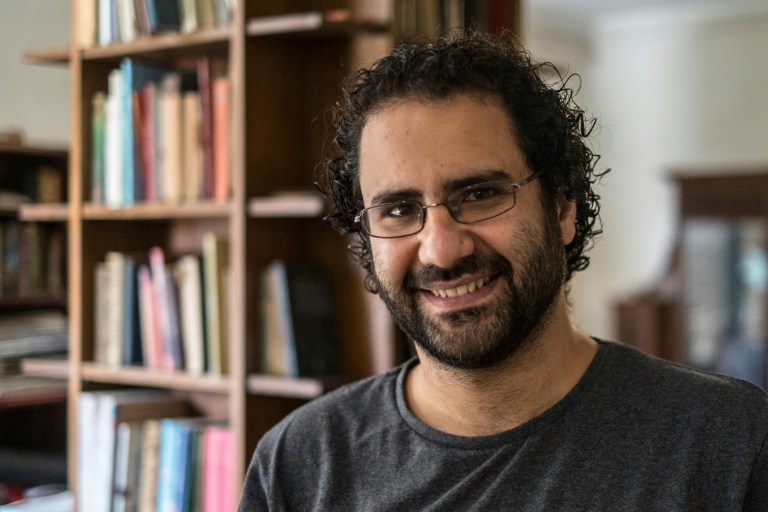
Jailed British-Egyptian activist Alaa Abdel Fattah’s health has “deteriorated severely”, his sister said Thursday after the first family visit since he ended a seven-month long hunger strike.

In a message on Twitter, Mona Seif said news from the visit was “unsettling”.

“Alaa deteriorated severely in the past two weeks, but at least they got to see him, and he needed to see the family so much”, she wrote.

After seven months consuming what his family said was “100 calories a day,” Abdel Fattah escalated his strike to all food, and then water on November 6 to coincide with the start of the UN COP27 climate summit in Egypt. 

In a letter handed to his family on Tuesday, but dated Monday, he said he had ended the strike.

Thursday was the first time the activist’s mother Laila Soueif was allowed to visit him in nearly a month, after prison authorities repeatedly denied her access last week.

The family has not disclosed more information about the visit or Abdel Fattah’s status, but “will share the full details later,” Seif added.

The pro-democracy blogger is currently serving a five-year sentence for “spreading false news” by sharing another user’s Facebook post about police brutality.

In his short letter on Monday, he did not detail the reasons behind his decision to end the strike, but asked his mother to “bring a cake” to Thursday’s visit.

“I want to celebrate my birthday with you,” wrote the activist, who turns 41 on Friday.

His family — who were concerned authorities might be “force-feeding” him and had feared he would die behind bars — raised questions over how the decision came about.

The dissident’s aunt, novelist Ahdaf Soueif, wrote on Twitter on Tuesday: “So what happened inside? What was negotiated?”

“Alaa had no idea the size of the support surrounding him,” she continued.

Egypt’s turn hosting the UN climate summit in the resort town of Sharm el-Sheikh is coming to an end this week, with Abdel Fattah continuing to make global headlines as an example of what rights groups call Egypt’s “abysmal” human rights record.

World leaders have raised his case in bilateral meetings with President Abdel Fattah al-Sisi.

Several speakers at the summit ended with the words “You have not yet been defeated” — the title of Abdel Fattah’s book. It has become a rallying cry for activists, both at the climate talks and posting online, demanding climate justice and human rights.

Rights groups estimate Cairo is holding about 60,000 political prisoners, many of them in brutal conditions and overcrowded cells.

British, Australian and Japanese prisoners freed in Myanmar junta amnesty

A former British envoy, an Australian economic adviser and a Japanese journalist arrived in Thailand late Thursday after being freed by Myanmar’s junta in an amnesty releasing almost 6,000 prisoners.

Since a military coup last year, Myanmar has seen a bloody crackdown on dissent in which thousands of people have been jailed.

Former British ambassador Vicky Bowman, Australian economic adviser Sean Turnell and Japanese journalist Toru Kubota touched down in Bangkok just after 7:00 pm (1200 GMT), according to an AFP reporter on their flight.

Bowman, who wore a traditional Burmese dress, did not comment as she was escorted by British embassy staff through the airport to a connecting flight.

Kubota waved to fellow passengers but did not respond to a request for comment.

Another prisoner freed in the amnesty, US-Myanmar citizen Kyaw Htay Oo, told AFP he was “very happy”.

“I haven’t thought what I’m going to do when I get back home. What I know is Myanmar is still not free.”

The freed prisoners on the flight looked in good health, the AFP reporter said.

A total of 5,774 prisoners were due to be released to mark Myanmar’s national day, “including some 600 women”, the junta said in a statement Thursday.

Three former ministers in Aung San Suu Kyi’s government, including close confidants Thein Oo and lawyer Kyaw Hoe, were among those released — as was NLD spokesperson Dr Myo Nyunt.

The junta did not say in its statement how many of those pardoned had been arrested during the military’s crackdown on dissent.

Bowman, who served as ambassador from 2002 to 2006, was detained with her husband in August for failing to declare she was living at an address different from the one listed on her foreigner’s registration certificate. The couple were later jailed for a year. 

Her husband, prominent Myanmar artist Htein Lin, will also be released, the military said. 

But he was not on the flight to Bangkok, according to the AFP journalist.

Australian Turnell was working as an adviser to Myanmar’s civilian leader Suu Kyi when he was detained shortly after the coup in February 2021.

He and Suu Kyi were convicted in September by a closed junta court of breaching the official secrets act and jailed for three years each.

Australian Prime Minister Anthony Albanese said Thursday that he had spoken with Turnell after his release and the economist was in “amazingly good spirits”.

Japanese journalist Kubota, 26, was detained in July near an anti-government rally in Yangon along with two Myanmar citizens and jailed for 10 years.

He was the fifth foreign journalist to be detained in Myanmar since the coup, after US citizens Nathan Maung and Danny Fenster, Robert Bociaga of Poland and Yuki Kitazumi of Japan — all of whom were later freed and deported.

At least 170 journalists have been arrested since the coup according to UNESCO, with nearly 70 still in detention.

– ‘Very proud of him’ –

Hundreds gathered outside Yangon’s Insein prison early Thursday in the hope their loved ones would be among those released.

One woman, who did not want to give her name for fear of reprisals, said she was waiting for her husband, who was halfway through a three-year sentence for encouraging dissent against the military.  

“After the coup, he joined in the protests. I’m very proud of him,” she said. 

Independent analyst David Mathieson told AFP: “Professor Turnell’s release is remarkable news after being held hostage by the regime, and his family and friends will be delighted.”

However, he said, the junta “shows no sign of reform and a mass amnesty doesn’t absolve them of atrocities committed since the coup”.

US Secretary of State Antony Blinken welcomed the prisoner release but said there was no sign the junta was opening up. 

“It is one bright spot in what is otherwise an incredibly dark time,” Blinken told reporters at an Asia-Pacific summit in Bangkok.

Amnesty International’s regional office spokesperson said: “Thousands of people jailed since the coup in Myanmar have done nothing wrong and should never have been imprisoned in the first place.”

More than 2,300 civilians have been killed since the military’s crackdown on dissent after it ousted Suu Kyi’s government, according to a Myanmar monitoring group. 

The junta blames anti-coup fighters for the deaths of almost 3,900 civilians.

Japanese PM voices security concerns in first talks with China's Xi

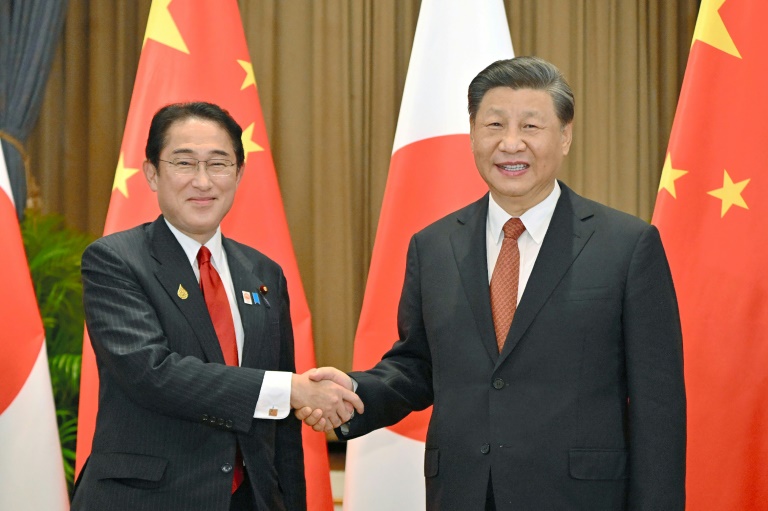
Japanese Prime Minister Fumio Kishida on Thursday pressed Chinese leader Xi Jinping on regional security issues including North Korea, as Pyongyang fired the latest missile in a record blitz that has sent nuclear fears soaring.

Kishida said he had voiced “serious concerns” in his first face-to-face talks with Xi as the leaders of Asia’s two biggest economies met on the sidelines of a Pacific Rim summit in Bangkok.

North Korea fired a short-range ballistic missile as Xi and Kishida prepared to meet, and warned Washington and its allies to expect a “fiercer” military response.

China and Japan are key trading partners, but relations have soured in recent years as Beijing bolsters its military, projects power regionally, and takes a harder line on territorial rivalries.

“On North Korea, I expressed our expectation that China will play a role including in the UN security council,” Kishida told reporters after the talks — the first in-person meeting between Chinese and Japanese leaders in three years.

Xi flew to the Asia-Pacific Economic Cooperation (APEC) forum in Bangkok from a G20 summit in Bali where US President Joe Biden also pushed him to use his influence to rein in North Korea’s activities. 

China is Pyongyang’s main diplomatic and economic ally, and in May it joined Russia in vetoing a US-led bid at the UN Security Council to tighten sanctions on North Korea.

Kishida’s office earlier condemned the latest launch by North Korea, which adds to a flurry that began this month and has included an intercontinental ballistic missile.

Seoul and Washington have warned Pyongyang could be preparing to carry out a nuclear test, which would be its seventh.

Biden held a three-way summit in Phnom Penh last week with allies Kishida and South Korean President Yoon Suk-yeol to discuss the latest drama with North Korea.

The trio issued a joint statement warning that any new nuclear test would be met with a “strong and resolute” response, without giving further details.

Biden said after his talks with Xi on Monday he was confident China did not want Kim Jong Un’s regime to escalate tensions any further.

– ‘No new Cold War’ –

Chinese missiles fired during massive military drills around Taiwan in August are believed to have fallen within Japan’s exclusive economic zone, and Tokyo has protested at what it calls growing aerial and maritime violations in recent months.

Kishida said he had used the talks to raise concerns over “China’s military activities including ballistic missile launches from China” and over disputed islands in the East China Sea.

Xi last held face-to-face talks with a Japanese prime minister in December 2019, when he met Shinzo Abe in Beijing, although he has spoken to Kishida by phone.

The APEC gathering, which French President Emmanuel Macron and Saudi Arabia’s Crown Prince Mohammed bin Salman will also attend, caps a diplomatic blitz in Asia, following the G20 and the ASEAN summit in Cambodia.

In written remarks to an APEC business summit on Thursday, Xi laid out a vision of economic cooperation for the Pacific rim, urging more open trade, closer cooperation and smooth supply chains.

“The Asia Pacific is no-one’s backyard and should not become an arena for big power contest,” he said in the remarks in English.

“No attempt to wage a new Cold War will ever be allowed by the people or by our times.”

Biden and Xi’s landmark summit talks on Monday sought to cool their rivalry, which has intensified sharply in recent years as Beijing has become more powerful and more assertive about replacing the US-led order that has prevailed since World War II.

The easing of tensions will be welcome news for APEC members who have grown increasingly alarmed at the prospect of having to take sides.

Macron is aiming to relaunch France’s strategic ambitions in the Asia-Pacific region after the humiliating blow of Australia cancelling a major submarine contract in 2021.

“In this highly contested region, which is the theatre of a confrontation between the two major world powers, our strategy is to defend freedom and sovereignty,” Macron said on Thursday.

Russian mines in Ukraine 'greatest challenge' to landmark ban treaty

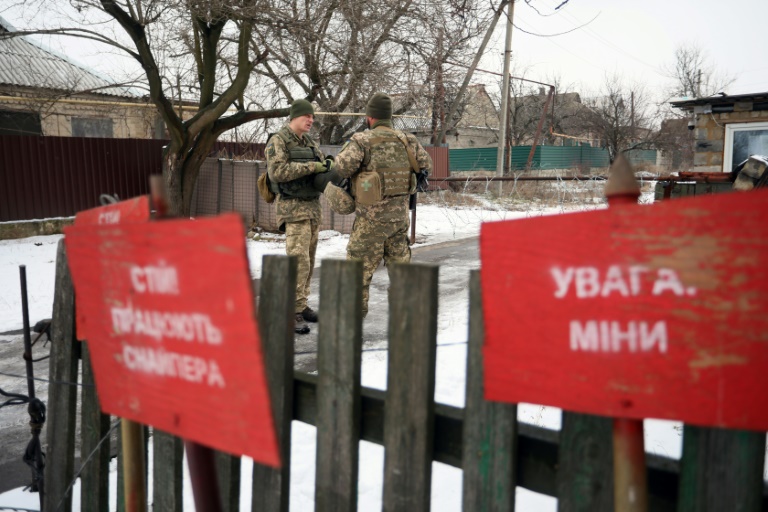
Russia’s use of newly-produced landmines in Ukraine poses the greatest challenge to the landmark Mine Ban Treaty struck 25 years ago, a monitor said Thursday.   

Moscow has developed new anti-personnel mines and used ones made as recently as 2021 in Ukraine, the Landmine Monitor said.

The monitor’s annual report identified 277 civilian casualties of mines and explosives in Ukraine in the first nine months of 2022 — a near fivefold rise on the 58 in 2021.

“At least seven types of anti-personnel mines have been used by Russian forces in Ukraine since Russia invaded the country on February 24,” it said.

The monitor said it had confirmed evidence that Russian troops had planted “victim-activated booby-traps and improvised explosive devices in Ukraine… prior to retreating and abandoning their positions”.

“Scatterable mines” appear to have been used in several regions, it said.

The report said the use of landmines by Russia — and by Myanmar — marred the 25th anniversary of the Mine Ban Treaty, the pioneering accord struck in 1997 in Ottawa.

– ‘Big setback’ –

A total of 164 countries are bound by the ban treaty and have jointly destroyed more than 55 million stockpiled anti-personnel mines.

Russia is not a signatory to the Mine Ban Treaty, while Ukraine is.

“This is the first time that a country that has signed up to the Mine Ban Treaty has faced the use of mines on its territory by another country. That’s a big setback for the landmine treaty,” said one of the report’s editors Mary Wareham, the arms advocacy director at Human Rights Watch.

“Anti-personnel landmines are unacceptable weapons that should not be used under any circumstances,” she told a press conference.

Ukraine has been asked to respond to allegations that it has used some of its 3.3 million stockpile of landmines — which should have been destroyed — since the Russian invasion.

The report said the “greatest challenge” to the emerging norm against landmines “can be seen in new use”.

“Landmines continue to kill and injure civilians, destroy livelihoods, deny land use, and disrupt access to essential services in more than 60 countries and territories,” it added.

Globally in 2021, at least 5,544 casualties were reported across 50 territories, of which 2,182 were fatal, it said.

The all-time low of 3,456 was registered in 2013.

– Syria, Afghanistan worst-hit –

Syria witnessed the highest number of casualties in 2021 for the second straight year, at 1,227. 

It was closely followed at 1,074 by Afghanistan, which has had more than 1,000 annual casualties for over a decade.

Colombia, Iraq, Mali, Nigeria and Yemen also recorded more than 100 casualties last year.

Where the age, combat status and gender of victims were known, 76 percent of casualties were civilians — of whom half were children. Males made up 81 percent of the victims.

Besides their use by the armed forces of Russia and Myanmar, landmines were deployed in 2021 by non-state armed groups in the Central African Republic, Colombia, the Democratic Republic of Congo, India and Myanmar.

There are approximately 45 million anti-personnel mines stockpiled worldwide.

Russia has the largest stockpile at 26.5 million, followed by fellow treaty non-signatories Pakistan with an estimated six million, India, China, and the United States, which has three million.

– 60 territories still mined –

Nearly 133 square kilometres (51 square miles) of land were cleared of landmines last year — more than half of which were in Cambodia and Croatia. 

Over 117,000 anti-personnel mines were destroyed, the report said.

But at least 60 territories are still riddled with anti-personnel mines, with only Sri Lanka and Zimbabwe currently seeming on target to meet clearance deadlines.

Assistance for victims was also inadequate, the report said.

“In 2021, healthcare and rehabilitation activities remained under-funded and faced increasing and numerous challenges,” it said, adding that global support for demining decreased by seven percent to $598.9 million in 2021.

The 24th annual report was produced by the Landmine and Cluster Munition Monitor, the research and monitoring arm of the International Campaign to Ban Landmines and the Cluster Munition Coalition NGOs.

India fact-checkers face threats, jail in misinformation fight

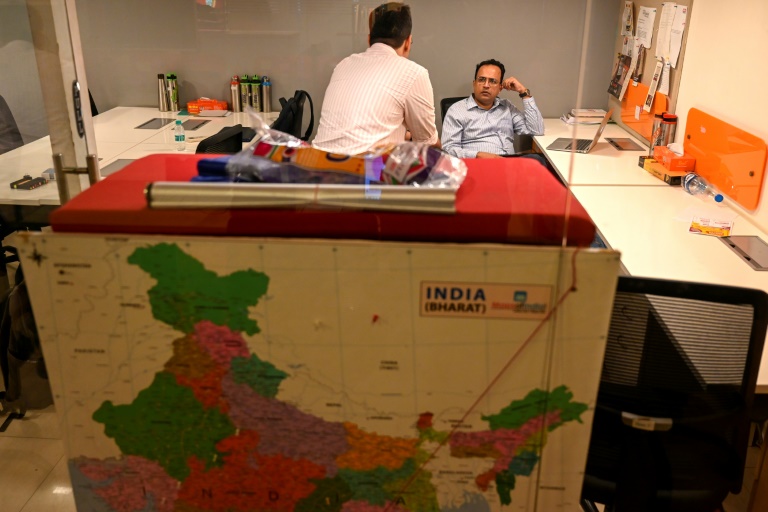
Hunched over laptops in small office cubicles, a group of Indian fact-checkers is on the frontlines of a war against misinformation, braving online abuse and legal threats.

India has the world’s largest number of certified fact-checking organisations, but many feel outnumbered and outgunned in a country with hundreds of millions of internet users and a climate of growing religious intolerance, hate speech and declining press freedom.

BOOM Live is among the organisations methodically debunking some of the tsunami of falsehoods, but their efforts can feel like a drop in the bucket.

“It’s an unequal fight,” Jency Jacob, managing editor of BOOM Live, told AFP in the firm’s cramped office in a defunct Mumbai industrial complex.  

“Fact-checkers are always going to be the underdogs who are going to fight this out… with limited resources.”

On a recent workday in October, Jacob huddled with his small team as an air conditioner blasted cool air and a generator hummed in the background.  

The team scoured WhatsApp groups –- a leading source of misinformation in India -– and trawled the internet for potential stories to debunk: a politician claiming religious minorities were the biggest users of condoms; rumours that the central bank had misplaced bank notes worth millions; footage showing a political party’s rally drew fewer crowds than it claimed.

– ‘Harassment’ –  

BOOM, which launched in 2016 and has 15 fact-checkers across India, has its task cut out in a country where hundreds of millions of smartphones, low data costs and a lack of digital literacy have accelerated the spread of internet falsehoods.  

Press freedom in the world’s biggest democracy is also increasingly under attack under Hindu nationalist Prime Minister Narendra Modi, activists say. 

India fell eight spots this year to 150 out of 180 countries in the World Press Freedom Index compiled by Reporters Without Borders.  

Fact-checkers are no exception. They say they are increasingly experiencing vicious trolling and online abuse, especially when tackling posts that seek to inflame religious hatred.  

Geeta Seshu, co-founder of Indian media watchdog Free Speech Collective, points the finger at a motivated right wing as well as vigilante groups who know they have been caught out.  

“(They are) worried that they (the fact-checkers) have managed to very successfully and very quickly point out the kind of disinformation and fake news that is being put out,” Seshu told AFP.  

A growing number of fact-checkers face “targeted harassment and threats of litigation”, Enock Nyariki of the International Fact-Checking Network (IFCN) at the Poynter Institute in the United States told AFP.  

In June, Mohammed Zubair, co-founder of fact-checking organisation Alt News and a prominent thorn in the side of Modi’s government, was jailed after an anonymous Twitter user accused him of insulting a Hindu god in a four-year-old tweet.  

Amid a torrent of abuse by right-wing campaigners, he was granted bail weeks later after battling a pile of cases that left him shuttling between various courts.

Pratik Sinha, the other co-founder of Alt News, said the court battle as well as a slew of defamation notices had added to the financial burden of his organisation, which is entirely funded by donor contributions.  

Sinha alleged that those giving money feared retribution after a fintech firm handling the payment gateway to receive donations shared donor data with police following Zubair’s arrest.  

“Many (donors) have asked: ‘Is there a way we could give you money indirectly?'” Sinha told AFP.  

– ‘Psychological impact’ –    

India, with a population of 1.4 billion people, has 17 IFCN-certified fact-checking organisations, the most of any country. The United States by comparison has 12.

AFP has a team of journalists in India who debunk misinformation as part of Meta’s third-party fact-checking programme.

The proliferation of misinformation — in hundreds of regional languages — has massively outpaced the growth in fact-checking operations in the country.

The consequences of viral misinformation can be deadly. In 2018, dozens of people were killed in a series of lynchings that rocked the country after false rumours of child kidnapping spread on smartphones.

A 2019 study by Microsoft said India had more internet hoaxes and falsehoods than the rest of the world. It showed that 64 percent of Indians had encountered “fake news” compared with a global average of 57 percent.  

As in other countries, Indian fact-checkers operate in an ecosystem where internet lies travel faster than truth, and posts peddling misinformation often get more traction than real news.  

BOOM’s recent debunking of false reports of a coup in China –- fuelled by multiple Indian accounts as well as some mainstream television channels — highlighted the disturbing reality of misinformation profiteers.  

The baseless rumour got so much traction that some online retailers began using the #Chinacoup hashtag to boost posts advertising furniture, cooking ware and appliances, further propelling the lie.

Facing growing pressures, Seshu noted the “psychological impact” on fact-checkers, especially as the job often involves poring over graphic content for long hours.

“It’s not easy,” Seshu said. 

Mourners hit streets as Iran protests take bloody turn

Hundreds of mourners poured onto the streets of a flashpoint Iranian city Thursday, defying a lethal crackdown on protests over Mahsa Amini’s death that shows signs of turning even bloodier.

This week’s protests coincide with the third anniversary of “Bloody Aban” — or Bloody November — when hundreds were killed in a crackdown on street violence that erupted over a shock overnight decision to hike fuel prices.

Security forces on Thursday killed one protester in Bukan and two in Sanandaj, a flashpoint where mourners were paying tribute to “four victims of the popular resistance” 40 days after they were slain, the Oslo-based Hengaw rights group said.

It said a member of the security forces was also killed later in Sanandaj, where people thronged the streets even as the sound of gunfire was heard in a video published by Hengaw and verified by AFP.

“Death to the dictator,” protesters chanted in another online video as they marched down a street in Sanandaj filled with bonfires and cars whose horns blared, directing their fury at Iran’s supreme leader Ayatollah Ali Khamenei.

The tradition in Iran of holding a “chehelom” mourning ceremony 40 days after a death has fuelled the demonstrations that have become the regime’s biggest challenge from the street in decades.

Fears are growing that the regime is turning “more violent after being unable to suppress the people for two months”, said Saeid Golkar, from the University of Tennessee at Chattanooga.

Speculation has mounted that Iran’s leadership has decided to crush the protest movement in the same way that it did in November 2019, when security forces killed at least 304 people, according to Amnesty International.

– Boy killed –

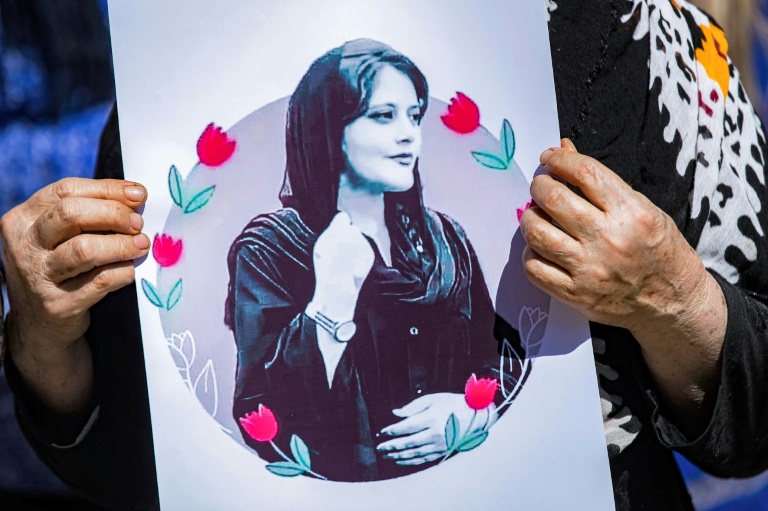
The demonstrations were sparked by the death of 22-year-old Amini on September 16, after her arrest for allegedly violating Iran’s strict dress code for women.

The unrest has been fanned by fury over the brutal enforcement of the mandatory hijab law, but has grown into a broad movement against the theocracy that has ruled Iran since the 1979 Islamic Revolution.

Gunmen on motorcycles killed nine people in two mysterious attacks Wednesday, state media said, as the protests intensified.

In the southwestern city of Izeh, “a terrorist group took advantage of a gathering of protesters” to shoot dead seven people — including a 45-year-old woman, two children aged nine and 13, and a police officer, the official IRNA news agency said.

It was the second attack the authorities have blamed on “terrorists” in the two months since the protests broke out, after at least 13 people were killed at a shrine in the southern city of Shiraz on October 26.

But a family member of the nine-year-old boy killed on Wednesday, identified as Kian Pirfalak, accused security forces of carrying out the attack, in a tweet shared by Radio Farda, a US-funded Persian station based in Prague.

“He was going home with his father and was targeted with bullets by the corrupt regime of the Islamic republic. Their car was attacked from all four sides,” the unidentified family member is heard saying in an audio recording.

In a separate attack hours later in Iran’s third city Isfahan, two assailants on a motorcycle shot dead two members of the Basij paramilitary force and wounded another two, Fars news agency said.

Elsewhere, Hengaw accused the security forces of killing at least 10 people within a 24-hour period up until late Wednesday at protests in the cities of Bukan, Kamyaran, Sanandaj and Amini’s hometown of Saqez.

– ‘Civil war’ –

Iran’s Foreign Minister Hossein Amir-Abollahian accused Israel and its allies of plotting against the Islamic republic.

Security services, Israel and Western politicians had “made plans for a civil war and the destruction and disintegration of Iran”, Amir-Abollahian tweeted.

But, he added, they “must know that Iran is not Libya or Sudan” and that the “wisdom of our people has thwarted their plan”.

General Hossein Salami, head of the Revolutionary Guards, said Iran was facing a “conspiracy”.

“The United States, England, Germany, France, Israel, Saudi Arabia and their allies are preparing to fight God, his prophet and the martyrs,” Salami said, quoted by Fars news agency.

Iran Human Rights, another Oslo-based organisation, said Wednesday that security forces had killed at least 342 people, including 43 children and 26 women, since the start of protests.

Amnesty International said Iran was seeking the death penalty for at least 21 people in “sham trials designed to intimidate” protesters.

“The crisis of impunity prevailing in Iran is enabling the Iranian authorities to not only continue carrying out mass killings but also to escalate the use of the death penalty as a tool of political repression,” Amnesty’s Diana Eltahawy said.

Close Bitnami banner
Bitnami