World

Russian strikes batter grid as first snow hits Ukraine

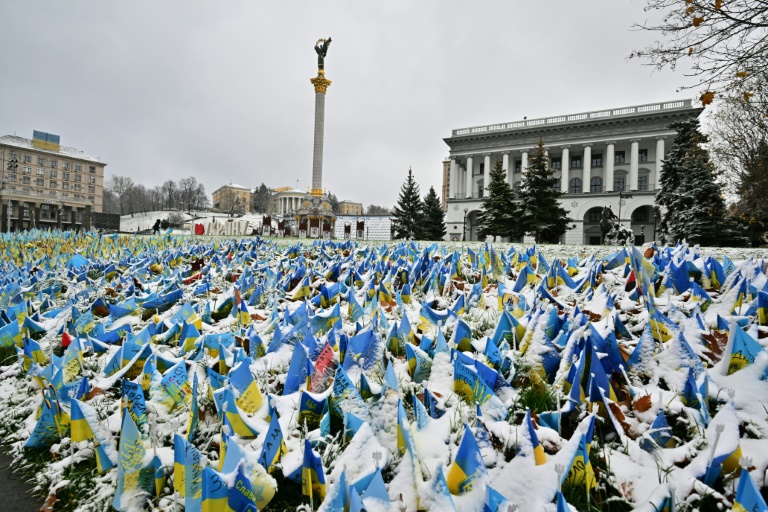
Fresh Russian strikes hit cities across Ukraine on Thursday, the latest in a wave of attacks that have crippled the country’s energy infrastructure as winter sets in and temperatures drop.

Repeated barrages have been disrupting electricity and water supplies to millions of Ukrainians, but the Kremlin blamed civilians’ suffering on Kyiv’s refusal to negotiate, rather than Russian missiles.

AFP journalists in several Ukraine cites said the fresh strikes had come with snow falling for the first time this season and after officials in Kyiv warned of “difficult” days ahead with a cold spell approaching.

The salvoes came as Moscow and Kyiv confirmed the extension of an agreement allowing Ukraine to export grain through the Black Sea, which aims to help the global supply of food. 

Ukraine has faced a pounding series of strikes against its power grid following battlefield victories against Russia, the latest being Moscow’s retreat from the southern city of Kherson.

“Two cruise missiles were shot down over Kyiv. Information about any casualties and damage is being clarified,” the Kyiv regional administration announced, adding that Russian forces had also deployed Iran-made drones.

– ‘Difficult situation’ –

The head of the central region of Dnipropetrovsk Valentyn Reznichenko said Russian strikes hit the administrative centre of Dnipro. 

“An industrial enterprise has been hit. There is a big fire,” he said, later announcing that 14 people were injured, including a 15-year-old girl.

In the southern Odessa region, a Russian strike also targeted infrastructure and the governor warned residents of the threat of a “massive” missile attack on the Black Sea territory.

“I ask the residents of the region to stay in shelters,” Maksym Marchenko said.

The eastern region of Kharkiv was also struck, governor Oleg Synegubov announced, adding that Russia hit “critical infrastructure” in strikes that injured three people.

President Volodymyr Zelensky published amateur footage of what he said showed a Russian strike on Dnipro, calling Moscow a “terrorist state” and saying Moscow “wants to bring Ukrainians only more pain and suffering.”

The Kremlin however said that ultimately Kyiv was to blame for the fallout from the blackouts.

“The unwillingness of the Ukrainian side to settle the problem, to start negotiations, its refusal to seek common ground, this is their consequence,” Kremlin spokesman Dmitry Peskov said.

The largest wave of Russian missiles on cities across Ukraine earlier this week cut power to millions of homes but supplies were largely restored to people cut off within hours.

Ukrainian energy company Ukrenergo however said that “a cold snap” had brought increased demand in regions where electricity was recently restored.

“This has further complicated the already difficult situation with the power system,” the company said.

– ‘We don’t know for sure’ –

Tensions spiked earlier this week after a missile landed in a Polish town on the border with Ukraine, and there was a flurry of blame over who was responsible for the blast that killed two.

Zelensky, after previously saying a Russian missile was to blame, seemed to soften his public comments on the matter that had raised worries of a dangerous escalation.

“I don’t know what happened. We don’t know for sure. The world does not know,” Zelensky said.

“But I am sure that it was a Russian missile, I am sure that we fired from air defence systems. But it is impossible to talk about something specific today — that it was the air defence of Ukraine,” he added.

Ukraine’s foreign minister Dmytro Kuleba, also appeared to roll back Kyiv’s determined position that it was a Russian missile that struck Poland following a call with US Secretary of State Antony Blinken.

“We share the view that Russia bears full responsibility for its missile terror and its consequences on the territory of Ukraine, Poland and Moldova,” Kuleba said on Twitter.

Russia said images from the impact site showed a missile fired by Kyiv and said its strikes had targeted sites 35 kilometres (20 miles) from Poland’s border.
UK unveils recession budget following markets chaos

Britain on Thursday unveiled a painful budget with £55 billion ($65 billion) of tax hikes and spending cuts despite confirming its economy was in recession.

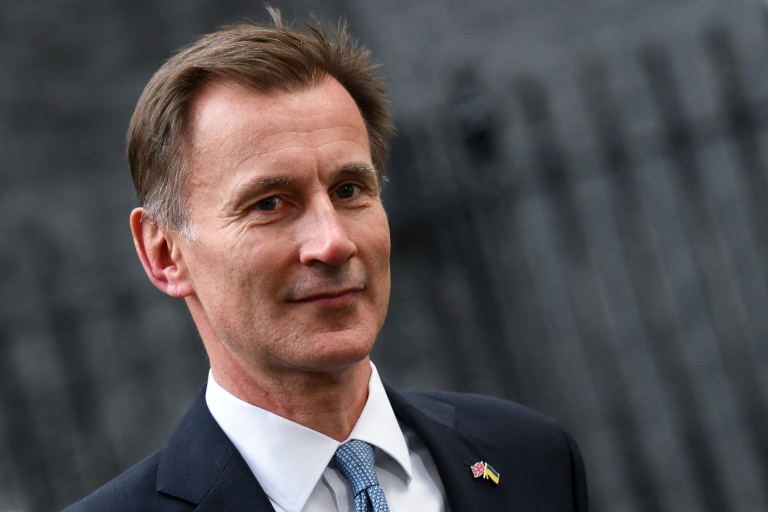
Finance minister Jeremy Hunt said the measures were needed to bring financial stability after recent markets turmoil, insisting they would alleviate rather than aggravate the downturn.

A day after official data showed UK inflation rocketing to a 41-year high above 11 percent, Hunt triggered a fresh era of austerity following the calamitous and short-lived tenure of former prime minister Liz Truss.

– ‘UK in recession’ –

Britain’s Office for Budget Responsibility judged “that the UK, like other countries, is now in recession”, Chancellor of the Exchequer Hunt told parliament on Thursday.

Despite the downturn, Hunt and Prime Minister Rishi Sunak insist tough action is needed after Truss unleashed a package of unfunded tax cuts that caused panic on financial markets.

The pound had hit a record-low close to parity against the dollar in late September after Truss failed to reveal the impact of her tax cuts on growth and inflation.

Her budget also triggered temporary purchases of UK government bonds by the Bank of England (BoE).

Sterling sank one percent against the US currency following Thursday’s budget.

Pantheon Macroeconomics analyst Samuel Tombs warned the budget risked “amplifying the recession already underway”.

Hunt said the UK economy was set to shrink 1.4 percent next year.

The BoE, which is raising interest rates to combat sky-high inflation, has warned the UK economy may experience a record-long recession until mid-2024.

Despite the grim outlook, Hunt on Thursday confirmed tax rises for workers alongside spending cutbacks.

He pledged, however, to increase spending on the cherished National Health Service amid a severe backlog in patient operations.

The chancellor added that benefits for the unemployed and pensioners would increase close to the inflation rate, and the minimum wage would climb.

Hunt also ramped up a windfall tax on oil and gas giants, whose profits have surged on fallout from the Ukraine war, to help fund support for the poorest consumers facing rocketing energy bills.

Energy giants such as BP and Shell will face an exceptional tax on profits of 35 percent, up from 25 percent, lasting an additional three years to 2028.

The government will also impose a new temporary levy on electricity generation companies.

The conflict in Ukraine has helped push worldwide inflation to its highest levels in decades. Prices are also up on supply constraints fuelled by the coronavirus pandemic.

Britain’s economy is additionally being impacted by Brexit, BoE governor Andrew Bailey repeated Wednesday.

– Scrooge –

Hunt at the weekend likened himself to the penny-pinching miser Ebenezer Scrooge in Charles Dickens’ festive favourite “A Christmas Carol”, but argued his plan will “make sure Christmas is never cancelled”.

He told MPs on Thursday: “In the face of unprecedented global headwinds, families, pensioners, businesses, teachers, nurses and many others are worried about the future.

“So today we deliver a plan to tackle the cost-of-living crisis and rebuild our economy.”

It comes as UK workers across various sectors have gone on strike this year to demand pay rises to compensate for surging inflation.

State-employed nurses and firefighters could be the latest groups to carry out industrial action, joining further walkouts this winter by rail workers and postal staff.

Hunt has already set about reversing Truss’s much-criticised budget by curtailing a freeze in domestic fuel bills, which have surged largely owing to the invasion of Ukraine by major energy producer Russia. 

The government said on Thursday a cap on average annual household fuel bills will rise by a fifth to £3,000.

Rachel Reeves, economy spokeswoman for the main opposition Labour party, slammed the budget.

“The Conservatives have crashed our economy, given up on growth and sent inflation through the roof.

“As usual, it is ordinary working people who are paying the price,” she added.

rfj-bcp/raz

UK unveils austerity budget despite recession

Britain on Thursday unveiled an austerity budget with £55 billion ($65 billion) of tax hikes and spending cuts despite confirming its economy was in recession.

Finance minister Jeremy Hunt confirmed the painful measures were needed to bring financial stability after recent turmoil, and insisted they would alleviate rather than aggravate the downturn.

A day after official data showed UK inflation rocketing to a 41-year high above 11 percent, Hunt triggered a fresh era of austerity after the calamitous and short-lived tenure of former prime minister Liz Truss.

– ‘UK in recession’ –

Britain’s Office for Budget Responsibility judged “that the UK, like other countries, is now in recession”, Chancellor of the Exchequer Hunt told parliament Thursday.

Despite the downturn, Hunt and Prime Minister Rishi Sunak insist tough action is needed after Truss unleashed a package of unfunded tax cuts that caused panic on financial markets.

The pound hit a record-low against the dollar in late September after Truss failed to reveal the impact of her tax cuts on growth and inflation.

Hunt’s budget did the opposite, confirming that as well as the UK being in recession, its economy would contract 1.4 percent next year.

The Bank of England, which is raising interest rates to combat sky-high inflation, has warned the UK economy may experience a record-long recession until mid-2024.

Despite the grim outlook, Hunt on Thursday confirmed tax rises for workers alongside spending cutbacks.

However, he pledged to increase spending on the cherished National Health Service amid a severe backlog in patient operations.

Hunt also ramped up a windfall tax on oil and gas giants, whose profits have surged on fallout from the Ukraine war, to help fund support for the poorest consumers facing rocketing energy bills.

Energy giants such as BP and Shell will face an exceptional tax on profits of 35 percent, up from 25 percent, last an additional three years to 2028.

The government will also impose a new temporary levy on electricity generation companies.

The Ukraine war has helped push worldwide inflation to its highest levels in decades. Prices are also up on supply constraints fuelled by the Covid pandemic.

Britain’s economy is additionally being impacted by Brexit, Bank of England governor Bailey and fellow BoE rate-setter Swati Dhingra told MPs Wednesday.

– Scrooge –

Hunt at the weekend likened himself to the penny-pinching miser Ebenezer Scrooge in Charles Dickens’ festive favourite “A Christmas Carol”, but argued that his plan will “make sure Christmas is never cancelled”.

Hunt insisted that, thanks to his measures, the downturn would be “shallower”, shrugging off concerns that tax hikes and spending cuts could deepen the downturn.

Hunt told MPs: “In the face of unprecedented global headwinds, families, pensioners, businesses, teachers, nurses and many others are worried about the future.

“So today we deliver a plan to tackle the cost-of-living crisis and rebuild our economy.”

It comes as UK workers across various sectors have gone on strike this year to demand pay rises to compensate for surging inflation.

State-employed nurses and firefighters could be the latest groups to carry out industrial action, joining further walkouts this winter by rail workers and postal staff.

Hunt has already set about reversing Truss’s much-criticised budget by curtailing a freeze in domestic fuel bills, which have surged largely owing to the invasion of Ukraine by major energy producer Russia. 

Helping to stabilise markets, he also reversed her plan to cut tax on company profits. 

Alibaba reports loss of $2.9 billion in third quarter

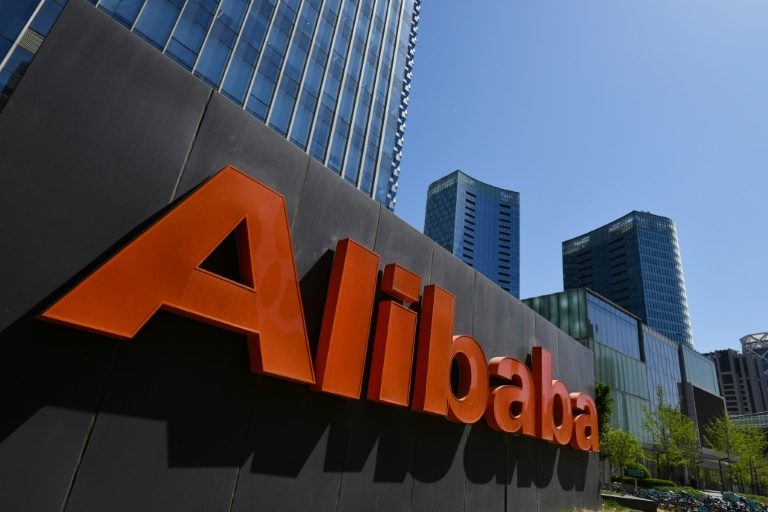
Chinese e-commerce giant Alibaba on Thursday reported a loss of 20.6 billion yuan ($2.89 billion) for the third quarter, as the company grapples with an economic slowdown and an anti-monopoly crackdown.

The heavy net loss attributable to ordinary shareholders was primarily due to a “decrease in market prices of our equity investments in publicly traded companies”, among other factors, the company said in a statement.

Alibaba’s performance is widely seen as a gauge of Chinese consumer sentiment, given its market dominance.

Revenue for the three months ending September 30 was up three percent year-on-year at 207.2 billion yuan, which Chief Financial Officer Toby Xu said was achieved “in spite of the impact on consumption demand by the Covid-19 resurgence in China as well as slowing cross-border commerce”.

Alibaba said it achieved revenue growth by “enhancing operating efficiency” as well as through the expansion of its logistics and services businesses, despite a slump in e-commerce sales within China.

It comes after the company earlier this year reported flat quarterly revenue growth for the first time ever.

– Flagging demand –

The company said in its statement on Thursday that revenue from domestic commerce had fallen in the third quarter, “mainly as a result of softer consumption demand, Covid-19 resurgence and restrictions, as well as ongoing competition”.

In a sign of difficulties for Alibaba, the company appears to have laid off a number of employees, with its headcount down more than 1,700 from the previous quarter.

China’s major tech companies have faced economic uncertainty, Covid-19 restrictions that have depressed consumer spending, as well as heightened scrutiny from regulators in recent months.

Fellow tech titan Tencent reported on Wednesday its second quarterly drop in revenue in a row.

Alibaba in particular has been at the centre of regulatory crackdowns at home and abroad.

US authorities have put the company on a watchlist that could see it delisted in New York if it does not comply with disclosure orders, causing its shares to slump.

Chinese authorities pulled a planned IPO by the company’s financial arm Ant Group at the last minute in 2020, then hit Alibaba with a record $2.75 billion fine for alleged unfair practices last year.

The company’s Singles Day e-commerce festival, which traditionally dwarfs similar US events such as Black Friday and Cyber Monday, has been more muted in recent years.

Alibaba — alongside main rival JD.com — did not release full sales figures for the shopping bonanza for the first time ever this year, instead saying in a statement that sales were flat from last year.

Kazakhstan says foiled coup attempt ahead of early vote

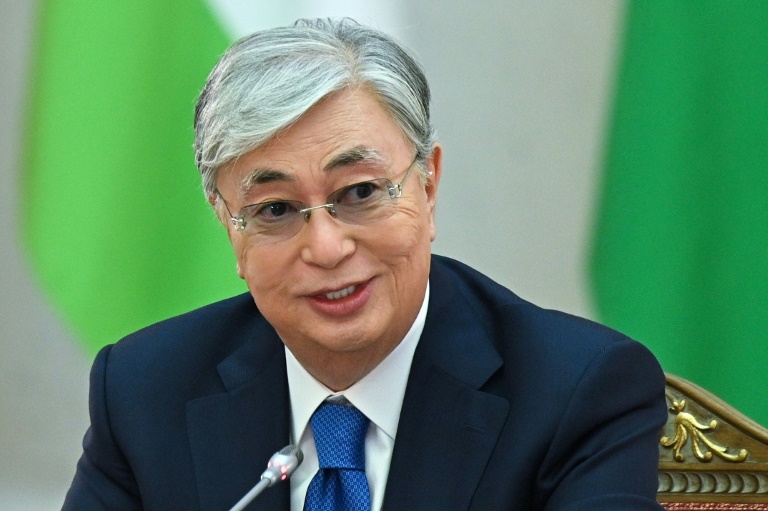
Kazakhstan said Thursday it had prevented a coup attempt by supporters of an exiled opposition figure as it arrested seven people ahead of a presidential election this weekend.

On Sunday, Kazakhstan will hold a snap presidential vote expected to cement  incumbent Kassym-Jomart Tokayev’s grip on power, months after deadly unrest shook the Central Asian country and left more than 230 people dead.

The National Security Committee said a group of seven people planned to “organise riots and a coup and proclaim a provisional government,” adding that the suspects “share the views of exiled opponent Mukhtar Ablyazov”.

Ablyazov, a former energy minister and bank chairman, is a hugely controversial figure whom Kazakhstan has tried and sentenced in absentia for murder and embezzlement. 

The France-based Ablyazov has vociferously encouraged protests through his social media channels.

The security service said the group was trying to organise large-scale riots and planning to attack administrative buildings and law enforcement offices with arms and projectiles. 

Weapons including Kalashnikov assault rifles, sawn-off shotguns, ammunition and materials for Molotov cocktails as well as walkie-talkies were confiscated, it said.

Tokayev, 69, became leader in 2019 and has stymied opposition and consolidated power by sidelining his authoritarian predecessor Nursultan Nazarbayev after the January unrest.

He has touted himself as a reforming leader capable of uniting the country.

Earlier this year, he had empowered law enforcement personnel with “shoot to kill” orders.

The vast, ex-Soviet country is precariously perched geopolitically, with historic economic and military ties with Moscow coming under strain over Ukraine and Beijing emerging as a regional power broker.

Tokayev has vowed to build “a new Kazakhstan” by liberalising the judicial system, tackling corruption and undertaking reforms.

But deep social inequality that was at the origin of the January protests remains a problem and a potential political threat.

Tokayev is facing five little-known challengers as he seeks a seven-year term in the early vote he initiated in September, saying he needed a “new mandate of trust from the people.”

Elections were initially set for December 2024, but in March, he introduced constitutional reforms to curb the powers of the president and boost the role of parliament, sparking the early ballot.

– ‘No real choice’ –

Observers from the Organisation for Security and Cooperation in Europe (OSCE) have criticised Kazakhstan’s failure to meet electoral recommendations, including “conditions of eligibility and registration of candidates.”

“There is no credible candidate. There is no real choice. I’ll be voting against all of them,” said Asset Terirgaliyev, a retired resident of the country’s economic capital, Almaty, the city which was an epicentre of the riots and subsequent repression.

“These elections are a farce,” architect Aidar Ergaly told AFP.

“Had Tokayev said: ‘I’m annulling the vote. I’m staying in power for seven years — or however long I want — and then I’ll go,’ I would respect him for his honesty.”

Political analyst Andrei Chebotarev said the January violence, which he said put the country “on the brink of a civil war,” had also brought about a “change of the foundations of society and the state.”

– Balancing act –

“A little time has passed and we don’t see any real changes yet,” said pensioner Svetlana Kadysheva.

Janiya Nakizbekova, a 57-year-old entrepreneur, was more optimistic. 

“We have great hope in Tokayev and believe that he cares more about the people than Nazarbayev did.”

The International Monetary Fund has warned of the persistent risk of instability as Kazakhstan’s economy — heavily dependent on Russia — is suffering from the impact of the war in Ukraine.

A former diplomat, Tokayev has won a reputation as a shrewd politician and is expected to continue performing a balancing act between the West, Russia and China.

He has also criticised Moscow’s invasion of Ukraine but stopped short of joining Western sanctions on Russia.

About 12 million people are eligible to vote. Polling stations open Sunday at 0100 GMT and close at 1500 GMT.

dr-bk-ik-bur/ach 

Ukraine grain export deal extended for four months

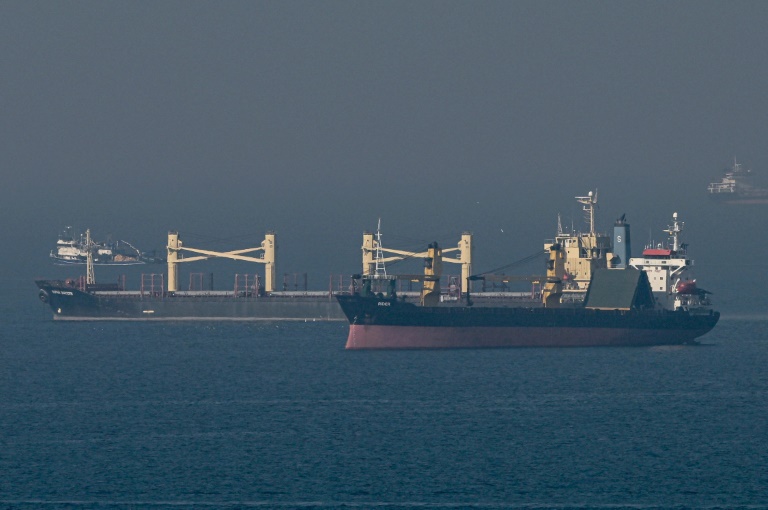
An agreement allowing Ukraine to export grain through the Black Sea and aimed at relieving global food insecurity has been extended for 120 days, officials said on Thursday.

Ukraine is a top world exporter of grain, but Russia’s invasion in late February stopped shipments. 

The deal between the two warring sides, brokered by Turkey and the United Nations in July, has helped to transport more than 11 million tonnes of grain and other agricultural products from Ukrainian ports since the start of August. It had been due to expire on Saturday.

On Thursday Ukrainian and Turkish officials announced that the agreement would be extended by four months under existing conditions.

“#BlackSeaGrainInitiative will be prolonged for 120 days,” Ukrainian Infrastructure Minister Oleksandr Kubrakov said on Twitter, while a senior Turkish official confirmed to AFP that the deal had been extended “under current terms”.

Russia confirmed that it had allowed the extension of the grain deal “without changes”. 

“The Russian side is also allowing for the technical extension of the grain initiative without changes in terms or scope,” foreign ministry spokeswoman Maria Zakharova said, after fears the landmark agreement would not be extended.

In recent weeks, Russia had repeatedly warned that it might not agree to extend the agreement because a separate deal that was also signed in July, exempting Russian fertilisers from sanctions, had not been implemented.

-‘Indefinitely’-

UN Secretary General Antonio Guterres hailed the extension and said the grain deal “continues to demonstrate the importance of discreet diplomacy in the context of finding multilateral solutions,” he said.

Guterres also sought to allay Moscow’s concerns, saying that “the United Nations is also fully committed to removing the remaining obstacles to exporting food and fertilisers from the Russian Federation”.

Both agreements were “essential to bring down the prices of food and fertiliser and avoid a global food crisis,” Guterres said in a statement released by the Istanbul-based Joint Coordination Center (JCC) that has been overseeing the agreement. 

Ukraine wants the agreement’s extension “indefinitely”, President Volodymyr Zelensky said.

“This is vital for stability,” he said in a speech broadcast on social media.

The flow of Ukrainian exports is essential to stabilising prices on international markets and to supplying the populations most vulnerable to the risk of hunger, particularly in Africa. 

Some 40 percent of the grain exported under the agreement has gone to developing countries.

Turkish President Recep Tayyip Erdogan tweeted: “It has been clearly seen how important and beneficial this agreement is for the food supply and security of the world.”

– Fertilisers –

In the weeks of intense diplomacy leading up to Thursday’s announcement, much of the negotiations focused on the issue of fertilisers, a UN source said on condition of anonymity.

Agricultural products and fertilisers do not fall under the sanctions against Russia but because of the risks in the Black Sea linked to the Ukraine conflict, it has become difficult to insure the vessels transporting them.

According to the UN source, a policy framework has been established for exceptions in insurance, access to ports, financial transactions, shipping and access for shipping, in compliance with the sanctions imposed on Russia.

“Only if we could clarify this policy framework, the private sector actors were willing to re-engage in the trade” of Russian fertilisers.

The Black Sea agreement allows Ukrainian grain ships to sail along safe corridors that avoid mines in the Black Sea.

Last month, Russia temporarily pulled out from the agreement, accusing Ukraine of a “massive” drone attack on its Black Sea fleet in Crimea before rejoining it. 

Russia’s invasion blocked 20 million tonnes of grain in Ukraine’s ports before the United Nations and Turkey brokered the deal in July.

burs-fo/ah

Binance boss pledges to release audit, throws 'psychopath' jab

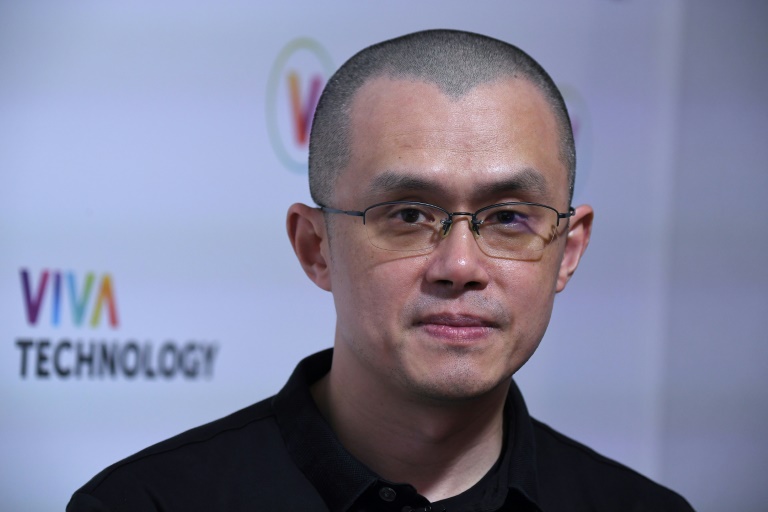
The head of Binance, the world’s top cryptocurrency exchange, pledged Thursday to release an audit into the firm and rejected claims he sparked the recent collapse of rival platform FTX.

Changpeng Zhao said an independent audit into Binance would be released “in a couple of weeks” and urged a full investigation into FTX’s demise, before delivering a scathing critique of its founder Sam Bankman-Fried, questioning his mental stability.

Speaking at the Milken Institute’s Middle East and Africa Summit in Abu Dhabi, Chinese-Canadian Zhao, insisted “100 percent” that Binance would survive if investors suddenly withdrew funds from his platform.

Last week, FTX filed for bankruptcy and Bankman-Fried resigned as chief executive, a day after Zhao scrapped plans to acquire the crisis-hit competitor.

The collapse of FTX, once valued at $32 billion, sent major cryptocurrencies plunging and further undermined investor confidence in the young and turbulent cryptocurrency sector.

“That’s normal market behaviour. If you want everyone to be equal, then you go back to communism, and that doesn’t work well,” Zhao said.

But he denied intentionally wiping out FTX by earlier announcing Binance was liquidating holdings in FTX’s FTT token.

The move prompted Bankman-Fried to write on Twitter: “Well played; you won.”

“Only a psychopath can write that tweet,” 45-year-old Zhao said, playing down his influence on the market.

“If I sell Bitcoin, nobody cares,” he claimed.

FTX’s problems were due to investors’ “suspicion” and “frustration” according to the Forbes-listed multi-billionaire.

When asked whether Binance would release an independent audit of its reserves and liabilities, Zhao said: “Yes… and I think in a couple of weeks.”

Zhao was cautious that improved regulation was the only solution to the crypto sector’s problems, insisting senior industry figures should set standards.

“I think regulation is a key component…(but) more importantly the industry players should act by leading by example,” he said.

“The tricky part is, how do you strike the balance where you encourage innovation…and try to protect consumers?”

Russian mines in Ukraine 'greatest challenge' to landmark ban treaty

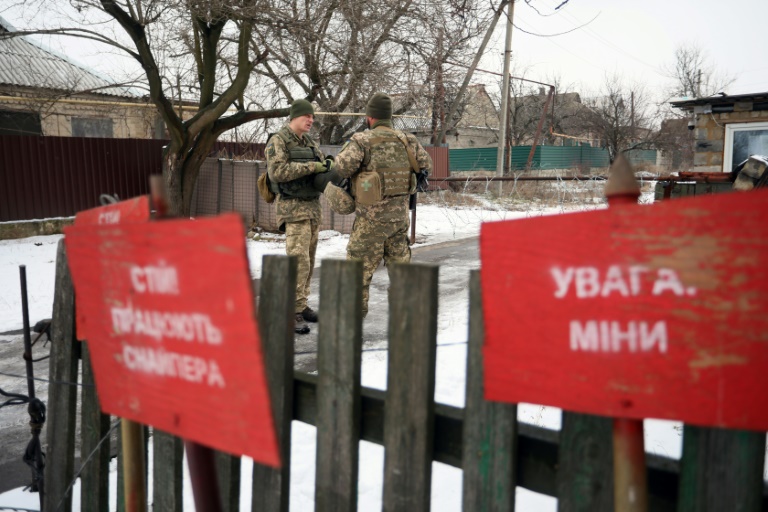
Russia’s use of newly-produced landmines in Ukraine poses the greatest challenge to a landmark global ban treaty forged 25 years ago, a monitor said Thursday.   

Moscow has developed new anti-personnel mines and used ones made as recently as 2021 in Ukraine, the Landmine Monitor said.

It said the use of landmines by Russia — and by Myanmar — marred the 25th anniversary of the Mine Ban Treaty, a pioneering accord struck in Ottawa in 1997.

The monitor’s annual report identified 277 civilian casualties of mines and explosives in Ukraine in the first nine months of 2022 — a near fivefold rise on the 58 in 2021.

“At least seven types of antipersonnel mines have been used by Russian forces in Ukraine since Russia invaded the country on February 24,” it said.

The monitor said it had confirmed evidence that Russian troops had planted “victim-activated booby-traps and improvised explosive devices in Ukraine… prior to retreating and abandoning their positions”.

“Scatterable mines” appear to have been used in several regions, many of which were under Russian control, it said.

“The greatest challenge to the emerging norm against these weapons can be seen in new use,” it said.

“Landmines continue to kill and injure civilians, destroy livelihoods, deny land use, and disrupt access to essential services in more than 60 countries and territories.”

A total of 164 countries are bound by the ban treaty and have jointly destroyed more than 55 million stockpiled anti-personnel mines.

Russia is not a signatory to the Mine Ban Treaty, while Ukraine is.

In 2021, at least 5,544 casualties were reported across 50 territories, of which 2,182 were fatal, it said.

The number of casualties was however down on the 7,073 recorded in 2020.

The all-time low of 3,456 was registered in 2013.

“Casualties from landmines and ERW (explosive remnants of war) have been disturbingly high for the past seven years,” the report said.

“This trend is largely the result of increased conflict and contamination by improvised mines observed since 2015.”

– Syria, Afghanistan worst-hit –

Syria witnessed the highest number of casualties in 2021 for the second straight year at 1,227. 

It was closely followed at 1,074 by Afghanistan, which has had more than 1,000 annual casualties for over a decade.

Colombia, Iraq, Mali, Nigeria and Yemen also recorded more than 100 casualties last year.

Where the age, combat status and gender of victims were known, 76 percent of casualties were civilians — of whom half were children. Males made up 81 percent of the victims.

Besides their use by the armed forces of Russia and Myanmar, landmines were deployed in 2021 by non-state armed groups in the Central African Republic, Colombia, the Democratic Republic of Congo, India and Myanmar.

The monitor said 11 countries were still producing anti-personnel mines: China, Cuba, India, Iran, Myanmar, North Korea, Pakistan, Russia, Singapore, South Korea and Vietnam.

This is one fewer than last year, following a US decision to prohibit their development, production, and acquisition.

There are approximately 45 million anti-personnel mines stockpiled worldwide.

Russia has the largest stockpile at 26.5 million, followed by fellow treaty non-signatories Pakistan with an estimated six million, India, China, and the United States, which has three million.

– 60 territories still mined –

Nearly 133 square kilometres (51 square miles) of land were cleared of landmines last year — more than half of which were in Cambodia and Croatia. 

Over 117,000 anti-personnel mines were destroyed, the report said.

But at least 60 territories are still riddled with anti-personnel mines, with only Sri Lanka and Zimbabwe currently seeming on target to meet clearance deadlines.

Assistance for victims was also inadequate, the report said.

“In 2021, healthcare and rehabilitation activities remained under-funded and faced increasing and numerous challenges,” it said, adding that global support for demining decreased by seven percent to $598.9 million in 2021.

The 24th annual report was produced by the Landmine and Cluster Munition Monitor, the research and monitoring arm of the International Campaign to Ban Landmines and the Cluster Munition Coalition NGOs.

Sports world tries to sidestep collapse of sponsor FTX

The collapse of the cryptocurrency exchange FTX has sent shockwaves through sport, which the platform used widely to build its brand.

FTX signed a series of sponsorship deals and recruited sports stars to appear in commercials, often aired during sports programmes.

Since the announcement of the company’s bankruptcy last week, many sports organisations have been quick to pull out of partnerships.

The Mercedes Formula 1 team removed the FTX logos from their Formula One cars ahead of the Brazil Grand Prix last Sunday.

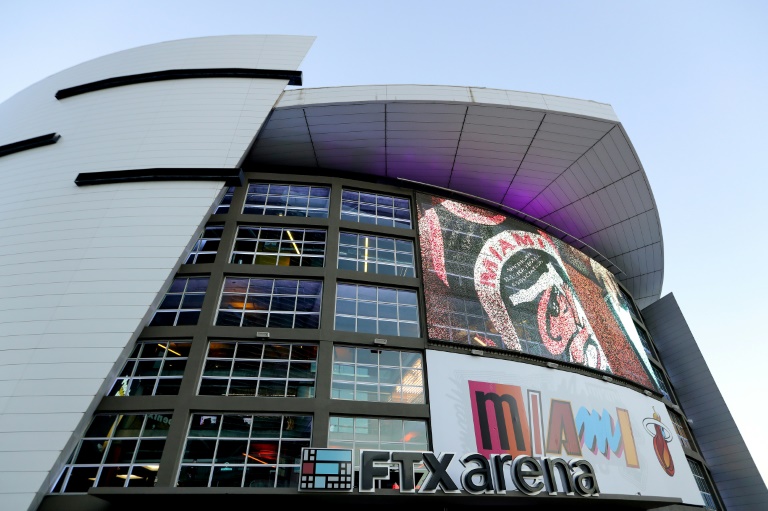
The Miami Heat NBA basketball team dropped its deal with FTX, having signed a $135-million contract for arena naming rights in March 2021. 

The FTX Arena, previously known as the Miami Arena and the American Airlines Arena, will change its name again. Photos on social media showed that the FTX logo had already been removed. 

The debacle has also taken a legal turn. 

On Wednesday, an investor filed a lawsuit in Miami against the company, its former boss Sam Bankman-Fried and several famous athletes. 

These included basketball player Stephen Curry and his Golden State Warriors team, former NBA star Shaquille O’Neal, tennis player Naomi Osaka and NFL quarterback Tom Brady. 

The investor, Edwin Garrison, of Oklahoma, accused the company of “misrepresentations and omissions”.

“Some of the biggest names in sports and entertainment have either invested in FTX or been brand ambassadors for the company” and hyped the exchange in ads and on social media, the document said.

Comedian Larry David, who appeared in an FTX commercial that aired during the last Super Bowl, was also named.

– Cryptocurrency doubts –

FTX had also made a notable foray into the world of e-sports by forging a $210-million, 10-year partnership with the TSM Group, known for its League of Legends team. 

“After monitoring the evolving situation and discussing internally, we’re suspending our partnership with FTX effective immediately,” the company announced Wednesday. 

“This means that FTX branding will no longer appear on any of our org, team and player social media profiles, and will also be removed from our player jerseys.”

Other cryptocurrency exchanges have invested in the sports world in recent years, benefiting from the soaring price of bitcoin and other virtual currencies from 2020. 

Crypto.com is a sponsor of the World Cup, which kicks off in Qatar next week, has a strong presence in  mixed martial arts and, among other deals, has sponsored events and teams in Formula One, the NBA and Australian Rules football. 

In the English Premier League, OKX sponsors Manchester City and WhaleFin is a sponsor of Premier League club Chelsea. 

Socios, which markets blockchain tokens to fans, has deals with six English clubs, a string of other big teams across Europe and bought almost 25 percent of Barcelona’s media studio in the summer.

Quite apart from the fear of signing big contracts that then evaporate, the crypto industry could face increased regulation by US and European authorities. 

John Fortunato, a professor at Fordham University’s business school in New York, said FTX’s dramatic fall would make teams and athletes wary of taking money from other companies in the sector in the short term.

“For the time being, there might be some reluctance entering this product category,” he said. 

“Sports leagues are pretty resilient when it comes to finding revenue streams,” he added.

“They are always looking for opportunities and will find other sponsors,” he added.  

UK ex-ambassador, Australian and Japanese prisoners leave Myanmar after junta amnesty

A former British envoy, an Australian economic adviser and a Japanese journalist left Myanmar Thursday as the junta released almost 6,000 prisoners, an AFP correspondent and diplomatic sources said.

The Southeast Asian country has been in turmoil since the military’s coup last year and a bloody crackdown on dissent during which thousands have been jailed.

Former British envoy Vicky Bowman, who was jailed for a year in September, was on board a plane that departed Yangon at 5:26 pm local time (1056 GMT), according to an AFP reporter on the plane.

Australian economics adviser Sean Turnell and Japanese journalist Toru Kubota were on the same flight, diplomatic sources told AFP.

Altogether, 5,774 prisoners will be released, “including some 600 women”, the junta said in a statement.

Three former ministers from Aung San Suu Kyi’s ousted government and detained US-Myanmar citizen Kyaw Htay Oo would also be released, a junta official said.

The junta said all four foreigners would later be deported although AFP could not confirm if Kyaw Htay Oo was on the flight.

The junta did not say in its statement announcing the amnesty how many of those pardoned had been arrested during the military’s crackdown on dissent.

Bowman, who served as ambassador from 2002 to 2006, was detained with her husband in August for failing to declare she was living at an address different from the one listed on her foreigner’s registration certificate.

They were later jailed for a year. Her husband, prominent Myanmar artist Htein Lin, will also be released, the military official said.

Ties between Myanmar and its former colonial ruler Britain have soured since the military’s takeover, with the junta this year criticising the UK’s recent downgrading of its mission there as “unacceptable”.

Turnell was working as an adviser to Myanmar’s civilian leader Suu Kyi when he was detained shortly after the coup in February 2021.

He and Suu Kyi were convicted in September by a closed junta court of breaching the official secrets act and jailed for three years each.

Kubota, 26, was detained in July near an anti-government rally in Yangon along with two Myanmar citizens and jailed for 10 years.

He was the fifth foreign journalist to be detained in Myanmar since the coup, after US citizens Nathan Maung and Danny Fenster, Robert Bociaga of Poland and Yuki Kitazumi of Japan — all of whom were later freed and deported.

At least 170 journalists have been arrested since the coup according to UNESCO, with nearly 70 still in detention.

– ‘Very proud of him’ –

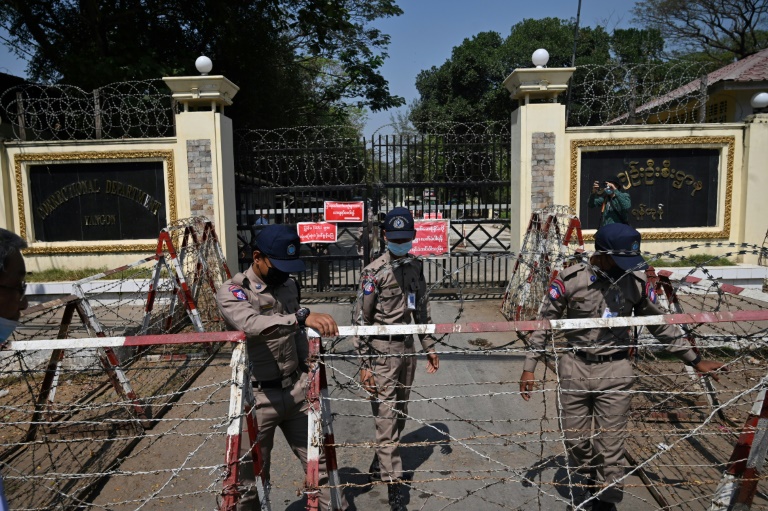
Hundreds gathered outside Yangon’s Insein prison in the hope their loved ones would be among those released.

One woman, who did not want to give her name for fear of reprisals, said she was waiting for her husband, who was halfway through a three-year sentence for encouraging dissent against the military.  

“Before, he was a USDP (military-backed political party) supporter. After the coup, he joined in the protests. I’m very proud of him,” she said. 

Three buses left the main gate of the sprawling, colonial-era prison shortly after 3:00 pm local time (0830 GMT) and passed by a crowd of around 200 people waiting outside, an AFP reporter said.

San San Aye said she was waiting for her brothers and sisters to be released.

“Three of them were sentenced to three years each eight months ago,” she told AFP. 

“Their children are waiting at home. We will be more than happy if they are released.”

Independent analyst David Mathieson told AFP: “Professor Turnell’s release is remarkable news after being held hostage by the regime, and his family and friends will be delighted.”

However, he said, the junta “shows no sign of reform and a mass amnesty doesn’t absolve them of atrocities committed since the coup”.

Amnesty’s regional office spokesperson said: “Thousands of people jailed since the coup in Myanmar have done nothing wrong and should never have been imprisoned in the first place.”

More than 2,300 civilians have been killed since the military’s crackdown on dissent after it ousted Suu Kyi’s government, according to a Myanmar monitoring group. 

The junta blames anti-coup fighters for the deaths of almost 3,900 civilians.

Close Bitnami banner
Bitnami