World

M23 rebels advance in eastern DR Congo

The M23 rebel group in eastern Democratic Republic of Congo has pushed into fresh territory, officials said, after a regional bloc issued a call to lay down arms. 

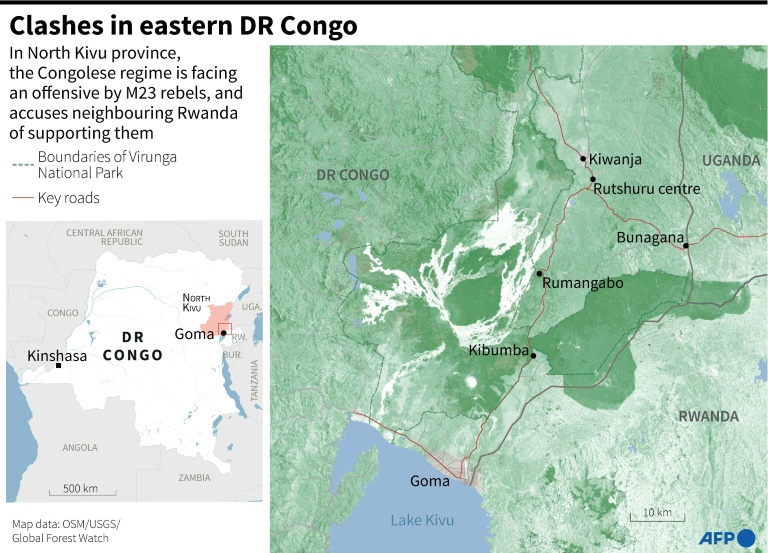
A resurgent group mostly drawn from Congolese Tutsis, the M23 has swept across North Kivu province, triggering a humanitarian crisis and a showdown between the DRC and Rwanda, which Kinshasa accuses of supporting the rebels.

In recent weeks, fighters have been edging closer towards Goma, an important commercial hub of one million people on the border with Rwanda.

But local residents and administrative officials told AFP that the armed group had also begun a push westwards into Masisi territory.

“The rebels are here,” a resident of Tongo, a town in wildlife haven Virunga National Park, which lies on the road leading to Masisi territory, said on Thursday. 

An official in the local administration, who requested anonymity, also told AFP late Wednesday that M23 fighters had entered his office. 

M23 fighters and Congolese troops were clashing this week in Kibumba, which is just 20 kilometres (12 miles) north of Goma. 

A security official, who declined to be named, said Thursday the M23 now controlled the settlement. 

The DRC’s army has yet to communicate officially about the rebel advance. 

On Wednesday, the head of the newly created East African Community (EAC) military force in eastern DR Congo, Jeff Nyagah, said that rebels that must pursue political negotiations and disarm. 

“Those who fail or refuse to voluntarily disarm, then we’ll go for them,” the Kenyan general warned.

Nyagah also vowed that the EAC force would protect Goma. 

Despite official denials from Kigali, an unpublished report for the United Nations seen by AFP in August pointed to Rwandan involvement with the M23.

The report also said the M23 plans to capture Goma in order to extract political concessions from the government in Kinshasa. 

The M23 first leapt to prominence in 2012 when it captured Goma, before being driven out and going to ground. 

But the rebel group re-emerged late last year, claiming that the DRC had failed to honour a pledge to integrate its fighters into the army, among other grievances. 

Russian strikes batter grid as first snow hits Ukraine

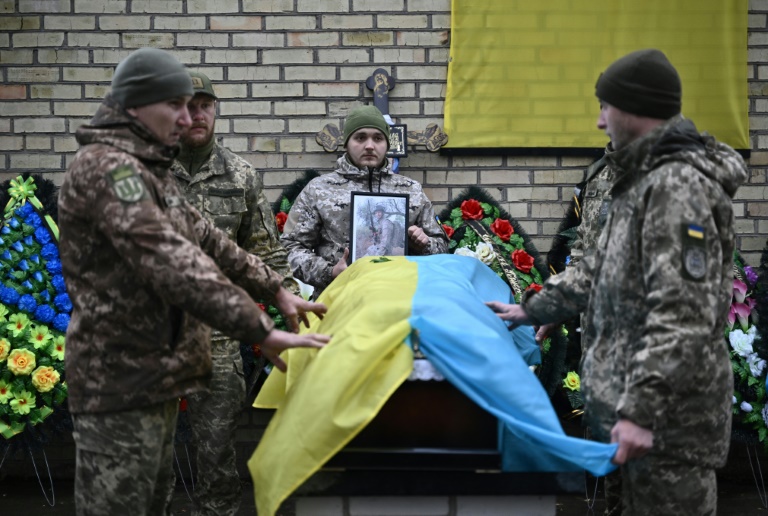
Fresh Russian strikes hit cities across Ukraine on Thursday, officials said, the latest in a wave of attacks that have crippled the country’s energy infrastructure as winter sets in and temperatures drop.

AFP journalists in several Ukraine cites said the new barrage had come with snow falling for the first time this season and after officials in Kyiv warned of “difficult” days ahead with a cold spell approaching.

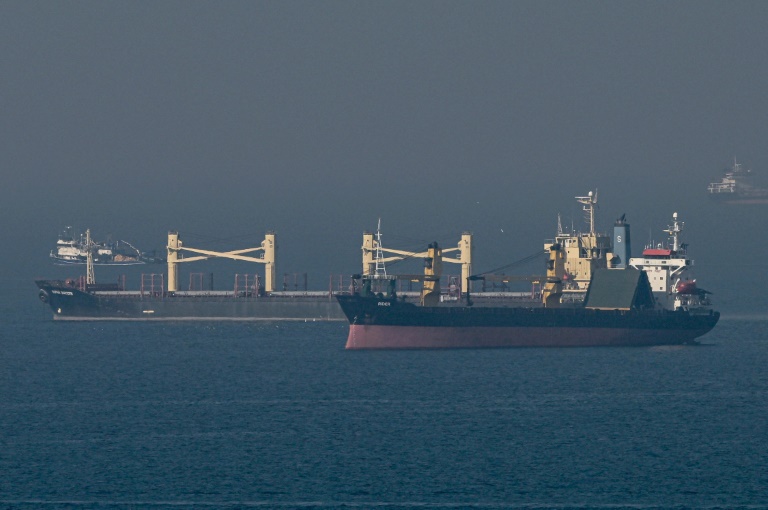
The salvoes of Russian missiles this week came as officials announced good news Thursday on the extension of the agreement allowing Ukraine to export grain through the Black Sea, which aims to help the global supply of food. 

Yet the fresh strikes have pounded Ukraine and come on the back of another stark battlefield setback for Russian forces, which retreated from the southern city of Kherson.

“Two cruise missiles were shot down over Kyiv. Information about any casualties and damage is being clarified,” the Kyiv regional administration announced, adding that Russian forces had also deployed Iran-made drones.

The head of the central region of Dnipropetrovsk Valentyn Reznichenko said Russian strikes hit the administrative centre of Dnipro. 

“An industrial enterprise has been hit. There is a big fire,” he said, later announcing that 14 people were injured, including a 15-year-old girl.

In the southern Odessa region, a Russian strike also targeted infrastructure and the governor warned residents of the threat of a “massive” missile attack on the Black Sea territory.

“I ask the residents of the region to stay in shelters,” Maksym Marchenko said.

The eastern region of Kharkiv was also struck governor Oleg Synegubov announced, adding that Russia hit “critical infrastructure” in strikes that injured three people.

President Volodymyr Zelensky published amateur footage of what he said showed a Russian strike on Dnipro, calling Moscow a “terrorist state” and saying Moscow “wants to bring Ukrainians only more pain and suffering.”

– ‘Difficult situation’ –

The largest wave of Russian missiles on cities across Ukraine earlier this week cut power to seven million homes but supplies were largely restored to people cut off within hours.

Ukrainian energy company Ukrenergo however said that “a cold snap” had brought increased demand in regions where electricity was recently restored.

“This has further complicated the already difficult situation with the power system,” the company said.

Ukraine celebrated the recapture recently of Kherson, which was followed by the announcement from Russian proxy officials in the nearby town of Nova Kakhovka that they were pulling out administrative officials as Kyiv’s forces were bearing down.

Kyiv was also fiercely critical of Russia a day after Western leaders said a missile blast in Poland was likely an accident involving Ukrainian air defences.

The missile killed two people when it struck the village of Przewodow near the Ukrainian border on Tuesday, shocking NATO member Poland.

Ukraine’s foreign minister Dmytro Kuleba, however appeared to roll back Kyiv’s determined position that it was a Russian missile that struck Poland following a call with US Secretary of State Antony Blinken.

“We share the view that Russia bears full responsibility for its missile terror and its consequences on the territory of Ukraine, Poland and Moldova,” Kuleba said on Twitter.

Russia said images from the impact site showed a missile fired by Kyiv and said its strikes had targeted sites 35 kilometres (20 miles) from Poland’s border.

Europe stocks mostly drop before UK budget

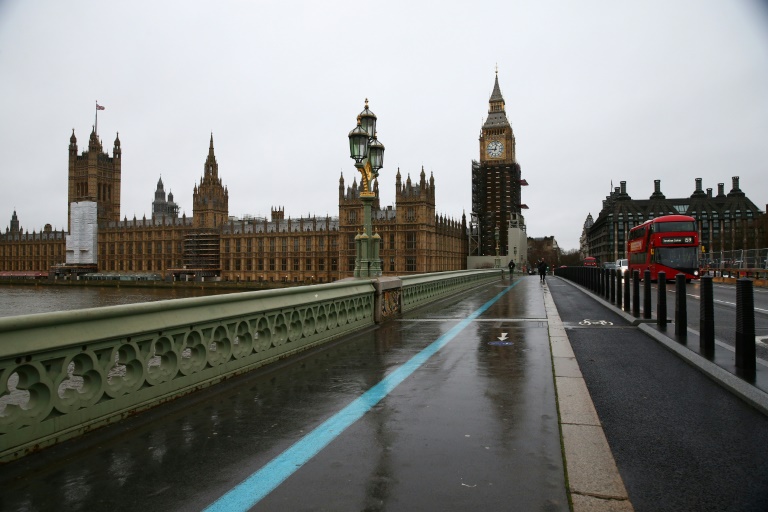
European equities mostly fell Thursday with London on tenterhooks before a painful UK budget set to rip up the country’s economic forecasts.

The British stock market slid 0.6 percent and the pound fell versus the dollar as finance minister Jeremy Hunt readied a budget that will hike taxes and slash spending in a bid to balance the books.

In the eurozone, Paris lost 0.5 percent but Frankfurt won 0.2 percent on upbeat Siemens results, and after a mixed Asian session.

Investors also tracked fresh Russian strikes that hit cities across Ukraine, having been spooked Wednesday by a deadly missile blast in Poland.

Thursday’s focus remains squarely on Britain’s announcement which is scheduled for 1130 GMT.

Traders fear the budget will worsen Britain’s cost-of-living crisis after inflation spiked to a 1981 peak of 11.1 percent, as the economy heads toward recession. 

“Hunt is poised to unveil a raft of spending cuts and tax increases to plug the estimated £55 billion ($65 billion) fiscal black hole,” said Interactive Investor analyst Victoria Scholar.

“With a recession on the horizon and the 41-year high inflation there are concerns that we are heading back to an era of austerity and that could add to the woes facing consumers and businesses,” she warned.

The UK government will also give fresh estimates for the country’s growth and inflation.

Elsewhere, Wall Street was hit Wednesday after retailer Target posted weak results and warned of a poor festive shopping season.

Two reports showing inflation easing in the world’s top economy provided a springboard for world markets over much of the past week as investors took the readings to mean almost a year of monetary tightening was finally kicking in.

But on Wednesday the commerce department said retail sales jumped far more than expected last month, suggesting Americans are still able to weather the higher inflation and interest rate environment.

That was compounded by comments from a top Fed official that she did not see the bank stopping rate hikes, indicating she was willing to push borrowing costs above five percent, from the current 3.75 to 4.0 percent.

Traders have for months grown increasingly fearful that the Fed’s hawkish tilt will cause a recession, and policymakers have made clear they are willing to keep lifting even if that means hurting the economy.

The Bank of England, which is also raising interest rates to combat sky-high inflation, says Britain is probably already in recession after its economy shrank in the third quarter and will do so again in the final three months of 2022.

– Key figures around 1000 GMT –

London – FTSE 100: DOWN 0.6 percent at 7,309.46 points

Paris – CAC 40: DOWN 0.5 percent at 6,573.74

Frankfurt – DAX: UP 0.2 percent at 14,262.63

EURO STOXX 50: DOWN 0.2 percent at 3,876.21

Tokyo – Nikkei 225: DOWN 0.4 percent at 27,930.57 (close)

Hong Kong – Hang Seng Index: DOWN 1.2 percent at 18,045.66 (close)

Shanghai – Composite: DOWN 0.2 percent at 3,115.43 (close)

New York – Dow: DOWN 0.1 percent at 33,553.83 points (close)

Pound/dollar: DOWN at $1.1878 from $1.1914 on Wednesday

Euro/dollar: DOWN at $1.0360 from $1.0395

Dollar/yen: UP at 139.67 yen from 139.54 yen

Euro/pound: FLAT at 87.21 pence

Brent North Sea crude: DOWN 0.4 percent at $92.46 per barrel

West Texas Intermediate: DOWN 0.8 percent at $84.94 per barrel

Motorcycle-borne gunmen kill nine in protest-hit Iran

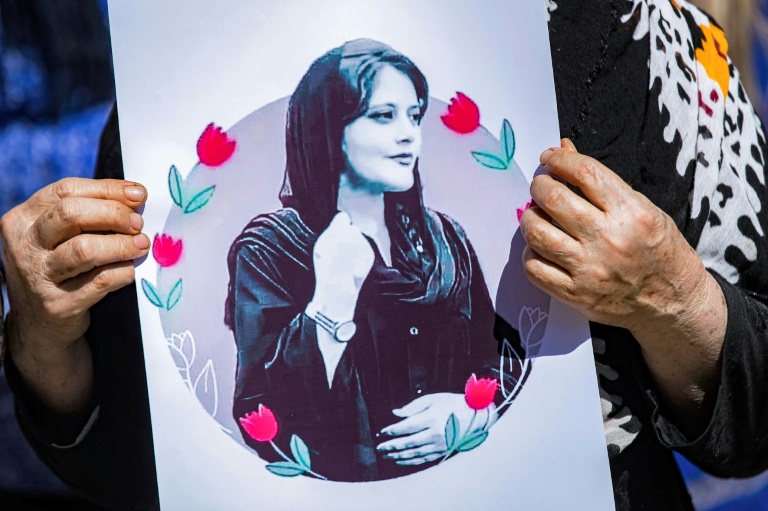
Gunmen on motorcycles in Iran killed nine people, including two children, in mysterious attacks as protests over Mahsa Amini’s death intensified on the anniversary of a bloody 2019 crackdown.

A protester was killed in Bukan on Thursday, the Oslo-based Hengaw rights group said, after reporting at least 10 slain in running street battles in western Iran on Wednesday.

The motorbike attacks occurred as protests over the September 16 death in custody of Mahsa Amini, after her arrest for allegedly flouting Iran’s strict dress code for women, intensified on the third anniversary of bloody crackdown on unrest over fuel price hikes.

The unrest has been fanned by fury over the brutal enforcement of the mandatory hijab law, but has grown into a broad movement against the theocracy that has ruled Iran since the 1979 Islamic Revolution.

In some of the worst violence since the protests began, assailants on motorbikes shot dead seven people, including a woman and two children aged nine and 13, in the western city of Izeh on Wednesday evening, state media said.

“A terrorist group took advantage of a gathering of protesters in front of the central market of the locality to open fire on people and security officers,” the official IRNA news agency reported.

Eight people were wounded, including three police and two members of the Basij paramilitary force that is linked to the Islamic Revolutionary Guard Corps, IRNA added.

It is the second attack the authorities have blamed on “terrorists” since nationwide protests flared over Amini’s death, after at least 13 people were killed at a shrine in the southern city of Shiraz on October 26.

– Nine-year-old boy slain –

But a family member of the slain nine-year-old boy, identified as Kian Pirfalak, accused Iranian security forces of carrying out the attack, in a tweet shared by Radio Farda, a US-funded Persian station based in Prague.

“He was going home with his father and was targeted with bullets by the corrupt regime of the Islamic republic. Their car was attacked from all four sides,” the unidentified family member is heard saying in an audio recording.

In a separate attack hours later in Iran’s third city Isfahan, two assailants on a motorcycle fired automatic weapons at Basij members, killing two of them and wounding two others, Fars news agency said.

Ultra-conservative President Ebrahim Raisi ordered the authorities “to act promptly to identify the perpetrators of the attack and hand them over to the justice system for punishment”, Fars reported.

Elsewhere, the security forces were accused of killing at least 10 people within a 24-hour period during protests in the cities of Bukan, Kamyaran, Sanandaj and Amini’s home town of Saqez, Hengaw said late Wednesday.

The rights group, which monitors violations in Kurdish-populated areas, said strikes were being observed Thursday in those four cities as well as others including Dehgolan, Ilam, Mahabad and Ravanasar.

Iran Human Rights, another Oslo-based organisation, said in an updated toll issued on Wednesday that security forces had killed at least 342 people, including 43 children and 26 women, in the crackdown since Amini’s death.

The human rights group said at least 15,000 people have been arrested — a figure the Iranian authorities deny.

– ‘Sham trials’ –

Iran has handed down five death sentences since Sunday in connection with the protests that have shaken the Islamic republic’s clerical leadership.

Amnesty International on Wednesday condemned Iran’s “chilling use of the death penalty to further brutally quell (the) popular uprising”.

The London-based rights group said the authorities were seeking the death penalty for at least 21 people in “sham trials designed to intimidate” the protest movement.

“The Iranian authorities must immediately quash all death sentences, refrain from seeking the imposition of the death penalty and drop all charges against those arrested in connection with their peaceful participation in protests,” Amnesty’s Diana Eltahawy said.

“Two months into the popular uprising and three years on from the November 2019 protests, the crisis of impunity prevailing in Iran is enabling the Iranian authorities to not only continue carrying out mass killings but also to escalate the use of the death penalty as a tool of political repression.”

Iran accuses Western nations that host Persian-language media, including Britain, of fomenting the unrest.

Britain’s domestic spy agency MI5 said on Wednesday that Iran wanted to kidnap or kill UK-based individuals it deems “enemies of the regime”, with at least 10 plots uncovered so far this year.

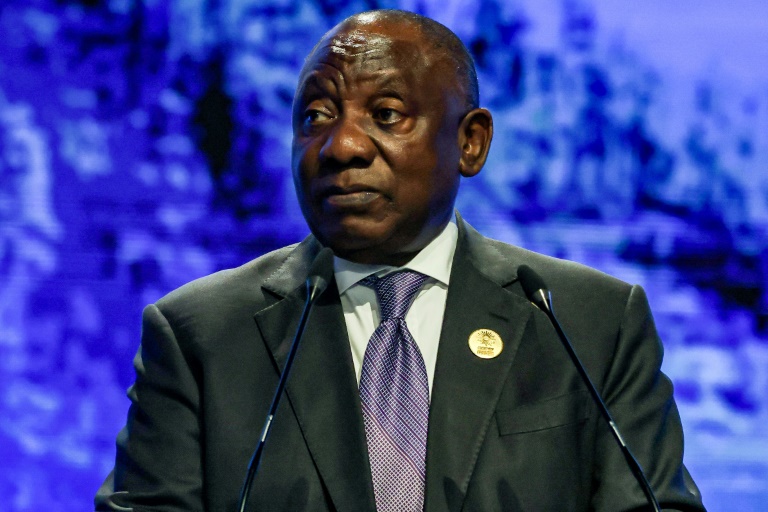
S.Africa's parliament probe into Ramaphosa farm heist to conclude December

South Africa’s parliament said Thursday it would discuss next month the findings of a special panel tasked with establishing whether President Cyril Ramaphosa should face impeachment for allegedly covering up a crime.

A three-person team was appointed in September to determine whether Ramaphosa has a case to answer, and had been scheduled to submit its findings on Thursday.

But parliament on Wednesday said the investigators had requested more time due to the “complexity” and “novelty” of the case, as well as the amount of work involved.

The report will now be turned in on November 30 and lawmakers will examine it on a one-day sitting on December 6, the assembly said.

The date is just 10 days before Ramaphosa faces an election for leadership of the ruling African National Congress (ANC) party.

“The deadline for the panel to submit its report has been postponed to November 30th so it has been decided that the National Assembly will consider the report on December 6,” parliamentary spokesman Moloto Mothapo spokesman told AFP.

Parliament was due to start its year-end recess on December 1, but this will now be delayed in order to address the matter.

The scandal erupted in June after South Africa’s former national spy boss filed a complaint with the police, alleging that in 2020 Ramaphosa had concealed a multi-million-dollar cash theft at his farm in the northeast of the country.

The controversy risks derailing Ramaphosa’s bid for a second term as ANC president, a post that as head of the ruling party also enshrines him as president of the nation.

The hotly-contested polls will take place at a conference running from December 16 to 20. The election typically takes place on the opening day.

The independent panel, which was appointed by the National Assembly speaker last month, comprises an ex-chief justice, a former prominent high court judge and a lawyer.

Impeaching a president — removing him or her from office — requires a two-thirds majority vote in the National Assembly, where the ANC commands more than two-thirds of the seats.

Ramaphosa came to power in 2018 on a promise of tackling graft. He succeeded Jacob Zuma, who was forced to resign by the ANC on the back of a string of corruption scandals.

The president, who denies any wrongdoing, reportedly faced questioning from party rivals and calls to step down at a closed-doors meeting on Sunday.

Presidential spokesman Vincent Magwenya told journalists that Ramaphosa “will gladly step aside” if he were to be criminally charged.

S. Korea, Saudi Arabia agree to boost energy and defence ties

The leaders of South Korea and Saudi Arabia agreed Thursday to boost ties in key sectors such as energy and defence, with the oil-rich kingdom signing a slew of deals including a $6.7 billion petrochemical agreement.

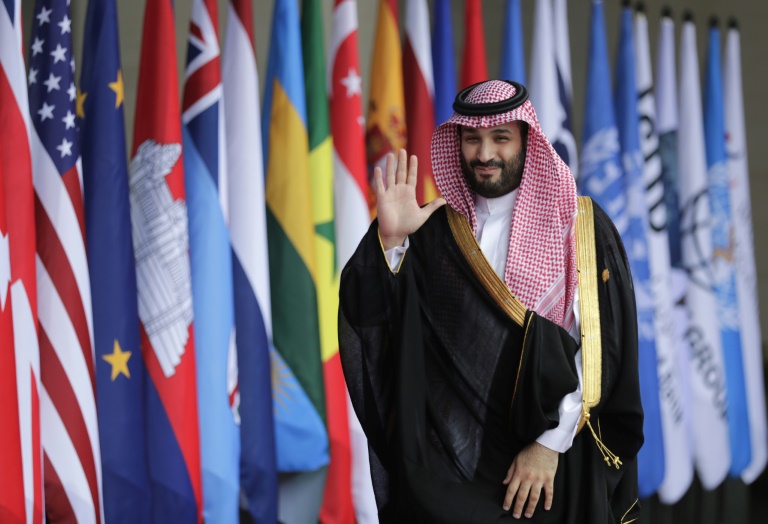
President Yoon Suk-yeol met with Saudi Arabia’s Crown Prince Mohammed bin Salman in the South Korean capital Thursday, with the pair announcing a plan to transform bilateral ties into a “strategic partnership”.

Bin Salman, the kingdom’s 37-year-old de facto ruler, often referred to as MBS, arrived in Seoul late Wednesday after attending the Group of 20 summit in Bali, Indonesia.

He is on a multi-stop Asian tour, in a likely bid to shore up the Gulf nation’s ties with its biggest energy market.

The trip comes as Riyadh feuds with Washington over the OPEC+ oil cartel’s October decision to cut production by two million barrels per day.

Yoon and bin Salman agreed to elevate ties into a “future oriented strategic partnership,” Yoon’s office said in a statement.

The South Korean president wants to see local companies join key Saudi projects such as the NEOM smart city project, and boost cooperation in the defence and energy sectors.

Bin Salman “especially expressed his wish for a significant increase in cooperation in energy, defence and construction industries,” Yoon’s office said.

During the visit, the two governments and companies from both countries — including some of Seoul’s top conglomerates — signed about 20 deals in areas from agriculture to railways. 

Among the agreements was Saudi investment for South Korean refiner S-OIL’s Shaheen project, which would build petrochemical production facilities in South Korea worth $6.7 billion, Yoon’s office said.

Bin Salman, who was officially made Prime Minister in September, has shaken up the ultraconservative oil titan with economic, social and religious reforms since his meteoric rise to power.

He gained global notoriety in connection with the 2018 killing of dissident Saudi journalist Jamal Khashoggi in the kingdom’s Istanbul consulate.

Last year, US President Joe Biden declassified an intelligence report that found Prince Mohammed had approved the operation against Khashoggi, an assertion Saudi authorities deny.

S. Korea, Saudi Arabia agree to boost energy and defence ties

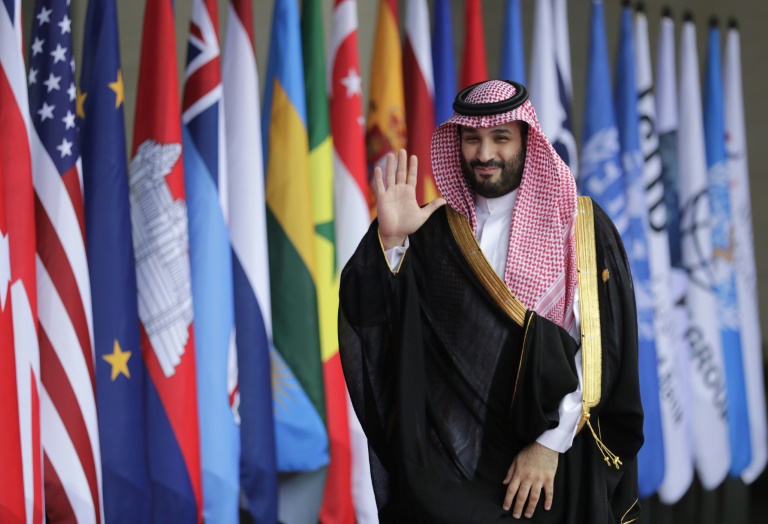
The leaders of South Korea and Saudi Arabia agreed Thursday to boost ties in key sectors such as energy and defence, with the oil-rich kingdom signing a slew of deals including a $6.7 billion petrochemical agreement.

President Yoon Suk-yeol met with Saudi Arabia’s Crown Prince Mohammed bin Salman in the South Korean capital Thursday, with the pair announcing a plan to transform bilateral ties into a “strategic partnership”.

Bin Salman, the kingdom’s 37-year-old de facto ruler, often referred to as MBS, arrived in Seoul late Wednesday after attending the Group of 20 summit in Bali, Indonesia.

He is on a multi-stop Asian tour, in a likely bid to shore up the Gulf nation’s ties with its biggest energy market.

The trip comes as Riyadh feuds with Washington over the OPEC+ oil cartel’s October decision to cut production by two million barrels per day.

Yoon and bin Salman agreed to elevate ties into a “future oriented strategic partnership,” Yoon’s office said in a statement.

The South Korean president wants to see local companies join key Saudi projects such as the NEOM smart city project, and boost cooperation in the defence and energy sectors.

Bin Salman “especially expressed his wish for a significant increase in cooperation in energy, defence and construction industries,” Yoon’s office said.

During the visit, the two governments and companies from both countries — including some of Seoul’s top conglomerates — signed about 20 deals in areas from agriculture to railways. 

Among the agreements was Saudi investment for South Korean refiner S-OIL’s Shaheen project, which would build petrochemical production facilities in South Korea worth $6.7 billion, Yoon’s office said.

Bin Salman, who was officially made Prime Minister in September, has shaken up the ultraconservative oil titan with economic, social and religious reforms since his meteoric rise to power.

He gained global notoriety in connection with the 2018 killing of dissident Saudi journalist Jamal Khashoggi in the kingdom’s Istanbul consulate.

Last year, US President Joe Biden declassified an intelligence report that found Prince Mohammed had approved the operation against Khashoggi, an assertion Saudi authorities deny.

Myanmar junta to release UK ex-ambassador, Australian and Japanese prisoners

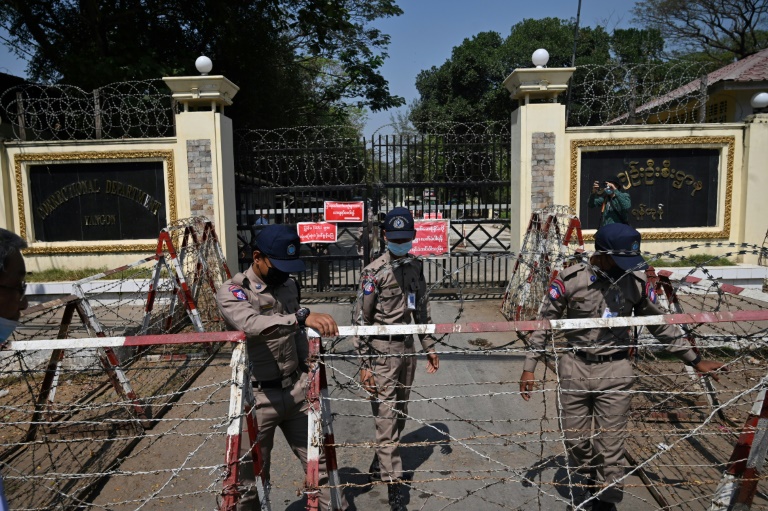
Myanmar’s military said Thursday it would release almost 6,000 prisoners, including a former British ambassador, a Japanese journalist and an Australian economics adviser, in a rare olive branch from the isolated junta.

The Southeast Asian country has been in turmoil since the military’s coup last year and a bloody crackdown on dissent during which thousands have been jailed.

Former British envoy Vicky Bowman, Australian economics adviser Sean Turnell and Japanese journalist Toru Kubota “will be released to mark National Day”, a senior officer told AFP.

All three would be deported, the junta said without specifying a date.

Three buses left the main gate of the sprawling, colonial-era prison shortly after 3:00pm local time (0830 GMT) and passed by a crowd of around 200 people waiting outside, an AFP reporter said.

One woman, who did not want to give her name for fear of reprisals, said she was waiting for her husband, who was halfway through a three-year sentence for encouraging dissent against the military.  

“Before, he was a USDP (military-backed political party) supporter. After the coup, he joined in the protests. I’m very proud of him,” she said. 

Altogether, 5,774 prisoners will be released, “including some 600 women”, the junta official said, revising an earlier figure of about 700 women. 

Three former ministers from Aung San Suu Kyi’s ousted government and detained US-Myanmar citizen Kyaw Htay Oo would also be released, a junta official said.

The junta did not say in its statement announcing the amnesty how many of those pardoned had been arrested during the military’s crackdown on dissent.

Bowman, who served as ambassador from 2002 to 2006, was detained with her husband in August for failing to declare she was living at an address different from the one listed on her foreigner’s registration certificate.

They were later jailed for a year. Her husband, prominent Myanmar artist Htein Lin, will also be released, the military official said.

A British diplomatic source said Bowman had not yet been released but they expected her to be freed. The junta statement did not list her husband among those due to be deported.

Ties between Myanmar and its former colonial ruler Britain have soured since the military’s takeover, with the junta this year criticising the UK’s recent downgrading of its mission there as “unacceptable”.

Turnell was working as an adviser to Myanmar’s civilian leader Suu Kyi when he was detained shortly after the coup in February 2021.

He and Suu Kyi were convicted in September by a closed junta court of breaching the official secrets act and jailed for three years each.

“We welcome reports in relation to Professor Sean Turnell,” Australian Foreign Minister Penny Wong said on Twitter.

“Professor Turnell continues to be our first priority. As such, we will not be commenting further at this stage.”

Kubota, 26, was detained in July near an anti-government rally in Yangon along with two Myanmar citizens and jailed for 10 years.

A source at Japan’s embassy in Myanmar told AFP they had “been informed that Mr Kubota will be released today” by junta authorities.

Kubota would leave for Japan “today”, they said.

He was the fifth foreign journalist to be detained in Myanmar since the coup, after US citizens Nathan Maung and Danny Fenster, Robert Bociaga of Poland and Yuki Kitazumi of Japan — all of whom were later freed and deported.

At least 170 journalists have been arrested since the coup according to UNESCO, with nearly 70 still in detention.

– ‘Very proud of him’ –

San San Aye said she was waiting for her brothers and sisters to be released.

“Three of them were sentenced to three years each eight months ago,” she told AFP. 

“Their children are waiting at home. We will be more than happy if they are released.”

Independent analyst David Mathieson told AFP: “Professor Turnell’s release is remarkable news after being held hostage by the regime, and his family and friends will be delighted.”

However, he said the junta “shows no sign of reform and a mass amnesty doesn’t absolve them of atrocities committed since the coup”.

Amnesty’s regional office spokesperson said: “Thousands of people jailed since the coup in Myanmar have done nothing wrong and should never have been imprisoned in the first place.”

More than 2,300 civilians have been killed since the military’s crackdown on dissent after it ousted Suu Kyi’s government, according to a Myanmar monitoring group. 

The junta blames anti-coup fighters for the deaths of almost 3,900 civilians.

Ukraine grain export deal extended for four months

An agreement allowing Ukraine to export grain through the Black Sea and aimed at relieving global food insecurity has been extended for 120 days, officials said on Thursday.

Ukraine is a top world exporter of grain, but Russia’s invasion in late February stopped shipments. 

The deal between the two warring sides, brokered by Turkey and the UN in July, has helped transport more than 11 million tonnes of grain and other agricultural products from Ukrainian ports since the start of August. It had been due to expire on Saturday.

On Thursday Ukrainian and Turkish officials announced that the agreement would be extended by four months under existing conditions.

“#BlackSeaGrainInitiative will be prolonged for 120 days,” Ukrainian Infrastructure Minister Oleksandr Kubrakov said on Twitter, while a senior Turkish official confirmed to AFP that the deal had been extended “under current terms”.

“I welcome the agreement by all parties to continue the Black Sea Grain Initiative to facilitate the safe navigation of export of grain, foodstuffs and fertilizers from Ukraine,” UN Secretary General Antonio Guterres said in a statement released by the Istanbul-based Joint Coordination Center (JCC) that has been overseeing the agreement. 

-‘Discreet diplomacy’-

The grain deal “continues to demonstrate the importance of discreet diplomacy in the context of finding multilateral solutions,” he said.

The UN chief also sought to allay Moscow’s concerns that a second agreement that was also signed in July, exempting Russian fertilisers from sanctions, had not been implemented.

“The United Nations is also fully committed to removing the remaining obstacles to exporting food and fertilisers from the Russian Federation,” Guterres said.

Both agreements were  “essential to bring down the prices of food and fertiliser and avoid a global food crisis.”

On Wednesday Turkish President Recep Tayyip Erdogan — who has maintained good relations with both Moscow and Kyiv — predicted that the deal would remain in force. 

“I am of the opinion that it (the deal) will continue. There’s no problem there,” he told journalists at the G20 summit in Indonesia. 

“Because the path to peace passes through dialogue,” he said.

The agreement allows Ukrainian grain ships to sail along safe corridors that avoid mines in the Black Sea. 

Ukraine is one of the world’s top grain producers, and Russia’s invasion  blocked 20 million tonnes of grain in its ports before the United Nations and Turkey brokered the deal in July.

burs-fo/yad

Xi spat with Trudeau lays bare China's frayed ties with Canada

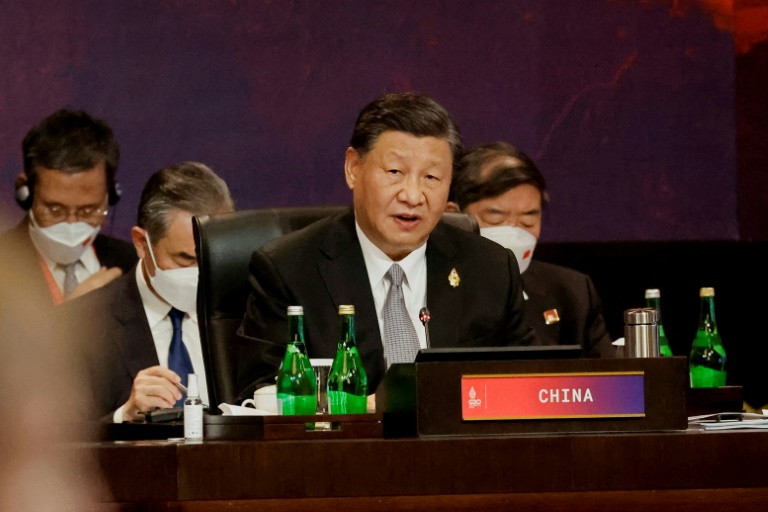
Chinese President Xi Jinping scolded Canadian Prime Minister Justin Trudeau in an on-camera dressing down at the G20 summit, an unusual public spat that could further complicate strained relations between the countries.

Video recorded by reporters at the Bali summit for world leaders on Wednesday showed Xi appearing to upbraid Trudeau after details of talks between the two leaders were leaked to the media.

Trudeau had on Tuesday raised with Xi the issue of what he called Chinese “interference” with Canadian citizens after Ottawa in recent weeks accused Beijing of meddling with its democratic and judicial systems.

In the one-minute clip captured on the sidelines of the Indonesian summit, Xi tells Trudeau through an interpreter: “Everything we discussed has been leaked to the papers. That is not appropriate.”

He adds: “And that’s not the way (our discussion) was conducted, was it?”

China’s foreign ministry on Thursday sought to play down the footage, saying it showed a “normal” conversation between the two leaders and “should not be interpreted as Xi Jinping criticising or blaming anyone”.

“The reasons for the difficulties in China-Canada relations in recent years are very clear,” spokeswoman Mao Ning said at a regular press briefing. 

“The fault does not lie with the Chinese side.”

– ‘Create conditions’ –

In the footage, Xi tells Trudeau: “If there is sincerity, we can have conversations based on an attitude of mutual respect. If not, the results will be unpredictable.”

Xi then appears to try to walk past the Canadian leader, who replies: “In Canada, we believe in free, open and frank dialogue, and that is what we will continue to have.

“We will continue to look to work constructively together, but there will be things we disagree on.”

Raising his hands, Xi cuts him off, saying: “Create the conditions. Create the conditions.”

He then broadens his smile, barely looking at Trudeau as he shakes his hand and leaves his counterpart to make his way out of the room.

It is not clear when, if ever, Xi becomes aware that the conversation is being filmed.

The foreign ministry spokeswoman denied that Xi’s words “if not” amounted to a threat, saying “both sides are expressing their respective positions”.

“Frank dialogue is not a problem for China, but we hope (it) will be built on a basis of equal and mutual respect instead of condescending criticism,” she said.

– ‘Awkward position’ –

It was “extremely rare” for Chinese leaders to show their displeasure in such an “off-the-cuff” way, said Chong Ja Ian, an associate professor of political science at the National University of Singapore.

Xi’s remarks suggest he feels “he can pressure Trudeau with few repercussions, if any”, Chong told AFP, adding that the Chinese leader’s “high degree of confidence” might indicate “he does not take either Trudeau or Canada that seriously as interlocutors”.

In contrast, “Xi’s body language with (US President) Biden just a few days before… seemed more cordial”, he said.

The Chinese leader’s tone was akin to “a great power speaking to a less-great power”, said Van Jackson, senior lecturer in international relations at Victoria University of Wellington, New Zealand.

“Xi’s language and body posture was not at all unusual for government officials who are on less than friendly terms — in private,” Jackson told AFP.

Tensions between China and the United States put Canada in an “especially awkward position”, he said, adding that Ottawa’s “embeddedness in the network of Anglo-Saxon, intelligence-sharing democracies all but ensures it will draw China’s ire more and more as time passes”.

Xi’s Tuesday meeting with Trudeau was the first face-to-face dialogue between the two leaders since 2019.

It came after the Chinese leader last month broke longstanding political precedent to take a third term in power and stack top government positions with his personal allies.

Canadian federal police said last week they were investigating so-called police stations set up illegally by Beijing in the North American country.

Trudeau also said last week China was playing “aggressive games” after Canadian broadcaster Global News reported on a “clandestine network” of federal election candidates funded by Beijing.

Relations between the two countries plunged into the deep freeze when Canadian authorities arrested Huawei executive Meng Wanzhou in 2018 for allegedly flouting US sanctions on Iran.

Beijing later detained two Canadian citizens in China, Michael Spavor and Michael Kovrig, in what critics called a tit-for-tat response.

Meng and the two Canadians were released last year after lengthy negotiations.

Close Bitnami banner
Bitnami