World

Chinese spy jailed for 20 years for economic espionage

A Chinese intelligence officer was sentenced to 20 years in prison by a US court Wednesday for stealing technology from US and French aerospace firms, the Justice Department said.

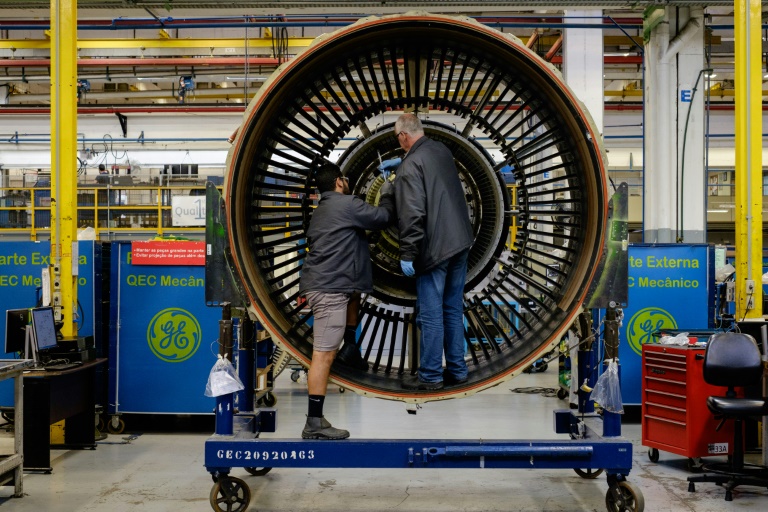
Xu Yanjun was accused of playing a leading role in a five-year Chinese state-backed scheme to steal commercial secrets from GE Aviation, one of the world’s leading aircraft engine manufacturers, and France’s Safran Group, which was working with GE on engine development.

Xu was one of 11 Chinese nationals, including two intelligence officers, named in October 2018 indictments in federal court in Cincinnati, Ohio where GE Aviation is based.

The Chinese Ministry of State Security intelligence officer was arrested in April 2018 in Belgium, where he had apparently been lured into a counter-intelligence operation — he had planned to secretly meet a GE employee on the trip.

He was extradited to the United States, where he was convicted in a jury trial on November 5, 2021 of attempted economic espionage, attempted trade secret theft, and two related conspiracy charges.

“Xu targeted American aviation companies, recruited employees to travel to China, and solicited their proprietary information, all on behalf of the government of the People’s Republic of China,” the Justice Department said in a statement.

“This case sends a clear message: we will hold accountable anyone attempting to steal American trade secrets,” said Ohio federal prosecutor Kenneth Parker.

China’s foreign ministry on Thursday called the charges against Xu “pure fabrication”.

“We ask the US to handle the case fairly, in accordance with the law, and protect the legitimate rights and interests of Chinese citizens,” foreign ministry spokeswoman Mao Ning said at a regular press conference.

Markets hurt as rate hike woes return to the fore

Trading was subdued on Thursday as the optimism that characterised recent sessions was dealt a blow by data showing a resilience among US consumers that gives the Federal Reserve room to keep hiking interest rates.

Two reports showing inflation easing in the world’s top economy provided a springboard for world markets over much of the past week as investors took the readings to mean almost a year of monetary tightening was finally kicking in.

But on Wednesday the commerce department said retail sales jumped far more than expected last month, suggesting Americans are still able to weather the higher inflation and interest rate environment.

That was compounded by comments from a top Fed official that she did not see the bank stopping interest rate hikes, indicating she was willing to push borrowing costs above five percent, from the current 3.75 to 4.0 percent.

San Francisco Fed President Mary Daly told CNBC: “Somewhere between 4.75 and 5.25 seems a reasonable place to think about as we go into the next meeting.

“And so that does put it in the line of sight that we would get to a point where we would raise and hold.”

“Pausing is off the table right now, it’s not even part of the discussion. Right now the discussion is, rightly, in slowing the pace,” she added.

Traders have for months grown increasingly fearful that the hawkish tilt by the central bank will cause a recession, and policymakers have made clear they are willing to keep lifting even if that means hurting the economy.

JPMorgan Chase said the United States would tip into a “mild” recession in 2023 owing to the rate increases, adding that it saw the Fed easing policy the following year in 2024.

“Every time equity and bond markets are thinking the Fed is done and start taking off in a rally, the Fed gets out and starts talking that back down again,” Cheryl Smith, of Trillium Asset Management, told Bloomberg Television.

Hong Kong lost more than one percent, hit by profit-taking after a 14 percent surge between Friday and Tuesday, while there were also losses in Shanghai.

Still, observers said there were signs of optimism in Chinese markets after Beijing moved to ease some of its strict Covid restrictions and provide much-needed help to the property sector.

Tokyo, Seoul, Taipei, Mumbai and Bangkok also fell, though Singapore, Sydney, Wellington, Jakarta and Manila edged up.

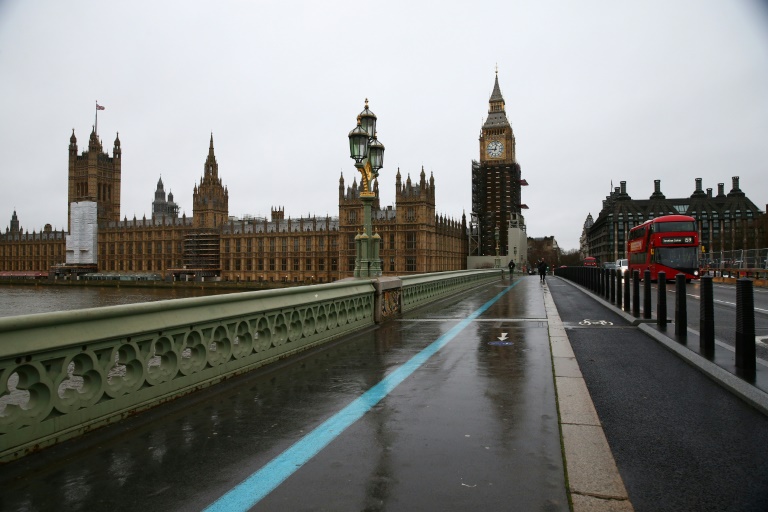
The pound edged back against the dollar as Britain prepares for what is expected to be a grim budget later in the day by Finance Minister Jeremy Hunt, who has flagged a jump in taxes and spending cuts.

The announcement comes a day after figures showed UK inflation spiked at 11.1 percent in October, the highest since 1981, as the country is hammered by a cost-of-living crisis.

London opened slightly lower, while Paris and Frankfurt rose.

– Key figures around 0820 GMT –

Tokyo – Nikkei 225: DOWN 0.4 percent at 27,930.57 (close)

Hong Kong – Hang Seng Index: DOWN 1.2 percent at 18,045.66 (close)

Shanghai – Composite: DOWN 0.2 percent at 3,115.43 (close)

London – FTSE 100: DOWN 0.1 percent at 7,345.30

Pound/dollar: UP at $1.1933 from $1.1914 on Wednesday

Euro/dollar: DOWN at $1.0389 from $1.0395

Dollar/yen: DOWN at 139.18 yen from 139.54 yen

Euro/pound: DOWN at 87.05 pence from 87.21 pence

West Texas Intermediate: DOWN 0.7 percent at $85.02 per barrel

Brent North Sea crude: DOWN 0.2 percent at $92.65 per barrel

New York – Dow: DOWN 0.1 percent at 33,553.83 points (close)

Xi, Kishida to meet as N. Korea fires missile

The leaders of China and Japan will hold their first face-to-face talks in three years on Thursday, after North Korea fired the latest in a record missile blitz that has sent nuclear fears soaring.

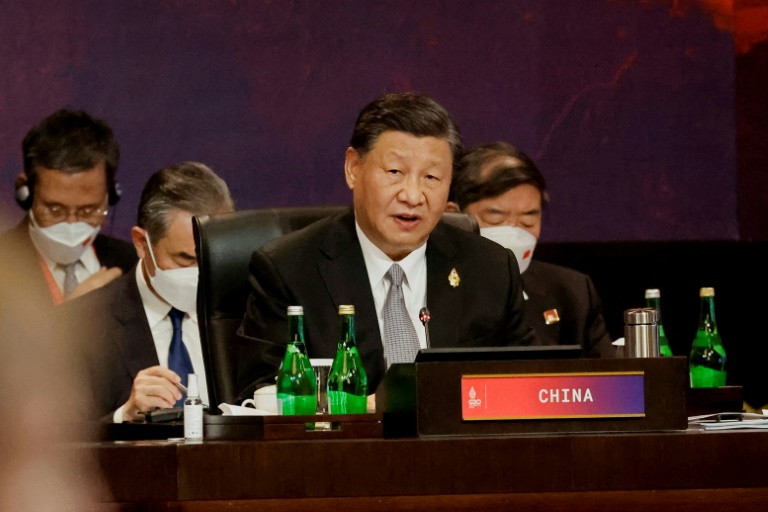
Chinese President Xi Jinping flew in to the talks in Bangkok from a G20 meeting in Bali where US President Joe Biden pressed him to use his influence to rein in Pyongyang’s activities.

North Korea fired a short-range ballistic missile as Xi and Japanese Prime Minister Fumio Kishida prepared to meet, and warned Washington and its allies to expect a “fiercer” military response.

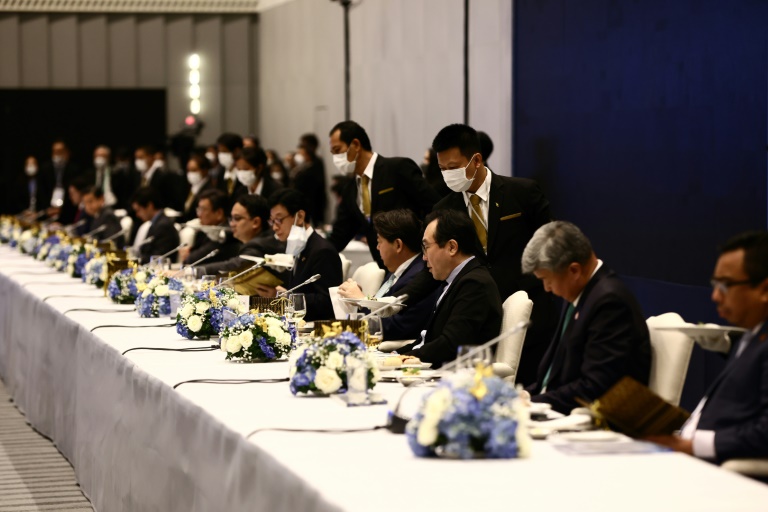
The pair will meet on the sidelines of a summit of the Asia-Pacific Economic Cooperation (APEC) forum focused on pandemic recovery and the global economic turmoil unleashed by the war in Ukraine.

Kishida’s office condemned the latest launch by the North, which adds to a flurry that began earlier this month and has included an intercontinental ballistic missile.

Seoul and Washington have warned the North could be preparing to carry out a nuclear test, which would be its seventh.

Biden held a three-way summit in Phnom Penh last week with allies Kishida and South Korean President Yoon Suk-yeol to discuss the latest drama with the North.

The trio issued a joint statement warning that any new nuclear test would be met with a “strong and resolute” response, without giving further details.

After his talks with Xi on Monday, Biden said he was confident China — Pyongyang’s main diplomatic and economic ally — did not want Kim Jong Un’s regime to escalate tensions any further.

Xi landed in Bangkok on Thursday afternoon, Chinese state broadcaster CCTV said. Kishida arrived earlier in the day.

– Diplomatic blitz –

China and Japan — the world’s second and third-largest economies — are key trading partners, but relations have soured as Beijing bolsters its military, projects power regionally and takes a harder line on territorial rivalries.

Chinese missiles fired during massive military drills around Taiwan in August are believed to have fallen within Japan’s exclusive economic zone, and Tokyo has protested at what it calls growing aerial and maritime violations in recent months.

Xi last held face-to-face talks with a Japanese prime minister in December 2019, when he met Shinzo Abe in Beijing, though he has spoken to Kishida by phone.

The APEC gathering — which French President Emmanuel Macron and Saudi Arabia’s Crown Prince Mohammed bin Salman will also attend — caps a diplomatic blitz in Asia, following the G20 and the ASEAN summit in Cambodia.

The G20 was upended by fears that a deadly missile strike on Poland signalled a dangerous escalation of Russia’s war in Ukraine.

But Western leaders have moved to dial down the alarm, saying the blast was probably an accident. Poland and NATO both said the explosion was most likely caused by a Ukrainian air defence missile launched to intercept a Russian barrage.

Biden and Xi’s landmark summit talks on Monday sought to cool their rivalry, which has intensified sharply in recent years as Beijing has become more powerful and more assertive about replacing the US-led order that has prevailed since World War II.

The easing of tensions will be welcome news for APEC members who have grown increasingly alarmed at the prospect of having to take sides.

While the pair still clashed on the question of self-governing Taiwan’s future — a major regional flashpoint — they found common ground on Ukraine.

They underlined that the use or threat of use of nuclear weapons was unacceptable — a clear rebuke to Russian President Vladimir Putin’s threats over his failing war in Ukraine.

Macron landed in Bangkok late Wednesday aiming to relaunch France’s strategic ambitions in the Asia-Pacific region after the humiliating blow of Australia cancelling a major submarine contract in 2021.

“In this highly contested region, which is the theatre of a confrontation between the two major world powers, our strategy is to defend freedom and sovereignty,” Macron said on Thursday.

Xi spat with Trudeau lays bare China's frayed ties with Canada

Chinese President Xi Jinping scolded Canadian Prime Minister Justin Trudeau in an on-camera dressing down at the G20 summit, an unusual public spat that could further complicate the strained relations between the two countries.

Footage recorded by reporters at the Bali conclave for world leaders on Wednesday showed Xi upbraiding Trudeau after details of a discussion between the two leaders were leaked to the media.

Trudeau had on Tuesday raised with Xi the issue of what he called Chinese “interference” with Canadian citizens after Ottawa in recent weeks accused Beijing of meddling with its democratic and judicial systems.

In the one-minute video clip recorded on the sidelines of the Indonesian summit, Xi tells Trudeau through an interpreter: “Everything we discussed has been leaked to the papers. That is not appropriate.”

Speaking evenly and wearing a slight smile, Xi says: “And that’s not the way (our discussion) was conducted, was it?

“If there is sincerity, we can have conversations based on an attitude of mutual respect. Otherwise, the results will be unpredictable,” he adds, looking directly at Trudeau.

Xi then appears to try to walk past Trudeau, but the Canadian leader replies: “In Canada, we believe in free, open and frank dialogue, and that is what we will continue to have.

“We will continue to look to work constructively together, but there will be things we disagree on,” he tells Xi.

Raising his hands, Xi cuts him off, saying bluntly: “Create the conditions. Create the conditions.”

He then broadens his smile, barely looking at Trudeau as he shakes his hand and leaves his counterpart to make his way out of the room.

It is not clear when, if ever, Xi becomes aware that the conversation is being filmed.

– ‘Awkward position’ –

The tone was akin to “a great power speaking to a less-great power”, said Van Jackson, senior lecturer in international relations at Victoria University of Wellington, New Zealand.

“Xi’s language and body posture was not at all unusual for government officials who are on less than friendly terms — in private,” Jackson told AFP.

Tensions between China and the United States put Canada in an “especially awkward position”, he said, adding that Ottawa’s “embeddedness in the network of Anglo-Saxon, intelligence-sharing democracies all but ensures it will draw China’s ire more and more as time passes”.

Xi’s Tuesday meeting with Trudeau was the first face-to-face dialogue between the two leaders since 2019.

Canadian federal police said last week they were investigating so-called police stations set up illegally by Beijing in the North American country.

Trudeau also said last week China was playing “aggressive games” after Canadian broadcaster Global News reported on a “clandestine network” of federal election candidates funded by Beijing.

Relations between the two countries plunged into the deep freeze when Canadian authorities arrested Huawei executive Meng Wanzhou in 2018 for allegedly flouting US sanctions on Iran.

Beijing later detained two Canadian citizens in China, Michael Spavor and Michael Kovrig, in what critics called a tit-for-tat response.

Meng and the two Canadians were released last year after lengthy negotiations.

Brazil's Lula, world leaders bolster UN climate talks

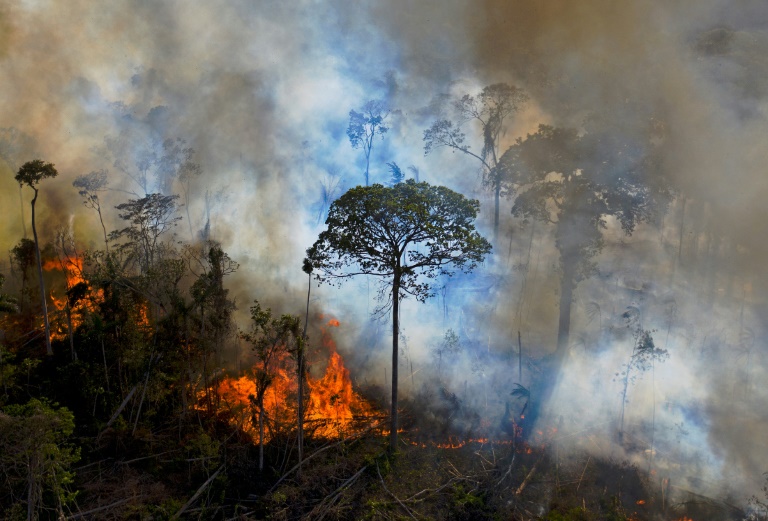
UN climate talks got a boost Wednesday after Brazilian president-elect Luiz Inacio Lula da Silva vowed to fight Amazon deforestation and global leaders reaffirmed key pledges.

While G20 leaders meeting in Indonesia issued a final communique committing to pursue the more ambitious limits on global heating, action on the sidelines of fraught COP27 negotiations in Egypt generated momentum at the UN climate conference.

Lula kicked off COP27 events Wednesday with a call to host the 2025 climate talks in the Amazon region, in his first international trip since defeating outgoing far-right President Jair Bolsonaro, who presided over years of rampant Amazon deforestation.

“I am here to say to all of you that Brazil is back in the world,” said Lula as he received a jubilant welcome from hundreds of people at an Amazon region pavilion in the Red Sea resort of Sharm el-Sheikh.

“We will put up a very strong fight against illegal deforestation,” he said, announcing the creation of an Indigenous people’s ministry to protect the vast region’s vulnerable communities.

“There is no climate security for the world without a protected Amazon,” Lula said later in a speech.

Lula arrived in Egypt on Tuesday and went straight into climate diplomacy, with meetings with US envoy John Kerry and China’s Xie Zhenhua.

– Kerry ‘pleased’ –

Kerry told a COP27 biodiversity panel on Wednesday that he was “really encouraged” by Lula’s pledge to protect the Amazon, and that the United States would work with other nations to help protect the rainforest.

Under Bolsonaro, a staunch ally of agribusiness, average annual deforestation increased 75 percent compared with the previous decade.

“We don’t need to cause deforestation of even one metre of the Amazon to continue being one of the biggest food producers in the world,” Lula said.

Speaking in Bangkok, where he is attending the Asia-Pacific Economic Cooperation forum, French President Emmanuel Macron threw his weight behind Lula’s proposal for the next UN climate summit to be held in the Amazon. 

“I ardently wish that we could have a COP in the Amazon, so I fully support this initiative of President Lula,” he said. 

In another boost to the UN climate process, the final communique from world leaders meeting at the Group of 20 talks in Bali, Indonesia, reaffirmed a promise to “pursue efforts” to curb global warming to 1.5 degrees Celsius above pre-industrial levels.

The G20 document also addresses the most contentious issue at COP27, as leaders urged “progress” on “loss and damage” — the costs of climate impacts already being felt — though without saying which approach they favoured.

Developing nations are demanding the creation of a loss and damage fund, through which rich polluters would compensate them for the destruction caused by climate-linked natural disasters.

But the United States and the European Union have suggested using existing channels for climate finance instead of creating a new one.

The G20 meeting was also the stage of a crucial meeting between US President Joe Biden and China’s Xi Jinping, where the two leaders agreed to resume their climate cooperation.

Ani Dasgupta, head of the World Resources Institute, said positive signals from leaders at the G20 “should put wind in the sails” of negotiators in Egypt.

In another COP27 announcement, the EU said it would dedicate more than $1 billion in climate funding to help countries in Africa boost their resilience in the face of the accelerating impact of global warming.

– Climate leadership –

In his speech, however, Lula took a dig at developed countries for failing to fulfil a pledge to provide $100 billion in aid annually from 2020 for developing nations to green their economies and adapt to future impacts.

“I’m also back to demand what was promised” at past climate talks, he said. 

The president-elect, who previously served from 2003 to 2010, threw his weight behind the idea of a climate impacts compensation fund.

“We very urgently need financial mechanisms to remedy losses and damages caused by climate change,” said Lula, who made a spectacular political comeback after serving jail time for corruption.

Latin America’s most populous country grew more isolated under Bolsonaro, analysts say, in part due to his permissive policies towards deforestation and exploitation of the Amazon, the preservation of which is seen as critical to fighting global warming.

Brazil is home to 60 percent of the Amazon, which spans eight countries and acts as a massive sink for carbon emissions.

The incoming Lula administration wants the United States to contribute to the Amazon Fund, considered one of the main tools to reduce deforestation in the planet’s biggest tropical forest.

Following Lula’s victory, the fund’s main contributors, Norway and Germany, announced they would participate again, after freezing aid in 2019 in the wake of Bolsonaro’s election.

N. Korea fires missile hours after warning of 'fiercer' response

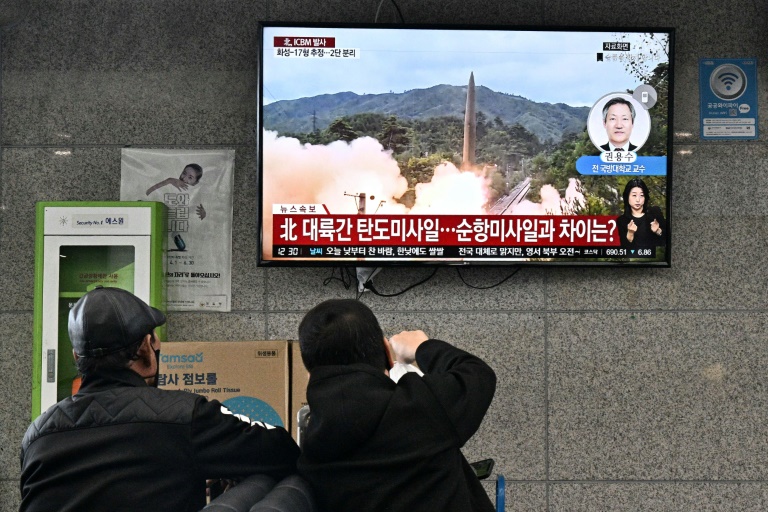
North Korea fired a short-range ballistic missile Thursday, Seoul’s military said, the latest in a record blitz of launches as Pyongyang warned of a “fiercer” military response to the United States and its allies.

Washington has been seeking to boost regional security cooperation and ramp up joint military drills in response to increasing provocations from the nuclear-armed North, which views all such moves as evidence of US aggression.

US President Joe Biden discussed North Korea’s recent missile tests with Chinese counterpart Xi Jinping earlier this week, and also spoke with leaders from Tokyo and Seoul, as fears grow that the reclusive regime will soon carry out its seventh nuclear test.

Washington’s moves to bolster its “extended deterrence” and stage joint exercises with regional security allies are “foolish acts”, North Korea’s minister of foreign affairs, Choe Son Hui, said Thursday in a statement carried by state news agency KCNA.

The more Washington boosts security cooperation with Tokyo and Seoul, “the fiercer the DPRK’s military counteraction will be”, Choe said, referring to the North by its official name of the Democratic People’s Republic of Korea.

South Korea’s Joint Chiefs of Staff said the military had “detected around 10:48 am (0148 GMT) one short-range ballistic missile fired from the Wonsan area in Kangwon province”.

The missile flew approximately 240 km (150 miles) at an altitude of 47 km and speed of Mach 4, the military said. 

“South Korea and the US reaffirmed their strong joint defense posture through joint missile defense drill conducted today,” it said, referring to a planned exercise.

Japan also confirmed North Korea had fired a missile, with the prime minister’s office saying Pyongyang’s actions “including repeated launches of ballistic missiles threaten the peace and safety of our country and the regional and international communities”.

Experts said Thursday’s missile launch was timed to coincide with the statement from Pyongyang’s foreign minister. Cheong Seong-chang, a researcher at the Sejong Institute, told AFP it was an attempt to send a message to the United States and Japan.

– UN gridlock –

North Korea conducted a flurry of launches earlier this month, including a November 2 barrage in which it fired 23 missiles — more than during the whole of 2017, the year of “fire and fury” when leader Kim Jong Un traded barbs with then US president Donald Trump.

That blitz came as hundreds of US and South Korean warplanes, including B-1B heavy bombers, participated in joint air drills. Such exercises draw strong reactions from the North, which sees them as rehearsals for an invasion.

Experts say North Korea is seizing the opportunity to conduct banned missile tests, confident of escaping further UN sanctions due to Ukraine-linked gridlock at the United Nations.

China, Pyongyang’s main diplomatic and economic ally, joined Russia in May in vetoing a US-led bid at the UN Security Council to tighten sanctions on North Korea.

Pyongyang has also been under a self-imposed coronavirus blockade since early 2020, which experts say would limit the impact of any additional external sanctions.

Biden pushed China’s Xi to use his influence to rein in North Korea when the pair met on the sidelines of the G20 meeting in Bali, Indonesia.

Washington has responded to North Korea’s sanctions-busting missile tests by extending exercises with the South and deploying a strategic bomber.

“Choe Son Hui’s threatening statement and North Korea’s most recent missile launch are attempts to signal that Pyongyang won’t back down under international pressure,” said Leif-Eric Easley, a professor at Ewha University in Seoul.

Biden also held talks with his South Korean counterpart Yoon Suk-yeol and Japanese Prime Minister Fumio Kishida on Sunday to discuss ways to address the threat posed by the North.

Easley said it was clear that Biden, Yoon and Kishida had taken “substantive steps on trilateral coordination”, even as Xi ended his Covid-linked isolation with a “relative charm offensive” at the G20 summit.

“At some point, Chinese interests will prefer exerting pressure on Pyongyang rather than face a more strategically united US, South Korea and Japan,” Easley said.

As Qatar World Cup looms, street cricket rules for Gulf migrant workers

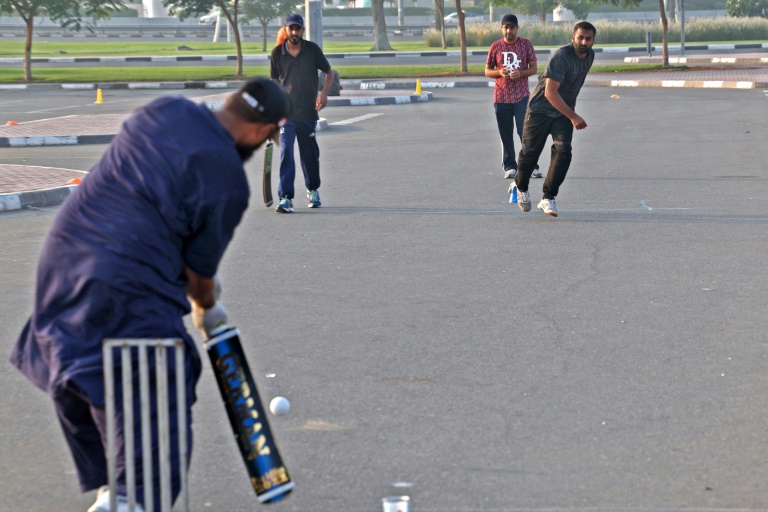
It is 7:00 am in Dubai and as the sun peeks above high-rises, it reveals an animated scene below: about 200 people, mostly men, wielding bats and taped-up tennis balls in a weekly festival of street cricket.

About a dozen informal games are in progress in a carpark near the city’s financial district, as metro trains glide across a bridge overhead and police watch from a parked SUV, wary of players bringing alcohol or otherwise misbehaving.

Every weekend, such games are played on spare patches of ground across the Gulf region, which is home to millions of migrant workers and expatriates from cricket-loving South Asia.

And even as the Gulf, namely Qatar, gears up to host the first football World Cup on Arab soil, another tournament dominated conversation among the players in Dubai: cricket’s Twenty20 World Cup, which was unfolding in Australia.

Faisal, a 35-year-old Pakistani who drives for a living, followed the tournament so avidly that he nearly crashed during India’s tense win over Pakistan in October.

“I was almost in an accident — I was watching my phone, the India-Pakistan game,” he said. “We really love cricket.”

There’s no question which is the prime sport among the Gulf’s migrant workers, whose treatment has been in the spotlight in the build-up to the Qatar World Cup.

Street cricket can often be seen in Dubai, much more commonly than football. 

That’s a result of the huge numbers of South Asians in the region, including an estimated 3.5 million Indians in the United Arab Emirates.

Making up about a third of residents, they dwarf the native population of around one million.

“We keep watching scores while playing cricket,” said Indian expat Dinesh Balani, 49. “While working, while in the bathroom or anywhere, we follow cricket.”

– ‘Our own bosses’ –

As the November morning heats up, more players arrive, clutching paper cups of karak tea, a Gulf speciality, and bags of bats and plastic wickets as they spill out of cars. 

A children’s game is in progress in one corner of the carpark, while in another, an all-women’s team undergo a coaching session.

Tennis balls wrapped in tape — to make them less bouncy, which better replicates leather cricket balls for bowling and batting — hurtle across the tarmac, bumping off kerbs and rolling under parked cars.

Balani, who works in real estate, said he has played street cricket in Dubai since 1995. He runs a team, the D-Boys, with 30 players on the roster.

He said for many workers, often with boring or stressful jobs, cricket is an important outlet.

“A lot of us are between white and blue-collar workers,” Balani said.

“So they have to go through a lot of things in the week. They listen to a lot of things from bosses and managers,” he added.

“But this is the one place where we vent out. Nobody is there to boss us. We are our own bosses.”

Amreen Vadsaria, 22, who was raised in New Zealand and is playing with the women’s team, says India’s Virat Kohli is her favourite player. She cannot name any footballers.

“I grew up outside of India, and I never really had an interest in cricket. But I think (playing street cricket) has made me want to follow cricket more,” she said. 

“And because it’s such a big thing in my country in India, I think it’s brought me closer to my culture.”

– ‘Family get-together’ –

The players and their games have an itinerant history, moving from place to place as Dubai’s breakneck development turns their makeshift cricket grounds into tower blocks and malls.

Meanwhile, the UAE has become a fixture in professional cricket, hosting Pakistan’s home games for a decade after a 2009 attack on Sri Lanka’s team in Lahore.

India’s glitzy IPL Twenty20 competition shifted to the UAE for two years during the Covid-19 pandemic, and the oil-rich country also hosted last year’s Twenty20 World Cup, along with several Asian Cups.

While the UAE’s South Asian population ensures a ready-made fan-base for big tournaments, weekly cricket also acts as a glue for the community, according to Balani.

“This is what we have done from the age of five. We started playing and never stopped since then,” he said.

“It is part and parcel of our life… we became friends in cricket and then our families became friends and then our kids became friends and so on and so forth,” Balani added. 

“So this is not only cricket, this is also like a family get-together for us,” he said.

Republicans take control of US House, Congress split: projections

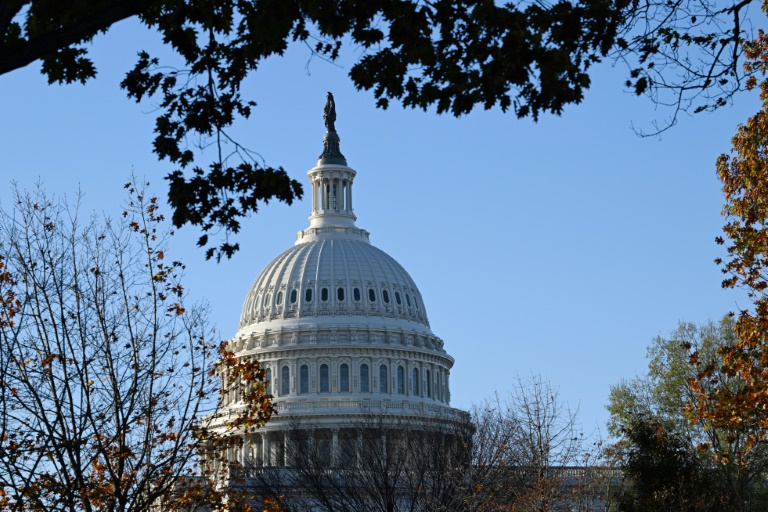
Republicans on Wednesday took control of the US House of Representatives from Democrats, networks said, narrowly securing a legislative base to oppose President Joe Biden’s agenda for the final two years of his term –- and leaving power in Congress split.

The slim Republican majority in the lower house of the US legislature will be far smaller than the party had been banking on, and Republicans also failed to take control of the Senate in a historically weak performance in the November 8 midterm elections.

NBC and CNN projected the victory for Republicans with at least 218 seats in the 435-member House of Representatives — the magic number needed to take control. This came a week after millions of Americans went to the polls for the midterms, which typically deliver a rejection of the party in the White House.

Biden congratulated top House Republican Kevin McCarthy “on Republicans winning the House majority” and added that he was “ready to work with House Republicans to deliver results for working families.”

Last week’s vote, he said, was “a strong rejection of election deniers, political violence and intimidation” and demonstrated “the strength and resilience of American democracy.”

Tweeting soon after the projection was called, McCarthy said that “Americans are ready for a new direction, and House Republicans are ready to deliver.”

The news came one day after former president Donald Trump — who loomed large during the election cycle, and whose endorsement appears to have doomed some of his party’s candidates — announced a new run for the White House.

With inflation surging and Biden’s popularity ratings cratering, Republicans had hoped to see a “red wave” wash over America, giving them control of both houses and hence an effective block over most of Biden’s legislative plans.

But instead, Democratic voters — galvanized by the Supreme Court’s overturning of abortion rights and wary of Trump-endorsed candidates who openly rejected the result of the 2020 presidential election — turned out in force. 

And Republicans lost ground with candidates rejected by moderate voters as too extreme.

“In the next Congress, House Democrats will continue to play a leading role in supporting President Biden’s agenda — – with strong leverage over a scant Republican majority,” House speaker Nancy Pelosi said.

– ‘Officially flipped’ –

Biden’s party flipped a key Senate seat in Pennsylvania and held onto two more in battleground states Arizona and Nevada, giving them an unassailable majority in the upper chamber with 50 seats plus Vice President Kamala Harris’ tie-breaking vote.

A Senate runoff election in Georgia set for next month could see the Democrats ultimately improve their majority in the upper house.

The Senate oversees the confirmation of federal judges and cabinet members, and having the 100-seat body in his corner will be a major boon for Biden.

Meanwhile on Tuesday McCarthy won his party’s leadership vote by secret ballot, putting him in prime position to be the next speaker, replacing Democrat Nancy Pelosi.

The 57-year-old congressman from California, a senior member of House Republican leadership since 2014, fended off a challenge from Andy Biggs, a member of the influential far-right Freedom Caucus.

But potential far-right defections could yet complicate his path when the full chamber votes in January.

McCarthy now begins what is expected to be a grueling campaign to win the consequential floor vote on January 3, when the House of Representatives’ 435 newly elected members — Democrats and Republicans — choose their speaker, the third most important US political position after president and vice president.

McCarthy has raised eyebrows by saying that his party might not grant a “blank check” for continued multi-billion dollar US funding for Ukraine’s fight against the Russian invasion.

Myanmar junta to release former British ambassador, Australian adviser and Japan journalist

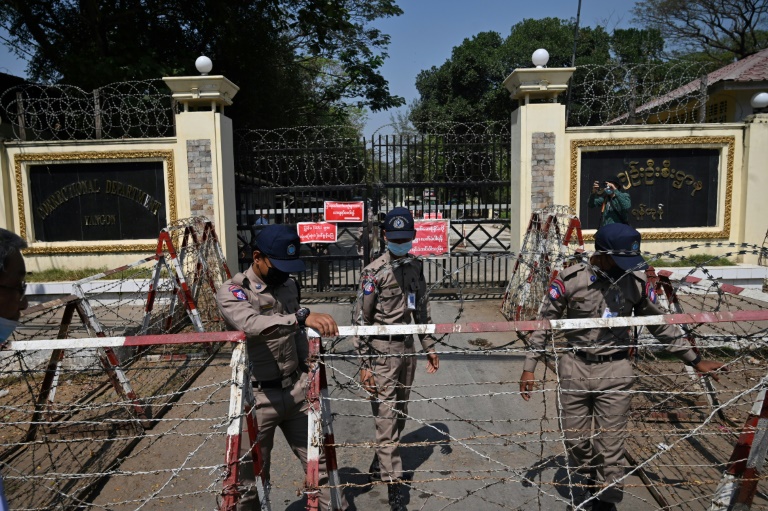
Myanmar’s military said Thursday it will release almost 6,000 prisoners including a former British ambassador, a Japanese journalist and an Australian economics adviser who will be deported, in a rare olive branch from the isolated junta. 

The Southeast Asian country has been in turmoil since the military’s coup last year and a bloody crackdown on dissent that has seen thousands jailed.

Dozens of foreign nationals have been caught up in the crackdown.

Former British envoy Vicky Bowman, Australian economics adviser Sean Turnell and Japanese journalist Toru Kubota “will be released to mark National Day”, a senior officer told AFP.

All three would be deported, the junta said without specifying a date.

“Altogether, 5,774 prisoners including some 600 women prisoners will be released,” they said, revising an earlier figure of about 700. 

In its statement announcing the amnesty, the junta’s information team did not say how many of those pardoned had been arrested during the military’s crackdown on dissent. 

Bowman, who served as ambassador from 2002 to 2006, was detained with her husband in August for failing to declare she was living at an address different from the one listed on her foreigner’s registration certificate.

They were later jailed for one year. Her husband, prominent artist Htein Lin, will also be released, the military official said.

A British diplomatic source said Bowman had not yet been released, but they “expected” her to be freed. The junta statement did not list her husband, a Myanmar citizen, among those due to be deported.

Ties between Myanmar and its former colonial ruler Britain have soured since the military’s takeover, with the junta this year criticising the UK’s recent downgrading of its mission in the country as “unacceptable”.

Sean Turnell was working as an adviser to Myanmar’s civilian leader Suu Kyi when he was detained shortly after the coup in February last year.

In September, he and Suu Kyi were convicted by a closed junta court of breaching the official secrets act and jailed for three years each.

Kubota, 26, was detained in July near an anti-government rally in Yangon along with two Myanmar citizens and jailed for 10 years.

A source at Japan’s embassy in Myanmar told AFP they had “been informed that Mr. Kubota will be released today” by junta authorities.

Kubota would leave for Japan “today”, they added.

Kubota is the fifth foreign journalist to be detained in Myanmar, after US citizens Nathan Maung and Danny Fenster, Robert Bociaga of Poland and Yuki Kitazumi of Japan — all of whom were later freed and deported.

At least 170 journalists have been arrested since the coup according to UNESCO, with nearly 70 still in detention.

– ‘We will be more than happy’ –

Families and friends hoping their loved ones would be included in the amnesty gathered outside Insein prison in Yangon, said AFP reporters who also saw several yellow buses enter the sprawling compound.

San San Aye said she was waiting for her brothers and sisters to be released.

“Three of them were sentenced to three years each eight months ago,” she told AFP. 

“Their children are waiting at home. We will be more than happy if they are released.”

Kyaw Htay said his son had been sentenced to three years for sharing anti-coup posts on social media.

“I hope he will be released today,” he told AFP.

“Professor Turnell’s release is remarkable news after being held hostage by the regime, and his family and friends will be delighted,” independent analyst David Mathieson told AFP.

But he said the junta “shows no sign of reform and a mass amnesty doesn’t absolve them of atrocities committed since the coup”.

“Thousands of people jailed since the coup in Myanmar have done nothing wrong and should never have been imprisoned in the first place,” said Amnesty’s regional office spokesperson.

Three former ministers from Suu Kyi’s ousted government and detained US-Myanmar citizen Kyaw Htay Oo would also be released, the junta official said.

The military’s crackdown on dissent since it ousted Suu Kyi’s government has left more than 2,300 civilians dead, according to a local monitoring group. 

The junta blames anti-coup fighters for the deaths of almost 3,900 civilians.

Kazakhstan's Tokayev: once loyal protege tightens grip

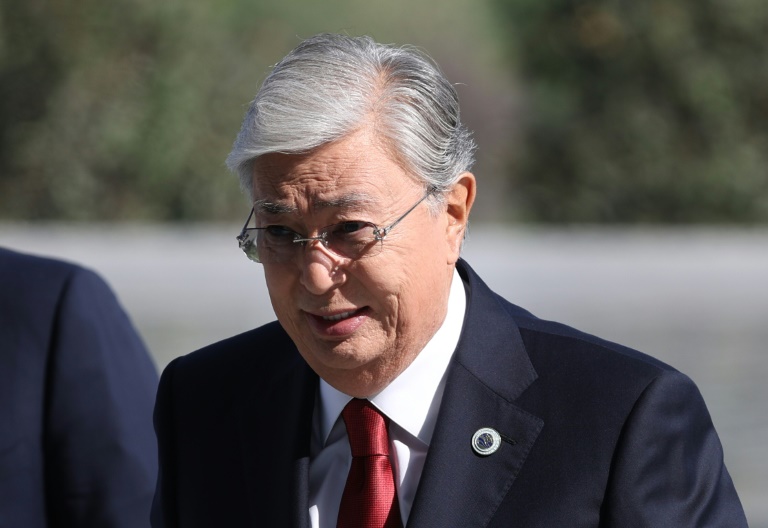
In less than a year, Kazakhstan’s President Kassym-Jomart Tokayev violently suppressed the worst unrest in his country’s history, neutralised his all-powerful predecessor and stood up to Russia’s Vladimir Putin.

Few expect surprises in the vast Central Asian country’s polls on Sunday, with Tokayev’s victory all but a foregone conclusion.

The 69-year-old is facing no real opposition candidates in the former Soviet country where critics are sidelined and all five of his competitors are virtually unknown.

When he took over in 2019, the veteran diplomat expected to rule in the shadow and at the behest of his predecessor and mentor: Nursultan Nazarbayev, who had ruled since 1991.

Nazarbayev, who presided over Kazakhstan’s independence from the Soviet Union, retained the title of “Elbasy” — the “head of the nation” in the Kazakh language. 

This gave him huge influence over politics and his clan retained control over the energy-rich country’s economy.

– Shoot to kill – 

For two and a half years, Tokayev — a steady hand known for lacking charisma — played the role of a loyal successor. 

That changed in January. 

Protests broke out across the vast country that turned into violent unrest and centred on Kazakhstan’s economic centre, Almaty.

Tokayev showed a ruthless side, ordering law enforcement to “shoot to kill” demonstrators. He also cut off communication with the outside world and called on Moscow to send troops to help. 

The deployment of Moscow-led “peacekeeping” forces suppressed the uprising, which some observers believed might have brought about Tokayev’s fall.

The chaos ended with 238 dead in nine days.

Determined to cement his authority, Tokayev promptly told Putin that Russian soldiers must leave.

And in a surprise move, he broke with his mentor Nazarbayev, purging his clan from positions of authority and promising a “new and just Kazakhstan”.

The octogenarian ex-leader was deprived of his powers, some relatives were imprisoned and he was forced to publicly swear allegiance to Tokayev. 

In the process, the new leader announced reforms, a constitutional referendum and introduced single presidential terms of seven years, triggering an early ballot on November 20.

In a final nail driven into the coffin of the Nazarbayev era, the capital city — renamed in the dictator’s honour in 2019 — regained its name of Astana in September this year. 

Despite Tokayev purging Nazarbayev, the overhaul represents the liberalisation of an authoritarian state.

– ‘I am no dreamer’ – 

“I am no utopian or a dreamer,” Tokayev said in June. 

A veteran civil servant, he has served as foreign minister, prime minister and senate head.

Amirzhan Kosanov, Tokayev’s main rival from the 2019 presidential election, said the Kazakh leader remains a pure product of his predecessor’s regime.

“The shadow of Nazarbayev still hangs over Mr. Tokayev,” he told AFP.

He did not rule out a repeat of the January 2022 chaos, given how widespread poverty and corruption is in the country.

“History has prepared an unenviable fate for him: he must clean the Augean stables,” he said, borrowing from Greek mythology to describe a necessary clean-up of graft and the economy.

The veteran diplomat — fluent in Chinese and English — has not only neutralised his political mentor.

He has also had to keep Kazakhstan’s old master, the Kremlin, at a distance. 

Putin’s invasion of Ukraine has reawakened Kazakh concerns that Moscow may have ambitions on the north of the country, home to around three million ethnic Russians.

Kazakhstan and Russia share a 7,500-kilometre-long (about 4,660-mile) border. 

Tokayev publicly clashed with Putin on a visit to Saint Petersburg in June, criticising Moscow’s move to recognise Ukrainian separatist regions that it has since claimed to annex. 

Sitting next to the Kremlin chief, Tokayev said that recognising separatist authorities around the world would “lead to chaos.”

Four months later, when Putin announced the mobilisation of tens of thousands of reservists, Tokayev opened the borders and welcomed a flood of Russians fleeing the army. 

He called on Kazakhs to “take care of them and ensure their security”.

Despite the January unrest, Tokayev is far from internationally isolated and has received a string of visitors this year — from EU chief Charles Michel to Pope Francis. 

China’s Xi Jinping also made his first post-pandemic trip to Kazakhstan.

Even his rival Kosanov acknowledged that Tokayev’s “foreign policy is a success”.

Close Bitnami banner
Bitnami