World

Kazakhstan holds snap leadership polls after deadly riots

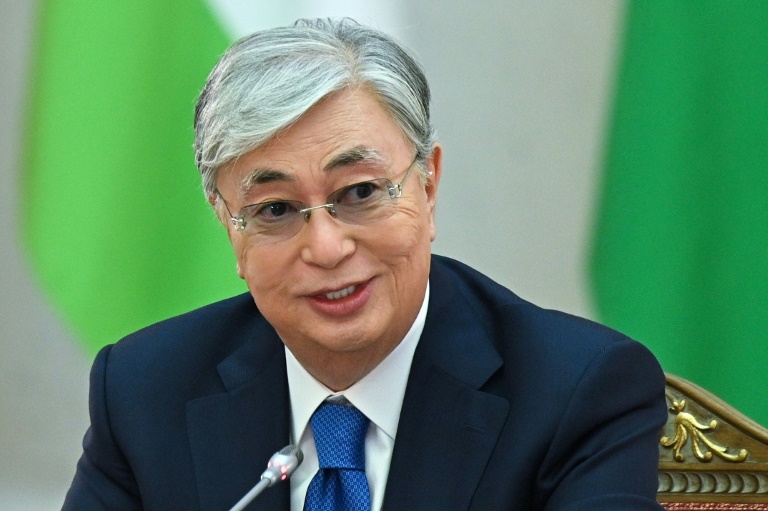
Kazakhstan will hold snap presidential elections Sunday expected to cement the incumbent Kassym-Jomart Tokayev’s grip on power, months after deadly unrest spurred a historic power shift in the Central Asian country.

Leading up to the vote, Tokayev has promoted himself as a reform leader capable of bringing the country together after earlier this year authorising law enforcement to “shoot to kill” anti-government protesters.

His vast, ex-Soviet country is precariously perched geopolitically, with historic economic and military ties with Moscow and Beijing emerging as a regional power broker.

The 69-year-old has vowed to build “a new Kazakhstan,” including by liberalising the judicial system and tackling corruption in the oil-rich country.

But deep social inequality that was at the origin of the January protests — which left more than 230 people dead — remains a problem in Kazakhstan and a potential political threat for the incumbent.

Tokayev became leader in 2019 and has since stymied opposition to his rule and consolidated power by sidelining his authoritarian predecessor Nursultan Nazarbayev.

He is facing five little-known challengers as he seeks a seven-year term in the early vote he initiated in September, saying he needed a “new mandate of trust from the people.”

Elections were initially scheduled in December 2024, but in March, he introduced constitutional reforms to curb the powers of the president and boost the role of parliament, spurring the early ballot.

– ‘Farcical elections’ –

International observers from the Organisation for Security and Cooperation in Europe (OSCE) have criticised Kazakhstan’s failure to meet electoral recommendations, including on “conditions of eligibility and registration of candidates.”

“There is no credible candidate. There is no real choice. I’ll be voting against all of them,” said Asset Terirgaliyev, a retired resident of the country’s economic capital, Almaty, the city which was an epicentre of the riots and subsequent repressions in January.

“These elections are a farce,” architect Aidar Ergaly told AFP.

“Had Tokayev said: ‘I’m annulling the vote. I’m staying in power for seven years — or however long I want — and then I’ll go,’ I would respect him for his honesty,” he added.

Analyst Andrei Chebotarev said the violence in January, which he said put the country “on the brink of a civil war,” had also brought about a “change of the foundations of society and the state.”

Despite being a product of Nazarbayev’s political era, Tokayev ousted the former leader’s allies from senior positions and jailed several among them.

Since the violence, Tokayev has also promised political and economic reforms aimed at the “transformation and modernisation of the society.”

– Balancing act –

“A little time has passed and we don’t see any real changes yet,” said pensioner Svetlana Kadysheva.

Janiya Nakizbekova, a 57-year-old entrepreneur, struck a more optimistic note. 

“We have great hope in Tokayev and believe that he cares more about the people than Nazarbayev did.”

The International Monetary Fund has warned of the persistent risk of instability as Kazakhstan’s economy — heavily dependent on Russia — is suffering from the impact of the war in Ukraine.

A former diplomat, Tokayev has won a reputation as a shrewd politician on the international scene and is expected to continue skillfully handling a balancing act between the West and regional powers Russia and China.

He has recently hosted the leaders of China, Russia and Turkey, as well as Western dignitaries and the pope.

He has also criticised Moscow’s invasion of Ukraine but stopped short of joining Western sanctions on Russia.

About 12 million people are eligible to vote in the election that will be monitored by international observers from the OSCE.

Polling stations open Sunday at 0100 GMT and close at 1500 GMT.
MH17 verdict: who are the four suspects on trial?

A former Russian spy who recently turned on the military over its invasion of Ukraine is one of four men accused of downing Malaysia Airlines flight MH17 in 2014.

The three Russians and a Ukrainian are all still at large, meaning they will not be in court when Dutch judges give their verdict on Thursday over the tragedy.

– Igor Girkin – 

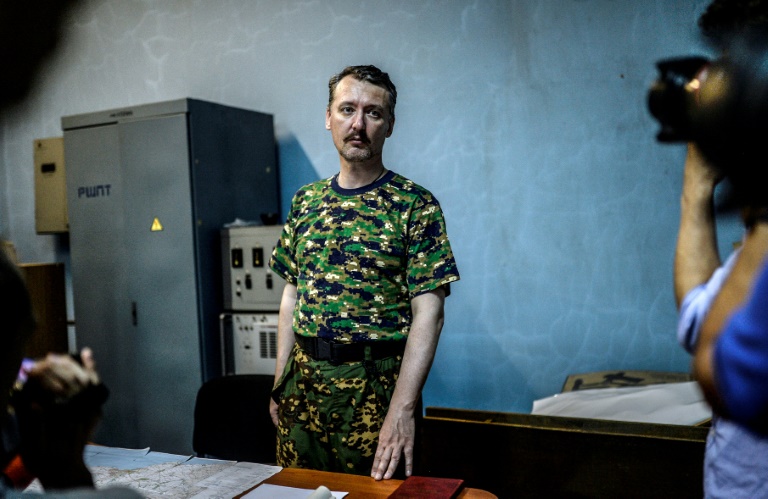
The most high-profile suspect is Igor Girkin, 51, an ex-spy and historical re-enactment fan also known by his pseudonym “Strelkov”.

Dutch prosecutors say Girkin was a former colonel in the FSB, the Russian Federal Security Service. He is known to have had fighting experience from Chechnya to the former Yugoslavia.

Girkin claims to have kick-started the war in eastern Ukraine, and went on to become the minister of defence and commander of the pro-Moscow self-proclaimed Donetsk People’s Republic (DPR).

“As the highest military officer he maintained contact with the Russian Federation” in obtaining the missile that shot down MH17, prosecutors said.

He has repeatedly denied the rebels were behind the attack. 

In 2014, Girkin ruled the then-rebel stronghold of Sloviansk with an iron fist, with executions for petty theft reportedly carried out under his rule. 

But he was squeezed out of the separatist leadership later that year under mysterious circumstances and returned to Russia, where he lost all influence and reportedly had financial difficulties.  

Since Russia’s invasion of Ukraine in February, he has criticised retreats by Russian troops and predicted the need to mobilise when Moscow was denying this was necessary.

In early September, he predicted in a video that “the war will continue until complete defeat of Russia” and has been very critical of military chiefs, who he said were “not the sharpest tools”.

Strelkov’s Telegram channel on October 15 posted a picture of him in a camouflage jacket with his arm around his wife, who wrote in the caption: “All is well, he will soon get in touch.” 

He then wrote that he has been serving since October 14 “in the active army”. His Telegram channel, which has more than 700,000 followers, says he is serving in a volunteer unit and is advertising for more recruits.

– Sergei Dubinsky – 

Sergei Dubinsky, 60, call-sign “Khmury” (gloomy), is a former officer in the GRU, the Russian military intelligence service, Dutch prosecutors say.

At the time of the MH17 crash, Dubinsky was allegedly serving as the military intelligence chief of the separatists in eastern Ukraine and was one of Girkin’s deputies.

He is alleged to have played a key role in obtaining the missile and returning it to Russia. “He also maintained regular contact with officials in Russia,” prosecutors said.

Dubinsky reportedly met Girkin when he fought in the First Chechen War in the mid-1990s. He is also a veteran of the 1980s Soviet war in Afghanistan.

– Oleg Pulatov – 

The only one of the suspects to have legal representation at the trial, Oleg Pulatov, 56, is a former officer in the Russian Spetznaz special forces.

Nicknamed “Gyurza” (viper), he was one of Dubinsky’s deputies at the heart of the separatist military leadership in 2014 and deputy head of the DPR’s intelligence service, prosecutors say.

He allegedly helped transport the BUK system to Ukraine and, after the downing of the plane, helped ensure the safety of the area where the MH17 debris fell.

Pulatov gave a video statement to the court in June saying he had “nothing to do with the disaster”.

– Leonid Kharchenko –

The only Ukrainian on trial, Leonid Kharchenko, nicknamed “Krot” (mole), was also linked to the separatist leadership.

Kharchenko commanded a combat unit in the Donetsk region in July 2014 and took his orders directly from Dubinsky, Dutch prosecutors said. 

The trial heard that he had personally helped escort the missile after it entered Ukraine, and then on its return to Russia after MH17 was shot down.

In an interview published in 2015 by a separatist news agency, he branded Kyiv a “fascist regime” built on a “Nazi” ideology. 

burs-dk/yad

Dutch judges to give long-awaited flight MH17 verdict

A Dutch court gives its verdict Thursday in the trial of four men over the downing of Malaysia Airlines flight MH17 above Ukraine in 2014, as tensions soar over Russia’s invasion eight years later.

The suspects — Russians Igor Girkin, Sergei Dubinsky, Oleg Pulatov and Ukrainian Leonid Kharchenko — will not be in court as they have refused to attend the two-and-a-half-year trial.

All 298 passengers and crew were killed when the Boeing 777 flying from Amsterdam to Kuala Lumpur was hit over separatist-held eastern Ukraine by what investigators say was a missile supplied by Moscow.

Prosecutors have demanded life sentences for the suspects on charges of murder and causing an aircraft to crash, although the men are unlikely to serve time if convicted.

The suspects were allegedly part of Kremlin-backed forces and had key roles in bringing the BUK missile from a military base in Russia and deploying it to the launch site — even if they did not pull the trigger.

The panel of three Dutch judges will read out the verdict from 1230 GMT at a high-security court near Schiphol Airport, where the doomed plane took off on July 17, 2014.

It is expected to take around an hour and a half to read out.

– ‘Hunt them down’ –

Bereaved relatives are travelling from around the world to hear the ruling after a long fight for justice. The victims came from 10 countries, including 196 Dutch, 43 Malaysians and 38 Australians.

Families from several countries visited the Dutch national MH17 monument in the town of Vijfhuizen on the eve of the verdict.

“If they are guilty, the international community should hunt them down,” Evert van Zijtveld, who lost his daughter Frederique, 19, his son Robert-Jan, 18, and his parents-in-law, told AFP.

The crash triggered global outrage and sanctions against Moscow, with Ukraine’s famed sunflower fields littered with bodies and wreckage. Some victims, including children, were still strapped into their seats.

Eight years later, the region where MH17 crashed has become one of the key battlegrounds in Russia’s nearly nine-month-old war in Ukraine.

The trial opened in March 2020 with a sombre reading of the names of all 298 victims, 196 of whom were from the Netherlands. 

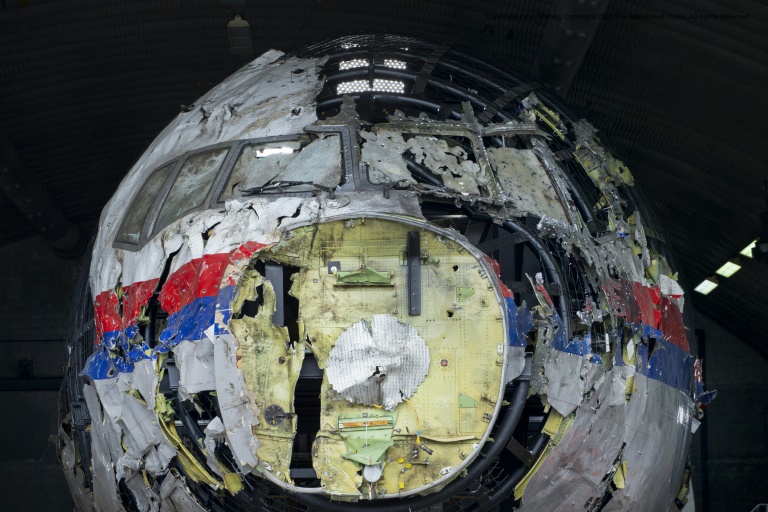
The court also visited the twisted wreckage of the plane, which has been reconstructed at a Dutch military base.

Three of the suspects are formally being tried in absentia, while Pulatov has had legal representation at the trial and made a video statement in which he said he was not guilty.

– ‘Alternative scenarios’ –

Prosecutors say Girkin, 51, a former Russian spy who became the so-called defence minister of the separatist Donetsk People’s Republic, was in contact with Russia to obtain the missile system.

He has denied the rebels were involved in downing MH17.

Girkin recently criticised the Russian military over its handling of this year’s invasion and reportedly volunteered to fight in Ukraine.

Dubinsky, 60, who has also been tied to Russian intelligence, allegedly served as the separatists’ military intelligence chief and was responsible for giving orders about the missile.

Pulatov, 56, an ex-Russian special forces soldier, and Kharchenko, 50, who allegedly led a separatist unit, were subordinates who played a more direct role in transporting the missile, prosecutors said.

The BUK missile had been identified as coming from the 53rd Anti-Aircraft Missile Brigade from Kursk in Russia, the court heard.

Defence lawyers say the trial has been unfair. 

They say prosecutors failed to prove a BUK missile brought down the jetliner, and have brought up “alternative scenarios” such as that a Ukrainian jet shot it.

Moscow has denied all involvement.

The verdict comes against the backdrop of Russia’s invasion of Ukraine, which has sparked fears of a wider international war.

NATO believes Poland blast an 'accident', Kyiv assails Russia

Western leaders moved to calm fears of a dangerous escalation in Russia’s war in Ukraine on Wednesday, saying a missile blast in Poland was likely an accident, while Kyiv pushed back hard at the idea that its anti-aircraft fire was to blame.

Ukrainian leader Volodymyr Zelensky pointed the finger at Russia, but the United States, like NATO, firmly supported Warsaw’s assessment that the deadly missile was probably fired by Ukraine.

The missile killed two people when it struck the village of Przewodow near the Ukrainian border on Tuesday, shocking NATO member Poland. 

Both Warsaw and NATO have said the explosion was likely caused by a Ukrainian air defence missile launched to intercept a massive Russian barrage targeting civilian infrastructure — while stressing Moscow was ultimately to blame for starting the conflict.

The White House said it had “seen nothing that contradicts” Poland’s preliminary assessment — while also declaring that “the party ultimately responsible for this tragic incident is Russia”.

President Zelensky, however, said Kyiv had seen no proof the missile was Ukrainian, demanding to be part of any investigation and asking for access to the blast site as well as “all the data” on the projectile.

“I have no doubt that this is not our missile,” Zelensky said. “I believe that this was a Russian missile, based on our military reports.”

In the immediate aftermath, the incident sparked fears of a major escalation in the Ukraine conflict, with Hungary criticising Zelensky’s denial as setting “a bad example”.

But by Wednesday, Polish President Andrzej Duda called it an “unfortunate accident”, saying that while the projectile likely originated from Ukraine’s air defences, the blame lay with Russia because of its attacks.

“Nothing indicates that this was an intentional attack against Poland,” said Duda.

– Russia ‘bears responsibility’ –

EU diplomats meeting in Brussels praised Warsaw, one of Ukraine’s closest friends and Russia’s fiercest foes, for its measured response.

After crisis talks, NATO chief Jens Stoltenberg said “this is not Ukraine’s fault”. 

“Russia bears ultimate responsibility as it continues its illegal war against Ukraine.”

Stoltenberg said NATO had ramped up its defences along its eastern flank in response to the war in Ukraine and denied that the alliance’s air defences had failed.

The NATO chief said Poland had not invoked Article 4 of the Western alliance’s treaty, which would have obliged members to discuss whether “the territorial integrity, political independence or security of any of the Parties is threatened”.

NATO’s most powerful member, the United States, has hundreds of troops in Poland and leads the West in supplying weapons to support Zelensky’s government in Kyiv.

From Bali, where the G20 summit was held, US President Joe Biden said it was “unlikely” that the missile had been fired by Russia.

Moscow welcomed Washington’s “restraint”.

The Russian defence ministry said: “Photographs of the wreckage… were unequivocally identified by Russian military experts as fragments of a guided anti-aircraft missile of a Ukrainian S-300 air defence system.”

It insisted that its own strikes, involving scores of missiles, “were carried out on targets only on the territory of Ukraine and at a distance of no closer than 35 kilometres (about 20 miles) from the Ukrainian-Polish border”.

The explosion rocked the village of Przewodow in eastern Poland at 1440 GMT on Tuesday.

“I’m scared. I didn’t sleep all night,” Anna Magus, a 60-year-old elementary school teacher, told AFP near the scene.

–  ‘War crime’ –

Russia invaded Ukraine on February 24 and still holds swathes of territory despite a series of recent battlefield defeats.

The conflict has caused deep unease in neighbouring Poland, which shares a 530-kilometre (329-mile) border with Ukraine and where memories of Soviet domination remain raw.

The explosion came after a wave of Russian missiles hit cities across Ukraine on Tuesday, including western Lviv, near the Polish border.

General Mark Milley, the top US military officer, said the recent strikes may have been the heaviest of the war and condemned the targeting of civilian infrastructure.

“The deliberate targeting of the civilian power grid, causing excessive collateral damage and unnecessary suffering on the civilian population, is a war crime”, Milley said.

The strikes, which left at least one person dead in the capital Kyiv, caused widespread power cuts in Ukraine as well as in neighbouring Moldova. 

The blackouts temporarily cut Europe’s largest nuclear power facility — Zaporizhzhya — as well as other, smaller plants from accessing off-site electricity. 

“Yesterday’s power loss clearly demonstrates that the nuclear safety and security situation in Ukraine can suddenly take a turn for the worse, increasing the risk of a nuclear emergency,” Rafael Mariano Grossi, head of UN nuclear watchdog IAEA, said in a statement.

– Torture chambers –

Russia’s bombardment follows the withdrawal of its forces from the strategic Kherson region after an eight-month occupation. 

In the recaptured territory, Ukraine said it had found numerous landmines as well as several sites that appear to have been used for torturing prisoners. 

“The Russians kept local patriots who refused to cooperate with the enemy there in inhumane conditions. Kherson residents were interrogated and brutally tortured,” the Security Service of Ukraine (SBU) said. 

At the sites, the SBU and police officials found objects indicating they had been used for torture. 

“Eleven places of imprisonment were discovered, four of which show signs of being torture chambers,” said Ukrainian Minister of Internal Affairs Denys Monastyrskyi.

So far, 63 bodies had been found, he said.

“But we must understand that the search has only just begun, so many more torture chambers and burial places will be discovered.”

burs/lb/cwl

Myanmar junta to release former British ambassador, Australian adviser and Japan journalist

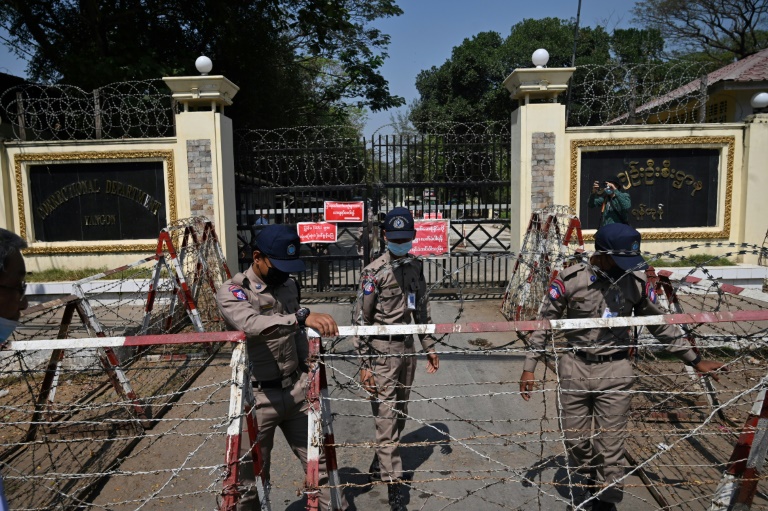
Myanmar’s military said Thursday it will release almost 6,000 prisoners, including a former British ambassador, a Japanese journalist and an Australian economics adviser in a rare olive branch from the isolated junta. 

The Southeast Asian country has been in turmoil since the military’s coup last year and a bloody crackdown on dissent that has seen thousands jailed.

Dozens of foreign nationals have been caught up in the crackdown.

Former British envoy Vicky Bowman, Australian economics adviser Sean Turnell and Japanese journalist Toru Kubota “will be released to mark National Day”, a senior officer told AFP.

“Altogether, 5,774 prisoners including some 600 women prisoners will be released,” they said, revising an earlier figure of about 700. 

They did not say how many of those pardoned had been arrested during the military’s crackdown on dissent. 

Bowman, who served as ambassador from 2002 to 2006, was detained with her husband in August for failing to declare she was living at an address different from the one listed on her foreigner’s registration certificate.

They were later jailed for one year. Her husband, prominent artist Htein Lin, will also be released, the official said.

Sean Turnell was working as an adviser to Myanmar’s civilian leader Suu Kyi when he was detained shortly after the coup in February last year.

In September, he and Suu Kyi were convicted by a closed junta court of breaching the official secrets act and jailed for three years each.

Kubota, 26, was detained in July near an anti-government rally in Yangon along with two Myanmar citizens and jailed for 10 years.

A source at Japan’s embassy in Myanmar told AFP they had “been informed that Mr. Kubota will be released today” by junta authorities.

Kubota would leave for Japan “today”, they added.

Kubota is the fifth foreign journalist to be detained in Myanmar, after US citizens Nathan Maung and Danny Fenster, Robert Bociaga of Poland and Yuki Kitazumi of Japan — all of whom were later freed and deported.

As of March, 48 journalists remained in custody across the country, according to the monitoring group Reporting ASEAN.

– ‘We will be more than happy’ –

Families and friends hoping their loved ones would be included in the amnesty gathered outside Insein prison in Yangon, AFP reporters said.

San San Aye said she was waiting for her brothers and sisters to be released.

“Three of them were sentenced to three years each eight months ago,” she told AFP. 

“Their children are waiting at home. We will be more than happy if they are released.”

Kyaw Htay said his son had been sentenced to three years for sharing anti-coup posts on social media.

“I hope he will be released today,” he told AFP.

“Professor Turnell’s release is remarkable news after being held hostage by the regime, and his family and friends will be delighted,” independent analyst David Mathieson told AFP.

But he said the junta “shows no sign of reform and a mass amnesty doesn’t absolve them of atrocities committed since the coup”.

“Thousands of people jailed since the coup in Myanmar have done nothing wrong and should never have been imprisoned in the first place,” said Amnesty’s regional office spokesperson.

Three former ministers from Suu Kyi’s ousted government and detained US-Myanmar citizen Kyaw Htay Oo would also be released, the junta official said.

The military’s crackdown on dissent since it ousted Suu Kyi’s government has left more than 2,300 civilians dead, according to a local monitoring group. 

The junta blames anti-coup fighters for the deaths of almost 3,900 civilians.

California lab-grown meat start-up gets first green light

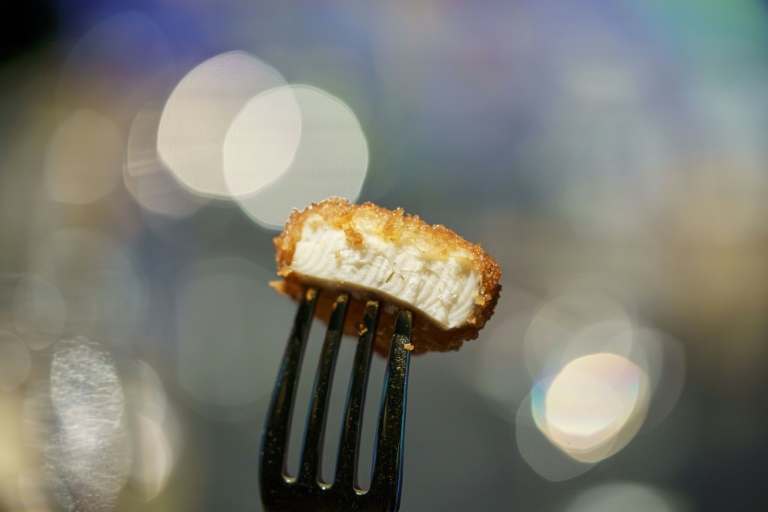
A California-based lab-grown meat start-up received the first green light for such products from the US food safety agency on Wednesday, although the product still has more hurdles to clear before being sold to consumers.

The US Food and Drug Administration said it carried out a “careful evaluation” of Upside Foods’ cultivated chicken, including data and information provided by the company, and had “no further questions at this time,” signaling a go-ahead for the firm.

“We started UPSIDE amid a world full of skeptics, and today, we’ve made history again as the first company to receive a ‘No Questions’ letter from the FDA for cultivated meat,” founder and CEO Uma Valeti said in a press release.

The FDA specified that the evaluation did not constitute “an approval process.”

Upside Foods will still have to undergo inspection by the US Department of Agriculture, for example, before it can sell its products.

That said, this “is a watershed moment in the history of food,” Valeti said.

Several start-ups are aiming to produce so-called lab-grown meat, which would allow humans to consume animal protein without harming the environment through farming and without any animal suffering.

These products differ from plant-based substitutes such as soy burgers that mimic the texture and flavor of meat but do not contain any animal protein.

The start-up Eat Just, a competitor of Upside Foods, was the first to receive authorization to make artificial meat, in Singapore in 2020. 

While succeeding in the general lab-meat market has proven complicated and expensive, some companies have set their sights on petfood, whose consumers are much less picky. 

Bond Pet Foods, a Colorado start-up, is creating animal protein from a microbial fermentation process to feed dogs.

Asian markets sink as rate hike woes return to the fore

Trading was subdued in Asia on Thursday as the optimism that characterised recent sessions was dealt a blow by data showing a resilience among US consumers that gives the Federal Reserve room to keep hiking interest rates.

Two reports showing inflation easing in the world’s top economy provided a springboard for world markets over much of the past week as investors took the readings to mean almost a year of monetary tightening was finally kicking in.

But on Wednesday the commerce department said retail sales jumped far more than expected last month, suggesting Americans are still able to weather the higher inflation and interest rate environment.

That was compounded by comments from a top Fed official that she did not see the bank stopping hiking and indicating she was willing to push borrowing costs above five percent, from the current 3.75-4.0 percent.

San Francisco Fed President Mary Daly told CNBC: “Somewhere between 4.75 and 5.25 seems a reasonable place to think about as we go into the next meeting.

“And so that does put it in the line of sight that we would get to a point where we would raise and hold.”

“Pausing is off the table right now, it’s not even part of the discussion. Right now the discussion is, rightly, in slowing the pace,” she added.

Traders have for months grown increasingly fearful that the hawkish tilt by the central bank will cause a recession, and policymakers have made clear they are willing to keep lifting even if that means hurting the economy.

Meanwhile, JPMorgan Chase said the United States would tip into a “mild” recession in 2023 owing to the rate increases, adding that it saw the Fed easing policy the following year in 2024.

“Every time equity and bond markets are thinking the Fed is done and start taking off in a rally, the Fed gets out and starts talking that back down again,” Cheryl Smith, of Trillium Asset Management, told Bloomberg Television.

In early trade, Hong Kong lost more than two percent, hit by profit-taking after a 14 percent surge between Friday and Tuesday, while there were also losses in Shanghai.

Still, observers said there were signs of optimism in Chinese markets after Beijing moved to ease some of its strict Covid restrictions and provide much-needed help to the property sector.

Tokyo, Seoul, Taipei, Manila and Jakarta also fell, though Singapore, Sydney and Manila edged up.

The pound was down against the dollar as Britain prepares for what is expected to be a grim budget later in the day by finance minister Jeremy Hunt, who has flagged a jump in taxes and spending cuts.

The announcement comes a day after figures showed UK inflation spiked at 11.1 percent in October, the highest since 1981, as the country is hammered by a cost-of-living crisis.

– Key figures around 0230 GMT –

Tokyo – Nikkei 225: DOWN 0.4 percent at 27,915.58 (break)

Hong Kong – Hang Seng Index: DOWN 2.5 percent at 17,811.86

Shanghai – Composite: DOWN 0.9 percent at 3,092.40

Pound/dollar: DOWN at $1.1876 from $1.1914 on Wednesday

Euro/dollar: DOWN at $1.0367 from $1.0395

Dollar/yen: UP at 139.56 yen from 139.54 yen

Euro/pound: UP at 87.31 pence from 87.21 pence

West Texas Intermediate: DOWN 1.0 percent at $84.71 per barrel

Brent North Sea crude: DOWN 0.9 percent at $92.07 per barrel

New York – Dow: DOWN 0.1 percent at 33,553.83 points (close)

London – FTSE 100: DOWN 0.3 percent at 7,351.19 (close) 

N. Korea fires missile hours after warning of 'fiercer' military response

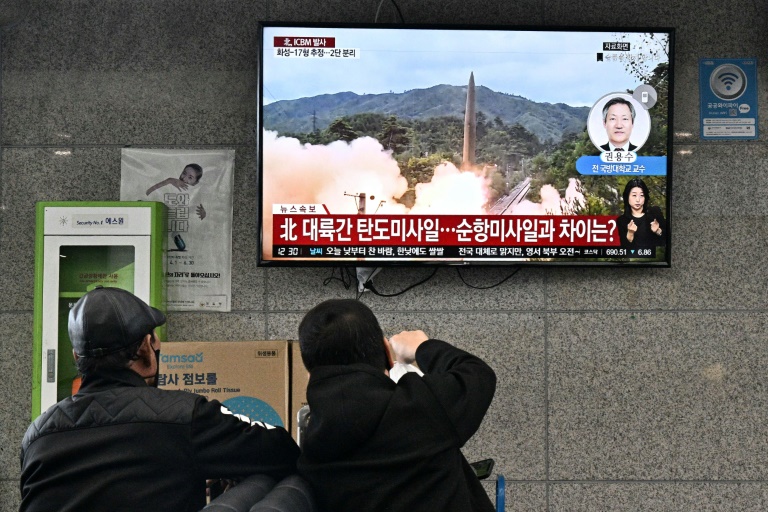
North Korea has fired an “unidentified ballistic missile”, Seoul’s military said Thursday, the latest in a record-breaking blitz of launches as Pyongyang warned of a “fiercer” military response to the US and its regional allies.

“North Korea fires an unidentified ballistic missile into East Sea,” South Korea’s Joint Chiefs of Staff said, referring to the body of water also known as the Sea of Japan.

Earlier this week, US President Joe Biden discussed North Korea’s spate of recent missile tests with his Chinese counterpart Xi Jinping in Bali, Indonesia on the sidelines of the G20 summit.

The US leader pushed China to use its influence to rein in North Korea after the wave of missile launches raised fears the reclusive regime would soon carry out its seventh nuclear test.

Biden also held talks with his South Korean counterpart Yoon Suk-yeol and Japanese Prime Minister Fumio Kishida on Sunday to discuss ways to address the threat posed by the North’s “unlawful weapons of mass destruction and ballistic missile programs”, the White House said.

On Thursday, North Korea’s minister of foreign affairs, Choe Son Hui, slammed these discussions, saying they were “bringing the situation on the Korean peninsula to an unpredictable phase.”

“The US ‘bolstered offer of extended deterrence’ and the daily-increasing military activities of the allied forces around the Korean peninsula are foolish acts,” Choe said in a statement carried by state news agency KCNA. 

The more Washington works to strengthen its security alliance with Tokyo and Seoul, “the fiercer the DPRK’s military counteraction will be”, Choe said, referring to the North by its official name.

Experts said the Thursday missile launch was “timed” to coincide with the statement from Pyongyang’s foreign minister.

The North “fired the missile after releasing the statement hours earlier in an attempt to justify the launch to send its message to the US and Japan,” Cheong Seong-chang, a researcher at the Sejong Institute told AFP. 

– UN gridlock –

Earlier this month, North Korea conducted a flurry of launches, including an intercontinental ballistic missile, which Seoul said appeared to have failed.

Pyongyang also fired a short-range ballistic missile that crossed the de facto maritime border between the two countries and landed near the South’s territorial waters for the first time since the end of the Korean War in 1953.

President Yoon said at the time that it was “effectively a territorial invasion”.

Both launches were part of a November 2 barrage in which Pyongyang fired 23 missiles — more than it launched during the whole of 2017, the year of “fire and fury” when Kim traded barbs with then US president Donald Trump on Twitter and in state media.

Experts say North Korea is seizing the opportunity to conduct banned missile tests, confident of escaping further UN sanctions due to Ukraine-linked gridlock at the United Nations.

China, Pyongyang’s main diplomatic and economic ally, joined Russia in May in vetoing a US-led bid at the UN Security Council to tighten sanctions on North Korea.

Washington has responded to North Korea’s sanction-busting missile tests by extending exercises with South Korea and deploying a strategic bomber.

Pyongyang has also been under a self-imposed coronavirus blockage since early 2020, which experts say would limit the impact of any additional external sanctions.

Time running out as Malaysia's Anwar fights for top job

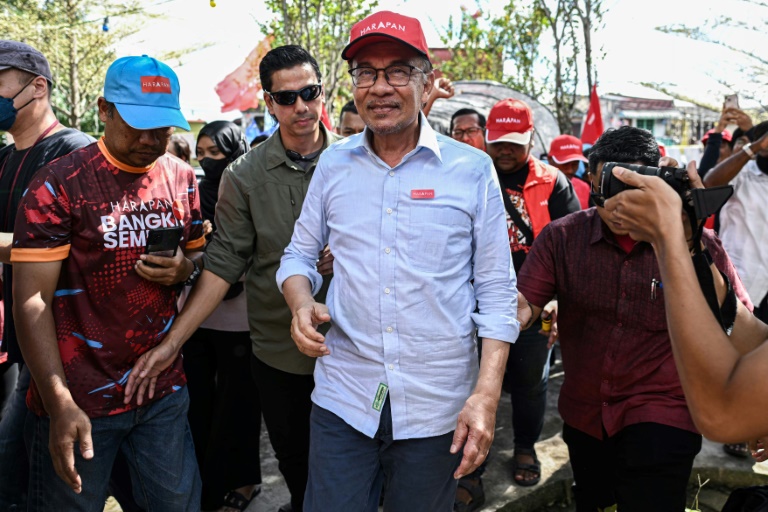
Anwar Ibrahim, Malaysia’s perennial opposition leader, has often been on the cusp of power but age is catching up with him and Saturday’s election could be his last chance to win the top job.

The 75-year-old, whose political career spans four decades and includes two prison stints, is optimistic his Pakatan Harapan (Alliance of Hope) coalition can finally win enough seats to form a government and replace the graft-tainted ruling party.

So long the runner-up of Malaysian politics, Anwar could be running out of time to achieve his long-held but elusive ambition of leading the Southeast Asian nation.

“This is Anwar’s last election. If he fails to get the support to become PM, there will be expectations that he should step aside,” Bridget Welsh of the University of Nottingham Malaysia told AFP.

“If he chooses to stay on, this will only serve to weaken the opposition further and fragment it. There are other leaders ready to lead.”

Anwar was a firebrand Muslim youth leader when he was recruited in 1982 into the United Malays National Organisation (UMNO), the main political party that ruled Malaysia for more than 60 years.

His star rose meteorically, with the suave young politician becoming finance minister and then deputy prime minister in the early 1990s under former premier Mahathir Mohamad, a youthful counterbalance to the political veteran.

The pairing, considered one of the most dynamic duos in Southeast Asian politics at the time, soon unravelled.

Tensions came to head during the 1997-1998 Asian financial crisis, when they had a bitter falling out over how to handle the debacle.

Some observers say Anwar had been too impatient to become prime minister, slighting his patron.

Mahathir sacked Anwar, who was also expelled from UMNO and charged with corruption and sodomy, the latter a crime in the largely Islamic nation.

He was sentenced to six years in jail for corruption in 1999, with an additional nine-year prison term added for the sodomy charge the following year, the two sentences to run consecutively.

As Anwar claimed political persecution, street protests erupted and evolved into a movement calling for democratic reforms.

Photos of Anwar with a black eye, inflicted in prison by Malaysia’s then police chief, were published in newspapers around the world, turning him into a symbol for a struggle that adopted the battle cry of “Reformasi!”, or reforms.

-Despair and hope-

The Mahathir-Anwar tussle has dominated and shaped Malaysian politics over the past four decades, “alternately bringing despair and hope, progress and regress to the country’s polity”, according to Oh Ei Sun of the Pacific Research Center of Malaysia.

The Malaysian Supreme Court overturned Anwar’s sodomy conviction in 2004 and ordered him freed.

After a brief hiatus from politics as an academic, Anwar returned to lead an opposition coalition in the 2013 general election.

His alliance won 50.87 percent of the popular vote but failed to muster the numbers needed for a parliamentary majority.

Controversy continued to hound the married father of six. He was again sentenced to jail for sodomy in 2015, this time for five years, at the age of 70.

He has maintained his innocence and received a full pardon from the Malaysian king three years into his sentence. Anwar returned to parliament months later after winning a by-election.

-Fragile alliance-

Anwar allied with Mahathir during the 2018 elections when his erstwhile tormentor came out of retirement to challenge incumbent Najib Razak, who was mired in the billion-dollar 1MDB financial scandal.

Their alliance scored a historic victory against UMNO and Najib, who is serving a 12-year jail term for corruption.

Mahathir became prime minister for the second time, this time with an agreement to hand over the premiership to Anwar later.

He never fulfilled that pact, and their alliance collapsed after 22 months, leaving Anwar empty-handed again and paving the way for UMNO to return to power.

Anwar has rejected any more alliances with Mahathir, who is again running for parliament at age 97.

“No matter how you dice it, the relationship between Mahathir and Anwar is cold,” Malaysian political analyst Charles Santiago told AFP.

Anwar’s campaign rallies for Saturday’s vote have drawn sizeable, enthusiastic crowds, many still chanting the “Reformasi!” slogan made popular 30 years ago.

“To save this country from endless political turmoil and corruption, I appeal to the people to give their support so that we can emerge with a clear majority,” he told AFP.

Ukraine war casts shadow over APEC summit

Pacific rim leaders fly into Bangkok on Thursday for a summit on pandemic recovery and the global economic turmoil unleashed by the war in Ukraine.

French President Emmanuel Macron and Saudi Arabia’s Crown Prince Mohammed bin Salman will join rulers from the 21 members of the Asia-Pacific Economic Cooperation (APEC) forum for the high-level talks.

The gathering follows a meeting of the G20 in Indonesia that was upended by fears that a deadly missile strike on Poland signalled a dangerous escalation of Russia’s war in Ukraine.

Western leaders have moved to dial down the alarm, saying the blast was probably an accident, with both Poland and NATO saying the explosion was most likely caused by a Ukrainian air defence missile launched to intercept a Russian barrage.

US President Joe Biden held emergency talks with G7 and NATO allies on the sidelines of the G20 on Wednesday before saying it appeared unlikely that the missile was fired from Russia.

China’s President Xi Jinping will arrive in Bangkok later Thursday, days after a landmark summit with Biden in Bali.

The superpower pair tried to take the heat out of their rivalry, which has intensified sharply in recent years as Beijing has become more powerful and more assertive about replacing the US-led order that has prevailed since World War II.

They emerged from three hours of talks on Monday declaring there need not be a new Cold War, speaking of their desire to prevent tensions from spilling into conflict.

The easing of tensions will be welcome news for APEC members who have grown increasingly alarmed at the prospect of having to take sides between the world’s two biggest economies.

While the pair still clashed on the question of self-governing Taiwan’s future — a major regional flashpoint — they found common ground on Ukraine.

They underlined that the use or threat of use of nuclear weapons was unacceptable — a clear rebuke to Russian President Vladimir Putin’s threats over his failing war in Ukraine.

The APEC summit caps an intense fortnight of diplomacy in Asia, following the G20 and a gathering of Association of Southeast Asian Nations leaders in Phnom Penh last week.

Alongside the main summit, Xi is expected to hold bilateral talks with Japanese Prime Minister Fumio Kishida — the Chinese leader’s first in-person talks with a Japanese leader since 2019.

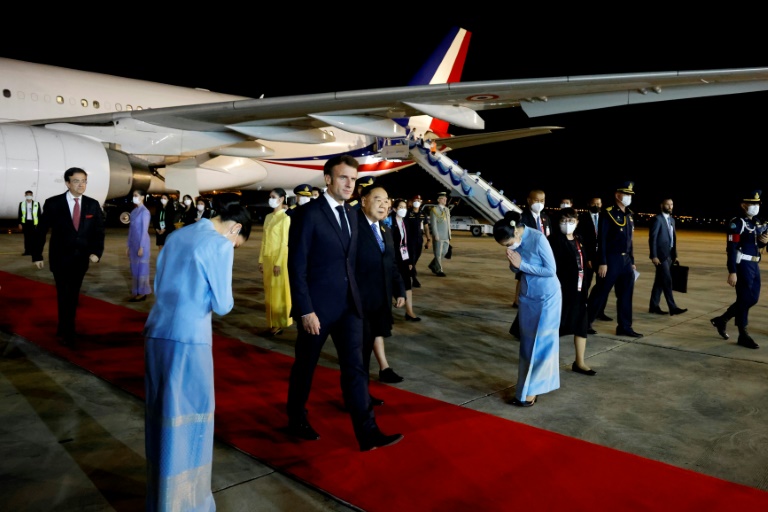
Macron landed in Bangkok late Wednesday aiming to relaunch France’s strategic ambitions in the Asia-Pacific region after the humiliating blow of Australia cancelling a major submarine contract in 2021.

Close Bitnami banner
Bitnami