World

In US trial, Musk defends his $50 bn pay deal at Tesla

Tesla tycoon Elon Musk on Wednesday defended his $50 billion pay package as CEO of the electric vehicle giant, arguing that the pioneering company was on the verge of collapse when the deal was agreed.

Musk is being sued, along with Tesla and some board members, by a shareholder who accuses them of improperly signing off on “the largest compensation package ever awarded to an executive.”

Around 2018, when the pay deal was approved, investors “thought we would fail and go bankrupt,” Musk told a courtroom in Wilmington, Delaware.

“We were in quite a tough position at the time. We were losing a lot of money… The probability of survival was extremely low,” he said.

Musk testified in the same Delaware court where he faced a lawsuit by Twitter to ensure he went through with his buyout of the social platform.

The $44 billion purchase of Twitter has put the South African billionaire under intense scrutiny after he conducted massive layoffs, provoked concern among advertisers, and struggled to control a surge of fake accounts.

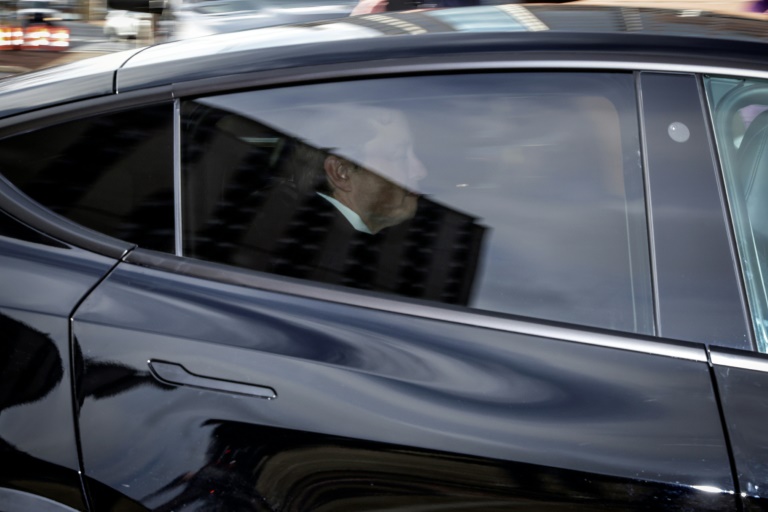
Musk arrived discreetly at the hearing in a black Tesla, which parked at the back of the courthouse in a tent set up for the occasion.

A few minutes later, wearing a black suit and tie, he passed through security to enter the building.

– ‘Unjustified enrichment’? –

The Tesla case is based on a complaint by shareholder Richard Tornetta, who accused the defendants of failing in their duties when they authorized the pay plan.

Tornetta alleges that Musk dictated his terms to directors, who were not sufficiently independent from their star CEO to object to a package worth around $51 billion at recent share prices.

He also accuses Musk of “unjustified enrichment” and has asked for the annulment of a pay program that helped make the entrepreneur the richest man in the world.

The lawsuit says that Musk wasn’t even working full time for Tesla, as he is also the head of the space company SpaceX and the start-ups Neuralink and The Boring Company.

Musk countered that investors in Tesla were some of the “most sophisticated in the world” and able to keep tabs on his management.

He said Tesla had been the laughing stock of the auto industry, and it was only the massive success of the company’s Model 3 that proved electric cars were the future.

“They thought electric vehicles were a joke. When the Model 3 started taking market share, they changed their plans,” he said, defending his vision for the company.

According to a legal filing, Musk earned the equivalent of $52.4 billion in Tesla stock options over four and a half years after virtually all of the company’s targets were met.

Musk insisted that he played no role in coming up with the package nor discussed his deal with the board members, some of them close friends, who ultimately signed off on it.

The non-jury trial began Monday with testimony from Ira Ehrenpreis, head of the compensation committee on Tesla’s board of directors, who said the targets set were “extraordinarily ambitious and difficult.”

Ehrenpreis argued that the board wanted to spur Musk to focus on Tesla at a time when the company was fighting to gain traction.

The trial, which will run through Friday, was presided over by Judge Kathaleen McCormick, the same judge who was to preside over the dropped Twitter case.

There is no deadline for her decision which could take months.

She largely let questioning by lawyers for Musk and the plaintiff proceed uninterrupted, but jumped in when she found the tycoon’s answers rambling.

“We can all listen to this all day because it’s very interesting, but I don’t think it was responsive to the question, which I’ve now forgotten,” she said.

In US trial, Musk defends his $50 bn pay deal at Tesla

Tesla tycoon Elon Musk on Wednesday defended his $50 billion pay package as CEO of the electric vehicle giant, arguing that the pioneering company was on the verge of collapse when the deal was agreed.

Musk is being sued, along with Tesla and some board members, by a shareholder who accuses them of improperly signing off on “the largest compensation package ever awarded to an executive.”

Around 2018, when the pay deal was approved, investors “thought we would fail and go bankrupt,” Musk told a courtroom in Wilmington, Delaware.

“We were in quite a tough position at the time. We were losing a lot of money… The probability of survival was extremely low,” he said.

Musk testified in the same Delaware court where he faced a lawsuit by Twitter to ensure he went through with his buyout of the social platform.

The $44 billion purchase of Twitter has put the South African billionaire under intense scrutiny after he conducted massive layoffs, provoked concern among advertisers, and struggled to control a surge of fake accounts.

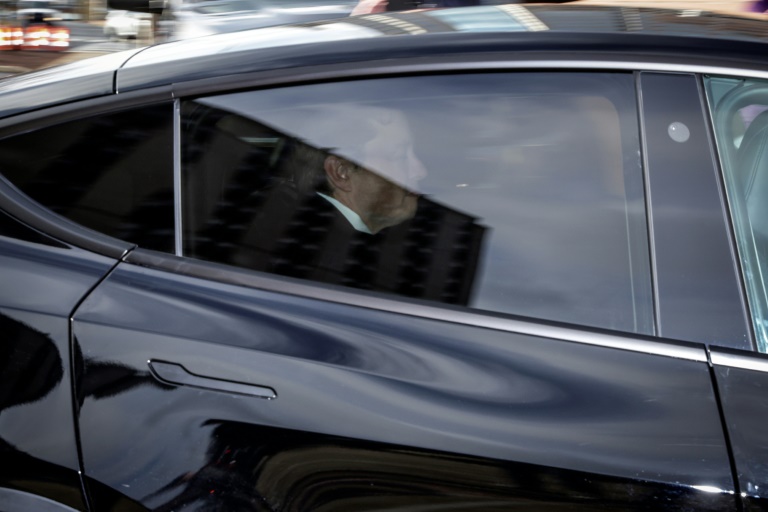
Musk arrived discreetly at the hearing in a black Tesla, which parked at the back of the courthouse in a tent set up for the occasion.

A few minutes later, wearing a black suit and tie, he passed through security to enter the building.

– ‘Unjustified enrichment’? –

The Tesla case is based on a complaint by shareholder Richard Tornetta, who accused the defendants of failing in their duties when they authorized the pay plan.

Tornetta alleges that Musk dictated his terms to directors, who were not sufficiently independent from their star CEO to object to a package worth around $51 billion at recent share prices.

He also accuses Musk of “unjustified enrichment” and has asked for the annulment of a pay program that helped make the entrepreneur the richest man in the world.

The lawsuit says that Musk wasn’t even working full time for Tesla, as he is also the head of the space company SpaceX and the start-ups Neuralink and The Boring Company.

Musk countered that investors in Tesla were some of the “most sophisticated in the world” and able to keep tabs on his management.

He said Tesla had been the laughing stock of the auto industry, and it was only the massive success of the company’s Model 3 that proved electric cars were the future.

“They thought electric vehicles were a joke. When the Model 3 started taking market share, they changed their plans,” he said, defending his vision for the company.

According to a legal filing, Musk earned the equivalent of $52.4 billion in Tesla stock options over four and a half years after virtually all of the company’s targets were met.

Musk insisted that he played no role in coming up with the package nor discussed his deal with the board members, some of them close friends, who ultimately signed off on it.

The non-jury trial began Monday with testimony from Ira Ehrenpreis, head of the compensation committee on Tesla’s board of directors, who said the targets set were “extraordinarily ambitious and difficult.”

Ehrenpreis argued that the board wanted to spur Musk to focus on Tesla at a time when the company was fighting to gain traction.

The trial, which will run through Friday, was presided over by Judge Kathaleen McCormick, the same judge who was to preside over the dropped Twitter case.

There is no deadline for her decision which could take months.

She largely let questioning by lawyers for Musk and the plaintiff proceed uninterrupted, but jumped in when she found the tycoon’s answers rambling.

“We can all listen to this all day because it’s very interesting, but I don’t think it was responsive to the question, which I’ve now forgotten,” she said.
Poland says blast likely caused by Ukraine missile in accident

Western leaders played down fears Wednesday that a deadly missile blast in eastern Poland could herald a dangerous escalation in the war Russia launched against Ukraine, blaming stray anti-aircraft fire.

The United States said it backed an assessment by Warsaw that the missile that landed inside Poland was fired by Ukrainian forces.

“We have seen nothing that contradicts President (Andrzej) Duda’s preliminary assessment that this explosion was most likely the result of a Ukrainian air defense missile,” the White House said in a statement.

Warsaw and NATO have said the explosion was likely caused by a Ukrainian air defence missile launched to intercept a Russian barrage, but that Moscow was ultimately to blame for starting the conflict.

Two people were killed on Tuesday when at least one missile hit a village in NATO member Poland near the Ukrainian border, during a mass Russian bombardment aimed at civilian infrastructure inside Western-backed Ukraine.

Ukrainian President Volodymyr Zelensky contradicted the assessment, saying on Wednesday that the missile that hit Poland was Russian. 

“I have no doubt that this is not our missile,” Zelensky said in televised remarks. “I believe that this was a Russian missile, based on our military reports.”

Zelensky said Kyiv had not seen proof that the missile was Ukrainian and said it was imperative that Ukraine become part of an investigation.

In the immediate aftermath there was fear the incident would mark a new escalation in the conflict, but by Wednesday Duda announced Poland’s conclusion the projectile likely originated from Ukraine’s own air defences. That theory was then endorsed by Washington.

Duda said it was very likely that the Soviet-era missile was launched by Ukraine in what he called an “unfortunate accident” and said the blame lay with Russia because of its attacks on Ukraine.

– Russia ‘bears responsibility’ –

NATO chief Jens Stoltenberg underlined this stance and EU diplomats meeting in Brussels praised Warsaw, one of Ukraine’s closest friends and Russia’s fiercest foes, for its measured response.

After crisis talks in Brussels, Stoltenberg said an ongoing investigation was expected to find “that the incident was likely caused by a Ukrainian air defence missile fired to defend Ukrainian territory against Russian cruise missile attacks”.

“But let me be clear, this is not Ukraine’s fault,” he continued. “Russia bears ultimate responsibility as it continues its illegal war against Ukraine.”

Stoltenberg said NATO had ramped up its defences along its eastern flank in response to the war in Ukraine and denied that the alliance’s air defences had failed.

“We are prepared to handle situations like this in a firm, calm, resolute way, but also in a way that prevents further escalation,” he said.

The NATO chief said Poland had not invoked Article 4 of the Western alliance’s treaty, which would have obliged members to discuss whether “the territorial integrity, political independence or security of any of the Parties is threatened”.

NATO’s most powerful member, the United States, has hundreds of troops in Poland and leads the West in supplying weapons to support Ukrainian President Volodymyr Zelensky’s government in Kyiv.

US Defense Secretary Lloyd Austin said American personnel would work to support the Polish investigation.

“Russia is facing setback after setback on the battlefield, and Russia is putting Ukrainian civilians and civilian infrastructure in its gun sights,” he said.

The Russian defence ministry said: “Photographs of the wreckage… were unequivocally identified by Russian military experts as fragments of a guided anti-aircraft missile of a Ukrainian S-300 air defence system.” 

It insisted that its own strikes, a barrage of scores of missiles, “were carried out on targets only on the territory of Ukraine and at a distance of no closer than 35 kilometres (about 20 miles) from the Ukrainian-Polish border”.

Ukrainian officials had initially insisted that Russia must have fired the missile that hit Poland.

“Ukraine requests immediate access to the site of the explosion,” the secretary of Ukraine’s national security and defence council, Oleksiy Danilov, said on social media.

He said Kyiv was ready to hand over evidence of its claim that Russia was responsible, but that he was “expecting information from our partners” on reports that it was a Ukrainian missile.

The explosion rocked the village of Przewodow in eastern Poland at 1440 GMT on Tuesday.

“I’m scared. I didn’t sleep all night,” Anna Magus, a 60-year-old teacher at the local elementary school, told AFP near the scene. “I hope it was a stray missile because otherwise we’re helpless.”

–  Electricity outages –

Russia invaded Ukraine on February 24 and still holds swathes of territory despite a series of recent battlefield defeats.

The conflict has caused deep unease in neighbouring Poland, which shares a 530-kilometre (329-mile) border with Ukraine and where memories of Soviet domination are still very raw.

The explosion came after a wave of Russian missiles hit cities across Ukraine on Tuesday, including Lviv, near the Polish border.

Zelensky said the strikes cut power to some 10 million people, though it was later restored to eight million of them, and also triggered automatic shutdowns at two nuclear power plants.

burs/dc-kjm/gw

Israel, US blame Iran as 'drone strike' hits tanker off Oman

Israel and the United States blamed Iran Wednesday after what they said was a drone strike against a tanker operated by an Israeli-owned firm carrying gas oil off the coast of Oman.

The Pacific Zircon was “hit by a projectile approximately 150 miles off the coast of Oman” on Tuesday, Singapore-based firm Eastern Pacific Shipping which operates the vessel said in a statement, adding that there were no reports of casualties or any leakage of the cargo.

“There is some minor damage to the vessel’s hull but no spillage of cargo or water ingress,” said the company which is owned by Israeli billionaire Idan Ofer — one of two sons of shipping magnate Sammy Ofer, who died in 2011.

The tanker was carrying 42,000 tonnes of gas oil and bound for Buenos Aires, according to Samir Madani, co-founder of website TankerTrackers.com, an oil shipping online research firm.

The Bahrain-based United States Fifth Fleet said it was “aware of the incident”.

US National Security Adviser Jake Sullivan later said the White House was “confident that Iran likely conducted this attack using a UAV”.

– ‘Iranian provocation’ –

An Israeli official told AFP that the strike on the tanker was “an Iranian provocation” that aimed to “disrupt the environment” before the football World Cup opens in Qatar on Sunday.

The official, who requested anonymity, said the attack was carried out with the “same drones that the Iranians are selling to the Russians for use in Ukraine… the Shahed 136,” an unmanned aircraft equipped with a warhead.

The Israeli official dismissed suggestions that the strike on the vessel partly owned by Idan Ofer amounted to “an Iranian victory” against Israel. 

“It is not an Israeli tanker,” the official said.

Iran and Israel are bitter foes and a “shadow war” between the two powers has seen a spate of attacks on ships from both sides that they have blamed on each other.

Iran was blamed for a July 29, 2021 drone strike on an Israel-linked tanker sailing off the coast of Oman, the MV Mercer Street, that killed a former British soldier and a Romanian national.

Tehran denied responsibility for that strike.

– Iran-US tensions – 

Heightened tensions between arch foes Washington and Tehran in recent years have also seen incidents between their navies, including in August, when Washington said it prevented an Iranian ship from capturing a US maritime drone in Gulf waters that are vital for world energy supplies. 

Iran and world powers have engaged in on-off talks to revive a landmark 2015 deal that sought to curb Iran’s nuclear activities in exchange for sanctions relief.

The United States, Britain, France and Germany have submitted a motion to the UN nuclear watchdog censuring Iran for lack of cooperation with the agency, diplomats told AFP this week.

“The risk of attacks against shipping and energy infrastructure in the wider region is rising mainly due to the lack of progress in US-Iranian nuclear diplomacy,” said Torbjorn Soltvedt, Middle East analyst with the Verisk Maplecroft risk intelligence company. 

A decision by Washington to apply further sanctions pressure on Tehran has exacerbated the risk of further attacks, Soltvedt said. 

Iran has been rocked by two months of mass protests — the biggest in years — following the death in September of 22-year-old Mahsa Amini after she was arrested by Iran’s notorious morality police for an alleged breach of its strict dress code for women.

“Ongoing mass protests against the Iranian government also make it more likely that Tehran will seek to stoke unrest in the broader region as a diversionary tactic,” Soltvedt said.

US sports stars named in lawsuit over FTX's deceptive practices

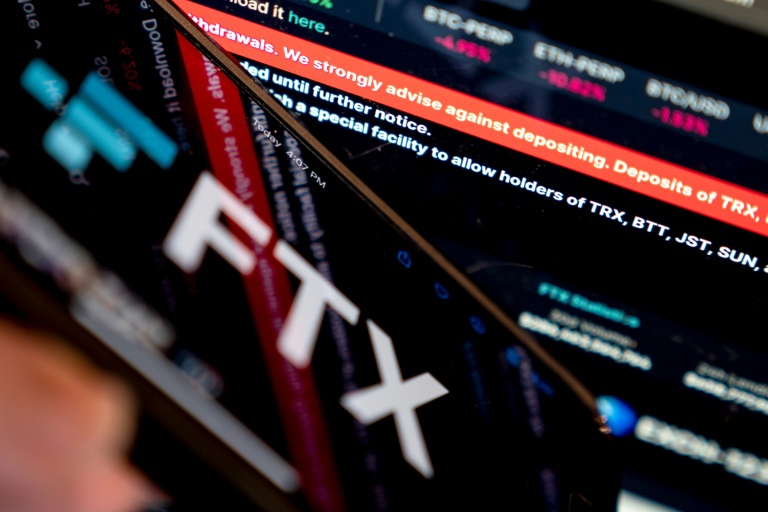
High-profile US sports stars and personalities have been named in a lawsuit over deceptive practices targeting investors who became victims of the stunning collapse of cryptocurrency exchange FTX.

The celebrities helped promote the exchange, which declared bankruptcy in the United States last week in a meltdown that has reverberated across the digital currency landscape and drawn scrutiny from authorities in multiple countries.

American football star Tom Brady and his supermodel ex-wife Gisele Bundchen, basketball great Shaquille O’Neal, tennis Grand Slam champion Naomi Osaka, actor/comedian Larry David, and Shark Tank investor Kevin O’Leary were among those named alongside FTX founder Sam Bankman-Fried in the suit filed in Miami federal court on Tuesday.

Plaintiff Edwin Garrison filed the suit in a Miami court on behalf of other investors, seeking to recover damages from losses suffered in the FTX implosion, accusing the company of “misrepresentations and omissions.”

“FTX’s fraudulent scheme was designed to take advantage of unsophisticated investors from across the country,” the lawsuit alleges.

“Some of the biggest names in sports and entertainment have either invested in FTX or been brand ambassadors for the company” and hyped the exchange on social media, the document said.

David appeared in a television ad during this year’s American football Super Bowl championship game, a coveted and costly promotional spot.

FTX “needed celebrities … to continue funneling investors into the FTX Ponzi scheme, and to promote and substantially assist in the sale” of the accounts “which are unregistered securities,” the court documents said.

The turmoil at FTX, recently valued at $32 billion, came after Binance, the world’s biggest cryptocurrency platform, backed out of a deal to buy the troubled company amid reports about mismanagement of client funds and potential investigations by regulators.

The House Financial Services Committee on Wednesday announced it would hold a hearing next month to investigate the company’s collapse.

“The fall of FTX has posed tremendous harm to over one million users, many of whom were everyday people who invested their hard-earned savings into the FTX cryptocurrency exchange, only to watch it all disappear within a matter of seconds,” committee Chair Maxine Waters said in a statement.

“Unfortunately, this event is just one out of many examples of cryptocurrency platforms that have collapsed just this past year.”

The lawsuit alleges the company used money from new investors to “pay interest to the old ones and to attempt to maintain the appearance of liquidity.”

The collapse followed rising doubt over the financial stability of FTX. Attention had focused on the relationship between FTX and Alameda Research, a trading house also owned by Bankman-Fried, and reports he shifted funds out of the exchange, even as he tried to fill a $7 billion gap.

It was a spectacular reversal of fortune for the founder and one-time cryptocurrency wunderkind Bankman-Fried.

The disgraced executive apologized on Twitter and resigned, but after the company filed for bankruptcy it said it was the victim of “unauthorized transactions.”

UK central bank blames Brexit for trade slump

Brexit is hurting the UK economy, Bank of England officials said Wednesday, even as government leaders downplay the impact of the seismic EU withdrawal.

Prime Minister Rishi Sunak’s government says the war in Ukraine and the Covid pandemic are the primary reasons why Britain is staring at a painful recession, as it readies budget cuts this week.

But the UK’s exit from the European Union is having a disproportionate effect on trade, argued Bank of England monetary policy committee member Swati Dhingra.

“It’s undeniable now that we’re seeing a much bigger slowdown in trade in the UK compared to the rest of the world,” she told the Treasury committee of the House of Commons.

“The simple way of thinking about what Brexit has done to the economy is that in the period after the (2016) referendum, there was the biggest depreciation that any of the world’s four major economies have seen overnight,” she said.

That contributed to increasing prices and reduced wages, even before inflation soared this year, the economist said.

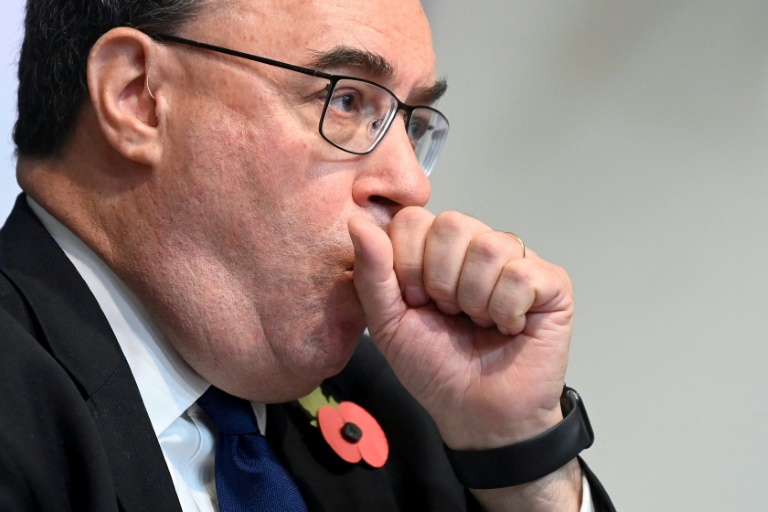
Bank of England governor Andrew Bailey said the central bank was sticking by its initial prognosis issued after the June 2016 referendum, when it warned that Brexit would shrink the UK economy.

“This (estimate) was done pretty soon after the referendum, it essentially assumes that there is a long-run downshift in the level of productivity, a little over three percent,” he told the same committee of MPs.

“As a public official I’m neutral on Brexit per se, but I’m not neutral in saying that these are what we think are the most likely economic effects of it.” 

– Slump –

Beyond trade flows, one apparent illustration of Brexit’s impact emerged this week with new Bloomberg figures showing that the Paris stock market has now outstripped the combined value of London’s — $2.823 trillion to $2.821 trillion. 

In 2016, London-listed stocks were collectively worth $1.5 trillion more than those listed in Paris. 

Some of the shift since could be explained by the pound’s bigger slump against the dollar on currency markets than the euro’s.

Former Bank of England policymaker Michael Saunders said without Brexit, the government would have had enough financial firepower to avoid the emergency budget coming on Thursday.

“The UK economy as a whole has been permanently damaged by Brexit,” he told Bloomberg TV on Monday.

“It has reduced the economy’s potential output significantly, eroded business investment.”

Finance minister Jeremy Hunt, who voted in 2016 to stay in the EU, said on Sunday: “I don’t deny there are costs to a decision like Brexit, but there are also opportunities, and you have to see it in the round.”

Brazil's Lula, world leaders bolster UN climate talks

UN climate talks got a boost Wednesday as Brazilian president-elect Luiz Inacio Lula da Silva vowed to fight Amazon deforestation and global leaders reaffirmed key pledges.

While G20 leaders meeting in Indonesia issued a final communique committing to pursue the more ambitious limits on global heating, action on the sidelines of fraught COP27 negotiations in Egypt generated momentum at the UN climate conference.

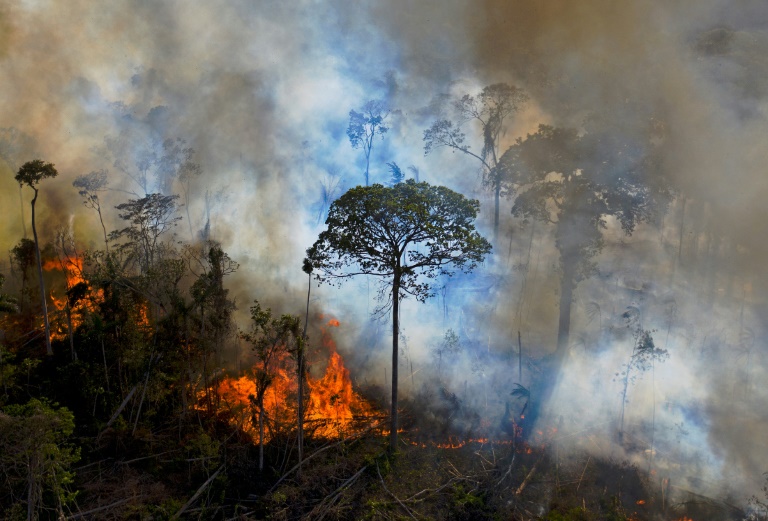
Lula kicked off COP27 events Wednesday with a call to host the 2025 climate talks in the Amazon region, in his first international trip since defeating outgoing far-right President Jair Bolsonaro, who presided over years of rampant Amazon deforestation.

“I am here to say to all of you that Brazil is back in the world,” said Lula as he received a jubilant welcome from hundreds of people at an Amazon region pavilion in the Red Sea resort of Sharm el-Sheikh.

“We will put up a very strong fight against illegal deforestation,” he said, announcing the creation of an Indigenous people’s ministry to protect the vast region’s vulnerable communities.

“There is no climate security for the world without a protected Amazon,” Lula said later in a speech.

Lula arrived in Egypt on Tuesday and went straight into climate diplomacy, with meetings with US envoy John Kerry and China’s Xie Zhenhua.

– Kerry ‘pleased’ –

Kerry told a COP27 biodiversity panel on Wednesday that he was “really encouraged” by Lula’s pledge to protect the Amazon, and that the United States would work with other nations to help protect the rainforest.

Under Bolsonaro, a staunch ally of agribusiness, average annual deforestation increased 75 percent compared with the previous decade.

“We don’t need to cause deforestation of even one metre of the Amazon to continue being one of the biggest food producers in the world,” Lula said.

In another boost to the UN climate process, the final communique from world leaders meeting at the Group of 20 talks in Bali, Indonesia, reaffirmed a promise to “pursue efforts” to curb global warming to 1.5 degrees Celsius above pre-industrial levels.

The G20 document also addresses the most contentious issue at COP27, as leaders urged “progress” on “loss and damage” — the costs of climate impacts already being felt — though without saying which approach they favoured.

Developing nations are demanding the creation of a loss and damage fund, through which rich polluters would compensate them for the destruction caused by climate-linked natural disasters.

But the United States and the European Union have suggested using existing channels for climate finance instead of creating a new one.

The G20 meeting was also the stage of a crucial meeting between US President Joe Biden and China’s Xi Jinping, where the two leaders agreed to resume their climate cooperation.

Ani Dasgupta, head of the World Resources Institute, said positive signals from leaders at the G20 “should put wind in the sails” of negotiators in Egypt.

In another COP27 announcement, the EU said it would dedicate more than $1 billion in climate funding to help countries in Africa boost their resilience in the face of the accelerating impact of global warming.

– Climate leadership –

In his speech, however, Lula took a dig at developed countries for failing to fulfil a pledge to provide $100 billion in aid annually from 2020 for developing nations to green their economies and adapt to future impacts.

“I’m also back to demand what was promised” at past climate talks, he said. 

The president-elect, who previously served from 2003 to 2010, threw his weight behind the idea of a climate impacts compensation fund.

“We very urgently need financial mechanisms to remedy losses and damages caused by climate change,” said Lula, who made a spectacular political comeback after serving jail time for corruption.

Latin America’s most populous country grew more isolated under Bolsonaro, analysts say, in part due to his permissive policies towards deforestation and exploitation of the Amazon, the preservation of which is seen as critical to fighting global warming.

Brazil is home to 60 percent of the Amazon, which spans eight countries and acts as a massive sink for carbon emissions.

The incoming Lula administration wants the United States to contribute to the Amazon Fund, considered one of the main tools to reduce deforestation in the planet’s biggest tropical forest.

Following Lula’s victory, the fund’s main contributors, Norway and Germany, announced they would participate again, after freezing aid in 2019 in the wake of Bolsonaro’s election.

Pakistan reverses morality ban on transgender romance movie

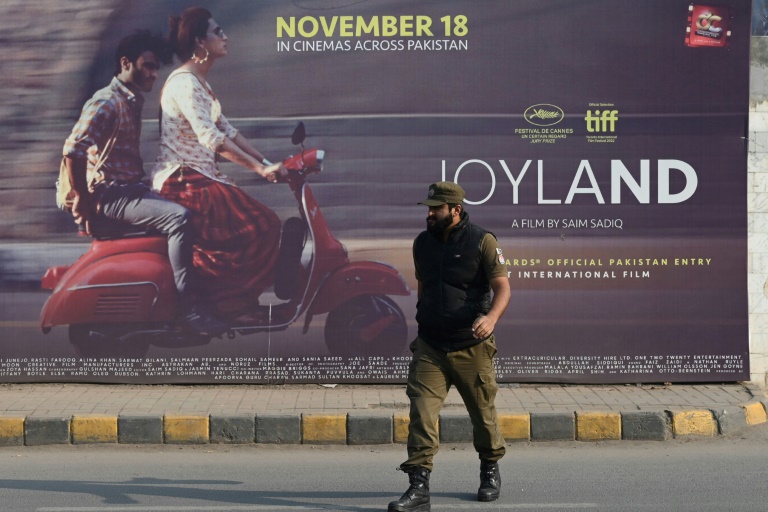
A Pakistani film portraying romance between a married man and a transgender woman was cleared for domestic screenings on Wednesday, officials said, reversing a government ban forced by Islamist pressure.

Lauded by critics, awarded the Jury Prize at Cannes, and nominated as Pakistan’s entry for next year’s Academy Awards, the movie “Joyland” was set to open in cinemas across the country on Friday.

But following objections from Islamist hardliners, Pakistan’s information ministry stepped in last week to issue a veto declaring the film “repugnant to the norms of decency and morality” and ordered a review by censors.

But Muhammad Tahir Hassan, head of the Central Board of Film Censors, told AFP late on Wednesday that “there is no hindrance from the board for its screening”.

“The distributors can screen the film from tomorrow morning if they wish,” he added.

In arch-conservative Pakistan the rights of the transgender community are ostensibly enshrined in law.

However, under social stigma most are forced to live on the fringes of society, often resorting to begging, dancing at weddings or sex work for survival.

Meanwhile the slim protections they do enjoy from legislation seeking to end education and workplace discrimination are being challenged by Islamist parties.

Transgender activists rallied around the cause of the film on social media following news of the ban.

Rights group Amnesty International said it was part of a “deep-rooted and persistent pushback to ensuring their equal place in society”.

Chad opposition in shock after crackdown

Some have fled or gone into hiding while for others, just to walk in front of their party’s now abandoned headquarters stirs dread.

More than a month after a crackdown on anti-junta protestors that left scores dead and spurred an international outcry, dissidents in Chad remain in shock and disarray.

“People are traumatised,” said Gabin, a 30-year-old member of the Transformers party that co-staged the demonstration that was bloodily suppressed on October 20.

“They are still being hunted. They’re afraid of even walking in front of the Transformers (building), afraid of being arrested.”

The head of the Transformers, Succes Masra, told AFP on November 10 that he had fled to an unnamed country, saying he was being sought by the presidential guard — the elite force of Chadian leader General Mahamat Idriss Deby Itno.

The same day, Max Loalngar of the Wakit Tamma opposition group said that he was hiding “somewhere” in Chad to avoid arrest.

Opposition groups had encouraged demonstrations on October 20 to mark the date when the ruling military had initially promised to cede power — a timeline that Deby has now extended by two years. 

The 38-year-old succeeded his iron-fisted father, Idriss Deby Itno, who ruled for 30 years before dying in an operation against rebels in April 2021.

– Bloody toll –

According to the official version of events, around 50 people died, including a dozen members of the security forces, after the opposition mounted an “insurrection” in the capital N’Djamena and several other cities. 

But Transformers and Wakit Tamma say dozens more people were killed and at least 300 wounded when security forces opened fire on protestors.

Between 1,500 and 2,000 people have been arrested, according to those parties, who say there have also been extra-judicial killings — an allegation unsupported by any evidence, according to the authorities.

On November 4, a report drawn up by UN-mandated experts estimated that between 50 and 150 people had died, 150 to 184 had “disappeared”, 1,369 had been arrested, and between 600 and 1,100 had been “deported” to Koro Toro, a high security prison in the desert some 600 kilometres (370 miles) from the capital.

Last Friday, N’Djamena prosecutor Moussa Wade Djibrine said 621 people, including dozens of minors, had been sent to Koro Toro.

The African Union, European Union and Amnesty International have condemned the crackdown.

– Reminders –

Traces of the October 2 violence are still visible in the capital’s Abena district, where the Transformers’ headquarters is located.

There are remains of burned tyres and some buildings have been ransacked or torched.

The party offices themselves are empty — their doors have been padlocked by neighbours to prevent intruders — although the windows have been smashed.

Stores, bars and hairdressers in the neighbourhood have reopened but seem to be less well-frequented, and people hurry to get home before a nighttime curfew, announced on the day of the clashes, takes effect.

“Since October 20, the security forces have been going from house to house, picking up everybody,” Loalngar said by phone.

“Every morning, bodies are fished out” of the Chari river in N’Djamena, “and others are buried in the desert,” he said, echoing allegations, which are impossible to confirm, circulating on social media.

An activist who asked not to be identified said police had seized a list of phone numbers at the Transformers building.

“They have been calling us, passing themselves off as a travel agency, and trying to trap us,” he said.

Nouba Nadjilem said her family had been without news of her 15-year-old brother, who had gone out on October 20 “just to buy sugar”.

A woman who gave her name as Marie-Therese, a 50-year-old cleaner, said her nephew had been picked up “in front of (his) home with some of his friends” and that his family too had no idea what had become of him.

yas-dwi-gir-lad/ri/ah

European equities slip on Ukraine fears

European stock markets slid Wednesday, with investors spooked over a deadly missile blast in Poland near the border with Ukraine.

London slid 0.3 percent, also on news that UK inflation spiked to a 41-year peak in October on rocketing energy bills and food prices.

Frankfurt fell 1.0 percent and Paris stocks sank 0.5 percent after Asia closed mostly in the red. 

The dollar rose against the yen, but slid against the euro and pound.

“Reports of missile strikes in Poland on Tuesday naturally caused a shudder in the markets,” said Craig Erlam, senior market analyst at OANDA trading platform.

“The prospect of a sudden and unexpected escalation in the war in Ukraine, particularly involving a NATO state, doesn’t bear thinking about but we were almost forced to and under the circumstance, the reaction was fairly modest,” he added.

Two people were killed on Tuesday when at least one missile hit a village in NATO member Poland near the Ukrainian border, during a mass Russian bombardment aimed at civilian infrastructure inside Western-backed Ukraine.

Market jitters were calmed somewhat by officials, including US President Joe Biden and NATO Secretary General Jens Stoltenberg, discounting the likelihood of a deliberate Russian attack and pointing to the possibility that it was a Ukrainian air defence missile that missed a Russian barrage.

“The welcome assumption is that the incident should not induce any NATO-led military response,” said market analyst Patrick O’Hare at Briefing.com.

Back in Britain, official data showed that UK inflation surged in October to 11.1 percent, the highest level since 1981 in a worsening cost-of-living crisis.

The grim news came on the eve of a gloomy UK government budget that is likely to ramp up taxes and slash spending.

“The UK is reeling from yet another super-hot inflation reading as soaring food and energy prices take their toll on household budgets,” said Hargreaves Lansdown analyst Susannah Streeter.

This year, the Ukraine war has massively contributed to worldwide inflation soaring to the highest level in decades. Prices are up also on pandemic-fuelled supply constraints.

Rocketing inflation has forced central banks to raise interest rates by big amounts, risking a global recession.

There has been some relief from data showing US consumer prices rose much less than expected in October, suggesting months of monetary tightening by the Federal Reserve was kicking in.

This was followed by data Tuesday showing a below-forecast reading on wholesale prices.

On Wednesday, data showed US retail sales jumped more than expected in October, pointing to resilience in spending in the face of price pressures.

The uptick came after sales flatlined the month before, as American consumers grappled with surging costs that have made everything from groceries to clothing more expensive.

“The key takeaway from the report is that retail sales, which are not adjusted for inflation, were still fairly solid in October, underscoring that consumer spending continues to hold up fairly well, supported by continued low levels of unemployment,” said Briefing.com’s O’Hare.

But retailer Target warned on Wednesday that consumers are cutting back on discretionary items.

“In the latter weeks of the quarter, sales and profit trends softened meaningfully, with guests’ shopping behavior increasingly impacted by inflation, rising interest rates and economic uncertainty,” Target CEO Brian Cornell said.

Target shares tumbled 15 percent as the company missed profit expectations in its third quarter and sales only nudged higher.

Wall Street was mostly lower in late morning trading, with the S&P 500 down 0.5 percent and the Nasdaq Composite off 1.2 percent.

The Dow was flipping in and out of loss.

– Key figures around 1530 GMT –

New York – Dow: UP less than 0.1 percent at 33,604.43 points

EURO STOXX 50: DOWN 0.8 percent at 3,882.78

London – FTSE 100: DOWN 0.3 percent at 7,351.19 (close) 

Frankfurt – DAX: DOWN 1.0 percent at 14,234.03 (close)

Paris – CAC 40: DOWN 0.5 percent at 6,607.22 (close)

Tokyo – Nikkei 225: UP 0.1 percent at 28,028.30 (close)

Hong Kong – Hang Seng Index: DOWN 0.5 percent at 18,256.48 (close)

Shanghai – Composite: DOWN 0.5 percent at 3,119.98 (close)

Euro/dollar: UP at $1.0408 from $1.0349 on Tuesday

Pound/dollar: UP at $1.1884 from $1.1865 

Dollar/yen: UP at 139.43 yen from 139.28 yen

Euro/pound: UP at 87.56 pence from 87.22 pence

Brent North Sea crude: DOWN 1.8 percent at $92.14 per barrel

West Texas Intermediate: DOWN 2.5 percent at $84.75 per barrel

burs-rl/pvh

Close Bitnami banner
Bitnami