World

WFP says its first aid convoy since Ethiopia peace deal enters Tigray

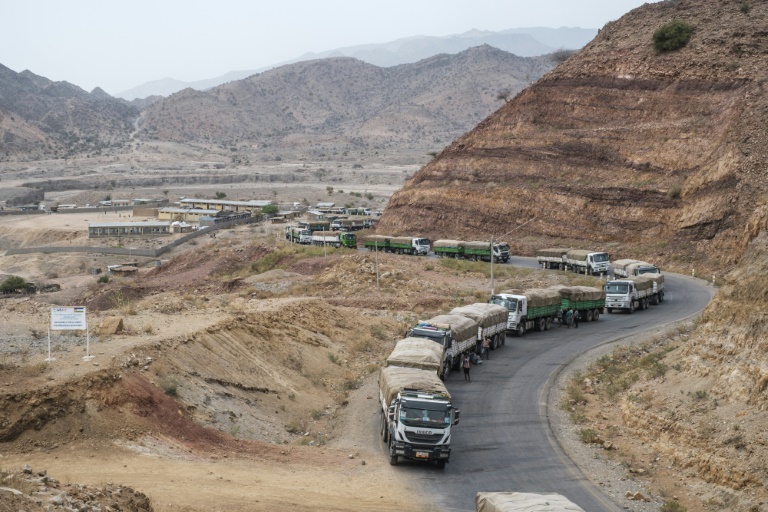
The World Food Programme (WFP) said its first aid convoy since the signing of a landmark peace deal between Ethiopia’s government and Tigrayan rebels had arrived in the war-torn Tigray region on Wednesday.

Restoring aid deliveries to Tigray was a key part of the agreement signed in South Africa on November 2 to silence the guns in a two-year conflict that has killed untold numbers of people and unleashed a humanitarian crisis in northern Ethiopia.

“@WFP trucks are now rolling into #Tigray with critical food assistance—this is the first movement since the peace agreement was signed,” the UN agency’s chief David Beasley said on Twitter.

The region of six million people has been suffering from a severe lack of food and medicine, as well as limited access to basic services including electricity, banking and communications, with the UN warning that many people were on the brink of starvation.

“Progress must continue. All sides must uphold the agreement. Basic services must resume immediately,” Beasley said.

The WFP announcement followed the arrival on Tuesday of a medical aid convoy from the International Committee of the Red Cross, the first ICRC trucks to arrive in Tigray since the deal between the Ethiopian government and the Tigray People’s Liberation Front (TPLF).

A WFP spokeswoman told AFP that 15 trucks had entered the region on Wednesday, with “more (expected) in the coming days”.

The UN agency said the convoy had travelled along a route through neighbouring Amhara for the first time since June 2021, when TPLF fighters recaptured Tigray from federal forces and expanded into the bordering regions of Amhara and Afar.

The November 2 deal was followed by an implementation accord reached in the Kenyan capital Nairobi on Saturday, with the two sides committing to facilitate unfettered humanitarian access to “all in need” in Tigray and neighbouring regions with immediate effect.

Aid deliveries were forced to a halt in late August when fighting resumed in northern Ethiopia, shattering a five-month truce and leading to the capture of key towns in Tigray by pro-government forces.

Even before those clashes, Tigray was in the grip of a hunger crisis, with the WFP warning in early August that nearly half of the region’s population was “severely food insecure”, with some 90 percent of its people requiring food aid.

– Sanctions threat –

Ethiopian Prime Minister Abiy Ahmed has vowed to fulfil the commitments made in the peace deal, saying that his government secured 100 percent of what it had sought in the negotiations with the TPLF.

As well as the restoration of aid and a cessation of hostilities, the deal reached in the South African capital Pretoria calls for the disarming of TPLF fighters and the re-establishment of federal authority over Tigray.

But it makes no mention of the presence on Ethiopian soil or any possible withdrawal of Eritrean troops, who have backed Abiy’s forces and been accused of atrocities.

A senior State Department official on Tuesday told reporters that the United States would not hesitate to use sanctions “if that should become necessary in terms of holding actors accountable for human rights violations or for the purposes of trying to ensure that this agreement is respected”.

The conflict between the TPLF and pro-Abiy forces — which include regional militias in addition to the Eritrean army — has forced more than two million people from their homes and driven hundreds of thousands to the brink of famine.

The war erupted in November 2020 when Abiy, a Nobel Peace laureate, sent troops into Tigray, accusing the TPLF of attacking federal army camps.

The TPLF had dominated national politics for nearly three decades until Abiy took office in 2018.

Poland says blast likely caused by Ukraine missile in accident

Western leaders played down fears Wednesday that a deadly missile blast in eastern Poland could herald a dangerous escalation in the war Russia launched against Ukraine, blaming stray anti-aircraft fire.

Poland and NATO said the explosion was likely caused by a Ukrainian air defence missile lanched to intercept a Russian barrage, but that Moscow was ultimately to blame for starting the conflict.

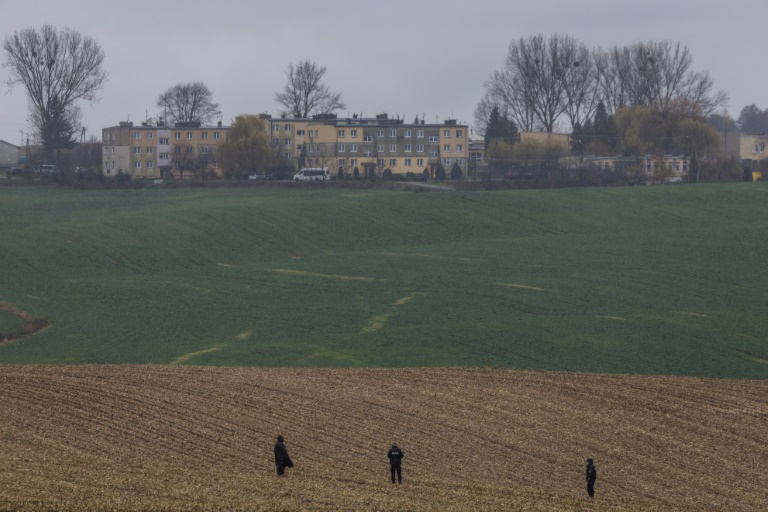
Two people were killed on Tuesday when at least one missile hit a village in NATO member Poland near the Ukrainian border, during a mass Russian bombardment aimed at civilian infrastructure inside Western-backed Ukraine.

Both the Western leaders at the G20 summit in Bali and NATO ambassadors in Brussels called emergency meetings, amid fears the blasts were a Russian strike that might force the allies to respond.

But Polish President Andrzej Duda played down international fears of a further escalation, saying there was “no indication that this was an intentional attack on Poland”.

Duda said it was very likely that the Soviet-era missile was launched by Ukraine in what he called an “unfortunate accident” and said the blame lay with Russia because of its attacks on Ukraine.

– Russia ‘bears responsibility’ –

NATO chief Jens Stoltenberg underlined this stance and EU diplomats meeting in Brussels praised Warsaw, one of Ukraine’s closest friends and Russia’s fiercest foes, for its measured response.

After crisis talks in Brussels, Stoltenberg said an ongoing investigation was expected to find “that the incident was likely caused by a Ukrainian air defence missile fired to defend Ukrainian territory against Russian cruise missile attacks.

“But let me be clear, this is not Ukraine’s fault,” he continued. “Russia bears ultimate responsibility as it continues its illegal war against Ukraine.”

Stoltenberg said NATO had ramped up its defences along its eastern flank in response to the war in Ukraine and denied that the alliance’s air defences had failed.

“We are prepared to handle situations like this in a firm, calm, resolute way, but also in a way that prevent further escalation,” he said.

The NATO chief said Poland had not invoked Article 4 of the Western alliance’s treaty, which would have obliged members to discuss whether “the territorial integrity, political independence or security of any of the Parties is threatened.” 

NATO’s most powerful member, the United States, has hundreds of troops in Poland and leads the West in supplying weapons to support Ukrainian President Volodymyr Zelensky’s government in Kyiv.

US Defense Secretary Lloyd Austin said American personnel would work to support the Polish investigation, and stressed: “Russia bears ultimate responsibility as it continues its illegal war against Ukraine.” 

The Russian defence ministry said: “Photographs of the wreckage… were unequivocally identified by Russian military experts as fragments of a guided anti-aircraft missile of a Ukrainian S-300 air defence system.” 

It insisted that its own strikes, a barrage of scores of missiles, “were carried out on targets only on the territory of Ukraine and at a distance of no closer than 35 kilometres (about 20 miles) from the Ukrainian-Polish border.”

With world leaders meeting in Bali at the G20 summit, Ukrainian officials initially insisted that Russia must have fired the missile that hit Poland, but later asked to take part in the investigation.

“Ukraine requests immediate access to the site of the explosion,” the secretary of Ukraine’s national security and defence council, Oleksiy Danilov, said on social media.

He said Kyiv was ready to hand over evidence of its claim that Russia was responsible, but that he was “expecting information from our partners” on reports that it was an Ukrainian missile.

The explosion rocked the village of Przewodow in eastern Poland at 1440 GMT on Tuesday.

“I’m scared. I didn’t sleep all night,” Anna Magus, a 60-year-old teacher at the local elementary school, told AFP near the scene. “I hope it was a stray missile because otherwise we’re helpless.”

–  Electricity outages –

Russia invaded Ukraine on February 24 and still holds swathes of territory despite a series of recent battlefield defeats.

The conflict has caused deep unease in neighbouring Poland, which shares a 530-kilometre (329-mile) border with Ukraine and where memories of Soviet domination are still very raw.

The explosion came after a wave of Russian missiles hit cities across Ukraine on Tuesday, including Lviv, near the Polish border.

Zelensky said the strikes cut power to some 10 million people, though it was later restored to eight million of them, and also triggered automatic shutdowns at two nuclear power plants.

burs/dc/del/jmm

European equities slip on Ukraine fears

European stock markets slid Wednesday, with investors spooked over a deadly missile blast in Poland near the border with Ukraine.

London dipped 0.1 percent, also on news that UK inflation spiked to a 41-year peak in October on rocketing energy bills and food prices.

Frankfurt fell 0.8 percent and Paris stocks sank 0.4 percent after Asia closed mostly in the red. 

The dollar rose against the pound, but fell against the euro and yen, while oil retreated.

“Reports of missile strikes in Poland on Tuesday naturally caused a shudder in the markets,” said Craig Erlam, senior market analyst at OANDA trading platform.

“The prospect of a sudden and unexpected escalation in the war in Ukraine, particularly involving a NATO state, doesn’t bear thinking about but we were almost forced to and under the circumstance, the reaction was fairly modest,” he added.

Two people were killed on Tuesday when at least one missile hit a village in NATO member Poland near the Ukrainian border, during a mass Russian bombardment aimed at civilian infrastructure inside Western-backed Ukraine.

Market jitters were calmed somewhat by officials, including US President Joe Biden and NATO Secretary General Jens Stoltenberg, discounting the likelihood of a deliberate Russian attack and pointed to the possibility it was a Ukrainian air defence missile.

“The welcome assumption is that the incident should not induce any NATO-led military response,” said market analyst Patrick O’Hare at Briefing.com.

Back in Britain, official data showed that UK inflation surged in October to 11.1 percent, the highest level since 1981 in a worsening cost-of-living crisis.

The grim news came on the eve of a gloomy UK government budget that is likely to ramp up taxes and slash spending.

“The UK is reeling from yet another super-hot inflation reading as soaring food and energy prices take their toll on household budgets,” said Hargreaves Lansdown analyst Susannah Streeter.

This year, the Ukraine war has massively contributed to worldwide inflation soaring to the highest level in decades. Prices are up also on pandemic-fuelled supply constraints.

Rocketing inflation has forced central banks to raise interest rates by big amounts, risking a global recession.

There has been some relief from data showing US consumer prices rose much less than expected in October, suggesting months of monetary tightening by the Federal Reserve was kicking in.

This was followed by data Tuesday showing a below-forecast reading on wholesale prices.

On Wednesday, data showed US retail sales jumped more than expected in October, pointing to resilience in spending in the face of price pressures.

The uptick came after sales flatlined the month before, as American consumers grappled with surging costs that have made everything from groceries to clothing more expensive.

“The key takeaway from the report is that retail sales, which are not adjusted for inflation, were still fairly solid in October, underscoring that consumer spending continues to hold up fairly well, supported by continued low levels of unemployment,” said Briefing.com’s O’Hare.

But retailer Target warned on Wednesday that consumers are cutting back on discretionary items.

“In the latter weeks of the quarter, sales and profit trends softened meaningfully, with guests’ shopping behavior increasingly impacted by inflation, rising interest rates and economic uncertainty,” Target CEO Brian Cornell said.

Target shares tumbled 14 percent as the company missed profit expectations in its third quarter and sales only nudged higher.

Wall Street opened lower, with the Dow dipping 0.1 percent, while the S&P 500 shed 0.4 percent and the Nasdaq Composite fell 0.9 percent.

– Key figures around 1330 GMT –

London – FTSE 100: DOWN 0.1 percent at 7,360.73 points

Frankfurt – DAX: DOWN 0.8 percent at 14,265.60

Paris – CAC 40: DOWN 0.4 percent at 6,612.71

EURO STOXX 50: DOWN 0.6 percent at 3,891.91

New York – Dow: DOWN 0.1 percent at 33,546.58

Tokyo – Nikkei 225: UP 0.1 percent at 28,028.30 (close)

Hong Kong – Hang Seng Index: DOWN 0.5 percent at 18,256.48 (close)

Shanghai – Composite: DOWN 0.5 percent at 3,119.98 (close)

Euro/dollar: UP at $1.0401 from $1.0349 on Tuesday

Pound/dollar: UP at $1.1878 from $1.1865 

Dollar/yen: DOWN at 139.26 yen from 139.28 yen

Euro/pound: UP at 87.56 pence from 87.22 pence

Brent North Sea crude: DOWN 1.4 percent at $92.55 per barrel

West Texas Intermediate: DOWN 1.9 percent at $85.30 per barrel

burs-rl/yad

Musk testifies at trial over his $50 bn Tesla compensation

Tesla tycoon Elon Musk took the stand on Wednesday as part of a trial over his $50 billion pay package as CEO of the electric car giant.

The arrival was discreet, with the world’s richest person arriving in a black Tesla, which parked at the back of the courthouse in a tent set up for the occasion. 

A few minutes later, wearing a black suit and tie, he quietly passed through security to enter the courtroom.

Musk began testifying in the same Delaware court where he faced a lawsuit by Twitter to ensure he went through with his buyout of the social platform.

The $44 billion purchase of Twitter has put the South African billionaire under intense scrutiny after he conducted massive layoffs, scared advertisers, and opened the platform to fake accounts.

The unrelated Tesla case is based on a complaint by shareholder Richard Tornetta, who accused Musk and the company’s board of directors of failing in their duties when they authorized the pay plan.

Tornetta alleges that Musk dictated his terms to directors who were not sufficiently independent from their star CEO to object to a package worth around $51 billion at recent share prices.

The Tesla shareholder accuses Musk of “unjustified enrichment” and asked for the annulment of a pay program that helped make the entrepreneur the richest man in the world.

According to a legal filing, Musk earned the equivalent of $52.4 billion in Tesla stock options over four and a half years after virtually all of the company’s targets were met. 

When the plan was adopted it was valued at $56 billion.

The non-jury trial began Monday with testimony from Ira Ehrenpreis, head of the compensation committee on Tesla’s board of directors, who said the targets set were “extraordinarily ambitious and difficult”.

Ehrenpreis argued that the board wanted to spur Musk to focus on Tesla at a time when the company was still struggling to gain traction.

– ‘Highly unusual’ –

The trial will run through Friday and is being presided over by Judge Kathaleen McCormick, the same judge who was to preside over the Twitter case.

There is no deadline for her decision which could take months.

It’s “highly unusual” for this kind of case to be brought to trial, Jill Fisch, a law professor at the University of Pennsylvania, told AFP.

“There aren’t all that many successful challenges to executive compensation (as) the courts have typically treated this as a business decision,” she added.

But the court found in this case that Musk’s ownership of about 22 percent of Tesla and his role as CEO “could have an undue impact” on the board and other shareholders, she noted.

Musk canceled an in-person appearance on Sunday at an event on the sidelines of the G20 in Bali to be in court.

Asked why he had not traveled to the tropical Indonesian island, the new Twitter boss joked that his “workload has recently increased quite a lot” after his takeover of the social media giant.

US retail sales bounce in October on auto and gas

US retail sales jumped more than expected in October, bumped up by higher gas prices and auto sales while pointing to resilience in spending in the face of price pressures, according to government data released Wednesday.

The uptick came after sales flatlined the month before, as American consumers grappled with surging costs that have made everything from groceries to clothing more expensive.

Faced with decades-high inflation levels, the US Federal Reserve has rapidly raised its benchmark lending rate this year, including four consecutive super-sized hikes, even at the risk of tipping the world’s biggest economy into recession.

But retail sales in October picked up 1.3 percent from September to $694.5 billion, the Commerce Department reported.

This was driven by a 1.5 percent uptick in autos, as well as a 4.1 percent jump in sales at gasoline stations as fuel prices edged up.

Prices at the gas pump surged after Russia’s invasion of Ukraine this year, although they have eased from a record high and drifted lower in recent weeks.

Sales at restaurants and bars remained resilient too in October, rising 1.6 percent from the month prior, the report showed.

The data are seasonally adjusted but do not take into account changes in prices, so as costs rise, a shopping dollar does not stretch as far and American families have had to use more of their earnings on staple goods and seek out bargains.

Overall, retail sales were 8.3 percent higher than in the same month of last year.

Despite signs of trouble in the tech industry, including layoffs and ecommerce giant Amazon, sales at online retailers increased 1.2 percent last month.

Apart from rising prices, “people have chosen to draw down on savings accumulated during the pandemic to maintain consumption, despite significant pressure on real incomes,” said Ian Shepherdson of Pantheon Macroeconomics in a recent analysis ahead of the report.

He expects the process can “continue for some time yet” as excess personal savings from the Covid-19 period still stood at $1.3 trillion in September.

“Whether people are willing to run down savings further, however, is less clear,” he said.

Canada's Trudeau says he spoke to Xi about Chinese 'interference'

Canadian Prime Minister Justin Trudeau said Wednesday he had discussed with President Xi Jinping the issue of Chinese interference in Canadian affairs on the sidelines of the G20 summit in Bali.

Ottawa has in recent weeks accused the Chinese government of interfering with its democratic institutions and judicial system, after years of strained relations between the two countries.

“I have raised the issue of interference with our citizens,” Trudeau told a news conference on the Indonesian resort island.

Trudeau met Xi on Tuesday, the first face-to-face dialogue between the two leaders since 2019.

He said he told the Chinese leader, who last month secured an historic third term, “it is important to be able to have a dialogue about this”.

Canadian federal police said on Thursday they were investigating so-called police stations set up illegally by China in the North American country.

Trudeau also said last week China was playing “aggressive games” after Canadian broadcaster Global News reported on a “clandestine network” of federal election candidates funded by Beijing.

“It’s extremely important we continue to stand up for the things that are important for Canadians,” Trudeau told reporters.

He said he also highlighted “areas of mutual concern and geopolitical challenges” in his talk with Xi, including the war in Ukraine and tensions on the Korean peninsula.

China’s foreign ministry declined on Wednesday to confirm any details of the conversation between the two leaders. Ministry spokeswoman Mao Ning said she had no information when asked about the meeting.

Footage captured by Canadian journalists at the Bali summit on Wednesday appeared to show Xi expressing his unhappiness at the account of the meeting shared by Trudeau with the media.

“Everything we discussed has been leaked to the papers, that’s not appropriate,” Xi says to Trudeau in the video shared by a CTV reporter on Twitter.

“And that’s not the way the conversation was conducted,” Xi says.

burs-tjx/je/pbt

'We could die tomorrow': Fears of Russian retaliation in Kherson

The Ukrainian welder pondered the afterlife while whispering wedding vows to the nurse with whom he had three children in just-liberated Kherson.

Andriy Krivov was bracing for Russia’s retaliation following its retreat from the city on which it underpinned its campaign along Ukraine’s entire southern front.

The booms of Ukrainian artillery echoed inside the empty cathedral as the humbly-dressed couple bowed before the Orthodox priest.

The retreating Russians fired back salvos from the east bank of the Dnipro River running down the slope from the singing church choir.

The rockets raised dust over the ruined roads and mined fields encircling the city Russia held from the war’s start until last week.

Krivov was fairly certain they would soon start hitting Kherson itself.

“We could die tomorrow,” the 49-year-old said after finally marrying the woman with whom he had spent most of his life.

“Kherson is now part of the front. And when they start bombing, we want to stand before God as man and wife.”

– Retreat and retaliation –

Russia’s retreat from the city it hoped to make its central base in Ukraine’s occupied south has reshaped the nearly ninth-month war.

Kherson’s importance to the Kremlin — both because of its link to Russian-annexed Crimea and Ukraine’s Odessa port to the west — spared it from destruction.

Its carefully-staged recapture in the third month of Kyiv’s broader counterassault stymied President Vladimir Putin’s plans to seize Ukraine’s entire southern coast.

Kherson now stands in the crossfire of a Ukrainian push into the eastern parts of its eponymous region — and possibly even Crimea itself.

The danger will linger because most think Ukraine wants to strike before the Russians have a chance to regroup.

“Russia gains more from a pause, which is why Ukraine has an incentive to keep pushing,” said Rob Lee of the US-based Foreign Police Research Institute.

Western officials say Russia still managed to pull out most of its forces and set up defensive lines on the Dnipro’s east bank.

Fears of Russia’s retaliation on a city it no longer has strategic incentive to save played on the welder’s mind on his way to church.

“The chances are very high that they will start bombing us now,” he said while holding nurse Natalia’s hand.

– Two different fronts –

Lydia Belova was ready to suffer.

The 81-year-old former poultry farmer patiently waited her turn to fill up plastic jugs from a hose running from to a local spring.

The Russians cut off Kherson’s power and destroyed most of its infrastructure on their way out.

Belova spent eight-and-a-half months watching Russian soldiers ransack stores and hunt down those who stood up to their rule.

She figured that hardship was worth the price for pushing the Russians a little further back.

“Freedom is always more important,” she said.

“Water is not a big deal. We can stand in line. But Ukraine — we must defend it.”

This determination highlights the main distinction of Ukraine’s southern front from the battles being waged across its east.

Neither Kherson nor its neighbouring Zaporizhzhia region were under Russian control prior to the war.

But Russia imposed indirect rule over parts of eastern Lugansk and Donetsk during an insurgency its proxies launched in 2014.

Those opposed to Putin there — many of them younger Ukrainian speakers from birth — had eight years to relocate further west.

The largely Ukrainian-speaking south is confronting Putin’s forces for the first time.

– ‘Army of thieves’ –

Kherson hospital director Iryna Starodumova watched the invasion expose fundamental rifts among her staff.

The exhausted doctor lost half her workers prior to the Kremlin’s annexation of all four battle-torn region in late September.

A portion of those who stayed once the borders were effectively sealed appeared to accept Russian rule.

“I never suspected in my 42 years here that I was working with people whose views differed from those we all thought we shared,” she said.

“The (pro-Russians) came in, did their job and took their views home with them,” she said during one of her rare breaks.

“We tried to be tolerant.”

The church pastor was less forgiving.

Protodeacon Andriy’s Kherson cathedral housed the remains Grigory Potemkin — a storied commander under Catherine the Great.

His name is now broadly associated with fake villages built to please the tsarina during a tour of her new holdings along the Dnipro.

But Kherson honoured Potemkin as a founding father and the pastor was proud to oversee his remains in the crypt.

Now they are gone.

“The Russians came with their guns and took him about two weeks ago,” the pastor said after the wedding.

“We’ve had two world wars, the Nazis and the godless communists, and no one touched him,” he fumed.

The Russians also evacuated the commander’s monument and other artefacts across Kherson.

“I guess they wanted to take home their heritage,” said the pastor.

“But it only shows how they are nothing but an army of thieves.”

Poland says blast likely caused by Ukraine missile in accident

Poland on Wednesday said a deadly blast that killed two people in a village near the border with Ukraine was likely caused by a stray Ukrainian air defence missile launched against a Russian barrage.

Polish President Andrzej Duda played down international fears of a further escalation in the war in Ukraine saying there was “no indication that this was an intentional attack on Poland”.

Duda said it was “very likely” the Soviet-era missile was launched by Ukraine in what he called an “unfortunate accident” but he said the blame lay with Russia because of its attacks on Ukraine.

After emergency talks of the NATO military alliance, its chief Jens Stoltenberg also said there was “no indication of a deliberate attack” on Poland. 

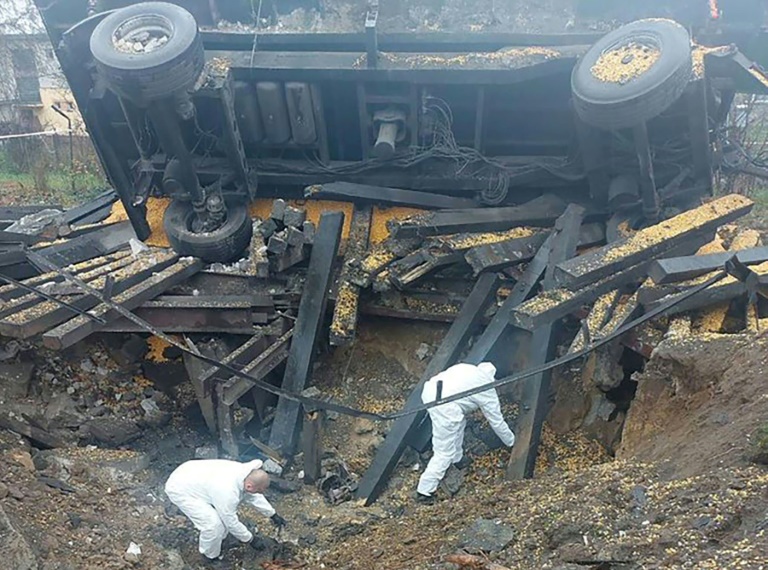
The blast occurred in the village of Przewodow in eastern Poland at 1440 GMT on Tuesday, killing two farm workers.

“I’m scared. I didn’t sleep all night,” Anna Magus, a 60-year-old teacher at the local elementary school, told AFP.

“I hope it was a stray missile because otherwise we’re helpless,” she said.

An image released by police showed investigators working inside a large crater next to an overturned vehicle.

NATO member Poland put its military on heightened alert and summoned Russia’s ambassador late Tuesday but had cautioned against reaching any hasty conclusions as to the origin of the Soviet-era missile.

– ‘Nothing to do with’ Russia –

Western powers voiced solidarity with Poland in intensive rounds of diplomacy, including on the sidelines of the G20 summit in Indonesia’s Bali.

NATO ambassadors held emergency talks in Brussels, while the Kremlin said it had “nothing to do with” the missile blast.

“Photographs of the wreckage… were unequivocally identified by Russian military experts as fragments of a guided anti-aircraft missile of a Ukrainian S-300 air defence system,” the Russian defence ministry said in a statement.

It added that its own strikes “were carried out on targets only on the territory of Ukraine and at a distance of no closer than 35 kilometres from the Ukrainian-Polish border.”

Ex-president Dmitry Medvedev, deputy head of Russia’s security council, said on Twitter that the incident “proves just one thing: waging a hybrid war against Russia, the West moves closer to the world war”.

Poland is protected by NATO’s commitment to collective defence — enshrined in Article 5 of its founding treaty — but the alliance’s response will likely be heavily influenced by whether the incident was accidental or intentional.

Warsaw has said it may invoke Article 4 of the treaty under which any member can call urgent talks when it feels its “territorial integrity, political independence or security” are at risk.

– ‘Consequence of Russia’s actions’ –

Russia invaded Ukraine on February 24 and still holds swathes of territory despite a series of recent battlefield defeats.

The conflict has caused deep unease in neighbouring Poland where memories of Soviet domination are still very raw.

Poland shares a 530-kilometre (329-mile) border with Ukraine and has taken a lead in providing military and humanitarian aid to Ukraine and sanctioning Russia.

Despite the likelihood a Ukrainian missile was involved, the Polish government was clear it still held Russia responsible.

Polish Deputy Foreign Minister Pawel Jablonski told RMF radio that “in all likelihood, we are dealing with a consequence of Russia’s actions”.

He also responded to criticism of Poland’s own air defences.

“Missile defence systems around the world are never one hundred percent effective systems that protect each millimetre of every country’s territory,” he said.

Ukrainian Foreign Minister Dmytro Kuleba had on Tuesday rejected as a “conspiracy theory” the idea that it may have been a Ukrainian missile.

– ‘Slap in the face’ of G20 –

President Volodymyr Zelensky sent “condolences over the death of Polish citizens from Russian missile terror”.

The explosion came after a wave of Russian missiles hit cities across Ukraine on Tuesday, including Lviv, near the border with Poland.

Zelensky said the strikes cut power to some 10 million people, though it was later restored to eight million of them, and also triggered automatic shutdowns at two nuclear power plants.

He said Russia had fired 85 missiles at energy facilities across the country, condemning the strikes as an “act of genocide” and a “cynical slap in the face” of the G20.

burs/dt/yad

Israel blames Iran as 'drone strike' hits tanker off Oman

Israel blamed Iran on Wednesday after what it said was a drone strike hit a tanker operated by an Israeli-owned firm carrying gas oil off the coast of Oman.

The Pacific Zircon was “hit by a projectile approximately 150 miles off the coast of Oman … on 15 November,” Singapore-based firm Eastern Pacific Shipping which operates the vessel said in a statement, adding that there were no reports of casualties or any leakage of the cargo.

“There is some minor damage to the vessel’s hull but no spillage of cargo or water ingress,” said the company which is owned by Israeli billionaire Idan Ofer — one of two sons of shipping magnate Sammy Ofer, who died in 2011.

The tanker was carrying 42,000 tonnes of gas oil and bound for Buenos Aires, according to Samir Madani, co-founder of website TankerTrackers.com, an oil shipping online research firm.

The Bahrain-based United States Fifth Fleet said it was “aware of the incident”.

UK Maritime Trade Operations, a British monitor, also said it knew of the incident.

– ‘Iranian provocation’ –

An Israeli official told AFP that the strike on the tanker was “an Iranian provocation” that aimed to “disrupt the environment” before the football World Cup opens in Qatar on Sunday.

The official, who requested anonymity, said the attack was carried out with the “same drones that the Iranians are selling to the Russians for use in Ukraine… the Shahed 136,” an unmanned aircraft equipped with a warhead.

The Israeli official dismissed suggestions that the strike on the vessel partly owned by Idan Ofer amounted to “an Iranian victory” against Israel. 

“It is not an Israeli tanker,” the official said.

Iran and Israel are bitter foes and a “shadow war” between the two powers has seen a spate of attacks on ships from both sides that they have blamed on each other.

Iran was blamed for a July 29, 2021 drone strike on an Israel-linked tanker sailing off the coast of Oman, the MV Mercer Street, that killed a former British soldier and a Romanian national.

Tehran denied responsibility for that strike.

– Iran-US tensions – 

Heightened tensions between arch foes Washington and Tehran in recent years have also seen incidents between their navies, including in August, when Washington said it prevented an Iranian ship from capturing a US maritime drone in Gulf waters that are vital for world energy supplies. 

Iran and world powers have engaged in on-off talks to revive a landmark 2015 deal that sought to curb Iran’s nuclear activities in exchange for sanctions relief.

The United States, Britain, France and Germany have submitted a motion to the UN nuclear watchdog censuring Iran for lack of cooperation with the agency, diplomats told AFP this week.

“The risk of attacks against shipping and energy infrastructure in the wider region is rising mainly due to the lack of progress in US-Iranian nuclear diplomacy,” said Torbjorn Soltvedt, Middle East analyst with the Verisk Maplecroft risk intelligence company. 

A decision by Washington to apply further sanctions pressure on Tehran has exacerbated the risk of further attacks, Soltvedt said. 

Iran has been rocked by two months of mass protests — the biggest in years — following the death in September of 22-year-old Mahsa Amini after she was arrested by Iran’s notorious morality police for an alleged breach of its strict dress code for women.

“Ongoing mass protests against the Iranian government also make it more likely that Tehran will seek to stoke unrest in the broader region as a diversionary tactic,” Soltvedt said.

European equities slip on Ukraine fears

European stock markets slid Wednesday, with investors spooked over a deadly missile blast in Poland near the border with Ukraine.

London dipped 0.1 percent, also on news that UK inflation spiked to a 41-year peak in October on rocketing energy bills and food prices.

Frankfurt fell 0.9 percent and Paris stocks sank 0.5 percent after Asia closed mostly in the red. 

The dollar fell against the euro and pound but rose against the yen, while oil advanced.

“Fears that the conflict in Ukraine could escalate after a Russian missile appeared to hit a village in Poland, a NATO member country, have held back gains on global markets,” said Hargreaves Lansdown analyst Susannah Streeter.

“There will be reassurance in words from (US President) Joe Biden that it was ‘unlikely’ to have come from Russia,” she added.

The Kremlin has accused Ukraine of a deadly blast in Poland, with Belgium saying it was probably caused by Kyiv’s air defences firing at Moscow’s incoming missiles.

Back in Britain, official data showed that UK inflation surged in October to 11.1 percent, the highest level since 1981 in a worsening cost-of-living crisis.

The grim news came on the eve of a gloomy UK government budget that is likely to ramp up taxes and slash spending.

“The UK is reeling from yet another super-hot inflation reading as soaring food and energy prices take their toll on household budgets,” added Streeter.

This year, the Ukraine war has massively contributed to worldwide inflation soaring to the highest level in decades. Prices are up also on pandemic-fuelled supply constraints.

Rocketing inflation has forced central banks to raise interest rates by big amounts, risking a global recession.

There has been some relief from data showing US consumer prices rose much less than expected in October, suggesting months of monetary tightening by the Federal Reserve was kicking in.

This was followed by data Tuesday showing a below-forecast reading on wholesale prices.

Sentiment was further boosted by China’s pledge to provide much-needed support to the country’s beleaguered property sector, as well as ease some of the strict Covid-19 restrictions that have played a major role in dragging the economy down.

– Key figures around 1120 GMT –

London – FTSE 100: DOWN 0.1 percent at 7,365.72 points

Frankfurt – DAX: DOWN 0.9 percent at 14,253.73

Paris – CAC 40: DOWN 0.5 percent at 6,610.72

EURO STOXX 50: DOWN 0.5 percent at 3,895.45

Tokyo – Nikkei 225: UP 0.1 percent at 28,028.30 (close)

Hong Kong – Hang Seng Index: DOWN 0.5 percent at 18,256.48 (close)

Shanghai – Composite: DOWN 0.5 percent at 3,119.98 (close)

New York – Dow: UP 0.2 percent at 33,592.92 points (close)

Euro/dollar: UP at $1.0427 from $1.0349 on Tuesday

Pound/dollar: UP at $1.1910 from $1.1865 

Dollar/yen: UP at 139.41 yen from 139.28 yen

Euro/pound: UP at 87.52 pence from 87.22 pence

Brent North Sea crude: UP 0.6 percent at $94.43 per barrel

West Texas Intermediate: UP 0.5 percent at $87.37 per barrel

Close Bitnami banner
Bitnami