World

Brazil's Lula, world leaders bolster UN climate talks

UN climate talks got a boost Wednesday as Brazilian president-elect Luiz Inacio Lula da Silva launched the country back into the battle to curb warming and global leaders reaffirmed key pledges.

With G20 leaders issuing a final communique committing to pursue the more ambitious limits on global heating, momentum at the climate meeting in Egypt was generated at the sidelines of the fraught negotiations.

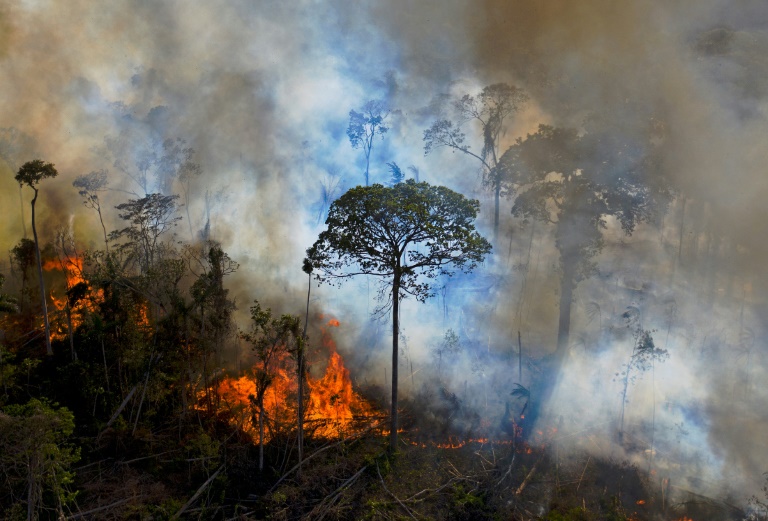
Lula kicked off a day of events Wednesday with a call to host the 2025 climate talks in the Amazon region, in his first international trip since defeating outgoing far-right President Jair Bolsonaro, who presided over years of rampant Amazon deforestation.

“I am here to say to all of you that Brazil is back in the world,” said Lula as he received a hero’s welcome from hundreds of people applauding him at an Amazon region pavilion in the Red Sea resort of Sharm el-Sheikh.

“Brazil was not born to be an isolated country,” said Lula, who was due to deliver a speech later on Wednesday.

“We will put up a very strong fight against illegal deforestation,” he said, announcing the creation of a ministry of Indigenous people to protect the vast region’s vulnerable communities.

Lula arrived in Egypt on Tuesday and went straight into climate diplomacy with meetings with US envoy John Kerry and China’s Xie Zhenhua.

– Kerry ‘pleased’ –

Kerry told a COP27 biodiversity panel on Wednesday that the United States would work with other nations to help protect the Amazon.

“I was pleased last night to meet with president-elect Lula and was really encouraged by the ways in which he talked about for once and for all getting it right… in order to preserve the Amazon,” Kerry said.

Under Bolsonaro, a staunch ally of agribusiness, average annual deforestation increased 75 percent compared with the previous decade.

“We need a new sense of hope to build trust and momentum towards a positive outcome at COP27,” said Brazilian climate campaigner, Mariana Paoli, Christian Aid’s global advocacy lead.

“President Lula’s election victory in Brazil has the potential to breathe new life into this process with his progressive agenda that seeks to bring Brazil back to the table and end the disastrous climate policies of his predecessor.”

In another boost to the UN climate process, a final communique from world leaders meeting at the Group of 20 talks in Bali, Indonesia included key promises to “pursue efforts” to curb global warming to 1.5 degrees Celsius above pre-industrial levels, a safer limit according to scientists.

The document, which also reiterated a commitment to phase out “inefficient” fossil fuel subsidies over the medium term, was welcomed by observers as a way to galvanise the climate talks as they enter their final days.

The G20 meeting was also the stage of a crucial meeting between US President Joe Biden and China’s Xi Jinping, where the two leaders agreed to resume their climate cooperation.

Ani Dasgupta, head of the World Resources Institute, said positive signals from leaders at the G20 “should put wind in the sails” of negotiators in Egypt.

– Climate leadership –

Bolsonaro, who did not attend the G20 summit in Bali, has maintained a low profile since losing the Brazilian election.

While his government has a pavilion at COP27, former steelworker Lula deployed two of his former environment ministers to lay the groundwork for his visit.

One of them, Marina Silva, who is tipped to return to the job when Lula takes office on January 1, said Brazil wants to set an example with Lula’s plan to fight deforestation.

Latin America’s most populous country grew more isolated under Bolsonaro, analysts say, in part due to his permissive policies towards deforestation and exploitation of the Amazon — the preservation of which is seen as critical to fighting global warming.

Brazil is home to 60 percent of the Amazon, which spans eight countries and acts as a massive sink for carbon emissions.

Silva promoted the idea of creating a new national authority to coordinate climate action among government ministries, and of pursuing a reforestation target of 12 million hectares (over 29 million acres).

The incoming administration wants the United States to contribute to the Amazon Fund, considered one of the main tools to reduce deforestation in the planet’s biggest tropical forest.

Following Lula’s victory, the fund’s main contributors, Norway and Germany, announced they would participate again, after freezing aid in 2019 in the wake of Bolsonaro’s election.

Colombian President Gustavo Petro and his counterpart Nicolas Maduro of Venezuela presented at COP27 last week an Amazon protection initiative that they hope Brazil will join.
Liftoff! NASA launches mega Moon rocket, ushering new era of exploration

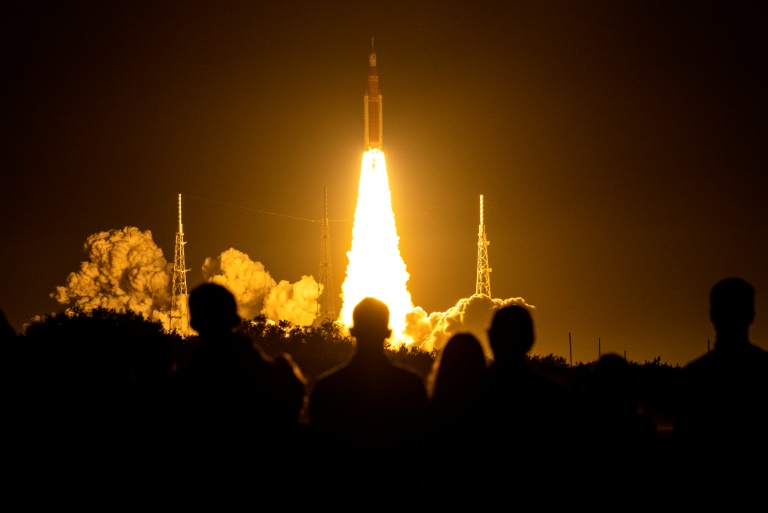
NASA launched the most powerful rocket ever built on a journey to the Moon on Wednesday, in a spectacular blaze of light and sound that marked the start of the space agency’s new flagship program, Artemis.

The 32-story tall Space Launch System (SLS) blasted off from the Kennedy Space Center in Florida at 01:47 am (0647 GMT), producing a record 8.8 million pounds (39 meganewtons) of thrust.

“What you have done today will inspire generations to come, thank you!” Charlie Blackwell-Thompson, NASA’s first female launch director, told cheering teammates. 

Fixed to the rocket’s top was the uncrewed Orion spaceship that will orbit Earth’s nearest neighbor, in a test run for later flights that should see the first woman and first person of color touch down on lunar soil by the mid-2020s.

About two hours after launch, NASA said the spacecraft was on its trajectory to the Moon, and later released the first images taken of Earth receding behind the craft.

“Now we are going back to the Moon, not just for the sake of going to the Moon, but to learn how to live on the Moon in order to prepare to send humans all the way to Mars,” NASA administrator Bill Nelson told a news conference after the launch.

“This is the next beginning, this is the Artemis generation,” added Nelson, who said he watched the launch from the roof of the rocket assembly building along with a group of astronauts.

America last sent astronauts to the Moon during the Apollo era, from 1969-1972. 

This time it hopes to build a sustained presence — including a lunar space station — to help prepare for an eventual mission to Mars in the 2030s.

There were nervous moments as teams worked to overcome technical issues that ate into the two-hour launch window, which opened at 1:04 am.

First, engineers were forced to pause the flow of liquid hydrogen into the core stage Tuesday night because of a valve leak, but a team sent to the launch pad resolved the issue after about an hour, by tightening loose bolts. 

Later, the space agency reported that a radar site monitoring the rocket’s flight path was experiencing problems due to a faulty ethernet switch, which had to be replaced.

It was third time lucky for NASA after two previous launch attempts were canceled for technical reasons. The launch was also delayed due to weather setbacks including Hurricane Ian, which battered Florida in late September.

– ‘Extremely excited’ –

About 100,000 people were expected to have gathered along the coast to witness the historic event.

Todd Garland drove from Frankfurt, Kentucky to watch from Cocoa Beach. 

Wearing an Artemis T-shirt, the 55-year-old told AFP tearfully: “This has been an experience I’ve looked forward to all my life. 

“My first memory is my mother waking me up at two years old to watch the Moon landing and I’ve always wanted to see a launch ever since, and now I have.”

Kerry Warner, 59, a grandmother and semi-retired educator who lives in Florida, added the launch was “part of America and what America is all about.”

– Far side of the Moon –

The Orion crew capsule was lifted by two boosters and four powerful engines under the core stage, which detached after just a few minutes.

A final push from the upper stage set the capsule on its way to the Moon, though it will take several days to reach its destination. 

The upper stage will meanwhile release 10 CubeSats to carry out science experiments, including one that will unfurl a sail-powered by sunlight and perform asteroid reconnaissance work.

Rather than landing on the Moon, Orion will assume a distant orbit, venturing 40,000 miles (64,000 kilometers) beyond the far side — further than any other habitable spacecraft so far.

Finally, the spaceship will embark on the return leg of its journey. When passing through the atmosphere, the capsule’s heat shield will need to withstand a temperature half as hot as the Sun’s surface.

Though Orion isn’t carrying humans this time, it has three sensor-equipped dummies on board to help gather safety data for future crew members.

The mission will last 25-and-a-half days, with a splashdown in the Pacific Ocean on December 11.

NASA is banking on a successful mission after developing the SLS rocket for more than a decade. 

It will have invested more than $90 billion in its new lunar program by the end of 2025, according to a public audit.

Artemis 2 will involve a flyby of the Moon with astronauts in 2024, while Artemis 3 will see boots on lunar soil, no sooner than 2025. 

NASA hopes to settle into a yearly launch schedule, and will include international partners from Japan, Canada and Europe.

Kevin Spacey faces further sex offence charges in UK

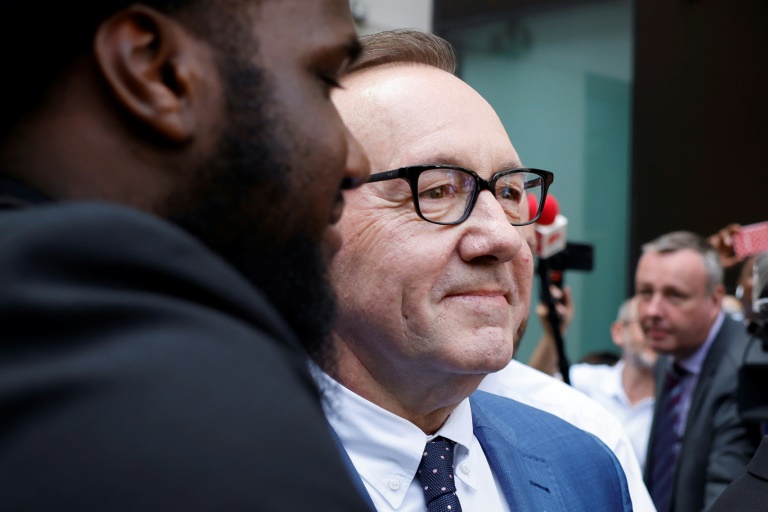
Prosecutors in London on Wednesday said they have approved seven new sexual offence charges against the Oscar-winning Hollywood actor Kevin Spacey. 

The Crown Prosecution Service (CPS) said the “House of Cards” and “American Beauty” star has been charged over “a number of sexual assaults against one man between 2001 and 2004”.

It also authorised “one charge of causing a person to engage in sexual activity without consent” against the 63-year-old actor, who lives in the United States.

The CPS, which is responsible for bringing prosecutions in England and Wales, said the seven new charges refer to alleged crimes committed before and after 2003, when new legislation on sexual offences entered force. 

This means Spacey is now facing a total of 11 charges of sexual assault in Britain.

Spacey in July pleaded not guilty at London’s Old Bailey court to four charges of sexual assault against three men between 2005 and 2013 in London and Gloucestershire in western England.

None of the alleged victims can be identified under English law. Reporting restrictions prevent further details being disclosed before trial.

Spacey voluntarily appeared at a London court when the first charges were brought and vowed to defend himself against the charges.

Those allegations referred to a period when he was artistic director of London’s Old Vic Theatre, between 2004 and 2015.

A New York court last month dismissed a $40 million sexual misconduct lawsuit brought against Spacey by an actor, Anthony Rapp, who claimed the Hollywood star targeted him when he was 14.

A judge had ruled that Rapp had brought the case too late for a criminal charge.

Spacey’s acting career ended five years ago when Rapp’s allegations emerged and he was dropped from the final season of “House of Cards” and other upcoming projects.

Allegations against him emerged in the wake of the #MeToo movement that saw numerous claims of sexual assault and harassment in the movie industry.

He has always denied allegations of sexual abuse.

In 2019, charges against the actor of indecent assault and sexual assault were dropped in Massachusetts. 

Indonesia proposes nickel producer bloc at Canada G20 talks

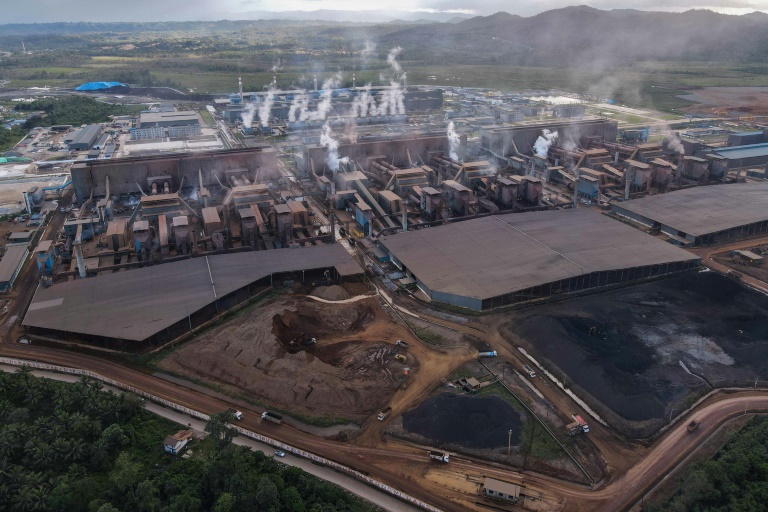
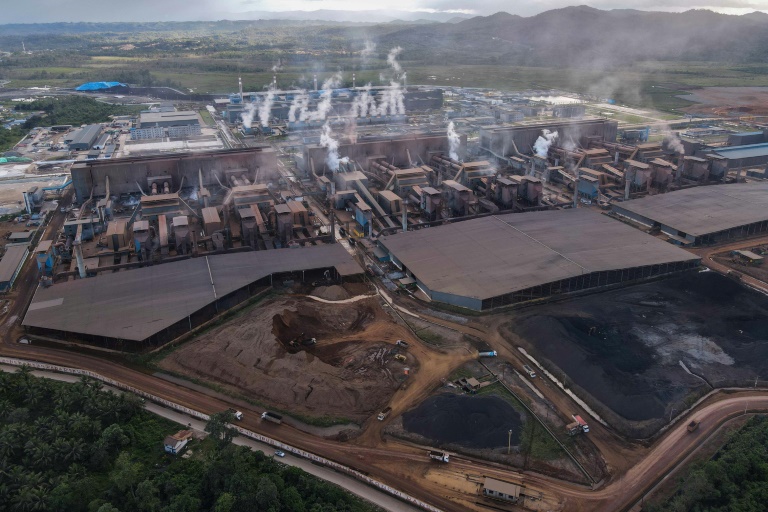
Indonesia has proposed the establishment of a bloc of the world’s top nickel producers similar to the oil cartel OPEC in talks with Canada, its investment minister said.

The Southeast Asian nation is the world’s top nickel producer, while Canada is also a major producer of the mineral, according to United States Geological Survey data.

“Through such collaboration, we hope all nickel-producing countries will be able to profit through a fair added value creation,” Bahlil Lahadalia said, according to a ministry statement. 

The proposal was raised when Lahadalia met Canada’s trade minister Mary Ng on the sidelines of the G20 summit in Bali.  

He said an organisation similar to OPEC, a group of 13 oil-producing countries, could help organise and streamline policies on nickel, a key mineral used to make batteries — including for electric vehicles, stainless steel and mobile phones.

Lahadalia previously floated the idea of such a grouping in an interview with the Financial Times in October, saying at the time that Indonesia was still formulating the group’s structure.

Ng said in the statement that the two countries could explore the collaboration proposal, adding that Indonesia and Canada shared a similar vision for optimising their resources in a sustainable way. 

Indonesia has banned exports of raw nickel ore since 2020 in a move to encourage investments in downstream industries in the country, which also sparked a trade dispute with the European Union. 

The Indonesian government has touted plans to turn the country into an electric-vehicle hub. Nickel is used in lithium batteries that power petrol-free cars.

It has attracted investment from some foreign firms in nickel-battery processing plants, including China’s Tsingshan Holding Group.

Indonesia proposes nickel producer bloc at Canada G20 talks

Indonesia has proposed the establishment of a bloc of the world’s top nickel producers similar to the oil cartel OPEC in talks with Canada, its investment minister said.

The Southeast Asian nation is the world’s top nickel producer, while Canada is also a major producer of the mineral, according to United States Geological Survey data.

“Through such collaboration, we hope all nickel-producing countries will be able to profit through a fair added value creation,” Bahlil Lahadalia said, according to a ministry statement. 

The proposal was raised when Lahadalia met Canada’s trade minister Mary Ng on the sidelines of the G20 summit in Bali.  

He said an organisation similar to OPEC, a group of 13 oil-producing countries, could help organise and streamline policies on nickel, a key mineral used to make batteries — including for electric vehicles, stainless steel and mobile phones.

Lahadalia previously floated the idea of such a grouping in an interview with the Financial Times in October, saying at the time that Indonesia was still formulating the group’s structure.

Ng said in the statement that the two countries could explore the collaboration proposal, adding that Indonesia and Canada shared a similar vision for optimising their resources in a sustainable way. 

Indonesia has banned exports of raw nickel ore since 2020 in a move to encourage investments in downstream industries in the country, which also sparked a trade dispute with the European Union. 

The Indonesian government has touted plans to turn the country into an electric-vehicle hub. Nickel is used in lithium batteries that power petrol-free cars.

It has attracted investment from some foreign firms in nickel-battery processing plants, including China’s Tsingshan Holding Group.

Indonesian leader says negotiations on G20 declaration 'very tough'

Indonesia’s president said Wednesday that negotiations for a joint G20 summit declaration were extremely difficult, but hailed the leaders’ agreement.

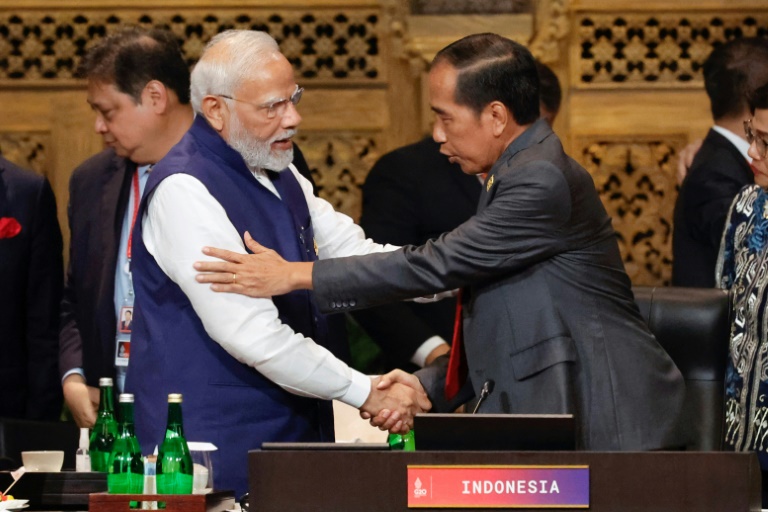
President Joko Widodo hosted two days of talks on the resort island of Bali that were overshadowed by the war in Ukraine, before passing the baton to next year’s host: India.

“The discussion was very very tough but eventually the leaders agreed on the content of the declaration which is the condemnation of the war in Ukraine because it has violated the borders, the integrity of the region,” he told a closing press conference.

“It has caused misery for people and worsened the global economy.”

The document said “most members strongly condemned the war” and called for the extension of a deal with Russia that allows the export of Ukrainian grain.

The Indonesian leader said the most debated paragraph in the declaration’s text was the one focused on Moscow’s war in Ukraine.

“Until midnight, we talked about this, and finally the Bali declaration was reached by consensus,” he said. 

“We agreed that war has an impact on the global economy. The global economy will not be achieved without peace. Therefore, I said, the war must be stopped.”

Widodo handed over the G20 chair to New Delhi, which maintains strong economic ties with Moscow, at a ceremony with Indian Prime Minister Narendra Modi on Wednesday.

UK inflation accelerates to 41-year peak

British inflation has jumped to a 41-year high on soaring energy and food bills in a worsening cost-of-living crisis, data showed Wednesday on the eve of a key budget.

The Consumer Prices Index hit 11.1 percent in October, reaching the highest level since 1981, the Office for National Statistics (ONS) said in a statement.

That compared with 10.1 percent in September, which matched the level in July and had already been the highest in 40 years.

Domestic fuel bills rocketed again despite the UK government’s energy price freeze as the market faced more fallout from key producer Russia’s invasion of Ukraine.

The October figure beat market expectations of 10.7 percent and was higher than the Bank of England’s forecast peak.

“Rising gas and electricity prices drove headline inflation to its highest level for over 40 years, despite the Energy Price Guarantee,” said ONS chief economist Grant Fitzner.

Over the last year, gas prices have leapt by 130 percent and electricity prices by 66 percent, according to the ONS.

Runaway inflation comes despite state energy support, which sought to limit annual energy bills at an average of £2,500 per year.

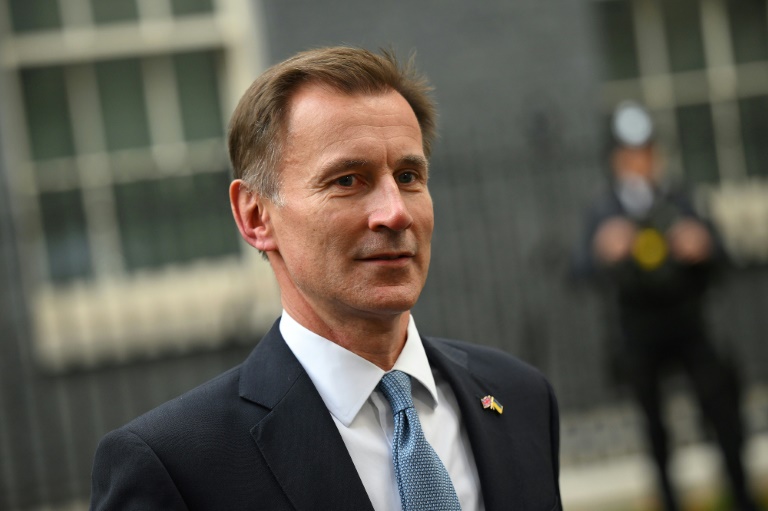
Finance minister Jeremy Hunt blamed Russian President Vladimir Putin’s war in Ukraine for spiking prices, as well as the easing of pandemic curbs.

– ‘Tough’ decisions –

Hunt is expected Thursday to hike taxes and slash spending, despite the cost-of-living squeeze, as Prime Minister Rishi Sunak attempts to fix economic chaos wrought by predecessor Liz Truss.

“The aftershock of Covid and Putin’s invasion of Ukraine is driving up inflation in the UK and around the world,” Hunt said Wednesday.

“This… is eating into pay cheques, household budgets and savings, while thwarting any chance of long-term economic growth.”

The Ukraine conflict has also sent inflation soaring to the highest level in decades worldwide, sparking economic turmoil.

That has forced major central banks to raise interest rates, risking the prospect of recession as higher borrowing costs hurt businesses and consumers.

The Bank of England this month sprang its biggest rate hike since 1989 to combat sky-high inflation — and warned the UK economy may experience a record-long recession until mid-2024.

The BoE lifted borrowing costs by 0.75 percentage points to 3.0 percent — the highest since the 2008 global financial crisis — to cool UK inflation that it saw peaking at almost 11 percent.

Hunt added that “tough” decisions would be needed in Thursday’s budget to help the BoE meet its 2.0-percent inflation target. 

“We cannot have long-term, sustainable growth with high inflation,” he said.

The UK has meanwhile been blighted by strikes this year, as workers protest over wages that have failed to keep pace with surging inflation.

The retail prices index — an inflation measure which includes mortgage interest payments and is used by trade unions and employers when negotiating wage increases — rocketed to 14.2 percent in October from 12.6 percent in September, data showed Wednesday.

Liftoff! NASA launches mega Moon rocket, ushering new era of exploration

NASA launched the most powerful rocket ever built on a journey to the Moon on Wednesday, in a spectacular blaze of light and sound that marked the start of the space agency’s new flagship program, Artemis.

The 32-story tall Space Launch System (SLS) blasted off from the storied Kennedy Space Center in Florida at 01:47 am (0647 GMT), producing a record 8.8 million pounds (39 meganewtons) of thrust.

“What you have done today will inspire generations to come, thank you!” Charlie Blackwell-Thompson, NASA’s first female launch director, told cheering teammates. 

Fixed to the rocket’s top was the uncrewed Orion spaceship that will orbit Earth’s nearest neighbor, in a test run for later flights that should see the first woman and first person of color touch down on lunar soil by the mid-2020s.

About two hours after launch, NASA said the spacecraft had completed a propulsive maneuver to escape the pull of Earth’s gravity and was on its path to the Moon.

“Trans-lunar injection burn complete! NASA Orion is on its way to the Moon!” tweeted Jim Free, NASA’s associate administrator for exploration systems.

America last sent astronauts to the Moon during the Apollo era, from 1969-1972. 

This time it hopes to build a sustained presence — including a lunar space station — to help prepare for an eventual mission to Mars in the 2030s.

There were nervous moments as teams worked to overcome technical issues that ate into the two-hour launch window, which opened at 1:04 am.

First, engineers were forced to pause the flow of liquid hydrogen into the core stage Tuesday night because of a valve leak, but a team sent to the launch pad resolved the issue after about an hour, by tightening loose bolts. 

Later, the space agency reported that a radar site monitoring the rocket’s flight path was experiencing problems due to a faulty ethernet switch, which had to be replaced.

It was third time lucky for NASA after two previous launch attempts were canceled for technical reasons. The launch was also delayed due to weather setbacks including Hurricane Ian, which battered Florida in late September.

– ‘Extremely excited’ –

About 100,000 people were expected to have gathered along the coast to witness the historic event.

Todd Garland drove from Frankfurt, Kentucky to watch from Cocoa Beach. 

Wearing an Artemis T-shirt, the 55-year-old told AFP tearfully: “This has been an experience I’ve looked forward to all my life. 

“My first memory is my mother waking me up at two years old to watch the Moon landing and I’ve always wanted to see a launch ever since, and now I have.”

Kerry Warner, 59, a grandmother and semi-retired educator who lives in Florida, added the launch was “part of America and what America is all about.”

– Far side of the Moon –

The Orion crew capsule was lifted by two boosters and four powerful engines under the core stage, which detached after just a few minutes.

A final push from the upper stage set the capsule on its way to the Moon, though it will take several days to reach its destination. 

The upper stage will meanwhile release 10 CubeSats to carry out science experiments, including one that will unfurl a sail-powered by sunlight and perform asteroid reconnaissance work.

Rather than landing on the Moon, Orion will assume a distant orbit, venturing 40,000 miles (64,000 kilometers) beyond the far side — further than any other habitable spacecraft so far.

Finally, the spaceship will embark on the return leg of its journey. When passing through the atmosphere, the capsule’s heat shield will need to withstand a temperature half as hot as the Sun’s surface.

Though Orion isn’t carrying humans this time, it has three sensor-equipped dummies on board to help gather safety data for future crew members.

The mission will last 25-and-a-half days, with a splashdown in the Pacific Ocean on December 11.

NASA is banking on a successful mission after developing the SLS rocket for more than a decade. 

It will have invested more than $90 billion in its new lunar program by the end of 2025, according to a public audit.

Artemis 2 will involve a flyby of the Moon with astronauts in 2024, while Artemis 3 will see boots on lunar soil, no sooner than 2025. 

NASA hopes to settle into a yearly launch schedule, and will include international partners from Japan, Canada and Europe.

Brazil's Lula, world leaders bolster UN climate talks

UN climate talks got a fillip Wednesday as Brazilian president-elect Luiz Inacio Lula da Silva launched the country back into the battle to curb global warming and global leaders reaffirmed key pledges.

Lula arrived Tuesday in Egypt’s Red Sea resort of Sharm el-Sheikh and went straight into climate diplomacy with meetings with US envoy John Kerry and China’s Xie Zhenhua.

The leftist politician, who served as president from 2003 to 2010, is expected to inject much needed momentum into the COP27 climate talks in his first international trip since defeating far-right incumbent President Jair Bolsonaro, who presided over years of rampant Amazon deforestation.

“Brazil is back in the world to debate the climate issue,” Lula tweeted late Tuesday. “We will be a source of pride for the world.”

Lula is expected to present his plan for “zero deforestation” in a speech Wednesday afternoon at the COP27 conference.

Kerry told a COP27 biodiversity panel on Wednesday that the United States would work with other nations to help protect the Amazon.

“I was pleased last night to meet with president-elect Lula and was really encouraged by the ways in which he talked about for once and for all getting it right … in order to preserve the Amazon,” Kerry said.

“We will work diligently in order to achieve that goal together with our allies, particularly Norway and Germany and other countries that have been deeply committed to this for a period of time.”

Under Bolsonaro, a staunch ally of agribusiness, average annual deforestation increased 75 percent compared to the previous decade.

“We need a new sense of hope to build trust and momentum towards a positive outcome at COP27,” said Brazilian climate campaigner, Mariana Paoli, Christian Aid’s global advocacy lead.  

“President Lula’s election victory in Brazil has the potential to breathe new life into this process with his progressive agenda that seeks to bring Brazil back to the table and end the disastrous climate policies of his predecessor.”

In another boost to the UN climate process, a final communique from world leaders meeting at the Group of 20 talks in Bali, Indonesia included key promises to “pursue efforts” to curb global warming to 1.5 degrees Celsius above pre-industrial levels, a safer limit according to scientists.     

The document, which also reiterated a commitment to phase out “inefficient” fossil fuel subsidies over the medium term, was welcomed by observers as a way to galvanise the climate talks as they enter their final days. 

The G20 meeting was also the stage of a crucial meeting between US President Joe Biden and China’s Xi Jinping, where the two leaders agreed to resume their climate cooperation.

Ani Dasgupta, head of the World Resources Institute, said positive signals from leaders at the G20 “should put wind in the sails” of negotiators in Egypt.

– Climate leadership –

Bolsonaro, who did not attend the G20 summit in Bali, has maintained a low profile since losing the Brazilian election. 

While his government has a pavilion at COP27, former steelworker Lula deployed two of his former environment ministers to lay the groundwork for his visit.

One of them, Marina Silva, who is tipped to return to the job when Lula takes office on January 1, said Brazil wants to set an example with Lula’s deforestation plan.

Latin America’s most populous country grew more isolated under Bolsonaro, analysts say, in part due to his permissive policies towards deforestation and exploitation of the Amazon — the preservation of which is seen as critical to fighting global warming.

Brazil is home to 60 percent of the Amazon, which spans eight countries and acts as a massive sink for carbon emissions.

Silva promoted the idea of creating a new national authority to coordinate climate action among government ministries, and of pursuing a reforestation target of 12 million hectares (over 29 million acres).

– Lula meets Kerry –

The incoming administration wants the United States to contribute to the Amazon Fund, considered one of the main tools to reduce deforestation in the planet’s biggest tropical forest.

Following Lula’s victory, the fund’s main contributors, Norway and Germany, announced they would participate again, after freezing aid in 2019 in the wake of Bolsonaro’s election.

Colombian President Gustavo Petro and his counterpart Nicolas Maduro of Venezuela presented at COP27 last week an Amazon protection initiative that they hope Brazil will join.
NGOs and Indigenous leaders want Lula to create the first ministry of Indigenous peoples.

Brazilian lawmaker and Indigenous leader Sonia Guajajara urged Lula to “think about social policies with the people”.  

Asian stocks mostly down as Ukraine fears offset inflation hopes

Asian stocks mostly fell Wednesday as another positive US inflation report that fanned hopes of a slowdown in the Fed’s rate hike campaign was offset by fresh geopolitical concerns over Ukraine and profit-taking.

World markets have rallied since last week after data showed US consumer prices rose much less than expected in October, suggesting months of monetary tightening by the Federal Reserve was kicking in.

The news was followed Tuesday by a below-forecast reading on wholesale prices, providing extra room for the central bank to take its foot off the pedal when raising borrowing costs and possibly easing pressure on the economy.

Still, central banks’ tough battle against inflation was highlighted Wednesday by data showing UK prices rose more than 11 percent last month, a fresh four-decade high.

The optimism had been further enhanced by China’s pledge to provide much-needed support to the country’s beleaguered property sector as well as ease some of the strict Covid-19 restrictions that have played a major role in dragging the economy down.

However, the positive mood that had flowed through markets was dealt a blow after Poland said a missile — “most probably Russian-made” — had struck a village in the country’s east, killing two people.

Warsaw put its military on alert and US President Joe Biden and other Western leaders met in an “emergency roundtable” Wednesday on the sidelines of the G20 summit in Indonesia.

The news sparked fears that if it was proved to be an attack on Poland, a NATO member, the nine-month war in Ukraine could escalate.

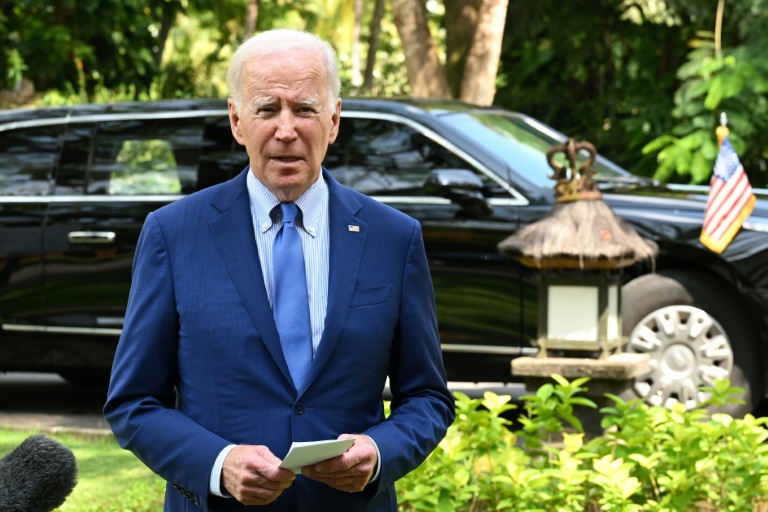
Biden told reporters that allies would support Poland in probing “exactly what happened” but that preliminary information showed it was probably not fired “from Russia”.

And France urged “utmost caution” on the origin of the missile.

– ‘Wartime mistake’ –

The comments helped ease concern on trading floors, though profit-taking after three days of healthy gains weighed on buying sentiment.

Tokyo, Singapore and Mumbai edged up but Hong Kong fell after surging about 14 percent over the previous three days.

There were also losses in Shanghai, Sydney, Seoul, Wellington, Manila, Bangkok, Jakarta and Taipei. 

London and Paris opened higher but Frankfurt was flat.

“Even if the missiles that crossed the Polish border were indeed deemed Russian and not Ukrainian anti-missile interceptors, the case would fall short of triggering an escalation at this point,” said SPI Asset Management’s Stephen Innes

“Hence the markets are deferring to a wartime mistake, believing this to be a case of misfire.”

Still, he added: “While the market is not in full risk-off mode while deferring to a wartime mistake, the risk of a NATO-Russia clash is growing and real.”

On currency markets, the dollar also saw sharp swings against its peers in reaction to the news out of Poland, while oil slipped after initially spiking on reports of the strike.

– Key figures around 0820 GMT –

Tokyo – Nikkei 225: UP 0.1 percent at 28,028.30 (close)

Hong Kong – Hang Seng Index: DOWN 0.5 percent at 18,256.48 (close)

Shanghai – Composite: DOWN 0.5 percent at 3,119.98 (close)

London – FTSE 100: UP 0.2 percent at 7,380.67

Euro/dollar: UP at $1.0401 from $1.0354 on Tuesday

Pound/dollar: UP at $1.1873 from $1.1871 

Dollar/yen: UP at 139.39 yen from 139.16 yen

Euro/pound: UP at 87.63 pence from 87.18 pence

West Texas Intermediate: DOWN 0.5 percent at $86.48 per barrel

Brent North Sea crude: DOWN 0.3 percent at $93.62 per barrel

New York – Dow: UP 0.2 percent at 33,592.92 points (close)

Close Bitnami banner
Bitnami