World

UK householders face squeeze as budget looms

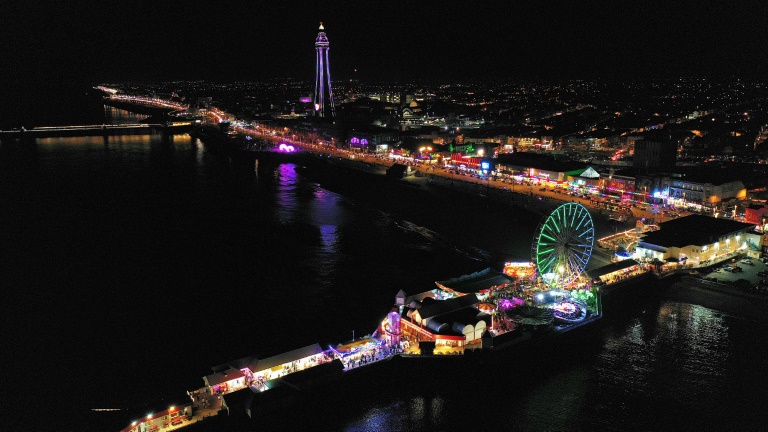
Thursday’s government budget is unlikely to be uppermost in the minds of people enjoying the annual light show on the seafront promenade of Blackpool.

But for residents and businesses of the town, which is ranked as England’s most deprived, the expected spending cuts and tax increases could have wide-ranging consequences.

“My basic supply of eggs, bacon, sausages that I give my customers, I have noticed that has gone up from £10 to £15 ($12 to $18) in the last couple of weeks,” said hotel owner Tracy Applin, 62.

“We are going to struggle. I don’t know how long for but they (the government) need to do more to help us,” she told AFP.

Finance minister Jeremy Hunt is under pressure to reduce inflation — which accelerated to 11.1 percent in October, a 41-year high — squeezing incomes also hit by rising energy prices.

Applin said the widely expected tax increases and high cost of living have her worried for Blackpool’s all-important tourist industry.

Some 3.5 million people flock to Blackpool for its Illuminations, the free light show that starts in September and runs to the end of January.

“Usually, this time of year I’d probably have about 40 bookings already for next year,” she said.

“At the moment, there’s about five or six. 

“I can’t sit and worry about it. What I’ve got to sit and do is think, right, well, what am I going to do to draw people in?”

Applin’s only option is to shut up shop for the winter months but she cannot afford to do so because she has bills to pay.

– Struggle –

Pensioners Julie Newby and her husband Kevin Newby’s main worry is the high cost of gas and electricity, which has more than doubled since the same time last year to £220 pounds a month.

Newby hopes  Hunt’s budget will offer some respite as she has to care for her husband and son who are both disabled.

“Just generally more help for people who are on the poverty line really,” she said.

“I am always going around turning the lights off. 

“We’re trying to do the washing at night-time instead of during the day because apparently  it’s cheaper at night-time. We try not to use the dryer but sometimes you have to.” 

According to the government’s 2019 English Index of Multiple Deprivation, which measures average income, employment, health and crime, among other factors, Blackpool is the most deprived of England’s 317 local authorities.

“People are struggling to eat,” Maggie Cornall, operations manager for Blackpool Council, told AFP.

“People are struggling to heat their homes as well. That has a knock-on effect in terms of general health and well-being.”

– ‘Breaking point’ –

Food and energy poverty has a knock-on effect on services like hospital accident and emergency departments, as more people take to drugs and alcohol, Cornall said.

Her hope for the budget is that the government intervenes in the energy market to keep prices down beyond measures it has already set out to help hard-pressed households.

She also wants the government to provide additional funding for residents in Blackpool to enable them to both eat and heat their homes.

The Trussell Trust charity, which runs more than 1,200 food banks across Britain, said the cost-of-living crisis is stretching emergency food relief centres to “breaking point”.

Last week it said that in the six months to September, 320,000 people have been forced to turn to food banks for the first time.

Nearly 1.3 million food parcels — more than half of them to children — were handed out in its network, a third more than in the same period last year.

“I think there needs to be a recognition that the people that live in places like Blackpool, that they are the most vulnerable, they have the least resilience and they need the greatest support,” said Cornall.
China new home prices see sharpest decline in over seven years

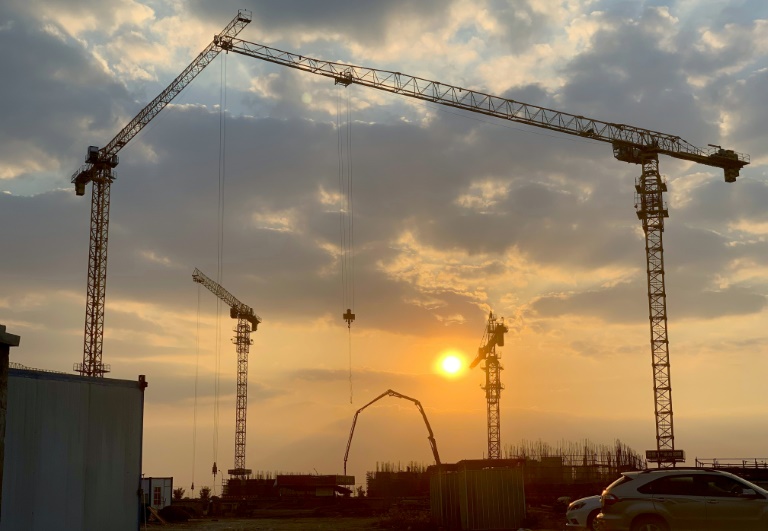
Prices of new homes in China saw their sharpest decline for seven years in October, data showed Wednesday, as the real estate sector was battered by a debt crisis and a slowing economy.

Property market has long served as a motor for growth in China, on the backs of rising standards of living and high demand in a country where home ownership is seen as a prerequisite for marriage.

But uncertainties linked to Covid-19, which have cooled demand and weighed on household income, are hitting buyers, at a time when several major real estate groups in China are in financial difficulty.

The price of new homes contracted 1.6 percent year-on-year, their sharpest decline since August 2015, analysis of figures from Beijing’s National Bureau of Statistics (NBS) showed.

Real estate prices fell in 58 cities, according to the NBS, which aggregates the average price in 70 cities across China.

Prices in the mega-cities of Beijing and Shanghai bucked the trend.

The figures come after China’s banking regulator unveiled sweeping measures to rescue the struggling property sector last week.

Those included credit support for debt-laden housing developers, financial support to ensure the completion and handover of projects to homeowners, and assistance for deferred-payment loans for buyers.

Friday’s measures emphasised “guaranteeing the handover of buildings”, and ordered development banks to provide “special loans” for the purpose, according to a copy of plans circulating online.

Property and construction account for around a quarter of China’s gross domestic product, but crippling debts have forced a series of developers to default on loans while others have struggled to raise cash.

Analysts have raised fears that the crisis could yet spread to the country’s financial sector at a time when Beijing’s hardline zero-Covid policy has also put a lid on growth.

Poland military on alert after missile strike

Poland’s military was on high alert Wednesday after a deadly missile strike on a village near the border with war-ravaged Ukraine.

In Indonesia’s Bali, Western leaders held an “emergency roundtable” on the sidelines of the G20 summit, where they urged against jumping to any conclusions about the origins of the strike.

The talks came after Poland’s President Andrzej Duda said there was no clear evidence of who fired the missile that killed two people in the southeastern village of Przewodow, near the border with Ukraine. 

He also said the missile was “most probably Russian-made”.

An AFP journalist in Przewodow said police had cordoned off the blast site with sirens wailing in the distance.

US President Joe Biden said it was “unlikely” the missile had been fired from Russia, while France urged “utmost caution” in identifying who was behind the blast.

Moscow’s ambassador has been summoned to provide “immediate detailed explanations” and the military had been put on heightened alert after an emergency national security council meeting, Polish authorities said.

“There has been a decision to raise the state of readiness of some combat units and other uniformed services,” spokesman Piotr Muller told reporters after the meeting in Warsaw, adding that “our services are on the ground at the moment working out what happened”.

Biden spoke by phone with Duda, offering “full US support for and assistance with Poland’s investigation”, the White House said.

The two leaders agreed to “remain in close touch to determine appropriate next steps as the investigation proceeds”, it added.

– NATO commitment –

British Prime Minister Rishi Sunak, German Chancellor Olaf Scholz and French President Emmanuel Macron — all leaders of NATO member states — expressed solidarity with Poland.

Poland is protected by NATO’s commitment to collective defence — enshrined in Article 5 of its founding treaty — but the alliance’s response will likely be heavily influenced by whether the incident was accidental or intentional.

Biden also spoke with NATO chief Jens Stoltenberg about the incident, while ambassadors from the alliance were to hold an emergency meeting on Wednesday.

European Union chief Charles Michel said he was “shocked”, and US Secretary of State Antony Blinken pledged to “remain closely coordinated in the days ahead as the investigation proceeds and we determine appropriate next steps”.

– ‘Significant escalation’ –

Ukrainian President Volodymyr Zelensky had earlier said two Russian missiles hit Poland in what he described as “a very significant escalation”.

Ukraine’s Foreign Minister Dmytro Kuleba rejected as a “conspiracy theory” the idea that the Poland blast may have been caused by a surface-to-air missile fired by Kyiv’s forces. 

Russia’s defence ministry meanwhile dismissed reports that it was to blame as a “provocation” intended to escalate tensions.

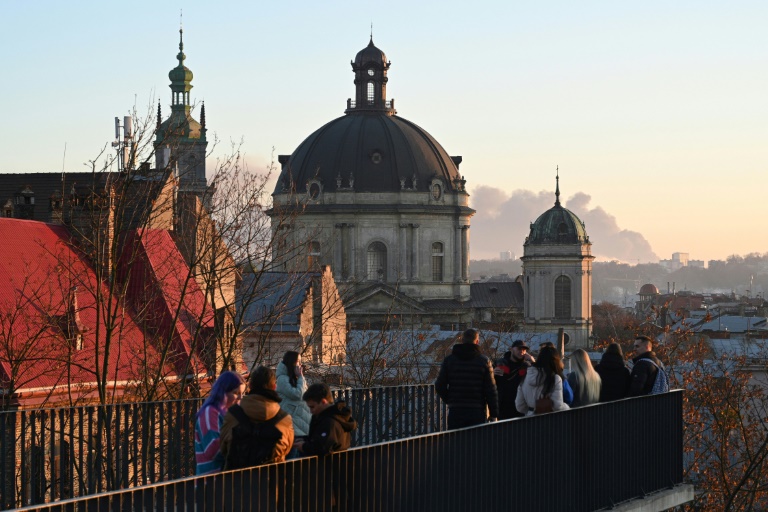
The explosion came after Russian missiles hit cities across Ukraine on Tuesday, including Lviv, near the border with Poland.

Zelensky said the strikes cut power to some 10 million people, though it was later restored to eight million of them, and also triggered automatic shutdowns at two nuclear power plants.

He said Russia had fired 85 missiles at energy facilities across the country, condemning the strikes as an “act of genocide” and a “cynical slap in the face” of the G20.

Moldova, which also borders Ukraine, reported power cuts because of the missiles fired at its neighbour and called on Moscow to “stop the destruction now”.

– ‘Now is the time’ –

Zelensky told the G20 summit in Bali on Tuesday that “now is the time” to end the war.

In their final communique Wednesday, G20 members said they agreed the war hurts the global economy and warned against the threat or use of nuclear weapons in the conflict.

“Most” of the world’s 20 biggest economies also condemned the war in Ukraine, the G20 nations said.

Russia’s Vladimir Putin had decided to skip the summit, as he deals with the fallout from a string of embarrassing battlefield defeats in a war that his supporters believed would be over in days.

White House National Security Advisor Jake Sullivan said Russia was again trying to destroy Ukrainian critical infrastructure.

Since September, Ukraine forces have been pushing deeper into the south. Russia last week announced a full withdrawal from the regional capital of the southern Kherson region, allowing Ukraine’s forces to re-enter the city.

Tuesday’s missile strikes came after Russia-appointed officials in Nova Kakhovka said they were leaving the important southern city, blaming artillery fire from Kyiv’s forces.

They also claimed “thousands of residents” had followed their recommendation to leave to “save themselves”, saying Kyiv’s forces would seek “revenge on collaborators”.

burs/mca/ser

'Unlikely' Poland missile fired from Russia: Biden

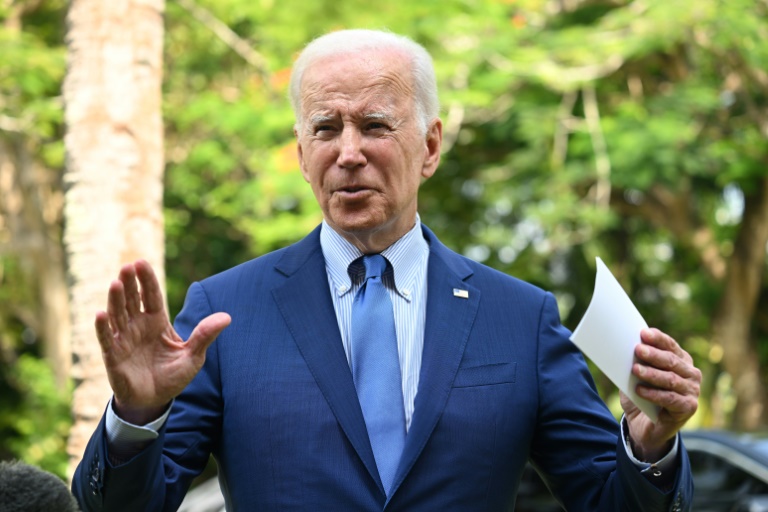
US President Joe Biden said Wednesday it was “unlikely” a missile strike on Poland was launched from Russia, speaking after emergency talks with allies in Bali about the deadly attack.

Biden huddled with G7 and NATO partners on Wednesday, hours after the strike that killed two people in a Polish village near the border with Ukraine.

“We agreed to support Poland’s investigation into the explosion,” Biden told reporters after the hastily arranged gathering on the sidelines of the G20.

“We’re going to make sure we figure out exactly what happened… and then we’re going to collectively determine our next step.”

Asked if the missile had been fired from Russia, Biden said there was “preliminary information that contests that”.

“It’s unlikely… that it was fired from Russia. But we’ll see.”

The explosion in Poland, a NATO member, immediately sparked concerns that the alliance might be drawn directly into Russia’s nearly nine-month war against Western-backed Ukraine.

UN Secretary-General Antonio Guterres, also in Bali, warned it was “absolutely essential to avoid escalating the war in Ukraine”.

Polish President Andrzej Duda also urged calm, saying there was no “unequivocal evidence” of where the missile came from, and that he saw it as an “isolated” incident.

“Nothing indicates to us that there will be more,” he said.

The French presidency urged “utmost caution” on the origin of the strike, with an official saying many countries had the same missiles and warning of the “significant risks of escalation”.

– ‘Slap in the face’ –

Poland is now expected to request urgent consultations under Article 4 of the NATO Treaty, which is invoked when any member feels their “territorial integrity, political independence or security” are at risk.

Ukrainian President Volodymyr Zelensky quickly blamed Moscow for what he termed “Russian missile terror”.

The incident came after Russia launched a wave of missile strikes across Ukraine on Tuesday that left millions of households without power.

Biden on Wednesday called those attacks “barbaric”, and Zelensky described them as a “slap in the face” for the G20.

The summit has been dominated by the conflict in Ukraine, with members struggling to find common ground on Russia’s invasion of its neighbour.

In a joint statement issued Wednesday, leaders came together to condemn the war’s effects but remained divided on apportioning blame.

The summit has shown however that even Russia’s allies have limited patience with a conflict that has inflated food and energy prices worldwide and raised the spectre of nuclear war.

All members, including Russia, signed off on a line saying that the “war in Ukraine” — which Moscow refuses to call a war — has “adversely impacted the global economy”.

And Moscow also agreed that “the use or threat of use of nuclear weapons” was “inadmissible”, after months of President Vladimir Putin making such threats.

– ‘Not a political forum’ –

Russia’s G20 allies China, India and South Africa have so far refrained from publicly criticising Putin’s war, and the statement is replete with diplomatic fudges.

It says “most members strongly condemned the war in Ukraine,” but adds that there were “other views and assessments”.

Putin shunned the gathering, instead sending his pugnacious Foreign Minister Sergei Lavrov, who left the summit Tuesday night, skipping the final day of talks.

The United States and its allies have used the summit to broaden the coalition against Russia’s invasion and scotch Moscow’s claims of a war of East versus West.

Host Indonesia, meanwhile, has walked a tightrope, keen to end its G20 presidency with the relative triumph of a joint statement from the fractured group.

It has declined to criticise Russia, and invited Zelensky to address the summit, including with a speech Tuesday in which he urged leaders to end the war and “save thousands of lives”.

At the final session on Wednesday, Indonesian President Joko Widodo also begged counterparts to “stop the war”, saying the conflict would prevent a global recovery.

But he dodged questions about the conflict during a walkabout with leaders at a mangrove hours after the Poland strike and Russia’s latest wave of attacks in Ukraine.

“The G20 is an economic forum, a financial forum, and diplomat forum, not a political forum. So here we talk about the economy,” he told reporters.

A bluffer's guide to Proust 100 years after his death

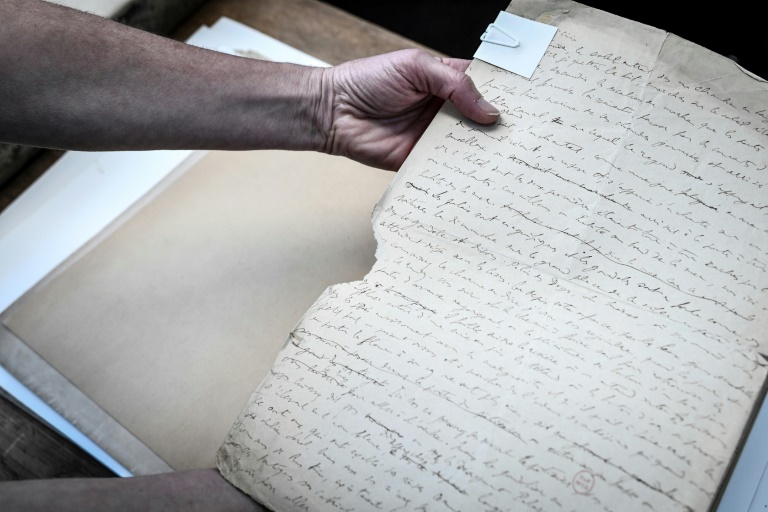
France’s Marcel Proust, who died 100 years ago on Friday, is regarded as one of the greatest novelists of all time — but few can truthfully claim to have read his 2,400-page masterpiece “In Search of Lost Time”.

For those waiting for another lockdown to curl up with his magnum opus, here are five fun facts you can drop into a conversation that will make you sound like an expert.

– Unwanted masterpiece –

In 1909 Proust launched himself into what would become his masterwork, a novel about memory and the essence of art.

The project grew from one book to a second in 1912 and a third the following year. 

“In Search of Lost Time” eventually grew into seven volumes, four published in Proust’s lifetime and three after his death at the age of 51 in 1922.

But finding a publisher was not easy. 

After receiving three rejections for the first volume “Swann’s Way”, Proust decided to self-publish, with the help of Grasset publishing house.

Nobel-winning novelist Andre Gide, who was an editor at the time at NFR publishing house (which later became Gallimard), was among those who passed on Proust’s dense prose.

“The rejection of this book will remain the NRF’s greatest mistake,” Gide later wrote to Proust, calling it “one of the most bitter regrets of my life”.

Gallimard managed to lure Proust back with his second novel in 1916, “In the Shadow of Young Girls in Flower”, which won the Goncourt Prize, France’s top literary award.

– ‘Oh’: on winning top prize  –

When the Goncourt jury announced Proust as the winner in 1919, Gallimard rushed to give the author the good news.

Arriving at his home near the Champs-Elysees, Gallimard found Proust, an inveterate snoozer, asleep in a room filled with steam treatments for his asthma.

“Oh?” said the author flatly, on hearing he had won the literary equivalent of the jackpot.

His win sparked an outcry by the French left which backed Roland Dorgeles’ epic account of life in the trenches in World War I over what they characterised as Proust’s self-indulgent ruminations on the passage of time.

Proust’s critics further argued he was too old — he was 48 at the time — and too rich to win the award which came with 5,000 francs in prize money.

– On and on and on –

“For a long time, I went to bed early…”, is how “In Search of Lost Time” begins, and it’s also how the story ends for many a reader, who find Proust’s prose to have soporific qualities.

Poetic and dreamy, sprinkled with dashes and parentheses, his sentences are exceptionally long — on average 30 words, twice that of most novelists.

– The madeleine was nearly toast –

The madeleine or mini sponge cake that has become the most famous detail in all seven volumes makes its appearance early in the first book.

For the protagonist, Marcel, tasting the little cake releases a flurry of vivid memories, giving him access to the “lost time” he is searching for.

“As soon as I had recognised the taste of madeleine dipped in lime-blossom tea that my aunt used to give me…”, he swoons.

And yet the mighty madeleine was nearly a humble piece of toast, as early drafts of the scene discovered in Proust’s notebooks reveal.

– Maternal mollycoddling –

Proust suffered most of his life with severe asthma, and although he liked to socialise — he had some torturous secret homosexual love affairs — he also spent long stretches in bed, writing with a tray on his knees.

His neurologist father urged his sickly son to get out in the fresh air and play sport, noting that asthma was not contagious.

But Proust’s mother was prone to mollycoddling, and from 1906 he followed her counsel, staying cloistered inside like a hermit, with a steady supply of caffeine and aspirin.

His respiratory problems would finally get the better of him. He died after pneumonia that turned into bronchitis and then an abscess on the lungs.

French MPs mull banning bullfighting

French MPs are set to begin debating a ban on bullfighting on Wednesday, with a vote due later this month that has enraged lovers of the blood sport in the south of the country.

The issue has split the ruling coalition of President Emmanuel Macron and the biggest opposition party, the far-right National Rally, which is led by animal-lover Marine Le Pen.

Despite having widespread public support, most observers expect the bid to fail as a majority of MPs fear a backlash in rural areas and bullfighting heartlands where the practice is a cherished cultural tradition.

“I think the majority of French people share the view that bullfights are immoral, a spectacle that no longer has its place in the 21st century,” the left-wing opposition MP behind the attempt to ban it, Aymeric Caron, told AFP earlier this year.

A poll by the Ifop survey group earlier this year backs Caron’s claim, with 77 percent of respondents approving of a ban, up from 50 percent in 2007.

MPs will begin discussing draft legislation during a hearing of the parliament’s law commission on Wednesday.

A full vote is scheduled for November 24, which would be the first time the national assembly has pondered outlawing a tradition that was idolised by artists from Ernest Hemingway to Pablo Picasso.

The draft law would modify existing animal welfare law to remove exemptions for bullfights when they can be shown to be “uninterrupted local traditions.”

These are granted in towns such as Bayonne and Mont-de-Marsan in southwest France and along the Mediterranean coast including Arles, Beziers and Nimes.

The law would also ban cock-fighting which is permitted in some areas in northern France.

“The MP Caron, in a very moralising tone, wants to explain to us, from Paris, what is good or bad in the south,” the furious mayor of Mont-de-Marsan, Charles Dayot, told AFP.

Bullfighting is “our identity, a living culture. Leave us alone with our traditions!” added Dayot, who is vice-president of the Union of French Bullfighting Towns.

– Spanish import? –

Although the head of Macron’s Renaissance party in parliament, Aurore Berge, signed an open letter calling for a ban on bullfighting last year, others in the party are fiercely opposed to the bill.

Justice Minister Eric Dupond-Moretti is known to be a bullfighting fan, while some oppose the legislation on the grounds that it will deepen a widening urban-rural divide in France.

“It will disappear on its own. There is less and less of it,” Jean-Rene Cazeneuve, a ruling party MP elected from the southern Gers region, told AFP. “There’s no point banning it and humiliating people who see it as a tradition.”

When running for president earlier this year, Le Pen made animal welfare a plank of her manifesto, promising to give animals a constitutional status and declaring that “wanton mistreatment of animals was intolerable in our society.”

She has proposed restricting bullfightinng audiences  to over-18s, while senior MP Julien Odoul is expected to vote in favour of a blanket ban.

Judicial attempts to outlaw the practice have repeatedly failed, with courts routinely rejecting lawsuits lodged by animal rights activists, most recently in July 2021 in Nimes.

The debate in France pitching animal rights’ defenders against traditionalists is echoed in other countries with bullfighting histories, including Spain and Portugal as well as Mexico, Colombia and Venezuela.

In June, a judge in Mexico City ordered an indefinite suspension of bullfighting in the capital’s historic bullring, the largest in the world.

Caron told AFP that bullfighting “is not a French tradition. It’s a Spanish custom that was imported to France in the 19th century to please the wife of Napoleon III, who was from Andalusia,” the countess Eugenie de Montijo.

adc-jud-siu-cas/adp/ach/mca

Musk to testify at trial over his $50 bn Tesla compensation

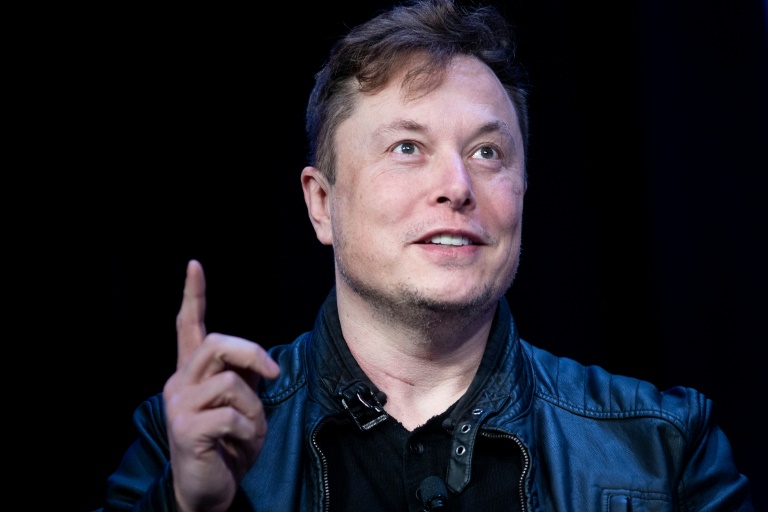
Tesla tycoon Elon Musk will take the stand on Wednesday as part of a trial over his $50 billion pay package as CEO of the electric car giant.

Musk will testify in the same Delaware court where he faced a lawsuit by Twitter to make sure he went through with his buyout of the social platform.

The $44 billion purchase of Twitter has put Musk under a deluge of scrutiny after he conducted massive layoffs, scared advertisers and opened the platform to fake accounts.

The unrelated Tesla case is based on a complaint by shareholder Richard Tornetta, who accused Musk and the company’s board of directors of failing in their duties when they authorized the pay plan.

Tornetta alleges that Musk dictated his terms to directors who were not sufficiently independent from their star CEO to object to a package worth around $51 billion at recent share prices.

The Tesla shareholder accuses Musk of “unjustified enrichment” and asked for the annulment of a pay program that helped make the entrepreneur the richest man in the world.

According to a legal filing, Musk earned the equivalent of $52.4 billion in Tesla stock options over four and a half years after virtually all of the company’s targets were met. 

When the plan was adopted it was valued at a total of $56 billion.

The non-jury trial began Monday with testimony from Ira Ehrenpreis, head of the compensation committee on Tesla’s board of directors, who said the targets set were “extraordinarily ambitious and difficult”.

Ehrenpreis argued that the board wanted to spur Musk to focus on Tesla at a time when the company was still struggling to gain traction.

– ‘Highly unusual’ –

The trial will run through Friday and is being presided over by Judge Kathaleen McCormick, the same judge who was to preside over the Twitter case.

There is no deadline for her decision which could take months.

It’s “highly unusual” for this kind of case to be brought to trial, Jill Fisch, Law professor at the University of Pennsylvania, told AFP.

“There aren’t all that many successful challenges to executive compensation (as) the courts have typically treated this as a business decision,” she added.

But the court found in this case that Musk’s ownership of about 22 percent of Tesla and his role as CEO “could have an undue impact” on the board and other shareholders, she noted.

Musk canceled an in-person appearance on Sunday at an event on the sidelines of the G20 in Bali to be in court.

Asked why he had not traveled to the tropical Indonesian island, the new Twitter boss joked that his “workload has recently increased quite a lot” after his takeover of the social media giant.

Musk to testify at trial over his $50 bn Tesla compensation

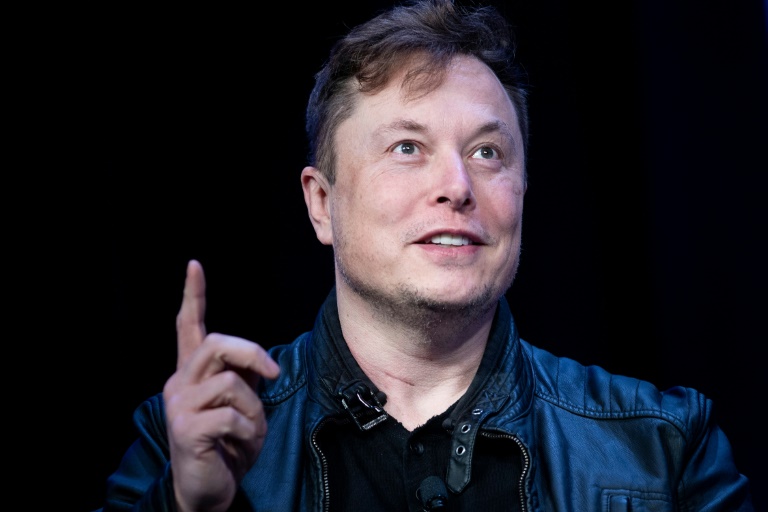
Tesla tycoon Elon Musk will take the stand on Wednesday as part of a trial over his $50 billion pay package as CEO of the electric car giant.

Musk will testify in the same Delaware court where he faced a lawsuit by Twitter to make sure he went through with his buyout of the social platform.

The $44 billion purchase of Twitter has put Musk under a deluge of scrutiny after he conducted massive layoffs, scared advertisers and opened the platform to fake accounts.

The unrelated Tesla case is based on a complaint by shareholder Richard Tornetta, who accused Musk and the company’s board of directors of failing in their duties when they authorized the pay plan.

Tornetta alleges that Musk dictated his terms to directors who were not sufficiently independent from their star CEO to object to a package worth around $51 billion at recent share prices.

The Tesla shareholder accuses Musk of “unjustified enrichment” and asked for the annulment of a pay program that helped make the entrepreneur the richest man in the world.

According to a legal filing, Musk earned the equivalent of $52.4 billion in Tesla stock options over four and a half years after virtually all of the company’s targets were met. 

When the plan was adopted it was valued at a total of $56 billion.

The non-jury trial began Monday with testimony from Ira Ehrenpreis, head of the compensation committee on Tesla’s board of directors, who said the targets set were “extraordinarily ambitious and difficult”.

Ehrenpreis argued that the board wanted to spur Musk to focus on Tesla at a time when the company was still struggling to gain traction.

– ‘Highly unusual’ –

The trial will run through Friday and is being presided over by Judge Kathaleen McCormick, the same judge who was to preside over the Twitter case.

There is no deadline for her decision which could take months.

It’s “highly unusual” for this kind of case to be brought to trial, Jill Fisch, Law professor at the University of Pennsylvania, told AFP.

“There aren’t all that many successful challenges to executive compensation (as) the courts have typically treated this as a business decision,” she added.

But the court found in this case that Musk’s ownership of about 22 percent of Tesla and his role as CEO “could have an undue impact” on the board and other shareholders, she noted.

Musk canceled an in-person appearance on Sunday at an event on the sidelines of the G20 in Bali to be in court.

Asked why he had not traveled to the tropical Indonesian island, the new Twitter boss joked that his “workload has recently increased quite a lot” after his takeover of the social media giant.

Chagall painting stolen by Nazis sells for $7.4 mn at US auction

A painting by Marc Chagall, which was among 15 works stolen by Nazis and eventually returned by France to the heirs of the affected families, sold for $7.4 million at auction in New York Tuesday. 

The sale at the Phillips auction house was part of the fall auction season, which sees major industry players sell hundreds of works of art for several billion dollars in a few days in the upscale neighborhoods of Manhattan. 

On Tuesday, Phillips sold 46 works for nearly $139 million. The most expensive, a monumental painting by Cy Twombly, “Untitled” (2005), which once belonged to the French businessman Francois Pinault, went for $41.6 million. 

Chagall’s 1911 oil on canvas, “The Father,” was purchased in 1928 by a Polish-Jewish violin maker, David Cender, who lost his possessions when he was forced to move to the Lodz ghetto.

Deported to Auschwitz, where his wife and daughter were killed, the violin maker survived and moved to France in 1958, where he died in 1966 without regaining possession of the painting.

In the meantime, the work had reappeared in exhibitions and it turned out that it was Marc Chagall himself who had bought it, probably between 1947 and 1953 — without knowing its provenance, according to Phillips and the French culture ministry.

After the artist, who was born in the Russian empire, died in France in 1985, “The Father” entered the national collections in 1988, and was then assigned to the Pompidou Center and deposited in the Museum of Jewish Art and History in Paris.

The French parliament unanimously adopted a law at the beginning of the year to return 15 works of Jewish families looted by the Nazis. The then culture minister, Roselyne Bachelot, had called it a historic “first step,” noting that other looted works of art and books were still kept in public collections.

Cender’s heirs decided to sell the painting, a common scenario “when a work is restituted so long after it has been stolen,” because “you’ve got multiple heirs and the work itself cannot be split,” said Phillips deputy chairman Jeremiah Evarts.

Chagall painted the portrait of his father the year he arrived in Paris. He was “electrified by the modernism” of the city at the time and his works from that period are rare.

“Many of them were destroyed when he left Paris to return to Russia in 1914,” Evarts noted, saying he was certain “The Father” would attract interest from museums and collectors.

Phillips did not reveal details about who bought the work, a common practice among auction houses.

Trump pulls trigger on 2024 White House run

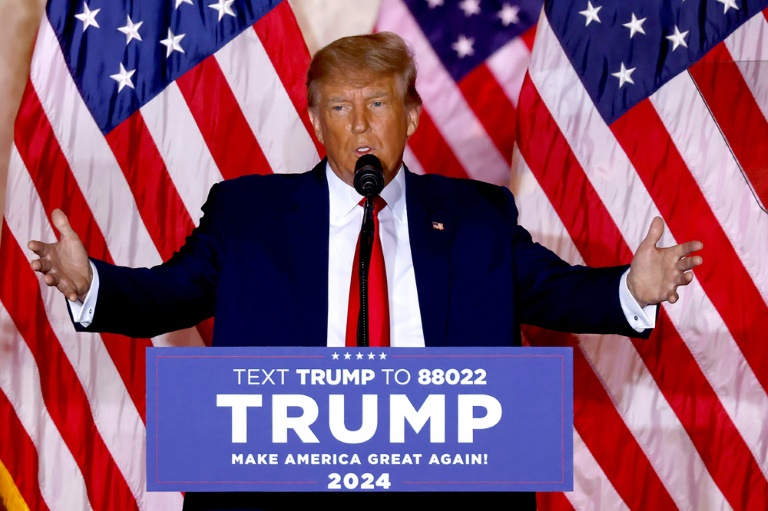
A combative Donald Trump launched into the 2024 White House race on Tuesday, setting the stage for a bruising Republican nomination battle after a poor midterm election showing by his hand-picked candidates weakened his grip on the party.

“America’s comeback starts right now,” the 76-year-old former president told hundreds of supporters gathered in an ornate American flag-draped ballroom at his palatial Mar-a-Lago residence in Florida.

“In order to make America great and glorious again, I am tonight announcing my candidacy for president of the United States,” Trump said, minutes after filing the official paperwork for his third presidential run.

Trump’s unusually early entry into the race is being seen in Washington as an attempt to get the jump on other Republicans seeking to be party flag-bearer — and to stave off potential criminal charges.

In a fiery, hour-long speech, Trump lauded — and at times inflated — his accomplishments as America’s 45th president and fired off verbal salvos against Democrat Joe Biden, who defeated him in 2020.

“I will ensure that Joe Biden does not receive four more years,” Trump vowed, while the US leader greeted his announcement with a tweet saying: “Donald Trump failed America.”

Trump, who was impeached for seeking political dirt on Biden from Ukraine and again after the January 6, 2021 attack on the Capitol by his supporters, launches his new bid with several potential handicaps.

He is the target of multiple investigations into his conduct before, during and after his first term as president — which could ultimately result in his disqualification.

These include allegations of fraud by his family business, his role in the attack on the Capitol, his attempt to overturn the 2020 election, and his stashing of classified documents at Mar-a-Lago.

Meanwhile Trump’s Republicans are licking their wounds after disappointing midterms, widely blamed on the underperformance of Trump-anointed candidates, and some are openly asking whether Trump — with his divisive politics and mess of legal woes — is the right person to carry the party colors next time around.

Several possible 2024 primary rivals are circling, chief among them the governor of Florida Ron DeSantis, who bucked the tide and won a resounding reelection victory on November 8.

– ‘Nation in decline’ –

The powerful media empire of Rupert Murdoch has already appeared to turn its back on Trump, labelling him a “loser” who shows “increasingly poor judgement.”

And Trump remains banned by Facebook and Twitter, which was instrumental in his stunning political rise.

In his announcement speech, Trump attacked Biden over inflation, crime and immigration, mocked climate change and congratulated himself for toppling the Islamic State, keeping North Korea in check and building a border wall with Mexico.

“Under our leadership, we were a great and glorious nation. But now we are a nation in decline,” he said. “This is not just a campaign this is a quest to save our country.

“In two years the Biden administration has destroyed the US economy,” he said. “With a victory we will again build the greatest economy ever.

“The blood-soaked streets of our once great cities are cesspools of violent crimes,” he said, vowing to “restore and secure America’s borders.”

The 79-year-old Biden has said his intention is to seek a second term — but he will make a final decision early next year.

Trump had made denial of the 2020 election results a key litmus test for midterm candidates seeking his endorsement — but a string of defeats by loyal allies sapped his momentum for a new White House bid.

Having failed to wrest control of the Senate, Republicans appeared poised to take over the House with a razor-thin majority.

But despite his lackluster election performance, the real estate tycoon retains an undeniable popularity with the millions of grassroots supporters who have flocked to his “Make America Great Again” banner.

And though abandoned by several top donors, he has a campaign war chest of well over $100 million.

– 2024 challengers –

For the moment, the hard-right DeSantis looks like the leading challenger to Trump in a Republican field that may include former vice president Mike Pence, Texas Senator Ted Cruz, Virginia Governor Glenn Youngkin, former secretary of state Mike Pompeo and ex-South Carolina governor Nikki Haley.

The 44-year-old DeSantis, dubbed “Ron DeSanctimonious” by Trump, had a ready reply Tuesday when asked about the former president’s attacks on him, urging “people to go check out the scoreboard from last Tuesday night.”

By throwing his hat in the ring, Trump is seeking to become just the second American president to serve non-consecutive terms — Grover Cleveland was elected in 1884, lost in 1888, and won again in 1892.

Close Bitnami banner
Bitnami