World

US, allies to 'figure out what happened' with Poland strike

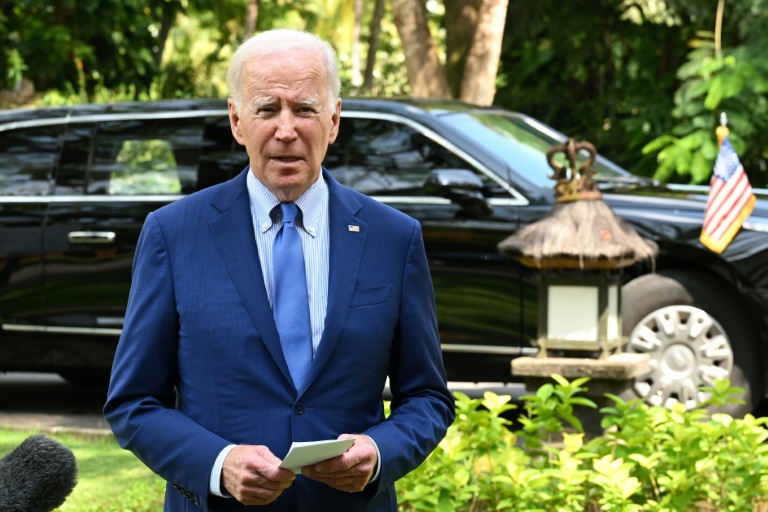
Washington and its allies said Wednesday they will investigate a deadly strike in Poland before deciding next steps, with US President Joe Biden saying it was “unlikely” the missile was fired from Russia.

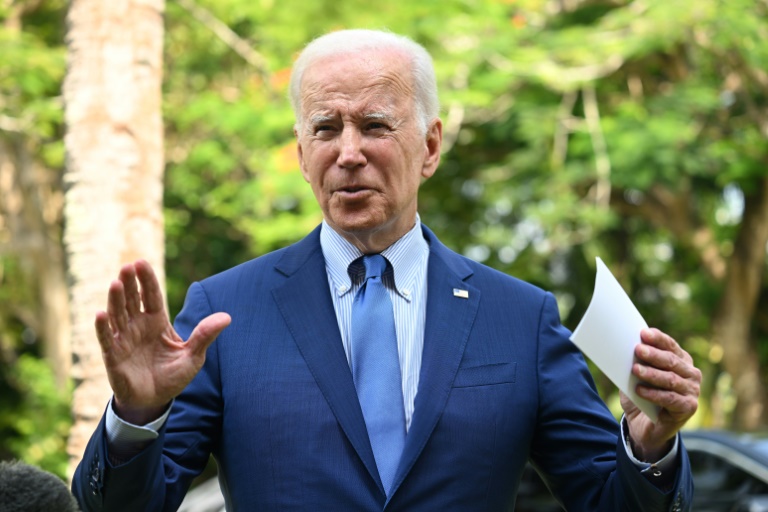
“We agreed to support Poland’s investigation into the explosion,” Biden told reporters after a hastily arranged gathering of allies on the sidelines of the G20 in Bali, Indonesia.

“We’re going to make sure we figure out exactly what happened… and then we’re going to collectively determine our next step,” added Biden after talks with G7 and other European leaders.

Asked if the missile, which killed two people in a village near the Ukrainian border, had been fired from Russia, Biden said there was “preliminary information that contests that”.

“It’s unlikely… that it was fired from Russia. But we’ll see.”

The explosion in Poland, a NATO member, immediately sparked concerns that the alliance might be drawn into Russia’s nearly nine-month war against Western-backed Ukraine.

UN Secretary-General Antonio Guterres, also in Bali, warned it was “absolutely essential to avoid escalating the war in Ukraine.”

And Polish President Andrzej Duda also urged calm, saying there was no “unequivocal evidence” for where the missile came from and that he saw it as an “isolated” incident.

“Nothing indicates to us that there will be more,” he said.

The foreign ministry earlier summoned Russia’s ambassador to Warsaw to give “immediate detailed explanations” over the strike, which Moscow has denied launching.

Poland is now expected to request urgent consultations under Article 4 of the NATO Treaty, which is invoked when any NATO member feels their “territorial integrity, political independence or security” are at risk.

– ‘Slap in the face’ –

Ukrainian President Volodymyr Zelensky blamed Russia for the Poland blast.

The incident came after Russia launched a wave of missile strikes across Ukraine on Tuesday that left millions of households without power and were described by Zelensky as a “slap in the face” for the G20.

The Poland strike is expected to further expose faultlines in the group, which has struggled to find common ground on Russia’s invasion of its neighbour, coming together to condemn the war’s effects but remaining divided on apportioning blame.

The summit has shown that even Russia’s allies have limited patience with a conflict that has inflated food and energy prices worldwide and raised the spectre of nuclear war.

In a draft communique, Russia was forced to agree that the “war in Ukraine” — which Moscow refuses to call a war — has “adversely impacted the global economy”.

It also agreed that “the use or threat of use of nuclear weapons” was “inadmissible”, after months of President Vladimir Putin making such threats.

But Russia’s G20 allies China, India and South Africa have so far refrained from publicly criticising Putin’s war, and the draft joint statement is replete with diplomatic fudges and linguistic gymnastics.

Putin shunned the gathering, instead sending his pugnacious Foreign Minister Sergei Lavrov, who left the summit Tuesday night, skipping the final day of talks.

The United States and its allies have used the summit to broaden the coalition against Russia’s invasion and scotch Moscow’s claims of a war of East versus West.

Host Indonesia, meanwhile, has walked a tightrope, keen to end its G20 presidency with the relative triumph of a joint statement agreed by the fractured grouping.

It has declined to criticise Russia, and invited Zelensky to address the summit with a speech Tuesday in which the Ukrainian leader urged his counterparts to end the war and “save thousands of lives”.

Taking leaders on a walkabout at a mangrove on Wednesday, Indonesian President Joko Widodo brushed aside questions about the conflict.

“The G20 is an economic forum, a financial forum, and diplomat forum, not a political forum. So here we talk about the economy,” he said.
Brazil's Lula to take star turn at UN climate talks

After years of Amazon deforestation under Brazil’s outgoing leader Jair Bolsonaro, president-elect Luiz Inacio Lula da Silva will address Wednesday a UN climate conference eager to hear how he will protect the rainforest.

Lula arrived Tuesday in Egypt’s Red Sea resort of Sharm el-Sheikh in his first international trip since defeating his far-right rival in the October 30 run-off election.

The leftist politician, who served as president from 2003 to 2010, is expected to present his plan for “zero deforestation” in a speech Wednesday afternoon at the COP27 conference.

“Brazil will again be a reference in the global climate issue,” Lula tweeted on Tuesday.

Under Bolsonaro, a staunch ally of agribusiness, average annual deforestation increased 75 percent compared to the previous decade.

Members of Brazil’s Indigenous communities have canvassed COP27 participants since last week, urging action and donning traditional clothes to draw attention to their plight.

While the current government has a pavilion at COP27, former steelworker Lula deployed two of his former environment ministers to lay the groundwork for his visit.

One of them, Marina Silva, who is tipped to return to the job when Lula takes office on January 1, said the incoming president’s presence at COP27 sends a “big message” that Brazil is “reclaiming climate leadership” on the world stage.

Brazil wants to set an example with Lula’s deforestation plan, she said.

Latin America’s most populous country grew more isolated under Bolsonaro, analysts say, in part due to his permissive policies towards deforestation and exploitation of the Amazon — the preservation of which is seen as critical to fighting global warming.

Brazil is home to 60 percent of the Amazon, which spans eight countries and acts as a massive sink for carbon emissions.

Silva promoted the idea of creating a new national authority to coordinate climate action among government ministries, and of pursuing a reforestation target of 12 million hectares (over 29 million acres).

– Lula meets Kerry –

The incoming administration wants the United States to contribute to the Amazon Fund, considered one of the main tools to reduce deforestation in the planet’s biggest tropical forest.

Lula and Silva met Tuesday with US climate envoy John Kerry.

Following Lula’s victory, the fund’s main contributors, Norway and Germany, announced they would participate again, after freezing aid in 2019 in the wake of Bolsonaro’s election.

Leftist Colombian President Gustavo Petro and his socialist counterpart Nicolas Maduro of Venezuela presented at COP27 last week an Amazon protection initiative that they hope Brazil will join.

NGOs and Indigenous leaders want Lula to create the first ministry of Indigenous peoples.

Brazilian lawmaker and Indigenous leader Sonia Guajajara urged Lula to “think about social policies with the people”.

Trump launches 2024 White House bid

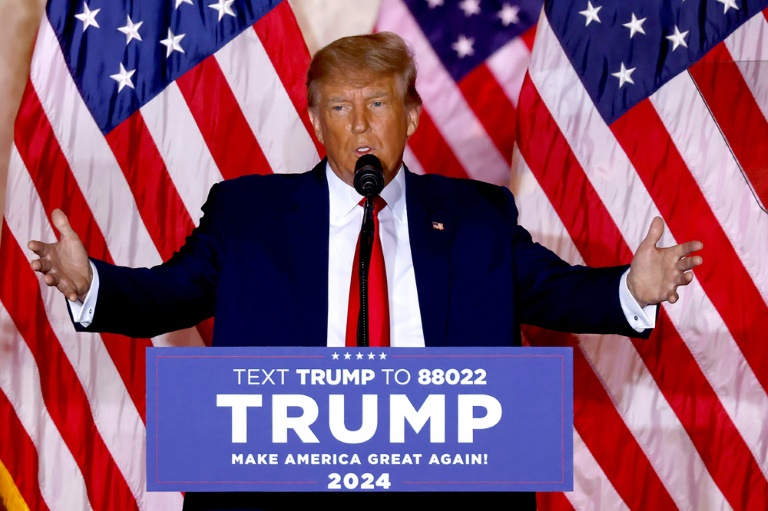
Donald Trump pulled the trigger on a third White House run on Tuesday, setting the stage for a bruising Republican nomination battle after a poor midterm election showing by his hand-picked candidates weakened his grip on the party.

“America’s comeback starts right now,” the former president told hundreds of supporters gathered in an ornate American flag-draped ballroom at his palatial Mar-a-Lago residence in Florida.

“In order to make America great and glorious again, I am tonight announcing my candidacy for president of the United States,” said the 76-year-old, who filed his official 2024 paperwork with the US election authority moments earlier.

Trump’s unusually early entry into the White House race is being seen in Washington as an attempt to get the jump on other Republicans seeking to be the party flag-bearer — and to stave off potential criminal charges.

Republicans are licking their wounds after disappointing midterms, widely blamed on the underperformance of Trump-anointed candidates, and some are openly asking whether Trump — with his divisive brand of politics and mess of legal woes — is the right person to carry the party colors next time around.

Several possible 2024 primary rivals are circling, chief among them the governor of Florida Ron DeSantis, who bucked the tide and won a resounding reelection victory on November 8.

Trump, who lost the 2020 election to Democrat Joe Biden after being impeached twice by the House of Representatives, launches his new bid with several potential handicaps.

He is the target of multiple investigations into his conduct before, during and after his first term as president — which could ultimately result in his disqualification.

These include allegations of fraud by his family business, his role in last year’s attack on the US Capitol, his attempt to overturn the 2020 election, and his stashing of classified documents at Mar-a-Lago.

With Trump now a declared candidate, Biden’s attorney general, Merrick Garland, may be forced to name a special counsel to pursue the various investigations into the former president launched by the Department of Justice.

– Popular support –

In addition, the powerful media empire of Rupert Murdoch has appeared to turn its back on Trump, labelling him after the midterms as a “loser” who shows “increasingly poor judgement.”

Trump also remains banned by Facebook and Twitter, which was instrumental in his stunning political rise.

In a combative speech, Trump attacked Biden over inflation and crime and lauded his own accomplishments as president, including toppling the Islamic State and building a border wall with Mexico.

“Under our leadership, we were a great and glorious nation. But now we are a nation in decline,” he said.

“In two years the Biden administration has destroyed the US economy,” he said. “With a victory we will again build the greatest economy ever.

“The blood-soaked streets of our once great cities are cesspools of violent crimes,” he said, vowing to “restore and secure America’s borders.”

The 79-year-old Biden has said his intention is to seek a second term — but he will make a final decision early next year.

“I will ensure that Joe Biden does not receive four more years,” Trump vowed, while the US leader greeted Trump’s announcement with a tweet saying: “Donald Trump failed America.”

Trump had made denial of the 2020 election results a key litmus test for midterm candidates seeking his endorsement — but a string of defeats by loyal allies sapped his momentum in preparing a new White House bid.

Having failed to wrest control of the Senate, Republicans appeared poised to take over the House, but with a razor-thin majority.

Despite his lackluster election performance, the real estate tycoon retains an undeniable popularity with the millions of grassroots supporters who have flocked to his “Make America Great Again” banner.

And though abandoned by several top Republican donors, he has amassed a campaign war chest of well over $100 million.

– 2024 challengers –

For the moment, the hard-right DeSantis looks like the leading challenger to Trump in a Republican field that may include former vice president Mike Pence, Texas Senator Ted Cruz, Virginia Governor Glenn Youngkin, former secretary of state Mike Pompeo and ex-South Carolina governor Nikki Haley.

The 44-year-old DeSantis, dubbed “Ron DeSanctimonious” by Trump, had a ready reply Tuesday when asked about the former president’s attacks on him, urging “people to go check out the scoreboard from last Tuesday night.”

Without naming Trump, he also suggested a Republican ticket headed by the former president would have trouble attracting independent voters “even with Biden in the White House and the failures that we’re seeing.”

By throwing his hat in the ring, Trump is seeking to become just the second American president to serve non-consecutive terms — Grover Cleveland was elected in 1884, lost in 1888, and won again in 1892.

Asian stocks swing as Ukraine fears offset inflation hopes

Asian stocks fluctuated Wednesday as another positive US inflation report that fanned hopes of a slowdown in the Federal Reserve’s interest rate hike campaign was offset by fresh geopolitical concerns over Ukraine.

World markets have rallied since last week after data showed US consumer prices rose much less than expected in October, suggesting months of Fed monetary tightening was kicking in.

The news was followed Tuesday by a below-forecast reading on wholesale prices, providing extra room for the central bank to take its foot off the pedal when raising borrowing costs and possibly easing pressure on the economy.

The optimism has been further enhanced by China’s pledge to provide much-needed support to the country’s beleaguered property sector as well as ease some of the strict Covid-19 restrictions that have played a major role in dragging the economy down.

However, the positive mood that had flowed through markets was dealt a blow after Poland said a Russian-made missile had struck a village in the country’s east, killing two people.

Warsaw put its military on alert and US President Joe Biden and other Western leaders met in an “emergency roundtable” Wednesday on the sidelines of the G20 summit in Indonesia.

The news sparked fears that if it was proved to be an attack on Poland, a NATO member, the nine-month war in Ukraine could escalate.

Biden told reporters that allies would support Poland in probing “exactly what happened” but that preliminary information showed it was probably not fired “from Russia”.

The comments helped ease concern on trading floors, though profit-taking after three days of healthy gains also kept buyers in check.

Hong Kong, Shanghai, Wellington and Taipei were slightly higher, while Tokyo, Sydney, Seoul, Singapore, Manila and Jakarta dipped.

“Even if the missiles that crossed the Polish border were indeed deemed Russian and not Ukrainian anti-missile interceptors, the case would fall short of triggering an escalation at this point,” said SPI Asset Management’s Stephen Innes

“Hence the markets are deferring to a wartime mistake, believing this to be a case of misfire.”

Still, he added: “While the market is not in full risk-off mode while deferring to a wartime mistake, the risk of a NATO-Russia clash is growing and real.”

On currency markets, the dollar also saw sharp swings against its peers in reaction to the news out of Poland, while oil slipped.

– Key figures around 0230 GMT –

Tokyo – Nikkei 225: DOWN 0.1 percent at 27,955.85 (break)

Hong Kong – Hang Seng Index: UP 0.2 percent at 18,368.52

Shanghai – Composite: UP 0.3 percent at 3,142.74

Euro/dollar: UP at $1.0382 from $1.0354 on Tuesday

Pound/dollar: UP at $1.1877 from $1.1871 

Dollar/yen: UP at 139.86 yen from 139.16 yen

Euro/pound: UP at 87.41 pence from 87.18 pence

West Texas Intermediate: DOWN 0.3 percent at $86.66 per barrel

Brent North Sea crude: DOWN 0.3 percent at $93.63 per barrel

New York – Dow: UP 0.2 percent at 33,592.92 points (close)

London – FTSE 100: DOWN 0.2 percent at 7,369.44 (close)

Floods sweep future from Pakistan schoolchildren

Pakistani three-year-old Afshan’s trip to school is a high-wire balancing act as she teeters across a metal girder spanning a trench of putrid floodwater, eyes fixed ahead.

After record monsoon rain flooded her classroom in the southeastern town of Chandan Mori, this is the route Afshan and her siblings now traverse to a tent where her lessons take place.

“It’s a risky business to send children to school crossing that bridge,” Afshan’s father, Abdul Qadir, 23, told AFP.

“But we are compelled… to secure their future, and our own.”

In Pakistan, where a third of the country lives in hardship on less than $4 a day, education is a rare ticket out of grinding poverty.

But this summer, floods destroyed or damaged 27,000 schools and spurred a humanitarian disaster which saw 7,000 more commandeered as aid centres, according to the United Nations Children’s Fund.

The education of 3.5 million children has been disrupted as a result, the charity said.

“Everything has gone away, we lost our studies,” said 10-year-old Kamran Babbar, who lives in a nearby tent city since his home and school were submerged.

– Tent schooling – 

Before the rains, which have been linked to climate change, Afshan followed her sisters to a lime green schoolhouse.

Some two-and-a-half months after they finally abated, her school remains swamped by standing water.

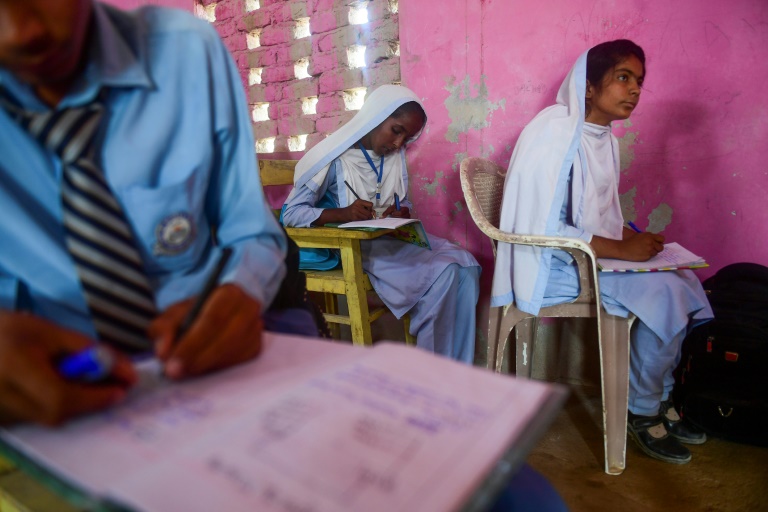
More than 300 boys and girls have decamped to three tents where they sit on floors lined with plastic sheeting, answering teachers’ questions in chorus.

As midday approaches the tents are baked by the sun, and students fan themselves with notebooks — quenching their thirst with mouthfuls of cloudy, polluted floodwater.

Many cannot summon the strength to stand when called to answer questions by teacher Noor Ahmed.

“When they fall sick, and the majority of them do, it drastically affects attendance,” he said.

In this conservative corner of Pakistan, many girls are already held back from school, groomed for lives of domestic labour.

Those students that were enrolled had their prospects dampened by hunger and malnutrition even before the monsoon washed away vast tracts of crops.

And over the past two years, the Covid-19 pandemic saw schools shut for 16 months.

The floods — which put a third of Pakistan underwater and displaced eight million — are yet one more hurdle many will not overcome.

“We are nurturing an ailing generation,” Ahmed said.

– ‘Traumatic impact’ –

In the nearby town of Mounder, the monsoon storms tore the roof off the government school.

The walls are cracked and crumbling, and students now congregate outside, fearful of a collapse.

The boys learn under the shade of a tree in the courtyard, while the girls gather nearby in a donated tent.

“Such events will leave an everlasting traumatic impact on the girls,” teacher Rabia Iqbal said.

“If we want to make them mentally healthy, we will have to immediately move them from tents to proper classrooms,” she added.

But the return to school is unlikely to be swift.

Analysis suggests the bill for the reconstruction of schools and recovery of the education system will be nearly $1 billion — the total repair bill is close to $40 billion —  in a nation already mired in economic turmoil.

Undaunted by the difficulties ahead, the girls of Chandan Mori’s high school trudge every day to a temporary classroom three kilometres (two miles) away.

“We will not be defeated by such circumstances,” 13-year-old Shaista Panwar said.

Poland military on alert after 'Russian-made' missile blast

Poland put its military on high alert Tuesday after what the country’s president said was “most probably” a strike by a Russian-made missile.

Western leaders were scrambling to respond to the potentially major escalation of the war in Ukraine, with an “emergency roundtable” due to be held Wednesday on the sidelines of the G20 summit in Indonesia.

Warsaw said the missile killed two people in the village of Przewodow but did not have conclusive evidence of who fired it, adding that Moscow’s ambassador has been summoned to provide “immediate detailed explanations”.

Poland put its military on heightened alert after an emergency national security council meeting.

“There has been a decision to raise the state of readiness of some combat units and other uniformed services,” spokesman Piotr Muller told reporters after the meeting in Warsaw, adding that “our services are on the ground at the moment working out what happened.”

President Joe Biden spoke by phone with his Polish counterpart Andrzej Duda, offering “full US support for and assistance with Poland’s investigation”, the White House said.

The two leaders agreed to “remain in close touch to determine appropriate next steps as the investigation proceeds”, it added.

British Prime Minister Rishi Sunak, German Chancellor Olaf Scholz and French President Emmanuel Macron — all leaders of NATO member states — expressed solidarity with Poland.

Poland is protected by NATO’s commitment to collective defence — enshrined in Article 5 of its founding treaty — but the alliance’s response will likely be heavily influenced by whether the incident was accidental or intentional.

Biden also spoke with NATO chief Jens Stoltenberg about the blast in Poland, while ambassadors from the alliance were to hold an emergency meeting on Wednesday.

European Union chief Charles Michel said he was “shocked”, and US Secretary of State Anthony Blinken pledged to “remain closely coordinated in the days ahead as the investigation proceeds and we determine appropriate next steps”.

Ukrainian President Volodymyr Zelensky had earlier said two Russian missiles hit Poland in what he described as “a very significant escalation.”

Ukraine’s Foreign Minister Dmytro Kuleba rejected as a “conspiracy theory” the idea that the Poland blast may have been caused by a surface-to-air missile fired by Kyiv’s forces, while Russia’s defence ministry dismissed reports that it was to blame as a “provocation” intended to escalate tensions.

The explosion came after Russian missiles hit cities across Ukraine on Tuesday, including Lviv, near the border with Poland.

Zelensky said the strikes cut power to some 10 million people, though it was later restored to eight million of them, and also triggered automatic shutdowns at two nuclear power plants.

He said Russia had fired 85 missiles at energy facilities across the country, condemning the strikes as an “act of genocide” and a “cynical slap in the face” of the G20.

Moldova, which also borders Ukraine, reported power cuts because of the missiles fired at its neighbour and called on Moscow to “stop the destruction now”.

– ‘Now is the time’ –

Zelensky told the G20 summit in Bali on Tuesday that “now is the time” to end the war, while Washington said the Russian strikes in Ukraine would “deepen the concerns among the G20 about the destabilising impact of Putin’s war”.

White House National Security Advisor Jake Sullivan said Russia was again trying to destroy Ukrainian critical infrastructure.

Since September, Ukraine forces have been pushing deeper into the south. Russia last week announced a full withdrawal from the regional capital of the southern Kherson region, allowing Ukraine’s forces to re-enter the city.

Tuesday’s missile strikes came after Russia-appointed officials in Nova Kakhovka said they were leaving the important southern city, blaming artillery fire from Kyiv’s forces.

They also claimed “thousands of residents” had followed their recommendation to leave to “save themselves”, saying Kyiv’s forces would seek “revenge on collaborators”.

– Key dam at risk –

Nova Kakhovka sits on the eastern bank of the Dnipro River, now a natural dividing line between Ukrainian forces that retook Kherson city on the west side and Russia’s forces on the opposing bank.

It is also home to the Kakhovka hydroelectric dam, which was captured in the beginning of the invasion because of its strategic importance supplying the Moscow-annexed Crimean peninsula.

The Russian-controlled dam is a particular focus now after Zelensky accused Russian troops of planning to blow it up to trigger a devastating flood.

Any defects in the dam would cause water supply problems for Crimea, which has been under Russian control since 2014 and which Ukraine hopes to recapture.

Russian forces said last week that a Ukrainian strike had damaged the dam.

The Russian-appointed head of the occupied part of the Kherson region, Vladimir Saldo, said Tuesday the dam was no longer operating.

“The situation is more dangerous — not with electricity generation — but with the dam itself, which, in the event of an explosion, would flood a fairly large area,” he said on state-run television channel Rossiya-24, according to Russian agencies.

India fact-checkers face threats, jail in misinformation fight

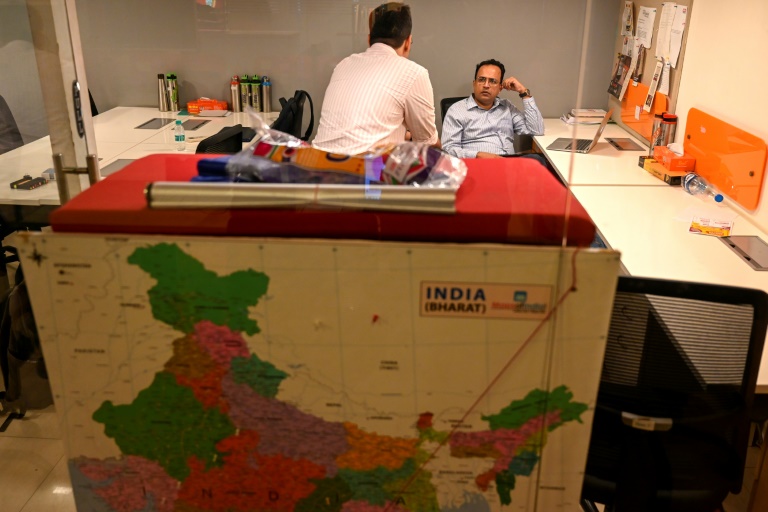
Hunched over laptops in small office cubicles, a group of Indian fact-checkers is on the frontlines of a war against misinformation, braving online abuse and legal threats.

India has the world’s largest number of certified fact-checking organisations, but many feel outnumbered and outgunned in a country with hundreds of millions of internet users and a climate of growing religious intolerance, hate speech and declining press freedom.

BOOM Live is among the organisations methodically debunking some of the tsunami of falsehoods, but their efforts can feel like a drop in the bucket.

“It’s an unequal fight,” Jency Jacob, managing editor of BOOM Live, told AFP in the firm’s cramped office in a defunct Mumbai industrial complex.  

“Fact-checkers are always going to be the underdogs who are going to fight this out… with limited resources.”  

On a recent workday in October, Jacob huddled with his small team as an air conditioner blasted cool air and a generator hummed in the background.  

The team scoured WhatsApp groups –- a leading source of misinformation in India -– and trawled the internet for potential stories to debunk: a politician claiming religious minorities were the biggest users of condoms; rumours that the central bank had misplaced bank notes worth millions; footage showing a political party’s rally drew fewer crowds than it claimed.  

– ‘Harassment’ –  

BOOM, which launched in 2016 and has 15 fact-checkers across India, has its task cut out in a country where hundreds of millions of smartphones, low data costs and a lack of digital literacy have accelerated the spread of internet falsehoods.  

Press freedom in the world’s biggest democracy is also increasingly under attack under Hindu nationalist Prime Minister Narendra Modi, activists say. 

India fell eight spots this year to 150 out of 180 countries in the World Press Freedom Index compiled by Reporters Without Borders.  

Fact-checkers are no exception. They say they are increasingly experiencing vicious trolling and online abuse, especially when tackling posts that seek to inflame religious hatred.  

Geeta Seshu, co-founder of Indian media watchdog Free Speech Collective, points the finger at a motivated right wing as well as vigilante groups who know they have been caught out.  

“(They are) worried that they (the fact-checkers) have managed to very successfully and very quickly point out the kind of disinformation and fake news that is being put out,” Seshu told AFP.  

A growing number of fact-checkers face “targeted harassment and threats of litigation”, Enock Nyariki of the International Fact-Checking Network (IFCN) at the Poynter Institute in the United States told AFP.  

In June, Mohammed Zubair, co-founder of fact-checking organisation Alt News and a prominent thorn in the side of Modi’s government, was jailed after an anonymous Twitter user accused him of insulting a Hindu god in a four-year-old tweet.  

Amid a torrent of abuse by right-wing campaigners, he was granted bail weeks later after battling a pile of cases that left him shuttling between various courts.

Pratik Sinha, the other co-founder of Alt News, said the court battle as well as a slew of defamation notices had added to the financial burden of his organisation, which is entirely funded by donor contributions.  

Sinha alleged that those giving money feared retribution after a fintech firm handling the payment gateway to receive donations shared donor data with police following Zubair’s arrest.  

“Many (donors) have asked: ‘Is there a way we could give you money indirectly?'” Sinha told AFP.  

– ‘Psychological impact’ –    

India, with a population of 1.4 billion people, has 17 IFCN-certified fact-checking organisations, the most of any country. The United States by comparison has 12.

But the proliferation of misinformation — in hundreds of regional languages — has massively outpaced the growth in fact-checking operations. 

The consequences of viral misinformation can be deadly. In 2018, dozens of people were killed in a series of lynchings that rocked the country after false rumours of child kidnapping spread on smartphones.

A 2019 study by Microsoft said India had more internet hoaxes and falsehoods than the rest of the world. It showed that 64 percent of Indians had encountered “fake news” compared with a global average of 57 percent.  

As in other countries, Indian fact-checkers operate in an ecosystem where internet lies travel faster than truth, and posts peddling misinformation often get more traction than real news.  

BOOM’s recent debunking of false reports of a coup in China –- fuelled by multiple Indian accounts as well as some mainstream television channels — highlighted the disturbing reality of misinformation profiteers.  

The baseless rumour got so much traction that some online retailers began using the #Chinacoup hashtag to boost posts advertising furniture, cooking ware and appliances, further propelling the lie.

Facing growing pressures, Seshu noted the “psychological impact” on fact-checkers, especially as the job often involves poring over graphic content for long hours.

“It’s not easy,” Seshu said.  

India fact-checkers face threats, jail in misinformation fight

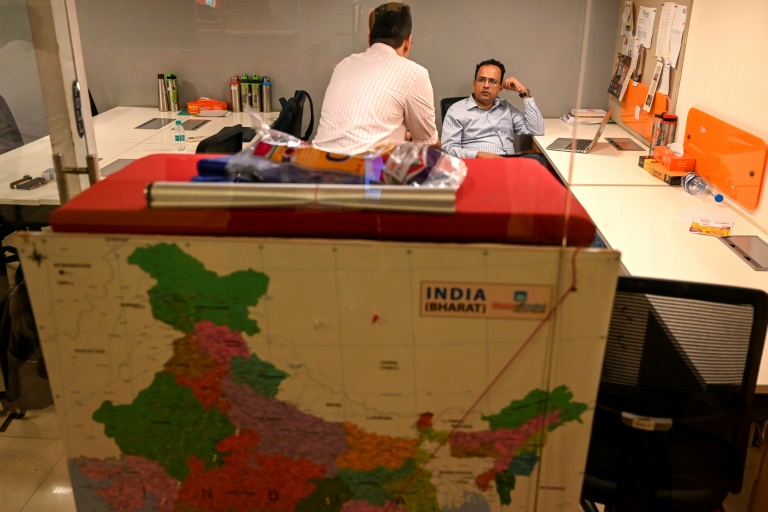
Hunched over laptops in small office cubicles, a group of Indian fact-checkers is on the frontlines of a war against misinformation, braving online abuse and legal threats.

India has the world’s largest number of certified fact-checking organisations, but many feel outnumbered and outgunned in a country with hundreds of millions of internet users and a climate of growing religious intolerance, hate speech and declining press freedom.

BOOM Live is among the organisations methodically debunking some of the tsunami of falsehoods, but their efforts can feel like a drop in the bucket.

“It’s an unequal fight,” Jency Jacob, managing editor of BOOM Live, told AFP in the firm’s cramped office in a defunct Mumbai industrial complex.  

“Fact-checkers are always going to be the underdogs who are going to fight this out… with limited resources.”  

On a recent workday in October, Jacob huddled with his small team as an air conditioner blasted cool air and a generator hummed in the background.  

The team scoured WhatsApp groups –- a leading source of misinformation in India -– and trawled the internet for potential stories to debunk: a politician claiming religious minorities were the biggest users of condoms; rumours that the central bank had misplaced bank notes worth millions; footage showing a political party’s rally drew fewer crowds than it claimed.  

– ‘Harassment’ –  

BOOM, which launched in 2016 and has 15 fact-checkers across India, has its task cut out in a country where hundreds of millions of smartphones, low data costs and a lack of digital literacy have accelerated the spread of internet falsehoods.  

Press freedom in the world’s biggest democracy is also increasingly under attack under Hindu nationalist Prime Minister Narendra Modi, activists say. 

India fell eight spots this year to 150 out of 180 countries in the World Press Freedom Index compiled by Reporters Without Borders.  

Fact-checkers are no exception. They say they are increasingly experiencing vicious trolling and online abuse, especially when tackling posts that seek to inflame religious hatred.  

Geeta Seshu, co-founder of Indian media watchdog Free Speech Collective, points the finger at a motivated right wing as well as vigilante groups who know they have been caught out.  

“(They are) worried that they (the fact-checkers) have managed to very successfully and very quickly point out the kind of disinformation and fake news that is being put out,” Seshu told AFP.  

A growing number of fact-checkers face “targeted harassment and threats of litigation”, Enock Nyariki of the International Fact-Checking Network (IFCN) at the Poynter Institute in the United States told AFP.  

In June, Mohammed Zubair, co-founder of fact-checking organisation Alt News and a prominent thorn in the side of Modi’s government, was jailed after an anonymous Twitter user accused him of insulting a Hindu god in a four-year-old tweet.  

Amid a torrent of abuse by right-wing campaigners, he was granted bail weeks later after battling a pile of cases that left him shuttling between various courts.

Pratik Sinha, the other co-founder of Alt News, said the court battle as well as a slew of defamation notices had added to the financial burden of his organisation, which is entirely funded by donor contributions.  

Sinha alleged that those giving money feared retribution after a fintech firm handling the payment gateway to receive donations shared donor data with police following Zubair’s arrest.  

“Many (donors) have asked: ‘Is there a way we could give you money indirectly?'” Sinha told AFP.  

– ‘Psychological impact’ –    

India, with a population of 1.4 billion people, has 17 IFCN-certified fact-checking organisations, the most of any country. The United States by comparison has 12.

But the proliferation of misinformation — in hundreds of regional languages — has massively outpaced the growth in fact-checking operations. 

The consequences of viral misinformation can be deadly. In 2018, dozens of people were killed in a series of lynchings that rocked the country after false rumours of child kidnapping spread on smartphones.

A 2019 study by Microsoft said India had more internet hoaxes and falsehoods than the rest of the world. It showed that 64 percent of Indians had encountered “fake news” compared with a global average of 57 percent.  

As in other countries, Indian fact-checkers operate in an ecosystem where internet lies travel faster than truth, and posts peddling misinformation often get more traction than real news.  

BOOM’s recent debunking of false reports of a coup in China –- fuelled by multiple Indian accounts as well as some mainstream television channels — highlighted the disturbing reality of misinformation profiteers.  

The baseless rumour got so much traction that some online retailers began using the #Chinacoup hashtag to boost posts advertising furniture, cooking ware and appliances, further propelling the lie.

Facing growing pressures, Seshu noted the “psychological impact” on fact-checkers, especially as the job often involves poring over graphic content for long hours.

“It’s not easy,” Seshu said.  

Estee Lauder agrees to buy Tom Ford brand for $2.3 bn

Luxury beauty brand Estee Lauder said in a statement Tuesday it had agreed to buy designer Tom Ford’s company for $2.3 billion. 

The deal, which values Ford’s business at $2.8 billion, will see the US fashion superstar remain in his position as creative director until the end of next year, the statement said. 

Bringing the brand under the “stewardship” of Estee Lauder Companies (ELC) “will allow for continuity and the further evolution of the Tom Ford brand as one of the preeminent global luxury brands of the twenty-first century,” New York-based ELC said in its statement.

The deal includes the Tom Ford Beauty cosmetics and fragrance collection, with which Estee Lauder already has a licensing agreement until 2030.

Estee Lauder also holds major brands such as MAC cosmetics, Clinique and La Mer facial products, and Aveda.

The group expects Tom Ford Beauty to hit sales of one billion dollars a year within two years, betting on the success of its luxury perfumes in the United States and China.

“We are incredibly proud of the success Tom Ford Beauty has achieved in luxury fragrance and makeup and its dedication to creating desirable, high-quality products for discerning consumers around the world,” head of Estee Lauder Companies Fabrizio Freda said in the statement.

“This strategic acquisition will unlock new opportunities and fortify our growth plans for Tom Ford Beauty,” he added.

The deal also includes licenses for the brand’s men’s and women’s fashion lines, eyewear label and accessories and underwear divisions, according to the statement.

– Intellectual property rights –

The purchase of Tom Ford will grant Estee Lauder intellectual property rights to all of its lines.

The company will no longer have to pay royalties for Tom Ford Beauty and will be able to take advantage of new revenue sources by granting its own licenses.

The agreement notably provides for the extension and expansion of the license granted by Tom Ford to Ermenegildo Zegna for clothing, accessories and underwear lines. 

The license currently granted to Marcolin for Tom Ford glasses will also be extended.

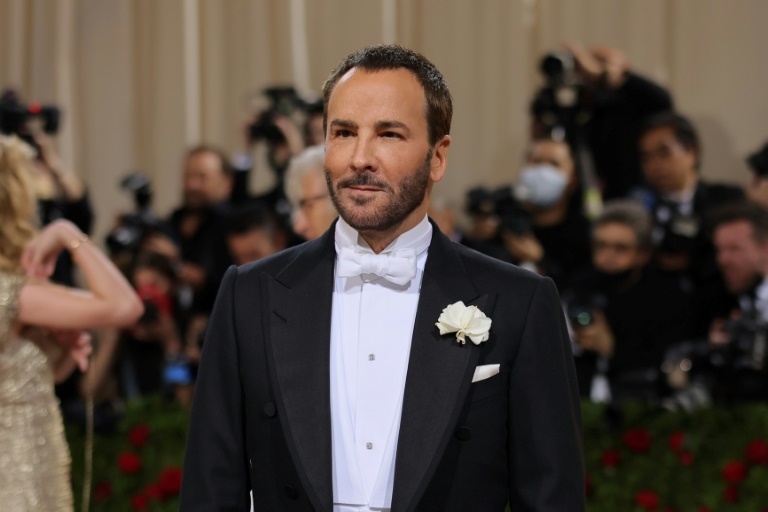
“I could not be happier with this acquisition as The Estee Lauder Companies is the ideal home for the brand,” 61-year-old Ford said in the statement. 

Domenico De Sole, chairman of Tom Ford International, will remain at the company as a consultant until Ford leaves at the end of 2023, the ELC statement said. 

Ford, who first launched his brand in 2005, is the current head of the Council of Fashion Designers of America. 

He launched film production company Fade to Black in 2005, and previously worked as creative director at Gucci and Yves Saint Laurent in the 1990s and early 2000s.

According to the Wall Street Journal, other groups had been in the running to purchase Tom Ford, including French company Kering which holds the Gucci, Saint Laurent and Balenciaga brands.

Musk delays Twitter relaunch after fake account frenzy

Twitter’s new owner Elon Musk on Tuesday postponed the relaunch of the site’s paid subscription service after a first attempt saw an embarrassing spate of fake accounts that scared advertisers.

“Punting relaunch of Blue Verified to November 29th to make sure that it is rock solid,” Musk tweeted, delaying his new revamp, originally promised for Tuesday, by two weeks.

The bid for more time came after authentic-looking fake accounts proliferated on the website that Musk bought for $44 billion late last month, throwing his plans into chaos.

This forced Twitter last week to suspend the new paid checkmark system and reinstate a gray “official” badge on accounts belonging to public figures and major businesses.

In an apparent attempt to avoid a repeat of the problem, Musk tweeted that in the new release, “changing your verified name will cause loss of checkmark until name is confirmed by Twitter to meet Terms of Service.”

In the original revamp users in the US could pay eight dollars for the verified checkmark and were left free to change their account names and impersonate existing accounts, attracting mischief.

Musk’s overhaul of Twitter had already been the subject of heavy criticism after he fired half of the company’s 7,500-strong staff and saw major advertisers suspend ad buys amid the chaos.

Firings this week continued at the platform, with one senior engineer dismissed via a tweet by Musk after he questioned his new policies. 

US media reports said about a dozen employees were let go in recent days after openly questioning decision-making by Musk, who has called himself a “free speech absolutist”.

Musk has radically changed the company’s culture since taking it over on October 27. 

He has scrapped a highly popular work from home policy, imposed long hours and centralized authority around a small group of confidantes, including his personal lawyer.

Close Bitnami banner
Bitnami