World

Afghan supreme leader orders full enforcement of Islamic law

Afghanistan’s supreme leader has ordered judges to fully enforce aspects of Islamic law that include public executions, stonings and floggings, and the amputation of limbs for thieves, the Taliban’s chief spokesman said.

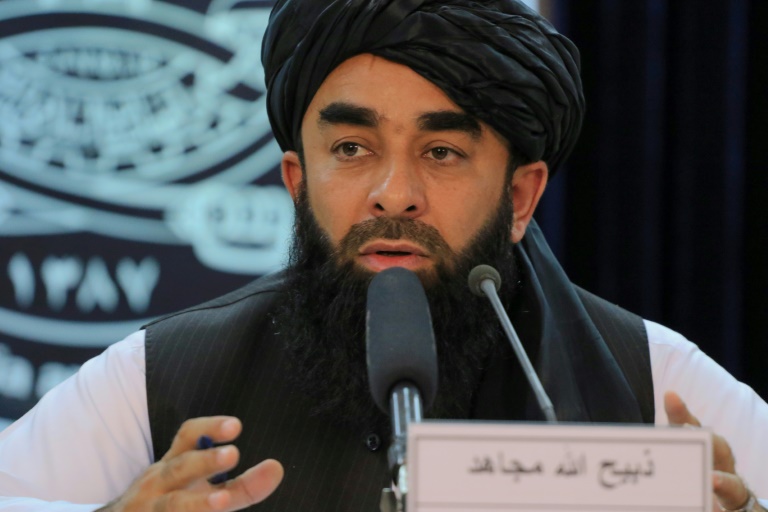
Zabihullah Mujahid tweeted late Sunday that the “obligatory” command by Hibatullah Akhundzada came after the secretive leader met with a group of judges.

Akhundzada, who has not been filmed or photographed in public since the Taliban returned to power in August last year, rules by decree from Kandahar, the movement’s birthplace and spiritual heartland.

The Taliban promised a softer version of the harsh rule that characterised their first stint in power, from 1996-2001, but have gradually clamped down on rights and freedoms.

“Carefully examine the files of thieves, kidnappers and seditionists,” Mujahid quoted Akhundzada as saying.

“Those files in which all the sharia (Islamic law) conditions of hudud and qisas have been fulfilled, you are obliged to implement.

“This is the ruling of sharia, and my command, which is obligatory.”

Mujahid was not available Monday to expand on his tweet.

Hudud refers to offences which, under Islamic law, certain types of punishment are mandated, while qisas translates as “retaliation in kind” — effectively an eye for an eye.

Hudud crimes include adultery — and falsely accusing someone of it — drinking alcohol, theft, kidnapping and highway robbery, apostasy and rebellion.

Qisas covers murder and deliberate injury, among other things, but also allows for the families of victims to accept compensation in lieu of punishment.

Islamic scholars say crimes leading to hudud punishment require a very high degree of proof, including — in the case of adultery — confession, or being witnessed by four adult male Muslims.

– Summary floggings –

Social media has been awash for over a year — and even recently — with videos and pictures of Taliban fighters meting out summary floggings to people accused of various offences.

The Taliban have also several times displayed in public the bodies of kidnappers they said were killed in shootouts.

There have also been reports of adulterers being flogged in rural areas after Friday prayers, but independent verification is difficult to obtain.

Rahima Popalzai, a legal and political analyst, said the edict could be an attempt by the Taliban to harden a reputation they may feel has softened since they returned to power.

“If they really start to implement hudud and qisas, they will be aiming to create the fear society has gradually lost,” she told AFP.

She added the Taliban also wanted to burnish their Islamic credentials.

“As a theocratic setup, the Taliban want to strengthen their religious identity among Muslim countries.”

Women in particular have seen hard-won rights evaporate in the past 15 months, and they are increasingly being squeezed out of public life.

Most female government workers have lost their jobs — or are being paid a pittance to stay at home — while women are also barred from travelling without a male relative and must cover up with a burqa or hijab when out of the home.

In the past week, the Taliban also banned women from entering parks, funfairs, gyms and public baths.

During their first rule, the Taliban regularly carried out punishments in public — including floggings and executions at the national stadium.
Biden, Xi seek to avoid conflict at first US-China summit in years

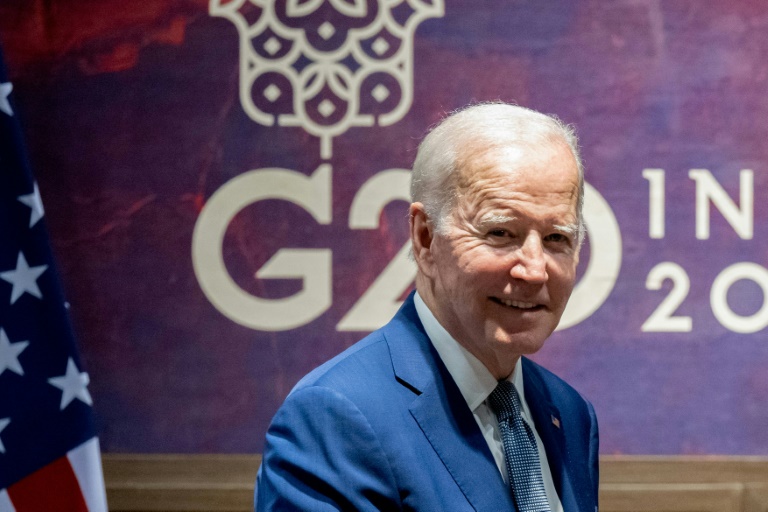
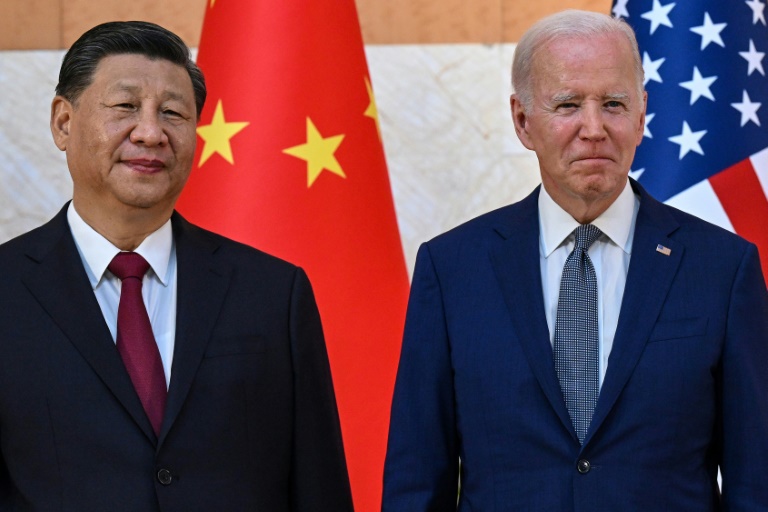
Presidents Joe Biden and Xi Jinping voiced hope Monday that the United States and China can manage growing differences and avoid conflict as they met for the first time in more than three years.

Xi and Biden shook hands in front of the two nations’ flags before starting a long-awaited sit down on the Indonesian resort of Bali ahead of a Group of 20 summit, following months of tension over Taiwan and other issues.

Biden, sitting across from Xi at facing tables, said that Beijing and Washington “share responsibility” to show the world that they can “manage our differences, prevent competition from becoming conflict.”

Xi, China’s most powerful leader in decades who is fresh from securing a norm-breaking third term, told Biden that the world has “come to a crossroads”.

“The world expects that China and the United States will properly handle the relationship,” Xi told him.

Despite the upbeat public statements, both nations are increasingly suspicious of each other, with the United States fearing that China has stepped up a timeline for seizing Taiwan.

US officials said ahead of the meeting that Biden hoped to set up “guardrails” in the relationship with China and to assess how to avoid “red lines” that could push the world’s two largest economies into conflict. 

The most sensitive issue is Taiwan, the self-governing democracy claimed by China.

The United States has been stepping up support for Taiwan, while China has ramped up its threats to seize control of the island. After House Speaker Nancy Pelosi visited Taipei in August, China reacted by staging unprecedented military drills.

On the eve of his talks with Xi, Biden met with Japanese Prime Minister Fumio Kishida and South Korean President Yoon Suk-yeol on the sidelines of a Southeast Asian summit in Cambodia, with the three leaders jointly calling for “peace and stability” on the Taiwan Strait. 

Biden is also expected to push China to rein in ally North Korea after a record-breaking spate of missile tests has raised fears that Pyongyang will soon carry out its seventh nuclear test.

– First in-person exchange –

Xi is paying only his second overseas visit since the start of the Covid-19 pandemic and will meet a number of key leaders.

He will hold the first formal sitdown with an Australian leader since 2017, Prime Minister Anthony Albanese announced, following a concerted pressure campaign by Beijing against the close US ally. 

Xi’s last in-person meeting with a US president was in 2019 with Donald Trump, who along with Biden identified China as a top international concern and the only potential challenger to US primacy on the world stage. 

And though the meeting is the first time Xi and Biden have met as presidents, the pair have an unusually long history together. 

By Biden’s estimation, he spent 67 hours as vice president in person with Xi including on a 2011 trip to China aimed at better understanding China’s then-leader-in-waiting, and a 2017 meeting in the final days of Barack Obama’s administration.

Since entering the White House, Biden has spoken virtually five times with Xi but told him Monday there was “no substitute” for face-to-face discussions.

– Absent Putin –

Though he is engaging Xi, Biden has refused since the invasion of Ukraine to deal directly with Russian President Vladimir Putin, who is conspicuously absent from the Bali summit.

The Kremlin cited scheduling issues and has instead sent longtime foreign minister, Sergei Lavrov, who arrived Sunday evening.

Lavrov, 72, denied reports that he was receiving treatment at a Bali hospital, telling Tass news agency that he was in his hotel preparing for the summit. The top diplomat underwent brief health checks on Sunday and Monday, according to an Indonesian health ministry official.

Lavrov’s presence has thrown into question a customary G20 group photo and joint statement, with Russia sure to reject any explicit calls to end its invasion of Ukraine.

Western leaders hope the G20 summit will step up pressure on Russia to renew a UN-backed deal expiring Saturday to allow grain shipments from Ukraine, a major food exporter to the developing world.

China, despite rhetorical support for Russia, has not supplied weapons for the war in Ukraine, with Moscow obliged to rely on Iran and North Korea, according to US officials.

“I think there is undeniably some discomfort in Beijing about what we’ve seen in terms of reckless rhetoric and activity on the part of Russia,” a US official said hours before the Xi-Biden talks.

Ukrainian President Volodymyr Zelensky — invited as a compromise with host Indonesia — will address the summit by videoconference, a day after a triumphant visit to Kherson, a key city taken back from Russian forces.

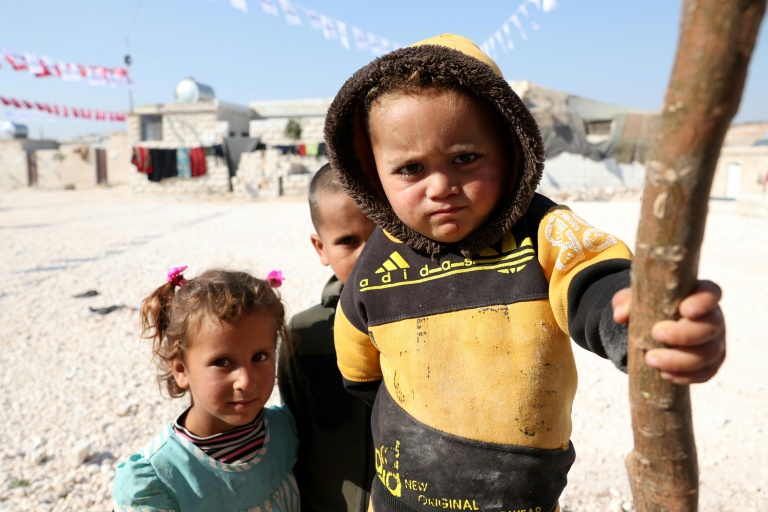
Turkey promises 100,000 houses for Syrians displaced by war

Turkey vowed Sunday to complete construction of 100,000 houses in war-torn Syria, as Ankara pushes to settle Syrian refugees who fled more than a decade of fighting ahead of elections.

Turkish Interior Minister Suleyman Soylu, speaking Sunday on a visit to open 600 basic homes in Syria’s rebel-held Idlib region, said 75,000 houses had been constructed in the past two years.

“We will be completing 100,000… houses by the end of the year,” Soylu said, at the ceremony in the newly-built settlement made up of rows of brick bungalows at Mashhad Ruhin, which lies close to the Turkish border.

Turkish President Recep Tayyip Erdogan has said in recent months he wanted to encourage one million of the country’s 3.7 million Syrian refugees to return home by building them housing and providing basic infrastructure.

Ahead of Turkey’s presidential elections next year, the presence of refugees has become a thorny political issue, especially with Ankara mired in an economic crisis.

Syria’s civil began in 2011 with the regime’s brutal repression of mostly peaceful protesters, and millions have been forced to flee, now displaced internally and abroad.

Ankara and militia forces it supports have seized swathes of territory along the Syrian border during several military operations since 2016.

Turkey says it wants to create a “safe zone” along its border to stop Syrians displaced by war from crossing, and to send back some of the millions who already have.

Erdogan said more than half a million Syrians who had fled to Turkey have returned home to these safe zones.

More than 500 families now live in the newly opened settlement at Mashhar Ruhin, with 100 more due to arrive in coming days, the latest in series of Ankara-sponsored housing projects.

Hadiya Al-Taha, 70, used to live in a tent with her daughter after fleeing fighting in southern Idlib four years ago.

“Residential blocks are better than tents, you can’t even compare the two,” she said, as she moved her meagre possessions of mattresses, blankets and some household utensils to the house.

But she still misses her original home and farm.

“Our village house was the best,” she said.

France, UK sign new deal to thwart migrant Channel crossings 

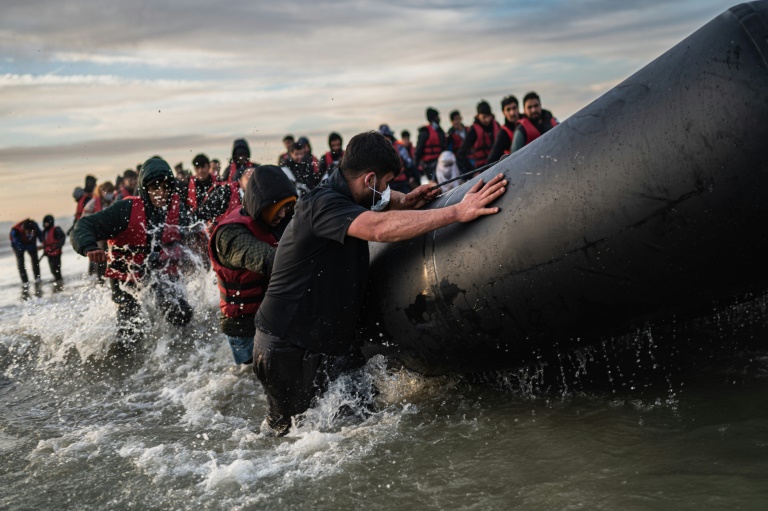
Britain agreed to pay France another 72.2 million euros ($74.5 million) to prevent migrant boat crossings under a new deal signed on Monday that underlines improving ties between the neighbours.

Around 40,000 people — most of them Albanians, Iranians and Afghans — have crossed the Channel to England from France this year. 

The figure is well over last year’s 28,561, which was a thousand-fold increase from 2018 when migrants and asylum seekers first began sailing inflatables across one of the world’s busiest shipping channels.

“There are no quick fixes, but this new arrangement will mean we can significantly increase the number of French gendarmes patrolling the beaches in northern France,” Britain’s Home Secretary Suella Braverman said in a statement after signing the accord with French counterpart Gerald Darmanin.

The extra money will fund a 40-percent rise in the number of security forces patrolling France’s northern beaches, meaning an additional 350 people, the French interior ministry said.

For the first time, teams of observers will be deployed on both sides of the Channel to “strengthen common understanding”.

“The arrangement means, for the first time, specialist UK officers will also be embedded with their French counterparts,” the British interior ministry said.

– Tensions – 

Successive British governments have paid France hundreds of millions of euros over the past decade to improve border security on the Channel coast, particularly around the port of Calais.

Recent French purchases with UK money include thermal-imaging binoculars, mountain bikes, motorbikes, drones and vehicles which are used during beach patrols.

But suspicions have persisted in Britain, fanned by the right-wing media and members of the ruling Conservative party, that Paris is not doing enough. 

The agreement reflects warmer ties between the France and the UK since British Prime Minister Rishi Sunak took the helm, after years of acrimony under his predecessors Boris Johnson and Liz Truss.

One of the worst public rows between Johnson and French President Emmanuel Macron came in November last year when 27 migrants drowned in the Channel.

Sunak and Macron held a cordial first meeting last week on the sidelines of the UN climate summit in Egypt and will meet again this week at the G20 in Indonesia.

The issue of how to manage the flow of asylum seekers and economic migrants from Africa and the Middle East has strained diplomatic ties all over Europe for much of the last decade.

France and Italy, which has elected a new far-right government, clashed last week after Rome refused to let a rescue ship carrying migrants dock at its ports.

Macron and his Italian counterpart Sergio Mattarella urged a return to “full cooperation” on Monday after last week’s standoff which ended when France allowed the boat to disembark its passengers.

– ‘Credit’ – 

On the Channel coast, doubts remain about whether incremental changes in the number of French officers patrolling the rugged dunes and wide beaches can reverse the rising tide of crossings.

Observers say the migrants’ boats are getting bigger, the tactics of people smugglers more sophisticated, and departures are being recorded along a widening stretch of coastline. 

On Saturday, some 972 people were detected making the crossing in 22 boats, according to UK figures. 

The French coastguard is adamant that it cannot intercept boats once they are in the water because attempting to do so could cause them to capsize.

The surge in arrivals in the UK has caused a logjam in asylum claims and increased accommodation costs estimated by the UK government at £6.8 million ($7.8 million) a day.

The ruling Conservative party has grappled with the issue for years and under Johnson devised a scheme to send asylum seekers to Rwanda in a bid to deter new claimants.

“I’ve watched so many British ministers over the years coming new to the problem and deciding that they are going to get a grip and somehow solve it,” former British ambassador to France, Peter Ricketts, told AFP.  

“But they all end up falling back on the realisation that the only way to bring this under control is by working with the French. 

“To their credit, the Sunak government has reached that conclusion quickly and today’s agreement is good news,” he added.

'Very scared': The resistance fighters of liberated Kherson

The young Ukrainian partisan wanted to be a musician before deciding to risk his life by giving away enemy positions during Russia’s occupation of Kherson.

The two middle-aged women toting yellowish water from a river in plastic jugs showed their resistance by refusing to buy Russian food shipped in by the Kremlin.

And the local radio talk show host chose to speak only Ukrainian during the Russians’ eight-and-a-half-month grip on the biggest city they had captured during the war.

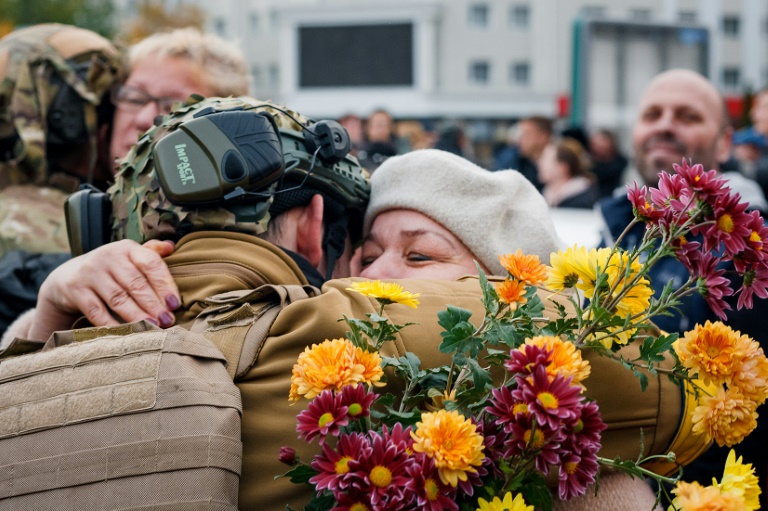
The stories emerging from flag-waving and hugging people who watched the invaders evaporate almost overnight at the end of last week show a population that tried to fight subjugation any which way they could.

But they also do not tell the full tale.

Many worry that Russian sympathisers who reported them to the occupying forces are still milling in their midst.

“There are so many people left that I see every day, whom I know, who were ratting us out,” said a 47-year-old who gave her name only as Olga for fear of retribution.

“Not all of those bastards ran away.”

– ‘We reported everything’ –

Jubilant and disbelieving people have been thronging Kherson’s main square since the moment Ukrainian troops entered the strategic city on the edge of Kremlin-annexed Crimea on Friday.

They drape themselves in flags and swap stories of horror and survival while queueing for access to the spotty signal emerging from the city’s lone Starlink satellite phone setup.

Towering above the others queuing in the square was the bearded head and green beret of a 19-year-old aspiring musician named Volodymyr Timor.

The self-described partisan said he and his friends spent months walking the streets observing the Russian troops’ every move.

“You watch closely and then come home and write it all down. And then you send the information and hide absolutely everything — phones, papers, clothes, everything,” he said.

“We reported everything — where their equipment and ammunition sites were, where they slept and where they went out drinking,” Timor said.

Ukraine’s forces could then use the coordinates to target strikes during a counteroffensive that has seen Russia cede roughly half the land it seized in the first weeks of war.

“I was scared,” the imposing but soft-spoken guitarist said of the prospect of being caught and quite possibly killed.

“Believe me, I was very scared.”

– Avoiding contact –

Iryna Bovkun and Natalia Smyrnova put up their own fight.

The two women were wheeling jugs from the Dnipro — the expansive river over which the Russians fled east — to use on basics such as flushing toilets and washing floors.

It was the only way they knew to preserve the limited supplies of more potable water brought into the resource-starved city down dangerous roads in armed convoys.

The Russians destroyed transformers and water distribution systems along with most other essential infrastructure on their way out.

Bovkun said she was used to it.

“Some of us waited four or five months before we started buying the food brought in by the Russians,” the 55-year-old said.

Russia introduced the ruble but allowed people to use up their remaining hryvnias.

The Kremlin began to phase out the Ukrainian currency after it annexed Kherson and three other battle-torn regions in late September.

The two women said Russian-packaged goods driven in from Crimea were up to 10 times more expensive as things sold before the war.

Locals tried to avoid contact with the Russian food and currency by selling home-grown produce for old prices at the central market.

But that system of resistance broke down when the hryvnia savings ran out.

“Your hryvnias evaporate very quickly when things cost that much,” said Smyrnova.

“I can’t describe how much I hated touching those rubles,” the retired accountant said.

– ‘Even Russian speakers switched’ –

One-time radio talk show host Lada Kolosovska used the only weapon against the Russians she knew: language.

“I spoke Ukrainian. My friends spoke Ukrainian. We all did. Even natural Russian speakers switched,” the 47-year-old said.

It was both a claim to independence and a way to make sure Russian infiltrators did not somehow enter their lives.

Ukraine’s security forces are now limiting movement out of Kherson to catch Russian soldiers who might have put on civilian clothes and stayed behind.

Who these soldiers might be is unclear.

Apparent images of such troops on social media suggest they might have been trapped when the bridges leading out over the Dnipro river were blown up last week.

Military analysts suspect Russia may also be trying to set up sleeper cells and sabotage units across Kherson.

Their suspected presence fed into Olga’s overall fear of informants and infiltrators.

“It is dangerous to say anything on the street,” the worried woman said.

Kolosovska voiced similar unease.

“When the Russians entered on March 1, we realised that they probably intended to stay,” she said.

“But we never thought they would stay for so long.”

China unveils sweeping measures to rescue property sector

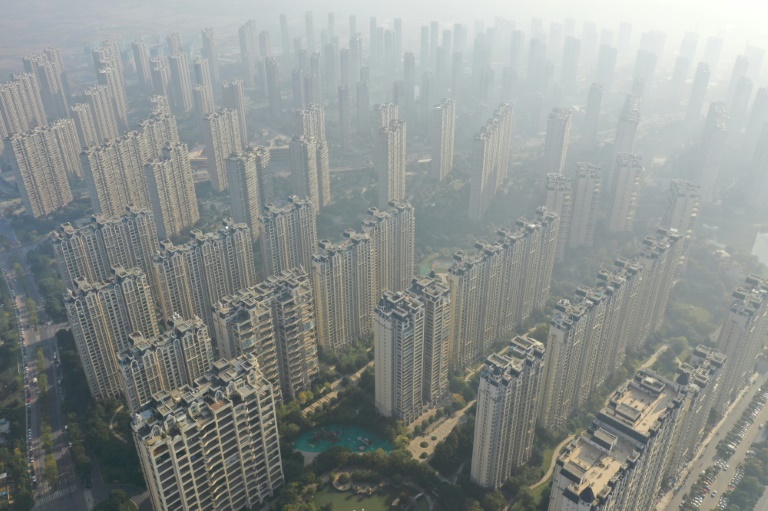
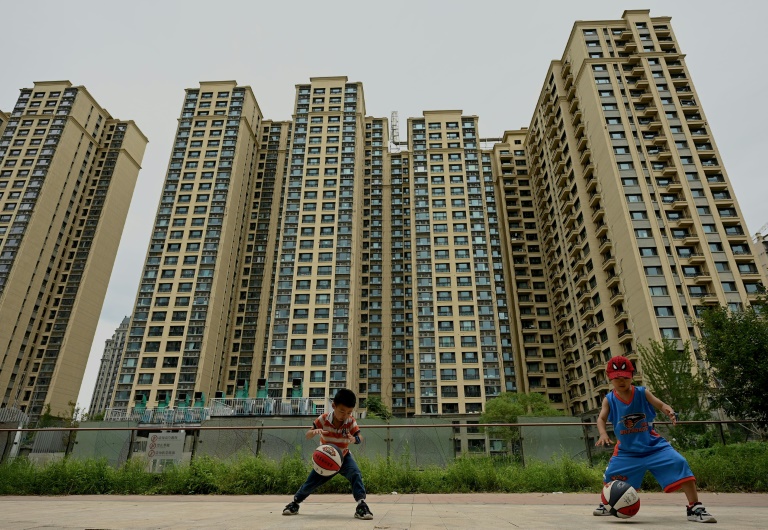
Chinese authorities have unveiled sweeping measures to rescue the country’s struggling property sector, as regulators seek to offset years of harsh pandemic curbs and a real estate crackdown that have stalled the world’s number-two economy.

The banking regulator and central bank on Friday issued a 16-point set of internal directives to promote the “stable and healthy development” of the industry, which were reported by Chinese state media on Monday.

The measures include credit support for debt-laden housing developers, financial support to ensure the completion and handover of projects to homeowners, and assistance for deferred-payment loans for homebuyers.

That came on the same day the National Health Commission issued 20 rules for “optimising” China’s zero-Covid policy, where certain restrictions were relaxed to limit its social and economic impact.

“We view this as the most crucial pivot since Beijing significantly tightened financing of the property sector,” Ting Lu, chief China economist at Nomura, said in a note.

“We believe these measures demonstrate that Beijing is willing to reverse most of its financial tightening measures.”

Hong Kong stocks surged more than three percent Monday after the measures were unveiled, extending Friday’s more than seven percent rally before paring gains to 1.7 percent at the close.

The Hong Kong-listed shares of China’s biggest developer by sales, Country Garden, closed up 45 percent while the shares of major competitor Greenland gained more than 35 percent.

– ‘Not a bailout’ –

Beijing imposed widespread lending curbs on property developers in 2020, which exacerbated their liquidity issues and caused several of the largest to default on bond payments.

The knock-on effects on the massive real estate sector were severe, with cash-strapped developer Evergrande — China’s largest — and others failing to complete projects, sparking mortgage boycotts and protests from homebuyers.

The measures emphasised “guaranteeing the handover of buildings”, and ordered development banks to provide “special loans” for the purpose, according to a copy circulating online.

The document ordered financial institutions to treat state-owned and private real estate enterprises equally, as well as “actively cooperating with distressed real estate enterprises in risk management”.

The measures also included “extending the transition period arrangements… of real estate loans” for distressed developers, and support for “high-quality real estate enterprises to issue bond financing”.

“The plan includes financial stability measures that aim to prevent massive defaults and hence provide a ‘soft landing’,” ANZ analysts wrote in a note.

But analysts cautioned that these changes — alongside the limited loosening of zero-Covid measures — would not cause an immediate recovery for the ailing sector.

“While not many are expecting a financial crisis caused by the current property downturn, the mainstream view is that the property sector would stay weaker for longer. Therefore, the worst is far from over for developers,” Macquarie economist Larry Hu said in a note.

“The package is not a bailout of property developers,” wrote Andrew Batson, an analyst at Gavekal Dragonomics.

“With the new policies, the government is trying harder to make its current approach to Covid containment and the property market work, rather than shifting to a different approach.”

New home prices have been falling for more than a year, while demand is struggling to pick up owing to ongoing strict pandemic controls that have dampened consumer confidence.

Afghan supreme leader orders full implementation of Islamic law

Afghanistan’s supreme leader has ordered judges to fully implement aspects of Islamic law that include public executions, stonings and floggings, and the amputation of limbs for thieves, the Taliban’s chief spokesman said.

Zabihullah Mujahid tweeted late Sunday that the “obligatory” command by Hibatullah Akhundzada came after the secretive leader met with a group of judges.

Akhundzada, who has not been filmed or photographed in public since the Taliban returned to power in August last year, rules by decree from Kandahar, the movement’s birthplace and spiritual heartland.

The Taliban promised a softer version of the harsh rule that characterised their first stint in power, from 1996-2001, but have gradually clamped down on rights and freedoms.

“Carefully examine the files of thieves, kidnappers and seditionists,” Mujahid quoted Akhundzada as saying.

“Those files in which all the sharia (Islamic law) conditions of hudud and qisas have been fulfilled, you are obliged to implement.

“This is the ruling of sharia, and my command, which is obligatory.”

Mujahid was not available Monday to expand on his tweet.

Hudud refers to offences which, under Islamic law, certain types of punishment are mandated, while qisas translates as “retaliation in kind” — effectively an eye for an eye.

Hudud crimes include adultery — and falsely accusing someone of it — drinking alcohol, theft, kidnapping and highway robbery, apostasy and rebellion.

Qisas covers murder and deliberate injury, among other things, but also allows for the families of victims to accept compensation in lieu of punishment.

Islamic scholars say crimes leading to hudud punishment require a very high degree of proof, including — in the case of adultery — confession, or being witnessed by four adult male Muslims.

Women in particular have seen hard-won rights evaporate in the past 15 months, and they are increasingly being squeezed out of public life.

Most female government workers have lost their jobs — or are being paid a pittance to stay at home — while women are also barred from travelling without a male relative and must cover up with a burqa or hijab when out of the home.

In the past week, the Taliban also banned women from entering parks, funfairs, gyms and public baths.

Turkey accuses Kurdish group of Istanbul attack that killed six

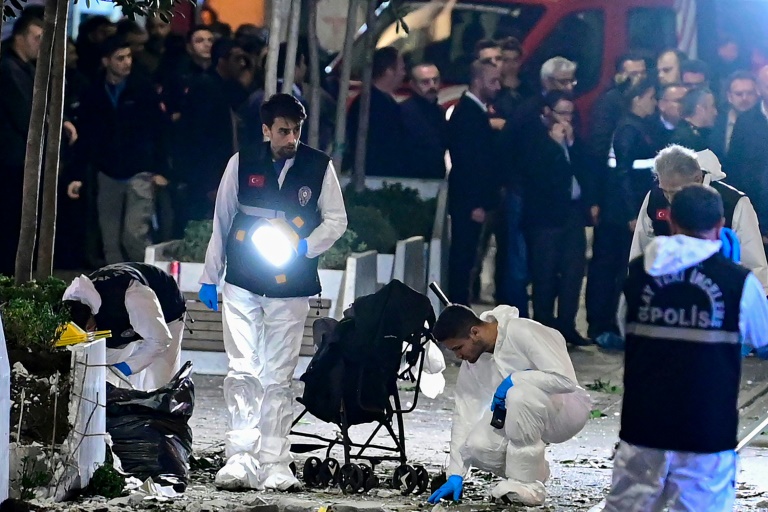
Turkey on Monday accused the outlawed Kurdistan Workers’ Party (PKK) of carrying out a deadly bomb attack in Istanbul, saying a Syrian woman was in custody suspected of planting the device.

The bombing killed six people and wounded 81 others in the popular shopping street of Istiklal Avenue on Sunday shortly after 4:00 pm (1300 GMT). 

There has been no claim of responsibility. 

Turkish President Recep Tayyip Erdogan called the bombing a “vile attack” that had the “smell of terror”. 

A nine-year old girl and her father, as well as a 15-year-old girl and her mother were among those killed in the attack.

Istanbul police said Monday that 46 people had been detained in total.

Erdogan’s government accused the PKK of carrying out the explosion shortly before the president landed in the Indonesian resort island of Bali for the G20 summit.

Police footage shared with Turkish media showed a young woman in a purple sweatshirt being apprehended in an Istanbul flat.

“The person who planted the bomb has been arrested,” interior minister Suleyman Soylu said in a statement broadcast by the official Anadolu news agency early Monday. 

– ‘Order from Kobane’ –

Turkish police quoted by private NTV television, said the chief suspect is a Syrian woman working for Kurdish militants. 

“According to our findings, the PKK terrorist organisation is responsible,” Soylu said.

The PKK, blacklisted as a terrorist group by Ankara as its Western allies, has kept up a deadly insurgency for Kurdish self-rule in southeastern Turkey since the 1980s.

PKK-affiliated Kurdish militants control most of northeastern Syria.

“We believe that the order for the attack was given from Kobane,” he said, referring to a city in Syria near the Turkish border.

It was also the site of a 2015 battle between Kurdish militants and Islamic State jihadists, who were driven out after more than four months of fighting. 

Regularly targeted by Turkish military operations, the PKK has been at the heart of a tussle between Sweden and Turkey, which has blocked Stockholm’s bid to join NATO since May, accusing it of leniency towards the group.

NTV shared an image taken from a surveillance camera, showing a young woman dressed in trousers and wearing a loose black scarf running away in the crowd, referred to as the bomber.

– ‘Psychologically affected’ –

Justice minister Bekir Bozdag told Turkish news channel A Haber that a woman was “sitting on one of the benches for more than 40 minutes, and then she got up”, leaving a bag. 

“One or two minutes later, an explosion occurred,” he said. 

Istiklal Avenue reopened early Monday to pedestrian traffic. 

Mecit Bal, who runs a small shop a few metres from the scene, said his son was working at the time of the blast. 

“My son was there. He called me and said an explosion happened. He will not go back to work today. He is psychologically affected,” he told AFP.

All the benches have been removed and a red carpet covers the site where the explosion occurred, on which passers-by come to lay red carnations, an AFP journalist reported. 

Istiklal Avenue was previously targeted during a campaign of bombings across Turkey in 2015-16 that were blamed mostly on the Islamic State group and outlawed Kurdish militants, killing nearly 500 people and wounding more than 2,000.

Kemal Ozturk, a shopkeeper, said he feared a new explosion ahead of elections due next June.

– ‘Live with fear – 

“In election period it can happen. It can happen here or in any city,” the 42-year-old told AFP. “We live with fear”.

Images posted on social media showed the explosion triggered panic, with people running in all directions. 

“I was 50-55 metres away, suddenly there was the noise of an explosion. I saw three or four people on the ground,” witness Cemal Denizci, 57, told AFP. 

“People were running in panic. The noise was huge. There was black smoke,” he said.

Istiklal, in the historic district of Beyoglu, is one of the most famous arteries in Istanbul. Criss-crossed by an old tramway and lined with shops and restaurants, it attracts large crowds at the weekend.

Turkey’s radio and television watchdog, RTUK, banned broadcasters showing footage of the blast, a measure previously taken in the aftermath of extremist attacks. 

Access to social media was also restricted after the attack. 

International condemnation flooded in from across the world.

“We stand shoulder-to-shoulder with our NATO Ally Turkey in countering terrorism,” said White House Press Secretary Karine Jean-Pierre.

Regional rival Greece condemned the blast and French President Emmanuel Macron said: “We share your pain. We stand with you in the fight against terrorism”.

Ukrainian President Volodymyr Zelensky also tweeted in Turkish: “The pain of the friendly Turkish people is our pain.”

Biden to set 'guardrails' in Xi superpower summit

US President Joe Biden and China’s Xi Jinping meet in Bali on Monday with Washington hoping to set “guardrails” for relations between the rivals and Beijing looking to put ties “back on track”.

The superpower sitdown, on the sidelines of the G20 summit, will be the pair’s first face-to-face since Biden took office and comes with the world’s two largest economies vying for international primacy.

Xi arrived in Bali on Monday afternoon, on only his second overseas trip since the pandemic, after a visit to Kazakhstan and Uzbekistan in September.

Rivalry between the world’s top two economies has intensified sharply as Beijing has become more powerful and more assertive about replacing the US-led order that has prevailed since World War II.

Biden has said the meeting should establish each country’s “red lines”, and the overarching goal will be setting “guardrails” and “clear rules of the road”, a senior White House official told reporters hours before the summit.

“We do all of that to ensure that competition does not veer into conflict.”

Biden is expected to push China to rein in ally North Korea after a record-breaking spate of missile tests and fears Pyongyang will soon carry out its seventh nuclear test.

Xi and Biden have spoken by videoconference five times since the US leader took office but the Chinese president’s last in-person US summit was with Donald Trump in 2019.

Beijing wants Washington to “work together with China”, foreign ministry spokeswoman Mao Ning said Monday.

She called for the United States to “appropriately keep differences in check, promote mutually beneficial cooperation and avoid misunderstandings and misjudgements in order to push US-China relations back on track for healthy and stable development.” 

Xi arrives buoyed by securing a landmark third term in office, cementing him as the most powerful Chinese leader for generations.

Biden meanwhile has been bolstered by his Democratic Party’s better-than-expected showing in midterm elections.

He won’t be the only leader meeting Xi, with Australian Prime Minister Anthony Albanese slated to hold talks Tuesday that will be the first formal sitdown between leaders of the two countries since 2017.

“There are no preconditions on this discussion. I am looking forward to having constructive dialogue,” Albanese told reporters on arrival in Bali Monday.

– Putin staying away –

The G20 summit opens on Tuesday and comes with food and fuel prices spiking worldwide, Ukraine mired in conflict and the renewed threat of nuclear war casting a menacing pall.

Russian President Vladimir Putin is staying away, and has instead sent veteran foreign minister Sergei Lavrov.

Officially, neither the war in Ukraine, nor Putin’s dark threats to use nuclear weapons are on the summit agenda, but the conflict will dominate discussions.

Soaring energy and food prices have hit richer and poorer G20 members alike –- and both are directly fuelled by Putin’s war.

On Monday, US Treasury Secretary Janet Yellen said an end to the conflict was “a moral imperative and the single best thing we can do for the global economy”.

Russia will also be under pressure to extend a deal allowing Ukrainian grain shipments through the Black Sea when the agreement expires on November 19.

British Prime Minister Rishi Sunak will urge the agreement be renewed and call for “a G20-wide commitment never to weaponise food production and distribution”, Downing Street said.

– ‘Never been this complex’ –

At a minimum, Biden and his allies would also like to see the G20 make it clear to Putin that nuclear war is unacceptable.

But even a clear statement on this issue from the grouping is likely to be blocked by a mixture of Russian opposition and Chinese unwillingness to break ranks with its ally in Moscow or give Washington a win.

The G20 has always been more comfortable discussing finance and economics than security and Moscow would like it to stay that way.

“We categorically reject the politicisation of the G20,” the Russian foreign ministry said Sunday, offering a taste of what leaders might hear from the famously unbending Lavrov.

G20 ministerial meetings leading to the summit have failed to agree a final joint communique and Indonesian officials said Monday it remained a “work in progress” and a “main goal” for the summit.

“Honestly, I think the global situation has never been this complex,” Indonesian government minister Luhut Binsar Pandjaitan said Sunday.

“If eventually (the G20) leaders do not produce a communique, that’s that, it’s OK.”

Stock markets mixed as global rally peters out

Markets were mixed Monday as traders struggled to maintain momentum after a global surge, though the loosening of China’s Covid rules and plans to help its property sector helped Hong Kong extend its rally.

Equities rocketed last week and the dollar sank after data showed US price rises eased in October, providing the Federal Reserve with room to take its foot off the pedal in tightening monetary policy.

The news led some commentators to suggest a feared recession in the world’s top economy could be shallower than first feared, or might be averted entirely.

The optimistic mood was given an extra injection late Friday by news that Beijing would relax some of its strict Covid-19 restrictions, a day after officials vowed to stick to their zero-tolerance strategy that has hammered growth.

Authorities have also reportedly unveiled a 16-point plan to support the beleaguered property sector, a major component of the country’s sprawling economy.

The industry has come under immense pressure since China imposed a number of restrictions in 2020 aimed at reeling in debt, with major developers teetering on the brink of collapse.

The news indicates the leadership is beginning to focus on supporting the economy, a crucial driver of global growth.

“It’s a meaningful easing,” said Larry Hu of Macquarie Group.

“It seems that the room for policy change has widened on various fronts after the Party Congress (last month), including for the two major headwinds to the Chinese economy: Covid Zero and property.”

Nomura’s Lu Ting said the support for the developers was “the most crucial pivot since Beijing significantly tightened financing of the property sector”.

“We believe these measures demonstrate that Beijing is willing to reverse most of its financial tightening measures,” he added.

“Those cash-strapped developers (especially private ones), construction companies, mortgage borrowers and other related stakeholders can now breathe a sigh of relief.”

He warned, however, that the sector continued to struggle and the “measures may have little direct impact on stimulating home purchases”.

Hong Kong ended more than one percent higher — having soared more than seven percent Friday — though morning gains were tempered as the day wore on.

Still, property firms were the best performers with Country Garden leading the way with a massive 40 percent jump.

Singapore, Taipei and Manila also rose, but profit-taking weighed elsewhere. Tokyo, Shanghai, Sydney, Seoul, Mumbai, Jakarta and Wellington retreated.

London, Paris and Frankfurt opened higher.

While the mood has lightened after the US inflation read, there is still a sense of trepidation among traders who fear the Federal Reserve will continue to lift borrowing costs while analysts warn last week’s rally may have been overdone.

“It was always clear that it would be easy to bring inflation down from 9-10 percent to 4-5 percent,” said SPI Asset Management’s Stephen Innes.

“Pushing it back to two percent could be much more complicated and require higher rates for longer. Hence, the central bank fight is far from over. But for now and until an indication of inflation proves stickier than expected, risk-on could roll on a bit further.”

Still, the yen, pound and euro held most of their gains against the dollar, which came in reaction to the consumer price index reading.

Traders are keenly awaiting a meeting later in the day between US President Joe Biden and Chinese counterpart Xi Jinping, with hopes for an easing of tensions between the superpowers.

The two are due to meet at the G20 summit in Bali, with Biden saying he wanted to repair lines of communication and help establish “guardrails” to keep the competing superpowers from veering into conflict.

– Key figures around 0820 GMT –

Tokyo – Nikkei 225: DOWN 1.1 percent at 27,963.47 (close)

Hong Kong – Hang Seng Index: UP 1.7 percent at 17,619.71 (close)

Shanghai – Composite: DOWN 0.1 percent at 3,083.40 (close)

London – FTSE 100: UP 0.3 percent at 7,341.83

Pound/dollar: DOWN at $1.1788 from $1.1839 on Friday

Euro/dollar: DOWN at $1.0332 from $1.0361

Dollar/yen: UP at 139.52 yen from 138.70 yen

Euro/pound: UP at 87.63 pence from 87.49 pence

West Texas Intermediate: UP 0.2 percent at $89.11 per barrel

Brent North Sea crude: UP 0.3 percent at $96.30 per barrel

New York – Dow: UP 0.1 percent at 33,747.86 (close)

Close Bitnami banner
Bitnami