World

UN climate talks enter home stretch split over money

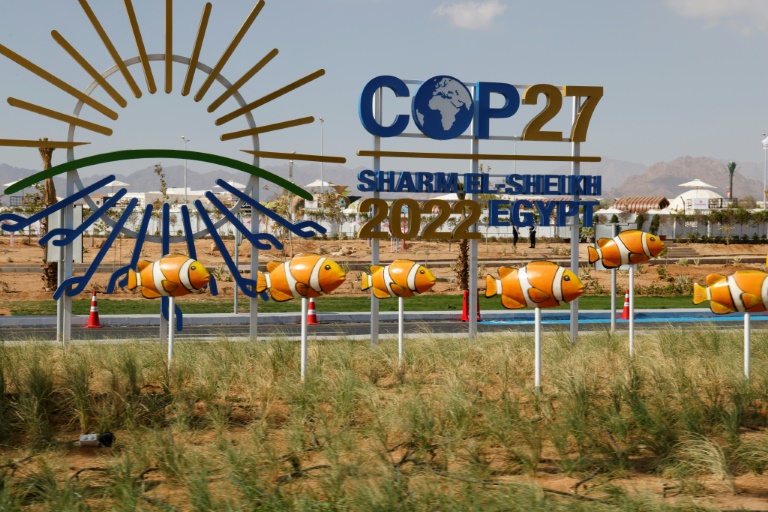
COP27 entered its final week Monday with countries that grew rich burning fossil fuels and developing nations reeling from climate impacts at loggerheads over how to speed and fund reductions in carbon pollution.

Somewhere in the middle, China — accounting for 30 percent of global greenhouse gas emissions, by far the largest share — is feeling pressure from both sides, not only to enhance its carbon cutting goals but to step up as a donor nation, negotiators and analysts say.

At last year’s UN climate summit in Glasgow, nearly 200 countries vowed to “keep alive” the Paris Agreement’s aspirational goal of capping global warming at 1.5 degrees Celsius above pre-industrial levels.

Nearly 1.2C of warming so far has seen a cascade of increasingly severe climate disasters, such as the flooding that left a third of Pakistan under water this summer, claiming at least 1,700 lives and inflicting $30 to $40 billion in damage.

The Glasgow Pact urged nations to ramp up their emissions reduction commitments ahead of this year’s critical summit in the Red Sea resort of Sharm el-Sheikh.

But with the exception of Australia and Mexico, only a handful of smaller economies heeded the call, leaving the world on track to hot up by about 2.5C — enough, scientists say, to trigger dangerous tipping points in Earth’s climate system. 

At the COP27’s midpoint, little has changed.

“Parties are basically staring each other down, thinking they have done their part and waiting for the other side to move,” said the head of WWF France, Pierre Canet.

– ‘Make our lives easier’ –

As ministers arrive to cut through political knots above the pay grade of front-line negotiators, focus will turn to a crucial “decisions” document that will reveal the consensus reached — or not.

“All the big political crunch issues are unresolved,” said Alden Meyer, a senior analyst at climate think tank E3G. 

To accelerate decarbonisation, many developing nations — including small island states whose very existence is threatened by rising seas — favour a deepened commitment to the 1.5C target, with specific mention of the fossil fuels that drive emissions. 

US special envoy for climate John Kerry on Friday called out countries “whose 2030 goals are not yet aligned with the Paris temperature goal,” a thinly veiled allusion to China.    

A reality-check report released at COP27 last week showed CO2 emissions — which must decline nearly 50 percent by 2030 to keep the 1.5C target in play — from coal, gas and oil are on track to hit record levels in 2022.

But China and India have objected to such efforts, with Beijing pointing out that the binding target agreed in Paris was “well below” 2C, not 1.5C.

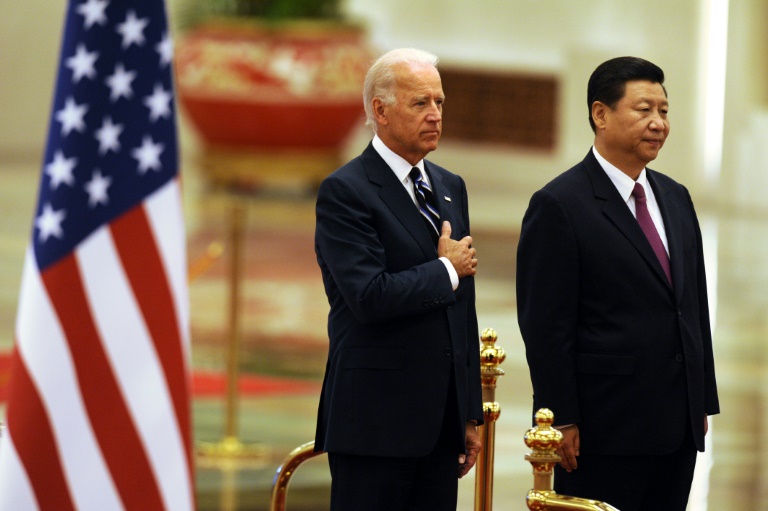
Negotiators in Sharm el-Sheikh will look to a bilateral meeting Monday in Bali between China’s Xi Jinping and US President Joe Biden, along with the communique from a G20 meeting both will subsequently attend, for signals that could break the deadlock in Egypt.

“Confirming the 1.5C goal in Bali would make our lives easier,” a senior negotiator at the climate talks said. 

– ‘Polluters must pay’ –

When it comes to money, the spotlight in Egypt is on so-called loss and damage, UN-speak for unavoidable losses — of life, property and cultural heritage — due to climate impacts that have already happened.

Rich nations fearful of creating an open-ended liability regime agreed this year for the first time to include this thorny topic on the formal agenda. 

Developing nations are calling for the creation of a separate facility, but the US and the European Union — while not precluding such an outcome — have said they favour using existing financial channels.

“This is the highest profile, most political issue at the COP” said Meyer.

Another track of the talks, meanwhile, has opened on how much money the Global South will get — after current pledges of $100 billion a year expire in 2024 — to help green their economies and prepare for future warming.

As it becomes clear that financial needs will be measured in trillions of dollars rather than billions, other options — some of them in parallel to the UN process — have emerged.

These range from expanding access to IMF and World Bank funds, to broadening the base of donor nations to include China, the United Arab Emirates, Saudi Arabia and other nations. 

“China and India are major polluters, and the polluter must pay,” Gaston Browne, Prime Minister of Antigua and Barbuda, said last week during the COP27 summit, speaking for the AOSIS coalition of small island states.

“I don’t think there are free passes for any country.”
China unveils sweeping measures to rescue property sector

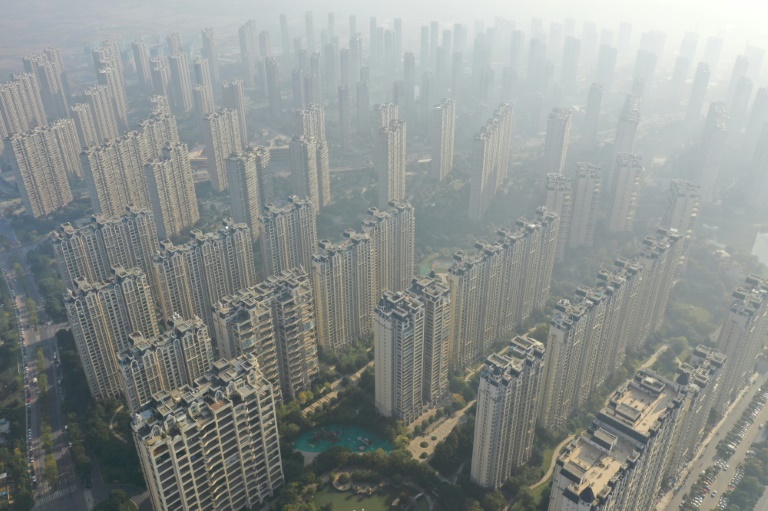
Chinese authorities have unveiled sweeping measures to rescue the struggling property sector, as regulators seek to offset years of harsh pandemic curbs and a real estate crackdown that have stalled the world’s number-two economy.

The banking regulator and central bank on Friday issued a 16-point set of internal directives to promote the “stable and healthy development” of the industry, which were reported by Chinese state media on Monday.

The measures include credit support for debt-laden housing developers, financial support to ensure completion and handover of projects to homeowners, and assistance for deferred-payment loans for homebuyers.

That came on the same day the National Health Commission issued 20 rules for “optimising” Beijing’s zero-Covid policy, where certain restrictions were relaxed to limit its social and economic impact.

“We view this as the most crucial pivot since Beijing significantly tightened financing of the property sector,” wrote Ting Lu, chief China economist at Nomura, in a note.

“We believe these measures demonstrate that Beijing is willing to reverse most of its financial tightening measures.”

Hong Kong stocks surged more than three percent Monday, extending Friday’s more than seven percent rally after the measures were unveiled.

Beijing imposed widespread lending curbs on property developers in 2020, which exacerbated their liquidity issues and caused several of the largest to default on bond payments.

The knock-on effects on the massive real estate sector were severe, with cash-strapped developer Evergrande — China’s largest — and others failing to compete projects, sparking mortgage boycotts and protests from homebuyers.

The measures emphasised “guaranteeing the handover of buildings”, and ordered development banks to provide “special loans” for the purpose, according to a copy circulating online.

The document ordered financial institutions to treat state-owned and private real estate enterprises equally, as well as “actively cooperating with distressed real estate enterprises in risk management”.

The measures also included “extending the transition period arrangements… of real estate loans” for distressed developers, and support for “high-quality real estate enterprises to issue bond financing”.

“The plan includes financial stability measures that aim to prevent massive defaults and hence provide a ‘soft landing’,” ANZ analysts wrote in a note.

But analysts cautioned that these changes — alongside the limited loosening of zero-Covid measures — would not cause an immediate recovery for the ailing sector.

“While not many are expecting a financial crisis caused by the current property downturn, the mainstream view is that the property sector would stay weaker for longer. Therefore, the worst is far from over for developers,” wrote Macquarie economist Larry Hu in a note.

New home prices have been falling for more than a year, while demand is struggling to pick up owing to ongoing strict pandemic controls that have dampened consumer confidence.

Germany deploys bin trucks to map mobile blackspots

On a street in Wusterhausen, around an hour’s drive north of Berlin, a man paces intently, holding his mobile phone in front of him.

“I’m looking for network, because here this area is not good,” says Arek Karasinski, in town on a business trip from Poland.

Issues with phone signal are a source of constant frustration for the residents of Wusterhausen, which sits in one of Germany’s many blackspots, out of reach of any mobile network. 

“We’re here in Germany, an industrial nation, and we have all of these dead zones,” says Matthias Noa, head of waste management firm AWU.

Noa was so exasperated that when the local government asked if they could use his garbage trucks to do something about it, he quickly agreed.

Since the summer, the trucks have been fitted with a device that measures the signal quality on their routes across the district of Ostprignitz-Ruppin.

Because their work takes them everywhere across the area, they are the perfect vehicles for the job. 

“We go out on the ground, into every nook,” says Werner Nuese, the vice-president of the local council, who was not satisfied with the efforts made by public bodies or private groups to plot the signal problems.

Jonny Basner, a driver participating in the programme, knows the trouble well. “It would be great if I had enough signal to reach the depot from the villages (on the route),” he says. 

Trackers have been handed out to hikers and cyclists to fill in the gaps left by the rubbish collectors. 

On a map, Nuese points out the spots marked in red where the signal is at its worst.

“Even if this is a rural area in the northeast of Germany, we shouldn’t be forgotten. That’s our demand,” he says.

– ‘On the terrace’ –

A short walk shows the issues people are facing.

“Outside on the terrace I can get signal, but in the house there is nothing, no one can reach me on the phone,” says Dieter Mueller in the village of Bantikow.

About 10 kilometres (six miles) away in Wusterhausen itself, Marko Neuendorf says he has cancelled his phone contract “because there simply is no signal here”.

The region would become more attractive to investors and tourists if the mobile network were better, local officials believe.

“Every cottage industry has gone digital, every single electrician uses a tablet to order spare parts. It’s not just big companies that are more digital,” says Noa.

Council official Nuese says medical spas in the area have been getting poor reviews “because the signal is very bad”.

“It’s a measurable economic disadvantage,” he says.

The obsolescence of a lot of Germany’s infrastructure and administration shot to the top of the political agenda with the exit of Chancellor Angela Merkel from office a year ago.

According to official data, standard LTE coverage, equivalent to 4G, is at 100 percent.

But in a survey by the price comparison site Verivox, published earlier this year, most people said they regularly experienced a lack of signal when using their phones.

In 2018, then economy minister Peter Altmaier said he was “very annoyed to have to call back three, four times because it cut off” when making calls from his car on official business. 

By producing more detailed signal maps, the council hopes to encourage a response from mobile network operators and to lobby government for more support.

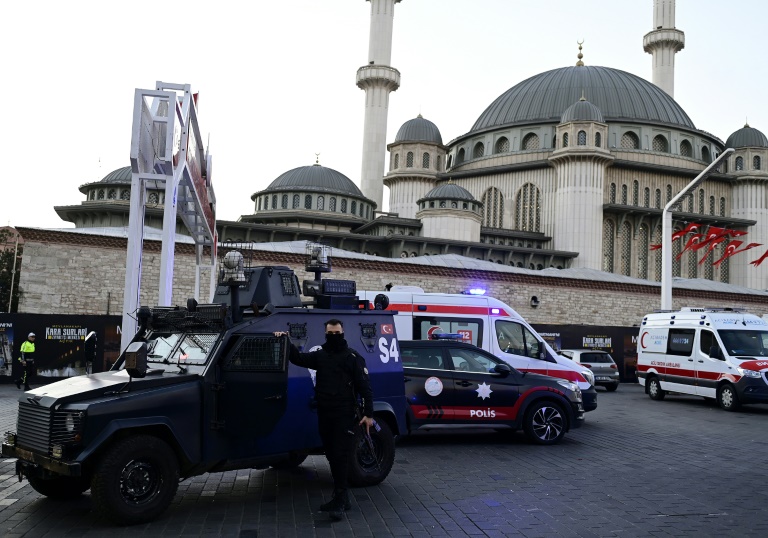
Turkey accuses blacklisted Kurdish group of Istanbul attack that killed six

Turkey’s interior minister accused the outlawed Kurdistan Workers’ Party (PKK) on Monday of responsibility for a bombing in a busy Istanbul street that killed six people and wounded scores, saying more than 20 people have been arrested.

Turkish President Recep Tayyip Erdogan landed in the Indonesian resort island of Bali for a G20 summit of the world’s leading economies shortly after his government accused the PKK of being behind Sunday’s blast, which wounded 81.

He had called the bombing a “vile attack” before leaving for the summit and said it had a “smell of terror.”

The explosion tore through Istiklal Street, a popular shopping destination for locals and tourists, on Sunday afternoon. No individual or group has claimed the attack. 

“The person who planted the bomb has been arrested,” interior minister Suleyman Soylu said in a statement broadcast by the official Anadolu news agency in the early hours of Monday. 

He added that 21 others were also detained. 

“According to our findings, the PKK terrorist organisation is responsible,” he said.

The PKK, blacklisted as a terrorist group by Ankara as well as its Western allies, has kept up a deadly insurgency for Kurdish self-rule in southeastern Turkey since the 1980s.

Soylu also accused PKK-affiliated Kurdish militants who control most of northeastern Syria and who are deemed as “terrorists” by Ankara of being responsible for the attack.

“We believe that the order for the attack was given from Kobane,” he said, referring to a city near the Turkish border. It was also the site of a 2015 battle between Kurdish militants and Islamic State jihadists, who were driven out after more than four months of fighting. 

Regularly targeted by Turkish military operations, the PKK is at the heart of a tussle between Sweden and Turkey, which has been blocking Stockholm’s entry into NATO since May, accusing it of leniency towards the group. 

“We believe that it is a terrorist act carried out by an attacker, whom we consider to be a woman, exploding the bomb,” Turkey’s vice president Fuat Oktay said.

Justice minister Bekir Bozdag told Turkish news channel A Haber that a woman “had been sitting on one of the benches for more than 40 minutes, and then she got up”, leaving a bag. 

“One or two minutes later, an explosion occurred,” he said. 

“There are two possibilities,” he said. “There’s either a mechanism placed in this bag and it explodes, or someone remotely explodes (it).”

“All data on this woman are currently under scrutiny,” he said. 

Soylu’s announcement did not add any details about the woman or the suspects arrested. 

Istiklal Avenue reopened early on Monday morning. 

Mecit Bal, who runs a small shop a few metres from the scene, said his son was working at the time of the blast. 

“My son was there. He called me and said an explosion happened. He will not go back to work today. He is psychologically affected,” he told AFP.

– Panic, chaos – 

Turkish cities have been struck by Islamists and other groups in the past.

Istiklal Street was hit during a campaign of attacks in 2015-2016 that targeted Istanbul and other cities, including Ankara. 

Those bombings were mostly blamed on the Islamic State group and outlawed Kurdish militants, and killed nearly 500 people and wounded more than 2,000.

Sunday’s explosion occurred shortly after 4:00 pm (1300 GMT) in the famous shopping street.

Helicopters flew over the city centre after the attack. Police established a large security cordon to prevent access to the area for fear of a second explosion.

Images posted on social media showed the explosion was followed by flames and immediately triggered panic, with people running in all directions. 

Several bodies were seen lying on the ground nearby.

“I was 50-55 metres away, suddenly there was the noise of an explosion. I saw three or four people on the ground,” witness Cemal Denizci, 57, told AFP. 

“People were running in panic. The noise was huge. There was black smoke,” he said.

– Condemnation –

Istiklal, in the historic district of Beyoglu, is one of the most famous arteries of Istanbul. It is entirely pedestrianised for 1.4 kilometres, or about a mile. 

Criss-crossed by an old tramway and lined with shops and restaurants, it attracts large crowds at the weekend.

Many stores closed early in the neighbouring district of Galata, while some passers-by, who came running from the site of the explosion, had tears in their eyes.

A massive deployment of security forces barred all entrances and rescue workers and police could be seen.

Turkey’s radio and television watchdog, RTUK, placed a ban on broadcasters showing footage of the blast, a measure previously taken in the aftermath of extremist attacks. 

Access to social media was also restricted after the attack. 

A reaction came quickly from Greece, which “unequivocally” condemned the blast and expressed condolences to the government and people of Turkey.

The United States also denounced it, with White House Press Secretary Karine Jean-Pierre saying: “We stand shoulder-to-shoulder with our NATO Ally Turkey in countering terrorism.”

French President Emmanuel Macron said in a message to the Turks: “We share your pain. We stand with you in the fight against terrorism”.

Ukrainian President Volodymyr Zelensky also tweeted in Turkish: “The pain of the friendly Turkish people is our pain.”

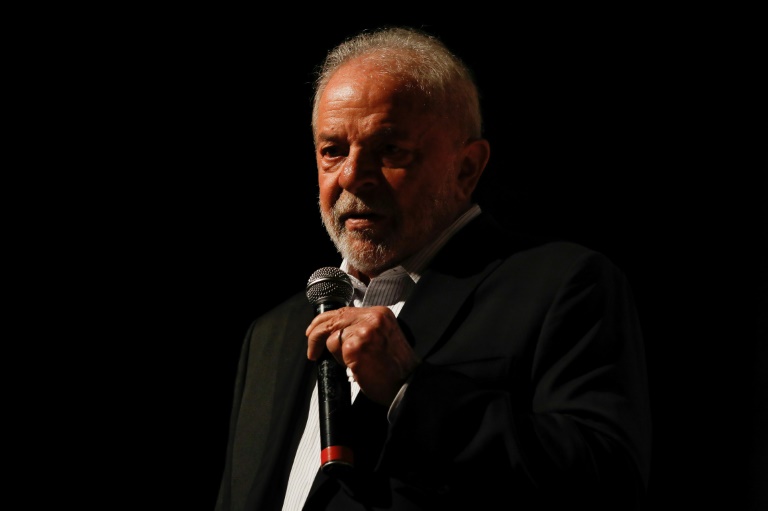
Brazil's Lula headed to UN climate talks with vow to save Amazon

Brazilian president-elect Luiz Inacio Lula da Silva is expected this week at the UN climate summit in Egypt to pledge to reverse the environmental policies of his right-wing predecessor and protect the Amazon rainforest.

Lula’s trip Monday to the COP27 talks in Sharm el-Sheikh will be his first international visit since beating Brazil’s far-right incumbent Jair Bolsonaro in the October 30 runoff election.

The 77-year-old, who promised on the campaign trail to work towards zero deforestation, will address the conference on Wednesday, his press team said.

In a nod to Lula’s victory speech, in which he pledged to end Brazil’s “pariah” status, his team said he had wanted to hold “more talks with world leaders in a single day than Bolsonaro had in four years.”

But according to Brazilian newspaper O Globo, the incoming president has not been able to line up most of the dozen or so high-level meetings he had requested.

Lula might, however, meet with US climate czar John Kerry and announce that Brazil is willing to host the COP30 summit in 2025, the newspaper said.

Latin America’s most populous country grew more isolated under Bolsonaro, analysts say, in part due to his permissive policies towards deforestation and exploitation of the Amazon, the preservation of which is seen as critical to fighting global warming.

If Lula — who served as president from 2003 to 2010 — manages to curb deforestation and illegal mining, he would make a major contribution to the global fight against climate change, said Francisco Eliseu Aquino, a climate expert at Rio Grande do Sul University.

“Lula knows the COP talks well. He was always proactive in international discussions and kept a high international profile” during his first two terms, said Aquino.

– Deeper cooperation – 

To meet the environmental challenge, the former steelworker who begins his third term on January 1, hopes to get help from the international community.

Lula’s former and likely future environment minister, Marina Silva, has already been holding meetings at the UN summit, and has said that Brazil will lead “by example” on combatting climate change.

She said Lula plans to fight the destruction of the Amazon and pursue a reforestation target of 12 million hectares, with or without international aid.

But she welcomed announcements from Norway and Germany that they would resume financial support to the Amazon Fund. Both countries withdrew aid in 2019 shortly after Bolsonaro came to power.

“With Lula’s weight and influence, and due to worries all over the world for the Amazon, it is possible that some bilateral agreements might be reached,” said Daniela Costa, a spokesperson for Greenpeace Brazil.

Silva said the US government was “prepared to deepen cooperation” with Brazil after she met with Kerry last week.

She also said in an interview with Brazilian broadcaster Globonews that she had invited the United States to contribute to the Amazon Fund.

– ‘Much more daring’ –

Deforestation was at a high level at the start of Lula’s first term in 2003, before falling sharply under Silva as minister. But she resigned in 2008, saying was not getting the money she needed to take her efforts even further.

Aquino said the policies of Lula’s next government need to be “much more daring” than during his first two terms in power.

At COP27, Lula could announce the creation of a high-level body to coordinate the work of different ministries active in climate work.

Since Bolsonaro — a staunch ally of agribusiness — took office in January 2019, average annual deforestation in the Brazilian Amazon increased by 75 percent compared to the previous decade.

The fight against global warming is not just about protecting precious areas like the Amazon, he said. “It also involves the economy, health and agriculture.”

“We welcome the arrival of Lula with much hope,” said Dinaman Tuxa, coordinator of the Articulation of Indigenous Peoples of Brazil.

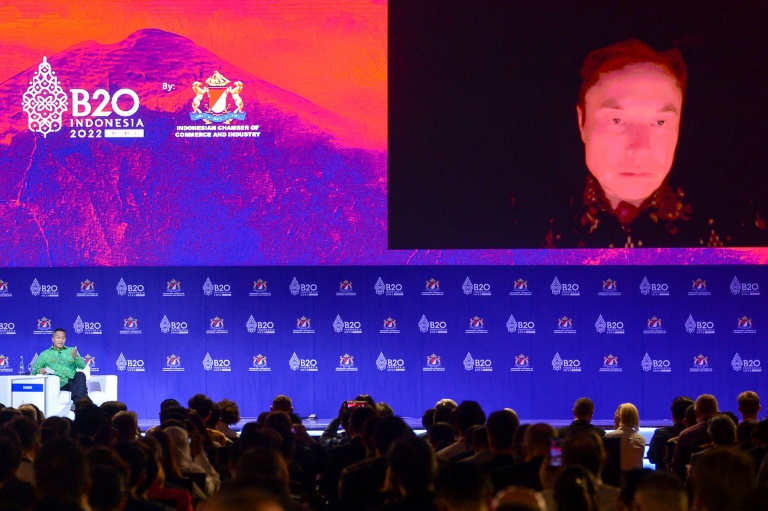
Musk sees aliens, tunnels in a candlelit G20 vision of the future

Sitting in the dark, wearing a traditional Indonesian batik shirt and surrounded by candles, Elon Musk offered a vision for the future that includes aliens, deep tunnels and rocket tourism.

The seemingly disembodied billionaire Twitter owner appeared by video link on Monday to address business leaders in Bali on the sidelines of the G20 summit, only his face and hands visible on an otherwise black screen.

“We had a power outage three minutes before this call. That’s why I’m entirely in the dark,” he told Indonesian tycoon-cum-moderator Anindya Bakrie.

Musk was asked why he had not travelled to the tropical Indonesian island and the new Twitter boss joked that his “workload has recently increased quite a lot” after his takeover of the social media giant.

He had little else to say about his controversial acquisition, which has included firing thousands of employees and introducing a fee for verification. He supported more video on Twitter and efforts to monetise content for creators.

Twitter aside, the conversation turned instead to tunnels dug deep underground to battle congestion, rocket travel across the world in less than an hour and discovering extra-terrestrial life in space.

“Maybe we will find alien civilisations or discover civilisations that existed millions of years ago,” he said.

“I think that would be incredibly interesting, to go out there and explore the galaxy.”

The chief of electric carmaker Tesla then waxed lyrical about the benefits of tunnels over flying cars to battle gridlocked traffic, saying cars “will fall on your head” and would be bad for privacy.

“Electric vehicles and tunnels are absolutely an answer to the worst possible congestion of any city, because you can go as many layers deep as you like until the congestion is addressed,” he said.

Aside from his “bullish” view on Indonesia’s future as a developing nation, the conversation largely stayed on his quirky and bold outlook for the future of Earth.

Jakarta has invited Musk to use Indonesia as a launch site for his SpaceX rocket, pointing out the benefits of a location next to the equator.

But Musk said he wants to see rocket platforms across the world that would allow people to travel “to the complete other side of the world” at 20 times the speed of sound.

“I think this would really open up the world if you could travel anywhere in the world in less than an hour,” he said.

But for all his bold dreams about the future, the electric energy, space discovery and social media entrepreneur could not hide his amusement by the fact that even he is answerable to the planet’s energy whims.

“I just look at this video and it’s so bizarre. I’m sitting here in the dark surrounded by candles,” he said.

“This is the funniest thing.”

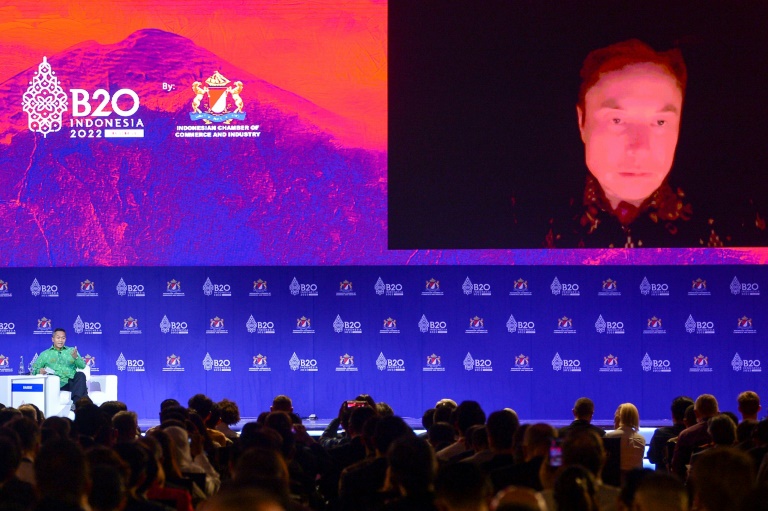
Musk sees aliens, tunnels in a candlelit G20 vision of the future

Sitting in the dark, wearing a traditional Indonesian batik shirt and surrounded by candles, Elon Musk offered a vision for the future that includes aliens, deep tunnels and rocket tourism.

The seemingly disembodied billionaire Twitter owner appeared by video link on Monday to address business leaders in Bali on the sidelines of the G20 summit, only his face and hands visible on an otherwise black screen.

“We had a power outage three minutes before this call. That’s why I’m entirely in the dark,” he told Indonesian tycoon-cum-moderator Anindya Bakrie.

Musk was asked why he had not travelled to the tropical Indonesian island and the new Twitter boss joked that his “workload has recently increased quite a lot” after his takeover of the social media giant.

He had little else to say about his controversial acquisition, which has included firing thousands of employees and introducing a fee for verification. He supported more video on Twitter and efforts to monetise content for creators.

Twitter aside, the conversation turned instead to tunnels dug deep underground to battle congestion, rocket travel across the world in less than an hour and discovering extra-terrestrial life in space.

“Maybe we will find alien civilisations or discover civilisations that existed millions of years ago,” he said.

“I think that would be incredibly interesting, to go out there and explore the galaxy.”

The chief of electric carmaker Tesla then waxed lyrical about the benefits of tunnels over flying cars to battle gridlocked traffic, saying cars “will fall on your head” and would be bad for privacy.

“Electric vehicles and tunnels are absolutely an answer to the worst possible congestion of any city, because you can go as many layers deep as you like until the congestion is addressed,” he said.

Aside from his “bullish” view on Indonesia’s future as a developing nation, the conversation largely stayed on his quirky and bold outlook for the future of Earth.

Jakarta has invited Musk to use Indonesia as a launch site for his SpaceX rocket, pointing out the benefits of a location next to the equator.

But Musk said he wants to see rocket platforms across the world that would allow people to travel “to the complete other side of the world” at 20 times the speed of sound.

“I think this would really open up the world if you could travel anywhere in the world in less than an hour,” he said.

But for all his bold dreams about the future, the electric energy, space discovery and social media entrepreneur could not hide his amusement by the fact that even he is answerable to the planet’s energy whims.

“I just look at this video and it’s so bizarre. I’m sitting here in the dark surrounded by candles,” he said.

“This is the funniest thing.”

Cathay won't return to pre-pandemic capacity until 'end of 2024'

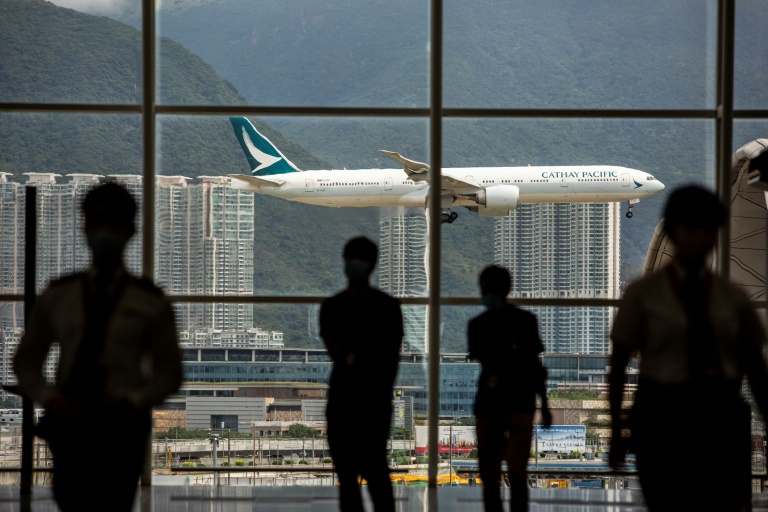
Cathay Pacific said Monday it does not expect to return to pre-pandemic levels of travel until the end of 2024, highlighting how long the Hong Kong airline’s return to normality could take.

Hong Kong imposed some of the world’s strictest travel curbs during the coronavirus pandemic and only abandoned compulsory quarantine for all international arrivals in September.

The restrictions closed off what was one of Asia’s once most connected cities and has hammered travel-reliant businesses including its flagship carrier.

In a statement released Monday, CEO Augustus Tang said the airline was “on track to achieve its target of operating up to one third of its pre-pandemic passenger flight capacity levels by the end of 2022”.

If achieved Tang said that would represent a doubling of capacity since August, the month before more than two years of compulsory quarantine rules were lifted.

But the journey back to full capacity remains a long one.

Cathay said it hoped to be operating at around 70 percent “by the end of 2023 with an aim to return to pre-pandemic levels by the end of 2024”.

Tang will be replaced by fellow veteran Cathay executive Ronald Lam on January 1.

While the number of flights to Hong Kong has increased after the government ended compulsory quarantine the airport is still far behind rivals.

Hong Kong’s airport handled 755,000 passengers in October, around 13 percent of what it used to process before the pandemic hit.

In contrast, rival hub Singapore handled 3.42 million passengers in September, 63 percent of pre-pandemic levels.

Singapore Airlines, which is already projecting to be at 76 percent capacity by the end of this year, carried 1.46 million people in September compared with Cathay Pacific’s 265,845 passengers.

While travellers to Hong Kong no longer need to quarantine they are banned from entering bars and restaurants for the first three days and must undergo multiple rounds of testing.

Wearing masks remains compulsory, even outdoors, and various social distancing measures remain.

The border with the Chinese mainland remains all but closed for now as Beijing sticks to its strict zero-Covid strategy. 

Travel industry groups have warned Hong Kong will not see a meaningful return of visitors until the three-day monitoring period and most other restrictions are lifted.

Hong Kong officials have repeatedly said they will only reopen the city gradually and have rejected calls to remove remaining curbs. 

Biden to set 'guardrails' in talks with Xi

US President Joe Biden meets China’s Xi Jinping in Bali on Monday hoping to set “guardrails” for relations between the countries, as the world’s 20 largest economies hold their first major post-pandemic summit.

The superpower sitdown will be Biden’s first in-person summit with Xi since taking office. The pair last met in 2017, when Biden was vice president.

The leaders meet with rivalry between the world’s top two economies intensifying sharply and with Beijing becoming more powerful and more assertive about replacing the US-led order that has prevailed since World War II.

The talks on the margins of the G20 have the air of the icy Cold War conclaves between American and Soviet leaders at Potsdam, Vienna or Yalta that decided the fate of millions.

Biden has spoken about the meeting establishing each country’s “red lines”.

The overarching goal will be setting “guardrails” and “clear rules of the road”, a senior White House official told reporters hours before the meeting.

“We do all of that to ensure that competition does not veer into conflict.”

Biden is expected to push China to rein in ally North Korea after a record-breaking spate of missile tests raised fears Pyongyang will soon carry out its seventh nuclear test.

Xi, whose last in-person US summit was with Donald Trump in 2019, may be in no mood to help. He arrives buoyed by securing a landmark third term in office, cementing him as the most powerful Chinese leader for generations.

Biden too arrives bolstered by his Democratic Party’s better-than-expected showing in midterm elections in which they retained control of the US Senate, although he remains vulnerable in domestic politics.

– Putin staying away –

The G20 summit opens in Bali on Tuesday and comes with food and fuel prices spiking worldwide, Ukraine mired in conflict and the renewed threat of nuclear war casting a menacing pall.

There will be one conspicuous absence around the table — Russian President Vladimir Putin.

His botched nine-month-old invasion of Ukraine has made the trip to Bali logistically difficult and politically fraught.

With members of his inner circle quarrelling publicly and his once ironclad domestic authority tarnished, Putin instead elected to send veteran foreign minister Sergei Lavrov.

Officially, neither the war in Ukraine, nor Putin’s dark threats to use nuclear weapons are on the summit agenda.

But while the ex-KGB man will not be at the summit table, his war will certainly be on the menu.

Soaring energy and food prices have hit richer and poorer G20 members alike –- and both are directly fuelled by the conflict.

On Monday, US Treasury Secretary Janet Yellen said an end to the conflict was “a moral imperative and the single best thing we can do for the global economy”.

And ahead of his departure to Bali, British Prime Minister Rishi Sunak said he would “call out Putin’s regime”.

There is likely to be pressure on Russia to extend a deal allowing Ukrainian grain and fertiliser shipments through the Black Sea when the current agreement expires on November 19.

– ‘Never been this complex’ –

At a minimum, Biden and his allies would also like to see the G20 make it clear to Putin that nuclear war is unacceptable.

At a recent meeting with German Chancellor Olaf Scholz, Xi said that a nuclear war cannot be won and should never be fought.

But a clear statement on the issue from the grouping is likely to be blocked by a mixture of Russian opposition and Chinese unwillingness to break ranks with its ally in Moscow or give Washington a win.

The G20 — a disparate and unwieldy grouping born in 1999 after the Asian financial crisis — has always been most comfortable discussing finance and economics rather than security.

Moscow would like it to stay that way.

“We categorically reject the politicisation of the G20,” the Russian foreign ministry said Sunday, offering a taste of what leaders might hear from the famously unbending Lavrov.

G20 ministerial meetings leading to the summit have failed to agree a final joint communique and Indonesian officials said Monday it remained a “work in progress” and a “main goal” for the summit.

“Honestly, I think the global situation has never been this complex,” Indonesian government minister Luhut Binsar Pandjaitan said Sunday. 

“If eventually (the G20) leaders do not produce a communique, that’s that, it’s ok.”

China unveils sweeping measures to rescue property sector

Chinese authorities have unveiled sweeping measures to rescue struggling property sector, as regulators seek to offset years of harsh pandemic curbs and a real estate crackdown that have stalled the world’s number-two economy.

The banking regulator and central bank on Friday issued a 16-point set of internal directives to promote the “stable and healthy development” of the industry, which were verified by Chinese media on Monday. 

The measures include credit support for debt-laden housing developers, financial support to ensure completion and handover of projects to homeowners, and assistance for deferred-payment loans for homebuyers.

That came on the same day the National Health Commission issued 20 rules for “optimising” Beijing’s zero-Covid policy, where certain restrictions were relaxed to limit the policy’s social and economic impact.

“We view this as the most crucial pivot since Beijing significantly tightened financing of the property sector,” wrote Ting Lu, chief China economist at Nomura, in a note.

“We believe these measures demonstrate that Beijing is willing to reverse most of its financial tightening measures.”

Hong Kong stocks surged more than three percent Monday, extending Friday’s more than seven percent rally, after the measures were unveiled.

Beijing imposed widespread lending curbs on property developers in 2020, which exacerbated their liquidity issues and caused several of the largest to default on bond payments. 

The knock-on effects on the massive real estate sector were severe, with cash-strapped developer Evergrande — China’s largest — and others failing to compete projects, sparking mortgage boycotts and protests from homebuyers. 

The measures emphasised “guaranteeing the handover of buildings”, and ordered development banks to provide “special loans” for the purpose, according to a copy circulating online.  

The document ordered financial institutions to treat state-owned and private real estate enterprises equally, as well as “actively cooperating with distressed real estate enterprises in risk management”.

The measures also included “extending the transition period arrangements… of real estate loans” for distressed developers, and support for “high-quality real estate enterprises to issue bond financing”. 

“The plan includes financial stability measures that aim to prevent massive defaults and hence provide a ‘soft landing’,” ANZ analysts wrote in a note.

But analysts cautioned that these changes — alongside the limited loosening of zero-Covid measures — would not cause an immediate recovery for the ailing sector.

New home prices have been dropping for more than a year, while demand is struggling to pick up owing to ongoing strict pandemic controls that have dampened consumer confidence. 

Close Bitnami banner
Bitnami