World

Lawyer Pirc Musar elected Slovenia's first woman president

Slovenians on Sunday elected Natasa Pirc Musar, a lawyer linked to former US first lady Melania Trump, as the country’s first woman president.

Pirc Musar, backed by the centre-left government, beat ex-foreign minister Anze Logar, a veteran of conservative politics, in a presidential run-off in the EU country of two million people.

Pirc Musar, who headed the country’s data protection authority for a decade, won almost 54 percent of the vote, ahead of Logar who got just over 46 percent, according to the election commission.

“Slovenia has elected a president who believes in the European Union, in the democratic values on which the EU was founded,” she told reporters, adding she would “give all my efforts so that politicians unify on strategic issues”.

The human rights advocate has vowed to be “the voice of women” in Slovenia and abroad and a “moral authority” in her new role, which is largely ceremonial.

“The president cannot be neutral… and have no opinion… I have never been afraid to speak out,” the former television presenter, 54, told AFP ahead of Sunday’s vote.

As a lawyer, Pirc Musar was hired to protect the interests of Slovenian-born Trump during her husband’s presidency, stopping companies attempting to commercialise products with her name.

During the campaign, Pirc Musar, who is a keen motorcyclist, came under attack because of her husband’s lucrative investments — especially in tax havens.

– Fresh setback for conservatives –

The results mark a fresh setback for the country’s conservatives.

Logar, 46, ran as an independent but is a long-time member of the Slovenian Democratic Party (SDS) of Janez Jansa, who failed in his bid to be re-elected as premier in April.

Critics accused Jansa of attacking media freedom and the judiciary and undermining the rule of law in his latest term in office.

“This election confirmed once again the vote against Janez Jansa. Logar is not the biggest loser tonight but it is Jansa,” Vlado Miheljak, a professor at Ljubljana University, told AFP.

Rok Novak, an economist in his early 50s, said at a Ljubljana polling station that he hoped a candidate that “will bring people together” would win.

“Slovenia is so polarised right now.”

Logar congratulated Pirc Musar.

“I expect she will be the president of all of us, that is what Slovenia needs,” he told reporters.

Logar came out ahead in the first round last month when the centre-left votes were split largely between Pirc Musar and another candidate.

Incumbent Borut Pahor, a former Social Democrat, could not run for re-election after having held the post for two five-year stints.

Pirc Musar will take over the post by the end of next month.

Pensioner Silva Lotric was optimistic as she cast her ballot.

“If my candidate wins, she will definitely bring changes,” she said.
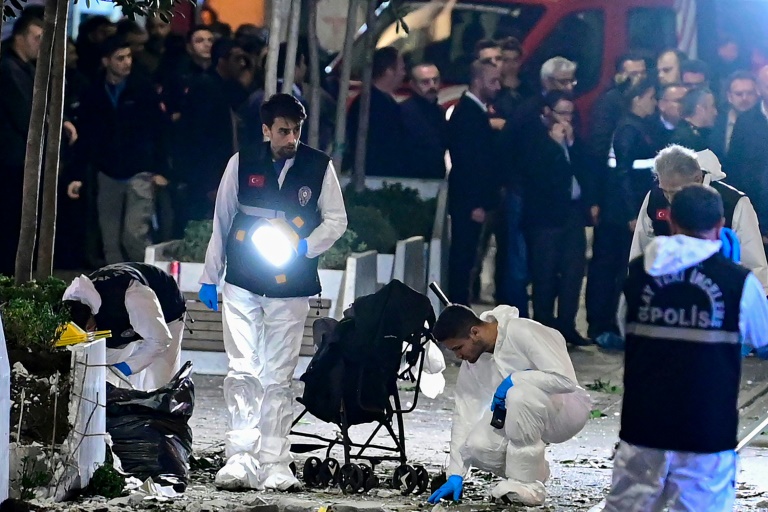
Anger, defiance in famous Istanbul area rocked by blast

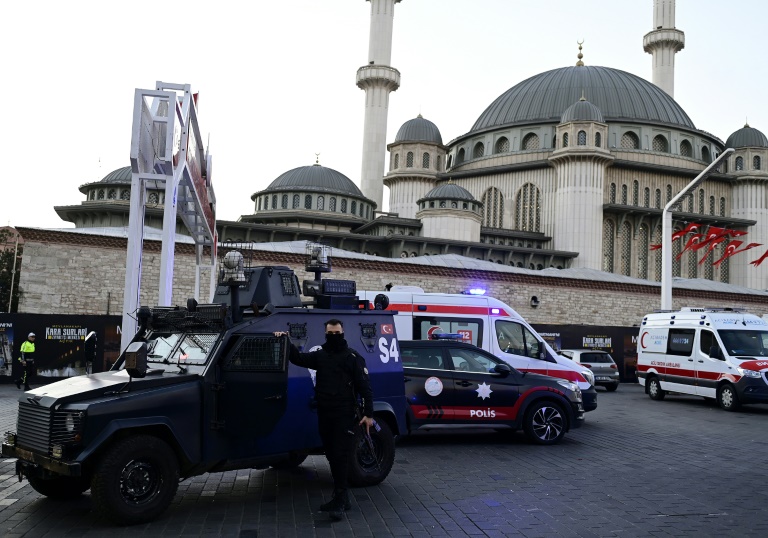
Istanbul’s popular Istiklal Avenue was still buzzing with tourists and onlookers late Sunday afternoon, hours after a deadly blast rocked the area. 

One couple ran down the street, tears in their eyes. 

Hours earlier the explosion, which Turkey’s president said had “a smell of terror”, tore through the busy shopping street, killing six and wounding dozens more.

The lower part of the avenue remained accessible after the explosion, but a police cordon blocked off the rest of the popular thoroughfare just ahead of the imposing gates of Galatasaray high school.  

Most shops, usually open until late, pulled down their shutters after the blast, but some stayed open in a show of defiance.

“We are not afraid, we heard the explosion but we are open as long as the police don’t come and ask us to close,” said Mustafa Guler, manager of the Keyif Nevizade restaurant in the neighbourhood. 

Nevizade Street, a string of fish restaurants 300 metres from the blast site, is usually packed around the clock.

But the terraces were more muted than usual by late afternoon. 

Most televisions were tuned to an afternoon football match.

One couple ate fish on a terrace, a bottle of raki to hand, while those trying to lure passers-by into other restaurants raised their heads as a helicopter flew overhead. 

– ‘Return of attacks’? –

A single bar on the corner eschewed the football, a top-tier clash between Kayserispor and Konyaspor, and was showing a live statement in which President Recep Tayyip Erdogan denounced the “vile attack”. 

“We don’t know what to do. Erdogan says it is a terrorist attack. I hope this is not the return of the attacks,” said Elif, a 22-year-old student. 

Behind him, access to Istiklal Avenue was blocked off. 

Journalists milled around as cameras panned in front of the police cordon. Turkish television stations were ordered not to broadcast footage of the aftermath to “prevent spreading fear”. 

Members of the Turkish police special forces suddenly appeared, in fatigues, rifles, helmets and balaclavas, and headed up the avenue.  

Meanwhile tourists continued to stroll nearby, shopping bags in hand. 

“We are not afraid. We know that attacks happen very often in this kind of country,” said Sylvana Sassa, a 27-year-old from Gabon who arrived in Istanbul 10 days ago. 

“Since we’re not staying very long, we’ve continued shopping (after the explosion), and we’ll go back tomorrow morning,” she said, clutching her pink suitcase in hand.  

Derin, the manager of a hotel in an alley 200 meters down from the thoroughfare, was awaiting a telephone call. 

“I’m not afraid,” he said. “But I’m angry,” added the self-described “opposition supporter”. 

“Angry that my country finds itself in such a situation again.”

Istiklal Avenue had already been hit in the past during a campaign of attacks in 2015-2016 that targeted Istanbul and other cities including the capital Ankara. 

Those bombings were mostly blamed on the Islamic State group and outlawed Kurdish militants, and killed nearly 500 people and injured more than 2,000.

'Black Panther' sequel scores huge opening, at home and abroad

Disney and Marvel’s highly anticipated “Black Panther: Wakanda Forever” had a huge opening this weekend, taking in an estimated $180 million in North American theaters, industry watcher Exhibitor Relations reported Sunday.

That domestic opening — the 13th highest all-time, according to BoxOfficePro.com — came as the film was raking in an impressive $330 million worldwide, a major boost for Hollywood after a lackluster October.

“This is a sensational opening,” said David A. Gross of Franchise Entertainment Research. “Reviews and audience scores are excellent — Wakanda should dominate moviegoing… into December.” 

The film pays heartfelt tribute to the star of the original “Black Panther,” Chadwick Boseman, who died from cancer in 2020 at age 43. He makes several flashback appearances as the fictional Wakanda fights against an underwater kingdom after the death of Boseman’s character, King T’Challa. 

Letitia Wright, as T’Challa’s sister Shuri, and Angela Bassett, as Queen Ramonda, struggle to fill the king’s shoes. Also starring are Lupita Nyong’o, Danai Gurira and Winston Duke.

The original “Black Panther,” the first major black superhero movie, became a cultural phenomenon, with a $202 million opening and a best-picture Oscar nomination.

Far, far behind in second place this weekend was Warner Bros.’ “Black Adam,” at $8.6 million — not even one-twentieth the “Wakanda” total. The Dwayne Johnson vehicle, a spinoff from 2019’s “Shazam!,” has now taken in $141.1 million domestically.

Universal’s rom-com “Ticket to Paradise,” powered by mega-stars Julia Roberts and George Clooney, managed to defy the superhero trend to place third, taking in $6.1 million in its fourth week out.

A family-friendly film, Sony’s live-action/computer animated musical comedy “Lyle, Lyle, Crocodile,” placed fourth at $3.2 million. 

And Paramount’s horror movie “Smile” continued to find viewers in its seventh week out, coming in fifth. With an estimated take of $2.3 million for the Friday-through-Sunday period, its domestic total bumped up to $102 million.

Rounding out the top 10 were:

“Prey for the Devil” ($2.0 million)

“The Banshees of Inisherin” ($1.7 million)

“One Piece Film: Red” ($1.4 million)

“Till” ($618,000)

“Armageddon Time” ($352,000)

Lawyer of Egypt hunger-striker denied access for 2nd time

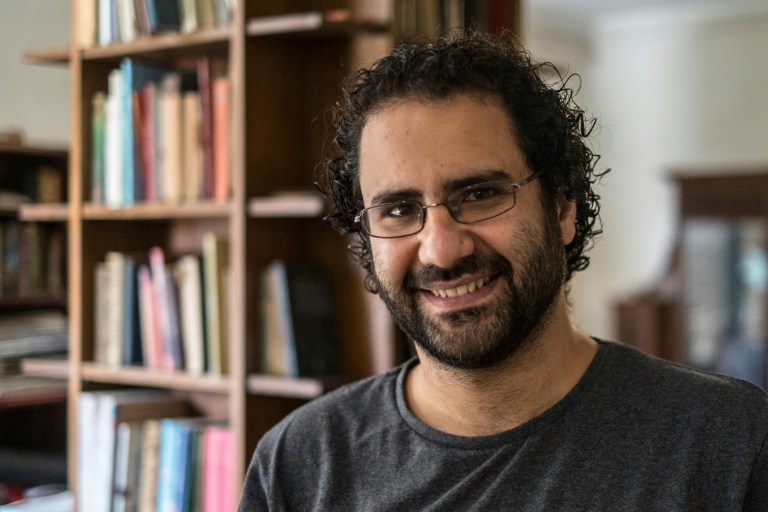
The lawyer for Egypt’s jailed hunger-striker Alaa Abdel Fattah said Sunday he had been denied access to his client for a second time in days, as fears for the activist’s health mount.

Seven months into a hunger strike, Abdel Fattah began refusing water on November 6 as world leaders arrived in the Egyptian resort of Sharm el-Sheikh for the COP27 climate summit.

A key figure in the 2011 uprising that toppled longtime dictator Hosni Mubarak, he is serving a five-year prison sentence for “spreading false news” by sharing a Facebook post about police brutality.

His family say they fear for his life, and have made months-long appeals to the international community, particularly Britain, where Abdel Fattah gained citizenship this year from behind bars through his British-born mother.

His lawyer Khaled Ali, a former presidential candidate, had previously been denied access on Thursday, after prison authorities said his permit was invalid because it was dated the day before. Such passes generally have validity for “one week”, he said.

On Sunday, Ali said he received another permit to visit, but was blocked again.

“I picked up the permit from the public prosecutor’s office in Cairo at 3:00 pm (1300 GMT), and I went as quickly as possible” to the prison, he said on Facebook.

He arrived at Wadi al-Natroun prison, about 100 kilometres (60 miles) northwest of Cairo, at around 4:45 pm, and was allowed inside and made to wait.

But an hour later, an officer informed him that “the prison was closed”, Ali added.

Abdel Fattah was a key figure in Egypt’s Arab Spring uprising more than a decade ago. He began consuming “only 100 calories a day” in April, his family said, to protest the conditions he and about 60,000 other political prisoners face in the country.

Some world leaders have raised his case with Egyptian President Abdel Fattah al-Sisi in bilateral meetings during the climate talks.

His sister Sanaa Seif was heckled by pro-government attendees at two press conferences this week, who called her brother a “criminal”, not a “political prisoner”.

On Friday, his other sister, Mona Seif, submitted a pardon request.

The plea was picked up by one of Egypt’s most watched talk show hosts, the ardently pro-Sisi Amr Adib.

On prime time television Friday, Adib said the pardon would be in “the interest of Egypt first and foremost”.

Relief in Ukraine's Kherson after Russian occupation

Ukrainians in the liberated southern city of Kherson expressed relief on Sunday after months of Russian occupation.

Residents said the Russians left a trail of destruction, laying mines and going on a looting spree before their withdrawal.

An animal rights group said Moscow’s forces had even stolen a racoon, wolves and squirrels from a local zoo.

“God will punish them. All of them. For everything they did,” said Svitlana Vilna, 47.

Ruined buildings and destroyed military vehicles could be seen at the entrance to the strategic Black Sea port city where battles raged just days ago. 

A smell of burning wood wafted through the air.

In a humiliation for the Kremlin, the Russian army withdrew from the city on Friday. 

Kherson was one of four regions in Ukraine that Russian President Vladimir Putin claimed to have annexed in September. 

There were no scenes of jubilation in Kherson on Sunday, an AFP correspondent said, but many locals said they felt a great sense of relief after Kyiv had wrested back control of the city. 

Residents queued to get food, and many adults and children walked around wrapped in Ukrainian flags.

Some gathered on the city’s main square, mostly to use Starlink satellite internet and connect with relatives.

“I need to get in touch with my family,” said Klavdia Mych, a retired teacher.

“We have been without water for a week,” the 69-year-old added. “And they say everything is mined. It is very scary.”

Viktoria Dybovska, a 30-year-old sales clerk, said the Russians “took everything with them”.

“They cleared out the stores,” she added.

“They switched off the lights three or four days ago just as they were leaving. They simply vanished overnight,” said Antonina Vysochenko, 29.

Oleksandr Todorchuk, founder of the organisation UAnimals, said Russian troops had stolen animals from a local zoo.

“They have taken most of the zoo’s collection to Crimea: from llamas and wolves to donkeys and squirrels,” he said on Facebook.

-‘Pigs’ –

Sergii Zatirko, 65, called the Russian troops “pigs,” saying they had left a lot of rubbish behind.

“We want to clean up everything as soon as possible so that nothing will remind us of these beasts,” he said.

Ukrainian President Volodymyr Zelensky said on Saturday that before fleeing Kherson, the Russians “destroyed all critical infrastructure — communication, water supply, heat, electricity.”

Ukrainian television broadcasts have resumed and officials said on Saturday that authorities were working to de-mine the city, record Russian crimes and restore power supplies.

On Saturday, in the village of Pravdyne, outside Kherson, returning locals embraced their neighbours, with some unable to hold back tears.

“Victory, finally!” said Svitlana Galak, who had lost her eldest daughter in the war. 

“Thank god we’ve been liberated and everything will now fall into place,” the 43-year-old told AFP.

Several disabled anti-tank mines and grenades could be seen in the settlement, which is home to a Polish Roman Catholic church, with a number of damaged buildings also visible.

While de-mining is carried out, a curfew has been put in place and movement in and out of the city has been limited, local authorities said.

– Missile fire –

The city of Kherson was the first major urban hub to fall after Russia invaded in February.

Zelensky has said Kyiv has established control over more than 60 settlements in the region. 

Ukraine’s police chief Igor Klymenko said on Saturday that around 200 officers were erecting roadblocks and recording “crimes of the Russian occupiers”.

He urged Kherson residents to watch out for possible landmines laid by the Russian troops, saying one policeman had been wounded while de-mining an administrative building.

On Sunday, the Ukrainian army said that Russia’s troops had kept building fortifications on the left bank of the Dnipro River where they had withdrawn.

Overnight, Russian forces fired S-300 missiles at the right bank of the Dnipro but there were no casualties, the army said.

Kherson’s full recapture opens a gateway for Ukraine to the entire Kherson region, with access to both the Black Sea in the west and the Sea of Azov in the east.

– ‘What was it all for?’ –

Shunned by the West over his offensive in Ukraine, Putin, 70, will not travel to Indonesia for the G20 leaders’ summit next week.

US Secretary of State Antony Blinken hailed the “remarkable courage” of Ukraine’s military and people, and vowed US support “will continue for as long as it takes” to defeat Russia.

In London, British Defence Secretary Ben Wallace said Moscow’s “strategic failure” in Kherson could prompt Russians to question the war. 

“Ordinary people of Russia must surely ask themselves: ‘What was it all for?'”

Erdogan says Istanbul 'attack' blast kills six

An explosion tore through a busy Istanbul shopping street on Sunday, killing six and wounding dozens in what Turkey’s president said bore the signs of a terror attack.

Police cordoned off an area around Istiklal, where crowds were dense on Sunday afternoon, and helicopters flew over the city centre as sirens sounded.

“I was 50-55 metres (yards) away, suddenly there was the noise of an explosion. I saw three or four people on the ground,” witness Cemal Denizci, 57, told AFP. 

“People were running in panic. The noise was huge. There was black smoke,” he said.

President Recep Tayyip Erdogan condemned what he called a “vile attack” that killed six people and wounded over 50 others. 

“It might be wrong if we say for sure that this is terror but according to first signs… there is a smell of terror there,” Erdogan told a press conference.

– Area targeted previously –

Authorities offered few details and no groups immediately claimed the blast, but Turkish cities in the past have been struck by Islamists and other groups.

Istiklal Avenue had already been hit in the past during a campaign of attacks in 2015-2016 that targeted Istanbul and other cities including the capital Ankara. 

Those bombings were mostly blamed on the Islamic State group and outlawed Kurdish militants, and killed nearly 500 people and injured more than 2,000.

Sunday’s explosion occurred shortly after 4:00 pm (1300 GMT) in the famous Istiklal shopping street which is popular with locals and tourists.

According to images posted on social media at the time of the explosion, it was accompanied by flames and immediately triggered panic, with people running in all directions. 

A large black crater was also visible in those images, as well as several bodies lying on the ground nearby. 

According to an AFP video journalist on the scene, police  established a large security cordon to prevent access to the damaged area for fear of a second explosion.

Istiklal in the historic district of Beyoglu, is one of the most famous arteries of Istanbul, entirely pedestrian on 1.4 kilometres (nearly a mile). 

Criss-crossed by an old tramway, lined with shops and restaurants, it is used by large crowds during the weekend.

In the neighboring district of Galata, many stores closed early while some passers-by, who came running from the site of the explosion, had tears in their eyes.

A massive deployment of security forces equally barred all entrances, while a heavy deployment of rescue workers and police were visible.

A reaction came quickly from Greece, which “unequivocally” condemned the blast and expressed condolences to the government and people of Turkey.

Israel's Netanyahu tapped to form next government

Israel’s veteran ex-premier Benjamin Netanyahu secured a mandate Sunday to form a new government, paving the way for his comeback at the helm of what is expected to be the most right-wing administration in the country’s history. 

After a period of unprecedented political gridlock tested the electorate with five votes in less than four years, the November 1 election gave Netanyahu and his far-right allies a clear majority in the 120-seat parliament.

“I have decided to assign to you, Benjamin Netanyahu, the task of forming a government,” President Isaac Herzog told him at a ceremony in Jerusalem. 

Accepting the mandate, the 73-year-old right-wing politician widely known as “Bibi” vowed to serve all Israelis, “those who voted for us and those who did not — it is my responsibility”.  

Netanyahu, who is fighting corruption allegations in court, will have at least 28 days to build a coalition with his allies — two ultra-Orthodox Jewish parties and a rising extreme-right alliance called Religious Zionism.

Herzog noted Netanyahu’s ongoing trial: “I am not oblivious, of course, to the fact that there are ongoing legal proceedings… and I do not trivialise this at all”.

But he said that recent precedent made clear Netanyahu could serve as premier and defend himself. 

Netanyahu can seek a two-week extension to his initial mandate but is expected to announce a coalition deal reasonably quickly, given broad ideological unity within the incoming government. 

Itamar Ben-Gvir and Bezalel Smotrich, co-leaders of the Religious Zionism bloc, have publicly demanded control of two key ministries — public security and defence — at a time when Israeli-Palestinian violence has soared.

– ‘Prophetise catastrophe’ –

Reports say Netanyahu is reluctant to hand Smotrich the sensitive defence portfolio, but that Smotrich is very much open to becoming finance minister instead. 

But Arye Deri, chairman of the ultra-Orthodox Shas party, has eyes on the finance ministry too. Smotrich and Deri were meeting on Sunday afternoon in a bid to reach an agreement.

Netanyahu’s next moves will be closely scrutinised as unease mounts in some quarters over his policy plans and the goals of his controversial partners. 

But he insisted that those seeking to “prophetise catastrophe and scare the public” are misguided. 

“It’s not the first time we have heard this kind of talk,” he said. “It was wrong then and it is still wrong today,” he added, without elaborating.

The new government is however widely expected to pass sweeping judicial reforms, a long-held priority of Israel’s right. That could include giving parliament the right to override the supreme court any time it declares legislation to be illegal.

Netanyahu’s government may also take full control over appointing supreme court judges, a task currently performed by a panel of lawmakers, sitting judges and lawyers.

Suzie Navot, a constitutional law professor at the Israel Democracy Institute think tank, said “it is difficult for me to exaggerate the damage and danger” of such reforms.

The centrist Yesh Atid party of outgoing Prime Minister Yair Lapid on Sunday condemned a “dark day for Israel’s democracy,” in an apparent reference to the judicial reform package. 

Yesh Atid charged that the incoming government’s goal was to “save Netanyahu from his trial”.

– ‘Very sensitive questions’ –

Ben-Gvir, a firebrand known for anti-Arab rhetoric and incendiary calls for Israel to annex the entire West Bank, has repeatedly called for security services to confront Palestinian unrest more harshly.

Recent months have been the deadliest in years in the Israeli-occupied West Bank according to the United Nations, with near daily army raids and an increase in attacks on Israeli forces.

Herzog, whose role is largely symbolic, was reported to have tried to convince outgoing premier Lapid and his defence minister Benny Gantz to form a unity cabinet with Netanyahu, in order to keep Ben-Gvir from entering government.

The presidency publicly denied the claims.

But Herzog this week told Ben-Gvir that he had received “questions from Israeli citizens and world leaders… very sensitive questions on human rights”.

The president added: “There is a certain image of you and your party which seems — and I’ll say it in all honesty — worrying in many regards.”

Six dead in mid-air collision at Texas WWII show: authorities

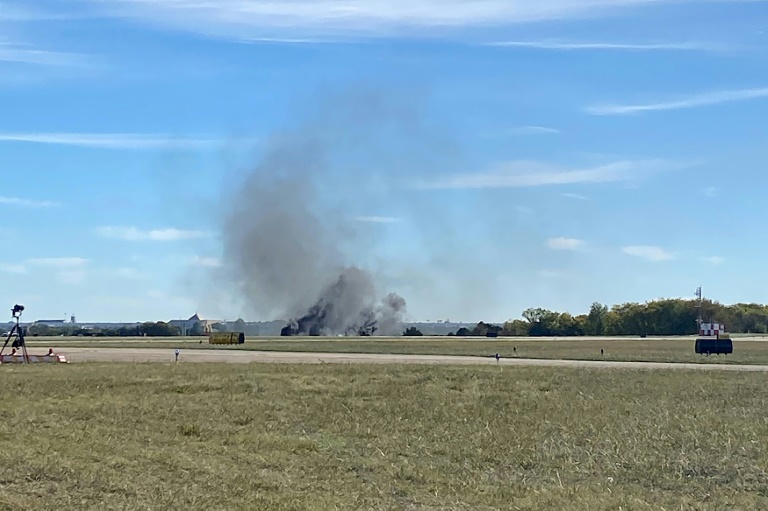
Six people were killed when a pair of World-War-II-era planes collided in mid-air at a show in Texas and crashed to the ground in a ball of fire, authorities said Sunday. 

“According to our Dallas County Medical Examiner, there are a total of 6 fatalities from yesterday’s Wings over Dallas air show incident,” Dallas County Judge Clay Jenkins said Sunday on Twitter.

The incident at Dallas Executive Airport involved a Boeing B-17 Flying Fortress and a smaller Bell P-63 Kingcobra, the Federal Aviation Administration said Saturday.

Dallas Mayor Eric Johnson called the incident “a terrible tragedy,” adding that videos of the incident “are heartbreaking.”

Multiple videos posted on social media showed dramatic scenes of the smaller plane descending toward the lower-flying B-17 and crashing into it as both flew in loops around the airport. 

After the collision, the planes appeared to break apart into several large pieces before crashing to the ground and exploding in a ball of fire, creating a huge plume of black smoke.

The crash scattered debris across the airport grounds as well as on a strip mall and a nearby highway, which was closed for hours, Johnson said.

Fire and rescue vehicles were already at the show in case of an emergency and responded immediately, authorities said.

An estimated 5,000 people were in attendance at the event Saturday, a few miles south of downtown Dallas. Air show events planned for Sunday were canceled.

The FAA said its agents and the National Transportation Safety Board would investigate the incident.

Hank Coates, the chief executive of the Commemorative Air Force (CAF), whose planes were involved in the accident, said the B-17 “normally has a crew of four or five,” while the P-63 is operated by a single pilot.

He said the pilots who operate the planes during such shows are experienced volunteers with “very thorough training” and are often retired military pilots.

The Allied Pilots Association, the collective bargaining agent for American Airlines, confirmed earlier that two of its retired members died in the accident. 

Both planes were based in Houston, the Dallas Morning News reported.

The CAF has some 180 vintage aircraft that fly roughly 6,500 hours per year in air shows, tributes to veterans, and training flights, according to Coates.

The B-17, a four-engined bomber, played a major role in winning the air war against Germany in World War II. With a workhorse reputation, it became one of the most produced bombers ever.

The CAF said the B-17 involved in the crash, which bore a Texas Raiders logo on its nose, was one of only five of the bombers that could still fly out of the 12,731 initially built.

The P-63 Kingcobra was a fighter aircraft developed during the same war by Bell Aircraft, but it was used in combat only by the Soviet Air Force.

Safety has long been a concern at air shows. 

Seven people died on October 2, 2019 when a B-17 crashed during a vintage aircraft show in Connecticut.

FTX working to secure assets after 'unauthorized' transactions

The new chief executive of troubled cryptocurrency platform FTX said Saturday the company was making “every effort to secure all assets” following unauthorized transactions potentially worth hundreds of millions of dollars.

“Unauthorized access to certain assets has occurred,” CEO John Ray said in a statement posted to Twitter by FTX’s general counsel, Ryne Miller.

FTX officials did not detail the quantity of unauthorized transactions made, but cryptocurrency analysis firm Elliptic said in a report published Saturday that “$477 million is suspected to have been stolen.”

More than “$663 million in various tokens” had been drained from FTX’s wallets only 24 hours after it filed for bankruptcy, Elliptic said, with the difference “believed to have been moved into secure storage by FTX themselves.”

FTX US and FTX.com “continue to make every effort to secure all assets, wherever located,” Ray, who specializes in corporate turnarounds, said in the statement.

The announcement comes a day after FTX filed for bankruptcy, part of a stunning collapse that has reverberated through the relatively young sector, sending other cryptocurrencies plummeting and drawing scrutiny from government regulators.

Additionally, the platform’s chief executive, 30-year-old Sam Bankman-Fried, once considered a star in the freewheeling cryptocurrency world, resigned.

As recently as 10 days ago, FTX was considered the world’s second-largest cryptocurrency platform, at one point valued at $32 billion.

But the company is now left trying to reassure a skeptical public.

– Fall from grace –

“Among other things, we are in the process of removing trading and withdrawal functionality and moving as many digital assets as can be identified to a new cold wallet custodian,” Ray said in the statement.

“Cold storage” refers to moving cryptocurrency assets to a hardware “wallet” unconnected to the Internet — to assure its security. 

Ray added that “an active fact review and mitigation exercise was initiated immediately in response” to the unauthorized transactions.

Overnight, Miller had tweeted about an investigation into anomalies and other unclear movements, and by Saturday morning indicated that “unauthorized transactions” had occurred.

FTX’s troubles first surfaced amid press reports that its Alameda Research trading house was involved in a risky financial arrangement with FTX.com that appeared to involve grave conflicts of interest. 

Financial media reported that FTX executives knew the platform was using billions in customer funds to prop up Alameda.

Adding to the drama, Binance, the world’s largest crypto exchange, agreed to buy FTX.com on Tuesday — before scrapping the takeover just a day later. 

FTX is being investigated by both the US Securities and Exchange Commission (SEC) and the New York state Justice Department, according to The New York Times, which cited sources close to those probes.

The fall from grace even stretched to the world of sports, where the Miami Heat announced its FTX Arena is set for a rename and the Mercedes Formula One team said it had suspended a sponsorship deal with FTX and removed the company’s logos from its cars ahead of this weekend’s Sao Paulo Grand Prix.

Taliban ban Afghan women from gyms and public baths

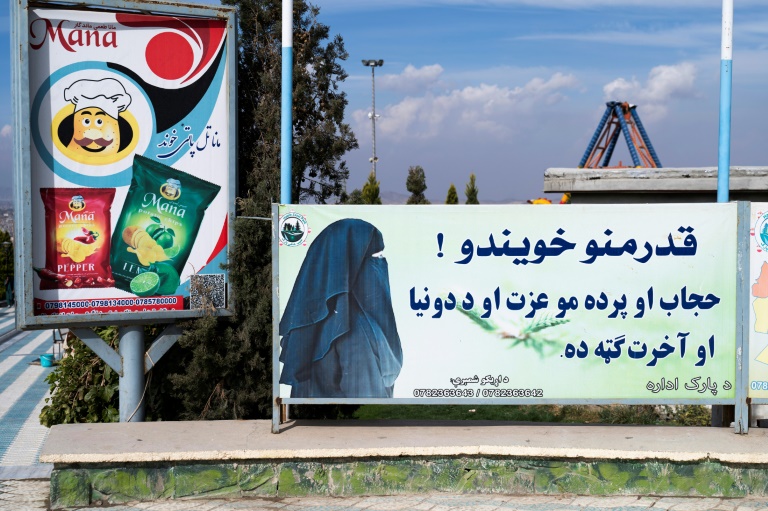
Gyms and public baths are now also off limits to Afghan women, the Taliban confirmed Sunday, days after banning them from parks and funfairs.

Women are increasingly being squeezed out of public life since the Taliban’s return last year despite the hardline Islamists promising a softer version of the harsh rule that characterised their first stint in power that ended in 2001.

Most female government workers have lost their jobs — or are being paid a pittance to stay at home — while women are also barred from travelling without a male relative, and must cover up with a burqa or hijab when out of the home.

Schools for teenage girls have also been shuttered across most of the country since the Taliban’s August 2021 return.

“Gyms are closed for women because their trainers were male and some of them were combined gyms,” Mohammad Akif Sadeq Mohajir, spokesman for the Ministry for the Prevention of Vice and Promotion of Virtue, told AFP.

He said “hammams” — traditional public bathing houses that have always been segregated by sex — were now also off limits.

“Currently, every house has a bathroom in it, so it won’t be any issue for the women,” he said.

Sana, 23, a university student, gave a different explanation.

“The main reason for closing the doors of parks, gyms and hammams lies in the anti-women ideology of the Taliban,” she told AFP.

“Afghanistan today has turned into a dungeon for women. They want to send women to a black hole.

“Today, with the closure of these facilities, women are completely imprisoned in a home’s four walls.”

One video clip circulating on social media — which could not immediately be verified — showed a group of women, backs to the camera, lamenting the gym ban.

“It’s a women-only gym — the teachers and trainers are all women,” a voice says, breaking with emotion.

“You can’t just ban us from everything. Do we not have the right to anything at all?”

Activists have said the increasing restrictions on women are an attempt to stop them from gathering to organise opposition to the Taliban’s rule.

Small groups of women have staged frequent flash protests in Kabul and other major cities, risking the wrath of Taliban officials who have beaten and detained them.

The United Nations this month voiced concern after the Taliban disrupted a press conference in the capital, submitting female participants to body searches and detaining the event organiser and several others.

“I have been to parks and hammams many times, it always gave me joy,” said 19-year-old Fatima.

“I never thought my presence in hammams or gyms could be an issue for anyone.”

Close Bitnami banner
Bitnami