World

G20 ministers launch billion-dollar pandemic fund

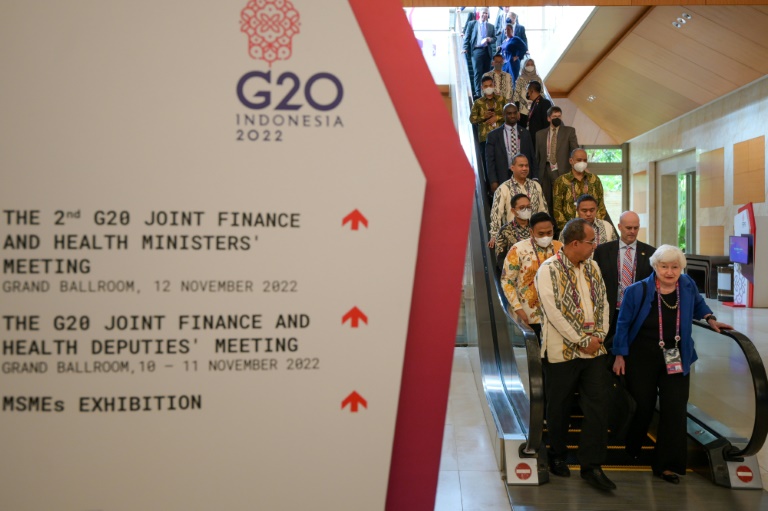
G20 health and finance ministers launched a $1.4-billion fund Sunday to tackle the next global pandemic ahead of the bloc’s leaders gathering for a summit on the Indonesian resort island of Bali but the host’s president said it was not enough.

The 24-nation fund is viewed as one of the early global outcomes of the summit next week where little progress is expected on the Ukraine crisis with Russian President Vladimir Putin not in attendance.

It was launched at a news conference Sunday opened by Indonesian President Joko Widodo and addressed by World Health Organization chief Tedros Adhanom Ghebreyesus and World Bank President David Malpass.

“The G20 agrees to build a pandemic fund to prevent and prepare for a pandemic. Donors from G20 and non-G20 members, as well as philanthropic organisations, have contributed to the funds. But it is not enough,” Widodo said in a video address.

He said $31 billion was required to tackle the next global pandemic.

“We must ensure community resilience in the face of a pandemic. A pandemic can no longer take lives and destroy the joints of the global economy.”

The United States has contributed $450 million to the fund, nearly a third of the total.

US Treasury Secretary Janet Yellen said the joint fund was an example of what the G20 can do to tackle global problems.

“I am proud of what we have accomplished. I think the steps we have taken this year will help deliver on a vision of a healthier and more responsive global health architecture,” she said.

Indonesia was at one point an epicentre of the Covid-19 pandemic when a wave of Delta strain cases hit the country in mid-2021.

Its health system was overwhelmed by the number of infections and Jakarta produced its own homegrown vaccine as lower income countries became frustrated at more developed nations hoarding inoculations for their citizens.

The fund’s major donors include the United States, Britain, India, China, France, Canada, Australia and Japan.

“We meet at a time of multiple crises… this new dedicated fund is an important tool that will support low and middle income countries to be better prepared for global health crises,” said Malpass, who urged more countries to commit to the fund.

“The pandemic fund can help make the world safer.”

Indonesian Finance Minister Sri Mulyani Indrawati told a news conference Saturday Saudi Arabia was expected to contribute to the fund, without specifying how much.

Melania Trump lawyer tipped to become Slovenia's first woman president

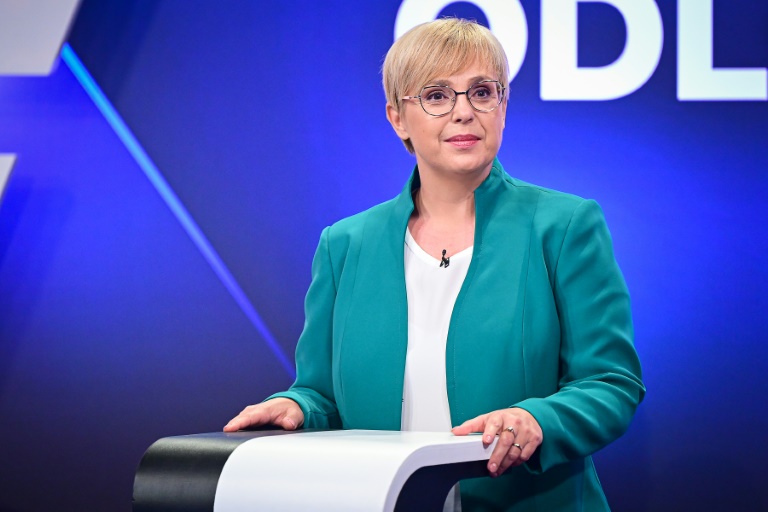
Slovenians were voting on Sunday in a run-off poll expected to elect the country’s first woman president — a lawyer linked to former US first lady Melania Trump.

Natasa Pirc Musar, backed by the centre-left government, is running against ex-foreign minister Anze Logar, a veteran of conservative politics, in the EU country of two million.

A lawyer, Pirc Musar was hired to protect the interests of Slovenian-born Trump during her husband’s presidency, stopping companies attempting to commercialise products with her name.

She is forecast to win just slightly above 50 percent of the vote ahead of Logar who is on between 44 and 49 percent, according to the latest polls.

Pirc Musar, who headed the country’s data protection authority for a decade, says her victory would make her “the voice of women” in Slovenia and abroad.

Though the president’s role is largely ceremonial, the human rights advocate has vowed to be a “moral authority”.

“The president cannot be neutral… and have no opinion… I have never been afraid to speak out,” the former television presenter, 54, told AFP.

Pirc Musar, who is a keen motorcyclist, has come under attack because of her husband’s lucrative investments — especially in tax havens.

Her opponent Logar, 44, also ran as an independent but is a long-time member of the Slovenian Democratic Party (SDS) of Janez Jansa, who failed in his bid to be re-elected as premier in April.

– ‘More balance’ –

Critics accused Jansa of attacking media freedom and the judiciary and undermining the rule of law in his latest term in office.

Logar plays the cello and is a keen mountaineer who cycled to the presidential debates.

“It is good if the president represents a different view than the ruling coalition — (it) provides more balance… which is better for a democratic system,” Logar told AFP ahead of Sunday’s vote.

Newspaper columnist Uros Esih said Pirc Musar has surrounded herself with “strong advisers”, allowing her to compete with the relatively more experienced Logar.

But Logar would “more likely be a mere instrument” of Jansa’s party, Esih said. 

Logar came first in the first round last month when the centre-left votes were split largely between Pirc Musar and another candidate.

Analysts say a low turnout would favour Logar, but polls predict about half of those eligible will vote, as in the first round, putting Pirc Musar ahead.

Polling stations opened in the former Yugoslav republic at 7:00 am (0600 GMT) and are due to close at 7:00 pm, with partial results expected later the same day.

Incumbent Borut Pahor, a former Social Democrat, could not run for re-election after having held the post for two five-year stints.

'We'll shoot you': violence stalks EU-Libya migrant deal

Leona Blankenstein couldn’t believe what she was hearing when the Libyan coastguard threatened to blast her small plane out of the sky.

The German doctor was in a spotter aircraft for the rescue charity Sea-Watch when she encountered the Fezzan patrol boat as it picked up migrants in Maltese waters on October 25.

“Get away from Libyan territorial (waters), otherwise we’ll shoot you by SAM (surface-to-air) missiles,” warned the vessel, one of several Italy gave to Libya under a controversial EU-backed deal to stop migrants reaching Europe.

The Libyans brought the migrants onboard before scuttling their rubber boat with incendiary ammunition, according to Sea-Watch footage.

“It happened in just seconds… Their behaviour is highly unpredictable, so you never know what they are going to do next,” she said.

The warning “was threat enough for me to leave the area immediately”, she added.

The 2017 deal has faced renewed scrutiny since far-right Italian leader Giorgia Meloni’s government took office, adopting a hardline stance against asylum seekers rescued at sea.

Despite years of criticism by charities and human rights groups, Italy quietly renewed the accord earlier this month.

– Saving lives –

Campaigners say nearly 100,000 people have been intercepted by the Libyans since the deal, under which Italy and the EU agreed to train and equip Libya’s coastguard.

The agreement was formed under pressure to manage huge numbers of refugees fleeing to Europe from conflicts in Syria, Iraq and Libya.

It also followed a series of deadly shipwrecks, with a record 5,000 people dying or reported missing in the Mediterranean in 2016.

The European Commission has said the accord aims “to prevent the loss of life in the Mediterranean and at the same time to crack down on migrant smuggling and human trafficking networks”.

Last year 2,062 were reported dead or missing, according to the International Organization for Migration (IOM).

Centre for European Reform analyst Luigi Scazzieri said working with other countries to prevent arrivals was a “key emphasis” of European policy.

The Italy-Libya accord has proved “very effective” in reducing the number of arrivals — at least initially.

– Wild West –

But charities decry a “Wild West” situation with armed militias posing as the Libyan coastguard and live ammunition used against migrants’ boats in open water.

Critics highlight a lack of accountability, with little public information on who receives the money in Libya.

Meanwhile many of those intercepted are believed to have ended up in Libyan detention centres.

Save the Children, Doctors Without Borders and Amnesty International say many migrants in Libya are tortured, sexually abused or used as slaves.

Libyan authorities deny reports that migrants are abused. 

“The arrests are carried out according to the rules in place,” a migration official said.

Campaigners also claim EU border agency Frontex, which uses aircraft to spot migrants in distress, helps Libya.

Felix Weiss, spokesperson for the Seabird arm of Sea-Watch, said “the Libyan coastguard is not professional, it needs the EU’s aerial surveillance and guidance to find the migrant boats”.

Human rights lawyer Arturo Salerni told AFP the “pull back” of migrants from European search and rescue areas to Libya was illegal under EU law “if European states are complicit”.

The Italian government did not reply to requests for comment.

–  People traffickers –

Every year Italy takes in tens of thousands of people who attempt to cross the central Mediterranean, the world’s deadliest migration route.

It had numerous agreements during the 2000s with Libyan dictator Moamer Kadhafi on curbing migratory flows, before he was ousted in 2011.

In 2012, the European Court of Human Rights condemned Italy for intercepting and forcibly returning people to Libya, prompting a new approach.

After the 2017 deal, rescue charities were “told by Italy to alert the Libyan coastguard instead”, according to Chiara Denaro from Alarm Phone, a hotline used by migrants in distress.

The deal quickly attracted criticism, with the UN imposing sanctions for people trafficking on several Libyans in 2018.

They included Ahmad Oumar al-Dabbashi, whose militia group controlled camps and boats.

He exposed migrants, including minors, to “brutal conditions and sometimes fatal circumstances on land and at sea”, the UN said.

In 2019, Italian newspaper L’Avvenire revealed another known people trafficker, Abd Al Rahman al-Milad was actually present in Sicily at talks with Italian officials on drawing up the 2017 deal.

Milad was suspended from the Libyan coastguard after being added to the UN’s sanctions list in 2018, but remained involved with “rescuing migrants” the following year, according to a UN report cited by L’Avvenire.

Last month, Sea-Watch published images it said proved the Libyan coastguard was collaborating with people smugglers: a vessel pictured twice with different migrants onboard three days apart.

That suggested it had returned to Libya and was reused, Sea-Watch said. 

– ‘Violating human rights’ –

The EU has devoted around 59 million euros to boosting the Libyan coastguard’s operational capacity, including training some 500 members between 2015 and 2020, when it stopped.

There are plans for training to resume but talks are ongoing with the Libyans, “with a substantial focus on human rights and international law”, an EU spokeswoman told AFP.

Italy has earmarked at least 32.5 million euros for missions in support of the Libyan coastguard since 2017, humanitarian organisation Arci said in a report last year. 

In October, investigative journalist Duccio Facchini revealed Italy spent another 6.65 million euros on 14 new speedboats for the Libyan coastguard just months ago.

Amnesty said it is “disgraceful” Rome “continues to assist Libyan authorities in violating their people’s human rights”.

“It adds insult to injury that the Italian government also refuses disembarkation to those who managed to leave that country,” it said.

Sea-Watch is one of a number of charities that operate rescue ships in the Mediterranean, which have found themselves in the crosshairs of Meloni’s new government. 

Italy last weekend refused to give safe ports to four ships, before finally allowing three to disembark.

Biden to seek red lines in talks with Xi

US President Joe Biden said Sunday he will seek to establish “red lines” in America’s fraught relations with Beijing when he holds high-stakes talks with Chinese counterpart Xi Jinping.

Biden said he goes into Monday’s encounter on the sidelines of a G20 summit in Indonesia stronger after his Democratic Party’s unexpected success in midterm elections they were forecast to lose heavily.

Washington and Beijing are at loggerheads over issues ranging from trade to human rights in China’s Xinjiang region and the status of the self-ruled island of Taiwan. Biden said he expected candid talks with Xi.

“I know Xi Jinping, he knows me,” he added, saying they have always had “straightforward discussions”.

The two men have known each for more than a decade, since Biden’s time as vice-president, but Monday will see them meet face-to-face for the first time in their current roles.

“We have very little misunderstanding. We just gotta figure out what the red lines are,” Biden said.

White House officials say Biden will push China to use its influence to rein in North Korea after a record-breaking spate of missile tests sent fears soaring that the reclusive regime will soon carry out its seventh nuclear test.

Biden had a fillip overnight with the news that the Democrats retained their effective majority in the US Senate thanks to Catherine Cortez Masto winning in Nevada.

“I know I’m coming in stronger,” he said of the midterms’ impact on his talks with Xi.

– Japan, S. Korea talks –

Biden will meet his South Korean counterpart Yoon Suk-yeol and Japanese Prime Minister Fumio Kishida on Sunday to discuss ways to address the threat posed by the North’s missile programme.

China is Pyongyang’s main ally and US officials say that, while Biden will not make demands, he will warn Xi that further missile and nuclear build-up would mean the United States boosting its military presence in the region — something Beijing bitterly opposes.

“North Korea represents a threat not just to the United States, not just to (South Korea) and Japan but to peace and stability across the entire region,” US National Security Advisor Jake Sullivan told reporters.

Kim Jong Un’s regime ramped up missile launches in response to large-scale US-South Korean air exercises, which the North described as “aggressive and provocative”.

The tests included an intercontinental ballistic missile and another shorter-range projectile that crossed the de facto maritime border and landed near the South’s territorial waters for the first time since a ceasefire ended hostilities in the Korean War in 1953.

– Diplomatic blitz –

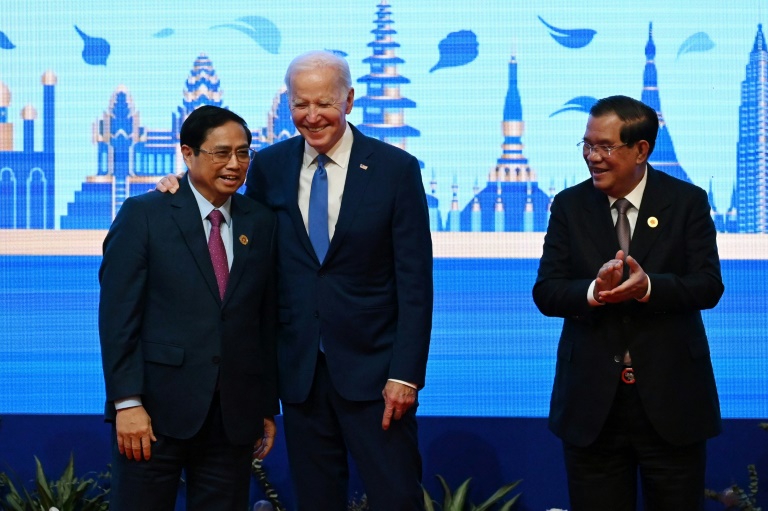
Biden flew to Phnom Penh from the COP27 climate conference as part of US efforts to boost its influence in Southeast Asia as a counter to China.

China has been flexing its muscles — through trade, diplomacy and military clout — in recent years in a region it sees as its strategic backyard.

Biden took a veiled swipe at Beijing in talks with leaders from the Association of Southeast Asian Nations (ASEAN) regional bloc.

He said the United States would work with ASEAN to “defend against the significant threats to rules-based order and threats to the rule of law”.

While the president did not refer to China by name, Washington has long criticised what it says are Beijing’s efforts to undermine international norms on everything from intellectual property to human rights.

Biden and Chinese Premier Li Keqiang were seated on either side of host, Cambodian leader Hun Sen, at a gala dinner to mark the ASEAN summit on Saturday night.

While Biden goes into the meeting with Xi buoyed by the Democrats seeing off a predicted Republican “red wave”, Xi was anointed last month for a historic third term as paramount leader by the Chinese Communist Party congress.

Li met International Monetary Fund chief Kristalina Georgieva at the ASEAN gathering on Saturday, when he also addressed participants.

Biden and Li took part Sunday in an East Asia Summit that rounds off the first leg of a trilogy of top gatherings in the region, with the G20 on the holiday island of Bali and an APEC gathering in Bangkok to follow.

The consequences of the war in Ukraine are set to dominate the upcoming talks, although Russian President Vladimir Putin will be notably absent.

Abortion under spotlight in conservative Morocco

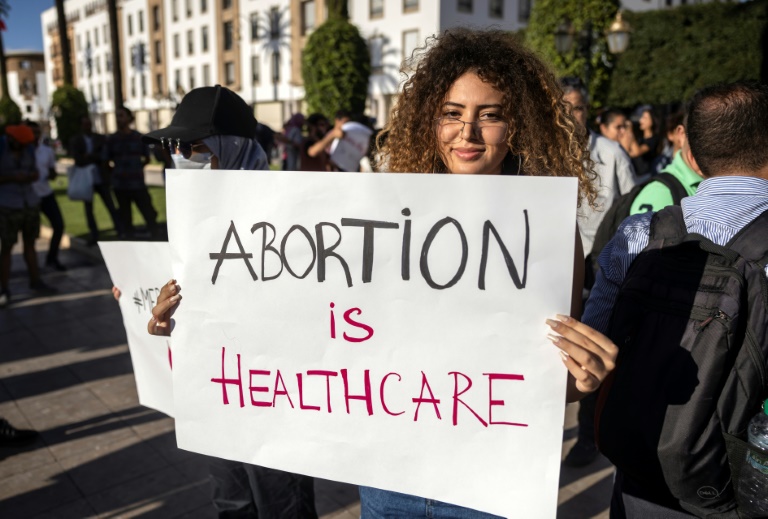
The debate over abortion rights has flared in Morocco after a teenager’s death following an unsafe termination, but social taboos continue to stall reforms.

“If I spoke out for abortion rights in front of my brothers, I’d be risking my life,” said student Leila, 21, adding that she comes from a relatively “modern” family.

In September, a 14-year-old identified as Meriem died following an unsafe procedure in a rural village in the country’s centre.

The conservative North African kingdom, which criminalises abortion, has since seen growing calls for reform to women’s reproductive rights, although pervasive social attitudes and a lack of political will continue to block change.

“If I said the word ‘abortion’ in my family, I’d be accused and rejected, even by my parents,” said 22-year-old Amal, a student at the University of Rabat.

– ‘Law that kills’ –

Unless a pregnancy endangers a woman’s health, Moroccan women undergoing abortions face up to two years in jail, while those assisting them risk five years’ imprisonment.

Local organisations say that despite the heavy penalties, between 600 and 800 women have an abortion every day in the country of 38 million people — many in dangerous, unsanitary conditions.

Meriem’s was carried out “at the home of a young man who was sexually exploiting the victim”, Moroccan feminist coalition Spring of Dignity said. 

Her death came seven years after a royal commission recommended decriminalising the procedure in “certain cases” such as rape, incest, foetal malformation or if the mother is mentally disabled.

But the report changed “nothing”, according to gynaecologist Chafik Chraibi, a campaigner for legalisation.

“There’s nothing but silence, the subject isn’t a priority,” he told AFP.

Chraibi, the founder of the Moroccan Association Against Clandestine Abortion, says a lack of political will is blocking any change to an “archaic” law that dates back to 1963.

A draft bill to modify the legislation has been presented twice to parliament before being withdrawn without any official explanation.

Dozens of rights activists gathered outside parliament in late September to demand changes to the “law that kills”.

Families Minister Aawatif Hayar told parliament last month that the government was taking “serious interest” in changing the penal code.

But any changes must “respect Islamic law and be acceptable to Moroccan society”, she said.

Campaigner Chraibi said religious authorities and Moroccan conservatism were blocking moves towards decriminalisation — but added that nothing in Islamic law explicitly bans the practice.

– ‘Judicial and social violence’ –

Morocco is far from being an outlier in the Arab world. 

The only North African state to allow women to choose an abortion is Tunisia, whose first post-independence president Habib Bourguiba legalised the practice in 1973, two years earlier than former colonial power France.

But there is little national debate on the subject, and most women who undergo the procedure keep it a secret.

A 2018 Algerian law provides for the “therapeutic termination of pregnancy”, but rights groups note this requires a medical committee’s approval and is limited to cases of mortal danger to the mother or if the baby is likely to be severely disabled.

Algeria otherwise can impose a two-year jail term for women who have an abortion, while doctors who facilitate terminations face five years.

Libya also criminalises abortions except when there is mortal danger to the mother, and imposes long jail terms on those carrying them out.

Sentences are often reduced in cases where the procedure is undertaken to preserve the family’s “honour”. Libyan women with the means often seek abortions overseas.

Moroccan activist Faouzia Yassine says the kingdom’s laws are a form of “judicial and social violence against women”.

She called for a “root-and-branch reform of the penal code” and to bring it in line with “international conventions that Morocco has ratified”.

“Criminalisation of abortions means restricting a woman’s freedom to control her body and shows a desire to compel her to keep a foetus against her will,” she said.

Biden seeks N. Korea strategy in talks with Japan, S. Korea

US President Joe Biden will seek ways to rein in Pyongyang after its barrage of missile tests in talks with South Korean and Japanese leaders Sunday, a day before a high-stakes encounter with China’s Xi Jinping.

A record-breaking spate of launches by the North in recent weeks has sent fears soaring that the reclusive regime will soon carry out its seventh nuclear test.

The White House says Biden will press China to curb Pyongyang’s activities when he holds his first face-to-face meeting with Xi on Monday on the sidelines of a G20 summit in Indonesia.

Biden will meet his South Korean counterpart Yoon Suk-yeol and Japanese Prime Minister Fumio Kishida on Sunday to discuss ways to address the threat posed by the North’s “unlawful weapons of mass destruction and ballistic missile programs”, the White House said.

The three-way meeting on the sidelines of an East Asia Summit in Phnom Penh comes after flurry of tests by the North earlier this month, including an intercontinental ballistic missile.

Pyongyang ramped up its launches in response to large-scale US-South Korean air exercises, which the North described as “aggressive and provocative”.

Biden will use his closely watched talks with Xi on Monday to urge China to use its influence as North Korea’s main ally to press Kim Jong Un’s regime to cool down.

US National Security Advisor Jake Sullivan said the president would not make demands but would warn Xi that further missile and nuclear build-up would mean the United States boosting its military presence in the region — something Beijing bitterly opposes.

“North Korea represents a threat not just to the United States, not just to (South Korea) and Japan but to peace and stability across the entire region,” Sullivan told reporters.

– Diplomatic blitz –

Biden flew to Phnom Penh from the COP27 climate conference as part of US efforts to boost its influence in Southeast Asia as a counter to China.

China has been flexing its muscles — through trade, diplomacy and military clout — in recent years in a region it sees as its strategic backyard.

Biden took a veiled swipe at Beijing in talks with leaders from the Association of Southeast Asian Nations (ASEAN) regional bloc.

He said the United States would work with ASEAN to “defend against the significant threats to rules-based order and threats to the rule of law”.

While the president did not refer to China by name, Washington has long criticised what it says are Beijing’s efforts to undermine international norms on everything from intellectual property to human rights.

Biden and Chinese Premier Li Keqiang were seated on either side of host, Cambodian leader Hun Sen, at a gala dinner to mark the ASEAN summit on Saturday night.

Biden goes into the meeting with Xi buoyed by unexpectedly successful midterm elections at home, where his Democratic Party retained control of the US Senate and saw off predictions of a Republican “red wave”.

For his part, Xi was anointed last month for a historic third term as paramount leader by the Chinese Communist Party congress.

Li met International Monetary Fund chief Kristalina Georgieva at the ASEAN gathering on Saturday, when he also addressed participants.

Sunday’s East Asia Summit rounds off the first leg of a trilogy of summits, with the G20 on the holiday island of Bali and an APEC gathering in Bangkok to follow.

The consequences of the war in Ukraine are set to dominate the upcoming talks, although Russian President Vladimir Putin will be notably absent.

Shunned by the West over his invasion of Ukraine, Putin has despatched his veteran Foreign Minister Sergey Lavrov in his stead.

Observers will be watching for any repeat of the tit-for-tat walkouts staged by Lavrov and Western officials at meetings earlier this year.

Ukrainian President Volodymyr Zelensky is expected to attend the G20 virtually, after his request to address the ASEAN gathering was turned down.

Two WWII planes collide at Dallas air show: US aviation agency

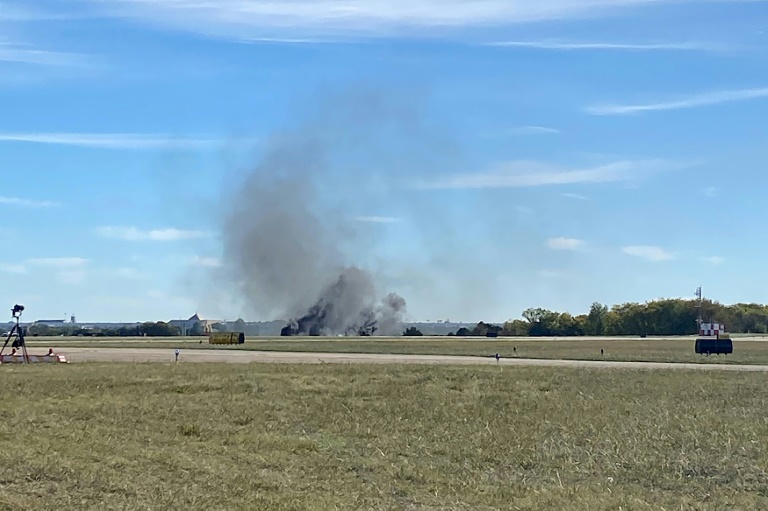
Two World-War-II-era airplanes collided Saturday at an air show in Dallas, US authorities said, with social media footage showing the aircraft crashing into each other and hitting the ground with a fiery explosion.

It was not immediately clear how many people were in the two craft, a Boeing B-17 Flying Fortress and a smaller Bell P-63 Kingcobra, the Federal Aviation Administration said. 

Nor was it clear whether anyone survived the early afternoon crash, which occurred during the Wings Over Dallas Airshow at Dallas Executive Airport.

While the number of casualties was not immediately known, “no spectators or others on the ground were reported injured,” Dallas Mayor Eric Johnson tweeted.

Multiple videos posted on social media showed dramatic scenes of the smaller plane descending towards the lower-flying B-17, crashing into it. 

After the collision, the planes appeared to break up into several large pieces before crashing into the ground and exploding in a ball of fire, creating a huge plume of black smoke.

The crash scattered debris across the airport grounds as well as on a nearby highway and strip mall, Johnson said.

The FAA said its agents and the National Transportation Safety Board would investigate the incident.

“As many of you have now seen, we have had a terrible tragedy in our city today during an airshow. Many details remain unknown or unconfirmed at this time,” Johnson said.

The B-17, a four-engined bomber, played a major role in winning the air war against Germany in World War II. With a workhorse reputation, it became one of the most produced bombers ever.

The P-63 Kingcobra was a fighter aircraft developed during the same war by Bell Aircraft but it was used in combat only by the Soviet Air Force. 

One of the last major crashes of a B-17 was on October 2, 2019, when seven people died in an accident at an airport in Windsor Locks, Connecticut.

Sun-soaked North Africa pushes for cheap energy

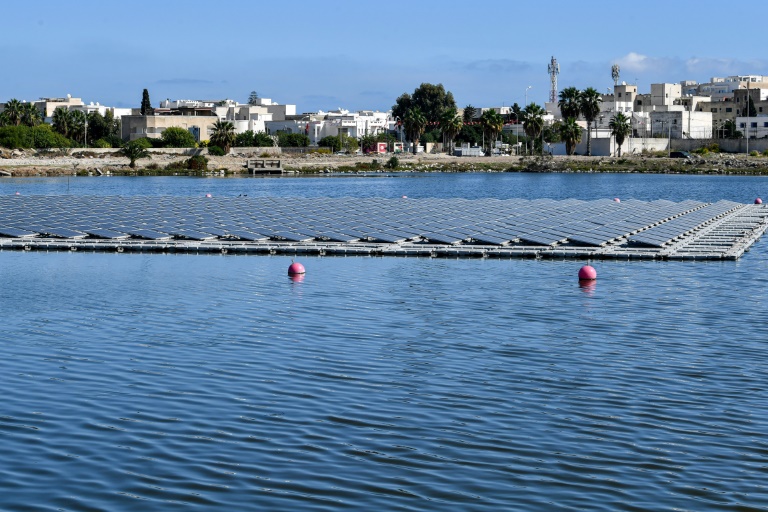
Solar panels glint in the sun on a Tunisian lagoon, part of a long-delayed drive to harness the North African country’s vast renewable energy potential.

While industry insiders complain of red tape, fossil fuel prices that soared after Russia’s February invasion of Ukraine created a powerful incentive for such investments across the Maghreb region.

“Algeria, Tunisia and Morocco, each have an abundance of solar energy resources as well as ample wind energy resources,” said Michael Tanchum, an expert on the sector. 

“Extreme price pressures on natural gas, especially in Europe, have changed the calculus for investments in renewable energy.”

Omar Bey, of French-based renewables developer Qair, hopes the firm’s 200-kilowatt floating solar station on a lake next to a Tunis industrial park can be a prototype for bigger projects nationwide.

“Tunisia doesn’t have any choice but to go for renewables, given the situation around hydrocarbons and particularly gas,” he said, adding that innovations like floating solar stations could help. 

Being on reservoirs or lakes helps cool the panels, making them more efficient, and “means we can use water instead of taking up land that can be used for other things like farming or homes,” Bey said.

It also helps reduce evaporation, another benefit in the water-stressed region, he said.

Tunisia, on the sun-drenched Mediterranean Sea, is well-placed to produce clean energy both for domestic use and for export to energy-hungry Europe.

In 2015 the country set ambitious targets for renewables.

But last year green sources accounted for only 2.8 percent of the country’s energy mix and the rest came from natural gas, according to the state Tunisian Company of Electricity and Gas (STEG).

Tanchum, a non-resident scholar at Washington’s Middle East Institute, said “political paralysis” was holding the sector back.

Tunisia has suffered more than a decade of turmoil since its 2011 revolution. Ideological wrangling has often taken precedence over transforming the economy, which depends heavily on food and energy imports.

The state’s fuel subsidies bill soared 370 percent in the first half of this year compared to the same period of 2021, official figures show.

Yet, despite incentives to push for renewables, such efforts have been held back by legal and administrative obstacles, according to Ali Kanzari, president of an association representing solar firms.

“Sometimes (imported solar panels) sit for a month or more in customs,” he said.

“We need more flexible laws. Everything needs to be sped up.”

– Morocco leads –

One major solar station in the desert near Tataouine was finally connected to the grid in October, two years after its completion. Project head Abdelmomen Ferchichi blamed difficulties in getting permits, and the station’s distance from the grid.

Bey said “misunderstandings” among some union members within STEG, wary of attempts to privatise the sector by stealth, had also delayed development.

“Today, all that’s behind us,” he said.

Tanchum told AFP that despite the renewables potential of the entire Maghreb, “only Morocco has emerged as a regional leader”.

Morocco decided in 2009 to boost renewables to 52 percent of its energy mix by 2030 and it currently produces around a fifth of its electricity from clean sources, according to the government.

Its energy ministry says “this vision has started bearing fruit, with 111 renewable energy projects completed or under development”.

They include a solar and wind facility to generate more than 10 gigawatts of power and send it to the United Kingdom via a 3,800-kilometre (2,360-mile) undersea cable.

Tunisia dreams of doing something similar.

In October, it applied for a European Union grant for an 800-million euro ($828 million) cable to Italy covering 200 kilometres, to go online by 2027.

For Kanzari, the association president, the link can’t come soon enough.

“They’re going to have a cold winter” in Europe, he said. “If we’d had a cable that was ready, and four or five gigawatt solar power stations in the desert, we’d be selling electricity and earning hard cash.”

Tanchum said that although Maghreb countries could benefit from this type of project, much of the energy should be for domestic use, so they “don’t become the green battery of Europe”.

– Algeria’s ambitious target –

Neighbouring Algeria, Africa’s top natural gas producer, has set the ambitious target of 15,000 megawatts from solar by 2035.

The first part of a 1,000-megawatt project is set to come online by late next year, but for now the country generates just three percent of its electricity from the sun.

Intissar Fakir, head of the North Africa and Sahel Programme at the Middle East Institute, said Algeria’s cash glut from gas exports is going to upgrade the fossil fuel infrastructure, not to renewables.

There are also “big hurdles for foreign investment in the sector — not least Algeria’s notorious bureaucracy,” she added.

US Democrats maintain Senate majority

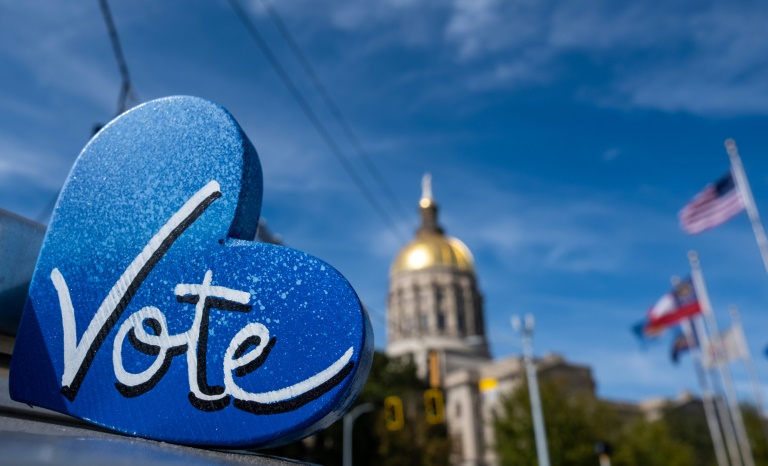
President Joe Biden’s Democrats retained control of the US Senate on Saturday, a remarkable midterms election result that defied predictions of a Republican win over both houses of Congress.

Midterms traditionally deliver a rejection of the party in power, and with inflation surging and Biden’s popularity in the doldrums, Republicans had been expecting to ride a mighty “red wave” and capture the Senate and the House of Representatives.

But the wave never got much beyond a ripple and on Saturday US networks called the key Senate race in Nevada for Democrat incumbent Catherine Cortez Masto, giving the party the 50 seats it needs for an effective majority. 

The win clinches Democratic control in the Senate as Vice President Kamala Harris can cast the tie-breaking vote if the upper chamber is evenly split 50-50.

One Senate race remains up in the air — a runoff in Georgia set for December.

The two parties had been neck-and-neck at 49 seats each after Democrat Mark Kelly was projected to win a tight Senate race in Arizona on Friday evening. 

The result in the House of Representatives is also hanging in the balance, and while Republicans are slightly favored to take control, it would be with a far smaller majority than they had envisaged going into Tuesday’s election.

– Call for unity –

In Arizona, Kelly called for unity in a victory speech on Saturday.

“After a long election, it can be tempting to remain focused on the things that divide us,” he said.

“But we’ve seen the consequences that come when leaders refuse to accept the truth and focus more on conspiracies of the past than solving the challenges that we face today.” 

The former astronaut beat out challenger Blake Masters, who has not yet conceded defeat and was backed by Donald Trump. 

The former president was omnipresent on the campaign trail and the Republicans’ poor national performance was a damaging political blow. 

Trump’s response to the Arizona result was to double down on unfounded claims of ballot rigging, posting on his Truth Social platform that the Democrat’s victory was a “scam” and the result of “voter fraud.”

Trump is set to declare his 2024 White House bid on Tuesday — an announcement he had planned as a triumphant follow-on to an expected crushing election victory by the party he still dominates.

The underwhelming outcome has prompted a bout of internal finger-pointing, with targets including Trump, the party leaders, and the campaign messaging.

US media on Saturday cited a letter circulated by three Republican senators calling for the postponement of party leadership elections currently scheduled for the middle of next week.

“We are all disappointed that a Red Wave failed to materialize, and there are multiple reasons it did not,” the letter said.

“We need to have serious discussions within our conference as to why and what we can do to improve our chances in 2024,” it added.

Some suggest Trump’s early entry into the presidential race is designed to fend off possible criminal charges arising from multiple investigations into the final weeks of his presidency as well as his business affairs.

On Friday, Trump’s lawyers challenged a subpoena from the Congressional committee investigating the January 6 attack on the US Capitol by his supporters.

The subpoena sought to have Trump questioned under oath next week but the lawyers filed a lawsuit arguing he enjoyed “absolute immunity” as a former president from being compelled to testify before Congress.

The subpoena is “invalid, unlawful, and unenforceable,” the lawsuit said.

FTX working to secure assets after 'unauthorized' transactions

The new CEO of troubled cryptocurrency platform FTX said Saturday the company was making “every effort to secure all assets” following unauthorized transactions potentially worth hundreds of thousands of dollars.

“Unauthorized access to certain assets has occurred,” CEO John Ray said in a statement posted to Twitter by FTX’s general counsel, Ryne Miller.

FTX officials did not detail the quantity of unauthorized transactions made, but cryptocurrency analysis firm Elliptic said in a report published Saturday that “$477 million is suspected to have been stolen.”

More than “$663 million in various tokens” had been drained from FTX’s wallets only 24 hours after it filed for bankruptcy, Elliptic said, with the difference “believed to have been moved into secure storage by FTX themselves.”

FTX US and FTX.com “continue to make every effort to secure all assets, wherever located,” Ray, who specializes in corporate turnarounds, said in the statement.

The announcement comes a day after FTX filed for bankruptcy, part of a stunning collapse that has reverberated through the relatively young sector, sending other cryptocurrencies plummeting and drawing scrutiny from government regulators.

Additionally, the platform’s chief executive, 30-year-old Sam Bankman-Fried, once considered a star in the freewheeling cryptocurrency world, resigned.

As recently as 10 days ago, FTX was considered the world’s second-largest cryptocurrency platform, at one point valued at $32 billion.

But the company is now left trying to reassure a skeptical public.

– Fall from grace –

“Among other things, we are in the process of removing trading and withdrawal functionality and moving as many digital assets as can be identified to a new cold wallet custodian,” Ray said in the statement.

“Cold storage” refers to moving cryptocurrency assets to a hardware “wallet” unconnected to the Internet — to assure its security. 

Ray added that “an active fact review and mitigation exercise was initiated immediately in response” to the unauthorized transactions.

Overnight, Miller had tweeted about an investigation into anomalies and other unclear movements, and by Saturday morning indicated that “unauthorized transactions” had occurred.

FTX’s troubles first surfaced amid press reports that its Alameda Research trading house was involved in a risky financial arrangement with FTX.com that appeared to involve grave conflicts of interest. 

Financial media reported that FTX executives knew the platform was using billions in customer funds to prop up Alameda.

Adding to the drama, Binance, the world’s largest crypto exchange, agreed to buy FTX.com on Tuesday — before scrapping the takeover just a day later. 

FTX is being investigated by both the US Securities and Exchange Commission (SEC) and the New York state Justice Department, according to the New York Times, which cited sources close to those probes.

The fall from grace even stretched to the world of sports, where the Miami Heat announced its FTX Arena is set for a rename and the Mercedes Formula One team said it had suspended a sponsorship deal with FTX and removed the company’s logos from its cars ahead of this weekend’s Sao Paulo Grand Prix.

Close Bitnami banner
Bitnami