World

'Hunt them down': MH17 families hope for justice

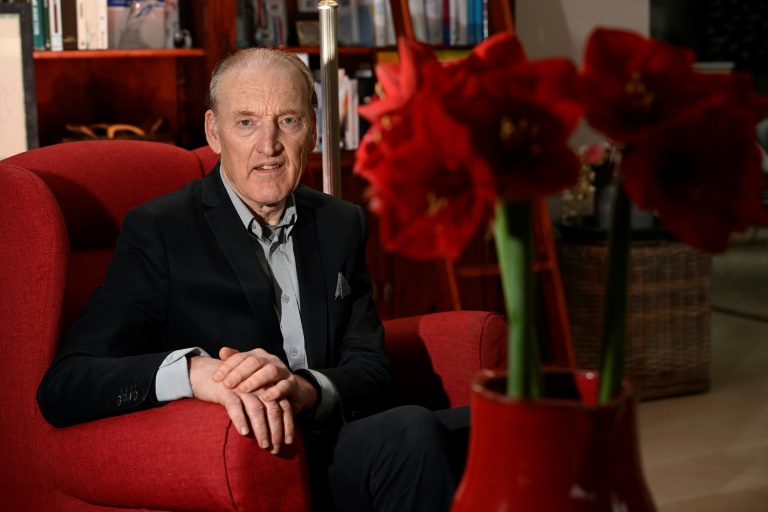
Each night before bedtime in the small Dutch town of Vleuten, Evert van Zijtveld lights two candles at a concrete shrine next to his front door to remember his murdered children.

Eight years and four months ago his daughter Frederique, 19, and son Robert-Jan, 18, died with 296 others when Malaysia Airlines flight MH17 was shot from the sky over war-torn Ukraine.

Now the 67-year-old is hoping for justice and closure in a high-security Dutch courtroom on Thursday, where judges will deliver their verdicts on four suspects who remain at large.

“Those who are responsible for downing MH17 should be sent to prison. If they are guilty, the international community should hunt them down,” Van Zijtveld told AFP in an interview.

For Van Zijtveld and others who lost loved ones when the Boeing 777 travelling from Amsterdam to Kuala Lumpur was hit by what prosecutors say was a Russian-supplied missile, the loss is still raw years later.

Large photographs of Frederique and Robert-Jan adorn the home of Van Zijtveld and his wife Grace, who also lost her own mother Neeltje Voorham, 77, and stepfather Jan van der Steen, 71, in the disaster.

One picture shows a smiling Van Zijtveld cuddling his daughter, which in a tragic irony was taken in the departures lounge at Schiphol airport when Frederique was departing on another trip.

– ‘Search for justice’ –

“Angry is not the right word,” sighed Van Zijtveld, a tall and dapper Dutchman who has earned widespread respect through his work in helping other relatives of victims deal with their grief, and setting up a fund for under-privileged children.

“I am just very sad. My children and my parents-in-law were taking a holiday in the eastern part of the world. They were hit by a BUK. They were murdered. They were wonderful people.”

Prosecutors say the four suspects — three Russians and a Ukrainian — played a key role in supplying the missile and have demanded life sentences if the men are convicted.

About an hour’s drive to the east, in the village of Renkum, Sander Essers says he often listens to music to help him deal with his grief.

The 72-year-old lost his brother Peter, sister-in-law Jolette Nuesink and their two children Emma, 20 and Valentijn, 17.

“Some evenings I take some time to listen to my brother’s favourite Brazilian music, to think about him and his family and to cry,” Essers told AFP.

“For me, the verdict will be the partial end for the search for justice for my dear family… I hope the legal proof will be sufficient to come to a verdict.”

– ‘I cannot forgive’ –

Both Van Zijtveld and Essers say the verdict, whatever the judges decide, will be a milestone after more than eight years of heartache, often under the intense glare of the media.

Many bereaved relatives testified during the trial which started in March 2020, offering heartbreaking accounts of the impact from the loss of their loved ones.

“This is a kind of a closure, this phase. It’s too heavy to start it all over again,” Van Zijtveld said.

He had tough words for the four accused, Russians Igor Girkin, Sergei Dubinsky and Oleg Pulatov and Ukrainian Leonid Kharchenko.

“They are real cowards” for not coming to court, he said, his eyes for the first time flashing with anger.

Essers urged those involved in the downing of MH17 to come clean, saying there was no chance of forgiveness until they spoke.

“Open up, if you ever want to be at peace with yourself and to be able to look at yourself with at least some feeling of dignity,” he said when asked what his message was to those involved.

But Van Zijtveld took a harder line.

“I cannot accept it,” he said. 

“My children and parents-in-law were murdered. I cannot forgive them. I can never do that.”
Dutch court to deliver long-awaited MH17 verdict

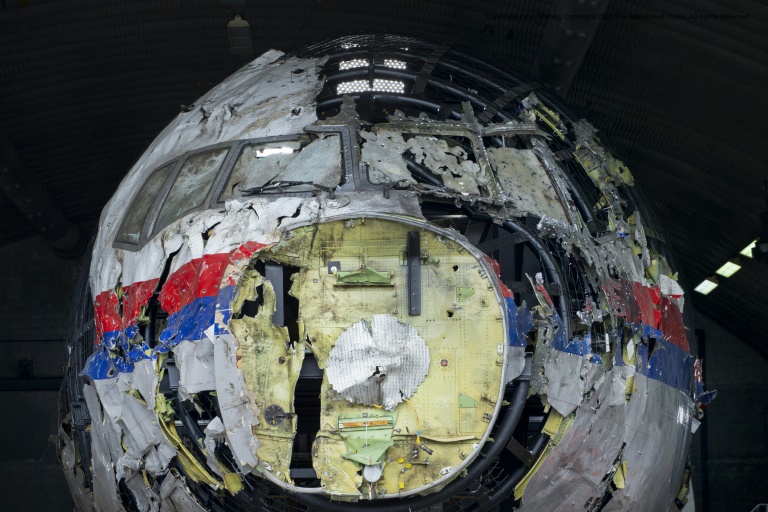
Dutch judges will give their verdict on Thursday in the trial of four men accused of downing Malaysia Airlines flight MH17 over Ukraine in 2014, against a backdrop of soaring tensions over Russia’s current invasion.

All 298 passengers and crew were killed when the Boeing 777 flying from Amsterdam to Kuala Lumpur was hit over separatist-held eastern Ukraine by what prosecutors say was a missile supplied by Moscow.

Russians Igor Girkin, Sergei Dubinsky, Oleg Pulatov and Ukrainian citizen Leonid Kharchenko face a life sentence if convicted on charges of murder and causing an aircraft to crash.

But the four suspects all remain at large and have refused to attend the two-and-a-half-year trial in the Netherlands, which followed an international investigation.

Eight years on from the disaster, the region where MH17 crashed has become one of the key battlegrounds in Russia’s nearly nine-month-old war in Ukraine.

Bereaved families will travel from around the world to the high-security court near Schiphol Airport, near where the doomed plane took off, to hear the three-judge panel’s verdict from 1230 GMT on Thursday.

“If they are guilty, the international community should hunt them down,” Evert van Zijtveld, who lost his daughter Frederique, 19, his son Robert-Jan, 18, and his parents-in-law, told AFP.

“I cannot forgive them.”

– ‘Toys lying around’ –

The crash of MH17 caused global outrage, with Ukraine’s famed sunflower fields littered with bodies and wreckage. Some victims, including children, were still strapped into their seats.

Prosecutors said the suspects were part of Kremlin-backed separatist forces and played a key role in bringing the BUK missile system into Ukraine from a military base in Russia — even if they did not pull the trigger.

Defence lawyers for Pulatov, the only suspect to have legal representation, argue that the trial has been unfair. 

They say prosecutors failed to prove a BUK missile brought down the jetliner, and have also brought up “alternative scenarios” such as that a Ukrainian jet shot it.

Moscow has denied all involvement. 

During the trial, prosecutors relied heavily on intercepted phone calls and mobile phone data allegedly locating the suspects near the launch site or in decision-making centres.

They have also used witness statements — including an ex-separatist who broke down as he described the “children’s toys lying around” at the crash scene — plus video and photo evidence of the missile’s movements.

Forensic material including fragments found in victims’ bodies was cited to prove that it was a BUK missile.

– Hopes for capture –

Prosecutors say Girkin — a former Russian spy and historical re-enactment fan who became the so-called defence minister of the separatist Donetsk People’s Republic — helped supply the missile system.

Girkin has recently criticised the Russian military over its handling of the war and reportedly volunteered to fight in Ukraine — leading some MH17 relatives to hope he may be captured and sent to the Netherlands.

Dubinsky, who has also been tied to Russian intelligence, allegedly served as the separatists’ military intelligence chief and was responsible for giving orders about the missile.

Pulatov, an ex-Russian special forces soldier, and Kharchenko, who allegedly led a separatist unit, were subordinates who played a more direct role in getting the missile to the launch site, prosecutors said.

The BUK missile had been identified through images and social media evidence as coming from the 53rd Anti-Aircraft Missile Brigade from Kursk in Russia, the court heard.

The defendants arranged for the missile to be brought in to counter Ukrainian air power, prosecutors said, arguing that under Dutch law it “makes no difference” as to whether they mistakenly targeted a civilian plane.

The trial was held in the Netherlands as 196 of the victims were Dutch.

GMO skeptics still distrust big agriculture's climate pitch

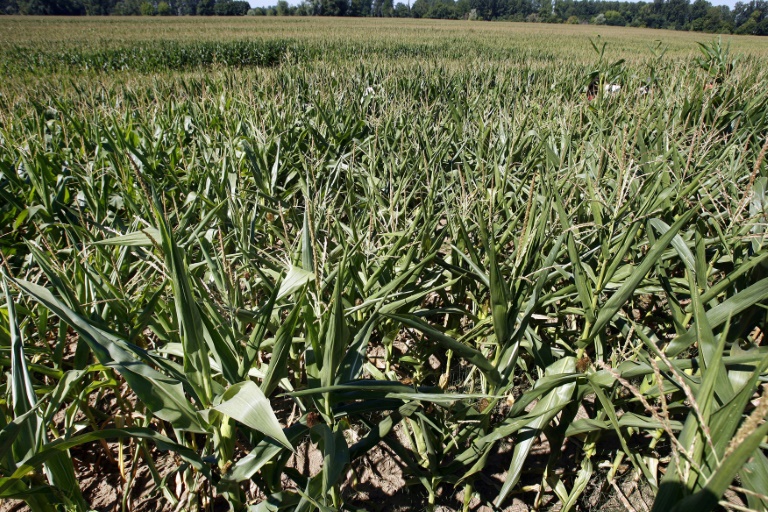
As a changing climate intensifies extreme weather, agricultural multinationals are hyping the ability of genetically modified crops to boost yields when facing drought, heat or even heavy rainfall.

But skeptics of engineered foods, or genetically modified organisms (GMOs), still aren’t buying it.

“I don’t see why we should evolve our views when they’re still doing the same things,” said Bill Freese, science director at the non-profit Center for Food Safety, criticizing the “dramatically increased toxic herbicide use” following the proliferation of GMOs.

Seeds designed to thrive in specific local conditions have been developed for centuries through conventional breeding, by crossing together plants with relevant characteristics and selecting the desired offspring.

But as more severe weather creates hostile growing conditions for conventional seeds, companies such as Bayer/Monsanto, Corteva and Syngenta are promoting GMOs as more efficient.

And newer technologies can reduce development times for these heartier varieties “by many years” compared with traditional crop modification techniques, according to a spokesperson for Germany’s Bayer.

“Drought tolerance is a complex trait involving many genes,” the spokesperson said. “Therefore, the ability to develop drought-tolerant traits through classic breeding methods such as crossbreeding is limited.”

Longtime GMO critics say they are open to new approaches but are not sold on the latest industry pitch, viewing conventional seed products as safer and with fewer environmental drawbacks.

“How many times have we read that we won’t be able to feed the world by 2050 unless we have GMOs?” said Freese, referring to the argument of GMO proponents that genetically modified crops will be necessary to produce enough food for a growing population on a warming planet. 

But for Freese, that  claim is “just a really effective smoke screen put on by the pesticide and seeds conglomerates to put a good face on this new technology.”

US company Corteva said it, too, is focused on “new breeding technologies such as gene editing” to “take advantage of the genetic diversity that already exists within the plant’s DNA” when it comes to creating new seed types. 

Such GMO products can help normalize a crop’s performance, even if extreme moisture from rain or flooding promotes the spread of fungus or pests, companies say.

In July, the World Economic Forum highlighted the potential for GMOs to help reduce greenhouse gas emissions by creating breeds that remove more carbon dioxide than conventionally grown crops.

– Safety, environmental concerns –

Many American growers favor GMO options because, while more costly, they require less human labor, Freese said.

More than 90 percent of the corn, cotton and soybeans grown in the United States is currently genetically modified to withstand herbicides and/or insects, according to US government figures.

Farmers have been growing corn meant to tolerate drought since 2011. Whether or not this trait is acheived with traditional breeding or with GMO seeds, the resulting plants are then usually combined with GMOs that can withstand herbicides.

“They told us in the ’70s and ’80s that GMOs were going to be more nutritious, fix the nitrogen level, withstand everything,” said Michael Hansen, a senior scientist at Consumer Reports. “What did we see? Mainly herbicide-tolerant crops.” 

Dana Perls, senior food and agricultural program manager at environmental network Friends of the Earth, said GMOs “go hand in hand with harsh chemicals that perpetuate pesticide pollution,” harming insect populations, soil health and water quality.

Perls acknowledged “incredible advances” in mapping and manipulating genetic material, but said scientists “are still quite limited in our understanding of the functioning of the incredible complexity of life, both within a single organism and within ecosystems.” 

For now, she advocates for regulatory oversight of new GMO technology “rooted in a precautionary approach.”

Andrew Smith of Rodale Institute said using GMOs to help crops withstand droughts and other extreme conditions is “nearsighted” unless the health of the soil is ensured.

Smith favors agricultural practices such as rotating crops, limiting chemical inputs and reducing soil tillage. Such techniques, known as regenerative agriculture, leads to healthier soil able to retain more water. 

“It’s a strategy to mitigate climate change,” said Smith.

Charles III leads first Remembrance Sunday as king

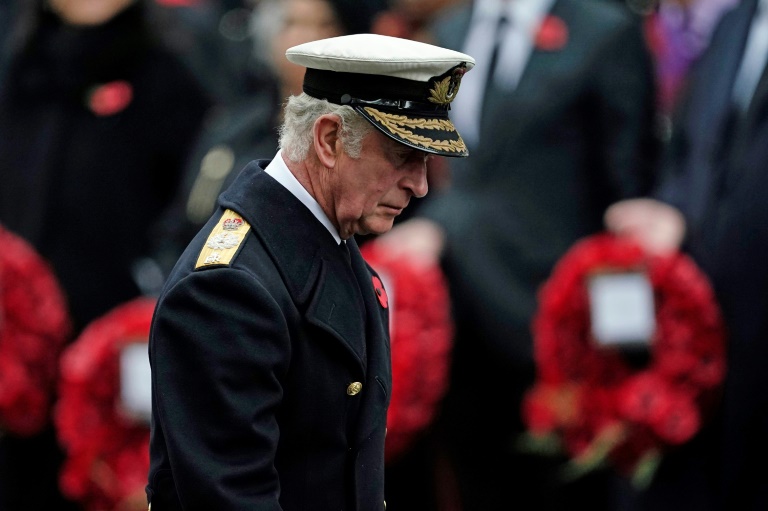
Charles III is to take part in his first Remembrance Sunday event as king, laying a wreath in tribute to UK and Commonwealth war dead, as Britain’s new prime minister also lauds Ukraine’s defenders.

The 73-year-old monarch had previously deputised for his mother Queen Elizabeth II, who died in September aged 96 after a year of failing health.

Since 2017, she had watched the annual service from a balcony of the Foreign, Commonwealth and Development Office (FCDO) overlooking the Cenotaph.

Last year a back complaint forced her to miss the ceremony in central London, just weeks after an unscheduled overnight stay in hospital.

Charles, who served in the Royal Navy in the 1970s, laid a wreath on her behalf.

Now king and commander-in-chief of British forces, he will lay his first wreath at the war memorial as reigning monarch.

The ring of red artificial poppies — Britain’s symbol of remembrance — is mounted on black leaves, with a ribbon in the king’s scarlet, purple and gold horseracing colours.

Buckingham Palace said a similar wreath would be laid on behalf of his wife, Queen Consort Camilla, for the first time.

Camilla, 75, will watch the event from the FCDO balcony.

Two minutes’ silence marks the start of the sombre tribute. It begins on the stroke of 1100 GMT with the distinctive chime of Big Ben, which returns to regular service after a five-year renovation. 

New Conservative leader Rishi Sunak will attend his first Remembrance Sunday as prime minister. 

“This year more than ever, we are reminded of the huge debt of gratitude we owe those who lay down their lives to protect their country,” Sunak said in a statement.

“As we fall silent together on Remembrance Sunday, we will honour the memories of the men and women we have lost, and pay tribute to the brave soldiers of Ukraine as they continue their fight for freedom.”

Remembrance Sunday is the culmination of days of events to pay tribute to all those who lost their lives in conflict.

On Thursday Camilla laid a cross at the Field of Remembrance outside London’s Westminster Abbey, alongside 70,000 other symbols left by military associations, and a space dedicated to the late queen.

On Friday — Armistice Day, marking the end of hostilities in World War I — a service was held at the National Memorial Arboretum in central England.

The king, queen and senior family members on Saturday attended an annual concert organised by the Royal British Legion veterans’ charity.

On Sunday, around 10,000 veterans will march past the Cenotaph including 400 who fought in the Falklands War, 40 years ago.

Other royals expected on Sunday include Charles’s eldest son and heir, Prince William, and William’s wife Kate.

Sharks, turtles, disease on agenda of wildlife trade summit

The trade in shark fins, turtles, and other threatened species will come under scrutiny at a global wildlife summit in Panama, starting Monday, that will also focus on the spread of diseases such as Covid-19.

Conservation experts and representatives of more than 180 nations will gather to study 52 proposals aimed at modifying protection levels set by the Convention on International Trade in Endangered Species of Wild Fauna and Flora (CITES).

The CITES delegates will also take stock of the fight against fraud, and vote on new resolutions, such as the increased risk of diseases spreading from animals to humans, which is linked to trafficking and became a major concern after the 2020 outbreak of Covid-19.

CITES, in force since 1975, regulates trade in some 36,000 species of plants and animals and provides mechanisms to help crack down on illegal trade. It sanctions countries that break the rules.

The meeting of the parties to the convention takes place every two or three years.

This year it is happening in the shadow of two major United Nations conferences with high stakes for the future of the planet and all of its inhabitants: the COP27 climate meeting currently underway in Egypt, and the COP15 conference on biodiversity in Montreal in December.

During its last meeting in Geneva, 2019, CITES boosted the protection of giraffes, and came close to imposing a total ban on sending African elephants caught in the wild to zoos. 

Delegates also maintained a ban on the sale of ivory in southern Africa, and decided to list 18 species of rays and sharks in CITES Appendix II, which requires the tracking and regulation of trade.

– ‘Shark extinction crisis’ –

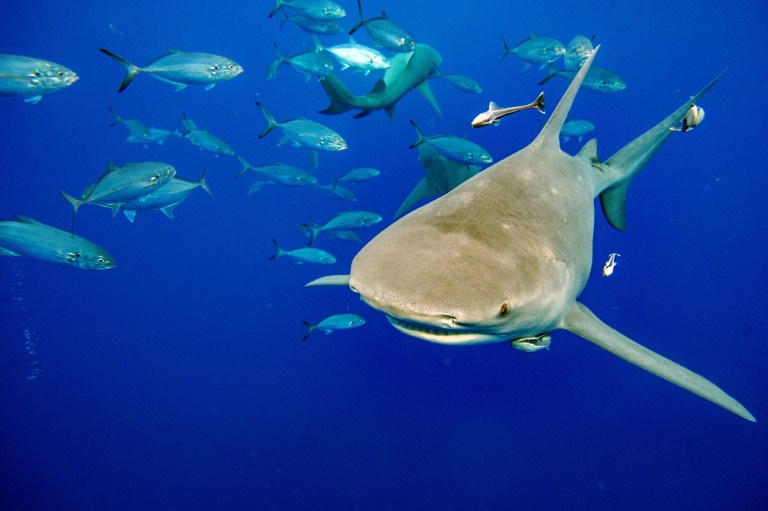
This year delegates will weigh a proposal to regulate the trade in requiem sharks, hammerhead sharks, and guitarfish rays.

“It would be a historic moment if these three proposals are passed: We would go from controlling around 25 percent of the shark fin trade to more than 90 percent,” said Ilaria Di Silvestre, the head of European Union campaigns for the International Fund for Animal Welfare (IFAW).

Meanwhile, Luke Warwick of the Wildlife Conservation Society warned that “we are in the middle of a very large shark extinction crisis.”

He said that sharks, which are vital to the ocean’s ecosystem, are “the second most threatened vertebrate group on the planet.”

“The trade in shark products — particularly fins, which can have a value of about $1,000 a kilogram in markets in East Asia — for use in a luxury status dish of shark fin soup, is driving the decline of these ancient ocean predators around the world.”

Sue Lieberman, the vice president of the Wildlife Conservation Society, told AFP that China — one of the top consumers of shark fin soup — has never voted in favor of a CITES marine species proposal, but often “implements it after it’s adopted.”

“I like to say this is the reptile COP,” said Lieberman, who has attended every CITES summit since 1989. 

Three crocodile species, three lizard species, various snakes, and 12 freshwater turtles are up for a total ban in trade.

“The freshwater turtles of the world are being exploited unsustainably and illegally for the pet trade, the collectors trade, and the food trade in Asia,” said Lieberman.

– Endangered violin wood –

The trade of certain trees will also be examined, with proposals to add African mahogany and some species of brightly colored flowering Trumpet trees to Appendix II.

Brazil has asked for a total ban in the trade of Pernambuco wood — which is already protected — alarming musicians around the world as it has been used for centuries as the main source of wood to make bow instruments such as violins and the cello.

TRAFFIC, the scientific advisory body of CITES, has recommended rejecting the proposal, which is unlikely to obtain the required two-thirds of votes.

The Panama meeting, which will run until November 25, is the first to be held since the outbreak of the SARS-CoV-2 virus in Wuhan, China, which many scientists believed originated in bats before infecting humans.

Liberman added that because CITES deals only with international trade, local markets for live wildlife, such as in Wuhan are not under its purview.

“But nevertheless, CITES needs to make a statement… It seems to us that it would be highly inappropriate for CITES for its first meeting after the pandemic started, not to mention it. So we’re, we’re hopeful that they’ll adopt something.”

bl/ha/emp/fb/tjj

*** An earlier version of this story contained a quote in the penultimate paragraph mentioning “international trade societies” instead of CITES. That quote has been removed and the comment paraphrased for clarity.

Banksy unveils Ukraine mural in town bombed by Russia

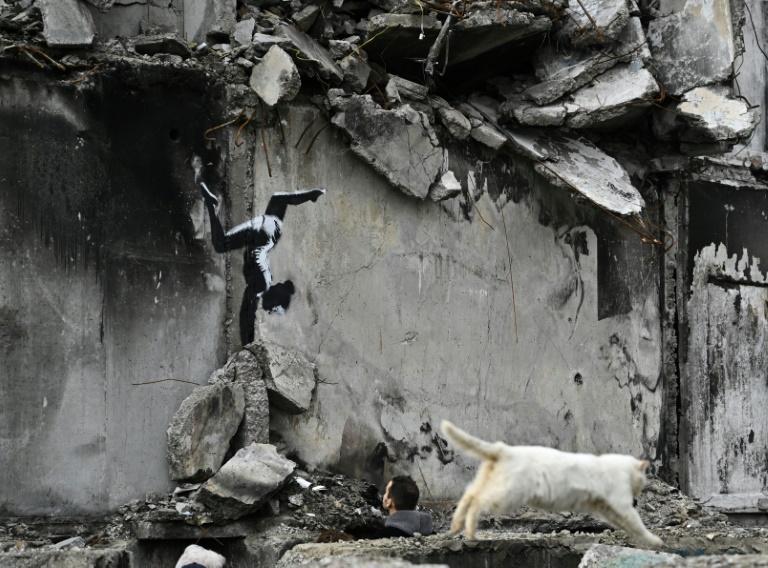
Banksy, the elusive British street artist, has painted a mural on a bombed-out building outside Ukraine’s capital, in what Ukrainians have hailed as a symbol of their country’s invincibility.

On Friday night the world-famous graffiti artist posted on Instagram three images of the artwork — a gymnast performing a handstand amid the ruins of a demolished building in the town of Borodyanka northwest of the Ukrainian capital Kyiv.

The caption read “Borodyanka, Ukraine”.

Together with towns such as Bucha and Irpin, Borodyanka was severely hit by Russia’s bombardments and became a symbol of the devastation wrought by Moscow’s offensive since February.

The town was briefly occupied by Russian forces before they withdrew in April.

“It is a symbol that we are unbreakable,” 32-year-old Oleksiy Savochka told AFP on Saturday, referring to the graffiti.

“And our country is unbreakable.”

A number of murals — in the style of Banksy — have appeared in and around Kyiv prompting Ukrainians to think that the anonymous street artist might be working in the war-ravaged country.

Another graffiti in Borodyanka — its origin unconfirmed by the artist — shows a little boy throwing a man wearing a judo uniform to the ground.

The scene could be a possible reference to Russian leader Vladimir Putin, who is a martial arts enthusiast.

“It is a small boy against an old man and he is defeated, he’s already defeated,” Bogdan Mashay, a 30-year-old Ukrainian TV journalist, told AFP near the artwork.

“It’s unbelievable that Banksy is here in Borodyanka,” he added.

On the side of a ruined building in Irpin, a third mural — also unconfirmed by Banksy — shows a gymnast performing a ribbon routine despite apparently being hurt and wearing a neck collar.

On Friday, Ukrainian President Volodymyr Zelensky declared Kherson “ours” after Russia withdrew troops from the strategic southern city.

Kherson was the first major urban hub to fall after Putin ordered Russian troops into Ukraine on February 24. 

video-as/ah/pvh

At COP27, hundreds march behind hunger striker's sister

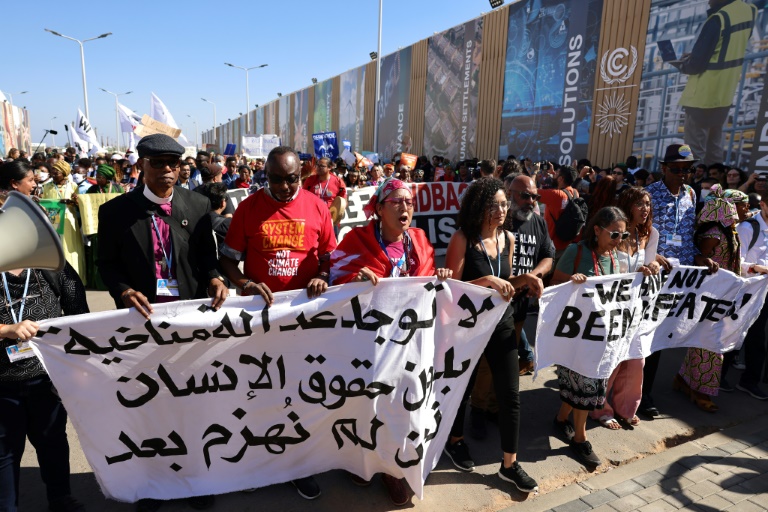
Chants of “free them all” and “no climate justice without human rights” rang out between the halls of COP27 Saturday, in the largest protest since the UN climate summit began.

Jailed Egyptian dissident Alaa Abdel Fattah’s sister, Sanaa Seif, who is at the summit campaigning for her brother’s release, marched in the front line with hundreds behind her.

Seven months into a hunger strike, Abdel Fattah began refusing water last Sunday, as world leaders arrived in the Egyptian resort of Sharm el-Sheikh for COP27. 

With them came Seif, who at two press conferences this week was heckled by apparently pro-government attendees, who called her brother a “criminal”, not a “political prisoner”.

Behind her on Saturday — winding between halls inside which world leaders negotiated over the climate crisis — hundreds of protesters demanded urgent action towards climate justice and human rights, an AFP correspondent reported.

Although demonstrations at COP27 must be approved by organising authorities and should take place only in a special zone, activists behind Saturday’s rally said they got UN permission for their action outside the designated area.

They marched behind a banner reading: “You have not yet been defeated” –- the title of Abdel Fattah’s book, which has become a rallying cry for summit activists.

The demonstrators incorporated the words into their demands for indigenous, women’s, labour and disability rights. Multiple speakers have ended their speeches in the conference’s formal proceedings with the same sentence.

“I came here thinking I would be alone. I am sure that those in power thought that my voice would be drowned out and ignored. Instead, I found that my family was already here waiting for me,” protest organiser Asad Rehman read from a statement from Seif.

She stood silently next to him.

Abdel Fattah was a key figure in Egypt’s Arab Spring uprising more than a decade ago. He began consuming “only 100 calories a day” in April, his family said, to protest the conditions he and about 60,000 other political prisoners face in the country.

His family say they fear for his life, and have made months-long appeals to the international community, particularly Britain, where Abdel Fattah gained citizenship this year from behind bars through his British-born mother.

Some world leaders have raised his case with Egyptian President Abdel Fattah al-Sisi in bilateral meetings during the climate talks.

His lawyer, former presidential candidate Khaled Ali, on Saturday submitted another request for a permit to visit Abdel Fattah in the prison in northern Egypt where he is being held.

Ali had said on Thursday that he was denied entry to the Wadi al-Natroun prison despite having a permit from the prosecution.

The family requested a pardon from President Sisi Friday, Abdel Fattah’s other sister announced.

The plea has been picked up by one of Egypt’s most watched talk show hosts, the ardently pro-Sisi Amr Adib. On prime time television Friday, Adib said the pardon would be in “the interest of Egypt first and foremost”.

Ukraine police work to de-mine Kherson after Russian retreat

Ukrainian authorities said Saturday they were working to de-mine Kherson, record Russian crimes and restore power across the region one day after declaring the southern city had been liberated following months of Russian occupation.

Ukraine’s president on Friday declared that the Black Sea city was back in Kyiv’s hands after Moscow said it pulled back more than 30,000 troops from what was the first major urban hub to fall to Russia after the February invasion.

Kherson was one of four regions in Ukraine that Russian President Vladimir Putin claimed to have annexed in September. But weeks later, the Russian retreat came as a huge boost to Ukrainians suffering from nearly nine months of fighting.

Ukrainians in Kherson danced around a bonfire and sang “Chervona Kalyna”, a patriotic song, in the dark, in images distributed by the Ukrainian military.

After an eight-month Russian occupation, Ukrainian television resumed broadcasting in the city and the region’s energy provider said it was working to restore power supplies.

Ukraine’s police chief Igor Klymenko said around 200 officers were erecting roadblocks and recording “crimes of the Russian occupiers”.

He urged Kherson residents to watch out for possible landmines laid by the Russian troops, saying one policeman had been wounded while de-mining an administrative building.

A woman and two children were taken to hospital with injuries after an explosive device went off near their car in the region’s village of Mylove, police said.

In Berislav district of the Kherson region, Ukrainian police said Russian shelling left “dead and wounded,” without providing further details.

– Nuclear hint –

On Saturday, Russia’s former president Dmitry Medvedev hinted again that Moscow could use nuclear weapons.

“For reasons that are obvious to all reasonable people Russia has not yet used its entire arsenal of possible means of destruction,” Medvedev said on messaging app Telegram.

“There is a time for everything.”

Ukraine’s Foreign Minister Dmytro Kuleba said Kyiv and the West were on their way to “joint victory” over Moscow after Russia’s February 24 invasion.

“This is coming, and our victory will be our joint victory,” Kuleba said as he met US Secretary of State Antony Blinken on the sidelines of a Southeast Asian summit in Cambodia.

“A victory of all peace-loving nations across the world.”

Kherson’s full recapture would open a gateway for Ukraine to the entire Kherson region, with access to both the Black Sea in the west and Sea of Azov in the east.

In Ukraine’s capital, the news was met with joy late Friday.

Wrapped in flags, popping champagne corks and belting out the national anthem, residents of Kherson living in Kyiv celebrated in the central Maidan square.

– ‘Best surprise’ –

“I didn’t believe it at first, I thought it was going to take weeks and months, a few hundred metres at a time, and now we see them arrive in Kherson in one day, it’s the best surprise,” said Artem Lukiv, 41, originally from Kherson.

Blinken hailed the “remarkable courage” of Ukraine’s military and people and vowed US support “will continue for as long as it takes” to defeat Russia.

“It’s a big moment and it’s due to the incredible tenacity and skill of the Ukrainians, backed by the relentless and united support of the United States and our allies,” added US National Security Advisor Jake Sullivan.

In London, British Defence Secretary Ben Wallace said Russia’s “strategic failure” in Kherson could prompt ordinary Russians to question the war. 

“Ordinary people of Russia must surely ask themselves: ‘What was it all for?'”

Kuleba warned, however, that Russia is still “mobilising more conscripts and bringing more weapons to Ukraine” and called for the Western world’s continued support. 

The Kremlin has insisted that Kherson remains part of Russia.

“This is a subject of the Russian Federation. There are no changes in this and there cannot be changes,” spokesman Dmitry Peskov told reporters.

A full Ukrainian recapture of the Kherson region would disrupt a land bridge for Russia between its mainland and the Crimean peninsula, which Moscow annexed in 2014.

Marinakis, the fiery Greek mogul at war with the PM

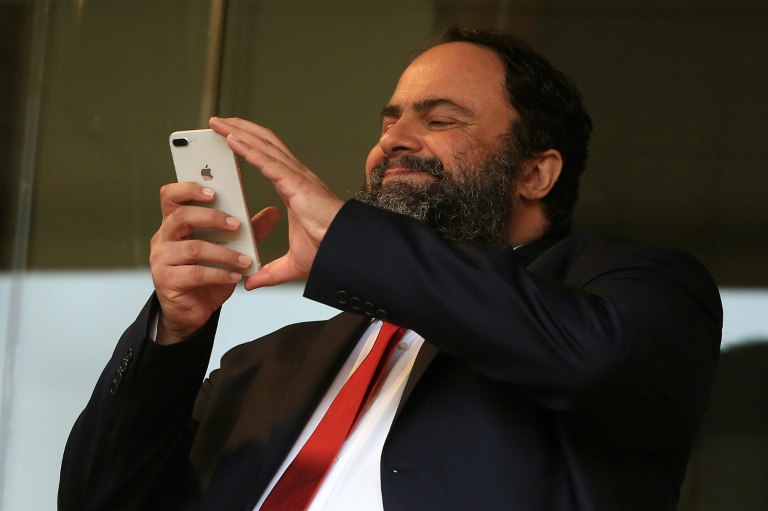
Evangelos Marinakis, the shipping tycoon, football boss and media mogul, is not just one of the most powerful and controversial figures in Greece, he is waging open warfare against Prime Minister Kyriakos Mitsotakis.

The battle between two of the most powerful men in the country is rooted in stunning allegations of widespread state surveillance, which have rocked the conservative government since the summer. 

Marinakis, the 55-year-old owner of English Premier League club Nottingham Forest and Greece’s most successful football club Olympiacos, was named in the media last week as one of the targets of the surveillance.

A weekly newspaper put Marinakis on a list of 33 people, including cabinet ministers, some of their wives and ex-prime minister Antonis Samaras, targeted illegally by spyware known as Predator and technology employed by state intelligence. 

Mitsotakis and the government swiftly denied the report in the Documento newspaper and have denied for months any involvement in illegal wiretaps.

But an incensed Marinakis has mobilised his media empire — he purchased the country’s top media group DOL in 2017 and leading channel Mega in 2019 — to hit back hard.

Two days after the Documento report, the Ta Nea daily owned by Marinakis reported that there were allegedly more than 100 people under surveillance.

“Only those involved in non-institutional surveillance and the underworld resort to such means,” said Marinakis in a statement. 

– Close family ties –

“The prime minister must find the courage, move heaven and earth, to clarify this sordid case and bring the culprits to justice,” he added, slamming the scandal as a “corruption of democracy.”

The prime minister hours earlier had fanned the flames in a televised interview in which he appeared to take direct aim at Marinakis.

“Some people are confusing their roles,” he told Antenna TV.

“Just because they own a team or control certain media or possibly both, they think they can blackmail, dictate the government’s course of action,” he said.

The public spat is even more unprecedented given close and longstanding family ties between the two men.

Decades ago, Marinakis’s father was a lawmaker for the ruling conservative New Democracy party and a friend of Mitsotakis’s father Constantinos, himself a former prime minister.

Marinakis was best man at the 1998 wedding of Mitsotakis’s sister Dora, who is herself a former foreign minister of Greece and former mayor of Athens.

During a decade of economic slump in Greece, the tycoon estimated to be worth $600 million, took advantage of the crisis to expand his sphere of influence.

Ranked 47th most influential person on the shipping industry’s Lloyd’s List in 2021, Marinakis has been a city councillor in Piraeus since 2014, exerting influence on the management of one of the Mediterranean’s main ports. 

His company Capital Maritime and affiliated firms operate a total fleet of 98 ships.

– ‘Patronage and cronyism’ –

He further padded his image as a public benefactor by funding intensive care units during the Covid-19 pandemic.

He also a signed a partnership between Unicef and Olympiacos, which he has owned since 2010.

Olympiacos ownership gives Marinakis not just prestige, but the unwavering support of legions of Greek football fans.

Giannis Zaimakis, from the department of sociology at the University of Crete, summed it up as a “relationship of patronage and cronyism in the image of Greek society”.

Elected in June by fellow club owners to head the top-flight Super League, Marinakis is currently locked in a bitter dispute with the Greek football federation. 

He recently threatened to pull his team from the championship race over refereeing issues.

He has also had several brushes with the justice system.

Acquitted of match-fixing in 2018 after a lengthy probe, he remains under investigation for alleged involvement in the “Noor 1” affair, a cargo ship held in 2014 while carrying 2.1 tons of heroin. 

Marinakis has denied any involvement.

Brazil will regain its climate 'leadership': ex-minister

Brazil will protect the Amazon “with its own efforts” without waiting for international funding, the former environment minister of incoming President Luiz Inacio Lula da Silva said Saturday at UN climate talks. 

Credited with curbing deforestation in the 2000s, Marina Silva outlined key environmental priorities for the new president, who will visit the climate talks next week in the Red Sea resort of Sharm el-Sheikh.

Silva is tipped to reprise her role in Lula’s new government. 

Lula has vowed that the fight against deforestation in the Amazon would be “a strategic priority” of his government, countering the legacy of Jair Bolsonaro, who presided over a surge of rainforest destruction.

Silva said Lula’s visit to Egypt even before he takes office on January 1 shows that “Brazil is regaining environmental leadership in the multilateral arena”.

With a plan to combat the destruction of the Amazon and pursue a reforestation target of 12 million hectares (30 million acres), Brazil will lead “by example”, she said. 

Silva added that the country would act to preserve forests — a crucial buffer against global warming — without depending on international aid.

But she welcomed announcements from Norway and Germany that they would resume financial support. Both countries withdrew aid in 2019 shortly after Bolsonaro came to power. 

Norway is the largest contributor to that fund, which currently holds $641 million, according to its environment ministry.

Since Bolsonaro — a staunch ally of agribusiness — took office in January 2019, average annual deforestation in the Brazilian Amazon increased by 75 percent compared to the previous decade.

Silva said there was a need to create a national super-body to coordinate climate action among various ministries.

“It would be something innovative and powerful,” she said.

Lula, 77, secured a narrow win over far-right incumbent Bolsonaro in an October 30 runoff election.

The veteran leftist will be inaugurated for a third term on January 1, facing a far tougher outlook than the commodities-fuelled boom he presided over in the 2000s.

Silva travelled to Egypt to prepare the ground for Lula’s expected visit.

She called for a review of the market in carbon credits amid concerns that oil and gas majors use them as a way to avoid reducing their own emissions. 

“I do not believe that fossil energy generation should be perpetuated by relying on these credits,” she said. 

While she said Brazil would still need its oil resources “as a transition to other sources of energy generation”, she added that her personal opinion was that even state-owned oil company Petrobras should go beyond oil and contribute to Brazil’s energy transition.

Close Bitnami banner
Bitnami