World

Thousands protest in Berlin over price rises

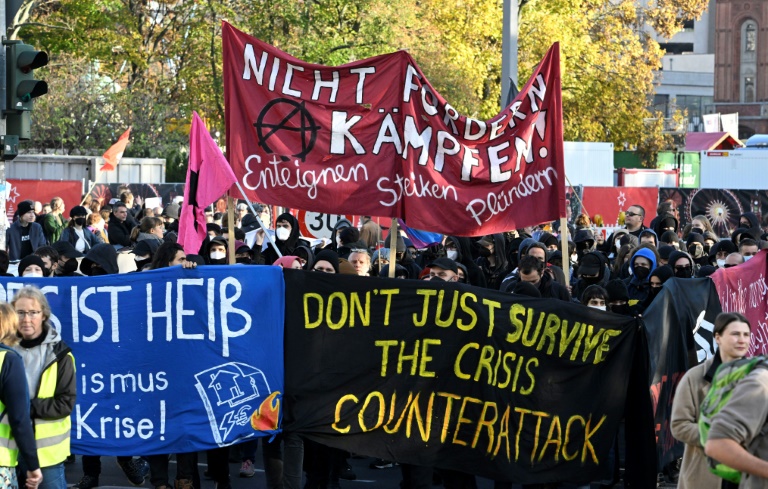
Thousands of people demonstrated in Berlin on Saturday calling for food prices to be controlled and for the rich to face higher taxes as Germany faces a cost of living crisis.

Marching behind banners, one of which was emblazoned with the demand “Redistribute!”, the demonstrators marched through the German capital after a call by left-wing organisations to protest against soaring prices and rents.

Both police and organisers said at least 3,000 people took part in the protest which took place to the backdrop of rising inflation caused in part by the war in Ukraine which has hit energy and food supplies.

Other banners said the current economic order “puts profits over people’s needs”.

Inflation in Germany is at its highest level in more than 70 years and reached 10.4 percent in October, according to figures released on Friday.

The price rises are hitting household budgets as well as industry in the eurozone’s largest economy.

The government, which is forecasting a 0.4 percentage point contraction in GDP next year, has sought mitigate surging energy prices, imposing a partial cap on the price of gas and electricity that will come into force in 2023.

Most of the other mitigating measures, including subsidised rail travel, have already ended.

German economic experts on Wednesday proposed raising taxes on higher earners to help households struggling with soaring energy bills, but the suggestion was immediately shot down by the country’s finance minister. 

Denmark's queen delights jubilee crowds after family spat

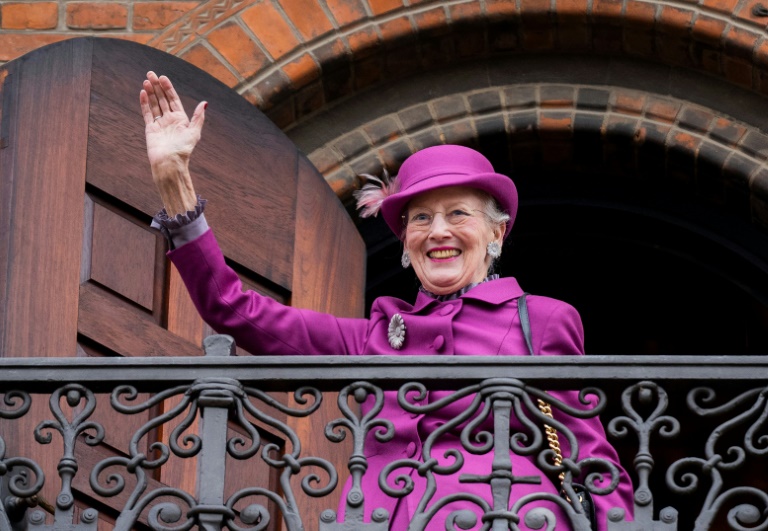
Denmark’s Queen Margrethe II rounded off celebrations marking her 50th year on the throne Saturday, joined by her family following a public row with her youngest son. 

The 82-year-old monarch took a carriage ride through Copenhagen and attended a ceremony at city hall.

The two events had been postponed following the death in September of Britain’s Queen Elizabeth II, her third cousin.

Now Europe’s only reigning queen, Margrethe waved from the city hall balcony, greeting a crowd of about 1,500 people in the capital’s main square.

At the end of September, the queen stripped four of her grandchildren of their titles, sparking unprecedented royal drama and leading her enraged second son Prince Joachim to air the family’s dirty laundry in public.

The queen announced that 53-year-old Prince Joachim’s four children would no longer be able to use the title of prince or princess after January 1.

She apologised for the hurt caused, but said the move was to allow her grandchildren to live normal lives without royal obligations.

Prince Joachim and his wife Princess Marie saw this as a slap in the face and vented their bitterness to the press.

Both were present for the jubilee, however, and the celebrations have been seen as an opportunity to close a difficult chapter — at least in appearance.

Pensioner Margit Lauritze, a well-wisher among those gathered in the capital, told AFP: “Family is very important for our queen and I think it is very important for the princes that the family is reunited.”

“In all families there are differences, and they will find a solution, I’m sure”.

US seeks 15-year term for Theranos founder in fraud case

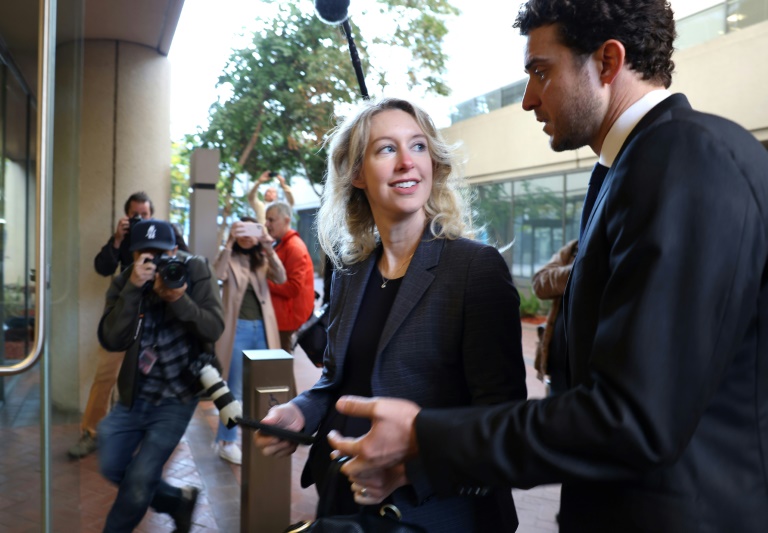
US federal prosecutors are seeking a 15-year jail term for Theranos founder Elizabeth Holmes and want her to pay more than $800 million to investors defrauded by her blood-testing startup, according to a court filing.

“The government recommends the Court sentence the defendant to 180 months in custody and order her to pay $803,840,309 in restitution,” said a court filing submitted Friday by US attorney Stephanie Hinds.

The toughly worded filing said Holmes had been “blinded by… ambition,” and that “her reality-distortion field put, and will continue to put, people in harm’s way.”

Holmes had vowed to revolutionize health diagnostics with self-service machines that could run an array of tests on just a few drops of blood, but the company collapsed following Wall Street Journal reporting in 2015 that revealed the machines did not work as promised.

Key investors in the startup included the Safeway grocery chain and the Walgreens chain of pharmacies, as well as former US Secretary of State George Shultz.

Holmes’ attorneys, in their own filing, insisted that no purpose would be served by her incarceration — saying she posed no danger, readily acknowledged her mistakes and had not materially benefited from the fraud — but that if the court decided on jail time it should not exceed 18 months.

The rival filings came just days after a federal judge rejected Holmes’s request for a new trial following her conviction in January for defrauding investors.

Holmes’ start-up drew high-profile backers and made her a billionaire on paper by the age of 30.

In 2015, Forbes magazine named Holmes the country’s richest self-made female billionaire, but a year later the magazine revised her estimated net worth to zero.

A California jury found Holmes guilty of four counts of tricking investors.

Sentencing is scheduled for November 18.

At COP27, hundreds march behind hunger striker's sister

Chants of “free them all” and “no climate justice without human rights” rang out between the halls of COP27 Saturday, in the largest protest since the UN climate summit began.

Jailed Egyptian dissident Alaa Abdel Fattah’s sister, Sanaa Seif, who is at the summit campaigning for her brother’s release, marched in the front line with hundreds behind her.

Seven months into a hunger strike, Abdel Fattah began refusing water last Sunday, as world leaders arrived in the Egyptian resort of Sharm el-Sheikh for COP27. 

With them came Seif, who at two press conferences this week was heckled by apparently pro-regime attendees, who called her brother a “criminal,” not a “political prisoner.”

Behind her on Saturday — winding between halls inside which world leaders negotiated over the climate crisis — hundreds of protesters demanded urgent action towards climate justice and human rights, an AFP correspondent said.

Although demonstrations at COP27 must be approved by organising authorities and should take place only in a special zone, activists behind Saturday’s rally said they got UN permission for their action outside the designated area.

They marched behind a banner reading, “You have not yet been defeated” –- the title of Abdel Fattah’s book which has become a rallying cry for summit activists.

The demonstrators incorporated the words into their demands for indigenous, women’s, labour and disability rights. Multiple speakers have ended their speeches in the conference’s formal proceedings with the same sentence.

“I came here thinking I would be alone. I am sure that those in power thought that my voice would be drowned out and ignored. Instead, I found that my family was already here waiting for me,” protest organiser Asad Rehman read from a statement from Seif.

She stood silently next to him.

Abdel Fattah was a key figure in Egypt’s Arab Spring uprising more than a decade ago. He began consuming “only 100 calories a day” in April, his family said, to protest the conditions he and about 60,000 other political prisoners face in the country.

His family say they fear for his life, and have made months-long appeals to the international community, particularly the UK, where Abdel Fattah gained citizenship this year from behind bars through his British-born mother.

Some world leaders have raised his case with Egyptian President Abdel Fattah al-Sisi in bilateral meetings during the climate talks.

The family made an official request for a presidential pardon from President Sisi Friday, Abdel Fattah’s other sister announced.

The plea has been picked up by one of Egypt’s most watched talk show hosts, the ardently pro-Sisi Amr Adib. On prime time television Friday, Adib said the pardon would be in “the interest of Egypt first and foremost.”

A thirsty COP27 climate summit plagued by glitches

Wheelchair struggles, scarce drinking water, $15 sandwiches and hotel price-gouging at the COP27 climate summit have sparked anger and forced host country Egypt into damage-control mode, participants at the two-week meet said.

Organising a UN climate conference — which brings together up to 35,000 people from 195 countries each year — is a world-class logistical challenge, and veterans of the nearly 30-year process are used to minor inconvenience.   

But this year’s sprawling event in the Red Sea resort of Sharm el-Sheikh has been plagued with problems, participants say, the most basic perhaps being accessibility.

Pratima Gurung, who works with a disability advocacy group, said she and the Disability Rights Fund’s Krishna Gahatraj, who uses a wheelchair, have been left in the middle of the road “multiple times” while waiting for shuttle buses.

Organisers “haven’t clearly instructed the drivers” on how to accommodate people with disabilities, said Gurung, who runs the National Indigenous Disabled Women Association in Nepal.

Though ramps abound, attendees with physical impairments say they are not standard, and that the UN climate summit has been especially difficult for them to navigate.

“As a disabled person, COP is inherently inaccessible for me,” said SustainedAbility’s Jason Boberg, who has attended the past five summits organised by the UN Framework Convention on Climate Change, or UNFCCC.

But playing on the acronym, he has dubbed this year’s event the “UN Framework Convention on Concrete Curbs”.

Last year’s meeting in Glasgow also saw accessibility issues, with the Israeli energy minister initially unable to enter in her wheelchair.

– ‘Most confusing COP ever’ –

Another recurrent complaint in Sharm el-Sheikh is poor and scarce signage. 

“This is the most confusing COP ever,” said Bianca, a three-time climate summit attendee who asked to be identified only by her first name.

The size of a small town, the COP27 area is a sprawling archipelago of pavilions, meeting rooms, halls connected by bitumen roads that soak up the 30 degree Celsius (86 degree Fahrenheit) heat.

Journalists in a hangar-like media centre could be seen wrapped in jackets and shawls to protect themselves against the industrial-strength air-conditioning.

Also problematic and ironic, given the topic at hand, is a chronic shortage of drinking water.

During the first week of the conference, which runs until November 18, sparse water dispensers stood empty for hours at a stretch.

Delegates took to bringing in their own supplies, and a few were said to have ignored warnings not to drink desalinated water running from bathroom taps.

“People already under stress” should not “have to look for water all the time”, said one climate COP veteran from an NGO.

Exorbitant food prices, including sandwiches going for up to $15, have been especially problematic for those on tight budgets. 

“I have never seen prices like this at a COP,” the NGO representative said, declining to be identified.

In response to the complaints, organisers on Thursday made drinks free and slashed food prices in half for the rest of the conference.

Well before COP27 kicked off on November 6, alarm bells were ringing as the tourist town’s hotels suddenly tripled or quadrupled room rates, even for those with confirmed bookings. 

Some delegates arrived to find their reservations had been cancelled.

“People are now stranded, sleeping on the road, in bus stations,” youth activist Olumide Idowu from Nigeria wrote on Twitter Monday.

At a press briefing Thursday, special representative of the COP27 presidency, Wael Aboulmagd, told reporters that the “one case where people were asked to leave” will “not happen again”, and that “government officials have intervened.”

Ship leaves French port after disembarking migrants

All migrants on board a rescue ship turned back by Italy have disembarked in France, authorities said Saturday, as the vessel left to undergo maintenance at another port.

The Ocean Viking, operated by a French NGO, will in a few weeks’ time leave the other port in France to return to save more migrants in the Mediterranean.

The ship run by SOS Mediterranee had picked up more than 230 migrants at sea near the Libyan coast before spending weeks seeking a port to accept them.

France allowed the boat to dock at the southern port of Toulon on Friday after Rome denied it access.

French authorities said the last of the 230 passengers disembarked late Friday. Four others were evacuated by helicopter earlier in the week.

Of the passengers, 189 people — including 23 women and 13 minors — are now living in a holiday camp turned shelter on the Giens Peninsula some 20 kilometres (12 miles) from the military port of Toulon.

The area has been designated a special “international waiting zone” that is not part of French territory and from which they are not allowed to leave until their request for asylum has been processed.

French authorities said all new arrivals had expressed the wish to seek asylum.

They will have to undergo security checks, including from French domestic intelligence, before they can be interviewed by the country’s refugee agency OFPRA, whose representatives are expected to arrive on Saturday.

– ‘Young teenagers’ –

An additional passenger, the first let off the Ocean Viking on Friday, is being treated in a French hospital for poor health.

Another 44 unaccompanied minors — most “young teenagers” — have been handed over to French social services and are not staying at the Giens shelter, local official Evence Richard said.

Of all disembarked passengers, 175 are to leave France and head to 11 other countries.

Germany is to receive 80 migrants, while Bulgaria, Croatia, Finland, Ireland, Lithuania, Luxembourg, Malta, Norway, Portugal and Romania are also to take in a share.

The Ocean Viking initially sought access to Italy’s coast, which is closest to where the migrants were picked up, saying health and sanitary conditions onboard were rapidly worsening.

Italy refused, saying other nations needed to shoulder more of the burden for taking in the thousands of migrants trying to reach Europe from North Africa every year.

SOS Mediteranee’s operations director Xavier Lauth on Friday said the Ocean Viking would resume its rescue missions after leaving Toulon.

The UN’s International Organization for Migration says 1,891 migrants have died or disappeared so far this year while trying to cross the Mediterranean in the hope of a better life in Europe. 

People smugglers often crowd migrants into unseaworthy dinghies.

Ukraine says West on way to 'joint victory' after Russia retreat

Kyiv said on Saturday that the West was on its way to “joint victory” over Moscow after Ukraine said it had wrested back Kherson, the first major urban hub to fall after Russia’s invasion on February 24. 

London meanwhile said Russia’s “strategic failure” in the strategic Black Sea port city would sow doubt among the Russian public about the point of the war in Ukraine.

“There were very few who believed that Ukraine would survive,” Ukrainian Foreign Minister Dmytro Kuleba said as he met US Secretary of State Antony Blinken on the sidelines of a Southeast Asian summit in Cambodia.

“This is coming, and our victory will be our joint victory — a victory of all peace-loving nations across the world.”

Blinken hailed the “remarkable courage” of Ukraine’s military and people and vowed that US support “will continue for as long as it takes” to defeat Russia.

The humiliating Russian retreat was a huge boost to Ukrainians after months of suffering.

The secretary of Ukraine’s National Security and Defence Council, Oleksiy Danilov, said the liberation of all annexed territories was just a matter of time. 

“We are not going to put anything on ice,” he said. “We are not a freezer.”

The Ukrainian national anthem rang out in Kherson’s central square as a small crowd sang along while huddled around a bonfire, a video published by Ukraine’s parliament on social media showed. 

“Special units are already in the city,” President Volodymyr Zelensky wrote on Telegram, posting footage in which Ukrainian troops appeared to gather with residents.

– ‘Extraordinary victory’ –

About 50 kilometres (30 miles) from Kherson, Andriy Zholob, a commander of a medical unit, said they had been greeted by smiling faces and given “embroidered towels which we display on our vehicles”. 

“We see children running to meet us and greeting us,” Zholob told AFP.

In the nearby region of Mykolaiv, which Russian forces have failed to capture despite months of attacks, governor Vitaliy Kim said the entire region apart from the Kinburn Spit in the south had been returned to Ukrainian control.

The US hailed Ukraine’s “extraordinary victory” in recapturing Kherson from the Russians on Saturday. 

“It’s a big moment and it’s due to the incredible tenacity and skill of the Ukrainians, backed by the relentless and united support of the United States and our allies,” US National Security Advisor Jake Sullivan said.

British Defence Secretary Ben Wallace said Saturday that Kherson could prompt ordinary Russians to question the war. 

“In February, Russia failed to take any of its major objectives except Kherson,” Wallace said in a statement.

“Now with that also being surrendered, ordinary people of Russia must surely ask themselves: ‘What was it all for?'”

Kuleba however warned that Kyiv still sees “Russia mobilising more conscripts and bringing more weapons to Ukraine” and called for the Western world’s continued support. 

– Ukrainian television back on  –

In Kherson, Kyiv’s forces reconnected the local television network to Ukrainian broadcasters after local media reported that retreating Russian forces blew up the television tower and energy facilities, leaving the city without power.

Russia’s defence ministry said “more than 30,000 Russian servicemen, about 5,000 pieces of hardware and military equipment and materiel have been withdrawn”.

Kherson’s full recapture by Kyiv would be a political and symbolic blow to Putin and open a gateway for Ukraine’s forces to the entire Kherson region, with access to both the Black Sea in the west and Sea of Azov in the east.

– ‘In tears’ –

In Ukraine’s capital, the news was met with joy.

Wrapped in flags, popping champagne corks and belting out the Ukrainian national anthem, residents of Kherson living in Kyiv gathered in the city’s central Maidan square to celebrate.

“I didn’t believe it at first, I thought it was going to take weeks and months, a few hundred metres at a time, and now we see them arrive in Kherson in one day, it’s the best surprise,” said Artem Lukiv, 41, a Kherson resident living in Kyiv.

The Kremlin meanwhile insisted that Kherson was still part of Russia.

“This is a subject of the Russian Federation. There are no changes in this and there cannot be changes,” spokesman Dmitry Peskov told reporters.

A full Ukrainian recapture of the Kherson region would disrupt a vital land bridge for Russia between its mainland and the Crimean peninsula, which Moscow annexed from Ukraine in 2014.

Kherson was one of four regions in Ukraine that Putin claimed to have annexed in September.

Biden to press Xi on N. Korea in G20 talks

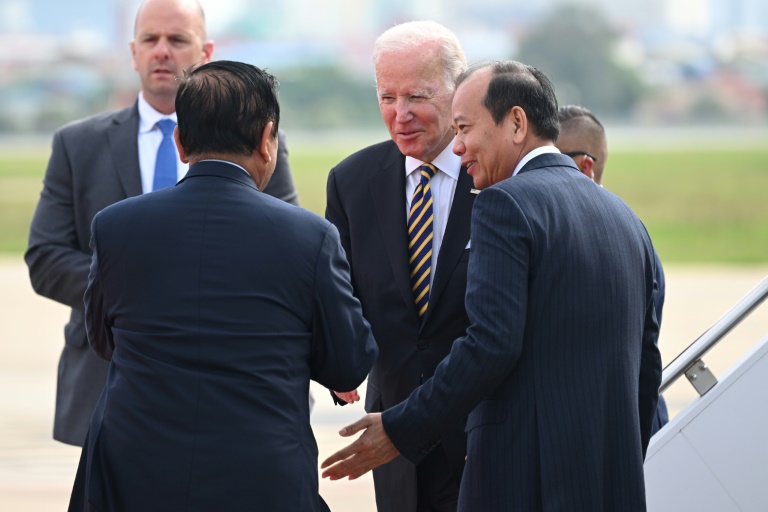
US President Joe Biden arrived in Asia on Saturday vowing to urge Chinese leader Xi Jinping to rein in North Korea when they hold their first face-to-face meeting at next week’s G20 summit.

Biden met Southeast Asian leaders in Phnom Penh ahead of his encounter with his Chinese counterpart on Monday in Bali.

The meeting between the two powers comes after a record-breaking spate of missile tests by North Korea sent fears soaring that the reclusive state would soon conduct its seventh nuclear test.

In Monday’s meeting on the sidelines of the G20 summit, Biden will tell Xi that China — Pyongyang’s biggest ally — has “an interest in playing a constructive role in restraining North Korea’s worst tendencies”, US National Security Advisor Jake Sullivan told reporters.

Biden will also tell Xi that if North Korea’s missile and nuclear build-up “keeps going down this road, it will simply mean further enhanced American military and security presence in the region”.

Sullivan said Biden would not make demands on China but rather give Xi “his perspective”.

This is that “North Korea represents a threat not just to the United States, not just to (South Korea) and Japan but to peace and stability across the entire region”.

Whether China wants to increase pressure on North Korea is “of course up to them”, Sullivan said.

However, with North Korea rapidly ramping up its missile capacities, “the operational situation is more acute in the current moment”, Sullivan said.

Japanese Prime Minister Fumio Kishida added his voice to calls for concerted international action to halt Pyongyang’s missile programme during talks with the Association of Southeast Asian Nations (ASEAN), China and South Korea.

Tokyo and Seoul have been increasingly alarmed by the North Korean testing blitz, which included an intercontinental ballistic missile.

South Korean President Yoon Suk-yeol’s office said that, because of the rising tensions caused by the North’s missile launches, he would hold a one-on-one summit with Kishida in Phnom Penh on Sunday.

Biden and Xi, the leaders of the world’s two biggest economies, have spoken by phone multiple times since Biden became president in January 2021. 

But the Covid-19 pandemic and Xi’s subsequent aversion to foreign travel have prevented them from meeting in person.

– Regional rivalry –

The pair are not short of topics to discuss, with Washington and Beijing at loggerheads over issues ranging from trade to human rights in China’s Xinjiang region and the status of the self-ruled island of Taiwan.

UN chief Antonio Guterres has urged the two sides to work together, warning Friday of “a growing risk that the global economy will be divided into two parts, led by the two biggest economies –- the United States and China”.

Biden met leaders from ASEAN on Saturday to push the US’s commitment to the region, in a bid to counter Beijing’s influence there.

China has been flexing its muscles — through trade, diplomacy and military clout — in recent years in a region it sees as its strategic backyard.

Biden said the United States wanted to work with ASEAN to “defend against the significant threats to rule based order and threats to the rule of law”.

– Xi emerges, Putin absent –

Biden and Xi both go into the G20 buoyed by recent domestic political success, Biden’s party having earned surprisingly strong midterm results and Xi having secured a landmark third term as China’s leader.

At last month’s Communist Party Congress, where he was anointed as chief again, Xi warned of a challenging geopolitical climate without mentioning the United States by name, as he wove a narrative of China’s “inevitable” triumph over adversity.

The G20 summit will be the latest step in a diplomatic re-emergence for Xi after the pandemic — it comes less than a fortnight after he hosted German Chancellor Olaf Scholz in Beijing.

As well as Biden, Xi will also meet French President Emmanuel Macron before heading to Bangkok later in the week for the APEC summit.

Notably absent from the summit will be Russian President Vladimir Putin, who has been shunned by the West over his invasion of Ukraine, and who is instead sending Foreign Minister Sergei Lavrov.

Lavrov will press Moscow’s view that the United States is “destabilising” the Asia-Pacific region with a confrontational approach, the Russian TASS news agency reported.

Ukrainian President Volodymyr Zelensky is expected to attend the G20 virtually, after his request to address the ASEAN gathering was turned down.

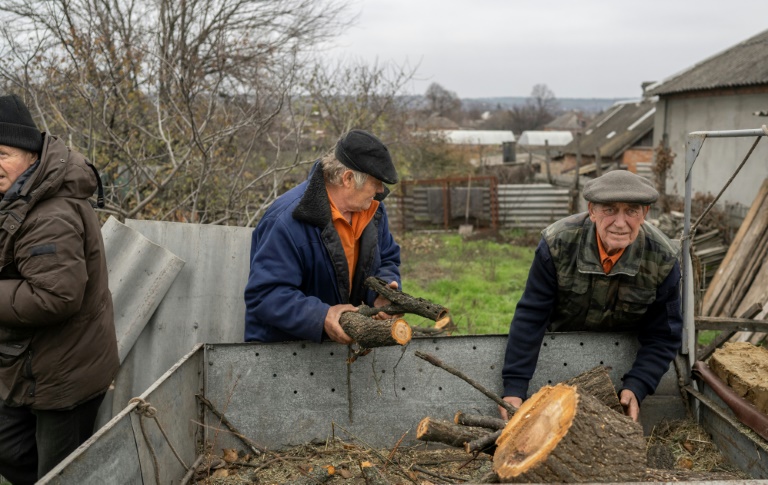
War-weary Ukraine residents chop wood to 'survive' winter

In the eastern Ukrainian town of Siversk, Valery drives a chainsaw through a tree trunk, like many others in the war-ravaged region stocking up for a cold winter.

“We try to survive thanks to wood,” says the 39-year-old, who stayed behind to look after his mother after his wife and children fled to the capital.

“A basement (to hide from Russian strikes), a stove and wood — that’s all we have,” he says, not giving his surname.

Russian forces who invaded Ukraine in February pounded the district with missiles and rockets this summer, and unsuccessfully tried several times to capture it.

Though the town has so far held out, its heights and eastern flank have been disfigured by the strikes, and deep craters have been etched in the earth.

In one square, buildings including a school has been severely damaged.

Only a handful of the town’s pre-war 12,000 residents remain today, battling life without gas or electricity.

“There’s nothing else to do, so we chop down the trees as much as possible. There are lots here, so it should be enough” for the winter, Valery says.

– Wine before bed –

The front line lies in a semi-circle, some 10 to 15 kilometres (6 to 9 miles) to the east of the town.

The constant to and fro of artillery fire between Ukrainian and Russian forces resounds throughout near-abandoned town.

“The only way to get through it is to drink wine before sleeping,” Valery says.

“I’m stressed, it’s difficult to cope.”

Alla, a 68-year-old doctor who also stayed behind, says she helps distribute humanitarian aid from the local authorities and church when it arrives.

“There are also volunteers who bring in food for the animals” left behind to roam the town, she says.

The physician says the fighting has destroyed her flat and one of her two houses in Siversk.

She has moved all the firewood from the destroyed house to the surviving one where she lives with her husband.

Suddenly, a blast makes her jump.

“There goes the Vasilek,” she says, as Ukrainian soldiers fire their Soviet 2B9 Vasilek mortar gun in the direction of Russian positions.

“It’s hard to get used to all this firing,” she says.

“But it’s our choice. We stayed here, so we’re trying to deal with it.”

– No phone signal –

The main problem, she says, is the lack of communication with the outside world.

“We don’t have a telephone signal. We did before, but not anymore. It’s hard to reach someone,” she says.

With no power in the area, residents have had to adapt to daylight hours, which end at around 5:00 pm.

“It gets dark early so we go to bed early. And we wake up early. That’s how we live,” she says.

In the town’s heights, Volodymyr, Victoria and Mykola chat at the bottom of the building where they live.

Axe in hand, Volodymyr is dicing up log for an outside oven.

“We chop up wood, put it in the oven and cook the buckwheat,” he says, adding it’s warmer outside near the stove than inside his unheated flat.

Sitting on a bench in a woolly blue hat and with her hands stuffed into her jacket pockets, Victoria grumbles.

“I live next door and we were put on the list to receive wood. They (the local authorities) took our names three months ago, but still we haven’t received anything,” she says.

“So we decided to find some ourselves.”

At least they receive some humanitarian donations.

“Without them, it would be difficult,” she says.

Biden to press Xi on N. Korea in G20 talks

US President Joe Biden landed in Asia on Saturday vowing to urge Chinese leader Xi Jinping to rein in North Korea when they hold their first face-to-face meeting at next week’s G20 summit.

Biden touched down in Phnom Penh for meetings with Southeast Asian leaders ahead of his encounter with his Chinese counterpart on Monday in Bali.

The meeting between the two superpowers comes after a record-breaking spate of missile tests by North Korea sent fears soaring that the reclusive state would soon conduct its seventh nuclear test.

In Monday’s meeting on the sidelines of the G20 summit, Biden will tell Xi that China — Pyongyang’s biggest ally — has “an interest in playing a constructive role in restraining North Korea’s worst tendencies”, US National Security Advisor Jake Sullivan told reporters.

Biden will also tell Xi that if North Korea’s missile and nuclear build-up “keeps going down this road, it will simply mean further enhanced American military and security presence in the region”.

Sullivan said Biden would not make demands on China but rather give Xi “his perspective”.

This is that “North Korea represents a threat not just to the United States, not just to (South Korea) and Japan but to peace and stability across the entire region.”

Whether China wants to increase pressure on North Korea is “of course up to them”, Sullivan said.

However, with North Korea rapidly ramping up its missile capacities, “the operational situation is more acute in the current moment”, Sullivan said.

Japanese Prime Minister Fumio Kishida added his voice to calls for concerted international action to halt Pyongyang’s missile programme during talks with ASEAN, China and South Korea.

Tokyo and Seoul have been increasingly alarmed by the North Korean testing blitz, which included an intercontinental ballistic missile.

Biden and Xi, the leaders of the world’s two biggest economies, have spoken by phone multiple times since Biden became president in January 2021. 

But the Covid-19 pandemic and Xi’s subsequent aversion to foreign travel have prevented them from meeting in person.

– Regional rivalry –

The pair are not short of topics to discuss, with Washington and Beijing at loggerheads over issues ranging from trade to human rights in China’s Xinjiang region and the status of the self-ruled island of Taiwan.

UN chief Antonio Guterres has urged the two sides to work together, warning Friday of “a growing risk that the global economy will be divided into two parts, led by the two biggest economies –- the United States and China”.

Before the G20, Biden will push the US’s commitment to Southeast Asia in meetings with leaders from the Association of Southeast Asian Nations (ASEAN), seeking to counter Beijing’s influence in the region.

China has been flexing its muscles — through trade, diplomacy and military clout — in recent years in a region it sees as its strategic backyard.

Biden flew into Phnom Penh with an agenda emphasising his administration’s policy of “elevating” the US presence in the region as a guarantor of stability, Sullivan said.

Biden will argue for “the need for freedom of navigation for lawful, unimpeded commerce, and for ensuring that the United States is playing a constructive role in maintaining peace and stability in the region”.

– Xi emerges, Putin absent –

Biden and Xi both go into the G20 buoyed by recent domestic political success: Biden’s party having earned surprisingly strong midterm results and Xi having secured a landmark third term as China’s leader.

At last month’s Communist Party Congress, where he was anointed as chief again, Xi warned of a challenging geopolitical climate without mentioning the United States by name, as he wove a narrative of China’s “inevitable” triumph over adversity.

The G20 summit will be the latest step in a diplomatic re-emergence for Xi after the pandemic — it comes less than a fortnight after he hosted German Chancellor Olaf Scholz in Beijing.

As well as Biden, Xi will also meet French President Emmanuel Macron before heading to Bangkok later in the week for the APEC summit.

Notably absent from the summit will be Russian President Vladimir Putin, who has been shunned by the West over his invasion of Ukraine, and who is instead sending Foreign Minister Sergei Lavrov.

Lavrov will press Moscow’s view that the United States is “destabilising” the Asia-Pacific region with a confrontational approach, the Russian TASS news agency reported.

Ukrainian President Volodymyr Zelensky is expected to attend the G20 virtually, after his request to address the ASEAN gathering was turned down.

Close Bitnami banner
Bitnami