World

Hazara girl wounded in deadly Afghan attack triumphs in exams

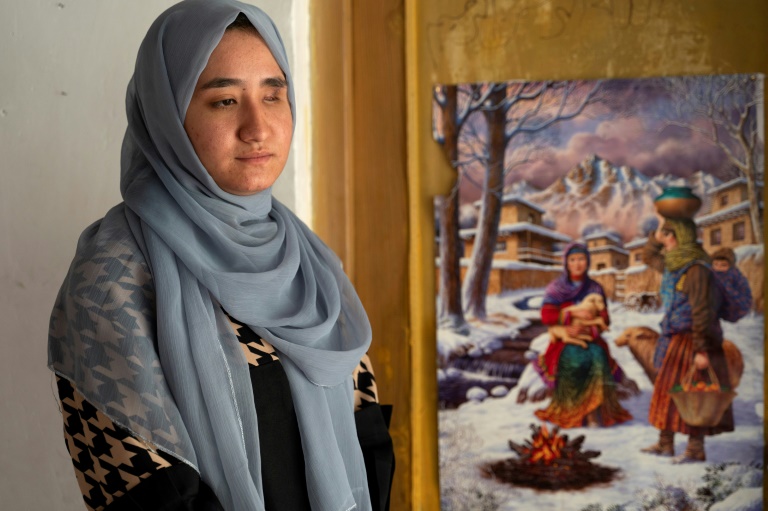
A month after losing her eye in a deadly suicide bomb attack on her academy, a young Hazara woman has finished among the top candidates in Afghanistan’s tough university entrance exams.

Results issued over the weekend showed Fatima Amiri scored 313 points out of a possible 360 in the “Kankor”, a highly competitive test that more than 100,000 students sat this year to win a coveted university place.

The top student got 355, but anything over 300 puts students in the very highest category.

“I am happy to have succeeded in the field of my choice,” said Amiri, who wants to study computer science.

“But I am not satisfied with my score. I was aiming for more,” she told AFP Monday.

It was a courageous achievement by the 17-year-old, who was badly injured in the September 30 attack on a private college where dozens of young men and women were cramming for the Kankor.

A suicide bomber entered the hall and walked to the front — where girls and young women had been segregated — then detonated a bomb that killed at least 54 people.

Most of those in the hall were from Afghanistan’s minority Hazara community, Shiites in a majority Sunni nation.

The community has been a frequent target of attacks by the Islamic State (IS) group — who consider them heretics — and Afghanistan’s new Taliban rulers said they had killed six IS plotters in a follow-up operation.

But education for girls like Amiri is tough enough even without the threat of IS attacks.

The Taliban have shuttered secondary schools for girls across most of the country, but some private colleges — like the one Amiri was attending — remain open.

Amiri was still recovering from her wounds when she sat the exams — blinded in one eye and deaf in an ear.

“I was happy to be able to take the exam, but my pain did not allow me to be very happy,” she said, tears welling.

“The day of the exam I felt the absence of my friends.”

When the results were announced, she rushed to the scene of the tragedy to pay tribute to them.

“I went there and told my friends who were martyred that I have succeeded,” she said.

“I have to continue my studies for them even if it’s hard.”

Top students from the Kankor get the choice of the best courses at the leading universities, but Amiri’s dream now is the opportunity to study abroad.

“I’m sure that if I study here, the same incident will happen again and I could lose my life,” she said.
Court summons Kenya pilots' union over strike

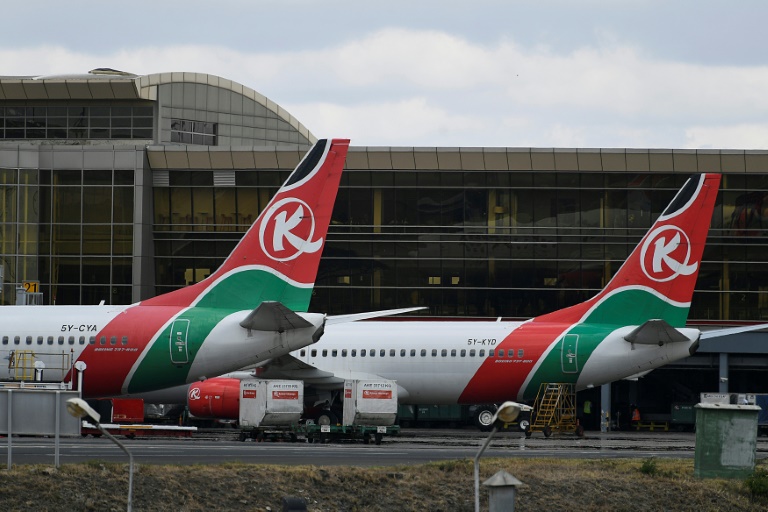
A Nairobi court on Monday summoned the Kenyan pilots’ union responsible for a ongoing strike that has left thousands of Kenya Airways passengers stranded, as the airline cancelled most of its flights.

The Kenya Airline Pilots Association (KALPA) launched the strike at Nairobi’s Jomo Kenyatta International Airport at six am (0300 GMT) on Saturday, defying a court order issued last week against the industrial action.

The strike has exacerbated the woes facing the troubled national carrier, which has been running losses for years, despite the government pumping in millions of dollars to keep it afloat.

“Due to the ongoing unlawful industrial action by Kenya Airline Pilots Association (KALPA), most of our flights have been cancelled,” the carrier said in a statement.

Hours later, the Nairobi Employment and Labour Relations Court issued a summons to union officials to appear “in court on 8th November 2022… for disobeying Court orders”, Justice Anna Ngibuini Mwaure said in the document seen by AFP.

The airline, which is part owned by the government and Air France-KLM, is one of the biggest in Africa, connecting multiple countries to Europe and Asia. 

On Sunday, Transport Minister Kipchumba Murkomen urged the pilots to return to work, threatening them with disciplinary action for “defying a court order”.

“Considering the defiance of KALPA and their total disregard for the existing court order –- which is at the heart of the rule of law — the Ministry of Labour now has to activate the procedures governing industrial relations,” the newly-appointed minister said.

KALPA has not responded directly to the government warning but said Monday it had been “working tirelessly to resolve the issues at hand.”

The pilots have accused the airline’s management of making “no concessions” to end the stalemate and have given no indication of how long the strike will last.

– Travel disruptions –

On Sunday, the airline said 56 flights had been cancelled due to the strike, disrupting 12,000 passengers’ plans.

The protesting pilots, who make up 10 percent of the workforce, are pressing for the reinstatement of contributions to a provident fund and payment of all salaries stopped during the Covid-19 pandemic.

Last week, the airline won a court injunction stopping the strike, but an official at KALPA, which has 400 members, told AFP at the time that the pilots “were acting within the provisions of the law” and were yet to be served with a court order.

The carrier has warned that the strike would jeopardise its recovery, estimating losses at $2.5 million per day if the pilots went ahead with their plans.

The airline was founded in 1977 following the demise of East African Airways, and flies more than four million passengers to 42 destinations annually.

It has been operating in large part thanks to state bailouts following years of losses.

EU threatens US over electric car subsidies

The European Union threatened Monday to take retaliatory measures against the United States for electric car subsidies that favour domestic manufacturers.

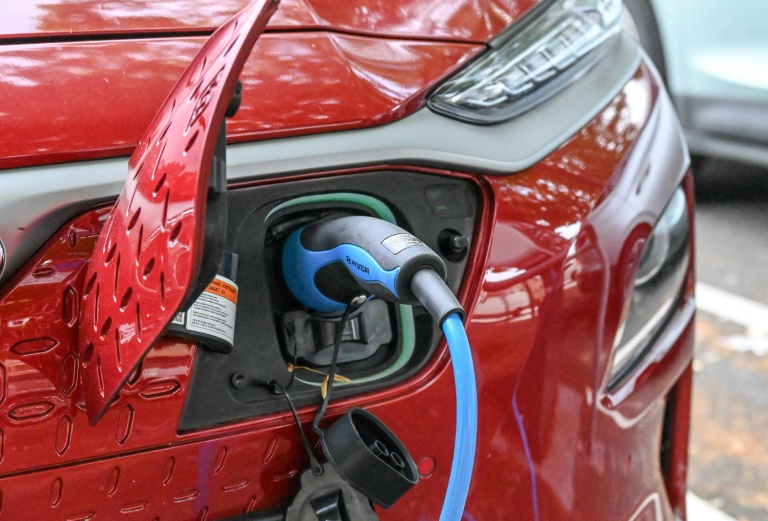
The 27-nation bloc is upset about Washington’s “Inflation Reduction Act”, which will see vast spending on green energy initiatives and includes tax breaks for US-made electric cars and batteries. 

Brussels says those benefits for American electric vehicle makers would put e-cars made in the EU at an unfair disadvantage on the lucrative US domestic market.  

EU finance ministers meeting in Brussels said they believed Washington was not hearing Europe’s worries.

“I’m not sure whether they are aware of our concerns,” German Finance Minister Christian Lindner said.

He added: “We should do everything to avoid a tit-for-tat scenario or even a trade war.”

His French counterpart, Bruno Le Maire, said he expected the European Commission to come up with “a strong response to this US policy”.

The US legislation “could harm this level playing field between the European companies and American companies,” he said, 

He underlined that it was “a matter of deep concern for the French government,” which estimates that 10 billion euros in investments are at stake.

The US Inflation Reduction Act opens up a $7,500 tax credit for the purchase of an electric car, but the vehicle has to roll out of a US factory with locally manufactured batteries.

Internal Market Commissioner Thierry Breton early Monday threatened to take “retaliatory measures” against the United States, calling the subsidies “contrary to World Trade Organization rules”.

If Washington doesn’t take into account the views of its EU partners the bloc could “go to the WTO” and make its arguments there, he said on French radio and TV station BFM Business.

Last week the EU urged the United States that it grant it the same exemptions it grants cars built in Canada and Mexico.

Brussels and Washington have set up a task force to try to hammer out a solution.

The EU’s trade commissioner, Valdis Dombrovskis, said as he arrived for the Brussels meeting that the issue was being discussed “extensively” with US counterparts, as well as through the joint task force.

The US credits have raised particular hackles in Europe’s manufacturing powerhouse Germany, which is concerned for its key car industry. 

Chancellor Olaf Scholz warned last month that the US measures could trigger “a huge tariff war”. 

Ghosn escape accomplices return to US, lawyer confirms

The American father and son duo who helped former Nissan chairman Carlos Ghosn dramatically escape from Japan have been returned to the United States after spending 20 months in Japanese jails, their lawyer said Monday.

Former Green Beret operative Michael Taylor, 62, was being held at a Los Angeles detention facility with a release date set for January 1, 2023, according to the Federal Bureau of Prisons, while son Peter Taylor was home with family in Massachusetts, their lawyer Paul Kelly told AFP, confirming reporting by The Wall Street Journal.

The Taylors’ return to America is the latest twist in the extraordinary Ghosn saga, which began with the former auto tycoon’s shock arrest in 2018 on financial misconduct allegations.

The men admitted helping smuggle Ghosn onto a private jet inside an audio equipment box in an audacious December 2019 escape from Japan while he was on bail.

Ghosn, who holds French, Lebanese and Brazilian passports, is now an international fugitive in Lebanon. The former chairman and chief executive of the Renault-Nissan-Mitsubishi alliance says he fled Japan because he did not believe he would receive a fair trial.

The Taylors were extradited from the United States to Japan in March 2021. In July that year Michael Taylor was sentenced to 24 months in prison and son Peter to 20 months, after apologising at previous hearings.

According to the prosecution, the Ghosn family paid the Taylors more than $860,000 for preparation and logistical costs, and $500,000 in cryptocurrency for lawyers’ fees.

Ghosn has always denied the charges against him, arguing they were cooked up by Nissan executives who opposed his attempts to more closely integrate the firm with French partner Renault.

Last March former Nissan executive Greg Kelly was handed a six-month suspended sentence by a Tokyo court over allegations he helped Ghosn attempt to conceal income.

Ghosn escape accomplices return to US, lawyer confirms

The American father and son duo who helped former Nissan chairman Carlos Ghosn dramatically escape from Japan have been returned to the United States after spending 20 months in Japanese jails, their lawyer said Monday.

Former Green Beret operative Michael Taylor, 62, was being held at a Los Angeles detention facility with a release date set for January 1, 2023, according to the Federal Bureau of Prisons, while son Peter Taylor was home with family in Massachusetts, their lawyer Paul Kelly told AFP, confirming reporting by The Wall Street Journal.

The Taylors’ return to America is the latest twist in the extraordinary Ghosn saga, which began with the former auto tycoon’s shock arrest in 2018 on financial misconduct allegations.

The men admitted helping smuggle Ghosn onto a private jet inside an audio equipment box in an audacious December 2019 escape from Japan while he was on bail.

Ghosn, who holds French, Lebanese and Brazilian passports, is now an international fugitive in Lebanon. The former chairman and chief executive of the Renault-Nissan-Mitsubishi alliance says he fled Japan because he did not believe he would receive a fair trial.

The Taylors were extradited from the United States to Japan in March 2021. In July that year Michael Taylor was sentenced to 24 months in prison and son Peter to 20 months, after apologising at previous hearings.

According to the prosecution, the Ghosn family paid the Taylors more than $860,000 for preparation and logistical costs, and $500,000 in cryptocurrency for lawyers’ fees.

Ghosn has always denied the charges against him, arguing they were cooked up by Nissan executives who opposed his attempts to more closely integrate the firm with French partner Renault.

Last March former Nissan executive Greg Kelly was handed a six-month suspended sentence by a Tokyo court over allegations he helped Ghosn attempt to conceal income.

Stocks mostly rise, oil steady tracking China lockdown policy

Global stock markets mostly rose Monday, extending last week’s strong gains, while oil prices steadied after China reaffirmed its commitment to an economically painful zero-Covid policy.

The dollar meanwhile was down against key rivals ahead of this week’s US midterm elections.

Global markets and oil prices were buoyant last week on hopes Beijing may begin to roll back policies aimed at stamping out coronavirus within its borders.

But on Saturday, the Chinese government said it would “unswervingly” stick to the current plan involving harsh lockdowns and strict quarantine and testing regimens for even the smallest clusters of cases.

Despite the official stance, “there are still hopes in the market” that Beijing may relax Covid-19 curbs in the coming months, Iris Pang, chief economist for Greater China at ING Wholesale Banking, told AFP.

“Traders believe that the Chinese government cannot permanently hold these existing Covid measures, and therefore the only direction is… looser Covid measures,” she said.

Ongoing large-scale events, such as the China International Import Expo in Shanghai, are also seen by investors as “a kind of water-testing” by Beijing, to see if cases and deaths rise significantly, Pang added.

Hong Kong’s Hang Seng index bounded 2.7 percent higher.

Shares in Europe were mostly higher in afternoon trading.

Wall Street stocks opened higher modestly higher, the day before US midterm elections.

US voters decide every two years who gets the majority in both chambers of Congress. The outcome will decide whether US President Joe Biden, who was swept to power two years ago in one of the most fraught elections Washington has witnessed, will be able to get any new policies passed or if the opposition will be able to frustrate his agenda.

“A divided government can be good for the market,” noted Neil Wilson, analyst at Markets.com. 

“A Republican clean sweep would likely take key Democrat legislation off the table — mainly positive for markets — whilst in the unlikely event that the Democrats retain both houses it could see them push on with fiscal stimulus, mainly negative since it might be inflationary.”

Meanwhile, shares in Apple slid 1.0 percent after the tech giant warned customers would face longer wait times for iPhones with the holiday season approaching.

This comes after Covid restrictions in central China “temporarily impacted” production at the world’s largest factory producing the smartphone.

Facebook-parent Meta will meanwhile become the latest tech firm to scale back its workforce, with plans to lay off thousands of employees this week, US media reported Sunday.

Shares in the firm jumped 3.6 percent at the start of trading.

On Friday, Wall Street equities ended a volatile session higher after US jobs data showed hiring remained resilient and wages continued to rise, though at a slower pace.

That raised hopes of a soft landing for the world’s biggest economy despite aggressive Fed rate hikes aimed at taming inflation.

“The bullish reversal in the markets suggests investors are perhaps happy to see signs that the US economy is holding its own rather well in terms of employment,” said market analyst Fawad Razaqzada at City Index and FOREX.com.

– Key figures around 1330 GMT –

London – FTSE 100: DOWN 0.3 percent at 7,314.76 points

Frankfurt – DAX: UP 0.7 percent at 13,549.75

Paris – CAC 40: UP 0.1 percent at 6,425.51

EURO STOXX 50: UP 0.6 percent at 3,712.07

New York – Dow: UP 0.4 percent at 32,533.21

Tokyo – Nikkei 225: UP 2.7 percent at 27,527.64 (close)

Hong Kong – Hang Seng Index: UP 2.9 percent at 16,595.91 (close)

Shanghai – Composite: UP 0.2 percent at 3,077.82 (close)

Euro/dollar: UP at $0.9998 from $0.9964 Friday

Pound/dollar: UP at $1.1476 from $1.1309

Dollar/yen: DOWN at 146.20 from 147.44 yen

Euro/pound: DOWN at 87.10 pence from 87.80 pence

West Texas Intermediate: DOWN less than 0.1 percent at $92.58 per barrel

Brent North Sea crude: DOWN less than 0.1 percent at $98.55 per barrel

burs/rl/ach 

Tough choices as Brazil's Lula gets down to business

Fresh off a celebratory beach holiday, Brazilian president-elect Luiz Inacio Lula da Silva got down to uglier business Monday: figuring out how to govern with a hostile Congress, nasty budget crunch and impossible-looking to-do list.

The political horse-trading of the transition period now starts in earnest for the veteran leftist, who will be sworn in for a third term on January 1, facing a far tougher outlook than the commodities-fueled boom he presided over in the 2000s.

Lula, 77, celebrated his narrow win over far-right incumbent Jair Bolsonaro in the October 30 runoff election by escaping last week to the sun-drenched coast of Bahia in northeastern Brazil.

He joked he needed a belated honeymoon with his first-lady-to-be, Rosangela “Janja” da Silva, whom the twice-widowed ex-metalworker married in May.

His other honeymoon — the political one — could be short, analysts say.

Lula is meeting Monday with advisers in Sao Paulo. On Tuesday, he will travel to the capital, Brasilia, to finish assembling his 50-member transition team and start negotiating with members of Congress, two allies told AFP.

He faces a battle to get bills passed in a legislature where conservatives scored big gains in October’s elections.

Lula’s coalition has around 123 votes in the 513-seat Chamber of Deputies, and 27 in the 81-seat Senate, meaning he will have to strike alliances to get anything done — and even just survive, given the threat of impeachment in Brazil, where two presidents have been impeached in the past 30 years.

– Into the shark tank –

Lula is expected to meet in Brasilia with lower-house speaker Arthur Lira, a key Bolsonaro ally from the loose coalition of parties known as the “Centrao,” a group known for striking alliances with whoever is in power — in exchange for feeding on the federal pork barrel.

Lula will be under pressure from the Centrao not to oppose the so-called “secret budget”: 19.4 billion reais ($3.8 billion) in basically unmonitored federal funding that Bolsonaro agreed to allocate to select lawmakers to boost support for his reelection bid.

Meanwhile, money will be tight for Lula’s campaign promises, including increasing the minimum wage and maintaining a beefed-up 600-reais-per-month welfare program, “Auxilio Brasil.”

Bolsonaro, who introduced the program, did not allocate sufficient funding to continue it in the 2023 budget.

“We can’t start 2023 without the ‘Auxilio’ and a real increase in the minimum wage,” the leader of Lula’s Workers’ Party, Gleisi Hoffmann, said Friday.

“That’s our contract with the Brazilian people.”

Facing the impossible math of funding such pledges without breaking the government spending cap, Lula’s allies are exploring their options, including passing a constitutional amendment allowing exceptional spending next year.

But they are racing the clock: it would have to be approved by December 15.

– Markets watching –

Lula, who ran on vague promises of restoring Latin America’s biggest economy to the golden times of his first two terms (2003-2010), faces a bleaker picture this time around.

“The challenge is… how to balance fiscal responsibility with a highly anticipated social agenda,” in the face of high inflation and a possible global recession, said political scientist Leandro Consentino of Insper university.

Markets are watching closely — especially his pick for finance minister.

Lula is expected to split Bolsonaro’s economy “super-ministry” into three portfolios: finance, planning, and trade and industry.

Analysts predict a political choice for finance minister, a technocrat for planning and a business executive for trade.

Names floated for the finance job include Lula’s former education minister Fernando Haddad and his campaign coordinator, Aloizio Mercadante.

– COP27 stage –

Other closely watched portfolios are the environment and a promised new ministry of Indigenous affairs — both sore spots under Bolsonaro, who presided over a surge of destruction in the Amazon rainforest.

The former job could go to Lula’s one-time environment minister Marina Silva, credited with curbing deforestation in the 2000s.

In a key gesture, the president-elect will make his return to the international stage at the COP27 UN climate summit in Egypt, where he will arrive on November 14, advisers said.

Silva, who will travel with him, told newspaper Folha de Sao Paulo: “The climate issue is now a strategic priority at the highest level.”

Defiance by candlelight as Kyiv adapts to blackouts

When their apartment block in northern Kyiv goes dark just after 6:00 pm as scheduled, residents Iren Rozdobudko and Igor Zhuk are ready. 

She lights a candle, he switches on his head torch, and they settle in for a quiet evening.

For much of the past month, Russian strikes have heavily targeted Ukraine’s energy infrastructure, severely damaging the electricity network.

To ease the strain on the grid and avoid a total blackout, national energy operator Ukrenergo has imposed controlled power cuts in the capital and elsewhere across the war-torn country.

Residents can consult the official schedule for rolling blackouts to pinpoint exactly when their lights will go out.

The buildings in the neighbourhood where Rozdobudko and her husband Zhuk live experienced three four-hour power cuts on Saturday — from midnight to 4:00 am, 9:00 am to 1:00 pm and again from 6:00 pm to 10:00 pm.

“I like the semi-darkness, when it’s quiet, moody and no one interrupts my thoughts,” says Rozdobudko, a 60-year-old writer and artist, as she prepares a vegetable salad.

– ‘Agony and powerlessness’ –

If she had to, Rozdobudko says she could cook borscht, a traditional beetroot soup, “with my eyes closed”.

The gas stove in the flat still works and water comes out of the tap even if the pressure is weak, she says.

“There is cabbage in the fridge, carrots and other necessary items,” she adds.

With winter fast approaching, the writer is grateful that the heating still works too.

Flashlights as well as candles, bought long ago for decorative purposes, keep their flat illuminated.

In the bathroom, they have put up a camping lantern.

Outside, the neighbourhood is plunged into darkness, the odd faint light emerging from the windows of some nearby apartments.

The pitch-black pavements are lit up here and there by residents using torches or mobile phone lights to guide them home.

But so widespread is the damage to Ukraine’s electricity infrastructure that Ukrenergo said at the weekend the controlled blackouts were not enough to relieve the grid and additional power cuts had to be imposed.

On Sunday, even the streets near the presidential office in Kyiv, which had so far escaped the power outages, briefly went dark, AFP reporters saw.

Parts of the capital also experienced interruptions to water supplies last week, following renewed Russian missile attacks.

Sitting by candlelight, Rozdobudko passes the time sewing doll’s clothes. “I’d never be doing this if the lights were on,” she admits.

The recent salvo of Russian strikes on the capital, after a months-long lull, is a stark reminder of the war raging on the frontlines in eastern and southern Ukraine, where deadly bombardments are a daily occurrence.

For Zhuk, a scientist and singer, the bombing of civilian infrastructure shows “the agony and powerlessness of the Russian army”. Moscow’s troops are struggling to resist a Ukrainian counter-offensive that saw Kyiv’s forces retake thousands of square kilometres in the northeast in September.

– Bracing for winter –

“When they see that they can’t defeat the (Ukrainian) army, they start fighting with those at the back — the civilians,” he says.

In the heart of Kyiv, the city’s iconic Independence Square, known as the Maidan, regularly goes dark. 

Without the streetlights on, only the headlights from passing cars cut through the blackness after nightfall. Restaurants have adapted too, offering candlelit dinners.

Almost 4.5 million Ukrainians were temporarily without electricity nationwide on Thursday night, President Volodymyr Zelensky said, accusing Russia of “energy terror”.

Kyiv Mayor Vitali Klitschko has warned of a “worst-case” scenario this winter with “no electricity, water or heating” if Russia kept up its attacks.

He said the city was preparing more than a thousand heating points where residents could keep warm as the weather turns ever colder. 

“We have bought electric generators, stored water and everything necessary for these heating points to accommodate people,” he said.

Zhuk, the torchlight on his forehead burning brightly, says he has resigned himself to a challenging time ahead.

“It will probably be a bit more difficult this winter, or maybe even a lot more difficult. But we’re not in the worst situation yet.”

In a corner of the flat, Rozdobudko visibly moved, points to a letter on display. It was written by her grandchildren, who have found refuge in the French city of Marseille.

“Hello grandpa and grandma. Is life going well in Ukraine?” the letter reads.

“If not, come and join us in France. We love you very much and we support you.”

Tanzania pays tearful tribute to plane crash victims

Grieving Tanzanians paid emotional tribute Monday to 19 people killed when a passenger plane plunged into Lake Victoria in the country’s deadliest air crash in decades.

The Precision Air flight from the financial capital Dar es Salaam crashed on Sunday morning while trying to land in the northwestern city of Bukoba.

Police blamed bad weather for the accident in the Kagera region.

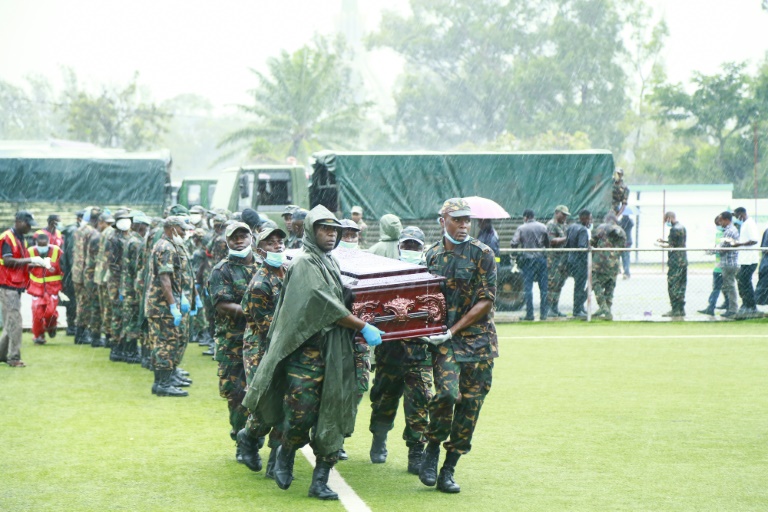
Prime Minister Kassim Majaliwa was among hundreds of people who gathered at Kaitaba Stadium in Bukoba, with Muslim and Christian clerics leading prayers for the dead as onlookers wiped away tears.

The accident shocked Tanzanians, with local broadcasters running live coverage of an hours-long ceremony to hand over the bodies of the victims to their families.

Majaliwa said the government would pay for the funeral services for the victims in addition to providing one million Tanzanian shillings ($430) to their families.

Twenty-four survivors were plucked to safety out of the 43 people aboard flight PW 494, with investigators from Precision Air and the Tanzania Airports Authority arriving in the lakeside city on Sunday.

Precision Air, a publicly listed company and Tanzania’s largest private carrier, said the aircraft was an ATR 42-500, manufactured by Toulouse-based Franco-Italian firm ATR, and had 39 passengers — including an infant — and four crew members on board.

AFP journalists saw the plane largely submerged on Sunday as rescuers, including fishermen, waded through water to bring people to safety.

Emergency workers attempted to lift the aircraft out of the water using ropes, assisted by cranes as residents also sought to help.

President Samia Suluhu Hassan on Monday hailed emergency workers and volunteers for acting quickly to save lives.

“I congratulate those who participated in the rescue, including the people of Bukoba,” she said on Twitter. 

“I pray for the deceased to rest in peace and for the injured to recover quickly.” 

– Rope and paddle –

Kagera regional commissioner Albert Chalamila singled out the “great role” played by volunteers, giving one million Tanzanian shillings to Majaliwa Jackson, a fisherman who was hospitalised after sustaining injuries during the rescue effort.

In an interview with local media from his hospital bed, the fisherman said he was among the first responders to the accident, which happened while he was drying fish by the lakeside.

As he approached the aircraft, he saw people waving for help, he said.

“I went to the (plane’s) door and broke it using my boat paddle” before tying a rope to the door handle to try and pull it open, he said.

“But after a few minutes the rope broke and I fell into water. I did not know what happened after that because I found myself in hospital.”

The government has since spoken of offering the fisherman a job in the fire and rescue service. 

“Let the man get proper training and support the public as he has done already,” the prime minister said.

– Anger over rescue effort –

The accident has sparked anger among many Tanzanians over the government’s handling of the rescue effort.

Majaliwa said the government would do more “to ensure safety in the aviation transport sector.”

Defence Minister Innocent Bashungwa, who also attended the ceremony that ended Monday afternoon, said the authorities had “learned a lot” of lessons from the disaster.

“We will… improve the government response to such accidents in partnership with the private sector.”

“The accident investigations are still ongoing and I would like to ask the public to remain calm for now,” Transport Minister Makame Mbarawa added.

Precision Air, which is partly owned by Kenya Airways, was founded in 1993 and operates domestic and regional flights as well as private charters to popular tourist destinations such as Serengeti National Park and the Zanzibar archipelago.

The accident comes five years after 11 people died when a plane belonging to safari company Coastal Aviation crashed in northern Tanzania.

In 1999, a dozen people, including 10 US tourists, died in a plane crash in northern Tanzania while flying between Serengeti National Park and Kilimanjaro airport.

World risks 'collective suicide', UN chief warns climate summit

UN chief Antonio Guterres warned world leaders at a climate summit in Egypt on Monday that humanity faces a stark choice between working together or “collective suicide” in the battle against global warming.

Nearly 100 heads of state and government are meeting for two days in the Red Sea resort of Sharm el-Sheikh, facing calls to deepen emissions cuts and financially back developing countries already devastated by the effects of rising temperatures.

“Humanity has a choice: cooperate or perish,” Guterres told the UN COP27 summit. 

“It is either a Climate Solidarity Pact or a Collective Suicide Pact,” Guterres said, urging the world to ramp up the transition to renewable energy and for richer polluting nations to come to the aid of poorer countries least responsible for heat-trapping emissions.

Nations worldwide are coping with increasingly intense natural disasters that have taken thousands of lives this year alone and cost billions of dollars — from devastating floods in Nigeria and Pakistan to droughts in the United States and Africa and unprecedented heatwaves across three continents.

“We have seen one catastrophe after another,” said Egyptian President Abdel Fattah al-Sisi. “As soon as we tackle one catastrophe, another one arises — wave after wave of suffering and loss.

“Is it not high time to put an end to all this suffering?”

But a multitude of other crises, from Russia’s war in Ukraine to soaring inflation and the lingering effects of the Covid pandemic, has raised concerns that climate change will drop down the priority list of governments. 

Guterres, however, told world leaders climate change could not be put on the “back burner”.

He called for a “historic” deal between rich emitters and emerging economies that would see countries double down on emissions reductions, holding the rise in temperatures to the more ambitions Paris Agreement target of 1.5 degrees Celsius above the pre-industrial era.   

Current trends would see carbon pollution increase 10 percent by the end of the decade and put the world on a path to heat up to 2.8C.

“We are on a highway to climate hell with our foot still on the accelerator,” Guterres said.

– ‘Moral imperative’ –

The UN secretary general said the target should be to provide renewable and affordable energy for all, calling on the United States and China in particular to lead the way.

He also said it was a “moral imperative” for richer polluters to help vulnerable countries.

Earlier Monday, French President Emmanuel Macron urged the United States, China and other non-European rich nations to “step up” their efforts to cut emissions and provide financial aid to other countries.

“Europeans are paying,” Macron told French and African climate campaigners on the sidelines of COP27. “We are the only ones paying.”

Chinese leader Xi Jinping, whose country is the world’s top emitter of greenhouse gases, is not attending the summit.

US President Joe Biden, whose country ranks second on the top-polluters list, will join COP27 later this week after midterm elections on Tuesday that could put Republicans hostile to international action on climate change in charge of Congress.

– ‘Loss and damage’ –

On Sunday, the heads of developing nations won a small victory when delegates agreed to put the controversial issue of compensation for “loss and damage” on the summit agenda.

Pakistan, which chairs the powerful G77+China negotiating bloc of more than 130 developing nations, has made the issue a priority.

The United States and the European Union have dragged their feet for years on the proposal, fearing it would create an open-ended reparations framework.

Guterres said COP27 must agree on a “clear, time-bound roadmap” for loss and damage that delivers “effective institutional arrangements for financing”.

“Getting concrete results on loss and damage is a litmus test of the commitment of governments to the success of COP27,” he said.

Mohamed Adow, director of the Power Shift Africa think tank, said there was no clearly-defined final outcome expected from the meeting on the issue of loss and damage.

“The historic polluters … must be made to pay for the harm they have caused,” he said. “We cannot have COP27 become a sham.”

Rich nations will also be expected to set a timetable for the delivery of $100 billion per year to help developing countries green their economies and build resilience against future climate change. 

The promise is already two years past due and remains $17 billion short, according to the Organisation for Economic Co-operation and Development.

COP27 is scheduled to continue until November 18 with ministers joining the fray during the second week.

Security is tight at the meeting, with Human Rights Watch saying authorities have arrested dozens of people and restricted the right to demonstrate in the days leading up to COP27.

Close Bitnami banner
Bitnami