World

'Why are we here?': Climate activists shunted to COP27 sidelines

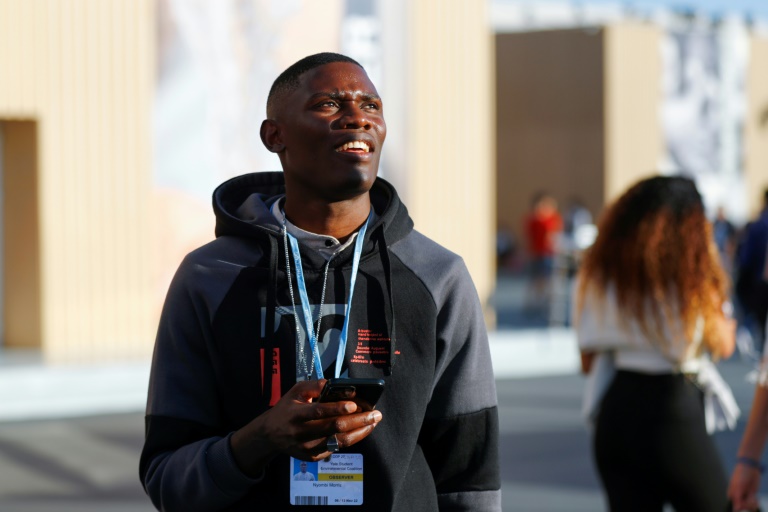
Ugandan youth activist Nyombi Morris arrived in Egypt for the UN’s COP27 climate summit with high hopes of being part of the campaign for environmental justice.

But it didn’t take long for Egypt’s stiff security measures to shatter his dreams, as rights groups warn the North African country has stifled protests with “dozens” of arrests.

“I was so happy when they announced that COP would be in Africa,” said Morris, who founded the Earth Volunteers youth organisation campaigning for “climate justice”.

“I thought maybe I would get a chance to be at the room where the negotiations are taking place.”

Instead, “with the questions we received at the airport, it will not be easy for us to continue with our plan”, the 24-year-old said.

In 2008, when Morris was 10, devastating flash floods hit Uganda’s eastern Butaleja district — an area where the illegal extraction of riverbank sand for construction was common. Some 400 people, including Morris’s family, lost their homes.

Morris, who has said the digging “exacerbated flooding already made worse by climate change”, said they had to move to the capital Kampala.

“I am here to represent my mother who lost a farm, who lost a home,” he said. “I am here to ask for compensation for my community.”

– ‘Abusive security measures’ –

Activists wanting to demonstrate at COP27, held in the Egyptian resort town of Sharm el-Sheikh, must request accreditation 36 hours in advance, providing information such as the names of the protest organisers and details of the proposed march.

Approved demonstrations are only allowed during working hours, and in a specific purpose-built area. 

That accreditation process is risky, Morris fears.

“When they started asking about our locations, where we will be staying, our passports, our names, we were worried,” he said.

“What if they follow one of us and (we) get arrested?”

He cited the case of Indian climate activist Ajit Rajagopal, who was arrested after setting off to march from Cairo to Sharm el-Sheikh. He was later released after an international outcry.

Human Rights Watch on Sunday warned that “dozens of people” calling for protests had been detained.

“Egypt’s government has no intention of easing its abusive security measures and allowing for free speech and assembly,” the watchdog said.

Rights groups say at least 151 people have been arrested ahead of a rally slated for November 11 — planned nationwide but not in Sharm el-Sheikh — against what they decry as repression and sharp increases in the cost of living.

“Everyone must be able to participate meaningfully at COP27 in Sharm el-Sheikh. That includes civil society,” UN rights chief Volker Turk said Monday.

– ‘Watching online’ –

On top of security restrictions, Morris lamented that activists like him were excluded from the talks.

“I am watching online because our ‘observers’ badges don’t allow us to enter,” he said.

“I’m like ‘so, why are we here?'”

He said his hopes have faded that having the summit in Africa might make a difference — including in demanding wealthy nations responsible for emissions pay their dues.

Africa is home to some of the countries least responsible for planet-heating emissions but hardest hit by an onslaught of weather extremes.

“It is not an African COP, it is a polluters’ COP — because it is polluters dominating,” he said. 

“Haven’t you seen Coca-Cola here?” he added, referring to one of this year’s official sponsors.

Campaign group Greenpeace has called Egypt’s choice of the soft drink giant “appalling”, blaming the company for much of the “plastic pollution in the world”.

Last year, at the COP26 in Glasgow, tens of thousands of demonstrators from all over the world marched to demand “climate justice”.

Swedish climate activist Greta Thunberg is skipping COP27, slamming it as a forum for “greenwashing” and saying the “space for civil society this year is extremely limited”.

Tasneem Essop, executive director of Climate Action Network International, told reporters at the COP27 centre that the right to protest has been “seriously challenged”, and that there was “immense repression” in Egypt.

On Sunday, ignoring the restrictions, a handful of activists waved banners at the entrance to the summit hall.

“We are trying to promote the veganism to help save the planet from the greenhouse gases”, said Tom Modgmah, a follower of Vietnamese “Supreme Master Ching Hai”, alongside colleagues waving banners.

“Be vegan, make peace,” they read.
Ukraine hails new air defences, warns power situation 'tense'

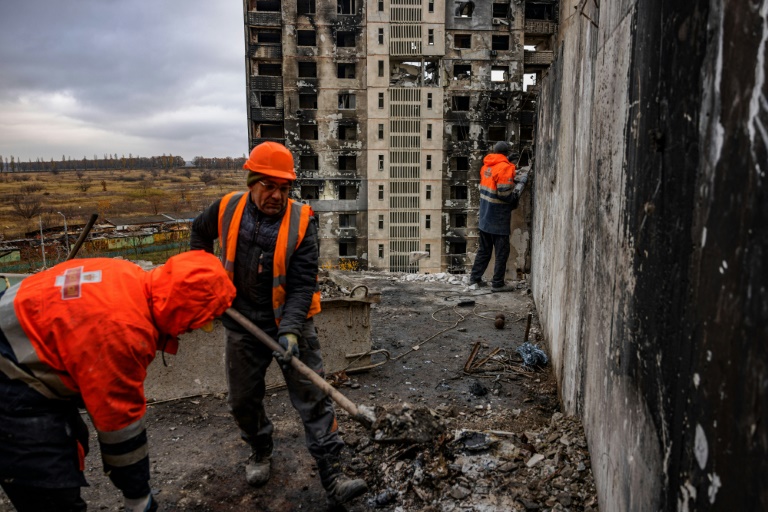
Ukraine announced Monday it had received more air defence systems from Western military allies, as officials in Kyiv said the situation with supplies was “tense” after protracted Russian attacks on energy facilities.

Attacks by Moscow’s forces, including with Iranian-made drones over the past month, have destroyed around 40 percent of Ukraine’s power stations and the government has urged Ukrainians to maximise electricity savings.

Kyiv has been rocked by barrages of Russian attacks on the first day of each week for nearly a month but air raid sirens were quiet on Monday with residents out as normal.

In a grey and foggy Kyiv —  conditions that military observers say make attacks with missiles and low altitude drones more difficult — residents were unfazed by the threat of fresh strikes Monday. 

“To be honest, it’s not only Mondays, it’s been eight months that we know this can happen every day and we adapted. I’m not going to change my routine for that. I’m coming to work… just like every other day,” 21-year-old Kyiv resident Alyona Plekh told AFP.

Defence Minister Oleksiy Reznikov announced Monday that Ukraine had received National Advanced Surface-to-Air Missile System (NASAMS) and Italian Aspide air defences, adding to weapons supplied by Germany.

“NASAMS and Aspide air defence systems arrived in Ukraine! These weapons will significantly strengthen the Ukrainian army and will make our skies safer,” Reznikov said on social media.

“We will continue to shoot down the enemy targets attacking us. Thank you to our partners — Norway, Spain and the US,” Reznikov added.

Weeks of Russian attacks have caused sweeping blackouts and restrictions on energy use across Ukraine, and authorities in the capital have asked residents and businesses to reduce consumption.

– Energy ‘struggle’ –

“The situation in the power system is tense. We ask all residents of the region to support energy workers in the struggle on the energy front. To do this, use electricity sparingly,” city authorities said in a statement.

Those pleas come just one day after Kyiv mayor Vitali Klitschko warned of a possible total blackout in the capital, saying that city authorities were preparing for the worst and bracing for “various scenarios”.

The Ukrainian presidency meanwhile said Monday that, over the last 24 hours, Russia had fired four missiles and carried out more than 24 air strikes across Ukraine. 

The Deputy Head of Presidency Kyrylo Tymoshenko said one person was killed by Russian shelling in the partially Russian-controlled Zaporizhzhia region of Ukraine and another was killed in the northeastern Sumy region.

Those attacks came a day after Russian-installed authorities in the southern region of Ukraine, Kherson, said attacks by Kyiv’s forces had cut power and electricity to the region’s main city, also called Kherson.

But authorities said Monday that power had been partially restored again in the city, towards which Ukrainian forces have been slowly advancing for weeks, saying that “all critical infrastructure” in the city was back online.

As Ukraine presses a counteroffensive in the south, Moscow’s occupation forces in Kherson have vowed to turn the city into a “fortress”.

They have for weeks organised a civilian pull-out from the Kherson region as Ukrainian troops advance, which Kyiv labels “deportations”.

French firm says to be charged over Qatar building sites

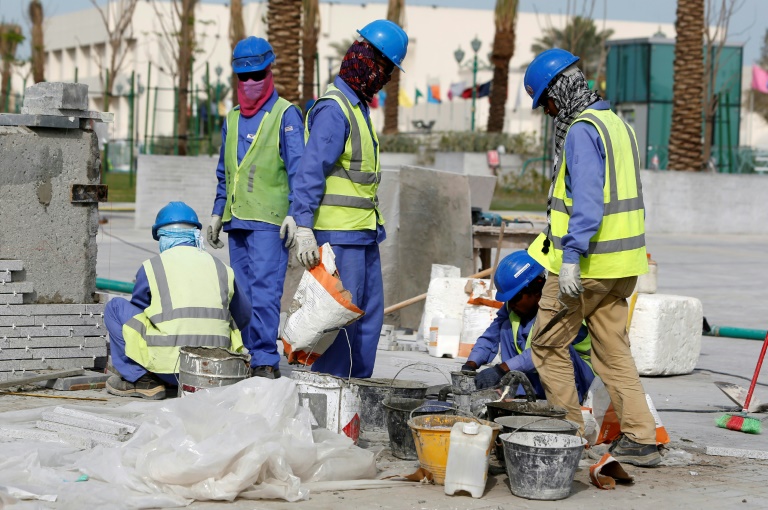
French construction firm Vinci said on Monday it expected to be charged this week by a magistrate investigating allegedly abusive work practices on its building sites in Qatar.

The group said its subsidiary Vinci Constructions Grands Projets had been summoned on Wednesday by a French magistrate investigating its infrastructure projects in Qatar “with a view to it being charged”.

Under French law, being charged implies the magistrate believes there is compelling evidence against the company, but the decision can be appealed and does not automatically mean the case will go to trial.

The Paris-based group said it regretted the development and denies the charges of using forced labour and taking part in human trafficking.

Two French NGOs — Sherpa and the Committee Against Modern Slavery — and seven former employees from India and Nepal who worked on Vinci building sites have filed a series of legal complaints against the company dating back to 2015.

They allege that employees working on sites linked to the football World Cup laboured for 66 to 77 hours a week, had their passports confiscated and were forced to live in indecent accommodation.

In its statement on Monday, Vinci denied that the public transport sites in question were linked to the World Cup, saying they were awarded to the company before the football tournament was attributed to Qatar in 2010.

“We tried in vain to convince the magistrate that after seven and half years of investigation it was not a particularly good time to imagine laying charges a fortnight before the start of the World Cup,” Vinci lawyer Jean-Pierre Versini-Campinchi told AFP, adding that he feared a “media storm”.

Sherpa welcomed the possible deepening of the French investigation.

“If Vinci were to be charged, it would confirm that multinationals face increasing difficulties in hiding behind their supply chains, the idea that it’s ‘too complicated’ to act,” Sherpa said.

– Train lines – 

Investigators from the anti-corruption NGO first visited Qatar in 2014 where they say they met labourers on Vinci projects whose passports had been confiscated and who were required to work in temperatures above 45 degrees Celsius (113 degrees Fahrenheit).

The group alleged that some of the abuses took place among sub-contractors employed by third-party companies working for Vinci’s Qatar subsidiary, Qatari Diar Vinci Construction.

Qatari Diar Vinci Construction employed 11,000 people at its height and was responsible for building the 37-station Lusail Light Rail Transit system around Doha, as well as the Red Line of the Qatari capital’s underground metro system.

It also built the luxury Sheraton hotel in Doha.

The company unsuccessfully sued Sherpa for defamation after its first legal complaint in 2015. 

Qatar has faced a barrage of criticism over migrant worker deaths and its labour law since being named World Cup host.

It has introduced significant changes since the start of the French legal investigation, including ending its so-called “Kafala” labour system. 

This meant that a worker could not change jobs or leave the country without permission from their employer.

An audit of conditions for Vinci workers in Qatar was carried out by French trade union organisations in 2019 which concluded that the rights of labourers were being respected. 

Black marketeers grease the wheels in Central Africa's petrol crisis

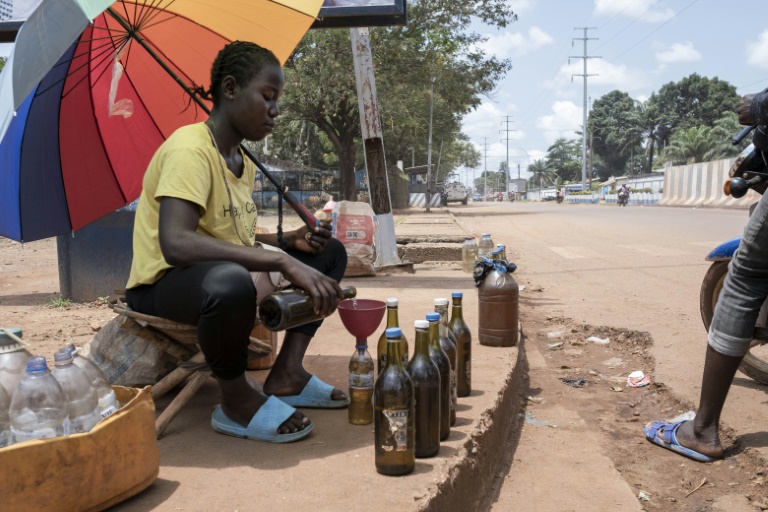
The Tradex petrol station on Bangui’s Boganda avenue stands deserted, except for a lone goat wandering between the empty pumps.

It used to be a busy spot in the Central African Republic’s capital, but deliveries dried up seven months ago.

Just along the street, 18-year-old Princia Omah is lining up bottles full of petrol and fuel oil shaded from the hot sun by a multi-coloured umbrella.

“I sell petrol to make life easier for car owners,” she says.

Central Africa Republic (CAR) is the second least developed country in the world, according to the United Nations, and has often struggled to maintain oil supplies.

But since March the situation has become dramatically worse.

“It is a result of the war in Ukraine and the difficulty of shipping hydrocarbons because the country is landlocked,” Ernest Fortune Batta, director general of CAR’s Petroleum Products Storage Company (SOCASP), tells AFP.

Government majority-owned SOCASP has exclusive charge for the import and storage of oil products in the country.

– Black market –

For years the price of petrol has been blocked by the government at 865 CFA francs (1.32 euros) a litre. On the street, a bottle costs up to 40 percent more.

Petrol sellers buy on the black market where the product is often of poor quality from cheap additives.

“My father gets supplies from smugglers in the Muslim quarter,” says Omah. “It usually comes from Chad or Cameroon.”

Hundreds of petrol station workers around Bangui are out of a job and have been replaced by curbside sellers like Omah.

The petrol stations that still do manage to obtain a delivery quickly find themselves  under siege from long queues of impatient drivers.

“I have no choice, I have to get petrol from re-sellers so that I can do my shopping and go to work, even if the petrol is contaminated and can cause problems for the car,” says Cedric Banam, who tops up three times a week.

“We did not expect the crisis to get so bad,” admits Maurice Gbeza, aged 29, who has been supplying motorists illegally from the curbside for a year.

Transport costs have soared, provoking public anger.

Administrative secretary Pamela Mayevosson used to spend 1,000 CFA francs a day (1.5 euros) on transport.

“But now I need at least 2,000 francs for a day, it’s too much when our salaries have not gone up,” she says.

“The government should get a hold of the situation otherwise the country risks turning into a desert.”

“There is no answer in sight to sort out the situation,” rages Franck Ngaickom, head of the motorbike-taxi union.

“The government does not realise that the people are suffering. Many drivers have stopped work.”

– ‘Total drought’ –

Batta says the government “has contacted different suppliers to bring the crisis to an end”, but he offers no more detail.

The government did not answer several requests from AFP to explain the petrol shortage.

In mid-March, energy minister Arthur Bertrand Piri sought to reassure people with an announcement of the delivery of oil by trucks to re-supply the capital.

But since then things have become worse and worse.

“Three fuel trucks have just arrived to ease the situation, we still have a stock of fuel but deliveries are limited to stop us from running totally dry,” Batta notes.

“Come to mother M16, it’s 1,100 francs a bottle,” shouts Marguerite Goungbon, sitting on a plastic chair.

“When I saw that most of the stations were shut because of the crisis I started selling petrol,” says the former doughnut seller.

“When the crisis is over I’ll stop selling,” (petrol), adds the 52-year-old.

A bloody civil war has wracked Central Africa since 2013, even if the fighting has dropped off over the last four years.

And so, despite mineral resources such as gold, diamonds and potentially even plenty of oil reserves, the unstable nation at the heart of Africa has slipped to one of the absolute poorest.

The World Bank estimates that 71 percent of Central Africa’s six million people live below the international poverty line of $2.15 a day. 

Nearly half the population suffers from food insecurity and relies on international aid, the UN says.

Wounded whale washes ashore in northern France

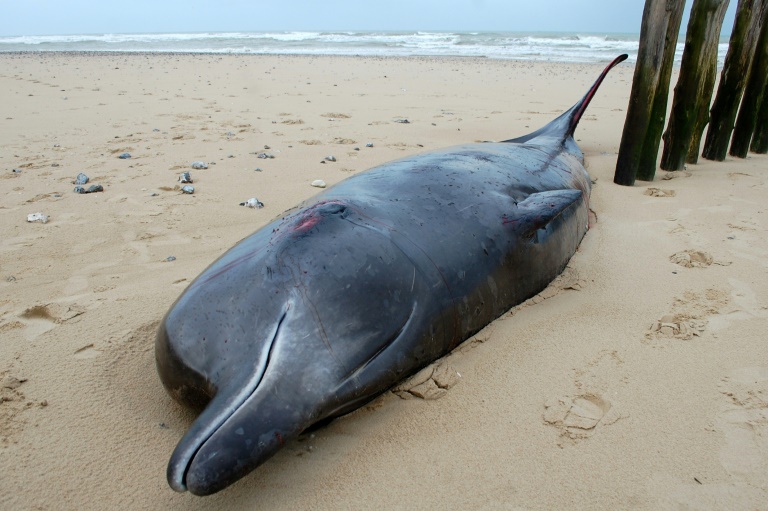
A 7.6-metre (25-foot) whale, wounded but alive, was discovered stranded on a beach in northern France on Monday, authorities said, with experts hoping the rising tide will help the cetacean back on its way.

The appearance of the animal this far south is rare given that this particular species of beaked whale usually swims in deep Arctic waters, they said.

The female cetacean, which had suffered non-life threatening injuries, probably ended up on the beach “because it was disorientated”, said Jacky Karpouzopoulos, head of CMNF, an association for the protection of wild mammals in northern France.

He said it was “exceptional” to see this northern whale species this far south.

“I’ve never seen anything like it in my 40 years on the job,” he said.

It was not possible to lift the animal back into the water, he said. Helpers hoped instead that the rising tide would allow the animal to refloat and swim away, he said.

The whale has a bleeding head wound, an AFP journalist saw, but local mayor Guy Allemand said the injury was superficial and not the reason why it had washed up on the shore.

He said there would be an autopsy if the whale failed to survive.

In February, a 9.5-metre female humpback whale was found dead on a northern French beach — another “extraordinary” event, according to Karpouzopoulos.

In the spring of this year, an orca — named “Sedna” by marine life protection group NGO Sea Shepherd — was seen lost in the river Seine but died despite intense efforts to save it.

This summer, an ailing beluga whale that strayed into the Seine was put down by vets after a last-ditch rescue attempt failed because of its rapidly deteriorating health.

Stocks mostly rise, oil falls tracking China lockdown policy

Stock markets mostly rose Monday, extending last week’s strong gains, while oil prices fell after China reaffirmed its commitment to its economically painful zero-Covid policy.

The dollar was down against key rivals ahead of this week’s US midterm elections.

Global markets and oil prices were buoyant last week on hopes Beijing may begin to roll back policies aimed at stamping out the disease within its borders.

But on Saturday, the Chinese government said it would “unswervingly” stick to its current plan, which involves harsh lockdowns and strict quarantine and testing regimens for even the smallest clusters of cases.

Despite the official stance, “there are still hopes in the market” that Beijing may relax Covid-19 restrictions in the coming months, Iris Pang, chief economist for Greater China at ING Wholesale Banking, told AFP.

“Traders believe that the Chinese government cannot permanently hold these existing Covid measures, and therefore the only direction is… looser Covid measures,” she said.

Ongoing large-scale events, such as the China International Import Expo in Shanghai, are also seen by investors as “a kind of water-testing” by Beijing, to see if cases and deaths rise significantly, Pang added.

All eyes will be on Apple when Wall Street reopens after the tech giant warned customers would face longer wait times for iPhones with the holiday season approaching.

This comes after Covid restrictions in central China “temporarily impacted” production at the world’s largest factory producing the smartphone.

Facebook-parent Meta will meanwhile become the latest tech firm to scale back its workforce, with plans to lay off thousands of employees this week, US media reported Sunday.

On Friday, Wall Street equities ended a volatile session higher after US jobs data showed hiring remained resilient and wages continued to rise, though at a slower pace.

That raised hopes of a soft landing for the world’s biggest economy despite aggressive Fed rate hikes aimed at taming inflation.

Meanwhile, two years since US President Joe Biden was swept to power in one of the most fraught elections Washington has witnessed, all eyes are on the next nationwide vote Tuesday.

US voters decide every two years who gets the majority in both chambers of Congress — and whether the president will get any new policies passed or if the opposition will be able to frustrate the agenda.

“A divided government can be good for the market,” noted Neil Wilson, analyst at Markets.com. 

“A Republican clean sweep would likely take key Democrat legislation off the table — mainly positive for markets — whilst in the unlikely event that the Democrats retain both houses it could see them push on with fiscal stimulus, mainly negative since it might be inflationary.”

– Key figures around 1130 GMT –

London – FTSE 100: DOWN 0.2 percent at 7,319.45 points

Frankfurt – DAX: UP 0.8 percent at 13,570.86

Paris – CAC 40: UP 0.1 percent at 6,420.16

EURO STOXX 50: UP 0.6 percent at 3,708.98

Tokyo – Nikkei 225: UP 2.7 percent at 27,527.64 (close)

Hong Kong – Hang Seng Index: UP 2.9 percent at 16,595.91 (close)

Shanghai – Composite: UP 0.2 percent at 3,077.82 (close)

New York – Dow: UP 1.3 percent at 32,403.22 (close)

Euro/dollar: UP at $0.9980 from $0.9964 Friday

Pound/dollar: UP at $1.1460 from $1.1309

Dollar/yen: DOWN at 146.71 from 147.44 yen

Euro/pound: DOWN at 87.11 pence from 87.80 pence

West Texas Intermediate: DOWN 0.2 percent at $92.46 per barrel

Brent North Sea crude: DOWN 0.1 percent at $98.52 per barrel

UN chief warns world leaders against 'collective suicide' on climate

UN chief Antonio Guterres warned world leaders at a climate summit in Egypt on Monday that humanity faces a stark choice between working together or “collective suicide” in the battle against global warming.

Nearly 100 heads of state and government are meeting for two days in the Red Sea resort of Sharm el-Sheikh, facing calls to deepen emissions cuts and financially back developing countries already devastated by the effects of rising temperatures.

“Humanity has a choice: cooperate or perish,” Guterres told the UN COP27 summit. 

“It is either a Climate Solidarity Pact or a Collective Suicide Pact,” Guterres said, urging richer polluting nations to come to the aid of poorer countries least responsible for the emission of heat-trapping gases.

Nations worldwide are coping with increasingly intense natural disasters that have taken thousands of lives this year alone and cost billions of dollars — from devastating floods in Nigeria and Pakistan to droughts in the United States and Africa and unprecedented heatwaves across three continents.

“We have seen one catastrophe after another,” said Egyptian President Abdel Fattah al-Sisi. “As soon as we tackle one catastrophe another one arises — wave after wave of suffering and loss.

“Is it not high time to put an end to all this suffering?”

But a multitude of other crises, from Russia’s war in Ukraine to soaring inflation and the lingering effects of the Covid pandemic, has raised concerns that climate change will drop on the priority list of governments. 

Guterres however told world leaders climate change could not be put on the “back burner”.

He called for a “historic” deal between rich emitters and emerging economies that would see countries double down on emissions, holding the rise in temperatures to the more ambitions Paris Agreement target of 1.5 degrees Celsius above the pre-industrial era.   

Current trends would see carbon pollution increase 10 percent by the end of the decade and Earth’s surface heat up 2.8C.

“We are on a highway to climate hell with our foot still on the accelerator,” Guterres said.

– ‘Moral imperative’ –

The UN secretary general said the target should be to provide renewable and affordable energy for all, calling on the United States and China in particular to lead the way.

He also said it was a “moral imperative” for richer polluters to help vulnerable countries.

Chinese leader Xi Jinping, whose country is the world’s top emitter of greenhouse gases, is not attending the summit.

US President Joe Biden, whose country ranks second on the top-polluters list, will join COP27 later this week after midterm elections on Tuesday that could put Republicans hostile to international action on climate change in charge of Congress.

French President Emmanuel Macron urged the United States, China and other non-European rich nations to “step up” their efforts to cut emissions and provide financial aid to other countries.

“Europeans are paying,” Macron told French and African climate campaigners on the sidelines of COP27. “We are the only ones paying.”

– ‘Loss and damage’ –

On Sunday, the heads of developing nations won a small victory when delegates agreed to put the controversial issue of compensation for “loss and damage” on the summit agenda.

Pakistan, which chairs the powerful G77+China negotiating bloc of more than 130 developing nations, has made the issue a priority.

The United States and the European Union have dragged their feet for years on the proposal, fearing it would create an open-ended reparations framework.

Guterres said COP27 must agree on a “clear, time-bound roadmap” for loss and damage that delivers “effective institutional arrangements for financing”.

“Getting concrete results on loss and damage is a litmus test of the commitment of governments to the success of COP27,” he said.

Rich nations will also be expected to set a timetable for the delivery of $100 billion per year to help developing countries green their economies and build resilience against future climate change. 

The promise is already two years past due and remains $17 billion short, according to the OECD.

COP27 is scheduled to continue until November 18 with ministerial joining the fray during Week Two.

Security is tight at the meeting, with Human Rights Watch saying authorities have arrested dozens of people and restricted the right to demonstrate in the days leading up to COP27.

Philippine prisons chief accused of ordering journalist murder

Philippine police accused the country’s prisons chief Monday of ordering the killing of a prominent radio journalist whose death sparked international alarm.

Radio personality Percival Mabasa, 63, who went by the name “Percy Lapid” on his programme, was shot dead in a Manila suburb on October 3 as he drove to his studio.

Police allege Bureau of Corrections director general Gerald Bantag, who is currently suspended from duty, was behind the murder along with his deputy security officer Ricardo Zulueta.

The alleged gunman, Joel Escorial, surrendered to authorities last month out of fear for his safety after police broadcast images of his face captured on security footage, officials said previously.

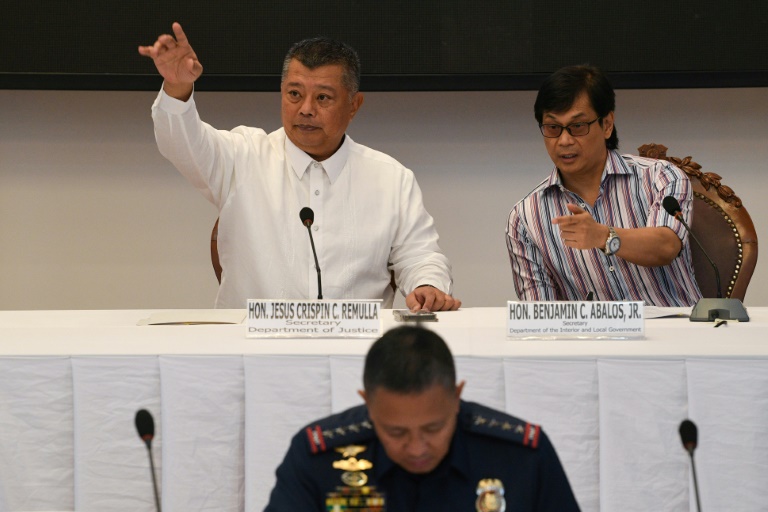
“He (Bantag) will probably be the highest official of this land ever charged with a case of this gravity,” Justice Secretary Crispin Remulla said.

Then-president Rodrigo Duterte appointed Bantag as director general of the Bureau of Corrections in September 2019.

Bantag allegedly ordered the murder of Mabasa following the “continued expose by the latter of the issues against the former on his show”, Eugene Javier of the National Bureau of Investigation told reporters, reading from a statement.

Weeks before he was gunned down, Mabasa aired allegations of corruption against Bantag on his late-night radio show.

Bantag told DZRH broadcaster last month that he had nothing to do with the killing. 

Bantag and Zulueta have also been accused of ordering the killing of Cristito Villamor Palana, a prison inmate who allegedly passed on the kill order to the gunman.

Palana was suffocated with a plastic bag by members of his own gang, Javier said.

Criminal complaints have also been filed against 10 inmates over that killing.

Prosecutors at the Department of Justice will decide if there is enough evidence to file charges in court.

Jonathan De Santos, chairman of the National Union of Journalists of the Philippines, welcomed the “good development” in the case, but warned there was a long way to go.

“As we have seen it takes a decade or more to secure a conviction,” De Santos told AFP. 

– Outspoken critic –

Mabasa was an outspoken critic of former president Duterte, who waged a deadly drug war that killed thousands of people, as well as the policies and aides of his successor Ferdinand Marcos.

He is the second journalist to be killed since President Marcos took office on June 30.

Bringing to justice everyone involved in the murder was an “acid test” for Marcos’s commitment to human rights, said Phil Robertson, deputy Asia director for Human Rights Watch.

“But putting Mabasa’s killers behind bars should also be the start of a comprehensive effort, not a one-off case because the victim happened to be a prominent, Manila-based journalist,” he said.

Mabasa’s brother Roy said he believed there were “more masterminds” behind the killing.

While the Philippines is ranked one of the most dangerous countries in the world for journalists, such murders rarely happen in Manila.

Radio broadcasters outside the capital were often the target.

A Manila-based analyst said Mabasa’s murder was likely personal, rather than political.

“Radio journalists are killed because they air individual people’s grievances and get involved in personal disputes,” he said.

Javier said the investigation into the murders had exposed “the institutionalisation of a criminal organisation within the government”.

“This will be the cause of many reforms in government and the strengthening of current mechanisms to ensure that nothing of this nature will happen again,” he said, describing it as a “war against impunity”.

Tanzania pays tearful tribute to plane crash victims

Grieving Tanzanians paid emotional tribute Monday to 19 people killed when a passenger plane plunged into Lake Victoria in the country’s deadliest air crash in decades.

The Precision Air flight from the financial capital Dar es Salaam crashed on Sunday morning while trying to land in the northwestern city of Bukoba.

Bad weather was blamed for the accident.

Prime Minister Kassim Majaliwa was among hundreds of people who gathered at Kaitaba Stadium in Bukoba, with Muslim and Christian clerics leading prayers for the dead as onlookers wiped away tears.

The ceremony to hand over the bodies of the victims to their families is expected to take hours, with local broadcasters running live telecasts from the stadium.

Twenty-four survivors were plucked to safety out of the 43 people aboard flight PW 494, with investigators from Precision Air and the Tanzania Airports Authority arriving in the lakeside city on Sunday.

Precision Air, a publicly listed company and Tanzania’s largest private carrier, said the aircraft was an ATR 42-500, manufactured by Toulouse-based Franco-Italian firm ATR, and had 39 passengers — including an infant — and four crew members on board.

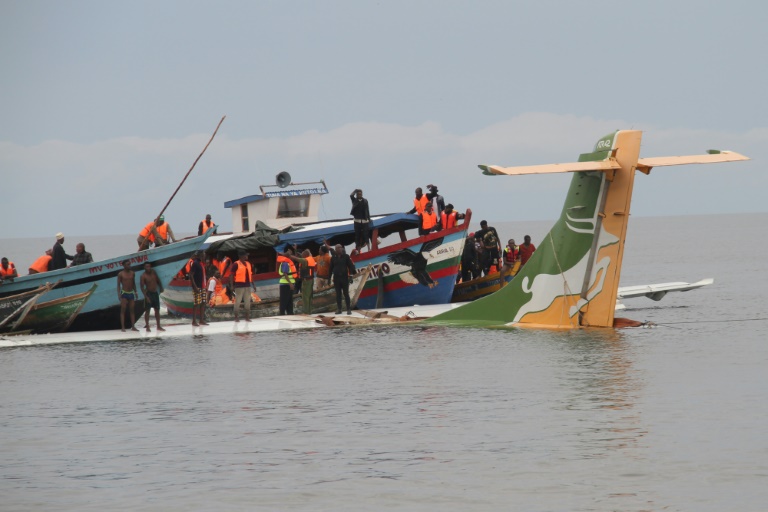
AFP journalists saw the plane largely submerged on Sunday as rescuers, including fishermen, waded through water to bring people to safety.

Emergency workers attempted to lift the aircraft out of the water using ropes, assisted by cranes as residents also sought to help.

President Samia Suluhu Hassan on Monday expressed her condolences to victims’ families, hailing emergency workers and volunteers for acting quickly to save lives.

“I congratulate those who participated in the rescue, including the people of Bukoba,” she said on Twitter. 

“I pray for the deceased to rest in peace and for the injured to recover quickly.”

Precision Air, which is partly owned by Kenya Airways, was founded in 1993 and operates domestic and regional flights as well as private charters to popular tourist destinations such as Serengeti National Park and the Zanzibar archipelago.

The accident comes five years after 11 people died when a plane belonging to safari company Coastal Aviation crashed in northern Tanzania.

In 1999, a dozen people, including 10 US tourists, died in a plane crash in northern Tanzania while flying between Serengeti National Park and Kilimanjaro airport.

Tanzania pays tearful tribute to plane crash victims

Grieving Tanzanians paid emotional tribute Monday to 19 people killed when a passenger plane plunged into Lake Victoria in the country’s deadliest air crash in decades.

The Precision Air flight from the financial capital Dar es Salaam crashed on Sunday morning while trying to land in the northwestern city of Bukoba.

Bad weather was blamed for the accident.

Prime Minister Kassim Majaliwa was among hundreds of people who gathered at Kaitaba Stadium in Bukoba, with Muslim and Christian clerics leading prayers for the dead as onlookers wiped away tears.

The ceremony to hand over the bodies of the victims to their families is expected to take hours, with local broadcasters running live telecasts from the stadium.

Twenty-four survivors were plucked to safety out of the 43 people aboard flight PW 494, with investigators from Precision Air and the Tanzania Airports Authority arriving in the lakeside city on Sunday.

Precision Air, a publicly listed company and Tanzania’s largest private carrier, said the aircraft was an ATR 42-500, manufactured by Toulouse-based Franco-Italian firm ATR, and had 39 passengers — including an infant — and four crew members on board.

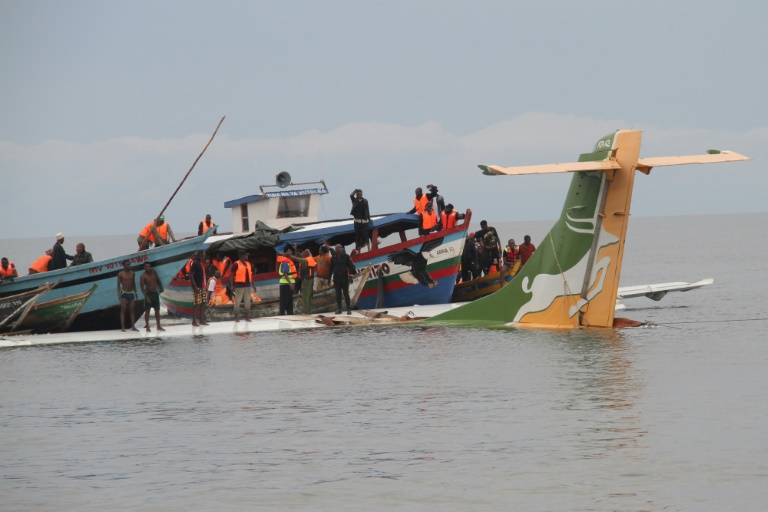
AFP journalists saw the plane largely submerged on Sunday as rescuers, including fishermen, waded through water to bring people to safety.

Emergency workers attempted to lift the aircraft out of the water using ropes, assisted by cranes as residents also sought to help.

President Samia Suluhu Hassan on Monday expressed her condolences to victims’ families, hailing emergency workers and volunteers for acting quickly to save lives.

“I congratulate those who participated in the rescue, including the people of Bukoba,” she said on Twitter. 

“I pray for the deceased to rest in peace and for the injured to recover quickly.”

Precision Air, which is partly owned by Kenya Airways, was founded in 1993 and operates domestic and regional flights as well as private charters to popular tourist destinations such as Serengeti National Park and the Zanzibar archipelago.

The accident comes five years after 11 people died when a plane belonging to safari company Coastal Aviation crashed in northern Tanzania.

In 1999, a dozen people, including 10 US tourists, died in a plane crash in northern Tanzania while flying between Serengeti National Park and Kilimanjaro airport.

Close Bitnami banner
Bitnami