World

Ryanair flies into profit, eyes strong outlook

Irish airline Ryanair flew back into a first-half profit Monday and forecast a strong outlook despite recession headwinds in Europe, as air travel rebounds after the lifting of Covid restrictions.

Profit after tax came in at 1.37 billion euros (dollars) in the six months to the end of September after a net loss of 48 million euros a year earlier, the Dublin-based carrier said in a statement.

Ryanair said it expected full-year profit of between 1.0 and 1.2 billion euros, adding that it did not expect the no-frills carrier to suffer from Europe’s cost-of-living crisis caused by soaring inflation.

“The recovery for the remainder of full-year 2022/23 remains fragile and could yet be impacted by new Covid variants or adverse geopolitical events such as Ukraine,” Ryanair chief executive Michael O’Leary said in the statement.  

“However forward bookings, both traffic and fares, remain strong… into the peak Christmas travel period.”

Ryanair’s key market outside Ireland is the UK, which the Bank of England has warned could face a two-year long recession until the middle of 2024.

O’Leary on Monday said he hoped the aviation sector would avoid a repeat of last year’s lockdowns caused by Covid’s Omicron variant “which damaged last Christmas at such short notice”. 

He added that “concerns about the impact of recession and rising consumer price inflation on Ryanair’s business model have been greatly exaggerated”.  

O’Leary said he expects the airline “to grow strongly in a recession as consumers won’t stop flying, but rather they will become more price sensitive”.  

Ryanair said it flew 95 million passengers in its first half, up from 39 million one year earlier.

Revenue more than trebled to 6.6 billion euros.

– ‘Pent-up demand’ –

“Although the winter will be challenging for Ryanair, it enjoyed an impressive summer performance thanks to the release of pent-up demand for international travel post pandemic,” noted Victoria Scholar, head of investment at Interactive Investor.

The recovery for Ryanair, which flies mainly throughout Europe, mirrors a strong rebound for the aviation sector worldwide.

Airlines are dealing with soaring jet fuel costs by increasing ticket prices, although Ryanair on Monday claimed that it was still a market leader on fares.

“Like Aldi, Lidl, Ikea and other price leaders, our very strong post-Covid recovery shows that price will continue to drive market share gains,” O’Leary said.

Ryanair was benefitting also from an ability to provide more seats compared with its rivals, he added.

“As Europe recovers from the two-year Covid pandemic there has been a considerable contraction of short haul capacity, much of which will not return in the medium term,” the CEO said.  

“Most of our EU competitors have cut capacity by up to 20 percent this winter while Ryanair will offer 10-percent more seats than pre-Covid.”
World leaders gather for climate talks under cloud of crises

World leaders gathered Monday for climate talks in Egypt facing pressure to deepen cuts in emissions and financially back developing countries already devastated by the effects of rising temperatures.

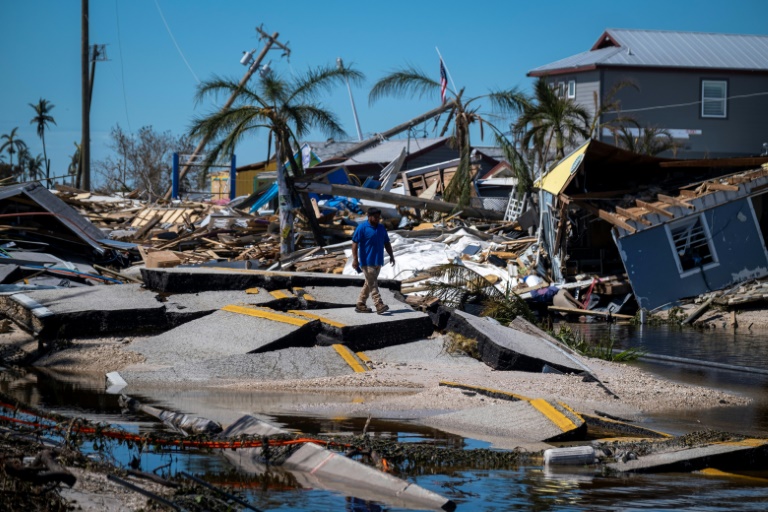
The UN’s COP27 climate summit in the Red Sea resort of Sharm el-Sheikh comes as nations worldwide are facing increasingly intense natural disasters that have taken thousands of lives this year alone and cost billions of dollars.

At the opening ceremony on Sunday, COP27 officials urged governments to keep up efforts to combat climate change despite soaring inflation, the energy crunch linked to Russia’s war on Ukraine and the persistent Covid-19 pandemic.

“The fear is other priorities take precedence,” top United Nations climate change official Simon Stiell told a news conference.

The “fear is that we lose another day, another week, another month, another year — because we can’t”, he said.

The world must slash greenhouse emissions by 45 percent by 2030 to cap global warming at 1.5 degrees Celsius above late-19th-century levels.

But current trends would see carbon pollution increase 10 percent by the end of the decade and Earth’s surface heat up 2.8C, according to findings unveiled in recent days.

Only 29 of 194 countries have presented improved climate plans, as called for at the UN talks in Glasgow last year, Stiell noted.

Nearly 100 heads of state and government began to arrive for two days of talks, with the notable absence of Chinese leader Xi Jinping, whose country is the world’s top emitter of greenhouse gases.

US President Joe Biden, whose country ranks second on the top-polluters list, will join COP27 later this week after midterm elections on Tuesday that could put Republicans hostile to international action on climate change in charge of Congress.

French President Emmanuel Macron urged the United States, China and other non-European rich nations to “step up” their efforts to cut emissions and provide financial aid to other countries.

“Europeans are paying,” Macron told French and African climate campaigners on the sidelines of COP27. “We are the only ones paying.”

– ‘Loss and damage’ –

Fresh from his own election victory, Brazil’s Luiz Inacio Lula da Silva is expected to attend the summit later on, with hopes high that he will protect the Amazon from deforestation after defeating climate-sceptic President Jair Bolsonaro.

Another new leader, British Prime Minister Rishi Sunak, reversed a decision not to attend the talks and is due to urge countries to move “further and faster” in transitioning away from fossil fuels.

On Sunday, the heads of developing nations won a small victory when delegates agreed to put the controversial issue of money for “loss and damage” on the summit agenda.

Pakistan, which chairs the powerful G77+China negotiating bloc of more than 130 developing nations, has made the issue a priority.

“We definitely regard this as a success for the parties,” said Egypt’s Sameh Shoukry, who chairs the COP27.

The United States and the European Union have dragged their feet on the issue for years, fearing it would create an open-ended reparations framework.

But European Commission Vice President Frans Timmermans welcomed the inclusion of loss and damage, tweeting that the “climate crisis has impacts beyond what vulnerable countries can shoulder alone”.

– Protests restricted –

Rich nations will also be expected to set a timetable for the delivery of $100 billion per year to help developing countries green their economies and build resilience against future climate change. 

The promise is already two years past due and remains $17 billion short, according to the OECD.

COP27 is scheduled to continue until November 18 with ministerial meetings.

Security is tight at the meeting, with Human Rights Watch saying authorities have arrested dozens of people for calling for protests and restricted the right to demonstrate in the days leading up to COP27.

Kenya Airways cancels 'most flights' over pilots' strike

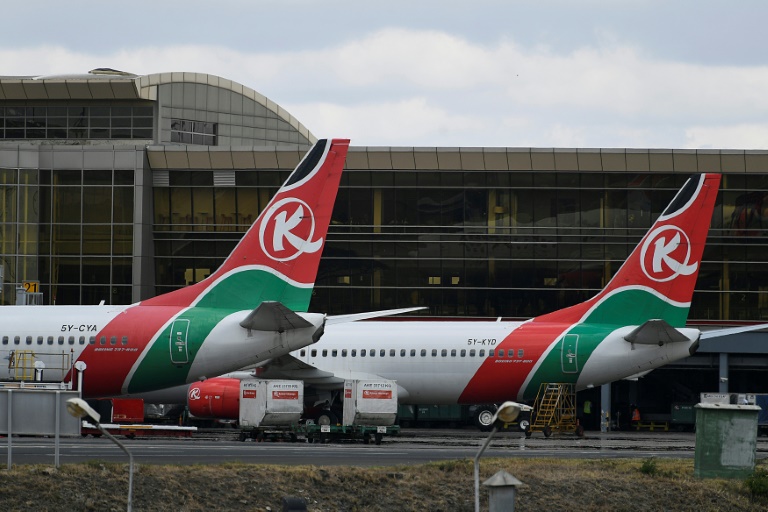
Kenya Airways cancelled most flights  Monday as a pilots’ strike entered its third day, with thousands of travellers stranded and the government threatening disciplinary action if staff don’t return to work.

The pilots launched the strike at Nairobi’s Jomo Kenyatta International Airport at 06:00 am (0300 GMT) on Saturday, defying a court order against industrial action and leaving thousands of passengers stranded.

“Due to the ongoing unlawful industrial action by Kenya Airline Pilots Association (KALPA), most of our flights have been cancelled,” the carrier said in a statement, which came hours after the country’s transport minister threatened the protesting staff with disciplinary action.

The strike has exacerbated the woes facing the troubled national carrier, which has been running losses for years, despite the government pumping in millions of dollars to keep it afloat.

The airline, which is part owned by the government and Air France-KLM, is one of the biggest in Africa, connecting multiple countries to Europe and Asia. 

On Sunday, Transport Minister Kipchumba Murkomen urged the pilots to return to work, warning them against “defying a court order”.

“Considering the defiance of KALPA and their total disregard for the existing court order –- which is at the heart of the rule of law — the Ministry of Labour now has to activate the procedures governing industrial relations,” the newly-appointed minister said.

KALPA has not responded to the government warning but said earlier on Sunday that the strike would continue for the foreseeable future.

“The public should expect major flight disruptions t continue,” it said on Twitter, blaming the airline’s management for failing to resolve the stalemate.

On Sunday, the airline said 56 flights had been cancelled due to the strike, disrupting 12,000 passengers’ plans.

The protesting pilots, who make up 10 percent of the workforce, are pressing for the reinstatement of contributions to a provident fund and payment of all salaries stopped during the Covid-19 pandemic.

Last week, the airline won a court injunction stopping the strike, but an official at KALPA, which has 400 members, told AFP the pilots “were acting within the provisions of the law” and that they were yet to be served with a court order.

The carrier has warned that the strike would jeopardise its recovery, estimating losses at $2.5 million per day if the pilots went ahead with their plans.

The airline was founded in 1977 following the demise of East African Airways, and flies more than four million passengers to 42 destinations annually.

It has been operating in large part thanks to state bailouts following years of losses.

Asian markets rise despite China's zero-Covid pledge

Asian stocks made gains on Monday, with a fresh rally seen in Hong Kong even after China reaffirmed its commitment to its economically painful zero-Covid policy.

Global markets and oil prices were buoyant last week on hopes that Beijing may begin to roll back policies aimed at stamping out the disease within its borders.

But on Saturday, the Chinese government said it would “unswervingly” stick to its current plan, which involves harsh lockdowns, and strict quarantine and testing regimens for even the smallest clusters of cases.

Despite the official stance, “there are still hopes in the market” that Beijing may relax Covid-19 restrictions in the coming months, Iris Pang, chief economist for Greater China at ING Wholesale Banking, told AFP.

“Traders believe that the Chinese government cannot permanently hold these existing Covid measures, and therefore the only direction is… looser Covid measures,” she said.

Ongoing large-scale events, such as the China International Import Expo in Shanghai, are also seen by investors as “a kind of water-testing” by Beijing, to see if cases and deaths rise significantly, Pang added.

On Friday, Wall Street equities ended a volatile session higher after the latest US jobs data showed that hiring remained resilient and wages continued to rise, though at a slower pace.

The data, released days ahead of critical US midterm elections, raised hopes of a soft landing for the world’s biggest economy despite aggressive Fed rate hikes aimed at taming inflation.

– Vaccine ‘game-changer’ –

All three main US indexes ended around 1.3 percent higher on Friday, and Tokyo shares extended those gains, with the benchmark Nikkei index ending 1.2 percent higher on Monday.

Hong Kong shares dipped slightly at the open, then rocketed 2.7 percent at the close, adding to a jump of more than five percent in the previous session.

Bourses in Shanghai and Shenzhen edged up 0.2 percent and 0.4 percent respectively. However, as European trading began, London lost 0.2 percent and Paris fell 0.7 percent.

China is the last major economy wedded to a strategy of extinguishing Covid-19 outbreaks as they emerge, despite the widespread disruption to businesses and international supply chains.

“Last week, the financial market was stirring on rumours of China reopening,” Raymond Yeung and Zhaopeng Xing of ANZ Research said in a note.

“Obviously, China feels the urgency to normalise the economy… But the political leadership will not adopt ‘living with Covid’,” the pair said.

“In our view, the availability of locally developed new vaccines will be a game-changer”.

Seoul closed up by 1.0 percent, Taipei rose 1.5 percent and Sydney ended up 0.6 percent. Jakarta added 0.8 percent and Singapore inched up 0.1 percent.

Dashed hopes of a Chinese reopening also drove down oil prices, which had rallied on Friday on the optimism that Beijing could soon change course, pushing up demand for crude.

– Key figures around 0400 GMT –

Tokyo – Nikkei 225: UP 2.7 percent at 27,527.64 (close)

Hong Kong – Hang Seng Index: UP 2.9 percent at 16,595.91 (close)

Shanghai – Composite: UP 0.2 percent at 3,077.82 (close)

London – FTSE 100: DOWN 0.2 percent at 7,318.61

Pound/dollar: UP at $1.1365 from $1.1309

Euro/dollar: DOWN at $0.9930 from $0.9964

Dollar/yen: DOWN at 147.13 from 147.44 yen

Euro/pound: DOWN at 87.62 pence from 87.80 pence

West Texas Intermediate: DOWN 1.3 percent at $91.42 per barrel

Brent North Sea crude: DOWN 1.0 percent at $97.57 per barrel

New York – Dow: UP 1.3 percent at 32,403.22 (close)

China exports fall in October, first decline since 2020

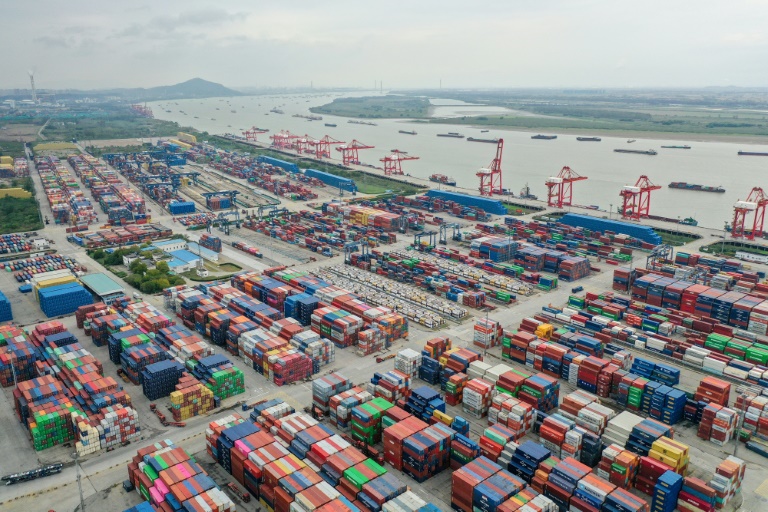
China’s exports shrank in October, the first such decline since mid-2020, customs authorities said Monday, as a domestic slowdown and the threat of global recession hit international trade.

Exports fell 0.3 percent year-on-year in October, according to the General Administration of Customs, a steep drop from September’s 5.7 percent increase and well below analysts’ expectations.

Year-on-year imports were down 0.7 percent in October, negative for the first time since March this year and down from September’s 0.3 percent growth.

The slowdown in trade comes as global demand for Chinese products weakens, with energy prices soaring and the United States facing the threat of recession.

Sporadic Covid-19 lockdowns have also hurt consumer enthusiasm and business confidence in the world’s second-largest economy.

Analysts surveyed by Bloomberg forecast export growth of 4.3 percent in October, but expected only 0.1 percent growth in imports in the face of weakening demand at home.

“The recent decline in export volumes appears to reflect a reversal in the pandemic-era surge in global demand for Chinese goods,” Capital Economics analyst Zichun Huang said in a note on Monday.

Import volumes are “likely to continue weakening given the challenging domestic outlook”, Huang said.

– Domestic challenges –

Nomura analysts on Monday said they expected China’s export downturn to extend in the next two months.

“As strong export growth has been the single-largest GDP growth driver in China since spring 2020, the contraction of exports will inevitably weigh on growth, employment and investment,” they said.

China’s factory activity shrank in October, official data showed last week, which the National Bureau of Statistics blamed on virus outbreaks last month.

Factory activity has been in contraction territory for six months of the year so far, as sweeping Covid restrictions paralysed major industrial cities such as Shanghai, Shenzhen and Chengdu.

Apple on Monday warned of delayed shipments after Covid restrictions “temporarily impacted” production at its massive factory in Zhengzhou, central China.

Chinese leaders have set out an annual economic growth target of about 5.5 percent, but many observers think the country will struggle to hit the target, despite announcing a better-than-expected 3.9 percent expansion in the third quarter.

It is the last major economy wedded to a strategy of extinguishing Covid outbreaks as they emerge, imposing snap lockdowns, mass testing and lengthy quarantines despite the widespread disruption to businesses and international supply chains.

And authorities poured cold water on speculation that the policy could be relaxed Saturday, with National Health Commission (NHC) spokesperson Mi Feng saying that Beijing would “stick unswervingly to… the overall policy of dynamic zero-Covid”.

Authorities had imposed enhanced virus curbs on a total area accounting for more than 10 percent of China’s overall gross domestic product as of Thursday, according to Nomura.

Vietnam struggles to break one of world's biggest coal addictions

Despite Vietnam’s solar boom and ambitious climate targets, the fast-growing economy is struggling to quit dirty energy — leaving one of the world’s biggest coal power programmes largely intact.

During the COP26 climate summit last year, the government boldly promised to end the construction of new coal plants and phase out the dirtiest of those already running, even as energy demands soar in the manufacturing powerhouse.

“But this is not actually what Vietnam is doing at a national level,” Nandini Das, an energy research and policy analyst at Climate Analytics, told AFP.

Vietnam pledged to reach net-zero carbon emissions by 2050, but with coal and gas still a major part of its energy mix one year later, that commitment is on shaky ground, she said. 

The authoritarian communist state has also jailed four green activists this year, including anti-coal campaigner Nguy Thi Khanh, alarming environmentalists who argue it will be even harder for Vietnam to banish dirty energy without them. 

“With the climate leaders in prison I think there’s grave doubt about the country’s ability to achieve its goals,” said Michael Sutton, director of the Goldman Environmental Foundation. 

He said “leaders like Khanh are instrumental in building public support” for radical change to Vietnam’s economy.

– Solar boom – 

After China and India, Vietnam has the world’s third-largest pipeline of new coal power projects. 

But at COP27 this week, G7 countries could announce billions of dollars in funding to help steer Vietnam away from fossil fuels and the country could attract billions more in clean energy investment as part of the Just Energy Transition Partnership.

The rise of solar energy in the Southeast Asian nation has also been meteoric.

The share of electricity generated by solar saw the biggest rise in the world in 2021, jumping to 10 percent from two percent a year earlier, according to independent energy think tank Ember. 

Last year, the country ranked in the top 10 globally for solar energy capacity.

In the Mekong Delta, farmer Doan Van Tien — whose community is poor, remote and has little access to the national grid — is one of those who benefited.  

For most of his life, he relied on a costly oil generator, until the arrival of 14 solar power batteries funded by Green ID, the non-profit environmental group founded by activist Khanh.

“It changed my life a lot,” he told AFP, gesturing to his lucrative avocado and mandarin crops.

“In the past we wanted to grow these fruit trees but we could not (afford to power) the water pump,” he said. Now he waters his plants for free.

Others jumped on solar thanks to generous feed-in tariffs, but its success has hit a roadblock: infrastructure limitations mean transmission lines cannot handle supply spikes, forcing a limit on how much power operators can feed into the grid.

– Changing mindsets –

In other strides down a greener path, the environment ministry’s latest climate targets, issued in July, are “clear and much more ambitious than previous” goals, according to Thang Do, a research fellow at the Crawford School of Public Policy at the Australian National University. 

The ministry’s new strategy boosted the reduction target for greenhouse gases by 2030 from last year’s goal of nine percent relative to business as usual, to 43.5 percent. Emissions are expected to peak in 2035 before falling to net-zero in 2050.

The problem, Das argued, is that the new policies have yet to be implemented.

“We’ll give it six months to see,” she said.

The arrests of climate campaigners have made Vietnam’s energy intentions even more difficult to decipher.

Khanh worked closely with the government to find a way to reduce coal use, while Dang Dinh Bach, an NGO worker, made it his mission to inform residents about the health impacts of potential power plant projects.

He “offered advice to them so they understood their rights and could practice those rights”, Bach’s wife Tran Phuong Thao told AFP.

In 2017, Bach and his non-profit group Law & Policy of Sustainable Development helped push the government into a rare climbdown over a power plant in Binh Thuan province that it had permitted to sink a million cubic metres of coal sludge into the sea.

He was arrested in June 2021, and sentenced this year to five years in prison.

Although there is little time to waste for Vietnam, one of the countries most vulnerable to climate change due to its long and densely populated coastline, researcher Thang believes there is no choice but to be patient.

“The whole economy is now dependent on coal so that makes it very challenging to change,” he said.

“It’s not an easy decision to make to just close a coal power plant and tomorrow we’ll open a solar and wind, it takes a lot of time and resources and also mindsets to be changed.”

Philippine prisons chief accused of ordering journalist murder

Philippine police accused Monday the country’s prisons chief of ordering the killing of a prominent radio journalist, whose death sparked international alarm.

Radio personality Percival Mabasa, 63, who went by the name “Percy Lapid” in his programme, was shot dead in a Manila suburb on October 3 as he drove to his studio.

Police filed murder complaints against Bureau of Corrections director general Gerald Bantag, who is currently suspended from duty, and his deputy security officer Ricardo Zulueta.

The alleged gunman, Joel Escorial, surrendered to authorities last month out of fear for his safety after police broadcast his face from security footage, officials said previously.a

“He (Bantag) will probably be the highest official of this land ever charged with a case of this gravity,” Justice Secretary Crispin Remulla said.

Bantag allegedly ordered the murder of Mabasa following the “continued expose by the latter of the issues against the former on his show,” Eugene Javier of the National Bureau of Investigation told reporters, reading from a statement. 

Bantag and Zulueta have also been accused of ordering the killing of Cristito Villamor Palana, one of the prison inmates who allegedly passed on the kill order to Escorial. 

Escorial had identified Palana to police. 

Palana was suffocated with a plastic bag by members of his own gang, Javier said.

Criminal complaints also have been filed against 10 inmates.

Prosecutors at the Department of Justice will decide if there is enough evidence to file charges in court.

– Outspoken critic –

Mabasa was an outspoken critic of former president Rodrigo Duterte as well as his successor Ferdinand Marcos’s policies and aides.

He also had been critical of “red-tagging” — accusing someone of being a communist sympathiser — as well as online gambling operations and misinformation around martial law.

He was the second journalist to be killed since Marcos took office on June 30.

While the Philippines is ranked as one of the most dangerous countries in the world for journalists, such murders rarely happen in Manila.

Javier said the investigation into the murders had exposed “the institutionalization of a criminal organization within the government”.

“This will be the cause of many reforms in government and the strengthening of current mechanisms to ensure that nothing of this nature will happen again,” he said, describing it as a “war against impunity”.

Apple says iPhone production hit by China Covid lockdown

Apple warned customers would face longer wait times for iPhones with the holiday season approaching, after Covid restrictions in central China “temporarily impacted” production at the world’s largest factory producing the smartphone.

Foxconn, Apple’s principal subcontractor, locked down its massive factory in Zhengzhou last month after a spike in infections — in line with China’s zero-Covid policy. 

In a separate statement Monday, the Taiwanese firm said its fourth quarter earnings this year would take a hit from the coronavirus lockdowns.

Panicking workers last week had fled the site on foot in the wake of allegations of poor conditions at the facility, which employs hundreds of thousands of workers.

“Covid-19 restrictions have temporarily impacted the primary iPhone 14 Pro and iPhone 14 Pro Max assembly facility located in Zhengzhou, China,” California-based Apple said in a statement late Sunday.

“The facility is currently operating at significantly reduced capacity.”

Despite strong demand for Apple’s products ahead of the holiday season, “we now expect lower iPhone 14 Pro and iPhone 14 Pro Max shipments than we previously anticipated”, it said. 

“Customers will experience longer wait times to receive their new products.” 

Foxconn is China’s biggest private sector employer, with more than a million people working across the country in about 30 factories and research institutes.

But Zhengzhou is the Taiwanese company’s crown jewel, churning out iPhones in quantities not seen anywhere else.

“In a normal situation, almost all the iPhone production is happening in Zhengzhou,” Ivan Lam, an analyst with specialist firm Counterpoint, told AFP.

The company was initially “cautiously optimistic” about its fourth quarter earnings, it said. 

“But due to the pandemic affecting some of our operations in Zhengzhou, the company will ‘revise down’ the outlook for the fourth quarter,” Foxconn said in a statement. 

“Foxconn is now working with the government in (a) concerted effort to stamp out the pandemic and resume production to its full capacity as quickly as possible,” the company said. 

It did not give any statistical projection for how badly it expected earnings to be hit.

“This is a dark sign of the zero-Covid policy in China impacting production for Apple with Foxconn,” Dan Ives, analyst at Wedbush Securities, told AFP.

“It confirms the Street’s fears with Apple this quarter and will be an albatross on the tech market this week.”

– ‘We are drowning’ –

Local authorities locked down the area surrounding the factory on Wednesday, but not before reports emerged of a lack of adequate medical care at the plant.

Multiple workers have recounted scenes of chaos and increasing disorganisation at Foxconn’s complex of workshops and dormitories, which form a city-within-a-city near Zhengzhou’s airport.

“People with fevers are not guaranteed to receive medicine,” a 30-year-old Foxconn worker, who asked to remain anonymous, told AFP.

“We are drowning,” he said.

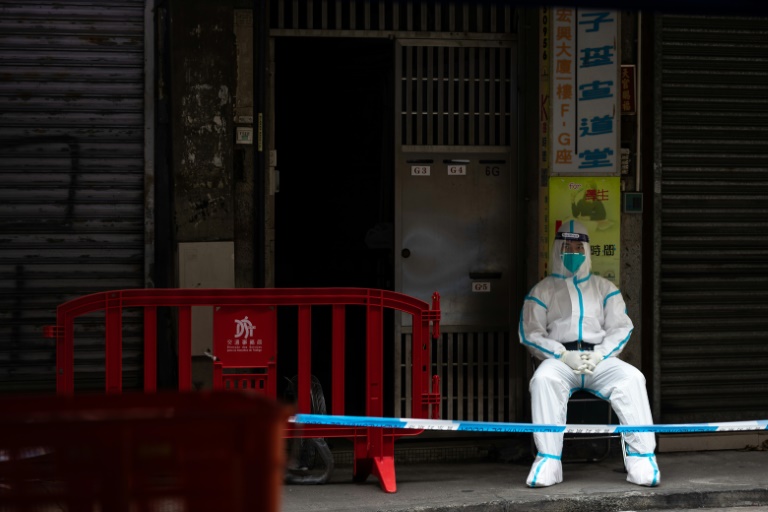
China is the last major economy wedded to a strategy of extinguishing Covid outbreaks as they emerge, imposing snap lockdowns, mass testing and lengthy quarantines despite the widespread disruption to businesses and international supply chains.

And authorities poured cold water on speculation that the policy could be relaxed Saturday, with National Health Commission (NHC) spokesperson Mi Feng saying that Beijing would “stick unswervingly to… the overall policy of dynamic zero-Covid”.

“At present, China is still facing the dual threat of imported infections and the spread of domestic outbreaks,” Mi said at a press briefing.

“The disease control situation is as grim and complex as ever,” he said. “We must continue to put people and lives first.”

Biden, Trump rally troops on eve of crucial midterms

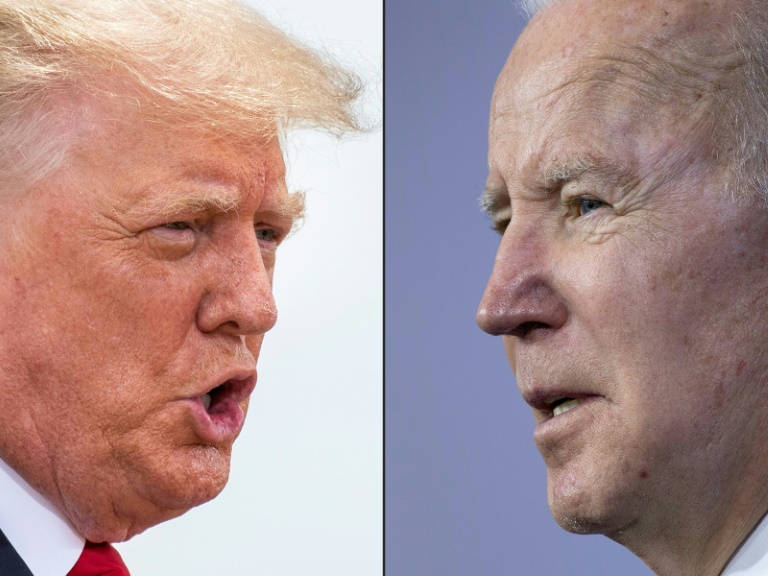
Joe Biden and Donald Trump headline a frantic last day of campaigning Monday on the eve of a midterm election that will shape the rest of the US president’s term — and could pave the way for a White House comeback by his predecessor.

Biden’s Democrats are facing a gargantuan struggle to hang on to Congress, after a race the president has cast as a “defining” moment for US democracy — though kitchen-table issues like inflation have largely dominated the campaign.

Republicans are comfortably placed to snatch a House majority on Tuesday, and many Democrats fear the Senate also slipping away in a defeat that would see Biden’s foes in near total charge of legislation during his last two years in the White House.

Polls show most Americans are anxious about the economy and feel the country is on the wrong track, emboldening Republican candidates in districts that once looked out of reach.

With all 435 seats in the House of Representatives up for grabs alongside a third of the 100-member Senate and a slew of state posts, Democrats were putting a brave face on their prospects.

“The party in the White House usually loses during midterms but the reality is we still have a very strong pathway, not just to keeping the Senate but really picking up seats,” New Jersey’s Cory Booker told ABC on Sunday.

Democratic candidates have been lent star power on the campaign trail by the party’s most popular elder statesmen, including previous presidents Barack Obama and Bill Clinton.

Republicans have tapped a narrower roster of their own political big hitters, with the campaign spotlight turning in recent weeks to Trump — who has been teasing a probable new run for the presidency in 2024.

Biden and Trump will go head-to-head on election eve: the president with a rally near the capital in Maryland, while Trump will be campaigning in a turbulent Senate race in Ohio.

– ‘Wake-up call’ –

The political landscape has been tilting away from Democrats since the summer, with polls showing Republicans odds-on for a double-digit majority in the House.

“This is going to be a wake-up call to President Biden,” was the bullish weekend prediction of Glenn Youngkin, the Republican governor of Virginia.

The Senate is more of a toss-up but Democratic hopes of keeping the upper chamber, which they control thanks to tiebreaking votes from Vice President Kamala Harris, hang in the balance.

Races in Pennsylvania, Nevada, Wisconsin, Georgia, New Hampshire and Ohio have narrowed to projected photo finishes, and any one of them could swing the balance of power.

Democrats have focused their closing arguments on voting rights, protecting abortion access and welfare — and in Biden’s case, on the threat posed by growing support among Trump’s Republicans for political conspiracy theories.

The Republicans counter that a vote for Democrats means no end to soaraway inflation and rising violent crime, seeking to make the midterms a referendum on the president.

With his approval rating marooned around 42 percent, Biden has largely avoided the most contentious states.

But he rallied alongside his former boss Obama in Pennsylvania Saturday, as part of a hectic agenda of late stump stops that has also taken him to Illinois, Florida and New York.

The president rebuked extremist supporters of “defeated president” Trump, telling the crowd: “Your right to choose is on the ballot. Your right to vote is on the ballot.”

– ‘Decline and fall’ –

Staging a rival weekend rally in the swing state, Trump — who continues to push false claims the 2020 election was stolen — accused the “radical, crazy” Democrats of bringing about “the decline and fall of America.”

The US president has major achievements to tout, including curbs on prescription drug pricing, ramped-up microchip manufacturing and record investments in infrastructure.

Democrats have struggled to turn these legislative victories into enthusiasm in the US heartland.

But Amy Klobuchar, a 2016 presidential hopeful, pushed back Sunday on the suggestion Democrats had lost the messaging war, projecting a good night for her party. 

Forty-eight percent of likely voters said they prefer a Democratic-controlled Congress in the final national NBC News poll of the campaign, while 47 percent want Republicans in charge.

But 80 percent of Republican-leaning voters say they are certain to turn out or have already done so, according to a new Washington Post-ABC News poll, six points above the Democratic figure.

Turnout forecasters always keep a keen eye on Election Day weather, which looks to be warmer than average in most of the country.

About 40 million Americans had cast early votes as of Sunday afternoon, according to the United States Elections Project, narrowly surpassing the figure for 2018.

China exports fall in October, first decline since 2020

China’s exports shrank in October, the first such decline since mid-2020, customs authorities said Monday, as a domestic slowdown and the threat of global recession hit international trade.

Exports fell 0.3 percent year-on-year in October, according to the General Administration of Customs, a steep drop from September’s 5.7 percent increase and well below analysts’ expectations.

Year-on-year imports were down 0.7 percent in October, negative for the first time since March this year and down from September’s 0.3 percent growth.

The slowdown in trade comes as global demand for Chinese products weakens with energy prices soaring and the United States facing the threat of recession.

Sporadic Covid-19 lockdowns have also hurt consumer enthusiasm and business confidence in the world’s second-largest economy.

Analysts surveyed by Bloomberg forecast export growth of 4.3 percent in October, but expected only 0.1 percent growth in imports amid weakening demand at home.

“The recent decline in export volumes appears to reflect a reversal in the pandemic-era surge in global demand for Chinese goods,” Capital Economics analyst Zichun Huang said in a note on Monday.

Import volumes are “likely to continue weakening given the challenging domestic outlook”, Huang said.

– Domestic challenges –

China’s factory activity shrank in October, official data showed last week, which the National Bureau of Statistics blamed on virus outbreaks last month.

Factory activity has been in contraction territory for six months of the year so far, as sweeping Covid restrictions paralysed major industrial cities such as Shanghai, Shenzhen and Chengdu.

Apple on Monday warned of delayed shipments after Covid restrictions “temporarily impacted” production at its massive factory in Zhengzhou, central China.

Chinese leaders have set out an annual economic growth target of about 5.5 percent, but many observers think the country will struggle to hit the target, despite announcing a better-than-expected 3.9 percent expansion in the third quarter.

It is the last major economy wedded to a strategy of extinguishing Covid outbreaks as they emerge, imposing snap lockdowns, mass testing and lengthy quarantines despite the widespread disruption to businesses and international supply chains.

And authorities poured cold water on speculation that the policy could be relaxed Saturday, with National Health Commission (NHC) spokesperson Mi Feng saying that Beijing would “stick unswervingly to… the overall policy of dynamic zero-Covid”.

Authorities had imposed enhanced virus curbs on a total area accounting for more than 10 percent of China’s overall gross domestic product as of Thursday, according to Nomura analysts.

Close Bitnami banner
Bitnami