World

Kenya govt threatens striking pilots with disciplinary action

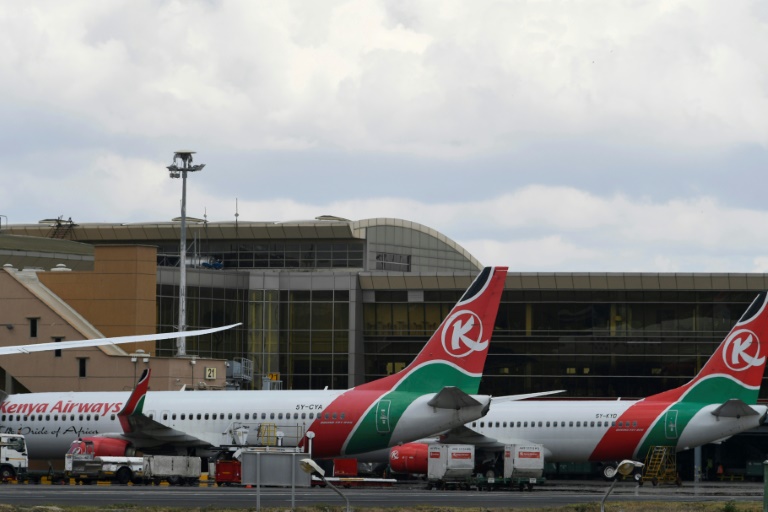
Pilots on strike at Kenya Airways will face disciplinary action if they don’t return to work immediately, the government said Sunday, with thousands of passengers stranded for a second day after dozens of fresh flight cancellations.

 The Kenya Airline Pilots Association (KALPA) launched the strike at Nairobi’s Jomo Kenyatta International Airport at 06:00 am (0300 GMT) on Saturday — defying a court order against industrial action and deepening the woes of the troubled national carrier.

“Considering the defiance of KALPA and their total disregard for the existing court order –- which is at the heart of the rule of law — the Ministry of Labour now has to activate the procedures governing industrial relations,” Kenya’s Transport Minister Kipchumba Murkomen said in a statement.

“I urge the pilots to be mindful of the consequences of defying a court order and to urgently return to work because impunity cannot be an option,” the newly-appointed minister added.

The airline, part owned by the government and Air France-KLM, is one of the biggest in Africa, connecting multiple countries to Europe and Asia. 

But it has been facing turbulent times, including years of losses.

Murkomen said the government, which has pumped millions of dollars into the airline, had made “relentless efforts” to resolve the dispute but to no avail.

“The sour and chronic industrial action is an impediment to ongoing efforts to raise capital for Kenya Airways,” he said.

There was no immediate response to the minister’s statement from KALPA, which earlier on Sunday said that its members would remain on strike “until their voice is heard.” 

“The public should expect major flight disruptions to continue,” it said on Twitter, blaming the airline’s management for failing to resolve the stalemate.

The airline’s managing director and CEO, Allan Kilavuka, in turn accused the protesting pilots — who make up 10 percent of the workforce — of “holding passengers, other employees, management and the economy at ransom.”

He said Sunday that 56 flights had been cancelled due to the strike, which has thrown around 12,000 passengers’ plans into disarray.

– ‘Inconveniencing’ –

Many travellers turned up to the Nairobi airport on Sunday, only to find out that their flights would not take off.

“I came here at around 5:25 in the morning… but I have been informed that the flight has been cancelled,” passenger Erick Muhanda, who was due to travel to South Africa’s port city of Cape Town, told broadcaster Citizen TV.

“It’s quite inconveniencing,” he said.

The pilots are pressing for the reinstatement of contributions to a provident fund and payment of all salaries stopped during the Covid-19 pandemic.

On Monday, the airline won a court injunction stopping the strike, but an official at KALPA, which has 400 members, told AFP the pilots “were acting within the provisions of the law” and that they were yet to be served with a court order.

The carrier has warned that the strike would jeopardise its recovery, estimating losses at $2.5 million per day if the pilots went ahead with their plans.

The airline was founded in 1977 following the demise of East African Airways, and flies more than four million passengers to 42 destinations annually.

It has been operating in large part thanks to state bailouts following years of losses.

The carrier saw its revenue nosedive after the pandemic grounded planes worldwide because of stringent travel restrictions, devastating the aerospace and tourism industries.

In August, the airline reported a $81.5 million half-year loss citing high fuel costs, despite the government injecting some $520 million to keep it afloat.

On Wednesday, the airline’s management said it was on the path to recovery, flying at least 250,000 passengers each month, and aiming to cut its overall operating costs by 10 percent before the end of next year.
Taliban reveal burial place of founder Mullah Omar, nine years after death

The Taliban on Sunday revealed the final resting place of the movement’s founder, Mullah Omar, whose death and burial they kept secret for years.

Rumours surrounding Omar’s health and whereabouts abounded after the Taliban were kicked out of power in 2001 by a US-led invasion, and they only admitted in April 2015 that he had died two years earlier.

Taliban spokesman Zabihullah Mujahid told AFP Sunday that senior leaders of the movement attended a ceremony at his gravesite earlier in the day near Omarzo, in Suri district of Zabul province.

The Taliban returned to power in August last year, routing government forces as the US-led military that propped up the regime ended a 20-year occupation.

“Since a lot of enemies were around and the country was occupied, to avoid damage to the tomb it was kept secret,” Mujahid said.

“Only the close family members were aware of the place,” he added.

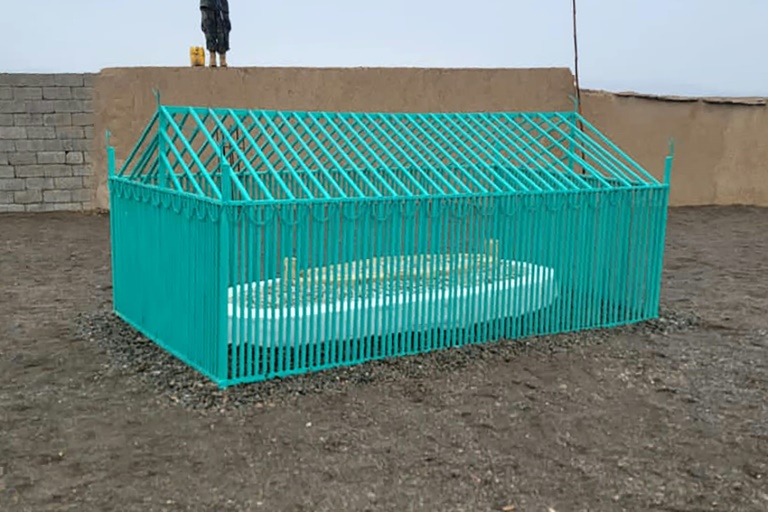
Pictures released by officials showed Taliban leaders gathered around a simple white brick tomb, covered with what appears to be gravel and enclosed in a green metal cage.

“Now the decision has been made… there are no issues for the people to visit the tomb,” Mujahid said. 

Omar, who was aged around 55 when he died, founded the Taliban in 1993 as an antidote to the internecine civil war that erupted following the decade-long Soviet occupation.

Under his leadership the Taliban introduced an extremely austere version of Islamic rule, barring women from public life and introducing harsh public punishments — including executions and floggings.

– Massoud tomb reported vandalised –

Omar’s ceremony comes a day after provincial Taliban officials denied reports that the Panjshir Valley tomb of resistance hero Ahmad Shah Massoud had been vandalised, an act Mujahid said would be “punished” if true.

Massoud has a mixed legacy in the country, where he is hailed by ordinary Afghans for leading the resistance against the Soviet occupation, but loathed by the Taliban he also fought until his 2001 assassination by Al-Qaeda.

His tomb is in an imposing granite and marble mausoleum overlooking the picturesque Panjshir Valley, and guarded by Taliban fighters since their takeover of the country in August last year.

Local residents said a newly arrived contingent of fighters smashed the tombstone, and video of the desecrated grave — which could not be verified — was published by local media and circulating widely on social channels.

“It happened when the new forces entered Panjshir. The new forces from Helmand and Kandahar destroyed the tombstone of the national hero,” one resident told AFP.

Nasrullah Malakzada, head of information and culture of Panjshir, province, denied the tomb had been damaged and issued a video purporting to show it intact.

The clip, however, pointedly did not display the entire structure — particularly the part seen damaged in the original video.

Malakzada refused requests by journalists to visit or photograph the tomb for themselves. 

Mujahid told reporters that nobody had the right to insult the dead.

“Previously we had punished those who committed such acts,” he said, adding “this will be investigated as well and necessary action will be taken”.

19 killed after plane plunges into Lake Victoria in Tanzania

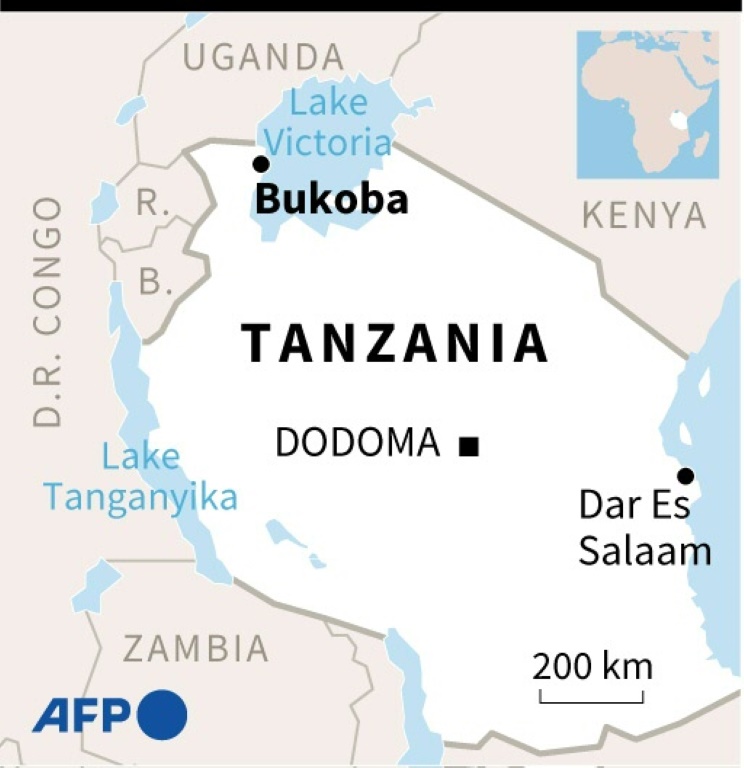
The death toll from Sunday’s plane crash in Lake Victoria in Tanzania has jumped to 19, Prime Minister Kassim Majaliwa said, after the Precision Air flight with dozens of passengers aboard plunged into water while approaching the northwestern city of Bukoba.

“All Tanzanians are with you in mourning the 19 people who lost lives during this accident,” Majaliwa told a crowd after arriving at Bukoba airport, where the flight had been scheduled to land from financial capital Dar es Salaam.

Regional authorities and the airline earlier said that 26 survivors out of the 43 people on board flight PW 494 had been pulled to safety and taken to hospital in the lakeside city in Kagera region.

It was not immediately clear if the 19 victims included rescuers who drowned or whether the 48-seater aircraft had more people on board than previously disclosed, a regional official said.

“We are continuing to investigate, there is a possibility that two people were not onboard but died during the rescue effort,” said Kagera regional commissioner Albert Chalamila.

Precision Air, a publicly-listed company which is Tanzania’s largest private airline, said it had dispatched rescuers to the scene.

“An investigation team consisting of Precision Air technical staff and TAA (Tanzania Airports Authority) has also departed to join the rescue team on the ground,” the airline said in a statement.

“Precision Air sincerely understands the anxiety for confirmed information and will therefore do its best to issue more details,” the company said. 

It said the aircraft was an ATR 42-500, manufactured by Toulouse-based Franco-Italian firm ATR.

Video footage broadcast on local media showed the plane largely submerged as rescuers, including fishermen, waded through water to bring people to safety.

Emergency workers attempted to lift the aircraft out of the water using ropes, assisted by cranes as residents also sought to help.

President Samia Suluhu Hassan expressed her condolences to those affected by the accident.

“Let’s continue to be calm while the rescue operation continues as we pray to God to help us,” she said on Twitter.

– ‘Hearts and prayers’ –

The African Union Commission chair Moussa Faki Mahamat also shared his condolences, as did the secretary general of the regional East African Community bloc, Peter Mathuki.

“Our hearts and prayers go to the families of passengers on-board a plane that crashed into Lake Victoria, with our full solidarity to the Government & people of #Tanzania,” Faki wrote on Twitter.

“The East African Community joins and sends our condolences to Mama Samia Suluhu Hassan, families and friends of all those who were affected by the Precision Air plane accident,” Mathuki said, also on Twitter.

Precision Air, which is partly owned by Kenya Airways, was founded in 1993 and operates domestic and regional flights as well as private charters to popular tourist destinations such as the Serengeti National Park and the Zanzibar archipelago.

The accident comes five years after 11 people died when a plane belonging to safari company Coastal Aviation crashed in northern Tanzania.

In March 2019, an Ethiopian Airlines flight from Addis Ababa to Nairobi plunged six minutes after take-off into a field southeast of the Ethiopian capital, killing all 157 people on board.

In 2007, a Kenya Airways flight from the Ivory Coast city of Abidjan to Kenya’s capital Nairobi crashed into a swamp after take-off, killing all 114 passengers.

In 2000, another Kenya Airways flight from Abidjan to Nairobi crashed into the Atlantic Ocean minutes after take-off, killing 169 people while 10 survived.

New Iran protests erupt in universities, Kurdish region

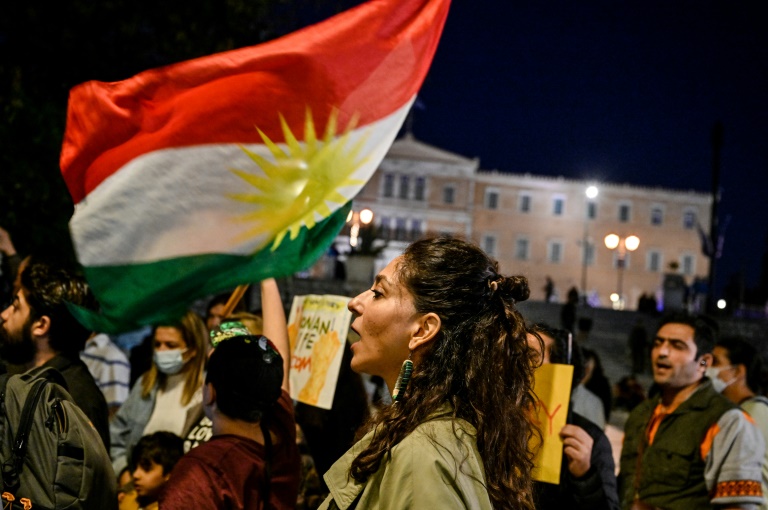
New protests erupted in Iran on Sunday at universities and in the largely Kurdish northwest, keeping a seven-week anti-regime movement going even in the face of a fierce crackdown.

The protests, triggered in mid-September by the death of Mahsa Amini after she was arrested for allegedly breaching strict dress rules for women, have evolved into the biggest challenge for the clerical leadership since the 1979 revolution.

Unlike demonstrations in November 2019, they have been nationwide, spread across social classes, universities, the streets and even schools, showing no sign of letting up even as the death toll ticks towards 200, according to one rights group.

Another rights group, Norway-based Hengaw, said security forces opened fire on Sunday at a protest in Marivan, a town in Kurdistan province, wounding 35 people. 

It was not immediately possible to verify the toll. 

The latest protest was sparked by the death in Tehran of a Kurdish student from Marivan, Nasrin Ghadri, who according to Hengaw died on Saturday after being beaten over the head by police.

Iranian authorities have not yet commented on the cause of her death. 

Hengaw said she was buried at dawn without a funeral ceremony on the insistence of the authorities who feared the event could become a protest flashpoint.

Authorities subsequently sent reinforcements to the area, it added.

– ‘Fundamental changes’ –

Kurdish-populated regions have been the crucible of protests since the death of Amini, herself a Kurd from the town of Saqez in Kurdistan province.

Universities have also emerged as major protest hotbeds. Iran Human Rights (IHR), a Norway-based organisation, said students at Sharif University in Tehran were staging sit-ins Sunday in support of arrested colleagues.

Students at the university in Babol in northern Iran meanwhile removed gender segregation barriers that by law were erected in their cafeteria, it added.

The protests have been sustained by myriad different tactics, with observers noting a relatively new trend of young people tipping off clerics’ turbans in the streets.

IHR said Saturday that at least 186 people have been killed in the crackdown on the Mahsa Amini protests, up by 10 from Wednesday.

It said another 118 people had lost their lives in distinct protests since September 30 in Sistan-Baluchistan, a mainly Sunni Muslim province in the southeast, presenting a further major headache for the regime.

IHR said security forces killed at least 16 people with live bullets when protests erupted after prayers on Friday in the town of Khash in Sistan-Baluchistan.

Amnesty International meanwhile said up to 10 people were feared dead in Friday’s violence in Khash, accusing security forces of firing at demonstrators from rooftops.

“Iranians continue taking to the streets and are more determined than ever to bring fundamental changes,” said IHR director Mahmood Amiry-Moghaddam. “The response from the Islamic Republic is more violence.” 

The protest crackdown has also for now consigned efforts to revive the 2015 deal over Iran’s nuclear programme to the back burner and intensified focus on Tehran’s ties with Russia — notably its supply to Moscow of drones used in the  Ukraine war.

– Fierce crackdown –

The protests were fanned by fury over the restrictive dress rules for women, over which Amini had been arrested. But they have now become a broad movement against the theocracy that has ruled Iran since the fall of the shah.

Meanwhile Sunnis in Sistan-Baluchistan — where the alleged rape of a girl in police custody was the spark for protests — have long felt discriminated against by the nation’s Shiite leadership. 

IHR also warned that “dozens” of arrested protesters had been charged with purported crimes which could see them sentenced to death — up from only a handful earlier reported to be potentially facing that fate. 

As well as thousands of ordinary citizens, the crackdown has seen the arrests of prominent activists, journalists and artists such as the influential rapper Toomaj Salehi.

There is also growing concern about the well-being of Wall Street Journal contributor and freedom of expression campaigner Hossein Ronaghi, who was arrested in September and whose family says is on hunger strike in Evin prison. 

In a new blow, his father Ahmad is now in intensive care after suffering a heart attack while conducting a vigil outside Evin, Hossein Ronaghi’s brother Hassan wrote on Twitter.

Hacking gang targeted Qatar World Cup critics

An India-based computer hacking gang targeted critics of the Qatar World Cup, an investigation by British journalists said on Sunday, as the Qatari government furiously denied it had played any part in commissioning the eavesdropping.

A database leaked to Britain’s Sunday Times and the Bureau of Investigative Journalism revealed the hacking of a dozen lawyers, journalists and famous people from 2019 “commissioned by one particular client”, the newspaper and the bureau said in a statement.

“This investigation points strongly to this client being the host of (the) World Cup: Qatar,” it said, prompting the Qatari authorities to describe the allegation as “patently false and without merit”.

Among those targeted was Michel Platini, the former head of European football.

Platini, who was hacked ahead of talks with French police about World Cup related graft claims, told AFP he was “surprised and deeply shocked” by the report.

He said he would be exploring all possible legal avenues over what appeared to be a serious “violation” of his privacy.

London-based consultant Ghanem Nuseibeh whose company Cornerstone produced a report on corruption relating to the World Cup was also targeted, the Sunday Times said in its report based on the joint investigation.

Others included Nathalie Goulet, a French senator and vocal critic of Qatar for allegedly financing “Islamic terrorism” and Mark Somos, a Germany-based lawyer, who had made a complaint about the Qatari royal family to the United Nations Human Rights Council.

– Over 100 targeted –

The controversy comes two weeks before the World Cup is due to kick off in the conservative Gulf state on November 20.

The newspaper alleged that the hacking was masterminded by a 31-year-old accountancy firm employee, who denies the claims.

Based in a suburb of the Indian tech city of Gurugram near Delhi, his network of computer hackers allegedly ensnared their targets using “phishing” techniques to gain access to their email inboxes, sometimes also deploying malicious software to take control of their computer cameras and microphones.

Hacking attacks were not limited, however, to those with an interest in the Qatar World Cup.

In total more than 100 victims had their private email accounts targeted by the gang “on behalf of investigators working for autocratic states, British lawyers and their wealthy clients”, the report said.

These included politicians dealing with issues relating to Russia such as Britain’s former finance minister Philip Hammond.

He was targeted during a period when he was dealing with the aftermath of the 2018 Novichok attack on former double agent Sergei Skripal which the UK has blamed on Russia.

The Swiss president and his deputy were also hacked days after the president met then British prime minister Boris Johnson to discuss Russian sanctions.   

The gang also seized control of computers owned by Pakistani politicians and generals and had their conversations monitored, “apparently at the behest of the Indian secret services”, the Sunday Times added.

– ‘No evidence’ –

A Qatari official rejected the allegations, describing the Bureau of Investigative Journalism’s (TBIJ) report as “littered with glaring inconsistencies and falsehoods that undermine the credibility of their organisation”.

“The report relies on a single source who claims his ultimate client was Qatar, despite there being no evidence to prove it,” the official told AFP in a statement.

“Numerous companies have also boasted of non-existent ties to Qatar in an attempt to boost their profile in the run up to the World Cup.

“TBIJ’s decision to publish the report without a single piece of credible evidence to connect their allegations to Qatar raises serious concerns about their motives, which appear to be driven by political, rather than public interest, reasons,” the official added.

UN summit warns against climate backsliding, hopeful on financing

The UN’s COP27 climate summit kicked off Sunday in Egypt with warnings against backsliding on efforts to cut emissions and calls for rich nations to compensate poor countries after a year of extreme weather disasters.  

An alarming UN report said the past eight years are on track to be the eight warmest on record, with an acceleration in sea level rise, glacier melt, heatwaves and other climate indicators.

“As COP27 gets underway, our planet is sending a distress signal,” UN chief Antonio Guterres said in a statement, calling the report a “chronicle of climate chaos”.

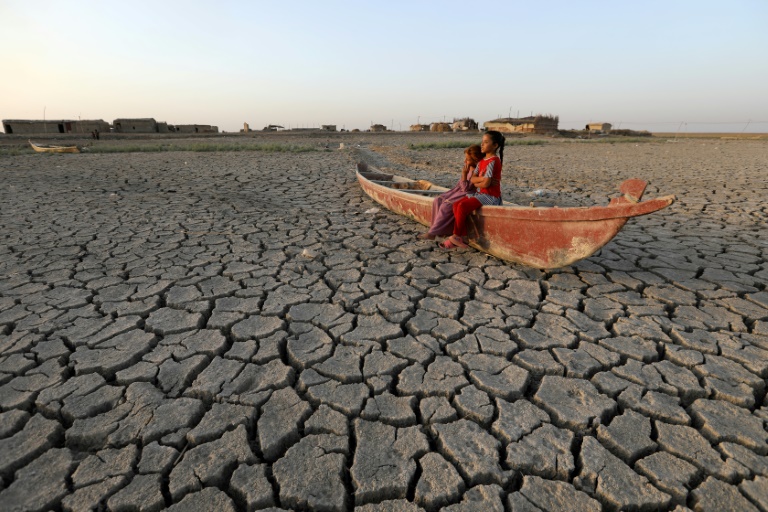
Just in the past few months, floods devastated Pakistan and Nigeria, droughts worsened in Africa and the United States, cyclones whipped the Caribbean, and unprecedented heatwaves seared three continents.

The conference in the Red Sea resort of Sharm el-Sheikh also comes against the backdrop of Russia’s war on Ukraine, an energy crunch, soaring inflation and the lingering effects from the Covid-19 pandemic.

But Simon Stiell, the UN’s climate change executive secretary, said he would not be a “custodian of backsliding” on the goal of slashing greenhouse emissions 45 percent by 2030 to cap global warming at 1.5 degrees Celsius above late 19th-century levels.

“We will be holding people to account, be they presidents, prime ministers, CEOs,” Stiell said as the 13-day summit opened.

“The heart of implementation is everybody everywhere in the world every single day doing everything they possibly can to address the climate crisis,” he said, noting that only 29 of 194 nations have presented improved plans as called for at COP26 in Glasgow last year.

Current trends would see carbon pollution increase 10 percent by the end of the decade and the Earth’s surface heat up 2.8C, according to findings unveiled last week.

Promises made under the 2015 Paris Agreement would, if kept, only shave off a few tenths of a degree.

Britain’s Alok Sharma, who handed the COP presidency to Egypt, said that while world leaders have faced “competing priorities” this year, “inaction is myopic and can only defer climate catastrophe.” 

“How many more wake-up calls does the world — and world leaders — actually need?” he said.

– ‘Loss and damage’ –

The COP27 summit will focus like never before on money — a major sticking point that has soured relations between countries that got rich burning fossil fuels and the poorer ones suffering from the worst consequences of climate change.

The United States and the European Union — fearful of creating an open-ended reparations framework — have dragged their feet and challenged the need for a separate funding stream.

After two days of intense pre-summit negotiations, delegates agreed on Sunday to put the “loss and damage” issue on the COP27 agenda, a first step towards what are sure to be difficult discussions.

Stiell said inclusion of loss and damage on the agenda after three decades of debate on the issue showed progress.

“The fact that it is there as a substantive agenda item I believe bodes well,” he told reporters. 

COP27 president Sameh Shoukry of Egypt said it would be unproductive to speculate on what outcome the negotiations will lead to, “but certainly everybody is hopeful.”

“Anything that we do effectively has to be on the basis of our common efforts and that we leave no one behind,” he said.

Shoukry also noted that rich nations have not fulfilled a separate pledge to deliver $100 billion per year to help developing countries green their economies and build resilience against future climate change.

He lamented that most climate financing is based on loans.

“We do not have the luxury to continue this way. We have to change our approaches to this existential threat,” he said.

– US-China tensions –

After the first day of talks, some 110 world leaders will join the summit on Monday and Tuesday.

The most conspicuous no-show will be China’s Xi Jinping, whose leadership was renewed last month at a Communist Party Congress.

US President Joe Biden has said he will come, but only after legislative elections on Tuesday that could see either or both houses of Congress fall into the hands of Republicans hostile to international action on climate change.

Cooperation between the United States and China — the world’s two largest economies and carbon polluters — has been crucial to rare breakthroughs in the nearly 30-year saga of UN climate talks, including the 2015 Paris Agreement.

But Sino-US relations have sunk to a 40-year low after a visit to Taiwan by House leader Nancy Pelosi and a US ban on the sale of high-level chip technology to China, leaving the outcome of COP27 in doubt.

A meeting between Xi and Biden at the G20 summit in Bali days before the UN climate meeting ends, if it happens, could be decisive.

One bright spot at COP27 will be the arrival of Brazilian president-elect Luiz Inacio Lula da Silva, whose campaign vowed to protect the Amazon and reverse the extractive policies of outgoing President Jair Bolsonaro.

E.Guinea accuses France, Spain, US of election 'interference'

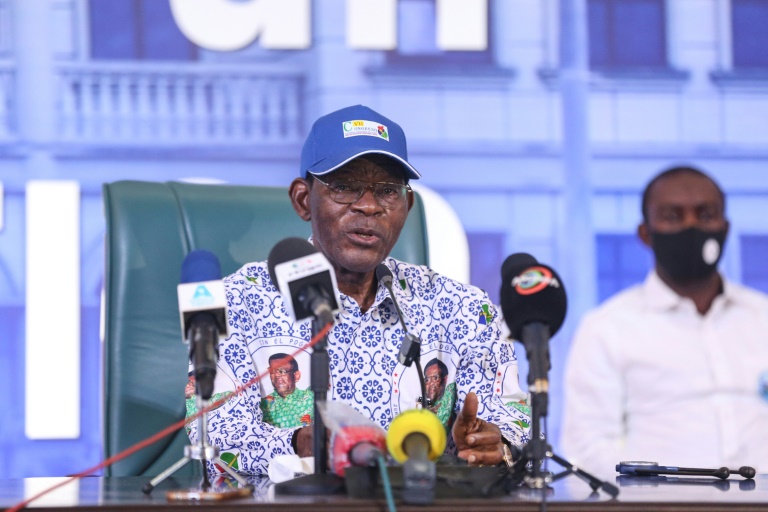
Equatorial Guinea on Sunday accused Spain, France and the United States of “interference” in its presidential and legislative elections scheduled for November 20.

President Teodoro Obiang Nguema Mbasogo, who has ruled his country with an iron fist for 43 years, launched his bid for a sixth term this week in a first campaign event.

Equatorial Guinea, a former Spanish colony, reproached the three countries after their diplomats attended a campaign event this week by one of the two opposition movements authorised to present candidates in the polls.

The foreign ministry described it as “interference in the country’s internal affairs” in a statement.

Obiang’s dominant Democratic Party of Equatorial Guinea (PDGE) holds 99 of the 100 seats in the outgoing lower house of parliament and all the senate seats.

It was the country’s single legal political movement until 1991, when multi-party politics were introduced.

Running against Obiang are Andres Esono Ondo of the Convergence for Social Democracy party (CPDS) and Buenaventura Monsuy Asumu, who represents the Party of the Democratic Social Coalition.

In a tweet on Thursday, US State Department spokesman Ned Price said Washington was “concerned by reports of arrests and harassment of opposition members and civil society” and called on the government to hold “free and fair” elections.

“Equatorial Guinea can cultivate a more inclusive, peaceful, and democratic society by ensuring the expression of diverse political perspectives, a free and fair voting process, and the protection of the human rights of all individuals,” Price said. 

Security forces have waged a ruthless campaign over several weeks including arresting opponents.

But the government says the detentions are part of a crackdown on a “plot” by the opposition to plan “attacks” on “gas stations, Western embassies and ministers’ homes”.

Obiang, 80, came to power in a 1979 coup and is the longest-ruling head of state in the world excluding monarchs. 

He has never officially been re-elected with less than 93 percent of the vote.

More than 425,000 voters are registered for the polls out of a population of around 1.4 million.

The country possesses major oil and gas resources, but a majority of its 1.3 million people live below the poverty line, according to the World Bank.

Syrian perfumer needs 'one whiff' to mimic luxury brands

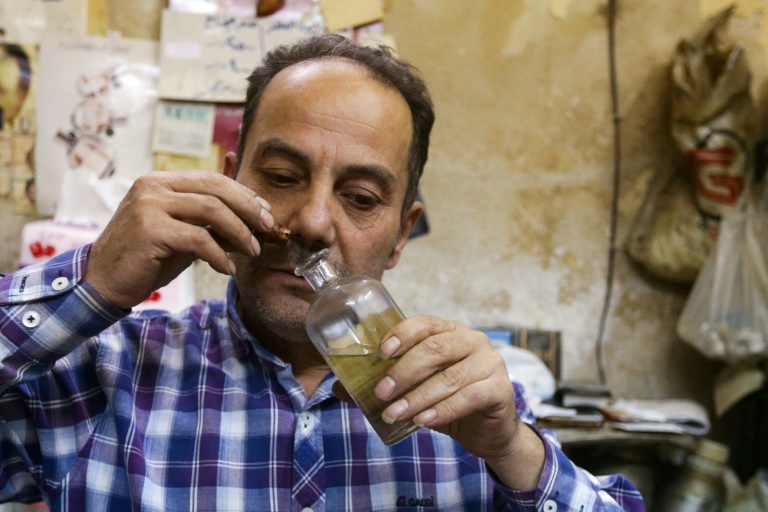
One whiff of a fragrance is all Syrian perfumer Mohammad al-Masri needs to recreate the scent of a luxury brand — without the label and for a fraction of the cost.

Dozens of customers flock daily to his tiny store, nestled in the historic market of Damascus’s old city, many flashing photos on their phones of high-end perfumes they want to replicate.

“All I have is my shop, and this nose I’ve been training since I was 15,” the 55-year-old told AFP, pointing at his face. 

“I don’t have a big workshop or high-end equipment.”

After 11 years of brutal war and economic dislocation, most Syrians struggle to afford life’s bare necessities, let alone perfume.

Before the war, Masri would mostly concoct expensive oriental fragrances, with heavy notes of oud, a sweet and woody scent, like his family has done for a century.

But after Syria plunged into conflict, demand for cheap imitations of premium brands skyrocketed and Masri’s shop walls are filled with pictures of world-famous perfumes.

“For young women, perfume is essential, it’s like food or water,” said 24-year-old customer Cham al-Falah.

“I used to buy Western perfumes but I can no longer afford them because imported products are becoming increasingly hard to come by in Syria,” she said while ordering a fragrance imitating her favourite Italian perfume.

Although Damascus has been spared the worst destruction of the war, which began after its government repressed peaceful protests, the local currency has lost almost 99 per cent of its value on the parallel market.

Syrian employees and civil servants reportedly make roughly $25 a month on average — a quarter of the price of a bottle of imported perfume. 

Masri sells his fragrances for about six dollars, drawing in a flow of clients from all walks of life.

Ahmad Dorra, 60, travelled from the mountain town of Zabadani, a 50 kilometre (30 mile) drive away, to buy five bottles of perfume for his family.

He watched as Masri lined up dozens of vials on a table — essences of jasmine, Damascus rose, musk and other fragrances used for his concoctions.

“I don’t know much about Western brands,” the farmer said, “but I trust (his) nose”.

Search for survivors after plane plunges into Lake Victoria in Tanzania

Rescuers searched for survivors after a plane carrying 43 people plunged into Lake Victoria in Tanzania on Sunday due to bad weather as it approached the northwestern city of Bukoba, police said.

“There was an accident involving a Precision Air plane which… crashed into water about 100 metres from the airport,” regional police commander William Mwampaghale told reporters at Bukoba airport.

Regional commissioner Albert Chalamila said 43 people, including 39 passengers, two pilots and two cabin crew, were aboard flight PW 494 from financial capital Dar es Salaam to the lakeside city in Kagera region.

“As we speak, we have managed to rescue 26 people who were taken to our referral hospital,” Chalamila said.

“The rescue operation is still ongoing and we are communicating with the pilots,” he said, adding that the aircraft was an ATR-42, manufactured by Toulouse-based Franco-Italian firm ATR.

Precision Air, a publicly-listed company which is Tanzania’s largest private airline, said it had dispatched rescuers to the scene.

“An investigation team consisting of Precision Air technical staff and TAA (Tanzania Airports Authority) has also departed to join the rescue team on the ground,” the airline said in a statement.

“No death has been confirmed at the moment,” it said.

Video footage broadcast on local media showed the plane largely submerged as rescuers, including fishermen, waded through water to bring people to safety.

Emergency workers attempted to lift the aircraft out of the water using ropes, assisted by cranes as local residents also sought to help in the effort.

President Samia Suluhu Hassan expressed her condolences to those affected by the accident.

“Let’s continue to be calm while the rescue operation continues as we pray to God to help us,” she said on Twitter.

– ‘Hearts and prayers’ –

The African Union Commission chair Moussa Faki Mahamat also shared his condolences, as did the secretary general of the regional East African Community bloc, Peter Mathuki.

“Our hearts and prayers go to the families of passengers on-board a plane that crashed into Lake Victoria, with our full solidarity to the Government & people of #Tanzania,” he said on Twitter.

“The East African Community joins and sends our condolences to Mama Samia Suluhu Hassan, families and friends of all those who were affected by the Precision Air plane accident,” Mathuki said on Twitter.

Precision Air, which is partly owned by Kenya Airways, was founded in 1993 and operates domestic and regional flights as well as private charters to popular tourist destinations such as the Serengeti National Park and the Zanzibar archipelago.

The accident comes five years after 11 people died when a plane belonging to safari company Coastal Aviation crashed in northern Tanzania.

In March 2019, an Ethiopian Airlines flight from from Addis Ababa to Nairobi plunged six minutes after take-off into a field southeast of the Ethiopian capital, killing all 157 people on board.

In 2007, a Kenya Airways flight from the Ivory Coast city of Abidjan to Kenya’s capital Nairobi crashed into a swamp after take-off, killing all 114 passengers.

In 2000, another Kenya Airways flight from Abidjan to Nairobi crashed into the Atlantic Ocean minutes after take-off, killing 169 people while 10 survived.

UN climate summit opens with warning against 'backsliding'

The UN’s COP27 climate summit kicked off Sunday in Egypt with warnings against backsliding on efforts to cut emissions and calls for rich nations to compensate poor countries after a year of extreme weather disasters.  

Just in the past few months, climate-induced catastrophes have killed thousands, displaced millions and cost billions in damages across the world.

Massive floods devastated swaths of Pakistan and Nigeria, droughts worsened in Africa and the western United States, cyclones whipped the Caribbean, and unprecedented heatwaves seared three continents.

The conference in the Red Sea resort of Sharm el-Sheikh comes in a fraught year marked by Russia’s war on Ukraine, an energy crunch, soaring inflation and the lingering effects from the Covid pandemic.

But Simon Stiell, the UN’s climate change executive secretary, said he would not be a “custodian of backsliding” on the goal of slashing greenhouse emissions 45 percent by 2030 to cap global warming at 1.5 degrees Celsius above late-19th-century levels.

“We will be holding people to account, be they presidents, prime ministers, CEOs,” Stiell said as the 13-day summit opened.

“The heart of implementation is everybody everywhere in the world every single day doing everything they possibly can to address the climate crisis,” he said.

Current trends would see carbon pollution increase 10 percent by the end of the decade and Earth’s surface heat up 2.8C, according to findings unveiled last week.

Promises made under the 2015 Paris Agreement would, if kept, only shave off a few tenths of a degree.

“Whilst I do understand that leaders around the world have faced competing priorities this year, we must be clear: as challenging as our current moment is, inaction is myopic and can only defer climate catastrophe,” said Alok Sharma, British president of the previous COP26 as he handed over the chairmanship to Egypt. 

“How many more wake-up calls does the world — and world leaders — actually need?”, he said.

In a dire warning, the UN’s World Meteorological Organization said the past eight years are on track to be the eight warmest on record, with an acceleration in sea level rise, glacier melt and heatwaves.

“As COP27 gets underway, our planet is sending a distress signal,” UN chief Antonio Guterres said in a statement.

– ‘Loss and damage’ –

The COP27 summit will focus like never before on money — a major sticking point that has soured relations between countries that got rich burning fossil fuels and the poorer ones suffering from the worst consequences of climate change.

The United States and the European Union — fearful of creating an open-ended reparations framework — have dragged their feet and challenged the need for a separate funding stream.

Delegates agreed on Sunday to put the “loss and damage” issue on the COP27 agenda, a first step toward what are sure to be fraught discussions.

Inclusion of the agenda item “reflects a sense of solidarity and empathy for the suffering of the victims of climate induced disasters,” said COP27 president Sameh Shoukry of Egypt.

“We all owe a debt of gratitude to activists and civil society organisations who have persistently demanded the space to discuss funding for loss and damage,” he said to applause.

Shoukry also noted that rich nations have not fulfilled a separate pledge to deliver $100 billion per year to help developing countries green their economies and build resilience against future climate change.

He also lamented that most climate financing is based on loans.

“We do not have the luxury to continue this way. We have to change our approaches to this existential threat,” he said, calling for solutions that “prove we are serious about not leaving anyone behind”.

– US-China tensions –

After the first day of talks, more than 120 world leaders will join the summit on Monday and Tuesday.

The most conspicuous no-show will be China’s Xi Jinping, whose leadership was renewed last month at a Communist Party Congress.

US President Joe Biden has said he will come, but only after legislative elections on Tuesday that could see either or both houses of Congress fall into the hands of Republicans hostile to international action on climate change.

Cooperation between the United States and China — the world’s two largest economies and carbon polluters — has been crucial to rare breakthroughs in the nearly 30-year saga of UN climate talks, including the 2015 Paris Agreement.

But Sino-US relations have sunk to a 40-year low after a visit to Taiwan by House leader Nancy Pelosi and a US ban on the sale of high-level chip technology to China, leaving the outcome of COP27 in doubt.

A meeting between Xi and Biden at the G20 summit in Bali days before the UN climate meeting ends, if it happens, could be decisive.

One bright spot at COP27 will be the arrival of Brazilian president-elect Luiz Inacio Lula da Silva, whose campaign vowed to protect the Amazon and reverse the extractive policies of outgoing President Jair Bolsonaro.

Close Bitnami banner
Bitnami