World

Brazil roadblocks dwindle as Bolsonaro starts handover

Brazilian police said Friday they have nearly finished clearing hundreds of roadblocks by supporters of far-right President Jair Bolsonaro, who have been protesting since his election loss to veteran leftist Luiz Inacio Lula da Silva.

Just 15 partial roadblocks remain nationwide, said federal highway police, adding they had broken up another 954 since Sunday’s divisive presidential runoff election.

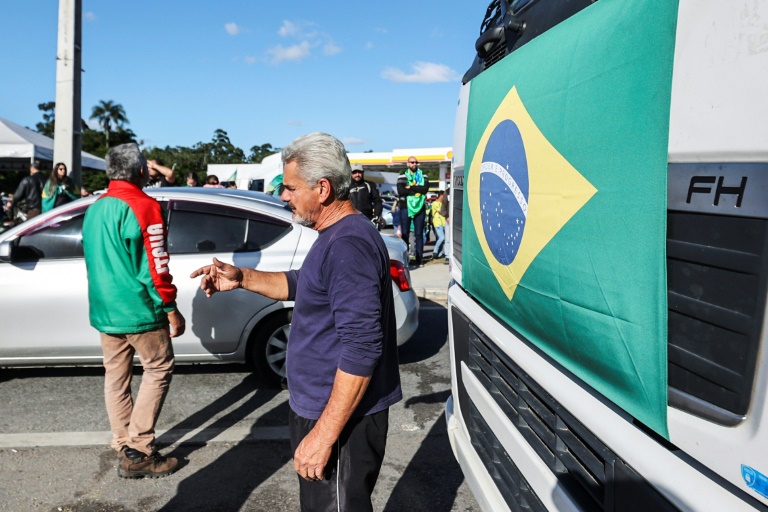
Bolsonaro supporters reacted furiously to Lula’s narrow victory, blocking highways with cars, trucks, and tractors and camping out at army bases to demand a military intervention.

The blockades had threatened to cause havoc in Latin America’s biggest economy but have diminished since Bolsonaro urged supporters Wednesday to “unblock the roads.”

Ex-army captain Bolsonaro remained silent for nearly two days after the election, raising fears he would try to cling to power with the backing of hardline supporters.

But after a series of key allies acknowledged the result, the incumbent said Tuesday he would respect the constitution and authorized the start of the transition process for Lula’s inauguration on January 1.

However, Bolsonaro has still not explicitly recognized the result or congratulated Lula.

The outgoing president on Thursday met briefly with vice president-elect Geraldo Alckmin, who is heading Lula’s transition team.

Alckmin said the meeting had been “positive,” and that Bolsonaro had promised “all information and assistance needed for a smooth transition.”

Pro-Bolsonaro protests had dwindled Friday morning outside military bases in various cities.

Around 100 people remained outside a barracks in Brasilia, an AFP photographer said. In Sao Paulo, a handful of protesters remained, calling for “divine and then military intervention.”

In Rio de Janeiro, demonstrators had dispersed.

The remaining roadblocks affect just five of Brazil’s 27 states, police said.

The National Confederation of Industry had warned Tuesday that there was an “imminent risk of shortages” if highways were not quickly cleared.

Although Bolsonaro urged supporters to lift their roadblocks, he also encouraged “legitimate demonstrations,” raising fears Brazil may still face turbulent times until Lula is sworn in, and beyond.

Ex-metalworker Lula, 77, who led Brazil from 2003 to 2010, won an unprecedented third term with 50.9 percent of the vote, to 49.1 percent for Bolsonaro — the closest presidential election in the country’s modern history.

At 'African COP', continent's climate needs may go unmet

It is being billed as the “African COP” but scientists and campaigners on the continent least responsible for climate change fear the UN summit that begins on Sunday in Egypt will once again leave them sidelined.

As the toll of climate-linked disasters mounts in debt-ridden countries across Africa, governments are demanding that rich polluters pay for the harm their emissions have already caused, known as “loss and damage”.

“Historically, Africa is responsible for less than four percent of global emissions, but Africans are suffering some of the most brutal impacts of the climate crisis,” said Ugandan campaigner Vanessa Nakate.

“We need financial support to cope with the loss and the damage we’re experiencing across the continent. We need polluters to compensate for the destruction they’ve caused.” 

Richer governments rejected a call for a financial mechanism to address losses and damage at last year’s climate talks in Glasgow and instead negotiators agreed to start a “dialogue” on financial compensation.  

But as floods, heatwaves and droughts sweep across the planet, hitting the most vulnerable hardest, activists are hoping the issue will take centre stage at COP27 in Egypt.

– ‘From words to deeds’ –

In an opinion piece in The Guardian on Friday, the leaders of France, the Netherlands and Senegal urged greater — and more concrete — support for Africa, especially for adaptation. 

“For Africa, climate change is an irreversible reality. It’s too late to turn back the clock,” wrote France’s Emmanuel Macron, Mark Rutte of the Netherlands and Macky Sall, Senegal’s leader and chair of the African Union.

“COP27 is a vital opportunity for the world to support Africa in facing the impact of climate change… the conference must generate a breakthrough on finance for climate adaptation and move from words to deeds.”

In Africa alone, extreme weather events have killed at least 4,000 people and displaced 19 million so far this year, a study by the Carbon Brief news service said last week.

The ongoing drought in East Africa is impacting the livelihoods of more than nine million people, and 1.4 million people have been displaced in recent weeks in the worst floods on record in Nigeria.

The UN’s Intergovernmental Panel on Climate Change in February warned that tens of millions of Africans face a future marked by drought, disease and displacement due to global heating.

“Multiple African countries are projected to face compounding risks from: reduced food production across crops, livestock and fisheries; increasing heat-related mortality; heat-related loss of labour productivity; and flooding from sea level rise,” scientists wrote in a dedicated chapter on the continent.

Chukwumerije Okereke, a professor in environment and development at Britain’s University of Reading, said that African nations would demand greater action from the polluting countries that are driving climate change.

“African countries believe they have been significantly shortchanged because they are the most vulnerable to the impact of climate change,” he told AFP. 

“The best way to stave off a more devastating impact of climate change on the continent is through rapid decarbonisation.”

Countries agreed at last year’s UN climate talks in Glasgow to raise the ambition of their emissions-cutting plans. However, the UN says those additional measures would result in a pollution cut of less than one percent by 2030. 

The Glasgow summit also produced a new strategy for financing the energy transition, with a group of rich nations committing to providing $8.5 billion to coal-dependent South Africa over three to five years — in grants and loans — to help its climate plan and catalyse private investment.

This week the World Bank said that South Africa, one of the world’s largest greenhouse gas emitters, will require at least $500 billion to achieve carbon neutrality by 2050. 

Susan Chomba, director of the African NGO Vital Landscapes, said governments should use COP27 to push green development investment on the continent.  

“We do need development for our people and we need to use the resources that are within our reach on the continent,” she said.

“The war in Ukraine has exposed the naked risk of overdependence on fossil fuels, even for the richest economies, but also the ripple effect that it is having on energy fertiliser and food prices on the continent.” 

– ‘Fake promises’ –

Progress at recent COPs has been stymied by a failed promise by rich nations to provide at least $100 billion annually to developing ones to help decarbonise while adapting to climate impacts.

“COP27 is going to be a COP where we’re going to be able to build up trust,” said Ineza Grace from the Loss and Damage Youth Coalition. 

“All of those fake promises have never been accomplished and we are the generation that is kind of living in the hotspot. But we are also a generation that does not want to sit down and just continue to be victims.”

Okereke said to expect “constructive ambiguity” around loss and damage finance.

“If they do set up such a facility then it might still be four or five years before the structure or the functionalities of such a facility is agreed,” said Okereke. 

“So poor countries should be aware that while having a facility is a victory, it may not necessarily translate to more dollars coming to them.”

Stocks, oil prices rally on China hopes

Stock markets and oil prices rallied Friday on hopes China would roll back some of its economically-painful policies surrounding Covid.

Equities also got a boost from the latest US jobs data, which raised hopes of a soft landing of the economy despite rising interest rates.

“Stocks jumped in anticipation that the Chinese government would relax its zero-Covid policy from March next year,” noted Russ Mould, investment director at AJ Bell.

All three of Europe’s top indices were up by at least two percent in afternoon trading.

Wall Street stocks also shot higher at the opening bell, with the Dow climbing 1.1 percent.

The optimism also lifted oil prices by more than four percent as traders eyed rising demand for crude on the news out of China.

In foreign exchange, the dollar slid more than one percent against the euro despite the prospect of higher US interest rates.

The pound also won back some ground against the dollar, rising one percent a day after tumbling as the Bank of England said the UK economy could face a two-year-long recession that it believes has already begun.

The BoE on Thursday also lifted its main interest rate by 0.75 percentage points, the most in 33 years in efforts to contain runaway inflation.

The week also saw the Federal Reserve hike its key rate by the same amount, as central banks try to cool decades-high inflation.

The Fed has pointed to a still-strong labour market as a key reason for not shifting from aggressive rate-tightening.

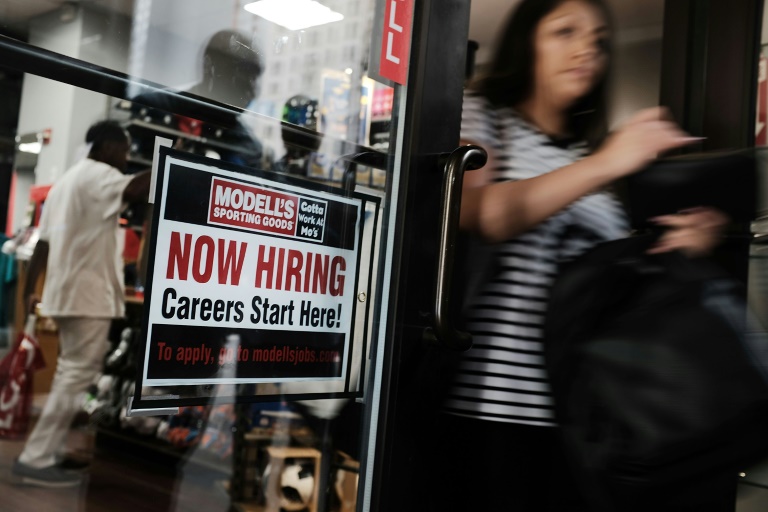
The addition of 261,000 jobs last month, far more than economists had forecast, will likely reinforce the determination of policymakers to continue the hawkish policy.

That would normally see equities tumble as higher interest rates are bad for most businesses.

But the figures are “consistent with achieving a soft landing for the economy”, said market analyst Patrick O’Hare at Briefing.com.

Fed Chair Jerome Powell has indicated that the central bank is willing to push the US economy into recession if necessary to tame inflation.

– Key figures around 1330 GMT –

London – FTSE 100: UP 2.0 percent at 7,334.50 points

Frankfurt – DAX: UP 2.2 percent at 13,448.66

Paris – CAC 40: UP 2.9 percent at 6,421.61

EURO STOXX 50: UP 2.6 percent at 3,686.05

New York – Dow: UP 1.1 percent at 32,358.37

Tokyo – Nikkei 225: DOWN 1.7 percent at 27,199.74 (close)

Hong Kong – Hang Seng Index: UP 5.4 percent at 16,161.14 (close)

Shanghai – Composite: UP 2.4 percent at 3,070.80 (close)

Pound/dollar: UP at $1.1279 from $1.1160 Thursday

Euro/dollar: UP at $0.9865 from $0.9751

Dollar/yen: DOWN at 147.11 yen from 148.25 yen

Euro/pound: DOWN at 87.52 pence from 87.73 pence

Brent North Sea crude: UP 3.9 percent at $98.36 per barrel

West Texas Intermediate: UP 4.5 percent at $92.13 per barrel

burs-rl/lth

Netherlands bans UK conspiracy theorist David Icke from EU for 2 years

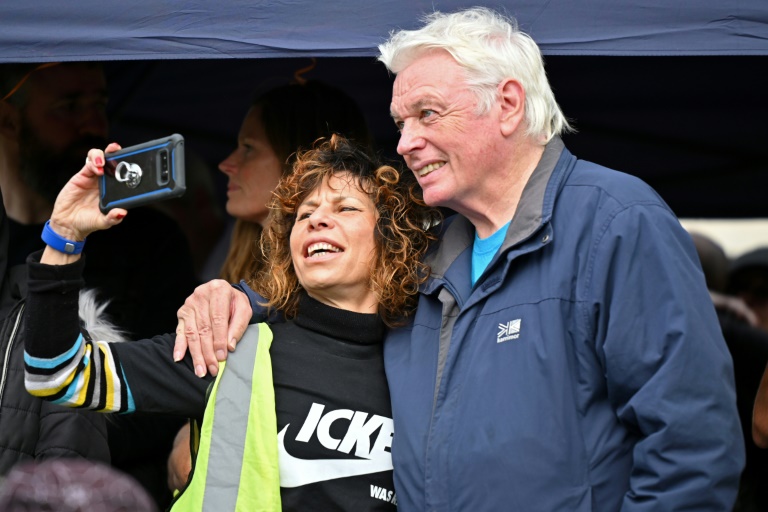
The Dutch government has banned British conspiracy theorist David Icke from the Netherlands and the entire Schengen area of the European Union for two years over fears his presence could “disturb public order”. 

Icke claimed that he had been banned by the “fascist Dutch regime” and published on his website a letter sent to him on Thursday by the Dutch immigration services, on behalf of State Secretary for Justice and Security Eric van der Burg. 

Icke is a former professional footballer and television presenter who has argued that the world is ruled by reptiles, a theory recently advocated by the Dutch populist parliamentarian Thierry Baudet. 

Icke was due to speak at a demonstration in Amsterdam on Sunday against the Ukraine war, the Dutch government and energy prices. 

Amsterdam officials fear that there will be clashes, even if Icke only appears by via video link. 

“With this letter I inform you that you have been flagged immediately in the Schengen Information System for two years and you are not allowed to enter the Schengen area,” said the letter. 

“You have been internationally known for years as a propagator of conspiracy theories,” it added. 

The presence of Icke, who has made “anti-Semitic and offensive statements in the past”, could lead to unrest in the Netherlands at a time when violence and threats against politicians are on the rise, said the Dutch government. 

Dutch authorities say it is the second time they have taken such action, following the 2019 ban on Steven Anderson, an American preacher who believes that gay people should be executed.

Raisi dismisses Biden 'free Iran' pledge after protest surge

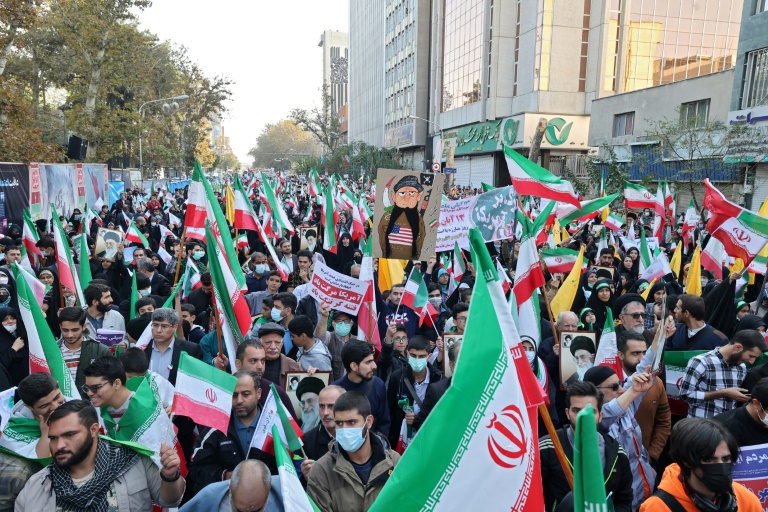
Iranian President Ebrahim Raisi on Friday dismissed a pledge from US leader Joe Biden to “free Iran” as the clerical regime faced a new upsurge in protests seven weeks into the anti-regime movement.

The protests began after the death of Mahsa Amini who had been arrested by the morality police. In their scale, nationwide spread, and anti-regime nature, the demonstrations have become the biggest challenge from the street to the authorities since the 1979 revolution.

Campaigning for mid-term elections in the US, Biden had said: “Don’t worry we’re gonna free Iran. They’re gonna free themselves pretty soon.”

But Raisi responded by saying: “The great people of Iran will not bow their heads to you”.

“Our men and women — our young men and young women are determined and we will never allow you to carry out your satanic desires,” he told a gathering commemorating the November 1979 takeover of the US embassy in Tehran by students.

“The enemy is today targeting our solidarity and national unity, our security, our peace and our determination,” Raisi said.

– ‘Radicalisation of protests’ –

The problems for Iran’s system under supreme leader Ayatollah Ali Khamenei, 83, are compounded by the tradition of holding mourning ceremonies 40 days after a death — known as “chehelom” — meaning each death can spark new protests six weeks on.

One of the biggest protest actions took place in the town of Karaj outside Tehran on Thursday where protesters marked the death of Hadis Najafi, 22, in September.

Images on social media showed a long column of protesters marching down a highway and then clashing with security forces who responded with live fire.

Several protesters themselves attacked the police, images published by the 1500tasvir monitor said, with a police patrol post set on fire and stones hurled into a car where blood-spattered officers were trapped.

A member of Iran’s Basij paramilitary force and two other unidentified people were killed, and 10 police officers and a cleric were injured Thursday during the clashes in Karaj, state media said.

There was no immediate indication of casualties among the protesters. Some on social media expressed unease over their tactics.

“The Islamic republic is the one responsible for the radicalisation of protests and violently suppressing protesters,” said Saeid Golkar, assistant professor with the University of Tennessee at Chattanooga.

“People are just reacting to the state’s brutal repression,” he told AFP.

Large numbers also shouted anti-government slogans at a memorial rally for protester Mahsa Mugoi in Fouladshahr outside the city of Isfahan, 1500tasvir said.

Images from the northern city of Tabriz showed protesters chasing away the security forces.

The state has responded to the unprecedented protest wave with what activists describe as a brutal crackdown. According to an updated death toll issued Wednesday by Norway-based Iran Human Rights, 176 people have been killed in the security forces’ response to protests sparked by Amini’s death.

Another 101 people have lost their lives in a distinct protest wave in Zahedan in the southeastern Sistan-Baluchistan province.

– Mass arrests –

The arrests have seen 1,000 people charged so far and, according to activists, at risk of the death penalty.

According to the New York-based Committee to Protect Journalists (CPJ), 54 journalists have been arrested, with a dozen confirmed released on bail so far.

The latest confirmed to be held is Nazila Maroufian, a Tehran-based journalist from Amini’s hometown of Saqez in Kurdistan province, who was detained on Sunday, the Norway-based Hengaw rights group said on Friday.

She had published an interview with Amini’s father in defiance of warnings from the authorities, the journalist wrote on Twitter before her arrest.

According to Hengaw, Saman Yasin, a singer originating from the Kurdish-populated city of Kermanshah in western Iran has now been charged with “waging war against God”. 

This sharia-based charge known as “moharebeh”, frequently used in Iran against opponents of the regime, means the singer, arrested in October, could face the death penalty. Hengaw said he has supported the protests in songs and on social media.

Activists have also condemned as a forced confession a video published by state-run Iranian media of Toomaj Salehi, a prominent rapper arrested at the weekend after backing the protests.

The video shows a blindfolded man, who says he is Salehi, admitting to making “a mistake”. 

There is also growing concern over the well-being of Wall Street Journal contributor and freedom of expression campaigner Hossein Ronaghi, who was arrested in September.

According to his family he is on a hunger strike with two broken legs sustained in custody.

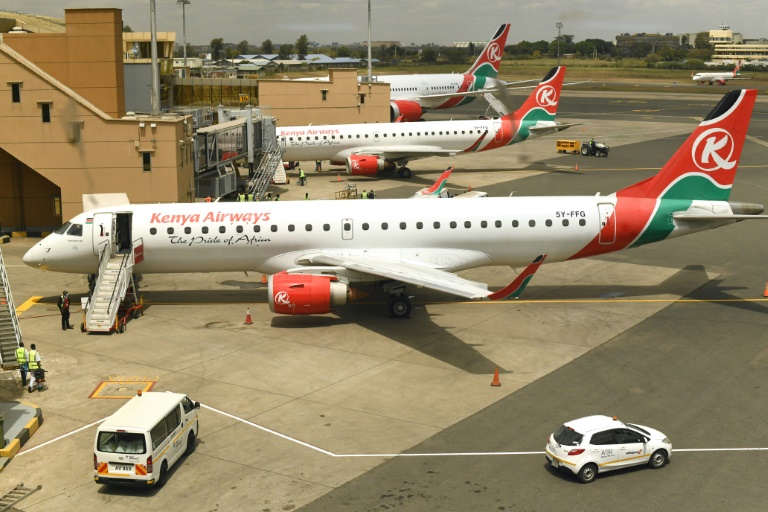
Pilot strike adds to Kenya Airways woes

Pilots at Kenya Airways plan to go on strike from Saturday to seek better working conditions in defiance of a court order, adding to woes facing the troubled national carrier.

The airline, part owned by the government and Air France-KLM, is one of the biggest in Africa, connecting multiple countries to Europe and Asia, but it is facing turbulent times, including years of losses.

The Kenya Airlines Pilots Association (KALPA) said a series of meetings with airline management had failed to resolve grievances.

No Kenya Airways flight flown by KALPA pilots will depart Nairobi’s Jomo Kenyatta International Airport from 6:00 am (0300 GMT) on Saturday, said union secretary general Murithi Nyaga, without specifying how long the strike would last.

“Kenya Airways management’s actions have left us with no other option,” Nyaga said, adding that a 14-day notice on the industrial action had ended without a solution.

“We had hoped that the management of the airline would soften its stance and engage in negotiation on the issues raised.”

The pilots, who have had a particularly fraught relationship with management, are pressing for the reinstatement of contributions to a provident fund.

They also want back payment of all salaries stopped during the Covid-19 pandemic.

Kenya Airways on Wednesday warned the strike would jeopardise its recovery and said the pilots’ grievances did not warrant such action.

– ‘Delay and disrupt’ –

“Industrial action is unnecessary,” board chairman Michael Joseph said. “It will delay and disrupt the financial and operational recovery and cause reputational damage to Kenya Airways.”

The Kenya Association of Air Operators also opposed the planned strike, calling it an “extreme course of action”.

“We consider this action poorly considered in that KALPA is holding both the airline management and the government to ransom,” it said on Friday, urging both sides to resolve the impasse urgently.

On Monday, the airline won a court injunction stopping the strike, but the pilots’ union has nevertheless vowed to down tools.

An official at KALPA, which has 400 members, told AFP the pilots “were acting within the provisions of the law” and that they were yet to be served with a court injunction. 

Earlier this week, Kenya Airways estimated losses at $2.5 million per day if the strike goes ahead.

The airline was founded in 1977 following the demise of East African Airways and flies over four million passengers to 42 destinations annually.

But its slogan “The Pride of Africa” rings hollow as it operates thanks to state bailouts following years of losses.

Like other carriers around the world, Kenya Airways saw its revenue nosedive after the pandemic grounded planes worldwide because of stringent travel restrictions, devastating the aerospace and tourism industries.

– ‘Joke of the continent’ –

Despite the gloom, its cargo operations grew slightly in 2020 as it switched to delivering Covid vaccines and maximised its expertise in flying fresh roses to Europe.

In August, the airline reported a $81.5 million half-year loss citing high fuel costs, albeit a marked improvement on the $94.6 million loss in the same period last year.

This is despite the Kenyan government injecting some $520 million to keep the airline afloat.

On Wednesday, the airline’s management said it was on a path to recovery, flying at least 250,000 passengers each month, and aiming to cut its overall operating costs by 10 percent before the end of next year.

Kenya’s tourism arrivals, a major foreign exchange earner, have jumped more than 90 percent to 924,000, the government said in September, projecting that the number could hit 1.4 million by December.

Analysts say a misguided expansion strategy launched in 2011 is the root of the firm’s problems, a move that called for the purchase of new Boeing planes with the objective of doubling the size of its network.

A plan to nationalise the carrier, which would see it exempt from paying taxes on engines, maintenance and fuel, remains unimplemented.

On Tuesday, Kenya’s leading newspaper the Daily Nation called for a forensic audit of the state bailouts, saying the carrier had become “the joke of the continent.”

“It’s like pouring public funds down the drain,” the paper wrote in an editorial.

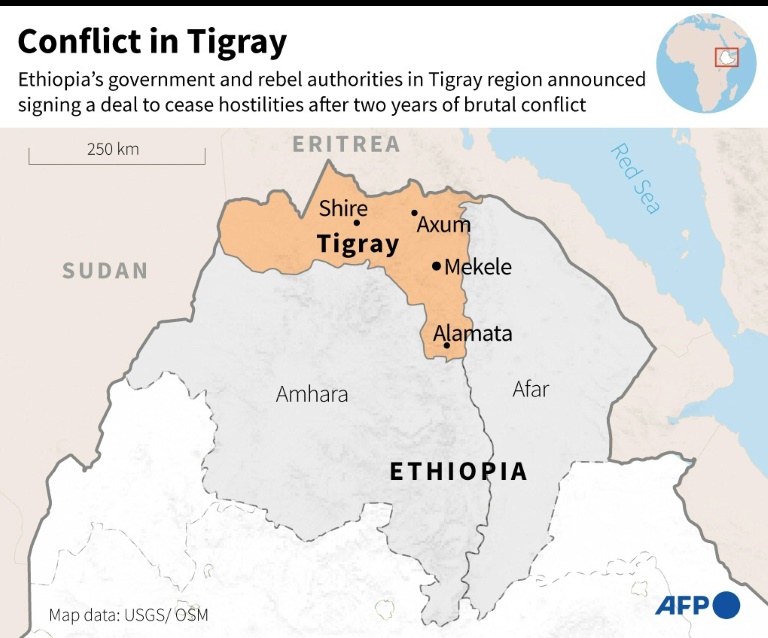
Tigray rebels accuse Ethiopia of attacks after peace deal

Tigrayan authorities on Friday accused Ethiopia’s government of carrying out a drone strike on civilians, less than 48 hours after the warring parties signed a deal to end their bloody conflict.

The breakthrough agreement sealed in South Africa has been hailed internationally as a key step towards stopping a war that began exactly two years ago on Friday.

A spokesman for the rebel Tigray People’s Liberation Front (TPLF) alleged that Prime Minister Abiy Ahmed’s government had carried out attacks against civilians in the Tigrayan city of Maychew on Thursday.

“According to sources at Lemlem-Karl Hospital, drone of #Ethiopia has attacked civilians,” Kindeya Gebrehiwot said on Twitter.

“There was also shelling of artillaries in the same city that killed & wounded civilians. This happens after signing the peace agreement at #Pretoria,” he said.

AFP was not able to independently verify the claims.

Access to northern Ethiopia is severely restricted and Tigray has been under a communications blackout for more than a year.

There was no immediate response from Ethiopian government officials or the African Union (AU) to requests from AFP.

The agreement signed on Wednesday says both sides agreed “to permanently silence the guns” and to a “programme of disarmament, demobilisation, and reintegration for the TPLF combatants.”

But observers say that key details and a clear roadmap that would help sustain momentum are absent, and distrust runs deep.

Even as the AU-led negotiations began in Pretoria last week, fierce fighting was under way in Tigray between TPLF fighters and federal forces backed by soldiers from neighbouring Eritrea.

Ethiopia’s northernmost region has been in the throes of a severe humanitarian crisis due to lack of food and medicine, as well as limited access to basic services. 

Observers and diplomats have warned of the difficult road ahead, with the EU’s foreign policy chief Josep Borrell on Friday saying that arriving at a permanent ceasefire was “going to be very difficult.”

Speaking to reporters on the sidelines of the G7 foreign ministers’ meeting in the German city of Muenster, Borrell acknowledged that the agreement was “good news,” but cautioned: “Making peace is much more difficult than making war.”

“The world is looking at Ukraine and blaming Russia. But Ethiopia is for sure the worst humanitarian crisis… and war in the last two years,” Borrell said.

Abiy, a Nobel Peace Prize laureate, sent troops into Tigray on November 4, 2020 to topple the TPLF, the region’s ruling party, in response to what he said were attacks on federal army camps.

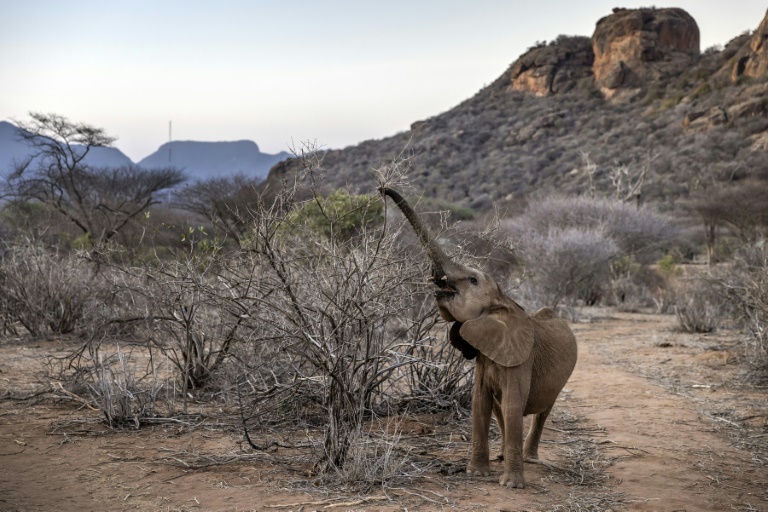
Kenya drought kills more than 200 elephants

More than 200 elephants and hundreds of zebras and gnus have died in Kenya’s worst drought in four decades, the country’s tourism minister said on Friday.

The crisis has affected nearly half of Kenya’s regions and at least four million out of its 50 million people.

“The drought has caused mortality of wildlife, mostly herbivore species,” Tourism Minister Peninah Malonza told a press conference in Nairobi on Friday, adding that 14 species had been identified as badly hit.

“The mortalities have arisen because of depletion of food resources as well as water shortages.”

Between February and October, officials recorded the death of 205 elephants, 512 gnus, 381 zebras, 12 giraffes and 51 buffalo, she said. 

“Elephants in (the) Amboseli and Laikipia-Samburu regions are worst affected by the drought, as the ecosystems (there) have recorded more than 70 elephant deaths,” Malonza said.

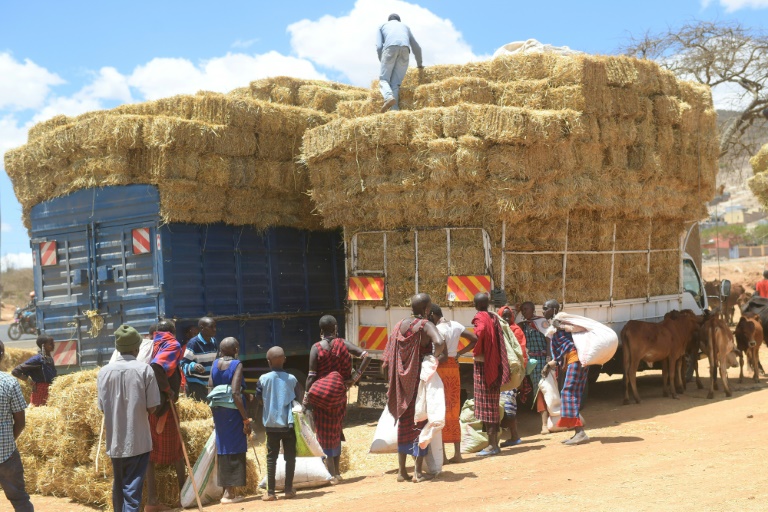
The authorities are dropping off hay for the animals, she said.

Last year the country had 36,000 elephants, according to tourism ministry estimates.

Four consecutive rainy seasons have failed in Kenya, Somalia and Ethiopia and millions across the Horn of Africa have been driven into extreme hunger. More than 1.5 million cattle have died in Kenya alone.

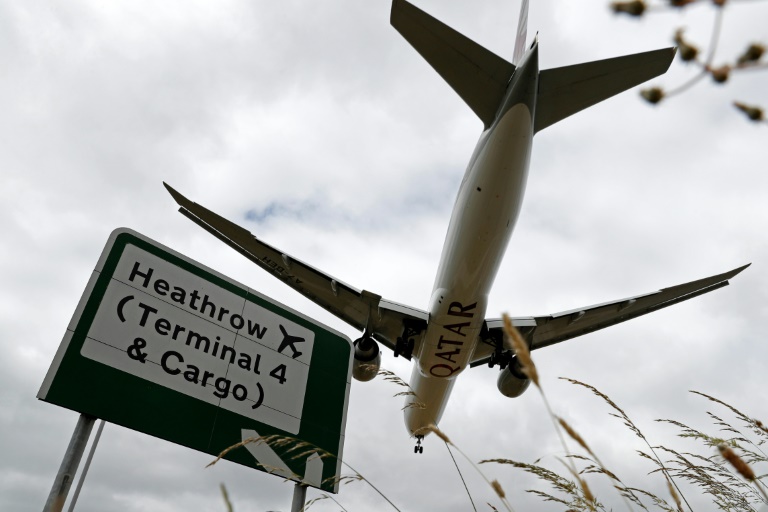
Heathrow Airport strike set to hit England football fans

England football fans flying to the World Cup in Qatar face delays and cancellations after staff at Heathrow Airport on Friday announced a three-day strike in a dispute over pay. 

Around 700 members of the Unite union will strike between November 18 and November 21, with disruption expected at three of the London airport’s five terminals. 

Unite said the walkout will particularly hit Qatar Airways, which has laid on an additional 10 flights a week during the World Cup. 

The tournament kicks off on November 20, with England starting their campaign the next day.

The staff from aviation companies Dnata and Menzies carry out various roles including ground-handling, airside transport and cargo.

“Our members at Dnata and Menzies undertake highly challenging roles and are simply seeking a decent pay rise,” said Unite general secretary Sharon Graham.

“Both companies are highly profitable and can fully afford to make a fair pay increase. The owners and directors are simply lining their own pockets rather than paying their workers fairly.

“The workers at Heathrow will have Unite’s complete support,” she added.

The strikes are the latest to hit the UK, where train workers, dockers, postal staff and the legal profession have all announced walkouts amid a cost-of-living crisis fuelled by rampant inflation.

Other airlines set to be affected include Virgin, Singapore Airlines, Cathay-Pacific and Emirates. 

Dnata has offered its workers a five percent pay rise, while Menzies has proposed hikes of between two and six percent, according to Unite. 

But this represents a real-terms pay cut with inflation currently running at 10.1 percent.

Finnish PM cleared of misconduct in partying scandal

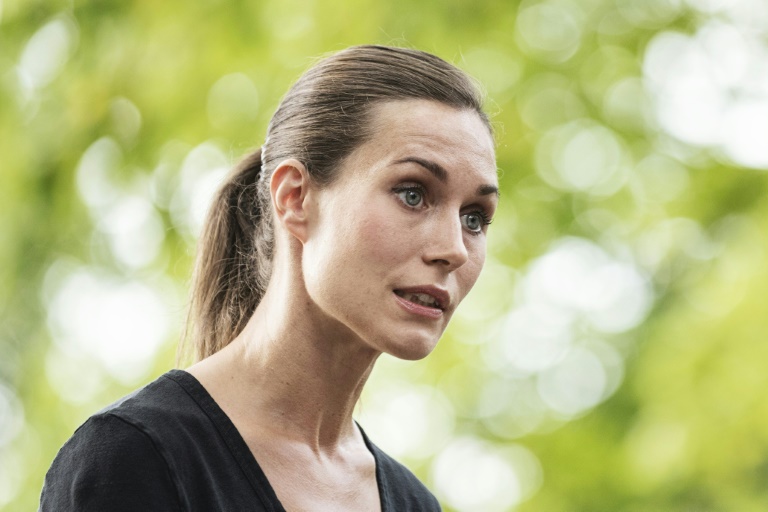
Finnish Prime Minister Sanna Marin was on Friday cleared of misconduct following an official inquiry after a leaked video showed the 36-year-old partying last August.

Dozens of complaints were filed to Finland’s chancellor of justice after the premier was shown dancing and partying with friends and celebrities, driving global headlines.

But the chancellor, an independent office responsible for overseeing the legality of government activities and to which any citizen can lodge complaints, concluded that Marin had not neglected her duties as prime minister.

There was “no reason to suspect the prime minister of unlawful conduct in the performance of her duties or of neglect of her official duties,” Chancellor of Justice Tuomas Poysti concluded.

At the time of the scandal, Marin said she spent “an evening with friends” and that the videos were “filmed in private premises”.

“I am human. And I too sometimes long for joy, light and fun amidst these dark clouds,” she said.

Complaints to the chancellor alleged that Marin was unfit to work “due to alcohol consumption”, claimed her behaviour was inappropriate for a prime minister and that she undermined Finland’s “reputation and security”.

But the chancellor said the complaints failed to establish that Marin had omitted or jeopardised a “specific official duty”.

Assessing the “moral and social” dimension of a prime minister’s leisure activities is “a matter for parliament,” the chancellor said, adding that: “Political accountability is also weighed periodically in democratic elections”.

In August, Marin took a drug test, which was negative, to clear up any suspicion voiced by some that comments heard on the video referred to narcotics — something heavily debated on social media and strongly denied by the prime minister.

Close Bitnami banner
Bitnami