World

Stocks, oil prices rally on China hopes

Stock markets and oil prices rallied Friday on hopes China would roll back some of its economically-painful policies surrounding Covid.

The dollar dropped as investors awaited the release of US jobs data later in the day, seeking fresh insight into the state of the world’s top economy and the outlook for interest rates.

“Stocks jumped in anticipation that the Chinese government would relax its zero-Covid policy from March next year,” noted Russ Mould, investment director at AJ Bell.

The optimism also lifted oil prices as traders eyed rising demand for crude on the news out of China.

In foreign exchange, the pound won back some ground against the dollar, a day after tumbling as the Bank of England said the UK economy could face a two-year-long recession that it believes has already begun.

The BoE on Thursday also lifted its main interest rate by 0.75 percentage points, the most in 33 years in efforts to contain runaway inflation.

The week also saw the Federal Reserve hike its key rate by the same amount, as central banks try to cool decades-high inflation.

With the Fed pointing to a still-strong labour market as a key reason for not shifting from aggressive rate-tightening, traders see another strong figure Friday as evidence that officials will carry on with large increases to borrowing costs.

“Friday’s payrolls will be the last vital data point this week, as signals on the labour market remain crucial to the Fed’s path forward,” said SPI Asset Management’s Stephen Innes.

In Asia, Hong Kong’s Hang Seng Index jumped almost nine percent this week after an unverified statement suggested officials in Beijing were discussing a change to its zero-Covid policy.

The gains continued despite pushback from authorities, and after President Xi Jinping reasserted the strict strategy at a major Communist Party gathering last month.

– Key figures around 1045 GMT –

London – FTSE 100: UP 1.1 percent at 7,268.46 points

Frankfurt – DAX: UP 1.5 percent at 13,319.98

Paris – CAC 40: UP 1.9 percent at 6,364.38

EURO STOXX 50: UP 1.6 percent at 3,649.59

Tokyo – Nikkei 225: DOWN 1.7 percent at 27,199.74 (close)

Hong Kong – Hang Seng Index: UP 5.4 percent at 16,161.14 (close)

Shanghai – Composite: UP 2.4 percent at 3,070.80 (close)

New York – Dow: DOWN 0.5 percent at 32,001.25 (close)

Pound/dollar: UP at $1.1239 from $1.1160 Thursday

Euro/dollar: UP at $0.9795 from $0.9751

Dollar/yen: DOWN at 147.74 yen from 148.25 yen

Euro/pound: DOWN at 87.18 pence from 87.73 pence

Brent North Sea crude: UP 2.8 percent at $97.35 per barrel

West Texas Intermediate: UP 3.1 percent at $90.90 per barrel
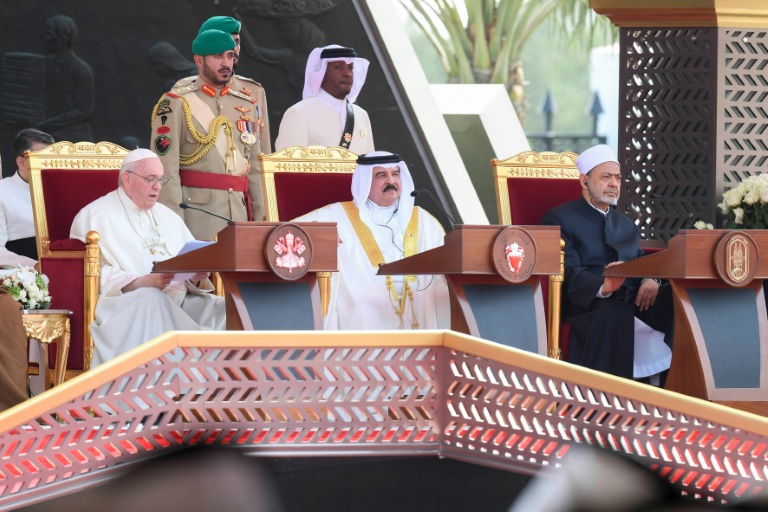
Pope calls for global unity ahead of grand imam meeting in Bahrain

Pope Francis warned Friday the world is on the edge of a “delicate precipice” buffeted by “winds of war”, during a trip aimed at building dialogue between faiths.

The 85-year-old Argentine decried the “opposing blocs” of East and West, a veiled reference to the standoff over Russia’s invasion of Ukraine. His comments came during a speech to religious leaders at the Bahrain Forum for Dialogue in the tiny Gulf state.

“We continue to find ourselves on the brink of a delicate precipice and we do not want to fall,” he told an audience including Bahrain’s king and Sheikh Ahmed al-Tayeb, the grand imam of Cairo’s prestigious Al-Azhar mosque, a centre of Sunni learning.

Francis was to meet later with Tayeb.

In his speech, the pope said that “a few potentates are caught up in a resolute struggle for partisan interests, reviving obsolete rhetoric, redesigning spheres of influence and opposing blocs.” 

“We appear to be witnessing a dramatic and childlike scenario: in the garden of humanity, instead of cultivating our surroundings, we are playing instead with fire, missiles and bombs.”

The pope’s visit comes with the Ukraine war in its ninth month, and as tensions grow on the Korean peninsula and in the Taiwan Strait.

Ahead of the speech, Vatican Secretary of State Cardinal Pietro Parolin, who met Russia’s Foreign Minister Sergei Lavrov in September, told journalists that there had been “a few small signs” of progress in negotiations with Moscow. 

“All peace initiatives are good. What’s important is that we carry them out together and that they’re not exploited for other goals,” he said.

– Alleged abuses –

The pope, who is using a wheelchair and a walking stick due to chronic knee problems, was to later meet members of the Muslim Council of Elders.

His second visit to the Gulf, birthplace of Islam, comes three years after he and al-Tayeb signed a Muslim-Christian manifesto for peace in the United Arab Emirates.

Leader of the world’s 1.3 billion Catholics, Francis has placed inter-faith dialogue at the heart of his papacy, visiting other Muslim-majority countries including Egypt, Turkey and Iraq.

Al-Tayeb, who met with the pope on previous Middle East visits, also called on Friday for dialogue between Islam’s two main branches to settle sectarian differences.

The major division in Islam is between Sunni and Shiite, and Tayeb’s call came as sectarian divisions in the Middle East have exacerbated regional conflicts including in Yemen and Syria.

“I… call on my brothers, Muslim scholars, across the world of every doctrine, sect and school of thought to hold an Islamic dialogue,” he said. 

“Let us together chase away any talk of hate, provocation and excommunication and set aside ancient and modern conflict in all its forms.”

– Rights record –

The pope began the first ever papal visit to Bahrain on Thursday by hitting out at the death penalty and urging respect for human rights and better conditions for workers.

Rights groups had previously urged the pontiff to speak out about alleged abuses and step in to help death-row prisoners in the Sunni-led monarchy, which is home to a significant Shiite population.

In the opening speech of his visit, at the Sakhir Royal Palace, he said it was vital that “fundamental human rights are not violated but promoted”.

“I think in the first place of the right to life, of the need to guarantee that right always, including for those being punished, whose lives should not be taken,” he said.

Bahrain has executed six people since 2017, when it carried out its first execution in seven years. Some of the condemned were convicted following a 2011 uprising put down with military support from neighbouring Saudi Arabia.

A government spokesman rejected allegations of rights violations, saying Bahrain “does not tolerate discrimination” or prosecute anyone for their religious or political beliefs.

The pope also demanded “safe and dignified” working conditions for all.

“Much labour is in fact dehumanising,” he said. “This does not only entail a grave risk of social instability, but constitutes a threat to human dignity.”

Red Cross eyes digital emblem for cyberspace protection

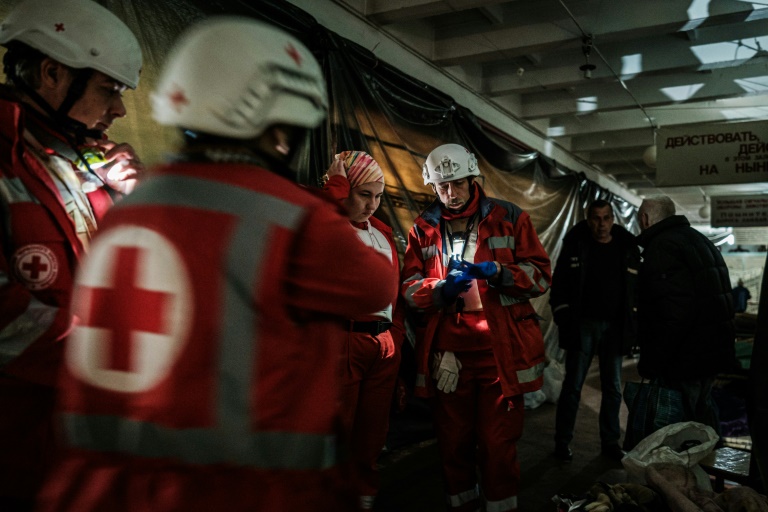
When Red Cross staff work in conflict zones, their recognisable red-on-white emblems signal that they and those they are helping should not be targeted.

Now, as warfare and attacks increasingly move into cyberspace, the organisation wants to create a digital emblem that would alert would-be attackers that they have entered computer systems of the Red Cross or medical facilities.

The International Committee of the Red Cross (ICRC) called Thursday on countries to support the idea, arguing that such a digital emblem would help protect humanitarian infrastructure against erroneous targeting.

“As societies digitalise, cyber operations are becoming a reality of armed conflict,” ICRC’s director-general Robert Mardini said in a statement.

“The ‘digital emblem’ is a concrete step to protect essential medical infrastructure and the ICRC in the digital realm.”

For more than 150 years, the organisation’s distinctive emblems — the red cross and red crescent, and more recently the red crystal — have conveyed in times of conflict that the people, facilities and objects they mark are protected under international law and that attacking them constitutes a war crime.

– Potential for abuse? –

But to date, there are no such signals in the cyber world. 

The ICRC has been mulling this idea for a while, launching a project in 2020 to examine the technical feasibility of creating a digital emblem, and opening consultations to weigh the benefits of such a system against potential for abuse.

Concerns have been raised that such an emblem could risk identifying a set of “soft targets” to malicious actors, making it easier to systematically target them. 

Malicious actors could also misuse a digital emblem to falsely identify their operations as having protected status under international law.

But on Thursday, the ICRC presented a new report titled “Digitalising the Red Cross, Red Crescent and Red Crystal emblems”, concluding that the advantages outweighed the risks.

In the foreword, Mardini stressed that cyber-attacks on medical facilities and humanitarian infrastructure can have dramatic, and deadly, real-life consequences.

He pointed to a growing numbers of cyber-attacks on hospitals since the onset of the Covid-19 pandemic, which “have disrupted life-saving treatment for patients and forced doctors and nurses to resort to pen and paper at a time when their urgent work was needed most.”

– ‘Massive shock’ –

And the ICRC itself fell victim to a massive cyber-attack last January, in which hackers seized the data of more than half a million extremely vulnerable people, including some fleeing conflict, detainees and unaccompanied migrants.

That attack “was really a massive shock for our institution,” Balthasar Staehelin, ICRC’s director of digital transformation and data, told a conference in Geneva recently.

While stressing that his organisation had long been focused on data protection, Mardini said the “data breach highlighted the urgency of our work in this area.”

“Protecting personal data, and ensuring the availability and integrity of our data and systems in the digital space, is essential to assist and protect people in the real world,” he added.

In the January case, the ICRC told AFP it had determined it was intentionally targeted “because the attackers created a piece of code designed purely for execution on the targeted ICRC servers.”

A digital emblem would therefore likely not have done much to avert that attack, but in many cases, it would provide “an additional layer of protection,” ICRC legal advisor Tilman Rodenhauser said during an event Thursday launching the report.

It would, he said, “signal to professional cyber operators that they need to stay out, by law and by ethics standards.”

ICRC said it had been working with a number of universities and others to develop possible technical solutions for a digital emblem.

It pointed to several possible approaches, including embedding the emblem in a domain name (for instance www.hospital.emblem), or embedding it in the IP address, with a specific sequence of numbers signalling a protected digital asset.

The organisation stressed though that to make a digital emblem a reality, countries need to agree on its use and incorporate it into International Humanitarian Law, alongside the three physical emblems currently in use. 

Israel's Netanyahu launches talks on forming government

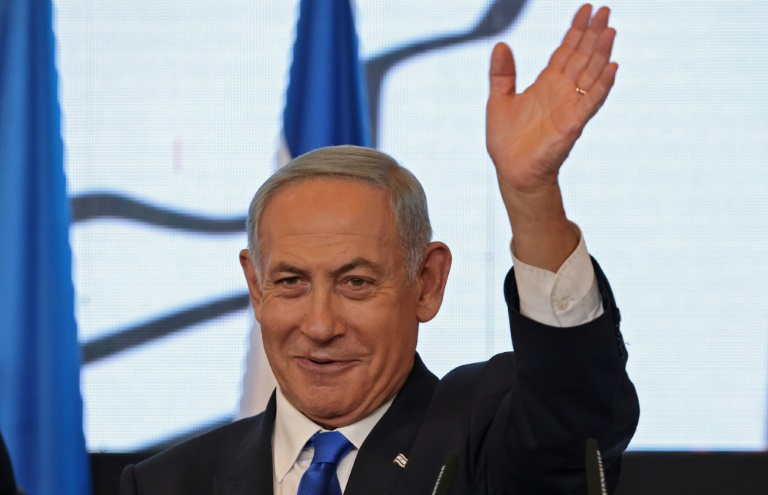
Veteran hawk Benjamin Netanyahu launched negotiations Friday with his ultra-Orthodox and far-right allies on forming what could be the most right-wing government in Israel’s history, raising concerns at home and abroad.

Netanyahu’s Likud party won 32 seats in Israel’s 120-seat parliament, the Knesset, according to the latest official results of the election released on Thursday night.

That combined with 18 for two ultra-Orthodox Jewish parties and 14 for the rising extreme-right alliance called Religious Zionism gave the right-wing bloc supporting Netanyahu 64 seats.

The centrist bloc of outgoing caretaker prime minister Yair Lapid won 51 seats, marking a definitive win for Netanyahu and an end to Israel’s unprecedented era of political deadlock, which forced five elections in less than four years.

That will likely mean prominent roles for the co-leaders of far-right Religious Zionism, which doubled its representation at Tuesday’s election.

“Where are they headed?” said the headline of the Yedioth Ahronoth newspaper with pictures of Netanyahu and Itamar Ben-Gvir, an extreme-right figure who looks set to be a major player in the new administration.

“It’s going to be an unprecedented government,” columnist Sima Kadmon wrote in the Yedioth Ahronoth daily.

“Most of the important portfolios will be in the hands of fanatics… everybody knows that if only a fraction of what the new government promised to do is carried out, this is going to be a different country with a different system of government,” she added.

– Ministries for far-right –

The election result came amid the backdrop of soaring violence between Israel and the Palestinians.

Israel army said its fighter jets early Friday targeted a rocket manufacturing site in the blockaded Gaza Strip, in response to several rockets fired towards Israel.

On Thursday four Palestinians, including an assailant, were killed by Israeli forces in Israeli-annexed east Jerusalem and the occupied West Bank.

US Secretary of State Antony Blinken voiced “deep concern” about the violence and called for de-escalation.

Ben-Gvir, a firebrand known for anti-Arab rhetoric and incendiary calls for Israel to annex the entire West Bank, has said he wants to be public security minister in the new government, a post that would put him in charge of the police.

In recent days, Ben-Gvir has called repeatedly for the security services to use more force in countering Palestinian unrest.

“It’s time we go back to being masters of our country,” Ben-Gvir said on election night.

Since clinching his comeback after roughly 14 months in opposition, the 73-year-old Netanyahu has already instructed Yariv Levin, a close ally, to begin talks with Religious Zionism over portfolios.

Religious Zionism’s Bezalel Smotrich has publicly said he wants to be defence minister.

On the ultra-Orthodox wing of the alliance, Shas party head Aryeh Deri, invigorated by winning 11 seats, is also expected to play a major role in the government, with his eyes on either the interior or finance ministries.

– ‘International legitimacy’ –

Netanyahu was aware that propelling right-wing figures into key positions could “damage” relations abroad, said Shlomo Fischer of the Jewish People Policy Institute in Jerusalem.

“Bibi does not want Ben Gvir and Deri to lead the dance,” he told AFP.

“He is very careful. He does not want to lose his international legitimacy… I think he could try to widen his coalition to minimise their influence.”

News of Netanyahu’s dramatic return was greeted by right-wing and nationalist leaders around the world: Italy’s far-right Prime Minister Giorgia Meloni and Hungary’s Viktor Orban were among the first to offer their congratulations.

Yet other tradition allies of Israel were more cautious.

While declining to speculate on the government make-up, US State Department spokesman Ned Price said Washington hoped “that all Israeli government officials will continue to share the values of an open, democratic society including tolerance and respect for all in civil society, particularly for minority groups.”

Britain called on “all Israeli parties to refrain from inflammatory language and demonstrate tolerance and respect for minority groups,” in a statement, just hours after rejecting suggestions by previous UK prime minister Liz Truss that its embassy in Israel could be moved from Tel Aviv to Jerusalem.

Twitter says layoffs to begin Friday

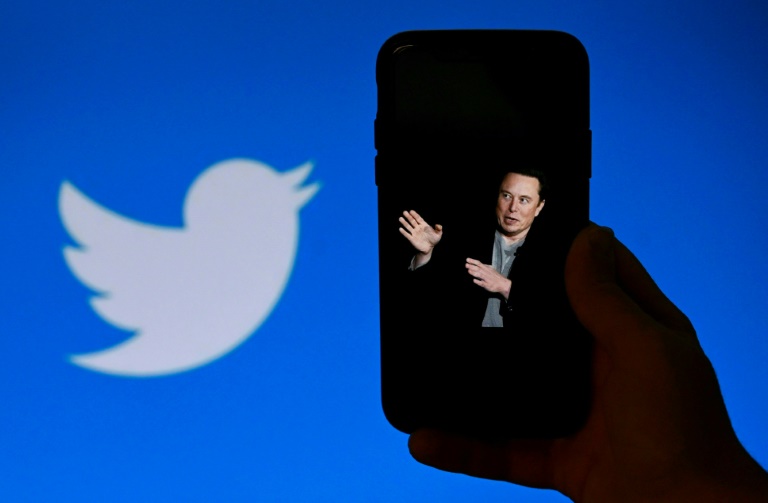
Twitter said it will start laying off employees on Friday, according to a memo sent to staff, with several workers filing a lawsuit alleging the move by new owner billionaire Elon Musk violates US labor law.

A company-wide email seen by AFP says Twitter employees will receive word via email at the start of business Friday, California time, as to what their fate is.

It does not give a number but the Washington Post and New York Times reported that about half of Twitter’s 7,500 employees will be let go.

“In an effort to place Twitter on a healthy path, we will go through the difficult process of reducing our global work force,” the email said.

Twitter employees have been bracing for this kind of bad news since Musk completed his mammoth $44 billion acquisition late last week and quickly set about dissolving its board and firing its chief executive and top managers.

Late on Thursday, a group of five Twitter employees who had already been fired filed a class action complaint against the company on the grounds that they had not been given the required 60-day notice period as required under US federal and California state law, according to the text of the complaint.

The lawsuit references the US Worker Adjustment and Retraining Notification (WARN) Act, which provides workers a right to advance notice in cases of mass layoffs or plant closings.

The lawsuit also asks the court to restrict Twitter from asking employees to sign documents that would waive their rights under the WARN Act.

– Workplace review process –

A workplace and employee review and other projects ordered by Musk were reportedly so exhaustive and grueling that some engineers slept at Twitter headquarters over the weekend.

The email sent Thursday told workers to go home and not report for work on Friday.

“Our offices will be temporarily closed and all badge access will be suspended,” the email said. Those on the way to the office should turn around and return home.”

The email acknowledged that Twitter is going through “an incredibly challenging experience.”

“We recognize that this will impact a number of individuals who have made valuable contributions to Twitter, but this action is unfortunately necessary to ensure the company’s success moving forward,” it added.

Some employees, however, were scathing in their criticism of the process.

“The current layoff process is a farce and a disgrace. Tesla’s henchmen are making decisions about people they know nothing about except the number of lines of code produced. This is completely absurd,” Taylor Leese, the manager of an engineering team who said he was fired, tweeted Sunday.

Many engineers had to print the last lines of code they had produced, according to an employee who spoke on condition of anonymity.

Lists comparing computer scientists with each other, mainly on the basis of production volume, were also drawn up, according to another employee.

– Financial trouble –

Saddled with the purchase of Twitter, for which Musk has said he overpaid, the tycoon is looking for ways for Twitter to make money — and fast.

His most recent idea was to charge $8 a month to anyone on Twitter who would receive a blue “verified” badge assuring the public that the account is authentic.

A news report this week said Musk wanted to charge $20 a month but faced a backlash, including from bestselling novelist Stephen King, who tweeted: “$20 a month to keep my blue check?” It was followed by an expletive.

Musk responded on Twitter, seemingly bargaining with King: “we need to pay the bills somehow! Twitter cannot rely entirely on advertisers. How about $8?”

Musk has said he wants to increase Twitter’s revenue from $5 billion last year to more than $26 billion in 2028.

Top global companies, including General Mills and Volkswagen, suspended their advertising on Twitter on Thursday as pressure builds on Musk to turn his platform into a successful business.

US auto giant General Motors last week was the first major advertiser to suspend advertising following the takeover.

Officials and civil rights groups have expressed worry that Musk will open the site to uncontrolled hate speech and misinformation as well as reinstate banned accounts, including that of former US president Donald Trump.

Advertisers are Twitter’s main source of revenue and Musk has tried to calm the nerves by reassuring that the site would not become a “free-for-all hellscape”.

Pilot strike adds to Kenya Airways woes

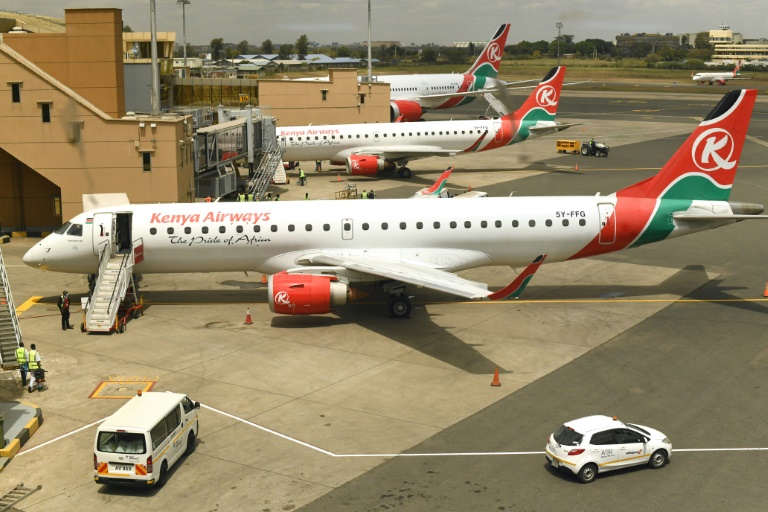
Pilots at Kenya Airways plan to go on strike from Saturday to seek better working conditions in defiance of a court order, adding to the woes of the troubled national carrier.

The airline, part owned by the government and Air France-KLM, is one of the biggest in Africa, connecting multiple countries to Europe and Asia, but it is facing turbulent times, including years of losses.

The Kenya Airlines Pilots Association (KALPA) said a series of meetings with airline management had failed to resolve grievances.

No Kenya Airways flight flown by KALPA pilots will depart Nairobi’s Jomo Kenyatta International Airport from 6:00 am (0300 GMT) on Saturday, said union secretary general Murithi Nyaga, without specifying how long the strike would last.

“Kenya Airways management’s actions have left us with no other option,” Nyaga said, adding that a 14-day notice on the industrial action had ended without a solution.

“We had hoped that the management of the airline would soften its stance and engage in negotiation on the issues raised.”

The pilots, who have had a particularly fraught relationship with management, are pressing for the reinstatement of contributions to a provident fund.

They also want back payment of all salaries stopped during the Covid-19 pandemic.

– ‘Delay and disrupt’ –

Kenya Airways on Wednesday warned the strike would jeopardise its recovery and said the pilots’ grievances did not warrant such action.

“Industrial action is unnecessary,” board chairman Michael Joseph said. “It will delay and disrupt the financial and operational recovery and cause reputational damage to Kenya Airways.”

On Monday, the airline won a court injunction stopping the strike, but the pilots’ union has nevertheless vowed to down tools.

An official at KALPA, which has 400 members, told AFP the pilots “were acting within the provisions of the law” and that they were yet to be served with a court injunction. 

Earlier this week, Kenya Airways estimated losses at $2.5 million per day if the strike goes ahead.

The airline was founded in 1977 following the demise of East African Airways and flies over four million passengers to 42 destinations annually.

But its slogan “The Pride of Africa” rings hollow as it operates thanks to state bailouts following years of losses.

Like other carriers around the world, Kenya Airways saw its revenue nosedive after the pandemic grounded planes worldwide because of stringent travel restrictions, devastating the aerospace and tourism industries.

Despite the gloom, its cargo operations grew slightly in 2020 as it switched to delivering Covid vaccines and maximised its expertise in flying fresh roses to Europe.

– ‘Joke of the continent’ –

In August, the airline reported a $81.5 million half-year loss citing high fuel costs, albeit a marked improvement on the $94.6 million loss in the same period last year.

This is despite the Kenyan government injecting some $520 million to keep the airline afloat.

On Wednesday, the airline’s management said it was on a path to recovery, flying at least 250,000 passengers each month, and aiming to cut its overall operating costs by 10 percent before the end of next year.

Kenya’s tourism arrivals, a major foreign exchange earner, have jumped more than 90 percent to 924,000, the government said in September, projecting that the number could hit 1.4 million by December.

Analysts say a misguided expansion strategy launched in 2011 is the root of the firm’s problems, a move that called for the purchase of new Boeing planes with the objective of doubling the size of its network.

A plan to nationalise the carrier, which would see it exempt from paying taxes on engines, maintenance and fuel, remains unimplemented.

On Tuesday, Kenya’s leading newspaper the Daily Nation called for a forensic audit of the state bailouts, saying the carrier had become “the joke of the continent.”

“It’s like pouring public funds down the drain,” the paper wrote in an editorial.

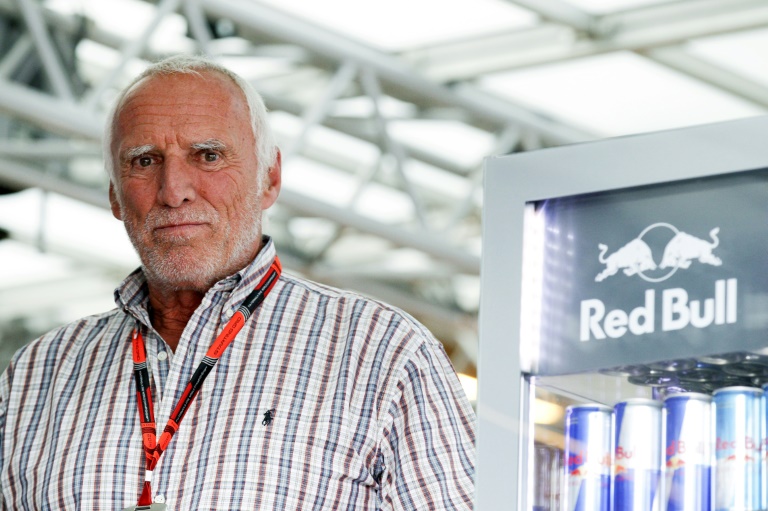
Red Bull names trio to run firm after founder's death

Red Bull named on Friday a board of three directors to lead the energy drink giant following the death of Austrian founder Dietrich Mateschitz.

Mateschitz, who made the energy drink a global phenomenon and forged a title-winning Formula One team and a sports empire, died on October 22 aged 78.

Following his death, speculation abounded as to who would take over the business, with Austrian media reporting Mateschitz’ Thai partners, the Yoovidhya family, were looking to take on more control. 

“As proposed and desired by both my father and myself, and supported by our Thai partners, a board of directors will manage the business affairs of Red Bull,” Mateschitz’ only son, Mark Mateschitz, said in a letter to employees disseminated to media.

The three directors are Franz Watzlawick, the CEO of the company’s beverage business, chief financial officer Alexander Kirchmayr and Oliver Mintzlaff, the CEO of corporate projects and investments, the letter said, describing them as a “dream team”.

Mark Mateschitz, who now owns Distribution and Marketing GmbH, said he would resign from his current managerial position in the company to “concentrate on my role as a shareholder”.

Distribution and Marketing holds 49 percent of Red Bull shares. The Thai Yoovidhya family holds the rest. The company is based in Fuschl-am-See in western Austria.

Dietrich Mateschitz was named as Austria’s richest person by Forbes in 2022 with an estimated net worth of $27.4 billion.

He made his fortune when he took a sweet drink that was already popular in Asia and adapted it for the Western market with huge success.

Mateschitz invested heavily in sport to give his brand global exposure.

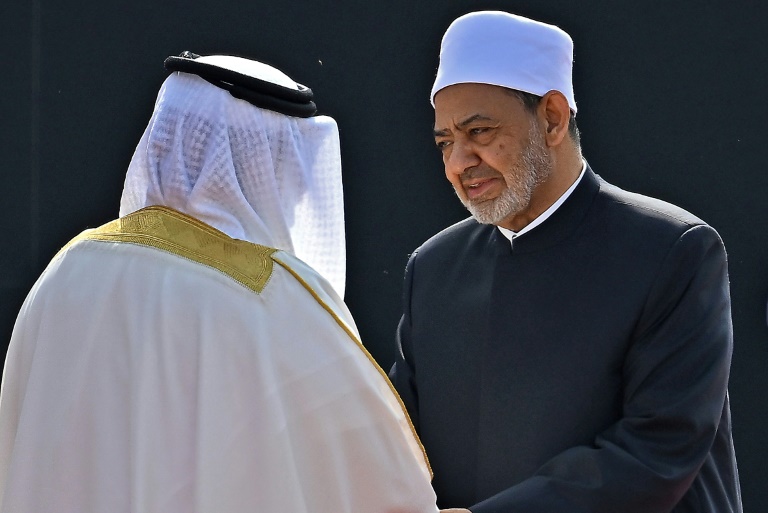
As pope visits, leading Muslim cleric urges intra-Muslim dialogue

One of the world’s leading Islamic clerics on Friday called for dialogue between the faith’s two main currents to settle sectarian differences, in an address to religious leaders including Pope Francis.

Sheikh Ahmed al-Tayeb, the grand imam of Cairo’s prestigious Al-Azhar mosque, a centre of Sunni learning, made the rare appeal at the Bahrain Dialogue Forum aimed at promoting religious harmony.

The major division in Islam is between Sunni and Shiite, and Tayeb’s call came as sectarian divisions in the Middle East have exacerbated regional conflicts including in Yemen and Syria.

“I… call on my brothers, Muslim scholars, across the world of every doctrine, sect and school of thought to hold an Islamic dialogue,” al-Tayeb said. 

“Let us together chase away any talk of hate, provocation and excommunication and set aside ancient and modern conflict in all its forms,” he added.

Al-Tayeb told the forum, organised by the United Arab Emirates-based Muslim Council of Elders, that his words were a “special call to our Shia Muslim brothers”.

He said the senior scholars at Al-Azhar and the Muslim Council of Elders are ready to host a meeting “so we can sit down together on one roundtable to put aside our differences and strengthen our Islamic unity”.

The differences have been compounded by a years-long spat between Shiite-dominated Iran and the Sunni Kingdom of Saudi Arabia, which have held talks in an attempt to improve ties. 

Al-Tayeb’s remarks came one day after Pope Francis, leader of the world’s 1.3 billion Catholics, arrived in the Gulf kingdom of Bahrain on an inter-faith dialogue mission.

In 2019, the pontiff signed a Muslim-Christian manifesto for peace in the United Arab Emirates during the first papal visit to the Gulf region, where Islam was born.

China's Xi, Scholz seek closer ties in controversial summit

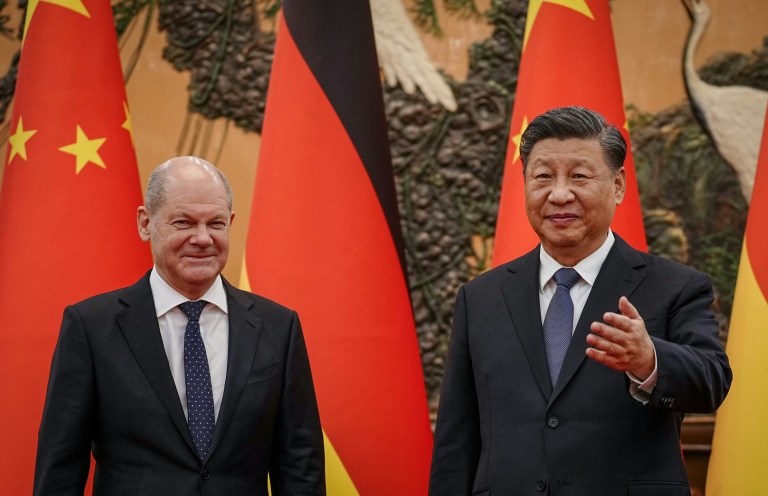
Chinese President Xi Jinping welcomed German Chancellor Olaf Scholz to Beijing Friday, with both sides seeking to deepen economic cooperation on a trip that has prompted criticism over Berlin’s growing reliance on the Asian power.

Scholz is the first G7 leader to visit China since the start of the coronavirus pandemic, which led the world’s number two economy to close its borders and Xi to largely eschew in-person diplomacy.

The German leader’s trip, accompanied by top business executives, has sparked controversy at home, coming so soon after Xi strengthened his hold on power. Tensions are also running high between the West and Beijing on issues ranging from Taiwan to alleged human rights abuses. 

Received by a smiling Xi at Beijing’s Great Hall of the People shortly after arriving, Scholz said he hoped to “further develop” economic cooperation — while alluding to areas of disagreement.

“It is good that we are able to have an exchange here about all questions, including those questions where we have different perspectives — that’s what an exchange is for,” Scholz said. 

“We also want to talk about how we can further develop our economic cooperation on other topics: climate change, food security, indebted countries.”

“Xi underscored the need for China and Germany, two major countries with great influence, to work together in times of change and instability and contribute more to global peace and development,” Beijing’s Xinhua News Agency said of the meeting.

Scholz also spoke with Chinese Premier Li Keqiang later in the afternoon at a meeting in which he called for fair trade between the two countries. He urged Beijing to do more to press its ally Russia, currently engaged in a months-long war in Ukraine.

“I told President (Xi) that it is important for China to use its influence on Russia,” Scholz said at a meeting with the press during which the Chinese side insisted there was “not enough time” for questions.

China has steadfastly avoided criticising Russia for invading Ukraine and instead blames the United States and NATO for the war.

– ‘Keep doing business’ –

The German delegation of more than 60 people was met on the tarmac at Beijing airport by a military guard — as well as health workers in white hazmat suits who conducted mandatory PCR tests in buses converted into mobile laboratories. 

Scholz’s PCR test was taken in his plane by a German doctor he brought with him and supervised by Chinese health officials, according to the German government.

China’s economic importance is seen by some in Berlin as more crucial than ever, as Germany hurtles towards a recession battling an energy crisis triggered by the Ukraine war. 

China is a major market for German goods, from machinery to vehicles made by the likes of Volkswagen, BMW and Mercedes-Benz.

But German industry’s heavy dependence on China is facing fresh scrutiny after the over-reliance on Russian energy imports left it exposed when Moscow turned off the taps.

Scholz’s approach is still underpinned by the idea that “we want to keep doing business with China, no matter what that means for the dependence of our economy, and for our ability to act”, opposition lawmaker Norbert Roettgen told the Rheinische Post newspaper.

Concern about China has also come from within Germany’s ruling coalition, with Foreign Minister Annalena Baerbock saying past mistakes with Russia must not be repeated.

A row erupted last month about whether to allow Chinese shipping giant Cosco to buy a stake in a Hamburg port terminal. 

Scholz ultimately defied calls from six ministries to veto the sale over security concerns, instead permitting the company to acquire a reduced stake.

– ‘All the more important’ –

There are also concerns that the trip — coming on the heels of Xi securing a historic third term at a Communist Party Congress last month — may have unsettled the United States and the European Union.

“For Beijing this is less about concrete outcomes and more about the symbolism of the German chancellor paying Xi a visit so soon after the party congress,” said Noah Barkin, visiting senior fellow in the Asia Program at the US German Marshall Fund.

“It gives international legitimacy to his leader-for-life status, and it shows that China is not isolated,” he added.

Berlin, however, says there have been consultations with key partners, while Scholz has insisted he is visiting China as a “European” as well as the leader of Germany.

He said direct talks with Chinese leaders were “all the more important” after the long hiatus caused by the pandemic.

He promised earlier to raise thorny topics such as respect for civil liberties and the rights of minorities in Xinjiang.

pw-reb-oho-lxc/axn

Stock markets rise as China hopes boost Hong Kong

Asian and European markets rose Friday with Hong Kong leading the way fuelled by hopes China will roll back some of its economically painful zero-Covid policies.

The gains come after Federal Reserve boss Jerome Powell’s pushback against expectations of a softer approach to interest rate hikes sent shivers through trading floors and ramped up fears of a global recession.

However, the mood lightened in Asia on Friday, as Hong Kong jumped more than five percent on lingering hopes that China will soon begin rolling back its zero-Covid strategy of lockdowns that has hammered the world’s second-largest economy. Shanghai ended up more than two percent.

The Hang Seng Index has jumped almost nine percent this week since an unverified statement earlier this week suggested officials in Beijing were discussing a change.

The gains continued despite pushback from authorities, and after President Xi Jinping reasserted the zero-Covid strategy at a major Communist Party gathering last month.

“What we are guessing is China in the future will model the reopening on the back of Hong Kong,” Jack Siu, Greater China chief investment officer at Credit Suisse, told Bloomberg Television.

“To fully reopen, we are still at least nine months away from today.”

Tech firms were the big winners in Hong Kong, with Alibaba and Tencent up by double digits on reports of progress in US auditing of Chinese firms listed in New York.

Alibaba and Tencent among others have faced delisting from Wall Street owing to a standoff between securities authorities as part of the wider China-US row.

Elsewhere, Sydney, Seoul, Singapore, Taipei, Manila, Jakarta, Bangkok and Wellington rose.

However, Tokyo was deep in the red as traders played catch-up with Thursday’s losses after returning from a one-day holiday. Mumbai also fell.

The ongoing optimism about an easing of China’s Covid policy lifted oil prices on an expectation that demand will build as the giant economy picks up speed again.

The dollar held gains made after Powell’s comments Wednesday. The governor told a news conference that while the size of rate increases would likely come down, they would top out at a higher level than expected, dealing a blow to talk of an end soon.

The decision came as other central banks have signalled they will tone down their hawkishness, even in the face of decades- or record-high inflation.

The Bank of England became the latest on Thursday when it lifted borrowing costs by their most in 33 years — and to a 14-year high — but said they would not go as high as markets had priced in.

It also warned that the UK economy faced a prolonged recession — possibly into 2024 — as it battles high prices caused by the Ukraine war.

The comments skewered the pound — already under severe pressure after recent turmoil in Westminster — and sent it tumbling against the dollar and euro, while it struggled to bounce back in Asia.

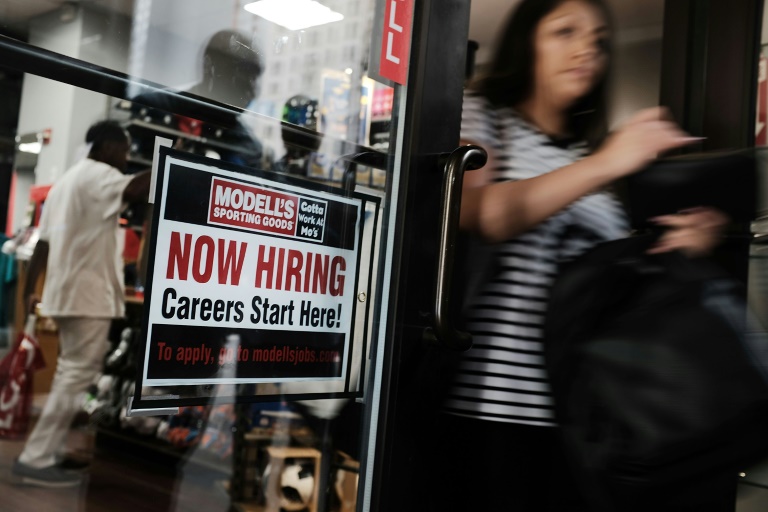
Investors are now awaiting the release of jobs data later in the day, which could provide fresh insight into the state of the world’s top economy.

With the Fed pointing to a still-strong labour market as a key reason for not shifting from its rate-hike strategy, traders are nervous that a big figure in the report will give officials room to tighten more.

“After initial jobless claims came in line with expectations, Friday’s payrolls will be the last vital data point this week, as signals on the labour market remain crucial to the Fed’s path forward, and many stock pickers are dearly hoping for ‘bad news is good news’ close to the week,” said SPI Asset Management’s Stephen Innes.

– Key figures around 0820 GMT –

Tokyo – Nikkei 225: DOWN 1.7 percent at 27,199.74 (close)

Hong Kong – Hang Seng Index: UP 5.4 percent at 16,161.14 (close) 

Shanghai – Composite: UP 2.4 percent at 3,070.80 (close)

London – FTSE 100: UP 0.7 percent at 7,237.13

Pound/dollar: UP at $1.1216 from $1.1160 Thursday

Euro/dollar: UP at $0.9773 from $0.9751

Dollar/yen: DOWN at 147.76 yen from 148.25 yen

Euro/pound: DOWN at 87.16 pence from 87.73 pence

West Texas Intermediate: UP 2.2 percent at $90.07 per barrel

Brent North Sea crude: UP 1.9 percent at $96.44 per barrel

New York – Dow: DOWN 0.5 percent at 32,001.25 (close)

Close Bitnami banner
Bitnami