World

Seoul scrambles jets after detecting 180 N. Korea warplanes

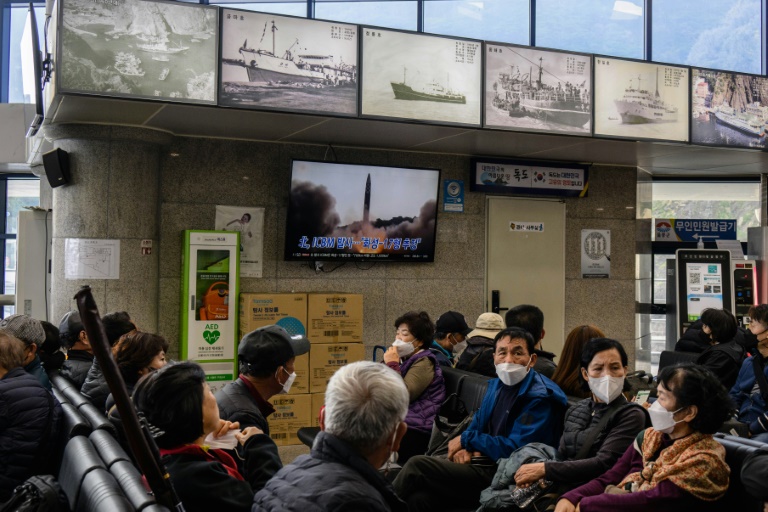
South Korea’s military scrambled stealth jets on Friday after detecting the mobilisation of 180 North Korean warplanes, Seoul said, following a record-breaking blitz of missile tests by Pyongyang this week. 

It comes a day after North Korea conducted a failed intercontinental ballistic missile test and follows a decision by Seoul and Washington to extend through Saturday their largest-ever joint air drills, a military exercise that has infuriated Pyongyang.

“Our military detected around 180 North Korean warplanes” mobilised in Pyongyang’s airspace, Seoul’s Joint Chiefs of Staff said, adding that Seoul “scrambled 80 fighter jets including F-35As” while jets involved in the joint drills were also “maintaining readiness”.

Shortly after South Korea announced the decision to extend the joint drills on Thursday, Pyongyang launched three more short-range ballistic missiles, calling the decision “a very dangerous and wrong choice”.

Hours later, the North fired 80 artillery rounds that landed in a maritime “buffer zone”, Seoul’s military said.

The barrage was a “clear violation” of the 2018 agreement that established the buffer zone in a bid to reduce tensions between the two sides, Seoul’s Joints Chiefs of Staff said.

The artillery fire came after Pyongyang fired about 30 missiles Wednesday and Thursday, including an intercontinental ballistic missile and one that landed near South Korea’s territorial waters for the first time since the end of the Korean War in 1953.

US Defence Secretary Lloyd Austin described Pyongyang’s ICBM launch as “illegal and destabilising”, and Seoul and Washington vowed to pursue new measures to demonstrate their “determination and capabilities” against the North’s growing threats.

– Stealth jet fears –

Experts and officials have said Pyongyang is ramping up its tests in protest over the US-South Korean drills. Washington and Seoul have repeatedly warned that Pyongyang’s recent launches could be a precursor to a nuclear test, which would be its seventh. 

Pyongyang has called the joint air drills, dubbed Vigilant Storm, “an aggressive and provocative military drill targeting” North Korea, and threatened that Washington and Seoul would “pay the most horrible price in history” if it continued.

North Korea is particularly sensitive about the air drills, experts say, as its own airforce is one of the weakest links in its military, lacking high-tech jets and properly trained pilots.

Seoul last scrambled fighter jets in early October, when it detected 12 North Korean warplanes conducting an apparent air-to-surface firing drill.

The ongoing joint drills involve some of South Korea and America’s advanced fighter jets — F-35As and F-35Bs, both of which are stealth aircraft designed to produce as small a radar signature as possible.

Such jets “would be a central component in any decapitation operations targeting the North Korean leadership including Kim Jong Un himself,” Go Myong-hyun, researcher at the entrance to Asan Institute for Policy Studies told AFP.

“We know for a fact that North Korea is highly sensitive to these kinds of threats.”

This summer there were reports that US and South Korean commandos were practising so-called “decapitation strikes” — the removal of North Korea’s top leadership in a lightning-fast military operation.

– ‘Against humanity’-

The North’s latest launches come as South Korea is in a period of national mourning after more than 150 people — mostly young women in their 20s — were killed in a crowd crush in Seoul on Saturday.

Pyongyang’s provocations, “especially during our national mourning period, are against humanity and humanitarianism”, Lee Hyo-jung, a vice spokesperson at Seoul’s unification ministry, said Friday.

“The government strongly condemns North Korea for continuing threats and provocations, citing our annual and defensive drills, raising tensions on the Korean peninsula,” she said, blaming the current tension on Pyongyang’s “reckless nuclear and missile development”.

In addition to extending Vigilant Storm through Saturday, Seoul’s military announced that the annual Taegeuk exercise — which focuses on “improving wartime transition performance” and crisis management — would be held next week.

The computer-simulated exercise will be carried out to strengthen “the ability to carry out practical mission capability in preparation for various threats such as North Korea’s nuclear weapons, missiles, and recent provocations”, it said.
Pope warns global divisions leading to 'precipice'

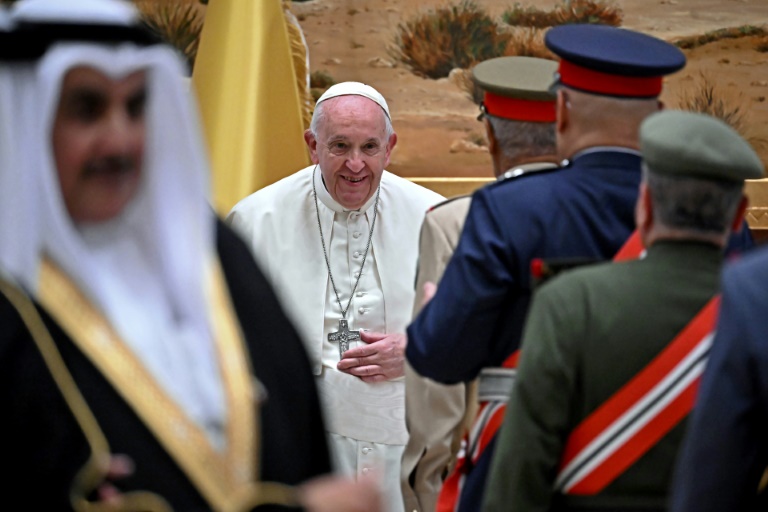
Pope Francis warned in Bahrain on Friday that “opposing blocs” and global divisions have put humanity on a “delicate precipice”, a veiled reference to the Ukraine war. 

“We are living at a time when humanity, connected as never before, appears much more divided than united,” he said during a speech to religious leaders in the Gulf kingdom.

“We continue to find ourselves on the brink of a delicate precipice and we do not want to fall.”

Francis, who has made religious dialogue a pillar of his papacy, was speaking on the first full day of his trip to the tiny island state, where he arrived on Thursday afternoon.

His visit comes with the Ukraine war in its ninth month, and tensions growing on the Korean Peninsula.

In his speech on Friday, Francis warned that “a few potentates are caught up in a resolute struggle for partisan interests, reviving obsolete rhetoric, redesigning spheres of influence and opposing blocs.”

“Instead of cultivating our surroundings, we are playing instead with fire, missiles and bombs, weapons that bring sorrow and death, covering our common home with ashes and hatred,” he said.

Sheikh Ahmed al-Tayeb, the grand imam of Cairo’s prestigious Al-Azhar mosque and centre of Sunni learning, also addressed the gathering.

Tayeb warned that “market economics, monopolisation of resources, greed and arms sales to the Third World” were “manufacturing victims of war”.

Ahead of the pope’s speech, Vatican Secretary of State Cardinal Pietro Parolin, who met Russia’s Foreign Minister Sergei Lavrov in September, told journalists that there had been “a few small signs” of progress in negotiations with Moscow. 

“All peace initiatives are good. What’s important is that we carry them out together and that they’re not exploited for other goals,” he said.

The pontiff’s 39th international trip since taking office comes three years after he signed a Muslim-Christian manifesto for peace in the United Arab Emirates during the first papal visit to the Gulf region, where Islam was born.

The pope’s visit to Bahrain has been shadowed by accusations of rights abuses, particularly against Shiites in the Sunni-ruled kingdom, allegations Manama rejects.

On Thursday the pontiff criticised use of the death penalty and urged nations to respect human rights.

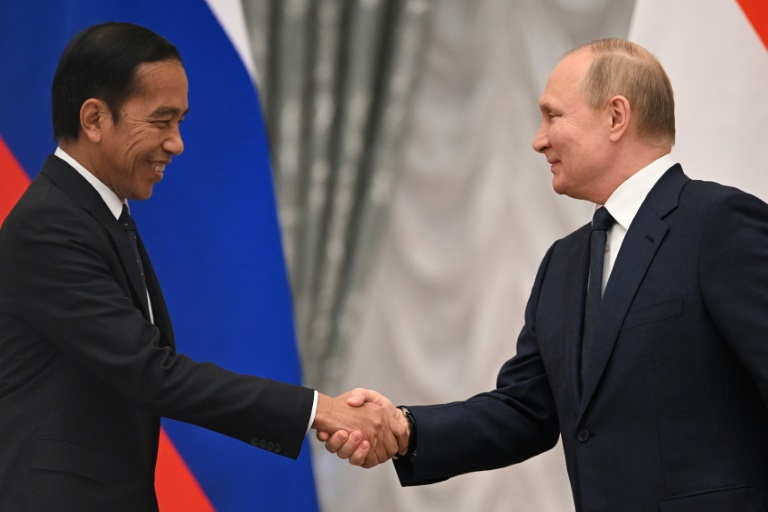
Indonesia leader says Putin undecided on G20 summit invite: report

Russian President Vladimir Putin has still not decided if he will attend the Group of 20 leaders’ summit this month as war rages in Ukraine, the leader of host nation Indonesia said in an interview Friday.

The meeting of the world’s top economies has been overshadowed by Russia’s invasion of its neighbour with both sides continuing to battle on the ground without significant change.

Indonesian President Joko Widodo said Putin told him in a phone call Wednesday his attendance at the two-day gathering on the resort island of Bali remains up in the air.

“He (Putin) wanted to attend but cannot decide at the moment,” Widodo told local newspaper Kompas in an interview published on Friday.

He said in August that Putin had accepted Jakarta’s invite to the summit on November 15-16, despite Western pressure to bar Moscow from the meeting and in the face of the Kremlin’s growing international isolation.

But the warring sides remain locked in a protracted conflict that Kyiv says has left 4.5 million Ukrainians without power during the cold of winter.

Indonesia pursues a neutral foreign policy on the Ukraine war and has also invited Ukrainian President Volodymyr Zelensky to the summit where he is expected to participate virtually. Ukraine is not a member of the G20 group.

Zelensky has threatened to boycott the summit if Putin attends.

“If the leader of the Russian Federation was to take part in it, Ukraine would not be participating,” he told a press conference Thursday in Kyiv.

In Wednesday’s phone call, Putin and Widodo also discussed a grain deal that Russia returned to this week which allows Ukrainian exports to pass through the Black Sea, the Indonesian leader said.

The grain deal’s renewal date brokered by the UN and Turkey is November 19, three days after the G20 summit concludes. 

Moscow has said it has yet to decide if it will agree to extend the deal.

Zelensky and Widodo held phone talks Thursday about preparations for the G20 summit and the grain deal, the Ukrainian leader said in a tweet. 

Indonesia has called for a peaceful resolution to Russia’s months-long invasion of Ukraine, with Widodo becoming the first Asian leader to visit both Kyiv and Moscow since the outbreak of war in February.

The Indonesian president said 17 G20 leaders have confirmed their attendance at the summit, including US President Joe Biden and China’s Xi Jinping. 

Ex-Pakistan PM Khan recovering in hospital after assassination bid

Former Pakistan prime minister Imran Khan was recovering in hospital Friday after a gunman shot him in the leg, with his supporters vowing the assassination attempt will not derail his “long march” bid to return to power.

The attack on his convoy, apparently by a lone gunman, killed one man and wounded at least 10, significantly raising the stakes in a political crisis that has gripped the South Asian nation since Khan’s ousting in April.

Khan “was stable and he was doing fine” at Shaukat Khanum hospital in the eastern city of Lahore, his doctor Faisal Sultan told AFP Friday.

Seemi Bokhari, a lawmaker with Khan’s Pakistan Tehreek-e-Insaf (PTI) party, said after visiting Khan the former premier was in high spirits.

“The doctors are allowing him to move … He is feeling perfectly well and he will soon be discharged,” she told AFP.

The 70-year-old former international cricket star had been leading a campaign convoy of thousands since last week from Lahore to the capital Islamabad when he was attacked.

Khan suffered at least one bullet wound to his right leg when a gunmen sprayed pistol fire at his modified container truck as it drove slowly through a thick crowd in Wazirabad, around 170 kilometres (105 miles) east of Islamabad.

“Everyone who was standing in the very front row got hit,” former information minister Fawad Chaudhry, who was standing behind Khan, told AFP.

Senior aide Raoof Hasan said it was “an attempt to kill him, to assassinate him”.

Chaudhry said party officials would meet later Friday to discuss the immediate fate of Khan’s campaign march.

“The real freedom long march will continue and the movement for people’s rights will remain until an announcement on the general elections,” he tweeted.

– Threats –

Party officials also called for supporters to stage rallies and marches across the country after Friday afternoon prayers, the most important of the week.

Protesters lit fires and blocked roads in several cities late Thursday as news of Khan’s shooting spread.

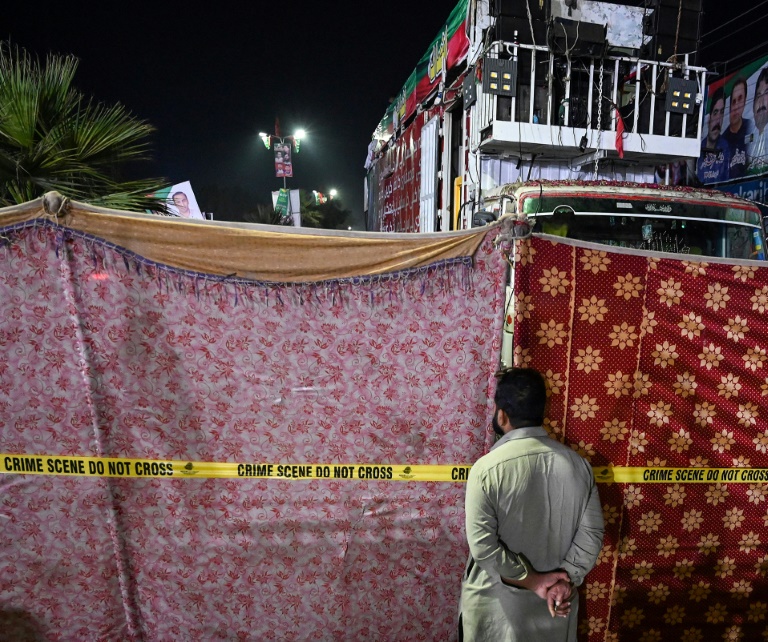
His campaign truck has become a crime scene for now, cordoned off and guarded by commandos as forensic experts comb the area.

Information Minister Marriyum Aurangzeb said Thursday the attacker had been taken into custody. Officials shared an apparent confession video that was circulating online. 

“I did it because (Khan) was misleading the public,” says a dishevelled man in the leaked video, shown with his hands tied behind his back in what appears to be a police station.

He says he was angry with the procession for making a racket during the call to prayer that summons Muslims to the mosque five times a day.

Pervaiz Elahi, the chief minister of Punjab, said officers who leaked the video would be disciplined.

Pakistan has been grappling with Islamist militancy for decades, with right-wing religious groups having huge sway over the population.

It has been no stranger to assassination attempts during decades of political instability, and the powerful military has led the country several times.

Pakistan’s first prime minister, Liaquat Ali Khan, was shot dead at a rally in Rawalpindi in 1951. Another former prime minister, Benazir Bhutto, was killed in 2007 when a huge bomb detonated near her vehicle as she greeted supporters in the city of Rawalpindi.

– Kicked from power –

Khan was booted from office in April by a no-confidence vote after defections by some of his coalition partners, but he retains huge support.

He was voted into power in 2018 on an anti-corruption platform by an electorate tired of dynastic politics, but his mishandling of the economy — and falling out with a military accused of helping his rise — sealed his fate.

Since then, he has railed against the establishment and Prime Minister Shehbaz Sharif’s government, which he says was imposed on Pakistan by a “conspiracy” involving the United States.

Khan and Shehbaz have for months traded bitter accusations of corruption and incompetence, raising the political temperature in a nation that is frequently at boiling point.

Khan has repeatedly told supporters he was prepared to die for the country, and aides have long warned of unspecified threats made on his life.

The attack drew international condemnation including from the United States, which had uneasy relations with Khan when he was in power.

“Violence has no place in politics, and we call on all parties to refrain from violence, harassment and intimidation,” US Secretary of State Antony Blinken said in a statement.

Kenya Airways pilots to strike from Saturday

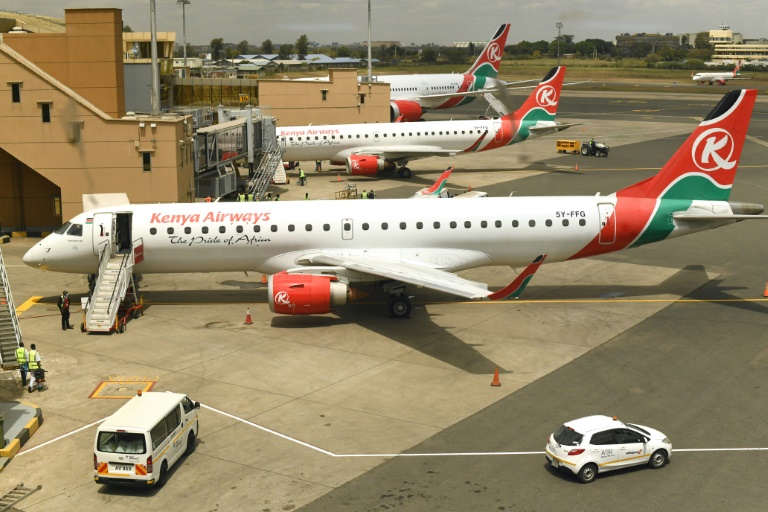
Pilots at troubled national flag carrier Kenya Airways plan to go on strike from Saturday to seek better working conditions despite a court order suspending the industrial action, their union said Friday.

The airline, partly owned by the government as well as Dutch carrier KLM, is one of the continent’s biggest, connecting multiple nations within Africa to Europe and Asia, but it is facing turbulent times.

The Kenya Airlines Pilots Association (KALPA) said a series of meetings with the airline management had failed to resolve the pilots’ grievances.

No Kenya Airways flight will depart Nairobi’s Jomo Kenyatta International Airport from 6:00 am (0300 GMT) on Saturday, said the union’s secretary general, Captain Murithi Nyaga. 

“Kenya Airways management’s actions have left us with no other option,” Nyaga said, adding that a 14-day notice on the action had ended without a solution.

“We had hoped that the management of the airline would soften its stance and engage in negotiation on the issues raised.”

The pilots, who have had a particularly fraught relationship with management, are pressing for the reinstatement of contributions to a provident fund. 

They also want back payment of all salaries stopped during the Covid pandemic.

Kenya Airways on Wednesday warned the strike would jeopardise its recovery and said none of the grievances by the pilots merited a strike.

“Industrial action is unnecessary at this point, as it will delay and disrupt the financial and operational recovery and cause reputational damage to Kenya Airways,” board chairman Michael Joseph said in a statement.

On Monday, the airline won a court injunction stopping the strike but the pilots’ union have nevertheless vowed to down tools.

An official at KALPA told AFP the pilots “were acting within the provisions of the law”, referring to the expiry of the strike notice.

Kenya Airways was founded in 1977 following the demise of East African Airways and flies over four million passengers to 42 destinations annually.

But its “Pride of Africa” slogan rings hollow as it is operating thanks to state bailouts following years of losses.

Germany's Scholz seeks closer ties in China visit

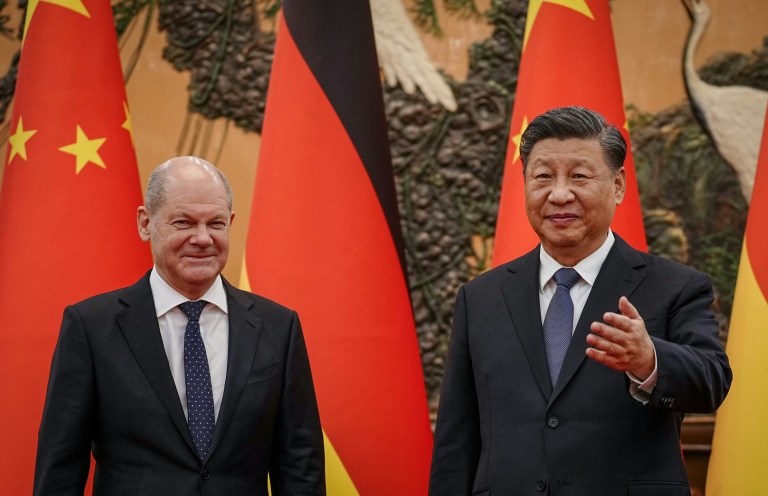
German Chancellor Olaf Scholz told President Xi Jinping on Friday he wished to deepen economic cooperation, on a trip to Beijing that has prompted criticism over Berlin’s heavy reliance on an increasingly authoritarian China.

Scholz is the first G7 leader to visit China since the start of the coronavirus pandemic, which has seen the world’s number two economy largely close its borders.

But the trip has sparked controversy, coming so soon after Xi strengthened his hold on power and as tensions run high between the West and Beijing on issues ranging from Taiwan to alleged human rights abuses. 

Received by Xi at the Great Hall of the People shortly after arriving in Beijing, Scholz said he was seeking to “further develop” economic cooperation while alluding to areas of disagreement. 

“It is good that we are able to have an exchange here about all questions, including those questions where we have different perspectives — that’s what an exchange is for,” Scholz said. 

“We also want to talk about how we can further develop our economic cooperation on other topics: climate change, food security, indebted countries.”

Xi said he believed the visit would “enhance mutual understanding and mutual trust, deepen practical cooperation in various fields, and create sound plans for the development of China-Germany relations in the next stage”, according to state broadcaster CCTV.

Scholz is also set to meet Premier Li Keqiang on the one-day trip, on which he is being accompanied by top business executives. 

The delegation of more than 60 people was met on the tarmac at Beijing airport by a military guard — as well as health workers in white hazmat suits who conducted mandatory PCR tests in buses converted into mobile laboratories. 

Scholz’s PCR test was taken in his plane by a German doctor he brought with him and supervised by Chinese health officials, according to the German government.

– ‘Keep doing business’ –

China’s economic importance is seen by some in Berlin as more crucial than ever, as Germany hurtles towards a recession battling an energy crisis triggered by the Ukraine war. 

China is a major market for German goods, from machinery to vehicles made by the likes of Volkswagen, BMW and Mercedes-Benz.

But German industry’s heavy dependence on China is facing fresh scrutiny after the over-reliance on Russian energy imports left it exposed when Moscow turned off the taps.

Scholz’s approach is still underpinned by the idea that “we want to keep doing business with China, no matter what that means for the dependence of our economy, and for our ability to act”, opposition lawmaker Norbert Roettgen told the Rheinische Post newspaper.

Concern about China has also come from within the ruling coalition, with Foreign Minister Annalena Baerbock saying mistakes made in the past with Russia must not be repeated.

The sensitivity of the issue was highlighted when a row erupted last month about whether to allow Chinese shipping giant Cosco to buy a stake in a Hamburg port terminal. 

Ultimately, Scholz defied calls from six ministries to veto the sale over security concerns, instead permitting the company to acquire a reduced stake.

– ‘Going it alone’ –

There are also concerns that the trip — coming on the heels of Xi securing a historic third term at a Communist Party Congress last month — may have unsettled the United States and the European Union.

“The chancellor is pursuing a foreign policy which will lead to a loss of trust in Germany among our closest partners,” said Roettgen from the conservative CDU party, accusing Scholz of “going it alone”.

Berlin, however, says there have been consultations with key partners, while Scholz has insisted he is visiting China as a “European” as well as the leader of Germany.

He said direct talks with Chinese leaders were “all the more important” after the long hiatus caused by the pandemic.

In a newspaper article, he promised thorny topics like respect for civil liberties and the rights of minorities in Xinjiang would figure in talks.

But Beijing has already warned that “the Chinese side is opposed to interference in our internal affairs, and smearing us under the guise of discussing human rights issues”, said foreign ministry spokesman Zhao Lijian.

Most Asian markets rise as China hopes boost Hong Kong

Most Asian markets rose Friday after the previous day’s Federal Reserve-induced sell-off, with Hong Kong leading the way with another big rally fuelled by hopes China will roll back some of its painful zero-Covid policies.

Fed boss Jerome Powell’s pushback against expectations of a softer approach to monetary tightening sent shivers through trading floors and ramped up fears of a global recession.

The governor told a news conference that while the size of increases would likely come down, they would top out at a higher level than expected, dealing a blow to talk of an end soon.

The decision came as other central banks have signalled they will tone down their hawkishness, even in the face of decades- or record-high inflation.

The Bank of England became the latest on Thursday when it lifted borrowing costs by their most in 33 years — and to a 14-year high — but said they would not go as high as markets had priced in.

It also warned that the UK economy faced a prolonged recession — possibly into 2024 — as it battles high prices caused by the Ukraine war.

The comments skewered the pound — already under severe pressure after recent turmoil in Westminster — and sent it tumbling against the dollar and euro, while it struggled to bounce back in Asia.

Still, regional equity markets mostly turned positive as investors picked up bargains and awaited the non-farm payrolls data later in the day, which could provide fresh insight into the state of the world’s top economy.

With the Fed pointing to a still-strong labour market as a key reason for not shifting from its rate-hike strategy, traders are nervous that a big figure in the report will give officials room to tighten more.

“After initial jobless claims came in line with expectations, Friday’s payrolls will be the last vital data point this week, as signals on the labour market remain crucial to the Fed’s path forward, and many stock pickers are dearly hoping for ‘bad news is good news’ close to the week,” said SPI Asset Management’s Stephen Innes.

Hong Kong jumped more than five percent on lingering hopes that China will soon begin rolling back its zero-Covid strategy of lockdowns that has hammered the world’s second-largest economy. 

Shanghai was up more than two percent Friday.

The Hang Seng Index has jumped almost 10 percent this week since an unverified statement earlier this week suggested officials in Beijing were discussing a change. 

The gains continue despite pushback from authorities, and after President Xi Jinping reasserted the zero-Covid strategy at a major Communist Party gathering last month.

“What we are guessing is China in the future will model the reopening on the back of Hong Kong,” Jack Siu, Greater China chief investment officer at Credit Suisse, told Bloomberg Television.

“To fully reopen, we are still at least nine months away from today.”

Elsewhere, Sydney, Seoul, Singapore, Mumbai, Bangkok and Wellington rose.

However, Tokyo was deep in the red as traders played catch-up with Thursday’s losses after returning from a one-day holiday. Taipei, Manila and Jakarta also fell.

– Key figures around 0710 GMT –

Tokyo – Nikkei 225: DOWN 2.0 percent at 27,107.23

Hong Kong – Hang Seng Index: UP 5.7 percent at 16,213.68 (break)

Shanghai – Composite: UP 2.1 percent at 3,060.39 (break)

Pound/dollar: UP at $1.1208 from $1.1160 Thursday

Euro/dollar: UP at $0.9773 from $0.9751

Dollar/yen: DOWN at 148.09 yen from 148.25 yen

Euro/pound: DOWN at 87.18 pence from 87.73 pence

West Texas Intermediate: UP 0.8 percent at $88.85 per barrel

Brent North Sea crude: UP 0.7 percent at $95.32 per barrel

New York – Dow: DOWN 0.5 percent at 32,001.25 (close)

London – FTSE 100: UP 0.6 percent at 7,188.63 (close)

N Korea fired artillery barrage overnight, Seoul says

North Korea fired an artillery barrage into a maritime “buffer zone” overnight, Seoul’s military said Friday, after a record-breaking blitz of launches that included a failed intercontinental ballistic missile test.

Seoul and Washington, which have warned Pyongyang’s recent launches could culminate in a nuclear test, extended their largest-ever joint air drills through Saturday in response to the flurry of projectiles.

Shortly after that decision was announced Thursday, Pyongyang launched three short-range ballistic missiles, calling the move “a very dangerous and wrong choice”.

About 80 artillery rounds fired by the North followed at 11:28 pm (1428 GMT), landing in a maritime “buffer zone”, Seoul’s military said.

The barrage was a “clear violation” of the 2018 agreement that established the buffer zone in a bid to reduce tensions between the two sides, Seoul’s Joints Chiefs of Staff said.

US Defence Secretary Lloyd Austin described Pyongyang’s ICBM launch as “illegal and destabilising”, and Seoul and Washington vowed to pursue new measures to demonstrate their “determination and capabilities” against the North’s growing threats.

Pyongyang fired about 30 missiles throughout Wednesday and Thursday, including one that landed near South Korea’s territorial waters for the first time since the end of the Korean War in 1953. 

South Korea’s President Yoon Suk-yeol said it was “effectively a territorial invasion”.

Experts and officials have said Pyongyang is ramping up its tests in protest over the US-South Korean drills and as it prepares to conduct another nuclear test, which would be its seventh.

Pyongyang has called the joint air drills, dubbed Vigilant Storm, “an aggressive and provocative military drill targeting” North Korea, and threatened that Washington and Seoul would “pay the most horrible price in history” if it continued.

– ‘Against humanity’-

The North’s latest launches come as South Korea is in a period of national mourning after more than 150 people — mostly young women in their 20s — were killed in a crowd crush in Seoul on Saturday.

Pyongyang’s provocations, “especially during our national mourning period, are against humanity and humanitarianism,” Lee Hyo-jung, a vice spokesperson at Seoul’s unification ministry, said Friday.

“The government strongly condemns North Korea for continuing threats and provocations, citing our annual and defensive drills, raising tensions on the Korean peninsula,” she said, blaming the current tension on Pyongyang’s “reckless nuclear and missile development”.

In addition to extending Vigilant Storm through Saturday, Seoul’s military announced that the annual Taegeuk exercise, which focuses on “improving wartime transition performance” and crisis management, would be held next week.

The computer-simulated exercise will be carried out to strengthen “the ability to carry out practical mission capability in preparation for various threats such as North Korea’s nuclear weapons, missiles, and recent provocations,” it said.

Escape from Foxconn: Workers recount Covid chaos at iPhone factory

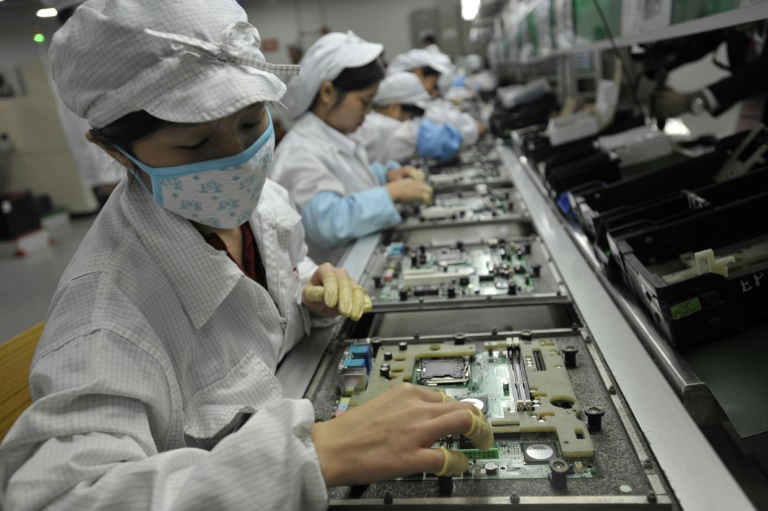
Zhang Yao recalls the moment he realised something had gone deeply wrong at the Chinese mega-factory where he and hundreds of thousands of other workers assembled iPhones and other high-end electronics.

In early October, supervisors suddenly warned him that 3,000 colleagues had been taken into quarantine after someone tested positive for Covid-19 at the factory.

“They told us not to take our masks off,” Zhang, speaking under a pseudonym for fear of retaliation, told AFP by telephone.

What followed was a weeks-long ordeal including food shortages and the ever-present fear of infection, before he finally escaped on Tuesday.

Zhang’s employer, Taiwanese tech giant Foxconn, has said it faces a “protracted battle” against infections and imposed a “closed loop” bubble around its sprawling campus in central China’s Zhengzhou city.

Local authorities locked down the area surrounding the major Apple supplier’s factory on Wednesday, but not before reports emerged of employees fleeing on foot and a lack of adequate medical care at the plant.

China is the last major economy committed to a zero-Covid strategy, persisting with snap lockdowns, mass testing and lengthy quarantines in a bid to stamp out emerging outbreaks.

But new variants have tested officials’ ability to snuff out flare-ups and dragged down economic activity with the threat of sudden disruptions.

– Desperation –

Multiple workers have recounted scenes of chaos and increasing disorganisation at Foxconn’s complex of workshops and dormitories, which form a city-within-a-city near Zhengzhou’s airport.

Zhang told AFP that “positive tests and double lines (on antigen tests) had become a common sight” in his workshop before he left.

“Of course we were scared, it was so close to us.”

“People with fevers are not guaranteed to receive medicine,” another Foxconn worker, a 30-year-old man who also asked to remain anonymous, told AFP.

“We are drowning,” he said.

Those who decided to stop working were not offered meals at their dormitories, Zhang said, adding that some were able to survive on personal stockpiles of instant noodles.

Kai, a worker at in the complex who gave an interview to state-owned Sanlian Lifeweek, told the magazine Foxconn’s “closed loop” involved cordoning off paths between dormitory compounds and the factory, and complained he was left to his own devices after being thrown in quarantine.

TikTok videos geolocated by AFP showed mounds of uncollected rubbish outside buildings in late October, while employees in N95 masks squeezed onto packed shuttle buses taking them from dormitories to their work stations.

A 27-year-old woman working at Foxconn, who asked not to be named, told AFP a roommate who tested positive for Covid was sent back to her dormitory on Thursday morning, crying, after she decided to hand in her notice while in quarantine.

“Now the three of us are living in the same room: one a confirmed case and two of us testing positive on the rapid test, still waiting for our nucleic acid test results,” the worker told AFP.

Many became so desperate by the end of last month that they attempted to walk back to their hometowns to get around Covid transport curbs.

As videos of people dragging their suitcases down motorways and struggling up hills spread on Chinese social media, the authorities rushed in to do damage control.

The Zhengzhou city government on Sunday said it had arranged for special buses to take employees back to their hometowns.

Surrounding Henan province has officially reported a spike of more than 600 Covid cases since the start of this week.

– Distrust –

When Zhang finally attempted to leave the Foxconn campus on Tuesday, he found the company had set up obstacle after obstacle.

“There were people with loudspeakers advertising the latest Foxconn policy, saying that each day there would be a 400 yuan ($55) bonus,” Zhang told AFP.

A crowd of employees gathered at a pick-up point in front of empty buses but were not let on.

People in hazmat suits, known colloquially as “big whites” in China, claimed they had been sent by the city government.

“They tried to persuade people to stay in Zhengzhou… and avoid going home,” Zhang said.

“But when we asked to see their work ID, they had nothing to show us, so we suspected they were actually from Foxconn.”

Foxconn pointed to the local government’s lockdown orders from Wednesday when asked by AFP if it attempted to stop employees from leaving, without giving any further response.

The company had on Sunday said it was “providing employees with complimentary three meals a day” and cooperating with the government to provide transport home.

Eventually, the crowd of unhappy workers who had gathered decided to take matters into their own hands and walked over seven kilometres on foot to the nearest highway entry ramp.

There, more people claiming to be government officials pleaded with the employees to wait for the bus.

The crowd had no choice as the road was blocked.

Buses eventually arrived at five in the afternoon — nearly nine hours after Zhang had begun his attempt to secure transport.

“They were trying to grind us down,” he said.

Back in his hometown, Zhang is now waiting out the home quarantine period required by the local government.

“All I feel is, I’ve finally left Zhengzhou,” he told AFP.

Escape from Foxconn: Workers recount Covid chaos at iPhone factory

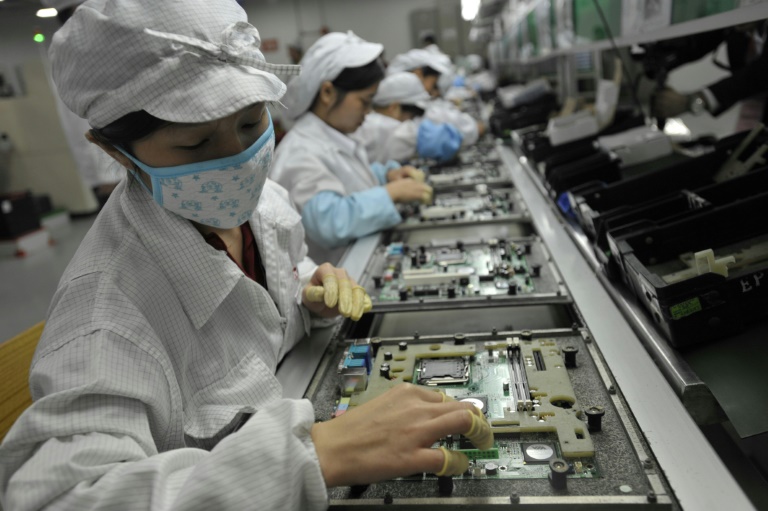
Zhang Yao recalls the moment he realised something had gone deeply wrong at the Chinese mega-factory where he and hundreds of thousands of other workers assembled iPhones and other high-end electronics.

In early October, supervisors suddenly warned him that 3,000 colleagues had been taken into quarantine after someone tested positive for Covid-19 at the factory.

“They told us not to take our masks off,” Zhang, speaking under a pseudonym for fear of retaliation, told AFP by telephone.

What followed was a weeks-long ordeal including food shortages and the ever-present fear of infection, before he finally escaped on Tuesday.

Zhang’s employer, Taiwanese tech giant Foxconn, has said it faces a “protracted battle” against infections and imposed a “closed loop” bubble around its sprawling campus in central China’s Zhengzhou city.

Local authorities locked down the area surrounding the major Apple supplier’s factory on Wednesday, but not before reports emerged of employees fleeing on foot and a lack of adequate medical care at the plant.

China is the last major economy committed to a zero-Covid strategy, persisting with snap lockdowns, mass testing and lengthy quarantines in a bid to stamp out emerging outbreaks.

But new variants have tested officials’ ability to snuff out flare-ups and dragged down economic activity with the threat of sudden disruptions.

– Desperation –

Multiple workers have recounted scenes of chaos and increasing disorganisation at Foxconn’s complex of workshops and dormitories, which form a city-within-a-city near Zhengzhou’s airport.

Zhang told AFP that “positive tests and double lines (on antigen tests) had become a common sight” in his workshop before he left.

“Of course we were scared, it was so close to us.”

“People with fevers are not guaranteed to receive medicine,” another Foxconn worker, a 30-year-old man who also asked to remain anonymous, told AFP.

“We are drowning,” he said.

Those who decided to stop working were not offered meals at their dormitories, Zhang said, adding that some were able to survive on personal stockpiles of instant noodles.

Kai, a worker at in the complex who gave an interview to state-owned Sanlian Lifeweek, told the magazine Foxconn’s “closed loop” involved cordoning off paths between dormitory compounds and the factory, and complained he was left to his own devices after being thrown in quarantine.

TikTok videos geolocated by AFP showed mounds of uncollected rubbish outside buildings in late October, while employees in N95 masks squeezed onto packed shuttle buses taking them from dormitories to their work stations.

A 27-year-old woman working at Foxconn, who asked not to be named, told AFP a roommate who tested positive for Covid was sent back to her dormitory on Thursday morning, crying, after she decided to hand in her notice while in quarantine.

“Now the three of us are living in the same room: one a confirmed case and two of us testing positive on the rapid test, still waiting for our nucleic acid test results,” the worker told AFP.

Many became so desperate by the end of last month that they attempted to walk back to their hometowns to get around Covid transport curbs.

As videos of people dragging their suitcases down motorways and struggling up hills spread on Chinese social media, the authorities rushed in to do damage control.

The Zhengzhou city government on Sunday said it had arranged for special buses to take employees back to their hometowns.

Surrounding Henan province has officially reported a spike of more than 600 Covid cases since the start of this week.

– Distrust –

When Zhang finally attempted to leave the Foxconn campus on Tuesday, he found the company had set up obstacle after obstacle.

“There were people with loudspeakers advertising the latest Foxconn policy, saying that each day there would be a 400 yuan ($55) bonus,” Zhang told AFP.

A crowd of employees gathered at a pick-up point in front of empty buses but were not let on.

People in hazmat suits, known colloquially as “big whites” in China, claimed they had been sent by the city government.

“They tried to persuade people to stay in Zhengzhou… and avoid going home,” Zhang said.

“But when we asked to see their work ID, they had nothing to show us, so we suspected they were actually from Foxconn.”

Foxconn pointed to the local government’s lockdown orders from Wednesday when asked by AFP if it attempted to stop employees from leaving, without giving any further response.

The company had on Sunday said it was “providing employees with complimentary three meals a day” and cooperating with the government to provide transport home.

Eventually, the crowd of unhappy workers who had gathered decided to take matters into their own hands and walked over seven kilometres on foot to the nearest highway entry ramp.

There, more people claiming to be government officials pleaded with the employees to wait for the bus.

The crowd had no choice as the road was blocked.

Buses eventually arrived at five in the afternoon — nearly nine hours after Zhang had begun his attempt to secure transport.

“They were trying to grind us down,” he said.

Back in his hometown, Zhang is now waiting out the home quarantine period required by the local government.

“All I feel is, I’ve finally left Zhengzhou,” he told AFP.

Close Bitnami banner
Bitnami