World

Israel vote cements rise of extreme right

Israel’s election this week cemented the rise of the country’s extreme right, with firebrand Itamar Ben-Gvir set to gain a powerful position in government.

After leading an energetic campaign centred on security and Jewish identity, Ben-Gvir celebrated as his Religious Zionism alliance achieved third place — and likely kingmaker status — in the November 1 vote.

“It’s time that we returned to be the masters of our house in our country,” he told cheering supporters Wednesday, after exit polls showed the nationalist bloc more than doubling its parliamentary seats.

Religious Zionism is expected to play a central role in a new coalition led by Benjamin Netanyahu, Israel’s veteran leader whose right-wing Likud won the most votes.

Securing the premiership for Netanyahu — who faces corruption charges he denies — is impossible without the backing of Ben-Gvir and his Religious Zionism ally, the more discreet Bezalel Smotrich.

According to the electoral commission in results issued late Thursday, the right-wing bloc won a clear majority of 64 seats — made up of 32 seats for Netanyahu’s Likud party, 18 for ultra-Orthodox parties and 14 for Religious Zionism.

This gives the extreme right unprecedented influence, securing Ben-Gvir’s transformation from political pariah to powerbroker.

Such a shift was orchestrated by political puppeteer Netanyahu, according to researcher Yossi Klein Halevi.

“Netanyahu whitewashed the far right, which he needed for his coalition, and so many Israelis saw it as simply a tougher version of the Likud,” said Halevi, from Jerusalem’s Shalom Hartman Institute.

– Religious hardliners –

Ben-Gvir lives in a settlement of religious hardliners in Hebron, in the occupied West Bank, but has attempted to moderate his public appearance in the run-up to elections.

“When I said 20 years ago that I wanted to expel all the Arabs, I don’t think that anymore. But I will not apologise,” he told AFP ahead of the vote.

Before entering the political mainstream, Ben-Gvir hung a portrait in his living room of Baruch Goldstein, the Israeli who killed 29 Palestinian worshippers at a Hebron mosque in 1994.

The picture was taken down before he entered parliament last year, but Ben-Gvir still regularly shows up at flashpoint sites in the Israeli-Palestinian conflict.

As a policymaker, his sights are set on annexing the West Bank and ensuring Israel’s security services use more force in countering Palestinian unrest.

The United Nations says recent months have been the deadliest period in years in the West Bank, with near daily army raids and an increase in clashes and attacks on Israeli forces.

Regardless of whether such steps receive support from Likud or their other coalition allies, ultra-Orthodox parties, Netanyahu will have to make some concessions to Religious Zionism to maintain their support.

“Netanyahu will have a hard time controlling his new partners,” said Halevi. 

“Because he will be beholden to them to pass legislation that would extricate him from his corruption trial,” added the researcher, who authored a book about his own attraction to Jewish extremism as a teenager.

– ‘More violence and humiliation’ –

For Shlomo Fischer, a sociologist at Jerusalem’s Jewish People Policy Institute, the poll results follow a long-term phenomenon.

“Israeli society is becoming more right-wing and in certain ways more traditional, more ethno-religious, nationalist,” he said.

The electoral success of Religious Zionism has raised fears among political opponents and Arab-Israelis, who for years have been at the receiving end of Ben-Gvir’s vitriol.

Jaafar Farah, head of the Mossawa Center that campaigns for the rights of Arab-Israelis, said “people are afraid of the measures they are going to put in place”.

“There is anger here because of the fragmentation of Arab parties,” he added, which represent 20 percent of the population.

Four Arab-led parties united in 2020 but have since split into three, with one failing to make it into parliament in the latest election.

Mansour Abbas, whose Raam party joined the outgoing coalition, blamed inaction for the emergence of the right-wing government.

“We’re bringing him (Netanyahu) back to power, we’re offering him this gift, because we’re being passive,” he said Wednesday.

Raam will sit firmly in opposition along with the Arab-led Hadash-Taal alliance, whose activist Feda Tabouni warned Israel was becoming “a more racist, fascist state”.

“The expected scenario is that there will be more laws issued, more violence and humiliation of people in the West Bank and the occupied (Palestinian) territories,” she told AFP.
Most Asian markets rise, dollar holds gains ahead of US jobs data

Most Asian investors tentatively stepped back into the markets Friday after the previous day’s Federal Reserve-induced sell-off, while the dollar held gains as focus turned to the release of key US jobs data.

Fed boss Jerome Powell’s pushback against expectations of a softer approach to monetary tightening sent shivers through trading floors and ramped up fears of a global recession.

The governor told a news conference that while the size of increases would likely come down, they would top out at a higher level than expected, dealing a blow to talk of an end soon.

The decision came as other central banks have signalled they will tone down their hawkishness, even in the face of decades- or record-high inflation.

The Bank of England became the latest on Thursday when it lifted borrowing costs by their most in 33 years — and to a 14-year high — but said they would not go as high as markets had priced in.

It also warned that the UK economy faced a prolonged recession — possibly into 2024 — as it battles high prices caused by the Ukraine war.

The comments skewered the pound — already under severe pressure after recent turmoil in Westminster — and sent it tumbling against the dollar and euro, while it struggled to bounce back in Asia.

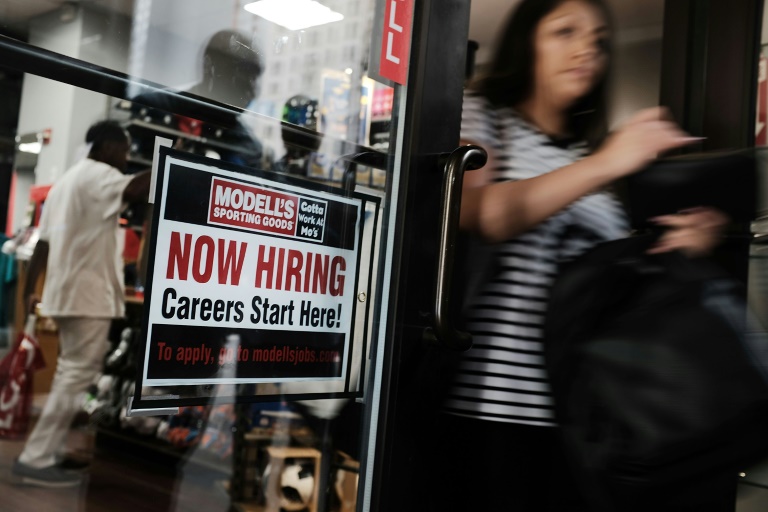
Still, regional equity markets mostly turned positive as investors picked up bargains and awaited the non-farm payrolls data later in the day, which could provide fresh insight into the state of the world’s top economy.

With the Fed pointing to a still-strong labour market as a key reason for not shifting from its rate-hike strategy, traders are nervous that a big figure in the report will give officials room to tighten more.

“After initial jobless claims came in line with expectations, Friday’s payrolls will be the last vital data point this week, as signals on the labour market remain crucial to the Fed’s path forward, and many stock pickers are dearly hoping for ‘bad news is good news’ close to the week,” said SPI Asset Management’s Stephen Innes.

In early trade, Hong Kong jumped nearly four percent on lingering hopes that China will soon begin rolling back its zero-Covid strategy of lockdowns that has hammered the world’s second-largest economy.

While it retreated with others Thursday, the Hang Seng Index has surged since an unverified statement earlier this week suggested officials in Beijing were discussing a change. Shanghai was up more than one percent

The gains continue despite pushback from authorities in China.

Elsewhere, Sydney, Seoul, Singapore and Wellington rose.

However, Tokyo was deep in the red as traders played catch-up with Thursday’s losses after returning from a one-day holiday. Taipei, Manila and Jakarta also fell.

– Key figures around 0230 GMT –

Tokyo – Nikkei 225: DOWN 2.0 percent at 27,103.17 (break)

Hong Kong – Hang Seng Index: UP 3.9 percent at 15,936.89 

Shanghai – Composite: UP 1.5 percent at 3,041.59

Pound/dollar: UP at $1.1202 from $1.1160 Thursday

Euro/dollar: UP at $0.9767 from $0.9751

Dollar/yen: DOWN at 148.13 yen from 148.25 yen

Euro/pound: DOWN at 87.21 pence from 87.73 pence

West Texas Intermediate: UP 0.5 percent at $88.64 per barrel

Brent North Sea crude: UP 0.5 percent at $95.15 per barrel

New York – Dow: DOWN 0.5 percent at 32,001.25 (close)

London – FTSE 100: UP 0.6 percent at 7,188.63 (close)

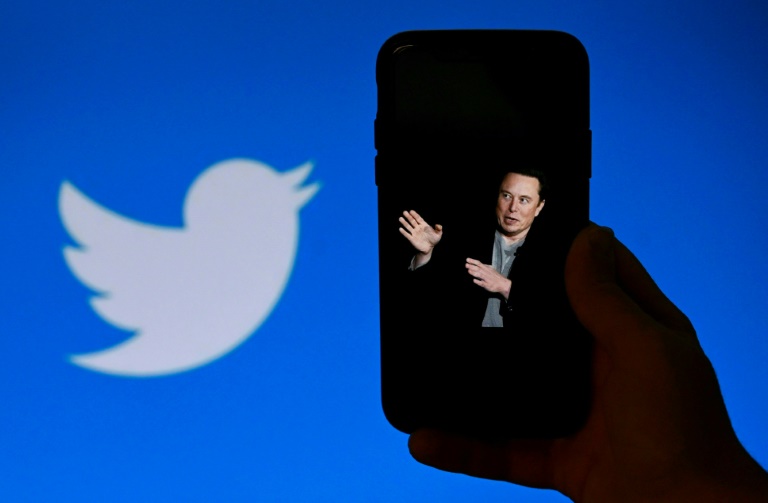
Twitter says layoffs to begin Friday

Twitter said it will start laying off employees on Friday, as the new billionaire owner Elon Musk moves quickly after his big takeover to make the messaging platform financially sound.

A company-wide email seen by AFP says Twitter employees will receive word via email at the start of business Friday, California time, as to what their fate is.

It does not give a number but the Washington Post and New York Times reported that about half of Twitter’s 7,500 employees will be let go.

“In an effort to place Twitter on a healthy path, we will go through the difficult process of reducing our global work force,” the email said.

Twitter employees have been bracing for this kind of bad news since Musk completed his mammoth $44 billion acquisition late last week and quickly set about dissolving its board and firing its chief executive and top managers.

A workplace and employee review and other projects ordered by Musk were reportedly so exhaustive and grueling that some engineers slept at Twitter headquarters over the weekend.

The email sent Thursday told workers to go home and not report for work on Friday.

“Our offices will be temporarily closed and all badge access will be suspended,” the email said. Those on the way to the office should turn around and return home.”

The email acknowledged that Twitter is going through “an incredibly challenging experience.”

“We recognize that this will impact a number of individuals who have made valuable contributions to Twitter, but this action is unfortunately necessary to ensure the company’s success moving forward,” it added.

Saddled with the purchase of Twitter, for which Musk has said he overpaid, the tycoon is looking for ways for Twitter to make money — and fast.

His most recent idea was to charge $8 a month to anyone on Twitter who would receive a blue “verified” badge assuring the public that the account is authentic.

A news report this week said Musk wanted to charge $20 a month but faced a backlash, including from bestselling novelist Stephen King, who tweeted: “$20 a month to keep my blue check?” It was followed by an expletive.

Musk responded on Twitter, seemingly bargaining with King: “we need to pay the bills somehow! Twitter cannot rely entirely on advertisers. How about $8?”

Musk has said he wants to increase Twitter’s revenue from $5 billion last year to more than $26 billion in 2028. 

Top global companies, including General Mills and Volkswagen, suspended their advertising on Twitter on Thursday as pressure builds on Musk to turn his platform into a succesful business.

US auto giant General Motors last week was the first major advertiser to suspend advertising following the takeover.

Officials and civil rights groups have expressed worry that Musk will open the site to uncontrolled hate speech and misinformation as well as reinstate banned accounts, including that of former US president Donald Trump.

Advertisers are Twitter’s main source of revenue and Musk has tried to calm the nerves by reassuring that the site would not become a “free-for-all hellscape”.

juj/tjj/dw

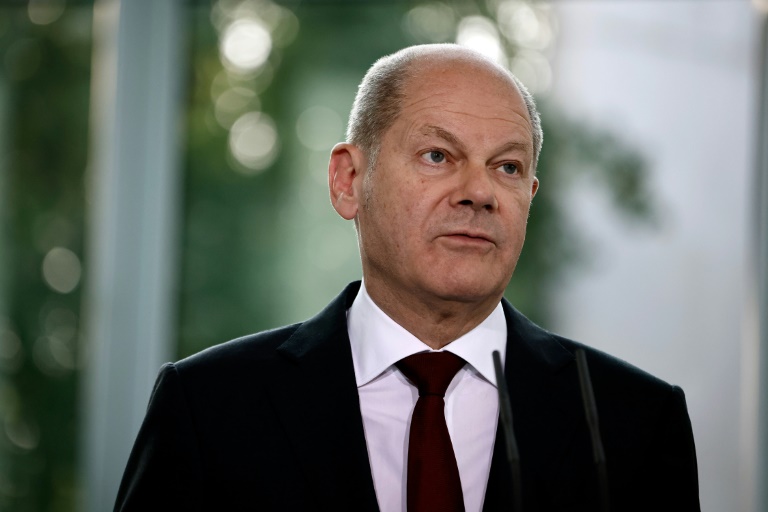
Germany's Scholz arrives in China to boost economic ties

German Chancellor Olaf Scholz arrived in Beijing Friday seeking to bolster a vital economic relationship but facing criticism about his country’s heavy reliance on a nation growing more authoritarian under Xi Jinping.

Scholz is the first G7 leader to visit China since the start of the coronavirus pandemic, which prompted the world’s number two economy to largely close its borders.

Accompanied by top executives, he is due to hold talks on the one-day trip with President Xi, as well as Premier Li Keqiang.

But the visit has sparked controversy, coming so soon after Xi strengthened his hold on power and as tensions run high between the West and Beijing on issues ranging from Taiwan to alleged human rights abuses. 

German industry’s heavy dependence on China is also facing fresh scrutiny, as Berlin reels from an over-reliance on Russian energy imports that left it exposed when Moscow turned off the taps.

Scholz’s approach is still underpinned by the idea that “we want to keep doing business with China, no matter what that means for the dependence of our economy, and for our ability to act”, opposition lawmaker Norbert Roettgen told the Rheinische Post newspaper.

Concern about China has also come from within the ruling coalition, with Foreign Minister Annalena Baerbock saying mistakes made in the past with Russia must not be repeated.

The sensitivity of the issue was highlighted when a row erupted last month about whether to allow Chinese shipping giant Cosco to buy a stake in a Hamburg port terminal. 

Ultimately, Scholz defied calls from six ministries to veto the sale over security concerns, instead permitting the company to acquire a reduced stake.

– ‘Going it alone’ –

The German and Chinese economies are deeply intertwined. Some in Berlin view the relationship as particularly important as Germany, battling an energy crisis triggered by the Ukraine war, hurtles towards recession.

China is a major market for German goods, from machinery to vehicles made by the likes of Volkswagen, BMW and Mercedes-Benz.

The leader of Europe’s top economy has defended the trip, insisting direct talks with Chinese leaders were “all the more important” after a long hiatus due to the pandemic.

In a newspaper article, he said that “we will not ignore controversies”, and listed thorny topics that would figure in talks, from respect for civil liberties to the rights of minorities in Xinjiang.

In Beijing, foreign ministry spokesman Zhao Lijian said China was looking forward to a “successful” visit, and that “cooperation far exceeds competition” between the countries. 

But he also warned that “the Chinese side is opposed to interference in our internal affairs, and smearing us under the guise of discussing human rights issues”.

There are concerns that the trip — coming on the heels of Xi securing a historic third term at a Communist Party Congress last month — may have unsettled the United States and the European Union.

“The chancellor is pursuing a foreign policy which will lead to a loss of trust in Germany among our closest partners,” said Roettgen, from the conservative CDU party, accusing Scholz of “going it alone”.

Berlin, however, says there have been consultations with key partners, while Scholz has insisted he is visiting China as a “European” as well as the leader of Germany.

TikTok a hotbed of US election misinformation, analysts say

Election misinformation is spreading on TikTok ahead of the US midterms despite the company’s policies — and watchdogs are concerned about its effect on young voters as more Americans use the platform as a source of news.

Posts spreading unfounded claims of voter fraud, falsehoods about mail-in ballots and misleading videos about different state laws have found a home on the immensely popular app. 

Perhaps more troubling: TikTok has approved paid political advertisements containing blatant misinformation, a practice the company said in 2019 it had banned.

“Hackers can easily change the election results! Don’t bother voting in the midterms,” says one such ad.

It was one of several created by researchers at the non-profit Global Witness and New York University to test TikTok’s prohibition on paid political posts. The social media company approved 90 percent of ads the team submitted containing election misinformation.

“We were relatively shocked by that result,” said Jon Lloyd, a senior advisor at Global Witness, who described TikTok as “bottom of the class” compared to other social media platforms tackling election misinformation.

Such falsehoods coincide with more than eight million young US citizens being newly eligible to vote in the November 8 elections.

TikTok’s parent company, Beijing-based ByteDance, has rules aimed at limiting the spread of conspiracy theories about elections. But experts question how effective they are.

“Just because they had these policies in place, it doesn’t mean that they’re being enforced well,” Lloyd said, arguing that TikTok’s business model is based on “amplifying and driving people” towards content.

Although that criticism could be aimed at all social networks, a Pew Research Center survey found more than a quarter of Americans aged 18-29 regularly get news from TikTok — despite a sizeable minority of videos presented in search results containing misinformation, according to media monitor NewsGuard.

The platform’s powerful algorithm makes it possible for videos to quickly garner thousands of views, even without an established following.

And the sheer volume of content on TikTok makes it “more likely that users in general — especially more young, impressionable users — are going to come into contact with potentially divisive, polarizing, objectionable content,” said Matt Navarra, a social media industry analyst and consultant based in Britain.

– Falsehoods slip through cracks –

TikTok removes content that could mislead on “civic processes, public health or safety,” according to its integrity policies — including falsehoods about voting. The platform also prohibits campaign fundraising and recently launched an in-app election center.

“We take our responsibility to protect the integrity of our platform and elections with utmost seriousness,” a spokesperson for the company told AFP in an emailed statement. “We continue to invest in our policy, safety and security teams to counter election misinformation.”

However, baseless claims of ballot fraud and conspiracy theories shared by midterm election candidates are still circulating. It is not the first time TikTok has been used to spread election falsehoods.

Earlier this year, influencer campaigns on the platform played a role in the Philippines’ presidential contest. In Germany, accounts posed as parliament and public officials, and in Kenya, the app was a den for propaganda, hate speech and misinformation.

In the second quarter of 2022, TikTok removed 113 million videos for violating its community guidelines — an amount that represents about one percent of all videos uploaded to the platform. A small fraction of the posts were removed for violating the company’s integrity policies.

Reminded of how platforms such as Facebook have served as vectors for misinformation, including baseless claims from former president Donald Trump that the 2020 US election was “stolen” from him, analysts express little faith in TikTok’s incentive and ability to address the problem.

“That a company can actually make Facebook look good when it comes to misinformation and disinformation is an amazing achievement,” said NewsGuard CEO Steven Brill.

– Perfect breeding ground –

The format of TikTok posts makes it easier to create misinformation, experts say — and harder for users to tell fact from fiction.

“It’s very quick, very easy, very simple to create content and to build a substantial following,” Navarra said.

Posts are short, highly edited and often contain music, captions and voiceovers that analysts say make it hard to understand nuance.

NewsGuard senior analyst Jack Brewster said the threat to the democratic process was particularly stark, given TikTok’s young audience and many users’ inexperience in identifying credible information.

“If young people are searching for election news on the platform, the videos are inherently short, so context is often lost,” he said. “There’s little to no information often about the sources.”

Another prison riot in Ecuador leaves 15 police, soldiers wounded

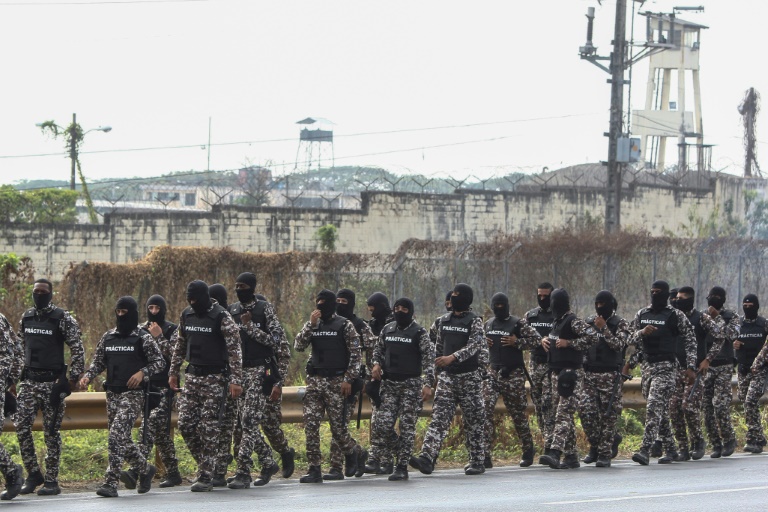
At least 15 police and soldiers were wounded Thursday in the latest prison riot to hit Ecuador, officials said, as the country is gripped by violence blamed on organized crime groups waging a deadly drug war.

The 15 were injured while trying to put down an uprising at the infamous Guayas 1 prison in the southwestern port city of Guayaquil, said Guillermo Rodriguez, director of the SNAI prison authority.

A source at SNAI who asked not to be named told AFP that the police officers were confronted by inmates with guns and explosives.

Some 1,300 police took part in the prison assault, said General Victor Zarate, a police commander.

Explosions were heard coming from within the prison until midafternoon, when they ceased. Drones flew overhead.

An unknown number of soldiers also participated, and wounded soldiers were carried out to aid stations set up outside the overcrowded prison, which holds 6,900 inmates. 

Ecuador — once a relatively peaceful neighbor of major cocaine producers Colombia and Peru — has seen a wave of violent crime that authorities blame on turf battles between rival gangs with ties to Mexican cartels. 

President Guillermo Lasso, who declared a state of emergency and nightly curfews in the western provinces of Guayas and Esmeraldas on Tuesday, tweeted Thursday that his government will quell the violence.

“This government will not surrender to narco-terrorists; in this country, they will not impose their will,” Lasso tweeted along with photos of inmates lying face down in a prison yard.    

Civilians have increasingly been caught up in the bloodshed that has claimed more than 60 police lives since last year.  

Hundreds of inmates have died in Ecuador’s overcrowded prisons since February last year — many beheaded or burned as the gang war is waged also behind bars — especially at Guayas 1.

Widespread corruption among guards allows inmates to obtain guns and explosives, among other contraband.

In attacks Tuesday, five police officers and a civilian were killed. Groups armed with weapons including car bombs hit more than 18 targets in the two provinces, including police and gas installations, a clinic — where a civilian was critically wounded — and a bus terminal.  

Prisoners at a facility in Esmeraldas also took hostage eight guards on Tuesday to protest the inmate transfer, but later freed them. In the same city on Monday, two headless bodies were found hanging from a pedestrian bridge.

Tuesday’s attacks were said to be in response to a mass transfer of inmates from the Guayas 1 prison, which is largely in the control of gangs.

Clashes at the prison on Wednesday left two inmates dead and six wounded. 

Ecuador has gone from being a drug transit route in recent years to an important distribution center in its own right. 

The United States and Europe are the main destinations of drugs from Latin America. 

The murder rate in Ecuador nearly doubled in 2021 to 14 per 100,000 inhabitants, and reached 18 per 100,000 between January and October this year, according to official data. 

In 2021, law enforcement seized a record 210 tons of drugs, mostly cocaine. So far this year’s seizures total 160 tons.   

Egypt's COP27 climate summit comes at a 'watershed moment'

Leaders of a divided world meet in Egypt on Monday tasked with taming the terrifying juggernaut of global warming as they face gale-force geopolitical crosswinds, including the war in Ukraine and economic turmoil.

Expectations are high from a world justifiably anxious about its climate-addled future as deadly floods, heat waves and storms across the planet track worst-case climate scenarios.

The November 6-18 meeting in the resort town of Sharm el-Sheikh will also be dominated by the growing need of virtually blameless poor nations for money to cope not just with future impacts, but those already claiming lives and devastating economies.

UN chief Antonio Guterres said Thursday it was time for a “historic pact” between developed and emerging countries, with richer nations providing financial and technical assistance to help poorer ones speed up their renewable energy transitions.

“If that pact doesn’t take place, we will be doomed, because we need to reduce emissions, both in the developed countries and emerging economies,” Guterres told reporters.

Last week the UN warned that “there is no credible pathway in place” for capping the rise in global temperatures under the Paris Agreement target of 1.5 degrees Celsius.

While worst-case projections are less dire than a decade ago, current policies would still see Earth’s surface warm a catastrophic 2.8C, and no less than 2.4C even if countries meet all their carbon-cutting pledges under the Paris treaty.

“There have been fraught moments before,” said E3G think tank senior analyst Alden Meyer, recalling other wars, the near collapse of the UN-led process in 2009, and Donald Trump yanking the United States out of the Paris Agreement in 2016.

“But this is a perfect storm. It has even given rise to a new term: polycrisis,” said the 30-year climate issue veteran.

Casting an even longer shadow on negotiations in Egypt than Russia’s invasion of Ukraine, many experts say, is the further erosion of Sino-US relations, which in the past have anchored breakthroughs in climate diplomacy.

– ‘Watershed moment’ –

At last year’s COP26 in Glasgow, the world’s two biggest economies conspicuously carved out a safe space for climate, issuing a joint statement.

But a Taiwan visit in August by US congressional leader Nancy Pelosi prompted Beijing to shut down bilateral climate channels. Sweeping restrictions imposed last month by the Biden administration on the sale of high-level chip technology to China deepened the rift.

“We are at a watershed moment,” said Li Shuo, a Beijing-based policy analyst with Greenpeace International.

“If the politics are so bad that the world’s two biggest emitters won’t talk to each other, we’re not going to get to 1.5C.”

US President Joe Biden and Chinese leader Xi Jinping are set to attend the G20 summit in Bali days before the talks in Egypt close. Should the two leaders meet, “that dynamic would play back to Sharm el-Sheikh”, said Li.

Biden will arrive in Egypt touting the landmark Inflation Reduction Act (IRA), which earmarks nearly $400 billion — potentially twice that amount — to speed the greening of the US economy.

But legislative elections the day after the UN climate talks open could dampen US bragging rights if Republicans hostile to international climate action take either or both houses of Congress. 

US inflation and a strong dollar, meanwhile, have heaped pain on debt-ridden poor and emerging economies.

A bright spot at COP27 will be the arrival of incoming Brazilian president Luiz Inacio Lula da Silva, who has vowed to aim for zero deforestation in the Amazon, reversing the extractive policies of Jair Bolsonaro, who will step down on January 1.

– Money matters –

COP27 will arguably boil down to a trio of interlocking priorities: emissions, accountability and money.

The make-or-break issue is likely to be the creation of a separate pool of capital for “loss and damage” — UN climate lingo for unavoidable and irreversible climate damages.

The United States and the European Union — fearful of creating an open-ended reparations framework — have dragged their feet on this issue for years and question the need for a separate financial channel. 

But patience has run thin.

“The success or failure of COP27 will be judged on the basis of whether there is agreement on a financing facility for loss and damage,” said Munir Akram, Pakistan’s UN ambassador and chair of the powerful G77+China negotiating block of more than 130 developing nations.

“Where there’s a will, there’s a way,” Akram told AFP in an interview. 

Rich nations will also be expected to set a timetable for the delivery of $100 billion per year to help developing countries green their economies and build resilience against future climate change. 

The promise is already two years past due and remains $17 billion shy, according to the OECD.

Last year’s COP26 in Glasgow prioritised reducing carbon pollution, mostly through sideline agreements orchestrated by host Britain to curb methane emissions, halt deforestation, phase out fossil fuel subsidies and ramp up the transition to renewable energy.

Nations agreed to review their carbon-cutting pledges annually and not just every five years, though only a handful of nations have done so in 2022.

Guterres, meanwhile, will unveil a critical assessment of “net-zero” commitments by companies, investors and local governments to become carbon neutral.

Arctic fires could release catastrophic amounts of C02: study

Global warming is responsible for bigger and bigger fires in Siberia, and in the decades ahead they could release huge amounts of carbon now trapped in the soil, says a report out Thursday.

Researchers fear a threshold might soon be crossed, beyond which small changes in temperature could lead to an exponential increase in area burned in that region.

In 2019 and 2020, fires in this remote part of the world destroyed a surface area equivalent to nearly half of that which burned in the previous 40 years, said this study, which was published in the journal Science.

These recent fires themselves have spewed some 150 million tonnes of carbon into the atmosphere, the scientists estimate, contributing to global warming in what researchers call a feedback loop.

The area above the Arctic circle heats up four times faster than the rest of the planet and “it is this climate amplification which causes abnormal fire activity,” David Gaveau, one of the authors of this study, told AFP.

Researchers concentrated on an area five and a half times the size of France and with satellite pictures observed the surface area burned each year from 1982 to 2020. 

In 2020, fire charred more than 2.5 million hectares (6.2 million acres) of land and released, in CO2 equivalent, as much as that emitted by Spain in one year, the scientists concluded.

That year, summer in Siberia was on average three times hotter than it was in 1980. The Russian city of Verkhoyansk hit 38 degrees Celsius in summer, a record for the Arctic.

The average air temperature in summer, from June to August, surpassed 10 degrees Celsius only four times in the period under study: in 2001, 2018, 2019 and 2020. These turned out to be the years with the most fires too.

The team fears that this threshold at 10 degrees Celsius will be a breaking point that is surpassed more and more often, said Gaveau.

“The system goes out of whack, and for a small increase beyond 10 degrees Celsius we suddenly see lots of fires,” he said.

– Source of permafrost –

Arctic soils store huge amounts of organic carbon, much of it in peatlands. This is often frozen or marshy, but climate warming thaws and dries peatland soil, making large Arctic fires more likely.

Fire damages frozen soil called permafrost, which releases even more carbon. In some cases it has been trapped in ice for centuries or more.

“This means that carbon sinks are transformed into sources of carbon,” Gaveau said. 

“If there continue to be fires every year, the soil will be in worse and worse condition. So there will be more and more emissions from this soil, and this is what is really worrisome.”

An elevated amount of CO2 was released in 2020 but things “could be even more catastrophic than that in the future,” said Gaveau, whose company, TheTreeMap, studies deforestation and forest fires.

Higher temperatures have a variety of effects: more water vapor in the atmosphere, which causes more storms and thus more fire-sparking lightning. And vegetation grows more, providing more fuel for fire, but it also breathes more, which dries things out.

– Different scenarios –

Looking ahead to the future, the study analyzed two possible scenarios. 

In the first one, nothing is done to fight climate change and temperatures keep rising steadily. In this case fires of the same gravity as in 2020 may occur every year. 

In the second scenario, concentrations of greenhouse gases stabilize and temperatures level out by the second half of this century. In this case severe fires like those of 2020 would break out on average every 10 years, said Adria Descals Ferrando, the main author of the study.

Either way “summers with fires like those of 2020 are going to be more and more frequent starting in 2050 and beyond,” said Gaveau. 

UK researchers cure man who had Covid for 411 days

British researchers announced Friday they have cured a man who was continually infected with Covid for 411 days by analysing the genetic code of his particular virus to find the right treatment.

Persistent Covid infection — which is different to long Covid or repeated bouts of the disease — occurs in a small number of patients with already weakened immune systems.

These patients can test positive for months or even years with the infection “rumbling along the whole time”, said Luke Snell, a physician specialising in infectious diseases at Guy’s and St Thomas’ NHS Foundation Trust.

The infections can pose a serious threat because around half of patients also have persistent symptoms such as lung inflammation, Snell told AFP, adding that much remains unknown about the condition.

In a new study published in the journal Clinical Infectious Diseases, a team of researchers at Guy’s and St Thomas’ NHS Foundation Trust and King’s College London describe how a 59-year-old man finally overcame his infection after more than 13 months.

The man, who has a weakened immune system due to a kidney transplant, caught Covid in December 2020 and continued to test positive until January this year.

To discover whether he had contracted Covid numerous times or if it was one persistent infection, the researchers used a rapid genetic analysis with nanopore sequencing technology.

The test, which can deliver results in as little as 24 hours, showed the man had an early B.1 variant which was dominant in late 2020 but has since been replaced by newer strains.

Because he had this early variant, the researchers gave him a combination of the casirivimab and imdevimab monoclonal antibodies from Regeneron.

Like most other antibody treatments, the treatment is no longer widely used because it is ineffective against newer variants such as Omicron.

But it successfully cured the man because he was battling a variant from an earlier phase of the pandemic.

– Resistant to treatment –

“The very new variants that are increasing in prevalence now are resistant to all the antibodies available in the UK, the EU and now even the US,” Snell said.

The researchers used several such treatments to try to save a seriously ill 60-year-old man in August this year who had been infected since April. 

However none worked.

“We really thought he was going to die,” Snell said.

So the team crushed up two antiviral treatments not previously used together — Paxlovid and remdesivir — and administered them to the unconscious patient via a nasal tube, according to a non-peer-reviewed preprint study on the website ResearchSquare.

“Miraculously he cleared and perhaps this is now the avenue for how we treat these very difficult persistent infections,” Snell said, emphasising that this treatment may not translate for normal Covid cases.

At the ECCMID conference in April, the team announced the longest-known persistent infection in a man who tested positive for 505 days before his death.

That “very sad case” came earlier in the pandemic, Snell said, adding that he was grateful there were now so many more treatment options available.

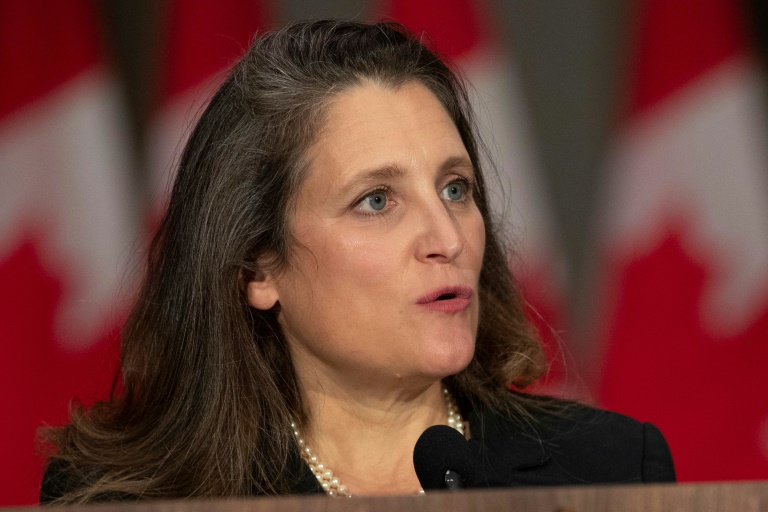
Canada sees lower deficit in updated fiscal plan, possible 2023 recession

Canada’s government announced modest new spending in an updated fiscal plan Thursday, as windfall revenues allow it to slash its budget deficit ahead of a possible economic downturn.

Under pressure to tighten the belt, Finance Minister Chrystia Freeland said spending measures, including eliminating interest on student loans and lowering credit card transaction fees for small businesses — amounting to about Can$30 billion (US$22 billion) over six years — would not fuel inflation.

She also introduced investment tax credits for clean energy projects such as the production of hydrogen from renewable sources, and taxes on corporate share buy-backs.

“Canada cannot avoid the global slowdown to come, any more than we could have prevented Covid from reaching our shores once it had begun to infect the world,” Freeland said in a speech to parliament. 

“But we will be ready.”

The minister pointed to “targeted inflation relief” for those in need, adding that “we cannot support every single Canadian in the way we did with emergency measures at the height of the pandemic.”

Continued robust economic stimulus spending, she explained, would run counter to the central bank’s fight against surging consumer prices.

Inflation soared to a June peak of 8.1 percent before falling bit by bit to 6.9 percent in September.

The Bank of Canada responded with several outsized interest rate hikes, to 3.75 percent, and signaled more to come.

That is sure to cool the economy and possibly send it into a recession, after it roared back from a relatively brief pandemic downturn.

In the government’s April budget, the economy was forecast to grow 3.9 percent this year. In Freeland’s fiscal update, growth is now expected to come in at 3.2 percent and 0.7 percent next year.

In a worst case scenario, Canada could enter “a mild recession” at the beginning of 2023, it noted.

Canada’s main opposition Conservatives have pressed the ruling Liberals to act on inflation and the resulting high cost of living, and demanded the government end its pandemic splurge.

In her April budget, Freeland had already slashed spending after the government doled out significant pandemic aid that pushed the national debt to a record Can$1.16 trillion this year.

On Thursday, she reported a 30 percent lower deficit in fiscal 2022-2023 than originally forecast to Can$36 billion.

Canada’s debt-to-GDP ratio, meanwhile, is expected to narrow a bit more than previously stated, to 42.3 percent.

Close Bitnami banner
Bitnami