World

Russian strikes leave 4.5 million without power in Ukraine: Zelensky

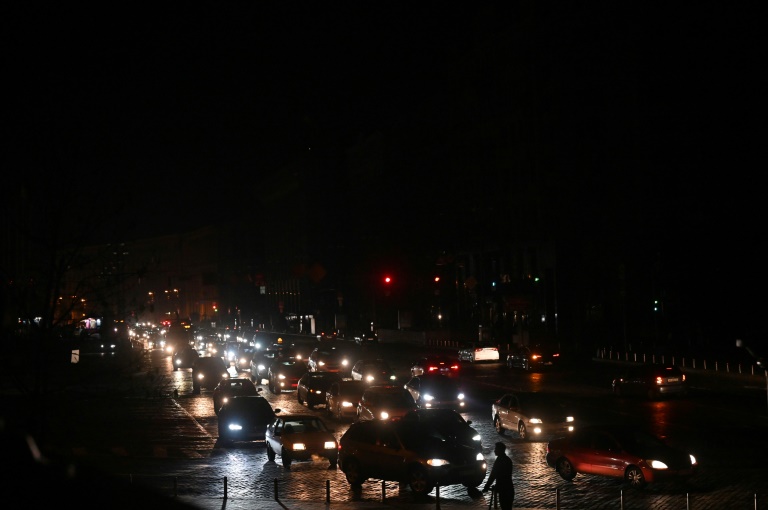
Ukrainian President Volodymyr Zelensky said Thursday that Russia’s campaign against Ukraine’s energy network has left around 4.5 million people without power.

The two sides’ forces continued to battle without significant change on the ground on the eastern and southern Ukraine fronts, with preparations building for a fight over the southern hub of Kherson.

Shipments of Ukraine grain to global markets meanwhile resumed after Moscow returned to a deal allowing their safe passage following international pressure.

“Tonight, about 4.5 million consumers have been temporarily disconnected from energy consumption,” Zelensky said in his daily address.

“The very fact that Russia is resorting to energy terrorism shows the weakness of our enemy. They cannot beat Ukraine on the battlefield, so they try to break our people this way,” Zelensky said. 

For weeks Russian forces have rained missiles and explosive drones onto Ukraine infrastructure, apparently hoping to turn sentiment among the Ukrainian public and its neighbors against the war during the cold of winter. 

Russian strikes over the past month have destroyed around a third of the country’s power stations. The government has urged Ukrainians to conserve electricity as much as possible.

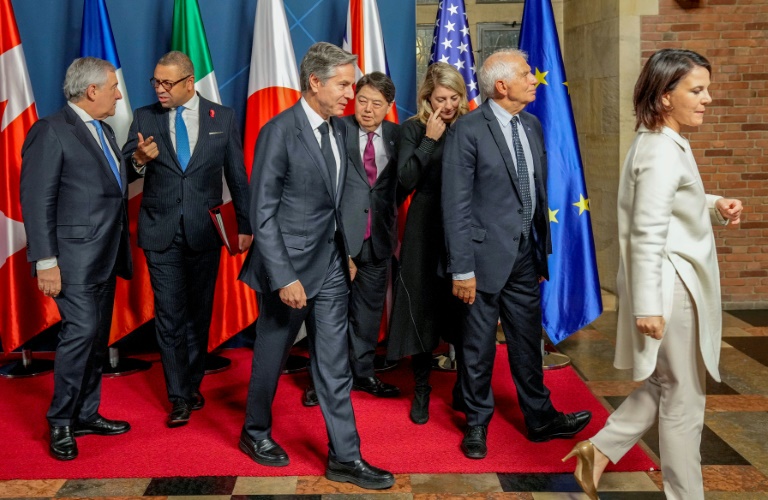
Ahead of Thursday’s meeting of the Group of Seven industrialised powers, German Foreign Minister Annalena Baerbock said the G7 will help Ukraine with items including generators and heaters to survive the winter.

– Grain exports moving –

Russia resumed allowing exports of grain and other foodstuffs from Ukraine after a one-day halt, which followed  Ukraine’s air-and-sea drone  attack on Russian vessels in Crimea, which Moscow said was aided by Britain.

The UN said Thursday that seven vessels were transiting through the Black Sea shipping corridor after the trade was resumed.

But Moscow said it had yet to decide whether to extend the grain deal beyond November 19,  the renewal date to the agreement brokered by the UN and Turkey.

UN trade negotiator Rebeca Grynspan told reporters in Geneva Thursday that she had “hope that the parties will be responsible and will extend and expand the Black Sea grain initiative”.

Ukraine is one of the world’s top producers and the Russian invasion had blocked 20 million tonnes of grain in its ports until the safe passage deal was agreed in July.

Negotiations underway to unblock fertiliser exports from Russia have made “important steps forward,” Grynspan said, but acknowledged there was still a way to go.

Moscow has complained its grain and fertiliser exports continue to face issues over sanctions imposed after its February invasion of Ukraine, despite exceptions made for agriculture-related products.

– Forced relocation –

As  fighting focused increasingly on Russia-held Kherson, Kyiv on Thursday condemned the “mass forced relocation” of its citizens living in regions occupied by Russia. 

“The Russian occupation administration began mass forced relocation of residents of the left-bank of the Kherson region… to the temporarily occupied Crimea or to Russia,” the Ukrainian foreign ministry said in a statement.

“Similar deportations are also being carried out by Russia in the Zaporizhzhia, Lugansk and Donetsk regions, as well as in Crimea.”

Moscow-installed Kherson governor Vladimir Saldo said he was moving people further into the region or to Russia because of the risks of a “massive missile attack.”

Moscow-installed authorities in Kherson said last week 70,000 civilians had left their homes on the right bank of the Dnipro. 

– IAEA: ‘No dirty bomb’ –

Meanwhile, the UN’s IAEA nuclear watchdog said its inspectors had found no indications of any “undeclared nuclear activities” at three locations they had inspected in Ukraine. 

The inspectors inspected at the sites at Kyiv’s request to refute Moscow’s allegations that Ukraine was preparing to use dirty bombs against Russian troops.

Kyiv has raised fears Moscow itself might resort to using a dirty bomb in a “false flag” attack.

Zelensky said Thursday that the IAEA’s conclusion is “obvious.” 

“We have given them full freedom of action at the relevant facilities, and we have clear and irrefutable evidence that no one in Ukraine has created or is creating any ‘dirty bombs.'”

– Returning to normalcy –

Meanwhile some semblance of normality was gradually returning to areas of southern and eastern Ukraine recently recaptured by Ukrainian troops although the humanitarian situation remains fragile.

In the village of Lymany in southern Ukraine, an aid volunteer said she was concerned that so many residents were returning despite the dangers.

“It would be a lot easier if these people were not out here,” said Yulia Pogrebna, 32, as she distributed food boxes to residents.

Starbucks reports record sales but lower profits on weak China

Starbucks reported record quarterly revenues Thursday behind a strong US performance, but weak China results and increased expenses pinched profits.

Comparable sales surged at the coffee chain’s North American shops, lifted by a 10 percent increase in average ticket size following price hikes and a slight uptick in comparable transactions.

The results are the latest from a big US consumer-oriented company to illustrate continued robust consumer demand despite inflation.

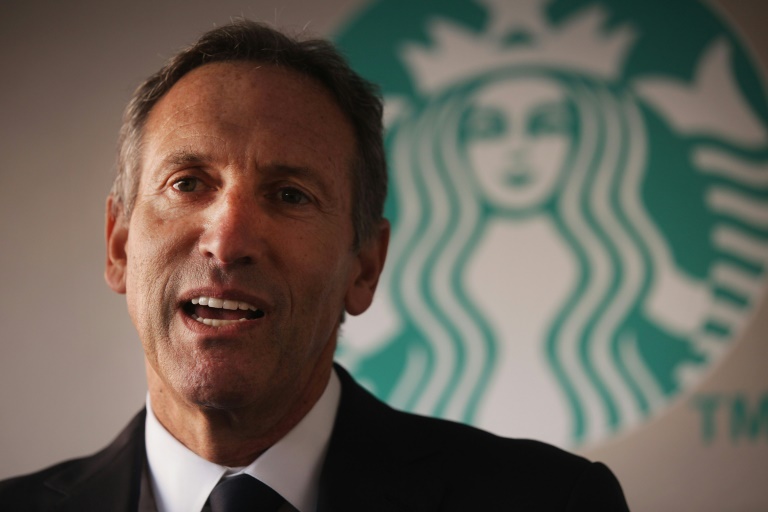
Howard Schultz, interim chief executive, attributed the strong US performance to “reinvention” investments that have included boosts to employee compensation and store revamps as the chain confronts a unionization drive in its home market.

But the added spending on these areas — coupled with increased commodity and supply chain costs — dragged down Starbucks’ bottom line.

Profits for the quarter ending October 2 were $878.3 million, down 50 percent from the year-ago period, while revenues climbed 3.3 percent to $8.4 billion.

The company continued to see meager results in China amid waves of Covid-19 restrictions in the country. Comparable sales dropped 16 percent in the period in the market.

With the coronavirus again on the rise in China, “we anticipate the current Covid-related uncertainty to continue,” Schultz told analysts on a conference call.

“While our long-term aspirations for China remain undiminished, we expect the recovery of our business in the country to be nonlinear,” Schultz said.

Shares of Starbucks rose 2.0 percent to $86.35 in after-hours trading.

Pound sinks, stocks mostly fall after latest central bank rate moves

The pound tumbled against the dollar and global stocks mostly fell Thursday as the Bank of England announced another jumbo-sized interest rate hike while warning of a prolonged recession expected to last through mid-2024.

The BoE’s move came a day after the Federal Reserve also made another big rate increase and warned of more ahead, lifting the dollar.

Fed Chair Jerome Powell news conference Wednesday was seen as more hawkish than expected, as he said it was very premature to talk about pausing the rate hikes.

“The message from Fed Chair Powell yesterday was a downer for the stock market,” said Briefing.com analyst Patrick O’Hare.

The Fed’s latest 0.75 percentage point interest rate hike Wednesday, was followed by the BoE increase of the same size.

Minutes of the BoE meeting warned of a “challenging outlook for the UK economy” that was “expected to be in recession for a prolonged period,” dealing a blow to Britain’s troubled government.

“It is a tough road ahead,” BoE governor Andrew Bailey told a press conference.

“The sharp increase in energy prices caused by Russia’s invasion of Ukraine has made us poorer as a nation.”

The pound fell by two percent against the dollar, while also retreating against the euro.

“A typical textbook trade is out of the window because currencies usually move higher when a central bank increases rates,” noted Naeem Aslam, chief market analyst at Avatrade.

“Tough times are ahead, and we are going to see the economy, markets, and the currency tanking in the coming months.”

Major US stock indices retreated for a fourth straight session as markets awaited Friday’s US employment report.

A survey of the US services industry showed activity at its weakest level since May 2020, as new orders eased and businesses struggled to replenish their stocks.

Elsewhere, oil prices also fell heavily on Thursday as aggressive rate hikes increase expectations of a global recession and softer demand for energy.

Hong Kong led stock market losses as the city’s central bank hiked rates in line with the Fed, owing to their policy link via the dollar peg.

Traders gave back a chunk of the previous two days’ gains, which came on the back of speculation China was planning to roll back some of its painful zero-Covid policies.

Adding to the selling was confirmation from Beijing’s health authority that it intended to stick to the strategy.

– Key figures around 2050 GMT –

New York – Dow: DOWN 0.5 percent at 32,001.25 (close)

New York – S&P 500: DOWN 1.1 percent at 3,719.89 (close)

New York – Nasdaq: DOWN 1.7 percent at 10,342.94 (close)

London – FTSE 100: UP 0.6 percent at 7,188.63 (close)

Frankfurt – DAX: DOWN 1.0 percent at 13,130.19 (close)

Paris – CAC 40: DOWN 0.5 percent at 6,243.28 (close)

EURO STOXX 50: DOWN 0.8 percent at 3,593.18 (close)

Hong Kong – Hang Seng Index: DOWN 3.1 percent at 15,339.49 (close)

Shanghai – Composite: DOWN 0.2 percent at 2,997.81 (close)

Tokyo – Nikkei 225: Closed for a holiday

Pound/dollar: DOWN at $1.1160 from $1.1392 Wednesday

Euro/dollar: DOWN at $0.9751 from $0.9818

Dollar/yen: UP at 148.25 yen from 147.90 yen

Euro/pound: UP at 87.73 pence from 86.19 pence

Brent North Sea crude: DOWN 1.5 percent at $94.67 per barrel

West Texas Intermediate: DOWN 2.0 percent at $88.17 per barrel

burs-jmb/hs

Former Pakistan PM Imran Khan wounded in assassination attempt

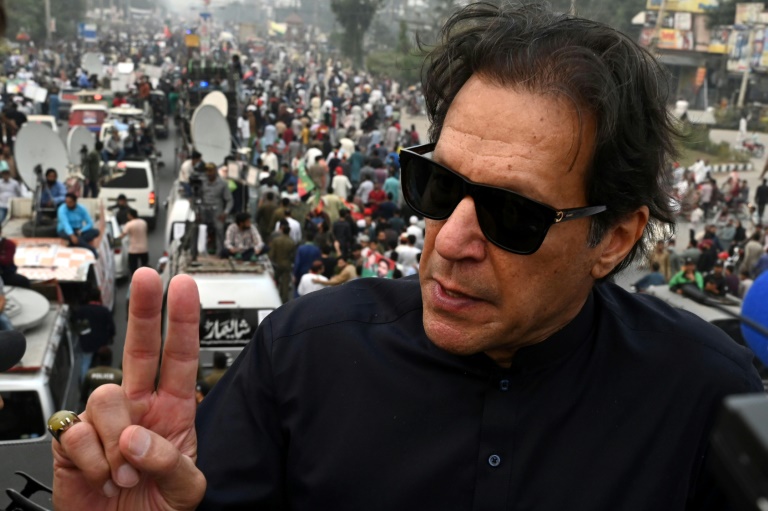
Former Pakistan prime minister Imran Khan was in stable condition after being shot in the leg at a political rally on Thursday in what the country’s president deemed “a heinous assassination attempt”.

The former international cricket star has been leading a chaotic convoy of thousands since Friday from the city of Lahore towards the capital Islamabad, campaigning for fresh elections after being ousted from office in April.

“This was an attempt to kill him, to assassinate him,” senior aide Raoof Hasan told AFP.

Khan escaped with a bullet wound to his right calf, while several of his Pakistan Tehreek-e-Insaf (PTI) party officials were also hit by the spray of gunfire aimed at their modified container truck as it slowly drove through a thick crowd near Gujranwala.

“Everyone who was standing in the very front row got hit,” former information minister Fawad Chaudhry, who was standing behind Khan, told AFP.

He said supporters in the crowd tried to snatch the gun from the attacker.

“In that scuffle he missed the target,” he said, adding that six people were hit and one supporter killed.

– Crack of gunfire –

A video captures the crack of gunfire as Khan and his team duck behind banners tied around the edge of the container.

In a tweet, Pakistan’s President Arif Alvi called it “a heinous assassination attempt”.

Information Minister Marriyum Aurangzeb said the attacker had been taken into custody and that a confession video was circulating online.

“I did it because (Khan) was misleading the public, I tried to kill him, I tried my best,” says a dishevelled man in the video, shown with his hands tied behind his back in what appears to be a police station.

He adds that he was angry with the procession for playing music during the call to prayer that summons Muslims to the mosque five times a day.

Police have yet to comment on the incident or confirm earlier reports that a second attacker was killed at the scene.

Faisal Sultan, the doctor treating Khan at a Lahore hospital, confirmed he was in a stable condition.

Jemima Goldsmith, the ex-wife of the former cricketing superstar who shares two children with him, tweeted her relief.

“Thank you from his sons to the heroic man in the crowd who tackled the gunman,” she said.

– Politicians targeted –

The attack drew international condemnation including from the United States, which had uneasy relations with Khan when he was in power.

“Violence has no place in politics, and we call on all parties to refrain from violence, harassment and intimidation,” US Secretary of State Antony Blinken said in a statement.

“The United States is deeply committed to a democratic and peaceful Pakistan, and we stand with the Pakistani people.”

Pakistan has been grappling with Islamist militants for decades, and politicians are frequently targeted by assassination attempts.

The attack on Khan had echoes of the 2007 assassination of another former prime minister, Benazir Bhutto, who died when a huge bomb detonated near her vehicle as she greeted supporters in Rawalpindi while standing up through the roof hatch.

Just months earlier, she had survived another attempt on her life when her motorcade was targeted in Karachi, killing more than 130 people.

Each day since starting his so-called “long march”, the 70-year-old Khan has mounted a shipping container towed by a lorry, making speeches from the open top to crowds of thousands in cities and towns along the way.

He was booted from office in April by a no-confidence vote after defections by some of his coalition partners, but he retains mass public support in the South Asian country.

Khan was voted into power in 2018 on an anti-corruption platform by an electorate tired of dynastic politics.

But his mishandling of the economy — and falling out with a military accused of helping his rise — sealed his fate.

Since then, he has railed against the establishment and Prime Minister Shehbaz Sharif’s government, which he says was imposed on Pakistan by a “conspiracy” involving the United States.

Khan has repeatedly told supporters he was prepared to die for the country, and aides have long warned of unspecified threats made on his life.

At Web Summit, 'Bored Apes' emerge from swamp but remain murky

With a blast of “Break on Through” by The Doors and a flashy video of cartoon apes careening around a fantasy landscape, the boss of one of crypto’s most secretive companies took to the stage on Thursday.

Nicole Muniz, CEO of Yuga Labs, had a tough mission at the Web Summit tech conference in Lisbon –- to explain what exactly the “Bored Ape Yacht Club” (BAYC) offers the world.

BAYC is a set of 10,000 auto-generated images of cartoon apes sporting various expressions and accessories, with a back story about them living in a swamp.

Enthusiasts have shelled out many millions in trading the images, which come in the form of digital tokens known as NFTs.

Celebrity owners range from Justin Bieber to Madonna and Gwyneth Paltrow.

But Muniz was keen from the off to sketch out a wider concept of the company, tying it to “web3” –- an imagined future for the internet that has cryptocurrencies at its heart.

“We need to be thinking about how we can help onboard the next 100 million people into web3,” she told the audience.

“That’s really a true mission for us in this company.”

Her wider focus was unsurprising as interest in NFTs has dropped off a cliff.

Trading volumes crashed by 97 percent between January and September, according to Dune Analytics.

Yet Yuga Labs has a notional value of $4 billion and its apes are among only a handful of NFTs that still sell -– one fetched $450,000 last week.

– NFT ‘community’ –

The company has been an enigma since it burst on to the scene last year.

Its founders tried to stay anonymous but BuzzFeed News revealed their identities in February.

The Web Summit was supposed to play host to Muniz and co-founder Greg Solano in one of their most high-profile public appearances.

But he pulled out just a couple of hours before his talk.

“Hey Lisbon Apes, not feeling well at all and need to skip my panel at WebSummit today,” he tweeted.

“Glad I got to meet so many of you last night though.”

Ironically, it was this sense of “community” in the real world that was flagged by Muniz as one of the secrets of BAYC’s success.

“I was talking to an ape last night and they were talking about being at ApeFest,” she said, referring to meet-ups the fans host in New York.

“You’re living and breathing these communities. These people are your friends.”

– ‘Unclear’ licences –

Yet on the face of it, the conceptual framework of Muniz’s pitch is the same as almost every other NFT project.

She talked of community, promised a big new multi-player game and envisaged a world where NFTs would somehow be the keys to a magical online world.

“We have a vision of a future where people can own these assets –- whether they’re NFTs or digital collectibles, whatever you want to call them,” she said.

“You can take them where you want, you can build on them and monetise.”

She claimed BAYC was unique in offering owners full intellectual property rights to do whatever they like with their NFTs and cited the Bored & Hungry restaurant chain, which has an ape on its logo.

But a recent report by the specialist website Galaxy.com said BAYC’s licensing agreement did not give the buyers any IP ownership, describing the terms as “unclear and potentially misleading”.

The authors speculated that high-profile ape-related projects had probably negotiated separate deals.

Muniz said ultimately it was her mission to make it easier for people to understand “web3” and enter its world.

But even the title of her talk — “NFTs, metaverses and the road to Web3 Disney” — was no clearer at the end than it had been at the start.

NATO chief says 'time to welcome' Finland, Sweden into alliance

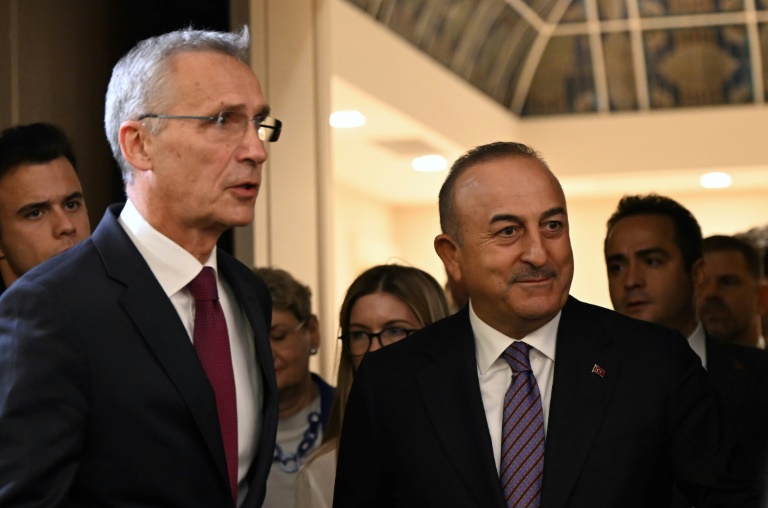
Sweden and Finland are committed to working with Turkey to address its concerns ahead of their membership in the alliance, NATO chief Jens Stoltenberg said Thursday, adding it is time to welcome them.

Ankara has accused the two Nordic nations of providing safe haven to outlawed Kurdish militants it deems “terrorists”. 

“I recognise your concerns,” Stoltenberg told a joint news conference with Turkish Foreign Minister Mevlut Cavusoglu in Istanbul. 

He said Finland and Sweden were keen to work closer with Turkey to fight “terrorism”. 

“It’s also in their interest,” he said. 

“It’s time to welcome Finland and Sweden as full members of NATO. Their accession will make our alliance stronger and our people safer.”

Both countries dropped decades of military non-alignment and scrambled to become NATO members in May,  after Russia invaded Ukraine.

But Turkish President Recep Tayyip Erdogan threatened to block their bids, seeking concessions.  

In June, Turkey, Sweden and Finland struck a deal which included provisions on extraditions and sharing information.

“Finland and Sweden have delivered on their agreement to Turkey,” Stoltenberg said. 

“They have become strong partner in our joint fight against terrorism in all its forms and manifestations,” he added. 

“And they are clearly committed to long-term engagement with Turkey to address your security concerns.”

To date, all but Turkey and Hungary  of the 30 NATO member states have ratified the accession of Sweden and Finland.

New members to the alliance require unanimous approval.

Cavusoglu said Stockholm took some steps including the removal of restrictions standing in the way of arms sales to Turkey but added “it’s not possible to say” the July agreement was fully implemented.

“We don’t intend to harm NATO or block its enlargement … we want to see concrete steps,” he said. 

Ankara is “more hopeful” that Sweden’s new government will address Turkey’s concerns, Cavusoglu added.

Sweden’s new Prime Minister Ulf Kristersson would visit Ankara on Tuesday for further talks, the foreign minister said. 

NATO accession is a priority for Sweden’s new right-wing government.

Stoltenberg, who is due to meet with Erdogan on Friday, said it was important to finalise the membership bids to send a “clear message to Russia”. 

“In these dangerous times it is even more important to finalise their accession to prevent any misunderstanding or miscalculation by Moscow and to send a clear message to Russia that NATO’s door remains open,” he said.

“And it is only for allies to decide on NATO membership, nobody else.”

Lula, Bolsonaro teams start Brazil power transition

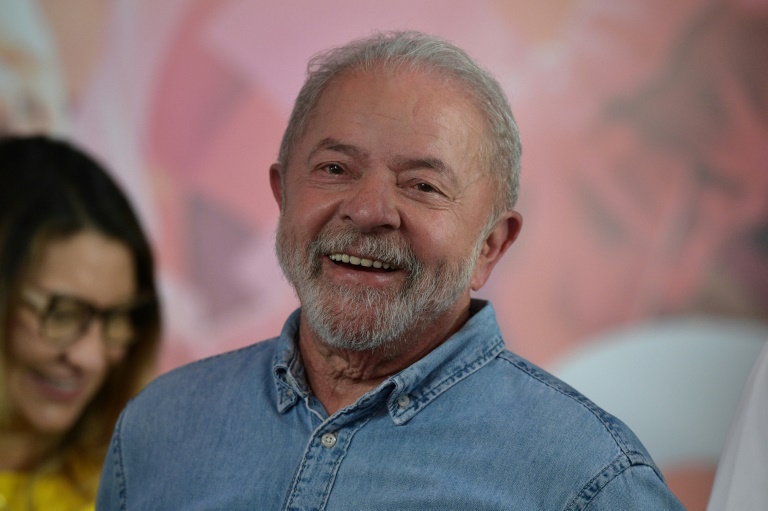
Brazilian president-elect Luiz Inacio Lula da Silva’s advisers met government officials Thursday to start the power transition, as supporters of incumbent Jair Bolsonaro continued loud — albeit shrinking — protests against his election loss.

Brazil has been on edge since veteran leftist Lula’s narrow win Sunday over far-right incumbent Bolsonaro, who remained silent for two days as angry supporters blocked highways across the country, calling for a military intervention to keep him in power.

However, with the blockades losing strength, the wheels of the power transfer were set in motion as vice president-elect Geraldo Alckmin, whom Lula has picked to lead his transition team, met with Bolsonaro’s cabinet chief, Ciro Nogueira, in Brasilia.

“The conversation was very fruitful, very objective,” Alckmin told a news conference.

“The transition has begun… As Lula said in his victory speech, our task is to unite Brazil. So here we go.”

Alckmin, a business-friendly center-right veteran tasked with building bridges with Lula’s adversaries, said he would now meet with the president-elect, and that they would begin announcing the full membership of the transition team from Monday.

The head of Lula’s Workers’ Party (PT), Gleisi Hoffmann, and the transition team’s technical coordinator, Aloizio Mercadante, were also present.

Earlier, Alckmin held what he called another “fruitful” meeting with Senate budget rapporteur Marcelo Castro, seeking ways to make key Lula campaign promises fit within an extremely tight 2023 federal budget.

“We have various emergencies,” said Workers’ Party senator-elect Wellington Dias, who is heading Lula’s budget negotiations.

“We’re trying to find the necessary amount for each critical point,” he told a news conference.

Conservatives scored big election wins in Congress, where Bolsonaro’s Liberal Party (PL) will be the largest force — meaning Lula faces an uphill battle to get legislation passed and tackle problems such as a weak economy, hunger crisis and surging destruction in the Amazon rainforest.

– Hope dims for hardliners –

Alckmin had harsh words for pro-Bolsonaro protesters’ road blocks, which had threatened to create economic havoc.

“It’s extremely serious to compromise people’s health, supplies to hospitals, vaccines, food, fuel. Who’s going to pay the damages?” he said.

Officials said there were 74 road blocks Thursday, down from 250 Tuesday, after Bolsonaro issued an appeal to “unblock the roads” to avoid damaging the economy and interfering with people’s right to move freely.

But although the ex-army captain has vowed to respect the constitution, he has not acknowledged Lula’s win or congratulated him.

Bolsonaro encouraged “legitimate demonstrations” in a video posted online Wednesday night — raising fears Brazil may still face turbulent times until Lula is sworn in on January 1, and beyond.

Lula, 77, who previously led Brazil from 2003 to 2010, won an unprecedented third term Sunday, capping a remarkable comeback for the ex-metalworker three years after he was freed from prison on controversial, since-quashed corruption convictions.

Bolsonaro supporters reacted furiously, blocking highways with cars, trucks, and tractors and rallying outside military barracks to demand an intervention.

In Rio de Janeiro, a protest outside a local military base had dwindled to several dozen people, who appeared to be losing hope of a pro-Bolsonaro intervention.

“We’re going to have a communist dictatorship,” 31-year-old protester Jessica dos Santos Ferreira told AFP, calling Lula a “thief.”

There were fears Bolsonaro, an admirer of Donald Trump, would seek to stage a Brazilian version of the 2021 riots in Washington following the former US president’s own election loss.

But Bolsonaro appeared to find himself isolated after his defeat, as top allies including powerful lower-house speaker Arthur Lira acknowledged the result.

The protesters have meanwhile come under fire for their extreme measures and views in some cases.

Authorities in the southern state of Santa Catarina opened an investigation after one group of hundreds of pro-Bolsonaro demonstrators was filmed making what appeared to be Nazi salutes Wednesday.

In several states, organized football fan clubs broke up the road blocks so they could get to their teams’ away games — winning plaudits on social media from Brazilians exasperated by the blockades.

G7 pledges winter help for Ukraine

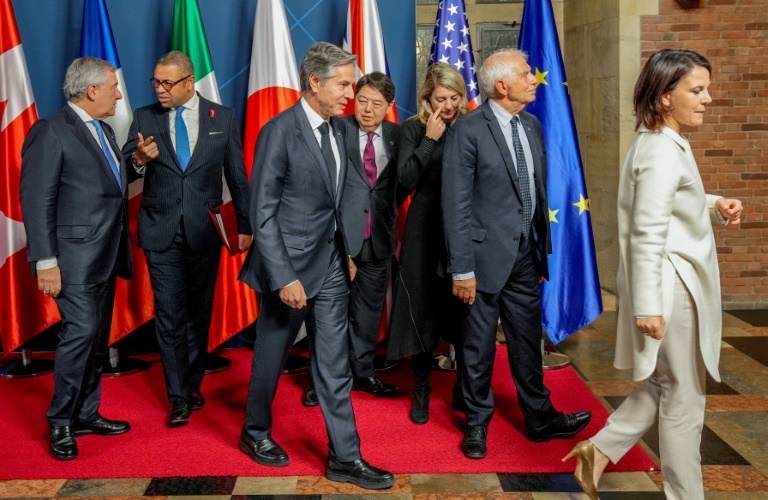
Top diplomats from the G7 on Thursday vowed to help see Ukraine through the coming winter as they held talks in Germany, with Kyiv’s fight against Russia topping the agenda.

“Winter is coming and Russia has been systematically destroying civilian infrastructure in Ukraine,” French Foreign Minister Catherine Colonna said after meeting  G7 counterparts in the city of Muenster.

“Needless to say, we believe that this is a humanitarian crisis,” she said, insisting that Western allies would “strengthen our coordination and… help to Ukraine to defend itself and help its population”.

The foreign ministers held a session on Ukraine on Thursday afternoon to kick off the two-day meeting in Muenster, held under Germany’s G7 presidency.

EU foreign policy chief Josep Borrell, who is also attending, said Russian President Vladimir Putin was trying to “put (Ukraine) in the darkness in the winter time”.

“Putin is waiting for the general winter to come and support the Russian army,” he said.

Opening the gathering, German Foreign Minister Annalena Baerbock earlier vowed the allies would not allow Russia to inflict “starvation” on Ukrainians.

– Aid package –

“We will not allow the brutality of this war to lead to masses of elderly people, children, young people and families dying in the coming winter months,” Baerbock said.

The allies will provide generators, heaters, container housing, tents, beds and blankets among items that will be part of a “winter aid package”, she said.

“Russia has chosen a new method of warfare by trying to let people starve, die of thirst and freeze to death,” Baerbock added.

“This is exactly what we, as G7 partners, will try to prevent with everything we have, just as we will try to prevent the other perfidious methods of Russian warfare.”

Ukrainian Foreign Minister Dmytro Kuleba took part remotely in the Thursday afternoon talks.

The G7 meeting comes as Germany prepares to hand over the presidency of the group to Japan, facing multiple crises from Ukraine to North Korea.

Baerbock said the G7 condemned “in the strongest terms” the latest salvo of missiles fired by North Korea and described the drills as a “breach of international law”.

– China controversy –

Relations with China were due to be discussed at a working dinner on Thursday, as German Chancellor Olaf Scholz jetted off for a controversial visit to Beijing.

The G7 is ready to recognise China as a “competitor” and “rival”, Baerbock said.

“Japan… repeatedly points out how important it is that we recognise that China has changed in recent years,” she said.

Scholz has insisted he will “not ignore controversies” during his trip.

Asked about the visit, Colonna said French President Emmanuel Macron “was also invited to China and I have no doubt that he will go there in a few weeks or months”.

The G7 foreign ministers are also expected to discuss Iran, which has been rocked by enduring protests over the death of young Kurdish woman Mahsa Amini.

Speaking at a forum in Muenster on democracy in the digital age on Thursday, Baerbock said the international community was “running out of time” to coordinate its response to the protests.

“It’s not only women. The diversity of the Iran society is saying, ‘This is enough and we want to live in freedom like many other countries’,” she said in English.

US Secretary of State Antony Blinken told the same forum  Western allies were trying to “make sure that Iranians have the ability to communicate with each other and with the outside world”.

“Technology is at the heart of that, making sure that there are no barriers to the extent we have anything to say about it,” he said.

G7 pledges winter help for Ukraine

Top diplomats from the G7 on Thursday vowed to help see Ukraine through the coming winter as they held talks in Germany, with Kyiv’s fight against Russia topping the agenda.

“Winter is coming and Russia has been systematically destroying civilian infrastructure in Ukraine,” French Foreign Minister Catherine Colonna said after meeting  G7 counterparts in the city of Muenster.

“Needless to say, we believe that this is a humanitarian crisis,” she said, insisting that Western allies would “strengthen our coordination and… help to Ukraine to defend itself and help its population”.

The foreign ministers held a session on Ukraine on Thursday afternoon to kick off the two-day meeting in Muenster, held under Germany’s G7 presidency.

EU foreign policy chief Josep Borrell, who is also attending, said Russian President Vladimir Putin was trying to “put (Ukraine) in the darkness in the winter time”.

“Putin is waiting for the general winter to come and support the Russian army,” he said.

Opening the gathering, German Foreign Minister Annalena Baerbock earlier vowed the allies would not allow Russia to inflict “starvation” on Ukrainians.

– Aid package –

“We will not allow the brutality of this war to lead to masses of elderly people, children, young people and families dying in the coming winter months,” Baerbock said.

The allies will provide generators, heaters, container housing, tents, beds and blankets among items that will be part of a “winter aid package”, she said.

“Russia has chosen a new method of warfare by trying to let people starve, die of thirst and freeze to death,” Baerbock added.

“This is exactly what we, as G7 partners, will try to prevent with everything we have, just as we will try to prevent the other perfidious methods of Russian warfare.”

Ukrainian Foreign Minister Dmytro Kuleba took part remotely in the Thursday afternoon talks.

The G7 meeting comes as Germany prepares to hand over the presidency of the group to Japan, facing multiple crises from Ukraine to North Korea.

Baerbock said the G7 condemned “in the strongest terms” the latest salvo of missiles fired by North Korea and described the drills as a “breach of international law”.

– China controversy –

Relations with China were due to be discussed at a working dinner on Thursday, as German Chancellor Olaf Scholz jetted off for a controversial visit to Beijing.

The G7 is ready to recognise China as a “competitor” and “rival”, Baerbock said.

“Japan… repeatedly points out how important it is that we recognise that China has changed in recent years,” she said.

Scholz has insisted he will “not ignore controversies” during his trip.

Asked about the visit, Colonna said French President Emmanuel Macron “was also invited to China and I have no doubt that he will go there in a few weeks or months”.

The G7 foreign ministers are also expected to discuss Iran, which has been rocked by enduring protests over the death of young Kurdish woman Mahsa Amini.

Speaking at a forum in Muenster on democracy in the digital age on Thursday, Baerbock said the international community was “running out of time” to coordinate its response to the protests.

“It’s not only women. The diversity of the Iran society is saying, ‘This is enough and we want to live in freedom like many other countries’,” she said in English.

US Secretary of State Antony Blinken told the same forum  Western allies were trying to “make sure that Iranians have the ability to communicate with each other and with the outside world”.

“Technology is at the heart of that, making sure that there are no barriers to the extent we have anything to say about it,” he said.

Stellantis says 276,000 autos still have deadly Takata airbags

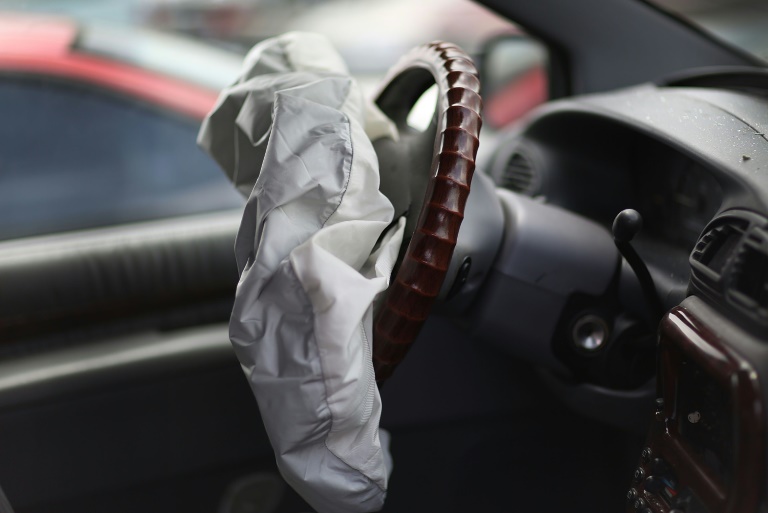
Automaker Stellantis said Thursday it is redoubling outreach to US owners of about 276,000 vehicles with dangerous Takata airbags that have been recalled but were never repaired.

The autos in question were model year 2005-2010 model year Dodge Magnum station wagons, Dodge Challenger coupes, and Dodge Charger and Chrysler 300 sedans, according to a press release from FCA, a Stellantis brand.

The company said it has sent nearly 210 million standard and first-class letters, while also texting consumers and making phone calls and home visits.

“The longer these particular vehicles remain unrepaired, the greater the risk of an air-bag rupture, in event of a crash,” the company said. “Free replacement driver-side air bags have been available for this population since 2015.

“Many owners say they don’t have time to obtain the remedy. However, the repair procedure takes well under one hour.”

The company is aware of three fatalities in the last seven months in the United States in warm-weather states involving these vehicles, a Stellantis spokesman said.

The unrepaired vehicles constitute about 20 percent of the total vehicle population. The rest have been successfully recalled and repaired, the spokesman said.

A 2017 survey by the University of Michigan’s Transportation Research Institute cited three top reasons consumers ignore recalls: worry that a dealership will try to sell more repairs; difficulty giving up their vehicle for a repair; and perception the wait to get it fixed was too long.

The Takata brand disappeared in 2018 following a bankruptcy in the wake of the airbag scandal, which affected almost every major global automaker, including Toyota and General Motors, and triggered the auto industry’s biggest-ever safety recall.

The airbag defect was linked to ammonium nitrate, the chemical used as a propellant in Takata’s airbag inflator canisters.

The chemical degraded, especially in humid conditions, meaning that in some cases the airbag did not inflate properly and sometimes ruptured, firing metal shrapnel at the vehicle’s occupants.

In the United States alone, there have been 19 deaths and at least 400 alleged injuries due to exploding Takata airbags.

Close Bitnami banner
Bitnami