World

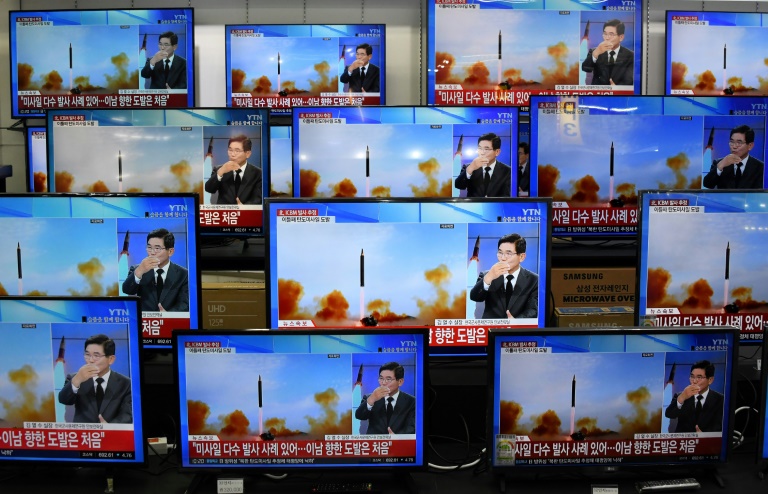
N. Korea ICBM launch appears to have failed, Seoul says

North Korea unsuccessfully fired an intercontinental ballistic missile during a new salvo of launches Thursday, the South Korean military said, with Washington urging all nations to enforce sanctions on Pyongyang.

In response to the launches, South Korea and the United States said they would extend their ongoing joint air drills, the largest-ever such exercises — a move Pyongyang immediately branded “an irrevocable and awful mistake”.

People in parts of northern Japan were ordered to seek shelter during the North’s latest launches, which included five short-range missiles and followed a blitz of projectiles fired Wednesday.

The largest of Thursday’s launches, however, “is presumed to have ended in failure”, the South Korean military said.

The United States slammed the ICBM launch, while the G7 club of rich nations said it condemned the flurry of missiles “in the strongest terms”.

US Defence Secretary Lloyd Austin described the ICBM launch as “illegal and destabilising” and branded the North’s actions “irresponsible and reckless” during a joint news conference at the Pentagon alongside his South Korean counterpart Lee Jong-sup.

Austin issued a stern warning to Pyongyang that “any nuclear attack against the United States or its allies and partners” would “result in the end” of Kim Jong Un’s regime.

Washington confirmed information provided by the South Korean military, which said it had detected the launch of the long-range ballistic missile at around 7:40 am (2240 GMT Wednesday) in the Sunan area of Pyongyang.

Seoul’s Joint Chiefs of Staff said the ICBM — which flew about 760 kilometres (470 miles) at a top altitude of 1,920 kilometres — appeared to have failed during “second-stage separation”.

The South’s military also detected what were “believed to be two short-range ballistic missiles fired at around 8:39 am from Kaechon, South Pyongan province”.

That was followed late in the day by three more short-range ballistic missiles fired towards the East Sea, also known as the Sea of Japan, according to Seoul’s Joint Chiefs of Staff.

South Korea’s military “is maintaining a full readiness posture while closely cooperating with the US and strengthening surveillance and vigilance”, it said.

– ‘Shocked and frightened’ –

Pyongyang fired more than 20 missiles on Wednesday, including one that landed near South Korea’s territorial waters, triggering an air raid siren warning on Ulleungdo, an island about 130 kilometres off the country’s east coast.

“We were shocked and frightened, as something like this had never happened before. We didn’t know where to take refuge,” said Chae Young-sim, a 52-year-old shopkeeper on the island.

One short-range ballistic missile crossed the Northern Limit Line, the de facto maritime border, on Wednesday, prompting South Korean President Yoon Suk-yeol to call it “effectively a territorial invasion”.

The launches come as Seoul and Washington stage their largest-ever joint air drills, involving hundreds of warplanes from both sides.

Pyongyang has called the exercise, dubbed Vigilant Storm, “an aggressive and provocative military drill targeting the DPRK”.

The exercise had been due to end Friday, but South Korea’s air force said Thursday that the joint drills would be extended in response to the latest launches.

Pyongyang said this was “a very dangerous and false choice” and warned that Washington and Seoul’s “provocative military acts” were taking the situation into “an uncontrollable phase”.

America “and South Korea will get to know what an irrevocable and awful mistake they made”, Pak Jong Chon, secretary of the Central Committee of the Workers’ Party of Korea, said in a statement carried by news agency KCNA.

Japan confirmed Thursday’s launches, with the government issuing a special warning to residents of northern regions to stay indoors or seek shelter.

Tokyo initially said the ICBM had flown over Japan, prompting a “J-Alert” to be issued, but defence minister Yasukazu Hamada later said “the missile did not cross the Japanese archipelago, but disappeared over the Sea of Japan”.

– ‘Tactical nuclear drills’ –

Washington and Seoul have repeatedly warned that the North’s recent missile launches could culminate in another nuclear test — which would be Pyongyang’s seventh.

“They are ready to conduct the nuclear test,” but the timing is still unclear, Lee said at the news conference with Austin.

Chad O’Carroll of Seoul-based specialist site NK News said on Twitter that it is “quite possible tactical nuclear weapons test(s) will be next. Possibly very soon.”

Ahn Chan-il, a North Korean studies scholar, agreed. 

“These are North Korea’s pre-celebration events ahead of their upcoming nuclear test,” he told AFP.

“They also seem like a series of practical tests for their tactical nuclear deployment.”

North Korea revised its laws in September to allow for pre-emptive nuclear strikes, with Kim declaring the country to be an “irreversible” nuclear power — effectively ending negotiations over its banned arms programmes.

On October 4, North Korea fired a missile over Japan that also prompted evacuation warnings. It was the first time North Korea had fired a missile over Japan since 2017.

Pyongyang later claimed that the launch and a blizzard of other tests around the same time were “tactical nuclear drills” that simulated showering South Korea with nuclear-tipped missiles.
Heavy rains forecast for Mexico as Lisa weakens after lashing Belize

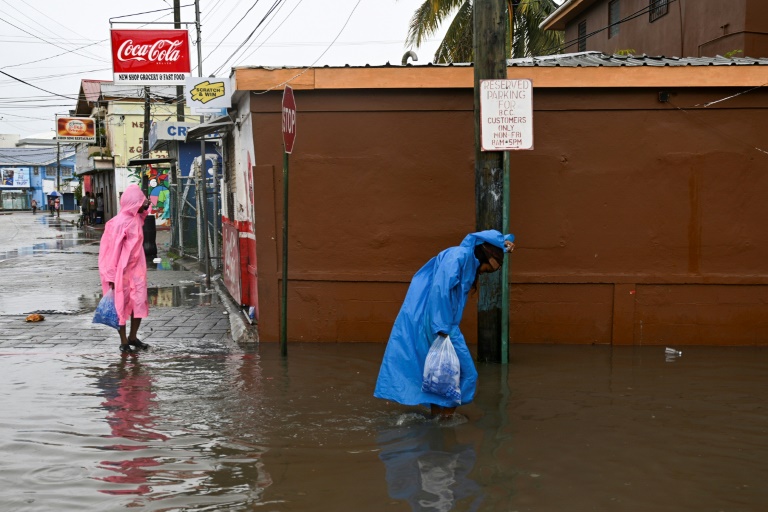
Tropical depression Lisa, downgraded from a hurricane after battering Belize, threatened parts of Mexico with flash floods Thursday, according to an improved forecast.

Lisa caused flood damage in Belize and plunged parts of the country into darkness Wednesday as it weakened over land on its way to Mexico.

By 1500 GMT on Thursday, the US National Hurricane Center (NHC) said Lisa had weakened to a depression “still bringing heavy rains to portions of southeast Mexico.”

It was moving westward at about 17 kilometers (10 miles) per hour with maximum sustained winds of about 55 km/h.

“Lisa is expected to produce rainfall amounts of four to six inches (about 10-15 centimeters) with local amounts to 10 inches across the Mexican states of Tabasco, northwestern Chiapas, and far eastern Veracruz,” said an NHC advisory.

Lisa slammed into the Sibun River southwest of economic hub and former capital Belize City on Wednesday, uprooting trees with winds of up to 140 km/h, downing power lines and flooding streets.

A state of emergency was declared in two areas, while a curfew was in effect until dawn on Thursday.

Some parts of Belize were left without power as the storm lashed the country of about 405,000 people.

Schools and most businesses were closed in anticipation of the storm and the government set up shelters. 

In Belize City and neighboring areas, local media showed weather-battered buildings, flooded streets and yanked out trees after Lisa landed.

– Evacuations in Guatemala –

In neighboring Guatemala, heavy rain caused flooding and landslides in the northernmost department of Peten, where classes were canceled.

About 143 people were evacuated, Oscar Cossio, secretary of the National Coordination for Disaster Reduction (CONRED), told a press conference.

Lisa arrived less than three weeks after the passage of Julia, another Category 1 hurricane, which caused dozens of deaths in Honduras, Guatemala and El Salvador.

Lisa is the 12th named storm this season, a designation given to systems that produce winds of 39 mph (63 kph) or greater, according to the NHC.

Last year’s active Atlantic hurricane season, which officially runs from June through November, saw 21 named storms.

Stock markets sink, dollar jumps

Stock markets around the world sank Thursday while the dollar rallied after the Federal Reserve warned US interest rates would go higher than previously expected in its fight against decades-high inflation.

Meanwhile the Bank of England warned that Britain faced a recession set to last until mid-2024.

The Fed on Wednesday unveiled a fourth straight 0.75-percentage-point increase as expected — the sixth hike this year to cool rampant prices.

The dollar rose strongly against the pound despite the Bank of England also delivering on Thursday a 0.75-percentage-point hike — the largest in 33 years — to 3.0 percent, or the highest rate since 2008.

The pound fell by two percent against the dollar in afternoon trading before clawing back some of its losses, which helped London’s FTSE 100 share index buck the trend and rise 0.6 percent. The index is loaded with multinationals which earn most of their revenues in dollars and post higher profits in pounds when the sterling exchange rate is low.

European Central Bank president Christine Lagarde flagged more interest rate hikes on Thursday with comments that a “mild” eurozone recession was looming but would not be enough to bring down record-high inflation.

Oil prices also fell heavily on Thursday as aggressive rate hikes increase expectations of a global recession and softer demand for energy.

Hong Kong led stock market losses as the city’s central bank hiked rates in line with the Fed, owing to their policy link via the dollar peg.

Traders gave back a   chunk of the previous two days’ gains, which came on the back of speculation China was planning to roll back some of its painful zero-Covid policies.

Adding to the selling was confirmation from Beijing’s health authority that it intended to stick to the strategy.

– ‘Some ways to go’ –

“Stocks fell… after the Federal Reserve raised benchmark interest rates and warned that there was still some ways to go in its efforts to tame inflation,” said Mark Haefele, chief investment officer at UBS Global Wealth Management.

Before the Fed announcement, stocks had rallied for more than a week on speculation the US central bank would indicate that its rate tightening could soon reach a peak as the world’s biggest economy showed signs of slowing.

Yet Fed chief Jerome Powell poured cold water on hopes for a “pivot” in policy, telling a news conference “incoming data since our last meeting suggests that ultimate level of interest rates will be higher than previously expected”.

Briefing.com analyst Patrick O’Hare said  for investors “the point that registered was (Powell’s) view that it is very premature to talk about pausing the rate hikes”.

Another key point was that “the Fed still has a ways to go to get the policy rate to a restrictive level that is sufficient for getting inflation back down to the 2.0 percent target,” O’Hare noted.

Moreover, Powell indicated “that the Fed’s terminal rate is apt to be higher than previously expected and is likely to be held there longer than previously expected,” which upended previous market expectations.

Investors now expect Fed rates to top out at more than five percent, compared with four percent previously.

The latest US data didn’t help sentiment, with a key survey showing the services sector grew less than expected in October as new orders eased and businesses struggled to replenish their stocks.

Global equities have slumped this year on mounting fears that rising borrowing costs will curtail consumer and business spending, sparking a global recession.

– Key figures around 1530 GMT –

New York – Dow: DOWN less than 0.1 percent at 32,126.58 points

EURO STOXX 50: DOWN 0.8 percent at 3,593.18

London – FTSE 100: UP 0.6 percent at 7,188.63 (close)

Frankfurt – DAX: DOWN 1.0 percent at 13,130.19 (close)

Paris – CAC 40: DOWN 0.5 percent at 6,243.28 (close)

Hong Kong – Hang Seng Index: DOWN 3.1 percent at 15,339.49 (close)

Shanghai – Composite: DOWN 0.2 percent at 2,997.81 (close)

Tokyo – Nikkei 225: Closed for a holiday

Pound/dollar: DOWN at $1.1180 from $1.1390 Wednesday

Euro/dollar: DOWN at $0.9754 from $0.9816

Dollar/yen: UP at 148.25 yen from 147.90 yen

Euro/pound: UP at 87.20 pence from 86.17 pence

Brent North Sea crude: DOWN 0.9 percent at $95.26 per barrel

West Texas Intermediate: DOWN 1.4 percent at $88.72 per barrel

burs-rl/bp

Deadly clashes as Iranians mourn crackdown victims

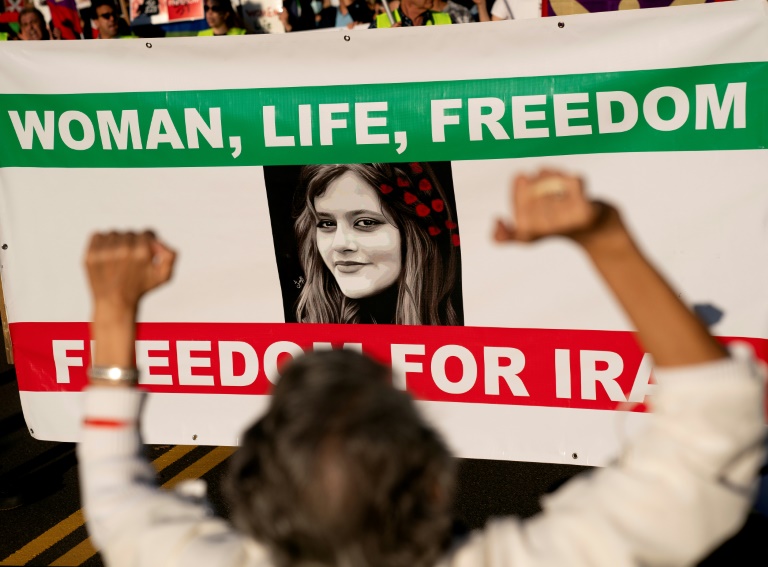
Major new protests erupted in Iran on Thursday as people mourned victims of a deadly crackdown by the authorities, with police opening fire on stone-throwing protesters in deadly clashes outside Tehran.

Iran has for over six weeks been gripped by protests sparked by the death of Mahsa Amini who had been arrested by the notorious morality police — a movement that poses the biggest challenge to the Islamic republic since the 1979 revolution.

The clerical leadership under Ayatollah Ali Khamenei, 83, has responded with a crackdown that as well as killing dozens has seen 1,000 people charged so far and according to activists risking the death penalty.

With the movement no signs of abating, the problems for the authorities are compounded by the tradition in Iran of holding a “chehelom” mourning ceremony 40 days after a death, meaning each new killing can fuel new protest actions.

Norway-based group Iran Human Rights said large numbers attended a 40-day ceremony in Karaj west of Tehran mourning the death of Hadis Najafi, a 22-year-old woman activists say was killed by security forces in September.

IHR said police had blocked the highway leading to the cemetery to prevent even larger numbers attending while military helicopters patrolled above.

“This year is the year of blood, Seyyed Ali (Khamenei) will be toppled,” the video showed them chanting.

But crowds massed and 1500tasvir monitoring channel posted pictures from Karaj of a large column of people marching in protest down a highway and there was clashes between protesters and police.

Security forces had also opened fire on the protesters, it said. It posted a video of some demonstrators throwing stones at a police vehicle, while others set fire to a garbage bin and a police patrol post.

A member of Iran’s Basij paramilitary force and two other unidentified people were killed, and 10 police officers and a cleric were injured Thursday during the clashes in Karaj, state media said.

Similar mourning ceremonies were held in several other cities including Arak, in central Iran, where IHR said large crowds shouted “freedom!” in memory of protest victim Mehrshad Shahidi.

Large numbers also shouted anti-government slogans at a memorial rally for protester Mahsa Mugoi in Fouladshahr outside the city of Isfahan, 1500tasvir said.

– ‘No mercy’ –

The Kurdish rights organisation Hengaw reported a sequence of protests had taken place Wednesday in the Kurdish-populated regions of northwestern Iran where Amini hailed from, including the city of Sanandaj which has become a major protest flashpoint.

It said Momen Zandkarimi, 18-year-old from Sanandaj, was killed by direct fire from Iranian security forces.

Due to the pressure from Iranian security agencies who fear his funeral could turn into a protest, his body has been moved to another village for burial, it added.

Meanwhile, Hengaw said police had arrested the father of Komar Daroftadeh, 16, who it said was shot and killed by government forces in Piranshahr in western Iran. The father Hasan had at his son’s funeral bitterly denounced the security forces who he said showed “no mercy”.

According to an updated death toll issued Wednesday by IHR, 176 people have been killed in the crackdown on protests sparked by Amini’s death.

Another 101 people have lost their lives in a distinct protest wave in Zahedan in the southeastern Sistan-Baluchistan province.

Of all those killed, 40 were under 18 years of age, it added.

On Thursday, state media said masked assailants shot dead the Friday prayer leader at a Zahedan mosque.

Thousands have been arrested nationwide, rights activists say, while Iran’s judiciary has said 1,000 people had already been charged over what it describes as “riots”.

The trial of five men charged with offences that can carry the death penalty over the protests opened Saturday in Tehran.

– ‘Under duress’ –

Activists condemned as a forced confession a video published by state-run Iranian media of Toomaj Salehi, a prominent rapper arrested at the weekend after backing the protests, in which a blindfolded man saying he is Salehi admits to making “a mistake”.

Freedom of expression group Article 19 said it was “extremely disturbed Iran state media are sharing forced confessions” with the subject “under clear duress”.

At least 51 journalists have been detained in the protest crackdown, according to the New York-based Committee to Protect Journalists. Fourteen are confirmed to have been released on bail.

Journalist Yaghma Fashkhami became the latest prominent figure to be arrested, his wife Mona Moafi wrote on Twitter.

There is also growing concern over the wellbeing of Wall Street Journal contributor and freedom of expression campaigner Hassan Ronaghi, who was arrested in September and according to his family is on hunger strike with two broken legs sustained in custody.

Citing Saudi and US officials, The Wall Street Journal on Wednesday reported that Saudi Arabia had shared intelligence with the United States warning of an imminent attack from Iran on targets in the kingdom in a bid to divert attention from the protests.

Iran’s foreign ministry spokesman Nasser Kanani said his country’s “policy is based on mutual respect and international principles” and that it “continues its policy of good neighbourliness”.

Bank of England warns UK may face two-year recession, hikes rate

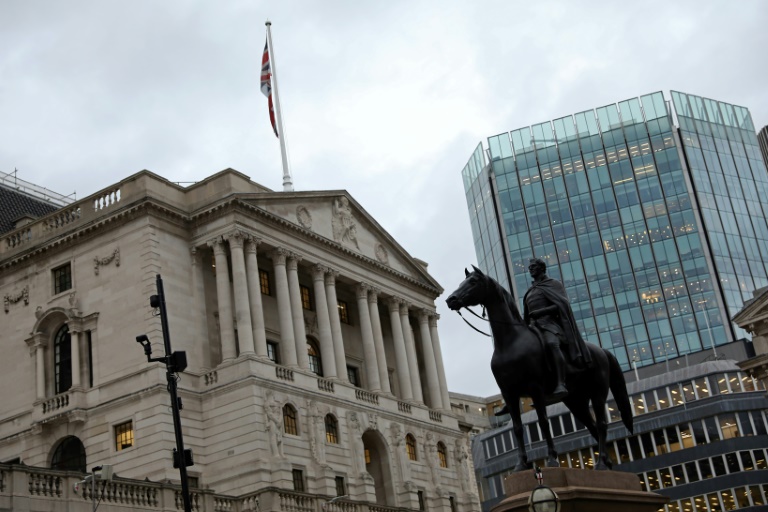
The Bank of England on Thursday announced its biggest interest rate hike since 1989 to combat sky-high inflation that it warned was pushing Britain into a recession that risks lasting until mid-2024.

Following a regular meeting, the BoE said it was lifting borrowing costs by 0.75 percentage points to three percent — the highest level since the 2008 global financial crisis — to cool UK inflation that it sees shortly peaking at a four-decade high near 11 percent.

“It is a tough road ahead,” BoE governor Andrew Bailey told a press conference.

“The sharp increase in energy prices caused by Russia’s invasion of Ukraine has made us poorer as a nation.”

Minutes of its meeting warned of a “challenging outlook for the UK economy” that was “expected to be in recession for a prolonged period”, dealing a blow to Britain’s troubled government.

The latest rate increase mirrors aggressive tightening by central banks worldwide as food prices and energy bills soar.

On Wednesday, the US Federal Reserve sprang a fourth consecutive hike of 0.75 percentage points — and its boss Jerome Powell suggested they would go higher than expected.

The BoE said British inflation would peak at 10.9 percent this year, but with the level so high, some analysts said the central bank rate could still hit around five percent in the coming months.

Such a rate, the BoE said Thursday, could see the UK economy suffer eight quarters of contraction in a row. At the same time, however, it cautioned that it did not expect borrowing costs to climb as high as market expectations.

– Plunging pound –

The BoE said the economy had shrunk since the third quarter, entering a technical recession that is forecast to last until the first half of 2024.

The pound tumbled two percent against the dollar on expectations of a long-lasting recession and BoE expectations that its key rate may not rise much further.

“A typical textbook trade is out of the window because currencies usually move higher when a central bank increases rates,” noted Naeem Aslam, chief market analyst at Avatrade.

“Tough times are ahead, and we are going to see the economy, markets, and the currency tanking in the coming months.”

London’s FTSE 100 shares index fared better, rising about half-a-percent. However the second-tier FTSE 250, which is less internationally-focused, retreated.

– Cost-of-living crisis –

The BoE rate increase is set to worsen a cost-of-living crisis for millions of Britons as hikes by central banks see retail lenders push up interest rates on their own loans.

“The central bank has had the unenviable job of fighting soaring inflation amid enormous economic and political uncertainty,” said Craig Erlam, analyst at trading platform OANDA.

Repayments on UK mortgages have surged in recent weeks after the debt-fuelled budget of previous British prime minister Liz Truss spooked markets, forcing her to resign and triggering emergency buying of UK government bonds by the BoE.

Her successor Rishi Sunak has attempted to bring calm to markets by hinting at tax rises in a fresh budget on November 17, even if such a move further harms Britain’s economy.

“I think everyone knows we do face a challenging economic outlook and difficult decisions will need to be made,” Sunak, a former UK finance minister, told parliament on Wednesday.

British annual inflation stands at 10.1 percent, the highest level in 40 years.

As the Covid-19 pandemic began in early 2020, the BoE slashed its key interest rate to a record-low 0.1 percent and also pumped massive sums of new cash into the economy.

The Bank of England started raising rates last December, while Thursday’s hike was the eighth increase in a row.

“Importantly, most of the tightening in policy over the past year was yet to feed through to the real economy,” said the BoE minutes.

Thousands rally in Spanish capital for pay hikes as costs soar

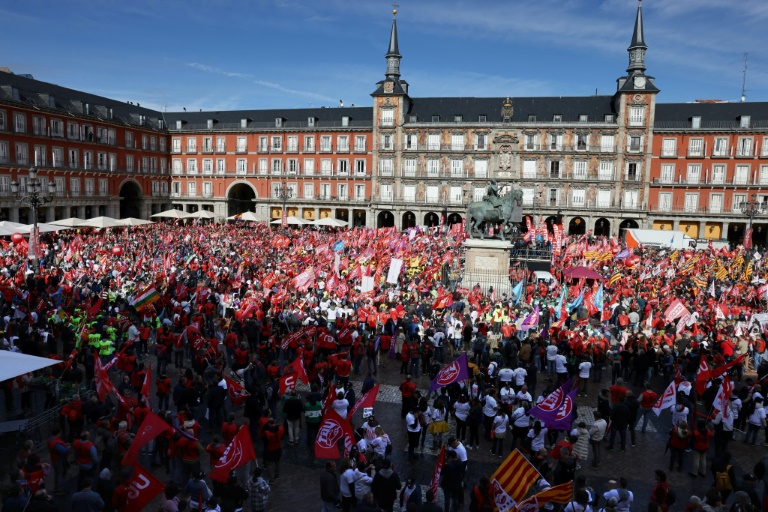
Thousands of people took to the streets of Spain’s capital on Thursday to demand higher pay to cope with soaring inflation and energy costs.

Protestors waved red union flags and banged drums as they made their way to the Spanish capital’s landmark Plaza Mayor square behind a large banner that read: “Salary or Conflict”.

Police estimate some 25,000 people took part in the demonstration, which was called by Spain’s two main unions, the CCOO and UGT. 

“Either there is a rise in salaries or work conflicts will increase exponentially in our country over the next year,” CCOO secretary general Unai Sordo told reporters at the protest.

Like other countries, Spain has been struggling with soaring inflation as a result of the fallout from the war in Ukraine and the reopening of the economy after pandemic-related lockdowns.

Inflation in Spain peaked this summer at 10.8 percent in July, its highest level in 38 years, before moderately slowing to 7.3 percent in October — still well above normal levels.

“Salaries are still super low” while the cost of “essentials” has soared, Maria Luisa Ortega, a 57-year-old service sector worker, told AFP at the protest.

She said salary raises must match the rise in inflation.

The protest comes as Spain’s leftist government is negotiating with unions and business groups a new increase in the minimum wage, which is currently set at 1,000 euros ($987) a month.

Far-left party Podemos, the junior partner in Socialist Prime Minister Pedro Sanchez’s coalition government, is calling for a 10 percent increase in the minimum wage.

But Spain’s main business association CEOE has ruled out pay hikes in line with inflation, arguing they will hurt firms, especially smaller ones, although it is open to discuss more modest increases.

The government has vowed to lift the minimum wage to 60 percent of Spain’s average salary by the end of its term in office in December 2023, bringing it in line with the level of its European neighbours.

Iran-Russia military cooperation: murky, but in Tehran's interest

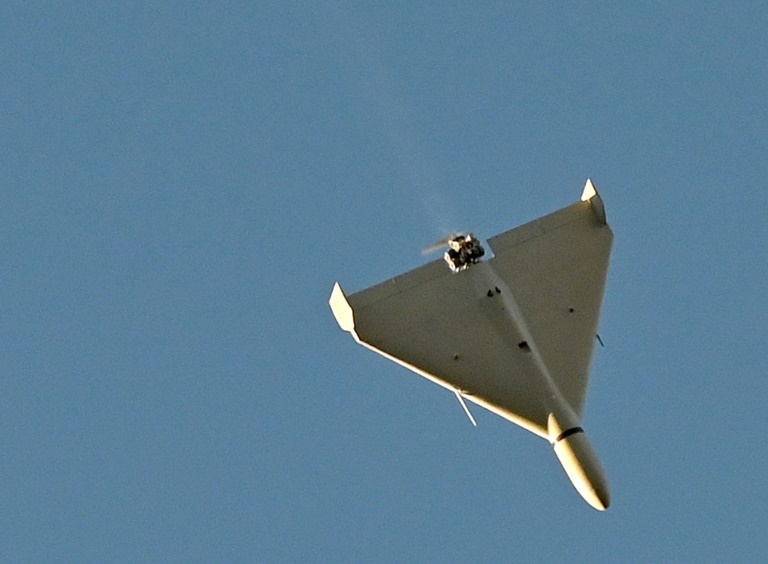
Iran stands accused by Western powers of supplying drones to Russia for its war against Ukraine, with analysts saying such military cooperation is of immense interest for Tehran at a delicate moment for its theocratic leadership.

The United States has denounced as “appalling” Russia’s use of Iranian drones after residents of Kyiv and other cites were shaken by a spate of recent attacks.

Ukraine has said around 400 Iranian drones have already been used against the civilian population of Ukraine, and Moscow has ordered around 2,000. Tehran has rejected the allegations.

Iran and Russia, both former imperial powers who for centuries vied for domination of the Caspian Sea region, have long had a highly nuanced and delicate relationship marked by rivalry and cooperation.

Winning Russia as a close ally is all the more attractive for Iran’s leadership as it faces unprecedented protests at home, while it can count on Moscow to turn a blind eye to any crackdown.

But Russia using Iranian drones against Ukraine would mark a key milestone in cooperation, to some extent countering Turkey’s supply of highly effective drones to Kyiv which has irritated Moscow.

– ‘Great advertisement’ –

“Iran could very well see the use of its drones against Ukraine — backed by the US and NATO — as a way to strike at the West in its own backyard,” said Eric Brewer, director of the Washington-based Nuclear Threat Initiative’s Nuclear Materials Security Program.

“Iran may view the destruction wrought by its drones in Ukraine as a reminder and warning to the US, Israel, and Gulf states about what Iran could do should they ever strike.”

He added, “It is a great advertisement for Iranian drones and military hardware for future customers.”

The People’s Mujahedin of Iran (MEK), an Iranian opposition group outlawed in Iran, alleged that Tehran had a sale contract to Russia to supply various offensive drones, including Shahid 129, Mohajer 6 and suicide drones Shahid 136 and Shahid 131.

“Drone shipments are sent weekly by Russian military cargo planes,” the MEK said in a report.

The planes land at Tehran’s Mehrabad airport and are then moved to the adjacent Qadr military base of the Iranian Revolutionary Guards (IRGC) to be loaded with drones.

It alleged that before President Vladimir Putin’s trip to Tehran in July 2022, the military planes that had transported the black SUVs of Putin’s entourage returned to Russia with the drone cargo.

AFP was unable to immediately verify the claims in the report.

– ‘Remain concerned’ –

Colin Clarke, Director of Research at the Soufan Group, a private intelligence and security consultancy, told AFP that “details and an exact status of a major Russian sale of combat systems to Iran is not known at this time.”

He said until Russia’s invasion of Ukraine, Moscow had wanted to “appear cooperative” with international efforts to revive the 2015 deal on the Iranian nuclear deal and persuade Tehran to return to the accord.

He said Moscow did complete a sale to Iran of its S-300 air defence system with delivery in 2016. “But no new tanks, combat aircraft, ships, or other major combat systems have been sold by Moscow to Tehran since,” he said.

White House national security spokesman John Kirby said he would not confirm reports that Tehran could also send short-range ballistic missiles to Russia but was “concerned about the potential” of Iran to provide Russia with surface-to-surface missiles.

The cooperation could work both ways too: reports in September suggested that Iran was interested in buying Russian Sukhoi-35 fighter jets in what would be a logical step given the ramshackle state of its own air force.

“The Iranian army is in a pathetic state”, said Pierre Razoux, academic director of the Mediterranean Foundation for Strategic Studies (FMES).

He said some of the hardware was half a century old and had gone through the Iran-Iraq war. The army had to modernise but was restricted due to sanctions meaning it was “reduced to bartering”, he added.

Attention will be acute on such efforts.

Citing Saudi and US officials, The Wall Street Journal on Wednesday reported that Saudi Arabia had shared intelligence with the United States warning of an imminent attack from Iran on targets in the kingdom in a bid to divert attention from the protests.

Ivan Klyszcz, research fellow at the Estonian Foreign Policy Institute, told AFP Iran had decided to “openly side” with Russia as there was no longer any prospect of cooperation with the West.

“In this sense, the risks are low. Integrating further with Russia on economic and military matters could be worth to them more than keeping up the hope of a new deal with the West. And –- given the war –- Russia is happy to oblige.”

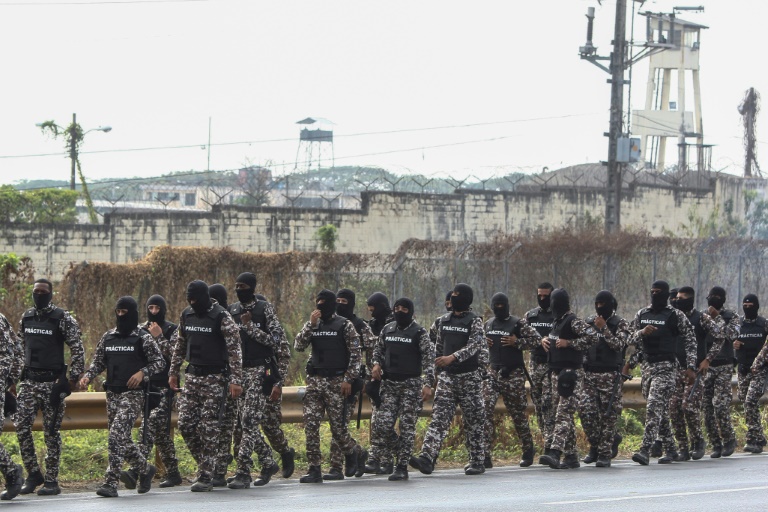
Ecuador drug violence: six police wounded in prison riot

Six police were wounded Thursday in the latest prison riot to hit Ecuador, officials said, as the country is gripped by violence blamed on organized crime groups waging a deadly drug war.

The six were hurt while trying to put down an uprising at the infamous Guayas 1 prison in southwestern port city Guayaquil, police said on Twitter.

A source at the SNAI prison authority who asked not to be named told AFP that the police officers were confronted by inmates with guns and explosives.

Ecuador — once a relatively peaceful neighbor of major cocaine producers Colombia and Peru — has seen a wave of violent crime that authorities blame on turf battles between gangs with ties to Mexican cartels.   

Civilians have increasingly been caught up in the bloodshed that has claimed more than 60 police lives since last year.  

Hundreds of inmates have died in Ecuador’s overcrowded prisons since February last year — many beheaded or burned as the gang war is waged also behind bars — especially at Guayas 1.

Widespread corruption among guards allows inmates to lay their hands on guns and explosives, among other contraband.

Following attacks Tuesday in which five police officers and a civilian were killed, President Guillermo Lasso declared a state of emergency and nightly curfews in the western provinces of Guayas, of which Guayaquil is the capital, and Esmeraldas.   

Groups armed with weapons including car bombs hit more than 18 targets in the two provinces, including police and gas installations, a clinic — where a civilian was critically wounded — and a bus terminal.  

Prisoners at a facility in Esmeraldas also took hostage eight guards on Tuesday to protest the inmate transfer, but later freed them. In the same city on Monday, two headless bodies were found hanging from a pedestrian bridge.

Tuesday’s attacks were said to be in response to a mass transfer of inmates from the Guayas 1 prison, which is largely in the control of gangs.

Clashes at the prison on Wednesday left two inmates dead and six wounded. 

Ecuador has gone from being a drug transit route in recent years to an important distribution center in its own right. 

The United States and Europe are the main destinations of drugs from Latin America. 

The murder rate in Ecuador nearly doubled in 2021 to 14 per 100,000 inhabitants, and reached 18 per 100,000 between January and October this year, according to official data. 

In 2021, law enforcement seized a record 210 tons of drugs, mostly cocaine. So far this year’s seizures total 160 tons.   

Red Cross eyes digital emblem for cyberspace protection

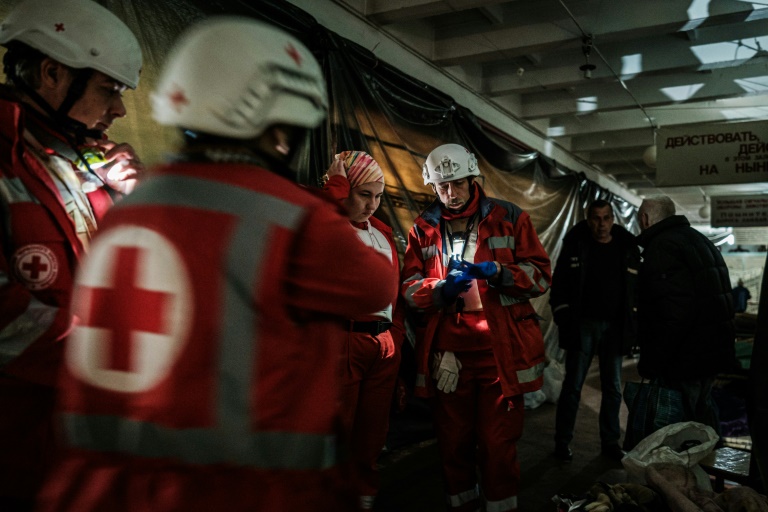
When Red Cross staff work in conflict zones, their recognisable red-on-white emblems signal they and those they are helping should not be targeted.

Now, as warfare and attacks increasingly move into cyberspace, the organisation wants to create a digital emblem that would alert would-be attackers that they have entered computer systems of the Red Cross or medical facilities.

The International Committee of the Red Cross (ICRC) called Thursday on countries to support the idea, arguing that such a digital emblem would help protect humanitarian infrastructure against erroneous targeting.

“As societies digitalise, cyber operations are becoming a reality of armed conflict,” ICRC’s director-general Robert Mardini said in a statement.

“The ‘digital emblem’ is a concrete step to protect essential medical infrastructure and the ICRC in the digital realm.”

For more than 150 years, the organisation’s distinctive emblems — the red cross and red crescent, and more recently the red crystal — have conveyed in times of conflict that the people, facilities and objects they mark are protected under international law and that attacking them constitutes a war crime.

– Potential for abuse? –

But to date, there are no such signals in the cyber world. 

The ICRC has been mulling this idea for a while, launching a project in 2020 to examine the technical feasibility of creating a digital emblem, and opening consultations to weigh the benefits of such a system against potential for abuse.

Concerns have been raised that such an emblem could risk identifying a set of “soft targets” to malicious actors, making it easier to systematically target them. 

Malicious actors could also misuse a digital emblem to falsely identify their operations as having protected status under international law.

But on Thursday, the ICRC presented a new report titled “Digitalising the Red Cross, Red Crescent and Red Crystal emblems”, concluding that the advantages outweighed the risks.

In the foreword, Mardini stressed that cyberattacks on medical facilities and humanitarian infrastructure can have dramatic, and deadly, real-life consequences.

He pointed to a growing numbers of cyberattacks on hospitals since the onset of the Covid-19 pandemic, which “have disrupted life-saving treatment for patients and forced doctors and nurses to resort to pen and paper at a time when their urgent work was needed most.”

– ‘Massive shock’ –

And the ICRC itself fell victim to a massive cyberattack last January, in which hackers seized the data of more than half a million extremely vulnerable people, including some fleeing conflict, detainees and unaccompanied migrants.

That attack “was really a massive shock for our institution,” Balthasar Staehelin, ICRC’s director of digital transformation and data, told a conference in Geneva recently.

While stressing that his organisation had long been focused on data protection, Mardini said the “data breach highlighted the urgency of our work in this area.”

“Protecting personal data, and ensuring the availability and integrity of our data and systems in the digital space, is essential to assist and protect people in the real world,” he added.

In the January case, hackers targeted an external company in Switzerland that the ICRC contracts to store data, and it remains unclear if the organisation itself had been intentionally targeted.

If unintentional, the attack could have been averted if the date bore an emblem signalling it was protected under international law, ICRC legal advisor Tilman Rodenhauser said during an event Thursday launching the report.

Such an emblem would provide “an additional layer of protection”, he said, stressing it would “signal to professional cyber operators that they need to stay out, by law and by ethics standards.”

ICRC said it had been working with a number of universities and others to develop possible technical solutions for a digital emblem.

It pointed to several possible approaches, including embedding the emblem in a domain name (for instance www.hospital.emblem), or embedding it in the IP address, with a specific sequence of numbers signalling a protected digital asset.

The organisation stressed though that to make a digital emblem a reality, countries need to agree on its use and incorporate it into International Humanitarian Law, alongside the three physical emblems currently in use. 

Former Pakistan PM Imran Khan wounded in assassination attempt

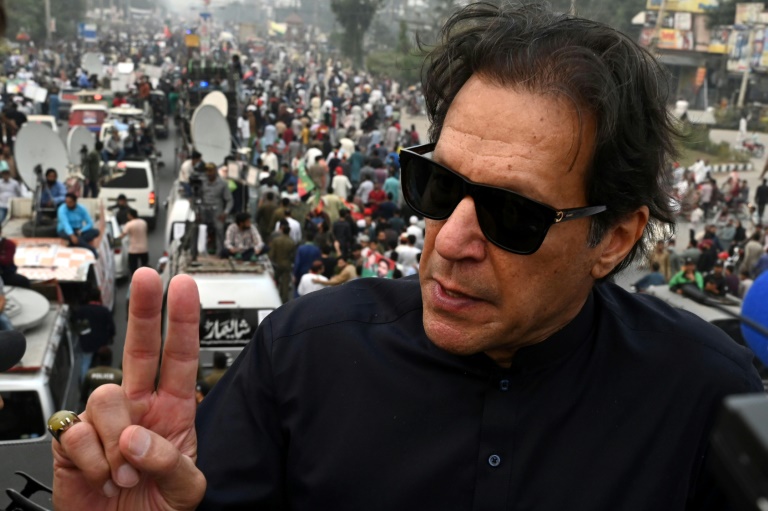
Former Pakistan Prime Minister Imran Khan was in stable condition after being shot in the leg at a political rally on Thursday in what the country’s president deemed “a heinous assassination attempt”.

The former international cricket star has been leading a chaotic convoy of thousands since Friday from the city of Lahore towards the capital, Islamabad, campaigning for fresh elections after being ousted from office in April.

“This was an attempt to kill him, to assassinate him,” senior aide, Raoof Hasan, told AFP.

Khan escaped with a bullet wound to his right calf, while several of his Pakistan Tehreek-e-Insaf (PTI) party officials were also hit by the spray of gunfire aimed at their modified container truck as it slowly drove through a thick crowd near Gujranwala.

“Everyone who was standing in the very front row got hit,” former information minister Fawad Chaudhry, who was standing behind Khan, told AFP.

He said supporters in the crowd tried to snatch the gun from the attacker.

“In that scuffle he missed the target.”

Six people were hit and one supporter killed, he said.

– Crack of gunfire –

A video captures the crack of gunfire as Khan and his team duck behind banners tied around the edge of the container.

In a tweet, Pakistan’s President Arif Alvi called it “a heinous assassination attempt”.

Information Minister Marriyum Aurangzeb said the attacker had been taken into custody and that a confession video was circulating online.

“I did it because (Khan) was misleading the public, I tried to kill him, I tried my best,” says a dishevelled man in the video, shown with his hands tied behind his back in what appears to be a police station.

He adds that he was angry with the procession for playing music during the call to prayer that summons Muslims to the mosque five times a day.

Police have yet to comment on the incident or confirm earlier reports that a second attacker was killed at the scene.

Faisal Sultan, the doctor treating Khan at a Lahore hospital, confirmed he was in a stable condition.

Jemima Goldsmith, the ex-wife of the former cricketing superstar who shares two children with him, tweeted her relief.

“Thank you from his sons to the heroic man in the crowd who tackled the gunman,” she said.

– Politicians targeted –

Pakistan has been grappling with Islamist militants for decades, and politicians are frequently targeted by assassination attempts.

The attack on Khan had echoes of the 2007 assassination of another former prime minister, Benazir Bhutto, who died when a huge bomb detonated near her vehicle as she greeted supporters in Rawalpindi while standing up through the roof hatch.

Just months earlier she had survived another attempt on her life when her motorcade was targeted in Karachi, killing more than 130 people.

Each day since starting his so-called “long march” 70-year-old Khan has mounted a shipping container towed by a lorry, making speeches from the open top to crowds of thousands in cities and towns along the way.

He was booted from office in April by a no-confidence vote after defections by some of his coalition partners, but he retains mass public support in the South Asian country.

Khan was voted into power in 2018 on an anti-corruption platform by an electorate tired of dynastic politics.

But his mishandling of the economy — and falling out with a military accused of helping his rise — sealed his fate.

Since then, he has railed against the establishment and Prime Minister Shehbaz Sharif’s government, which he says was imposed on Pakistan by a “conspiracy” involving the United States.

Khan has repeatedly told supporters he was prepared to die for the country, and aides have long warned of unspecified threats made on his life.

bur-/fox/ecl/mca

Close Bitnami banner
Bitnami