World

Cautious hope for Ethiopia deal to silence the guns

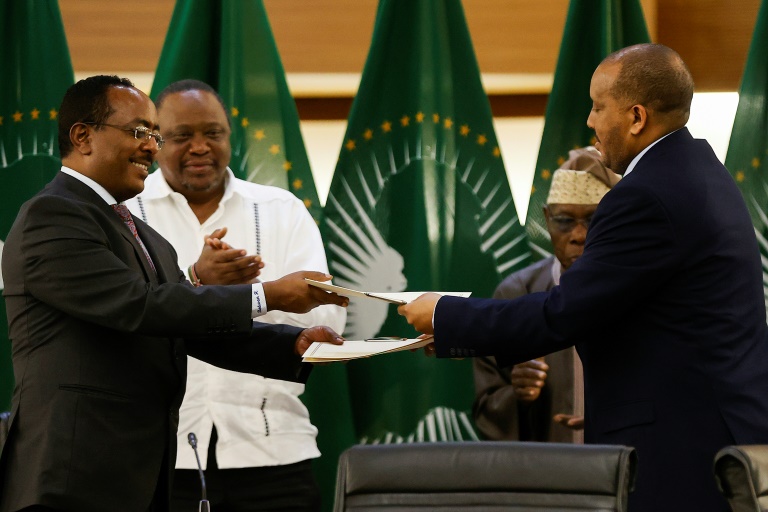
World leaders and ordinary Ethiopians voiced cautious hope that a breakthrough deal between Ethiopia’s government and Tigrayan rebels could signal a permanent end to the brutal conflict in Africa’s second most populous country.

The agreement, unveiled Wednesday after little over a week of negotiations, is seen as a crucial first step towards ending the bloodshed but many questions remain about its implementation.

It was sealed almost two years to the day since the war erupted on November 4, 2020 between federal forces and the Tigray People’s Liberation Front (TPLF) and followed a surge in fierce combat from late August that had alarmed the international community.

The two sides agreed to “silence their guns” in a conflict that has seen many thousands of people killed and millions forced from their homes, with reports of atrocities including massacres and rape committed by all parties.

Speaking to a crowd of supporters in southern Ethiopia, Prime Minister Abiy Ahmed said Thursday the government had scored a victory in the deal that was brokered by the African Union in Pretoria.

“In the South Africa negotiations, 100 percent of the ideas Ethiopia has proposed have been accepted,” he said.

According to a joint statement signed by both parties, the agreement includes provisions for the disarmament of TPLF fighters and a public “commitment to safeguarding the sovereignty and territorial integrity of Ethiopia” — a key demand by the government.

It also provides for the restoration of services to war-stricken Tigray and unhindered access to humanitarian supplies.

But details regarding its implementation remain vague, and no mention was made of Abiy’s ally Eritrea, a major player in the conflict, despite international calls for Asmara to withdraw its forces from Tigray.

While hailing the agreement as a “new dawn” for Ethiopia and the volatile Horn of Africa region, AU mediator Olusegun Obasanjo had cautioned Wednesday: “This moment is not the end of the peace process but the beginning of it.”

US Secretary of State Antony Blinken described it as a “momentous step” while UN chief Antonio Guterres voiced hope it “can start to bring some solace to the millions of Ethiopian civilians that have really suffered during this conflict”.

The European Union encouraged further talks to achieve a permanent ceasefire agreement and said “swift implementation” on the ground was needed including the resumption of humanitarian access and restoration of basic services.

– ‘No other option but peace’ –

The agreement was greeted cautiously on the streets of Ethiopia’s capital Addis Ababa.

“If the truce were done earlier, it would have been better. Many people wouldn’t have been killed (and) displaced,” businessman Million Tadesse told AFP.

Banker Degsew Assefa also welcomed the agreement, but said it needed to “be carefully implemented so we don’t relapse back to war”. 

“There is no other option than peace,” he said.

Abiy — who won the 2019 Nobel Peace Prize for his rapprochement with Eritrea — sent troops into Tigray to topple the TPLF after accusing the group of launching attacks on federal army camps.

It followed seething tensions between Abiy and the TPLF, which had dominated Ethiopian politics for nearly three decades until his election in 2018.

The war’s toll is unknown, but the US has estimated that as many as half a million people have died in the conflict.

The fighting has triggered a severe humanitarian crisis and caused large-scale displacement in Tigray as well as in the neighbouring regions of Amhara and Afar.

Tigray has faced severe shortages of food and medicines and limited access to electricity, banking and communications, with UN warnings that hundreds of thousands of people were on the brink of famine.

UN investigators have accused Abiy’s government of crimes against humanity in Tigray, including the use of starvation as a weapon — claims rejected by the authorities.

Amnesty International said Wednesday’s deal was a step in the right direction, but called for further action to address the “unspeakable abuses” committed during the conflict.

“At present, the accord fails to offer a clear roadmap on how to ensure accountability for war crimes and crimes against humanity, and overlooks rampant impunity in the country, which could lead to violations being repeated,” it said in a statement.
US personnel tracking American-supplied gear in Ukraine

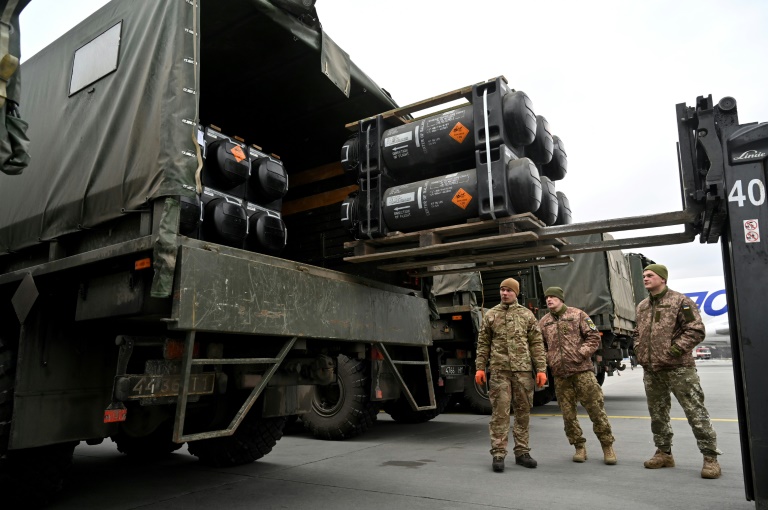
US personnel are inspecting stocks of American-supplied military equipment in Ukraine as part of efforts to keep track of gear provided to Kyiv’s forces, the Pentagon said Thursday.

The United States has committed nearly $18 billion in military assistance to Ukraine since Russian forces invaded the country in February, and Washington wants to make sure it is not misused.

“A small team comprised of US Embassy Kyiv — Office of the Defense Attache personnel have conducted multiple inspections of US security assistance deliveries within the last couple months at locations in Ukraine,” spokesman Brigadier General Pat Ryder said in a statement.

“These locations are not near the frontlines of Russia’s war against Ukraine,” Ryder said, adding that the “inspections are not reactive — we have no evidence of widespread diversion of US security assistance in Ukraine.”

A senior US defense official provided details earlier in the week about efforts to track the equipment, saying it starts with comprehensive records of donations before weapons are handed over.

Ukraine then tracks “security assistance from the border logistics hubs to the front line,” and also “provides expenditure and damage reports to capture losses,” the official said.

US personnel are conducting inspections “wherever the security conditions allow,” while the Defense Department is also training Kyiv’s forces so they can provide data from areas where embassy teams cannot go.

The US State Department warned last week that captured weapons pose the primary threat.

“Pro-Russian forces’ capture of Ukrainian weapons — including donated materiel — has been the main vector of diversion so far and could result in onward transfers,” the State Department said in a fact sheet.

“Russia probably will also use these weapons to develop countermeasures, propaganda, or to conduct false-flag operations,” it added.

There have been two high-profile examples in recent years of American-supplied arms ending up in the hands of Washington’s foes after they were lost by the forces they were provided to.

The Islamic State group seized large amounts of weapons and vehicles from Iraqi troops during the jihadists’ 2014 offensive, and the Taliban gained equipment ranging from rifles to aircraft when it seized control of Afghanistan last year.

Lula, Bolsonaro teams to start Brazil power transition

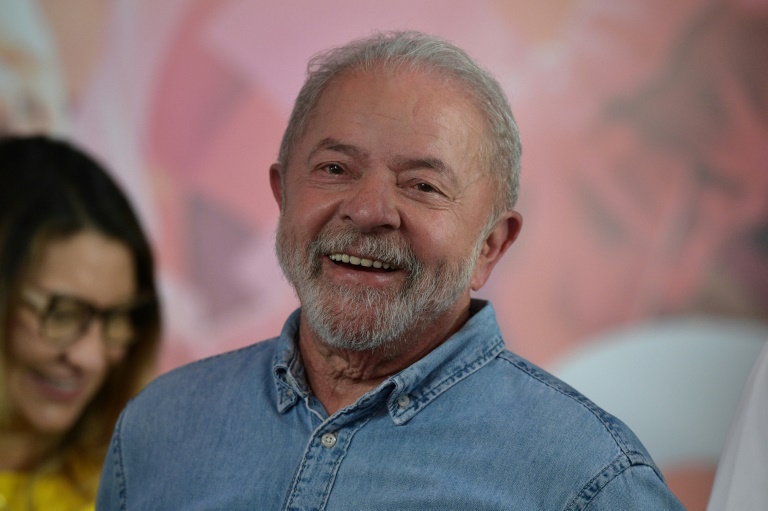
Brazilian president-elect Luiz Inacio Lula da Silva’s advisers will meet government officials Thursday to start the power transition, as supporters of incumbent Jair Bolsonaro continue loud — albeit shrinking — protests against his election loss.

Brazil has been on edge since veteran leftist Lula’s narrow win Sunday over far-right incumbent Bolsonaro, who remained silent for two days as angry supporters blocked highways across the country, calling for a military intervention to keep him in power.

However, the road blockades have been losing strength.

Officials said there were 74 of them Thursday, down from 250 Tuesday, after Bolsonaro issued an appeal to “unblock the roads” to avoid damaging the economy and interfering with people’s right to move freely.

But although the ex-army captain has vowed to respect the constitution, he has not acknowledged Lula’s win or congratulated him. He encouraged “legitimate demonstrations” in a video posted online Wednesday night — raising fears Brazil may still face turbulent times until Lula is sworn in on January 1, and beyond.

Vice president-elect Geraldo Alckmin, whom Lula has picked to lead his transition team, will hold a first meeting with Bolsonaro’s cabinet chief, Ciro Nogueira, Thursday afternoon in the capital, Brasilia, both teams told AFP.

The head of Lula’s Workers’ Party (PT), Gleisi Hoffmann, and the transition team’s technical coordinator, Aloizio Mercadante, will also be present, media reports said.

Lula, 77, who previously led Brazil from 2003 to 2010, won an unprecedented third term Sunday, capping a remarkable comeback for the ex-metalworker three years after he was freed from prison on controversial, since-quashed corruption convictions.

Bolsonaro supporters reacted furiously, blocking highways with cars, trucks, and tractors and rallying outside military barracks to demand an intervention.

Federal highway police said there were still full or partial roadblocks in eight of Brazil’s 27 states Thursday. They have broken up 862 others, they said.

In Rio de Janeiro, a protest outside a local military base had dwindled to several dozen people, who appeared to be losing hope of a pro-Bolsonaro intervention.

“We’re going to have a communist dictatorship,” 31-year-old protester Jessica dos Santos Ferreira told AFP, calling Lula a “thief.”

New protests erupt as Iranians mourn crackdown victims

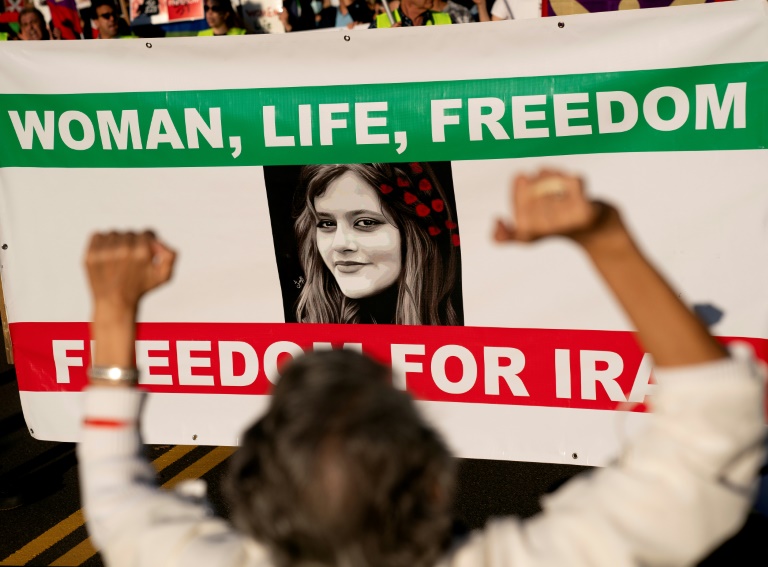
Major new protests erupted in Iran on Thursday as people mourned victims of a deadly crackdown by the authorities seeking to quell over six weeks of demonstrations that have shaken its leadership.

Iran has for over six weeks been gripped by protests sparked by the death of Mahsa Amini who had been arrested by the notorious morality police — a movement that poses the biggest challenge to the Islamic republic since the 1979 revolution.

The clerical leadership under Ayatollah Ali Khamenei, 83, has responded with a crackdown that as well as killing dozens has seen 1,000 people charged so far and according to activists risking the death penalty.

With the movement no signs of abating, the problems for the authorities are compounded by the tradition in Iran of holding a “chehelom” mourning ceremony 40 days after a death, meaning each new killing can fuel new protest actions.

A member of Iran’s Basij paramilitary force was killed and 10 police officers and a cleric were injured Thursday during clashes in Karaj, west of Tehran, state media said.

Norway-based group Iran Human Rights said large numbers were attending a 40-day ceremony in Karaj mourning the death of Hadis Najafi, a 22-year-old woman activists say was killed by security forces in September.

IHR said police had blocked the highway leading to the cemetery to prevent even larger numbers attending.

“This year is the year of blood, Seyyed Ali (Khamenei) will be toppled,” the video showed them chanting.

The 1500tasvir monitoring channel posted pictures from Karaj of a large column of people marching in protest down a highway. It added that security forces had also opened fire on the protesters and posted a video of demonstrators throwing stones at a police vehicle.

Similar mourning ceremonies were held in several other cities including Arak, in central Iran, where IHR said large crowds shouted “freedom!” in memory of protest victim Mehrshad Shahidi.

– ‘Show trials’ –

The Kurdish rights organisation Hengaw reported a sequence of protests had taken place Wednesday in the Kurdish-populated regions of northwestern Iran where Amini hailed from, including the city of Sanandaj which has become a major protest flashpoint.

It said Momen Zandkarimi, 18-year-old from Sanandaj, was killed by direct fire from Iranian security forces.

Due to the pressure from Iranian security agencies who fear his funeral could turn into a protest, his body has been moved to another village for burial, it added.

Meanwhile, Hengaw said police had arrested the father of Komar Daroftadeh, 16, who it said was shot and killed by government forces in Piranshahr in western Iran. The father Hasan had at his son’s funeral bitterly denounced the security forces who he said showed “no mercy”.

According to an updated death toll issued Wednesday by IHR, 176 people have been killed in the crackdown on protests sparked by Amini’s death.

Another 101 people have lost their lives in a distinct protest wave in Zahedan in the southeastern Sistan-Baluchistan province.

Of all those killed, 40 were under 18 years of age, it added.

Thousands have been arrested nationwide, rights activists say, while Iran’s judiciary has said 1,000 people had already been charged over what it describes as “riots”.

The trial of five men charged with offences that can carry the death penalty over the protests opened Saturday in Tehran.

“The charges and sentences have no legal validity and their sole purpose is to commit more violence and create societal fear,” said IHR director Mahmood Amiry-Moghaddam, condemning the “show trials”.

– ‘Under duress’ –

Activists condemned as a forced confession a video published by state-run Iranian media of Toomaj Salehi, a prominent rapper arrested at the weekend after backing the protests, in which a blindfolded man saying he is Salehi admits to making “a mistake”.

Freedom of expression group Article 19 said it was “extremely disturbed Iran state media are sharing forced confessions” with the subject “under clear duress”.

At least 51 journalists have been detained in the protest crackdown, according to the New York-based Committee to Protect Journalists. Fourteen are confirmed to have been released on bail.

Journalist Yaghma Fashkhami became the latest prominent figure to be arrested, his wife Mona Moafi wrote on Twitter.

There is also growing concern over the wellbeing of Wall Street Journal contributor and freedom of expression campaigner Hassan Ronaghi, who was arrested in September and according to his family is on hunger strike with two broken legs sustained in custody.

Citing Saudi and US officials, The Wall Street Journal on Wednesday reported that Saudi Arabia had shared intelligence with the United States warning of an imminent attack from Iran on targets in the kingdom in a bid to divert attention from the protests.

Iran’s foreign ministry spokesman Nasser Kanani said his country’s “policy is based on mutual respect and international principles” and that it “continues its policy of good neighbourliness”.

Europe could face gas shortage next year: IEA

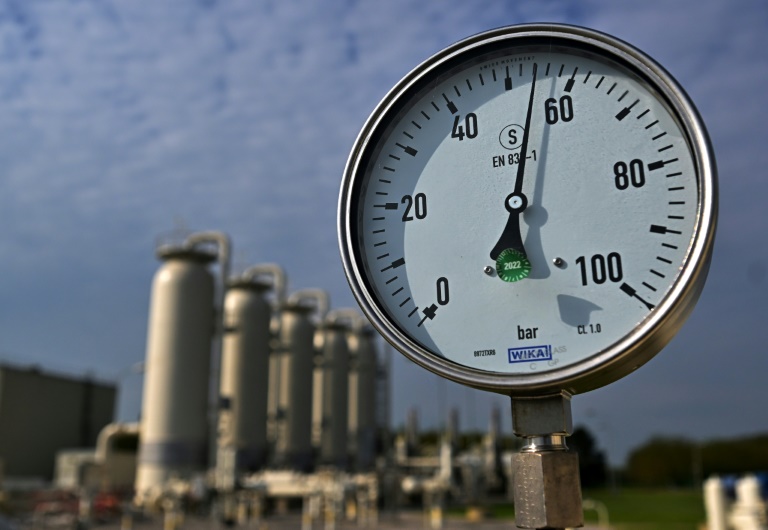
Europe must act immediately to prevent a shortage of natural gas next year as Russia slashes deliveries in the wake of the Ukraine war, the International Energy Agency warned Thursday.

The IEA said the shortfall would occur if Russia stops pipelines deliveries completely and China steps up its imports of liquefied natural gas, which Europe has relied upon to replace Russian supplies.

The region could lack 30 billion cubic metres that it needs “to fuel its economy and sufficiently refill storage sites during the summer of 2023, jeopardising its preparations for the winter of 2023-24,” the Paris-based agency said in a report.

IEA Executive Director Fatih Birol said he would hold talks on Friday with several European governments.

“We believe Europe needs to take immediate action to avoid risks of natural gas shortage next year,” Birol told reporters.

“We’re ringing alarm bells for the European governments and for the European Commission for next year,” he said.

– ‘Danger of complacency’ –

Russia has drastically cut supplies to Europe in suspected retaliation against Western sanctions over its invasion of Ukraine, but the region was able to fill storage sites for this upcoming winter.

The IEA said Moscow delivered 60 billion cubic metres of gas to Europe this year but that it was “highly unlikely” that Russia would provide the same amount in 2023 and could cease deliveries entirely.

And while Chinese LNG imports were lower in the first 10 months of this year, the world’s second biggest economy could grab 85 percent of the expected increase in global LNG supplies if its purchases recover next year.

European Union governments have urged business and households to conserve energy this winter in efforts to lower demand and scrambled to find alternative suppliers.

Norway has overtaken Russia as Europe’s main natural gas supplier. The region has also shipping LNG from other countries at a rate that has caused bottlenecks at ports. Gas prices, meanwhile, have fallen sharply.

But Birol said Europe’s gas storage sites may only be 65 percent full in 2023, compared to 95 percent this year.

“With the recent mild weather and lower gas prices, there is a danger of complacency creeping into the conversation around Europe’s gas supplies, but we are by no means out of the woods yet,” Birol said in a separate statement.

Birol warned that Europe will face “an even sterner challenge” next winter.

“This is why governments need to be taking immediate action to speed up improvements in energy efficiency and accelerate the deployment of renewables and heat pumps — and other steps to structurally reduce gas demand,” he said.

Germany wrestles with economic dependence on China

As Chancellor Olaf Scholz travels to Beijing, policymakers and businesses at home are grappling with an existential question: how can they reduce their reliance on China and can they survive without the world’s second-largest economy?

– Massive exposure –

The Russian invasion of Ukraine and the upheaval caused in Germany by breaking off economic ties with Moscow has cast a new light on Berlin’s relationship with another autocratic regime. 

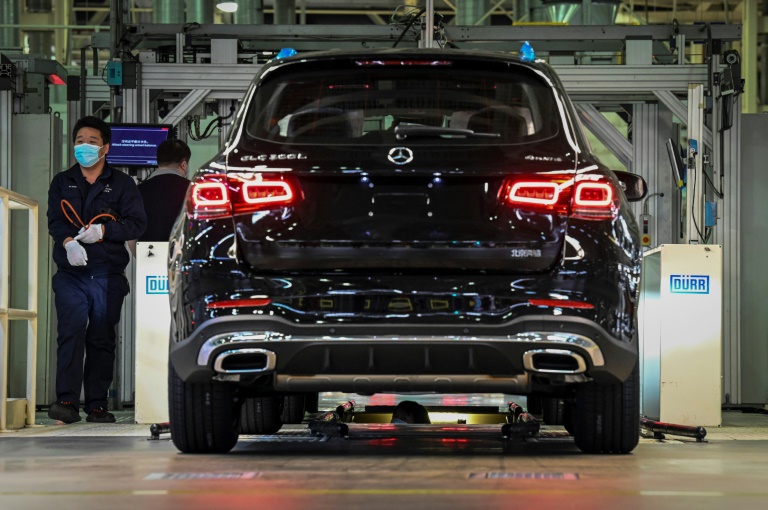
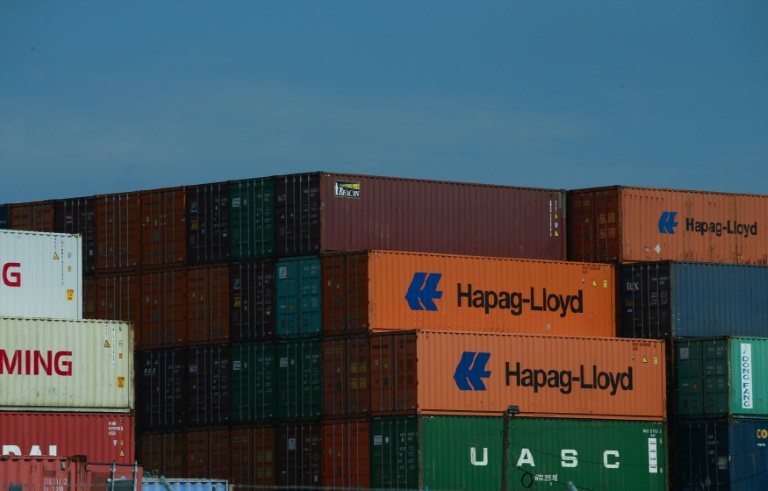
China, where German industrial groups turn a sizeable chunk of their profits, has been Berlin’s biggest trading partner for the past six years, with goods worth 246 billion euros ($243 billion) passing back and forth between the two countries last year.

Around 104 billion euros of that growing business were accounted for by the auto, chemical and manufacturing sectors — the backbone of German industry.

In the first half of 2022, direct investments in China reached a record of approximately 10 billion euros, according to a study by the IW economic institute.

More than 5,000 German businesses are active in China, including such heavyweights as Volkswagen and Siemens, as well as large number of smaller businesses from the “Mittelstand”.

Another major dependence is in the area of rare earth minerals, such as lithium, cobalt and magnesium, desperately needed in Europe for the production of key technologies like batteries.

– Awakening –

Any “naivety” in relations with China was “over”, German Economy Minister Robert Habeck said in September. Even liberal Finance Minister Christian Lindner has called on businesses not to rely too much on China amid increased tensions with Beijing.

Before heading to Beijing, Scholz sketched out the contours of his China strategy in an newspaper op-ed. Germany should “reduce one-sided dependencies” on China, while keeping a sense of “proportion and pragmatism”, he said.

“There are a number of German businesses who see China above all as a competitor and not as a potential market,” said Tim Ruehlig, a China expert at the German foreign policy institute DGAP.

Since 2019, the BDI German industrial lobby defined China as a “systematic rival” and not just a partner, before the European Union moved to do the same.

– Resistance –

The heavyweights of the German economy are the most reluctant to change their approach towards China.

“Some big businesses are continuing to increase their presence considerably,” said Juergen Matthes of the IW economic institute in Cologne.

The three big auto manufacturers — Volkswagen, BMW and Mercedes-Benz — as well as the chemical group BASF, together accounted for a third of all European investments in China between 2018 and 2021, according to a recent study by the Rhodium group.

In 2021, 40 percent of Volkswagen’s revenues came from China. At sportswear group Adidas, the figure was 21 percent, and for Siemens it was 13 percent.

“More dialogue” was needed with China, the former CEO of Volkswagen Herbert Diess said earlier this year, noting his concern at the tack being taken by the German government.

Last week, the head of BASF Martin Brudermueller, who will travel with Scholz, warned against “China bashing” and said the chemicals giant would build its business in the country as its European operations come under pressure from inflation.

Breaking off trade ties with China would be “foolish” in the current economic context and without any “suitable alternative”, said the BVMW federation of small and medium-sized businesses.

– Economic levers – 

“Nobody is asking for a complete decoupling (from China)”, said Ruehlig, but it would be possible to “tackle dependencies in a targeted way”.

Policymakers in Berlin could lean on businesses by limiting or withdrawing investment guarantees that have smoothed their entries into China. The risk and any unexpected costs would then rest wholly with the business, notably in cases where technologies were transferred to China.

Public lenders such as KfW could target their loans to other Asian countries such as Indonesia or Thailand.

“Diversification is essential. More trade with other countries, especially those that are growing dynamically in Asia,” said Matthes.

At the same time, Germany could weather some turbulence in the bilateral relationship. Only “three percent of jobs” depend directly or indirectly on trade with the Asian giant, he said.

10 years after rebel occupation, east DR Congo city fears new assault

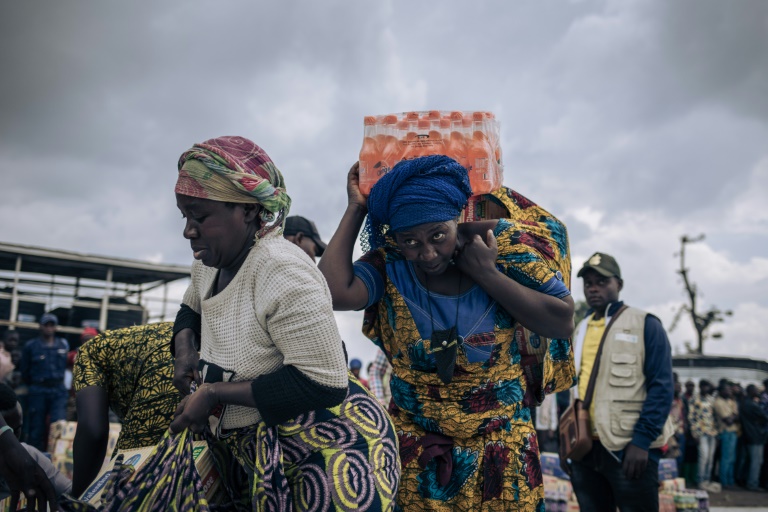
In the eastern DR Congo city of Goma, fears are rising of an imminent assault by a bloody rebel group whose resurgence has stoked diplomatic tensions in central Africa.

A predominantly Congolese Tutsi militia called the M23 has returned after years of dormancy, conquering swathes of territory in troubled North Kivu province.

After a string of victories over the army, the M23 fighters are as close as several dozen kilometres from Goma, a commercial hub of a million people that it briefly captured a decade ago.

Militiamen over the weekend were in control of Rugari, a settlement about 30 kilometres (18 miles) north of the city, according to violence monitor Kivu Security Tracker (KST).

Many citizens now dread what could come next, and food prices are rocketing.

“My children refuse to go to school, they think it (the assault) could happen at any moment,” said Nsimire Foybe, a 58-year-old mother of eight, who sells potatoes and beans in Goma’s lively Birere market.

She added that a fellow vendor was so shocked on hearing of the M23’s vow to capture the city that she suffered a miscarriage and was still in hospital.

The M23 captured Goma in 2012, a move that gave it global prominence, but was beaten back by a joint Congolese-UN offensive and went into the sidelines.

The group took up arms again in late 2021, claiming that the Democratic Republic of Congo had failed to honour a pledge to integrate them into the army, among other grievances.

In June, it captured the strategic town of Bunagana, which lies on the border with Uganda.

Months of relative stasis have ended with the M23 capturing a string of settlements and a large army base, dramatically increasing the territory under its command. 

The militia has also cemented control over the highway leading out of Goma, sending the prices of basic goods such as rice and flour soaring in the city. Many people are afraid that food will run out. 

“The situation is going to become untenable,” said Giramata Mwiza, a wholesaler in Birere, one of Goma’s biggest markets. 

– ‘Criminals’ –

The M23’s resurgence has destabilised regional relations in central Africa, with the DRC accusing its smaller neighbour Rwanda of backing the militia.

Despite official denials from Kigali, an unpublished report for the United Nations seen by AFP in August pointed to Rwandan involvement with the M23.

The report added that the M23 plans to capture Goma in order to extract political concessions from the government in Kinshasa. 

On Saturday, amid fresh M23 victories, the DRC decided to expel Rwanda’s ambassador. 

Goma lies at the foot of an active volcano, Mount Nyiragongo, and is surrounded by rich, fertile soil.

Within the city, residents anxiously trade news about the front, although the situation remains relatively calm. 

Some have been cut off from loved-ones, such as motorbike driver Emmanuel Bahati, whose wife and children are stuck in Rutshuru, 70 kilometres (43 miles) to the north.

“We’re afraid — they’re criminals,” Issa Ruchekere, another motorcycle driver, said of the M23.  

If the group enters the city, blood will flow, he predicted.

“They consider us all FDLR,” he explained, referring to the Forces for the Liberation of Rwanda (FDLR) — a notorious Hutu rebel movement involved in the 1994 genocide of Tutsis in Rwanda. 

Kigali argues that the DRC works alongside the FDLR, something which Kinshasa has denied. 

Human Rights Watch said last month that the DRC army had fought alongside several armed groups, including the FDLR, in recent clashes with the M23. 

– ‘We’ll exterminate them’ –

Mwisha Dina, who lives in a western district of Goma, said he vividly remembered the day in 2012 when the M23 entered the city. 

“We were under heavy gunfire all night and the next day. I don’t want to see those days again,” he said.

On Monday, thousands in Goma protested against Rwanda and demanded weapons in order to be able to resist an attack on the city. 

Fiston Ketha, 36, who attended the demonstration, said that residents will be targeted because “the rebels know that the population is against them.” 

Denise Kahambu, a cloth merchant in the north of the city, said she wasn’t afraid of an assault. 

“If they come, we’ll exterminate them,” she said. 

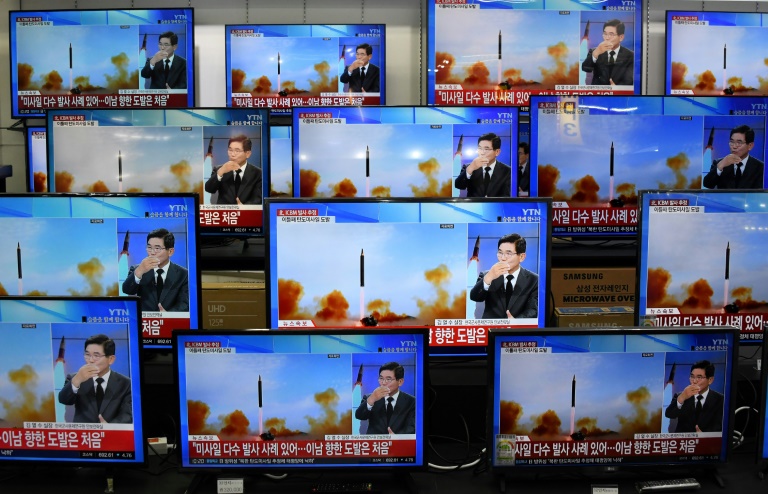
N. Korea ICBM launch appears to have failed, Seoul says

North Korea unsuccessfully fired an intercontinental ballistic missile during a new salvo of launches Thursday, the South Korean military said, with Washington urging all nations to enforce sanctions on Pyongyang.

In response to the launches, South Korea and the United States said they would extend their ongoing joint air drills, the largest-ever such exercises — a move Pyongyang immediately branded “an irrevocable and awful mistake”.

People in parts of northern Japan were ordered to seek shelter during the North’s latest launches, which included five short-range missiles and followed a blitz of projectiles fired Wednesday.

The largest of Thursday’s launches, however, “is presumed to have ended in failure”, the South Korean military said.

The United States slammed the ICBM launch, while the G7 club of rich nations said it condemned the flurry of missiles “in the strongest terms”.

“This action underscores the need for all countries to fully implement DPRK-related UN Security Council resolutions,” US State Department spokesman Ned Price said, using the North’s official name of the Democratic People’s Republic of Korea.

Washington also confirmed information provided by the South Korean military, which said earlier it had detected the launch of the long-range ballistic missile at around 7:40 am (2240 GMT Wednesday) in the Sunan area of Pyongyang.

Seoul’s Joint Chiefs of Staff said the ICBM appeared to have failed during “second-stage separation”.

“The range of the long-range ballistic missile is around 760 kilometres (470 miles), altitude of 1,920 kilometres at speed of Mach 15,” the military said.

It also detected what were “believed to be two short-range ballistic missiles fired at around 08:39 am from Kaechon, South Pyongan province”.

That was followed late in the day by three more short-range ballistic missiles fired towards the East Sea, also known as the Sea of Japan, according to Seoul’s Joint Chiefs of Staff.

South Korea’s military “is maintaining a full readiness posture while closely cooperating with the US and strengthening surveillance and vigilance”, it said.

– ‘Shocked and frightened’ –

Pyongyang fired more than 20 missiles on Wednesday, including one that landed near South Korea’s territorial waters, triggering an air raid siren warning on Ulleungdo, an island about 130 kilometres off the country’s east coast.

“We were shocked and frightened, as something like this had never happened before. We didn’t know where to take refuge,” said Chae Young-sim, a 52-year-old shopkeeper on the island.

One short-range ballistic missile crossed the Northern Limit Line, the de facto maritime border, on Wednesday, prompting President Yoon Suk-yeol to call it “effectively a territorial invasion”.

The launches come as Seoul and Washington stage their largest-ever joint air drills, involving hundreds of warplanes from both sides.

Pyongyang has called the exercise, dubbed Vigilant Storm, “an aggressive and provocative military drill targeting the DPRK”.

The exercise had been due to end Friday, but South Korea’s air force said Thursday that it would extend its air drills with the United States in response to the latest launches.

Pyongyang said this was “a very dangerous and false choice” and warned that Washington and Seoul’s “provocative military acts” were taking the situation into “an uncontrollable phase”.

America “and South Korea will get to know what an irrevocable and awful mistake they made”, Pak Jong Chon, secretary of the Central Committee of the Workers’ Party of Korea, said in a statement carried by news agency KCNA.

Tokyo confirmed Thursday’s launches, with the Japanese government issuing a special warning to residents of northern regions to stay indoors or seek shelter.

Tokyo initially said the ICBM had flown over Japan, prompting a “J-Alert” to be issued, but defence minister Yasukazu Hamada later said “the missile did not cross the Japanese archipelago, but disappeared over the Sea of Japan”.

– ‘Tactical nuclear drills’ –

Washington and Seoul have repeatedly warned that North Korean leader Kim Jong Un’s recent missile launches could culminate in another nuclear test — which would be Pyongyang’s seventh.

“Quite possible tactical nuclear weapons test(s) will be next. Possibly very soon,” Chad O’Carroll of Seoul-based specialist site NK News said on Twitter.

Ahn Chan-il, a North Korean studies scholar, agreed. 

“These are North Korea’s pre-celebration events ahead of their upcoming nuclear test,” he told AFP.

“They also seem like a series of practical tests for their tactical nuclear deployment.”

North Korea revised its laws in September to allow for pre-emptive nuclear strikes, with leader Kim declaring the country to be an “irreversible” nuclear power — effectively ending negotiations over its banned arms programmes.

On October 4, North Korea fired a missile over Japan that also prompted evacuation warnings. It was the first time North Korea had fired a missile over Japan since 2017.

Pyongyang later claimed that the launch and a blizzard of other tests around the same time were “tactical nuclear drills” that simulated showering South Korea with nuclear-tipped missiles.

Canada trade surplus doubles as wheat shipments rebound

Canada’s trade surplus doubled to Can$1.1 billion (US$800 million) in September from the previous month as wheat shipments rebounded strongly, the national statistical agency said Thursday.

Exports increased 1.3 percent — at a slower pace than in previous months — to Can$66.4 billion, while imports were up just 0.4 percent to Can$65.2 billion, according to Statistics Canada.

Following a poor harvest last year, wheat shipments to other countries rebounded (+65.2 percent) and canola exports nearly doubled.

Exports of crude oil and natural gas were also up, but exports of coal, potash and lumber fell.

The availability of updated Covid vaccines, meanwhile, drove an increase in imports, which were also up on more inbound shipments of machinery and equipment used, for example, in logging, construction, mining, and oil and gas fields — some of it destined for Alberta wind farm projects.

Canada’s trade surplus with the United States — its neighbor and largest trading partner — narrowed slightly to Can$9.8 billion.

The September figures rounded out a third quarter that saw total exports fall 2.3 percent, led by a drop in shipments of energy products, and an 0.8 percent increase in imports as demand for cars and trucks as well as industrial machinery picked up.

Those gains were partially offset by lower imports of metal and non-metallic mineral products in the quarter.

US trade deficit widens in September as imports rise

The US trade gap widened in September after five straight months of decline, government data showed Thursday, on cooling food and energy exports while imports of products like semiconductors and consumer goods picked up.

Although companies had rushed to replenish depleted inventories to meet strong demand from consumers, analysts caution that domestic demand in the United States would weaken while a strong dollar and slowing global growth bog down exports.

In September, the overall trade deficit widened to $73.3 billion, up from a revised $65.7 billion figure in August, Commerce Department data showed.

The expansion was more than analysts expected and came as exports dipped to $258 billion on a drop in industrial supplies such as crude oil and food like soybeans.

Imports rose to $331.3 billion, helped by shipments of semiconductors and consumer goods including cell phones.

The imports rise in September was “likely a result of businesses pulling in holiday inventory in early to avoid supply disruptions,” said Matthew Martin of Oxford Economics in a note.

But a “precipitous decline in ocean and air freight volumes, coupled with the recent slowdown in the trucking market, signal a clear slowing of domestic demand,” he added.

The US deficit with China decreased $1.4 billion to $32.1 billion in September, data showed.

While there has been strong demand from US consumers, soaring inflation has raised concerns that shoppers will pull back, causing firms to become more cautious.

The Federal Reserve has been raising interest rates aggressively to cool the economy and bring down surging prices, but stubbornly high costs has meant many families have to spend a greater share of their incomes on staple goods.

The central bank announced a fourth straight bumper rate hike on Wednesday, with Fed Chair Jerome Powell saying that it remains “premature” to think about pausing the increases.

Higher interest rates have also strengthened the US dollar, making American goods relatively more expensive, which could weigh on exports.

“Looking ahead, trade flows are likely to weaken,” said economist Rubeela Farooqi of High Frequency Economics in an analysis.

Close Bitnami banner
Bitnami