World

Stock markets sink, dollar jumps

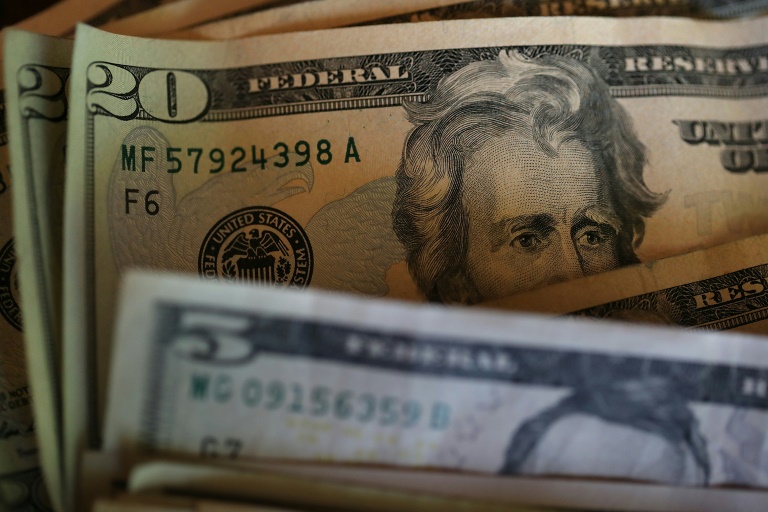
Stock markets around the world sank Thursday while the dollar rallied after the Federal Reserve warned US interest rates would go higher than previously expected in its fight against decades-high inflation.

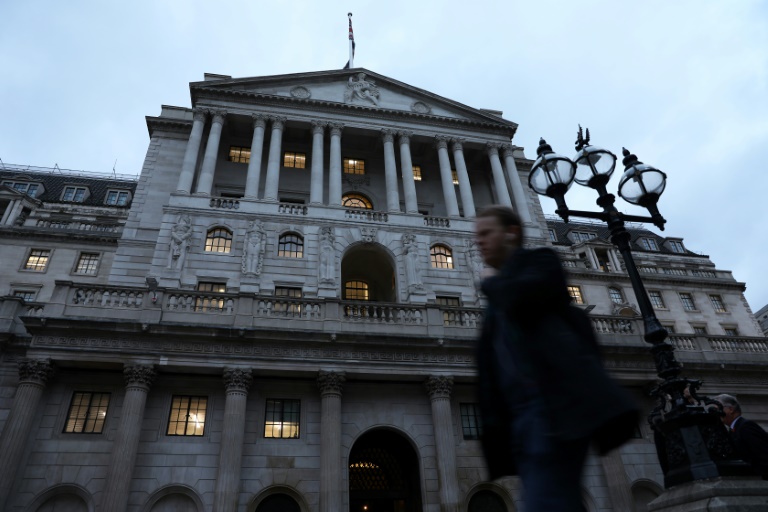
Meanwhile the Bank of England warned that Britain faced a recession set to last until mid-2024.

The Fed on Wednesday unveiled a fourth straight 0.75-percentage-point increase as expected — the sixth hike this year to cool rampant prices.

The dollar rose strongly against the pound on Thursday despite the Bank of England also delivering a 0.75-percentage-point hike — the largest in 33 years — to 3.0 percent, or the highest rate since 2008.

The pound fell by two percent against the dollar in afternoon trading.

Norway’s central bank raised its policy rate for a fourth consecutive time, with a quarter-point increase that took it to its highest level since 2009 at 2.5 percent.

European Central Bank president Christine Lagarde flagged more interest rate hikes on Thursday with comments that a “mild” eurozone recession was looming but would not be enough to bring down record-high inflation.

Oil prices also fell heavily on Thursday as aggressive rate hikes increase expectations of a global recession.

Hong Kong led stock market losses as the city’s central bank hiked rates in line with the Fed, owing to their policy link via the dollar peg.

Traders gave back a chunk of the previous two days’ gains, which came on the back of speculation China was planning to roll back some of its painful zero-Covid policies.

Adding to the selling was confirmation from Beijing’s health authority that it intended to stick to the strategy.

– ‘Some ways to go’ –

“Stocks fell… after the Federal Reserve raised benchmark interest rates and warned that there was still some ways to go in its efforts to tame inflation,” said Mark Haefele, chief investment officer at UBS Global Wealth Management.

Before the Fed announcement, stocks had rallied for more than a week on speculation the US central bank would indicate that its rate tightening could soon reach a peak as the world’s biggest economy showed signs of slowing.

Yet Fed chief Jerome Powell poured cold water on these hopes for a “pivot” in policy, telling a news conference that “incoming data since our last meeting suggests that ultimate level of interest rates will be higher than previously expected”.

He added that “we still have some ways” until borrowing costs were at the necessary level and that it “is very premature to be thinking about pausing”.

Briefing.com analyst Patrick O’Hare said that for investors “the point that registered was (Powell’s) view that it is very premature to talk about pausing the rate hikes”.

Another key point was that “the Fed still has a ways to go to get the policy rate to a restrictive level that is sufficient for getting inflation back down to the 2.0 percent target,” O’Hare noted.

Moreover, Powell indicated “that the Fed’s terminal rate is apt to be higher than previously expected and is likely to be held there longer than previously expected,” which upended previous market expectations.

Investors now expect Fed rates to top out at more than five percent, compared with four percent previously.

Global equities have slumped this year on mounting fears that rising borrowing costs will curtail consumer and business spending and spark a global recession.

“The Federal Reserve… didn’t offer any real crumbs of comfort for traders or indeed the global economy when it came to how rapidly the now relentless — and potentially damaging — run of rate hikes may conclude,” said Scope Markets analyst James Hughes.

– Key figures around 1330 GMT –

London – FTSE 100: DOWN 0.5 percent at 7,110.98 points

Frankfurt – DAX: DOWN 1.6 percent at 13,040.32

Paris – CAC 40: DOWN 1.3 percent at 6,196.72

EURO STOXX 50: DOWN 1.5 percent at 3,566.85

New York – Dow: DOWN 0.8 percent at 31,893.44

Hong Kong – Hang Seng Index: DOWN 3.1 percent at 15,339.49 (close)

Shanghai – Composite: DOWN 0.2 percent at 2,997.81 (close)

Tokyo – Nikkei 225: Closed for a holiday

Pound/dollar: DOWN at $1.1174 from $1.1390 Wednesday

Euro/dollar: DOWN at $0.9753 from $0.9816

Dollar/yen: UP at 148.15 yen from 147.90 yen

Euro/pound: UP at 87.24 pence from 86.17 pence

Brent North Sea crude: DOWN 1.5 percent at $94.73 per barrel

West Texas Intermediate: DOWN 1.9 percent at $88.26 per barrel

burs-rl/imm
Bank of England warns UK faces two-year recession, hikes rate

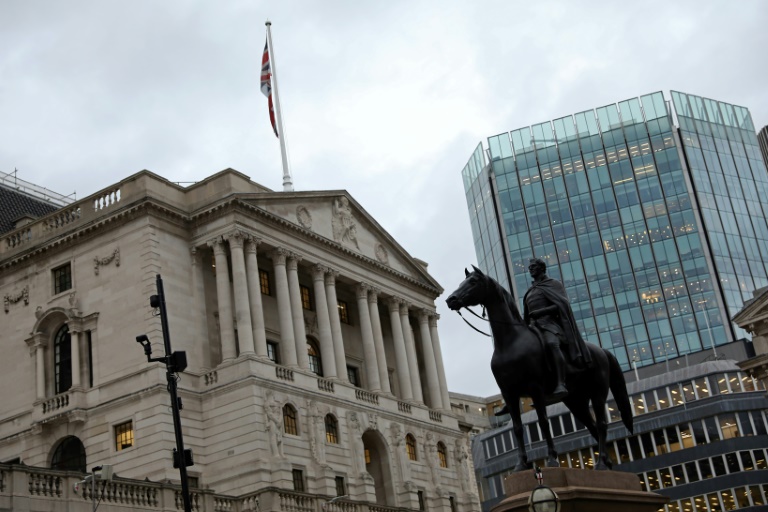
The Bank of England on Thursday announced its biggest interest rate hike since 1989 to combat sky-high inflation that it warned was pushing Britain into a recession set to last until mid-2024.

Following a regular meeting, the BoE said it was lifting borrowing costs by 0.75 percentage points to three percent — the highest level since the 2008 global financial crisis — to cool UK inflation that it sees shortly peaking at a four-decade high near 11 percent.

“It is a tough road ahead,” BoE governor Andrew Bailey told a press conference.

“The sharp increase in energy prices caused by Russia’s invasion of Ukraine has made us poorer as a nation. The level of economic activity is likely to be flat and even fall for some time,” he warned.

The latest rate increase mirrors aggressive rate-tightening by central banks worldwide as food prices and energy bills soar.

On Wednesday, the US Federal Reserve sprang a fourth consecutive hike of 0.75 percentage points — and its boss Jerome Powell suggested they would go higher than expected.

The BoE said British inflation would peak at 10.9 percent this year, but with the level so high, analysts said the central bank rate could hit as high as five percent in the coming months.

– ‘Prolonged recession’ –

Minutes of its meeting warned of a “challenging outlook for the UK economy” that was “expected to be in recession for a prolonged period”, dealing a blow to Britain’s troubled government.

The BoE said the economy had shrunk since the third quarter, entering a technical recession that is forecast to last until the first half of 2024.

The pound tumbled two percent against the dollar on expectations of a long-lasting recession.

“A typical textbook trade is out of the window because currencies usually move higher when a central bank increases rates,” noted Naeem Aslam, chief market analyst at Avatrade.

“Tough times are ahead, and we are going to see the economy, markets, and the currency tanking in the coming months.”

London’s FTSE 100 shares index fared better, losing about half-a-percent.

– Cost-of-living crisis –

The BoE rate increase is set to worsen a cost-of-living crisis for millions of Britons as hikes by central banks see retail lenders push up interest rates on their own loans.

“The central bank has had the unenviable job of fighting soaring inflation amid enormous economic and political uncertainty,” said Craig Erlam, analyst at trading platform OANDA.

Repayments on UK mortgages have surged in recent weeks also after the debt-fuelled budget of previous British prime minister Liz Truss spooked markets, forcing her to resign and triggering emergency buying of UK government bonds by the BoE.

Her successor Rishi Sunak has attempted to bring calm to markets by hinting at tax rises in a fresh budget on November 17, even if such a move further harms Britain’s economy.

“I think everyone knows we do face a challenging economic outlook and difficult decisions will need to be made,” Sunak, a former UK finance minister, told parliament on Wednesday.

British annual inflation stands at 10.1 percent, the highest level in 40 years.

As the Covid-19 pandemic began in early 2020, the BoE slashed its key interest rate to a record-low 0.1 percent and also pumped massive sums of new cash into the economy.

The Bank of England started raising rates last December, while Thursday’s hike was the eighth increase in a row.

“Importantly, most of the tightening in policy over the past year was yet to feed through to the real economy,” said the BoE minutes.

Former Pakistan PM Imran Khan wounded in assassination attempt

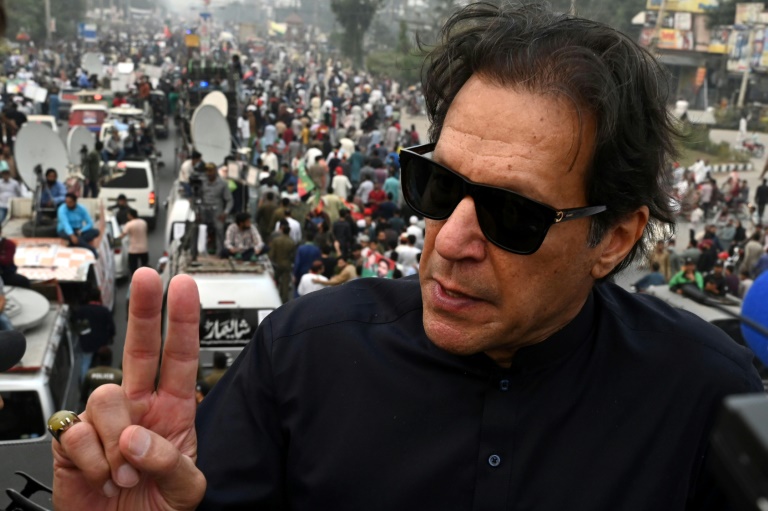
Former Pakistan Prime Minister Imran Khan was in stable condition after being shot in the leg at a political rally on Thursday in what the country’s president deemed “a heinous assassination attempt”.

The former international cricket star has been leading a chaotic convoy of thousands since Friday from the city of Lahore towards the capital, Islamabad, campaigning for fresh elections after being ousted from office in April.

“This was an attempt to kill him, to assassinate him,” senior aide, Raoof Hasan, told AFP.

Khan was wounded when shots were fired at him and other officials standing on the top of a modified container truck as it slowly drove through a thick crowd near Gujranwala.

“There was a guy who was in front of the container who had this automatic pistol. He fired a burst. Everyone who was standing in the very front row got hit,” former information minister Fawad Chaudhry, who was standing behind Khan, told AFP.

He said supporters in the crowd tried to snatch the gun from the attacker.

“In that scuffle he missed the target. There was so much blood on the container.”

Six people on the container were hit and one supporter killed, he said.

There was no immediate comment from police.

Officials from Khan’s Pakistan Tehreek-e-Insaf said Khan was being treated at a hospital in Lahore and was in stable condition.

Video published on social media shows Khan being in hospital with a bandage around his right calf.

In a tweet, Pakistan’s President Arif Alvi called it “a heinous assassination attempt”.

“I thank Allah that he is safe but injured with few bullets in his leg & hopefully non-critical,” he said.

– ‘Die for the country’ –

Pakistan has been grappling with Islamist militants for decades, and politicians are frequently targeted by assassination attempts.

The attack on Khan had echoes of the 2007 assassination of another former prime minister, Benazir Bhutto, who died when a huge bomb detonated near her vehicle as she greeted supporters in Rawalpindi while standing up through the roof hatch.

Just months earlier she had survived another attempt on her life, when her motorcade was targeted in Karachi, killing more than 130 people.

Each day since starting his so-called “long march” 70-year-old Khan has mounted a shipping container towed by a lorry, making speeches from the open top to crowds of thousands in cities and towns along the way.

He was booted from office in April by a no-confidence vote after defections by some of his coalition partners, but he retains mass public support in the South Asian country.

Khan was voted into power in 2018 on an anti-corruption platform by an electorate tired of dynastic politics.

But his mishandling of the economy — and falling out with a military accused of helping his rise — sealed his fate.

Since then, he has railed against the establishment and Prime Minister Shehbaz Sharif’s government, which he says was imposed on Pakistan by a “conspiracy” involving the United States.

Khan has repeatedly told supporters he was prepared to die for the country, and aides have long warned of unspecified threats made on his life.

bur-/fox/ecl/mca

NGO asks France, Spain, Greece to help 234 Mediterranean migrants

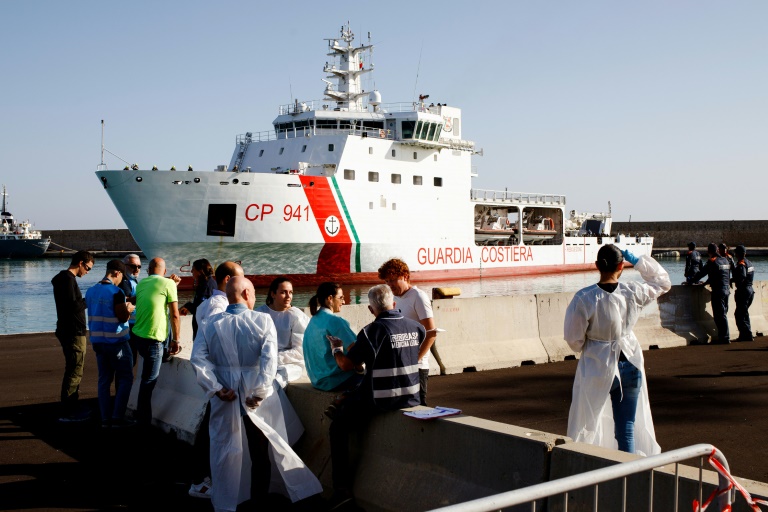
Migrant rescue group SOS Mediterranee said Thursday that it had called on the governments of France, Greece and Spain to help find a port for 234 people rescued while trying to reach Europe, after Italy and Malta failed to respond. 

The NGO, whose Ocean Viking vessel responds to migrants in distress in the Mediterranean, said it was the first time it had pleaded for direct help from the three countries.

“We’re not asking France to open a port, but to help us find a solution,” SOS Med director Sophie Beau told AFP, saying the ship was currently south of Sicily.

Since embarking on its latest mission on October 22, the group asked Malta and Libya, the country from which most migrants hoping to reach Europe from Africa depart, to allow them into port, since they were the nearest countries to the rescue sites.

Beau said neither had responded even as weather conditions worsen, with high winds, strong waves and lower temperatures forecast for coming days.

The ship then requested aid from Italy, whose new Prime Minister Giorgia Meloni has vowed to stop migrants from crossing to Europe from Africa.

As of Thursday, it had no official response, but the group said that it was facing “a complete blockage in high sea and an implicit ban from entering” Italian ports.

A ship operated by the SOS Humanity nongovernmental organisation is also stranded with hundreds of migrants onboard, SOS Med said.

“This is the first time we’ve appealed” to France, Greece and Spain for assistance in finding a port for rescued migrants, Beau said, adding that so far none had responded.

Since the beginning of this year, 1,765 migrants have died or gone missing in the central Mediterranean, making it the most perilous migrant route in the world, according to the UN’s International Organization for Migration.

Make glasses cool with new emojis, urges UK schoolgirl

British schoolgirl Lowri Moore is just 13 but has achieved a lot in her short life, championing children who like her wear glasses.

Aged nine, she persuaded Disney to create a bespectacled heroine for the first time, in the hit film “Encanto”.

Her #GlassesOn campaign has meanwhile struck a chord with thousands of young people and their parents around the world.

Now she has another US giant in her sights.

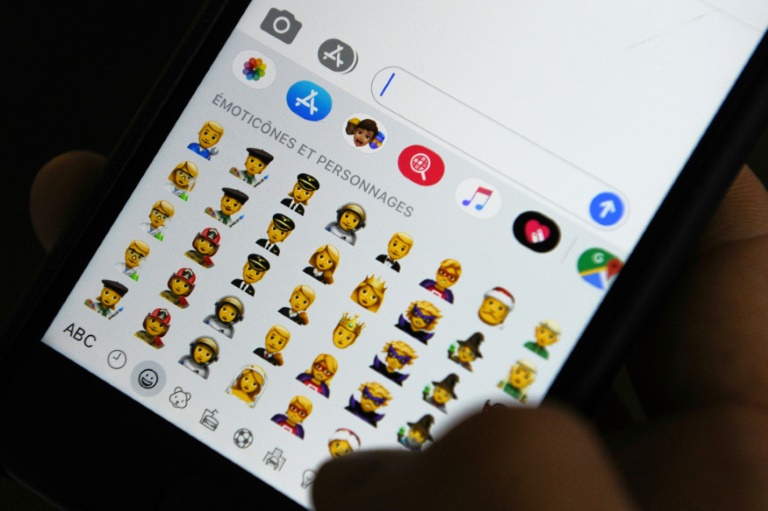
The teenager from Nottinghamshire, central England, is urging the body responsible for all new emojis to give people the option to put glasses on them.

She says many people believe that children being stigmatised for wearing glasses is a thing of the past.

But she argues many children still resist wearing their glasses for fear of appearing “different or uncool”.

Research shows children with spectacles are over 35 percent more likely to be bullied at school, and not wearing them can have far-reaching consequences.

“We are in touch with a professor who works in Botswana to give children glasses and he said that most of the children that get glasses don’t want to wear them for fear of being different and not cool,” Lowri told AFP.

– ‘Biggest fan’ –

She said that without glasses you need, “you won’t be able to learn and that will limit your job options and you will probably really struggle in life all because you didn’t wear your glasses. That’s not fair.”

Lowri’s latest campaign was sparked when her mother Cyrilyn tried to find an emoji relevant to her daughter.

“She was looking for an emoji that would represent me but all she found was a nerd.

“She kept on looking and there was a granny and a teacher but obviously that doesn’t represent me,” she said.

Lowri said it was great there were some bespectacled emojis, but three was not enough.

“It’s not really positive so we’re just asking for the option of putting glasses onto already existing emojis,” she said after handing in copies of her letter at the London offices of tech giants Google and Meta on Wednesday.

Lowri’s campaigning began in 2019 when she wrote to Disney calling for more characters with glasses in their films.

Two years later, the “Encanto” character Mirabel Madrigal hit the big screen.

Director Jared Bush revealed he had been inspired by the schoolgirl’s letter, telling her: “I am your biggest fan, I’m so impressed by you.”

The director also said he had wanted to let her know much earlier, but had to keep it secret until the movie was in the bag.

– ‘Negative stereotypes’ –

In her latest letter, Lowri praised the Unicode Consortium, the non-profit organisation based in California that oversees new emojis, for offering users more choice.

But she urged them to go further.

“I’d love to see the option to add glasses to face emojis, similar to changing skin colour or hair colour as you have already made available,” she wrote.

Having the current “nerd” emoji as the only one available for young people could be “damaging as it helps to confirm the negative stereotype and stigma that we are trying hard to destroy”, she added.

Lowri’s campaigning success was recognised earlier this year when she was named “Campaigner of the Year” by the International Agency for the Prevention of Blindness (IAPB).

Failing to wear glasses can prevent children’s eyes from developing normally and lead to avoidable eye conditions.

Jessica Thompson of the IAPB, which works in over 100 countries worldwide, said Lowri’s advocacy was helping to highlight the damage to children’s futures of not wearing glasses.

“If you struggle to see, you struggle to learn,” she told AFP.

Wearing glasses was the single “most effective” health intervention for schoolchildren, “reducing the odds of failing a class by 44 percent”, she added.

Former Pakistan PM Imran Khan stable after 'assassination attempt'

Former Pakistan Prime Minister Imran Khan was in stable condition after being shot in the foot Thursday at a political rally in what the country’s president deemed “a heinous assassination attempt”.

Khan has been leading a march since Friday from the city of Lahore towards the capital, Islamabad, campaigning for fresh elections after being ousted from office in April.

Khan was wounded when shots were fired from the crowd near Gujranwala, his senior aide, Raoof Hasan, told AFP.

“This was an attempt to kill him, to assassinate him,” Hasan said, adding that one alleged attacker had been shot dead and a second taken into police custody.

In a tweet, Pakistan’s President Arif Alvi also called it “a heinous assassination attempt”.

“I thank Allah that he is safe but injured with few bullets in his leg & hopefully non-critical,” he tweeted.

Pakistan has been grappling with Islamist militants for decades, and politicians are frequently targeted by assassination attempts.

In 2007 the nation’s first female leader Benazir Bhutto was slain in a suicide attack which still remains unsolved.

Each day during his so-called “long march” 70 year-old Khan has mounted a shipping container towed by a lorry, making speeches from the open top to crowds of thousands in cities and towns along the way.

– ‘Die for the country’ –

The former international cricket star was booted from office in April by a no-confidence vote after defections by some of his coalition partners, but he retains mass public support in the South Asian country.

Khan was voted into power in 2018 on an anti-corruption platform by an electorate tired of dynastic politics.

But his mishandling of the economy — and falling out with a military accused of helping his rise — sealed his fate.

Since then, he has railed against the establishment and Prime Minister Shehbaz Sharif’s government, which he says was imposed on Pakistan by a “conspiracy” involving the United States.

Khan has repeatedly told supporters he was prepared to die for the country, and aides have long warned of unspecified threats made on his life. 

Bank of England delivers biggest rate hike in 33 years

The Bank of England delivered Thursday its biggest interest rate hike since 1989 to combat soaring inflation and warned that Britain faced a recession set to last until mid-2024.

Britain’s economy has entered a recession set to last until mid-2024, the Bank of England said Thursday as it hiked its key interest rate by the biggest amount since 1989.

Following a regular meeting, the BoE said it was lifting borrowing costs by 0.75 percentage points to three percent — the highest level since the 2008 global financial crisis — with UK inflation at a four-decade high above 10 percent.

The latest rate hike mirrors aggressive rate-tightening by central banks worldwide as economies battle the highest prices in decades.

On Wednesday, the US Federal Reserve sprang a fourth consecutive hike of 0.75 percentage points — and its boss Jerome Powell suggested they would go higher than expected.

The BoE said British inflation would peak at 10.9 percent this year.

Minutes of its meeting said the economy was “likely to be entering recession”. 

They added: “Importantly, most of the tightening in policy over the past year was yet to feed through to the real economy.”

– Cost-of-living crisis –

The BoE rate increase is set to worsen a cost-of-living crisis for millions of Britons as hikes by central banks see retail lenders push up interest rates on their own loans.

“The central bank has had the unenviable job of fighting soaring inflation amid enormous economic and political uncertainty,” said Craig Erlam, analyst at trading platform OANDA.

Repayments on UK mortgages have surged in recent weeks also after the debt-fuelled budget of previous British prime minister Liz Truss spooked markets, forcing her to resign and triggering emergency buying of UK government bonds by the BoE.

Her successor Rishi Sunak has attempted to bring calm to markets by hinting at tax rises in a fresh budget on November 17, even if such a move further harms Britain’s economy.

“I think everyone knows we do face a challenging economic outlook and difficult decisions will need to be made,” Sunak, a former UK finance minister, told parliament on Wednesday.

British annual inflation stands at 10.1 percent, the highest level in 40 years, on soaring food prices and energy bills.

As the Covid-19 pandemic began in early 2020, the BoE slashed its key interest rate to a record-low 0.1 percent and also pumped massive sums of new cash into the economy.

The Bank of England started raising rates last December and Thursday’s hike was the eighth increase in a row.

Europe could face gas shortage next year: IEA

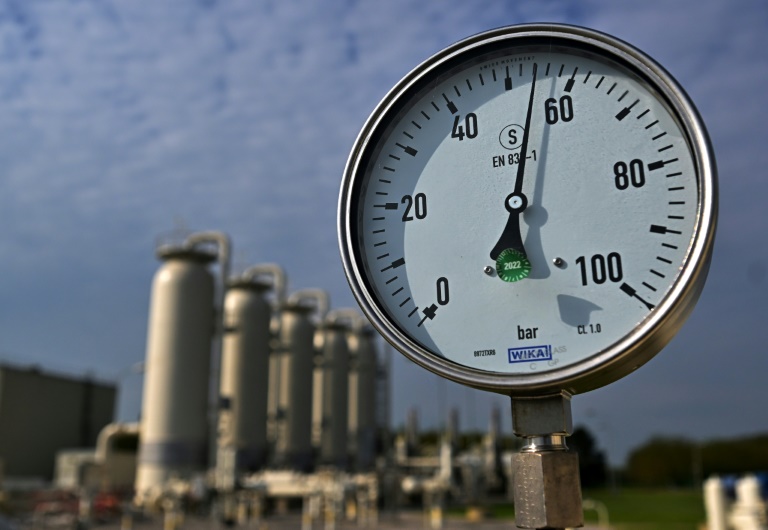
Europe must act immediately to prevent a shortage of natural gas next year as Russia slashes deliveries in the wake of the Ukraine war, the International Energy Agency warned Thursday.

The IEA said the shortfall would occur if Russia stops pipelines deliveries completely and China steps up its imports of liquefied natural gas, which Europe has relied upon to replace Russian supplies.

The region could lack 30 billion cubic metres that it needs “to fuel its economy and sufficiently refill storage sites during the summer of 2023, jeopardising its preparations for the winter of 2023-24,” the Paris-based agency said in a report.

Russia drastically cut supplies to Europe in suspected retaliation against Western sanctions over its invasion of Ukraine, but the region was able to fill storage sites for this upcoming winter.

Moscow delivered 60 billion cubic metres of gas to Europe this year, but the IEA said that it is “highly unlikely” that Russia will provide the same amount in 2023 and could cease deliveries entirely.

And while Chinese LNG imports were lower in the first 10 months of this year, the world’s second biggest economy could grab 85 percent of the expected increase in global LNG supplies if its purchases recover next year.

“With the recent mild weather and lower gas prices, there is a danger of complacency creeping into the conversation around Europe’s gas supplies, but we are by no means out of the woods yet,” IEA Executive Director Fatih Birol said in a statement.

Birol warned that Europe will face “an even sterner challenge” next winter.

“This is why governments need to be taking immediate action to speed up improvements in energy efficiency and accelerate the deployment of renewables and heat pumps — and other steps to structurally reduce gas demand,” he said.

Birol told reporters that Europe’s gas storage sites may only be 65 percent full in 2023, compared to 95 percent this year.

East Ukraine hospital that stayed open despite war, occupation

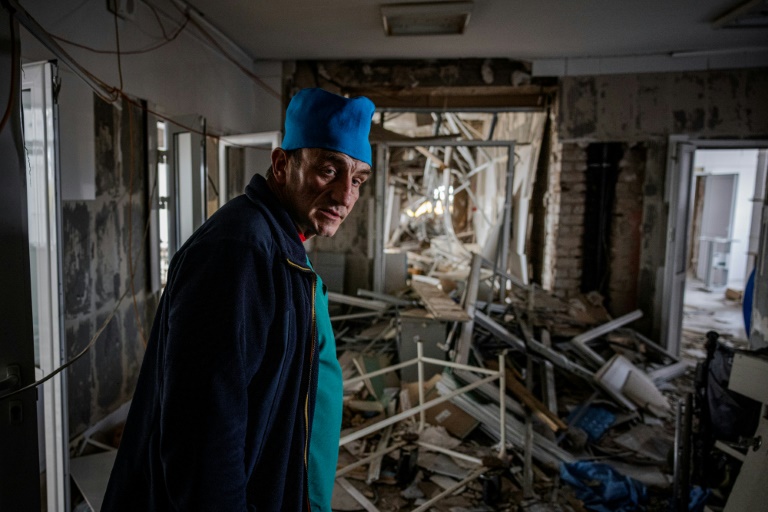
In six months of Russian occupation and eight months of fighting, Izyum hospital in eastern Ukraine never stopped working, operating on wounded civilians in its basement while awaiting liberation.

This small but strategic town in the Kharkiv region was seized by Moscow in March and fully occupied a month later.

Its recapture by Ukrainian troops on September 11 was a strategic victory for Kyiv, although its pre-war population of some 46,000 residents has dwindled to around 8,000 or 9,000.

Since then, the hospital has managed to regain some semblance of normality after being connected to a generator and workers gradually replaced shattered windows.

In a heated ground-floor corridor that smells of bleach, a patient wanders by in his pyjamas as a cleaner mops the floor and a secretary busies herself with admission files.

“We have about 200 patients today, compared with 50 in June,” says Yuri Kuznetsov, a 52-year-old surgeon who runs the hospital.

“This was where our operating theatre and intensive care unit used to be,” he says, pointing to the gaping hole and destruction left by a missile attack in March.

– ‘Hardest thing was staying alive’ –

His face lined with fatigue, the doctor blames his exhaustion on his night shift, not the six months he spent every waking hour tending the wounded in the dirt and rubble, under the noses of the occupying Russian troops who set up camp next door.

“The most difficult time was at the start (of the occupation) with so much uncertainty about what they were going to do to us,” he recalls.

Kuznetsov said there were “some struggles at the beginning” but the Russians let him continue treating Ukrainian patients, helped by a couple of nurses who stayed behind.

The Russian troops set up their own field hospital in a neighbouring basement.

“They were right there, about 20 metres (yards) from my office,” says Kuznetsov, who spoke with them every day but says they never asked him to operate on wounded Russian soldiers.

“Doing our job wasn’t the hardest thing, the hardest thing was just staying alive” he recalls of those dark days. 

Several weeks after the town of Izyum was recaptured, Ukraine said it discovered a mass grave containing at least 450 bodies, most bearing signs of violent death, in a nearby forest.

Thirty of them showed “signs of torture”, regional officials said.

– Stretchers as operating tables –

Since the war began, the hospital has lost two of its staff: a forensic scientist who was shot dead and a doctor who died under the rubble of his own home. 

With the town ravaged by constant bombardment, the hospital set up an emergency room in the basement where stained stretchers served as operating tables among piles of cardboard boxes and dirt. 

“We lost patients because we didn’t have the right equipment and medication but by the grace of God, we were able to limit the number of deaths,” he said.

One of those saved was a man who sustained a gunshot wound to the abdomen. 

“Several weeks ago, my office door opened, and the man came in and said: ‘Doctor, do you remember me? I’m alive!’,” Kuznetsov says.

“We have all had moments when we thought of fleeing. We’ve all had meltdowns and periods of depression,” he admits.

“But it’s moments like that and the solidarity of my colleagues that have kept me here,” he smiles, eager to get home and finally put his head down for some rest. 

Stock markets sink, dollar jumps on central bank watch

Asian and European stock markets sank and the dollar rallied Thursday after the Federal Reserve warned US interest rates would go higher than previously expected in its fight against decades-high inflation.

The Fed on Wednesday unveiled a fourth straight 0.75-percentage-point increase as expected — the sixth hike this year to cool rampant prices.

The dollar on Thursday rose strongly against main rival including the pound and as the Bank of England was set to deliver its own bumper interest-rate hike in a decision due at 1200 GMT. 

The BoE is tipped to lift its key rate by 0.75 percentage points to three percent — the most in 33 years and putting British borrowing costs at the highest level since 2008.

Norway’s central bank raised its policy rate for a fourth consecutive time, with a quarter-point increase that took it to its highest level since 2009 at 2.5 percent.

Oil prices also fell heavily on Thursday as aggressive rate hikes increase expectations of a global recession.

Hong Kong led stock market losses as the city’s central bank hiked rates in line with the Fed, owing to their policy link via the dollar peg.

Traders gave back a chunk of the previous two days’ gains, which came on the back of speculation China was planning to roll back some of its painful zero-Covid policies.

Adding to the selling was confirmation from Beijing’s health authority that it intended to stick to the strategy.

– ‘Some way to go’ –

“Stocks fell… after the Federal Reserve raised benchmark interest rates and warned that there was still some ways to go in its efforts to tame inflation,” said Mark Haefele, chief investment officer at UBS Global Wealth Management.

Before the Fed announcement, stocks had rallied for more than a week on speculation the US central bank would indicate that its rate tightening could soon reach a peak as the world’s biggest economy showed signs of slowing.

Yet Powell poured cold water on those hopes, telling a news conference that “incoming data since our last meeting suggests that ultimate level of interest rates will be higher than previously expected”.

He added that “we still have some ways” until borrowing costs were at the necessary level and that it “is very premature to be thinking about pausing”.

Investors now expect Fed rates to top out at more than five percent, compared with four percent previously.

Global equities have slumped this year on mounting fears that rising borrowing costs will curtail consumer and business spending and spark a global recession.

“The Federal Reserve… didn’t offer any real crumbs of comfort for traders or indeed the global economy when it came to how rapidly the now relentless — and potentially damaging — run of rate hikes may conclude,” said Scope Markets analyst James Hughes.

– Key figures around 1030 GMT –

London – FTSE 100: DOWN 0.4 percent at 7,113.98 points

Frankfurt – DAX: DOWN 0.8 percent at 13,156.90

Paris – CAC 40: DOWN 0.6 percent at 6,238.31

EURO STOXX 50: DOWN 0.8 percent at 3,593.41

Hong Kong – Hang Seng Index: DOWN 3.1 percent at 15,339.49 (close)

Shanghai – Composite: DOWN 0.2 percent at 2,997.81 (close)

Tokyo – Nikkei 225: Closed for a holiday

New York – Dow: DOWN 1.6 percent at 32,147.76 (close)

Pound/dollar: DOWN at $1.1258 from $1.1390 Wednesday

Euro/dollar: DOWN at $0.9754 from $0.9816 

Dollar/yen: UP at 148.16 yen from 147.90 yen

Euro/pound: UP at 86.64 pence from 86.17 pence

Brent North Sea crude: DOWN 1.4 percent at $94.80 per barrel

West Texas Intermediate: DOWN 1.8 percent at $88.40 per barrel

Close Bitnami banner
Bitnami