World

Ethiopia's warring sides agree to end fighting in breakthrough deal

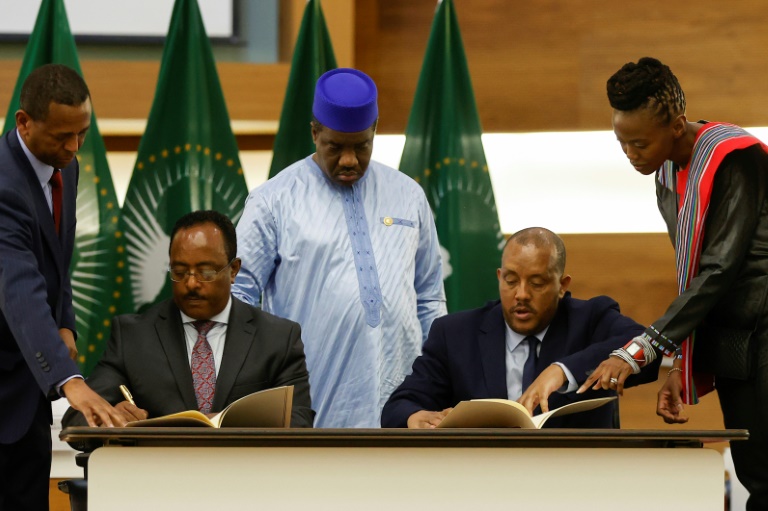
Warring sides in the brutal two-year conflict in Ethiopia’s Tigray on Wednesday declared they had set the goal of “permanently” ending the fighting, agreeing to a truce backed by a programme of disarmament and integration of rebels.

“We have agreed to permanently silence the guns and end the two years of conflict in northern Ethiopia,” the Ethiopian government and Tigray People’s Liberation Front (TPLF) said in a joint statement after marathon talks in South Africa.

The breakthrough was announced by the African Union’s mediator, former Nigerian president Olusegun Obasanjo. 

“The two parties in the Ethiopian conflict have formally agreed to the cessation of hostilities as well as the systematic, orderly, smooth and coordinated disarmament,” he said at a press conference in Pretoria.

The agreement marked a new “dawn” for Ethiopia, he said. 

The joint statement said the two sides “concluded a peace agreement” following “intensive negotiations.”

They notably agreed on a programme of “disarmament, demobilisation, and reintegration for TPLF combatants, taking into account the security situation on the ground,” it said.

The more than week-long talks marked the first formal dialogue for ending a war that has killed hundreds of thousands and unleashed a humanitarian crisis.

The Tigrayan rebels hailed the deal and said they had made “concessions.”

“We are ready to implement and expedite this agreement,” said the head of their delegation, Getachew Reda.

“In order to address the pains of our people, we have made concessions because we have to build trust.”

“Ultimately, the fact that we have reached a point where we have now signed an agreement speaks volumes about the readiness on the part of the two sides to lay the past behind them to chart a new path of peace,” said Getachew. 

The conflict erupted on November 4, 2020, when Addis Ababa sent troops into Tigray after accusing the TPLF, the regional ruling party, of attacking federal army camps.

According to US estimates, as many as half a million people have died in the war.

The conflict also triggered a humanitarian crisis, forcing well over two million people from their homes.

“We’ve agreed that the government of Ethiopia will further enhance its collaboration with humanitarian agencies to continue expediting aid towards those in need of assistance,” the joint statement said.

Fed delivers another steep rate hike with more to come

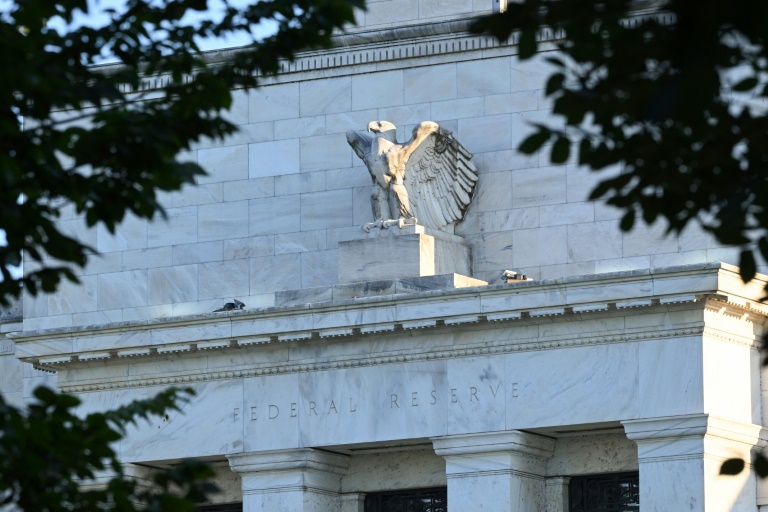
The Federal Reserve delivered another steep interest rate increase on Wednesday, as expected, with its move to cool red-hot inflation taking on more weight amid the political maelstrom ahead of key US midterm elections.

With high inflation squeezing American families of all political stripes, President Joe Biden faces a battle to avoid losing control of both chambers of Congress.

The Fed’s aggressive rate hikes this year so far have not had a noticeable impact on prices, but increase the risk the US economy could suffer a recession even as the job market remains strong.

The US central bank raised the benchmark borrowing rate by 0.75 percentage point — the fourth straight increase of that size and the sixth hike this year — in its all-out battle to tame inflation not seen since the 1980s.

The policy-setting Federal Open Market Committee (FOMC) signaled that more increases will be needed to tamp down rising prices but it will consider the impact on the economy when deciding on the pace of future moves — opening the door to the possibility it will implement smaller steps in coming months.

The latest three-quarter percentage point increase takes the benchmark lending rate to 3.75-4.0 percent, the highest since January 2008.

In a statement at the conclusion of its two-day policy meeting, the US central bank said more rate hikes “will be appropriate” to achieve a “sufficiently restrictive” level to tamp down inflation.

However, it added that, “in determining the pace of future increases” the Fed will “take into account the cumulative tightening of monetary policy, the lags with which monetary policy affects economic activity and inflation, and economic and financial developments.”

Analysts will scrutinize Fed Chair Jerome Powell’s press conference, due to start at 1830 GMT, for more clarity on whether the FOMC is considering easing off on its aggressive moves or even pausing the rate hikes to assess the impact on prices and the overall economy.

But he faces a difficult chore to balance concerns the Fed is moving too fast, while reaffirming its legal mandate to bring down inflation.

“It will be a challenge for the Fed to signal an eventual shift in policy while also communicating a steadfast commitment to bringing down inflation,” Nancy Vanden Houten of Oxford Economics said in an analysis ahead of the meeting.

She noted that a number of Fed officials in recent weeks have suggested it is time for the central bank to consider slowing the pace of increases to guard against raising rates too far.

While the housing market has cooled sharply amid higher borrowing costs, key inflation measures show prices continue to rise and the labor market remains tight, with job openings rising and private hiring accelerating in October.

– Political pressure –

As central bankers walk a tightrope fighting inflation while avoiding tipping the economy into a recession, politicians are ramping up pressure on Fed officials amid growing worries of an economic downturn.

Biden faces growing voter frustration over high inflation and signs a “red wave” that could sweep the opposition Republicans to power in the House and Senate.

Republicans put the blame for inflation and slower growth squarely on Biden, while the president’s Democrats worry the Fed moves will lead to higher unemployment.

Democratic Senator Sherrod Brown urged the Fed last month to show commitment to its dual mandate — of promoting maximum employment and stable prices — and moderate the rate hikes.

“For working Americans who already feel the crush of inflation, job losses will make it much worse,” Brown said in a letter to Powell.

But Powell has argued that allowing high inflation to become entrenched would inflict even more pain on American families and workers.

Oanda analyst Craig Erlam said it may be too late to avoid a recession “but the Fed has been very clear from the start that while a soft landing is the desirable and attainable outcome, getting inflation under control is the primary focus.”

Twitter could face crypto makeover, billionaire investor hints

Social media platform Twitter could become much more entwined with cryptocurrencies and blockchain in the future, one of the backers of Elon Musk’s $44 billion takeover hinted on Wednesday.

Changpeng Zhao, who owns crypto firm Binance and put $500 million into the takeover by the world’s richest man, gave his first hint that he would not be a completely silent investor.

“Let’s give Elon some time to get adjusted,” he told a press conference at the Web Summit tech conference in Lisbon, before adding that he was there to help Twitter in any future crypto-related moves.

Zhao was speaking on the first full day of the get together, which kicked off on Tuesday night with a plea from Ukraine’s first lady for IT workers to use their skills to save lives rather than end them.

“Some IT specialists in Russia have made their choice to be aggressors and murderers,” said Olena Zelenska, urging attendees to make the opposite choice.

The Web Summit brings together start-ups, investors, business leaders and agenda-broadening speakers –- linguist Noam Chomsky and heavyweight boxing champion Oleksandr Usyk are among this year’s line-up.

Organisers said all 70,000 tickets had been sold for the first full-scale edition since coronavirus restrictions halted in-person gatherings in 2020.

Although most major tech firms are represented, the most senior Silicon Valley figures rarely appear at such events any more.

Some attendees were happy with the lower-key approach at a conference that has previously seen the likes of Musk give talks.

“These conferences were getting too big, it was getting harder to find interesting things,” said attendee Gabriele Lemmle from Munich, adding that she was happier to focus on start-ups with fresh ideas.

– Crypto Twitter –

With Silicon Valley bosses in short supply, crypto chiefs filled the void.

In one of his talks, Zhao played down the current slump in his sector and argued that cryptocurrencies were among the most stable assets at the moment.

During his speech at the opening ceremony on Tuesday he had insisted that Musk was the boss and he had no plans for Twitter, but by Wednesday his tone had shifted.

“We want to be very supportive on anything that Twitter does with crypto and web3,” he said, referring to a notional future version of the web that would have crypto and blockchain at its heart.

The Web Summit comes at a time when the tech industry as a whole faces huge difficulties.

Firms are being roiled by supply chain problems, trade disputes between the US and China, plunging profits and creaky business models, and a wider economic slump that has sent investors and consumers fleeing.

But Mark MacGann, a former lobbyist for Uber who leaked thousands of compromising documents on his old firm in July, focused on the problems regulators face in trying to control big tech.

He said regulators were largely limited to issuing fines that were “pocket change” and did nothing to change the behaviour of big tech.

“When you become so big and so wealthy that you become ungovernable and impossible to regulate, that’s very dangerous for society and democracy,” he said. 

MacGann — who led Uber’s lobbying efforts in Europe between 2014 and 2016 — leaked thousands of documents earlier this year that led to widespread accusations that the ride-hailing app had broken the law — allegations the firm denied.

MacGann said Uber had improved since he left, but questioned why the firm was funnelling millions into lobbying designed to stop legislative efforts to give drivers more rights.

And he called for more protection for whistleblowers in tech, arguing that workers who revealed malpractice in the public sector enjoy more safeguards.

Web Summit organisers say more than 1,000 speakers will take part in the event, which runs until Friday, giving talks on subjects from cybersecurity to artificial intelligence.

Danish PM to form broader government after vote win

Denmark’s left-wing Prime Minister Mette Frederiksen on Wednesday kicked off the process of forming a new, broader government one day after scoring a narrow election victory.

The Social Democrats, the largest party in parliament with 50 of 179 seats and accustomed to leading minority governments, now want to govern across the political divide after Frederiksen secured their strongest election score since 2001.

“It will be very, very difficult. We don’t know if it will be possible, but we will try our utmost”, she told a party debate on Wednesday.

Earlier in the day, the prime minister formally presented the resignation of her outgoing government to Queen Margrethe.

The monarch then tasked her with trying to form a government, after individually meeting the leaders of Denmark’s 11 other parties in parliament.

The negotiations to build a government are to begin on Friday, Frederiksen said, and are expected to last several weeks.

She said a heavy workload awaited the future government.

“We need an emergency plan for the Danish healthcare system so that we can reduce waiting times. We need a long-term plan for the welfare system, and work must continue with the green transition”, she told reporters.

Her left-wing bloc, which includes five parties plus three seats from the autonomous territories Greenland and the Faroe Islands, won a majority of 90 seats in the election, compared to 73 for the right and far right, and 16 for the centre.

It was the Social Democrats’ best election outcome in two decades, gaining two seats and securing over 27 percent of the vote, and allows Frederiksen to enter negotiations from a position of strength. 

Frederiksen’s photo-finish win scuppered the hopes of former two-time prime minister Lars Lokke Rasmussen, who founded a new Moderates party just months earlier, of becoming kingmaker in the new administration.

– Broken dreams –

The Moderates won more than nine percent of votes and Lokke Rasmussen insisted he wanted to be “the bridge” between the left and right, but daily newspaper Jyllands-Posten concluded that “in theory, Mette can do without Lars Lokke”. 

While the Moderates will be part of negotiations, political scientist Rune Stubager, a professor at Aarhus University, expressed doubt they would be willing to “compromise sufficiently” to secure posts in the cabinet.

A “more realistic” plan for Frederiksen would be a coalition government with parties on the left, he told AFP.

While Frederiksen’s government was largely hailed for handling the Covid-19 pandemic, the election was triggered by the country’s so-called mink crisis.

The affair erupted after the government decided in November 2020 to cull the country’s 15 million minks over fears of a mutated strain of the novel coronavirus.

The decision turned out to be illegal, and the Social Liberal party propping up Frederiksen’s minority government threatened to topple it unless she called early elections to regain voters’ confidence.

The Social Liberals paid a price for the gamble, losing nine of their 16 seats and on Wednesday their party leader resigned.

– ‘Zero refugees’ –

To rule, the Social Democrats will still depend on support from the Social Liberals, which has made clear it will not support another minority one-party government.

Broad consensus for Denmark’s restrictive migration policy left the issue largely absent from the election campaign, but it could resurge in government negotiations.

Advocating a “zero refugee” policy, the outgoing government had worked on setting up a centre to house asylum seekers in Rwanda while their applications are processed.

The Social Liberals oppose the plan.

“It will be very difficult for the Social Democrats to turn soft or to the left on immigration, because that has been a very pivotal point in their strategy over the past five, six years,” Stubager said.

“To give up on that would have dramatic consequences for them.”

The far-right has heavily influenced Danish politics in recent decades, but three populist parties together won just 14.4 percent of votes and are not expected to play a key role in the upcoming negotiations.

The anti-immigration Danish People’s Party, which hovered above 20 percent a few years ago, fell to 2.6 percent, its worst result since entering parliament in 1998. 

A new party founded by former immigration minister Inger Stojberg, the Denmark Democrats, instead won 8.1 percent, on a platform of less centralisation, less influence from Europe and fewer immigrants.

Bolsonaro supporters urge Brazil military to keep him in power

Thousands of Jair Bolsonaro’s supporters called Wednesday for the Brazilian military to intervene and keep the right-wing president in power after he lost re-election over the weekend to leftist Luiz Inacio Lula da Silva.

After days of silence, Bolsonaro on Tuesday gave a short speech in which he neither accepted defeat nor congratulated Lula on his win, though his chief of staff took the podium afterward to say the president had “authorized” the transition to a new government.

Since then, his supporters have rallied in front of military installations in Brazil’s major cities to call for action. 

“Federal intervention now!” chanted some of the thousands who gathered in front of the Southeastern Military Command in the Latin American country’s biggest city, Sao Paulo, on Wednesday. 

“We want a federal intervention because we demand our freedom. We do not admit that a thief governs us,” Angela Cosac, 70, told AFP, next to a sign reading “SOS Armed Forces”. 

Another demonstration along Sao Paulo’s Paulista Avenue was also planned for later in the day.

Thousands also gathered in the capital, Brasilia, chanting “civil resistance.” In rainy downtown Rio de Janeiro, demonstrators were filmed by Brazilian media chanting: “Lula, thief, your place is in prison.”

– Blockades –

Protesters also maintained road blockades across the country for the third consecutive day, though the number decreased from 271 on Tuesday to 167 Wednesday, according to police.

In Sao Paulo, military police used tear gas to disperse a blockade on the main highway connecting the state with the central-west region of the country, after the Supreme Federal Court ordered the use of “all necessary measures” to open the roads.

Trucks sounded their horns while demonstrators, wearing yellow football jerseys, waved flags in front of passing vehicles, according to scenes broadcast on local television.

The blockades have caused disruptions across the country. The main airport in Sao Paulo, Guarulhos, cancelled 48 flights due to the protests, according to its press office.

The National Confederation of Industry warned on Tuesday of an “imminent risk of fuel shortages” if the roads were not quickly unblocked.

Infrastructure minister Marcelo Sampaio had asked late Tuesday for protesters to unblock the highways to allow medicine, supplies and fuel to circulate.

Bolsonaro on Tuesday said the roadblocks were “the fruit of indignation and a feeling of injustice at how the electoral process took place.”

“Peaceful protests will always be welcome,” he said.

That was interpreted by some supporters as a call to maintain the demonstrations.

“The dream is still alive,” said a message by one supporter on Tuesday on Telegram. “Fill the streets tomorrow.” 

Bolsonaro’s comments Tuesday broke his two days of silence on the election results, which had fanned fears he would not accept the outcome.

In a speech that lasted just over two minutes, the far-right incumbent did not mention Lula’s name, but promised to “comply” with the constitution.

His chief of staff then told the gathered press that the president had “authorized” the start of the transition.

Lula’s Workers’ Party announced Tuesday that his vice-president-elect Geraldo Alckmin would lead the transition process, which would begin on Thursday.

Lula, who served as president from 2003 to 2010, will be inaugurated for his third term on January 1.

Albanian PM blasts UK for 'discrimination' over migrant comments

Albanian Prime Minister Edi Rama lambasted the British government on Wednesday for allegedly “discriminating” against Albanians, after a top UK official singled out the nationality for their role in illicit migration to the country.

Small-boat crossings of the Channel from mainland Europe have become a political headache for UK ministers, who vowed that Brexit would lead to tighter immigration controls.

Official statistics in the UK have stated that Albanians are now the largest single group making small-boat crossings of the Channel.

In a series of messages posted on his personal Twitter account Rama said UK officials have been actively “discriminating” against Albanians.

“Targeting Albanians (as some shamefully did when fighting for Brexit) as the cause of Britain’s crime and border problems makes for easy rhetoric but ignores hard fact,” Rama tweeted.

“Albanians in the UK work hard and pay tax. UK should fight the crime gangs of all nationalities and stop discriminating… to excuse policy failures,” he added.

Britain’s Home Secretary Suella Braverman was recently panned for her choice of language during a heated Commons debate, when she alleged that there is an “invasion” of England by migrants.

Braverman has also pointed the finger at Albanian asylum seekers, saying that many Albanian adult males who seek asylum in the UK have posed as children, a practice she intended to “clamp down” on.

British MPs were told recently that 12,000 Albanians had arrived in the country after crossing the Channel so far this year, compared to only 50 in 2020.

The number of migrant arrivals have reached record levels, causing delays in asylum applications and increasing costs in terms of housing and other social services.

Albanian organised crime gang groups are believed to be among the main players in smuggling migrants across the Channel to Britain from northern Europe.

Earlier this week, British and Belgian law enforcement officers said they had arrested three people suspected of being part of an Albanian people-smuggling ring.

New UN rights chief decries women's rights 'pushback'

The new United Nations rights chief voiced deep concerns Wednesday over a swelling “pushback” on women’s rights across much of the world.

During his first press conference as UN High Commissioner for Human Rights, Volker Turk said he was deeply worried to see rises in misogynistic attitudes and efforts to reverse the rights of women and girls in many countries.

There has been “a real pushback, and that’s very worrying and it affects women and girls in many parts of the world in a way that is unparallelled,” he told reporters.

Turk, who became the UN rights chief two weeks ago, did not point to specific country situations.

His comments however came as Iran continues to be rocked by over six weeks of deadly protests following the death of Mahsa Amini after she was arrested by the morality police in Tehran over the way she was wearing her headscarf.

Protests are also continuing, albeit on a much smaller scale, in Afghanistan, where the Taliban have issued a slew of restrictions controlling women’s lives since they returned to power in August 2021.

They have also blocked girls from returning to secondary schools and barred women from many government jobs.

Turk meanwhile hinted that there was a much broader trend of pushbacks against women’s rights “both in the global north and in the global south”.

– ‘Very divided world’ –

The Austrian national, who has spent most of his career within the UN system, voiced alarm at a growing “strongman mentality” and “autocratic tendencies” in a number of places.

This was contributing to an erosion of civic space and “the repression of and the silencing of dissent,” with particular impacts for women and girls, he said.

Slamming “the rise in misogyny and misogynistic attitudes”, he insisted that this was not something we should need to “even deal with … in the 21st century”.

More broadly, Turk voiced deep concern about the deepening geopolitical divisions at a time when the world is still wallowing in the Covid crisis and reeling from the conflict in Ukraine.

“I am taking up my function in a world where we see a lot of geopolitical tensions, where we see a lot of fragmentation within the international system,” he said.

“We face incredible challenges… We are in a very divided world.”

Turk warned that countries’ refusal to cooperate towards resolving those challenges was taking a dire toll on the respect for human rights “which we cannot afford”.

US moves to remove 'unfit' Iran from UN women's commission

Vice President Kamala Harris vowed Wednesday that the United States would work to remove Iran from a UN body on women’s rights as she saluted the “bravery” of women-led protests against the clerical state.

Harris said that the United States would work with other nations to oust Iran from the UN Commission on the Status of Women, whose members are elected to four-year terms.

“Iran has demonstrated through its denial of women’s rights and brutal crackdown on its own people that it is unfit to serve on this Commission,” Harris said in a statement.

“Iran’s very presence discredits the integrity of its membership and the work to advance its mandate,” she said.

Iran is witnessing some of the most significant protests since the 1979 Islamic Revolution in the wake of the September 16 death of Mahsa Amini, a 22-year-old who had been detained by the notorious “morality police” that enforces strict codes on women’s dress.

“To all of those protesting I say again, we see you and we hear you. I am inspired by your bravery, as are people around the world,” Harris said.

The United States and European allies have imposed a series of sanctions on Iran over the protests and worked to help restore internet access disrupted by authorities.

Nations on the women’s commission are elected by the UN Economic and Social Council, whose members in turn are voted on by the General Assembly.

Iran, ruled by Shiite Muslim clerics, was elected to a term that ends in 2026. The United States is serving through next year.

Other nations on the body include Afghanistan although the country is not represented at the United Nations by the Taliban, who stormed back to power last year and have banned women from government jobs and forbidden secondary education for girls.

After lengthy slump, Boeing outlines path to comeback

After years of stumbles and weak results, Boeing said Wednesday it expects to return at mid-decade to operational health and a more robust financial performance.

The aerospace giant — which has reported losses the last three years — guided investors to 2025-26 as the timeframe when they should expect a strong financial performance resembling those the company posted prior to the 737 MAX and Covid-19 crises.

Investors cheered the outlook, sending shares up nearly six percent at one point as Boeing signaled a more normal level of production and plane deliveries within the foreseeable future.

“We are on the right path to return to the operational and financial strength we expect of ourselves,” said Chief Executive Dave Calhoun at the outset of the company’s first investor day since 2016.

Boeing’s difficult period began in October 2018 with a deadly Lion Air crash of the 737 MAX, the first of two fatal crashes of the plane that together claimed nearly 350 lives and led to a global grounding of more than a year and a half.

The company’s problems mushroomed when the coronavirus pandemic decimated global travel beginning in 2020.

Demand has recovered strongly and the MAX has been cleared for service by most leading regulators.

But Boeing has struggled to fully exploit the improving environment due in part to supply chain problems and heavier scrutiny from US air safety regulators. These issues have forced the company to curtail production and delayed the certification of new aircraft.

The forecast released Wednesday includes a gradual improvement in Boeing plane deliveries and production in 2023 and 2024 and hitting its stride after that, boosting revenues.

The company projected free cash flow, a closely-watched benchmark of financial health, rising in 2023 to $3-$5 billion from the $1.5-$2 billion range in 2022.

It said free cash flow will surge to around $10 billion in 2024 and 2026, much closer to the $13.6 billion Boeing notched in 2018.

Shares rose 3.2 percent to $148.01 in early-afternoon trading.

Stocks slide before expected Fed hike

European and US stock markets slid on Wednesday, with investors on edge before another widely expected jumbo interest rate hike from the US Federal Reserve.

On Wall Street, the Dow was down 0.4 percent in midday trading, while the broader S&P 500 slid 0.8 percent and the tech-heavy Nasdaq slumped 1.3 percent.

London equities shed 0.6 percent on the eve of another expected large rate increase from the Bank of England.

In the eurozone, Frankfurt and Paris fell following weak eurozone manufacturing survey data and a dip in German exports.

“All eyes will be on central banks on both sides of the Atlantic as both the US Federal Reserve and BoE get ready to deliver their rate decisions over the next 24 hours or so,” said AJ Bell investment director Russ Mould.

“While we have a good idea of the quantum of increase both parties will deliver, it will be all about the mood music,” he added.

Global central banks have this year ramped up borrowing costs in an attempt to curb inflation, which has rocketed on sky-high energy costs arising from Russia’s war on Ukraine.

Economists fear that rising rates will spark a global economic downturn because they ramp up loan repayments for individuals and businesses, thereby denting consumer spending and investment.

– US rate clues –

Wednesday’s Fed decision is hotly anticipated by traders hoping for a hint from officials that they are ready to temper their speed of monetary tightening.

“Investors are waiting for clues from the Federal Reserve about the path of rate rises, and in the meantime a slightly more wary mood has settled on the markets,” said Hargreaves Lansdown analyst Susannah Streeter.

“A fourth consecutive 75 basis point hike is not going to surprise anyone, but the key question is whether the Fed will signal that it is ready to pivot to a less hawkish stance in its December and subsequent meetings,” said market analyst Fawad Razaqzada at City Index and FOREX.com.

Analyst Craig Erlam at OANDA said increasing numbers of investors are anticipating Fed policymakers will hint at a slower pace of interest rate hikes from December, given the softness of economic data in some sectors and the lag in impact of monetary policy.

“Investors are so desperate for anything remotely dovish at this point that even a hint could get a strong reaction,” he said.

In Asia, stocks were mixed after Tuesday’s losses on Wall Street, as forecast-beating US data jolted hopes the Fed could soon tone down its hawkish pace of rate hikes.

Hong Kong led gainers — extending the previous day’s surge — as traders remain hopeful China could begin rolling back its economically painful zero-Covid policy, the day after an unverified statement suggesting a shift was taking place.

Suggestions that the Fed could take its foot off the pedal as the world’s top economy shows signs of slowing have helped fuel a rally across risk assets for more than a week.

But some of the wind was taken out of their sails Tuesday after data showed a rise in job openings while other numbers released indicated the manufacturing sector did not perform as badly as expected last month.

The readings suggest the US economy continues to hold up despite recent signs of weakness in the face of decades-high inflation, and Fed policymakers are likely to interpret them as interest rates need to continue to move higher.

– Key figures around 1630 GMT –

New York – Dow: DOWN 0.4 percent at 32,539.42 points

EURO STOXX 50: DOWN 0.8 percent at 3,622.01

London – FTSE 100: DOWN 0.6 percent at 7,144.14 (close)

Frankfurt – DAX: DOWN 0.6 percent at 13,256.74 (close)

Paris – CAC 40: DOWN 0.8 percent at 6,276.74 (close)

Tokyo – Nikkei 225: DOWN 0.1 percent at 27,663.39 (close)

Hong Kong – Hang Seng Index: UP 2.4 percent at 15,827.17 (close)

Shanghai – Composite: UP 1.2 percent at 3,003.37 (close)

Euro/dollar: DOWN at $0.9865 from $0.9883 on Tuesday

Pound/dollar: DOWN at $1.1455 from $1.1486

Dollar/yen: DOWN at 147.09 yen from 148.23 yen

Euro/pound: UP at 86.12 pence from 85.96 pence

Brent North Sea crude: UP 1.8 percent at $96.37 per barrel

West Texas Intermediate: UP 2.1 percent at $90.20 per barrel

burs-rl/rox

Close Bitnami banner
Bitnami