World

From XXX to cookery? Erotic site OnlyFans seeks to shift debate

A year is a long time in the history of OnlyFans, an online platform where people sell erotic photos and videos to their subscribers.

Last August, the site tried to ban explicit sexual content in advance of a rumoured stock market flotation, only to climb down after an outcry from its army of creators and users.

On Wednesday, the firm’s boss seemed keen to move beyond that discussion and paint a picture of a company in harmony with its users, whatever content they might upload.

“Everyone on Onlyfans is an adult,” Amrapali Gan told the Web Summit, a tech conference in Lisbon, tacitly accepting that the platform is largely known for explicit content.

“You can have adult content, you can have cooking content, that really depends on what creators are willing to share,” she said.

“It’s really a place where creators are able to monetise content that they would normally be shared for free on other social media platforms.”

The platform takes a 20 percent commission on the fees that users pay out to content creators.

It was founded in Britain in 2016 but really discovered its niche during the Covid pandemic and now boasts 180 million users and some two million creators.

But it still divides opinion, to say the least.

– ‘It’s like Instagram’ –

“What’s interesting about Onlyfans is the freedom,” Kny Vy, a content creator on OnlyFans, told AFP.

“We control what we do, it’s independent, not mainstream porn. We do what we like, what we want to do, what our subscribers want too.”

Kny Vy invested in professional filming equipment and manages to make between 600 and 3,500 euros per month.

But most content creators on the platform make much less.

Another woman who uses OnlyFans but wanted to remain anonymous told AFP it was essentially like Instagram.

“The more content you publish, the more your followers stick to your pages,” she said.

She said Onlyfans offered a “more secure framework” for actresses than the traditional porn industry allowing them “to refuse practices that they do not want to do”.

– Commodification of bodies’ –

But the platform has been dogged by controversy.

One user of the site was given three weeks in jail and fined in Singapore recently, and two models in Myanmar were arrested for uploading content to the platform.

And more broadly, campaigners say the site is a tool of exploitation rather than emancipation.

“It necessarily encourages prostitution,” said Sandrine Goldschmidt from Mouvement du Nid (Nest Movement), a French group campaigning for abolition of the sex trade.

She said OnlyFans and similar sites encourage the idea that “selling photos of your body is a way to make ends meet”.

And even without physical contact, this was “commodification of bodies” akin to “sexual exploitation” said Goldschmidt.

Berengere Wallaert of ACPE, a French charity tackling child prostitution, went further.

“Many young victims of prostitution started by posting their ads on the OnlyFans site,” she said. 

None the wonder that Amrapali Gan was keen to stress the security measures her site has put in place.

“There is not something happening on OnlyFans that we don’t see,” she said.

“Every single piece of content is moderated and reviewed by a human,” she said, arguing that other companies could not necessarily say the same.
North Korea 'covertly' supplying artillery shells to Russia: W.House

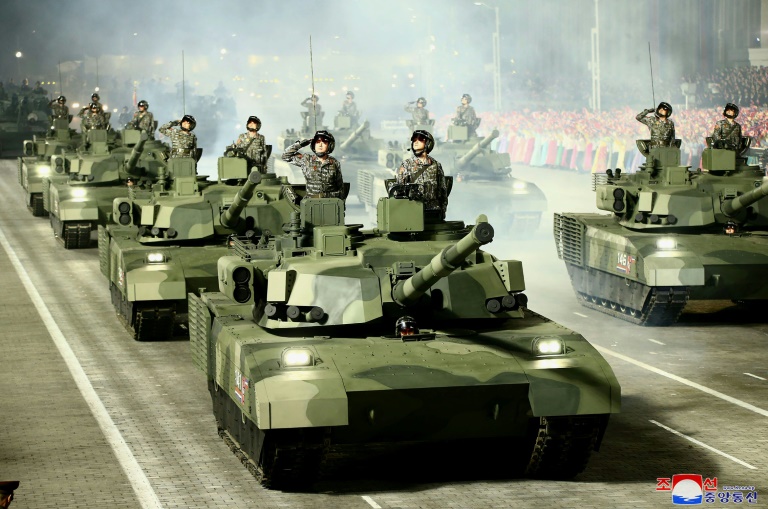
The United States said Wednesday that North Korea is sending a significant amount of artillery ammunition to Russia for its war in Ukraine, under cover of shipments to the Middle East or Africa.

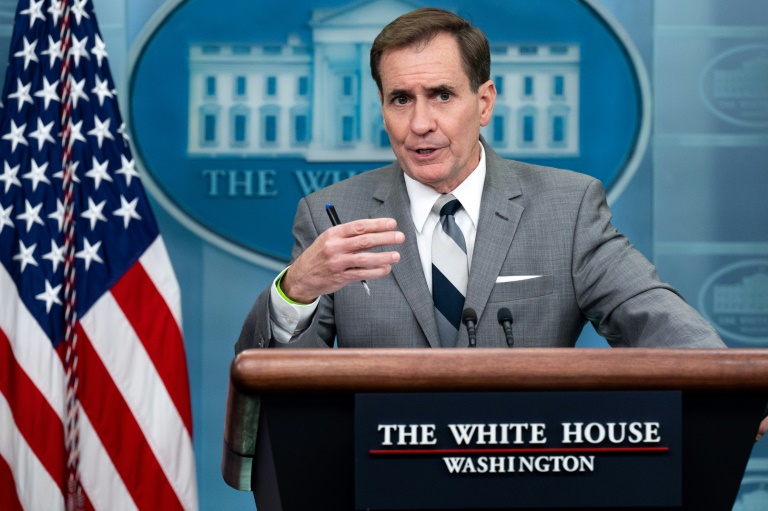
White House national security spokesman John Kirby said US officials did not know whether Russia has received the ammunition, but were trying to monitor the shipments.

US information indicates that North Korea “is covertly supplying Russia’s war in Ukraine with a significant number of artillery shells, while obfuscating the real destination of the arms shipments by trying to make it appear as though they are being sent to countries in the Middle East or North Africa,” Kirby told reporters.

“We are going to monitor whether the shipments are received,” he added.

In September Pyongyang denied a White House claim that it was planning to provide ammunition to help the Russian military replenish its stockpiles, which have been severely depleted by the now eight-month-old war.

“We have never exported weapons or ammunition to Russia before and we will not plan to export them,” an official at the North Korean defence ministry’s General Bureau of Equipment said in a statement carried by the official Korean Central News Agency on September 21.

But Kirby said the US believes a large number of artillery shells have now been shipped, enough to help Russia prolong the war but not enough to give it an advantage over Ukrainian forces, which are being supplied by the United States and NATO allies.

“It’s a significant number of artillery shells. This is a sign not only of the degree to which North Korea is willing to bolster and support Russia, but a sign of Russia’s own defense article shortages and needs,” he said.

He said Moscow has been forced to seek arms from North Korea and Iran because of global sanctions that have limited Russia’s ability to restock arms warehouses on its own.

Iran has sent its self-detonating drones to Russia, which has used them to attack and disable Ukrainian infrastructure.

The Kremlin has also reportedly sought to acquire short-range ballistic missiles from Iran, but Kirby said that has not been confirmed.

Kirby would not say how or by what routes the North Korean ammunition is traveling.

He said the US would consult allies and parters, especially at the United Nations, on what measures might be taken.

Kirby declined to answer questions as to whether the United States would interdict or seize the weapons supplies from Iran and North Korea.

The US Navy and allies working in the Middle East have stopped small shipments of arms from Iran to conflicts in Yemen and eastern Africa.

Russia rejoins deal to ship vital Ukraine grain exports

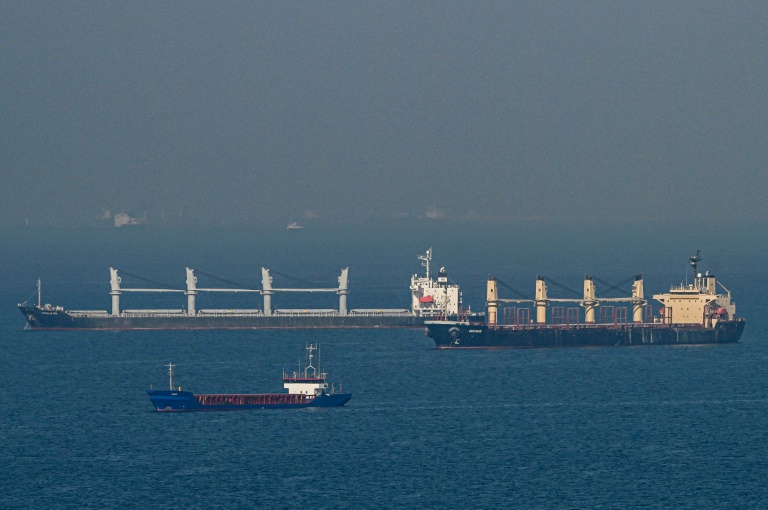
Russia on Wednesday rejoined a deal to allow Ukrainian grain exports through the Black Sea but Russian President Vladimir Putin warned Moscow could pull out of the agreement again.

The revival of an agreement aimed at easing fears of global food insecurity came just as Washington warned it was “increasingly concerned” that Moscow could use nuclear weapons in its campaign in Ukraine.

Russia’s defence ministry said it had received “sufficient” guarantees from Kyiv that it would not use the maritime corridor to carry out attacks on Moscow’s military.

UN Secretary-General Antonio Guterres “warmly” welcomed Russia’s decision to resume participation in the agreement, which was brokered by the UN and Turkey in July and allows for joint inspections of ships.

President Vladimir Putin said Russia could leave the deal again if Ukraine “violates” its guarantees but would “not interfere” with any grain deliveries even if it did so.

The Ukrainian president’s chief of staff Andriy Yermak said Russia’s change of mind just days after announcing it was pulling out of the deal “puts an end to many years of Russian blackmail diplomacy”.

A Turkish security source said the corridor was open again from 0900 GMT although no departures from Ukraine were planned Wednesday.

The deal, overseen by the Joint Coordination Centre in Istanbul, has allowed more than 9.7 million metric tonnes of grain and other foodstuffs to leave Ukrainian ports.

This has brought much-needed relief to a global food crisis triggered by the conflict between Russia and Ukraine, which are both major global grain exporters.

Russia on Saturday had said it was temporarily pulling out, accusing Ukraine of misusing the safe shipping corridor to launch a drone attack on its Black Sea fleet.

Moscow warned the route was “dangerous” for shipments without its participation in the agreement but some deliveries from Ukraine still went ahead on Monday and Tuesday.

Ukrainian President Volodymyr Zelensky on Tuesday had urged “reliable and long-term protection” of the corridor while Russia’s Vladimir Putin demanded “real guarantees”.

In a call with Zelensky on Tuesday, French President Emmanuel Macron denounced Russia’s decision to exit the deal saying it “again harms global food security”.

The Russian defence ministry on Wednesday said it obtained written guarantees from Kyiv “thanks to the participation” of the UN and “assistance” from Turkey. 

It said Kyiv guaranteed “the non-use of the humanitarian corridor and Ukrainian ports determined in the interests of the export of agricultural products for conducting military operations against the Russian Federation”.

– ‘Turbulent situation’ –

The White House meanwhile said repeated discussion by Russian officials of the potential use of nuclear weapons in Ukraine has left US officials worried that the possibility could become a reality.

“We have grown increasingly concerned about the potential as these months have gone on,” said White House national security spokesman John Kirby.

Kirby also said North Korea was sending a “significant” amount of artillery ammunition to Russia under cover of shipments to the Middle East or Africa.

He did not confirm a New York Times report that high-level Russian military officials recently discussed when and how they might use tactical nuclear weapons on the battlefield.

The report, which cited unnamed US officials, said Putin did not take part in the discussions and there was no indication the Russian military had decided to deploy the weapons.

At the same time, Russia’s foreign ministry said the world’s “top priority” should be to avoid a clash of nuclear powers.

“We are firmly convinced that in the current difficult and turbulent situation — a consequence of irresponsible and shameless actions aimed at undermining our national security — the top priority is to prevent any military clash of nuclear powers,” a foreign ministry statement said.

Moscow called on other nuclear powers to “abandon dangerous attempts to infringe on each other’s vital interests”.

It said Moscow’s nuclear doctrine is “purely defensive in nature”, only allowing the Kremlin to use such weapons in the event of nuclear aggression or “when the very existence of our state is threatened”. 

Russia has repeatedly suggested that Ukrainian territories it claims to have annexed are protected by its nuclear doctrine.

US says its worries are growing over Russian nuclear talk

The White House said Wednesday it was increasingly concerned over Moscow’s talk of using a nuclear weapon in Ukraine, after a media report said top Russian military officials had discussed how and when to use such a weapon.

“We have grown increasingly concerned about  the potential as these months have gone on,” said White House national security spokesman John Kirby. 

Kirby did not confirm a New York Times report that said high-level Russian military officials recently discussed when and how they might use tactical nuclear weapons on the battlefield.

The report, which cited unnamed US officials, said Russian President Vladimir Putin did not take part in the discussions, and there was no indication that the Russian military had decided to deploy the weapons.

But Kirby said any comments on the use of nuclear weapons by Russia are “deeply concerning,” and said the United States takes them seriously.

He pointed to recent Putin comments talking about nuclear weapons and referencing the bombs US forces dropped on the Japanese cities Hiroshima and Nagasaki near the end of World War II.

“We take note of that,” Kirby said.

“It increasingly is unsettling in terms of the degree to which he feels he has to continue to stretch to prosecute this war,” he said.

At the same time, Kirby reiterated, Washington sees no indications that Russia is making preparations to use nuclear weapons, adding that US intelligence does not necessarily see or know everything.

The United States has been warning Moscow for weeks over public comments from top Russian officials that they could use nuclear weapons in Ukraine in certain cases, particularly if they felt there was a threat to Russian territorial integrity.

The most recent threat came from former Russian president and senior security council official Dmitry Medvedev.

Medvedev said on Tuesday that Ukraine’s objective to reclaim all its territories occupied by Russia, which include the Donbas region and Crimea, would be a “threat to the existence of our state.”

That, Medvedev said, would be “a direct reason” to invoke nuclear deterrence.

However, early Wednesday Putin’s spokesman Dmitry Peskov said that Western media was “deliberately pumping up the topic of the use of nuclear weapons.”

Moscow does “not have the slightest intention to take part in this,” he said, calling the Times report “very irresponsible.”

In September, Jake Sullivan, President Joe Biden’s national security advisor, said that the United States has warned Russia at “very high levels” of “catastrophic consequences” for using nuclear arms.

EU foreign policy chief Josep Borrell warned on October 13 that Russian forces would be “annihilated” by the West if Putin uses nuclear weapons against Ukraine.

Danish PM to form broader government after vote win

Denmark’s left-wing Prime Minister Mette Frederiksen on Wednesday kicked off the process of forming a new, broader government one day after scoring a narrow election victory.

The Social Democrats, the largest party in parliament with 50 of 179 seats and accustomed to leading minority governments, now want to govern across the political divide after Frederiksen secured their best election win since 2001.

“It will be very, very difficult. We don’t know if it will be possible, but we will try our utmost”, she told a party debate on Wednesday.

Earlier in the day, the prime minister formally presented the resignation of her outgoing government to Queen Margrethe.

The leaders of Denmark’s 11 other parties in parliament were each meeting the queen individually on Wednesday before the monarch formally tasks Frederiksen with trying to form a new government.

Frederiksen will then “enter into negotiations to form a broader government and that will probably take a while,” political scientist Rune Stubager, a professor at Aarhus University, told AFP.

Her left-wing bloc, which includes five parties plus three seats from the autonomous territories Greenland and the Faroe Islands, won a majority of 90 seats, compared to 73 for the right and far-right, and 16 for the centre.

It was the Social Democrats’ best election outcome in two decades, gaining two seats and securing over 27 percent of the vote, and allows Frederiksen to enter negotiations from a position of strength. 

Frederiksen’s photo-finish win scuppered hopes of former two-time prime minister Lars Lokke Rasmussen, who founded a new Moderates party just months earlier, of becoming kingmaker in the new administration.

– Broken dreams –

The Moderates won more than nine percent of votes and Lokke Rasmussen insisted he wanted to be “the bridge” between the left and right, but daily newspaper Jyllands-Posten concluded that “in theory, Mette can do without Lars Lokke”. 

While the Moderates will be part of negotiations, Stubager expressed doubt that they would be willing to “compromise sufficiently” to secure posts in the cabinet.

A “more realistic” plan for Frederiksen would be a coalition government with various parties on the left, he said.

While Frederiksen’s government was largely hailed for handling the Covid-19 pandemic, the election was triggered by the country’s so-called mink crisis.

The affair erupted after the government decided in November 2020 to cull the country’s 15 million minks over fears of a mutated strain of the novel coronavirus.

The decision turned out to be illegal, and the Social Liberal party propping up Frederiksen’s minority government threatened to topple it unless she called early elections to regain voters’ confidence.

The Social Liberals paid a price for the gamble, losing nine of their 16 seats and on Wednesday their party leader resigned.

– ‘Zero refugees’ –

To rule, the Social Democrats will still need to depend on support from the Social Liberals, which has made clear it will not support another minority one-party government.

Broad consensus for Denmark’s restrictive migration policy left the issue largely absent from the election campaign, but it could resurge in government negotiations.

Advocating a “zero refugee” policy, the outgoing government had worked on setting up a centre to house asylum seekers in Rwanda while their applications are processed.

The Social Liberals oppose the plan.

“It will be very difficult for the Social Democrats to turn soft or to the left on immigration, because that has been a very pivotal point in their strategy over the past five, six years,” Stubager said.

“To give up on that would have dramatic consequences for them.”

The far-right has heavily influenced Danish politics in recent decades, but three populist parties together won just 14.4 percent of votes and are not expected to play a key role in the upcoming negotiations.

The anti-immigration Danish People’s Party, which hovered above 20 percent a few years ago, fell to 2.6 percent, its worst result since entering parliament in 1998. 

A new party founded by former immigration minister Inger Stojberg, the Denmark Democrats, instead won 8.1 percent, on a platform of less centralisation, less influence from Europe and fewer immigrants.

UK turning against Brexit and Tories look doomed: top pollster

A persistent majority of Britons think Brexit was a mistake, one of the UK’s leading pollsters said Wednesday, forecasting near-certain defeat for the Conservatives at the next election.

Professor John Curtice, president of the British Polling Council, said it was too soon to say that polls have shifted decisively in favour of overturning the 2016 vote to leave the European Union.

But he told reporters that the trend was clear since autumn 2021, when shortages of lorry drivers brought home to many the real-world costs of ending the EU’s free movement of labour as part of the split.

“At the moment, it looks as though the 2016 referendum is going to be as unsuccessful as the 1975 one was in proving to be a permanent settlement of this debate,” Curtice said in reference to a prior referendum.

“Probably Brexit is now less popular than it has been at any point since June 2016.”

In 2016, the UK voted by 52-48 percent in favour of leaving the EU. Now, an average of polls shows about 57 percent want to change that, while 43 percent think it was the right decision. 

The margin has grown wider this year as Britons contend with a cost-of-living crisis, and demographics point to greater pro-EU support in future as younger voters enter the electoral rolls since 2016.

But the main opposition Labour party is unlikely to reopen debate about EU membership, or rejoining the common market, before the next election for fear of scaring voters, Curtice said.

The election is not due for another two years but as it stands, the Conservatives are in deep trouble after installing their third prime minister of the year.

Rishi Sunak has helped to arrest the slump since entering 10 Downing Street last month, Curtice noted, but overall the Tories have a mountain to climb against Labour’s average poll lead of 30 points.

“History suggests that it’s going to be extremely difficult,” the veteran pollster said.

“No government that has presided over a financial crisis has eventually survived at the ballot box,” Curtice added, after Sunak’s predecessor Liz Truss provoked a market panic with unfunded tax cuts.

“They have lost ground because the public in general have decided they cannot be trusted to run the country.”

Hurricane Lisa menaces Central America

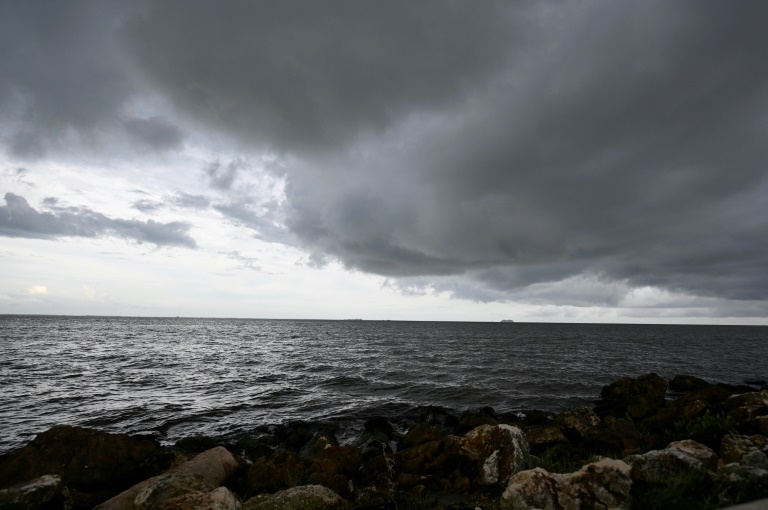
The northern part of Central America was on high alert Wednesday for the passage of Hurricane Lisa, with warnings of devastating winds, downpours and flash floods also affecting Mexico’s Yucatan peninsula.

The US National Hurricane Center (NHC) has issued a hurricane warning for Honduras’ Bay Islands, the coast of Belize and Mexico’s Yucatan area stretching from Chetumal to Puerto Costa Maya.

Lisa was moving westward in the Caribbean Sea at a speed of 24 kilometers (15 miles) per hour with maximum sustained winds of 120 km/h (75 mph) and even higher gusts, said the NHC.

“Additional strengthening is forecast as Lisa approaches Belize. Weakening is expected after the center makes landfall,” it added.

Heavy rains could create flash flooding conditions across Belize into northern Guatemala, the far southeast of Yucatan, the east of Chiapas state in Mexico as well as the state of Tabasco, according to the advisory.

“A storm surge will likely raise water levels by as much as 4 to 7 feet (1.2 to 2.1 meters) above normal tide levels near and to the north of where the center of Lisa crosses the coast of Belize and extreme southeastern portions of the Yucatan Peninsula,” said the center.

It also warned the surge would be accompanied by “large and damaging waves” and swells as far away as Jamaica and the Cayman Islands possibly causing “life-threatening surf and rip current conditions.”

Honduras’s Center for Atmospheric, Oceanographic and Seismic Studies (CENAOS) issued a red alert for the Bay Islands.

Ronnie Mcnab, mayor of the largest of the islands and a major tourist draw, Roatan, declared a state of emergency that allowed for classes to be suspended and schools to be turned into shelters.

He urged people to stock up on food and guests not to leave their hotels for 36 hours.

In Belize, the government declared a red alert for coastal areas and closed schools, while in Guatemala and El Salvador — expecting lesser impacts — the authorities were on alert.

In Belize, many residents were fearful of losing everything they own.

“Many people have houses that are not safe,” resident Jazmin Ayusola told AFP ahead of the storm.

Lisa arrives not even three weeks after the passage of Julia, another Category 1 hurricane, which caused dozens of deaths in Honduras, Guatemala and El Salvador.

Kenya sending troops to DR Congo to fight rebel advance

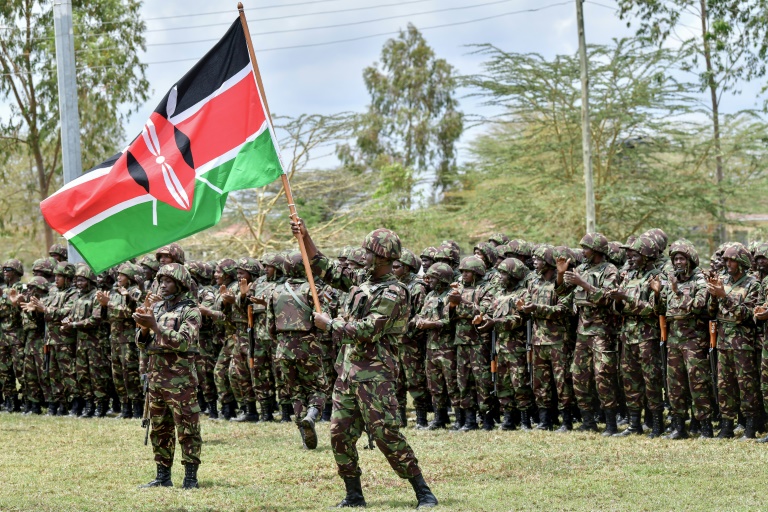
Kenya’s President William Ruto announced Wednesday that Nairobi was deploying troops to eastern Democratic Republic of Congo in a joint regional operation against a rebel offensive.

The mineral-rich DRC is struggling to contain dozens of armed groups whose recent advances in the country’s east have revived old animosities and led to a surge in tensions with neighbouring Rwanda.

Leaders of the seven-nation East African Community (EAC) bloc, in which Kenya is the regional heavyweight, agreed in April to establish a joint force to help restore security in the DRC.

Speaking at a ceremony in Nairobi to flag off the deployment, Ruto said the troops were “on a mission to protect humanity”.

“The destiny of DRC is intertwined with ours,” he added, without giving details of the deployment schedule.

“We will not allow any armed groups, criminals and terrorists to deny us our shared prosperity. We owe our brotherly duty to DRC until the job is done.”

Kenya will command the force, which will also include soldiers from Burundi, South Sudan and Uganda.

A Rwandan contingent will be deployed along the border, after Kinshasa objected to Kigali’s participation in any operations within the DRC.

The Kenyan contingent will be deployed for an initial period of six months and will set up its command base in Goma, the Kenya Defence Forces (KDF) said. 

– ‘Military escalation’ –

Military officials in Nairobi declined to reveal the number of Kenyan soldiers involved, citing “obvious security reasons”.

But the KDF said “close to a thousand” soldiers had undertaken the mandatory pre-deployment training.

A UN force, known by its French acronym of MONUSCO, is already operating in the DRC. 

Burundi and Uganda also sent troops to the DRC earlier at the invitation of the Congolese government.

The M23 rebels, a mostly Congolese group, resumed fighting in late 2021 after lying dormant for years, accusing the DRC government of failing to honour an agreement to integrate its fighters into the army.

Fresh advances by the militia across North Kivu province last month prompted the UN peacekeeping mission there to increase its alert level and boost support for the Congolese army.

The M23’s resurgence has had resounding repercussions for relations in central Africa.

The DRC accuses Rwanda of backing the militia, claims denied by Kigali.

On Saturday, Kinshasa decided to expel Rwanda’s ambassador. In turn, Kigali accused its neighbour of being “on the path of continued military escalation”.

As tensions have spiked, DRC residents have staged angry protests against M23 and Kigali, with hundreds taking to the streets in South Kivu province on Wednesday and chanting: “Let the Rwandans go home!”

The demonstration followed a protest on Monday in Goma, the capital of North Kivu province, where thousands marched through the city demanding weapons to fight Rwanda.

– Calls for ceasefire –

The increase in violence has alarmed the international community, with the African Union appealing for a ceasefire.

Current EAC chairman, Burundi’s President Evariste Ndayishimiye, said on Tuesday he held talks with his regional counterparts on “managing the security crisis” and agreed to hold a summit at a date yet to be announced.

The EAC comprises Burundi, the DRC, Kenya, Rwanda, South Sudan, Tanzania and Uganda.

M23 first leapt to prominence in 2012 when it briefly captured Goma before a joint Congolese-UN offensive drove it out.

The militia is one of scores of armed groups in eastern DRC, many of them a legacy of two regional wars that flared late last century.

The groups include the FDLR, a Rwandan Hutu rebel group based in the DRC which Kigali views as a threat and has regularly accused Kinshasa of supporting.

While Rwanda has denied backing M23, a report by independent UN experts seen by AFP in August found that Kigali had provided direct support to the militia.

The Allied Democratic Forces (ADF) — which the Islamic State group claims as its Central African offshoot — is also active in the region and is accused of slaughtering thousands of Congolese civilians and carrying out bombings in neighbouring Uganda.  

Ferrari sales, earnings guidance shift higher

Italian luxury sports car manufacturer Ferrari said Wednesday it had raised its 2022 earnings guidance after posting double-digit gains in sales and earnings.

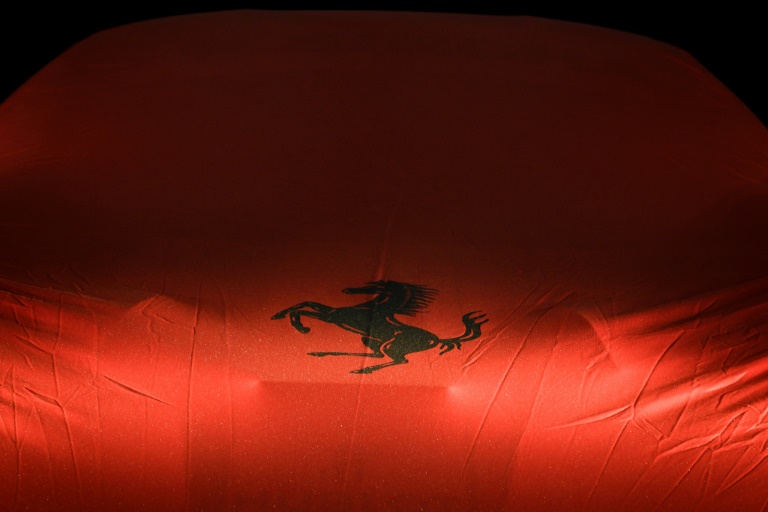
The firm with the prancing horse logo reported a net profit of 228 million euros ($225 million) for the third quarter, an increase of 10 percent from the July-September period last year.

That beat the 216 million euros analyst consensus compiled by financial data provider FactSet.

Sales rose by 19 percent to 1.25 billion euros.

Ferrari also managed to avoid the supply chain problems that have plagued other automakers, posting a 16 percent increase in deliveries to 3,188 vehicles.

Chief executive Benedetto Vigna said “all these lead us to revise upward our 2022 guidance on all metrics.”

It now expects approximately five billion euros in sales revenue and 1.73 billion euros in operating profits.

“Today, we continue to manage an outstanding order book: with the exception of few models, our entire range is sold out,” added Vigna.

Germany primes energy price cap as bills soar

Germany on Wednesday put the finishing touches on an energy price cap, the cornerstone of a massive 200-billion-euro ($198-billion) package to shield households and businesses from rising costs.

“Immediate help is on its way!” Chancellor Olaf Scholz said on Twitter, who has ploughed ahead with plans despite criticisms from European partners.

The major energy market intervention is deemed necessary to support consumers at a time when Europe’s largest economy is drifting towards recession and inflation has shot past 10 percent.

The plan will see the price for a percentage of household and businesses’ typical consumption capped at lower-than-market prices, according to a position paper from the government.

For gas, 25,000 larger businesses, as well as almost 2,000 hospitals and schools will benefit from the cap as soon as January 1 next year, under the plans. 

Households and smaller businesses meanwhile could have to wait until March 1 at the latest for the price brake to come into force.

Policymakers will “seek” to apply the relief retroactively from February 2023.

A similar price cap will also apply to electricity from the start of the new year in January, with the measures set to last through to the end of April 2024.

– December help –

While the cap for smaller consumers will only come into force later, the government will pick up the bill for household heating in December.

For households the price of a kilowatt-hour of gas will be capped at 12 cents for up to 80 percent of their typical usage.

The same unit of gas currently costs billpayers 18.6 cents, according to the price comparison site Check 24.

All in all, the support measures could save a single-person household with a typical gas consumption of 5,000 kWh around 264 euros over a year, the site estimates.

The partial price cap was designed to maintain “incentives to save energy” despite lowering prices for consumers, according to the government paper.

Scholz will meet with state premiers later Wednesday to finalise the details of the plan.

Ahead of the meeting, some regional leaders pressed the federal government to apply the gas cap for households sooner. 

“People need reliable protection from the higher costs, especially in the cold months of January and February, when they use heating intensively,” Hendrik Wuest, the regional leader of North Rhine-Westphalia, told Der Spiegel magazine.

– European discontent –

Germany, long reliant on Moscow for energy imports, has been hit hard by the sharp rise in prices since the invasion of Ukraine and the cut to supplies.

Despite the Germany economy eking out 0.3-percent growth between July and September, most analysts still expect the country to slip into recession as the high costs of energy drags on production.

Businesses that have been crying for support from the government welcomed the plans.

The price cap measures should “create a bit of security and at the same time ease worries”, the BDI industrial lobby said Monday ahead of the final agreement.

Berlin’s massive go-it-alone plan to shield its economy has ruffled feathers among European partners who would have preferred a common solution.

They feared that more highly indebted EU countries could not afford the outlay made by Germany, while the plan could affect their own energy costs.

Germany’s energy price shield will be partly financed through new borrowing through an economic stabilisation fund created during the coronavirus pandemic. 

Berlin also intends to fund the cap by skimming off part of the bumper profits made by energy companies as prices have risen.

Close Bitnami banner
Bitnami