World

North Korea fires more than 20 missiles, one close to South

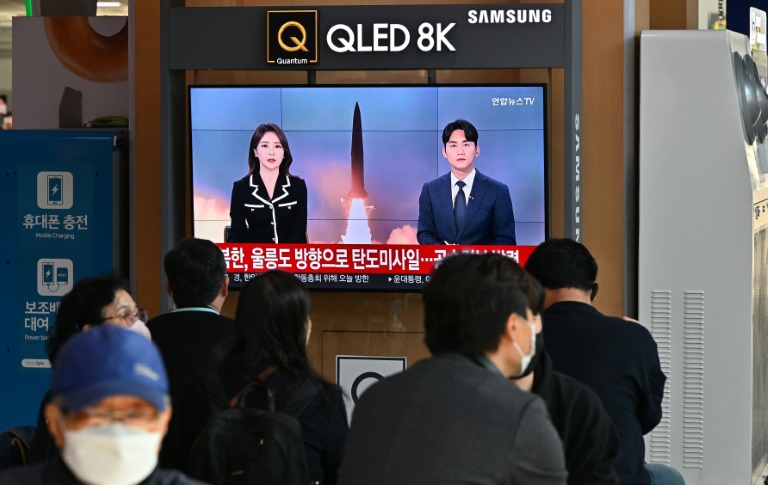
North Korea fired more than 20 missiles Wednesday, including one that landed close to South Korea’s waters in what President Yoon Suk-yeol said was “effectively a territorial invasion”.

It also fired an artillery barrage into a maritime “buffer zone” that experts said was part of an “aggressive and threatening” response by Pyongyang to large-scale joint air drills the United States and South Korea are conducting.

One short-range ballistic missile crossed the Northern Limit Line, the de facto maritime border, prompting a rare warning for residents on the island of Ulleungdo to seek shelter in bunkers.

Seoul’s military said it was the “first time since the peninsula was divided” at the end of Korean War hostilities in 1953 that a North Korean missile had landed so close to the South’s territorial waters.

“President Yoon pointed out today that North Korea’s provocation is an effective territorial invasion by a missile,” his office said in a statement.

One of the missiles landed in waters just 57 kilometres (35 miles) east of the mainland, the military said, calling the incident “very rare and intolerable”.

Pyongyang fired a total of 23 missiles including seven short-range ballistic missiles and six ground-to-air ones, Seoul’s military said.

North Korea also conducted an artillery barrage, firing into a maritime “buffer-zone” set up in 2018 in a bid to reduce tensions between the two countries during an ill-fated bout of diplomacy.

The huge volley of launches were “provocations against South Korea”, said Go Myong-hyun, a researcher at the Asan Institute for Policy Studies.

“I wouldn’t be surprised if they lead up to a nuclear test,” he added.

South Korea, for its part, said it had fired three air-to-ground missiles into the sea towards the north of the two countries’ maritime boundary.

President Yoon called a meeting of the National Security Council, ordering “swift and stern measures so that North Korea’s provocations pay a clear price”.

South Korea closed some air routes over the East Sea, also known as the Sea of Japan, advising local airlines to detour to “ensure passenger safety in the routes to the United States and Japan”.

White House national security spokesman John Kirby slammed North Korea as “reckless” for carrying out the launches.

“We… condemn these missile launches and the DPRK’s reckless decision to fire a missile below the de facto maritime boundary with the Republic of Korea,” Kirby said. 

European Council President Charles Michel said he was “outraged” by Pyongyang’s “aggressive and irresponsible behaviour” and Russia called for calm.

– ‘Vigilant Storm’ –

Pyongyang’s day of missile launches came as Seoul and Washington staged their largest-ever joint air drills, dubbed “Vigilant Storm”, which involved hundreds of warplanes from both sides.

Pak Jong Chon, a high-ranking North Korean official, had earlier called the drills aggressive and provocative, according to a report in state media Wednesday.

Pak said the name of the exercises harked back to Operation Desert Storm, the US-led military assault on Iraq in 1990-1991 after the invasion of Kuwait.

“If the US and South Korea attempt to use armed forces against the (Democratic People’s Republic of Korea) without any fear, the special means of the DPRK’s armed forces will carry out their strategic mission without delay,” he said.

“The US and South Korea will have to… pay the most horrible price in history.”

– ‘Dangerous situation’ –

North Korea’s missile launches on Wednesday appeared to be “the most aggressive and threatening armed demonstration against the South since 2010”, Cheong Seong-chang, a researcher at the Sejong Institute, told AFP.

“It is now a dangerous and unstable situation that could lead to armed conflict,” he added.

In March 2010, a North Korean submarine torpedoed the South Korean naval vessel Cheonan, killing 46 sailors, including 16 who were on mandatory military service.

In November of the same year, the North shelled a South Korean border island, killing two marines — both of them young conscripts.

Wednesday’s missile tests follow a recent blitz of launches, including what the North said were tactical nuclear drills.

Washington and Seoul have repeatedly warned the launches could culminate in another nuclear test — which would be Pyongyang’s seventh.

“Pyongyang seems to have completed its most powerful deterrent. This is a serious threat,” Park Won-gon, a professor at Ewha University, told AFP.

The North’s latest launches came with South Korea in a period of national mourning after more than 150 people — mostly young women in their 20s — were killed in a crowd crush in Seoul on Saturday.

It shows “North Korea’s clear priorities”, Yang Moo-jin, professor at the University of North Korean Studies in Seoul, told AFP.

“Pyongyang probably thinks it has no reason to take the Itaewon tragedy into its consideration, as Seoul and Washington’s largest-ever joint air drills are also happening anyway,” he added.

Fed poised for further US rate hike as political pressure mounts

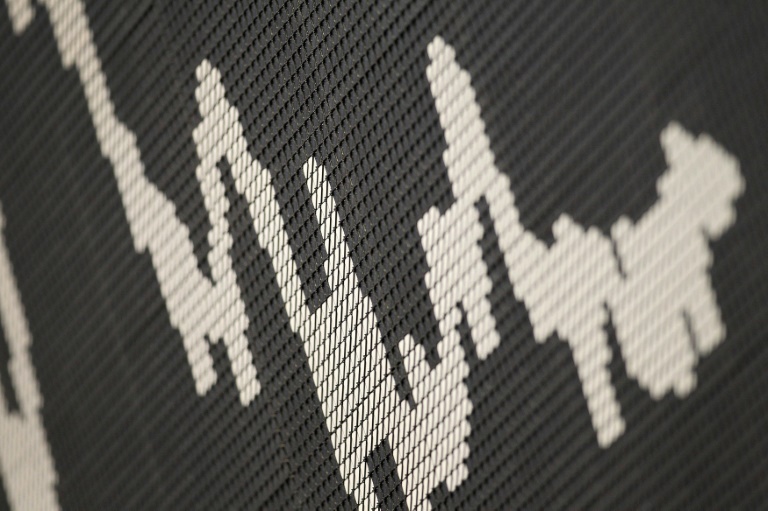
The Federal Reserve opened its final day of deliberations Wednesday, which is expected to bring another steep interest rate hike as it tries to cool the economy amid intense political pressure ahead of next week’s midterm elections.

The US central bank has embarked on an aggressive campaign this year to rein in inflation which has surged to its fastest pace in decades, and with prices still rising, the squeeze on American households has propelled economic issues to the top of voter priorities.

Raising borrowing costs as it aims to dampen demand, the Fed has cranked up the benchmark lending rate five times this year, including three straight increases of 0.75 percentage point.

Policymakers are widely expected to announce a fourth three-quarter point rate hike on Wednesday, so all eyes will be focused on any signs the Fed could shift to a less hawkish stance in the coming months, slowing or halting the policy moves.

“There’s a growing belief that the central bank will signal a desire to ease off the brake over the following few meetings,” said Oanda analyst Craig Erlam.

But it will be challenging for Fed Chair Jerome Powell to signal the policy-setting Federal Open Market Committee (FOMC) is mulling a step-down from its current path, while reaffirming the commitment to bring cool inflation pressures.

“Markets will likely interpret any comments about a downshift in tightening as dovish, signaling the end of the rate hiking cycle,” economist Rubeela Farooqi of High Frequency Economics said in an analysis.

If inflation remains elevated, the Fed could press on with “a series of half-point hikes, rather than further slowing the pace of increases,” she added.

The impact of the Fed’s actions is trickling through the economy, with the interest-sensitive housing sector cooling sharply but the labor market still tight as private hiring picked up more than expected in October.

The committee is scheduled to announce its decision at 1800 GMT.

Powell’s comments at his press conference following the meeting will be scrutinized for clues on how much further he thinks the Fed must go before declaring victory in the inflation fight.

Stocks slipped on Wednesday morning as investors braced for the announcement.

– Political pressure –

As central bankers walk a tightrope fighting inflation while avoiding tipping the economy into a recession, politicians are ramping up pressure on Fed officials amid growing worries of a downturn.

Senator Sherrod Brown, the Democratic chair of the Senate Banking Committee, urged the Fed last month to show commitment to its dual mandate — of promoting maximum employment and  stable prices — and moderate interest rates.

“For working Americans who already feel the crush of inflation, job losses will make it much worse,” Brown said in a letter to Powell.

Other Democratic senators including Elizabeth Warren also expressed concern this week over the Fed’s rate hikes, as President Joe Biden’s party faces growing voter frustration over high inflation, and risks losing control of both houses of Congress to opposition Republicans.

Powell has argued that allowing high inflation to become entrenched would inflict even more pain on American families and workers.

Oanda’s Erlam said it may be too late to avoid a recession “but the Fed has been very clear from the start that while a soft landing is the desirable and attainable outcome, getting inflation under control is the primary focus.”

As higher borrowing rates put the brakes on the economy’s momentum, there is likely to be “moderation in the labor market before a mild recession in (the first half of) 2023 brings about more marked change,” said economist Matthew Martin of Oxford Economics in an analysis.

Stocks slide before expected Fed hike

European and US stock markets slid on Wednesday, with investors on edge before another widely expected jumbo interest rate hike from the US Federal Reserve.

London equities shed 0.5 percent on the eve of another expected large rate increase from the Bank of England.

In the eurozone, Frankfurt and Paris were both following weak eurozone manufacturing survey data and a dip in German exports.

“All eyes will be on central banks on both sides of the Atlantic as both the US Federal Reserve and BoE get ready to deliver their rate decisions over the next 24 hours or so,” said AJ Bell investment director Russ Mould.

“While we have a good idea of the quantum of increase both parties will deliver, it will be all about the mood music,” he added.

Global central banks have this year ramped up borrowing costs in an attempt to curb inflation, which has rocketed on sky-high energy costs arising from Russia’s war on Ukraine.

Economists fear that rising rates will spark a global economic downturn because they ramp up loan repayments for individuals and businesses, thereby denting consumer spending and investment.

– US rate clues –

Wednesday’s Fed decision is hotly anticipated by traders hoping for a hint from officials that they are ready to temper their speed of monetary tightening.

“Investors are waiting for clues from the Federal Reserve about the path of rate rises, and in the meantime a slightly more wary mood has settled on the markets,” said Hargreaves Lansdown analyst Susannah Streeter.

“A fourth consecutive 75 basis point hike is not going to surprise anyone, but the key question is whether the Fed will signal that it is ready to pivot to a less hawkish stance in its December and subsequent meetings,” said market analyst Fawad Razaqzada at City Index and FOREX.com.

Analyst Craig Erlam at OANDA said increasing numbers of investors are anticipating Fed policymakers will hint at a slower pace of interest rate hikes from December, given the softness of economic data in some sectors and the lag in impact of monetary policy.

“Investors are so desperate for anything remotely dovish at this point that even a hint could get a strong reaction,” he said.

In Asia, stocks were mixed after Tuesday’s losses on Wall Street, as forecast-beating US data jolted hopes the Fed could soon tone down its hawkish pace of rate hikes.

Hong Kong led gainers — extending the previous day’s surge — as traders remain hopeful China could begin rolling back its economically painful zero-Covid policy, the day after an unverified statement suggesting a shift was taking place.

Suggestions that the Fed could take its foot off the pedal as the world’s top economy shows signs of slowing have helped fuel a rally across risk assets for more than a week.

But some of the wind was taken out of their sails Tuesday after data showed a rise in job openings while other numbers released indicated the manufacturing sector did not perform as badly as expected last month.

The readings suggest the US economy continues to hold up despite recent signs of weakness in the face of decades-high inflation, and Fed policymakers are likely to interpret them as interest rates need to continue to move higher.

– Key figures around 1330 GMT –

London – FTSE 100: DOWN 0.5 percent at 7,151.73 points

Frankfurt – DAX: DOWN 0.3 percent at 13,303.53

Paris – CAC 40: DOWN 0.6 percent at 6,291.04

EURO STOXX 50: DOWN at 3,632.94

New York – Dow: DOWN 0.3 percent at 32,568.10

Tokyo – Nikkei 225: DOWN 0.1 percent at 27,663.39 (close)

Hong Kong – Hang Seng Index: UP 2.4 percent at 15,827.17 (close)

Shanghai – Composite: UP 1.2 percent at 3,003.37 (close)

Euro/dollar: UP at $0.9907 from $0.9883 on Tuesday

Pound/dollar: UP at $1.1502 from $1.1486

Dollar/yen: DOWN at 146.94 yen from 148.23 yen

Euro/pound: UP at 86.12 pence from 85.96 pence

Brent North Sea crude: DOWN 0.1 percent at $94.55 per barrel

West Texas Intermediate: DOWN 0.2 percent at $88.22 per barrel

burs-rl/kjm

Aston Martin losses deepen despite rising car sales

British luxury carmaker Aston Martin Lagonda on Wednesday revealed its third-quarter net losses more than doubled on supply-chain disruptions, offsetting accelerating sales.

Losses after tax hit £228 million ($262 million) in the three months to the end of September, after a shortfall of almost £90 million a year earlier, according to the group which is targeting electrification of its range.

Sales of the brand, loved by fictional spy James Bond, zoomed by a third to £315.5 million, but this was propelled by a 28-percent increase in the average car price, it said in a statement.

Aston Martin faced “supply chain and logistics disruption as well as inflationary pressures impacting the broader automotive industry” which delayed car deliveries and ramped up costs, noted chairman Lawrence Stroll.

The group was hit also by a plunge in the pound that made dollar-denominated debt more expensive.

– Britishvolt –

Aston Martin has been knocked off track also by a collaboration with troubled electric car battery startup Britishvolt.

UK-based Britishvolt on Wednesday said it had secured “necessary near-term investment” after media reported on Monday that the cash-strapped firm was on the brink of collapse.

The startup, which is developing a £3.8-billion electric battery factory in northeastern England, also warned that the “weakening economic situation is negatively impacting much business investment”.

Britishvolt said staff had agreed to a temporary pay cut despite a UK cost-of-living crisis amid sky-high inflation.

Britain is due to ban the sale of new high-polluting diesel and petrol cars from 2030, forcing its car manufacturing sector to increasingly switch production to electric models.

Aston Martin meanwhile suffered vast losses in 2019 as it crashed spectacularly on weak global demand linked to China’s economic slowdown and Brexit.

Losses then deepened further as a result of fallout from the coronavirus pandemic.

The automaker was saved from bankruptcy in early 2020 by Canadian billionaire Lawrence Stroll, who is the top shareholder.

Saudi Arabia became the second-biggest investor following a capital injection from its sovereign wealth fund earlier this year.

Aston Martin is looking to shift gear into fully-electric vehicles from 2025.

Musk says may take 'weeks' for banned Twitter accounts to be restored

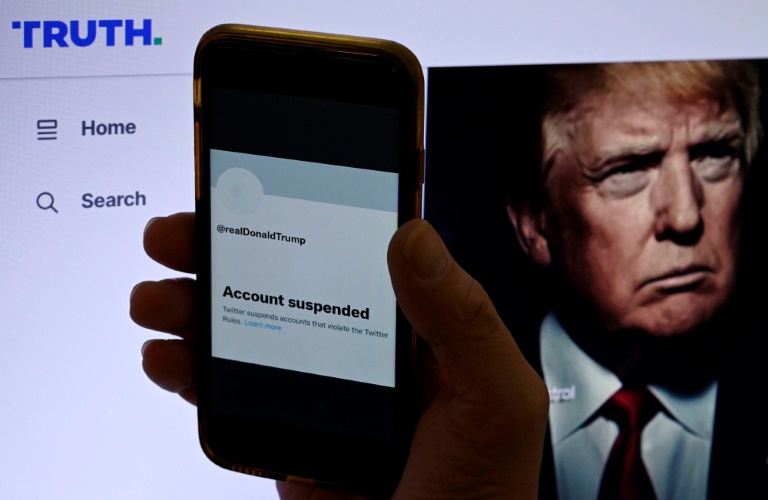
New Twitter owner Elon Musk said Wednesday that it will be “a few more weeks” before any banned accounts — such as that of former US president Donald Trump — may be restored on the platform.

Twitter users have been watching closely to see whether Musk will reinstate Trump, banned for inciting last year’s attack on the Capitol by a mob seeking to overturn the results of the 2020 election, and other deplatformed users.

The potential reinstatement of such accounts banned for violating the site’s content moderation rules has been seen as a bellwether of where Musk, a self-described “free speech absolutist,” wants to take the site he describes as a global town square.

But on Wednesday the South African billionaire said the wait will have to continue a little longer. 

“Twitter will not allow anyone who was de-platformed for violating Twitter rules back on platform until we have a clear process for doing so, which will take at least a few more weeks,” he tweeted.

That means after crucial November 8 midterm elections in the United States, which will determine control of Congress. Trump, once a prolific tweeter, retains a powerful hold on his Republican Party, and has reopened his 2020 playbook by questioning the integrity of the upcoming election.

Since Musk took Twitter private last week, Trump has suggested he would be happier sticking with his own Truth Social messaging platform.

But the former president’s network has financial issues and many political strategists believe he would find it hard to resist the mass audience and influence offered by a return to Twitter, where he was once one of the site’s biggest global draws.

The announcement comes only days after the world’s wealthiest man took sole control of the social media giant in a contentious $44 billion deal, vowing to dial back content moderation.

Musk was tweeting in response to a post from the company’s head of safety, Yoel Roth, on Twitter’s efforts to combat disinformation ahead of the elections.

“We’re staying vigilant against attempts to manipulate conversations about the 2022 US midterms,” Roth said.

Musk also said he had talked to civil society leaders “about how Twitter will continue to combat hate & harassment & enforce its election integrity policies.”

On Tuesday, Musk said the site will charge $8 per month to verify users’ accounts.

US private hiring posts surprise uptick in October: survey

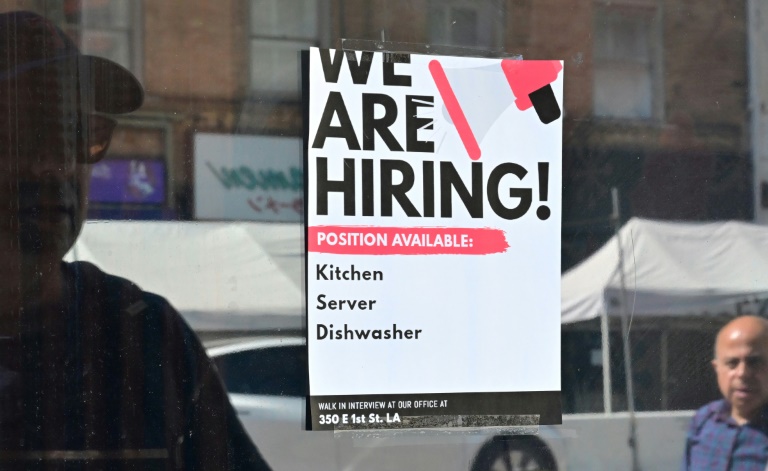
Private US companies hired more workers than expected in October, as restaurants and retailers stepped up hiring ahead of the festive season, according to data from payroll firm ADP Wednesday.

Firms added 239,000 jobs in October, up from 192,000 in the prior month, the report said, with the impact of the Federal Reserve’s aggressive policy limited to only some sectors.

The central bank has been ramping up interest rates to cool demand and fight surging inflation, amid fears the strong labor market will cause a wage spiral. 

The Fed is widely expected to press on with a fourth straight steep rate hike on Wednesday.

“This is a really strong number given the maturity of the economic recovery but the hiring was not broad-based,” said ADP chief economist Nela Richardson.

There has been a pullback among goods producers, who are sensitive to interest rates, while workers who changed jobs are getting smaller pay gains than previously, Richardson said in a statement.

The impact hit manufacturing in particular, which lost 20,000 positions last month, according to the report.

“While we’re seeing early signs of Fed-driven demand destruction, it’s affecting only certain sectors of the labor market,” she said.

Workers saw their annual pay gains ease slightly to 7.7 percent, according to ADP’s recently revamped report, which includes wage data.

Employees who changed jobs still saw “double-digit, year-over-year pay increases, but momentum in those gains is ebbing,” the report said.

For this group, annual pay growth dropped for a third straight month, to 15.2 percent in October from 15.7 in September.

“Overall, the labor market remains tight and demand is showing few signs of cooling,” said economist Rubeela Farooqi of High Frequency Economics. 

“We expect job growth to remain positive for now. But the pace is expected to slow in response to Fed rates hikes,” she added.

Tech summit to hear Uber whistleblower testimony

A lobbyist who leaked thousands of compromising documents on Uber will on Wednesday detail his efforts to bring change to one of the world’s leading companies at an annual tech summit in Lisbon.

Revelations in July from Mark MacGann, who led Uber’s lobbying efforts in Europe between 2014 and 2016, led to widespread accusations that the ride-hailing app had broken the law — allegations the firm denied.

Reports based on his leaks alleged the company had obstructed justice and sent drivers to protests without concern for their safety, though Uber denied this and said the accusations were outdated.

MacGann will appear on the first full day of the Web Summit, an annual tech conference that kicked off on Tuesday night with a plea from Ukraine’s first lady for IT workers to use their skills to save lives rather than end them.

“Some IT specialists in Russia have made their choice to be aggressors and murderers,” said Olena Zelenska, urging attendees to make the opposite choice.

The Web Summit brings together start-ups, investors, business leaders and agenda-broadening speakers –- linguist Noam Chomsky and heavyweight boxing champion Oleksandr Usyk are among this year’s line-up.

Organisers said all 70,000 tickets had been sold for the first full-scale edition since coronavirus restrictions halted in-person gatherings in 2020.

Although most major tech firms are represented, the most senior Silicon Valley figures rarely appear at such events any more.

Some attendees were happy with the lower-key approach at a conference that has previously seen the likes of Elon Musk show up.

“These conferences were getting too big, it was getting harder to find interesting things,” said attendee Gabriele Lemmle from Munich, adding that she was happier to focus on start-ups with fresh ideas.

– 100 years of Twitter –

During the opening ceremony on Tuesday, Chanpeng Zhao, the boss of cryptocurrency firm Binance, was given centre stage and faced questions about the future of a sector that is still suffering a massive slump.

He told the audience it was part of an economic cycle and argued that cryptocurrencies were in fact the most stable assets right now.

Zhao also faced questions about his decision to back Musk’s takeover of Twitter to the tune of $500 million, telling the audience he was committed to the deal for the long haul.

“We anticipate to be involved for the next 10, 50, 100 years,” he said, adding that Musk’s guidance would make the platform much stronger in the decades to come.

The Web Summit comes at a time when the tech industry as a whole faces huge difficulties.

Firms are being roiled by supply chain problems, trade disputes between the US and China, plunging profits and creaky business models, and a wider economic slump that has sent investors and consumers fleeing.

Event organiser Paddy Cosgrave is keen to show that the event does not shy away from those issues, highlighting the platform it gives to critics and whistleblowers.

MacGann’s appearance this year follows last year’s turn by Frances Haughen, who laid out allegations that Facebook prioritised engagement over the mental wellbeing of young people.

Facebook’s Nick Clegg then made an appearance to deny the allegations.

However, the opening salvoes of this year’s summit have stuck resolutely to the idea of technology as a force for positive change.

“Tech is not a panacea, but it can help to solve the problems that are in front of us,” Portuguese Prime Minister Antonio Costa told the opening ceremony, urging a focus on climate change.

The organisers say more than 1,000 speakers will take part in the event, which runs until Friday, giving talks on subjects from cybersecurity to artificial intelligence.

China imposes Covid lockdown on 600,000 people around iPhone plant

Chinese authorities imposed lockdowns on 600,000 people in the area surrounding the world’s largest iPhone factory on Wednesday, as workers complained of disorderly Covid controls at the facility.

All people except Covid-prevention volunteers and essential workers “must not leave their residences except to receive Covid tests and emergency medical treatment”, officials from central China’s Zhengzhou Airport Economy Zone said.

The move comes after images emerged on Chinese social media last week showing people breaking out of the facility, which is run by Taiwanese tech giant Foxconn and makes products for Apple.

Employees complained online of poor conditions, a lack of supplies and having to flee the factory on foot to avoid Covid transport curbs. Foxconn says there are currently more than 200,000 workers at its Zhengzhou plant.

“Being paid is not important anymore, the most important thing is to survive,” one 30-year-old man working at Foxconn told AFP, saying he was staying at the factory because he was afraid of adding to an outbreak in his hometown.

“The anti-virus measures on campus are shambolic, virus-negative people are living together with virus-positive people,” said the worker, who asked to remain anonymous.

He said the food provided to employees was “not filling”, and complained of a lack of medicine for sick colleagues.

China is the last major economy committed to a zero-Covid strategy, persisting with snap lockdowns, mass testing and lengthy quarantines in a bid to stamp out emerging outbreaks.

But new variants have tested local officials’ ability to snuff out flare-ups faster than they can spread, causing much of the country to live under an ever-changing mosaic of Covid curbs.

The district in Zhengzhou city said Wednesday that all businesses would be required to work from home, with only “key enterprises” allowed to continue operating. It did not specify which businesses fell under that category.

Only medical vehicles and those delivering essentials are allowed on the streets.

The district’s more than 600,000 residents will have to take nucleic acid tests every day, the local government said, warning that it would “resolutely crack down on all kinds of violations”.

The Communist Party-run Dahe Daily said on Wednesday local authorities would “thoroughly disinfect” Foxconn’s facilities, including employee dormitories, over the next three days. Workers quarantining at the factory would need to show seven days of negative tests before leaving for their hometowns.

The paper also said the government had promised to provide timely meals and to set up a counselling hotline for workers.

– ‘Closed loop’-

Foxconn told AFP on Wednesday its Zhengzhou park “maintains closed-loop operation”, without providing details.

The company said at the weekend it was testing employees daily and offering transport to those who wanted to leave, after the videos on social media showed employees walking down motorways with their suitcases.

Footage shared with AFP by a Foxconn employee showed a large group of workers pushing their suitcases down an empty road on Tuesday afternoon, towards a line of people in hazmat suits.

The Zhengzhou factory accounts for around 80 percent of iPhone 14 production, senior analyst Ivan Lam at Counterpoint Research told AFP.

Apple did not immediately respond to an AFP request for comment.

Local governments in the area surrounding Zhengzhou city have asked Foxconn workers to register with authorities if they return home and to complete several days of quarantine upon arrival.

The company also said on Tuesday it would quadruple bonuses for employees willing to remain at the factory during the outbreak.

Chinese social media users accused Zhengzhou authorities on Wednesday of “performatively” lifting Covid restrictions after the city announced a day earlier it would “restore normal production and life”.

“In the morning you lift the lockdown, then at night you lock down again, what are you trying to do?” Weibo user Taodixing asked.

China reported more than 2,000 fresh domestic infections on Wednesday for the third day in a row.

Henan province, where Zhengzhou is located, officially reported 359 Covid-19 infections on Wednesday, a jump from Tuesday’s 104.

The southern Chinese manufacturing hub of Guangzhou also announced partial lockdowns in several districts this week in response to rising case numbers.

According to analysts Capital Economics, the number of people in quarantine in China is at its highest level since the Shanghai lockdown in spring, with outbreaks in more than 50 cities.

China imposes Covid lockdown on 600,000 people around iPhone plant

Chinese authorities imposed lockdowns on 600,000 people in the area surrounding the world’s largest iPhone factory on Wednesday, as workers complained of disorderly Covid controls at the facility.

All people except Covid-prevention volunteers and essential workers “must not leave their residences except to receive Covid tests and emergency medical treatment”, officials from central China’s Zhengzhou Airport Economy Zone said.

The move comes after images emerged on Chinese social media last week showing people breaking out of the facility, which is run by Taiwanese tech giant Foxconn and makes products for Apple.

Employees complained online of poor conditions, a lack of supplies and having to flee the factory on foot to avoid Covid transport curbs. Foxconn says there are currently more than 200,000 workers at its Zhengzhou plant.

“Being paid is not important anymore, the most important thing is to survive,” one 30-year-old man working at Foxconn told AFP, saying he was staying at the factory because he was afraid of adding to an outbreak in his hometown.

“The anti-virus measures on campus are shambolic, virus-negative people are living together with virus-positive people,” said the worker, who asked to remain anonymous.

He said the food provided to employees was “not filling”, and complained of a lack of medicine for sick colleagues.

China is the last major economy committed to a zero-Covid strategy, persisting with snap lockdowns, mass testing and lengthy quarantines in a bid to stamp out emerging outbreaks.

But new variants have tested local officials’ ability to snuff out flare-ups faster than they can spread, causing much of the country to live under an ever-changing mosaic of Covid curbs.

The district in Zhengzhou city said Wednesday that all businesses would be required to work from home, with only “key enterprises” allowed to continue operating. It did not specify which businesses fell under that category.

Only medical vehicles and those delivering essentials are allowed on the streets.

The district’s more than 600,000 residents will have to take nucleic acid tests every day, the local government said, warning that it would “resolutely crack down on all kinds of violations”.

The Communist Party-run Dahe Daily said on Wednesday local authorities would “thoroughly disinfect” Foxconn’s facilities, including employee dormitories, over the next three days. Workers quarantining at the factory would need to show seven days of negative tests before leaving for their hometowns.

The paper also said the government had promised to provide timely meals and to set up a counselling hotline for workers.

– ‘Closed loop’-

Foxconn told AFP on Wednesday its Zhengzhou park “maintains closed-loop operation”, without providing details.

The company said at the weekend it was testing employees daily and offering transport to those who wanted to leave, after the videos on social media showed employees walking down motorways with their suitcases.

Footage shared with AFP by a Foxconn employee showed a large group of workers pushing their suitcases down an empty road on Tuesday afternoon, towards a line of people in hazmat suits.

The Zhengzhou factory accounts for around 80 percent of iPhone 14 production, senior analyst Ivan Lam at Counterpoint Research told AFP.

Apple did not immediately respond to an AFP request for comment.

Local governments in the area surrounding Zhengzhou city have asked Foxconn workers to register with authorities if they return home and to complete several days of quarantine upon arrival.

The company also said on Tuesday it would quadruple bonuses for employees willing to remain at the factory during the outbreak.

Chinese social media users accused Zhengzhou authorities on Wednesday of “performatively” lifting Covid restrictions after the city announced a day earlier it would “restore normal production and life”.

“In the morning you lift the lockdown, then at night you lock down again, what are you trying to do?” Weibo user Taodixing asked.

China reported more than 2,000 fresh domestic infections on Wednesday for the third day in a row.

Henan province, where Zhengzhou is located, officially reported 359 Covid-19 infections on Wednesday, a jump from Tuesday’s 104.

The southern Chinese manufacturing hub of Guangzhou also announced partial lockdowns in several districts this week in response to rising case numbers.

According to analysts Capital Economics, the number of people in quarantine in China is at its highest level since the Shanghai lockdown in spring, with outbreaks in more than 50 cities.

Ukraine grain shipments resume as Russia rejoins deal

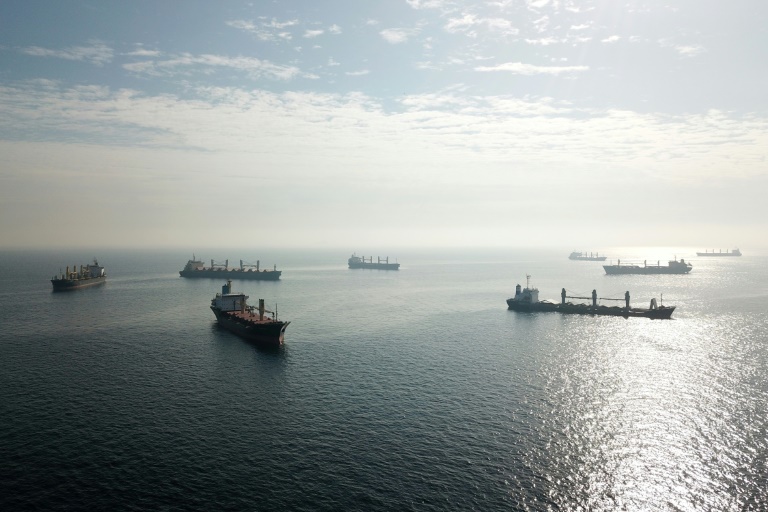
Grain export shipments from Ukraine resumed on Wednesday as Russia said it was rejoining a deal brokered by the UN and Turkey to establish a safe Black Sea corridor.

Turkish President Recep Tayyip Erdogan told parliament that “shipments will continue from 1200 today (0900 GMT) as planned”, after a call between the Russian and Turkish defence ministers.

Russia’s defence ministry confirmed it was resuming participation, saying it had received “sufficient” guarantees from Kyiv on demilitarising the maritime corridor.

“Russia considers that the received guarantees are at the moment sufficient and is resuming the implementation of the agreement,” the ministry said.

The deal, overseen by the Joint Coordination Centre in Istanbul, has allowed more than 9.7 million metric tonnes of grain and other foodstuffs to leave Ukrainian ports.

This has brought much-needed relief to a global food crisis triggered by Russia’s campaign in Ukraine, a major grain exporter.

Under the terms of the deal, which was agreed in July, ships moving to and from Ukraine are inspected by a joint team of Russian, Turkish, Ukrainian and UN officials.

Russia on Saturday had said it was temporarily pulling out, accusing Ukraine of misusing the safe shipping corridor to launch a drone attack on its Black Sea fleet.

Some shipments in and out of Ukraine continued after that but the UN on Tuesday said there would be no movements on Wednesday.

– ‘Dangerous’ without Russia –

Ukrainian President Volodymyr Zelensky on Tuesday had urged “reliable and long-term protection” of the corridor while Russia’s Vladimir Putin demanded “real guarantees”.

In a call with Zelensky on Tuesday, French President Emmanuel Macron denounced Russia’s decision to exit the deal saying it “again harms global food security”.

Ukraine had dismissed Russia’s accusations as a “false pretext” to withdraw from the deal.

The Kremlin has long criticised the deal, claiming that most of the consignments were arriving in Europe, not poor countries where grain was needed most.

Ukrainian officials have denied the claim and data compiled by a monitoring group as part of the accord does not reflect this assertion.

Grain-loaded cargo kept sailing on Monday and Tuesday, but the UN said any ship movements after Russia announced its suspension were “a temporary and extraordinary measure”.

Kremlin spokesperson Dmitry Peskov had said on Monday that it was “dangerous” to continue exports without Russia’s participation.

The Russian defence ministry on Wednesday said it obtained written guarantees from Kyiv “thanks to the participation” of the UN and “assistance” from Turkey. 

It said Kyiv guaranteed “the non-use of the humanitarian corridor and Ukrainian ports determined in the interests of the export of agricultural products for conducting military operations against the Russian Federation.”

Close Bitnami banner
Bitnami