World

Iran orders probe into 'shocking' police brutality video

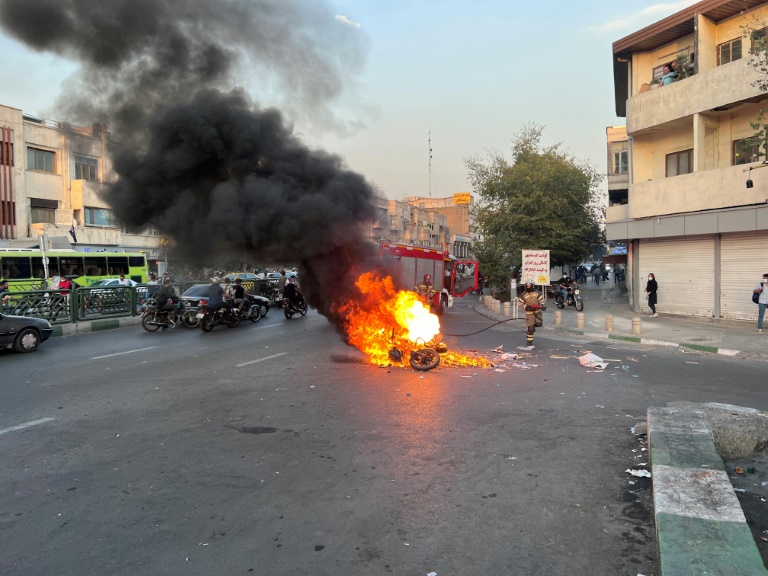
Iranian authorities on Wednesday ordered an investigation into a video showing officers savagely beating a protester that rights groups said exposed the sheer brutality of the police repression against protests sparked by the death of Mahsa Amini.

Iran has been rocked by over six weeks of protests following the death of Amini who had been arrested by the notorious morality police in Tehran, with the movement now seen as the biggest challenge to the Islamic republic’s leadership since the 1979 revolution.

Activists say dozens have been killed and thousands arrested in a crackdown by the security forces who have been accused of firing on protesters at close range, bludgeoning them with batons and other abuses.

A video that appeared late Tuesday on social media, shot at night on a mobile phone purportedly in a district of Tehran, showed a squad of around a dozen policemen in an alley kicking and beating a man with their batons, as other officers on motorbikes looked on.

The man initially tried to cover his head with his hands, before the sound of a gunshot is heard and he is run over by a police motorbike. His motionless body is then abandoned.

“This shocking video sent from Tehran is another horrific reminder that the cruelty of Iran’s security forces knows no bounds,” Amnesty International said.

“Amid a crisis of impunity, they’re given free rein to brutally beat and shoot protesters,” it added, calling on the UN Human Rights Council to “urgently investigate these crimes”.

Iran’s police force announced in a statement published by state news agency IRNA that an order had been issued to “investigate the exact time and place of the incident and identify the offenders.”

“The police absolutely do not approve of violent and unconventional behaviour and will deal with the offenders according to the rules,” the statement added.

– ‘Create fear’ –

According to an updated toll issued Wednesday from the Norway-based Iran Human Rights NGO, 176 people have been killed in the crackdown on the protests sparked by Amini’s death.

Another 101 people have lost their lives in a distinct protest wave in Zahedan in the southeastern Sistan-Baluchistan province.

IHR has warned that these figures are a minimum, with information slow to flow in due to disruptions of the internet by the authorities.

Thousands of people have been arrested nationwide in the crackdown on the protests, rights activists say, while Iran’s judiciary has said 1,000 people have already been charged in connection with what it describes as “riots”.

The trial of five men charged with offences that can carry capital punishment over the protests opened Saturday in Tehran.

“Instead of accepting people’s legal demands, the Islamic republic is clamping down with repressive measures and show trials,” said IHR director, Mahmood Amiry-Moghaddam.

“The charges and sentences have no legal validity and their sole purpose is to commit more violence create societal fear,” he added.

– ‘Regime in a bind’ –

Amini’s death was according to family members caused by a blow to the head while in custody. The Iranian authorities contested this explanation and later denied it in an official medical report.

The protests were fuelled by anger over the strict Islamic dress code for women in Iran — which the police who arrested Amini were enforcing — but have become a rallying point for popular anger against the regime that has ruled Iran since the fall of the shah in 1979.

While there have been outbursts of protests in Iran over the past two decades the current movement has regularly broken taboos, united social classes and largely spread nationwide.

The challenge for the regime is compounded by the custom in Iran to mark 40 days since a person died, turning every “chehelom” 40-day mourning ceremony for the dozens killed in the crackdown into a potential protest flashpoint.

“Funerals and 40-day commemoration ceremonies for killed protesters are increasingly becoming the impetus for further unrest,” said Kita Fitzpatrick, Iran analyst at the Critical Threats Project of the American Enterprise Institute.

“This places the regime in a bind: they run the risk of inadvertently sustaining the protest movement in attempting to violently suppress it.”

After slim victory, Danish PM to form broader government

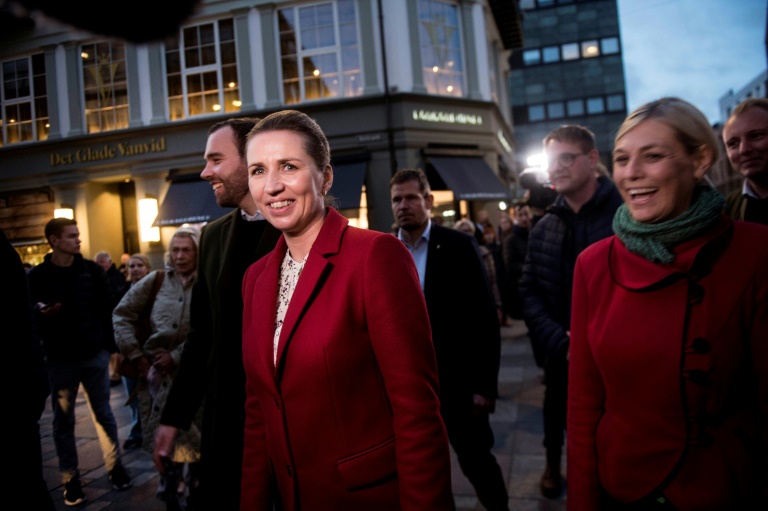
A day after scoring a narrow election victory, Denmark’s Social Democratic Prime Minister Mette Frederiksen tendered her resignation Wednesday to begin the process of forming a new, broader government.

Accustomed to leading minority governments, the Social Democrats — the largest party in parliament with 50 of 179 seats — now want to govern across the traditional left-right divide. 

The prime minister presented her government’s resignation in order “to enter into negotiations to form a broader government and that will probably take a while,” political scientist Rune Stubager, a professor at Aarhus University, told AFP.

Frederiksen’s left-wing bloc, which includes five parties plus three seats from the autonomous territories Greenland and the Faroe Islands, won a majority of 90 seats, compared to 73 for the right and far-right, and 16 for the centre. 

The outgoing prime minister met Queen Margrethe to hand in her resignation at 11:00 am (1000 GMT), which formally set the ball rolling for her to start negotiations with other party leaders on the make-up of the new government.

Having led the Social Democrats to their best election outcome since 2001, gaining two seats and securing over 27 percent of the vote, Frederiksen enters the negotiations from a position of strength.

– Broken dreams –

Up until the final moments of the vote count, it appeared as though the left bloc would lose its majority, a scenario which would have made the newly formed centrist Moderates party kingmaker.

But Frederiksen’s photo-finish win scuppered the hopes of former two-time prime minister Lars Lokke Rasmussen, who founded the Moderates just months earlier.

The party won more than nine percent of votes and Lokke Rasmussen insisted he wanted to be “the bridge” between the left and right.

“The dream lasted only a couple of hours,” daily Jyllands-Posten concluded.

“Now, in theory, Mette can do without Lars Lokke,” the newspaper added.

Despite this, the Moderates “will be part of these negotiations” and could even be able to secure cabinet posts if they are willing to “compromise sufficiently”, Stubager said.

“But I don’t think they will because they will then be vulnerable to critique from the right-wing parties,” he said.

Frederiksen “may then switch to a plan B, which I think is more realistic” — a coalition government with various parties on the left.

While her government was largely hailed for its handling of the Covid-19 pandemic, the election ended up being triggered by the “mink crisis”.

The affair has embroiled Denmark since the government decided in November 2020 to cull the country’s 15 million minks over fears of a mutated strain of the novel coronavirus.

The decision turned out to be illegal, and the Social Liberal party propping up Frederiksen’s minority government threatened to topple it unless she called early elections to regain voters’ confidence.

The Social Liberals paid a price for the gamble, losing nine of their 16 seats.

– ‘Zero refugees’ –

With the razor-thin majority, the Social Democrats will still depend on the Social Liberals’ support to rule, and the party has made it clear it will not support another minority one-party government.

Broad consensus for Denmark’s restrictive migration policy left the issue largely absent from the election campaign, but it could resurge in government negotiations.

Advocating a “zero refugee” policy, the Social Democratic government has been working on setting up a centre to house asylum seekers in Rwanda while their applications are processed.

The Social Liberal Party is opposed to the plan.

“It will be very difficult for the Social Democrats to turn soft or to the left on immigration, because that has been a very pivotal point in their strategy over the past five, six years,” Stubager said.

“So to give up on that would have dramatic consequences for them.”

Danish politics have been heavily influenced by the far-right in recent decades, but three populist parties together won just 14.4 percent of votes and are not expected to play a key role in the upcoming negotiations.

The anti-immigration Danish People’s Party, which until a few years ago hovered above 20 percent, fell to 2.6 percent, its worst result since entering parliament in 1998. 

A new party founded by former immigration minister Inger Stojberg, the Denmark Democrats, instead won 8.1 percent giving them 14 seats on a platform of less centralisation, less influence from Europe and fewer immigrants.

Europe stocks mainly drop before expected Fed hike

European stock markets mostly dipped Wednesday, with investors on edge before another widely-expected jumbo interest rate hike from the US Federal Reserve.

London equities slipped on the eve of another expected large rate increase from the Bank of England.

In the eurozone, Frankfurt fell but Paris rose following weak eurozone manufacturing survey data and a dip in German exports.

“All eyes will be on central banks on both sides of the Atlantic as both the US Federal Reserve and BoE get ready to deliver their rate decisions over the next 24 hours or so,” said AJ Bell investment director Russ Mould.

“While we have a good idea of the quantum of increase both parties will deliver, it will be all about the mood music.”

Global central banks have this year ramped up borrowing costs in an attempt to curb inflation, which has rocketed on sky-high energy costs arising from Russia’s war on Ukraine.

Economists fear that rising rates will spark a global economic downturn because they ramp up loan repayments for individuals and businesses, thereby denting consumer spending and investment.

– US rate clues –

Wednesday’s Fed decision is hotly anticipated by traders hoping for a hint from officials that they are ready to temper their speed of monetary tightening.

“Investors are waiting for clues from the Federal Reserve about the path of rate rises, and in the meantime a slightly more wary mood has settled on the markets,” added Hargreaves Lansdown analyst Susannah Streeter.

“The Fed is expected to bring in another super-size rate hike of 0.75 percentage points.”

In Asia, stocks traded mixed Wednesday after losses on Wall Street, as forecast-beating US data jolted hopes the Fed could soon tone down its hawkish pace of rate hikes.

Hong Kong led gainers — extending the previous day’s surge — as traders remain hopeful China could begin rolling back its economically painful zero-Covid policy, the day after an unverified statement suggesting a shift was taking place.

Suggestions that the Fed could take its foot off the pedal as the world’s top economy shows signs of slowing have helped fuel a rally across risk assets for more than a week.

But some of the wind was taken out of their sails Tuesday after data showed a rise in job openings while other numbers released indicated the manufacturing sector did not perform as badly as expected last month.

The readings suggest the US economy continues to hold up despite recent signs of weakness in the face of decades-high inflation.

Elsewhere, oil prices rose Wednesday after a report said US stockpiles saw a huge drop last week, suggesting demand remains intact as worries about supplies continue to swirl.

– Key figures around 0930 GMT –

London – FTSE 100: DOWN 0.1 percent at 7,182.65 points

Frankfurt – DAX: DOWN 0.2 percent at 13,312.85

Paris – CAC 40: UP 0.1 percent at 6,332.78

EURO STOXX 50: FLAT at 3,651.24

Tokyo – Nikkei 225: DOWN 0.1 percent at 27,663.39 (close)

Hong Kong – Hang Seng Index: UP 2.4 percent at 15,827.17 (close)

Shanghai – Composite: UP 1.2 percent at 3,003.37 (close)

New York – Dow: DOWN 0.24 percent at 32,653.20 (close)

Euro/dollar: UP at $0.9890 from $0.9883 on Tuesday

Pound/dollar: UP at $1.1496 from $1.1486

Dollar/yen: DOWN at 147.10 yen from 148.23 yen

Euro/pound: UP at 86.05 pence from 85.96 pence

Brent North Sea crude: UP 0.5 percent at $95.11 per barrel

West Texas Intermediate: UP 0.5 percent at $88.84 per barrel

China imposes Covid lockdown on 600,000 people around iPhone plant

Chinese authorities imposed lockdowns on 600,000 people in the area surrounding the world’s largest iPhone factory on Wednesday after workers fled to avoid a coronavirus outbreak and the resulting restrictions.

All people except Covid-prevention volunteers and essential workers “must not leave their residences except to receive Covid tests and emergency medical treatment”, officials from central China’s Zhengzhou Airport Economy Zone said.

The move comes after images emerged on Chinese social media last week showing people breaking out of the facility, which is run by Taiwanese tech giant Foxconn and makes products for Apple.

Some employees were complaining online of poor conditions, a lack of supplies and having to flee the factory on foot to avoid Covid transport curbs. Foxconn employs hundreds of thousands of workers in Zhengzhou.

China is the last major economy committed to a zero-Covid strategy, persisting with snap lockdowns, mass testing and lengthy quarantines in a bid to stamp out emerging outbreaks.

But new variants have tested local officials’ ability to snuff out flare-ups faster than they can spread, causing much of the country to live under an ever-changing mosaic of Covid curbs.

The district in Zhengzhou city said Wednesday that all businesses would be required to work from home, with only “key enterprises” allowed to continue operating. It did not specify which businesses fell under that category.

Only medical vehicles and those delivering essentials are allowed on the streets.

The district’s more than 600,000 residents will have to take nucleic acid tests every day, the local government said, warning that it would “resolutely crack down on all kinds of violations”.

The Communist Party-run Dahe Daily said on Wednesday local authorities would “thoroughly disinfect” Foxconn’s facilities, including employee dormitories, over the next three days. Workers quarantining at the factory would need to show seven days of negative tests before leaving for their hometowns.

The paper also said the government had promised to provide timely meals and to set up a counselling hotline for workers.

– ‘Closed loop’-

Foxconn told AFP on Wednesday its Zhengzhou park “maintains closed-loop operation”, without providing details.

The company said at the weekend it was testing employees daily and offering transport to those who wanted to leave, after the videos on social media showed employees walking down motorways with their suitcases.

Apple did not immediately respond to an AFP request for comment.

Local governments in the area surrounding Zhengzhou city have asked Foxconn workers to register with authorities if they return home and to complete several days of quarantine upon arrival.

The company also said on Tuesday it would quadruple bonuses for employees willing to remain at the factory during the outbreak.

Chinese social media users accused Zhengzhou authorities on Wednesday of “performatively” lifting Covid restrictions after the city announced a day earlier it would “restore normal production and life”.

“In the morning you lift the lockdown, then at night you lock down again, what are you trying to do?” Weibo user Taodixing asked.

China reported more than 2,000 fresh domestic infections on Wednesday for the third day in a row.

Henan province, where Zhengzhou is located, officially reported 359 Covid-19 infections on Wednesday, a jump from Tuesday’s 104.

The southern Chinese manufacturing hub of Guangzhou also announced partial lockdowns in several districts this week in response to rising case numbers.

According to analysts Capital Economics, the number of people in quarantine in China is at its highest level since the Shanghai lockdown in spring, with outbreaks in more than 50 cities.

China imposes Covid lockdown on 600,000 people around iPhone plant

Chinese authorities imposed lockdowns on 600,000 people in the area surrounding the world’s largest iPhone factory on Wednesday after workers fled to avoid a coronavirus outbreak and the resulting restrictions.

All people except Covid-prevention volunteers and essential workers “must not leave their residences except to receive Covid tests and emergency medical treatment”, officials from central China’s Zhengzhou Airport Economy Zone said.

The move comes after images emerged on Chinese social media last week showing people breaking out of the facility, which is run by Taiwanese tech giant Foxconn and makes products for Apple.

Some employees were complaining online of poor conditions, a lack of supplies and having to flee the factory on foot to avoid Covid transport curbs. Foxconn employs hundreds of thousands of workers in Zhengzhou.

China is the last major economy committed to a zero-Covid strategy, persisting with snap lockdowns, mass testing and lengthy quarantines in a bid to stamp out emerging outbreaks.

But new variants have tested local officials’ ability to snuff out flare-ups faster than they can spread, causing much of the country to live under an ever-changing mosaic of Covid curbs.

The district in Zhengzhou city said Wednesday that all businesses would be required to work from home, with only “key enterprises” allowed to continue operating. It did not specify which businesses fell under that category.

Only medical vehicles and those delivering essentials are allowed on the streets.

The district’s more than 600,000 residents will have to take nucleic acid tests every day, the local government said, warning that it would “resolutely crack down on all kinds of violations”.

The Communist Party-run Dahe Daily said on Wednesday local authorities would “thoroughly disinfect” Foxconn’s facilities, including employee dormitories, over the next three days. Workers quarantining at the factory would need to show seven days of negative tests before leaving for their hometowns.

The paper also said the government had promised to provide timely meals and to set up a counselling hotline for workers.

– ‘Closed loop’-

Foxconn told AFP on Wednesday its Zhengzhou park “maintains closed-loop operation”, without providing details.

The company said at the weekend it was testing employees daily and offering transport to those who wanted to leave, after the videos on social media showed employees walking down motorways with their suitcases.

Apple did not immediately respond to an AFP request for comment.

Local governments in the area surrounding Zhengzhou city have asked Foxconn workers to register with authorities if they return home and to complete several days of quarantine upon arrival.

The company also said on Tuesday it would quadruple bonuses for employees willing to remain at the factory during the outbreak.

Chinese social media users accused Zhengzhou authorities on Wednesday of “performatively” lifting Covid restrictions after the city announced a day earlier it would “restore normal production and life”.

“In the morning you lift the lockdown, then at night you lock down again, what are you trying to do?” Weibo user Taodixing asked.

China reported more than 2,000 fresh domestic infections on Wednesday for the third day in a row.

Henan province, where Zhengzhou is located, officially reported 359 Covid-19 infections on Wednesday, a jump from Tuesday’s 104.

The southern Chinese manufacturing hub of Guangzhou also announced partial lockdowns in several districts this week in response to rising case numbers.

According to analysts Capital Economics, the number of people in quarantine in China is at its highest level since the Shanghai lockdown in spring, with outbreaks in more than 50 cities.

War and peace collide in Ukraine's recaptured ruins

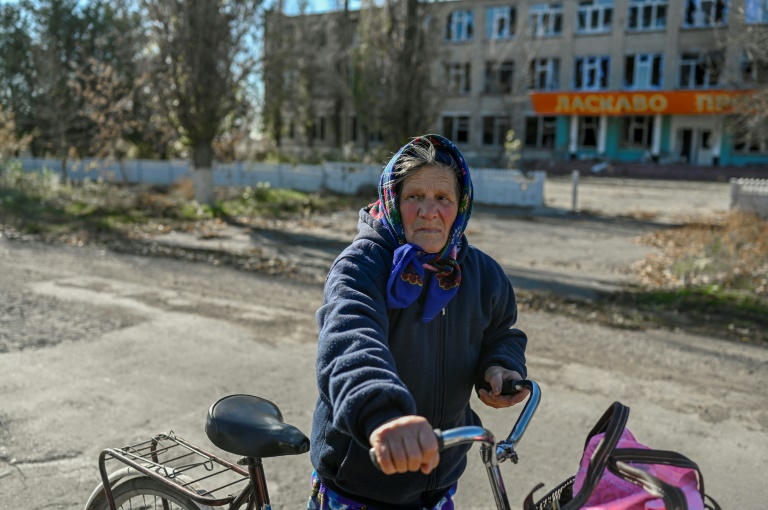
The two Ukrainian women sat laughing on a sunny bench during a day-long lull in Russian shelling and argued about what it feels like to be in a war.

The ruins of their village of Bilozirka stretched along a rutted road beyond which lay trenches and artillery pieces locked in Ukraine’s battle for Kherson.

The Russians have been firing salvos from the south end of the road ever since being routed and retreating from the village in the first month of war in March.

The Ukrainians have been trying to press a more recent counteroffensive past the Russian positions into areas around the Crimea peninsula the Kremlin seized in 2014.

Anzhelika Borysenko was telling her older friend that anyone could get used to anything — even in a full-scale war that few could believe would break out.

The 20-year-old mother of two had spent March trying not to be noticed by Russian soldiers who set up camp in a school on the opposite side of the road.

She had spent the subsequent months of Russian shelling either hiding in cellars or calculating a safe time to nip out in search for water and food.

“At first, all you thought about was when it would finally end. But now, this feels normal. We got used to it,” Borysenko said of the war.

Natalia Popesko frowned and hinted that her younger friend was missing the point.

“Personally, I feel dead inside,” the 38-year-old said.

“We didn’t get used to it. We simply came to accept that this is real.”

– Highs and lows –

Ukraine’s lightning counterstrike across the north and ever-deeper pushes into the south have created new patches of land that neither side completely controls.

The village of Bilozirka is hidden in one of these destitute grey zones.

Some of Bilozirka’s sturdier residents are returning and Ukrainian troops feel safe enough to use the village as a rear base.

But there is no functioning government or any established means of assistance for the few hundred residents who have filled the village’s better-surviving homes.

The school where the Russians set up their headquarters is now a shattered shell of a building after coming under a whithering Ukrainian assault.

This state of neither all-out war nor any semblance of peace leaves Anastasiya Kuplevska vacillating between desperation and hope.

“If there is no shelling, you wake up and suddenly want to do something,” the 40-year-old single mother said.

“But if they start shooting, you immediately feel helpless again.”

– ‘Flooded with food’ –

Kuplevska’s most serious problem is how little she can do on the good days when her spirits are up.

The only village jobs involve selling basics delivered from the nearby city of Mykolaiv.

Most of the local residents worked in a juice factory a drive down the country road.

But the road’s bridges were blown up during the fighting and the side routes are still heavily shelled.

“I don’t even know if it’s still standing,” Kuplevska said of her factory.

She also bristles at offers from well-wishers of what she feels are misguided help.

“They have flooded us with food,” Kuplevska said of the various humanitarian relief programmes.

“But you can’t build a house out of food.”

– Will to fight –

The debates and complaints in Bilozirka come at a crucial juncture in the war.

Ukraine’s counteroffensive has drawn retaliatory Russian air strikes aimed at leaving much of the country without heat or power heading into the winter months.

Russian President Vladimir Putin appears to be betting that hardship will break Ukrainians’ will to fight.

But months of suffering have had the exact opposite effect on the two women on the bench.

“Many of us had relatives in Russia. We would talk to them. We viewed them as normal people,” Popesko said.

“We view them as animals now.”

The young mother said simply that she refused to talk to her Russian friends.

What Borysenko struggled with more was the very idea that there was a war.

“You see it and feel it and understand that it is true — but you still somehow do not grasp that it is real,” she said.

“You understand it but cannot believe it.”

Seoul's Halloween crush 'predictable, preventable,' analysts say

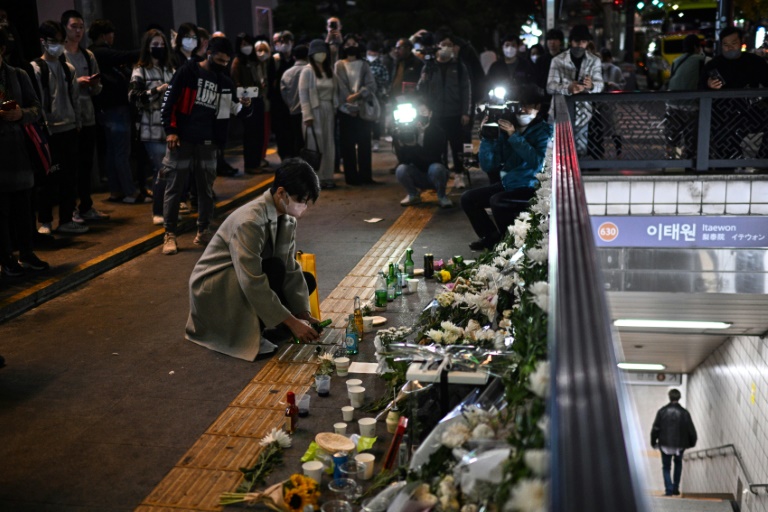
On what should have been a night of fun for tens of thousands of Halloween revellers, a bottleneck in a narrow alley of Seoul’s entertainment district instead claimed 156 lives, with analysts and top officials blaming a crowd control failure.

The lack of prior safety planning — officials concede it was insufficient — quickly turned South Korea’s first Halloween free of coronavirus restrictions into one of the country’s worst disasters, with police reliant on passersby to help extract partygoers from the crush.

“In most cases of crowd crushes, it turns out the root cause is a lack of planning,” said Eric Kant who runs the Netherlands-based Phase01 Crowd Management. 

With no single organiser, the government did not require any of the bars, clubs and restaurants holding events in Itaewon on Saturday to submit a safety management plan. 

And even though police estimated beforehand that the boisterous festivities would swell to an estimated 100,000 people, they only deployed 137 officers — compared to the 6,500 sent across town to police a protest a fraction of the size. 

As public scrutiny of the crowd policing has mounted, the police chief, interior minister and Seoul’s mayor apologised Tuesday for failing to prevent the fatal disaster.

South Korea’s prime minister said Wednesday that police must explain their slow response to multiple emergency calls made in the hours before disaster struck.

But some experts suggested more policing alone may not have been enough to avert the tragedy.

“They either become part of the crowd themselves, and hence their lives will be in danger too, or they will be pure observers that do not even have enough information about what is happening within the crowd,” crowd safety expert Milad Haghani of the University of New South Wales told AFP.

– ‘Recipe for disaster’ –

According to Haghani, Itaewon’s Halloween festivities ticked all the risk factor boxes for crowd surges. 

The typically boisterous neighbourhood is crisscrossed with narrow alleyways that lack an obvious “potential escape route”.

Then there were issues around the lack of event organisation itself, including “unrestricted entry” of people into a small space, “no ticket sales” which left no exact estimate of demand, and no active monitoring of the crowd density.

“This is a recipe for disaster in mass gatherings,” Haghani said, adding that it was “reminiscent” of the 2010 Love Parade in Germany but with “far many more casualties”.

During that free-access music festival, 21 people died from suffocation and hundreds more were injured as the crowd struggled to escape a ramp leading to the event.

Such incidents are frequently caused by “mismanagement by event or venue organisers” rather than “panic” among the crowd, said John Drury, an expert on crowd psychology at the University of Sussex.

In Itaewon on Saturday, witnesses told AFP that early on in the night partygoers along one particular chokepoint were sustaining injuries simply due to crowd density. 

Less than two hours later, people began spontaneously falling over and then trampling on each other in a tight knot of bodies that made it all but impossible to move or breathe. 

– Predictable and preventable –

To avoid too many bodies being crushed in too narrow of a space, such street events need “months of planning” by experts, Kant in the Netherlands said.

This includes calculating visitor capacity beforehand and then counting and monitoring the size of the crowd and possible bottlenecks either on the ground or via CCTV.

“During the event, if maximum capacity is reached, further access to that area should effectively be shut off,” Kant added.

It was only around 2:00 am, or more than seven hours after the first emergency call, that officials banned anyone except officials and medical workers from entering Itaewon.

National police chief Yoon Hee-keun acknowledged that officers had failed to properly responded to the many citizen calls warning of danger, while the interior minister promised an investigation into what exactly happened in Seoul. 

“I am 100 percent convinced this tragedy was preventable,” said Kant.

“Crowd crushes or crowd disasters were and are always predictable, thus preventable.”

Fed poised for further US rate hike as political pressure mounts

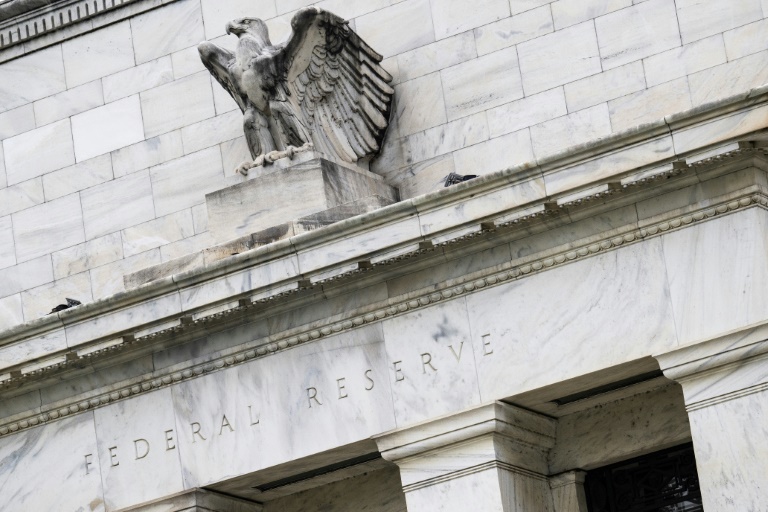
US central bankers are expected to announce another steep interest rate hike Wednesday as they try to prevent soaring inflation from becoming ingrained, but politicians are piling on the pressure in the final days of the midterm elections.

The Federal Reserve has embarked on an aggressive campaign to cool the economy this year as inflation surged to its highest rate in decades, squeezing the budgets of American families and propelling economic issues to the top of voter priorities.

To raise borrowing costs and lower demand, the central bank has cranked up the benchmark lending rate five times this year, including three straight hikes of 0.75 percentage points.

Many analysts expect the Fed to adopt a fourth straight three-quarter point hike on Wednesday, and all eyes are on signs that it could shift to a less hawkish stance in the coming months.

“There’s a growing belief that the central bank will signal a desire to ease off the brake over the following few meetings,” said Oanda senior market analyst Craig Erlam in a note.

But it will be challenging for Fed Chair Jerome Powell to tell markets that the policy-setting Federal Open Market Committee (FOMC) has begun mulling a step-down from its current path.

“Markets will likely interpret any comments about a downshift in tightening as dovish, signaling the end of the rate hiking cycle,” said economist Rubeela Farooqi of High Frequency Economics in an analysis.

And if inflation continues to remain strong, the Fed could press on with “a series of half-point hikes, rather than further slowing the pace of increases,” she added.

With its deliberations ending at midday, the FOMC is expected to announce its decision at 1800 GMT Wednesday.

Powell’s press conference after the meeting will be closely watched for clues on how much further he thinks the Fed must go before declaring victory in the inflation fight.

– Political pressure –

As central bankers walk a tightrope fighting inflation while avoiding tipping the economy into a recession, politicians are ramping up pressure on Fed officials amid growing worries of a downturn.

Senator Sherrod Brown, the Democratic chair of the Senate Banking Committee, urged the Fed last month to show commitment to its multi-pronged legal mandate — of promoting maximum employment, stable prices, and moderate long-term interest rates in the economy.

“For working Americans who already feel the crush of inflation, job losses will make it much worse,” Brown said in a letter to Powell.

Democratic senators including Elizabeth Warren also expressed concern this week over the Fed’s rate hikes, as President Joe Biden’s party faces growing voter frustration over high inflation.

“It may come too late to avoid a recession but the Fed has been very clear from the start that while a soft landing is the desirable and attainable outcome, getting inflation under control is the primary focus,” said Oanda’s Erlam.

As higher rates take the heat out of economic momentum, there is likely to be “moderation in the labor market before a mild recession in (the first half of) 2023 brings about more marked change,” said economist Matthew Martin of Oxford Economics in an analysis.

Fed poised for further US rate hike as political pressure mounts

US central bankers are expected to announce another steep interest rate hike Wednesday as they try to prevent soaring inflation from becoming ingrained, but politicians are piling on the pressure in the final days of the midterm elections.

The Federal Reserve has embarked on an aggressive campaign to cool the economy this year as inflation surged to its highest rate in decades, squeezing the budgets of American families and propelling economic issues to the top of voter priorities.

To raise borrowing costs and lower demand, the central bank has cranked up the benchmark lending rate five times this year, including three straight hikes of 0.75 percentage points.

Many analysts expect the Fed to adopt a fourth straight three-quarter point hike on Wednesday, and all eyes are on signs that it could shift to a less hawkish stance in the coming months.

“There’s a growing belief that the central bank will signal a desire to ease off the brake over the following few meetings,” said Oanda senior market analyst Craig Erlam in a note.

But it will be challenging for Fed Chair Jerome Powell to tell markets that the policy-setting Federal Open Market Committee (FOMC) has begun mulling a step-down from its current path.

“Markets will likely interpret any comments about a downshift in tightening as dovish, signaling the end of the rate hiking cycle,” said economist Rubeela Farooqi of High Frequency Economics in an analysis.

And if inflation continues to remain strong, the Fed could press on with “a series of half-point hikes, rather than further slowing the pace of increases,” she added.

With its deliberations ending at midday, the FOMC is expected to announce its decision at 1800 GMT Wednesday.

Powell’s press conference after the meeting will be closely watched for clues on how much further he thinks the Fed must go before declaring victory in the inflation fight.

– Political pressure –

As central bankers walk a tightrope fighting inflation while avoiding tipping the economy into a recession, politicians are ramping up pressure on Fed officials amid growing worries of a downturn.

Senator Sherrod Brown, the Democratic chair of the Senate Banking Committee, urged the Fed last month to show commitment to its multi-pronged legal mandate — of promoting maximum employment, stable prices, and moderate long-term interest rates in the economy.

“For working Americans who already feel the crush of inflation, job losses will make it much worse,” Brown said in a letter to Powell.

Democratic senators including Elizabeth Warren also expressed concern this week over the Fed’s rate hikes, as President Joe Biden’s party faces growing voter frustration over high inflation.

“It may come too late to avoid a recession but the Fed has been very clear from the start that while a soft landing is the desirable and attainable outcome, getting inflation under control is the primary focus,” said Oanda’s Erlam.

As higher rates take the heat out of economic momentum, there is likely to be “moderation in the labor market before a mild recession in (the first half of) 2023 brings about more marked change,” said economist Matthew Martin of Oxford Economics in an analysis.

'Law and order returned' Hong Kong's US-sanctioned leader tells bankers

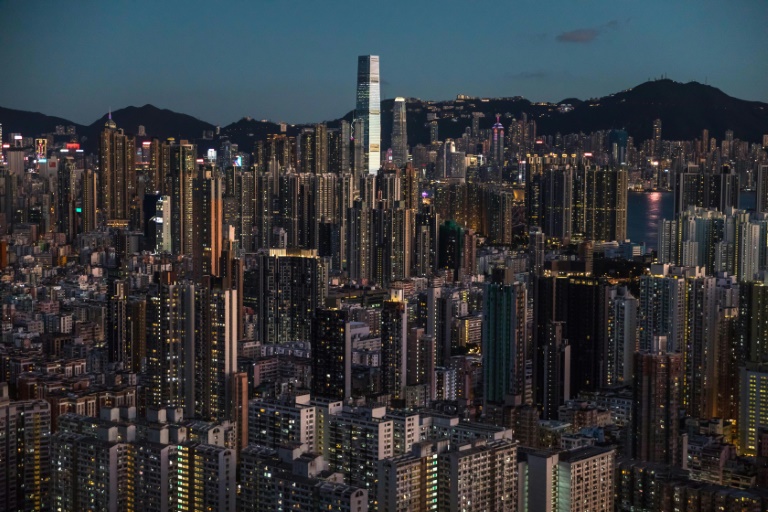
Hong Kong’s US-sanctioned leader said political stability and business confidence have been restored following the crushing of democracy protests, as he opened a summit on Wednesday attended by global bankers including leading Wall Street executives.

The Asian business hub is hosting a week of high-profile events after years of political unrest and pandemic travel curbs tarnished the city’s business-friendly reputation, sparked an exodus of talent and battered its economy.

The marquee event at the Four Seasons hotel was heralded by city leader John Lee as proof that the previously shuttered metropolis is back in business.

“We were, we are and we will remain one of the world’s leading financial centres. And you can take that to the bank,” Lee told delegates.

A former security chief who took office this year, Lee is among the Chinese officials sanctioned by Washington for cracking down on rights in Hong Kong after huge democracy protests. 

Most of the city’s political opposition are either behind bars or have fled overseas since those protests.

Blacklisted individuals are unable to hold accounts with the same banking giants attending the summit.

“Social disturbance is clearly in the past and has given way to stability, to growing business and community confidence in Hong Kong’s future,” Lee said in his summit speech. 

“Law and order has returned. The worst is behind us.”

– US criticism –

Among those speaking at the summit were Goldman Sachs head David Solomon, Morgan Stanley CEO James Gorman, Blackrock president Rob Kapito and JP Morgan Chase counterpart Daniel Pinto.

But their presence is not without controversy.

Last week, the leaders of the bipartisan US Congressional-Executive Commission on China called on Wall Street executives not to attend, accusing them of “whitewashing human rights violations” and giving political cover to Lee.

The row illustrates the tightrope faced by multinationals in Hong Kong, which is both a lucrative business gateway for China and a flashpoint in increasingly tense relations between Beijing and Western powers.

In his speech Lee said the city has an “irreplaceable connection” to mainland China for global businesses “as the centre of economic gravity in the world shifts eastward”.

The summit comes at a time of uncertainty over China’s economy under President Xi Jinping.

Xi, who secured a norm-breaking third term last month, has overseen regulatory crackdowns clipping the wings of some major Chinese companies and is still sticking to a strict zero-Covid strategy.

– ‘Don’t read international media’ –

Lee’s speech was followed by recorded interviews with three top officials involved in regulation, including Fang Xinghai, vice chairman of the China Securities Regulatory Commission, who criticised international press coverage of China.

“Don’t read too much of international media,” Fang said, sparking laughter from the audience.

Those comments received backing from both UBS chairman Colm Kelleher and Liu Jin, president of Bank of China.

“Like Vice Chairman Fang said we’re not reading the American press, we all buy the story,” Kelleher told delegates.

He added that while investors were closely watching Beijing for signs of reopening, international bankers were “very pro-China”.

Much of the discussion focused on the wider global economy where spiralling inflation rates and geopolitical uncertainty have hit sentiment.

“My gut is the central banks will, in aggregate, tame inflation,” Morgan Stanley chief Gorman told delegates in one of the more positive assessments.

Former governor of the Bank of England Mark Carney painted a more stark portrait.

“We’re headed very likely to a global recession,” he said, citing — among other things — China’s strict zero-Covid controls and the fallout in Europe of Russia’s invasion of Ukraine. 

The Hong Kong summit is being held in a bubble that keeps delegates away from residents. 

While Hong Kong scrapped mandatory quarantine in September — a key demand of businesses — it maintains layers of pandemic restrictions long since abandoned almost everywhere else.

Overseas arrivals must undergo frequent testing and are unable to go to bars and restaurants for their first three days in the city.

Restrictions on various gatherings remain and masks are compulsory, including outdoors.

Hong Kong’s leaders are keen to resuscitate the city’s fortunes. The city is headed for a full recession with gross domestic product plunging 4.5 percent in the third quarter of this year. 

Its stock exchange is among the world’s worst performers, down more than 50 percent this year to levels last seen in 2009.

China is the last major economy committed to a zero-Covid strategy, persisting with snap lockdowns, mass testing and lengthy quarantines that have stamped out outbreaks but created growing economic pain.

Close Bitnami banner
Bitnami