World

In Niagara Falls, bitcoin mining brings a new roar to town

In the US border town of Niagara Falls, residents accustomed to the soothing roar of the famous waterfalls recently discovered a much less pleasant sound: the “haunting hum” of bitcoin mining farms.

“I get four hours of sleep, maybe, because of that constant noise,” said Elizabeth Lundy, an 80-year-old retired hairdresser. “I can hear the noise even through the storm windows.” 

On a sunny October morning, a mechanical whirring could be heard clearly on Lundy’s front porch. The noise turned to a deafening din as one walked two blocks toward Buffalo Avenue where the US bitcoin miners operate.

Bitcoin mining farms have multiplied in the United States since China halted this activity in 2021. The United States is now emerging as a global leader in the industry.

Attracted by the cheap hydroelectric power available in Niagara Falls, Blockfusion took up residence at a former coal factory there in 2019, followed by US Bitcoin in 2020, which operates from a former sodium plant.

US Bitcoin installed hundreds of noisy fans outside, needed to cool the thousands of computer graphics cards that heat up as they solve the complex equations required to earn them cryptocurrency.

– ‘A 747 jet’ –

“It sounds like a 747 jet,” said Frank Peller, a 70-year-old resident who lives in a brownstone more than a mile from this crypto mining operation.

“It’s the loudest in the morning, at night and if there’s high humidity and a breeze,” he added.

He once could sit in his backyard and hear the roar of Niagara Falls more than two miles away. But now, “you can’t hear it at all” and you can’t avoid “the roar of bitcoin mining every day.” 

Bryan Maacks, who lives closer to Buffalo Avenue, described a “haunting, vibrating hum” — a vexing throb that has run through his house day and night since last winter. 

“It’s very mentally daunting. It’s like having a toothache for 24 hours a day every day,” Maacks, 65, said.

He said he wears headphones all the time and uses a fan to block out the noise to get to sleep. 

Maacks launched a petition and made a “US Bitcoin Stop the Noise” sign on the back of his red pickup truck, which he parked for several weeks in front of the company.

“The noise pollution of this industry is like nothing else that has been there,” said Niagara Falls Mayor Robert Restaino in his office decorated with paintings of the famous waterfalls.

That’s quite a statement in a city that embraced heavy industry for decades.

Faced with a flood of complaints, mainly regarding US Bitcoin, the mayor decreed a moratorium on any new mining activity in December 2021, then in early September set strict noise limits of 40 to 50 decibels near residential areas. 

– ‘Noise barrier’ –

US Bitcoin said it’s taking steps to address the problem.

“Immediately upon these concerns being flagged, we erected a plastic barrier,” the company said in a statement to AFP.

“We also conducted acoustic studies and had plans drawn for a larger noise abatement wall” that was prevented from being built by the moratorium, the company said.

In the nearby town of North Tonawanda, the Canadian mining company Digihost, is also facing the ire of local residents, and has undertaken the construction of a soundproofing wall more than six meters (20 feet) high, at an estimated cost of several hundred thousand dollars, Mayor Austin Tylec said.

In Niagara Falls, City Hall ordered the closure of the two bitcoin farms in early October until they comply with new local statutes.

While both companies say they are cooperating with the city, only Blockfusion had shut down its processors by the end of October and reduced the number of fans running, with US Bitcoin’s still running at full capacity, an AFP reporter found.

“If they continue to refuse to comply with our order to stop, then we’ll have to be in court,” Restaino said.

Such a legal battle already pits the bitcoin farm Red Dog Technologies against local authorities in Tennessee. Other complaints about noise pollution in the vicinity of computer centers have arisen from North Carolina to Pennsylvania.

“I’m going to be protesting till the hum is gone, basically, till I get the roar of the falls back because that’s what I used to hear,” Maacks said.   
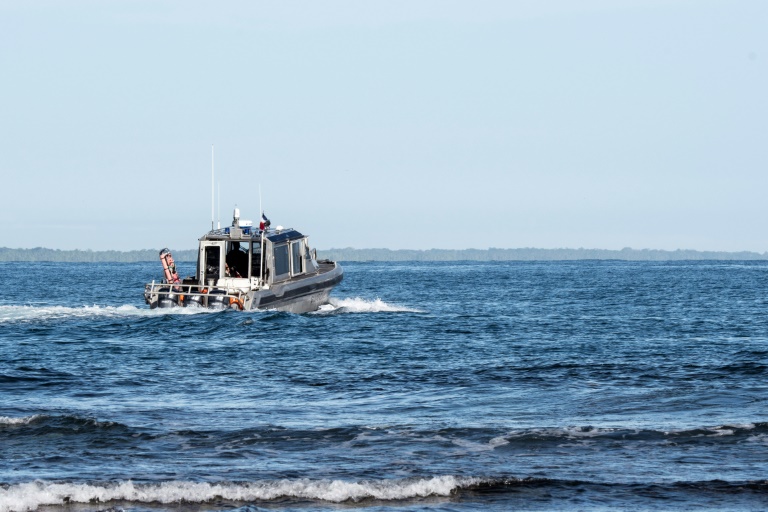
Costa Rica ends search for downed plane carrying German fitness billionaire

Costa Rican authorities on Tuesday ended the search for the plane in which German billionaire Rainer Schaller and his family were traveling, nearly two weeks after it crashed in the Caribbean.

The small plane — carrying six people — flew from Mexico on October 21 and disappeared from radar as it was trying to land at the airport in the eastern Costa Rican province of Limon.

A source with the public security ministry had told AFP that “Schaller, adult male, 53 years old” and five others were listed as being on the aircraft.

The next day, the remains of a minor and an adult were found 28 kilometers (17 miles) off Limon’s coast, as well as several parts of the aircraft fuselage and personal belongings like bags and backpacks.

“After 11 days of continuous operation, the different institutions of the Ministry of Public Security, Air Surveillance, Coast Guard and land police have concluded (the search efforts) as no more evidence has been found,” said Vice Minister of Public Security Martin Arias in a video released to the press.

“Today, November 1, we are officially closing the search case of the plane crash in the Caribbean.”

Schaller was the founder of McFit gym chain and, according to the German newspaper Bild, was traveling on the plane with his partner and two children, as well as another man. All were of German nationality. The pilot was Swiss.

Minister of Public Security Jorge Torres said Tuesday that the families “of one of the victims who lost his life in the accident” were taken to the site where the plane is believed to have crashed.

“There, they found a little bit of peace — they prayed and I believe they found some closure,” Torres said.

He did not specify the identity of the victim nor did he say if the two bodies found had already been identified.

Starting in the late 1990s with just a single gym in the German city of Wurzburg, Schaller grew his low-cost McFit chain into the largest fitness group in Europe.

In 2020, his company acquired the major US fitness chain Gold’s Gym, bringing its global footprint to more than 900 facilities on six continents.

N. Korea fires more than 10 missiles, one close to S. Korea

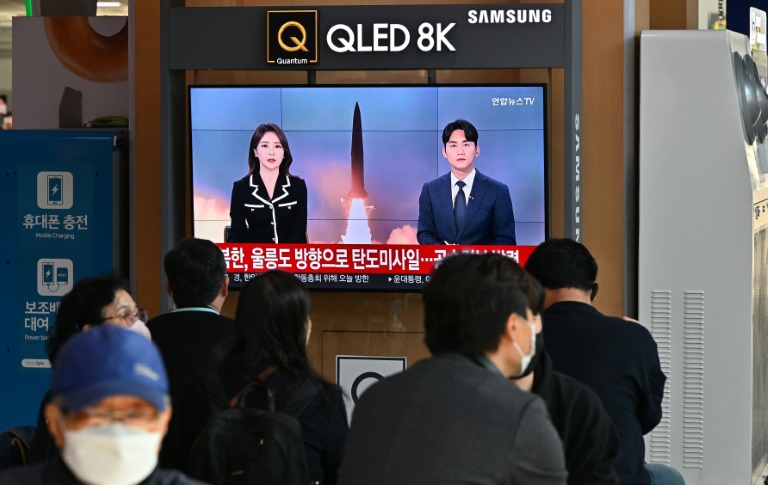
North Korea fired more than 10 missiles Wednesday, including one that landed close to South Korea’s waters in what President Yoon Suk-yeol said was “effectively a territorial invasion”.

One short-range ballistic missile crossed the Northern Limit Line, the de facto maritime border between the two countries, prompting a rare warning for residents on the island of Ulleungdo to seek shelter in bunkers.

The military said it was the “first time since the peninsula was divided” at the end of Korean War hostilities in 1953 that a North Korean missile had landed so close to the South’s territorial waters.

“President Yoon pointed out today that North Korea’s provocation is an effective territorial invasion by a missile that crossed the Northern Limit Line for the first time since the division,” his office said in a statement.

The missile closest to South Korea landed in waters just 57 kilometres (35 miles) east of the mainland, the military said.

The military released a statement describing the launch near the South’s territorial waters as “very rare and intolerable”.

Soon after, the South Korean military said it had fired three air-to-ground missiles into the sea towards the north of the two countries’ maritime boundary.

An air raid warning was issued for Ulleungdo after the North Korean missile launch. The alert was flashed on national television and told residents to “evacuate to the nearest underground shelter”.

The South Korean military’s Joint Chiefs of Staff initially said it detected the launch of three short-range ballistic missiles.

But it later announced North Korea had fired more than 10 missiles “of various types today towards the east and west”.

Yoon Suk-yeol called a meeting of the National Security Council over the launches, ordering “swift and stern measures so that North Korea’s provocations pay a clear price”.

Japan also confirmed the North Korean missile launches, with Prime Minister Fumio Kishida telling reporters he planned to call a “national security meeting as soon as possible.”

South Korea closed some air routes over the East Sea, also known as the Sea of Japan, advising local airlines to detour to “ensure passenger safety in the routes to the United States and Japan”.

– Vigilant Storm –

Pyongyang’s latest test-firing came as Seoul and Washington staged their largest-ever joint air drills, dubbed “Vigilant Storm”, which involve hundreds of warplanes from both sides.

Pak Jong Chon, a high-ranking North Korean official, said the drills were aggressive and provocative, according to a report in state media Wednesday.

Pak said the name of the exercises harked back to Operation Desert Storm, the US-led military assault on Iraq in 1990-1991 after it invaded Kuwait.

“If the US and South Korea attempt to use armed forces against the (Democratic People’s Republic of Korea) without any fear, the special means of the DPRK’s armed forces will carry out their strategic mission without delay,” he said.

“The US and South Korea will have to … pay the most horrible price in history.”

– ‘Dangerous situation’ –

North Korea’s missile launches on Wednesday appeared to be “the most aggressive and threatening armed demonstration against the South since 2010,” Cheong Seong-chang, a researcher at the Sejong Institute, told AFP.

“It is now a dangerous and unstable situation that could lead to armed conflict,” he added.

In March 2010, a North Korean submarine torpedoed the South Korean naval vessel Cheonan, killing 46 sailors including 16 who were on their mandatory military service.

In November the same year, the North shelled a South Korean border island, killing two marines — both of them young conscripts.

Wednesday’s missile tests follow a recent blitz of launches, including what the North said were tactical nuclear drills.

Washington and Seoul have repeatedly warned the launches could culminate in another nuclear test — which would be Pyongyang’s seventh.

“As far as I can remember, North Korea has never made such a provocation when South Korea and the US were holding their joint drills,” Park Won-gon, a professor at Ewha University, told AFP. 

“Pyongyang seems to have completed its most powerful deterrent. This is a serious threat. The North also seems confident in their nuclear capabilities.”

The North’s latest launches came as South Korea was in a period of national mourning after more than 150 people — mostly young women in their 20s — were killed  in a crowd crush in Seoul Saturday.

It shows “North Korea’s clear priorities,” Yang Moo-jin, professor at the University of North Korean Studies in Seoul, told AFP.  

“Pyongyang probably thinks it has no reason to take the Itaewon tragedy into its consideration, as Seoul and Washington’s largest-ever joint air drills are also happening anyway in spite of it,” he added.

Bolsonaro 'authorizes' transition in Brazil without acknowledging defeat

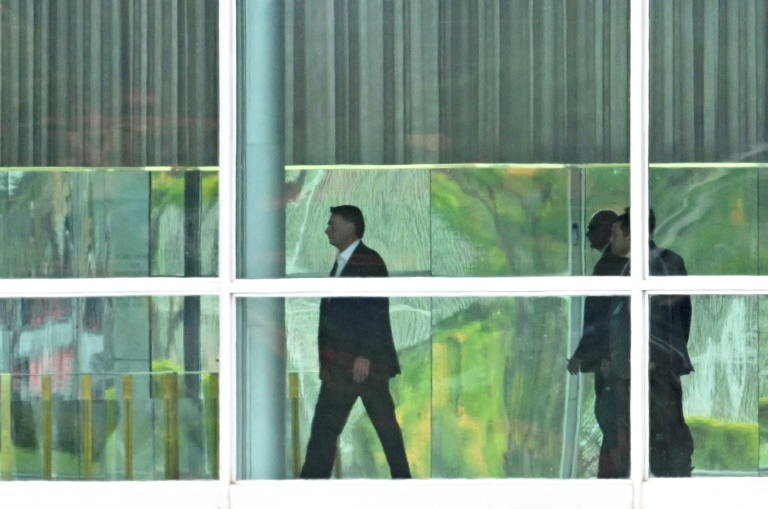
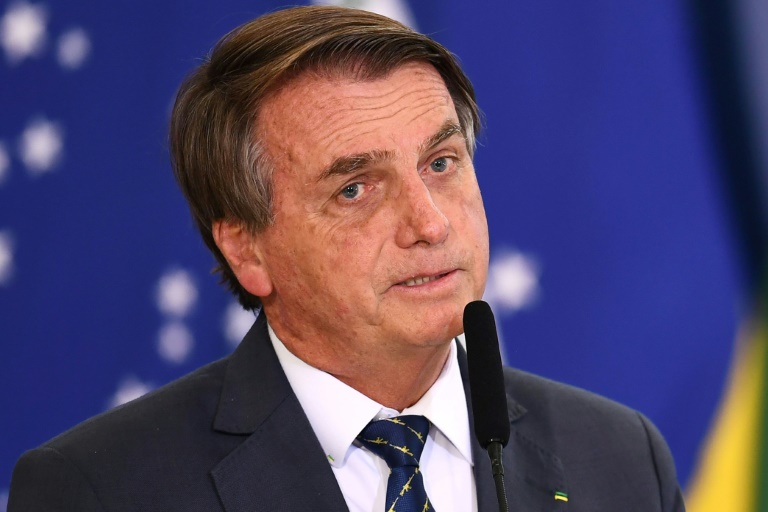
Brazil’s President Jair Bolsonaro on Tuesday “authorized” the transition to a new government, without acknowledging his defeat to leftist rival Luiz Inacio Lula da Silva.

Bolsonaro, 67, broke two days of silence after his razor-thin loss to Lula on Sunday, which sparked protests from his supporters across the country and fanned fears he would not accept the outcome.

In a speech that lasted just over two minutes, the far-right incumbent neither acknowledged defeat nor congratulated Lula on his victory. 

But microphones did catch the president saying before his speech with a smile: “They are going to miss us.” 

Bolsonaro started by thanking the 58 million Brazilians who voted for him, before saying that the roadblocks erected by his supporters across the country were “the fruit of indignation and a feeling of injustice at how the electoral process took place.”

“Peaceful protests will always be welcome,” he said.

“As president of the Republic and a citizen, I will continue to comply with our constitution,” he said, before handing the podium to his chief of staff Ciro Nogueira, who said Bolsonaro had “authorized” the “start of the transition” process.

Lula’s Workers’ Party announced Tuesday that his vice-president-elect Geraldo Alckmin would lead the transition process which would begin on Thursday. Lula will be inaugurated for his third term as president on January 1.

– ‘We will not accept’ –

Bolsonaro’s appearance, however succinct, capped two days of tensions over how he would respond to such a narrow loss after months of alleging fraud in the electoral system.

“Anyplace else in the world, the defeated president would have called me to recognize his defeat,” Lula said in his victory speech to a euphoric sea of red-clad supporters in Sao Paulo on Sunday night.

Before his speech Tuesday, Bolsonaro had initially remained silent even as key allies publicly recognized his loss, including the powerful speaker of the lower house of Congress, Arthur Lira.

Federal Highway Police (PRF) on Tuesday reported hundreds of total or partial road blockades across the country by truck drivers and pro-Bolsonaro supporters. 

By nightfall, they said they had dispersed about 490 protests, but that about 190 demonstrations and partial road blockades remained.

Protesters wearing the yellow and green of the Brazilian flag, which the outgoing president had adopted as his own, said they would not accept the outcome of the election.

“We will not accept losing what we have gained, we want what is written on our flag — ‘order and progress,'” Antoniel Almeida, 45, told AFP at a protest in Barra Mansa, Rio de Janeiro.

“We will not accept the situation as it is.”

On Monday night, Judge Alexander de Moraes of the Supreme Court ordered police to disperse the blockades immediately. He was acting in response to a request by a transport federation that complained it was losing business.

– ‘Strength of our values’ –

Bolsonaro became the first incumbent president in Brazil not to win re-election in the post-dictatorship era after a four-year term in which he came under fire for his disastrous handling of the Covid-19 pandemic, which left more than 680,000 dead in Brazil.

He also drew criticism for his vitriolic comments, polarizing style and attacks on democratic institutions and foreign allies.

Bolsonaro used his brief speech to reflect on his time in office and said the victory of a majority of right-wing candidates in Congress “shows the strength of our values: God, homeland, family, and liberty.”

“Our dreams are more alive than ever. Even in the face of the system, we overcame a pandemic and the consequences of a war,” Bolsonaro said, referring to Russia’s war against Ukraine, which has reverberated around the globe with rising prices and concerns of a major food crisis. 

“I was always labeled undemocratic and unlike my accusers, I always played within the limits of the constitution.”

– Lula gets to work –

The post-election drama follows a dirty and divisive election campaign between Bolsonaro and Lula, who returns to office in a dramatic comeback.

Brazil’s president between 2003 and 2010, Lula crashed into disgrace in a corruption scandal that landed him in jail before his conviction was thrown out due to bias from the lead judge. However, he was not exonerated.

The election outcome showed just how polarized the country is between the two very different leaders.

Lula scored 50.9 percent to Bolsonaro’s 49.1 percent — the narrowest margin in Brazil’s modern history.

With a massive to-do list, Lula leaped into action, meeting Argentine President Alberto Fernandez in Sao Paulo and holding a series of phone calls with US President Joe Biden, France’s Emmanuel Macron, Germany’s Olaf Scholz, UN Secretary-General Antonio Guterres and others.

Seoul distress calls show four hours of mayhem, police inaction

South Korean Prime Minister Han Duck-soo vowed on Wednesday to hold police accountable for Seoul’s deadly Halloween crowd surge, after a log of emergency calls showed authorities were slow to respond.

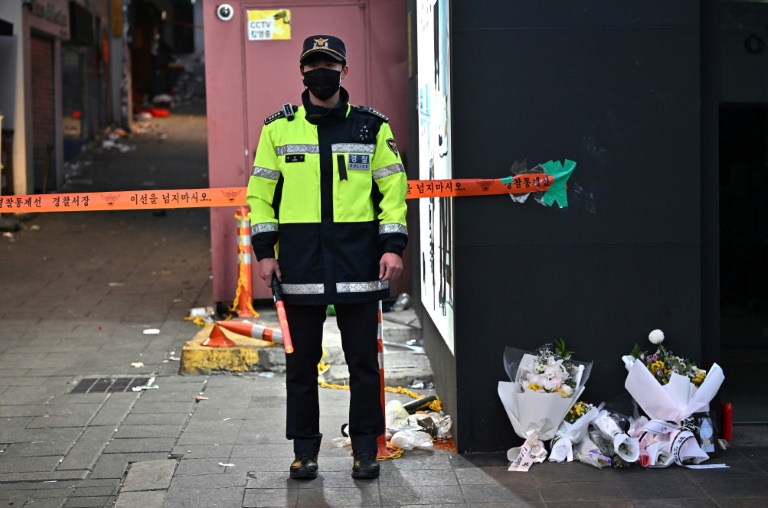
The crush in the narrow alleyways of the Itaewon entertainment district on Saturday killed 156 people, mostly costumed young party-goers looking for a night of post-pandemic fun.

The first emergency call was made at 6:34 pm, a nervous caller warning that police needed to control the crowd before the crush of people turned deadly.

What follows is a condensed transcript, obtained by AFP, of about a dozen of those increasingly desperate calls to police:

6:34 pm (0934 GMT)

“This is getting really nervous with people coming up and down this alleyway. People can’t walk down here but people keep coming up. I feel like people are going to get crushed to death. I barely got out of it. I think you need to control the situation.” 

8:09 pm

“There are too many people here being pushed, trampled, hurt. It’s chaotic. You need to control this.”

8:33 pm

“People are trampled on the streets here. This is getting dangerous … There’s no control and a three-way road is all blocked. I have a video shot. Can I send it to you?

8:53 pm

“People are almost getting crushed to death … There are too many people … This is not a prank call.”

9:00 pm

“Situation here is on the verge of falling into a major accident with too many people. You need to come to put it under control.” 

9:02 pm

“People are being pushed hard here and everyone is in panic … Please do something about making space here. I think people are going to die here.”

9:07 pm

“I am at the risk of being crushed to death with so many people here … I please ask you to direct one-way traffic here.” 

9:10 pm

“Situation here is really serious. People inside the alley are getting pressed so hard … This is not just a store area. The whole alley is (in danger).”

“I got it. We will deploy policemen there,” a police responder told the caller.

9:51 pm 

“There are too many people here. Can you come out here as soon as possible for crowd control?”

10:11 pm 

“It looks like  people are getting crushed to death there … total mayhem.”

Ecuador declares emergency after 5 police officers gunned down

Ecuador’s President Guillermo Lasso declared a state of exception in two provinces Tuesday, after at least five police officers were killed and prison guards taken hostage in the latest wave of attacks in the deadly gang war consuming the country.

The state of exception and nightly curfew in the coastal provinces of Guayas and Esmeraldas will be in place for 45 days, and allows the government to limit freedom of assembly and movement. 

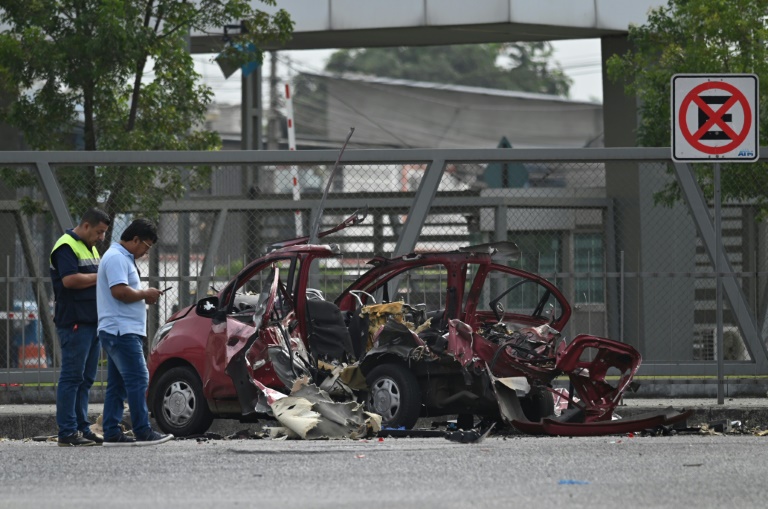
Officials said organized crime groups launched at least 13 attacks with explosives and firearms against police and oil installations in response to a transfer of inmates from Guayas 1 prison. The prison authority also reported that “shots were fired inside” the facility.

Located in the southwestern port city of Guayaquil in Guayas province, the prison was one of the main scenes of a series of prison massacres that have left about 400 inmates dead since February 2021.

Interior Minister Juan Zapata told reporters in the Ecuadoran capital of Quito on Tuesday that there were “reactions (of) organized crime” in Guayaquil and in the northwestern oil port of Esmeraldas.

These incidents included car bomb attacks and an explosion at a bus terminal.

In the early morning hours, two police officers died when people with firearms attacked their patrol car in Guayaquil, authorities said. 

Three more officers were gunned down later in the day in the port and the nearby city of Duran.

A separate attack on a police station there left two officers injured. 

In Esmeraldas — the same city where two headless bodies were found hanging from a pedestrian bridge on Monday — inmates took eight guards hostage, according to the SNAI prison authority.

All were later freed, the prison authority said, without giving details about the guards’ condition.

A video circulating on Twitter appeared to show two guards with explosives tied to their bodies and a man claiming to be an inmate denouncing what he called prison corruption. AFP could not independently verify the video.

“If war is what they want, war is what they’ll get,” said the man, his face obscured, adding: “We will use these guards.”

– ‘Open war’ –

The SNAI had earlier announced on Twitter that it was moving about 200 inmates from Guayas 1 — transfers that were necessary due to required maintenance to cell blocks.

But according to the purported hostage video, the move was because of events at Esmeraldas.

“Given the events in Esmeraldas and GYE (Guayaquil), we activated our tactical and investigative units to maintain order and find the perpetrators,” the police said on Twitter. 

The education ministry suspended classes Wednesday in Esmeraldas province’s capital of the same name, while President Lasso also canceled a planned trip to the United States.

He said he will lead a central command post in Guayaquil following the wave of violence, and added that police “will intensify their operations.” 

“These acts of sabotage and terrorism are… a declaration of open war against the rule of law the government, and against all of you, the citizens,” the president said in an address broadcast on radio and television. 

“Today, narco criminals feel uncomfortable and they express their discomfort with violence,” he added. 

Ecuador — once a relatively peaceful neighbor of major cocaine producers Colombia and Peru — has seen a wave of violent crime that authorities blame on turf battles between rival drug gangs believed to have ties to Mexican cartels.

Hundreds of inmates have been killed — many beheaded or incinerated — as the fighting spilled into Ecuador’s hugely over-populated prisons.

Civilians have increasingly been caught up in the bloodshed, which has included a spate of car bombs, while the violence has also claimed 61 police lives since last year.

Ecuador has gone from being a drug transit route in recent years to an important distribution center in its own right, with the United States and Europe the main destinations.

The murder rate in Ecuador nearly doubled in 2021 to 14 per 100,000 inhabitants, and reached 18 per 100,000 between January and October this year.

In 2021, law enforcement seized a record 210 tons of drugs, mostly cocaine. So far this year’s seizures total 160 tons.

China imposes Covid lockdown on area around iPhone factory

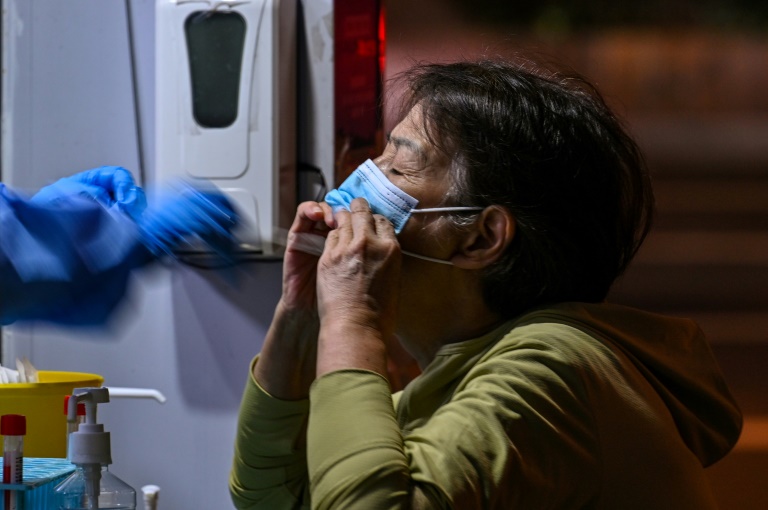
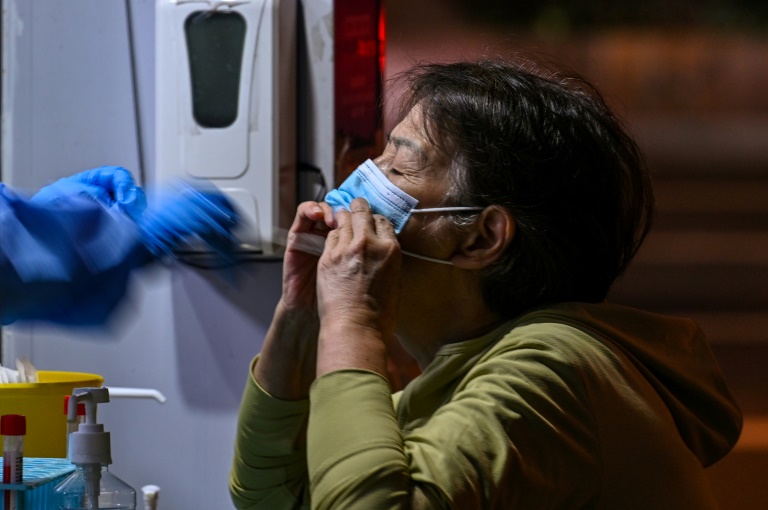
Chinese authorities on Wednesday locked down the area surrounding the world’s largest iPhone factory after workers fled the facility to avoid a virus outbreak and the resulting restrictions.

All people except Covid-prevention volunteers and essential workers “must not leave their residences except to receive Covid tests and emergency medical treatment”, officials from central China’s Zhengzhou Airport Economy Zone said Wednesday. 

The move comes after images emerged last week on Chinese social media showing people breaking out of the facility, which is run by Taiwanese tech giant Foxconn and employs hundreds of thousands of workers.

Employees were complaining online of poor conditions and having to flee the factory on foot to avoid Covid transport curbs.

China is the last major economy committed to a zero-Covid strategy, persisting with snap lockdowns, mass testing and lengthy quarantines in a bid to stamp out emerging outbreaks.

But new variants have tested local officials’ ability to snuff out flare-ups faster than they can spread, causing much of the country to live under an ever-changing mosaic of Covid curbs.

The district in Zhengzhou city said Wednesday that all businesses would be required to work from home, with only “key enterprises” in the district allowed to continue operating, without specifying which businesses fell under this category.

Only medical vehicles and those delivering essentials are allowed on the streets.

The district’s more than 600,000 residents will have to take nucleic acid tests every day, the local government said, warning that it would “resolutely crack down on all kinds of violations.”

– ‘Closed loop’-

Foxconn said over the weekend that it was testing employees daily and keeping them in a “closed loop” as well as offering transport to those who wanted to leave, after the videos on social media showed employees walking down motorways with their suitcases.

Local governments in the area surrounding Zhengzhou city have asked Foxconn workers to register with authorities if they return home and to complete several days of quarantine upon arrival.

The company added Tuesday that it would quadruple bonuses for employees willing to remain at the factory during the outbreak.

China reported more than 2,000 fresh domestic infections on Wednesday for the third day in a row.

Henan province, where Zhengzhou is located, officially reported 359 Covid-19 infections on Wednesday, a jump from Tuesday’s 104.

The southern Chinese manufacturing hub of Guangzhou also announced partial lockdowns in several districts this week in response to rising case numbers.

China imposes Covid lockdown on area around iPhone factory

Chinese authorities on Wednesday locked down the area surrounding the world’s largest iPhone factory after workers fled the facility to avoid a virus outbreak and the resulting restrictions.

All people except Covid-prevention volunteers and essential workers “must not leave their residences except to receive Covid tests and emergency medical treatment”, officials from central China’s Zhengzhou Airport Economy Zone said Wednesday. 

The move comes after images emerged last week on Chinese social media showing people breaking out of the facility, which is run by Taiwanese tech giant Foxconn and employs hundreds of thousands of workers.

Employees were complaining online of poor conditions and having to flee the factory on foot to avoid Covid transport curbs.

China is the last major economy committed to a zero-Covid strategy, persisting with snap lockdowns, mass testing and lengthy quarantines in a bid to stamp out emerging outbreaks.

But new variants have tested local officials’ ability to snuff out flare-ups faster than they can spread, causing much of the country to live under an ever-changing mosaic of Covid curbs.

The district in Zhengzhou city said Wednesday that all businesses would be required to work from home, with only “key enterprises” in the district allowed to continue operating, without specifying which businesses fell under this category.

Only medical vehicles and those delivering essentials are allowed on the streets.

The district’s more than 600,000 residents will have to take nucleic acid tests every day, the local government said, warning that it would “resolutely crack down on all kinds of violations.”

– ‘Closed loop’-

Foxconn said over the weekend that it was testing employees daily and keeping them in a “closed loop” as well as offering transport to those who wanted to leave, after the videos on social media showed employees walking down motorways with their suitcases.

Local governments in the area surrounding Zhengzhou city have asked Foxconn workers to register with authorities if they return home and to complete several days of quarantine upon arrival.

The company added Tuesday that it would quadruple bonuses for employees willing to remain at the factory during the outbreak.

China reported more than 2,000 fresh domestic infections on Wednesday for the third day in a row.

Henan province, where Zhengzhou is located, officially reported 359 Covid-19 infections on Wednesday, a jump from Tuesday’s 104.

The southern Chinese manufacturing hub of Guangzhou also announced partial lockdowns in several districts this week in response to rising case numbers.

Top Chinese regulator urges investors to avoid foreign news

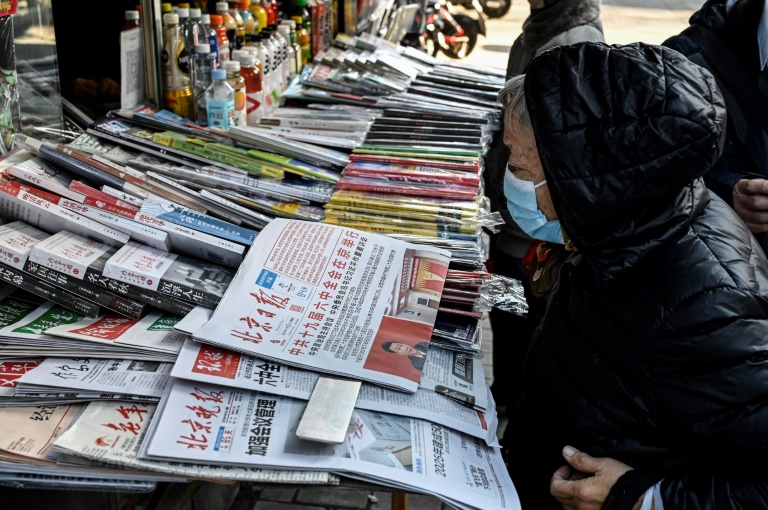
Investors should avoid reading international press coverage of China’s economy, a top Chinese securities regulator told a summit of global bankers on Wednesday in comments that received endorsement from two senior executives.

The advice was made by Fang Xinghai, vice chairman of China Securities Regulatory Commission, in a pre-recorded interview that was broadcast to a summit being held in Hong Kong.

“I deal with international investors quite a lot in my daily work and I am afraid some of them have read too much the international media reports about events in China,” he said.

“A lot of media reports, let me put it this way, they really don’t understand China very well and they have a short term focus… Don’t read too much of international media,” he added.

Hong Kong is hosting a week of high-profile events after years of political unrest and pandemic travel curbs tarnished the city’s business-friendly reputation, sparked an exodus of talent and battered its economy.

Senior executives from banks such as Goldman Sachs, Morgan Stanley, Blackrock, JP Morgan Chase, UBS, HSBC and Standard Chartered are among those attending.

In a later panel discussion UBS chairman Colm Kelleher backed Fang’s comments.

“Like Vice Chairman Fang said we’re not reading the American press, we all buy the story,” he said.

Kelleher added that international bankers were “very pro-China” and watching closely as to whether the world’s second largest economy would re-open.

Liu Jin, president of Bank of China, also referenced Fang’s remarks in comments about China’s deeply indebted property market. 

“Don’t worry too much. As Mr Fang said, don’t read too much negative reports,” he told delegates. 

China is the last major economy committed to a zero-Covid strategy, persisting with snap lockdowns, mass testing and lengthy quarantines.

The measures have stamped out outbreaks but created growing economic pain for local and international businesses.

Huge defaults have hit China’s property sector in the last 18 months, much of it revelations that were first reported on by international media.

Domestic media is state-controlled in China and widespread censorship is used to suppress negative stories or critical coverage.

Foreign media face intense restrictions but have more leeway and are a conduit of information in a country where official economic data can be sometimes opaque.

In his comments Fang told investors to “find out what’s really going on in China, and what’s the real intention of our government, by themselves”.

However China has been largely cut off from the rest of the world for the last 2.5 years by pandemic travel controls.

President Xi Jinping, who secured a norm-breaking third term last month, has yet to signal any timeframe for whether and when China might move away from its zero-Covid controls.

Will Brazil's Bolsonaro, now defeated, go to jail?

Brazilian President Jair Bolsonaro once took a stab at predicting the outcome of his 2022 re-election bid: “Prison, death or victory.”

Victory it was not. Death came in the form of an end to his presidency, which he grudgingly accepted Tuesday — two days after the election was declared for his opponent.

And prison?

“You can be sure that option… does not exist,” the far-right leader told members of his crucial evangelical support base in August 2021.

Analysts, however, believe a future behind bars may be a very real prospect for the bellicose Bolsonaro, even if it may take years.

Almost from the start of his controversial mandate in 2019, Bolsonaro racked up accusations and investigations for everything from spreading disinformation to crimes against humanity.

He survived more than 150 impeachment bids — a record.

Most of these were over his flawed management of the coronavirus pandemic, which claimed the lives of more than 685,000 people in Brazil — the world’s second-highest toll after the United States.

While in office, Bolsonaro was shielded from legal consequences by two political allies: Attorney General Augusto Aras and Arthur Lira, the speaker of Brazil’s lower house of Congress.

But that will change on January 1, 2023 when his arch-rival, leftist ex-president Luiz Inacio Lula da Silva, takes over the reins once more, and Bolsonaro loses his presidential immunity.

– ‘Crimes against humanity’ –

Legal problems can come from several fronts.

A Brazilian Senate committee has recommended charges over Bolsonaro’s management of the Covid-19 pandemic, including “crimes against humanity.”

The Covid-denying Bolsonaro, who punted unproven cures and said vaccines could turn people into “alligators,” is also being investigated for allegedly failing to act on an embezzlement tip-off regarding coronavirus vaccine purchases.

Another probe is pending into claims that Bolsonaro leaked a classified police investigation into corruption accusations against his sons, and interfered in another.

The outgoing president was further implicated in a probe into his senator son Flavio for an alleged scheme to collect part of political staffers’ salaries in a practice known as “rachadinha.”

That case was scrapped on the grounds that Bolsonaro junior enjoyed parliamentary immunity.

Bolsonaro has consistently denied any wrongdoing, claiming he is the victim of political persecution.

“They are looking for a way to get at me,” he said after the online news site Uol published claims 30 days before the election, that his family members had bought 51 properties. 

The properties were paid partly or fully in cash for a total of some $4.7 million between 1990 and 2022, with questions raised over the provenance of the money.

There were also claims of public money being abused on his watch to curry favor with evangelical leaders.

“When his presidential term ends, Jair Bolsonaro will be answerable to justice and the public prosecutor’s office will be able to open new investigations,” legal expert Rogerio Dultra dos Santos of Fluminense Federal University told AFP.

Bolsonaro was elected on an anti-corruption platform at a time when the country was reeling from a massive graft scandal involving state oil company Petrobras, Lula’s government and his Workers’ Party (PT).

Lula’s own convictions in relation to that scandal were later annulled.

– ‘Several years’ –

Lula has vowed to grant access to possibly compromising documents, both official and personal, that Bolsonaro had sealed for 100 years before leaving office.

This “could have legal consequences,” said Dos Santos.

However, any attempt to bring Bolsonaro to justice could “take several years” considering the likelihood of multiple appeals along the way, the analyst added.

Ironically, Bolsonaro could benefit from a Supreme Court ruling that allowed Lula’s release from prison in November 2019 pending an appeal against his corruption conviction.

Temporarily changing gear from his previous insistence that Lula would never win the election, Bolsonaro recently said he would “stay out of politics” if he loses.

But Mayra Goulart, a political scientist at the Federal University of Rio de Janeiro, said she would be “very surprised” if this were true.

Lawmakers and various other public servants in Brazil enjoy immunity from prosecution while in office.

Whatever his legal fate, Goulart said Bolsonaro would likely follow a similar path as his political idol, Donald Trump, “who maintains a considerable influence on American politics despite his 2020 defeat.”

Close Bitnami banner
Bitnami