World

'Law and order returned' Hong Kong's US-sanctioned leader tells bankers

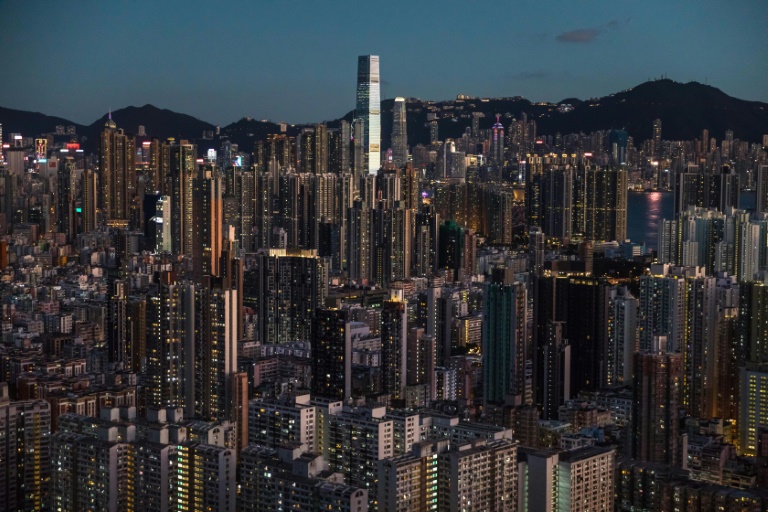
Hong Kong’s US-sanctioned leader said political stability and business confidence has been restored following the crushing of democracy protests as he opened a summit on Wednesday attended by global bankers including leading Wall Street executives.

The Asian business hub is hosting a week of high-profile events after years of political unrest and pandemic travel curbs tarnished the city’s business-friendly reputation, sparked an exodus of talent and battered its economy.

The marquee event at the Four Seasons hotel was heralded by city leader John Lee as proof that the previously shuttered metropolis is back in business.

“We were, we are and we will remain one of the world’s leading financial centres. And you can take that to the bank,” Lee told delegates.

A former security chief who took office this year, Lee is among the Chinese officials sanctioned by Washington for cracking down on rights in Hong Kong after huge democracy protests. Blacklisted individuals are unable to hold accounts with the same banking giants attending the summit.

Most of the city’s political opposition are either behind bars or have fled overseas since those protests.

“Social disturbance is clearly in the past and has given way to stability, to growing business and community confidence in Hong Kong’s future,” Lee said in his summit speech. 

“Law and order has returned. The worst is behind us.”

– US criticism –

Among those speaking at the summit were Goldman Sachs head David Solomon, Morgan Stanley CEO James Gorman, Blackrock president Rob Kapito and JP Morgan Chase counterpart Daniel Pinto.

But their presence is not without controversy.

Last week, the leaders of the bipartisan US Congressional-Executive Commission on China called on Wall Street executives not to attend, accusing them of “whitewashing human rights violations” and giving political cover to Lee.

The row illustrates the tightrope faced by multinationals in Hong Kong, which is both a lucrative business gateway for China and a flashpoint in increasingly tense relations between Beijing and Western powers.

In his speech Lee said the city has an “irreplaceable connection” to mainland China for global businesses “as the centre of economic gravity in the world shifts eastward”.

The summit comes at a time of uncertainty over China’s economy under President Xi Jinping.

Xi, who secured a norm-breaking third term last month, has overseen regulatory crackdowns clipping the wings of some major Chinese companies and is still sticking to a strict zero-Covid strategy.

– ‘Don’t read international media’ –

Hong Kong’s gross domestic product plunged 4.5 percent in the third quarter of this year while its stock exchange is among the world’s worst performers, down more than 50 percent this year to levels last seen in 2009.

Lee’s speech was followed by recorded interviews with three top officials involved in regulation, including Fang Xinghai, vice chairman of the China Securities Regulatory Commission, who criticised international press coverage of China.

“Don’t read too much of international media,” Fang said, sparking laughter from the audience.

During panel discussions senior Wall Street executives said there were growing signs inflation could be brought under control by central banks, but geopolitical risks and the end of the era of easy money would continue to inject volatility.

“My gut is the central banks will, in aggregate, tame inflation,” Morgan Stanley chief Gorman told delegates, predicting interest rates of between 4-5 percent and inflation rates of around four percent over the coming years.

“There is a feeling that you know, the central banks will get this under control and then there will be there will be bright spots for investing,” added UBS chairman Colm Kelleher.

Kelleher also backed Fang’s criticism of Western media.

“We’re not reading the American press, we all buy the (China) story,” he said.

The bankers’ summit is being held in a bubble that keeps delegates away from residents. 

While Hong Kong scrapped mandatory quarantine in September — a key demand of businesses — it maintains layers of pandemic restrictions long since abandoned by almost everywhere else.

Overseas arrivals must undergo frequent testing and are unable to go to bars and restaurants for their first three days in the city.

Restrictions on various gatherings remain and masks are compulsory, including outdoors. 

China is the last major economy committed to a zero-Covid strategy, persisting with snap lockdowns, mass testing and lengthy quarantines that has stamped out outbreaks but created growing economic pain.

Sinking Alexandria faces up to coming catastrophe

Alexandria, Egypt’s fabled second city and its biggest port, is in danger of disappearing below the waves within decades.

With its land sinking, and the sea rising due to global warming, the metropolis Alexander the Great founded on the Nile Delta is teetering on the brink.

Even by the United Nations’ best case scenario, a third of the city will be underwater or uninhabitable by 2050, with 1.5 million of its six million people forced to flee their homes.

Its ancient ruins and historic treasures are also in grave danger from the Mediterranean.

Already hundreds of Alexandrians have had to abandon apartments weakened by flooding in 2015 and again in 2020.

Every year the city sinks by more than three millimetres, undermined by dams on the Nile that hold back the river silt that once consolidated its soil and by gas extraction offshore.

Meanwhile, the sea is rising.

The Mediterranean could rise a metre (3.2 feet) within the next three decades, according to the most dire prediction of the UN’s panel of climate experts, the IPCC.

That would inundate “a third of the highly productive agricultural land in the Nile Delta”, as well as “cities of historical importance, such as Alexandria”, it said.

– Third of city could go –

UN experts say the Mediterranean will rise faster than almost anywhere else in the world.

“Climate change is a reality and no longer an empty threat,” said Ahmed Abdel Qader, the head of the authority protecting Egypt’s coastline.

Even under the best-case scenario outlined by other Egyptian and UN studies, the Mediterranean will rise 50 centimetres by 2050. 

That would leave 30 percent of Alexandria flooded, a quarter of the population having to be rehoused and 195,000 jobs lost.

Such a catastrophe will have dramatic repercussions for Egypt’s 104 million people because “Alexandria is also home to the country’s biggest port” and is one of the main hubs of the economy, Abdel Qader said.

Across the Delta, the sea has already advanced inland more than three kilometres since the 1960s, swallowing up Rosetta’s iconic 19th-century lighthouse in the 1980s.

All this is happening as Alexandria’s population is exploding, with nearly two million more people arriving in the last decade, while investment in infrastructure, as elsewhere in Egypt, has lagged.

The city’s governor, Mohamed al-Sharif, said the drainage system for its roads was built to absorb one million cubic metres (35 million cubic feet) of rain. But with the more violent storms that have come with climate change, “today we can get 18 million cubic metres falling in a single day”.

The changing climate is also playing havoc with Alexandria’s weather, which can veer from unseasonal heat to snow.

“We have never experienced such heat at the end of October,” resident Mohamed Omar, 36, told AFP, with the temperature rising to 26 degrees Celsius (78.8 Fahrenheit), five degrees above normal.

– ‘Lost beneath the waves’ –

The looming threat has also been a hammer blow to the image of a city that likes to celebrate its cosmopolitan golden age at the start of the 20th century, with its art deco cafes and elegant avenues of Paris-style apartment buildings.

Many Egyptians were horrified when Britain’s then-prime minister Boris Johnson warned that Alexandria was at risk of being lost “beneath the waves” at the COP26 climate change conference in Glasgow last year.

“Yes, the threat exists and we don’t deny it, but we’re launching projects to attenuate it,” Abdel Qader said.

A huge belt of reeds is being planted along 69 kilometres of coastline. “Sand sticks around them and together they form a natural barrier,” he said.

Alert mechanisms and wave measuring systems are also soon to be put in place, Abdel Qader added.

– Treasures in jeopardy –

Alexandria’s rich and ancient heritage is particularly vulnerable. Most exposed is the 15th-century Mamluk citadel of Qaitbay, built on a neck of land that was once the site of the Lighthouse of Alexandria, one of the seven wonders of the ancient world.

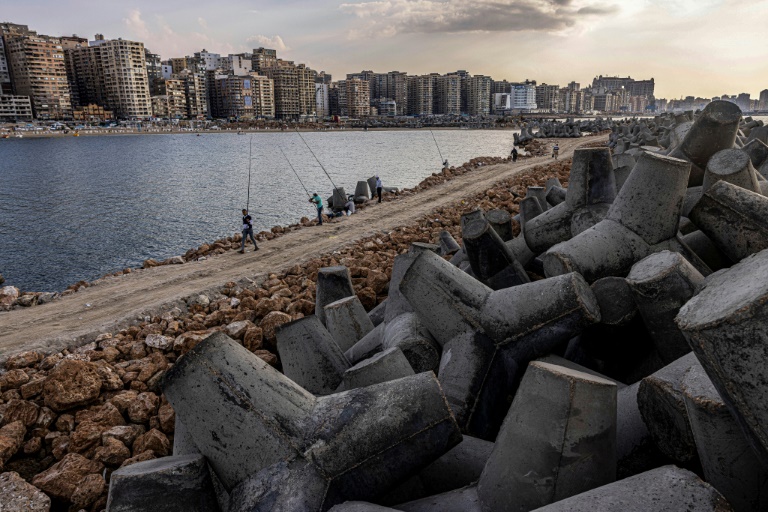
Lashed relentlessly by the sea, a breakwater made up of 5,000 huge concrete blocks has been installed to protect it.

More have been put in place to limit damage to the 19th-century corniche.

Destruction and rebuilding is nothing new to a city that once was home to the Library of Alexandria, the world’s greatest temple of knowledge until it was accidentally burned by Julius Caesar’s troops.

Neither its modern heir, a gleaming edifice on the corniche tilting like a solar disc toward the Mediterranean, nor the rest of the city can be left to a watery grave, Abdel Qader insisted.

“The West has a moral responsibility: it must help to counter the negative effects of climate change, which are the result of its civilisation” and industrialised model.

And Egypt will be hammering that message home when the UN COP27 climate talks open there on November 6.

N. Korea fires more than 10 missiles, one close to S. Korea

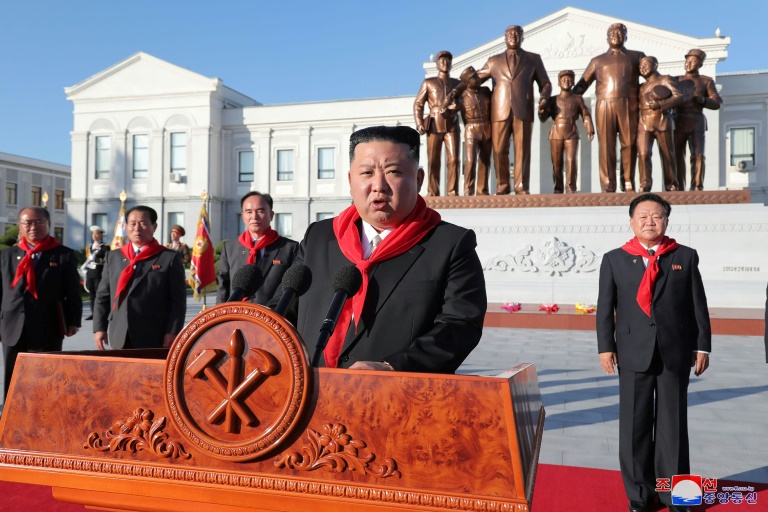
North Korea fired more than 10 missiles Wednesday, including one that landed close to South Korea’s waters that President Yoon Suk-yeol said was “effectively a territorial invasion”.

One short range ballistic missile crossed the Northern Limit Line, the de facto maritime border between the two countries, prompting a rare warning for residents on the island of Ulleungdo to seek shelter in bunkers.

The military said it was the “first time since the peninsula was divided” at the end of the Korean War hostilities in 1953 that a North Korean missile had landed so close to the South’s territorial waters.

“President Yoo pointed out today that North Korea’s provocation is an effective territorial invasion by a missile that crossed the Northern Limit Line for the first time since the division,” his office said in a statement. 

The missile that was closest to South Korea landed in waters just 57 kilometers (35 miles) east of the South Korean mainland, the military said.

The military released a statement describing the missile launch near South Korean territorial waters as “very rare and intolerable”.

“Our military vowed to respond firmly to this (provocation),” it added.

Soon after, the South Korean military said it had fired three air-to-ground missiles near the spot on the maritime border where the North Korean one had landed.

An air raid warning was issued for Ulleungdo after the North Korean missile launch. The alert was flashed on national television and told residents to “evacuate to the nearest underground shelter”.

The South Korean military’s Joint Chiefs of Staff initially said it detected the launch of three short range ballistic missiles.

But it later announced North Korea had fired more than 10 missiles “of various types today towards the east and west”.

Yoon Suk-yeol called a meeting of the National Security Council over the launches, ordering “swift and stern measures so that North Korea’s provocations pay a clear price.”

Japan also confirmed North Korean missile launches, with Prime Minister Fumio Kishida telling reporters he planned to call a “national security meeting as soon as possible.”

– Vigilant Storm –

Pyongyang’s latest test firing came as Seoul and Washington staged their largest-ever joint air drills, dubbed “Vigilant Storm” and which involve hundreds of warplanes from both sides.

Pak Jong Chon, a high-ranking official in North Korea, said the drills were aggressive and provocative, according to a report in state media Wednesday.

Pak said the name of the exercises harks back to Operation Desert Storm, the US-led military assault on Iraq in 1990-1991 after it invaded Kuwait.

“If the US and South Korea attempt to use armed forces against the (Democratic People’s Republic of Korea) without any fear, the special means of the DPRK’s armed forces will carry out their strategic mission without delay,” he said. 

“The US and South Korea will have to face a terrible case and pay the most horrible price in history.”

– Close to S Korea –

North Korea’s missile launches on Wednesday were appeared to be “the most aggressive and threatening armed demonstration against the South since 2010,” Cheong Seong-chang, a researcher at the Sejong Institute, told AFP.

“It is now a dangerous and unstable situation that could lead to armed conflicts,” he added.

In March 2010, a North Korean submarine torpedoed the South Korean naval vessel Cheonan, killing 46 sailors including 16 who were on their mandatory military service.

In November the same year, the North shelled a South Korean border island, killing two marines — both of them young conscripts.

Wednesday’s missile tests follow a recent blitz of launches, including what the North said were tactical nuke drills.

Washington and Seoul have repeatedly warned the launches could culminate in another nuclear test — which would be Pyongyang’s seventh.

“As far as I can remember, North Korea has never made such a provocation when South Korea and the US were holding their joint drills,” Park Won-gon, a professor at Ewha University, told AFP. 

“Pyongyang seems to have completed its most powerful deterrent. This is a serious threat. The North also seems confident in their nuclear capabilities.”

Frontline bridge gives hope to Ukrainians fighting for Kherson

The ageing Ukrainian fighter watched for months as his wounded comrades were rushed back across a humpback bridge marking the start of land Russia claims as its own.

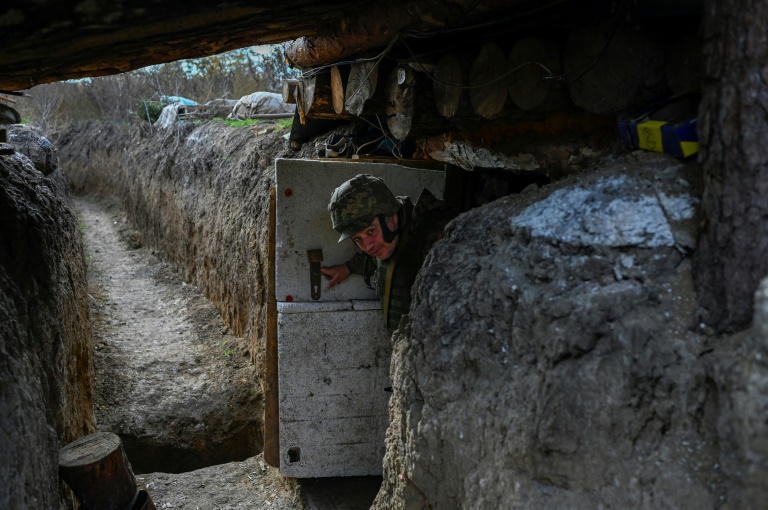
It was a dispiriting sight as he crouched in his heavily fortified checkpoint and trained his binoculars on the western edge of the flashpoint region of Kherson.

But then something changed about two weeks ago.

“There were far fewer of those medical cars coming down the bridge,” said the soldier named Gres, a retired policeman.

“It feels like around two weeks ago, something happened.”

What the 51-year-old father of two may have witnessed — without realising at the time — was a turning point in the brutal battle across Ukraine’s strategic southern front.

– Information blackouts –

The Ukrainians launched a lightning counteroffensive in September that cleared the Russians out of lands east of the 1.4-million-strong northern city of Kharkiv.

A similar feat around the smaller southern city of Kherson could prove even more painful to Russian President Vladimir Putin.

The riverside port and its eponymous region gave Putin a long-coveted land link to the Crimean peninsula, which the Kremlin seized in 2014.

Its loss could open Ukraine’s path back to the commercially vital Sea of Azov and threaten Russia’s hold on Crimea itself.

The Russians have moved tens of thousands of civilians out and poured reinforcements in ahead of the most consequential confrontation of the ninth month of war.

But information blackouts by both Moscow and Kyiv mean the true course of battle can only be glimpsed from the so-called grey zones that neither side fully controls.

Gres has still not dared walk the few hundred steps from his checkpoint to the Kherson border bridge because of the unpredictable dangers.

A jet that Gres guessed might have been Russian had circled overhead that morning and the enemy’s artillery fire was still well within range.

Kherson remained tantalisingly out of reach for the soft-spoken soldier.

“But it feels a lot closer than it did before,” he said with a tired smile.

– ‘Still scary’ –

All Olga Yasenko knew was that her Kherson-border village of Shevchenkove was only shelled twice that morning — and not the usual dozen or so times or more.

The 48-year-old stood with a hammer before the ruins of the school she headed before Russian forces took over the village at the start of the invasion — only to be pushed back by the Ukrainians last month.

Winter snows were coming and the school’s shattered windows needed to be boarded up to save what remained of the empty classrooms.

“It is scary standing out here,” Yasenko admitted with a nervous laugh.

A few of her neighbours — cheerful men who all stayed behind to save the village from burning down in the fighting — raised a Ukrainian flag on the school’s damaged roof.

“You have to be optimistic,” said welder Oleksandr Romanstevych after climbing down from a ladder leaning against the school’s pockmarked wall.

“You just have to keep working and stay positive,” the 37-year-old said.

– ‘We are close’ –

That optimism can feel fleeting in the frontline regions of a war that has razed entire towns and left millions without heat or power heading into the long winter.

The school director kept smiling while fighting back tears as she recalled losing touch with her 309 students.

“It is so hard to believe everything that’s happened,” she said quietly.

Leonid Suslov was experiencing similar turmoil as he sat alone on his broken back porch.

The 63-year-old lost a leg in an accident many years ago and never seriously considered trying to flee the fighting.

“We are winning,” said Suslov. “I refuse to believe anything else. It simply has to be true.”

Soldier and former martial arts trainer Fizruk — a nom de guerre that roughly translates as “Gym Teacher” — was also in no doubt.

The bearded 36-year-old climbed out of a foxhole facing the Kherson bridge and patted his assault rifle with an easy air.

“I come from Kherson and still know many people there. They are suffering,” Fizruk said.

“I just keep telling them to hold on, that we are close.”

Nile is in mortal danger, from its source to the sea

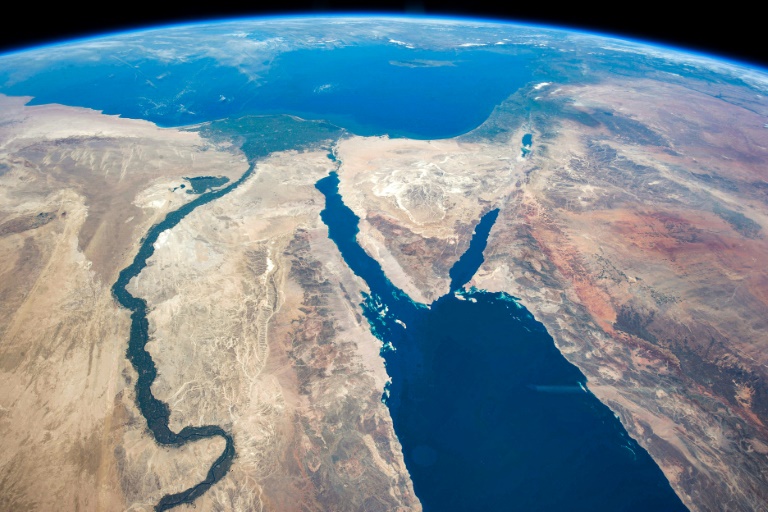
The pharaohs worshipped it as a god, the eternal bringer of life. But the clock is ticking on the Nile.

Climate change, pollution and exploitation by man are putting existential pressure on the world’s second longest river, on which half a billion people depend for survival.

All along its 6,500-kilometre (4,000-mile) length, alarm bells are ringing.

From Egypt to Uganda, AFP teams have gone out on the ground to gauge the decline of a river that drains a tenth of the African continent. 

At its mouth on the Mediterranean, Sayed Mohammed is watching Egypt’s fertile Nile Delta disappear. In Sudan, fellow farmer Mohammed Jomaa fears for his harvests, while at its threatened source in Uganda, there is less and less hydroelectric power for Christine Nalwadda Kalema to light her mud and wattle home.

“The Nile is the most important thing for us,” said Jomaa, who at 17 is the latest generation of his family to work the river’s rich banks at Alty in Gezira state.

“We certainly do not wish for anything to change,” he said.

But the Nile is no longer the unperturbable river of myth. In half a century its flow has dropped from 3,000 cubic metres (10,600 cubic feet) per second to 2,830 cubic metres.

Yet it could get much, much worse. With multiple droughts in east Africa, its flow could fall by 70 percent, according to the United Nations’ most dire predictions.

Every year for the past six decades, the Mediterranean has eaten away between 35 and 75 metres (38-82 yards) of the Nile Delta. If the sea level rises even by a metre, a third of this intensely fertile region could disappear, the UN fears, forcing nine million people from their homes.

What was once a bread basket has become the third most vulnerable place on the planet to climate change. 

Lake Victoria, the Nile’s biggest source of water after rainfall, could also dry up due to drought, evaporation and slow tilts in the Earth’s axis.

With such grim scenarios in store, governments have scrambled to capture its flow. But experts say dams are only hastening the coming catastrophe.  

– Land lost to sea –

At the mouth of the Nile, the promontories of Damietta and Rosetta that once stuck out into the Mediterranean in northern Egypt have disappeared.

The concrete barriers that were supposed to protect them are half covered by water and sand.

The sea ate three kilometres into the Nile Delta between 1968 and 2009, with the river’s weaker flow unable to hold back the Mediterranean, which rose some 15 centimetres (six inches) over the last century due to climate change. 

The silt that for millennia formed a barrier to protect the land no longer makes it to the sea.

This rich dark sediment that was once swept along the river’s bed has struggled to get beyond southern Egypt since the Aswan dam was built in the 1960s to regulate the Nile’s floods.

Before its construction “there was a natural balance”, Ahmed Abdel Qader, the head of Egypt’s coast protection authority, told AFP. 

“Every Nile flood would deposit silt bulking up the promontories at Damietta and Rosetta. But this balance has been disturbed by the dam,” he said.

If temperatures keep rising, the Mediterranean will advance a further 100 metres a year into the Delta, the UN’s environment agency UNEP has warned.

– Poisoned by salt –

Fifteen kilometres inland, the bustling farming community of Kafr El-Dawar seems as yet far from danger.

But all is not well, said Sayed Mohammed, 73, who supports his 14 children and grandchildren growing rice and corn in fields sandwiched between the Nile and a road cacophonous with car horns.

Salt from the Mediterranean has already seeped into large swathes of land, killing and weakening plants. Farmers say their vegetables no longer taste the same. 

To compensate for the salination of the soil, they have to pump more fresh water onto it from the Nile. 

For 40 years Mohammed and his neighbours used pumps that guzzled diesel and electricity. The cost strangled villagers whose income was already being eaten up by inflation and devaluations of the Egyptian pound.

So much so that in some parts of the Delta fields were abandoned.

But the old man, who sports a djellaba and a traditional woollen cap, has been helped by a new irrigation system driven by solar energy which aims to increase farmers’ incomes to stop more people fleeing the land.

Thanks to the 400 solar panels the UN’s Food and Agriculture Organization financed for Kafr El-Dawar, he can water his half hectare (1.2 acres) of ground.

Solar power saves “farmers about 50 percent” of pumping costs,  local irrigation chief Amr al-Daqaq told AFP. And they can also sell the surplus power the panels produce to the national grid.

Even so, none of Mohammed’s descendants want to take on the farm. 

For the Mediterranean may eventually swallow up 100,000 hectares of the region’s prime agricultural land, according to UNEP, covering an area nearly 10 times the size of Paris.

Which would be a disaster for Egypt, with the Delta the source of between 30 and 40 percent of the nation’s agricultural output.

– Power cuts –

All but three percent of Egypt’s 104 million people live along the river on just eight percent of the country’s territory. It is a similar story in neighbouring Sudan, with half its 45 million people living along its banks, and the Nile supplying two-thirds of its water. 

By 2050 the population of both countries will have doubled, and it will be two or three degrees hotter.

The UN’s group of climate experts, the IPCC, say the impact on the Nile will be catastrophic. They predict it will lose 70 percent of its flow by the end of the century, with the water supply available to every person along it plummeting to a third of what they have now.

Floods and other violent storms likely to lash East Africa as the climate warms will only make up 15 to 25 percent of that lost water, the IPCC has warned. 

Which will leave the 10 countries who rely on the Nile for their crops and power in dire straits.

More than half of Sudan’s power comes from hydroelectricity, with 80 percent of Uganda’s generated from the river.

It is thanks to the Nile that Christine Nalwadda Kalema, a 42-year-old single mother, can light her humble shop and home in a poor part of the village of Namiyagi near Lake Victoria.

– Source threatened –

But the electricity that radically changed her life in 2016 may not last, said Revocatus Twinomuhangi, from Makerere University’s Center for Climate Change in Kampala.

“If we have a reduction in rainfall… it will translate into reduced hydroelectric power potential,” he said.

Already over “the last five to 10 years we have seen an increase in the frequency and intensity of drought, intense rainfall and flooding and also heat intensity, so it is becoming hotter and hotter”.

Indeed, Lake Victoria could disappear entirely within the next 500 years, according to a study by British and American scientists based on geological data from the last 100,000 years.

But for Kalema, who grows bananas, manioc and coffee in her little garden to feed her family, such statistics remain abstract. 

What concerns her are more and more frequent power cuts.

“Because of the cuts my son struggles to keep up with his homework. He has to read before nightfall,” she said, dressed in colourful local “kitenge” cloth. “Candles are very expensive to me as a single mother with limited income.”

– Mega dams – 

More than half of Ethiopia’s 110 million people have no choice but to live without electricity despite the country’s having one of the fastest growth rates in Africa.

Addis Ababa is hoping that its GERD mega dam project on the Nile will remedy that, and is ready to burn bridges with its neighbours if it has to. 

Begun in 2011, the Grand Ethiopian Renaissance Dam on the Blue Nile — which joins the White Nile in Sudan to form the Nile — already holds nearly a third of its 74-billion-cubic-metre capacity.

Addis Ababa claims it is the biggest hydroelectric project in Africa. 

“The Nile is a gift of God given to us for Ethiopians to make use of it,” Prime Minister Abiy Ahmed insisted in August.

But for Cairo it is a major headache, calling into question a deal signed with Sudan in 1959 which gave 66 percent of the Nile’s annual flow to Egypt and 22 percent to Khartoum.

Although Ethiopia was not part of the accord, advisers to former Egyptian president Mohamed Morsi publicly floated bombing the dam back in 2013 to protect Cairo’s vital interests.

The Egypt of President Abdel Fattah al-Sissi still fears a drastic fall in the Nile’s flow because of the GERD dams.

And how much water Egypt is losing has sparked a heated debate within the scientific community, with some Egyptian researchers who minimise the effects accused of “betraying” their country.

– Disappearing silt –

But having already seen how the Aswan dam has reduced the flow of silt, farmers worry about being deprived of this precious natural fertiliser.

Over the years, Sudanese farmer Omar Abdelhay has found it harder and harder to grow the cucumbers, aubergines and potatoes in his luxuriantly green fields watered by the brown Nile water that passes close by his mud-brick home.

Eight years ago when this 35-year-old father began to cultivate his family’s land, “there was good silt” to nurture his crops, he told AFP.

But little by little as dam-building has increased, “the water has got clearer. Even if the water level rises” during floods, it “comes without silt”, he added.

Stuck in a political and economic slump, and with ongoing protests against its military leaders, Sudan is struggling to manage its water resources.

– Stalked by hunger –

Every year the country is lashed by rainstorms that killed 150 people this summer and washed away entire villages. But the deluges are no help to its agriculture because of the lack of a system to store and recycle rainwater.

Famine now threatens a third of its people despite Sudan long being a major player in world markets for peanuts, cotton and gum arabic.

Modest irrigation canals built during the colonial era mean even a small flow is enough to water its fertile land. But the development of this system through the Gezira Scheme has been long delayed.

Vast fields cultivated under the corrupt command economy of dictator Omar al-Bashir, who was overthrown in 2019, have fallen fallow, and in their place families grow peppers and cucumbers on small parcels of land.

Sudan, like other countries along the Nile  — and many other east African states — is near the bottom of Notre Dame University’s GAIN rankings, which measure resilience to climate change.

For Callist Tindimugaya, of Uganda’s ministry of water and the environment, rising temperatures will impact not just the country’s ability to feed itself but to generate electricity to power homes and industry.

“Short heavy rains can cause flooding. Long dry periods will bring loss of water… And you cannot survive without water,” he said.

Asian markets swing as US data tempers Fed hopes

Asian stocks were mixed Wednesday following losses on Wall Street as forecast-beating US data jolted hopes the Federal Reserve could soon tone down its hawkish pace of interest rate hikes.

Suggestions that the US central bank could take its foot off the pedal as the world’s top economy shows signs of slowing have helped fuel a rally across risk assets for more than a week

But some of the wind was taken out of their sails Tuesday after data showed a rise in job openings while other numbers released indicated the manufacturing sector did not perform as badly as expected last month.

The readings suggest the economy continues to hold up despite recent signs of weakness in the face of decades-high inflation and numerous rate hikes that many observers warn will spark a recession.

They also come as the Fed concludes its latest policy meeting later in the day.

While it is widely tipped to unveil a fourth straight jumbo hike, the gathering was hotly anticipated by traders hoping for a hint from officials that they are ready to temper their speed of monetary tightening.

“Markets have been reacting to dovish expectations for Wednesday’s (policy meeting), which I have argued are wrong,” said SPI Asset Management’s Stephen Innes.

“Based on US economic data out Tuesday, there is no way for the Federal Reserve to turn dovish. The labour market is still strong, and manufacturing is still (slightly) expanding.”

He added: “Even if we see the Fed slow the pace of hikes, they are still hiking, the policy is still highly restrictive, front-end rates will still get worse before they get better.

“Sure, we could see a knee jerk higher on stocks via a lower Fed glide path, but will it be sustainable?”

Highlighting the tough jobs central banks face in the inflation fight, data out of South Korea on Wednesday and Britain on Tuesday indicated prices remain elevated, despite higher borrowing costs

After the negative lead from Wall Street, Asia fluctuated.

Hong Kong edged down after soaring more than five percent Tuesday following an unverified statement saying China was forming a committee to consider rolling back some painful zero-Covid measures.

The foreign ministry in Beijing said it was unaware of such a committee later Tuesday, while some commentators said authorities have actually boosted containment measures since a key Communist Party conference last month.

There were also losses in Singapore, Jakarta and Wellington.

But Shanghai, Sydney, Taipei and Manila rose.

Seoul was also up Wednesday as traders brushed off news North Korea had fired at least 10 missiles, including one that the South’s military said landed close to its territorial waters for the “first time”.

Tokyo ended the morning flat even as tech titan Sony racked up gains of more than eight percent a day after it lifted its annual net profit and sales forecasts thanks to the weak yen.

Oil prices jumped after a report said US stockpiles saw a huge drop last week, suggesting demand remains intact as worries about supplies continue to swirl.

While well down from their post-Ukraine-invasion peak, both main contracts have jumped in recent weeks after OPEC and other major producers said they would slash output.

The decision came after a drop in prices caused by global recession concerns, China’s demand-sapping lockdowns and the strong dollar, which makes the commodity expensive for buyers using other currencies.

– Key figures around 0230 GMT –

Tokyo – Nikkei 225: FLAT at 27,686.05 (break)

Hong Kong – Hang Seng Index: DOWN 0.7 percent at 15,364.64

Shanghai – Composite: UP 0.1 percent at 2,972.29

Euro/dollar: UP at $0.9886 from $0.9883 on Tuesday

Pound/dollar: UP at $1.1507 from $1.1486

Dollar/yen: DOWN at 147.42 yen from 148.23 yen

Euro/pound: DOWN at 85.94 pence from 85.96 pence

West Texas Intermediate: UP 0.9 percent at $89.19 per barrel

Brent North Sea crude: UP 0.8 percent at $95.37 per barrel

New York – Dow: DOWN 0.24 percent at 32,653.20 (close)

London – FTSE 100: UP 1.3 percent at 7,186.16 (close)

Danish left clings to power with razor-thin election win

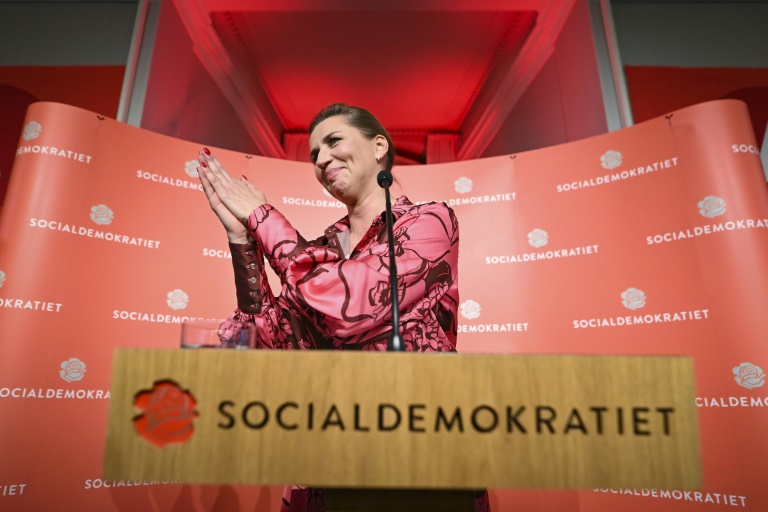
Denmark’s left-wing bloc led by Prime Minister Mette Frederiksen reached out to the centre for broader collaboration on Wednesday after winning a one-seat majority in a nail-biter general election.

Frederiksen’s five-party “red” bloc had looked set to lose its majority as vote counting wore on throughout Tuesday evening, but as the last votes were tallied, the bloc eked out the 87 seats it needed in mainland Denmark.

Together with another three seats from the autonomous overseas territories of the Faroe Islands and Greenland, the bloc holds a total of 90 of parliament’s 179 seats.

Opinion polls had predicted a historically weak election for the Social Democrats, but they instead gained two seats compared to the 2019 election, winning 27.5 percent of votes.

“Social democracy had its best election in over 20 years,” Frederiksen said in a speech to campaign supporters early Wednesday.

“We are a party for all of Denmark,” she added.

The right-wing “blue” bloc — an informal liberal and conservative alliance supported by three populist parties — won 72 seats in mainland Denmark and one in the Faroe Islands.

– Broad government –

The photo-finish victory scuppered the hopes of a newly-created centrist party, the Moderates, of playing the role of kingmaker — an outcome that had looked likely until Frederiksen secured a majority.

The party was created only months earlier by former two-time prime minister Lars Lokke Rasmussen, who looked set to once again return to the centre of Danish politics following a campaign in which both the left and right had competed for his favour.

Polling at barely two percent of voter support two months ago, the Moderates won more than nine percent of votes, and Lokke Rasmussen insisted he wanted to be “the bridge” between the left and right.

“It’s not red or blue, it’s about common sense,” he told cheering supporters in a speech Tuesday evening, while declaring that a new government was a certainty.

During the campaign, Frederiksen floated the idea of a left-right coalition government led by herself, and said she was willing to discuss healthcare reform — Lokke Rasmussen’s main campaign issue. 

With the left majority secured, Frederiksen reiterated on Wednesday that she hoped to form a broad government.

“When the Social Democrats say something, it is something we follow through on,” the 44-year-old prime minister said.

She said the current government would formally resign on Wednesday in order to start the process of forming a new administration.

After coming to power in 2019, Frederiksen has embodied Denmark’s newly styled Social Democrats, embracing restrictive migration policies in the name of protecting the welfare state.

– ‘Mink crisis’ –

While her government was largely hailed for its handling of the Covid-19 pandemic, the election ended up being triggered by the “mink crisis”.

The affair has embroiled Denmark since the government decided in November 2020 to cull the country’s roughly 15 million minks over fears of a mutated strain of the novel coronavirus.

The decision turned out to be illegal, however, and a party propping up Frederiksen’s minority government threatened to topple it unless she called elections to regain the confidence of voters.

The election campaign was dominated by climate concerns, inflation and healthcare.

Since the anti-immigration far-right entered parliament in the late 1990s, Denmark has championed ever-stricter migration policies.

Advocating a “zero refugee” policy, the Social Democrats government is working on setting up a centre to house asylum seekers in Rwanda while their applications are processed.

As most parties back the restrictive policies, the issue is rarely up for debate.

The election also saw the return to politics of former migration minister Inger Stojberg after she was ousted from parliament following a criminal conviction for a decision she made as a member of Lokke Rasmussen’s cabinet.

Stojberg was found guilty of flouting her ministerial duties and violating human rights when she ordered the separation of asylum-seeking couples in which the woman was under 18, a measure she said was designed to combat forced marriages.

But after completing her two months of house arrest with an electronic bracelet, she founded the Denmark Democrats, who managed to secure over eight percent of votes on a platform of less centralisation, less influence from Europe and fewer immigrants.

'Law and order returned' Hong Kong's US-sanctioned leader says at banking summit

Hong Kong’s US-sanctioned leader insisted Wednesday that political stability and business confidence in the city has been restored following the crushing of democracy protests, as he opened a financial summit attended by global bankers including leading Wall Street executives.

Hong Kong is hosting a week of high-profile events after years of political unrest and pandemic travel curbs tarnished the city’s business-friendly reputation, sparked an exodus of talent and battered its economy.

The marquee event at the Four Seasons hotel was heralded by city leader John Lee as proof that the previously shuttered Asian finance hub is back in business.

“We were, we are and we will remain one of the world’s leading financial centres. And you can take that to the bank,” Lee told delegates.

Lee, a former police officer and security chief who took office this year, is among the Chinese officials sanctioned by Washington for cracking down on rights in Hong Kong after huge democracy protests. These blacklisted individuals are unable to hold accounts with the same banking giants attending the summit.

Most of the city’s political opposition are either behind bars or have fled overseas since those protests. 

“Social disturbance is clearly in the past, and has given way to stability to growth in business and community confidence in Hong Kong’s future,” Lee said in his summit speech. 

“Law and order has returned. The worst is behind us,” he added.

Among those due to speak at the summit are Goldman Sachs head David Solomon, Morgan Stanley CEO James Gorman, Blackrock president Rob Kapito and JP Morgan Chase counterpart Daniel Pinto.

But their presence is not without controversy.

Last week, the leaders of the bipartisan US Congressional-Executive Commission on China called on Wall Street executives not to attend, accusing them of “whitewashing human rights violations” and giving political cover to Lee.

The row illustrates the tightrope faced by multinationals in Hong Kong, which is both a lucrative business gateway for China and a flashpoint in increasingly tense relations between Beijing and Western powers.

“Hong Kong’s seamless connection with the mainland affords Hong Kong advantages available to no other economy,” Lee declared in his speech. 

– Unsettled economic waters –

The summit comes at a time of uncertainty over China’s economy under President Xi Jinping.

Xi, who secured a norm-breaking third term last month, has overseen regulatory crackdowns clipping the wings of some major Chinese companies and is still sticking to a strict zero-Covid strategy.

Hong Kong’s economy saw gross domestic product plunge 4.5 percent in the third quarter of this year, according to preliminary figures released Tuesday.

Its stock exchange is among the world’s worst performers, down more than 50 percent this year to levels last seen in 2009.

Lee’s opening speech will be followed by recorded interviews with three mainland officials involved in regulation, including Yi Gang, the governor of China’s central bank.

That will be followed by a panel titled “Navigating Through Uncertainty” featuring senior executives from Morgan Stanley, Blackstone, UBS, Goldman Sachs and Bank of China president Liu Jin.

Hong Kong finance chief Paul Chan is also expected to give a speech after he was cleared by health officials to attend the conference after testing positive for Covid-19 last week during an overseas trip. 

Lee’s speech made no mention of the labyrinthine pandemic rules maintained by both China and, to a lesser extent, Hong Kong.

While Hong Kong scrapped mandatory quarantine in September — a key demand of businesses — it maintains layers of pandemic restrictions long since abandoned by almost everywhere else.

Overseas arrivals must undergo frequent testing and are unable to go to bars and restaurants for their first three days in the city.

Restrictions on various gatherings remain and masks are compulsory, including outdoors. 

'Law and order returned' Hong Kong's US-sanctioned leader says at banking summit

Hong Kong’s US-sanctioned leader insisted Wednesday that political stability and business confidence in the city has been restored following the crushing of democracy protests, as he opened a financial summit attended by global bankers including leading Wall Street executives.

Hong Kong is hosting a week of high-profile events after years of political unrest and pandemic travel curbs tarnished the city’s business-friendly reputation, sparked an exodus of talent and battered its economy.

The marquee event at the Four Seasons hotel was heralded by city leader John Lee as proof that the previously shuttered Asian finance hub is back in business.

“We were, we are and we will remain one of the world’s leading financial centres. And you can take that to the bank,” Lee told delegates.

Lee, a former police officer and security chief who took office this year, is among the Chinese officials sanctioned by Washington for cracking down on rights in Hong Kong after huge democracy protests. These blacklisted individuals are unable to hold accounts with the same banking giants attending the summit.

Most of the city’s political opposition are either behind bars or have fled overseas since those protests. 

“Social disturbance is clearly in the past, and has given way to stability to growth in business and community confidence in Hong Kong’s future,” Lee said in his summit speech. 

“Law and order has returned. The worst is behind us,” he added.

Among those due to speak at the summit are Goldman Sachs head David Solomon, Morgan Stanley CEO James Gorman, Blackrock president Rob Kapito and JP Morgan Chase counterpart Daniel Pinto.

But their presence is not without controversy.

Last week, the leaders of the bipartisan US Congressional-Executive Commission on China called on Wall Street executives not to attend, accusing them of “whitewashing human rights violations” and giving political cover to Lee.

The row illustrates the tightrope faced by multinationals in Hong Kong, which is both a lucrative business gateway for China and a flashpoint in increasingly tense relations between Beijing and Western powers.

“Hong Kong’s seamless connection with the mainland affords Hong Kong advantages available to no other economy,” Lee declared in his speech. 

– Unsettled economic waters –

The summit comes at a time of uncertainty over China’s economy under President Xi Jinping.

Xi, who secured a norm-breaking third term last month, has overseen regulatory crackdowns clipping the wings of some major Chinese companies and is still sticking to a strict zero-Covid strategy.

Hong Kong’s economy saw gross domestic product plunge 4.5 percent in the third quarter of this year, according to preliminary figures released Tuesday.

Its stock exchange is among the world’s worst performers, down more than 50 percent this year to levels last seen in 2009.

Lee’s opening speech will be followed by recorded interviews with three mainland officials involved in regulation, including Yi Gang, the governor of China’s central bank.

That will be followed by a panel titled “Navigating Through Uncertainty” featuring senior executives from Morgan Stanley, Blackstone, UBS, Goldman Sachs and Bank of China president Liu Jin.

Hong Kong finance chief Paul Chan is also expected to give a speech after he was cleared by health officials to attend the conference after testing positive for Covid-19 last week during an overseas trip. 

Lee’s speech made no mention of the labyrinthine pandemic rules maintained by both China and, to a lesser extent, Hong Kong.

While Hong Kong scrapped mandatory quarantine in September — a key demand of businesses — it maintains layers of pandemic restrictions long since abandoned by almost everywhere else.

Overseas arrivals must undergo frequent testing and are unable to go to bars and restaurants for their first three days in the city.

Restrictions on various gatherings remain and masks are compulsory, including outdoors. 

Plea from Ukraine first lady kicks off annual tech summit in Portugal

One of the world’s biggest tech conferences will get going in Lisbon on Wednesday, after Ukraine’s first lady formally opened the event by urging participants to use their skills to save lives rather than end them.

Olena Zelenska told an audience of several thousand at the Web Summit’s opening ceremony late on Tuesday not to put “technology at the service of terror” — unlike some in Russia.

“Some IT specialists in Russia have made their choice to be aggressors and murderers,” she said, urging attendees to make the opposite choice.

“I believe that technology should be used to create, save and help people, not destroy them.”

The Web Summit brings together start-ups, investors, business leaders and agenda-broadening speakers –- linguist Noam Chomsky and heavyweight boxing champion Oleksandr Usyk are among this year’s line-up.

Organisers said all 70,000 tickets had been sold for the first full-scale edition since coronavirus restrictions halted in-person gatherings in 2020.

One of the focuses this year is cryptocurrencies and the blockchain technology that underpins them.

Crypto prices have plummeted and surveys show that public interest is flatlining in the US, the principal market for retail investors.

Web Summit organiser Paddy Cosgrave told AFP last week that he was deeply sceptical about the entire crypto sector.

But at Tuesday’s opening ceremony, Changpeng Zhao, boss of one of the world’s biggest crypto companies Binance, tried to play down the crash.

He told the audience it was part of an economic cycle and argued that cryptocurrencies were in fact the most stable assets right now.

– 100 years of Twitter –

Zhao also faced questions about his decision to back Elon Musk’s takeover of Twitter to the tune of $500 million.

The Binance chief told the audience in Portugal he was committed to the deal for the long haul.

“We anticipate to be involved for the next 10, 50, 100 years,” he said, adding that Musk’s guidance would make the platform much stronger in the decades to come.

Before Zhao got to the stage, the event was delayed for an hour when a camera fell from the ceiling of the arena, sending dozens of audience members fleeing and briefly spreading panic, though nobody was reported hurt.

The organisers described it as a “technical issue” and eventually restarted proceedings, but not before a flood of disgruntled messages on social media from attendees complaining of a lack of information.

The Web Summit comes at a tricky time for the tech industry, which is struggling with supply chain problems, trade disputes between the US and China, negative stories about big tech, and economic volatility that has sent investors fleeing.

Cosgrave is keen to show the event does not shy away from those issues, highlighting the platform it gives to whistleblowers.

This year’s agenda includes Mark MacGann, who leaked thousands of documents about Uber’s lobbying in Europe.

But the opening ceremony stuck resolutely to the idea of technology as a force for positive change.

Portuguese Prime Minister Antonio Costa urged the audience to use technology to tackle pressing issues like climate change.

“Tech is not a panacea, but it can help to solve the problems that are in front of us,” he said.

The organisers say more than 1,000 speakers will take part in the event, which runs until Friday, giving talks on subjects from cybersecurity to artificial intelligence.

Close Bitnami banner
Bitnami