World

Colombia leader in rift-healing visit to Caracas after 9-year pause

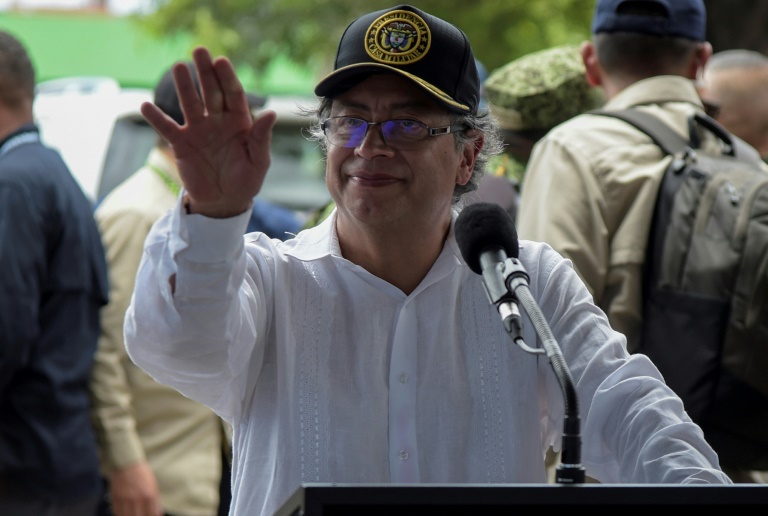
Colombia’s Gustavo Petro met on Tuesday with his Venezuelan counterpart, Nicolas Maduro, in the first talks at presidential level since the neighbors reestablished diplomatic ties after a three-year break.

The meeting in Caracas of the two leftist leaders marked a watershed warming between the once-estranged neighbors.

Petro, a former M-19 leftist insurgent who was sworn in as Colombia’s first leftist president in August, called for Venezuela to be brought back into a regional trade alliance and a human rights system.

“We want to invite Chile, Ecuador, Bolivia and Peru to accept the reintegration of Venezuela in the Andean Community as a member with full powers,” Petro said after meeting Maduro at the Miraflores Palace.

Venezuela left the regional trade bloc in 2006.

Petro also called for Venezuela to be pulled back into the human rights convention of the Organization of American States, a hemispheric alliance.

Maduro said he was “very receptive” to the idea.

Venezuela severed diplomatic relations in 2019 after increasingly strained ties with Petro’s predecessors Juan Manuel Santos and conservative Ivan Duque — who Maduro even accused of orchestrating plans to assassinate him.

The final straw came when Duque backed Venezuelan opposition leader Juan Guaido — recognized by dozens of countries as the victor in 2018 elections claimed by Maduro.

It was the first visit by a Colombian president to Venezuela’s capital since 2013.

– Visit could ‘normalize’ violations –

Since Petro succeeded Duque in August, Colombia’s first ever left-wing president has moved to mend relations with Venezuela’s populist leftist government.

Caracas and Bogota formally reestablished diplomatic relations on August 29 by sending ambassadors to each other’s capitals.

Guaido on Tuesday criticized Petro’s decision “to visit the dictator Maduro… and to call him ‘president’.”

It was an “action that could dangerously normalize human rights violations… and the worst migration crisis in the world,” he wrote on Twitter.

More than seven million Venezuelans have left their country since 2014, according to the United Nations.

Some 2.5 million find themselves in Colombia, as part of an open-door policy followed under Duque, in support of Guaido.

Maduro, after the talks, called for “new steps toward a total opening” of the two neighbors’ shared 2,200-kilometer (1,370-mile) border, a frontier that has been infested with armed groups fighting over lucrative drug resources and routes.

In September, Colombia and Venezuela reopened the border to vehicles transporting goods — considered the first step toward resuming commercial relations worth about $7.2 billion in 2008 but only $400 million last year.

A string of recent leftist victories in South America meanwhile appear to have placed Maduro in a stronger position.

On Monday he said he had spoken to Brazil’s president-elect Luiz Inacio Lula da Silva, to “resume the binational agenda of cooperation” all but paralyzed under the government of far-right leader Jair Bolsonaro.

Russia’s invasion of Ukraine — and the pressure it placed on global energy supplies — also brought about behind-the-scenes efforts by the United States to engineer at least a minimal warming with Venezuela, a major oil producer.
Ecuador declares emergency after 5 police gunned down

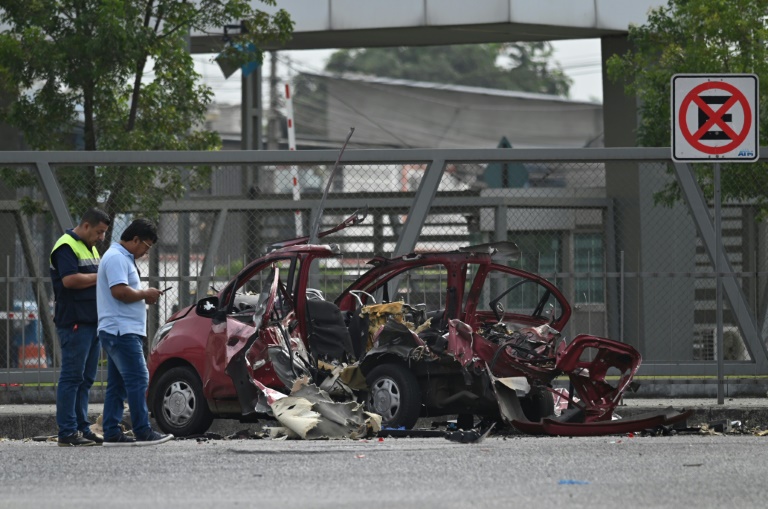
Five police officers were killed, several more wounded and prison guards taken hostage Tuesday in the latest wave of attacks in a deadly gang war consuming Ecuador, authorities said.

President Guillermo Lasso declared a state of exception and nightly curfew in two coastal provinces, Guayas and Esmeraldas. The move allows the government to limit freedom of assembly and movement. 

Officials said organized crime groups launched nine attacks with explosives and firearms against police and oil installations in response to a transfer of inmates from Guayas 1 prison.

The prison, in the southwestern port city of Guayaquil, is one of the main scenes of a series of prison massacres that have left about 400 inmates dead since February 2021.

“We have had reactions” of “organized crime” in Guayaquil and in the northwestern oil port of Esmeraldas, Interior Minister Juan Zapata told reporters in the capital, Quito.

These included car bomb attacks and a bombing at a bus terminal.

In the early morning hours, two police officers died when their patrol car was attacked by people with firearms in Guayaquil, according to police.

Three more officers were gunned down later in the day in the port and the nearby city of Duran, police said.

A separate attack on a police station there left two officers injured. 

In Esmeraldas — the same city where two headless bodies were found hanging from a pedestrian bridge on Monday — inmates took eight guards hostage, according to the SNAI prison authority.

All were later freed, it said, without giving details about the guards’ condition.

A video circulated on Twitter appeared to show two guards with explosives tied to their bodies and a man claiming to be an inmate denouncing what he called prison corruption. AFP could not independently verify the video.

“If war is what they want, war is what they’ll get,” said the man, his face obscured, adding: “We will use these guards.”

– ‘Find the perpetrators’ –

The SNAI had earlier announced on Twitter that it was moving about 200 inmates from Guayas 1.

It said the transfers were necessitated by required maintenance to cell blocks.

But according to the purported hostage video, the move was the reason for the events at Esmeraldas.

“Given the events in Esmeraldas and GYE (Guayaquil), we activated our tactical and investigative units to maintain order and find the perpetrators,” the police said on Twitter. 

Once a relatively peaceful neighbor of major cocaine producers Colombia and Peru, Ecuador has seen a wave of violent crime that authorities blame on turf battles between rival drug gangs believed to have ties to Mexican cartels.

Hundreds of inmates have been killed — many beheaded or incinerated — as the fighting spilled into Ecuador’s hugely over-populated prisons.

Civilians have increasingly been caught up in the bloodshed, which has included a spate of car bombs.

The violence has claimed 61 police lives since last year.

Ecuador has gone from being a drug transit route in recent years to an important distribution center in its own right, with the United States and Europe the main destinations.

The murder rate in Ecuador nearly doubled in 2021 to 14 per 100,000 inhabitants, and reached 18 per 100,000 between January and October this year.

In 2021, law enforcement seized a record 210 tons of drugs, mostly cocaine. 

So far this year’s seizures total 160 tons.

Global stocks mixed on Fed hopes, China zero-Covid reports

Global stock markets were mixed Tuesday as traders looked ahead to the US Federal Reserve’s next interest rate decision hoping it will signal a more dovish approach to fighting inflation.

Early gains in US equities soon turned to red following mixed data that sparked anxiety that the Fed might disappoint investors.

Markets were particularly unnerved by Labor Department figures showing a surge in open positions in September, surprising investors who have been expecting the jobs market to slow.

“The economy can’t be slowing down that fast if companies are still struggling to fill job openings,” said Oanda’s Edward Moya. “The Fed downshift trade could blow up if the labor market refuses to break.”

The US central bank is widely expected Wednesday to announce a fourth straight 75-basis-point rate hike as it tries to rein in rising prices — but recent signals have suggested officials are looking to dial down the pace of increases.

Hopes that the Fed could pivot to a less hawkish stance in the coming months have sparked a rally in risk assets over the past week — helped by signs that other central banks are also trying to take a step back.

The main European indices pared back on earlier gains through afternoon trading, but still closed in the green.

London was up 1.3 percent, Paris 1.0 percent, and Frankfurt gained 0.6 percent.

– Waiting game –

“The waiting game for the Fed is still on, with investors largely in the dark until the US central bank illuminates the path ahead for interest rate rises tomorrow,” said Hargreaves Lansdown analyst Susannah Streeter.

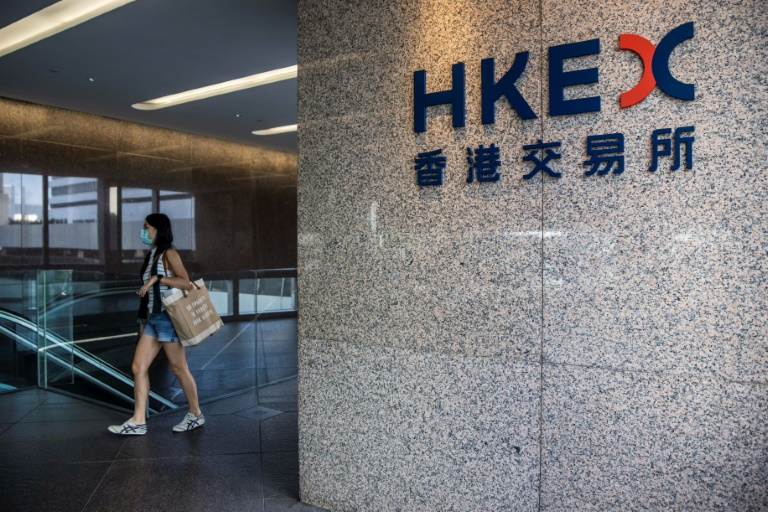
In Asia, Hong Kong led the rally following unconfirmed posts on Chinese social media saying officials were putting together a committee to discuss how to move the country away from its economically damaging zero-Covid policy.

Shares jumped more than five percent after the appearance of the unverified document, which ramped up hopes that the world’s number two economy could begin opening up in the new year and ease the strict containment measures that have hammered productivity and markets.

Oil prices also gained on speculation of a gradual easing of the zero-Covid policy in China, a major consumer.

However, neither Chinese state media nor government officials have suggested the meeting actually took place, or that such a committee was established, raising questions about the statement’s veracity.

Nonetheless, Shanghai climbed more than two percent, while the yuan also rallied after recently falling to record lows against the dollar.

– Big earnings season –

Meanwhile positive results from multinational firms also helped lift equities. 

Shares climbed in London-listed oil giant BP after it reported that third-quarter profit had more than doubled on high commodity prices, to $8.2 billion.

It is the latest energy group to report bumper earnings in recent weeks after Chevron, Shell and TotalEnergies.

Also reporting Tuesday was US drugmaker Pfizer, which recorded an 83 percent surge in Covid-19 vaccine revenues in the United States in the most recent quarter.

Ride-hailing group Uber saw shares rocket after it reported a 72 percent surge in quarterly revenues.

And shares in British grocery delivery platform Ocado soared more than 35 percent at one point after it announced a tie-up with South Korean conglomerate Lotte Shopping.

– Key figures around 2100 GMT –

New York – Dow: DOWN 0.24 percent at 32,653.20 (close)

New York – S&P 500: DOWN 0.4 percent at 3,856.10 (close)

New York – Nasdaq: DOWN 0.9 percent at 10,890.85 (close)

London – FTSE 100: UP 1.3 percent at 7,186.16 (close)

Frankfurt – DAX: UP 0.6 percent at 13,338.74 (close)

Paris – CAC 40: UP 1.0 percent at 6,328.25 (close)

EURO STOXX 50: UP 0.9 percent at 3,651.02 (close)

Tokyo – Nikkei 225: UP 0.3 percent at 27,678.92 (close)

Hong Kong – Hang Seng Index: UP 5.2 percent at 15,455.27 (close)

Shanghai – Composite: UP 2.6 percent at 2,969.20 (close)

Euro/dollar: UP at $0.9883 from $0.9882 on Monday

Pound/dollar: UP at $1.1486 from $1.1469

Dollar/yen: DOWN at 148.23 yen from 148.71 yen

Euro/pound: DOWN at 85.96 pence from 86.16 pence

West Texas Intermediate: UP 2.1 percent at $88.37 per barrel

Brent North Sea crude: UP 2.0 percent at $94.65 per barrel

burs-jmb/dw

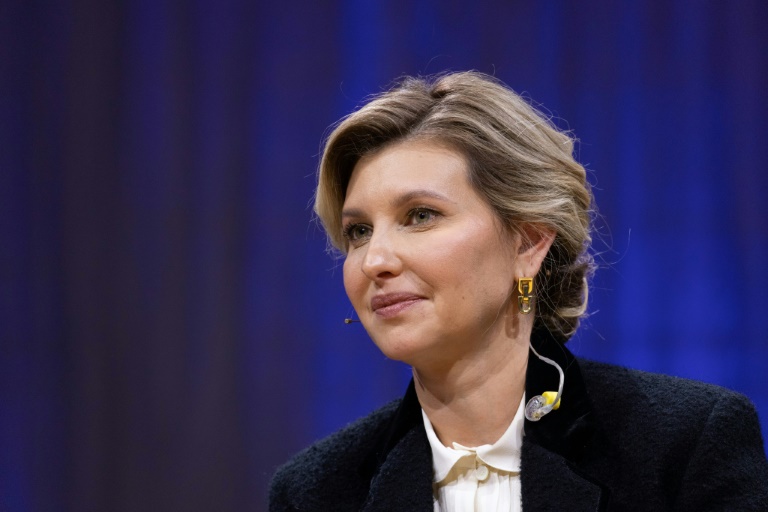
Ukraine first lady appeals for IT workers' help

Ukraine’s first lady called on Tuesday for IT specialists to help her country by building technology that saves lives rather than ending them.

Olena Zelenska told thousands of investors, entrepreneurs and tech workers gathered for the annual Web Summit in Portugal that Russia “puts technology at the service of terror”.

She showed slides of the aftermath of drone attacks in Ukraine’s capital, Kyiv, and urged the delegates to use their skills to make a positive change instead.

Her husband, Ukrainian President Volodymyr Zelensky, appeared as a hologram at several tech events earlier this year to directly appeal to companies to help rebuild his country with advanced tech infrastructure.

Zelenska, who has made in-person appearances at several events recently and addressed US Congress in July, said she would not make a detailed appeal.

Instead, the 44-year-old, a screenwriter by profession, highlighted the key role that technology was playing in the Russian invasion of her country.

She cited a Bellingcat report that alleged Russian IT workers were playing an active part in the war effort.

“Some IT specialists in Russia have made their choice to be aggressors and murderers,” she said, urging the audience to make the opposite choice.

“I believe that technology should be used to create, save and help people, not destroy them.”

Her 15-minute speech drew a standing ovation from the audience.

The organisers of the Web Summit had earlier become embroiled in a row over an invitation they had extended to people from Grayzone, a journalism website that regularly reflects pro-Russian conspiracy theories about the conflict.

The conference cancelled the invites, provoking a huge row on social media between users who said it was an infringement of free speech and those who supported the decision.

Some 70,000 people are expected to attend the Lisbon conference over the next three days.

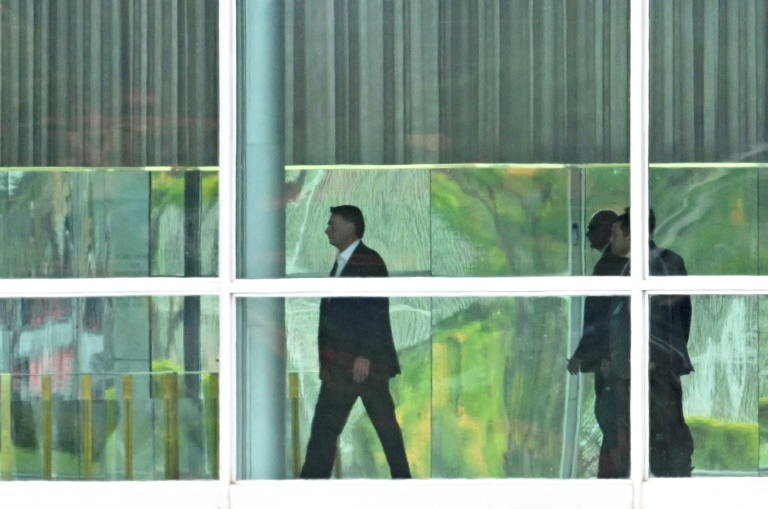
Bolsonaro 'authorizes' transition without acknowledging defeat

Brazil’s President Jair Bolsonaro on Tuesday “authorized” the transition to a new government, without acknowledging his defeat to leftist rival Luiz Inacio Lula da Silva.

Bolsonaro, 67, broke two days of silence after his razor-thin loss to Lula on Sunday, which sparked protests from his supporters across the country and fanned fears he would not accept the outcome.

In a speech that lasted just over two minutes, the far-right incumbent neither acknowledged defeat, nor congratulated Lula on his victory.

Bolsonaro started by thanking the 58 million Brazilians who voted for him, before commenting that the roadblocks erected by his supporters across the country were “the fruit of indignation and a feeling of injustice at how the electoral process took place.”

“Peaceful protests will always be welcome,” he said, adding that people should not be impeded from coming and going.

“As president of the Republic and a citizen I will continue to comply with our constitution,” he said, before handing the podium to his chief of staff Ciro Noguiera, who said Bolsonaro had “authorized” the “start of the transition” process.

Lula’s Workers’ Party announced Tuesday that his vice-president-elect Geraldo Alckmin would lead the transition process which would begin on Thursday. Lula will be inaugurated for his third term as president on January 1.

– No concession call –

Bolsonaro’s appearance, however succinct, capped two days of tensions over how he would respond to such a narrow loss after months of alleging fraud in the electoral system.

“Anyplace else in the world, the defeated president would have called me to recognize his defeat,” Lula said in his victory speech to a euphoric sea of red-clad supporters in Sao Paulo on Sunday night.

Bolsonaro remained silent even as key allies publicly recognized his loss, including the powerful speaker of the lower house of Congress, Arthur Lira.

Federal Highway Police (PRF) on Tuesday reported more than 250 total or partial road blockages in at least 23 states by Bolsonaro supporters, which they were attempting to disperse, in some cases firing teargas at demonstrators.

Protesters wearing the yellow and green of the Brazilian flag, which the outgoing president has adopted as his own, said they would not accept the outcome of the election.

“We will not accept losing what we have gained, we want what is written on our flag, ‘order and progress’. We will not accept the situation as it is,” Antoniel Almeida, 45, told AFP at a protest in Barra Mansa, Rio de Janeiro.

On Monday night, Judge Alexander de Moraes of the Supreme Court ordered police to disperse the blockades immediately. He was acting in response to a request by a transport federation that complained it was losing business.

– ‘Strength of our values’ –

Bolsonaro became the first incumbent president in Brazil not to win re-election in the post-dictatorship era after a four-year term in which he came under fire for his disastrous handling of the Covid-19 pandemic, which left more than 680,000 dead in Brazil.

He also drew criticism for his vitriolic comments, polarizing style and attacks on democratic institutions and foreign allies.

Bolsonaro used his brief speech to reflect on his time in office and said the victory of a majority of right-wing candidates in Congress “shows the strength of our values: God, homeland, family, and liberty.”

“Our dreams are more alive than ever. Even in the face of the system, we overcame a pandemic and the consequences of a war,” Bolsonaro said, referring to Russia’s war against Ukraine, which has reverberated around the globe with rising prices and concerns of a major food crisis. “I was always labeled undemocratic and unlike my accusers, I always played within the limits of the constitution.”

– Lula gets to work –

The post-election drama follows a dirty and divisive election campaign between Bolsonaro and Lula, who returns to office in a dramatic comeback.

Brazil’s president between 2003 and 2010, Lula crashed into disgrace in a corruption scandal that landed him in jail before his conviction was thrown out due to bias from the lead judge. However, he was not exonerated.

The election outcome showed just how polarized the country is between the two very different leaders.

Lula scored 50.9 percent to Bolsonaro’s 49.1 percent — the narrowest margin in Brazil’s modern history.

With a massive to-do list, Lula leaped into action, meeting Argentine President Alberto Fernandez in Sao Paulo and holding a series of phone calls with US President Joe Biden, France’s Emmanuel Macron, Germany’s Olaf Scholz, UN Secretary-General Antonio Guterres and others.

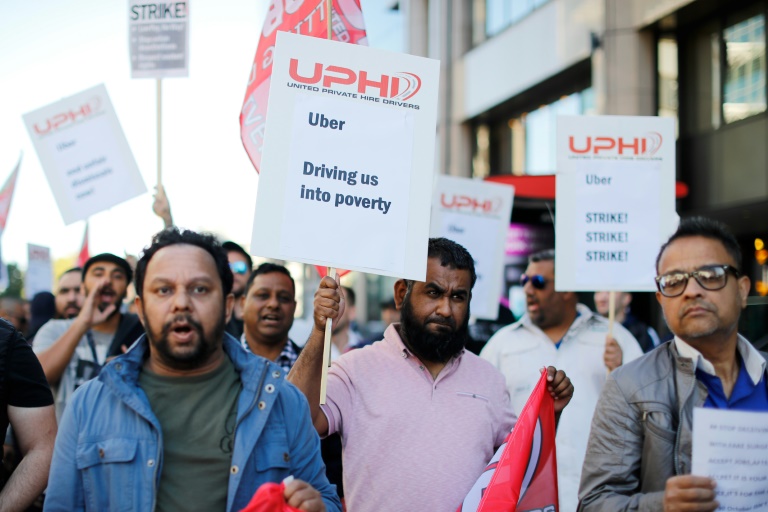
Uber reaches 615 mn pound tax settlement with Britain

Uber will pay British authorities 615 million pounds (around $700 million) to settle a tax dispute following a British judicial ruling that classified drivers as workers, the company said Tuesday.

The ride-hailing company disclosed the agreement with HM Revenues and Customs as it reported third-quarter results, saying the cash payment will be sent to authorities in the fourth quarter.

The settlement is the latest ripple effect from a major March 2021 ruling by Britain’s Supreme Court classifying Uber drivers as employees, rejecting the Silicon Valley company’s contention that the drivers should be categorized as self-employed.

As a result of that decision, British authorities had argued that Uber was on the hook for VAT taxes for the period prior to March 2022 when it operated in the United Kingdom. Uber began paying the levy in March. 

In May 2021, Uber reached an agreement with a British trade union to represent its 70,000 drivers in the UK.

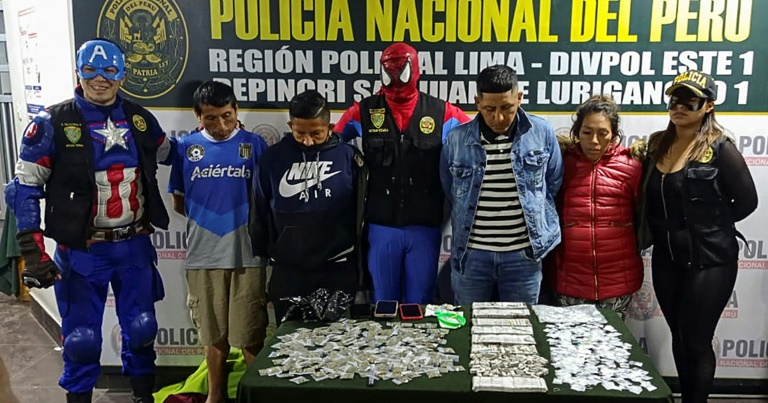
Spider-Man and friends arrest Peru drug dealers

Four of The Avengers swooped into a dangerous Lima neighborhood over the weekend, when Spider-Man, Captain America, Thor and the Black Widow broke down a door and arrested several wanted drug dealers.

The four “superheroes” were in fact members of a special Peruvian police squad pretending to be doing promotion for a Halloween concert, the police said in a statement on Tuesday.

The operation, dubbed “Marvel” after the comic book publisher of The Avengers, saw four officers dressed as superheroes walk nonchalantly down a street in the San Juan de Lurigancho neighborhood of Lima on Saturday.

Upon arriving at a specific house, Spider-Man and his friends whipped out special equipment and broke down a steel door, allowing 10 backup police members to enter and arrest three men and a woman.

The occupants, taken by surprise, at first thought it was a Halloween joke, according to police.

“In this building an entire family was dedicating themselves to the micro-commercialization of drugs. The drugs were going to be sold in a park nearby,” said police Colonel David Villanueva.

Police seized 3,250 small packages of basic cocaine paste — a crude extract of coca leaf — as well as 287 bags of cocaine and 127 of marijuana. 

One kilo of cocaine paste sells for roughly $380 in Peru, while a kilo of cocaine hydrochloride, the purest form, sells for about $1,000.

Musk announces $8 monthly charge for verified Twitter accounts

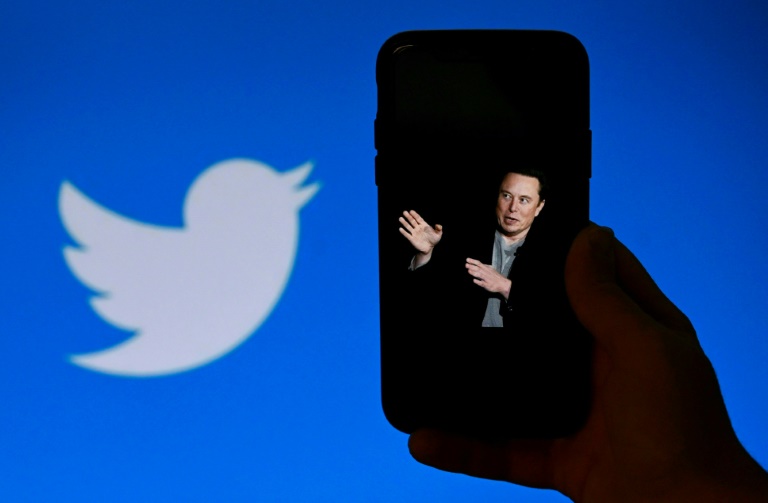
New Twitter head Elon Musk said Tuesday the site will charge $8 per month to verify users’ accounts, arguing the plan would solve the platform’s issues with bots and trolls while creating a new revenue stream for the company.

The announcement comes only days after the world’s wealthiest man took sole control of the social media giant in a contentious $44 billion deal.

“Power to the people! Blue for $8/month,” Musk, who has styled himself as a free-speech champion, tweeted, in reference to the platform’s paid subscription service, Twitter Blue.

Under the new plan, paid subscribers would receive Twitter’s famous blue checkmark that signals a verified, authentic account.

That feature is currently offered only to public figures, an approach Musk described as a “lords & peasants system.”

He said Twitter Blue subscribers would also receive “priority” placement in “replies, mentions & search,” which he called “essential to defeat spam/scam.”

There would also be expanded video abilities, fewer ads, and the possibility for users to get a “paywall bypass for publishers willing to work with us,” he said.

Twitter Blue currently allows users to access certain news sites for free and without ads, such as the Los Angeles Times.

“This will also give Twitter a revenue stream to reward content creators,” Musk tweeted.

Addressing the worries of some Twitter users that their blue check mark would lose its notoriety, he also announced “a secondary tag below the name for someone who is a public figure, which is already the case for politicians.”

The Twitter Blue service currently offers various other premium features, such as allowing subscribers to edit their tweets.

The new plan’s pricing, up from the current $5 per month, would be adjusted by country “proportionate to purchasing power parity,” Musk added in a reply to his original tweet.

Musk re-tweeted and replied to users praising the paid-verification idea, saying the move “will destroy the bots.” 

“If a paid Blue account engages in spam/scam, that account will be suspended,” Musk wrote.

– ‘Need to pay the bills’ –

For users that currently have blue check marks, Musk is considering removing them if they do not pay for the new service, tech news outlet The Verge reported.

Some users warned that they would simply leave the site if they were made to pay.

The SpaceX and Tesla chief floated the $8 subscription fee idea earlier Tuesday in a tweet reply to author Stephen King, who was complaining about media reports that the verification service could cost $20 per month.

“We need to pay the bills somehow!” Musk responded.

“Twitter cannot rely entirely on advertisers. How about $8?”

The proposal is only one part of a series of sweeping changes the 51-year-old entrepreneur has implemented at Twitter, with the entire board, including  CEO Parag Agrawal, let go last week.

The Washington Post has reported that Musk, whose account bio currently reads “Twitter Complaint Hotline Operator,” plans to fire some 75 percent of his company’s 7,500 employees.

Musk financed the massive deal through a mixture of his own wealth, money from other investment groups and loans from banks which will have to be reimbursed.

His previous comments condemning Twitter’s content moderation policies as heavy-handed — as well as his frequent posts of boundary-testing memes — has given pause to some advertisers, currently the company’s main source of revenue.

Some users have expressed fear Twitter could turn into a global stage for hate speech and disinformation.

He tried to calm the nerves by reassuring over the weekend that the site would not become a “free-for-all hellscape,” and announced the formation of a content moderation council.

However on Sunday, Musk himself tweeted an anti-LGBT conspiracy theory about what happened the night US Speaker Nancy Pelosi’s husband was attacked, then hours later deleted the post.

Wall Street chiefs to share stage with Hong Kong's sanctioned leader

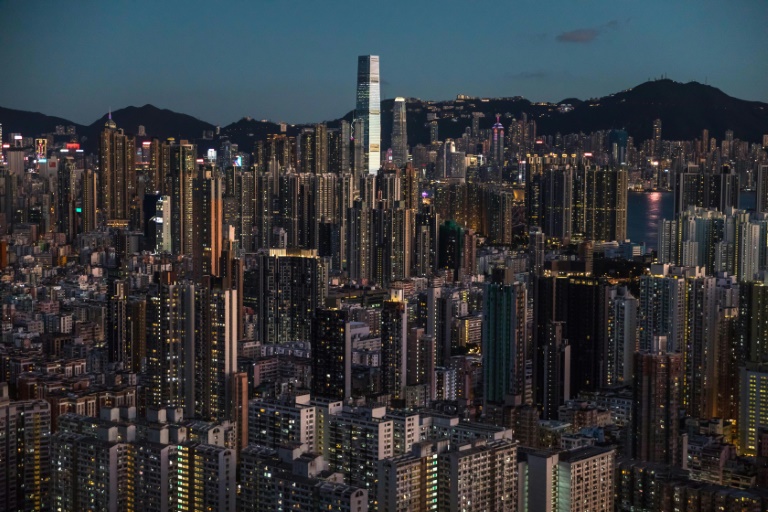
Some of the world’s top bankers will attend a Hong Kong finance summit on Wednesday, defying criticism by US lawmakers over their decision to share a stage with the city’s leader who is sanctioned by Washington.

Hong Kong is hosting a week of high profile events after lifting years of pandemic travel curbs that tarnished the city’s business-friendly reputation, sparked an exodus of talent and battered its economy.

The marquee event is a summit on Wednesday attended by some 200 finance executives including some of Wall Street’s leading luminaries.

Among those due to speak are Goldman Sachs head David Solomon, Morgan Stanley CEO James Gorman, Blackrock president Rob Kapito and JP Morgan Chase counterpart Daniel Pinto.

The glitzy gathering at the Four Seasons hotel is being heralded by Hong Kong leader John Lee, who will give the opening speech, as proof that the previously shuttered Asian finance hub is back in business.

“After three years of pandemic, Hong Kong is reconnecting with the world,” Lee told reporters on Tuesday.

But the event is not without controversy.

The leaders of the bipartisan US Congressional-Executive Commission on China have called on Wall Street executives not to attend, accusing them of “whitewashing human rights violations” and giving political cover to Lee.

Lee, a former security chief who took office this year, is among Chinese officials sanctioned by Washington for cracking down on rights in Hong Kong after huge democracy protests, unable to hold accounts with the same banking giants attending the summit.

The row illustrates the tightrope faced by multinationals in Hong Kong, which is both a lucrative business gateway for China and a flashpoint in increasingly tense relations between Beijing and Western powers.

JP Morgan’s asset and wealth management head Mary Callahan Erdoes described Hong Kong as a “super-connector” for businesses wanting to access China, adding that the city “never disappeared” during the pandemic.

“There hasn’t been a city in the East that has emerged in the same way that Hong Kong has,” she told the South China Morning Post in an interview published Tuesday.

– Unsettled economic waters –

The summit comes at a time of uncertainty over China’s economy under President Xi Jinping.

Xi, who secured a norm-breaking third term last month, has overseen regulatory crackdowns clipping the wings of some major Chinese companies and is still sticking to a strict zero-Covid strategy.

Hong Kong’s China-dependent economy saw gross domestic product plunge 4.5 percent in the third quarter of this year, according to preliminary figures released Tuesday.

Its stock exchange is among the world’s worst performers, down more than 50 percent this year to levels last seen in 2009.

Lee’s opening speech will be followed by recorded interviews with three mainland officials involved in regulation, including Yi Gang, the governor of China’s central bank.

That will be followed by a panel titled “Navigating Through Uncertainty” featuring senior executives from Morgan Stanley, Blackstone, UBS, Goldman Sachs and Bank of China president Liu Jin.

Hong Kong finance chief Paul Chan is also expected to give a speech but it is unclear if he will be able to attend in person after he caught the coronavirus overseas.

While Hong Kong scrapped mandatory quarantine in September — a key demand of businesses — it maintains layers of pandemic restrictions long since abandoned by almost everywhere else.

Overseas arrivals must undergo frequent testing and are unable to go to bars and restaurants for their first three days in the city.

Restrictions on various gatherings remain and masks are compulsory, including outdoors. 

US official in Ukraine to show support ahead of vote

A senior official in President Joe Biden’s administration was visiting Ukraine on Tuesday to vow continued support, a week before congressional elections in which some Republicans have vowed more scrutiny of billions of dollars in war aid.

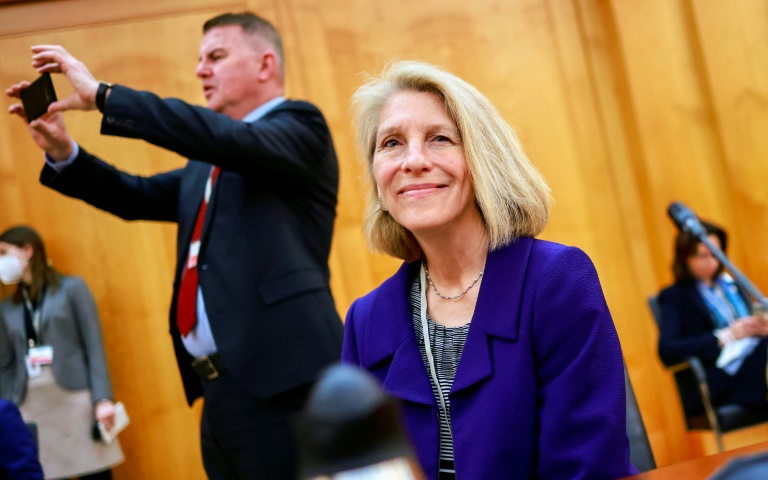
Karen Donfried, the top State Department official for Europe, is visiting Ukraine through Wednesday and will hold talks with officials from President Volodymyr Zelensky’s cabinet.

“The focus of her trip is to underscore unwavering and enduring US support for Ukraine as it defends its freedom and territorial integrity from Russia’s brutal war,” the State Department said in a statement.

She is also meeting personnel at the US embassy in Kyiv, which has remained operating despite stepped-up Russian strikes on the Ukrainian capital including its power and water supplies.

The US Congress committed $40 billion for Ukraine in May with support across party lines as the country fights back against Russian invaders.

Kevin McCarthy, who stands to become House speaker if the Republicans win next week’s election, recently warned there would be no “blank check” for Ukraine if his party is in control.

Ukraine enjoys backing from much of the Republican base although hard-right lawmakers close to former president Donald Trump have voiced criticism.

Secretary of State Antony Blinken, who visited Kyiv on September 8, will also voice support for Ukraine in talks this week with counterparts of Group of Seven industrialized nations in Muenster, Germany.

Howard Solomon, a deputy to Donfried, said the G7 will discuss ways to support Ukraine with the onset of winter amid the Russian attacks on civilian infrastructure.

“I think there’s a lot of common positions and solidarity — and I think among populations as well, even within Europe, within the United States — in terms of the need to support Ukraine’s heroic efforts to stand up to this invasion,” he told reporters.

In Muenster, Blinken will also participate with German Foreign Minister Annalena Baerbock in a forum on the future of democracy.

Close Bitnami banner
Bitnami