World

Russia's Wagner facing UK court action over Ukraine 'terrorism'

Lawyers in Britain on Tuesday took the first step towards what they said was “groundbreaking” legal action against Russia’s shadowy Wagner group over allegations it has committed “terrorism” in Ukraine.

The proposed legal move is aimed at uncovering billions of dollars in reparations for victims of the mercenary fighters. 

Wagner emerged in 2014 in Ukraine and is suspected by the West of doing the Kremlin’s dirty work in countries such as Syria and the Central African Republic — a charge Russia has always denied.

Jason McCue, senior partner at McCue Jury and Partners, said Wagner and its alleged boss Yevgeny Prigozhin “engaged in a campaign of terrorism” in Ukraine including murder, rape, the targeting of infrastructure and the planting of explosives around nuclear facilities.

“Their purpose was to spread terror and chaos in Ukraine,” he told Britain’s House of Commons Foreign Affairs Committee on Tuesday.

Ukrainian officials have said Wagner has been sending thousands of soldiers recruited in Russian prisons to the front line, with the promise of a salary and an amnesty.

According to communications intercepted by German intelligence, Wagner group mercenaries may have been involved in atrocities in the Ukrainian town of Bucha soon after the invasion on February 24.

– ‘Courageous Ukrainian victims’ –

McCue told the lawmakers Wagner had to be stopped and that “every option must be pursued to further protect victims of Wagner elsewhere in the world”.

Legal action “on behalf of courageous Ukrainian victims has just this second been commenced” against Wagner group and Prigozhin, he said.

“The claim has been commenced with formal service of a Letter Before Action on Prigozhin and Wagner. This is the first time in the world that Wagner and their likes have been sued by its victims for terrorism, used as a weapon of war, Putin’s illegal war,” he told members of parliament.

McCue said evidence would be produced before the High Court in London aimed at establishing that “Wagner engaged in terrorism against the Ukrainian people” and that “Putin’s war machine engaged in an unlawful conspiracy to deploy terrorism to facilitate their illegal invasion of Ukraine”.

The case was being brought by a group of Ukrainian victims in the UK but also “symbolically represents” all Ukrainians who have “suffered loss as a result of the war”, he added.

– Close Putin ally –

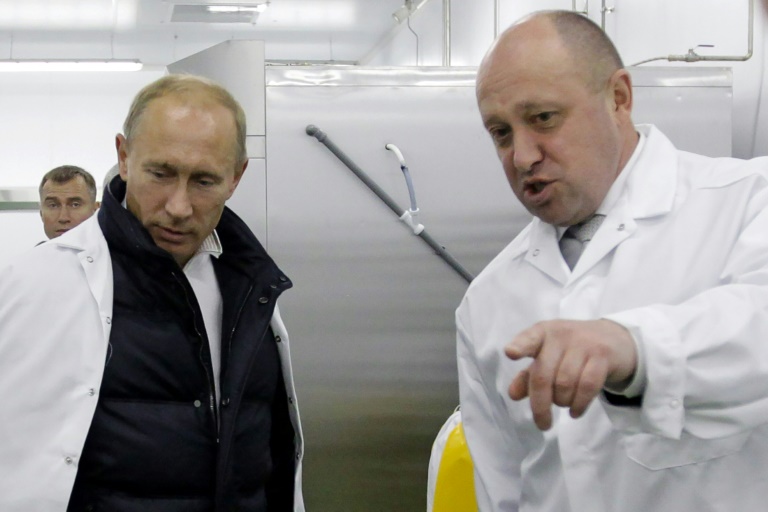
Mikhail Khodorkovsky, a former oligarch turned critic of Russian President Vladimir Putin told the hearing Prigozhin’s influence was on a par with that of other senior ministers in the Kremlin due to his personal relationship with the leader.

“The influence of Mr Prigozhin is approximately equal to the influence of Mr (Sergei Shoigu), minister of defence, or Mr (Sergei) Lavrov, foreign minister,” he said.

Prigozhin, he said, was close enough to Putin that he was even allowed to sign pardons on behalf of the president in order to allow him to recruit criminals from prisons “irrespective of the gravity of the crimes”.

“This is a very high level of influence,” he said.

The exiled tycoon said he believed the Wagner group would in the future be used “in Europe”.

And he criticised Western governments for being too slow to recognise the danger it posed.

In Africa, he said, Wagner had been engaged in the “preparing and training” of combat groups.

“This should have raised great concern and a great response at that time,” he said, adding that there had been a “great under-estimation of the enemy”.
Russia's Wagner facing UK court action over Ukraine 'terrorism'

Lawyers in Britain on Tuesday took the first step towards what they said was “groundbreaking” legal action against Russia’s shadowy Wagner group over allegations it has committed “terrorism” in Ukraine.

The proposed legal move is aimed at uncovering billions of dollars in reparations for victims of the mercenary fighters. 

Wagner emerged in 2014 in Ukraine and is suspected by the West of doing the Kremlin’s dirty work in countries such as Syria and the Central African Republic — a charge Russia has always denied.

Jason McCue, senior partner at McCue Jury and Partners, said Wagner and its alleged boss Yevgeny Prigozhin “engaged in a campaign of terrorism” in Ukraine including murder, rape, the targeting of infrastructure and the planting of explosives around nuclear facilities.

“Their purpose was to spread terror and chaos in Ukraine,” he told Britain’s House of Commons Foreign Affairs Committee on Tuesday.

Ukrainian officials have said Wagner has been sending thousands of soldiers recruited in Russian prisons to the front line, with the promise of a salary and an amnesty.

According to communications intercepted by German intelligence, Wagner group mercenaries may have been involved in atrocities in the Ukrainian town of Bucha soon after the invasion on February 24.

– ‘Courageous Ukrainian victims’ –

McCue told the lawmakers Wagner had to be stopped and that “every option must be pursued to further protect victims of Wagner elsewhere in the world”.

Legal action “on behalf of courageous Ukrainian victims has just this second been commenced” against Wagner group and Prigozhin, he said.

“The claim has been commenced with formal service of a Letter Before Action on Prigozhin and Wagner. This is the first time in the world that Wagner and their likes have been sued by its victims for terrorism, used as a weapon of war, Putin’s illegal war,” he told members of parliament.

McCue said evidence would be produced before the High Court in London aimed at establishing that “Wagner engaged in terrorism against the Ukrainian people” and that “Putin’s war machine engaged in an unlawful conspiracy to deploy terrorism to facilitate their illegal invasion of Ukraine”.

The case was being brought by a group of Ukrainian victims in the UK but also “symbolically represents” all Ukrainians who have “suffered loss as a result of the war”, he added.

– Close Putin ally –

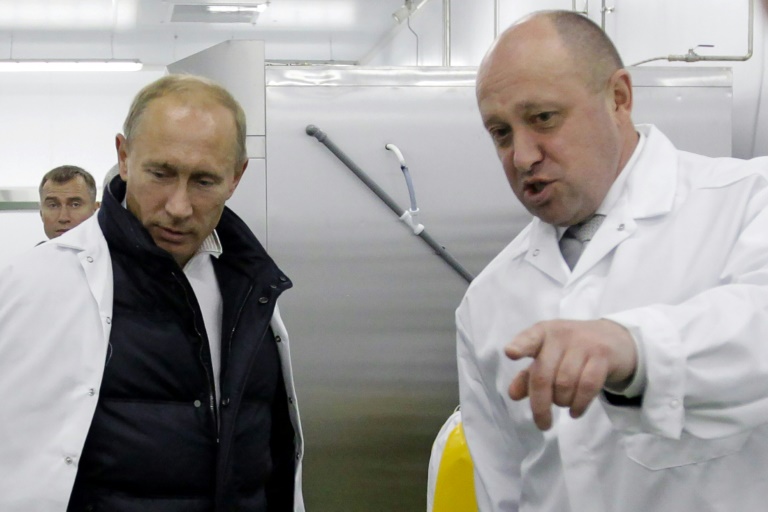
Mikhail Khodorkovsky, a former oligarch turned critic of Russian President Vladimir Putin told the hearing Prigozhin’s influence was on a par with that of other senior ministers in the Kremlin due to his personal relationship with the leader.

“The influence of Mr Prigozhin is approximately equal to the influence of Mr (Sergei Shoigu), minister of defence, or Mr (Sergei) Lavrov, foreign minister,” he said.

Prigozhin, he said, was close enough to Putin that he was even allowed to sign pardons on behalf of the president in order to allow him to recruit criminals from prisons “irrespective of the gravity of the crimes”.

“This is a very high level of influence,” he said.

The exiled tycoon said he believed the Wagner group would in the future be used “in Europe”.

And he criticised Western governments for being too slow to recognise the danger it posed.

In Africa, he said, Wagner had been engaged in the “preparing and training” of combat groups.

“This should have raised great concern and a great response at that time,” he said, adding that there had been a “great under-estimation of the enemy”.
S.Africa will need $500 bn to reach net zero: World Bank

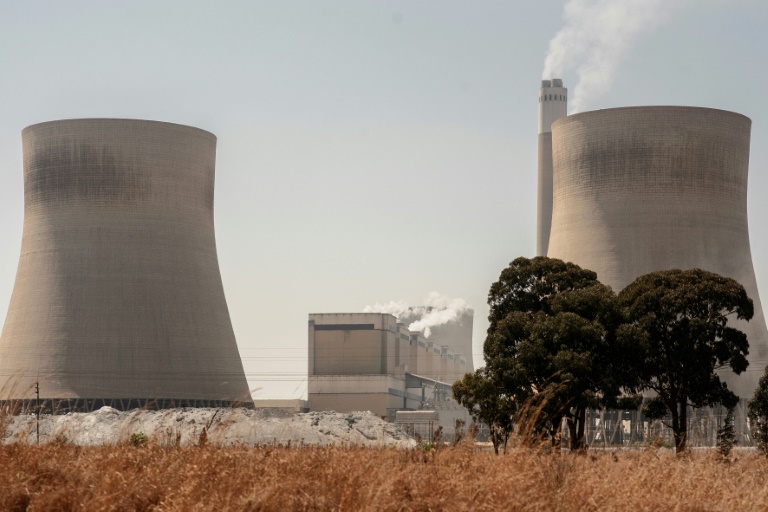
South Africa, one of the world’s largest greenhouse gas emitters, will require at least half-a-trillion dollars to achieve carbon neutrality by 2050, the World Bank said Tuesday.

“Financing requirements associated with the transitions could amount to 4.4 percent of GDP per year — or 8.5 trillion rand (about $500 billion)” between this year and 2050, said the bank in a report published Tuesday.

In light of the government’s limited fiscal capacity, the domestic private sector and external financing will be required for the transition, it said.

Last year, South Africa, the continent’s most industrialised economy, secured $8.5 billion in loans and grants from a group of rich nations to finance the transition to cleaner energy sources.

The bank said South Africa accounts for 1.2 percent of global greenhouse gas emissions — with the coal-dominated energy sector responsible for nearly half of its discharges.

“The power sector… will need to transform radically by moving away from coal toward renewables,” it said, projecting that solar and wind will provide about 85 percent of the country’s energy by 2050.

The country “is one of the most carbon- and energy intensive economies in the world”, the bank added, noting that South Africa’s carbon intensity was 3.2 times higher than the global average in 2019.

“This shift should start immediately to address the ailing generation capacity, accompanied by (an) enhanced regional energy market,” said the bank.

A shift away from coal for renewable sources of energy will help the country tackle its ongoing energy crisis “most urgently and cost-competitively”.

But transitioning from coal will come at a heavy cost.

The bank estimates that at least 300,000 jobs in high-emitting sectors will be lost, urging the government to find ways to alleviate the potential negative effects of the transition.

For every job lost, the bank estimated that between two and three jobs could be created in renewables, green manufacturing and non-coal mining sectors.

Monkeypox still global health emergency: WHO

The World Health Organization said Tuesday that its emergency committee had determined that monkeypox should continue to be classified as a global health emergency.

Following a meeting on October 20 about the virus that suddenly started spreading across the world in May, the experts “held the consensus view that the event continues to meet the … criteria for a Public Health Emergency of International Concern,” WHO said in a statement.

The UN health agency first declared the so-called PHEIC — its highest level of alarm — on July 23, and the experts said that while some progress had been made in reining in the disease, it was too soon to declare the emergency over.

WHO chief Tedros Adhanom Ghebreyesus had accepted and agreed with the experts’ advice, the statement said.

Since monkeypox suddenly began spreading beyond the West African countries where it has long been endemic six months ago, it has killed 36 people out of more than 77,000 cases across 109 countries, according to a WHO count. 

The outbreak outside of West Africa has primarily affected young men who have sex with men.

But since peaking in July, the number of people infected with the disease that causes fever, muscular aches and large boil-like skin lesions, has consistently fallen, particularly in Europe and North America, the hardest hit areas in the early stages of the global outbreak. 

The number of new global cases fell by 41 percent in the seven days up to Monday compared to the previous week, the WHO said.

But WHO’s emergency committee stressed that there were a number of lingering causes for concern.

They listed ongoing transmission in some regions, continuing preparedness and response inequity within and between countries, and the potential for greater health impacts if the virus begins spreading more among more vulnerable populations.

They also pointed to the continuing risk of stigma and discrimination, weak health systems in some developing countries leading to under-reporting and the lack of equitable access to diagnostics, antivirals and vaccines.

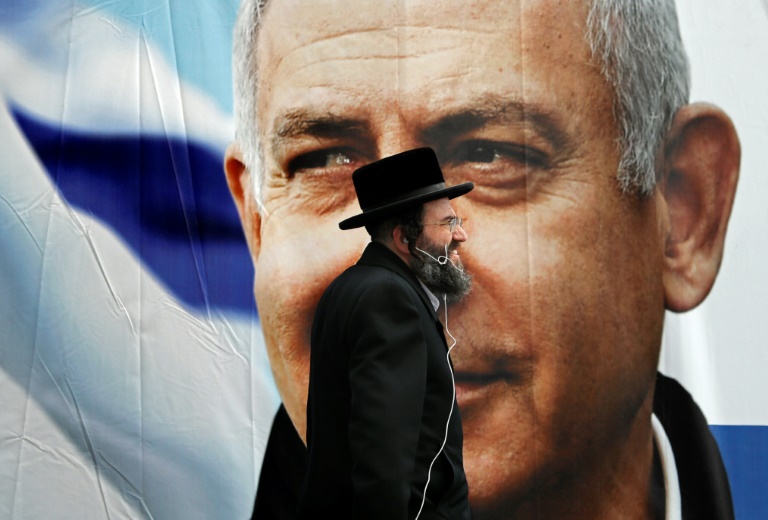
Israel voters flock to the polls as Netanyahu eyes comeback

Israelis cast ballots Tuesday in their fifth election in less than four years, turning out for their strongest showing in two decades with ex-premier Benjamin Netanyahu seeking a comeback.

The vote follows the collapse of a coalition that last year united eight disparate parties and ousted Netanyahu, ending his record run as prime minister — but which ultimately failed to achieve political stability. 

Netanyahu, 73, who is on trial for corruption and breach of trust, warned the race was “a very, very close battle” as he rallied supporters of his right-wing Likud party in the central city of Netanya.

Caretaker Prime Minister Yair Lapid, 58, whose centrist Yesh Atid (There Is a Future) has polled second behind Netanyahu’s party, urged people to vote in the “very close” contest.

In a political system where a shift in just one of the 120 Knesset seats up for grabs could cement a ruling coalition — or lead to further deadlock and possible new elections — the outcome remains uncertain once more.

Concerns about voter fatigue were widespread, but as of 6:00 pm (1600 GMT) turnout was the highest since 1999 at 57.7 percent, a rise of 6.2 percentage points compared with the last election in March 2021, according to the Central Elections Committee.

At a polling station in Tel Aviv, voter Amy Segal, 26, aired her frustration at being asked to vote yet again after years of deadlock.

“Each year there’s a new election, there’s no political stability,” she told AFP. “I feel like it doesn’t matter who you vote for, nothing will change.”

Polls close at 10:00 pm (2000 GMT), when Israeli networks will give their first results projections.

– ‘Coalition of extremists’ –

Whoever is tapped to form a government will need support from multiple smaller parties to clinch a 61-seat majority.

Extreme-right leader Itamar Ben-Gvir may be key to helping Netanyahu return to power, as his Religious Zionism bloc has gained momentum in recent weeks and could come third in the election.

Ben-Gvir, who wants Israel to annex the entire West Bank, promised a “full right-wing government” led by Netanyahu, after voting near his settlement home.

Justice Minister Gideon Saar, a former Likud heavyweight who broke with Netanyahu and now leads his own party, warned Israel risked electing a “coalition of extremists”.

The vote is being held against a backdrop of soaring violence across Israeli-annexed east Jerusalem and the occupied West Bank.

At least 29 Palestinians and three Israelis were killed across the two territories in October, according to an AFP tally.

The Israeli military shut checkpoints leading to the West Bank and closed the crossing with the blockaded Gaza Strip throughout election day.

While many candidates have cited security as a concern, none have pledged to revive moribund peace talks with the Palestinians.

– ‘No change’ –

The soaring cost of living has been a hot issue this election as Israelis, having long endured high prices, are feeling the pinch even more amid global economic turmoil linked to Russia’s invasion of Ukraine.

Lapid was the architect of the last coalition, which for the first time brought an independent Arab party into the fold and included others from the right and left.

In Tel Aviv, voter Gidi Bar Ilan, 30, said the short-lived coalition “demonstrates that we can sit together”.

The unlikely alliance of the last government was made possible after Mansour Abbas pulled his Raam party from a united slate with other Arab-led parties, paving the way for him to join the coalition.

But Raam’s pioneering support for a coalition is not viewed positively across Arab society, which makes up around 20 percent of Israel’s population.

“He tried, but he didn’t bring anything. No change, no money,” said voter Faris Mansour from the central Arab town of Tirah.

The 54-year-old told AFP he had voted for the Balad party which rejects participation in Israeli governance.

Recent months have seen further divisions within the Arab bloc, which is running on three separate lists in a move expected to weaken the minority’s representation in parliament.

Abbas remained optimistic Tuesday that “this process of cooperation” would continue, yielding “results for the Arab society, and for the Israeli society in general”.

bur-rsc/ami/fz

Grain exports to stop as Putin demands 'real guarantees' from Kyiv

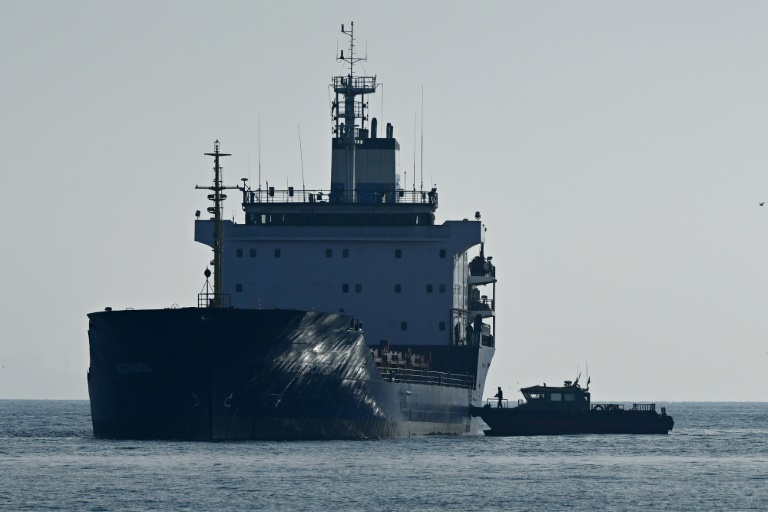
Grain exports will halt on Wednesday after Moscow pulled out of a deal to let ships through the Black Sea, as Russian President Vladimir Putin demanded “real guarantees” from Kyiv before returning to the agreement.

Russia announced its suspension on Saturday, accusing Ukraine of misusing the safe shipping corridor for an attack on Russian ships in Crimea. Kyiv has dismissed this as a “false pretext” to withdraw.

The Turkey and UN-brokered deal signed in July by Kyiv and Moscow is crucial to easing a global food crisis caused by the war.

In a phone call with Turkish President Recep Tayyip Erdogan Tuesday, Putin wanted Kyiv to give “real guarantees” that it was “not using the humanitarian corridor for military purposes”, a Kremlin statement said.

No grain ship movements were planned for Wednesday, the body overseeing the export deal said, although three more grain-loaded cargo ships left Ukrainian ports on Tuesday.

Moscow had warned on Monday it was “more risky, dangerous” to continue the exports without Russia’s participation.

Russia is also putting greater pressure on Ukrainians inside the country as recent attacks damaged the country’s infrastructure, plunging families and businesses into darkness weeks before winter.

On Tuesday, Kyiv mayor Vitali Klitschko said water and electricity supplies had been “fully restored” in the capital.

But the attacks have “seriously damaged around 40 percent of the entire energy infrastructure” of Ukraine, the presidency said in a statement.

Ukrainian presidential adviser Oleksiy Arestovich said Monday’s bombardment was “one of the most massive shellings of our territory by the army of the Russian Federation”.

– Infrastructure strikes –

Following the strikes, aerial views showed Kyiv thrown into darkness overnight, with the only lights coming from street traffic.

Monday’s shelling had left 80 percent of the capital’s consumers without water and 350,000 homes without electricity. 

Klitschko warned there would still be planned power cuts in the city “because of the considerable deficit in the power system after the barbaric attacks of the aggressor”.

Ukrainian energy operator Ukrenergo said it would limit supplies to all consumers in central and northern regions of the country to “reduce the pressure on the network”.

EU commissioner for energy Kadri Simson arrived in Kyiv “to help scale up support to the Ukrainian energy sector”, she said on Twitter.

The Ukrainian army said Russia launched 55 cruise missiles Monday, mainly at energy infrastructure.

Russia’s defence ministry claimed Tuesday the “massive strikes… significantly disrupted the management and logistics of the Ukrainian armed forces”.

Russia has pivoted to systematically attacking the Ukrainian utilities network after setbacks on the battlefield, where its army is facing pushbacks on the eastern and southern fronts.

In the south, Kyiv’s forces are preparing for fierce battles to recapture the city of Kherson and its surrounding region.

Kherson is one of four regions — along with Zaporizhzhia, Donetsk and Lugansk — that Moscow claims to have annexed but does not fully control. 

– New ‘evacuations’ from Kherson –

Russian authorities meanwhile announced tens of thousands more civilians would be “evacuated” from the Russian-occupied southern Ukrainian region of Kherson amid a counter-offensive by Kyiv.

This comes after 70,000 people already left their homes in Kherson, Moscow-installed local authorities said last week.

The Russian-backed leader of the Kherson region, Vladimir Saldo, said on Tuesday new resettlements were being carried out because of the risk of a “massive missile attack” by Ukrainian forces on a local dam.

But Ukraine said Russian “occupiers are carrying out forced displacement of the civilian population”.

“Citizens living in premises along the banks of the Dnipro river are being forcibly evicted from their homes,” the General Staff of the Ukrainian Armed Forces said on Facebook Tuesday. 

– Grain corridor –

Turkey has stepped up diplomatic efforts to salvage the grain export deal that was due to be renewed on November 19.

Erdogan told Putin during Tuesday’s call that he was “confident” the issue of grain exports from Ukraine could be resolved, according to the Turkish presidency.

The resumption of the deal could only take place after a “thorough investigation into the circumstances of the incident”, Putin told Erdogan.

With millions at risk of starvation unless exports continue, French President Emmanuel Macron “denounced” Russia’s decision to exit the deal “which again harms global food security” in a call with his Ukrainian counterpart Volodymyr Zelensky Tuesday, his office said.

Zelensky thanked Macron on Twitter for “specific decisions on strengthening Ukraine’s defence capabilities. Specific initiatives to restore the destroyed energy infrastructure”.

bur-sea/raz/gw

Despite conflict Russia sends France giant magnet for nuclear fusion project

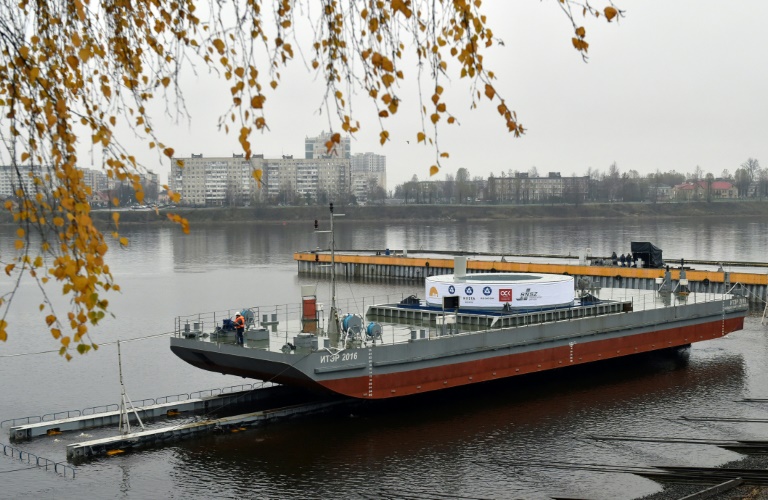
Russia on Tuesday dispatched one of six giant magnets needed for the ITER nuclear fusion programme in France, one of the last international scientific projects Moscow participates in despite the Ukraine conflict. 

The ship carrying the Russian-made magnet — or “poloidal field coil” — departed Saint Petersburg on Tuesday under grey skies.

On board, the massive nine-metre-wide coil, which weighs 200 tonnes had been tightly wrapped to withstand a two-week trip to Marseille, southern France. 

The ring-shaped magnet built under Russian atomic agency Rosatom’s supervision will make up the top part of the world’s largest “tokamak”.

The tokamak is a magnetic fusion device built in France following the same principle that powers our sun and stars.

The Russian piece was meant to leave in May but sanctions forbidding Russian ships docking in Europe delayed the departure. 

Still, the “current situation did not change the fact that we will fullfil our obligations”, Rosatom representative for international projects Viacheslav Perchukov said.

Geopolitical tensions “practically did not affect the realisation of this project”, Perchukov said.  

“Without (the Russian coil), the tokamak will not work,” senior ITER centre scientist Leonid Khimchenko told AFP.

He hailed a “unique” achievement, over eight years in the making. 

In southern France, 35 nations are collaborating to build the largest nuclear fusion device in the world. 

“This is such an interesting project that in fact we are all one family… there is no competition between us, nothing,” Khimchenko said.

The project was set in motion after a 1985 summit between US President Ronald Reagan and Russian leader Mikhail Gorbachev.

Andrey Mednikov, a scientist in charge of the production of the poloidal field coil, praised the continuing international cooperation. 

“If this cooperation was brought to a halt,” Mednikov said, “everyone would lose: both Russia and the international community.”

U2 frontman Bono releases memoir 'Surrender'

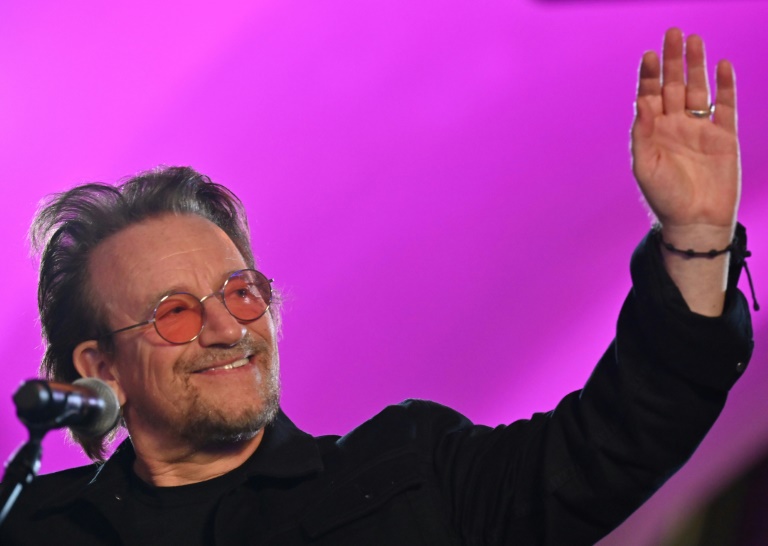
U2’s Bono on Tuesday released his memoir “Surrender,” detailing the journey from his youth in Dublin to fronting one of the world’s most prominent rock bands.

The introspective book is organized across 40 different U2 songs, including 40 original drawings.

The 62-year-old artist born Paul David Hewson is a long-time humanitarian well-known for lending his voice to a variety of causes, including the fight against poverty and AIDS.

In his more than 500-page book, Bono delves in to those ambitions but also his growth as a teenager struck by tragedy — his mother died suddenly when he was 14 — and an account of his heart operation in 2016.

He also waxes on the perplexities and finer points of songwriting, and “the pseudo-religious part of being a rock star, how we put the messy in messianic.”

“U2’s music was never really rock ‘n’ roll,” he writes in the book. “Under its contemporary skin it’s opera — a big music, big emotions unlocked in the pop music of the day.” 

The rocker is promoting the memoir with a 14-date book tour entitled “Stories of Surrender,” which kicks off in New York this week and includes stops in Chicago, London, Berlin, Paris, Madrid and, of course, Dublin.

“When I started to write this book, I was hoping to draw in detail what I’d previously only sketched in songs,” Bono said in a statement when the book’s publication was announced earlier this year.

“Surrender is a word freighted with meaning for me. Growing up in Ireland in the seventies with my fists up (musically speaking), it was not a natural concept,” he continued. “I am still grappling with this most humbling of commands. In the band, in my marriage, in my faith, in my life as an activist.”

“Surrender is the story of one pilgrim’s lack of progress… With a fair amount of fun along the way.”

Brazil's Lula finds quick welcome and likely ally in Biden

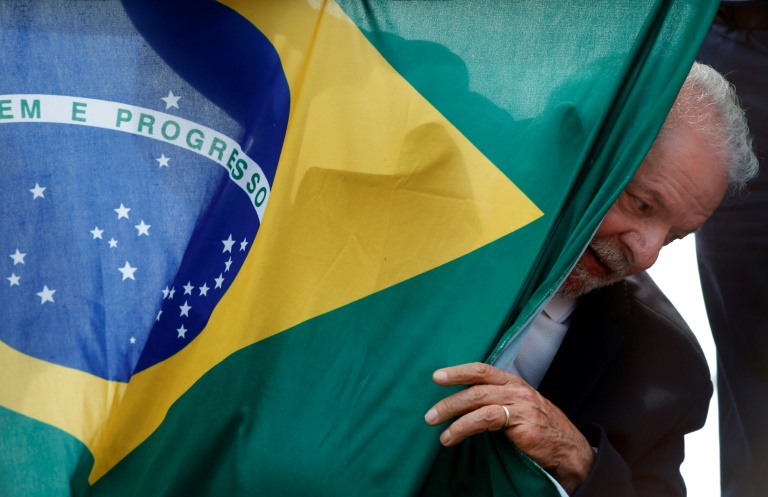
For the White House on a Sunday evening, the pace was extraordinary — 35 minutes after Luiz Inacio Lula da Silva was declared the winner of Brazil’s election, President Joe Biden issued a congratulatory statement.

Biden, who was joined by several other Western leaders, was seeking to preempt any anti-democratic moves by incumbent Jair Bolsonaro, who himself took 38 days to recognize Biden’s victory over the far-right Brazilian leader’s ally and inspiration Donald Trump.

With the change in Brazil, the Western Hemisphere’s two most populous countries will have leaders with similar narratives — septuagenarian political veterans who returned to the ballot on avowed missions to save democracy and who defeated, if just barely, right-wing populists.

Lula and Biden, who followed up Monday with a telephone conversation, stand to form a close partnership on issues dear to both of them, starting with climate change.

Lula in his victory speech turned the page from the climate skeptic Bolsonaro by vowing to strive for zero deforestation in the Amazon, which serves a crucial role for the planet in countering carbon emissions.

“I think there is a natural alignment in terms of climate and in terms of democracy, too,” said Valentina Sader, associate director of the Atlantic Council’s Latin America Center.

“If the past is indicative, Lula will end up working with everyone but at the same time be pragmatic,” she said.

– Role on Haiti? –

Liliana Ayalde, a former US ambassador to Brazil, said Biden could offer technological and other help on reducing deforestation, but warned that even with Lula, the United States needed to be mindful of Brazilian sensitivities about sovereignty. 

“Sometimes without even knowing it we come across, like, ‘the Amazon is ours,'” she told a forum at the Woodrow Wilson Center for International Scholars.

But, she said, “The space is there to do a lot,” with climate to figure much more prominently in the relationship.

She also pointed to the possibility of Lula’s Brazil stepping up in stabilizing violence-ravaged Haiti, where the Biden administration has backed the deployment of an international force to which it is loathe to commit US troops.

Other Western nations are also stepping up cooperation with Brazil, with Norway announcing a resumption of deforestation aid and the European Union indicating it may move forward on a trade deal.

Biden’s margin for cooperation, however, could soon shrink if Republicans, some of whom have voiced support for Bolsonaro, win congressional elections next week.

– ‘More moderate’ Lula –

Similarities only go so far between Biden, for 36 years a middle-of-the-road senator, and Lula, a trade unionist turned global leftist icon when he was first elected in 2002 and who later was jailed on controversial corruption charges.

During his first stint as president, Lula managed warm relations both with the United States and leftist allies such as Cuba and Venezuela, but also occasionally irked US officials with his ambitions for an international role, including his own diplomatic initiative on Iran’s nuclear program.

In an interview this year with Time, Lula partly blamed the West for Russia’s invasion of Ukraine and said Biden should have flown to Moscow to negotiate, saying, “This is the kind of attitude you expect from a leader.”

But Lula faces a different world two decades later and Ayalde, the former ambassador, said she was struck by the lack of verbal sops to Cuba and Venezuela in his victory remarks.

“I think you will see a Lula who will be much more moderate. He has stated that he wants to distance himself from authoritarianism,” she said.

With the United States backtracking from a goal of toppling Venezuela’s socialist leader Nicolas Maduro, and Gustavo Petro newly elected as Colombia’s first left-wing president, Sader said Lula’s reputation could serve as an asset rather than impediment to Biden.

If there is a push to negotiate with Maduro, “Lula might be a way to make that happen,” Sader said.

Bruna Santos, senior advisor at the Brazil Institute of the Wilson Center, said Lula saw his role as bringing countries together.

“He always tries to see himself as someone who can coordinate and be more diplomatic than anything, in a pragmatic way,” she said.

Lula, she added, has explicitly embraced the Biden model of “Build Back Better” — targeted efforts to move on from a divisive leader.

Both nations face “this crisis of democracy, that goes beyond representation and goes to the state’s capacity to deliver solutions to people,” Santos said.

Italy opposition cries foul after Meloni cracks down on raves

The Italian opposition has voiced fears for public freedoms after the new far-right government stepped up fines and jail terms against the organisers and followers of illegal rave parties.

At the new cabinet’s first meeting on Monday the draft legislation was approved, raising concern it could be used arbitrarily to shut down any type of public demonstration.

“It’s a major error. Raves have no place in such a document. This calls into question public freedoms,” Democratic Party secretary and former prime minister Enrico Letta posted on Twitter.

Writer Erri di Luca saw a “serious danger for open and free musical shows”.

On Monday, police confiscated audio equipment worth 150,000 euros (dollars) when they intervened at a rave in the northern city of Modena.

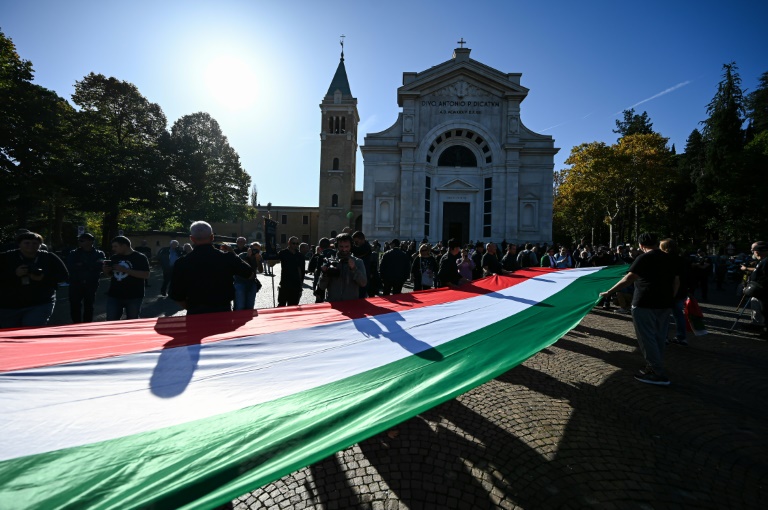
A day earlier, police did not move against 2,000 people who gathered in Benito Mussolini’s birthplace of Predappio to remember Italy’s fascist dictator.

“Who decides what is dangerous? A rave or a gathering of blackshirts who insult our constitution,” asked Democratic deputy Ilenia Malavasi on Tuesday.

For LGBT militant Dario Accolla, “They simply want to ban demonstrations.”

Opposition leaders also hit out at government priorities after the inaugural cabinet meeting saw ministers, facing demands to help families and business cope with soaring inflation, decide instead to allow thousands of suspended anti-vax doctors to return to work and single out rave party organisers.

– ‘The party’s over’ –

Members of the government have backed the reform which slaps jail sentences of up to six years and fines of 10,000 euros on the organisers of illegal parties of more than 50 people who are liable to endanger public safety or health.

“The party’s over,” tweeted Matteo Salvini, anti-immigrant League party chief and minister of infrastructure.

Interior Minister Matteo Piantedosi said similar legislation was “already in force in other countries”.

The new law would save money locally and for the state by enabling such gatherings to be quickly closed down, he added.

The minister went on to declare the Modena rave and Predappio meeting “two totally different things”.

“Predappio is a demonstration that has been held for many years. For the rave party there was a complaint from the owner” of the land, he said.

On Monday, the opposition had also condemned the appointment to government of a far-right deputy once photographed wearing a Nazi armband with a swastika.

Galeazzo Bignami, elected to parliament on the list of Prime Minister Giorgia Meloni’s post-fascist Fratelli d’Italia (Brothers of Italy), was named deputy infrastructure minister.

The 47-year-old attorney was photographed in 2005 wearing a Nazi armband at a party.

Meloni last month became Italy’s first woman to lead a government after her party came first in September parliamentary elections.

She has sought to distance herself from that Mussolini legacy without entirely renouncing it.

Asked about the neo-fascist march in Predappio, Meloni told Italian reporters: “You know what I think, politically, it’s very far from me.”

Her coalition government is the most right-wing to take office in Rome since World War II and includes Salvini’s League and former premier Silvio Berlusconi’s right-wing Forza Italia.

Close Bitnami banner
Bitnami