World

Global stocks mixed on Fed hopes, China zero-Covid reports

Global stock markets were mixed Tuesday, as traders looked ahead to the US Federal Reserve’s interest rate decision hoping it will signal a more dovish approach to fighting inflation.

But early gains in US equities soon turned to red after the release of a survey showing manufacturing growth slowed in October to its weakest since mid-2020 on falling orders and prices.

The Dow Jones was down 0.4 percent in early afternoon trading.

Investors were looking for signs of optimism as US central bankers started their two-day policy meeting Tuesday, against the backdrop of persistently high inflation.

The Fed is widely expected Wednesday to announce a fourth straight 75-basis-point rate hike as it tries to rein in runaway prices — but recent signals have suggested officials are looking to dial down the pace of increases.

Hopes it could pivot to a less hawkish stance in the coming months has sparked a rally in risk assets over the past week — helped by signs other central banks are also trying to take a step back.

“While a 75 basis point hike looks locked in tomorrow, the messaging is what investors are interested in,” said Craig Erlam, senior market analyst at OANDA.

The main European indices pared back on earlier gains through afternoon trading, but still closed in the green.

London was up 1.3 percent, Paris 1.0 percent, and Frankfurt gained 0.6 percent.

– Waiting game –

“The waiting game for the Fed is still on, with investors largely in the dark until the US central bank illuminates the path ahead for interest rate rises tomorrow,” said Hargreaves Lansdown analyst Susannah Streeter.

In Asia, Hong Kong led the rally following unconfirmed posts on Chinese social media saying officials were putting together a committee to discuss how to move the country away from its economically damaging zero-Covid policy.

Shares jumped more than five percent after the appearance of the unverified document, which ramped up hopes the world’s number two economy could begin opening up in the new year and ease the strict containment measures that have hammered productivity and markets.

Oil prices also gained on speculation of a gradual easing of the zero-Covid policy in China, a major consumer.

However, neither Chinese state media nor government officials have suggested the meeting actually took place, or that such a committee was established, raising questions about the statement’s veracity.

Nonetheless, Shanghai climbed more than two percent, while the yuan also rallied after recently falling to record lows against the dollar.

Sydney was also well up after the Australian central bank lifted rates by 0.25 percentage points to a near-decade high but brushed off calls for a bigger raise.

– Big earnings season –

Meanwhile positive results from multinational firms also helped lift equities. 

Shares climbed in London-listed oil giant BP after it reported that third-quarter profit had more than doubled on high commodity prices, to $8.2 billion.

It is the latest energy group to report bumper earnings in recent weeks after Chevron, Shell and TotalEnergies.

Also reporting Tuesday was US drugmaker Pfizer, which recorded an 83 percent surge in Covid-19 vaccine revenues in the United States in the most recent quarter.

Ride-hailing group Uber saw shares rocket after it reported a 72 percent surge in quarterly revenues.

And shares in British grocery delivery platform Ocado soared more than 35 percent at one point after it announced a tie-up with South Korean conglomerate Lotte Shopping.

– Key figures around 1630 GMT –

New York – Dow: DOWN 0.4 percent at 32,614.01 points

EURO STOXX 50: UP 0.9 percent at 3,649.46 

London – FTSE 100: UP 1.3 percent at 7,186.16 (close)

Frankfurt – DAX: UP 0.6 percent at 13,338.74 (close)

Paris – CAC 40: UP 1.0 percent at 6,328.25 (close)

Tokyo – Nikkei 225: UP 0.3 percent at 27,678.92 (close)

Hong Kong – Hang Seng Index: UP 5.2 percent at 15,455.27 (close)

Shanghai – Composite: UP 2.6 percent at 2,969.20 (close)

Euro/dollar: DOWN at $0.9869 from $0.9885 on Monday

Pound/dollar: DOWN at $1.1458 from $1.1465

Dollar/yen: DOWN at 148.09 yen from 148.72 yen

Euro/pound: DOWN at 86.11 pence from 86.20 pence

West Texas Intermediate: UP 2.2 percent at $88.44 per barrel

Brent North Sea crude: UP 2.1 percent at $94.83 per barrel

burs-rox/raz
Blue whales eat 10 million pieces of microplastic a day: study

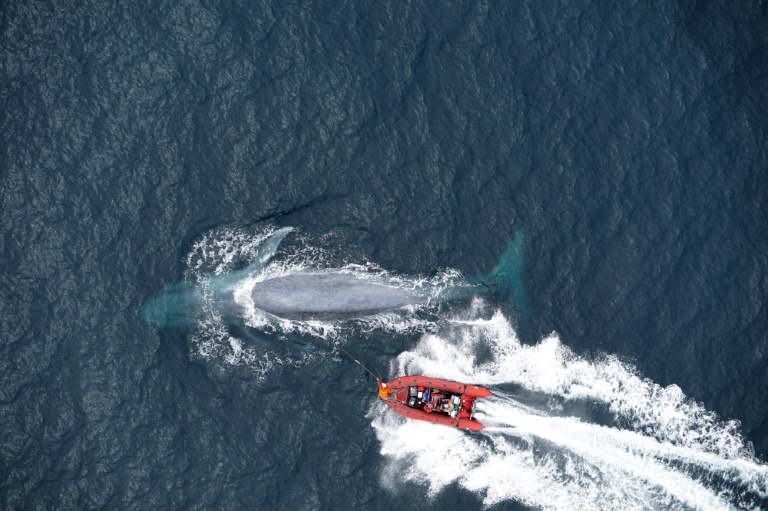
Blue whales consume up to 10 million pieces of microplastic every day, research estimated Tuesday, suggesting that the omnipresent pollution poses a bigger danger to the world’s largest animal than previously thought.

The tiny fragments of plastic have been found everywhere from the deepest oceans to the highest mountains, and even inside human organs and blood.

Now a modelling study published in the journal Nature Communications has estimated how much is being ingested by whales. 

A US-led research team put tags on 191 blue, fin and humpback whales that live off the coast of California to observe their movements.

“It’s basically like an Apple Watch, just on the back of a whale,” said Shirel Kahane-Rapport, a researcher at California State University, Fullerton and the study’s first author.

The whales mostly fed at depths of between 50 to 250 metres (165-820 feet), which is home to the “greatest concentration of microplastics in the water column,” Kahane-Rapport told AFP.

The researchers then estimated the size and number of mouthfuls the whales had daily and what was filtered out, modelling three different scenarios.

Under the most likely scenario, the blue whales ate up to 10 million microplastic pieces a day.

Over the 90-120 day annual feeding season, that represents more than a billion pieces a year.

The largest animal ever to live on Earth is also likely the biggest microplastic consumer, eating up to 43.6 kilogrammes a day, the study said.

“Imagine carrying around an extra 45 kilogrammes — yes, you’re a very big whale, but that will take up space,” Kahane-Rapport said.

Humpback whales were estimated to eat around four million pieces a day.

While it is easy to imagine whales sucking in vast amounts of microplastics as they gulp their way through the ocean, the researchers found that was not the case.

Instead, 99 percent of the microplastics entered the whales because they were already inside their prey.

“That’s concerning for us,” Kahane-Rapport said, because humans eat that prey.

“We also eat anchovies and sardines,” she said, adding that “krill is the basis of the food web”.

Previous research has shown that if krill are in a tank with microplastic, “they will eat it,” Kahane-Rapport said.

Now that the researchers know how much microplastic is being consumed by whales, next they aim to determine how much harm it could be doing.

“The dose defines the poison,” Kahane-Rapport said.

SpaceX launches Falcon Heavy rocket for first time in three years

SpaceX launched its Falcon Heavy rocket from Florida Tuesday, the first flight since 2019 of the world’s most powerful rocket. 

Mission USSF-44, transporting cargo for the US Space Force, including the TETRA 1 satellite, blasted off from the Kennedy Space Center around 9:40 am (1340 GMT). 

Several minutes later, the rocket’s two side boosters made their way back to Earth — the craft’s main stage will never be recovered. 

Falcon Heavy was launched for the first time as part of a test in 2018, carrying SpaceX boss’ Elon Musk’s own Tesla car. 

Tuesday’s flight was Falcon Heavy’s third operational commercial flight, and the first since June 2019. 

The US aerospace company currently operates two rockets. 

The first is the Falcon 9, which is primarily used to transport NASA astronauts to the International Space Station and to launch satellites for SpaceX’s Starlink internet program. 

Falcon Heavy is used to launch much heavier payloads into further orbits. It is capable of carrying up to 64 tons into Earth orbit. 

NASA has also chosen Falcon Heavy to fly parts of its future space station set to orbit around the Moon. 

SpaceX is also developing another rocket at its base in Texas, the Starship, which consists of a spacecraft mounted on a first-stage booster called the Super Heavy, though the craft has never flown in its complete configuration. 

The spaceship part of the craft has taken several suborbital test flights on its own, many of which ended in dramatic explosions. 

NASA has already picked Starship to ferry its astronauts to the Moon as part of the Artemis 3 mission, set for 2025 at the earliest. 

The space agency will take astronauts up to lunar orbit itself, thanks to its own heavy rocket called the SLS, which has been in development for more than a decade. 

The SLS, which is expected to surpass Falcon Heavy to become the most powerful rocket in the world, has seen its first launch twice canceled at the last minute in recent months. 

The next tentatively planned launch date for the uncrewed flight is set for November 14. 

Police killed, guards held in gang violence-stricken Ecuador

Two police officers were killed, two more wounded and prison guards taken hostage Tuesday in the latest wave of attacks in a deadly gang war consuming Ecuador, authorities said.

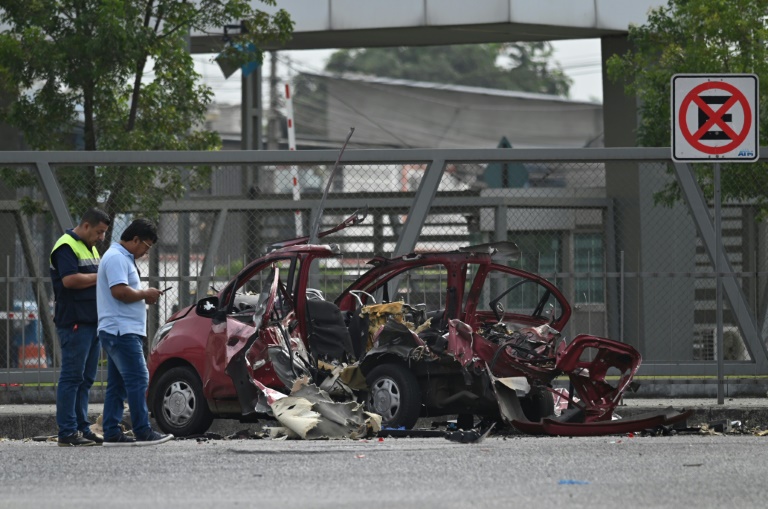
Officials said “organized crime” groups responded to the transfer of detainees from the Guayas 1 prison with nine attacks using explosives and firearms.

The prison, in the southwestern port city of Guayaquil, is one of the main scenes of a series of bloody prison massacres that have left about 400 inmates dead since February 2021.

“We have had reactions” of “organized crime” in Guayaquil and in the northwestern oil port of Esmeraldas, Interior Minister Juan Zapata told reporters in the capital, Quito.

These included car bomb attacks.

In the early morning hours, two police officers died when their patrol car was attacked by people with firearms in Guayaquil, according to police.

A separate attack on a police station in Guayaquil left two officers injured. 

In Esmeraldas — the same city where two beheaded bodies were found hanging from a pedestrian bridge on Monday — inmates took eight guards hostage, according to the SNAI prison authority.

A video circulated on Twitter appears to show two guards with explosives tied to their bodies and a man claiming to be an inmate denouncing prison “corruption.” AFP could not independently verify the video.

“If war is what they want, war is what they’ll get,” says the man, his face obscured, adding: “We will use these guards.”

– ‘Find the perpetrators’ –

Police commander General Fausto Salinas said at the press conference in Quito that four of the guards were since released.

The SNAI had earlier announced on Twitter that it was moving about 200 inmates from the Guayas 1 prison in Guayaquil.

It said the transfers were necessitated by required maintenance to cell blocks.

But according to the purported hostage video, the move was the reason for the events at Esmeraldas.

“Given the events in Esmeraldas and GYE (Guayaquil), we activated our tactical and investigative units to maintain order and find the perpetrators,” the police said on Twitter. 

Once a relatively peaceful neighbor of major cocaine producers Colombia and Peru, Ecuador has seen a wave of violent crime that authorities blame on turf battles between rival drug gangs believed to have ties to Mexican cartels.

Hundreds of inmates have been killed — many beheaded or incinerated — as the fighting spilled into prisons. Civilians have increasingly been caught up in the violence, which has included a spate of car bombs.

The violence has claimed 61 police lives since last year.

Ecuador has gone from being a drug transit route in recent years to an important distribution center in its own right, with the United States and Europe the main destinations.

The murder rate in Ecuador nearly doubled in 2021 to 14 per 100,000 inhabitants, and reached 18 per 100,000 between January and October this year.

In 2021, law enforcement seized a record 210 tons of drugs, mostly cocaine. 

So far this year’s seizures total 160 tons.

Counter-terror police probe UK migrant centre attack

A British counter-terrorism unit has taken over an investigation into the firebombing of a migrant processing centre, police said on Tuesday.

Homemade incendiary devices were thrown at the Western Jet Foil Border Force centre in Dover on Sunday, leaving two staff with minor injuries.

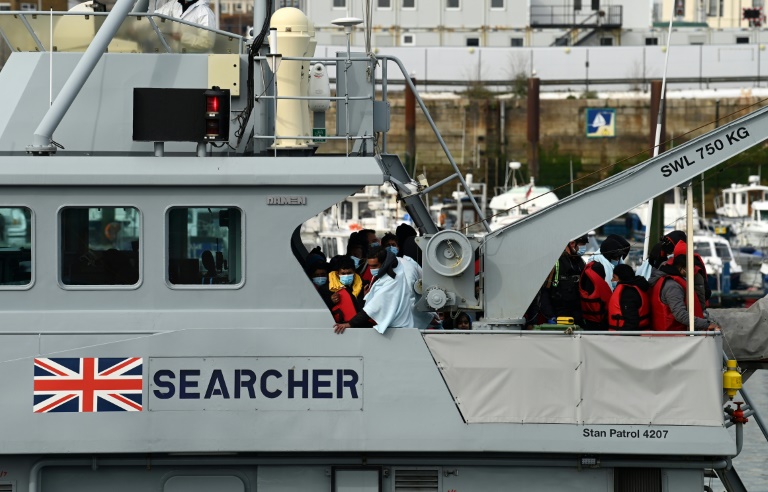
The facility in the busy port town in southeast England processes migrants who have crossed the Channel from northern Europe in small boats.

Interior minister Suella Braverman on Monday said the attack, carried out by a 66-year-old man from High Wycombe, northwest of London, who was later found dead, was not being treated as terror-related.

But Kent Police on Tuesday said officers from Counter Terrorism Policing South East (CTPSE) had assumed the lead in the investigation.

Detective Chief Superintendent Olly Wright, head of CTPSE, said there was “nothing to suggest any ongoing wider threat” in Dover or elsewhere.

“What appears clear is that this despicable offence was targeted and likely to be driven by some form of hate-filled grievance, though this may not necessarily meet the threshold of terrorism,” he added. 

“At this point, the incident itself has not been declared a terrorist incident, but this is being kept under review as the investigation progresses.”

Officers executed a search warrant at a property in the High Wycombe area on Monday and recovered what they said were a “number of items of interest”, which would be examined to try to determine motive.

“There is currently nothing to suggest the man involved was working alongside anyone else,” said Wright.

The attack came as Braverman — reappointed as home secretary despite being sacked by Prime Minister Rishi Sunak’s short-lived predecessor Liz Truss — is pushing a hard line on migrants.

Her description on Monday of record numbers of migrants seeking asylum in Britain as an “invasion” sparked outrage and accusations of inflammatory language.

But she retains Sunak’s backing, his official spokesman told reporters on Tuesday, assessing that Braverman’s choice of words reflected “the sheer scale of the challenge” facing the government.

Some 40,000 people have crossed the Channel in small boats so far this year, with predictions numbers could hit 50,000 or even 60,000 by the year-end.

That has caused a logjam in asylum claims and increased accommodation costs estimated by the government at £6.8 million ($7.8 million) a day.

Braverman, who has previously spoken of her “dream” of sending failed asylum seekers on a one-way ticket to Rwanda, has been accused of deliberately refusing to procure more hotel space for migrants housed at a temporary holding centre near Dover.

But she denies blocking the use of hotels.

Danes vote in knife-edge election

Danes voted Tuesday in a knife-edge election with Prime Minister Mette Frederiksen fighting for political survival against the right and far-right in polls that could turn a moderate ex-premier into a kingmaker.

The election was triggered by the “mink crisis” that has embroiled Denmark since the government decided in November 2020 to cull the country’s roughly 15 million minks over fears of a mutated strain of the novel coronavirus.

The decision turned out to be illegal, however, and a party propping up Frederiksen’s minority Social Democrats government threatened to topple it unless she called elections to regain the confidence of voters.

After a campaign dominated by climate concerns, inflation and healthcare, almost a quarter of voters were still undecided heading into election day, according to polls.

Grey skies covered the capital as voting took place with polling stations scheduled to close at 8:00 pm (1900 GMT) and the first results expected around 9:30 pm.

By around 2:00 pm, about 40 percent of voters had cast their ballots in the country of 5.9 million people, according to Danish news agency Ritzau.

“Climate issues and psychiatry (mental health issues), but mostly climate, are the reasons behind my vote,” 46-year-old Lone Kiitgaard told AFP after casting her ballot in central Copenhagen, without disclosing who she voted for.

The latest poll by Voxmeter gave the left-wing “red bloc”, led by Frederiksen’s Social Democrats, 49.1 percent against 42.4 percent for the “blues”, an informal liberal and conservative alliance, supported by three populist parties.

“This election could be really close and there is a risk that there will be a blue government after today,” Frederiksen admitted, but stressed she was “very optimistic” after voting at a badminton centre turned polling station northwest of Copenhagen.

Nikolaj Sommer, editor of Danish business daily Borsen, told AFP he made his choice after studying the parties’ economic programmes. 

“That we are not actually stimulating inflation in Denmark, I think that’s a very important thing for me. And of course the Danish welfare system and how we’re going to run it in the long run,” the 47-year-old journalist said.

– ‘Better to be a joker’ –

With neither bloc set to win an outright majority, governing will likely depend on support from the Moderates, a centrist party founded only this year by two-time prime minister Lars Lokke Rasmussen.

“That’s the most interesting part. If there is no majority, as seems to be the case, the Moderates are required to form a government,” Rune Stubager, a political science professor at Aarhus University, told AFP.

Both the left and the right have made repeated appeals to Lokke Rasmussen, who has campaigned on reforming the healthcare system.

Frederiksen has floated the idea of a coalition government, led by herself, and has said she is willing to discuss healthcare reforms.

Liberal Party leader Jakob Ellemann-Jensen, her main challenger on the right, has called for Lokke Rasmussen to align with his former colleagues on the right.

“We will… do our outmost to be the bridge, that’s the whole idea behind this,” Lokke Rasmussen told AFP after casting his ballot in central Copenhagen.

Only two months ago, the party polled at around two percent but has now soared to between 9.3 to 10 percent support.

Lokke Rasmussen, who said “it’s better to be a joker than a joke”, does not envision becoming prime minister a third time, despite being a potential kingmaker.

“That’s not in my mind,” he said.

Protective of the prosperity and social cohesion of the Nordic welfare state, Denmark championed ever stricter migration policies for over 20 years.

– Climate concerns –

Advocating a “zero refugee” policy, the Social Democrats government is working on setting up a centre to house asylum seekers in Rwanda while their applications are processed.

As most parties back the restrictive policies the issue is rarely up for debate.

Climate, on the other hand, is of great concern to Danes.

On Sunday, some 50,000 people, including the prime minister, gathered for the “People’s Climate March” in Copenhagen.

But while there is widespread agreement on some issues, Denmark’s political landscape is splintered with a total of 14 parties vying for the 179 seats in parliament.

Four seats are reserved for the overseas autonomous territories: Greenland and the Faroe Islands.

Voter turnout is traditionally high in Denmark. In the 2019 election, 84.6 percent of some 4.2 million eligible voters cast a ballot.

Israel vote turnout up as Netanyahu eyes comeback

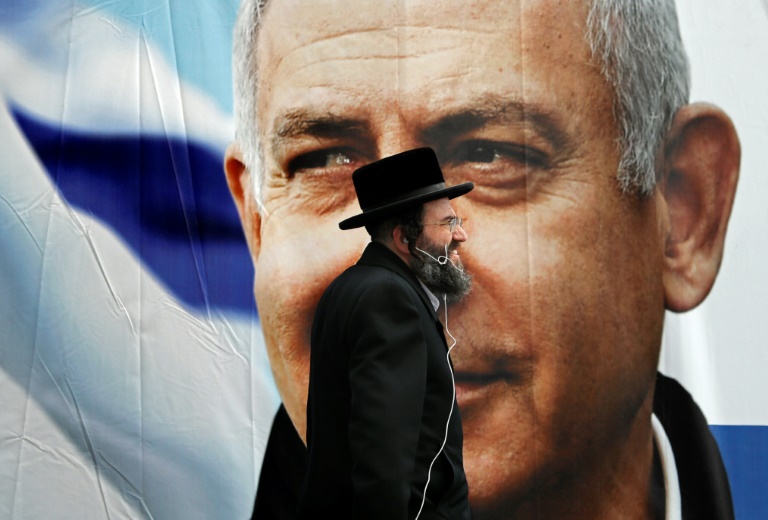
Israelis cast ballots Tuesday in their fifth election in less than four years, turning out for their strongest showing in two decades with ex-premier Benjamin Netanyahu seeking a comeback.

The election follows the collapse of a coalition that united eight disparate parties who succeeded in ousting Netanyahu last year after a record run as prime minister, but ultimately failed to achieve political stability.

Netanyahu, who is on trial for corruption and breach of trust, said he hoped to “finish the day with a smile” and was criss-crossing the country trying to rally late afternoon votes, including a stop in the Likud stronghold of Bat Yam, south of Tel Aviv.

Caretaker Prime Minister Yair Lapid, whose centrist Yesh Atid party has polled second behind Netanyahu’s right-wing Likud, urged people to vote “for the future of our country”.

In a political system where a shift in just one of the 120 Knesset seats up for grabs could cement a ruling coalition — or lead to further deadlock and possible new elections — the outcome remains uncertain once more.

Concerns about voter fatigue were widespread, but as of 2:00 pm (1200 GMT) turnout figures were the highest since 1999 at 38.9 percent, a rise of 4.3 percentage points compared with the last election in March 2021, according to the Central Elections Committee.

At a polling station in Tel Aviv, voter Amy Segal, 26, aired her frustration.

“Each year there’s a new election, there’s no political stability,” she told AFP.

“I feel like it doesn’t matter who you vote for, nothing will change.”

Polls close at 10:00 pm (2000 GMT), when Israeli networks will give their first results projections.

– ‘Coalition of extremists’ –

Whoever is tapped to form a government will need support from multiple smaller parties to clinch a 61-seat majority.

Extreme-right leader Itamar Ben-Gvir may be key to helping Netanyahu return to power, as his Religious Zionism bloc has gained momentum in recent weeks and could come third in the election.

Ben-Gvir, who wants Israel to annex the entire West Bank, promised a “full right-wing government” led by Netanyahu, after voting near his settlement home.

Justice Minister Gideon Saar, a former Likud heavyweight who broke with Netanyahu and now leads his own party, warned Israel risked electing a “coalition of extremists”.

The vote is being held against a backdrop of soaring violence across Israeli-annexed east Jerusalem and the occupied West Bank.

At least 29 Palestinians and three Israelis were killed across the two territories in October, according to an AFP tally.

The Israeli military shut checkpoints leading to the West Bank and closed the crossing with the blockaded Gaza Strip throughout election day.

While many candidates have cited security as a concern, none have pledged to revive moribund peace talks with the Palestinians.

– ‘No change’ –

The cost of living has been a hot issue this election as Israelis, having long endured high prices, are feeling the pinch even more amid global economic turmoil linked to Russia’s invasion of Ukraine.

Lapid was the architect of the last coalition, which for the first time brought an independent Arab party into the fold and included others from the right and left.

In Tel Aviv, voter Gidi Bar Ilan, 30, said the short-lived coalition “demonstrates that we can sit together”.

The unlikely alliance of the last government was made possible after Mansour Abbas pulled his Raam party from a united slate with other Arab-led parties, paving the way for him to join the coalition.

But Raam’s pioneering support for a coalition is not viewed positively across Arab society, which makes up around 20 percent of Israel’s population.

“He tried, but he didn’t bring anything. No change, no money,” said voter Faris Mansour from the central Arab town of Tirah.

The 54-year-old told AFP he had voted for the Balad party which rejects participation in Israeli governance.

Recent months have seen further divisions within the Arab bloc, which is running on three separate lists in a move expected to weaken the minority’s representation in parliament.

Abbas remained optimistic Tuesday that “this process of cooperation” would continue, yielding “results for the Arab society, and for the Israeli society in general”.

bur-bs/ami/dv

Uber shares surge as company says consumers still strong

Shares of Uber rocketed higher Tuesday after it reported a surge in quarterly revenue and described consumer demand as remaining robust.

The ride-hailing service scored a 72 percent jump in third-quarter revenues to $8.3 billion, thanks in part to the benefit of an acquisition in Uber’s freight business.

The company reported a $1.2 billion loss, citing a hit to Uber’s equity investments and the effect of stock-based compensation expense.

Despite inflation and other macroeconomic headwinds, Chief Executive Dara Khosrowshahi described Uber’s core business as “stronger than ever” in light of the loosening of Covid-19 restrictions, according to an earnings release.

Later, on a conference call with Wall Street analysts, Khosrowshahi said consumer spending was broadly strong, including for rides and in the company’s restaurant delivery service.

“Right now frankly we’re not seeing any signs of consumer weakness,” he said. “Even lower income riders continue to have higher trips per rider as things are opening up, showing absolutely no signs of slowing down.”

Khosrowshahi said the biggest drag on the business came from the strong dollar.

Uber offered an upbeat projection on the fourth quarter, forecasting gross bookings to rise 23 to 27 percent, with an operating profit estimate that topped analyst expectations.

Shares jumped 15.5 percent to $30.66 in morning trading.

US Fed starts policy meeting with further rate hike expected

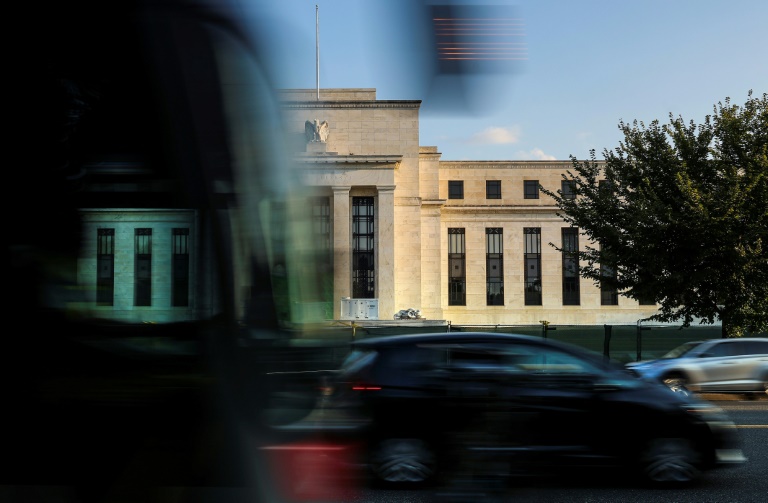
US central bankers started their two-day policy meeting Tuesday with persistently high inflation backing expectations of another rate hike — a fourth straight steep increase as price pressures fail to ease quickly enough.

American households are being squeezed by soaring consumer costs, which have picked up at the fastest pace in decades, prompting the Federal Reserve’s aggressive campaign to cool the economy.

While many analysts expect the Fed to adopt another three-quarter point hike on its benchmark lending rate this week, all eyes are on signals that it could pivot to a less hawkish stance in the coming months.

Recent data suggests that the interest rate hikes are “gradually exerting a controlled economic cooldown,” with consumption and business investment holding up amid slowing in the interest-sensitive housing sector, analysts at Moody’s Investors Service said this week.

But for now, “pricing pressures are not slowing fast enough,” Oanda analyst Edward Moya said, noting that the Fed’s preferred inflation gauge is not yet cooling.

To raise borrowing costs and cool demand, the US central bank has already cranked up the benchmark lending rate five times this year, including three straight 0.75 percentage point raises.

With persistently high inflation and a tight labor market supporting wages and spending, analysts say another 0.75 point hike is almost certain at central bankers’ next policy meeting.

This would bring the benchmark rate to a range between 3.75 percent and four percent.

The Fed’s policy-setting Federal Open Market Committee (FOMC) is expected to announce its decision on Wednesday.

Federal Reserve Chair Jerome Powell’s press conference after the meeting will be scrutinized for clues on how much further he thinks the Fed should go before it sees victory in the inflation fight.

Some officials have recently expressed concern about tightening policy too much, wanting to consider a slower pace of hikes, or pausing to assess the impact of current moves, analysts said.

But the Fed “needs to see inflation decline more materially” before shifting to a slower pace of hikes, meaning changes will likely depend on upcoming consumer price data this month, said Stephen Innes of SPI Asset Management.

Land-based climate plans 'unrealistic': report

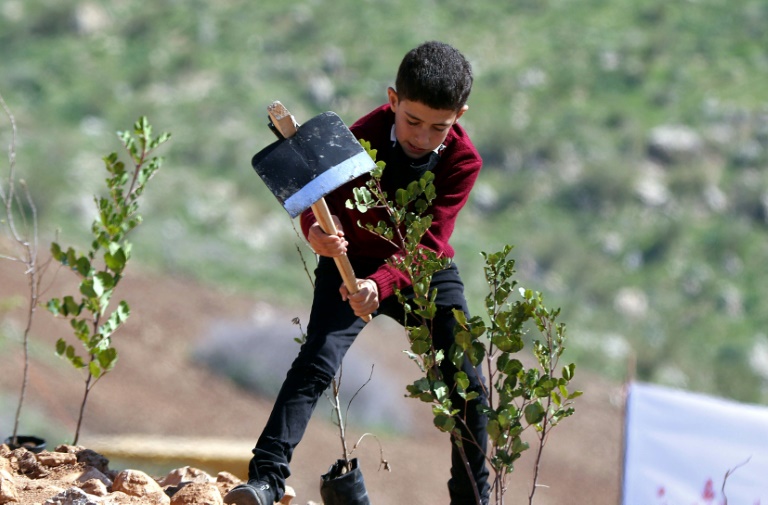
The world needs to set aside an area bigger than the United States for tree planting and other measures to meet climate pledges, according to research published Tuesday that warned against “unrealistic” carbon-cutting plans.

Almost 200 nations will begin high-stakes UN climate talks in Egypt from November 6, as increasing damage from floods, heat waves and droughts are being felt across the world.

Recent UN assessments conclude that current policies and plans are not nearly enough to limit global warming and avoid catastrophic climate impacts.

They may also be unattainable, new research showed Tuesday on the planned use of land-based schemes such as tree planting to offset fossil fuel pollution.

An assessment of plans from 166 countries and the European Union, released by the University of Melbourne, estimated that the total area implied was almost 1.2 billion hectares (2.9 billion acres) — bigger than the United States, or four times the size of India.

“Servicing all of the land-based carbon removal pledges is unrealistic because it would require a land mass half the size of current global cropland, putting potential pressure on ecosystems, food security and indigenous peoples’ rights,” the report said.

The research looked at countries’ targets, particularly longer-term commitments, and if the land needed was not explicitly stated, they calculated using information about the types of activity as well as carbon removal data from UN climate experts.

They found that while over 550 hectares were earmarked for restoring degraded land and protecting primary forests, some 630 million hectares were estimated for carbon capture schemes, like tree planting.

“Land-based carbon removals have to be considered together with deep cuts in fossil fuel emissions, not as a replacement,” said Anne Larson, of the Center for International Forestry Research and World Agroforestry, who was a co-author of the report.

– ‘Dangerous overreliance’ –

Larson said governments might see tree planting as “easy, compared to other options”, but cautioned that these projects can cause their own problems. 

If there is no long-term management plan or if the species are not native, the trees can simply wither.

Tree plantations imposed on communities risk being “neglected, burned, cut down”, she said. 

Such expansion is also seen as incompatible with the rights of many indigenous peoples, who are increasingly being recognised as crucial custodians of nature, as the world faces a human-caused extinction crisis as well as climate change.

The Global Alliance of Territorial Communities, representing 35 million people living in forest territories in Asia, Africa and Latin America, on Tuesday said: “dangerous overreliance on land-based methods to capture carbon would gobble up much of our ancestral lands, which we desperately need for food production and nature protection”.

“Simply put, we cannot plant trees to escape climate disaster, there is not enough land. Instead, we need to protect and restore existing forests and you can only do that with us,” the alliance said.

UN climate scientists have said the world needs to slash carbon emissions 45 percent by 2030 in order to limit global heating to the more ambitious Paris Agreement goal of 1.5 degrees Celsius.

The Melbourne University report said any tree planting schemes would be simply unable to meet the urgent challenge of reducing greenhouse gas pollution.

“Countries need to reduce their expected reliance on land-based carbon removal in favour of stepping up emissions reductions from all sectors and prioritising ecosystem-based approaches,” the report said.

Close Bitnami banner
Bitnami